I've been a white belt for three years, I get my ass kicked every practice, but I love BJJ
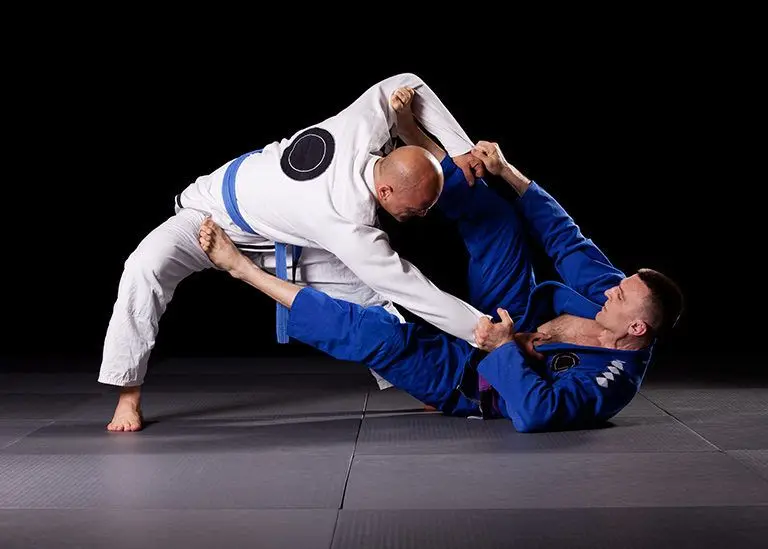
When I first stepped onto a BJJ mat three years ago, I realized that I had a whole lot to learn very quickly. As a 210 pound man, who could deadlift 600 pounds, I got broken in half by a 14-year-old kid who was about 140 lbs.
That wasn’t the last time I’d be humbled by Brazilian Jiu-Jitsu. I’ve been tapped out by boys, old men, and nearly tapped out by an 11-year-old girl.
Even though I’ve gotten my ass kicked more often than not, I’ve fallen in love with Jiu-Jitsu because of the lessons I’ve learned and the ways that these lessons have transferred over to the rest of my life.
In this episode, I talk about five lessons I’ve learned through BJJ.
Transcript
Machine-generated from the episode audio and lightly edited — may contain errors.
Chris Albert (link to this point)
The Warrior Soul podcast is written, edited, and produced by me, Albert. Our mission is to provide tools, tactics, strategies, and ideas that help The US military veteran community to show up as the wisest, strongest, most capable versions of themselves in the civilian world. If you're not a veteran, stick around because anything we talk about will most certainly apply to you as well. This podcast is made possible with the help of F Bomb Nutrition. They make delicious packets of fats that you can carry around anywhere with you in little portable packets.
They make macadamia nut butters. They mix them up with chocolate. They mix them up with sea salt. They mix them up with coconut butter. They're absolutely delicious, and they're really good for you.
They don't have any sugar. They also make a lot of cheese snacks. They make meat sticks, and it's just a great company. These guys send packages of this stuff to the troops who are on the front lines overseas to supplement their MREs, and we didn't ask them to do that. They just did that on their own initiative.
Really great company. If you wanna get 20% off your first order of f bombs, head over to www.dropanfbomb.com and use the code Warrior Soul at checkout. This podcast is also brought to you with the help of Save the Brave. Savethebrave.org is a five zero one c three charity for veterans. They run camaraderie events that include fishing, golfing.
They also do a lot of work with gold star families. And unlike a lot of other organizations, their board doesn't take a salary. Really great organization that is doing amazing work. So go and check them out at savethebrave.org. With that, thank you guys so much.
Let's get into today's programming.
This is Chris Albert, and I'm here to remind you of one thing. Someday, you're going to die. Now that's not some morbid statement or scary idea. It's solid fact. Your time here on this earth is limited.
And we need to be reminded of this as much as possible for one simple reason, to live your best life while you can. This is the Warrior Soul podcast.
What is going on everybody? Welcome to this edition of the Warrior Soul Podcast. My name is Chris Albert, and the Warrior Soul Podcast is where I deliver tools, tactics, strategies and ideas to US military veterans to help them to show up as wiser, stronger, more capable human beings in the civilian world. And if you're not a veteran, stick around because anything I talk about here is going to apply to everybody who listens. Whether you're a veteran, whether you've ever served or not.
And here's the deal guys, this podcast is growing. We are getting more and more downloads every week and every month. We are smashing records. And that's because you guys are sharing these episodes out. And I want to say this, listen, I don't care if you ever spend a dime with Warrior Soul.
I'm not doing this to get rich. What I'm doing this for is to help The US military veteran community. To help us to wake up, to take our rightful places in this country as leaders. Because our service is not done. So if you want to help me in this quest, here's what I want you to do.
I want you to one, subscribe to the podcast. Number two, just share these episodes out with people who could use them. If you know me with another veteran or another person who could use this information, send this episode to them. And then number three, write us a written rating and review on iTunes. That helps so much with the iTunes algorithms so that we show up in searches, so that people can find us.
The more you do that stuff, the more you are helping to get this information into the ears of more veterans and helping me to help the veteran community. And if you do that, I am a happy camper. Like I said, I don't care if you ever spend a dime with me. I'm not in this to get rich guys. I'm in this to help this community and to help this country out.
Today I want to talk to you about something that has helped me immensely. And that is the practice of Brazilian Jiu-Jitsu. I started it three years ago, and the reason why I started it is because, you know what, I work from home. I live in California. I grew up in Connecticut.
And what that means is that I don't have a whole really big social life. I don't have a lot of people that I interact with on a daily basis. And I wanted to be a part of something, part of a group. And the sports I was pursuing, I was power lifting and body building, they're very introverted sports. Again, working from home, if I didn't have to speak to someone or if I didn't want to actually speak to a live person all day outside of talking to my girlfriend and my dog, I really wouldn't have to.
And so I was looking to get into a place where I could meet other individuals who are doing big things, where I could basically develop my social life and take up an activity that would help me with that. I know a lot of you guys out there are in the same boat. There are many of us who are getting into our 30s and 40s and our social lives are pretty much gone. Maybe that's because we don't really relate to the people we once hung out with, maybe it's because you're giving up things like drinking and that's a good thing. But you gotta fill that void because you do need other people.
And jiu-jitsu is something that's accessible to a lot of people. There are schools almost everywhere right now. And for what you get in return, most of them are not that expensive. We're talking like maybe $100 to $150 a month and if you've got your gym membership and a whole other bunch of different things, well jiu-jitsu can actually help you with fitness. It can help you with a lot of that stuff and if you just want to get a kettlebell and keep it in your house and do that for your gym work while going to practice jiu-jitsu, it might be a good call.
Right? The other thing I want to see here is that, well, I realize that I'm jumping on a bandwagon. Everybody's talking about jiu-jitsu right now. Jocko Willink was one of the first guys who really started talking about it. And pretty much every other podcaster does it now.
Right? Ryan Michler, Tim Ferriss, Brian Rose from London Real. All these different podcasters are talking about jiu-jitsu. And I'm not somebody who likes to get with the trend or anything like that. But what I have to say is that these guys are all doing it because it's valuable.
Because it's something that is really additive to your life. And the other thing I want to say is that, well, I'm not talking about it because I'm some sort of expert or because I'm even good at jiu-jitsu. I'm not. I'm horrible at jiu-jitsu. I suck at it.
But I still love it and it's still helping me so much. So what I want to talk to you about today are five lessons that I've learned over the last three years of practicing Brazilian Jiu-Jitsu. And yeah, of course, this could apply to a lot of other martial arts. Right? So there's Krav Maga, there's wrestling, there is Russian Sambo, Judo, all these different martial arts that have great practicality in a real world situation that you could take up.
And what I'd recommend is picking the one that's most accessible to you. If you don't have a BJJ studio in your town and maybe there's a judo studio, maybe go for that. Right? If if there's wrestling, go for that. Right?
But I like BJJ. I was a wrestler in the past. I've done couple other martial arts and BJJ to me is is one of the most effective. So so here are some of the lessons that I learned. The first one is one that everybody's gonna learn from jiu-jitsu.
Everybody. And that is humility. When I first walked in and stepped on the mats, and the school I go to is called Pinnacle MMA and Jiu Jitsu, and it's run by a guy named Jake Behney. Really great coach. He's influenced a lot of the fighters around here.
He's brought a lot of people to the UFC. First thing I learned was humility. And when I say humility, really mean that my ego came crashing down the first day I stepped on those mats. You see, I was two ten pounds, at that point I could deadlift over 600 pounds, I could squat over 500 pounds, I could bench press close to 400 pounds, and on my first day of jiu-jitsu I found out that absolutely none of that matters in a real world situation. Why?
Because I pretty much got broken in half by a kid who was 14 years old and a hundred and forty pounds. Literally could not handle him. I got arm barred, I got kimura'd, I got choked, I got choked by a gi, I didn't even realize you could use a gi. And right then and there, I realized that I had a whole lot to learn. And understanding that takes a real shift in perspective because some guys will walk in, they'll try it out the first day, they'll get choked out, they'll get grinded on their face, they'll get all these cuts all over their feet, they'll be sore the next day and they'll be like, Oh man, I don't want to do that again.
But if you're being honest with yourself after that happens to you, then you need to tell yourself, well, wait a minute, this is something I need to learn. Because if I get in one of these situations out in the real world, I'm not gonna be able to handle myself. And so what I found was humility. Right? Realizing that there was something here that I needed to learn.
And that takes me into the second lesson here. The second lesson that I learned from Brazilian Jiu-Jitsu that has translated to a lot of the other things I've been doing in my life is that it's okay to be a beginner. It's okay to admit to yourself that, hey, I'm a white belt right now and I'm the lowest on the totem pole And there's a lot of people out there that are a lot better at me, better at this than I am. And the reason why that's important is because if you are pushing yourself to get better, you're going to get into a lot of situations where you are gonna be the beginner. You see a lot of us, we like to be the big fish in a small pond.
We like to be the person who's really good at this one thing and we don't like to venture out of our little circle. And you know what I'll bring up here, just based off my own experiences, is the gym. When you walk around a gym, you see a lot of people who are focusing on exercises that they're good at. Right? Focusing on the exercises that they can lift the most at.
One of the things I've learned as a power lifter is that if I wanted to get better as a power lifter, I had to create variations of exercises that were gonna be harder for me. I got really good at the back squat early on and then I plateaued. And one of the things I had to learn was that, well I need to incorporate some front squats and some overhead squats. I needed to pull the weight way back and improve my posture and work on those little things if I was ever gonna improve my back squat in the first place. But I constantly saw a lot of lifters who didn't want to do that.
Why? Because they were weak at the front squat, they were weak at the overhead squat. And this is something you're gonna learn from jiu-jitsu because you'll learn really quick that you're a beginner and that it's okay to be a beginner. And if you don't admit to yourself that you've got a lot to learn, well then you're never gonna improve in anything. And that's true of business, that's true of relationships.
If you think that you have no room for improvement as a partner, well then your partner is probably gonna have something different to say, right? And in any department in our lives that's so important. The next thing I learned is this, and this is a big deal for those of you who think you're gonna come in, you're gonna move up in belts quickly and you are eventually gonna get to black belt in three years. Right? You've got certain martial arts out there that you get a black belt if you do it for three years solidly.
I've been in for three years and I am a four stripe white belt. Now granted I have been sick, I've been in and out over certain months because I have ulcerative colitis and I was very ill but most people in my school who've been in about the same time as I have, they're four striped white belts as well. And that's because in a lot of Brazilian Jiu-Jitsu schools it's really difficult to get promoted. So what you need to learn here is patience. You need to be okay with being a beginner.
You need to be okay with the fact that it's not about the belt. It's about the training you receive. Because guess what? I'll take a lot of the white belts in my school versus some of the blue belts that are out there who got promoted really quickly any day. That's because we are focused on the training.
And so if you're getting into jiu-jitsu, you don't want to be in it just to get belts. You want to be in it for the training, for the experience. Don't be one of these guys who just drops out because you haven't gotten a belt. Right? Don't be worried about promotions.
Be there for the experience. And this is translated to a lot of other areas of my life. This is a lesson that has helped me so much in my business. One thing to understand about podcasting. Alright?
Podcasting is is has a really high failure rate. Only twelve percent of podcasts make it past nine episodes. Only twelve percent. Now I'm somebody who should have quit podcasting if you look just at the numbers a long time ago. It took me years to get up over 10,000 downloads per month.
Right? If you look at, like, the top podcast, they're they're making millions of downloads per month. Right? I'm not there yet, but we've been improving month after month after month and having exponential growth. But that growth didn't come until two or three years in.
I had to learn, I had to make mistakes, I had to get the word out and it wasn't going to be instant success. And anything you're doing in life, you're going to have to go through a hard period. That's true of business, that's true of your career, that's true of anything that's worth doing. So you need to learn patience. Brazilian Jiu-Jitsu is definitely a tool for learning patience.
The other lesson I learned here is to show up and be present. To show up and be present. I'm telling you so far that jiu-jitsu is about the experience, it's not about the belt. And part of the experience is actually coming to class and being present while you're there. Not daydreaming, not, you know, wondering what you're gonna have for dinner that night, not worrying about anything else in the world, but what's going on in the mats.
And jiu-jitsu really helps with this. The the the big thing the big problem that people have with jiu-jitsu is not showing up for practice. And I've had those days where I will drive all the way to the jiu-jitsu studio. I'll sit outside for a second and I'll wonder, well maybe they're gonna cancel class that day. Maybe I should just go home and take a shower.
You know I haven't had enough sleep that night. You could find yourself making all of these excuses. But you start to become aware of your own excuses and you start to say, you know what dude, I'm just gonna walk in there, I'm gonna go to practice and I'm gonna show up. And then once you show up, you know, when you're there, it's really hard not to be present. It's really hard not to be present because of the consequences.
Right? If he's going over a move, if he's teaching something, you know that in just a few minutes, you're gonna be sparring for real. Jiu-jitsu, most classes you spar every practice. And if you're not present, you know you're gonna face some consequences, you're gonna face some pain, you're gonna get choked out, you're gonna get arm barred, you're gonna tap. And so you have a real incentive to be present there, to put your worries aside, to put your stresses aside, to show up for practice and to just focus.
And that is something we all need to learn. We need to stop sitting there wishing we were somewhere else all the time. We need to stop trying to daydream all the time to get our minds out of what we're doing. We need to be more present in what we're doing and this will translate most certainly to your relationships. Because one of the things I think that really puts relationships in the dog house is where one of the partners isn't present for the other person when they're spending time together.
And that's helped me so much in focusing when I'm with my girlfriend, I'm with my girlfriend. I'm not looking at my phone, I'm not worried about all these other things. I'm worried about having a good time. When I'm at jiu-jitsu, I'm worried about jiu-jitsu. And when I'm at my business, I'm worried about focusing on my business and focusing on what I have to do to be successful.
Alright? The final lesson is this. And that is that the mastery is in the details. You see, I know a lot of moves having done jiu-jitsu for three years. And I probably know as many moves as a lot of blue belts and as as a lot of purple belts.
But the mastery is in the details of the movement. Meaning, how much space are you creating or how much space are you taking away? Is your hip in proper position? Is it glued to your opponent? Are you bringing your knee to this one position?
That's what I'm trying to get at here is that the mastery is in those little details. The hold feels so much different if you're worried about the details than if you're just doing the hold. And you learn that through constant repetition, constant drilling and constant practice. The only way to learn this stuff and the only way to apply these details is through doing it over a long period of time and gaining the experience. One of the things I realized by rolling with higher belts, rolling with people who are purple belts, brown belts, black belts, is that when they do something, it feels completely different from the way a white belt does it.
And it's because they're worried about these little things. And that's true of everything in life. Again, if we're going back to business, the mastery is in the details. Are you looking at the way your website looks? Are you constantly trying to improve your writing?
Are you constantly trying to improve your sales skills? Are you looking at every single detail on your job site? That's where mastery comes from. And that takes a long time and again it requires some of the things I mentioned already. Humility, patience and being okay with being a white belt and somebody who has a lot to learn.
And also showing up, being present and really taking in those details and understanding why those details are important. So that's just a quick episode guys. Five things I learned from Brazilian Jiu-Jitsu, from practicing Brazilian Jiu-Jitsu. Again, I highly recommend you guys try to incorporate this or another martial art in your life. Something that's gonna test you like this.
There's very few other things in this world that could test you like combat. Brazilian And jiu-jitsu is great for us older guys because, well, you're not getting hit in the head. And a lot of us are already dealing with problems with TBI. It's pretty low impact in that regard, but it's pretty high payoff. So again, if you guys like this episode, please share it out.
Let people know and write us a review on iTunes. If you want to support the podcast in other ways, we've got a number of ways to do so. You can head over to warriorsoul.shop, get yourself an outstanding t shirt. If you wanna support yourself, we've got the Warrior Soul Academy that's up at warriorsoul.academy. I've got some of my books on nutrition, on fitness, on power lifting, on bodybuilding.
I've also got books, and courses on creating your own business. If you wanna create your own clothing brand, if you're looking to become a coach, a nutrition coach, I know a lot of you are trainers out there. I have courses on setting up your own online coaching business that you check out. Above all, we've got this thing called the Warrior's Obituary Society, that's our own private mastermind. And the way that works is we've got a group of men who are there to empower each other to live epic lives worthy of epic obituaries.
Starts with an eight week development program where we help you get really clear on your vision and what you want out of life because most of us don't ever think about that. Right? Then we start focusing on the details. We start focusing in on your fitness. We help you customize your own fitness and training plan.
We help you to create your own personal finance plan. We help you to focus on your business or your career and we help you with your relationships. We meet live each week and we also have a private forum that's off of social media so there's no distractions. Our own private Slack channel or Slack workspace where you can come on, you can interact with other members and you can find your new band of brothers. Alright?
And then we also have a walkie talkie system where we communicate over voice. If you're interested in learning more about that, you can head over to www.warriorobituarysociety.com. And if you don't want any of that and just want to write a review for the podcast and share these episodes out, I'm fine with that too. Thank you guys so much. We'll be back at you later on this week with some more awesome content and I wish you well.
Get out there and live your best lives while you can. This is Chris and I am out.
Host of the Warrior Soul Podcast and founder of Warrior Soul. Worldwide trainer and nutrition coach, contributing author at Testosterone Nation and Muscle and Strength.