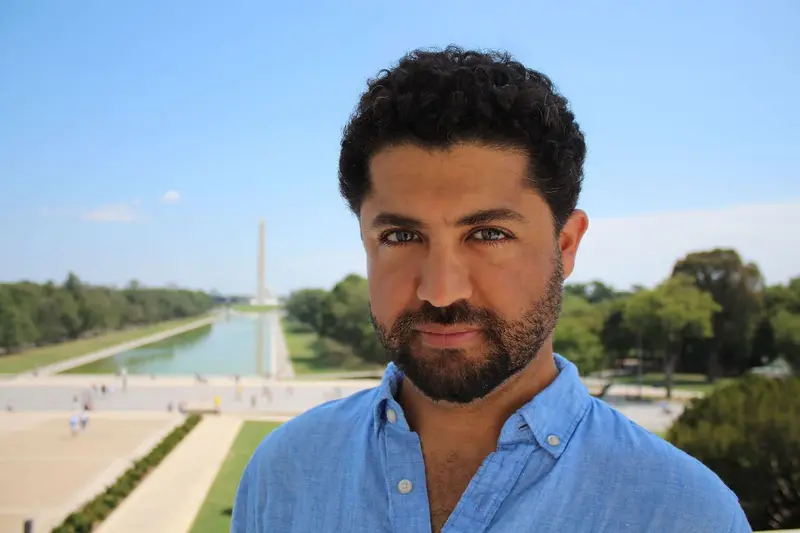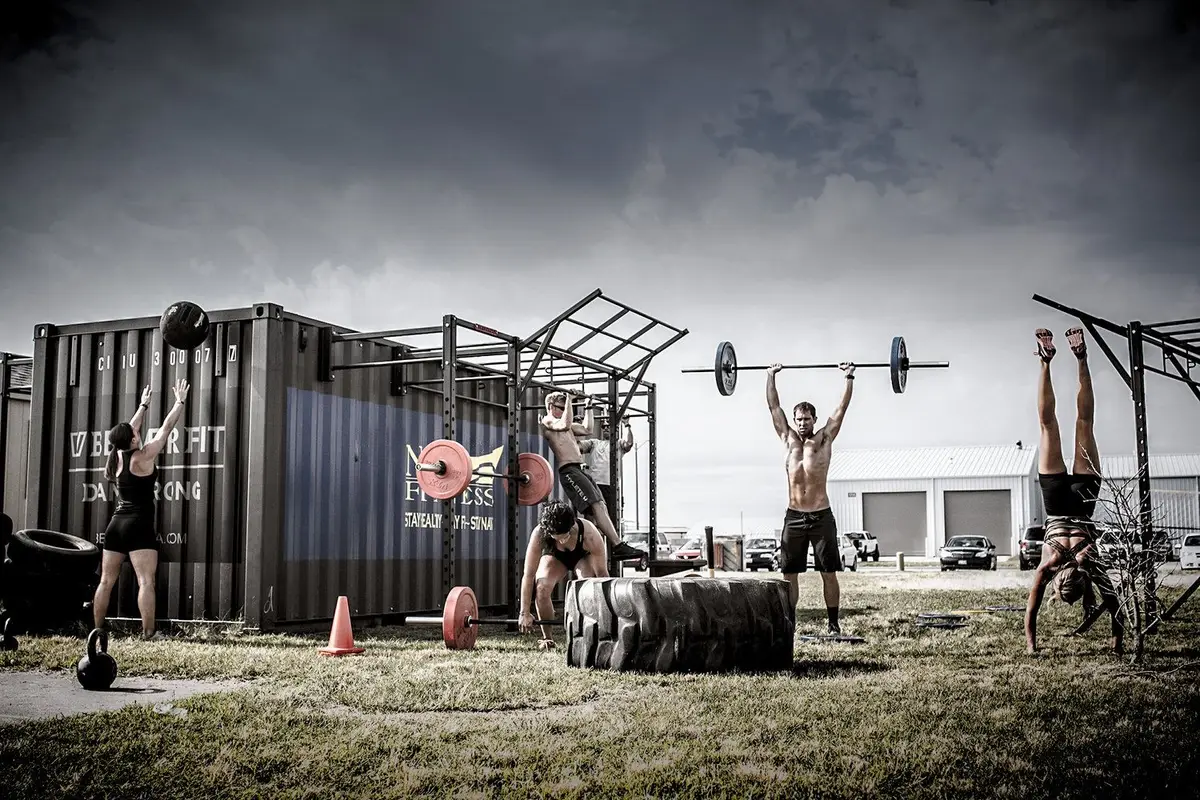
Mike Taylor and Alex Roodhouse are US Navy Veterans turned entrepreneurs who founded the company Beaverfit. They make functional container gyms.
Mike Taylor and Alex Roodhouse served as officers in the United States Navy's Riverine Units, patrolling the Euphrates River during the war in Iraq.
Fitness was always an important part of their job, but as the demands of the job changed, so did the fitness requirements. When they first entered the military, the focus was on long runs and calisthenics. Yet jobs in the military increasingly called for a more functional, weight bearing, approach to fitness.
Additionally, many service members ended up getting completely out of shape when they went on deployment.
So after they got out of the military, Mike and Alex came up with an idea: all in one container gyms that could be shipped and placed anywhere.
That idea became Beaverfit, which today is a rapidly growing multi-million dollar a year business. You can find Mike and Alex's gyms today in places as diverse as Camp Pendleton and Miami Beach.
In this conversation, I talk with Mike and Alex about their journey from the military to entrepreneurship and how they're growing Beaverfit to meet the increasing demand for functional fitness.
Learn more about Beaverfit at: https://www.beaverfitusa.com/
To follow Beaverfit on Instagram: https://instagram.com/beaverfitusa
Transcript
Machine-generated from the episode audio and lightly edited — may contain errors.
Chris Albert (link to this point)
What's up, ladies and gents? Welcome to the Warrior Soul podcast. My name is Chris Albert. And first off, I want to just apologize to you guys. The audio on this introduction is going to be pretty bad.
I got diagnosed with COVID nineteen the other day and I am stuck here without my microphone. Had to be left at the office and I'm not allowed to go to the office. But I really wanted to get this interview out to you. The interview does not have the crappy audio. I had my microphone when I recorded that.
But, you know, things happen guys. We'll get through it. This interview is outstanding though. It's with Mike and Alex from BeaverFit. If you're not familiar with them, they created those container gyms that you see at places like Camp Pendleton and in different public spaces around the country.
Really, really awesome concept. These guys were serving as US naval officers in the riverine units. They were taking small boat patrols up and down the Euphrates River, and they wanted to figure out a way to get a workout. They just couldn't figure out how and, you know, fitness had changed so much. Being in the military, it wasn't so much about just how long you could run or how many push ups you could do.
It's it's about how much weight you could carry. You know, how functional are you? And they wanted to bring this fitness concept to the rest of the military and they wanted to bring it to the world. So they started developing these container gyms that could go anywhere and they're killing it right now. They've turned it into a really rapidly growing business and what I wanted to get into in this interview was the entrepreneurial journey that these guys took.
How did they take it from concept to actual idea to actual project to a multi million dollar business? How are they scaling right now? Who are they getting to help them out? What types of people are they seeking? Really awesome conversation here.
These guys are super intelligent, super smart, and super great guys. So with that, let's get into this conversation with Mike and Alex from BeaverFit. Mike and Alex, welcome to the Warrior Soul podcast. How you guys doing today?
Mike Taylor (link to this point)
Awesome, Chris. Thanks for having us today.
Chris Albert (link to this point)
Awesome. I've heard a little bit about your company. I've been reading up on it. Can you guys tell us a little bit about BeaverFit, what you do?
Mike Taylor (link to this point)
That question seems to get harder by the day because, our business is always diversifying and expanding, but, the nuts and bolts of it is, we make training equipment, for a variety of different tasks in life. Generally, product, our company started with in the fitness industry or the human performance industry, making training equipment. And our very first product was actually this container gym that I'm sure we'll get into a little bit later. And then we've diversified, and now we also make tactical training equipment. And, you know, we do that for both the military and commercially.
To be fair, the majority of our business does come from the military government contracting.
Chris Albert (link to this point)
That's awesome. How what's your backgrounds? How'd you guys get into to doing this stuff?
Alex Roodhouse (link to this point)
Yeah. Mike and I were actually both in the Navy. We we served together. We got in from different paths. Mike's an academy guy. I went through ROTC.
But we met up back in 2006 in Virginia Beach when the Navy was standing back up the brown water capability. Right? So the river warfare, all the Vietnam boats that you remember from Mekong Delta. Navy had discontinued that after Vietnam. And then in the early sort of mid 2000s when Iraq was really sort of the hotspot, and the Euphrates and Tigris Rivers were pretty important features there, the Navy decided to get back into that mission.
So we were both plank owners of Riverine Squadron I, so the first group to do that since Vietnam. And so that's where we linked up. And as you can imagine, obviously, being a Marine Corps veteran, that time spent overseas in an expeditionary environment is a lot of what has led to some of the mentality and the understanding of what the military needs from a training perspective.
Chris Albert (link to this point)
Yeah. Yeah. No. Absolutely. Absolutely.
I think one of the things that that interests me a lot, was a trainer for a long time was back when I went to boot camp back in 1999. It was like a different world fitness wise, right? So like a lot of us were, doing these long runs, these long humps, you know, we're doing crunches and things like that. There wasn't like a lot of weight training added to the equation. But you look at, even the way service members are shaped now, you look at Marines or if you look at Navy SEALs these days, they are all a little bit jacked.
Back in the day, we were all little skinny bastards, right?
Alex Roodhouse (link to this point)
There's been a huge paradigm shift in the last twenty years in the military when it comes to how fitness is treated and how it's understood, who owns it, who dictates the policies, the equipment that supports it, and it's really tied to the paradigm shift that the military had to go through, right? I mean, you joined in 'ninety nine. 'ninety nine was essentially I mean, the Cold War was over, but that was our most recent conflict, right? And so, I mean, obviously, Gulf War, but that wasn't something that was sustained. What we had to deal with, and we all lived it being in the early 2000s, is that transition to this sort of ever present expeditionary military, going over in small teams anywhere in the world, moment's notice, and then staying there for a long period of time.
And I remember at our unit, there was that exact same paradigm shift that we would train. We were probably right before we deployed to Iraq, easily in some of the best shape of our lives. And yet, as soon as we were over there, we started to essentially shed that fitness level. Right? Like, by the time people got home, they weren't just not as fit as they'd been.
They were actively probably less capable and shouldn't have been in that deployed environment at the end of one of those long strenuous deployments. And that obviously was repeated. Anyone that has served probably has a very similar story. And what's been awesome is the paradigm shift from, hey, fitness is owned by MWR or MCCS, right? It's a recreational thing for dependents.
And then the units, if you had a good NCO, that NCO, he'd run you and you'd do crunches and you'd do pull ups. But there wasn't a real focus like you have in the world of sport on specifically training your body for certain movements that you're going to see in the field. And that is very much where the military is today, right? So guys getting out today versus guys like us that got out fifteen, sixteen years ago, that's I think the biggest difference is there's a genuine understanding even down to the conventional forces level, that fitness is an operational readiness tool that's owned by the uniform side of the house, and you're training for specific movements and missions, and everything needs to tie to that. It's been a great change.
Mike Taylor (link to this point)
And they're even going as far to designate the individual service member as a weapon system, which is exciting because now they're maintaining that individual as if they're a weapon system and investing in maintainers, let's call them maintainers, the strength and conditioning coaches that used to be at D1 or professional level organizations are getting hired by the military to maintain and train this human weapon system. And then they're building facilities to do so, and equipment to do so as well. So, like Alex is saying, the mindset has shifted, and it's pretty exciting to see the amount of resources that are going into taking care of what a lot of folks believe all the way up to the sector is the most important weapon system, and that's the individual soldier.
Chris Albert (link to this point)
So when you're talking about like a shift in paradigm and change the x, what types of exercises are you seeing units doing now? Like, what what what do typical workouts look like these days?
Alex Roodhouse (link to this point)
Well, it's probably the best single example that is top of mind today is the army's shift from the APFT right to the ACFT. And so they literally changed from what you just said, is which probably what we've been doing since the 50s, runs, push ups, pull ups, crunches, to now where there's a deadlift, a hex bar deadlift, right? It's a medicine ball throw. It's a knee tuck. Else am I missing in that?
Mike Taylor (link to this point)
It's still a two mile run. And then they also do a shuttle. So they test their, their kind of long distance cardio via two mile run. And then they have a 25 meter shuttle where they have to do a heavy carry a shuffle and a sled drag.
Alex Roodhouse (link to this point)
And so the concept there, obviously, is it's trying to map the physical capabilities that you're tested on to specific movements and capabilities that you might need in an overseas or deployed environment, right? So sled drag, that's obvious. I mean, casualty drag, getting people out of the line of fire, moving heavy items logistically like ammo cans back and forth. The Marine Corps has done the same with their CFT, their ammo can carry, things like that. So it has been literally at the individual tested exercise level, you can map to specific changes that have taken place.
And then if you think about So that's policy, right? So that's where you can see these changes reflected in policy. But if you want to see where these changes are reflected in culture, you go back to sort of the boom of CrossFit, like in that 'three to 'five range back in Southern California. It was really getting the Marine Corps in a big way there. And what that did has really normalized Olympic lifting and and strength training as we sort of know it today.
And for guys going in today, it's a no brainer. They're like, yeah, this is how you train. But if you've been watching that change happen over the last two decades, there was no unit level focus on how to properly do an Olympic lift, right? Or how to do squats. Or even a kettlebell when we were in. Didn't exist.
Mike Taylor (link to this point)
I didn't train with a kettlebell once. And now, that's how people are training because it is a small compact tool. Yeah, it's heavy, but you can get it in these different expeditionary locations to train under load. I think that's a bigger difference. And we experienced it, you know, during the shift from when we started till the amount of weight we were carrying, when we were out on patrol, have changed significantly, even in the six to eight years that we were on active duty, from what we started carrying to what we're carrying in the end.
Alex Roodhouse (link to this point)
And that's what you see a lot of too, is an emphasis on load carriage, right? So both from a preparation standpoint that you can carry those loads, but then also what's really great about some of what's happening with so like the ACFT and the Army is a subcomponent of their holistic health and fitness initiative, H2F, and that's focused on reducing injuries too. So they're focusing now on training the right way to not just build the capability for overseas or combat, but then also so that you're not seeing what used to be, yep, by the time you do twenty years, it's either your lower back or it's your knees or it's your shoulders or it's all of them. Right? I mean, that was just a.
And now they're trying to reduce that for sure.
Chris Albert (link to this point)
No, I get you on that.
Mike Taylor (link to this point)
Of the interesting things that going back to your question about the journey is we're talking a lot about, you know, fitness and human performance and kind of the products we do. I will tell you that, like, Alex and I are into that, but we weren't trainers, you know, from a background perspective, grew up playing sports and stuff like that, and we're into it. But I think the more exciting thing about the journey and kind of what's special about BeaverFit. And when I think, you know, veterans that are transitioning really need to look for is what sort of team do they want to be part of? And we talk a lot at BeaverFit about, you know, our mission statement is build the best team ever.
And a lot of folks tell us that, hey, this is just like being back in the best military unit you could imagine. Yeah, maybe we can get rid of dirtbags a little bit easier, because we don't have all of the HR restrictions that you would have in the military environment. But I think that when it comes to the journey, the most important thing is finding your tribe, your team, that's going to make a difference for you. And then, you know, all the other stuff we're talking about with the products and the change in the market and stuff like that is awesome. But when it comes down to it, it's all about the team that you're part of and the team you're building.
Chris Albert (link to this point)
I definitely want to get into that. I want to take one step back here and and, you know, when we think about fitness companies that are out there now. Right? So you have like Rogue, you got like EliteFTS, you've got a lot of these the the strength and conditioning companies. You guys saw something, and and, you know, there's a problem out there, and you solved it in a unique way.
What when did you first realize that that you could do this, and and what made you realize that that you could start a business like this?
Alex Roodhouse (link to this point)
Yeah. That's a good question. We were in the industry. Right? So when we got out, we both joined the industry, and we're working with another fitness company, TRX, the the yellow and black body weight straps.
Right? Everybody knows about those. And at the time, that was our initiative, were trying to get the military to adopt those and use those more, basically the same concept, right? We each had a chance to use them overseas. And I mean, one of the challenges with TRX is they need a degree of training to know how to use the right way.
So when we try to use them overseas, we're like, I don't know how to use this thing. It's not that great. But what it did try to answer was the challenge that we're talking about, right, is, hey, here's a piece of individual kit that you can take down range, and it becomes this accountability tool for the operational side of the house. Example, when I was in Ramadi for most of 2007, there was one major fitness center on base, right? Very MWR style fitness center, has your dumbbells and it had all your typical guys that were in there in the mirror just doing their dumbbell curls all day. For everyone else that was actually on an op tempo and running patrols, that really wasn't an accessible training center. And it didn't give us the tools that we needed to maintain our fitness levels nor the hours that we needed to do it.
You run a three day patrol, you come back, you're not going to go hit the gym hours, right, and queue up with everybody that's maybe on base most of the time. So there's those challenges that we saw from having served when it came to, hey, how do you know that you can make something work from starting up a company? I don't know if know it's going to work until after it is. Like what we thought was a solution that the marketplace needed. Right?
And we knew it genuinely that it needed it. And we had that experience to know, hey, there's a real gap in military training and readiness when it comes to fitness equipment that you can use not just overseas, but anywhere. If you're going out to the range for three days, right, that is a problem if you don't have any way to train. One of the concepts that it that sort of clued in with us, you think in the Marine Corps, even though we were Navy officers, we actually ended up going through the Marine Corps School of Infantry at Camp Lejeune. So we went through the infantry school, a way to make sure we weren't too soft to go overseas, I guess. But
Chris Albert (link to this point)
You guys went through the full ITB?
Alex Roodhouse (link to this point)
Full ITB, and then a bunch of our unit guys also went through AIT afterwards. Yeah. Absolutely. It was awesome. I don't think they've done it since, but, we we enjoyed it.
And I can tell you the sergeants that were our instructors that summer, they enjoyed it they enjoyed it a lot. But one of the concepts there is, like, hip pocket knowledge. Right? So you're always carrying around your knowledge. And when you're at the range and you're queued up and you've got 300 people waiting for 10 spots on the range and you're supposed to be doing hip pocket, oh, let me just look at this now.
I'll keep memorizing stuff. That was the concept there with fitness is it should be hip pocket PT. There needs to be accessibility to training tools wherever the Marines and soldiers are. And so I would say that it was really more of, there wasn't necessarily a light bulb moment to like, ah, we know this will work before. I'll tell you though, there was definitely a light bulb moment.
We knew it was going to work once we started the company, but it was just more of, hey, we had an understanding that there was a niche here. Something needed to be filled and no one was filling it. And you just referenced in your question, you've registered Rogue or EliteFTS, and there's plenty of great fitness companies out there in this country. There really are. One important thing to note about BeaverFit, we really don't consider ourselves a fitness company.
We do a lot of fitness solutions, but we're primarily a defense contractor. And Mike mentioned the human weapon system. If you think of the human weapon system as sort of the fruition of this long paradigm shift from recreational to operational fitness and understanding that each individual service member is a weapon system in and of themselves, we are the defense contractor that serves that weapon system, right? That's the way to think of it. We're not a commercial fitness company that has some solutions that we try to push to the military and say, hey, use my elliptical, use my treadmill, use my kettlebell that's been designed for someone else.
We're sitting here looking at the military's requirements and listening to those and designing solutions for that. And that's where you've seen in our product lines. Outside of fitness, we have a robust product line that we call special operations equipment. That is for other mission essential training tasks that you need expeditionary fitness equipment or more updated agile equipment to do. So from method of entry or breaching training, CQB, CQC, air delivery, getting out of aircraft, rappelling urban conflict, any of those types of mission essential tasks that you need to train to, as all of us know, having been through there, there wasn't great tools to train for those.
It was a lot of plywood and frame structures from the '80s that we were all using. That's been another area that we've really tried to focus on and say, hey, we're going grow that. And there's a couple more examples I want to get you into. But that's the real difference between us and normal fitness companies is we're not a fitness company. We're looking for military requirements, and then we're filling them.
Chris Albert (link to this point)
Gotcha. Gotcha.
Mike Taylor (link to this point)
I do think it's important. And when you're starting any company to have a good product market fit. And I do think we had that from day one. We were very familiar with the industry. We were our own customers.
We knew there was a gap for expeditionary fitness solutions. We were filling that at TRX, but it wasn't quite meeting the mark. And I'll tell you, we saw our partners in The UK, where BeaverFit started, had a concept around this container gym, and then a smaller footlocker like solution, we called the tactical gym box. And it was a light bulb moment. We knew that people were chucking equipment in containers and sending them downrange, but by no means was it in the formal manner that it was coming together in this performance locker container gym concept.
And that was immediate, we knew it. And then like Alex was saying, from there, we really pride ourselves in letting the market drive our innovation and our other solutions that we're bringing to mark bringing to our customers. If you slow down and listen to your customers, they will show you the path, when it comes to your product.
Chris Albert (link to this point)
Right. Yeah. No. I I definitely hear you on that. And I think that's something you have to do if you're if you're in any business with so what was the initial idea?
And and was that a pivot to go toward toward other things outside of fitness, or was it more like we're gonna create these solutions and then the pivot was more toward fitness?
Mike Taylor (link to this point)
Yeah. So we definitely started as that container gym company. That was our initial product. We honestly, we had one product, guess two, we had the container gym and then this smaller footlocker, like gym box product. And then from there, we built up the team and the capabilities to supply that product.
And then like I was saying, we just listened to the market. Honestly, one of the innovations was because of the type of money that the military could use to buy certain products. They couldn't buy fitness equipment with operational funding. We said, Let's put a breaching door on the side of the locker. And now you have a mission essential task to do forcible entry training, And you combine that with a squat rack and other functional training equipment.
And then from there, we just kept listening. Everyone's like, wow, you guys do, you know, container gyms. We need a tower. Can you guys do build us a rappel tower? And we were just in the business, to be honest with you, Chris, of saying yes, and saying yes to just about anything and then slowing down a little bit, understanding what those requirements were and taking people through requirements based design process.
And then, like I said, being lucky to have a kick ass team that stands behind us. And when we did say yes, we have engineers and fabricators and folks like that. They can bring these crazy ideas that customers have to life. And then every once in a while, one of them sticks and then it becomes a standard product. And then we produce that at scale.
Chris Albert (link to this point)
That's awesome. That's awesome. You know, scaling takes people like you mentioned before. What are you looking for when you're trying to bring people on your team? Like, and and how many people have you had to bring on and and was it tough for you at first?
Alex Roodhouse (link to this point)
No. Another really good question. We, initially, the whole first year, it was just Mike and myself. Right? We then hired our first team member right into year two, and he ended up being a former marine.
Right? And that wasn't by accident. We were looking for a veteran candidate. Today, we have right around 100 team members here in North America. And of that number, it's about 80% veterans.
Right? Or military or military spouse, fire services. I mean, other people from the tactical communities or service communities, people that wear a uniform. Right? So that would be the starting place.
When you say, what do you look for in a team member? There's a couple key macro factors that we thought would give us the right type of team member. Veteran background is number one. We have a strong preference and bias towards hiring veterans. We really do.
We do look for people with a team sports background as well. Know, sort of supplies a little bit of that. When you combine the two, it's great. If you've been sweating and grinding with other people in the team sport environment from your childhood on, you understand what it takes to be a team member in an office, in a manufacturing center, on a sales team, right? That it's about sharing, and it's all about winning at the end of the day, right?
Like you're just trying to win that game. It doesn't matter who gets the individual glory. But it's important to note when you talk about veteran hiring, you know, the one misnomer on that is that, you know, we all know that every one of us served left and right with you had dirtbags at your unit. Right? Like, you did.
Right. Just because it didn't get it So the word veteran is not a magical word that means you're squared away, ready to go. The upside is is having served ourselves, you generally can sort through the chaff pretty quickly. Right?
Mike Taylor (link to this point)
Right.
Alex Roodhouse (link to this point)
Sixty second conversation, you can tell if someone's sort of BS ing you about what they did or who they are or what their reputation was like with their team. So it's not like it's a magic word. But when it comes to people that are willing to, like, show up earlier than they're supposed to show up and work hard all day and get the mission done no matter what, The thing that stunned me the most with my own transition out was it literally felt like civilians were standing still and that we were sort of running circles around them. And it's always been hard to put a finger on what sort of intangible that civilians are missing, but a lot of them are missing it. And it's something about the experience that you have in the military that just teaches you how to give max effort to get to the the end mission state and to work well with your team.
So there's that's what we're looking for is people that are are team players. You know, a couple other key things. No ego, right? Like, we can't stand ego. There's a lot of that in the commercial world that's unnecessary that stems from, I think, people's personal insecurities.
If you've been in a locker room your whole life or you've been in the military, there's not a lot of room for that. You get hemmed up real quick from other people because pretty much people are know, there's always gonna be someone better than you. So those are generally some of the top level character traits that we look for.
Chris Albert (link to this point)
That's awesome. That's awesome. Where are guys located?
Alex Roodhouse (link to this point)
Yeah. We are in the Reno area, Reno, Nevada. So Northern Nevada. We've got all of our manufacturing, in Reno and then an office in Verdi, which is another part of Northern Nevada.
Chris Albert (link to this point)
That's cool. That's cool. And what's the next year look like for you and where do you guys see yourselves in the next five years?
Mike Taylor (link to this point)
Yeah, I think it's interesting that we talked a lot about this paradigm shift, specifically in the military, and about this human weapon system. And Alex mentioned it, but, you know, our strategy is to be the defense contractor for the human weapon system, in the same way that Lockheed and Boeing are for aircraft and ships, we want to be that for this human weapon system. So that means, you know, kind of surrounding that weapon system with the equipment and facilities that it's going to take to optimize them for resiliency and lethality. So that is under any mission essential task. So in the military, that's our clear vision and strategy.
Outside the military, we really focus on outdoor training. So when we were talking to commercial, gyms or consumers, we want to provide equipment that gives them the capability to train outside in, you know, whether we have our shred shed or our shelters, or even if we look at our smallest accessories, like a medicine ball or a kettlebell, those are specifically designed for outdoor training. We have a UV additive in our medicine ball, and it's made with the PVC outer shell. So you can leave that thing outside, train your heart out, and not worry about it like a leather medicine ball that might rot or, you know, from the rain and the moisture outside. So two things, defense contractor for the human weapon system in the military space, and the leaders in outdoor and mobile training in the commercial consumer space.
Chris Albert (link to this point)
That's awesome. What what is something that you wish you knew at the beginning of this journey that you know now?
Mike Taylor (link to this point)
Oh, man. I don't know if you can boil that down to just one thing.
Alex Roodhouse (link to this point)
Jeez. There's a lot of that. I would say one of the things that I it's not so much that I wish I knew now, it's that I realized was a valuable thing that we didn't even know we were doing. And part of that is to just keep your head down and keep moving forward. Right?
Like, if you know you've got a good idea, you can't wait till the situation's perfect. You can't wait till you've got all your money saved up in the bank account so you can take a leap for something. Like if the door of opportunity is open, you got to go through it. That's very much something that I think we've learned over the last eight years that we've been doing this and is definitely something that we still take to heart now today. I don't know.
Mean, why don't Chris to hear for them?
Mike Taylor (link to this point)
Yeah. I think it's funny. Like, you got to take risks and take chances, but at the same time, have a little bit of tactical patience. And I think that combination can be difficult, because, you know, there's sometimes where you jump into a partnership or you go after an opportunity, and you think after, you know, one or two conversations, things are going to start happening. And you have to realize that it's not necessarily how things work.
Things don't necessarily happen as fast as you think that they will. And it takes a lot of effort to build the team and build those relationships. And then all of sudden, things will start clicking. So I think something that is important we learn in the military is that tactical patience, that, you know, it's going take a lot of hard work to get there. And, you know, maybe from the outside, it seems easy.
But it's a grind to get there for sure.
Alex Roodhouse (link to this point)
I'll tell you something else that is in relation to that very much. So is don't accept the first no's that you get, right? Don't ever accept a no, right? And what I mean by that is, when we first put our very first product, it was down at Marine West is the name of a trade show on Camp Pendleton, and we brought a quad con container on a trailer that we'd modified, in to have squat racks off the side. And the initial responses that we would get was, wait, how much does this cost?
And it was in the low thirties of thousands of dollars. People were like, that's insane. That's so expensive. No one will ever buy that. And we didn't listen to that because we knew that the value was there.
And if you fast forward eight years to today, we've done over 3,000 container gyms to the US military. The army has been trying to purchase them down to the company level. The Marine Corps has the same initiative. Right? So every 200 soldiers and marines get their own container gyms.
It's essentially the the concept there. And price hasn't been discussed in years, right, because they understand the value that they get for that. So you're gonna get told no a lot when you're starting something. There's always someone to tell you why it's the wrong idea, but you gotta stick to it. Like, if you know that you've got the right solution for the right marketplace, then you just gotta keep driving.
Chris Albert (link to this point)
It's cool. What is something that or what is a way that you developed yourself business wise to to help to educate yourself on the things that you needed to know to lead this company?
Mike Taylor (link to this point)
Through failure? No. No. I think that, for each of us, we're we always do have a thirst for learning, and it goes back to the military, like, lessons learned and after action. Like we never think we did anything perfect.
We're always very critical of the things that we've done in the past and looking for ways to do it better. So I would know shit we learn through experience. We, I think each have a thirst for knowledge and we'll be researching different things. I'm not saying it's sad to say, I'll be honest. Like, I don't think either of us have, like, real mentors that showed us the way.
It's more through those after action reports, talking about lessons learned, and and always looking for different ways to go after a problem.
Alex Roodhouse (link to this point)
Yeah. I'll I'll give you an example. When we started at Riverine, it was very much a start up. Right? It didn't exist.
And so they were actually bringing back, I mean, old dudes from Vietnam that were showing up to try to give some, you know, TTPs to us, which is funny. I look forward to being one of those old guys at some point the next time the Navy decides it's a relevant mission. But because, of course, they've disbanded it since and no longer have that mission capability. But what we had to do at that point was we set up all of our own SOPs and TTPs. And one very specific example of that is when we were in theater, they gave you training for, hey, this is the type of IED threat that you're going face.
And in a riverine environment, it's generally going to be a riverbank IED that's going to just sort of shoot projectiles at you, nails and ball bearings and whatnot. But then as soon as we got there, and as anyone who spent multiple tours over there knows, tactics change. Right? The insurgents' tactics change a lot. And we encountered a waterborne IED of one of our very first patrols.
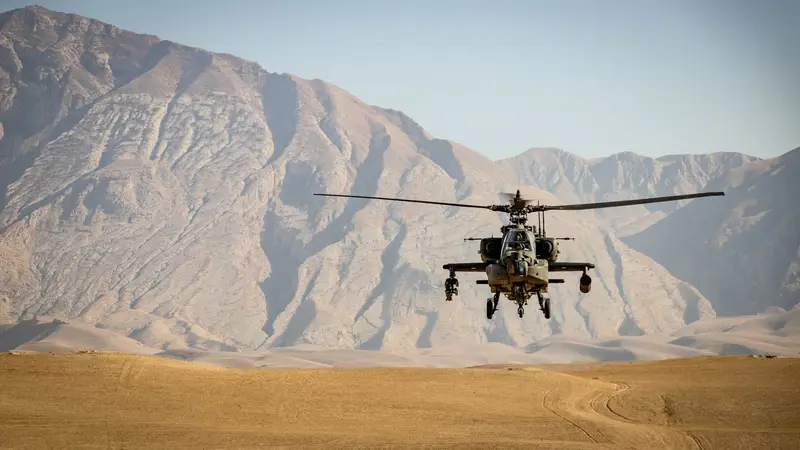
So some it was actually a propane tank that had been cut open with a bunch of HME put into it and then welded shut, and it was on one of those fishing lines that the fishermen put across the rivers or canals and then was sunk about as far as it could go in the river. And it was wired for command det. So there was a dude sitting in a house with his copper wire that was gonna try to blow that thing right when our boats went over it. So we'd never trained to that TTP. Unfortunately, we had Apaches with us today that happened, that were running low over the river in front of us, and they scared the trigger man off.
You've ever been low on the ground and the Apache's coming towards you and you're a bad guy, I could see why you run away. It's a pretty motivating airframe. But the what we had to do from that point on is we as soon as we got back to the to our tents, right, back on Camp Ramadi, is it was okay. Shit. That was a waterborne IED.
So what are we gonna do if we hit one of those? We were lucky today. What about next time? And we literally said, okay. It hits the lead boat, here's gonna be our immediate action.
It hits the secondary boat. If there's people in the water, here's how we're gonna and you just had to think it through. And so when you think of that environment, look, it was a unique experience we had at Riverine that we were literally standing up a capability that didn't exist in a combat environment. Right? And you don't you don't have those factors all come together.
But for anybody who's been in the military, you have done something similar to that, even if on a smaller scale or different scale, even if you don't realize it. It is those skills of how to systematically break down a problem set, right, and say, okay, this hasn't been done before. What's the most efficient way to do this? And then you come up with an SOP. And then you go execute it and you realize, ah, that wasn't the most efficient way.
Let me adjust it. It's like any AAR that you do that Mike's talking about. The first thing you do in that sort of hot wash debrief is you don't talk about what went right, you talk about what went wrong. And so you're constantly your own biggest critic, but from a positive standpoint of always like, okay, how do I move forward from this? How do I not make that mistake again going forward?
I think the cool thing about being veterans and the advantage that we have is in the military, when you screw something up, or you have an SOP or a TTP, standard operating procedure, training tactics and procedures. That wasn't quite right. It's a life or death situation in business. We're I think we have
Mike Taylor (link to this point)
a, we have a lot more risk tolerance than most folks. Cause we're like, Hey, what's the worst thing that can happen? Is someone going to die? Nope.
Chris Albert (link to this point)
Okay, cool.
Mike Taylor (link to this point)
Let's go after that contract. Let's develop that new product. That's how you have to learn. You have to learn. We say send it or full send.
We say that all the time in here. Hey, full send. Let's try it. And you know what? We're never gonna learn anything or move forward if we don't send it and give it a shot.
Chris Albert (link to this point)
That's cool. That's cool. What's something you wish I've asked you that I haven't asked you yet?
Alex Roodhouse (link to this point)
I mean, I think an important question for people to ask themselves when they're looking Mike mentioned this earlier is when you think about what type of team you wanna be on or what you wanna do with the transition out of the military is and maybe that would be the question, Chris, is is, hey. Talking about, like, your transition's out. Right? But I think what everyone needs to understand, it doesn't matter if you're a kid today getting out in your twenties or if you were a kid fifteen years ago in your twenties getting out. Transition is hard.
Like, the the getting out of the military is not easy, but it is doable. It's survivable. Countless people have gone through it before you, and they're out there in the business world, many of them ready to lend a helping hand. Right? And knowing that that challenge is not unique, you will be out there as a recently separated service member, and you're going to feel like a fish out of water.
I remember getting picked up for a job interview at the airport in San Francisco by the CEO's executive assistant. And I still had my three day bag with me, right? Like just my tactical backpack that had my blood type and my last four of my socials, the same one I used overseas. And maybe it was a little bit of like a a comfort blanket that I kept with me for years because I finally stopped using it. But I was a fish out of water, and you feel that way for a long time.
But use that to your advantage. Right? Like, you're you have a different way of thinking and solving problems than the vast majority of your peers out there. And let's say you were in the military for five years and you look at all of your high school classmates or college classmates that already have jobs, they're already established, and you feel like you're behind. You are behind for one moment because as soon as you get traction somewhere, you're gonna race past those people, and and you've gotta believe in that.
Like, the skill set that you've built in the military is incredibly valuable in the private sector, and you just gotta stick to that. Don't try to imitate what it looks like everybody else is doing. Go back to what you know. So here's an example. I remember one of the biggest tools I've used for a long time is SMEAC.
Chris Albert (link to this point)
Right?
Alex Roodhouse (link to this point)
Situation, mission, execution, admin, logistics, command, and signal. I mean, the five paragraph op order. It's an incredibly efficient way to analyze a problem and come up with an executable solution that you can communicate to other people. I mean, it's just that's a tool that people have that they don't even know they have. Your counterparts, they've never been trained to do anything like that.
So you're already going to be a clearer thinker that knows how to get from problem to solution.
Mike Taylor (link to this point)
I think for me, it's what do you do for fun? Because, you know, we're not in as much as we talk about BeaverFit, I don't think that's what defines Alex and I. We're passionate about our families. And, you know, we're kind of ski bums at heart. We like to be outdoors and do stuff.
And I think as veterans that are transitioning, sometimes don't focus on what your job is going to be, focus on what you do for fun, focus on yourself and understanding what those passions are for you in life, and not always about defining the success of a transition about what you're doing in your job or, or whether or not, you know, you're happy in that job. If you focus on what you do for fun, like, really do think other things are going to fall into place, you know, on their own, and you are going to land, you know, with a team in a tribe that, you know, honestly makes you happy and allows you to enjoy life. So that's the one question that we always ask people even in interviews, say, what do do for fun? If you have the day by yourself, what are you going to do to enjoy that?
Chris Albert (link to this point)
That's awesome. That's awesome. It's a great way of looking at things. That's a great interview question. Well, guys, I I really appreciate everything you guys are talking about here.
Where can people find out more about BeaverFit? Are you guys looking for people? How, how, how can my audience help you guys right now?
Mike Taylor (link to this point)
Yeah, I think we're getting a lot better on all of our social channels. So, you know, the, the, the Instagram of the world, is great because we're always kind of putting out cool installs or projects that we have going on. And then especially, you know, for this particular community and folks, I mean, LinkedIn is a great resource, and I think we share just as many stories and contents. And the cool thing about that is you're going see the stories and content from our team members. You know, I'm actually not great at it, but it's really cool to see the content that our team members are sharing on LinkedIn about, you know, what the day to day life is at BeaverFit or some cool projects that they're working on for our customers.
Alex Roodhouse (link to this point)
Yeah. And there's one other piece that we didn't even talk about that's really close to heart, which is actually a brand that we have called Grey Man Gear. What that is, it's a Grey Man Gear, it's obviously on the Gray Man principle and concept. And what that is is really early on when we started the company, we realized that the fitness industry in America was not buying fitness equipment from America. It was buying it from China.
Right? The big commercial wholesalers. It was all from China. And as we were building these gym buy, like container gyms, we were filling them with fitness equipment, and we didn't want to put equipment from overseas in there. We wanted to be from America.
And so we started looking for really good veteran owned American sources for that equipment. And what we realized is it didn't exist for the most part. And so we started it, and that was Grey Man Gear. And that is now this 100% American made, veteran owned brand. And the reason it was Grey Man is because we didn't tell anybody about it for years.
It just was the product that went into our container gyms that went to the military. If you've been training in the military for the last five years, it's almost exclusively what you've been using in the container gyms. And, more recently, particularly with the pandemic, we decided to sort of take that brand public. And that's another great resource to look at is our Grey Man Gear website and what that line is because it's super motivating to see. I mean, we have taken about 170,000,000 of defense contracts in the last five years.
All of that money has washed back into the local economy, either here in Northern Nevada, or we have supply chain all across The United States. Not sending that money overseas is one of those outstanding, like, just sort of like nobody else sees it. It's just for ourselves, but it's one of those satisfaction points that you know you've done the right thing. You know what? I'll circle back, Chris, to any other questions in terms of, hey.
What would you sort of tell people? Or what's a question I should have asked? And it's it's stick to your guns. When you know that something's right, then you do it. There was no one in the industry that was doing that at the time insisting on only American made equipment, but it's what we wanted to do.
We knew it was the right thing. That has created those 100 team members we have, half of them are in our manufacturing department. If we were sending that money overseas, that would be China's money. Literally, defense contract to us, to China. It's not the way it should go.
Right? So all of those people have jobs and are building the economy here because of that decision. So you do the right things for the right reasons, and you stick to that, and it will benefit you for sure.
Chris Albert (link to this point)
Awesome. That's awesome. Well, guys, I really appreciate it. You know, as far as everything goes, I'm in manufacturing too. I love making things.
I love the fact that I hire people who make things, and and we do it here in The United States, and it it it's a great feeling. I love what you guys are doing. I love that you created this idea and that you've been putting it out there. I love talking about the entrepreneurial journey and, you know, just a salute to you guys for everything you guys are doing.
Mike Taylor (link to this point)
So thank you, Chris. We'd love to have you out here sometime give you a tour of our manufacturing facility. Likewise, like, I never knew that I would enjoy walking through manufacturing facilities and checking out different people's processes. But if there's an opportunity, love to come out and visit you guys and see how you're going through those processes.
Chris Albert (link to this point)
Absolutely. Absolutely. And to everybody out there, I want to thank you guys for listening. I hope you got a lot out of this episode. We'll have links to get in touch with BeaverFit up on the show notes for this episode.
And with that, guys, get out there and live your best lives while you can. This is Chris and I am out. Awesome. Alright, guys. There you have it.
That is my interview with Mike and Alex from BeaverFit. I I hope you got a lot out of that. You know, here's the biggest thing guys. If you got an idea, start taking action on it, alright? You don't know how that idea is gonna work out unless you get it out of your head and you start testing it.
Nothing is ever gonna come to fruition if you're just thinking about it and never taking action. These guys got out there, they thought it up, and they're putting it to action. They're growing a multimillion dollar business right now. And that's what we need to do in this community in general. It's just taking action in our lives.
You know, a lot of us, we sit around, we talk on social media, we we we put things out there, and that's great. We all need to hear a message. But unless you're out there every day taking care of your body, unless you're out there every day building relationships, unless you're out there every day taking an active role in your community, actually out there building businesses, then we're not gonna get anywhere, guys. So start taking action in your lives. I mean, we're all seeing what's going on right now with our government.
We're all seeing what's going on right now out there in the world. And if you actually wanna change something, if you actually want to take a role in changing this world for the better, you've got to be out there in the world. This is Chris Albert with the Warrior Soul podcast. I'll be back at you next week with some more awesome content. Hopefully, I'm done with COVID nineteen by then, and I'll be talking to you real soon.
Peace.
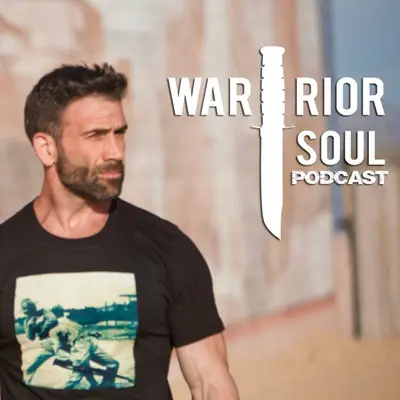
Host of the Warrior Soul Podcast and founder of Warrior Soul. Worldwide trainer and nutrition coach, contributing author at Testosterone Nation and Muscle and Strength.