Podcast episode
Adam Kokesh: Psychedelics, Freedom, and Love
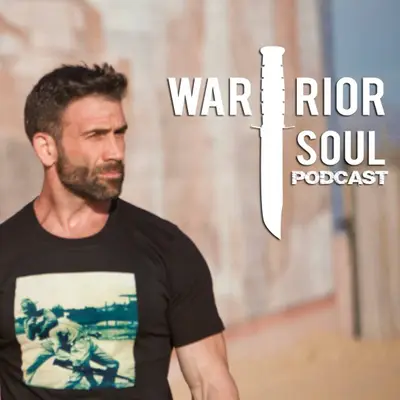
Hosted by Chris Albert
The Warrior Soul Podcast
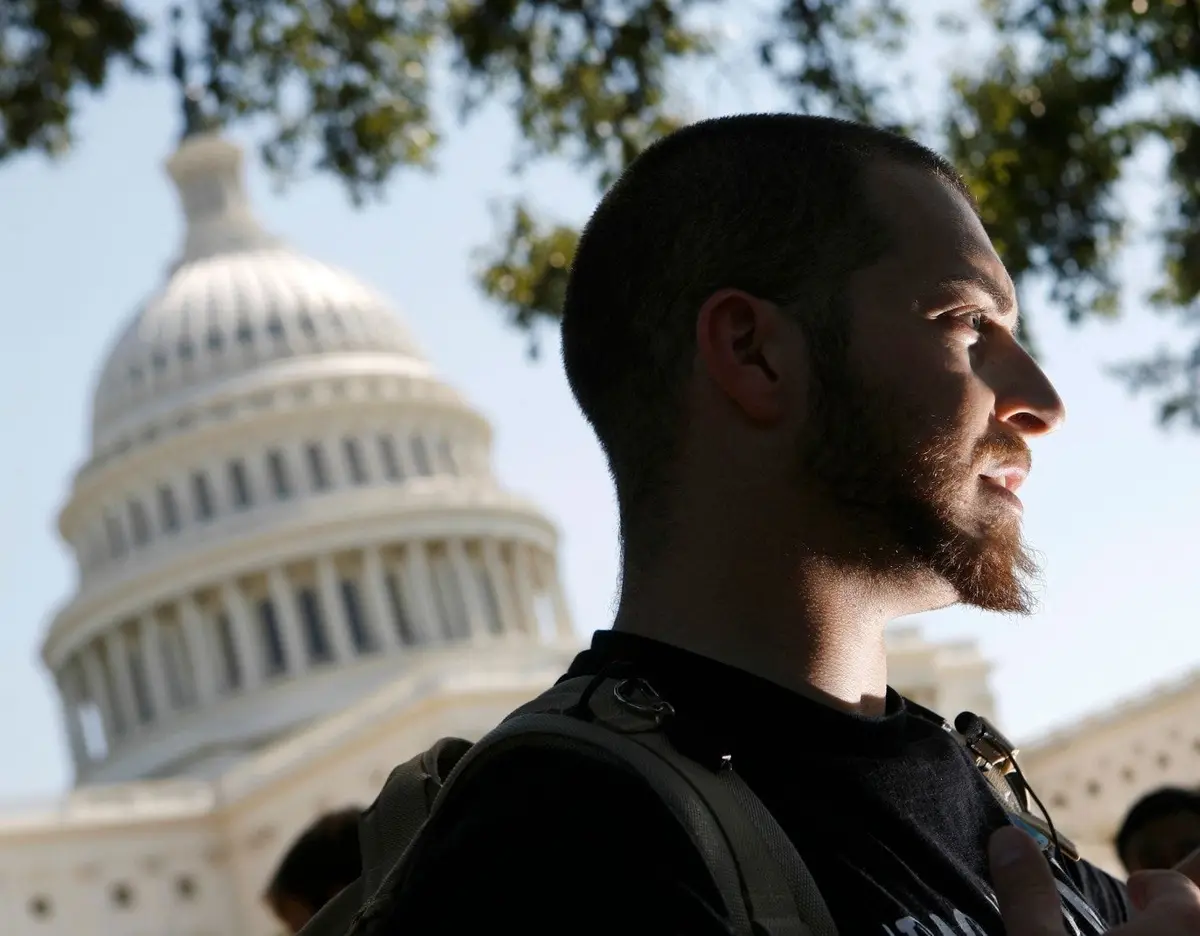
Adam Kokesh is a Libertarian activist, author, Veteran, and candidate for President of the United States.
Adam has a long history of challenging the status quo of American Politics. This began with protesting the Iraq War with Iraq Veterans Against the War.
Some of his most notable protests have ended in his arrest. These include dancing in the Jefferson Memorial and loading a shotgun in Washington, DC’s Freedom Plaza.
We caught up with Adam as he's been homesteading on his ranch in Arizona. We spoke about psychedelics, the legalization of drugs, and other current events.
To catch up with Adam's show The Freedom! Line head to https://odysee.com/@adamkokesh:2
Transcript
Machine-generated from the episode audio and lightly edited — may contain errors.
Chris Albert (link to this point)
What is up, Warrior Soul Nation? This is Chris Albert Palmitessa, and I am joined today by a good friend, somebody that I've had on the show before, mister Adam Kokesh. You guys might know him from Adam versus the Man. You might know him from a lot of the other places he's popped up. He, he just got through some things back in December, and I wanna talk to him about that.
He's also a United States Marine Corps veteran and an author. Adam, how are you doing today, man?
Adam Kokesh (link to this point)
I really like how you said through some things there. It's a reference to what happened to Adam in December. But I am doing great, man. I am living my best life. I am living a principal life.
I am living a life full of joy and pleasure. And today, in particular, I got to wake up next to a beautiful woman, my girlfriend, Joey Lee, GM Mary Jane, who's an also who's also an activist. And I got to go outside with my two incredible dogs. One's a beautiful traditional brindle. The other is a chocolate brindle.
They are otherwise twin sisters, Shar-Pei, Rottweiler, Pitbull mixes. And I've been playing with my chainsaw, trimming up trees on mushrooms, and, got got a a a big, supply of capsules in the mail recently, so I have a a big enough stash I'm I'm comfortable experimenting with. I took, six capsules this morning and got an interesting buzz on, and then I took another six right before this pod podcast. So yeah. Right.
We gotta keep this to an hour or it's gonna get really interesting. Yeah. Yeah. No. Yeah.
Absolutely. I'm coming down off the first dose and with the tail of that riding up into the second, I think, I would I would say, kinda building That's for my afternoon. After this, I'm so I'm gonna go right back to trimming trees, and I have, know, a 16 inch electric chainsaw that I run off solar power, and it's amazing. I get I I with the mushrooms, I have a beautiful enhanced sensory awareness and just love and appreciation for the joy of being in nature and vibrancy of the colors around me and, sort of heightened spatial awareness, that enhances the experience for me that is a creative artistic one where I'm I'm dealing with juniper trees anywhere from 10 to 30 feet tall, and I'm basically bonsaiing them. And a lot of that is trimming up dead material, but and and fitting, but it's a lot of shaping and kind of artistic development of my incredible 10 acre homestead here in the mountains of Arizona, and I absolutely love it. So I'm in heaven today, brother.
Chris Albert (link to this point)
That's outstanding, man. You're free. You're out there doing this work, living on the land. You know? We were talking about microdosing just before we hit record here, and I was telling you about my experience because I I enjoy mushrooms myself.
I think they've helped to expand my mind. I've I've used microdosing before to to enhance my experiences, but also to to maintain that or or to attain that that sharp visual acuity, that that mental creativity. I've done them, you know, while practicing jiu-jitsu. I've done them while while training. I've done them while writing.
Done them while while doing a bunch of different things, and I love them. The only thing that happened to me was I took a little bit too heavy of a dose the other day. I went out to dinner, and that could be a really tough experience if if people do that. And one of the things you're looking to do
Adam Kokesh (link to this point)
Well, hold on. I hold on. I before you move on from that exact narrative, narrative, I have to point out that you got it in mislabeled chocolate.
Chris Albert (link to this point)
Right.
Adam Kokesh (link to this point)
And the only reason that you would combine mushrooms with chocolate aside from, you know, the people like who like combining cannabis edibles with chocolate, although it's a different quantity problem, is because of prohibition, man. Otherwise, you would you would have it in packed concentrated just standard gel caps like I'm using right now where the where I get to experiment with the dosage. But from the very beginning, I know exactly how many grams of mushroom material I'm getting. In in in this case, it's point seven per cap. So when I took six earlier today, that was three point six grams, and I just took another three point six grams.
So that's, like, you know, an eight and then another eight.
Chris Albert (link to this point)
Yeah. Yeah. That's But that's important to think about, you know, being able to get that exact dosage from something. Yes. I think particularly because there's so many potential benefits to these things, you know, for the veteran community, for for overcoming a lot of the the the the things that we've endured over the past twenty years.
But, also, I think for society in general, you know, dealing with depression, dealing with with fatigue, dealing with with lack of mental acuity and things like that. I think there's so many potential benefits there Yeah. Using psilocybin and other psycho psychedelics as well. But but the lack of consistency in dosage is an obstacle. Right?
Adam Kokesh (link to this point)
Yes. And it's one that we're on the verge of completely overcoming. It's a very exciting time to be alive.
Chris Albert (link to this point)
Right. Right. And I I was down in Miami last weekend, and I I was doing a a stand up comedy bid down there. A few of my friends came down for what they call the Cannadelic Conference, and they were they were talking about a lot of these different things there. There's so many things on the horizon.
Right?
Adam Kokesh (link to this point)
Well, you know, I run a veteran's nonprofit called Home Front Battle Buddies, and I have to say it's an unfortunate time for us since our program director, our one full time staff, Edward Valeo, was in federal custody right now and and maybe for some time. But we are like the the the battering ram, I think, knocking down the rest of the drug war. You know? And it it's it's accelerating. We have the template with cannabis legalization.
But there was something that you were talking about before I forget. This might sound kinda random, but I I I think you'll see it connects back, is that there's an inherent inclination as part of the human experience that is you know, misery loves company. People who aren't comfortable doing drugs or expanding or experimenting with their consciousness don't want other people to enjoy that either. You know, the assholes, the Karens, the tyrants of the world, the the people behind the drug war. Mhmm.
But there's something even inherent in someone like me, and and I I I've done, you know, with DMT about 200 launches. I've done, you know, a week's worth of Ayahuasca. I've done mushrooms a a few dozen times. Seriously, in a few dozen times in, you know, micro or sort of threshold doses, like, you know, earlier today. And yet I feel like oh, an LSD.
I've done LSD almost recently. I've done it a bunch, but, like, I've done LSD a few dozen times. But all of that really adds up to tiptoeing into the waters of what's possible with these drugs. And there's something even inherent in me that's afraid of that. Yeah.
That's a that that that's that that is and and, you know, you told me the story of of your accidentally I don't wanna say overdose, but, it's literally overdosing in an instance that you dose more than you intended to
Chris Albert (link to this point)
Right.
Adam Kokesh (link to this point)
Experience with with mushroom chocolates. And it didn't make you want to do it any less, and you said it was because you were experienced. Right. And it it it just occurred to me that what is that experience, that comfort? It's overcoming of an irrational fear.
Mhmm. And what is that ultimate fear? Self knowledge, self acceptance, and being truly ready to die.
Chris Albert (link to this point)
Right.
Adam Kokesh (link to this point)
And I have come to accept it as a means of the consciousness, the unique spiral of energy that is me diving and dissolving back into the great infinite of the universe that my consciousness is uniquely blessed to be aware of. And that seems to be the to me, the ultimate purpose of life. And there is something with psychedelics that for me is a unique experience Mhmm. That I I think can be achieved through meditation. I don't think drugs are necessary for this, but it's a sensation for me with a lot of psychedelics that everything is right in the universe.
Right. And it's a kind of acceptance. I mean, everything is right in the universe. Every molecule, every atom, every subatomic particle is exactly where it's supposed to be right now. And it's true, and you can rationalize your way into it.
But to feel it, to know it, to have faith in that, to incorporate that in your understanding of what it means to be a human, to be conscious. That's an incredible gift that I I want everybody to have, and I want more for myself. But I have to be honest. What you triggered in me with your description of that is that there's a certain fear in it for me. Mhmm.
I I'm afraid to do to to go deep. I'm afraid to get heavy with it, but I I want to. And I and I'm I've by by even talking about it like this, it's I don't get to have these conversations very often. You know? I am affirming my intent to do that, to explore and and and to go deeper and and to share that experience.
Chris Albert (link to this point)
Right. And I think what's important what's an important perspective for me is to look at these things as teachers. Right? Things that are gonna teach us about ourselves. There's an inherent fear in that.
Right? Because a lot of us don't ever take the opportunity to get to know ourselves. And in some ways, that could be one of the scariest things in the world to do because Yeah. You're unlocking things the mind
Adam Kokesh (link to this point)
shame and embarrassment.
Chris Albert (link to this point)
Yep. Yep. You're unlocking things in your mind. Process of growth.
Adam Kokesh (link to this point)
Forever. Yeah. Yeah. And and We fear the pain of growth.
Chris Albert (link to this point)
Mhmm.
Adam Kokesh (link to this point)
Exactly.
Chris Albert (link to this point)
Exactly. And, you know, some of these things and and this is the thing I I think that's important to note here. You know, like, I've done I've done DMT. I've done acid. I've done psilocybin.
And I think one of the misconceptions out there is that, you know, people can these are just party drugs. Right? And that people are just out there trying to feel good and things like that, which I again, we can get into the debate about what's wrong with people trying to feel good. Wholeheartedly endorse that too.
Adam Kokesh (link to this point)
Right. Exactly. Exactly. I don't I have any moral problem with that. Right?
Chris Albert (link to this point)
But but here's the thing. Like, there's also this other aspect of it is if if you take too much of it out of at a time, it could be a very unpleasant experience. Right? And that unpleasant experience isn't necessarily a bad thing. It's it's an experience that's teaching you about yourself, but you also have to take the education with it.
You have to treat it like an educational experience. And if you're not ready for that educational experience, that's where a lot of the the negativity can come in, I guess. Right? Do you agree with that?
Adam Kokesh (link to this point)
I think that's overly simplistic, but yes.
Chris Albert (link to this point)
In some ways, all this is going to be. Right?
Adam Kokesh (link to this point)
Right. I mean, it's yeah. What what I mean, I it it's impasse I I mean, what what what the ultimate lesson is do more drugs. Mhmm. In in a healthy, conscientious, thoughtful, and yet freewheeling and open artistic creative way, do more drug drugs.
Do more drugs than you've ever done. Do more drugs than is legally allowed. Do more drugs than society thinks is okay because it's it's an affirmation. And and and and even if you say, I I don't wanna do drugs for whatever particular reason of your own mental health. Take more charge of your consciousness.
I have been fooled for much of my life into thinking that freedom starts outside. But when I went to jail in 2013, it was a major raising of awareness for me to experience being so much happier than the guards who were guarding me, you know, working their miserable government jobs, being a celebrity in jail, getting tons of fan letters and getting the newspapers and magazines and fun stuff that people would send me printed out from the Internet and getting to write letters and all that. Like, I had a great life in so many ways, and I was I was so happy. And I had a righteous cause, you know, above all else. But I came out of that with with a a really deeply ingrained appreciation for some fundamental truths and and wisdom that goes along with an experience like that.
And it it manifested as a section in my book called emotional freedom, And it's a sort of psychological sovereignty of taking charge of your emotional state of being at all times. And, yes, we are animals, and we will always experience responses to stimuli. But as long as you have a healthy mind, there's that gap between stimulus and response. I would say it's that you you you will have responses in your animal nature that are beyond your control, but the gift of human consciousness is that the response to the response is your choice. Did you always get to choose your demeanor, your outlook, your attitude, your frame of mind, your choice of how to engage with your circumstance in your life.
And that is such a unique gift and that we are fooled into throwing away by so many who would exploit us. And so for for me, politically, I've I've come to this point where it's like you can't argue facts and logic with people who are emotionally committed to their positions. And I I I I'm realizing in so many ways, so was I politically, but what I really want to share is this race perspective of of self sovereignty that leads to self love and fearlessness that makes the rest of the political conversation essentially irrelevant. And I I'm compared to this, I'm kind of bored with politics.
Chris Albert (link to this point)
Right. Right. Well, let me ask you this because I think it's important, and and I'm gonna ask you a follow-up question after this. What is what is self sovereignty? What does it mean to be a sovereign person?
Adam Kokesh (link to this point)
So I have explained that, I think, just now in the emotional, psychological, spiritual sense. But in the physical sense, to to complete that definition, I would I would just say that it's the ability to exercise your will without forceful interference. But then there's also, you know, in a practical material sense, that is the ability to to do what you want and and live how you want and build the life that you want.
Chris Albert (link to this point)
Right. Right. And, you know, one of the things that I've I've noticed about society, over the last few years, but but I think it's been throughout our history. I mean and and you point this out a lot is that, you know, we like to think of ourselves here in The United States as as being a free country, a a a country that that values individuality and things like that. But the reality is so many people seem to be running away from that for some reason, particularly, you know, since COVID nineteen happened.
But I I think it's been been a a much larger trend over the last, you know, century or so where we've seen increasing power going to the federal government. We've seen people sacrificing a lot of their freedoms in exchange for what they would consider security or or feeling safe. And we've seen people, you know, I I think in some ways have almost a violent reaction to the idea of individual sovereignty over the last few years. Have you seen that? What do you think about
Adam Kokesh (link to this point)
Yeah. Yeah. Let me let let me let me yeah. That's a great question, and I appreciate the facts and observations behind everything you said. Allow me to suggest a different model that is at the core of my rational optimism that I think is very essential to us understand the human experience that explains some bigger trends that you know are part of the human experience.
And I'll start with citing professor Pinker, Harvard professor, did a great TED Talk called the surprising decline in violence based on his book, the better angels of our nature, in which I believe he academically proves beyond refutability that human violence is on the decline. Now I I dispute some of his explanations and especially his understanding of government along the way, but I believe that his understanding, his observation of violence and his accounting for it over the course of human history is inevitable. It is irrefutable, and it follows a kind of radioactive decay curve, which is really beautiful and squares with my understanding of the essential progress of life itself that is seeking harmony that goes back to single celled organisms or beat out by multicelled organisms all the way up to human societies, which cooperate are gonna be more prosperous than human societies that are constantly embroiled in conflict. No shit. Markets, evolution, the nature of life itself favors cooperation, favors that harmony, does not favor violence.
And we are evolving. It is fundamental to the nature of intelligent life that we are evolving out of the cycles of trauma and violence that have defined prior generations. We are not only living in the most peaceful times in human history, but as professor Pinker demonstrates, this is inherent to the nature of human progress. Now, of course, quick caveat or set of caveats. Yes.
It is not inevitable that we achieve a voluntary society. There could be a disease that wipes us all out. There could be an asteroid. The the there could be, an alien species, blah blah blah blah blah. Barring those cataclysmic events, however, it is inevitable that intelligent life, that human civilization will progress towards voluntaryism being the default one way or another.
And we see it now to connect it with some things that are very materially aware to you right now aside from that general decline in violence and the significance of that. Technology, Moore's law, computers, industrialization, these things are not linear. They are exponential, and they drive us getting to the point of superfluous material well in terms of our ability to provide food, water, clothing, shelter, energy, entertainment, etcetera, medicine, you know, all of those basic human needs that we currently live in an artificial scarcity and fear associated with right now due to the systems of social organization that we live under, due to governments of coercion and centralized control, central planning by any other name. It is all the same bullshit given to us by politicians who want to use fear that they spoon feed us through propaganda into a kind of subservience. And this is one of the reasons they are so afraid of psychedelics is that it is an overcoming of that fear.
It is an acceptance of reality.
Chris Albert (link to this point)
Gotcha. Gotcha. One one thing for for our audience who who might be new to you, I think a a large part of our audience already knows who you are, But but for those who are not familiar with your work, could you define voluntary society?
Adam Kokesh (link to this point)
Voluntaryism is a term that expresses a specific ethical grounding of libertarianism, which could be very inclusive as everybody who believes in moving towards a more free society, and I endorse the use of the term libertarian that way. But voluntaryism specifically describes the ideal of all human relationships being voluntary. That is free of force or fraud or coercion. And to me, that's a simple ethical foundation of freedom based on self ownership, based on compassion and love and respect for human sovereignty, human intelligence, the the human spirit, the individual human soul that we all deserve respect as such, and to be treated ethically. And we define ethics as libertarians generally based on self ownership and the nonaggression principle.
And for me, specifically, that's best described by the term voluntaryism and that ideal of all human relations relationships being voluntary.
Chris Albert (link to this point)
Right. Right. And so you you just mentioned prior to that that you think that a progression toward volunteerism is gonna be inevitable based on based on what you're seeing out there and based on, you know, the the the laws and principles of of of I'm try I'm trying to remember here. My brain's a little fried at this point. But but you think it's inevitable that we progress toward some sort of volunteerism. Do you think, like so and and the reason I'm asking is because, like, I'm looking out at the world right now, and I I agree with you on a lot. Right?
I disagree with you on some things, but I agree with you on a whole lot. And I look out there at the world, and I see some of these people. And and they are, you know I see fear. Right? And and maybe that's just Twitter or or social media speaking to me.
And and I know that you've you've taken a hiatus off of off of Instagram, for example. Right? But these
Adam Kokesh (link to this point)
I gave up I gave up where I was so severely shadow banned.
Chris Albert (link to this point)
Right.
Adam Kokesh (link to this point)
Right. Like Facebook.
Chris Albert (link to this point)
I'm about there myself as well. But but, yeah, I think I think I mean, do you see some of these people coming around? How are they gonna come around is, I guess, what I'm getting at here?
Adam Kokesh (link to this point)
I don't really understand the question.
Chris Albert (link to this point)
Well, I like you said, I you said that that a a progression toward volunteerism is is inevitable. Right?
Adam Kokesh (link to this point)
Right.
Chris Albert (link to this point)
And what I'm saying is I'm looking out at the world, and I'm seeing people on Twitter, for example, you know, talking about unvaxxed people like they are the the, you know, Satan spawn and, you know, people calling for more totalitarian authority from the federal government
Adam Kokesh (link to this point)
Mhmm.
Chris Albert (link to this point)
And people cheering on certain things.
Adam Kokesh (link to this point)
Sure. Wait. Okay. So I left this out of my description of human progress with Pinker's curve towards an a society of universal nonviolence. And then I I do see it as a process of two steps forward, one step backwards that happens on many different dynamics in many different levels and many different areas as well.
So at any given time, you can point the steps backwards. But if you really, with intellectual integrity, zoom out at the bigger picture in the course of human progress, all of that becomes insignificant. And unless you can show me something that alters one of those fundamental dynamics that that human beings are carbon based life forms that have a consciousness and awareness and fundamentally wanna love each other and live well and be healthy, you know, and live in harmony with our world, our environment, our society. None of that really changes. I I it it's it's extremely rational optimism.
Chris Albert (link to this point)
Right. Right. So so yeah. And it is because, like, I mean, I just look at the history of the world from, like, you know, Genghis Khan through World War two through through everything going on now and, like, I think my biggest fear at the moment is that, you know, we are marching closer and closer to authoritarianism here in The United States and and getting further and further away from that. And that's I'm I'm I'm extremely fearful of that.
You know?
Adam Kokesh (link to this point)
It's very superficial.
Chris Albert (link to this point)
Yeah. You think so.
Adam Kokesh (link to this point)
These deeper dynamics. Let me point out something else, and this was an epiphany I had in jail in Colorado because I've been turning this over a lot in my mind, and it's been kind of my existential COVID crisis of the last sort of year and a half leading up to December once we got settled into this thing up until I saw it for what it was that understanding fiat currency even, you know, if you Right. If you study Bitcoin, if you study real money, if you know the significance of of gold and silver as money, then fiat currency is is kind of an illusion. Mhmm. It's a claim to wealth backed up by the violence of the state Right. Which could disappear at any time. At at at any moment, they fail to be able to convince the enforcement class of cops and soldiers to point guns at peaceful people to collect taxes, then it all goes away, and they know that. It's extremely fragile. So sorry.
I was going somewhere with that and and lost my train of thought because I'm so enthusiastic about these ideas. What was the question that you left me with there?
Chris Albert (link to this point)
So so I was expressing my fear that we were getting closer and closer to authoritarianism.
Adam Kokesh (link to this point)
That here. Sorry. Okay. So the the there were a few things that occurred to me in jail specifically that are signs of desperation Mhmm. That, they create the illusion.
They want you to think what you've just expressed. They want you to be afraid. But, really, the obscene concentration of wealth, and we've seen this in in paper wealth over the last, you know, two years with COVID that that billionaires have gotten, you know, their their wealth doubled or whatever it is. There's so many different metrics of it. The rich have gotten richer, and I don't wanna say the poor have gotten poor because the poor have been staying about the same.
It's not like it's got it's it's just gotten more frustrating.
Chris Albert (link to this point)
Right.
Adam Kokesh (link to this point)
They've got us in this period of of psychologically being beaten down, but that's part of the illusion. And it's part of the desperation that they need right now to keep us trapped in this paradigm because we're I and and I hate to sound like a like some kind of hippie guru here, but it's going from the paradigm of of scarcity to a paradigm of abundance. But it's not just the paradigm. It's the fucking economic reality that is undeniable post industrialization in the high-tech world that we have been capable of for some something like ten to twenty years of of providing everybody on Earth with an abundance of basic needs. And that being kept from us to maintain the current paradigm is is so fragile, and it's about to go away.
And and and and and this is where we see the acceleration of technology driving a kind of material egalitarianism that the the superclass fears, but they they really have no need to. And I I I truly believe that we are on the the verge of that just all disappearing, becoming irrelevant. It's pretty exciting to be alive right now and see this, have a sense of it, to to see the world as it is through this awareness.
Chris Albert (link to this point)
So you actually think that that everything going on with COVID and everything over the last few years is kind of like a last gasp desperate move?
Adam Kokesh (link to this point)
Yes. They can and and and and let me let me point to war is the health of the state. Right? They are less capable of making war than ever before because the world is more connected than ever before.
Chris Albert (link to this point)
Right.
Adam Kokesh (link to this point)
And the the idea that they can scare us with the specter of a virus today is still very real and tangible and has disastrous painful results for millions of people. However and, again, I'll go back to the work of Pinker as he observes the history of human warfare measured in casualties. Because now with the with the technology and the hindsight of history, we can look back and say, wow. By population, even going to World War one, World War two, Vietnam, Gulf War, wow. The the the fatalities have gone down so much.
And it it used to be that people were so fucking gullible that governments, politicians could lie millions of gullible young, mostly men into putting on silly costumes and meeting in the middle of a field where none of them live and killing each other because they're wearing different colors. When you put it like that, you go, holy fuck. Force on force war of human beings destroying each other with machinery just is not compatible with the Internet. And the best they've been able to get away with in our lifetimes I was born 1982, forty fucking years, and I was in in the worst of it. But the worst they could get away within our lifetimes was the global war on terror and the invasion of occupation of Iraq and Afghanistan.
And while financially, those were on par, actually, with a lot of prior military adventures, in terms of the human body count, they were still in line with Pinker's curves. They could not get away with what they got away with before of widespread death and destruction. Even in the age of modern communications, I think we saw, you know, in the age of television, Vietnam being the first televised war Mhmm. That we just we we have the technology. You couldn't fucking hide the gruesomeness of it.
Sorry, people. It's gonna be in their faces now. And they couldn't get away with what they thought they could get away with because of that. And and that those fundamental trends are only accelerating.
Chris Albert (link to this point)
Right. And I I what I agree with you on here is that I think, particularly with The US withdrawal from Afghanistan, a lot of veterans realized they'd been hoodwinked
Adam Kokesh (link to this point)
Yeah.
Chris Albert (link to this point)
The whole time. And it was a really, really it was a really sad thing to watch, but also a very encouraging thing to watch within the veteran community beca it was sad because, you know, these guys had dedicated so much of their lives and so much of their being to this cause. But at the same time, it was also encouraging because people are realizing what these people have done.
Adam Kokesh (link to this point)
We were all taking it as a teachable moment.
Chris Albert (link to this point)
Right.
Adam Kokesh (link to this point)
Even for people who are on the pro militarism side of that, we're like, fuck. We really need to reconsider some shit, and that was beautiful. The failure of Afghanistan could not be hidden or spun in in any way that that gave anybody confidence in saying it was worth seeing my buddies die.
Chris Albert (link to this point)
Right.
Adam Kokesh (link to this point)
I came to that acceptance with Iraq a long time ago, of course.
Chris Albert (link to this point)
Right. And I'm I'm with you on that, and I think that it's gonna The US is gonna have hella pay if it gets us into another war like that. And and I really think that that these types of ventures are not worth it, and I hope that more people realize that as well.
Adam Kokesh (link to this point)
Yeah. I mean, that's that's you know what? Let me let me dive in on that because that's almost superficial to me at this point. As as critical as it is, the way I would describe my own progression was going from, you know, it's not enough to be against the war that I was a part of with Iraq Veterans Against the War. It's not enough to be against the global war on terror, which is based on lies and false premises.
It's not enough even to be against the military industrial complex as a corrupting influence on American foreign policy and blah blah blah, promoting war crimes and blood for oil, etcetera, etcetera. It's not even enough to be anti militarism, which was critical to me, and a lot of libertarians kinda skip this phase. But the very concept of standing armies was repugnant to many American founders even because they realized that a decentralized militia based defense was the righteous alternative that would actually defend the people compared to a centralized military, which would inherently defend governments as was their experience with militaries and standing armies defending the monarchy powers of Europe. And so even deep so so I have come to recognize it was very important to me in engaging with even the the political aspect of this and as we're talking about Afghanistan and other veterans, what what I hope is coming out of this is not just my own ideological preferences or hope that there's a, oh, we're not gonna buy this shit again because veterans have been through that before. But that there's a fundamental rejection of militarism itself. And I have gone from being a libertarian leaning centrist, militarist interventionist who volunteered to go to Iraq to being as anti militarism as you can get. But, of course, as you know, there's one step deeper in that, which is being anti coercion and understanding that so many of our governmental institutions today are fundamentally premised on faulty ethics at best. Think that that would be put nicely.
Fundamentally evil, corrupt, and unethical.
Chris Albert (link to this point)
Right.
Adam Kokesh (link to this point)
Because they're coercive.
Chris Albert (link to this point)
And once you open your eyes to that, it's it's literally everywhere, you know, living our lives at the barrel of a gun and and doing things simply because and and I don't think people a lot of people realize that they're living their lives at the barrel of a gun, but they are. But one thing I wanna touch on before before we head over to that too is, what the hell was I gonna say here? Because, you brought up something. When we think about this this this anti militarism, and and and anti coercion, I think that, you know, we've seen oh, this is what I wanted to bring up. And it it's completely unrelated, but it's freaking it it is related.
So when we talk about Iraq and Afghanistan, we talk about the global war on terror, and we think back to, like, the 2000s when we had, you know, the the red, orange, yellow code and things like that, one of the things I've noticed is that their the the patterns have been the same as far as what they tried with COVID. Right? So what I noticed back then with the global war on terror was that it was they were literally trying to infect our minds with fear. They're still doing that today with COVID.
Adam Kokesh (link to this point)
Yeah.
Chris Albert (link to this point)
And and if you look closely at both of those times, and there's a lot of people who are on the Internet today who weren't weren't even, like, consciously on the Internet back then or or or aware of the news, but it's the same thing that they're doing over and over again, with two different things.
Adam Kokesh (link to this point)
Well, I wanna say a couple things about that. One about COVID, it could go kind of one of two ways in the sense that they exhaust their ability to do this with COVID, and this is, like, a last gasp kind of experience. Right? But my greater fear is that they're going to release or worse virus is gonna come along. Doesn't really matter which that is gonna be genuinely a type of of threat like they've made out COVID to be that, oh, you know, anybody who goes out without a mask is is putting your grandma's life at risk, and and they're they're insensitive assholes and etcetera, etcetera.
But the the greater progress, I think, is is still apparent here. And even if it goes that way, there's a sort of limit to that that is really prescribed by technology and awareness. And one of the things that I've been saying since the beginning of COVID like I said, I was wrong about the timeline. It's gone longer than I than I really thought being this bad, but only bully us into bubble boy world or or, you know, hazmat suit world where, you know, in order to be in areas that they control, you have to be wearing a hazmat suit. But if that's not relevant, eventually, they will lose control of all such areas or they will become irrelevant.
So I even then, you know, I'm I'm not really worried. I I still see COVID and COVID ism and and and the the COVID racket. And and for I've been railing about this from the beginning, all the destructiveness, you know, and and everything with lockdowns and masks and blah blah blah blah, every bit of coercive anti science policy that's come out of this. I still see it as as just one more step in human progress. You know?
They can't make war, but they can scare us about a virus like this. Okay. Alright. Let's see what you did there. Yeah.
Chris Albert (link to this point)
Right.
Adam Kokesh (link to this point)
Yeah. It might get worse for a while. There might be, you know, a a a big step backwards with what you might describe as medical tyranny, but, I don't see it interrupting the overall flow of human progress.
Chris Albert (link to this point)
Well yeah. Adam, what what I wanna bring up here too, because I'm gonna tie the last two two things together. When we're talking about, you know, nonaggression and and being anti militaristic, there's a lot of guys out there who still kinda hold on to the militarism, right, as you mentioned. But at the same time, they look at something like what's going on with COVID, and they they they consider what the what the federal government is doing now to be tyrannical. But they they they kind of evolve from the same thing, do they not?
If you're militaristic and you're supporting the idea of of militarism, you're also kinda supporting that kind of power within the federal government. Right?
Adam Kokesh (link to this point)
Did I, on the last episode I did with you, give my bid on the difference between warriors and soldiers.
Chris Albert (link to this point)
I believe you did. It's been it's been a while, but I believe you did, and I've heard you talk about this elsewhere.
Adam Kokesh (link to this point)
Okay. Well, I'll just summarize then to connect it to your question there or your point. But the difference between a soldier and a warrior is that a a a warrior is someone who puts his life on the line to protect people who can't protect themselves and to do the right thing no matter what the cost. A soldier is someone who puts on a uniform to get paid to kill for politicians or to help people kill for politicians. Right.
And when you give up that distinction, yes, as you said, you are inherently empowering a central authority. And this is why I think it's so important to challenge the censorship that I've been subject to and to really get to the heart of the false premises of of the the whole COVID racket, not just should we be afraid of this or not or is, you know, is is ivermectin the right treatment or not? Those are kinda superficial. But Right. Is is a is does any biological threat justify coercive government?
No. The answer is still fundamentally ethics apply no. No matter what specter of fear you raise, does that make ethics irrelevant? Nothing. No threat makes ethics irrelevant.
And this is a a big step backwards with COVID ism, but, you know, again, just part of that course of progress.
Chris Albert (link to this point)
Right. Right. I know I gotta let you go here in a second, but but I wanted to talk to you a little bit about this lifestyle you're living out there because it sounds sounds pretty awesome. It sounds like you you you've you've really kind of, you know, embraced this this whole philosophy and and you're living it out. You know, can you talk a little bit?
I know you mentioned you're out there. You've got you've got a homestead. You're taking care of that. How this all come about, and and how long you've been working to to do that?
Adam Kokesh (link to this point)
Well, at first, it was kind of a financial thing to say. I don't wanna be living on the road out of a RV trailer some point. Well, how do I wanna live? And it's always been part of my life plan, my version of the American dream to buy a raw piece of land and build a home. And so I went to the Earthship Academy in Taos.
I learned how to build earthships, and I bought 10 acres here in the mountains, and that was about six years ago. And I am just so blessed to have picked something that so fits with my values and and and preferences for climate and community and and everything else that I have been able to build a vision for a life around this land, and I'm living it. And to to bring it back to, like, you know, the three kinds of freedom, I am rich in in all of them. I am as healthy as I've ever been. I feel as in control of my mind and my emotions as I have ever been.
I have access to all the food and and drugs I could possibly want. I get to be healthy and get exercise and make love and art every day of my life. And I have rich relationships and friends all over the world and all over the country and throughout my community, and I get to just live an incredible life out here that I've built for myself, that I am building into, you know, a a lot of things even greater in terms of my family, what what we are doing here with bringing in additional partners to our relationship and having kids with the nonprofit Home Front Battle Buddies, with declaring sovereignty as Gardenia with the Gardenia Sovereignty Project, to my voice in independent media as Adam versus the Man, and I absolutely love all of it. I don't know. Does that answer your question?
Chris Albert (link to this point)
No. I think that's awesome, and I think that's inspiring. You know? For for for the audience at home. Like, let's say somebody's listening to this, and they're they're they're trying to start to figure out how to do this stuff for themselves.
You know, what are some steps that they could take? I know there's a much more complicated answer to this, but but what are some immediate steps they could take in their lives to maybe move toward this?
Adam Kokesh (link to this point)
Step back, meditate, and really consider what false assumptions are holding you back from redesigning your life from the ground up based on what's really important to you, based on your highest vision for what your life could be. Mhmm. And there's a a sort of yeah. The material explanation of that could go on forever.
Chris Albert (link to this point)
Right. Right.
Adam Kokesh (link to this point)
But just reconsider where do you live? What kind of home you live in. Is it portable or not? Mhmm. What does it take to maintain it?
Are you off grid and self sustaining or not? With your job? Are you working for the man, or are you working for yourself? Are you paying taxes, or have you figured out a way to escape the average tax paying American dilemma where you are working for government literally half the year, not just from what's taken out of your paycheck, but when you add up all the fees, fines, and hidden costs. Yeah.
It adds up to your working for government half the fucking year. Stop doing that if you can. I mean, why why you better if you if you're gonna do that, you better have done the the analysis and have some damn good fucking reasons to be subsidizing government with half of your labor hours. That's that's fucking insane. You know, where do you get your food, your water, your electricity?
What relationships do you accept into your life? What fear of govern of of of false reprisal of bullshit, like making mushrooms illegal? What what fear have you allowed to define your lifestyle? How would you live if you didn't have any fear, if you were free of the judgment and expectations of others? If your self love was so abundant that you never doubted yourself, that's a good place to start.
Chris Albert (link to this point)
That's awesome. That's awesome. Well, Adam, I wanna thank you again for sitting down with me. You are probably one of the most authentic people I've ever met, and I appreciate the hell out of that. And, you know, for for the audience at home, where can where are you hanging out online these days?
I know you're not on Instagram. Yeah. Where can people find Adam versus the man? Where can people
Adam Kokesh (link to this point)
Thanks. No. I appreciate it. I mean, from, like, least to most important, I'm still on Twitter at Adam Kokesh, k o k e s h, maintaining a presence there. But more importantly, for a video destination, being really welcome on YouTube anymore.
I'm a big fan of Odysee being blockchain based. That's o d y s e e. You can find me there at Adam Kokesh, a d a m k o k e s h. And my ultimate destination for everything is Telegram. I'm a big fan of Telegram now, and I have a few channels there that I promote.
One for our nonprofit, Home Front Battle
Chris Albert (link to this point)
Buddies.
Adam Kokesh (link to this point)
Mhmm. One for the Garden of Freedom, Gardenia. And most importantly, t.me/adam versus the man. You can find all those on the Telegram app by searching for them there. And I really appreciate everybody for listening this far and and and supporting what Chris is doing with his podcast and independent media.
And and I I hope you've been touched by by something I've said to be inspired to share it.
Chris Albert (link to this point)
Awesome, man. And to the audience out there, thank you again to for listening. I wanna echo what what Adam just said there. And, you know, think about this stuff. Adam brought up a lot of really awesome points today, and I think these are things that, you know, with the world as it has been over the last years, these are things we all need to think about.
Right? And and we do need to be grateful. We do need to to be thankful for the things we have, and I think we all gotta be more in touch with ourselves so we can lower ourselves better and make this world a better place. Adam, thank you again, man. To everybody out there, this is Chris and Adam, and we are out.
Adam Kokesh (link to this point)
Peace. Love y'all.
Host of the Warrior Soul Podcast and founder of Warrior Soul. Worldwide trainer and nutrition coach, contributing author at Testosterone Nation and Muscle and Strength.