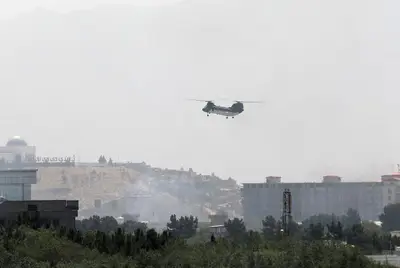
Podcast episode
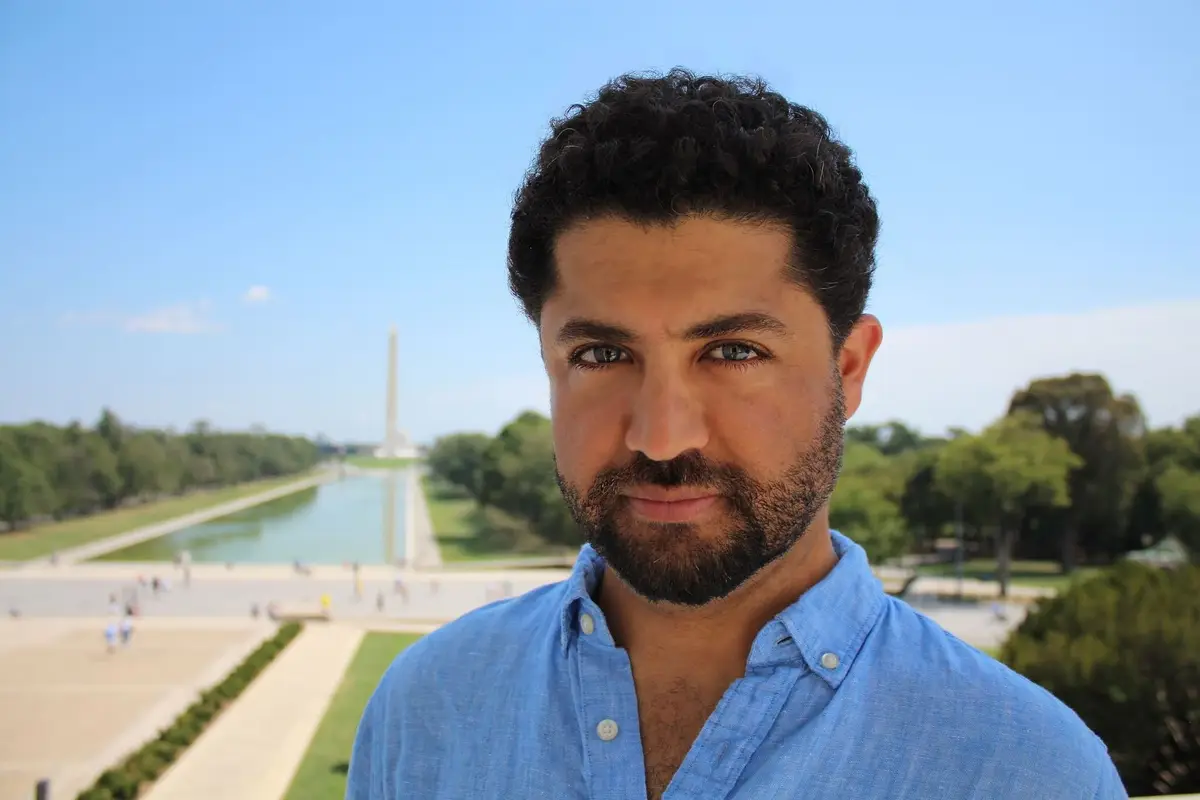
Baktash Ahadi: The Tragedy in Afghanistan
Hosted by Chris Albert
The Warrior Soul Podcast
Baktash Ahadi served as an interpreter in Afghanistan alongside the US Marines
Baktash Ahadi served as an interpreter alongside the US Marines in Afghanistan. He came onto the show to discuss the tragedy happening in the midst of the US withdrawal.
To listen on Itunes: https://podcasts.apple.com/us/podcast/the-warrior-soul-podcast/id1096901382
Baktash Ahadi was born in Afghanistan and raised in the United States. After college, he joined the US Peace Corps and went to Mozambique. As the US war in Afghanistan ramped up, Baktash decided to return to Afghanistan as an interpreter who worked alongside the US Marines.
In this episode, Baktash and I discuss the tragedy in Afghanistan and what led to it. We discuss the bureaucratic system, and lack of incentive to ever actually get anything done. We also discuss the repercussions of what this means for the Afghan people, and for American Veterans.
To learn more about Baktash Ahadi: https://www.baktashahadi.com/
To follow Baktash on Twitter: https://twitter.com/baktashahadi
If you would like to learn about how you can help the situation in Afghanistan, click the following link: WebsitePodcast Resources for Afghanistan
Transcript
Machine-generated from the episode audio and lightly edited — may contain errors.
Chris Albert (link to this point)
Alright, ladies and gentlemen. Welcome to the Warrior Soul podcast. I am joined here today with my friend, Baktash Ahadi. If you have been following the podcast for a while, you remember Baktash came on last year, we did an awesome episode together. Baktash was born in Afghanistan and then grew up here in The United States, and then went off to the Peace Corps where he served in Mozambique.
And then he after the Peace Corps, he decided that he wanted to go back to Afghanistan. And he served as an interpreter alongside the United States Marines and some other US forces. And I wanted to bring him on today. Baktash has since gone on. He's done a number of filmmaking projects.
He's he's been out there in the media. And I wanted to bring him on today because of everything going on in Afghanistan. You know, if you've been following along, you know what's happening. So, you know, with that, Baktash, welcome back to the Warrior Soul podcast.
Baktash Ahadi (link to this point)
It's good to be back, Chris. Thank you for having me. It's good to see you after all this time.
Chris Albert (link to this point)
Absolutely, man. Absolutely. I I guess, you know, the the best place for me to start here is, you know, Baktash, what are your feelings right now as an Afghani? You know, what's going through your head?
Baktash Ahadi (link to this point)
Sure. Well, appreciate asking the question. The thing that's surfacing as you ask is just heartbreak. This whole thing is a tragedy. For those of us that live in the West and live abroad, we're actually quite lucky.
And so what I feel, what many people in the diaspora feel, is a great sense of heartache for our family members and the people that we love that are still in Afghanistan, are still trapped there. If you turn on the news and go on to Twitter, I mean, the debauchery that you're seeing at the airport is absolutely devastating. Like the day to day, hour to hour, minute to minute of how mismanaged that whole process is is really heartbreaking. So that's what's surfacing right now, as you ask.
Chris Albert (link to this point)
You know, one one of the things to mention here is that you've spent a good amount of time over the last decade in Afghanistan. Right?
Baktash Ahadi (link to this point)
Correct.
Chris Albert (link to this point)
How how much time were you there?
Baktash Ahadi (link to this point)
Yeah. So my longest span was, three years straight from 2010 until 2013, and I've done intermittent trips here and there. But my last trip was in December 2020. I went right during the during the Covid pandemic because I wanted to see what the country was going through. And I had family there.
And so, yes, I've been there. I've been there a number of times.
Chris Albert (link to this point)
And what what what was the feeling back in December when you went?
Baktash Ahadi (link to this point)
Well, I have to tell you the the the contrast, Chris, between, The US presence and the NATO presence that was there from 2010 until 2015, there was a sense of hope and there was a sense of rebuilding and there was a sense of collective positivity, if I may say. And then when I went in 2020 at the end of the year in December for three weeks, it was a very different sense of being there. Partially because of COVID, but then partially because there was no US NATO presence that was visible. Right? And this was before Biden had got elected and he announced that there was going to be a withdrawal.
And so people were really in limbo of what was happening, what was going on. They weren't really sure. Going around and interacting with the population in Kabul, people didn't know how to plan for a sense of tomorrow. I'd ask people what's going on. They would tell me what they're doing then and there, how things were then and there.
And I'd be speaking, Chris, with prominent people in media and government. And I'd ask them, what's the plan? What do you want to do? What's going to happen? And people were just so reluctant to say what their plans were, to share what their plans were, if they had a plan B or a plan C.
And so I share this with you and your audience because in the context of The United States, we don't think like that. Right? In the West we're always like this is what I'm looking to do. This is what I'm trying to do. If this doesn't work then I have a plan B.
And if that doesn't work then you know worst case scenario, I'll do this. And we always have a plan C or something to that effect. And so working with working and speaking with the the population when I was there in December just gave me a very different sense of how people thought from my previous times there.
Chris Albert (link to this point)
And, you know, looking at what's happened over the last few days, we had we had a statement from from president Biden. And one of the things he said in his statement that that, you know, I thought was wasn't the best way of putting things. In fact, I think it was a dumbass statement was he said that, you know, Afghans didn't wanna fight for their own country. What do you what what's your feeling on that? What's your take on that?
How did that make you make you feel when you heard that from him?
Baktash Ahadi (link to this point)
I think president Biden's response and his attitude toward Afghanistan is not only unfair and incorrect, but it's absolutely irresponsible. I mean, you look at some of the figures, right, if we look at how many people, how many casualties have The United States and the Afghans had, the numbers that come up for the Afghan forces has been something like 60,000 since January. So from January to July, it's been about 60,000 Afghan forces that have died compared to something like 2,000 American forces during the entire duration of the Afghan war. And so I just think it's really irresponsible. I think it's misinformed.
And I think the press conference that the statement that he gave, recently where he gave a justification for the withdrawal, he blamed president Biden blamed the entire the entire Taliban takeover of the country on the Afghan military. And there's a lot of blame to go around. Right. But I think at the end of the day, it's not about the Afghan military and Afghans are involved in the entire process like myself, other interpreters, US service members. It wasn't our fault.
We showed up. We are there to fulfill the duty for our country, for our nation, going after what we believe to be a positive cause, to be a worthwhile cause, eradicating terrorism. Right? Oftentimes people, Chris, forget why we went to Afghanistan in the first place, which is astonishing. Right.
And so for those that fought on the Afghan side, on the American side and all the NATO countries that served, you know, we are we went because we were called and we stepped up for our line of duty. And so I think that statement by president Biden is completely irresponsible and accurate and and just unfair to everybody.
Chris Albert (link to this point)
And, you know, one of the things and and just based off from my perspective, you know, one of the things that comes with with war is the military industrial complex itself. Right? And and the way I look at it is, like, it's like this beast that likes to feed off of itself. It has to feed off of itself to endure. It's the only reason it exists.
And so when you have something like that and you have a war, then in addition to the mission, all these other projects start coming up and and money gets poured into them, and and then there's more money that needs to get poured into them. And and, you know, what what it seems to me is that, you know, somewhere along with along the line, we got so far away from our initial mission there, that we weren't actually keeping our eyes on a target. And we weren't and this isn't this isn't the troops fault. This is a poly policymakers fault. We weren't actually doing much of anything over the last few years ourselves.
Right? And we expected somehow magically based off of this this massive monster that we built for the Afghan people to automatically just be able to fight for themselves. Right?
Baktash Ahadi (link to this point)
Absolutely. Absolutely. I think that's an interesting and nuanced kind of perspective that isn't making it as part of this narrative that's being created around Afghanistan, The United States involved in Afghanistan. And you know, what's really complex about this whole thing, and I think it's important to say this, is that since The United States' invasion of Afghanistan, post nine eleven, there was no one in a position of decision making authority that defined success in Afghanistan. Nobody said this is what success in Afghanistan means.
Hence, this is what it looks like, and as a result, this is what our role is in defining that success. And so I find that to be deeply, deeply important to kind of always bring up is that nobody defines success. Whoever the military commanders were on the ground, policy makers here in Washington DC where I sit and join you from, Chris, defined and decided what success was in the context of Afghanistan. So everybody that went in there was defining it themselves. And then hence the reason why everybody kind of perpetuated everything's going well. We're doing well. Girls are going to school. This number of ANA, Afghan National Security Forces are joining. This is what we have.
This is the budget. And these numbers, Chris, were completely fabricated.
Chris Albert (link to this point)
Right.
Baktash Ahadi (link to this point)
So somebody like yourself who served, somebody like myself who served as part of the effort to kind of build up the National Security Forces in Afghanistan, half of these numbers were ghost soldiers. They were ghost soldiers. So just so people understand what that is, ghost soldiers, these these these basically soldiers that were created on paper so somebody could collect their salaries.
Chris Albert (link to this point)
Yeah.
Baktash Ahadi (link to this point)
Right? And so and so what I'm saying is, first nobody defined what success was. And two, we're perpetuating this war by not without having a sense of accountability. Right. Who was the charge?
Where is this money going to? In fact, during the Obama administration, when they came in in 2010, there was a policy quite literally to not ask about corruption. Right? So that's the most interesting thing because those that spent time in Afghanistan were talking about $2,200,000,000,000 that made it into the country. When you go into the country, you think to yourself, where is the money?
Where is the fruits of this money? Show me the bridges. Show me the buildings. Kabul, mind you, has developed. But outside of Kabul, show me where the rest of that money is and I'll tell you, Chris, the money is not in Afghanistan.
The money is in Dubai.
Chris Albert (link to this point)
Yeah. Those tall buildings,
Baktash Ahadi (link to this point)
they're basically empty. And so we say to ourselves, wait a second, if we want to figure out what's going on in this whole thing, what's interesting is most flights that go into Kabul go to Dubai first. Dubai, there's no there's what's interesting too, said this to a friend the other day. There is, there's a reason why Dubai became what it is today in the last twenty years. And it has to do with the timing and being in parallel with the Afghan and the Iraq wars.
Chris Albert (link to this point)
Uh-huh.
Baktash Ahadi (link to this point)
What does what does The UAE produce? Nothing.
Chris Albert (link to this point)
Nothing at all.
Baktash Ahadi (link to this point)
A hub.
Chris Albert (link to this point)
It's a hub.
Baktash Ahadi (link to this point)
And so when we talk about all the investment in a place like Afghanistan, you go into Afghanistan, you think yourself, wait a second, where is all of that money? It's not in the buildings. It's not in the roads. Where is it? It's not in Afghanistan.
It's abroad. Closest place where it is, Dubai. So I think there's many things to kinda highlight here, Chris, but it's interesting and I think the first thing to kinda say is, wait a second, nobody defined what success was in that country.
Chris Albert (link to this point)
Right. And and not just define it based off of, you know, what The US wants. What do Afghanis want? Right? What what type of government do they want?
What do they want their society to be like? Because it takes more than a paycheck and a weapon for a soldier to wanna fight a war. Right? It takes much more than that. And, you know, I I don't know if I'm right on this, but I heard I've heard that the Afghan military was was paid quite significantly.
And and we're pouring money into this, and you're saying there's ghost ghost soldiers out there. You know, I don't I don't see how we didn't think of this, you know, twenty years ago. And and maybe it started like that, and it got further and further away from the ideal. Maybe maybe as bureaucracies do, bureaucrats came in, and they made everything more and more complex. And everybody had their individual mission, and they were trying to get after that and trying to get money for their little corner project.
But but it just boggles my mind that, you know, us, the most powerful empire that's ever existed, the most powerful country that's ever existed, we couldn't figure this out.
Baktash Ahadi (link to this point)
Well, I think that's I I think that's absolutely right. And I think we have to ask, what was the objective of decision making, individuals that went into Afghanistan? My sense is, based on looking at the whole project now of Afghanistan is to say, Afghanistan was a place in which, governmental officials from The United States and their countries, Chris, could go, say they served, say they did good, say they contributed to America's longest war, and then if they checked all the boxes, they spent the money that they were advocating, then they could leave Afghanistan and go off and serve in a beautiful post in Europe or the Far East, right? Or if they're, this is what the State Department, and if they're with the military, could come back, get corner office and some military base. And so Afghanistan was this place where you could say, if you serve, this attitude was within Washington DC where if you didn't serve, it would work against you in terms of a promotion.
Chris Albert (link to this point)
Right. So you had to serve there. You're talking about the officers and then the the the foreign service officers in the State Department.
Baktash Ahadi (link to this point)
Then Absolutely.
Chris Albert (link to this point)
And then also, of course, there's also the bureaucrats and the NGOs.
Baktash Ahadi (link to this point)
Absolutely. Like, in some sense, Afghanistan became this place where you had to go and live in order to get promoted. And so for like, no one was going to stop and say, Chris, what did you do in Afghanistan? Oh, you didn't continue what we built. You weren't successful?
You didn't do that? Wait a second. What is it that you actually did that nobody was willing to stop and say what was actually going on? So the sense of accountability in some sense wasn't a part of the culture of people going there. It wasn't part of this apparatus of asking the right questions.
Right? Because nobody, whether it was the military, state department, you know, the intelligence agencies I can't speak to, but the two organizations which I spent some time, that being the State Department and the US military, is to say, wait a second, have we thought about this? And have we looked at what we're doing with a magnifying glass? And the answer is no. And the reason why is because too many people were benefiting from it.
Not just the military industrial complex as a matter of dollars, but also as a matter of prestige and status with those in public office. Right? Right.
Chris Albert (link to this point)
Right. That's I mean, that's disgusting. It's disgusting. And, you know, the the the thing that really bothers me about it is is that the average American isn't gonna understand this. Right?
They're not gonna understand this. They're gonna listen to to president Biden say, these people didn't wanna fight for themselves. They're going to or they're gonna listen to to another another side of it and say, we we should have been there, we should have been guns blazing, killing everybody. That that this nuance doesn't come through in American discourse, and it sucks because we are the biggest manufacturer of bureaucracy on the planet. We we do this wherever we go.
If we have had a conflict in a country, we have a monster of bureaucracy there, and then thousands of leeches who are earning their their living by sucking the soul away from the place that they're in. And that's not the soldiers that are there. That's not the Marines that are there. I'm talking about these high level bureaucrats who go there to make their careers so that they can get higher level somewhere in the State Department or or or get some 6 figure job at some NGO or then go on to some investment bank somewhere afterward. And that's the way this whole system works.
Baktash Ahadi (link to this point)
And I think that's right. And so what's interesting about that is I also too want to say a lot of the people that I served, shoulder to shoulder with, whether in uniform or not, I think a lot of people went to a place like went to Afghanistan to say, I'm going to serve. I'm going to do my part. But I think once you get there and you try, what ends up happening is you end up hitting your, hitting your head against the wall and saying, well, how many times am I going to try this without it going forward? Right.
And then that happens. I would probably say the first three to six months and then the person has six more months. So they're just riding that wave. Right. And so till the next person comes in.
Right. So like people in the people who weren't in combat would stay there for a year, max two, maybe three. Those in combat, Chris would come in six months, eight months, do their missions, fulfill their sense of duty and then they bug out. And so what's interesting is there was a sense of recreating the wheel, not saying this worked, this didn't work, This worked, this didn't work. It was like, hey man, this is what we're doing.
Here's the baton, go for it. And so, and I think in some sense, this is also something to kind of think about as to is not only that the not only is understanding the cadence of this sort of like, of these waves of people coming in important, but also the frequency, right? How fast they come in and how fast the turnaround was.
Chris Albert (link to this point)
Yeah.
Baktash Ahadi (link to this point)
And so if that's the case, Chris, then nothing's gonna happen.
Chris Albert (link to this point)
No.
Baktash Ahadi (link to this point)
Nothing's going to happen. So I think we're just, you and I are kind of dissecting what it means to be part of a huge bureaucratic apparatus, whether it's the whether it's the State Department, whether it's NGOs, whether it's the financial organizations that are coming in and like you said, attaching themselves to these places. So this is what it means to be part of a bureaucracy. But at the end of the day, I think it's important to talk about how did we get to a place like this now in Afghanistan? And it really comes down to, really comes down to, elected officials who we elected, our leaders, to say, why did you make these decisions? Why did you do it this way? Like, President Biden, if I had a conversation with him today, I would say, President Biden, we all knew that The United States was going to disengage and leave Afghanistan eventually. Nobody wants to stay there forever. As an Afghan American, who has a vested interest in both being, Afghan and American and loving both countries, it makes no sense for The United States to stay longer term. Right?
To essentially plant a flag and say we're going to be here forever. No. But we also have to ask a fundamental question of how much would it actually cost if we left a residual force of 3,500 troops there that would come, stay there six months a year and pull out. And they wouldn't have to even be in combat. It would just be about providing a sense of moral support for the Afghan National Security Forces, which we've invested so much time and money into anyway.
Let me give an interesting data point. In April, there were 3,500 American troops in Afghanistan. The country was relatively stable. Right? The country was relatively stable.
Subsequently, when Joe Biden announced there was going to be withdrawal and then starting in mid July when there was basically no air support, forget the American soldiers on the ground, but the air support was lifted. A week later is when the domino effect started. And then nine days ago, you well saw, as everybody's well seen, is when the wave and momentum of the Taliban picked up because the Afghan National Security Forces, the Afghan Army, the police, the commandos, they in some sense dropped their weapons because they didn't have any air support. What were they going to do? There weren't mechanics that United States pulled out all the contractors that are working as mechanics on these airplanes and these helicopters.
Right? There are people that weren't able to fly these these these these these helicopters and these planes. So The United States was never going to stay there long term. I would say, you know, forever. But it's not The United States was going to leave, it's the way in which Joe Biden, I would argue, executed the withdrawal of our forces from Afghanistan.
What's now now what we're dealing with are the consequences of the tragedy that's happening in Afghanistan right now. The suffering of people trying to get out, this mismanagement at the airport, the lives being lost, the morale given to the Taliban, they can say now Islam has always been on their side. They were meant they were meant to win, Chris. It was the destiny of this force to win and beat the foreign invaders. We've heard this narrative before.
When was the last time we heard this narrative before? The Afghan Soviet war, when the jihad was implemented, where Bin Laden was part of this project of ousting and killing Soviets, the god of the Soviets in Afghanistan. And now we're seeing it again. Because just so everybody knows, the context of Afghanistan, the Taliban refer to each other as the Taliban, but they also refer to each other as the Bajaidi.
Chris Albert (link to this point)
Mhmm.
Baktash Ahadi (link to this point)
Right? So this is deeply important for people to understand because in the context of gaining momentum and carrying momentum, the Taliban has this on their side and so do, so do splinter factions related to and or aligning with the Taliban. Anybody from the Haqqani network, ISIS, Al Qaeda. Now they're able to use this as momentum to say, we have beat The US forces. We have beaten the foreign invaders.
We have beaten the godless Westerners again. And this is huge as a matter of psychological operations in that context and in that region of world.
Chris Albert (link to this point)
A friend of mine, Matthew Griffin, from Combat Flip Flops, he wrote a, an article. It was kinda like a fiction piece. It was basically a letter from the Taliban to us talking about all the reasons why they won. And he took he goes into that in that article. It's it's I'll I'll send it to you, and then I'll post it on the links to the show notes for this episode.
But, I mean, if you can't read that without getting ticked off and pissed off about how far we played into their hands. I mean, it's crazy.
Baktash Ahadi (link to this point)
Yeah. And this is the thing. And so what so what this lends itself to ask then, Chris, is to say, now that the world is watching Afghanistan, all eyes are on Afghanistan and everybody's pointing the finger at The United States. Rightfully so. Right?
Sure there was corruption on the Afghan side. Sure the Pakistani military is involved in supporting the Taliban, right? But the way in which this disengagement has been executed and handled is largely the responsibility of The United States.
Chris Albert (link to this point)
Right.
Baktash Ahadi (link to this point)
And so the question that arises for me as being an Afghan American, as being an American citizen is to say, what does this say about who we are as Americans? How does this make us look? Does this put more American lives in danger in the long run? And this is what I would argue as a matter of American foreign policy that we are continuing to make a mistake and I think it comes down to a cultural thing. I think we are deeply shortsighted and I think we make decisions for the near term.
We may consider the long term, but we don't make decisions for the long term. And it could be based on political election cycles every four years. Right. For the US presidency in two years or four years depending on which type of position you're running for in Congress, you know, the hill. It could be based on those election cycles where everything kind of changes and everything short term.
Or it could be based on the fact that you know in the context of The United States, time is money and so we're deeply impatient with seeing the results and the fruits of our labor. Right? But I'm telling you as somebody who kind of thinks about these things, this is something that is going to completely, be a detriment as we engage the world going forward. As we have to start making decisions not for the short term, but for the long term. Whether it's going to a place like Afghanistan after Al Qaeda, invading Iraq.
Right? Like, if you look at Iraq right now, it's completely burning. And the subsequent events that happened in Iraq led to the creation and formation of ISIS and then the Syrian war. And so what we have to kind of think about is, as Americans, for those of us that are thinking about, our elected officials is to say, what is your relationship to time and how do you think about what it means to be American, especially what it means to be an American abroad? Right?
Where do we get our sense of pride, Chris, as it pertains to being an American? Does it mean to a proud American? Right, like if you go and you serve abroad and you serve your country, amazing. You fulfilled your sense of duty. You have a deep sense of patriotism for a country.
You are proud of America, but the question that we have to ask then is, are you proud of what America is doing?
Chris Albert (link to this point)
Right.
Baktash Ahadi (link to this point)
And how does that make you feel about what it means to be an American?
Chris Albert (link to this point)
Right. And and I think, you know, there's a couple there's so much in what you're saying. And I think, you know, the the big thing for for a lot of us, I mean, absurd, we believe America represents freedom. We represent freedom of speech. We represent the bill of rights.
We represent life, liberty, the pursuit of happiness for everybody. We think ourselves as a shining city on a hill. And I think if you look domestically at what's been happening, you know, assaults on freedom of speech, you know, horrible say what you want about COVID or anything like that, but there's been a good bit of overreach, government overreach with COVID, you know, and and and all of these different things. And I think that when the world looks at us right now and asks if we wanna wanna, if they wanna import our brand of American liberty, maybe they're they're thinking twice about it.
Baktash Ahadi (link to this point)
Absolutely, Chris. I think that's super important because of the actions that we've implemented in recent times. Right? Think about think about the world in post nine eleven world, right? Like what have we done up all?
What have we done? Right? Like we go into these countries and we say that we're going into liberate in these individuals. The most recent Afghanistan and Iraq.
Chris Albert (link to this point)
Mhmm.
Baktash Ahadi (link to this point)
And we say this is what we're going to do, but we end up leaving and we end up leaving and there ends up becoming more violence.
Chris Albert (link to this point)
Right. Right.
Baktash Ahadi (link to this point)
That that for me is the most heartbreaking thing, Chris. Like, is it that we're going to these places and leaving and there's more there's more violence as a result of us leaving?
Chris Albert (link to this point)
Right. And it it and not only that, from a strategic perspective, every conflict we've been in since World War two has had partner forces. Right? Whether we're talking about Korea or we're talking about Vietnam, whether we're talking about Afghanistan or Iraq, there's always been partner forces. Who in God's name is ever gonna wanna be a partner force with us ever again.
Who? You know, you you there's not an amount of money in the world that could get somebody to put their lives in danger like that if we're not gonna be there to support them. There's just not.
Baktash Ahadi (link to this point)
Right. What you're getting to Chris is a reputational cost now for being associated with The United States.
Chris Albert (link to this point)
Mhmm.
Baktash Ahadi (link to this point)
As there should be. Right. Right? Like reputation, and this is the thing that we have to kind of think about is to say, again, going back to the question of what does it mean to be an American? How do we perceive ourselves?
And how do others perceive us?
Chris Albert (link to this point)
Right.
Baktash Ahadi (link to this point)
Right? And so in the context of, I think what's really, really curious is, The United States had a fantastically amazing golden age. I would argue two, three stages. In a post World War two, The United States in many ways was very much leading the effort to destroy the Nazis, which which it did successfully.
Chris Albert (link to this point)
Mhmm.
Baktash Ahadi (link to this point)
Right? Then The United States got into into a into a conflict, the Vietnam War, that made us look terrible. K?
Chris Albert (link to this point)
Right.
Baktash Ahadi (link to this point)
So what ended up happening was The United States ended up looking really, really, really good. I would say The United States in its heyday was in the nineteen nineties when it defeated the Soviet Union and communism. The United States had no enemy. It was on top of the world.
Chris Albert (link to this point)
Right.
Baktash Ahadi (link to this point)
It was on top of the world. And then subsequently, The United States was reminded that there was a new enemy when nine eleven happened.
Chris Albert (link to this point)
Right.
Baktash Ahadi (link to this point)
Okay. So everybody wanted to partner with us in a post nine eleven world because they felt toward themselves how terrible that this happened in The United States. These 19 terrorists got on these planes, they attacked The United States, they killed nearly 3,000 Americans, they took down the towers, attacked the Pentagon. If this could happen to The United States, this could happen to all of us.
Chris Albert (link to this point)
Right.
Baktash Ahadi (link to this point)
So these three phases, Chris, in a post World War two world, a post Soviet Union world, and then a post nine eleven world, The United States was deeply had had had amazing had had had the attention of the world in a very positive way. And what's interesting is we abused it with Vietnam, With Iraq.
Chris Albert (link to this point)
Mhmm.
Baktash Ahadi (link to this point)
Right? And so what we have to kind of think about is to say when the world is looking at us and the world is actually on our side as Americans, what do we do with that attention? And what do we do with those times of being looked at in that way? Yeah. It's a responsibility which I think I think about over and over and over again.
Chris Albert (link to this point)
No. It's it's it's crazy. It's crazy. So you know what what are some things I mean it seems like we're helpless here. It seems like there's not much we could do, but but what are some things we could do?
I I mean, I think maybe reaching out to our members of congress and letting them know how we feel about this. But but what are some other things we could do to to, one ensure this never happens again and two, maybe in the shorter term, trying to help the Afghan people, who are now, you know, suffering?
Baktash Ahadi (link to this point)
Yeah. I appreciate the question. I think there are a few things that people can do and it's not just Afghans that need help. Okay? First and foremost, I think the first thing that we can do as Americans is call our members of Congress and say, listen, this is how we feel.
This is what this is what needs to be done. Right? You represent us as our constituent. This is what we want. That's the first thing that people should do.
Second, for for people, for your audience, who I imagine mostly to be people who've served The United States abroad in the military, is to reach out to your friends who you serve with. Reach out to your buddies and say, man, how are you doing? Something that's not making it to the service right now because it's it's I think it's a a secondary or tertiary kind of effect of this sort of thing is to say, now what's happening with the mental health of veterans right now, now that many people are questioning their service writ large? Okay. Is to reach out to your buddies that you serve with and say, hey man, how are you doing?
I know this is terrible news what's happening in Afghanistan makes me feel like we didn't do anything. Reach out to them, say how are you doing? Hey man, you're not alone. I'm with you too. This is terrible.
Right? And to speak to speak one more point to that is to say, you know, our service matters. As somebody who served for three years with the Marines, the combat interpreter, I think our service matters and the sacrifices that we made matters simply because we were there for each other. We were shoulder to shoulder with each other. Many of us knew in the context of serving in Afghanistan that a lot of the war didn't make any sense.
But that didn't matter. That didn't prevent us from going out to the battlefield. That didn't prevent us from making the sacrifices that we did for one another. So I want people to hear that because I think that's really important, is that our service mattered and you matter. And so our governments are going do what they're going to do.
But we stepped up and I think that's really important. It kind of always came in the back of our minds. So another thing I would say is, we have a lot of refugees coming in. We have a lot of SIVs, special immigrant visas, especially Afghan interpreters that serve with us that are coming in. If you want to do something immediate, find out where these interpreters are being sent.
If you had an interpreter when you served in Afghanistan, you know how valuable we are, you know how valuable they are. They are the bridge to the landscape. They are the bridge to the world. Many ways they saved you and you don't even know about it. So find out where the local office and a resettlement office is in your area, in your state.
Call them. Offer old furniture. Offer a place to stay. Clothes. These guys are going to be coming simply with a backpack.
Their children and their wives. That's what they're coming with. Okay. If you can give money, great. The organization that you probably know of and your audience knows it, but it's good to kind of bring up is the most prominent organization as it pertains to the SIV interpreters is No One Left Behind.
They're great. They have an amazing board. They're good friends of mine. Atreus is on the advisory board. It's a great organization and they've been screaming this cause and working for this cause for a very long time.
Okay. Now as it pertains to crisis that's happening in Afghanistan, if you have somebody that you worked with, if you have somebody that you have lost touch with, they may be reaching out to you right now via email saying, hey, listen, Chris, we worked together on Mid Camp Phoenix in 2013. I need a signature. Help me get out. My family's in danger.
If you have an old email address, open that back up. If you have an old telephone, I'm not sure if it's able to kind of fair to kind of go back to it. But the point is these people are probably trying to reach out over Facebook. Right?
Chris Albert (link to this point)
Mhmm.
Baktash Ahadi (link to this point)
See if there's something you can do as a matter of just writing off something for these guys that are trying to get out. Right? I know many organizations are doing this. And then on top of that, if you're able to provide money for a lot of these organizations that are essentially helping out. There's a list of them out there.
I can send it to you can include in the show notes.
Chris Albert (link to this point)
Yeah.
Baktash Ahadi (link to this point)
But I would say, I would say these are the immediate things that people can do today in the short term to to, bring more awareness to what's happening in Afghanistan. Be there for their buddies that they serve with. You matter. Your service mattered and your friends matter. Reach out and see if you people that you serve with in Afghanistan are reaching out to you, see if there's a way you can kind of make those make that bridge.
And then lastly, if you're able to donate, great. I would say those are probably the Oh, there's one other thing too. Is if you know of any Afghan voices that need to be need to be heard like what we're doing right now. Have Afghans speak about what's going on now. This sense of representation is really important because, I mean, we've tried to have policymakers that have no real skin in the game talk about what's going on in Afghanistan. That hasn't worked. That hasn't worked. Not only haven't they served, but they've never even, they don't even know how to talk about Afghanistan properly. They don't have the right assessment as a matter of analyzing it.
So I think that's another thing to kind of do is reach out to an Afghan and say: what's going on? Help me understand what's going on. Help me understand how it can be of service to you of this cause. And I think that's a great way to kind of have your audience you know feel like they're doing something about this in the short term.
Chris Albert (link to this point)
Absolutely. Well, Baktash, I really appreciate that. I really appreciate you coming on here today. Where can people go to learn more about you and everything you're doing?
Baktash Ahadi (link to this point)
Sure. Sure. Sure. Thank you, Chris. It's always wonderful to be in conversation with you and I love, love the fact that you're you're having this podcast and that gosh, your audience, you know, my the Marines are near and dear to my heart, man.
I spent a lot of time in Afghanistan and it's wonderful how much the Marines loved Afghanistan and how much they loved each other while they were in combat. And so I just want to say the Marines are near and dear to my heart, man. So thank you for your service. Yeah. So if people want to reach out to me, they want to find me, like I have a website, baktashahadi.com.
And then I also have a podcast called Stories of Transformation that can tap into that. But if they just Google Baktash Ahadi, that's b a k t a s h, last name Ahadi, a h a d i, they'll be able to reach out to me. I'd be happy to talk to anybody, and guide anybody into this process. But, yeah. Thanks once again for having your show, man.
It's always wonderful to be in conversation with Chris.
Chris Albert (link to this point)
Absolutely, Baktash. Thank you and everybody out there. I I this is a crazy ass situation. And and, you know, I think the the best thing that that we could do with platforms like this is sort through this, kinda go through it, figure out why it happened and and really try to make sure that it never happens again, while also trying to do what we can to help. So, you know, if you're if you're down right now, get your head up.
You know, I think that that that we all need to step up as a community, we need to step up in this society. And we need to make sure that our sons and our grandsons don't have to go through the same thing that we did. So with that, guys, I wanna thank you so much for listening. This is Chris and Baktash, the Warrior Soul podcast, and we are out.
Host of the Warrior Soul Podcast and founder of Warrior Soul. Worldwide trainer and nutrition coach, contributing author at Testosterone Nation and Muscle and Strength.