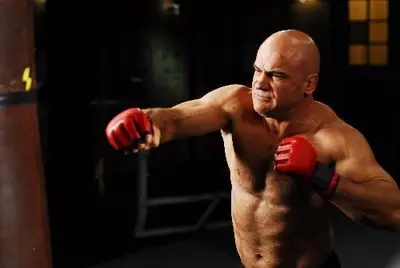
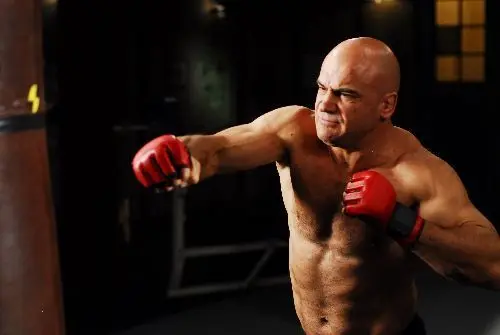
Bas Rutten is a retired Mixed-Martial-Artist.
Bas Rutten is also a former UFC Heavyweight Champion, a 3-time King of Pancrase World Champion, and he finished his career on a 22 fight unbeaten streak.
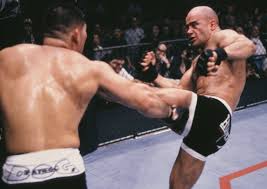
Aside from being the ultimate badass, Bas Rutten is also an outstanding individual who contributes to anti-bullying campaigns throughout the world.
In this conversation, Bas discusses his fight career, his battles with drugs, and his love of faith and family. Bas also talks about the importance of his Catholic religion, and how his use of psychedelic plant medicines brought him closer to his faith.
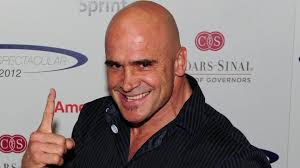
You can follow Bas Rutten
on Instagram at http://www.instagram.com/basruttenmma.
Transcript
Machine-generated from the episode audio and lightly edited — may contain errors.
Chris Albert (link to this point)
The Warrior Soul podcast is written, produced, and edited by me, Albert. Our goal is to empower US military veterans to live their absolute best lives, and we do that by providing tools, tactics, strategies, and ideas that they can apply into their lives to become wiser, stronger, smarter, more resilient, and more capable human beings in the civilian world. If you're not a veteran, stick around because anything we talk about here can obviously apply to you. And if you like what we have to say, any information we provide, and the guests we bring on, please head over to iTunes and write us a written rating and review. It really helps to spread word about the show and to get this helpful information into the hands of more veterans so that they can in turn improve their lives and shape the future of this country.
This podcast is brought to you by the amazing, the wonderful f bomb nutrition. They make awesome, delicious packets of fats. These are portable snacks that you can carry with you anywhere. It's so hard to find a low carb snack out there, but these guys have done it. They got macadamia nut butters, they mix them up with chocolate, they mix them up with sea salt, they mix them up with pecan butter.
They've got awesome meat sticks, and they've got these delicious cheese snacks that they put out there. Plus, they're an amazing company. They send boxes of this stuff out to the troops on the front line. It's not something we ask them to do, it's something they volunteered to do. So if you wanna get some of the best low carb, high fat snacks on the planet, head over to www.dropanfbomb.com.
Use the code Warrior Soul at checkout, and you'll get 20% off your first order. This podcast is also brought to you by the amazing awesome people at Save the Brave. Save the Brave is an organization that provides camaraderie events for veterans. They do fishing events. They do golfing events.
They do other sporting events, and they also do a lot of work to help gold star families. And look, we've all heard stories about veterans charities where the executive boards are taking these giant salaries, and I don't have a problem with that at all. But here's the thing, I wanna make sure that whatever organization I'm talking about is doing amazing work. Savethebrave.org is doing absolutely outstanding work. Their board doesn't take any salary whatsoever, and they are having an amazing impact.
They're focused on getting veterans to live their absolute best lives, and that's what this podcast is about, and that's why we wanted to work with them. So if you're interested in volunteering or donating to save the brave, head over to www.savethebrave.org and make your donation or your request today. Finally, this podcast is brought to you by Warrior Soul Apparel. This is a clothing company that I actually helped to start a couple years ago as we were beginning the brand Warrior Soul. We've got some amazing t shirts.
We've got skimmy shirts with some pretty funny funny sayings on there like, I love Jesus, but I cuss sometimes. We've also got some awesome hero shirts. We have the amazing hard times, breed hard people series, and these are just great shirts that I've helped create, and they support the show. So if you're interested in getting some Warrior Soul shirts, head over to www.warriorsoul.shop. And finally, if you're interested in joining a new group that we are putting together here at Warrior Soul, a group for those who are looking to live epic lives worthy of epic obituaries, stick around to the end.
We'll have some information for you to check out. With that, let's get into the episode.
This is Chris Albert, and I'm here to remind you of one thing. Someday, you're going to die. That's not some morbid statement or scary idea. It's solid fact. Your time here on this earth is limited.
And we need to be reminded of this as much as possible for one simple reason, to live your best life while you can. This is the Warrior Soul podcast.
What is going on ladies and gents? Man, I got an awesome interview for you today. It is with legendary fighter, Bas Rutten. Now if you don't know who this guy is, Google him. He was one of the OG personalities, one of the OG athletes in MMA starting, I think, as early as 1995.
You can see how this guy evolved. One of the cool things about him was that he started as a striker. He got into Taekwondo. He got into a lot of the other martial arts that involved striking, but then he realized that grappling was gonna be really important in the types of fighting he was doing. So he literally went out there and figured it out.
He got the best training he could, and he became one of the best grapplers in the game. This guy is absolutely amazing. We talked a lot about his life, about his career, about his battle with opiates, and we even got a little bit into some of the I guess you could say more spiritual side of things. We talked about ghosts. We talked about plant medicines, psychedelics.
It was just a great conversation, and he's a really great dude. He's been active in anti bullying campaigns. He's got a huge heart, and he really wanted to come on here to help the veteran community. So without delay, let's get into this conversation with mister Bas Rutten. Bas Rutten, welcome to the show, man.
Bas Rutten (link to this point)
Thank you very much. Good for having me.
Chris Albert (link to this point)
And good morning. How are you today?
Bas Rutten (link to this point)
We're doing great. We're doing great. Had a little bit of a rough night, but you know what? It was nice that you you're you're thinking too much, but it's working. It's California, the sun is shining through the clouds in the sky, I'm looking no.
So I can't get my own.
Chris Albert (link to this point)
Exactly. I have one of those nights too. It's like sometimes you get in bed and your heart's racing just a little bit, you get those thoughts going and you just can't get comfortable, right? Get Just yourself to sleep.
Bas Rutten (link to this point)
If you would only know what it was, you know, so you could fix it, but it is what it is, I guess.
Chris Albert (link to this point)
Exactly. So, you know, I gotta say, I have a interesting story about how I learned about you because I was actually I was deployed to Iraq. And the first time I saw you was in the documentary, The Smashing Machine with with Mark Kerr. And that crazy, was crazy story. It was kinda like my first we watched fights and things like that before, but it was the first time I was actually getting into the personalities behind it.
And then I started looking you up and learned a lot more about you. You've been there since the beginning pretty much, right?
Bas Rutten (link to this point)
Yeah. Actually, I started fighting before the UFC started.
Chris Albert (link to this point)
Yeah.
Bas Rutten (link to this point)
Just one month before because we started September ninety three and the UFC was in November, I believe. Also, it's just two months before. So
Chris Albert (link to this point)
Let me ask you this because it seems now you look at the UFC, it almost seems like it's it's down to a science. Alright? We we've been watching these guys for years. We we know what's gonna work pretty much, what's not gonna work. You can rate the fighters against each other.
But when you were fighting, it was kinda it was it was like the wild wild west. Like, you didn't know what was gonna work. You didn't know you didn't know what you were gonna be facing in the ring. And and and what was that experience like for you coming up in this sport in its infancy?
Bas Rutten (link to this point)
You know, it it was cool because, you know, I I also realized, of course, it's for everybody new. So I always talk like that to myself, you know, if it's something freaky, I say, well, so it's for them. It's exactly the same thing. Everybody will feel the same thing. So for me, it was really fun.
Know, for me just to travel for the first time. I've never been on a plane because we were in Europe. If we go to France or Spain, drive by car because it's the same as here in America. Just states, you know. So to get a thirteen hour flight is suddenly arriving in Japan and then you see, you've never been in a city like that, like New York and Tokyo and London.
All these cities there, it's so humongous, know, you don't even know that it exists. So that was a that was crazy wake up call for me. And then of course, you know, then it becomes normal and then you become and they start world traveling and everything that I have and where I travel to, it's all because I started fighting. So it's really cool, man. It's really cool.
And also the the first hotel that I had, this is so funny because that was across the Tokyo Dome. The Tokyo Dome was is a place where 70,000 people can fit in. I mean, play indoor baseball. And we we thought of places like that. And the hotel room was the Tokyo Green Hotel.
I remember that was my first hotel I had. My feet were literally sticking out of the bed. So that how small the bed was. The closet, I have a picture of the closet that I do this. This was the closet, the width of the closet.
And then many years later, started pro wrestling after I stopped. And now the Tokyo Dome Hotel was there. I was not there in '93. It's a huge hotel and I'm filming it and I say this is the hotel I started, and then I went to this hotel which is a state of the art. I said this is where I'm sleeping now.
I say I guess I did something right because I went up and didn't go the other way around. So yeah, that was a cool moment.
Chris Albert (link to this point)
And when you were growing up you wanted to do martial arts but your parents tried to keep you from doing it, right?
Bas Rutten (link to this point)
Yeah, they thought it was violence. You know, like a lot of parents. And my parents are very conservative, so yeah. They were a little bit against it, but they allowed me. After two years of asking pretty much every day, they said, okay, finally, okay, go, do it.
You know, but then it was then a couple of months later, because I start picking up really fast, I start training Taekwondo with an adult. He who told me brought me to the adult classes because my I had these neighborhood girls, they were super pretty, and every guy so the toughest guy in town was his was him. And he saw that I was bullied so he took me under a swing and he brought me to the adult classes. And from there it went just really fast, like in months I was dropping adults. So then they started talking about me in the dressing room and I overheard these people talking.
If you know, I was a very sick kid. I was a very skinny kid. I had asthma, I had eczema, skin disease, so I got bullied a lot. But once you hear adults talk about you like that, you're going to feel better. And suddenly I got into a fight with the biggest bully in my school.
He surrounded me with like six, seven kids on a bike bicycle. They were shouting against something at me and I shouted back something back. And that was my first knockout. You know, he started and he told me, hey, hit me, Rutten. Hit me, Rutten.
Watch out. Your hands don't fall off. You know, it was always a leper thing that they had to do because of my skin disease. So I just did what he asked me to do, I guess. And I gave him one punch and it was so I was amazed.
Like, I I realized they're not his friends, those kids. They're just afraid of him because nobody jumped in. Everybody freaked out. And he was out. One punch.
Problem was he broke his nose in the process. So then the police showed up at my mom and dad's doorstep. So that was immediately they took me off Taekwondo again. But now I had to I had to taste it. Now I started training myself, know, learning from books and videotapes.
And and that's pretty much where it started.
Chris Albert (link to this point)
That's the way it was back then. You literally, you had to go get magazines, you had to order the videotapes from the magazines. They'd have those little those little ads in the back and things like that. Was was that how it worked for you?
Bas Rutten (link to this point)
Yeah. That was literally it. I would go to the library, you know, and then watch tapes there because we didn't have a VCR at home. And then and books, you know. I was learning Katas from books, you know.
That's how it started. And actually everybody in town suddenly after I knocked the guy you know, because I start imitating Bruce Lee, and I I'm just what I can see most of the time I can do. So, you know, I started stretching and then, you know, if somebody would say something, I would be I would be very afraid, but in my mind, would very look very cool, and I would make a sidekick and hold a foot in front of his face. And I say, you sure you wanna do this boy? You know?
But it was a complete buff, and then I pulled back and everybody, no, no, they they didn't wanna do it. But if they only knew how scared I was at the time. It was Yeah. It was cool.
Chris Albert (link to this point)
Imagine if you had YouTube. Imagine if you had like YouTube or Google or anything like that at that point. How much faster and how much crazier would have been for you.
Bas Rutten (link to this point)
Yeah, really because then you see other people, that's when you can learn. You know also that's where you can do your homework about your opponents and all that stuff. That was not in the beginning, know. It was very hard to find footage on your opponent, or you have to fight in same organization, then you can get it. But otherwise, you know, there was not a lot out there.
There was judo, there was rings, and then was Pancrase. And then in America, we had the UFC. So that was about it.
Chris Albert (link to this point)
Now you mentioned that as a kid and you kind of went over it really quickly, you were bullied. And I know you were born with eczema covering your body, and you had severe asthma. What kind of and we hear a lot about bullying these days and the impact that it has and its potential for causing things like mass shootings and all of these different things. What's your take on this? And and because I know you've done a lot of anti bullying stuff as well.
Bas Rutten (link to this point)
Yeah. You know, I also do these talks for kids, you know, who go from let's from from high school to college or from high school to the work. And you know, when they leave, they always ask me here in the Thousand Oaks High School if I can come and talk to these kids. And it's, know, I always tell them, I said bullies, they're everywhere, you know. You're gonna have to simply, you have to step up the very first time when you come there and there's a bully at work or a bully at school, it doesn't really matter, they're everywhere.
But if you step up immediately, you know, they only go as far as you let them. So if you they start immediately say something, they're gonna find a, you you're gonna be a problem. So they're gonna figure somebody else out who's easier to intimidate. So you have to really step up the very first time. And unfortunately for me, they always say you can't help, you can't hit a bully.
Well, got bullied for many many years and it really hurt. There's there's a lot of things that I still have. To these kids actually I also say, I said listen, I made a list of all the kids that bullied me and together with other two friends who also got bullied, we made a list with everybody and we gave it after every single person. And so that's what I'm telling the kids, I say, you gotta watch out because there's more kids like me. You know, you push too far, they will come after you later in life.
So watch out with that. So hopefully, they'll listen to it and unfortunately, yeah, these kids should take it a step further. Know, that's why we got school shootings and all that kind of stuff. But, you know, you have no clue. I always tell people I still remember exactly what they would say to me, like when they were 12 years old.
This is forty two years ago, you know, it stays with you. Now you know easy how to deal with it, you learn that, But you know, I'm just saying you do a lot of damage to a person and some people are mentally maybe not that strong, you know, and they can snap and something really bad, or worse they might kill themselves, you know. And then that's on you, but you know, kids don't know at that age. I can't really blame them because it looked very gruesome, know, the skin disease. I mean it was disgusting.
I had to wear gloves, I had to wear long sleeves, turtlenecks, know, to try to cover everything up. So it's understandable, but there's a lot of damage been done by just talking.
Chris Albert (link to this point)
I can't imagine what it must have felt like because I mean I have autoimmune disease myself. I have ulcerative colitis and I've had bouts of eczema because of it and mild cases of eczema. I can't imagine what severe eczema all over your body must feel like. That must have been absolutely horrible.
Bas Rutten (link to this point)
Yeah, know, that's how I kept my head above water with everything I always said because I had it on my hands, my arms, my face and my neck, but for the rest of my body had little spots here and there. But I always told myself there's always somebody who has it worse than you. There are people who have the worst, when I have the worst of my arms, they have that from head to toe. You know, my asthma attack will be a week, eight days in bed. I knew there's people out there, where people are still out there, that have that three 65 a week, a year.
So then you're thinking that's the way I always went through everything. There's always people who have it worse than you and focus on that. So don't complain, I mean you should be lucky because you could have had that. That's how I always talk to myself.
Chris Albert (link to this point)
100%. You know, back to the fighting. Just knowing a bit about your history in fighting, of course you were known as a striker. You came in and know, did well with that but you also noticed that you were having issues when it came to grappling and you dedicated yourself to learning grappling for yourself. And for a time you said that you were only going to submit people, right?
Bas Rutten (link to this point)
Yeah, no. Well I just, I fell in love with it, know. Also, this is in the talks as well, know. I'm always saying find something that you love to do, you know. And because something that you love to do, like to love to do it a lot.
If And you do something a lot, well, you get very good at it. Some people, they say, oh, my dream is I wanna be a guitarist like Jimi Hendrix. I go, can you play guitar? No. I don't that's not your talent.
Don't go after that. Go after something that you love. Not what you think you are. And that is the key to success. And that happened with me with the submissions because I didn't like submissions.
Somehow in my mind, that was not what a tough guy would do. Until when I started focusing on, suddenly I realized that's a crazy power to have. I mean, about this. I can literally break any bone in your body. I can dislocate any joint in your body.
I mean, that's that's more power actually than a striker. So then when I started and suddenly I got the bug, suddenly my first submission came there, and then I start understanding it. And once I start understanding it, I became obsessed with it. I start doing it two, three times a day every day. But and I tell everybody, you know, I I never lost a fight anymore.
I won my next eight fights by submission. And You there was a guy who lost at that time, I lost three times by submission. And then suddenly I started submitting everybody. So in Japan, they were like, what the heck is going on? I said, I just put the work in because I loved it.
And that's what I tell people. When you love it, find a way to love it. You know, I did that with my stamina too because stamina was always very hard for me since because of the asthma. So it always, you know, if you get really tired, automatically shoot into that mode. It's really weird, like it takes over.
And then I told myself, listen, if you keep doing this, you can never become a champion. You're gonna love how to get tired. And I start programming myself. Like when I would get really tired, I would start trying to enjoy myself and say, oh, I love it. I wanted more.
I wanted more. And I would literally say it out loud constantly, constantly. And suddenly I got that click. Suddenly it went like, oh, now I need to be tired every workout because otherwise I thought a workout wasn't good. Know?
So now I made whatever I didn't like, I made it into my strength. I just got the runner's high, so to say, but then with training. So and you can do this with everything. And I always tell people, if I can do it, can do it. You know?
This I'm nobody special.
Chris Albert (link to this point)
And and where did you go to learn as far as submissions go? How how did that that training come about within your program? Because I know you have to go and you have to find people who are good at it in order to teach you too. Right?
Bas Rutten (link to this point)
Yeah. I had to show Chris Dolman is the guy who actually got me in the game. Chris Dolman was with the organization Rings. He's kind of the godfather of MMA in Europe. And he stopped me at one of an event and he said, man, I remember you, you know, you were very athletic.
And I I I was doing a show there, I came up with backflips and somersaults and all that kind of stuff. He goes, then I see all all these crazy things. Did you ever think about free fighting? That was what they called it in the beginning. And he explained to me what it was, that it was money to be paid.
I said, sure, sign me up, know, I need a job. So that was great. And then I started training there. And man, I got destroyed the first day. Literally, I I I called my wife on the way back that I was sleeping in the car because I was in Amsterdam, which is a two hour drive to where I live.
I was just crushed. And and then my wife was laughing the next day. She says, oh, so this is it? The free fighting is over now. I said, no.
It's not over. I said within six months, I'm gonna tap all these guys. Now I now I want payback, you know, and and that's how it worked. So Chris Dolman taught me all the basic submissions, but it was very hard because it's a two hour drive. I trained them maybe once a week, you know.
But once I found one person that was Leon Van Dyke, this guy was a freak athlete, he was 19 years young still at the time, super striker, very powerful. And you know, I would catch him in the submission maybe twice and then I couldn't catch him in that same submission anymore. So we made each other very very strong. And we just started experimenting and I said listen I think I can make this better. It's that we have to say it because why not?
Let's try it. And then once we start experimenting with submissions, that's when everything started escalating. Because you know I realized that if for instance a straight arm bar from a mount position, I'm just saying this is the most basic thing that you can do. Everybody knows what you're going to do in your mount, sit the circle of my ego for a straight arm bar. But if you can create a way that that person doesn't know yet, that is the key to success.
And I realized that very early on. Because if I would submit Leon, I would do that twice, and then after I did it twice, I couldn't submit it with that anymore. So I found a different way. But that happened only two or three times. I had to find another way.
Then And I realized if I had three, four different ways to go to the same submission and I start alternating, I go one, two, three, four, three, two, one, four, 14, 3, boom. And suddenly you catch them again. I go, wait a minute. So we start doing that with everything, You know, every single submission. And then I realized, wait a minute, if I escape an armbar, you know, that guy at that moment is a little bit demoralized because I just escaped his armbar.
Why don't I go right away and a counter attack? And that's when we start coming up with submission attempts for that, like an escape and a triangle right away going to a kneebar. People are like, Woah, woah, what? I go, Oh yeah, I'll do it on you. You know?
Because we did that over and over again, that was simply the key to success. Just doing it a lot and experimenting with it and always thinking that you can make something better. That's what I tell everybody. But the good thing with me is also I never had a coach, so I didn't have to pay respect to somebody above me. So because if you train jiu-jitsu for instance with a guy who has a fifth degree black belt, well, you have to do all the techniques that he's teaching you the way he's doing it.
But some of these techniques, they simply don't work. I have modifications that I use because if I do it the way they do it, well, the submission is not gonna work. But I never had to pay respect to a person because I was training myself. And I truly believe that's what made us strong because, you know, we didn't pay attention to the rules. Everybody who rolled with me and he said that it was just so different because we didn't have the standard grappling.
You know? It was I exploded in techniques. I was just different than other people, and that's why it was successful.
Chris Albert (link to this point)
So, yeah, there was no entrenchment, no no dogmatic reasoning for why you had to do anything. It was just going after it, figuring out what what works and kinda treating it like a chess game. Right?
Bas Rutten (link to this point)
That it's really it. You know, you just have to make sure you're covered from all all angles. You know, MMA is a sport that has many ways to lose. You know, striking submissions, you make one mistake, that's it, but many ways to lose. I mean, there's also many ways to win, you know.
So it goes back and forth. You have to be ready for everything. And it's very simple. Like, in the beginning when I lost my submission, yeah, I realized that if I don't polish up my submission game, well, I might become a champion one time, get lucky, you know, but to keep defending the belt, you know, I think a real champ should at least defend the belt one time, you know, because that's everybody can land a lucky shot, you know, or falls into a guillotine submission, your opponent, something, you know, something simple. But, you know, keep defending it. I think that's when you really become the champion.
Chris Albert (link to this point)
What kind of other surprises did you face as you were coming up in the sport besides the grappling? Because I know, again, it's kinda like I remember watching it back then and we all had our preconceptions about what martial arts was from watching movies and from from from seeing things, but seeing it in real life, seeing two people going at it was it was a very, very different thing. And then you you had guys to look like absolute specimens, they'd come out, and they might not do as well. And then you had guys like Fedor who had like a like a dad bod and he's walking out and then the bell rings and he turns into a crazy savage who's gonna kill everybody.
Bas Rutten (link to this point)
Yeah.
Chris Albert (link to this point)
Like, what what kind of surprises did you did you face and and what surprised you the most?
Bas Rutten (link to this point)
No. You know, that was the thing. Not that much. It's you know, what weird was to me was that I I found out on the day of the fight there was no weight glasses. So, you know, to go to Japan thirteen hours when I was talking to before and then suddenly find a guy who was forty three pounds heavier than you, you know.
I go, I mean, I come from Thai boxing. We come from five rounds at three minutes, you know, and weight classes. And I was suddenly forty two pounds. That's three weight classes up, four weight classes up. Know, it's a big difference.
Then finding out that the fight has only one round. I'm super excited, but then you realize it's a thirty minute round. You know, there's no breaks. I go, man, what did I get myself into? But, you know, you get used to it.
And again, you tell yourself, well, they have the same problems. Everybody's fighting on the cards. They're thinking the same as you, Bas. You know, they got one and a half an hour. There's no weight classes.
It's all the same. So, you know, once you realize that, it's not that bad. So, yeah, I didn't have really big surprises, I have to say.
Chris Albert (link to this point)
Now as far as the training goes, I'm sure it was absolutely brutal and at some point drugs definitely penetrated the sport and not just not just steroids, but I'm talking about opiates, painkillers, things like that. And I know that you have your own history with painkillers. Can you talk to us a little bit about that? Because our audience out here, you're talking to The US military veteran community, a lot of them are combat veterans who've been handed opiates and other prescription drugs like like Tic Tacs. And I know that you had a rough situation where you were trying to get yourself off of opiates and the doctor had actually done some things that that kept you on them and and and that weren't the best for you.
Bas Rutten (link to this point)
Yeah. So what happens is that this if you haven't, once you start with the opiates, it will always go wrong. That's what I tell people. There's never a rainbow at the end. Never.
So it always goes wrong, and you have to understand that. But you know there's moments that the pain pills don't even work anymore. So first of all, let's restart. So I didn't I stopped at nineteen ninety nine after I won the title because then I was injured I wanted to do another fight but that's a long story doesn't really matter. I stopped because of a whole bunch of injuries and then seven years later they asked me if I wanted to fight again.
And I thought my injuries were gone and so I trained for a week. I said give me a week because I didn't train for like three and a half years. And I said give me a week to see where I am you know and I go yeah I think it's good, my body feels good so maybe yeah let's do this fight. I also did that because at the time I was a little bit of a heavy drinker and I realized that if I take a fight, I'm automatically gonna stop drinking. I have to because otherwise I can't train.
So that worked out perfect and I started training. Three four weeks, I mean, I'm working circles around the guys, around the top guys who are currently competing and and they go like, dude, you have a new career. I go, wow. I feel great. I mean, it's insane.
Know, how how fast I was back into shape, it was just bizarre. And then the first injury came back. And then the second injury came back. And another one. And another one.
And my rib was out. Then I blew my hamstring and my and my kneecaps. Started to go bad. So I started getting pain pills from the doctor, Norcos. And I remember the day of the fight, I think I took one or two in the morning, but I took them early like 09:00 because I wanted to be out of my system when I was fighting, you know, because you get a little loopy and maybe that might affect your reflexes, so let's not do it when I'm fighting.
So I did it early in the morning. And then after the fight, course, when the injuries were there, still there, you know, now you don't have a fight anymore because you just fought. Also, now I can take a pain pill for when I have pain again. And that goes from that moment, it goes really fast. Know, then you like I always say in an interview, I remember there was a moment that I wrote a nine on the mirror with my wife's whatever they have for makeup.
And I said, I'm not gonna go over nine pills a day. And those nine pills, they yeah. They become 40. And people go like, there's no way. I said, they literally become 40.
And that's when you make the switch to OxyContin because OxyContin has less Tylenol in it. Tylenol is really bad for your stomach. So if you take too many Vicodins, Vicodins, they have way more Tylenol. Then you go to Norco. And if Norco, you start taking those a lot, you go to OxyContin because it's the same feeling, but now we're talking about synthetic heroin.
And I started taking that. And then I realized one day when I came back, I had a five hour delay with the flight that I believe I came from Boston and I was in the plane shaking because I ran out of pills. And that's when I realized I had a problem. I kinda knew it before, but I never was in that situation. Know, one of those idiots who tried to put his head in the sand and say, oh, no.
It's okay. I just take a pill. It's okay. But it's not okay anymore. It goes wrong.
So I started with Suboxone. Suboxone is kinda like the methadone that they used to get off of heroin.
Chris Albert (link to this point)
I'm a friend who's on that right now, and he's having a lot of problems with it.
Bas Rutten (link to this point)
Dude, it's the worst stuff. And the worst with me is they never told me to get off of it. They said it will help for the pain as well. I did that for three and a half years. This is stuff you can do for maximum two weeks.
You have to wipe it off because otherwise you're dependent on that. And sure you can build it up, but this stuff, it goes into your bones. It goes to it is the worst. Have double vision all day long everywhere I'm sweating, my heart rate is up. I mean, these side effects are bizarre.
I mean, eight times to the restroom in the middle of the night. I mean, all that is gone when I stopped it. But to kick Suboxone, that was a very hard thing to do. They say it's harder than from the OxyContin. It's better to go for five days and then you get rid of it because the the Suboxone is so invested in your bones and everything.
It takes a long time. My doctor had never seen anything like it. I did it in eleven days. And and that was a very hard eleven days. My testosterone level, you should understand, was five.
People go, oh, 500. No, five. Wow. So women have 60 or 70. The doctor was there freaking out.
He shaved pushed his papers to another doctor. He says, check this out. And the other doctor goes, I said, how do you get out of bed? I go, that's very difficult. You know, I have to really force myself to get out of bed.
He says, people, if they go under a 100 guys, they won't even go to work anymore. They're completely crushed. You got five. I've never seen anything like it, he said. And that's also because of the Suboxone.
Your friend's gonna get the same stuff. You gotta tell your friend he's not need to get off of it. And he really has to because that will always go wrong. And the great thing about Suboxone is you can actually, every time you can take a little bit less. You know?
And people, I took a 1.5, which is like ten milligrams I believe or twelve or something, and I just jumped right away to three quarters to half of that. I didn't feel any difference. So I go, wow, that's good. Then you go to one, and then you know, it's not a bunch of sugar. And then you start literally going from one third to one fourth and one fifth, like little tiny bits, because believe it or not they still work.
Then you do it once every other day. So once you're all the way down, like I'm talking about half a milligram, know, from that moment on still it's gonna be hard to kick it because you're gonna, yeah, you're gonna feel really It's it's bad stuff.
Chris Albert (link to this point)
He's been trying to get off of him for a while and the thing is he runs the farm. So so he's got so many responsibilities that he has to take care of on the farm. And if he goes down, then then the farm doesn't get run. So the thing is, he's in this kind of vicious cycle right now, where he's trying to do this. Plus, I also heard that Suboxone, it blocks anything else that you're gonna take, right?
Like, as far as pain relief, right?
Bas Rutten (link to this point)
Yeah, so what I did, they gave me testosterone shot. I didn't feel anything from that. When I was off the Suboxone and I didn't take a testosterone for for a while, but once I was off of it and they gave me the first testosterone shot, dude, it was like I was 20 years young again. It was the most insane feeling. Then I I went, okay.
Now I understand what the fighters are feeling and why they wanna do this crap because you feel like you're rejuvenated. It's an insanity. I was like almost like an ecstasy pill. You feel that good, know. And that's the thing where they get addicted to.
They want that feeling again. And guess what? Same with steroids, same with every other medication, you have to get more every time in order to get the same effect. So thankfully for me I never went after that because I didn't want to do it because I see these guys taking these insane amounts which is simply not good. Yeah, but your your buddy tell him that at least he has to start going I don't know how much is he's taking it, otherwise just write an email to me after the show and I will tell him how I how I did it because it's it's important you got to talk about amino acids and all this kind of stuff and that that will help tremendously.
And and you know what? Believe it or not that I didn't know it at the time, but now I'm a freaking big proponent of it. If I will be in a situation right now, I would smoke weed, 100%. I wouldn't have that problem.
Chris Albert (link to this point)
Is that what you do for pain right now?
Bas Rutten (link to this point)
That's what I do for pain right now and I almost don't have pain. So right now, the only thing I use weed for is to go to sleep. And I use a one to one ratio, like one CBD, one pot CBD, one THC. So it's a really light version, take one zip and it works every single day. Now if I would smoke during the day, I was just thinking about it yesterday, that's been in July that I you see so I never did and that was in Holland when we were there visiting for my daughter.
She was gonna get married. That's when I went to a coffee shop and you know we spoke to joint. But that's I never smoked during the day because it takes me down and it slows my mind down. I can't memorize as well. So I only use it to go to sleep and a live version of it.
But it always works. When I did the first time, was like, the pain that was gone and I go, man I wish I would have listened to my friends years ago because they were all doing it for pain and I always thought that's not real. They just say that because they want to smoke, you know? They were right, 100%.
Chris Albert (link to this point)
Yeah, I got my medical card for the ulcerative colitis a few years ago actually and I started taking it and the thing was it. I don't like the way it makes me feel during the day. So I stick with CBD, a really high CBD ratio. But, but and I can't touch edibles or some of that crazy shit that they got going on, because that just puts me into like a crazy psychological hole. But I see so many benefits from it.
Bas Rutten (link to this point)
Yeah, know, I do I want an edible, I would only do like maybe on a Friday if I have a lot of pain and I don't have to do the whole thing, nothing for the weekend because the edible stays so long in your system you know and it affects my mind so much. Yeah I don't take those anymore. Listen I'm talking about taking five or ten milligrams. People go like oh I know a guy. I was doing a podcast with Joey Diaz and he's a preferred smoker everybody knows, and I remember he took eight stars in one sitting.
The star is two fifty milligrams. And I go to like, one star will keep me in bed for three days at least. I'll be crushed. I did it one time with sixty milligrams. I was destroyed the next day.
I was laying in bed all day long. I go to two thousand milligram, like in an hour and a half. I don't know how that's even possible, you see. So with me, I found out that we always want more than we really need. It's really like that.
You can simply say no. If you simply do half, sure it might not work today as good as well, but tomorrow already works better. And then a day later it works better again because you know your body gets off the big doses and then suddenly it gets simply used to a smaller dose. And if you feel that you smoke too much, what I do sometimes also, I just stop for two weeks. And then you'll be amazed.
Like for instance, once you feel that you go up, you have to smoke more. Let's say from a vape pen, I'll just make an example, like you have to take three drags of ten seconds or eight seconds, whatever that takes. If you stop two weeks, you go back and you don't even have to take one whole one because your body resets immediately. That's how fast it goes back with the THC and that's what I love about it. It's non addicting.
There's from there's always people who get addicted to something, but you have people addicted to sex, to this, to what, whatever. There's always people who step up but for the rest can't legal dosage, that's lethal dosage. There is no lethal dosage, right? I mean you pound on it and nothing will happen.
Chris Albert (link to this point)
Yeah, I mean, I've lost two people so far this year just from opiates and like I said, our community's been ravaged by it. It's been absolutely insane. Have you looked at kratom at all?
Bas Rutten (link to this point)
Yeah, I actually am taking that also, yeah. Yeah, But but kratom also you have to watch out. I realized really fast. Yeah. You know, because you start with six, right?
They say six and you say oh, that's a lot. No no no no. Because if you take six that will work for seven hours. Not like taking a Vicodin where it go boop and you jump down. Kratom doesn't have that, it stays longer.
And then once I realized I was taking eight and suddenly I was taking ten, immediately I recognized I go okay wait, back to six. Next day I did six, didn't feel any difference. You know. And then I went to five, four, three, then I stopped for like five weeks. And so just that I can check myself, okay, had nothing, no problem to wean off of it, zero.
So now I know that, you know, simply you can take one pill less every day and there's no side effects. You don't have no sweats, no nothing. Completely different than with pain pills.
Chris Albert (link to this point)
Yeah and the benefit there is that there's not really an overdose. If you take too much of it, you're gonna get sick, you're not gonna feel good, but it's not gonna kill you. And then the other part of it is it's not $8 a pill like some of these other things. I don't get how you must have been rolling through money when you were doing 48 a day. That must have been insane.
Bas Rutten (link to this point)
Well I got it from the insurance, know. I had the doctor, and the doctor prescribed it to me. I had the doctor gotten by his throat because when I asked for Suboxone, he didn't wanna give it to me. He says, no, you can stay on the pills. I go, dude, you you turned me into an addict, you know.
And he said, yeah, but I don't wanna do it. So I went for him and I was gonna get it started. He goes, what? I say, you're gonna prescribe me this shit. And and he was like, okay okay okay, I'll do it.
I said, dude, you made me like this. You were giving me the whole time. Sure. I'm taking it myself. Gotta take responsibility for that.
But the way they bring it it's like oh no, don't worry about it, know, it's less Tylenol, you know. It's something like and then you have those pills, the Suboxone, well that's for them the same amount of money they make. Those guys are not going to say that you're to have to weed off within two weeks, because then they lose a customer. It's one big pusher deal, know. These are just people who sell drugs.
That's what they literally are doing, those guys. There should be penalties for those guys, know. I mean, sure I'm taking it myself, but if you look at the guys and where they give it for, nowadays ridiculous. Know, if you go to the dentist, my daughter was 15 and she had a tooth pulled and they want to give her Vicodin, you know. My wife, there's no way.
Never scrubbing that crap. She's 15 years old. How can you do that? You see, in Holland that doesn't work. In Holland you don't have that.
But then we also don't have the people who are addicted to it. Look at the crisis we have. It's insanity.
Chris Albert (link to this point)
Right. And that's the thing. And the thing is too, all these things hit people differently. If I take an opiate, I'm wired.
Bas Rutten (link to this point)
I'm wired.
Chris Albert (link to this point)
I feel great. I want to work. I'm not lazy on it or anything like that. It juices me up like crazy. Other people, they get super brain fog, super sleepy, things like that.
But if you're wired to to get the energy from it, that's where you gotta really watch out because that's what's what's really addicting.
Bas Rutten (link to this point)
Yeah. No. You you nobody knew in my circles. Not even my friends knew. So and I I was on TV.
I mean, weekly show with Inside MMA. Nobody knew. You can't tell. You know, you can't control it. The weird thing is this though.
A long time ago as for a party thing, somebody gave me an eighty milligram and nobody told me to break it in half, right? So I popped the whole thing, and the guy was he had to go somewhere, he was a friend of mine, and he go, what did you do? I said, took it. And he said, you took the whole thing? I go, yeah.
I go, is that wrong? He says, dude, I'm not so he called off. He says, I'm gonna stay with him because I don't know. I mean, you never take this crap. And I was crushed.
I was like, I couldn't I mean, that was 80. And then later in life when I got addicted to it, I was taking dose, eighty milligrams, ten a day. I mean think about that, that the first time I took one I couldn't work, couldn't go to the restaurant, I mean I was sick, I was sweating, I go, but how can people function on this stuff? But you know, you get used to it. And suddenly you're realizing you take 10 of those freaking things a day.
It's It's crazy. That's insane.
Chris Albert (link to this point)
So now, know, you're How old are you now, Bas?
Bas Rutten (link to this point)
Chris Albert (link to this point)
- You're at this point in your life, the last fight you took was I think, was it 2006 or 2000? 2006. And and you're at this point now where you're looking back at your career, you you you were a pioneer. What do you have going on now?
What what are you doing?
Bas Rutten (link to this point)
You know, a lot of stuff. I do this is an acting job in the works now, so and I will once that is all set up, I'm I'm gonna tell people. I invented a lung training device that I that I invented when I was like fourteen fourteen years old. And I finally started making it like nine or ten years ago, and it cured me from my asthma literally within three weeks. And then I sent it to my buddy in Holland who has asthma, eight days.
He says, wanna sell them. He's selling them now in Europe. So we have a hundred percent success rate with asthma, you know. It's it's crazy, you know. I start working.
I found out that the trainer from Usain Bolt is a very smart guy. They do inspiratory training with o two trainer, you know. So everything started falling together and he has like 18 published medical journals and a published medical journal. I don't know for the people at home that means it's clinically proven what it does, you know. It's not like on the bottle when it says clinically tested.
If something says clinically tested don't buy it, because they just try to buy you that stuff by you putting a word clinically in it. Tested. You need to see clinically proven. What was the result of that test? That's what you should ask these people, because if their result would have been good it would have said clinically proven.
So if it says clinically tested, pretty sure it's not a good product, know. And now with the O2 Trainer, know, now I have clinically proven. I got published medical journals, so now it's starting to get more fire. So thankfully it's really good working together with the guy from Usain Bolt. He's the very smart guy.
Chris Albert (link to this point)
That's awesome. So you literally created this thing and then you saw our problem, you solved it and created the solution. Now it's just about getting out there, getting the efficaciousness demonstrated. And then from there, it's just about figuring out distribution and figuring out supply chain, right?
Bas Rutten (link to this point)
Yeah, but it's harder than everybody thinks and it depends. I'm so much money I put in there. And now people want to be my partners but you know then they want also a lot of money like 40% and I've been doing everything myself. We've been over $400,000 in now with all the patents and the continuation patents and the worldwide patents because I have to since it's curing asthma for us right now. Know, so I cannot not have a pattern, but boy, that's cost a lot of money.
And just the shipping and the handling and bringing it over from China, everybody says, oh, it's $50. You probably make some for $8. Have to get them here with everything, it's like $14. I'm talking about the commercials and everything, so then, you know, you do it three times the amount of money and that's where you sell them for. That's how pretty much every product works.
That's how they come to a price point. But I'm telling people this, it's a $50 thing. It's gonna cure you from your asthma. And if you don't have asthma it's gonna do crazy wonders for your breathing. It will force you, will teach you to breathe the correct way.
Just that is gonna increase your stamina insanely, like literally two days later, because a lot of people breathe the wrong way. They lift their shoulders where they breathe. And with the O2 training you have to do breathing exercises, you have a lot of resistance while breathing in. Well, if you lift your shoulders there's no way you can pull that air in. You've got to be forced to use your core and that's the way you're supposed to breathe.
And man it's crazy. Like for instance, an example is this: you have to only do 30 repetitions a day. There's a certain exercise you have to do. Have to blow out, lean over and put your own training in your mouth and then inhale with force through resistance, and then you go forward again. You do 30 times.
Takes about three minutes, three and a half minutes a day. That's it. You don't have to do anything more. But you know people, three minutes becomes a long thing for people, right? It's always like that.
They think, it's nothing, but it's a workout. I'm telling you. If you see my core right now, it never looked like this. It's a really thick core. I have bodybuilders now start using it because you use different muscles.
They never train those kind of muscles. My top abs underneath my chest they always they stick out now because I use the outside muscles to breathe. I use different muscles than I did before. And it's crazy. If I do stamina twice a week, I just blow through my stamina things.
It's really a bizarre thing. It works that well. And hopefully more people are going to see it because $50. It doesn't cost a lot. Yeah.
Chris Albert (link to this point)
$50 is a great deal for something that could potentially save you thousands of dollars in the future on medications and therapies and things like that.
Bas Rutten (link to this point)
For me I don't use an inhaler anymore. I had an inhaler everywhere with me. I have to, because if I would sneeze violently my lungs would close-up. Every asthma patient has that. Know if I would take a sprint twenty seconds, I would stand still and then about a minute later, boom, lungs are closing.
And if I don't have an inhaler, that's a problem. So everywhere I traveled, before every single fight I had, I had to spray my lungs open in the dressing room. And from that moment on I keep on going. But now with the O2 trainer, I don't even have an inhaler with me, not even my baggage, nothing, not even a backup thing, because it's completely gone. That's a freedom.
It's a big freedom for an asthma patient.
Chris Albert (link to this point)
Wow. Now, there's this issue of traumatic brain injury that that seems to be hitting everyone in sports. It's hit us in the veteran community. And, you know, since we found that that you could sustain a traumatic brain injury just by getting your head jarred a little bit, Say if you're manning a 50 caliber machine gun or if you are if you have a hard landing in a helicopter or something like that. What in your mind has been the effect on the sport of MMA and where do you think the sport is going with this?
Bas Rutten (link to this point)
Well, thankfully, it's going better. Thankfully, we have now guys who start, you know, to think. Still, there's some fighters who like their fighting style. For instance, Justin Gaethje, an example I'm using always because he doesn't mind to get hit. And I told him before he went to the UFC, was fighting for the World Series of Fighting, where I was a commentator.
I said, dude, you shouldn't do that. Just let him in. Why why would you like, is my style. I go, yeah, but I wanna be able to talk to your kids later, right? When you're gonna get kids.
I mean, that's a it's a big thing. So and then it's last fight I saw him, and I go, he started using hand movement, and he started letting them miss. You know? Okay. Now watch his career.
This guy, he he he might get a new career just by doing that. You know? People need to understand that taking shots is is not a tough guy thing. It's a dumb thing to do. It's if you can avoid it, why would you do it?
They always say, oh, you you're good? I say, because I I don't I try to avoid getting hit. Why why would I I don't mind getting hit. But if I can avoid it, why why not? It makes no saying it's the same to me that people don't think like that.
So I think it's gonna be much better. We saw those guys. We have a few guys. Gary Goodridge, unfortunate. He's a really good guy.
I love that guy, and he's heavily affected by it. His memory is affected by it. To see him in the state that he is in now, and to know that guy before, was such a great guy, still a great guy, but you know that he's such an outgoing guy and he can't do that anymore. He's like just completely a different person you know. So it hurts, but what's CBD?
Let me come back to CBD. I went to doing a talk here about CBD and there was a brain surgeon was going to come. And they gave that brain surgery, it was just two months ago, they gave him for the first time CBD and he went on stage and he said he didn't believe in anything. And then they had two identical cases on the field and one case they gave him CBD immediately after the person was hit and the other one they didn't. And he this guy started giggling and he was like, I don't know why you got he said there was it was a high number.
He goes like 32% less brain swelling with the guy who took the CBD, and nobody reacted. And he says in the in the microphone, he goes, I don't know. He says, if it was 2% was already big. I said, 32%? You guys have no clue what it is.
That was just the very first time we tried it. He says I'm so excited about this because it takes the inflammation away immediately. So you see this a lot now in the NFL and they immediately after they get hit, they give them CBD because that gives that barrier, takes care of the inflammation so it can start inflaming because inflammation is pretty much the cause of every disease, right? So CBD again comes in and they're helping. So I think once they start getting even further with that, I think it's going to help us.
What I don't mind is the weight cuts. I mean they already did it different, but I think that's the biggest problem. That's why you see it a lot, because you take care of all if you drain all the fluids, well you drain your brain fluid as well, and now you don't have that airbag so to say in your brain. That's the problem why so many boxes are affected by it.
Chris Albert (link to this point)
Yeah, what about the fact that you can no longer do IV rehydration afterwards? Do you think that that that was a wise call or do you think that was something that that they're gonna regret?
Bas Rutten (link to this point)
No. I think it was it's a wise call because you now you force your fighters to to fight in the weight class that is supposed to be fighting it. Listen, I never had that problem. I never cut weight. I actually had to gain weight at my world title fight because I was too light and I needed to be over a certain amount otherwise I couldn't fight for the title.
It was just gonna be a regular fight. I had to drink waters and I was already on the dressing room on the the scale with my jeans and with everything on, I was still three pounds under. Know so I never had it. I always gave my body all it needs. Know I would never cut weight and don't look at weight.
This is the thing for fighting, it's never their fault. Know it's always a reason when they lose, and that's the problem. Gotta simply, you know it's like when you're an addict, you gotta acknowledge that you have a problem, and that's the same in fighting. You know you didn't lose because the guy cuts more weight and is stronger the next day. Make up with technique right?
That is not an excuse you know because he's able to cut more weight that's why he's heavier in the fight. Really? We're talking about two pounds heavier, three pounds? That's gonna make a difference in a fight? It's not.
You know blame it on yourself. Get better. Get better with technique. Don't start cutting more weight suddenly going to a different weight class, even lower weight class. No, you got to go to a higher weight class.
That's what your body is telling you. You're not functioning correctly. Water is the most important thing in the body next to oxygen. Oxygen's number one, water is number two. Oxygen three minutes average, four minutes you're dead.
Water is three weeks. Without that, oh no, three days, sorry. And Three you're dead. So that's the next one. You wanna pull that all out of your body while it's the number one thing that you have to put in?
Very scary, wouldn't do it.
Chris Albert (link to this point)
Right, yeah I used to dehydrate bodybuilders before shows. I used to coach them and they'd be at death. A lot of people don't realize it. When those guys step on stage, they're at death's door. When they look like that.
And it's crazy thing to watch. It's crazy to see what happens to their brains. It's crazy to see what happens to their digestive systems. It's insane.
Bas Rutten (link to this point)
Look at the women, the women, some of them can't get babies anymore because they can't weigh too much weight.
Chris Albert (link to this point)
Yeah exactly. Well what about gloves? I know you were an advocate for for bare knuckle boxing for a bit. Do you think that the gloves have have definitely contributed to this problem?
Bas Rutten (link to this point)
Yeah for sure. Know, because yeah you mentioned it already. It's like a lot of people know now, the glove is indeed is invented to protect the hand. Know, but a normal person on the street they think it's protected to protect the head. But it's not because people were breaking their hands left and right.
That's why they came up with the glove. Now you have a glove. Now you can hit as hard as you can. You can't do that with bare knuckle boxing. You can, but you're gonna break your hand if you hit a skull.
So that's why bare knuckle boxing CTE wise, I'm saying, is safer than regular boxing because they have to a good bare knuckle boxer will hold back and his power on his face. They will go for the body. They start hunting there. Because if they hit a skull, they're gonna break their hand and they can't defend the title. Know, so yes, they have more cuts and lacerations, you have that, but that's about it.
I would choose that over brain damage, you know. So yeah, bare knuckle boxing is safer but to say that to people and they go like, you know, people
Chris Albert (link to this point)
That's barbaric, that's crazy.
Bas Rutten (link to this point)
Because they see all the blood that they think it's a big thing. But you and I know, you know your cut, is a little tiny cut and well your heartbeat is 160 beats a minute, it's pumping out like crazy. It looks like you know all your face is completely destroyed and then wipe it off and you see it's a little tiny cut. People go oh that's it. You know it just looks horrible.
It's not that bad.
Chris Albert (link to this point)
Absolutely. Well, Bas, I wanna thank you so much for coming on here. I I know we're coming up on time right now. Know, huge admiration for you for, everything you've done throughout your life. Stepping into a sport that was for all intents and purposes just budding at the time and it's become this amazing thing.
I think is last real pure sport out there as far as competition goes. And you know, you're a giant in that community and I really appreciate you coming on here speaking honestly and speaking to our community of veterans.
Bas Rutten (link to this point)
Oh you're very welcome man. Military very close to me. I love the military. I teach a lot the military from elite special forces to everything to the marines. I see the Marine Corps flag on the background there You know?
So yeah. No. I I I love you guys, man. It's people have no clue how hard of a job that is. You know?
That is that that's for fighting. You know? They always say, oh, I'd rather die in the cage. Well, first of all, I don't not me. I'll tap.
You know? I have a family that I love so much. I said, well, let's talk about dangerous things. And I always go to the military. I said, that's you make a mistake there, you're dead.
They're gonna shoot you in the head or the body, whatever, you're dead. We don't have that. We have a referee, man. There's there's no nobody dies. You tap and it's over.
It's really not that dangerous what you guys do. That is the dangerous stuff and you do it for this country and and that's very admirable man. I love that. I'm a huge patriot.
Chris Albert (link to this point)
I appreciate that so much. Where where can people connect with you online? Is it is Twitter the best place? Instagram?
Bas Rutten (link to this point)
I would say Twitter for because I that's where I answer questions if I have time because I really started going down in social media. I did this exodus 90 thing, this is a Catholic thing for ninety days in where you have crazy things that you can't do. I mean you have to take cold showers, have to work out, you can't eat sweets, you have two fasting days, no alcohol, no TV, no sporting games, no phone, only for your work. I mean for ninety days it was a hard thing, but you know I realized wow social media is taking a lot of time away from me. So once I realized that I'm I kind of left it like that, you know.
I will answer people questions but I'm not a big post guy who every day starts posting, that's that's just not me because I want to spend more time on myself, it's more important.
Chris Albert (link to this point)
That's that's an amazing perspective. I'm a fellow Catholic too. I got my rosary ring right here.
Bas Rutten (link to this point)
Nice. Very good.
Chris Albert (link to this point)
I definitely I definitely love that aspect of the religion. Well again, thank you so much for everybody out there, know, kind of go back to this episode. I mean, to some of the things that Bas has said here about his own experience with drugs, with fighting, with with everything. Go through, take some notes and, you know, form your own questions. Let us know what you're thinking and and and what types of things that you're working on right now.
And above all, get out there and live your best lives while you can, guys. We're only here for a short time. Make the most out of it.
Bas Rutten (link to this point)
That's it. You know? And make sure, you know, get your stuff in order for it to go upstairs because a 100% I had a bad experience with the ghost that attacked me in my old home. I mean I see things fly around, my family is literally curtains up against the ceiling with everything closed you know. It's yeah, somebody went out.
Yeah. I want you to realize that's how I got back into the faith because I knew if that's evil there, you know, then it's a 100% good as well because it's the only way you can drive it away. And that's what I got invested. You just talked about the rosy. I've been doing that for four years.
I do it every day. You know, there's no one day that I skip. Know, I I I actually invest a lot. I go daily mass. I I I do a lot of work in there.
And people go like, wow, what are you doing? I said, listen, every time I add something, I'm feeling better. You know, so I just keep doing what I'm doing. It takes it takes a while what I'm doing in the morning. My whole stretch routine, my prayers that I've got in, that takes an hour away already.
People say, don't have the time for an hour. Oh, make time. Wake up an hour sooner. That's what I do. You know I can't
Chris Albert (link to this point)
you, I mean that thing out. People talk about confession, people talk about all the ritual, the Catholic church and how they don't like it. Confession to me is free therapy. I mean, it's literally go in, I feel like a million dollars when I step out of it. Again, I'm not trying to shove that down anybody's throats, but it's helped me immensely. I converted when I was 23 years old in the Marine Corps before deployment and it was an amazing change for me.
Bas Rutten (link to this point)
Yeah, me too. It helped me tremendously. My wife is much happier about me. I cleaned everything up. The only thing the French see from me is that I don't use profanity anymore.
That's so here and there they go like, never heard you shout anymore. That's pretty much the only thing that they they see different because normally they believe that if you go to daily mass and you don't live your life, okay, well look at what I'm posting. I'm shooting, I'm shooting bows, I'm doing I'm doing everything, we're having a really good time. That's really not it. For somehow they think that Catholicism is boring, know, but I'm I'm always telling them once you get invested in it, you start learning about it.
There's all the sayings that you are. You can't handle the truth. Whatever saying is out there, 90% of them, they all come from the bible. You're gonna realize, wait a minute, this book is far ahead. They tried to debunk this thing for over two thousand years, and it didn't work, you know, because it's still is still there.
And then especially with me, with the evil that I experienced, you know, that was that was the set for me. And so once I did that, then I challenged the ghost and I did this whole well, I have now a good friend of mine, Father Ruttenberg, he's an exorcist, and he said well only you Bas because that was not smart to go after the ghost because I said listen you're attacking me in to sleep, why don't you do it now? You're sucker punching me. Let's bring it down to my level. I would love to fight you you know and that's when I start challenging it and somehow I got rid of it.
So it worked really well, but if I felt that evil, I knew that automatically that was that good and it's the only way to get rid of it. So yeah, get your affairs in order because a lot of people they go, oh, this is BS, it's BS. I've been living proof, I felt it. You know, it was a very scary thing. So no, it's a 100% there.
This is nothing. Go do DMT one time, you know.
Chris Albert (link to this point)
I've done it.
Bas Rutten (link to this point)
A 100%. There's there's atheists who do DMT and they come back and they go, okay, sorry, I believe. You know? Immediately you go like, this is no way this is the life. You're in a complete different world. Know? It opened my it made my faith stronger when I did that. Now I know a 100% that we're all connected, you know?
It's It's cool man, this life. I can't wait for what's going to come.
Chris Albert (link to this point)
Yeah, that's an amazing story. I'm from New England and we're loaded with ghosts in New England as you probably know and grew up with that stuff. And like you, when I did DMT, it just solidified my faith in everything. Was absolutely insane.
Bas Rutten (link to this point)
Yeah. That's my next thing. I want to do the Ayahuasca now because now I want to because it's cool how time stops, right? Like, it looks like you've been like gone for an hour, but it's just four minutes, you know, because there is no outside time and space. We're outside there.
There is no time. And you really feel that from people who say that they have near death experience, they come back and they felt like time stopped. Well, that's exactly what you're feeling. Right? I go, man, this is so awesome.
You know, we're really going to something else. Know, I I think you're a complete idiot if you look around and think that it's not the case. You know, they all say, oh, these people, they're religious people, they're stupid. They go like, I I for me, it's exactly the other way around. Said, dude, if you don't see it, look around.
Look around. How is it possible that we can all live together, work together, do all that stuff? We should be killing each other. That's how crazy as well. Although it's happening a little bit of politics right now.
People are getting out of control. But you know trust me, look into it. Because I'm always saying if from all the millions of near death experiences, from all of them, if one is true, it's true. And if it is true, didn't get your stuff in order. I always talk about this, the highway to hell they sing.
They think about the stairway to heaven. They're anticipating the traffic, you know. They know a lot of people. There's near death experience I challenge people go on YouTube who went to hell. Gloriapolo.com, go to that one.
That's one of the most known cases translated over like 60 languages. What that woman went through, she will explain to you how it felt to go to hell. And that was a I don't want to go there because it's for eternity. Yeah, look into it.
Chris Albert (link to this point)
Absolutely. Well thank you again, Bas. This has been an amazing conversation and we're gonna have to get you on again sometime to talk about those psychedelic experiences because that's definitely something that I think more people need to look into but only when they're ready, right? They've got to be ready for it.
Bas Rutten (link to this point)
Yeah, do your homework, do it with good people. Portland, right? It's the first one that I read like a month ago who proved everything. You can take mushrooms, it's illegal to do that. And yes, know, if you look at spirit molecule, Joe Rogan, that's his documentary.
For the people at home, if you don't know what it is, watch that. Go to YouTube, the spirit molecule and watch that. And then you see Harvard professors and everybody is doing it and what they're talking about. With me, this is a fun story just before I leave. So they told me that you can ask everything you want you know and see where you want to go.
So first I wanted to see God. That was my vision. So I smoked and suddenly everything becomes like a telescope right? And I'm closing my eyes and I shot away from the planet like literally shoot away from the planet and I'm flying in space I go oh man this is wild and so I start flying in space and go let's see if I can go warp speed right? Because you want to do And I started.
I go, oh man, this is crazy. And then suddenly I'm at this big, the grand canyon of a wormhole, like a giant thing. And I'm looking, I see things going in, buses, trees, really weird. And I go, something told me I gotta go in there. So I wanted to go in there but just before I dove in, somebody in the room who was walking around touched me and I stepped out of it.
Because that's the thing with DMT, it doesn't do anything physically but you get touched and you go, woah, you're out. And that's it. And I wanted to go back. I said, dude I need to go back because I I need to go into the wormhole, it didn't work anymore. So I came home and then at home I figured you know, maybe I should Google about DMT right?
Instead of doing that before I do it, I did it after I did it. And and it says, a Harvard study says you're connected to an a universal universe, a a different universe. And I go, that's weird. So I click on it, and right away you see the Earth, you see another universe, and there's a freaking wormhole in in between. I go, dude, I saw that wormhole, you know.
It was not like I saw it before and then I did the no. I had no clue it was there, but the explanation was like, was about to go into that wormhole and get over to the other side.
Chris Albert (link to this point)
I did it and I was being guided by a bunch of people and I took it and shot away. Just like you said, I see these little beings but once I get through it, they're dragging across like a screen. And then all of a sudden I had the same experience where where you're there. But then I was in a room with these beings and they didn't speak English. They they they They spoke something that I could understand.
And the first thing they said is, why are you here? And then they were like, you're not supposed to be here yet. And they went through this whole thing. Took me through my past lives, took me through all these things, what I was supposed to be doing, why I shouldn't try to even think about going to another world right now. And then they said, alright, now go play.
And from that point on, that's where I got to. I was actually flying around and I was flying around in different parts. My dog was there, right? My dog was there. And keep in mind, had like 10 people watching me as I was going through this.
My dog shows up in the vision starts talking to me. And these people who were watching me while I was curled up, they saw at the time me curled up, growling back and forth with my dog, like in real life. And my dog was like guiding me through all these different things. So I keep my dog with me all the time now.
Bas Rutten (link to this point)
Yeah.
Chris Albert (link to this point)
She doesn't leave my side. And it was an absolutely insane, insane thing.
Bas Rutten (link to this point)
People who go in with the healer box, what they call them, there's these little things that float around. There's people going in with injuries and then these little healer box is what they call them, they start going through this injury and they come out of it four minutes later and the injury is gone. So that's my next one. I want to go, I want to talk to the healer bucks. Go because I had four neck surgeries, I lost my arm you know, atrophied, all that stuff.
That would be great if something can happen there. So yeah, that's for next time.
Chris Albert (link to this point)
That's amazing. Well, Bas dude, thank you so much. Great conversation here and like I said guys, get out there, check this stuff out and let us know if you have any questions and like I said, get out there and live your best lives while you're here.
Bas Rutten (link to this point)
Alright, guys.
Chris Albert (link to this point)
Well, I hope you really enjoyed that interview. I know that I got a whole lot out of it. Listening to his story, he's so inspiring. And like I said, I mean, that guy is a legend. Somebody who really pioneered the sport of MMA, who actually, I think, shaped the sport, influenced so many of the athletes you see today.
Now, I told you about this at the beginning. If you are interested in taking part in a group, a group of men who's empowering each other to live their absolute best lives, lives worthy of epic obituaries, then you might want to join the Warrior's Obituary Society. What it is is a group that is coming together each week and coming together every single day to push each other toward their biggest goals. And it starts with an eight week development program. That's where you're gonna outline your vision, outline your goals, get really clear about what you want.
Then we're gonna focus on specifics. We're gonna work on getting you a customized fitness program, getting you to take a look at your finances so that you can start cutting down debt, start investing, and start saving. And then we're gonna look at your career, your business. We're gonna help you get to a position where you can launch yourself into the stratosphere. This group has been absolutely amazing.
It's been going on for about two months now. We've got a great group of veterans, civilians, and active duty military personnel who are scattered throughout the world. You'll have a whole host of different perspectives from which to gain advice, to ask questions, and to gain support from. And beyond the live calls we do each week, we've got a forum that's up on Slack, and we keep it on Slack because we don't wanna do everything over social media. Social media fractures your attention, and honestly, you don't want anybody looking over your shoulder.
So if this is something that you think you'll be interested in, head over to www.warriorobituarysociety.com, and I've got all the information lined up there. You can also send me an email at chris@warriorsoulagoge.com if you wanna sit down and talk about it for a few minutes to see if the group is right for you and if you're right for the group. With that, guys, thank you so much. We'll be back at you later on this week with some more awesome content.
Host of the Warrior Soul Podcast and founder of Warrior Soul. Worldwide trainer and nutrition coach, contributing author at Testosterone Nation and Muscle and Strength.