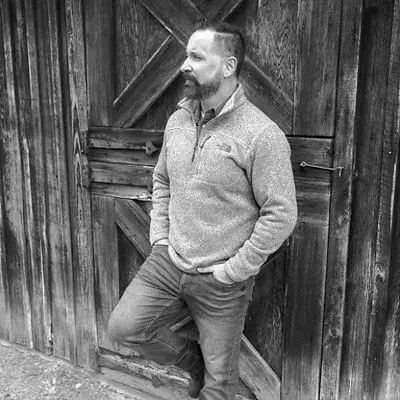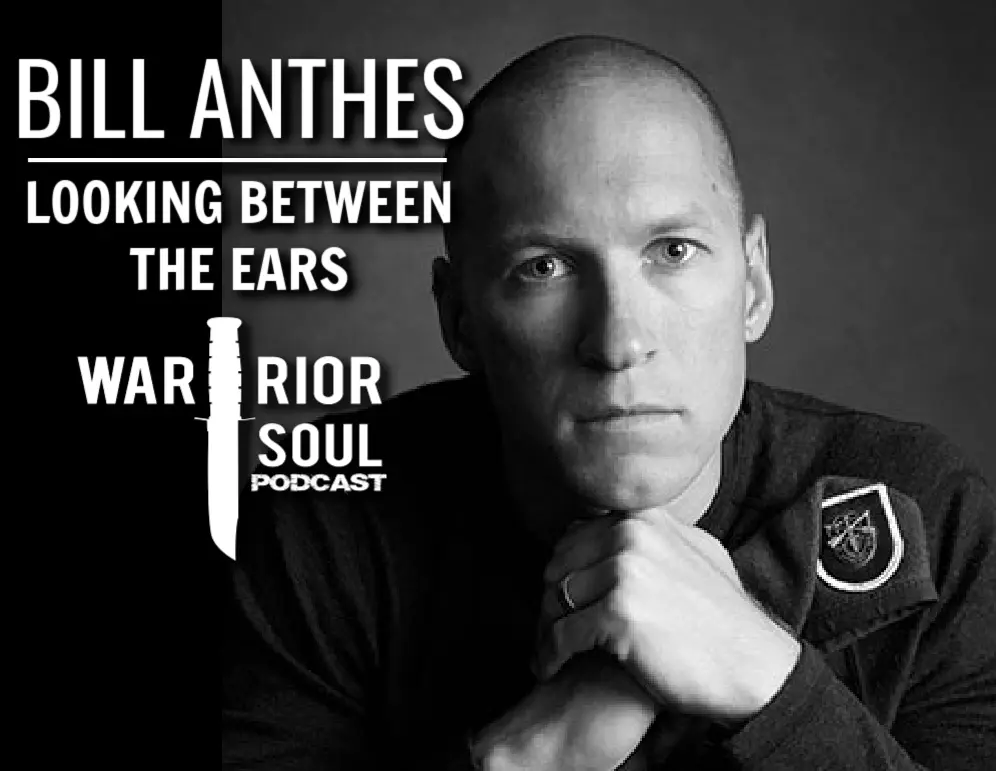
Bill Anthes is a Green Beret Veteran, entrepreneur, trainer, and social worker.
Bill Anthes is a Green Beret Veteran who empowers people to become the best human beings they can be physically, mentally, and emotionally.
Bill Anthes (@billanthes) is a Special Forces Veteran continuing his service as a therapist with a unique approach of using physical fitness to improve mental health.
Upon leaving the military to better serve his family, Bill founded BTWN THE EARS (@btwntheears) a coaching and experience-based brand that provides training opportunities to build physical, mental, and emotional fitness for individuals and teams.
Bill and his wife, Karianne operate both a brick-and-mortar training facility in NJ as well as remote coaching with clients around the world.
Bill's Social Media (Instagram and Twitter) Handles: @billanthes@btwntheears@btwntheearsfitness
Link:https://ethos.btwntheears.com/breakthroughhttps://www.btwntheears.com/
Transcript
Machine-generated from the episode audio and lightly edited — may contain errors.
Chris Albert (link to this point)
Bill Anthes, welcome to Warrior Soul podcast, man. How are you doing?
Bill Anthes (link to this point)
Chris, thanks for having me on, man. I'm doing I'm doing well. Thank you.
Chris Albert (link to this point)
We we met each other over at the Warrior Angels Foundation four by four by forty eight, which we've been talking about a lot here on the show. It was an epic event. Got to know each other a little bit. But for the audience at home, you wanna give them just like a two a minute synopsis of who you are, where you're coming from, and and what got you to this point.
Bill Anthes (link to this point)
Yeah.
Sure. So I was a college athlete, you know, soccer player, athlete my whole life. Went to school. Went to to Montclair State University here in New Jersey. Was an All-American.
Finished. Started working in the corporate sector doing accounting at Pricewaterhouse. Hated that. Saw the direction my life was going. That was away from the direction I wanted to live.
Quit that job, joined the military, joined the army, with the hopes and dreams of becoming a Green Beret, and I I successfully completed that pipeline and that training The month before or two months, three months before I went to basic training, met this pretty amazing blonde woman who rocked my world. We were just kind of friends at the time but had maintained a friendship, who's now my wife. And so now I'm a I'm a husband. I'm a stepfather to two two pretty awesome kids, two fur fur children as well, two labs, small business owner of company called Between the Ears, and I'm also finishing up my master's degree in social work to do the therapy route as well. And, yeah, man.
That's that's the quick.
Chris Albert (link to this point)
That's awesome. That's awesome. Yeah. You know, I we ran together one of the legs and, well, in my case, more like limp together on one of those legs.
And and, you know, you were telling me a little bit about Between the Ears fitness and and and how you do things. And it seems like such a special way you go about things. Can you tell us a little bit about that business and and how you started that?
Bill Anthes (link to this point)
Yeah. For sure.
So, you know, with fitness, we're we're in, like, the fitness industry, so we do remote coaching with people. My wife and I, she she opened up a CrossFit gym in 2008. Mhmm. So she's been in fitness pretty much her entire life. And unlike most small boutique gym owners, she's actually, like, made it make a living out of it.
So she's, like, truly a professional. And then, you know, through our own education, through our own experimentation, and just frankly learning more about the human body, the human mind, we've evolved to a system that prioritizes pretty much your intention and your nervous system over just what the calendar says to do on a given day. You know, unfortunately, a lot of programming is like, okay. Monday, you're gonna do whatever. Let's just say lower body.
Tuesday, you're gonna do cardio. Wednesday, you know, then you have the things that cross with that kind of say, hey. You're gonna do sort of all of that on the same day, and you're gonna do that day in and day out. But you kinda get this this this no man's land of doing a lot of the sim like, same thing. So for example, like, if all you ever do is high intensity, you don't get the benefits of long slow.
You don't get the benefits mentally, emotionally either of like, okay, you're going to do a three hour workout now. Now what's that look like? So we approach it from what's your nervous system communicating to you based on stresses in your life and everything like that, as well as how does that meet your intention for how you want to use fitness to better yourself and better your life. And so it's kind of mix between physical fitness and kind of high pretty high level training concepts made simple for the individual, for the regular everyday person who wants to train hard as well as train for longevity and and keep going.
Chris Albert (link to this point)
What so, like, when a lot of people hear this stuff, right, they they have a hard time differentiating between fitness and longevity and all the the these different terms that come up come about.
And and one thing I've discovered is that being able to perform and training for longevity are are are two very different things. Right? In in some ways, they could actually counteract each other. Could you explain that, and and how do you get those two to kinda coalesce?
Bill Anthes (link to this point)
Yeah.
I mean, I think it's a great point because you look at what people do. You look at the epitome. Right? So if you were to take a pursuit and dial it up to the maximum intensity, right, as, like, the trajectory of that pursuit. And you look at Olympic athletes.
You look at professional athletes. You look at anybody who does a specific thing for livelihood. They make sacrifices to their long term health. You know, you see someone linemen are a great example. Right.
Right? Anybody else that specializes in a specific type of fitness and performance. By specializing in it, they neglect other things. In those other things could be joint health, tendon health, repetition, right? Recoverability, just wear and tear because your your job in that point is to perform a specific function.
And that's fine, but that's a shorter burn. Right. Longevity, you know, basically, wanna be able to do stuff for for forever, and then one day just kind of have that be the end from a from a capability standpoint. Right. And the two are often at odds.
You know? And and that's, you know, each each person that's each person's prerogative to really say, no. I wanna specialize in this. But I I kinda have this thing within the fitness space where if you're a lot of people and it's kinda like everyone wants to feel good, I think, where, hey. I'm an athlete or, yeah.
You're an athlete. And it's like, I don't I don't agree with that. I think an athlete and if you're training for something, I measure somebody's training by the degree of their sacrifices. Mhmm. Not necessarily by what they're doing, but more so by what they're not doing.
And when we prioritize performance, there's a lot of stuff that we're not doing that might be better for overall health. Right. And neither are right or wrong. It's just who are you trying to serve.
Chris Albert (link to this point)
Right.
It it I also think, like, at different points in your life, you're gonna be going for different things. You know, as I just explained to you, a lot a lot of the audience, combat veterans, US Marine Corps, US Army. And and, you know, I remember when I was a young PFC, I was coming to my unit, and I saw this old man, and it was our company first sergeant. And I remember how he looked. Right?
He he he had trouble walking. He was he was kinda hunched over. You know, he looked like the oldest man in the world at the time to me. But, you know, looking back on it, he was younger than I am now. I think he was in his, like, late thirties.
Right? And I think about the amount of abuse we probably put ourselves through between the training and and and, you know, the heavy loads and things like that, the wear and tear on the lower body, but also, you know, the lack of sleep, the the probably trying to keep ourselves awake too much with tobacco Yeah. Drinking on the weekends and things like that. That that takes its toll after a while. Right?
Bill Anthes (link to this point)
Sure does. Yeah. And that's in addition to the cost of the job. Right. You know, your nervous system, we are constantly training and exposing ourselves to stimulus that's going to say when fight or flight comes, I'm going to make sure I fight, and don't even have to think about it.
It's just gonna be a response, then it's gonna be an aggressive execution of the most lethal form of whatever, you know, tool we have at our disposal at that time. To get to that point, that conditioned response, you have to expose yourself to an incredible amount of stress Mhmm. By way of stimulus. Right. So you look at the total stress tolerance over a career, either a training cycle or a career, you know, it's like it's it's it's huge.
And and and we need stress. We need the stress to create that adaptation, to create that response. Right? This stimulus response adaptation sort of is like the conditioning thing, and we need stress. However, then you couple that in with partying, drinking, not sleeping, stimulants, shitty relationships.
Mhmm. It just everything is kind of in that one bucket. And when everything is in that one bucket and it's just all sympathetic nervous system overdrive, fight or flight all the time, you know, that other side of the of the coin is is getting neglected, and that's where we recover. You know? That's where we we need that other other piece.
Nobody's saying don't go hard. It's just like don't go hard every fucking time you do everything and anything.
Chris Albert (link to this point)
Right. Right. And that's something I I think a lot of people neglect.
You you mentioned shitty relationships. Right? Like and and, I mean, I have been in a lot of shitty relationships, and I'm sure a lot of our audience members have too just given the the profession. But, you know, I think I think we tend to negate the impact that that has on us both mentally and physically because, you know, if you're dealing with those types of stressors constantly, that's like a slow burn at your soul. And if you're dealing with that constantly, it's it's gonna have an impact, and it's gonna have a measurable impact on who you are as a person, how you're able to perform, and how you show up in the world.
Bill Anthes (link to this point)
I agree, man. Yeah. I agree. And I think if you were to try to, like, use this because sometimes it does get, like I don't know. It does get a lot sometimes, you know, when you start going into, neuroscience.
When you start going into some of the science y like things about this. But if you were to think about your body and yours as the system, as in or you know, it is, there's various components of that. And so there's various rooms or or then your your body and your system is like a house. There's various rooms throughout that house. And each room has a different kind of intention.
Right? The bedroom, where you begin and end the day. Right. Well, how you begin and end the day, right, what activities you sort of do to yourself, right, to begin and end the day. You begin and end the day maybe with some some presence, maybe with some gratitude, maybe with some intention of like, okay, this is what I've got going on, right, and and and whatever.
You got the kitchen. Right? That's where you prepare and consume food, generally speaking. Alright? So that's, like, gonna be the the kitchen of your mind.
Like, what are you ingesting? What what's the quality of the food that you're that you're having? That's, like, definitely some relationships. Your consumption, what are you consuming? Media, all that stuff.
You know, the living room where you basically gather and socialize. And humans, we've we've come this far because we have the ability to band together and socialize and be like, hey. You have spear. I have spear. Let's go kill some shit and and dominate the planet.
So the the the living room component of the mind is very much that social element. Mhmm. And if you were to have a house without a kitchen, that's not a house. If you were have sorry. It's my dog.
If you were to have a house without a without a living room, you know, that's like just a, you know, a place to sleep and and and shit and and and make food, and that's not really a house. And so that's like, I think that part of we have to look at our our system. We have to look at who we are in our as an as a functional organism with these different components and intentionally be aware of an action what those necessary components of us do, you know, and and it's a challenge, man, because it it really is it does go against quite a quite a lot of, you know, it goes against certain cultures. It goes against societal expectations and norms. You know?
Because we like to we like to reduce things down to, like, one thing. It's like, oh, so you're saying don't ever go hard. So I'm not fucking saying that. Just saying don't always do that all the all the time.
Chris Albert (link to this point)
Right.
Right. I I definitely hear you on that. You know, wanna ask you, what are some some, you know, simple practices that people could start implementing to to to start to integrate this kind of stuff?
Bill Anthes (link to this point)
Yeah. So I I think, first of all, it all begins with awareness.
Right? If we don't if we don't have the awareness of ourselves, then we can't discern the signal of what's accurate, what's true, what's merely existing. Right. And beginning with awareness, you know, that is where something like meditation or breath work really does help with being like, hey. Let me pause real quick.
It's just like a patrol. Right? What the hell is going on? You know, do your own SLLS. Stop, look, listen, smell.
Right? With yourself, though. Apply that inward. I teach people basically, you know, you think about, like, a stoplight, red, yellow, green. What type of day is it?
If it's a red day and that signal's being like, listen. Stop. And you try like, it's like, here, you're at an intersection. It's a red light. There's some intersections where you can look left, look right, make sure there's no cops, and go through the intersection, and it's pretty safe.
Right? There's other intersections where it's like that red light. Like, if you're crossing a double highway or whatever, you know, two lanes going east like, you're not going. But if you try to cross that, you're you're you're at a certain point. Right?
You might get lucky, but now you're playing the odds. So if if your signal if your system is telling you stop, stop, stop, stop, and you continually override it Mhmm. There's probably gonna be some some price to pay. Chronic disease, further acceleration, more breakdown, just being the first sergeant who can, you know, probably smoke a pack of cigarettes and bang out a five miler, but he can't get out of his car without being in pain. Right.
You know? Well, caution, the yellow light. You're coming up to this intersection, and it's like yellow. Yep. Sometimes it means accelerate and punch through it, and other times it means step on the brakes.
You know? Mhmm. We gotta be aware. What's that? What's a yellow light signal for me in my life?
A green. Green light. It's like, right on it. Right on. Rock and roll.
Now the thing is, it's like, just because it's a green light doesn't mean that you might not get t boned, that some other asshole might not come through the intersection, right, and and hit you. So but without that awareness of yourself and without that focusing on the signals, forget forget all of the stigma and all of the, well, I'm a pussy or I'm a you know, that's weak or anything like that. Like, that's not that the body doesn't care about that. That's the mind putting a story. It's it's really about the state.
That process of getting to know your nervous system and what it's communicating to you and then understanding what sort of your actions how your actions have a have an impact on that, I mean, that's like a higher form of intelligence, I think.
Chris Albert (link to this point)
Yeah. No. Absolutely. Absolutely.
I I gotta ask you this because I know quite a few Green Berets, just being involved with with, Warrior Angels Foundation. You know, at what point in your career or or was it after your career that you started to understand this stuff? Because, you know, knowing a lot of people from the special force forces community, I know that a lot of a lot of these guys, they go through and it's go, go, go, go, go. And and, you know, by the end of it, they're they're having neurological issues. They're having issues with with, you know, the impact of traumatic brain injury, issues with hormones and things like that.
But you you seem like you're in extremely good shape. I've I've watched you run. I've I've seen you interact with people. You're you're you're you're, know? And not to say that these other guys aren't well put together, very well put together, but but they've gone through some some deep struggles.
Did you did you experience a lot of those struggles? And and, if so, how did you overcome them, or were you able to recognize them early?
Bill Anthes (link to this point)
Yeah. So I really learned started digging more into this as a result of my own struggles. And, previously, it was look.
I was, you know, college athlete, good, you know, high performing athlete. Some of that some of the intuitive training stuff I learned sort of as an athlete. You know, you learn that in season. You're like, I can't go hard every single session. I I won't be I won't make it to the end of the season.
But then that switches to every time I trained when I was in the military, the only thing going not the only, but the the loudest thing going through my mind was if I have to rely on my current fitness to drag a buddy behind cover to a bird, get out of a truck, whatever it might be, to to to engage, close, and destroy, whatever it is I'm dealing with, this current state is not good enough because how could it ever be? Right? How could you ever be like, yeah. No. I'm good, man.
No. Not when there's life on the line. And that drove everything. So my it was very much just go, go, go, more, more, more. And, you know, I I had a back injury, from a jump, and that started to really, I think, kind of that started to kind of mess with me mentally as well because now all of a sudden, well, what if I'm not gonna be able to physically perform?
Especially me, I rely on my physical capability. You know? I was I it was a talent you know, I I had that was a strength of mine. And then it's like, well, that there's a there's like a little dink in the armor there. And then so I got out, and then I just tried to basically apply the same methodology towards my life, and I just kept hitting a fucking wall.
Mental health goes down the shitter. You know, that was really, like, the biggest thing. Like, yeah, the mental health component, like, life just wasn't working. Had, you know, battle with suicidal ideation and, you know, real close one night, then you start you know, people that you know take their life and Yeah. It's like, what the hell is happening?
You know, this what is going on here? Like, why isn't what was working? Why isn't that working now? And it was because, you know, I needed to learn a new kinda needed to learn a new way to live. And I think at the at the center of that was I needed to learn now who, like, who really am I?
Who am I without this thing? Who do I wanna be? And that process was super painful, you know, even to the point of recently going on a psychedelic, retreat and, you know, really trying to really trying to work through that stuff, you know. Right. Because it's like fitness and mental health is one of those things.
It's like, hey, physical fitness and mental health. We all know when we work out, we feel better. But what I couldn't figure out was I'm fit as fuck. Why do I feel like death? Why do I not feel like I'm alive inside?
I I I don't get it. They're saying mental health and physical fitness. It's like, yeah. Because because of trauma, because of TBIs, because of just your own like, you're you're you're not just one component. You know, your system, there's a physical leg for sure, but there's a mental, emotional, and spiritual legs too.
And I think about, like, a stool or a chair, four legged chair. You take two of those legs out or you just try to have one. Now that's a crutch. Now that's a still. Right.
And so, you know, that's been I've I've much of the stuff that we do now is just I'm a student of this as well. Right. And, you know, I think that's the thing. Like, I don't have it figured out. I I know some things, and some things make more sense to me than others.
And, you know, it certainly has been helpful in my life and the clients' lives and others, but it's always a continuous evolution of learning, applying, how to go, learn, apply, how to go. Just rinse and repeat. You know?
Chris Albert (link to this point)
Right. Right.
I gotta I mean, I wanna ask you more about that psychedelic journey, but, you know, the Yeah. One of the things I've I've noticed is that, you know, exactly what you mentioned because I've been pretty physically fit my whole life. Right? Like, I've I've always I've never been not physically capable. Right?
But as I've gotten older, I've noted Hey. I lost you. Can you hear me? Yeah. Sorry for the interruption, guys.
So as I was saying to Bill, you know, as I've gotten older, I've I've I've, yeah, I've always been physically fit. Right? I I think I've been more physically capable now even than when I was when I was 18 years old. Right? Because I I have more time to work out.
I focus on it more and things like that, but I've noticed other kinds of chinks in the armor that are more mental in nature. You know, like losing my faith probably in in in losing my spiritual faith, but also, I think, in a lot of cases, becoming increasingly jaded with with my fellow man and and and being increasingly socially isolated. There was, like, a five, six, probably seven year period where I I isolated myself a good bit and didn't I would spend, you know, probably a whole day without talking to anybody until my girlfriend would come home from work. You know? And and I I don't think that's good.
And I noticed something with with a lot of men in particular is that when we hit the age of, like, 30, 35, we tend to isolate. We get away from our tribe. We get away from other men. We hang out only with with our our partner. You know?
And and I I don't think that's good. And I've been trying to kind of figure out more and more solutions for for for me on a personal level, but also trying to think about it on a on a bigger level, how can we overcome that? You know, for me personally, one of the things I've done, I've I've joined a jiu-jitsu gym. So I'm not only, you know, practicing fitness myself. I have kind of a tribe there.
I started doing stand up comedy, and so I kinda have a camaraderie with with these other comedians, and I I get out more and I do those kinds of things. But but I think also, you know, moving geographically closer to to people that I know and love and that kind of thing, and also being associated with things like WAF where where, you know, we have, you know, the the the Discord, and I'm talking with people like you and with Norm and with Andrew and and with Adam all the time. You know, that kind of stuff helps to to keep a tribe going. Have have you noticed these types of things in your own life as far as, you know, dealing with that socially? Because, you know, with Green Berets, one of the things I always respect about you guys is you guys are like you're people orient you're a people oriented service.
Right? Everything you guys do is about is about developing humans and and and and going into other countries and and kind of developing assets there. And and, you know, I feel like you guys are awesome at it, but I also feel like a lot of a lot of you guys, as you get older, kinda lose that too. You know?
Bill Anthes (link to this point)
Yeah.
I think what's funny about that is purse personally, I have noticed I've 100% felt that that isolation. Professionally, my whole job, my whole small business is about connecting with people and providing them a service of helping them feel and operate better in their lives. Right. And it's this dichotomy between knowing I say a lot of people, but, like, it's not it's not thousands of people by any means, but there is a relationship there. It very much is that similar to the, you know, the Green Beret mission, you know, train, advise, assist the company, like, all of that.
Build build build, quote, unquote, build people up. And so there are relationships there, but there's also and a little bit less of an extent now, but there's also some relationships where it's like, but that's also a client. And so when you start to also get deep into this stuff, the therapeutic relationship is a sacred relationship. Therapist is not your friend. Right.
That's a tricky thing where you start to know how some of system goes, some of the healing, some of the mental stuff, you start to kind of pull on some strings and open some doors, and all of a sudden somebody's telling you about their their trauma or a significant whether they call it trauma or not, an adversity in a challenging situation that still is having them struggle. Mhmm. So then there's that natural thing of, like, hey. I need to we can be we can be cool, but there needs to be some distance. Right.
Personally, you know, my whole life, I I actually I grew up, like, with this real with, like, just a feeling of I've like, just intense loneliness. It's for for a very long time. I didn't have a lot of friends. I was active. I was on teams.
I knew a bunch of people. I was you know, I wasn't, I certainly did not live, like, and have no socialization. But as far as genuine human connection, I spent a lot of time alone, lonely, and that's something that I still feel. You know, I still feel like that loneliness is a major is a major part of mental health challenges. When we get fractured from meaning and belonging, when we don't have a purpose, we don't have a tribe and, you know, purpose and people, man, that's what fills that void and what fills that crack.
Chris Albert (link to this point)
That's some hard shit right there.
Bill Anthes (link to this point)
Right. You know, I think your your point about, you know, connecting with other men and not just kind of relying on on, you know, our spouse or significant other or wife or whatever to fill that, like, yeah, there's a there's a long history of men needing that connection to other men. Right. And I think it also your wife, girlfriend, whatever significant other, like, they can't be the only thing either.
That's putting a lot of on that's putting a lot on them. You know? So
Chris Albert (link to this point)
Yeah. It is. It definitely is.
And I think that in some ways, you know, our some people say you've gotta be completely open with your your partner, and you gotta let them know everything. And and I think in a lot of ways, that's a mistake. Because if you do that, you're you're you're you're you're throwing a whole lot at them. You're throwing a whole lot at them.
Bill Anthes (link to this point)
Yeah.
I mean, I think the big things, sure. You know? Like, big like, the headlines, but, like, the nitty gritty everything, I don't I don't I don't know. Right. In my experience too, like, depending upon the strength of your relationship, of course, but they're they know like, if they know you, they they see you, they're around you, they're you they can feel your energy.
You know, everybody that walks into a room, like, we you intuitively can be like, yeah. No. I don't know if something's going on with that person. Or like, hey, man. Are you alright?
Like, like, yeah. Yeah. Yeah. You know? But your partner, they they probably know as well.
Like, I think, you know, one of the things is I think we think we're better at hiding stuff than we are. Yeah. And instead of trying to have that pressure of I need to hide this from my wife, having the outlet to be like, okay. I have someone I can I can talk to that I that I trust that won't judge me that is just open that, you know, we can roll with or work out with or in a, you know, therapeutic setting or just, you know, friendly, like, whatever it might be, whatever that person needs? You know, not having one person be responsible for all of our stuff because we're not gonna share all of it anyway.
Chris Albert (link to this point)
Right. I wanna get back to the the the the psychedelic plant medicines and the journey you took. You know, what led you to that? Because I while I feel like the world is kind of opening up to to to that stuff, you know, I I was having a conversation, and I won't name who it was, but a friend of mine who's who's running for public office is is a veteran. And, you know, he kinda laughed me laughed me off the phone when I I said, you know, you need to look at this stuff and and and everything.
You know? And I think there's still a heavy stigma around it. Yeah. What what led you to it? And, you know, what what was it that that you went to?
Bill Anthes (link to this point)
So a buddy of mine who was in the army, who's in special operations, went through in October, VETS. So Veterans Exploring Treatment Solutions. Marcus and Amber Capone are the ones who's who's founded that. And he, he went through that and called me shortly thereafter and was like, hey. I just went through this thing.
You need to take a look at this. And it wasn't like a you need to take a look at this because I'm worried about you, but, yeah, he follows me on social media. We know each other. He kinda knows, like, kinda what I like, my what I'm into, you know, health and physical and mental and emotional. And he's like, you know, not only this isn't just about getting high, this is about helping the brain.
And this is about giving you access that you can't get from just thinking your way through things or journaling. And I'm like, yeah. Totally. I I 100% agree. Like, there's only so there's only so deep we can go by ourselves.
Right? Same thing with scuba. Like, at a certain point, you need a tank to get to the deeper and stay at the deeper kind of things. Tanks await. And that's kinda what these plant medicines are like, but deeper within within yourself.
And so that was, like, in October. And, the next day, Marcus and Amber Capone were on Andy Stumpf's Cleared Hot Podcast. And I said to Kay, my wife, I was like, hey. That's who Ben was. Just this is the same thing.
And so she listened to it, and she's like, yeah. You need to listen to this. And so we listened to it, actually. We listened to a lot of it together, and it was scary how similar the story was. It was really it was like it was almost like hearing an echo and some of the same conversations, the same situations.
You know? Can we come up to each other like, woah. And, you know, I never I was never a drug person. I have I've I haven't drank out I've stopped drinking alcohol for three years now, and I won't go back, but I was never really, you know, I don't know. But being in mental health, I've been sort of following and being aware of like, psychedelics are having profound impact on people with mental health.
Johns Hopkins is, like, leading the charge. There's some, like, doctors that I really respect that are saying, hey. These are these are helpful. These are good things. And so I had been aware of it.
So I was, like, open. And then, you know, also just wanting and needing my own healing. Right. You know? And so we she we listened to that, and she really led the charge.
Because otherwise, I'll be honest, like, this is the hard part, I probably it's a snowball chance in hell I would have really pushed for it myself. And I think that's the thing with also with people, with social support. You know? Sometimes, like, when you're in it, it's and when you come from, I think, a a service oriented background, taking care of yourself is, like, the hardest thing you could ever do. Yeah.
And, you know, I'm I'm incredibly blessed and fortunate to have a wife who, one, is still with me, and two, is, you know, saying, hey. Like, I'll be I'll I'll do I'll I'm gonna lead this charge. Yeah. And, you know, so I went through VETS a VETS retreat in January mid January.
Chris Albert (link to this point)
That's awesome.
That's awesome. Which which compound did you did you take?
Bill Anthes (link to this point)
So we did ibogaine and then 5-MeO-DMT.
Chris Albert (link to this point)
Okay. Toad.
Yeah. I've heard a lot about that combination. Yeah. Is there anything you wanna describe about it or wanna leave it?
Bill Anthes (link to this point)
I I have no issues talking about it.
I've talked about it publicly. I'll say the ibogaine is traditionally they like, they refer to it as, like, the stern grandfather. It's usually not a pleasant experience from what I gather. Mine, I felt I felt a level of peace I've never felt before. So who the hell knows what that's all about?
You know? But it it was like, I was I learned during that. I it wasn't I wasn't seeing anything. I wasn't really hearing anything. It wasn't what you'd normally think of, like, with an LSD trip or any sort of traditional psychedelic.
It really to be honest with you, was underwhelming from that standpoint. Now that was my experience, and everybody's experience is different. One of the other dudes who I was down there with definitely saw stuff. So and it's not that's not why, you know, like, you wanna see something, rent a fucking movie. If you wanna heal and, like Right.
You know, get some stuff, then, like, you know, these are these are for that and and and whatnot. So that was that. And then we did that on Wednesday night to Thursday or Tuesday into Wednesday. And then Thursday, we did the toad 5-MeO-DMT, and that was, I mean, that was that was insane. That was, just an indescribable kind of thing.
You know, Mike Tyson's talked about it. You have this it's just launched to this different thing. But I also had an experience of hell. Mhmm. And that was the most horrifying thing I've ever probably experienced.
But from what I understand and from what, you know, integration coach and different people within the space say is, like, these medicines amplify what's already within you. Right. So for me, my own manifestation of hell is something, is a behavior pattern, is a way of thinking, it's a way of living that I've already done. Mhmm. These these medicines and these compounds, they just turn that shit up to, like, level a 100 Right.
And and and put you in it. And then it's gonna be it's it's you know, I think the thing with these with the plant medicines is that they're the catalyst for change. Mhmm. They're not the actual change that occurs. Right.
What are you going to do as a result of your experience? Mhmm. That's where I feel I can get on board with that. Unlike you go to a clinic, you go to pharmacy, you go to a not to say there's anything wrong with psychotropic medication. I get it.
It's there's a time and a place. But the Western model of here's the pill, numb the symptoms, and play basically fucking whack a mole. That's not that's really not solving anything. No. No.
You know? And so that's it's I can get on board with this. You know? And and I'll be honest, like, since my retreat, there's there's still days where I'm like, there was like, now, like, you feel the responsibility to live. I wanted to my some of myself, like, I'm much more on the depressive side.
Mhmm. I felt dead inside. Like, I was not living. I've said that for years. For for years.
And, you know, not for for sure, my wife. And so I experienced that. I experienced this hell absolute nihilism and got some shit out for sure, like, some evil out eggs. I I feel like there was also this void of a lack of spirituality that got just put in my face. And what filled that void is this erosive power of feeling dead.
You know? And so that was already within me and that these things took that and just jacked it all the way up. Well, now I feel the responsibility to live. And one of my intentions going into this you know, like, you think about you know, you have a couple coaching calls before you go in. They're very much about, hey.
What's your intention? Like, it's it's, you know, all of that. And one of my intentions was to feel like to feel what it's like to live, to feel life, and medicine's not gonna do that. I'm going to do that. It's a self empowerment kind of a thing.
It's no different than, you know, any intense experience. Right? You learn from that. That shows you something, then you apply it moving forward. That's what these medicines do, and that's where I think for for each person, it's gonna be different, but that's the beauty of it because it's it's it's almost as individual and bespoke as it gets.
Chris Albert (link to this point)
That's awesome, Bill. That's awesome. You know what? I wanna kinda swing it around toward, the event we just completed with the Warrior Souls Foundation, which I I got so much out of that, you know, not just the run itself, but but being there with everybody and and kinda having this tribe there and and and, you know, feeling the love and and the the, you know, the camaraderie that came with that event. You know, what was your experience there?
And and, you know, maybe a little bit about how you got in touch with the Warrior Angels Foundation yourself too.
Bill Anthes (link to this point)
Yeah. For sure. So I I did my retreat January, like, ish, middle of January. Came back for it's a week long.
Came back from that and was like took took a full break from social media, pretty much took a break from exercise. Like, I needed to just be like, what the hell just happened? Because you come back and you're like, like, the integration phase is is super important. Any you know, it'll you'll take off, but you gotta figure out how to land too. And so ran like, after a week or probably, like, a week and a half, two weeks, I popped on social media, and I was gonna delete the thing.
I was gonna I was just like, fuck this. This doesn't have any part in my life. That's probably not the right answer for a small business owner. But Yeah. I was definitely toying around with the idea because I'm like, no.
I need to focus on me and blah blah blah. And, you know, I I do I I use it more than I probably should, but I'm definitely, like, not someone who's, like, always posting it on there and stuff, but either way. And then I see that's put up this thing doing this four by four by 48, looking for volunteers. And a client of ours, had done it last year. Mhmm.
And, you know, being a fitness guy, I was kinda like, oh, right on. Like, that would be pretty cool. And, hey, they're, you know, they're, they're looking for a fundraiser thing. We've got, you know, gym and people and stuff. So we so I just reached out and was like, hey.
We'll we'll volunteer. Fully thinking, like, we'll just have a sign up page, raise some funds, and, you know, run it around here. And Amber Capone asked if we would wanna go down to the actual event and represent them in person in Houston. I was like, yeah. Right on.
That's that's awesome. And it was, you know, to to so my wife did it a week before. Mhmm. On her own up here. She had someone run with her almost every time, but, you know, it was not an event.
Like, she still did life and and everything too. So she did it, and then when, you know, we went down there, she obviously was helping volunteer and stuff. And, you know, to be with people to be with people who a lot of veterans, a lot of, you know, to be with a bunch of people who there was no bullshit. Right. There was no it was just like open heart coming together, good conversation, sharing in something, you know, obviously, Chief Phil and the Native American guidance and welcoming was that reached me to a that reached me at that reached that spiritual void.
But I as well have been unaware of how much that's been negatively impacting me, and that really kind of filled me up there. And then, of course, you know, me you spending time with you and and everybody else that was there just just making good relationships and connections. It was it was a amazing, you know, forty eight hours, and it gave me hope too for what what's possible, you know, moving forward.
Chris Albert (link to this point)
Yeah. It was such a it was an awesome event, you know, learning about Chief Phil, learning about, you know, all the spirituality and the the the ceremonies they did for us and and, you know, getting to meet everybody.
That that was the best part. I think the run the running definitely had a central role in everything, but, like, it wasn't the only thing we were doing there, which which I thought was amazing. You know?
Bill Anthes (link to this point)
Yeah. Yeah.
Yeah. If it was just a race Mhmm. And if people not to say people didn't care about the running because I don't know. I mean, everybody I don't know what anybody else cares about. But if it was just like, hey.
Who's gonna win this? Mhmm. Or if it was all about the race or if it was like a race, I I feel like that would have lost something. Right. You know, the the the running the running was like the beat of the weekend.
Know? It just it kept us kind of centered. It was like, okay. Yep. There's every four hours.
Boom. Yeah. Boom. But what happened in between the beats was really the magic. Yeah.
Exactly. And that's, you know, that's that I loved it. I I really did. I I thought it was, you know, an amazing place and space and people and, you know, I think the I think what they're doing and what their vision is is is is is amazing. It's beautiful, really.
Chris Albert (link to this point)
Yeah. Yeah. Absolutely. Absolutely. I've known Andrew for years.
I've known Adam for years. Just two really great people, and and I really love what they're doing and and what they're trying to work toward. And, you know, I try to support them as much as I can. Yeah. You know, I wanna finish up just talking about you and and your future.
So you're working on this masters of social work right now. Yes. And and, you know, you're pushing forward and you toward your own vision. Yeah. Where do you see yourself in in in a year or so?
Bill Anthes (link to this point)
I'm so bad at that question, bro.
Chris Albert (link to this point)
Me too, man. It's an unfair question. Right?
Bill Anthes (link to this point)
It's like I remember I did a goal setting thing before the army, and they were like, where do you see where do you hope to see yourself in five years?
And my answer was just alive. Yeah. Like, you know, in a in a in a year from now, best case scenario So I'm interning at the VA right now. I know the VA gets a lot of gets a lot of heat, and I'm not I'm certainly not defending that. I I like I said to somebody, I my own experience with the VA from a, from a client standpoint, I would not be leaving a five star review by any means.
Right. But I also think that where I am, it's the best way to engage and serve veterans. I'm in suburban New Jersey, out in New York. There's not a lot of veterans around here. You know?
It's not a military town. It's not it's it's it's a way to stay connected and to serve, and and and I wanna be part of the solution. Mhmm. I never wanna be the person who just sits there and points out problems. You know?
I think that that that person creates more problems. Right. So in an effort to be part of the solution through mental health as well as with my own sort of professional development and this and that, working at the VA, just doubling down on alternative approaches to mental health Mhmm. That are holistic, that might not include plant medicine. I don't think it's an it's not like a one you know, it's not a one size fits all thing, but, you know, really trying to integrate smart fitness, whatever for whatever that is for somebody, you know, depending upon their quality of life, nutrition, you know, some of these more some of these nonpharmacological approaches and interventions to get people moving, to get people feeling better, that kind of a thing.
I definitely wanna be more I wanna take formal sort of, you know, therapy therapist training, with plant medicines. You know? I think I think I don't have any interest in administering any of these plant medicines. One of the reasons being, like, they are well, it's like the peyote ceremony we did. Mhmm.
You could acquire some peyote and ingest it. Right. But what made that special was the ceremony. Right. You know, it was the and there's a sacredness to these things.
Mhmm. And I have a tremendous amount of respect for them. I view myself in somebody's healing journey if they choose to do plant medicines. Hey. Let's do some good work on who you are and some preparation beforehand.
Then you're gonna go to wherever you go and and do whatever you do, and then we're and then I'm gonna be here for you when you come back from it. And, you know, kinda be in that runway for Yeah. For takeoff and landing for folks. And, you know, building my building our private practice. You know, wife and I run our we have an in person gym, small training facility.
You know, in person, it's it's thousand square feet, but, you know, really just just trying to serve and and and spread the light, man, because it's it can get real dark real quick. And, you know, that's that that despair and hopelessness and apathy and nihilism is the it it is fucking killing us. Yeah. Is. So just trying to, yeah, just trying to spread that light.
Chris Albert (link to this point)
Big time, man. Well, that's awesome. Where can people connect with you?
Bill Anthes (link to this point)
So, unfortunately, social media is probably the best place. My handle is Bill Anthes, a n t h e s.
My business Between the Ears, b t w n, the ears, and then between ears fitness. Those are, those are the best places.
Chris Albert (link to this point)
Awesome, man. Well, Bill, I just want to acknowledge you, man. You know, I really appreciate the insights you brought here.
I I really appreciated meeting you and your wife down at at the WAF 4 By 4 By 48. And and I appreciate you, you know, exploring these things because I feel like, you know, yeah, VA gets a bad rap, but but we can't expect the government to to just do these things for us. Right? It's gonna be us as a community. Right?
And I think people like you who are leading the front and and and pushing toward these things and exploring these things and and bringing information to the community and and and also guiding people toward them, I think that's amazing. And and that's the bread and butter of what I think is gonna get this community to where it needs to be. So so thank you so much for that. Do you have anything you wanna end on?
Bill Anthes (link to this point)
No.
I mean, first of all, thanks for the kind words, Chris. You know, was awesome to, you know, meet and connect with you too and looking forward to, you know, future friendship and whatnot and and just staying connected. And I think the thing to end on that I my message would be, like, you know, just connecting to hope. Just just trying to cultivate a little bit of hope. If you're down, you know, if if if it's the darkest night, like, you know, there is hope out there and whole and and fight for that.
You know? And I know I was so cynical about hope up until probably a year I don't know. Up until not that long ago. Right. And everybody says, hey.
Hope is not a method. Hope is not a method. You know? Yeah. I get it.
A former administration ran on hope, and it's like, well, what did that do? And you know what I mean? Like, I get it. I I I certainly get all of that. And I agree.
Hope is not a method, but looking at hope and finding some hope and creating some hope will lead you to the method. Right. And that's, I think, what we need to fight for. You know? And so hold it, like, holding on to that.
You might not have the answer right now, and it might be a long painful road in it. But fight for that hope and know that, you know, know that there is hope out there. That's it. You know?
Chris Albert (link to this point)
That's awesome.
That's awesome. Well, thanks again, Bill. And and, you know, to everyone out there, I hope you're you're catching this message. You know? I I hope that you're finding hope in your own lives and and and, you know, if not, working toward trying to to develop some hope in your own lives because it's what life's about.
Right? We've gotta be here. We've gotta live this life one way or the other, and and and we should do it to the best of our ability. Yeah. Thank you guys so much for listening.
I I really do appreciate everybody who comes to this this podcast each week and and who allows me to to talk to awesome guests like this. You know, I want you to enjoy the rest of your weeks and get out there and live your best lives while you can. This is Chris Albert and Bill Anthes, and we are out.
Host of the Warrior Soul Podcast and founder of Warrior Soul. Worldwide trainer and nutrition coach, contributing author at Testosterone Nation and Muscle and Strength.