Podcast episode
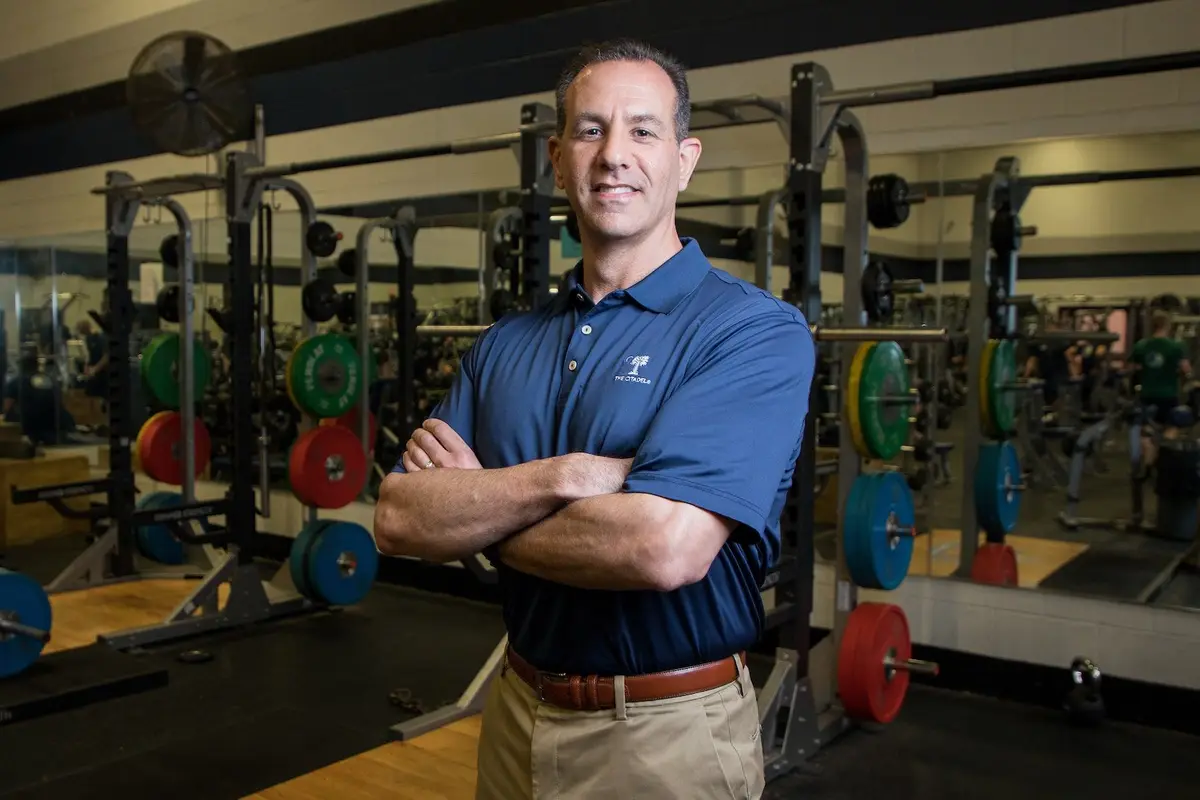
Dan Bornstein: Fitness as a National Security Issue
Hosted by Chris Albert
The Warrior Soul Podcast
Dan Bornstein is an Associate Professor of National Security at The Citadel
Dr. Dan Bornstein is an Associate Professor in the Department of Health and Human Performance at The Citadel, the Military College of South Carolina.
Dan began working at The Citadel after completing his Ph.D in Exercise Science from the University of South Carolina.
Dan is not a conventional professor. Prior to earning his Ph.D, Dan was the CEO of two fitness companies in Arizona. His research focuses on lack of physical preparedness in the United States as a national security issue.
US military organizations are having a difficult time recruiting qualified candidates because of a lack of physical preparedness amongst the population.
Dan came on the show to speak about the programs The Citadel offers in Exercise Science and Tactical Readiness. Though The Citadel is primarily a military college with an active Corps of Cadets, it has opened it’s doors to active duty military members and Veterans who want to attend the institution without being members of the Corps of Cadets.
This leaves a world of opportunity open to Veterans who want to get an education from one of the best colleges in the country.
To learn more about The Citadel, and it’s Exercise Science program, head over to Citadel.edu.
Transcript
Machine-generated from the episode audio and lightly edited — may contain errors.
Chris Albert (link to this point)
You know, one of the things I'm always saying is that if this country is gonna get better, if this country is gonna go on the right path, we have to step up as a community. Veterans are the sleeping giant in this country, and it is time for us to step up. That's why I wanna talk to you about The Citadel, the Military College of South Carolina. Now you might have thought about The Citadel in the past as this corps of cadets, this military institution, but they have programs for veterans that don't involve you joining the corps of cadets, don't involve you wearing a uniform every day, and don't involve you living a military lifestyle. If you wanna do that, great.
But if that's not what you're up for right now after your military career, then you don't have to do that, and you can access some of the best programs in the world. The Citadel has some hot degrees in intelligence, tactical strength and conditioning, engineering, and project management. And there's five student type options for veterans. There's graduate college, there's evening undergraduate, there's active duty students, non cadet day program, returning cadet veterans, and online programs. The academic offerings include undergraduate, graduate, college transfer, graduate certificates, and online degrees.
Veterans have access to every single academic degree the college offers, and they have the most flexibility when it comes to their schedule. They can major in anything offered to the cadets and would take those classes during the day with the cadets. But then there's other programs offered in the evening or online and graduate programs to choose from too to make things so flexible for you. The US World and News report has named the Citadel the number one college for veterans in the South. And for veterans who choose to take classes on campus, they get to be a civilian student in a military environment.
They don't have to wear uniforms, like I said before. They don't have to join the military culture of the corps of cadets. The atmosphere is a really good transition environment from military to civilian life. There's an organic mentorship that comes from taking classes with the cadets. The cadets wanna talk to you guys.
They wanna hear your stories. They wanna know what it was actually like to be in the military. A lot of the a lot of these men and women are gonna go on to serve as officers in the military, and they're gonna exact change. And they need to hear from you guys. They you also get access to The Citadel's alumni network.
Like I said, this is one of the most illustrious institutions in the world. And when you join the Citadel and you graduate, you're part of their alumni network. That includes so many leaders. It includes so many business leaders, so many leaders from the military, and so many leaders from the government. The college's core values of honor, duty, and respect align with veteran culture.
They align with who you are, and it's something that you're not gonna get anywhere else in this country. There is tons of special assistance for veterans at The Citadel. And whether you're a veteran or active duty military personnel, you can take advantage of these programs. You also get access to the veteran student success center, the career center, the academic success center, the student veteran association, and all campus clubs. If you wanna play rugby, you could do that.
If you wanna you wanna lift weights, you could do that. You get access to everything that the students get. There's fellowship opportunities. There's tons and tons of financial assistance. So if you're interested in getting a degree from The Citadel and building your life, head over to citadel.edu/veterans.
This is Chris Albert, and I'm here to remind you of one thing. Someday, you're going to die. And that's not some morbid statement or scary idea. It's solid fact. Your time here on this earth is limited.
And we need to be reminded of this as much as possible for one simple reason, to live your best life while you can. This is the Warrior Soul podcast.
What is going on, ladies and gentlemen? Welcome to the Warrior Soul podcast. My name is Chris Albert, and today I have an absolutely awesome guest for you. His name is doctor Dan Bornstein. And doctor Bornstein or Dan, as he likes me to call him, is an associate professor in the Department of Health and Human Performance at The Citadel.
And The Citadel is the Military College of South Carolina. Now Dan is not your ordinary professor, and the Citadel is not your ordinary four year college or university. Essentially, the Citadel is a military school. And if you know anything about it, it was founded in 1842. It's got this amazing history.
It is a military college where cadets come. They live a very Spartan lifestyle. You know, you go through a a process when you're a freshman to become part of the corps corps of cadets, and a lot of the graduates of the Citadel go on to be to to serve as military officers. But one thing The Citadel's done in recent history is it's opened up its campus. Up until a few years ago, the only people allowed on campus were professors and cadets.
And today, what they've done is they've made it possible for veterans and active duty military members to come and be students at The Citadel along with the cadets. And the difference there is that if you're a veteran or an active duty military member, you don't have to go through that Spartan lifestyle. You can if you want to, but you don't have to wear uniform if you're a veteran. If you're active duty military, you'll wear your active duty military uniform. You don't have to live in the barracks or anything like that.
And what that's done is it's opened up a world of possibility for veterans and active duty military members at The Citadel. Now where Dan comes in is Dan has developed a program for tactical readiness. He's part of the Center for Performance Readiness Resiliency and Recovery. And the reason is because when Dan went and did his research to get his PhD and and his his subsequent research as a research professor, one of the things he started researching was the fact that our lack of physical readiness here in The United States, our high rates of obesity, and our lack of physical preparedness are not only a health issue, a public health issue, but they are also a national security issue. If you look at the the numbers, the military services are having a very difficult time recruiting people who are gonna be physically ready to do the job.
And so Dan has spent a number of his years in research in understanding this problem and how to fix it, And that's where his position at the Citadel comes in. In his program, he's developing students who can go out there in the world and help prepare our population for the rigors of military service, of becoming firemen, of becoming police officers, of performing tactical jobs. And he includes veterans in there in his tactical ready readiness program. So it's a really awesome program. I wanted to bring Dan on here because I get so many of you guys who reach out to me.
I have a background as a trainer. I was in fitness for a very long time, and I get a lot of you guys out there who reach out to me to see how you might become trainers and how you might be able to do it the right way. And if you've got a passion for service, if you've got a passion for joining the military, and you've got a passion for fitness, this could be a really awesome path for you. The Citadel offers some amazing programs, and this program for veterans and active duty military members, I think, is one of the best out there. So I'm really excited to bring you this interview.
Let's get into the conversation with doctor Dan Bornstein of The Citadel. Dan Bornstein, welcome to the Warrior Soul podcast. How are doing today, sir?
Dan Bornstein (link to this point)
Doing awesome. Doing awesome. And, as we were talking, off air, just finished grading my final exams for the semester. So, definitely looking forward to having a little downtime during the holidays, recharge the batteries a little bit, come back full speed in January. So things are good here.
Chris Albert (link to this point)
Absolutely. And and we're also talking, you know, you're not your conventional professor, and you're also not at a conventional school. So can you give the audience just a a quick synopsis of who you are, where you're at, and a little bit of your background.
Dan Bornstein (link to this point)
Sure. Yeah. So, so I'm at The Citadel, the Military College of South Carolina, which is a senior military college. It's unlike the federal academies where all of the cadets are contracting with the branch, right? So if you're at West Point, you're going into the army and obviously the Naval Academy, you're either going Marine Corps or Navy.
Here at The Citadel, all of our undergraduate students, or at least most of them who are cadets are living a military lifestyle. But we represent all the branches of the military and not necessarily all the cadets will contract. Some of them just want that military experience to help shape who they're going to be as a leader after they graduate from here. But I think as you know, we've got programs for non cadets, right? We have a really nice community, for veterans, but, I wear a couple of different hats here. So I'm an associate professor in our department of health and human performance, and I teach a variety of courses, everything from cellular level, you know, exercise physiology to strength and conditioning for sport and tactical athletes all the way up to public health and statistics.
So sort of have to be a Jack of all trades. And then the other hat that I wear is I'm the founding director of a center that we stood up a couple of years ago, which is called the Center for Performance, Readiness, Resiliency and Recovery or CPR3. So that's the other hat that I wear here and that center is really focused on essentially improving the fitness, you know, really broadly defined, right? So physical, mental, spiritual, cognitive fitness, military personnel, veterans and first responders. And we have a couple of different ways in which we do that.
But I'm the director of that center and, love what I do every single day.
Chris Albert (link to this point)
That's awesome. That's awesome. You know, I I definitely I'm I'm trying to figure out what to start with first here because, you know, I so have much admiration for the Citadel. I know quite a lot about it. I believe it's found in 1842.
Cadets, the Citadel were fired some of the first shots of the civil war. Institutions steeped in tradition despite not all cadets going on to military careers. You've had some really great military leaders come out of there and also some really great business leaders and politicians and just an amazing assortment of alumni who've come out of that school, and I wanna get into that in a second. But first, let's talk about this. You know, back when I joined the Marine Corps, when we're talking about, you know, things like strength and conditioning, know, it was run three miles and do lots of long distance running.
And, you know, when you could find time, you lift weights, but you didn't really focus on that too much. And then, you know, what I noticed when I was a young marine, you know, I was I was 18, 19 years old, and I saw a first sergeant. And I'm looking at that first sergeant, and he looked like the oldest man in the world to me. He was kinda hunched over. He's limping.
I thought he was in his sixties. And then somebody said he was like 35. I was like, man, I don't know if I want to do this forever and do that. But, you know, a lot of people from my generation back in the nineties and prior to that, you spend four years in the infantry, you come out with tons and tons of injuries, bad joints, bad knees, bad backs. A lot of us have a lot of inflammatory issues.
I I I had autoimmune disease after I got out of the military and and started symptoms while I was in there. And, you know, some of the lifestyle choices that we make while we're in the military, you know, all the wear and tear we get from training, plus, you know, the nutrition we get plus, you know, whatever we're doing on the weekends with six packs and and and and that kind of stuff, you know, that that that stuff adds up. And you mentioned something in the title of your center, resiliency. And I think that's a really important concept. What's changed since I've been in?
Dan Bornstein (link to this point)
Depends upon who you talk to. So, some people would tell you nothing and some people would tell you a lot has changed. You know, will say this, you know, when got on that bus and you rode underneath that bridge and says we build Marines or we make Marines, you know, you never saw that sign of course, because it was probably
Chris Albert (link to this point)
oh, head was down
Dan Bornstein (link to this point)
when you rolled into town. But if you go into the barracks now at Parris Island, you'll actually see on the wall a poster of of exercises that you can do to prepare your body for PT. So, and in front of that poster will be a bin that's filled with foam rollers and lacrosse balls. And for those who don't know what you do with those things there, you can basically do what's called self myofascial release, right? Some massaging things that you can do to help your muscles get prepared for the day ahead or maybe repair from the day behind.
So, you know, what's starting to happen is that the science of human performance, how we get somebody to perform optimally is starting to confront the traditions of the military because the science is undeniable. And in sport athletes, that science has guided the way for a long time. And you see in professional athletics, you see that science being used every day to optimize performance. In the tactical athletes, so there's, again, there's sport athletes and then what we call tactical athletes. So when I say that term, I'm really talking about military service members.
I include veterans and first responders. So law enforcement officers, firefighters, EMS workers, and so on. So they, you know, they have unique physiological, psychological, cognitive demands that have to be met in order for them to do their jobs well and doing their jobs well, it ain't wins and losses. You know, it's life and death in a lot of instances, especially in the military. So the stakes are high and what you're starting to see is a sea change across the military, in military doctrine where they're recognizing that the most important asset in the arsenal is the person.
It's the warfighter. And although I think it's still gonna be quite some time before we see these changes diffused across every service member and really impacting their lives in meaningful ways, that sea change is starting to happen. And those who've been special operators, you know, those who maybe in your field who, or the listeners of yours who've been special operators, they've experienced some of that. So they've been part of a team that had a team of experts that was supporting them. So they had a strength coach, a dietician, a physical therapist, an acupuncturist, a chiropractor, and so on.
All those people were there to help them do their jobs well because the demands of the job were A, so important and and B, so grueling. So now what started to happen to answer your question ultimately is that type of team of experts is starting to get diffused down across the general forces so that that level of expertise and training is not just reserved for the special operators, but it's available to everybody.
Chris Albert (link to this point)
Right. Right. And and, you know, I wanna I wanna get back to that word, that word resiliency. What does that mean to you? Why is that so important?
Dan Bornstein (link to this point)
That's a good question. Resiliency is, as I just think about it, right? It's it's the ability to get up after you've been knocked down.
Chris Albert (link to this point)
Right.
Dan Bornstein (link to this point)
And there are a lot of things that can knock us down. It can be a fight with our spouse. It can be a bullet wound. It could be a punch to the face. It could be news that we just got cancer.
Chris Albert (link to this point)
Right.
Dan Bornstein (link to this point)
So it can be physical, psychological, mental, whatever. So being resilient means being able to take that punch, that literal or figurative punch and have the skill set to deal with it and get back up and fight on. And again, that fight could be on the battlefield. It could be in the boardroom, could be in your house, but it's the ability to do what you need to do every day as well as you possibly can. And it's, I don't think it's necessarily something we're born with and it gets harder and harder to be resilient, you know, as we get older, but there are definitely tools out there to help us be more resilient, whether that's again, meditation or self myofascial release or strength training or yoga or martial arts or going for a walk in the woods.
There are so many things out there that can help us be resilient. We just have to be willing to be open to them and, and take them into our lives and use them.
Chris Albert (link to this point)
And in my mind, there's kind of this there's this fine line because if you're serving in the infantry or if you're serving in special operations or any any combat arms MOS, you know, you you wanna be tough. You have to be tough. Right? But at the same time, toughness can also shoot you in the foot if if, you know, for example, if tough means you're doing the same thing over and over again no matter what's in front of you. But if you're doing it the wrong way or if you're causing overuse injuries and things like that that are going to cripple you, right now, I'm 41 years old, for example.
Back when I was 19, 20, even up to about 25, I wasn't necessarily thinking about the things I'd face in my post military life or or or even five years or or two years down the line. You know, that that that stubborn toughness can also shoot you in the foot if you're not open minded about the things that you need to do to repair your body. Right?
Dan Bornstein (link to this point)
Yeah. So I think there's a there's a difference between tough and being closed minded.
Chris Albert (link to this point)
Right.
Dan Bornstein (link to this point)
Like you were saying. And and yes, you need to be tough. I mean, that's part of being resilient. It is, it's getting back up. But it doesn't mean that you can't ask for help or you can't identify new ways to nourish yourself physically, mentally, spiritually.
We've got to commit our lives to being on that path because that which nourishes us today is going be very different from that which nourished us five years ago, ten years ago, and that which is going to best nourish us ten and twenty years from now. And, you know, I just on a personal level, I suffered a pretty severe back injury at the age of 11. You know, I decided in my 11 year old mind, it was going be a good idea to try to set the world record for how many stairs I can jump down at once. Of course, I didn't know what the record was, but in my mind, it was 17 steps. So here I was perched at the top of the staircase in my, my house, and I jumped and I missed, man.
I mean, I missed hard and I fell flat on my back and was immediately diagnosed. I was taken to the hospital. I was diagnosed with three cracked ribs, which was the obvious acute injury that I could feel. But then six months later I was diagnosed with fractures of my vertebrae, herniated discs, and a slippage of one vertebra in front of another. And that really began my journey.
At the time I was immobilized, was put in a back brace for a year and a half. I was taken out of PE. I was taken out of sports, which were, man, those were like my outlets. Finally when I got into physical therapy about a year and a half later, as I got worse and worse and worse, I started feeling better. And that's when the light bulb went on for me that I was going have to commit my life to staying fit and healthy.
But the manner in which I've done that, so I'm now 48, I've avoided surgery for thirty seven years.
Chris Albert (link to this point)
Wow.
Dan Bornstein (link to this point)
And I've done so by primarily staying physically fit. But about three years ago, all of the physical things that I was doing to keep my back healthy were falling short. And I started developing some neurological symptoms. So I started developing some pain and tingliness down my leg and into my foot and I was experiencing foot drop. In other words, like my foot would just kind of flop down and that was scary.
And that was the first time I'd ever developed that and it was getting chronically progressively worse. And I tried everything physical under the sun. I did more strength training, physical therapy, acupuncture, you name it. I mean, I tried it all and nothing was working. And so I finally went to three different neurosurgeons and they all kind of told me the same thing.
They said, you know, we could maybe repair this, but it might actually get worse. So if you can live with the pain, live with the pain. And I wasn't sure I could. I was a pretty, I was a pretty nasty person because I had a lot of pain. And one of my brothers is a meditation teacher.
And he said, you know, Dan, he said, have you tried meditating? I was like, well, I do yoga. He said, no, no, no. Like really sitting still and meditating. And I said, no, I've never done that.
And so he gave me some tools and I started working on it and that was it. That got rid of the pain. It took a little while, you know, it took a couple of months of a dedicated meditation practice, but it's gone. And now I'm committed to doing that every day. So again, I think toughness is one thing and closed mindedness is another.
And so I think to be tough and closed minded, it's going to be a long painful road for you. If you're tough and open minded, then I think you've got real opportunities to live a much more rich life for yourself.
Chris Albert (link to this point)
Absolutely. Absolutely. So that injury for you kinda started your journey. Did did, you know, did you know that people did what you do for a living? Like, was it something that was in your head at the time?
You know, what were your steps to to get into where you are?
Dan Bornstein (link to this point)
So funny. I think any of us, when we look back at our lives, it makes some logical sense as to how we got to where we are. But starting out, I I would have never ever ever predicted that I I would be a college professor at a military college. Right? Even if you had told me that fifteen years ago, I would have bet I would have bet my life savings, which wasn't much, but I would have bet my life savings that would not be the case.
But, you know, I, where I did my undergraduate in Upstate New York, small school called Hobart College, I actually got a degree in psychology, but I was an athletic trainer. I was a student athletic trainer. So actually the summer before that I started working at a physical therapy clinic because, and it was the clinic where I did my rehab on my back when I was 11. And I also became a volunteer firefighter because the day that I was picked up by those firefighters and brought to the hospital, I said like, man, want to do that someday. So I became a firefighter as well.
And that was my first taste of service too, and really being of service to my community. But through college, you know, studied psychology sort of officially. That's what my degree was in, but I got really interested in sports medicine. Just couldn't get a degree in it at the time. And then I graduated and I thought, man, I just want to go make some money.
You know, that's what I want to do. So I actually started selling. I was an insurance broker in Midtown Manhattan. That's what I did.
Chris Albert (link to this point)
Oh, wow. I was like pounding the pavement.
Dan Bornstein (link to this point)
I was making 75 cold calls a day and actually my back problems got significantly worse because I was sitting all day. I was in a high stress job and I ended up hospitalized, unable to move because my back spasms were so bad and I was like, all right, this has got to change. And so I left the insurance business just after a couple of years and, I started coaching lacrosse at a high school in New Hampshire, and I got a job working at the front desk of a local like health club. And I got, you know, sort of got interested in that and I started teaching some group fitness classes and I got certification as a group fitness instructor and spinning teacher. And then I got a personal training certification.
And then I moved out west. I moved to Tucson, Arizona and I got to work at a kind of she she health spa out there called Canyon Ranch, which is really kind of a cool place because they blended again from the physical, mental, spirituals, my first real taste of that. And then I ended up just starting my own company out there. So what started as a small personal training company ended up growing into something called the Proactive Performance Institute, which is where we had an integrated team, kind of like we were talking about earlier with Special Operation Forces. We had that integrated team of experts working with individuals to help them make some lasting lifestyle change.
And I did that for about ten years and I just got to the point where I just wasn't loving what I was doing anymore. You know, it really, again, it really nourished me for eight years or so, but I promised myself when I walked across the stage at Hobart College and they handed me my diploma, I remember thinking to myself, if I ever wake up and I'm consistently not loving what I'm doing, like genuinely like excited about going to work that I would pivot and change. So I sold that company and I decided to go back to school and I got a, I went to the University of South Carolina to get my PhD in exercise science and I never thought I'd get a PhD. Like I just never thought of myself as that like kind of guy. Like I'm not an intellectual guy.
Not that smart. Right? And I think you probably know, right, a PhD is not really a degree of intelligence. It's a degree of persistence. You just gotta be And it was there that I started really studying less about individual human performance and more population health.
How do we get an entire population of people to be more physically active and improve their health? And ultimately, I ended up having the opportunity to come to The Citadel and study not just the impact of physical inactivity on chronic disease, but on military readiness and national security. And that's the research area that I've really taken a deep dive into here at The Citadel. And that's what ultimately led to this, the creation of this Center for Performance Readiness Resiliency and Recovery was we've got a serious problem here. Got a problem of low physical activity, low physical fitness, high levels of obesity, low levels of resiliency across our population, and it's affecting not just the public health of our nation, but the security of our nation.
Chris Albert (link to this point)
Right.
Dan Bornstein (link to this point)
So what are we gonna do about it? And that's when I came to The Citadel and I said, you know, if not us, then who? And if not now, then when?
Chris Albert (link to this point)
Right.
Dan Bornstein (link to this point)
I said, alright, let's go. So that's when we created The Center.
Chris Albert (link to this point)
I've heard that the military is actually having a very difficult time finding qualified candidates for special operations, over the past few years. Is is that correct?
Dan Bornstein (link to this point)
I can't speak for the entire military. I don't represent the military. I do know, you know, that, yes, I mean, that's what I've heard as well that I think particularly, there were some challenges in filling the slots for Ranger School a couple of years ago. So there's, there, there are, there's a, there are problems across the entire spectrum, right? From, from initial recruiting just into the military and, and you probably know this statistic already, but 75 of young Americans can't qualify for military service.
Chris Albert (link to this point)
That's crazy. That's insane.
Dan Bornstein (link to this point)
It's crazy. Seventy five percent can't qualify. Now it's not all because they're not fit enough to serve, but that's the majority of the reason. So we got a major recruiting problem, so the pipeline is almost like shut off. So that's a serious problem.
Then you look at the injuries that happened during basic training and they've skyrocketed over the last twenty years. Right? And it's because of the, you know, some of the practices, those old military practices that we had and in some cases still have, they didn't matter that much when when you had a culture of relatively active and fit healthy people. But now when you're drawing from a candidate pool that is much less physically fit and physically active and mentally resilient, they just get broken a lot sooner. And
Chris Albert (link to this point)
Right.
Dan Bornstein (link to this point)
So people are getting injured sooner. And so, yeah, what that ultimately means is it's harder and harder to fill those slots for some of those special operation force units and it's a problem. And then that problem just carries right over onto the veteran side. Right? It's not like when you retire from the military, all your musculoskeletal injuries are gone and your PTSD is gone and your stress and anxiety.
I mean, in fact, they're probably multiplied.
Chris Albert (link to this point)
Right.
Dan Bornstein (link to this point)
So, as you as you well know. So yeah, we've got an opportunity to take the science that we know works and apply it as early as possible in our, even in our school systems so that we can create better pipelines into the military, create a better experience during the military and create a better lifestyle upon retiring from the military so that we've got, you know, veterans who can really lead a productive life after having served their country, they can continue to serve in however they want to define that or do that. But obviously they joined for a reason and the reason was that they have a propensity to serve, to give back and to cut that off or to lessen that. I I just think it's almost criminal. So we owe it, right?
To those who serve to give them an opportunity to continue to find ways to serve. And that's one of the things we've tried to create here is an opportunity for veterans and others to get skills and knowledge and abilities in this area of tactical performance and resiliency, which is starting to explode, not only in the military, but across, you know, fire departments and police departments are recognizing again the importance of having a dedicated team of people to help their personnel perform optimally.
Chris Albert (link to this point)
Wow. I I love everything you just said there, and I think that, you know, the Citadel, when you think of that institution, it's it's just such a great place. Right? I really want I really wanted to go there after high school. Really, really wanted to go there.
I actually went and I spent a weekend down there with the cadets. And what happened was there there the my guidance counselor from high school, for some reason, he had in his head that, you know, wouldn't be the best place for me. So he he grabbed my mother, convinced my mother actually had put the deposit down, grabbed my mother, said, this isn't the place for him. My mother, like, pulled out. And so my my big rebellion was joining the marine corps after that because I couldn't do nothing about that.
Right? But but I always I always admired the Citadel. I love I love the campus. It's it's probably my favorite city in the world, Charleston, South Carolina. And I think you guys have such an amazing institution, such an awesome reputation for producing a consistent product, which is great young men and women who have a propensity to serve and who can do great things both in the military and in the civilian world.
When you first came to the Citadel, what was that like for you as an educator?
Dan Bornstein (link to this point)
It's a great question. It was an honor, frankly. When you drive through the gate, it's called Lesesne Gate, and you drive onto this campus, it's different. You know, it looks different. It feels different.
You know, you see the knobs marching in the gutter, you know, at a 120 clicks per minute or whatever it is. I got chills, you know, and I still get chills. Yeah, I've been here eight and a half years. I still get chills sometimes when I drive through that gate. And I remember vividly coming in one morning early.
I came in about 05:30 in the morning and there was a bagpiper practicing the bagpipes and the sun was like just rising above one of the barracks. And I just thought, man, like how did I get so lucky? How is it that I got to work here? This is just amazing. So when I got here, the department that I was in was kind of small and needed to grow and our commandant's office was, we were bringing in a new commandant and captain Geno Paluso was, came on in my second year.
He's retired Navy SEAL commander. So I was like, all right, I think I got somebody who's pretty into the fitness thing. And, you know, I think you know this, Chris, life is really just about building relationships. I sort of learned this in the fire service too, that just meeting people where they're at is pretty important first. And so I just sort of took it upon myself. I, you know, I learned how to follow chain of command, right? I wasn't a military person coming in, but so I went to my boss, my department, and I said, Hey, do you mind if I go talk with the director of athletics and see what it is they're trying to do? And he's like, no, go ahead.
I was like, okay, cool. I said, do you mind if I go talk with the commandant and see what the commandant's office is trying to do? He's like, no, cool. That's good. Do you mind if I go talk with the leadership center, see what they're trying to do?
And in having those conversations, you start to learn what it is that they're after. And if there's a way for you to connect that which you're doing to improve that which they're trying to do, you gotta match made in, I don't know about made in heaven, but you got an opportunity. Right. And so I started seeing those opportunities popping up on campus. And so we've had some great leadership step up even within this department. I'm in this department of Health and Human Performance and we've now had the opportunity to create some academic programs that are the only ones in the world. I mean, we have these degrees and certificates in tactical performance and resiliency that are filling this need, not just at the Citadel, giving us the opportunity to improve the fitness of our cadets, but, you know, improve the fitness across our military and, and, and across culture. And so we, you know, when I first got here, it was, it was, the place it had been for hundreds of years and it still is in many, many ways.
It still is. But like any business, and we are a business at the end of the day, you have to continue to evolve and grow. And our corps cadets is only gonna be so big. Right? Every single member of the corps cadets has to live on campus and we're in Charleston, land is expensive and we're landlocked.
So it's finding ways to grow. And one of the ways that we've been able to grow is by having veterans come and be a part of the experience here. And I'll tell you, just being in the classroom, having veteran students in class with the cadets is invaluable.
Chris Albert (link to this point)
Right.
Dan Bornstein (link to this point)
As I start taught, just the level of life skills and life experience that they bring to the table, it just raises the whole level of expectation in the classroom. And the cadets really value, I think the experiences of the veteran students. But then also creating online programs and just ways for people to access that which we're doing. I've heard so many times, Chris, I've heard your story so many times like, oh, I so wanted to go to the Citadel and just didn't work out or what have you. And it's like, well, okay, let's create that opportunity.
You know, we can go back in time in that way and say, all right, let's do this now. You don't have to come here as a cadet, but you know, whether it's an online MBA that you want to do, or it's an online degree in tactical performance and resiliency like we have in our you know, we just, we need to broaden that reach beyond just the walls of the Citadel proper. And you're still very much a part of the family. You get to wear the ring. You know, when you graduate from here, those who know, the ring is for a lot of our cadets and certainly those who are not cadets, it's some ways more impactful than the actual degree itself. Just being aware of that Citadel ring and you can recognize it from a distance.
And certainly somebody who also wears it, they're gonna recognize it from a distance and right off the bat, you got something in common. I'm sure it's obviously just like in the Marine Corps, right? You find somebody who's a fellow Marine and you've got that shared experience that nobody else has had. And there's just a common bond that that happens immediately.
Chris Albert (link to this point)
You know, one of the things here is, you know, I don't for for those listening, the those two aspects of the Citadel, in case people are getting confused, the Citadel is a military college. Right? So normally, cadets go there. They they they they become what's called knobs, which is freshman cadets who come in, they go through a training process to become cadets. They're living a very Spartan military lifestyle.
They're expected to meet certain standards, their uniform has to be pristine, they undergo room inspections, all the things you would expect at a military college. I don't want to denigrate that process because I think it's an amazing process. I think it's what the Citadel is built on. What what what Dan is is talking about here, though, is that some of us veterans who've been through the military already might not wanna live a lifestyle of a cadet where, you know, you're living on campus, living in barracks, and and doing all that stuff. You might want that.
That's awesome if you do. But but, you know, if if you didn't want that, if you've gone on, if you've got a family, if you've got things going on in your life where you're not gonna wanna do that military thing again, the Citadel has some amazing options for you guys to go to the school, to to participate in the classes. You don't have to wear a uniform. You don't have to go have room inspections and all that stuff. You can get the education.
And that's both for veterans and for active duty military. Is that right?
Dan Bornstein (link to this point)
Yeah. That's right. And and again, if if you happen to live in Charleston or happen to wanna move to Charleston, then, of course, you can be on campus and be physically, literally physically in class with the cadets. But we've really created this pretty robust online system of delivering that academic experience that's quite refined at this point where the product is really right on par with being here in person. The video exchange and just the way in which it's delivered, it's not substandard. So, you know, what you don't get of course is the opportunity to sit down immediately next to a cadet and have that sort of conversation. But it might happen in a discussion board, for example, where you're sharing video. If you happen to be in class in what we call a synchronous learning environment where you're actually in class at the same time, but one person's in Okinawa and one person's in Sacramento, California, one person's in New York, New York, whatever it is, but there is that opportunity to interact and exchange. That's where part of the richness of the experience happens. And that's one of those changes also that the Citadel made several years ago for for for hundreds of or a hundred plus years. Only cadets were allowed on campus.
Chris Albert (link to this point)
Right.
Dan Bornstein (link to this point)
And there was a realization that, you know what? Let's let's let's let's bring veterans on campus and boy, it's one of the best decisions this institution ever made because it just enriched the experience on so many different levels. And so, and being in a military environment, it's familiar, you know, even if you're doing it online, you might see your professor wearing a uniform. So, I have to wear a uniform. I wear the uniform of the South Carolina militia, which is a little weird.
And I do feel like a poser sometimes, but it's it's an arm, it's basically an arm and uniform. But I wear it proudly and I wear it right. And because I, you know, obviously it it it represents who we are and who we are is in many ways a representation of the military as well. So it's a pretty welcoming environment for anybody who either has been in the military or has a military mindset and likes that kind of that structure, gonna do pretty well here. And they're gonna find that there's a lot lot of like minded people.
Chris Albert (link to this point)
That's awesome. That's awesome. Now for your program, what with what you do, what is the typical professional trajectory that somebody would take having gone through your program? What what could they set their sights on?
Dan Bornstein (link to this point)
Chris, that's such a great question. The field the field is so new that it's almost a little hard to say. You know, what what I would so the the way that and when I say the field, what I mean is the field of tactical strength and conditioning.
Chris Albert (link to this point)
Right.
Dan Bornstein (link to this point)
So the the the typical sort of glide path ten years ago for a strength and conditioning coach in the military was you got a bachelor's degree in exercise science, you got a master's degree in an exercise related field, maybe strength and conditioning. You went and you were an assistant strength coach at XYZ University and you kind of worked your way up the chain and you became the head football strength and conditioning coach for this college university. And then, you know, the SEALs, you know, special warfare group taps you on the shoulders and say, you wanna come work with some Navy SEALs?
Chris Albert (link to this point)
Right.
Dan Bornstein (link to this point)
And you say, yeah, yeah, that sounds pretty cool. So that was how it kind of how it worked in the special operation forces. What's happening now is a couple things. One, as I said, you know, that that level of expertise is needing to be diffused down across the entire military, but also into these paramilitary organizations, police and fire and so on. So honestly, we're kind of we're writing the book right now on that and what that pathway looks like.
But I guess in short, what it looks like is you do need some credentials, right? So you can get a professional certification and I would say that's probably a necessary but not sufficient condition for being a really good tactical strength and conditioning coach. It's what we call a paper tiger. So you you you've read the book and and you know how to how things kinda how it's supposed to look. But when you've actually when you're standing in front of a a a a squad or platoon or company and you've gotta get them bought into this new PT program that looks like something completely different from what the Marine Corps is used to, where you gotta brief a general officer on why the system needs to change, you gotta be ready for that.
Chris Albert (link to this point)
Yeah. Absolutely.
Dan Bornstein (link to this point)
So part of what we've what we've baked into our programs is is not just the textbook knowledge, but the practical application of it. So whether you're a student residential or you're a student online, you have to get practical coaching hours And we'll help you identify opportunities to do that in whatever geographic location you're in. But you have got to be serving underneath an experienced strength conditioning coach so that you can really learn that whole side of the equation, which is just so critically important. Right. And then so once you graduate from one of our programs, it sort of depends on what you're coming in with.
But if you're coming in with zero background, right? Gotta either no undergraduate degree cause we have an online bachelor's of science degree. So you can get your bachelor's of science degree in tactical strength and conditioning from us. A logical expectation would be you could get an entry level job either as a government contractor or something like that and be in the 50 to $60,000 range. If you're coming in, you've already got a bachelor's degree and you're going to come and get either our online graduate certificate or our residential master's degree, you're probably going to move a little bit higher up the food chain.
You might get a, you know, a GS 11, GS 12 type position, a government service job or a contractor job. But you're still probably not ready to lead, to completely lead. So you're gonna want to work underneath somebody and sort of work your way up. But we have some people who come through our program who, you know, they were sports strength conditioning coaches, successful sports strength conditioning coaches, and they had a master's degree already. They had ten years of coaching experience at the collegiate or professional level, but they really wanted to pivot into this tactical space.
Well, they would they did our online, you know, tactical performance and resiliency graduate certificate, and they're the ones getting those high level tactical strength and conditioning coaching jobs. So again, think to answer your it's a hard question to answer because the field is so new. But I will say that the opportunities are growing by the day. As some may know, the Army is rolling out its new program, the holistic health and fitness H2F program, and they've rolled out a new PT test that's still in testing mode, but the Army Combat Fitness Test is a much different iteration of measuring physical fitness and they're going to be hiring thousands. Now some of those are going be from within the military, right?
If an active duty army soldier listening to this, then you've got an opportunity to potentially work within that H2F, holistic health and fitness pathway and it won't be long before that becomes potentially a primary MOS for the Army. This is actually tactical strength conditioning coach. But again, that book is still, that playbook is still being written. But certainly the opportunities are growing within the military. The opportunities are growing outside the military.
If you wanted to go and work in private industry as well, there are some big players in this space. There's a company called Exos that provides sort of contracting services to the military. Another company called O2X, which is based up in in in Boston, and they're doing some great work in this space as well.
Chris Albert (link to this point)
I've actually interviewed, I think the founder of that company way way back when we when we first started this podcast, O2X. He was a Navy SEAL, I can't remember his name.
Dan Bornstein (link to this point)
So, yeah, and or, you know, maybe you say, listen, I want to start my own start my own company. We've got a guy in our graduate certificate program right now. He's a retired Air Force colonel and he's actually, he works in administration here at The Citadel. He's getting ready fully retire. But he said, know what?
I just wanna be a personal trainer for former air force guys. Like just old guys who kind of wanna get their mojo back a little bit. So, you know, I think anything from working in the private sector at a small, maybe personal training company or starting your own personal training company, to being a really high level tactical strength and conditioning coach working at a brigade level or platoon level, whatever it may be. There's opportunities are opening up all over the place in this space. And right now, The Citadel is the only place where you can come and actually get this credential in tactical performance and resiliency.
And the reason we called it that, Chris, is because we recognize that the skill set for a really good tactical strength conditioning professional has to go beyond just the physical. Yes, you have to understand the physiological demands of the tactical athlete, but you've also got to understand the psychological, cognitive and behavioral demands as well because you're going to be potentially working as part of that integrative team. You need, you don't need to be able to treat the anxiety, depression or PTSD, but you sure as heck better be able to recognize the signs and symptoms and refer that soldier, that Marine, whoever it may be, out to that proper person to get some help. Knowing the left and right guardrails for what you do. We call it scope of practice, right?
You gotta know what your scope of practice is, but then you also need to be able to work within an integrated team. And so we baked that into our program by design so that the graduates of our programs would be ready to enter those jobs that are just starting to open up.
Chris Albert (link to this point)
There's probably also some great opportunities for, you know, we mentioned active duty, you know, the Marine Corps has this MECEP program where you can go and you can become an officer after you get your degree. Great opportunities across all the services for active duty to also become an officer while they're studying this, right?
Dan Bornstein (link to this point)
Yeah. So we have some of my favorite students are MECEPS. I love having the veterans in there and the MECEPS are like the veterans sort of on steroids, right? Because they're still active and they're showing up to class in their Marine Corps uniform and they're obviously very dedicated students. So, yeah, it's an opportunity, you know, in the Army, it's green, the green to gold program.
So the opportunity to go from enlisted to officer and the fact that you can now do that online, that you can actually get a Bachelor's of Science in Tactical Strength and Conditioning from The Citadel and go from Green to Gold is by design, it done by design primarily for military service members who want an opportunity to pursue their passion for fitness, get a degree in it and turn right back around and give that expertise back to the military, but now as an officer.
Chris Albert (link to this point)
That is so great. That is so great. And, you know, one of the things to mention here too is that this is an opportunity to kinda be ahead of the curve. You know, I as I'm sure you know, I I was a trainer for a long time. I owned a gym for a long time.
In a lot of ways, like, yeah, when I first got my certification, I was one of those paper tigers. It wasn't until I actually got out there and got some experience where I started to learn things and actually applied things. One of the things I always tell guys who are looking to get into that line of work is educate yourself as much as possible. There are so many people, The field is awesome, but there are so many people in the field who are not really qualified to be in the field. They they don't do the necessary work.
They get by on a a set of abs in an Instagram account, and you know, it's not they're not really the people you should be listening to, and and they're not really going about it the right way. With that being said, some of them are making great sums of money doing it, but, you know, I I mean, I was just number one of those people that could look myself in the face in the mirror and do that without feeling guilty about it.
Dan Bornstein (link to this point)
I mean, there's I think you highlighted what we would call the difference between science and bro science. Right. And the bro science is means that Monday is chest, shoulders, and tris. Right. Tuesday is is, you know, back and bis, and Wednesday is legs.
Well, no. No. No. That's not how we do things anymore.
Chris Albert (link to this point)
Right.
Dan Bornstein (link to this point)
And there's there's a bunch of science behind why we don't do that anymore. And and that's why, you know, getting a degree from a place like the Citadel, you're you're being taught by people who have PhDs.
Chris Albert (link to this point)
Mhmm.
Dan Bornstein (link to this point)
And that's on top of that, they've got practical experience.
Chris Albert (link to this point)
Right.
Dan Bornstein (link to this point)
So, you know, that's what makes our team here so good is I had fifteen years of industry experience in fitness and personal training and strength and conditioning before I even got my PhD. Was like, then I got the PhD. Being able to bring that into the classroom and bring that real world experience into the classroom and then also required that the students go out into the field and get that practical experience from somebody else as well allows for them to fully understand the science and then how to apply it. Because like I said, the stakes are high and there's not really room for bro science anymore because we know what to do. We just have to implement it and implement it well.
Chris Albert (link to this point)
Yep.
Dan Bornstein (link to this point)
And what we're gonna teach you how to do, probably more so than anything else, is to be a good critical thinker, a problem solver, and an effective presenter of solutions.
Chris Albert (link to this point)
Mhmm.
Dan Bornstein (link to this point)
The backdrop just happens to be exercise science and tactical strength and conditioning.
Chris Albert (link to this point)
Right.
Dan Bornstein (link to this point)
But the those skills are critical for getting buy in below and above, especially for military.
Chris Albert (link to this point)
Mhmm.
Dan Bornstein (link to this point)
Because it's not just getting the the group of soldiers or or or marines standing in front of you bought into the PT session you're about to do for them, but it may be getting that general officer bought in on why you wanna make this systemic change
Chris Albert (link to this point)
Yep.
Dan Bornstein (link to this point)
Across how things are done in the Marine Corps, in the Army, in the Air Force, in the Navy. And they're all thinking about it. All the branches are thinking about it right now. What should our PT test be? How should we be training?
What should we be doing better? They're all thinking about it and trying to think about it differently, and, we just have to be guided by the science of what we know works, and hopefully that will continue to inform not only the doctrine, but how it gets executed.
Chris Albert (link to this point)
That's amazing. That's amazing. We gotta cut off soon, but what I wanna do is, for those guys at home who might be maybe they've already got their career, maybe they're already but maybe after they got out of the military, they're a bit out of shape now. They're they're trying to figure out their way back toward, you know, being who they used to be or being who they should be right now. What would some some tip what would be some tips that you would give them?
Things to focus on, things to to to try to improve themselves that they could implement after listening to this show with without necessarily investing thousands of dollars or anything like that?
Dan Bornstein (link to this point)
I think the first thing I'd say is in all likelihood that what you were doing for fitness when you were in the military probably isn't gonna serve you very well right now.
Chris Albert (link to this point)
Mhmm.
Dan Bornstein (link to this point)
So I'd probably start there. So I'd I'd go back to keep an open mind.
Chris Albert (link to this point)
Right.
Dan Bornstein (link to this point)
And I would say explore.
Chris Albert (link to this point)
Mhmm.
Dan Bornstein (link to this point)
So maybe it's gonna be martial arts. Maybe it's gonna be resistance training. Maybe it's gonna be snowshoeing. You know? I don't know.
But find pay attention to your body. Pay attention to what makes your body feel good and what makes your body feel bad. Now it's okay to have some muscle soreness. We expect we're gonna have what's called delayed onset muscle soreness. And that's that feeling you have in your muscles twenty four to forty eight hours after a workout.
But if your joints are sore, either you're not doing it right or it's not the right thing for you anymore. And if you're stressed and you're anxious and that which you do does not relieve that, pay attention to that too. Or conversely, if you feel like after you just went for that twenty minute walk, right, you're used to a 12 mile ruck as your workout. So what's a twenty minute walk gonna do for you? Well, maybe it's gonna help you keep your head screwed on straight.
Chris Albert (link to this point)
Mhmm.
Dan Bornstein (link to this point)
So maybe a twenty minute walk is exactly what you need for right now. And it's not a 12 mile ruck with an 80 pound pack on. So, you know, I wouldn't say there's a definitive source for finding out what to do except you.
Chris Albert (link to this point)
Right.
Dan Bornstein (link to this point)
You are the definitive source. So keep an open mind, explore, try yoga, try tai chi, try swimming, try walking, hiking, resistance training, whatever it is, and pay attention to how you feel in the minutes, hours, days that follow and let that be your guide.
Chris Albert (link to this point)
That's some great advice right there. Dan, where can people go to learn more about this program? Where can people go to learn more about The Citadel? And where can people go to learn more about you?
Dan Bornstein (link to this point)
So certainly, you know, citadel.edu if you just want to learn more about The Citadel. Once you do that, if you want to learn more about our center, you can type in on a Google search Citadel CPR3 and and you'll be able to learn more about, not only our academic programs, but some of the research and community engagement initiatives we have going on. I'm on LinkedIn. So if you want to just look me up on LinkedIn, feel free to do that. Those are probably the best ways to get in touch with us or to get in touch with me.
And I'd be happy to communicate. I love building relationships. So anybody who wants to give a knock on my door, I'll answer.
Chris Albert (link to this point)
Very cool. Very cool. Well, Dan, one, I just want to acknowledge you. This is a great interview. I really enjoyed speaking with you.
I love everything you're doing. Again, I just wanna reiterate the fact that how much I love the Citadel, what that institution stands for, and, you know, I think everything you've laid out here is just such a great opportunity for those veterans out there. And even if you're a young person who hasn't entered the military yet and you're thinking about walking a different path into college and maybe the four year typical college lifestyle isn't for you, think about the Citadel. Alright? The the corps cadets could be a great way to go.
And for you guys thinking about getting out and you don't necessarily wanna be on a typical college campus and some of the things that that are going on there and you can't see yourself doing that, again, really, really great opportunity here with a great institution. So thank you so much, Dan. Really enjoyed speaking with you. And, you know, to everybody out there, I hope you go and check this stuff out. We're gonna get all the links on on the show notes for the episode.
And if you have any questions, please reach out. Get out there and live your best lives while you can. This is Chris Albert and Dan's Dan Bornstein, and we are out. Alright, guys and gals. I hope you got a lot out of that interview with doctor Dan Bornstein.
I know I did. I really love speaking with him. He's just an awesome individual, and The Citadel is just an awesome school. So I hope you're not just listening to these episodes. I hope you're actually going out there and taking action, and this is a huge opportunity for you guys to take action.
Like I said, geography is not a boundary here. No matter where you're at, if you're not in Charleston, South Carolina, you can actually take classes at Citadel. You can do it online. We're in an amazing age here right now. Right?
You can actually become a part of that amazing tradition, and you can get an awesome degree. So check that out. Make sure you're learning about these programs. Head over to citadel.edu. We're gonna have all the links for this up on the show notes.
And for those of you who keep asking me about becoming trainers, about getting into tactical readiness, this is your answer. So go check that stuff out. I'll be back at you next week with some more awesome content. This is Chris Albert with the Warrior Soul podcast. Get out there and live your best life while you can, and I am out.
Host of the Warrior Soul Podcast and founder of Warrior Soul. Worldwide trainer and nutrition coach, contributing author at Testosterone Nation and Muscle and Strength.