Podcast episode
Daniel Gade: How the VA System is Making Veterans Sicker and Poorer
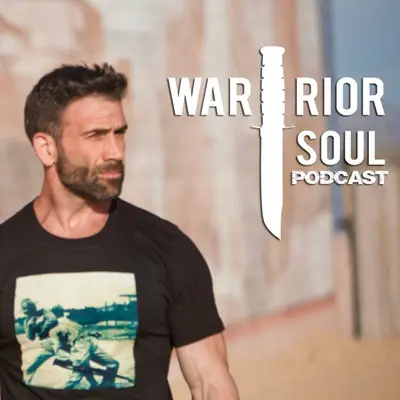
Hosted by Chris Albert
The Warrior Soul Podcast
Daniel Gade is a US Army Veteran who was wounded in Iraq and the author of Wounding Warriors: How Bad PolicyIs Making Veterans Sicker and Poorer
Daniel Gade is a US Army Veteran, Paralympic Athlete, and Author of the Book Wounding Warriors: How Bad Policy Is Making Veterans Sicker and Poorer
IF PLAYER DOES NOT APPEAR, LISTEN HERE OR LISTEN ON SPOTIFY HERE.
Daniel Gade enlisted in the Army in 1992 and deployed to Operation Iraqi Freedom as a company commander in August 2004. He was wounded by enemy fire twice and decorated for valor; the second wounding resulted in the amputation of his entire right leg. After retiring from the Army as a Lieutenant Colonel in 2017, he accepted a political appointment as a Senior Advisor at the US Department of Labor’s Veterans Employment and Training Service (VETS). In 2019, he ran unsuccessfully for United States Senate in Virginia, but garnered more votes than any Republican candidate in Virginia history. Daniel’s military awards and decorations include the Legion of Merit, Bronze Star, two Purple Hearts, the Combat Action Badge, Ranger Tab, Presidential Service Badge, and both Airborne and Air Assault wings. He and his family reside in Mount Vernon, Virginia.
Daniel's book Wounding Warriors: How Bad Policy
Is Making Veterans Sicker and Poorer explores the ways in which the VA Healthcare System creates incentives for veterans to stay sick and poor.
Transcript
Machine-generated from the episode audio and lightly edited — may contain errors.
Chris Albert (link to this point)
What is going on, everybody? Welcome to the Warrior Soul podcast. My name is Chris Albert, and this is where we deliver tools, tactics, strategies, and ideas to help The US military veteran community and anybody else willing to listen to live their absolute best lives. My guest today is a man named mister Daniel Gade. Daniel served in the United States Army.
He was a graduate of West Point, the United States Military Academy, eventually rose to the rank of lieutenant colonel. And while serving in Ramadi, Iraq in 2005, he was wounded and lost a leg. Daniel went on to get his PhD in public policy, and he is currently a professor of public policy at the University of Georgia. He's coming on today to talk about his latest book. It's called Wounding Warriors.
And in this book, Daniel brings up a concept that I think we all need to pay attention to. And that is the way in which the current system, the system is set up to keep veterans sick and poor. And if you think about this, and and a lot of you are gonna have really, really crazy reactions to this conversation. But if you actually think about what's going on, the government is looking to get you to dance around for a few benefits, not focus on your life, not get you out there doing great things, not get you out there doing the next great mission of your life, but to get you to dance around for benefits. And Daniel is shining a light on that for us here.
I've always said that the veteran community is the sleeping giant in this country, and that when we wake up is when this country will truly wake up and truly achieve its greatness. And I believe that this is one of the major roadblocks for us. So I hope you go into this podcast with an open mind, you listen to what Daniel has to say, and you check out his book, Wounding Warriors. I think it's an awesome book. I am also looking forward to digging into it a little bit more.
So with that, let's get into this conversation with mister Daniel Gade. Welcome to the Warrior Soul podcast, Daniel. How are you doing today?
Daniel Gade (link to this point)
I'm lovely, Chris. Thanks for having me on, brother.
Chris Albert (link to this point)
Thank you for coming on, man. For all of the ants at home, just give us a little bit of a background, who you are, where you're coming from.
Daniel Gade (link to this point)
Yeah. Totally. So I enlisted in the army in 1992, few months after I turned 17, and was in the army reserve for, like, a year. And then I found out I'd gotten into West Point. So I went off to West Point, graduated from there in 1997, and commissioned in the army as a armor officer and did regular armor officer stuff, went was a scout platoon leader, tank platoon leader.
On 09/11, I was actually a ranger student, and I just started ranger school on 09/10. And so we thought it was sort of part of the scenario, but so I didn't everybody else got, you know, saw the towers go down that day, and I did not and didn't actually see any video of it till November when I was the honor grad of my class and and got done with that. And then, went off to Korea. Actually, the army sent me off to Korea to command a tank company there. And I was in command of this tank company for about a year and a half when, my boss his boss came to me and said, hey, Daniel.
We're sending your soldiers to Iraq. Do you wanna go with them, or do you wanna, you know, go on to grad school? And I said, you know, obviously, I said, you're my lord. Send me. And so they did.
I went to I went to Iraq in summer of o four, landed in Kuwait, August seventh o four, and deployed forward into Iraq at the end of August. And was serving combat for five months, which isn't very long. I know a lot of people that you talk to, serve a lot longer than that. But Ramadi in o four was five months was enough for me, because I was I was wounded, twice by enemy fire the first time on November 10, happy birthday, Marine Corps, by a rocket propelled grenade, which hit my tank during a firefight and killed my loader, a wonderful soldier named Dennis Miller from LaSalle, Michigan. Killed him instantly and wounded me mildly.
And then two months later to the day, I I was hit by an IED that basically catastrophically injured me. I ended up losing my right leg at the hip and spent basically a year in the hospital. But since you're a marine, I'll tell you this story. When I after I got blown up, when I a CH-46, the marine helicopter picked me up off the battlefield and scooped me off to the Surgical Station. And when I got there, my blood pressure was 60 over zero.
And so, they gave me all the A-positive blood they had stored, it wasn't enough. And they went to the mess hall and said, hey. If you have a if you have A-positive blood, we could use your help. And, 25 sailors and marines who I did not know came over and donated their blood to save my life. So I'm at least partially marine, partially navy, and and fully alive.
So so, anyway, spent a year in the hospital, you know, five months
Chris Albert (link to this point)
cravings for crayons after that?
Daniel Gade (link to this point)
Yeah. Yeah. Dude, crayons and but I won't tell you what the navy blood did to me. But I got rid I got rid of that as fast as I could. Trust me on that deal.
Let's just say my testosterone dropped significantly when I got all that navy blood. But, anyway, so so I spent, you know, a year in the hospital. And, actually, that's where this book starts. So the book is Wounding Warriors, How Bad Policy is Making Veterans Sicker and Poorer. And that's where the book starts, really, in that experience at Walter Reed because I was given you know, I was seeing around me all the other soldiers, you know, soldiers, sailors, airmen, marines, all these guys who got mangled were there, and a lot of them were beginning to behave in ways that I thought were deeply counterproductive.
So sort of believing that, because they were heroes, that everybody owed them everything. And so Right. You know, free tickets to the football game, free this, free that, free cars, all of it. And I saw it begin to change their behavior instead of saying, okay. I wanna thrive.
I wanna figure out how to be awesome going forward. A lot of these guys were like, I wanna figure out how to get free stuff going forward. And I was like, oh my gosh. Stop. You know?
But Yeah. So then, you know, during that time, I made the decision that I wanted to stay in the army. I was a captain, you know, almost a major at the time, and and decided to stay in the army because I didn't want the my phrase, I didn't want the enemy to determine when I got out of the army. And so I went and got a master's degree after that. And then I went and worked at the White House doing veterans policy for a year.
And then I went back, got my PhD, and then I went taught at West Point. So it's pretty cool because during all that higher education, I was able to focus all that, all my energy on studying the problem of why don't more veterans thrive?
Chris Albert (link to this point)
Mhmm.
Daniel Gade (link to this point)
And the conclusions are really in this book, and and, you know, we have bad policy that that's making veterans sicker and poorer, and that's what Wounding Warriors is about.
Chris Albert (link to this point)
What what was your PhD in?
Daniel Gade (link to this point)
Public administration and policy
Chris Albert (link to this point)
Oh, nice.
Daniel Gade (link to this point)
From the University of Georgia.
Chris Albert (link to this point)
I'm a I'm a PhD dropout myself. I went Oh, good. International politics and quantitative methodology.
Daniel Gade (link to this point)
Where oh, that sounds hard. Where were you?
Chris Albert (link to this point)
I was at UC Santa Barbara.
Daniel Gade (link to this point)
Perfect. That's the no. That's not the slugs. What's the slugs? That's my favorite.
Chris Albert (link to this point)
I don't know. The they have the armadillo Louis
Daniel Gade (link to this point)
Obispo or something?
Chris Albert (link to this point)
I think it's Cal Poly San Luis Obispo. Yeah.
Daniel Gade (link to this point)
Yeah. But banana slugs are my favorite.
Chris Albert (link to this point)
But yeah. I so when I got out, you know, I I was trying to figure out what to do. So I went to grad school, and that's how I ended up going all the way up. And I remember my experience, I would walk around kinda with a chip on my shoulder being like, hey, I'm a veteran. Talk and and the girls there were were gorgeous.
So I try to you know, I was a marine. Right? And all that stuff. And, you know
Daniel Gade (link to this point)
That doesn't work for it.
Chris Albert (link to this point)
Rarely worked. Rarely worked. I think it worked once. But most of the time, they get creeped out, like, who wow. Who's this old dude?
I'm all of, like, 24, 25. They're like, who's this old dude?
Daniel Gade (link to this point)
Yeah. That's funny. Yeah. So I was already married at the time, so I didn't have to, focus on any of that nonsense. But University of Georgia is known for, having very, very pretty people there too.
Chris Albert (link to this point)
So Mhmm. So let's talk about this. You know, you get out and and you're watching what's going on in the veteran community. And and, you know, you're seeing guys talking about trying to get free stuff and and kind of developing this mentality. And I'll be honest with that's one of the big reasons why this podcast exists, because I wanted people, the veteran community to stop focusing on, you know, what was so bad about being a veteran and start focusing on life and living life and and being.
And and I I always say to say to the audience, you know, the veteran community is a sleeping giant in this country, and we've got to wake up. So so when you were noticing this, are you are you does that extend to, like, a national trend? Do you think that that that this is affecting us financially, mentally, all around?
Daniel Gade (link to this point)
Oh, all of it. Yeah. So I'll just give you some fast statistics. So some people say, well, the VA is underfunded and doesn't take care of our veterans that way. Well, the VA's funding in the last twenty years has increased, get this, fivefold.
So 500% growth in the last twenty years. So that's part one. Part two is, the VA spends let me see. On disability compensation, it spends five times what it did twenty years ago. But the veteran population in the last twenty years has gone down from around 24,000,000 to around 18,000,000 now.
So we've lost 25% of our veterans, but the spending has continued to go up. And the reason is because the VA spends a whole lot of money to keep people sick. And here's what I mean by that. Let's let's use got out when you were 24. So let's use you as an example.
Let's say you had let's say you had mild or moderate depression. Right? There's a couple of things we can do for depression. We can we can get you more sunlight. We can get you more exercise.
We can maybe put you on a SSRI or some kind of drugs or something like that, Or we can do talk therapy or some combination of all the above, or you can do some some innovative kind of pharma pharmaceuticals that are coming out now based on things like DMT and stuff like that. There's a ton of stuff we can do is my point, But the VA does none of that. Instead, they send you to a compensation and pension examination where somebody says, hey, do you have depression? You say, yeah. And they say, how often are you unable to function?
And you say this many days per month. And they make a they make a a compensation decision on you. Let's say they give you 50% disability for it. And they never say, hey, here's your follow-up appointment. Here's here's what you must do in order to in order to get better.
They just say, okay, you're sick, and you're gonna be permanently sick. Right?
Chris Albert (link to this point)
Right.
Daniel Gade (link to this point)
And then and then you're looking you're making, like you're you're looking at this, you're like, okay. Well, five 100 50% disability is, let's say, around $1,200 a month. If I can only get to 70% disability, that's like 1,700 a month. And, oh my gosh, if I can get to a 100% disability, that's like 3,200 for if you have a spouse and a kid, that's like $3,200 a month tax free. And so your incentive as a brand new veteran looking out at the world is not to thrive.
Your incentive is to reach in and adopt what we call what the science calls the sick role, which is a psychological term, meaning you begin to perform those symptoms of sickness and illness and malaise so that you can get a higher compensation level. And it's entirely normal from an economic point of view to do that. So, you know, if you see two gas stations and one has gas at a dollar 25 and one has gas at $3.25, you're gonna go to the place with a dollar 25. Right? Because your economic incentive is to do that.
And so for these veterans, or for our fellow veterans, I should say, the incentive is to go as hard as you can into the disability world and to get as much money and free stuff as you can from the disability world. The problem is that that causes veterans literally to be sicker and poorer because what it does is it traps them in that place of, frankly, not doing well, and that's a real problem.
Chris Albert (link to this point)
That's a so, I mean, first time I I remember the first time I went to the VA. And I'm walking around and and, you know, you see guys walking around with backpacks. They have their lunches lunches there and everything like that. And I have an autoimmune disease. Right?
So I I I'm on I I'm actually on disability for it and and actually have to go to the VA to get treated for it. One of the things that I realized because I was a small business owner when I first went to the VA, and I, you know, was working, was I was a student, I was all types of different things. One of the things I noticed about the people who worked there, it was like they they they seemed like I could spend all day there. Like like, I had nothing else to do. Like, my life had to be going there, sitting there, waiting in a waiting room, waiting to talk to to my veterans advocate, waiting to do this, waiting to do that, coming back as much as possible, that kind of stuff.
And that's one of the things I noticed very early on and one of the things that kinda kinda ticked me off. Because if you are going out there and you are trying to do things with your life and you are trying to to to, you know, move your life forward, it seems like there's a lot of incentives to pull you away from that. And not only that, the way the the award letters are worded, it almost seems like if you get better, then this stuff is gonna go away. And and and there's a huge exactly what you're saying. There's a huge incentive to kinda play the role there.
Daniel Gade (link to this point)
Yeah. And and only rarely do people actually lose their benefits due to, you know, VA reexaminations, but also only rarely are people motivated to actually get better. And remember, you know, if you're a 25 year old and you're let's say you've got all your arms and legs and your spinal cord is intact, you've got your vision, everything, And you're labeled mentally ill and unemployable, let's say, even though that's not true. Nobody's unemployable. I mean, we all know guys who are except for very serious brain injuries where somebody is, like, you know, virtually a vegetable, everybody's employed.
But anyway, so you're labeled unemployable at age 24. Lifestyle that's worth living. And so that twenty four year old is looking and saying, okay. Well, I'm probably gonna die of old age at 84. So I've got sixty years.
Am I really gonna be sitting on the couch and doing this for sixty years? That's a long time.
Chris Albert (link to this point)
Right.
Daniel Gade (link to this point)
And so so the the system saps people of meaning and motivation and value. It weakens their social relationships like this. You know, if you were if if you go to church or a bar and you're trying to meet somebody, I recommend you go to church. But if you're going to church or a bar and you wanna meet somebody, the first question that woman is gonna ask to you is, hey, what do do for a living? She doesn't care about your name yet.
She cares about what you do for a living because it's a screaming question. You know? It's a screaming question that says, if we get married, could you take care of me and our kids if you had to? And if your answer to that is, I'm a disabled veteran, and I don't work, she's gonna be like, hey. Cool meeting you.
And she's gonna pivot on her heel and walk away. Why? Because because you're not in a place that that's not a socially valuable thing to say. Right? It's not a economically valuable thing to say.
And so and so this this guy is facing a lifetime of this, and he begins to believe that he's sicker and sicker. If he's if he's really drinking whiskey on the couch every day, then he's gonna fall into that cycle, which is not great. And then what happens? Well, we know we have a veteran suicide crisis right now. Like, no surprise. Everybody knows this. But the suicide crisis is I mean, suicide is I say the phrase I use for it is it's a disease of despair. Right? Every single person who kills himself is either acting impulsively or they are, making a deliberate decision based on despair.
And and the VA is stacked with policies that cause people to be more despairing. As a matter of fact, the VA spends more money on keeping people sick through disability payments than it does on getting them better through health care. Literally, the VA spends more money on disability than it does on health care. It's it's mind boggling.
Chris Albert (link to this point)
What so so what's the solution? What's a different way of thinking about this?
Daniel Gade (link to this point)
Yeah. In the in the epilogue of Wounding Warriors, which is available right now, by the way, on for preorder on Amazon, actually, preorder on Amazon, or you can buy it on the website, woundingwarriors.com, and I'll send you a a personal personalized signed copy. So, please avail yourself of that. But woundingwarriors.com. But in the in the epilogue, I lay out a couple of principles to that that the VA and the policymakers could use to restructure their thinking.
But first off, every policy that we have around veterans should be focused like a laser on the issue of of reskill, upskill, and successful transition. So when somebody leaves the military you know, when they come in when we all went into the army or marines or whatever, you know, I I say we were productive plows when we were civilians, and then the military brought us in and beat us into swords and sharpened us and polished us and everything else. And then, you know, famous old Marine Corps recruiting video about slaying lava dragons. Remember the lava dragon video?
Chris Albert (link to this point)
That one got me.
Daniel Gade (link to this point)
Yeah. Yeah. Totally. So so you're you're the sword that's used to slay our nation's lava dragons.
Chris Albert (link to this point)
Mhmm.
Daniel Gade (link to this point)
And then when you're getting ready to get out, the policies should focus on taking all those swords and reforming them into productive civilian tools like plows. But instead, the current policy regime simply takes those productive swords or those dangerous swords and throws them in the corner and and is surprised when they get rusty and when they don't get better. And so all of our policies should be focused on reskilled transition and and upskill. In other words, upskilling is like going to grad school, you know, going to getting a college degree, or, you know, going to get a a technical degree. Those are just as valuable in some cases Oh, yeah.
As college degrees or more in some in a way that helps them continue to thrive. So maybe that means, you know, of course, we're providing health care for certain kinds of conditions, but not every condition that we provide health care for is a disabling condition. You know? Right. And so that's sort of part two is what we should do is change the way we think about and talk about disability.
So the VA says, for example, that if you have sleep apnea and are prescribed a CPAP machine, positive pressure airway machine, that that you are fifty percent disabled. Fifty percent, Chris. So so for a a a below knee amputee is only forty percent. Losing an eye is thirty percent. Losing half of your penis is thirty percent.
But sleep apnea is fifty? I mean, it's absurd. It's absurd. And the system yeah. And the system is full of that kind of thing, which are which are real conditions that really do need treatment, but they are not disabilities, and we should stop pretending like they are.
So so simplifying the disability system by by separating out true disabilities from life conditions Right. Is part of it. Using the money that you save there to to do better, more successful, more holistic transitions is part of it. And then the end goal should always be how can we make veterans into productive, worthwhile members of society as you're doing on your podcast instead of making them a problem class.
Chris Albert (link to this point)
And I think, again, that's so true. And there's a a bunch of stuff you said there. I mean, it is. I think there's a lot of pressure on veterans to to do this whole thing. I think there's also, unwarranted pressure on veterans to go out there and pursue a four year degree when when I think, you know, these days, you can make probably more money in the trades.
Daniel Gade (link to this point)
Yeah.
Chris Albert (link to this point)
For sure. And and have a small business.
Daniel Gade (link to this point)
Yeah. If you're a welder if you're a welder and you're a journeyman welder with a union or, you know, you get a union job, you're making $45 an hour probably. Yeah. And if you can be if you're an underwater welder, you can make $300 an hour. If you're an underwater exotic metals guy, you can make $500 an hour.
Like, you can make a whole lot of money for a reason, and there's a lot of there's a lot of undergrad education that is a complete waste. And I say that, by the way, as a college professor. That's what I do Oh, yeah. Professionally. And I know that a lot of those kids are wasting their money, frankly.
Chris Albert (link to this point)
Oh, yeah. I have a PhD in political science, and I run a factory, a manufacturing business. Like, there's no way that was ever gonna apply to anything in the real world at all. I I I thought about being a professor, but but wasn't gonna happen. But so so let me ask you about this, because you did you ran for senate.
Daniel Gade (link to this point)
Yep.
Chris Albert (link to this point)
Ran for senate in Virginia, and you're a member of the Republican Party.
And the Republican Party has classically gone along this philosophical line, right? Where where, you know, we want people to be able to take care of themselves. We want we don't want to create lines of dependency for people. But when it comes to veterans, the Republican Party has a very different tone, and they're very scared of this. You're a 100% right.
How do we change that? How do we how do we change that? And how do we make this look, you know, in a way, it actually is, it's helping veterans, getting them to take care of themselves, getting them to become this strong segment of society that they should be, and not make it look like, oh, we're cutting off all veterans or anything like that, which is what I'm sure the media will will will take a take on when it comes out.
Daniel Gade (link to this point)
The Republican Party believes that anybody who ever been looked at a uniform, regardless of whether they were a I used this example the other day in the in Dan Crenshaw's podcast, and somebody texted me and, like, was all mad at me and said, whether you were a a generator mechanic in the CoStar or whether you're a medal of honor, you know, SEAL, the Republican Party looks at you and says, okay. You're a hero because you looked at a uniform. You know, you put on a uniform one time, and so you're a hero. Right? And, therefore, because you're a hero, you deserve everything.
And I'll get to that in a second. So the Democrat, because of that, it says they deserve everything. And so the left, right, other deserve everything, but they don't way sense. Instead, they do it in a way that is you know, handing out money because there's a bunch of veterans groups, you know, the disabled American veterans and the VFW and the AMVETS and all of those, sometimes, Wounded Warrior Project, at least in the old days. Those organizations are structured in such a way that their main effort is to get guys as much disability payments as possible.
And so you have this deserve everything mistake, and then you have that monetized. And that's how we get to the place where we are right now, which is we spend about a $140,000,000,000 a year on paying veterans to be sick. And to be sure, by the way, to be sure, there are veterans who deserve compensation for or or who we can we can use a word like deserve with respect to. So, you know, I was talking to a guy the other day who's totally functional. He's he's got some really cool stuff going on.
But he's, you know, he was shot through the spine. He's a marine force recon or maybe raider battalion guy. I'm not sure. But shot through the spine in Afghanistan. He's he's paralyzed from, like, chest down forever.
Now is it okay to give him compensation? 100%. Yes. We just you know, it's fine for him to cash those checks. I don't think there's any moral problem there.
But we also have you know, I know of a guy who was a marine. Again, not not to pick on the marines. This just happens that I'm two two marine examples in a row. This particular guy had had a schizophrenic break in high school. His parents are both schizophrenics.
He managed to get a waiver for his schizophrenia to join the Marine Corps, goes to combat as an 0311 infantryman, experiences pretty tough combat, comes back, has a schizophrenic break. They diagnose it as PTSD even though the symptoms of those things are totally different. And now he's on a 100% PTSD disability. And it's like, wait a second. How is that the fault of The US taxpayer?
Because remember, like, he had a schizophrenic break before. This is a preexisting condition. Why are we on the hook for compensating for it exactly? And so that kind of thing, the system is rife with that. And in in the book, Wounding Warriors, the website, woundingwarriors.com, in the book, and you can by the way, you can read the first chapter and a foreword and I think maybe two chapters on there. Have to check. Anyway, woundingwarriors.com, you can read it and so and order it.
And so in the book, we give tons of examples like that. And but the system is the problem, not individual veterans. Individual veterans are often just responding to the incentives they're given. Right. The system that makes them go in that direction, that makes them sicker and poor is what I'm really after, not not the behavior of individual veterans.
Chris Albert (link to this point)
Right. And I think, you know, in some ways to change this, to make things better, you're right, we've got to completely uproot everything. We've got to completely uproot the system itself. And we have to get the focus on on, you know, had this dream when I started this podcast that there would be a time when being having served in the Army, the Navy, the Marine Corps would would be like, you know, graduating from college, like graduating from an Ivy League school or something like that, where, you know, but but not because everybody was giving us something, but because the people in the veteran community are so talented, so smart, so high performing, that, you know, they're out there doing amazing things, and people want to work with them. And I think that the problem that we've seen, particularly with my generation of veterans on, is that so many of them just expect something to be handed to them because they were a veteran.
So many of them think that a job should just come to them. So many of them think that they should be in a leadership position, right off the bat once they're getting out. And that's just not the case. You've gotta earn the trust. You've gotta do the work, and you have to prove yourself.
Daniel Gade (link to this point)
Only about 15% of them even filed claims. You know, know, her combat was really tough. I talked to today, actually. Super cute guy named Steven, shoot, Franchiac or something like that. 102 years old, landed on d day at D Plus 1, was wounded in combat twice during the march across Europe, and ended up meeting the Russians at the at the Elbe River, which is totally cool.
So just a cute old guy, like, not even using a cane, no crutches, no nothing, no walker. Just walking around, talking to people. I mean, just awesome. 102 years old. So cool.
But so those guys had tons of combat exposure. I mean, they had tons of really serious combat against professional killers in the Wehrmacht or the Japanese or the or the Japanese on the on the Pacific. In our generation, only a tiny percent of people ever heard shots fired in anger. Only a tiny percent, 8% or so fired their weapons at enemy combatants. You know?
And yet our generation of veterans files on average, about fifty percent of them file for disabilities, and the number of disabilities they claim is, like, eight per person. And it's like, really? Like, we're we're sicker than than the World War two generation who literally fought with substandard equipment across all of Europe during a a blistering winter? You know? That's crazy talk.
So what's changed is the entitlement mentality. What's changed is the VA has become basically the candy man that nobody that everybody's afraid to critique, and it just gives out it gives out compensation for stuff that's either age related. So let's say knees, back, stuff like that, or lifestyle related. So if you have sleep apnea, guess what? It's because you're fat, probably.
It's certainly not the fault of the taxpayer. Diabetes, type two diabetes is a lifestyle condition. If you get your if you get fat and you get old, you're gonna get type two diabetes, period. You know?
Chris Albert (link to this point)
Mhmm.
Daniel Gade (link to this point)
And we're not talking about amputations and gunshot wounds and and, you know, brain injuries from explosions. We're talking about conditions of of lifestyle, conditions of aging, and the VA treats those as if they are the the responsibility of the taxpayer. And and we can make a case that maybe some of that is the responsibility of the taxpayer with respect to health care, but not with respect to disability compensation.
Chris Albert (link to this point)
Gotcha. Gotcha. No. I I definitely see where you're coming from on that. Let me let me ask you this.
So how much pushback have you gotten on this? I'm assuming you've gotten tons. And and how how have people responded to you, and and what types of arguments have they put up against this?
Daniel Gade (link to this point)
Yeah. And and Wounding Warriors is really well received so far. I gave a copy to the Wall Street Journal, and they reviewed it, called it one of the best books of September, you know, buy a copy, whatever. And if you look at the former secretary Mattis reviewed it. They must read for former secretary of the VA Nicholson, former secretary of the VA Principi, former deputy secretary of the VA, Jim Byrne, more and more guys like that in the North, prominent people you would have heard of.
In the epilogue, I described how it's possible that some people could say that we're privileging, like, physical wounds over mental wounds, and that's far from the truth. I know mental health can be, you know, debilitating, and it's obviously serious. It can be debilitating. I get that. And we're not privileging anything.
But what we are pointing out is that incentives are in effect that we ought to take into account. So so, yeah, I mean, get some pushback for talking about this. But remember, look, I mean, look at my my platform is different. Right? Because I I I have two purple hearts and one leg and a PhD in policy.
So I sort of know what I'm talking about on the policy front and on the on the sort of credibility, street cred with veterans front.
Chris Albert (link to this point)
Absolutely. Absolutely. Let me ask you this. So, you know, you've you've done the book, but I also mentioned that that you ran for senate in Virginia. Mhmm.
What was that experience like for you? I know you've got more rep more more votes than any Republican in the history of Virginia. Right. You still weren't successful, but but it must have been an absolutely amazing experience. How did you decide to run for senate?
What what what made you do it? And, you know, what did you take from the experience itself?
Daniel Gade (link to this point)
Yeah. Well, I really viewed that run for senate as being a an extension of my military service in the sense that when I was in the army, I was under an oath to support and defend the constitution. And I viewed that run as an attempt to have the people hire me to support and defend the constitution. So that's it. Like, I don't need titles.
I've already got plenty of titles. I don't need, you know, I I don't need the influence, although it'd be great to use that influence for good. What I do wanna do is serve others, and so that's why I ran. And I I thought it was a great experience. I mean, Virginia is beautiful. The people are awesome.
You know, meeting everybody from, you know, the richest guys you can imagine to the guy the farmer with hands this thick and the housewife and the school teacher and the this and the that, it was awesome. I just loved it. And I think, you know, I encourage I encourage veterans to run for office because if you wanna see change, you know, if you wanna fight for and I don't care if you're on the left or right, frankly. Alright. You know, I'd rather have I'd I'd rather have a congress that's full of people who understand the the the ramifications of of defeat in Afghanistan, you know, or of endless war in Afghanistan who understand all of that so that they can make good decisions.
I'd rather have, you know, in some cases, I'd rather have a Democrat who's a veteran than a Republican who's not, only because I I think that veterans are making decisions in in kind of a different in a different way, especially combat veterans, especially ones who, you know, who did the hard things. Because there are there are some pretty soft jobs in military too. Yeah. You know? Beau Biden famously was was in the army and, you know, he's a lawyer in the army.
Is that different from being a lawyer in civilian world? No. Not much.
Chris Albert (link to this point)
Yeah.
Daniel Gade (link to this point)
So yeah.
Chris Albert (link to this point)
The so, you know, I I think there's so many issues out there, and and I agree with you. I think that, you know, if if we're ever gonna we can't just sit here and complain about how the country's going. Right? Actually got to go out there and do something about it.
Daniel Gade (link to this point)
Yeah. Do something. Lift a finger.
Chris Albert (link to this point)
Yeah. And and that starts with, you know, being more active in your community, stepping up, you know, trying to find leadership roles in your community, trying to volunteer, trying to do the same things you did while you're in the military itself. Right? And and I think that's a big thing we've got to slam home. One of the things I'm I think I'm seeing on Republican side of things, you know, you mentioned that there's all these other treatments out there like, you know, taking care of yourself, but also, you know, checking out things like DMT, checking out things like like like psychedelic plant medicines and things like that.
And all of these things are, are currently being looked at as potential treatments for veterans. You know, the Republican Party's classically not been a big fan of these things. Do you think there's kind of an awakening going on on on on the right side?
Daniel Gade (link to this point)
Yeah. So I I hope that the Republican Party is willing to do that, and I I'd love to be one of the leaders of that movement because I think that, you know, evidence based treatments for veterans, even if they're sort of uncomfortable and nonstandard for people who grew up in the sixties being afraid of, you know, marijuana madness or whatever, I think some of that makes sense. And I I think that because of the esteem people have for veterans, maybe that's a chance for us to kinda lead some lead some conversations and lead people into conversations in a way that makes sense. But, you know, my goal on this, on the book, Wounding Warriors, woundingwarriors.com, another another plug for it. My goal in this book was to was really to change the conversation around veterans.
And if if later I can help change the conversation around, alternative treatments, then I think that's that's great, and I'm happy to do it.
Chris Albert (link to this point)
Awesome. That's awesome. Well, you know, Daniel, I think I really like where you're coming from on all this. And and, you know, I think that that having the courage to write about this kind of stuff is is big, because, you know, it it is a hot button issue. When when whenever we think of veterans, we're almost like one of those protected classes that that can't say anything or do anything. And so, yeah, it takes a lot of moral courage to do this. You know, where are people going to be able to find this book? Where are they going to be able to to get access to it, to read it, to to to get more information?
Daniel Gade (link to this point)
Yeah. Totally. I I've always wanted to say this. It's gonna be available wherever books are sold. The title is Wounding Warriors.
The best way to get it, though, because it cuts Jeff Bezos' profits out of the equation entirely, is to go to woundingwarriors.com and buy it there, and I'll send you a signed copy because that's what I do. But but yeah. So woundingwarriors.com or wherever books are sold. And then starting on October 26, it's available on both Audible and digital platforms on from the Amazon website. And I did the audio Audible book myself because I I felt like it was super important to do it that way and and really enjoyed reading it.
Chris Albert (link to this point)
That's awesome. That's awesome. And are you on social media as well?
Daniel Gade (link to this point)
Yeah. So I'm my Facebook is at sign g a d e f o r Virginia. That's my old campaign one, and that's where I that's where I'm selective. And on Twitter, it's Gade for Virginia as well.
Chris Albert (link to this point)
Okay. And are you are you planning on on doing any more writing or or any more any more running for office?
Daniel Gade (link to this point)
I don't know about the running for office one. I like writing. I like this process. It's a lot of fun, and I'd be open to doing more of that. But right now, I need to make this book a success and tell the story.
So I appreciate everybody. Go buy a copy. Wounding Warriors is the name.
Chris Albert (link to this point)
Absolutely. I'm definitely gonna get one and definitely gonna put the links up on the show notes for this episode as well. Well, again, Daniel, I just want to acknowledge you. I really, really appreciate you for coming on here. I really appreciate your courage.
Really appreciate your desire to get out there and to help and to continue serving this awesome country. And I want to thank you for your service and for your sacrifice to this country as well.
Daniel Gade (link to this point)
Thanks, Chris. I really appreciate you and what you're doing with the this great podcast.
Chris Albert (link to this point)
Awesome. Awesome. And to everybody out there, I really want you to think about what we talked about here today. You know, it it is a hot button issue. You may be on one side of it or the other, but but but really take a minute to think about this situation honestly.
You know, are we being honest with ourselves as a community? Are we actively, you know, really trying to help ourselves to move forward? Or are we throwing a wrench in the system that keeps us from moving forward? So think about that stuff. As I always say, get out there and live your best lives while you can.
This is Chris and Daniel, and we are out.
Host of the Warrior Soul Podcast and founder of Warrior Soul. Worldwide trainer and nutrition coach, contributing author at Testosterone Nation and Muscle and Strength.