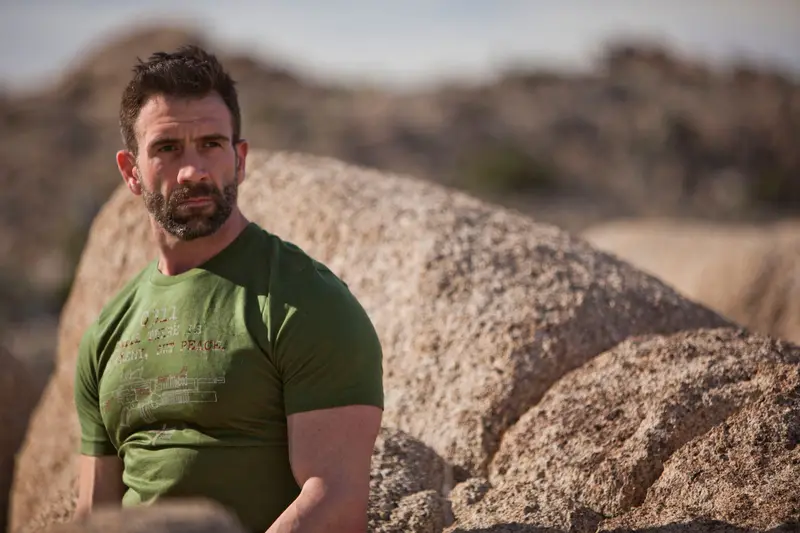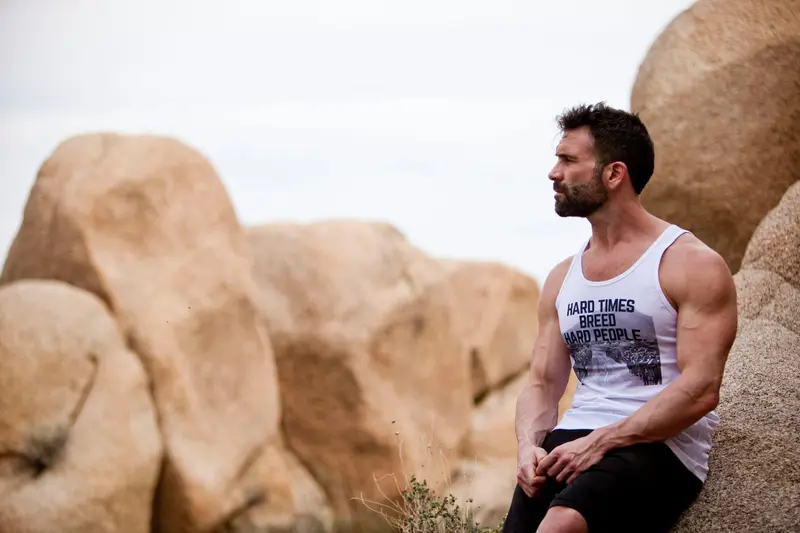
Donny O'Malley is a Marine Corps Veteran, the creator of VET TV, and the founder of Irreverent Warriors.
Donny O’Malley is known for his “no fucks given” comedic style. The characters he portrays are raunchy and at times disgusting. For many veterans, they are also familiar, echoing either someone they knew while serving or someone they once were while serving.
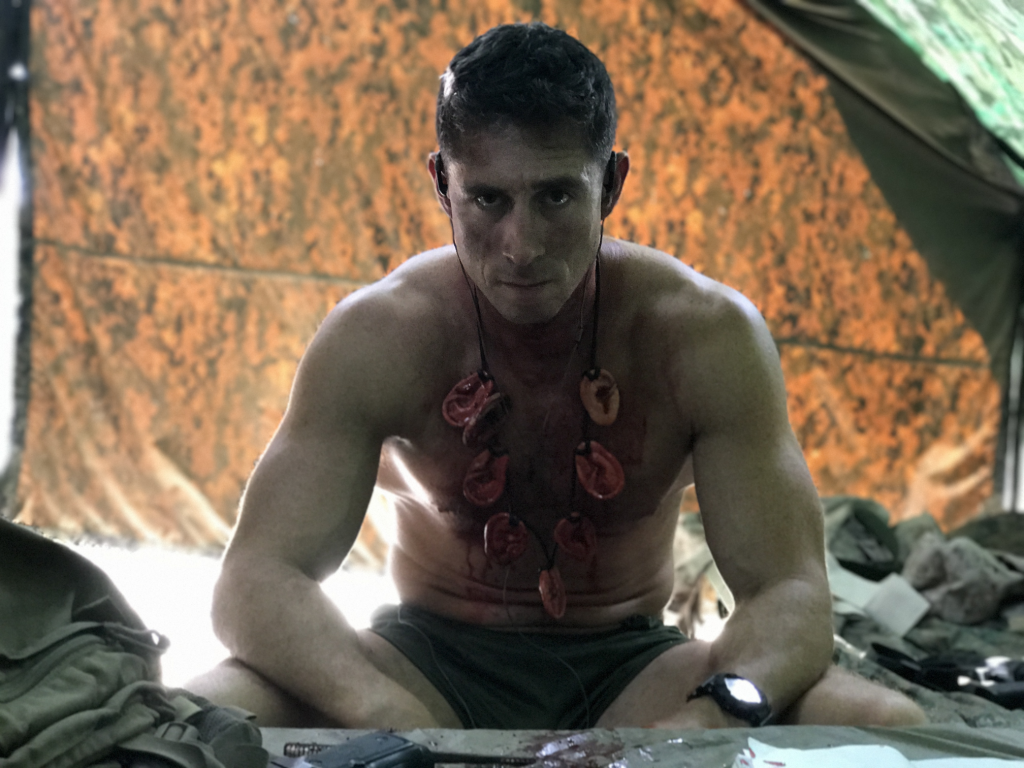
Veterans Entertainment Television, or VET TV, is not for the faint of heart. It’s not meant to be. Many of the jokes will either fly over civilians’ heads, or completely offend them. Either way, Donny is good with that.
I watched his recent movie, A Grunt’s Life, while I was sick with the flu to research for this interview. As a Marine, I thought it was hilarious, but I also watched it with my girlfriend.
When the inevitable post-movie discussion happened, she asked “would you have tried to fuck a corpse?” Highly medicated at the time I blurted out, “no. Maybe a skull if I could have, but it would have just been to get some laughs.”
Awkward pause.
Beyond the character, the real Donny O’Malley is also funny, but he’s also a workhorse.
He has to be. Starting a new Television and Media Company takes an ungodly amount of work. VET TV is here today because it’s founders kept absolutely unsustainable work schedules for months.
That work paid off.
Today, VET TV is running at full steam with Donny at the helm of a world class organization with multiple divisions and a highly talented team.
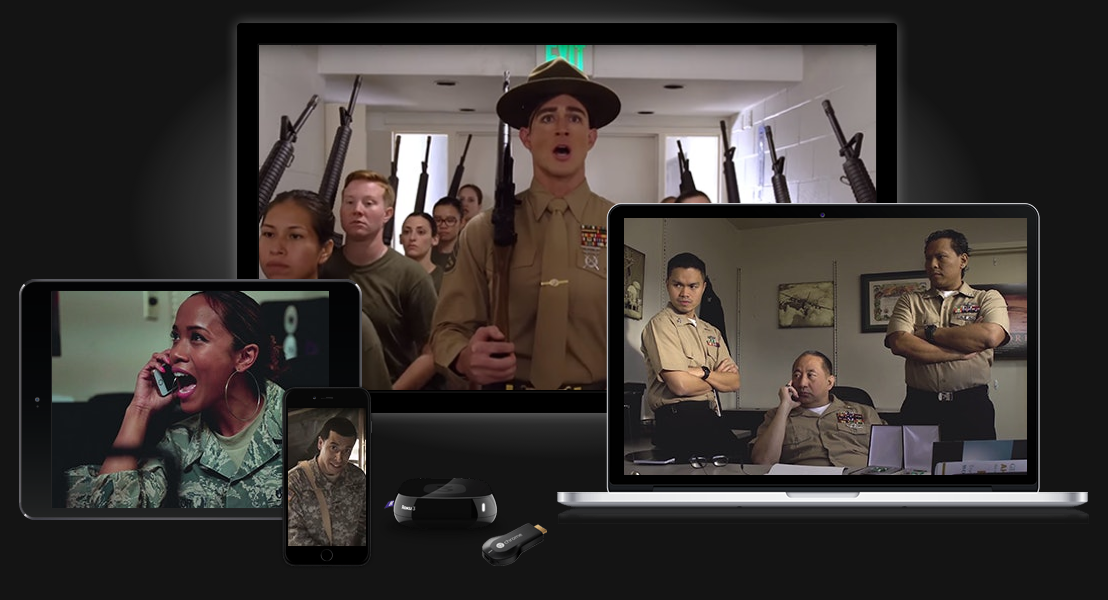
In this conversation, Donny and I discuss how he got there. You’ll hear about the long hard road that he’s travelled to success, and you’ll hear about where he’s taking VET TV in the future.
To watch VET TV’s latest movie: A Grunt’s Life CLICK HERE.
To sign up for VET TV, CLICK HERE.
Transcript
Machine-generated from the episode audio and lightly edited — may contain errors.
Chris Albert (link to this point)
The Warrior Soul podcast is written, produced, and edited by me, Albert. Our goal is to empower US military veterans to live their absolute best lives, and we do that by providing tools, tactics, strategies, and ideas that they can apply into their lives to become wiser, stronger, smarter, more resilient, and more capable human beings in the civilian world. If you're not a veteran, stick around because anything we talk about here can obviously apply to you. And if you like what we have to say, any information we provide, and the guests we bring on, please head over to iTunes and write us a written rating and review. It really helps to spread word about the show and to get this helpful information into the hands of more veterans so that they can in turn improve their lives and shape the future of this country.
This podcast is brought to you by the amazing, the wonderful f bomb nutrition. They make awesome, delicious packets of fats. These are portable snacks that you can carry with you anywhere. It's so hard to find a low carb snack out there, but these guys have done it. They got macadamia nut butters, they mix them up with chocolate, they mix them up with sea salt, they mix them up with pecan butter.
They've got awesome meat sticks, and they've got these delicious cheese snacks that they put out there. Plus, they're an amazing company. They send boxes of this stuff out to the troops on the front line. It's not something we ask them to do, it's something they volunteered to do. So if you wanna get some of the best low carb, high fat snacks on the planet, head over to www.dropanfbomb.com.
Use the code Warrior Soul at checkout, and you'll get 20% off your first order. This podcast is also brought to you by the amazing awesome people at Save the Brave. Save the Brave is an organization that provides camaraderie events for veterans. They do fishing events. They do golfing events.
They do other sporting events, and they also do a lot of work to help gold star families. And look, we've all heard stories about veterans charities where the executive boards are taking these giant salaries, and I don't have a problem with that at all. But here's the thing, I wanna make sure that whatever organization I'm talking about is doing amazing work. Savethebrave.org is doing absolutely outstanding work. Their board doesn't take any salary whatsoever, and they are having an amazing impact.
They're focused on getting veterans to live their absolute best lives, and that's what this podcast is about, and that's why we wanted to work with them. So if you're interested in volunteering or donating to Save the Brave, head over to www.savethebrave.org and make your donation or your request today. Finally, this podcast is brought to you by Warrior Soul Apparel. This is a clothing company that I actually helped to start a couple years ago as we were beginning the brand Warrior Soul. We've got some amazing t shirts.
We've got skivvy shirts with some pretty funny funny sayings on there like, I love Jesus, but I cuss sometimes. We've also got some awesome hero shirts. We have the amazing hard times breed hard people series, and these are just great shirts that I've helped create, and they support the show. So if you're interested in getting some Warrior Soul shirts, head over to www.warriorsoul.shop. And finally, if you're interested in joining a new group that we are putting together here at Warrior Soul, a group for those who are looking to live epic lives worthy of epic obituaries, stick around to the end.
We'll have some information for you to check out. With that, let's get into the episode.
This is Chris Albert, and I'm here to remind you of one thing. Someday, you're going to die. That's not some morbid statement or scary idea. It's solid fact. Your time here on this earth is limited.
And we need to be reminded of this as much as possible for one simple reason, to live your best life while you can. This is the Warrior Soul podcast. What is going on ladies and gentlemen? I have an outstanding guest for you today. His name is Donny O'Malley.
You probably already know who he is if you're a veteran and especially if you're a marine. He's the creator of VET TV. He's also the creator of Irreverent Warriors, which is a five zero one c three charity that does Silkies hikes around the country. He's an author. He wrote the book Embarrassing Confessions of a Marine Second Lieutenant, and the guy is absolutely hilarious.
He creates really, really funny content using humor that pretty much only veterans really understand. Some civilians might see some of his stuff and they might be like, that's that's lewd, that's horrible, that's disgusting. But a lot of us who served, particularly in the infantry, we're gonna get it. Now here's the thing. You might be surprised that I'm having him on because we're so different.
I'm pretty serious, at least I try to be. He's he seems extremely funny all the time. Here's the thing. He is an extraordinarily serious person. Yes.
He is that funny guy that you see in the series. Yes. That is him. But there's a lot of work that goes into doing what he does. It's not simply just turning the camera on and being funny and putting this stuff out to the world.
I mean, this guy created his own TV channel. The amount of work that goes into that is absolutely insane. And we go into that. He's amazingly talented, and he is a workhorse. We go into his schedule, we talk about his daily routines, how he stays in shape.
We talk about some of his meditation practices and some of the other things he does to keep himself healthy and sane with the crazy work schedule that he has. For those of you out there who are veterans who love him, you're gonna get a whole lot out of this episode. For those of you out there who might be looking to start your own businesses or to start your own organization, there is so much you're gonna get out of this episode. So pull out a pen, pull out a piece of paper, get ready to learn, get ready to be entertained, and get ready to listen to mister Donny O'Malley. With that, let's get into the episode.
Now we're on. Donny O'Malley, welcome to the show, man.
Donny O'Malley (link to this point)
Thank you for having me.
Chris Albert (link to this point)
Dude, so I was telling you, I just saw your new movie, A Grunt's Life, and I watched it the other night, and it was quite the movie, man.
Donny O'Malley (link to this point)
That's amazing to hear. Thank you, bro. Appreciate that.
Chris Albert (link to this point)
So you guys, you couldn't get that onto Amazon, right?
Donny O'Malley (link to this point)
No.
Chris Albert (link to this point)
Did they give you a list of reasons or anything like that?
Donny O'Malley (link to this point)
No. It just said offensive content. And that's it. It's the only message that we got. We didn't have a conversation with somebody that was working with us to get it on there.
We were just uploading the video to sell just like anyone else can upload videos or books or whatever to sell on Amazon. And, you know, so it's like there's a QC process for their digital sales. And I don't know. I'm imagining it's somebody in a cubicle that's supposed to watch stuff or skim through it. They were just like I'm just thinking if it's somebody in a cubicle up somewhere near San Fran or Silicon Valley or something, They're just to them, it's just like, how dare they know?
And so what sucks is that there's no appeal process. So I'm I'm assuming that people upload garbage all the time. And so they're just like, no, you got one shot. And that was our one shot. There's no appeal.
So it's like, okay, well, I mean, we gotta sell this thing. So we're selling on our platform and Vimeo. And then we are we are submitting to, to Bitmax, which is the replacement for distributor. Distribber went under. So Bitmax is gonna submit it to Google Play, Vudu, Roku, Apple.
We'll submit it to Amazon again, I hope. And and we'll see how that goes. But right now, buy it on VET TV or Vimeo.
Chris Albert (link to this point)
I watched it on I watched it on Vimeo and I actually I enjoyed it a lot. I, you know, the thing is I served in the infantry and that kind of humor, it's something I hadn't heard in a long time. Right? And I was telling you before we got on, I was watching it, my girlfriend the next day, she was like, would you have ever tried to have sex with a corpse? And I've been sick and I've been taking medication and things like that.
And I accidentally blurted out, no I would've never done that but maybe a skull if I got the opportunity to do it but never a corpse.
Donny O'Malley (link to this point)
That's too far.
Chris Albert (link to this point)
Exactly, that's way too far. It's it's it's it's far to but but I loved I loved the humor in there. I thought the acting was great. I loved the part where the the mortar team was acting like pompous British officers that that that made me laugh my ass off. But dude, so pretty much everybody in our audience is is gonna know exactly who you are. But for the two people who might not know who you are, could we just get a quick five minute or three minute background on you?
Donny O'Malley (link to this point)
Sure thing. Okay, let me see if I can do this quickly. I grew up always wanting to be a Marine. I didn't join till I was 25. And then I joined as an officer after five years of college.
It wasn't it was in no hurry to to graduate. I was trying to be Van Wilder, but my dad threatened my life if I took any more than five. I worked
Chris Albert (link to this point)
go to school?
Donny O'Malley (link to this point)
San Diego State.
Chris Albert (link to this point)
Nice. Nice. A lot of reason to do that down there.
Donny O'Malley (link to this point)
Oh, man. I'll tell you, I was I was my fraternity president twice, dude. Like, I had a good college experience. Yeah. I'm actually one of my life goals is to just relive college forever.
And, you know, at some point I'll get myself settled down with a hot girlfriend who who loves the college experience too. And then we'll have a family and keep reliving college, but with a family. So that's that that's that's the dream. But anyway, so I I had to work full time to get health coverage, had surgeries to get before I could join. Joined up at twenty five, infantry officer.
First deployment to, Southeast Asia on the 31st MEU. Second pump was to Afghanistan, Helmand, Musa Qala, Nawzad, Zamindawar. And, you know, had a had a had a really interesting and fun but frustrating combat experience, you know, doing kind of counterinsurgency, but not really, but just doing raids. Yeah. You know?
And and constantly you know? That's why there's so many jokes about civilians in A Grunt's Life is because that was the forefront of a lot of of our thought because we're trying so hard not to hurt them. Mhmm. And and some people take that the wrong way. They're like, oh, you guys were, you know, murdering civilians.
No. We're actually doing everything in our power to help them, protect them, and avoid hurting them while trying to fuck up the enemy as much as possible. And so that having the civilian stab us in the back quite often led to a lot of frustrations. So this movie was expressing those frustrations. So sorry, that was sidetracked.
Finished my second pump. I was was really banged up. I like to say I have a very strong mind, but a very weak body. I kept I kept breaking, and I never stopped. Finally, I had to have reconstruction on my ankle, shoulder.
My right arm was paralyzed for a while. So I went to Wounded Warrior Battalion, had some surgeries, got medically retired. While I was in Wounded Warrior Battalion, I really got deeper into the mindset of combat wounded, right, which is another level of darkness. Yeah. And a lot of my comedy has kind of been driven by the thought of making those guys laugh because those guys are really twisted, and they put me to shame.
I'm just trying to catch up, you know? Like the scene about necrophilia, it's like, I bet this would get those dudes in Wounded Warrior Battalion to laugh. And that's what I'm focused on. And, and so anyways, Wounded Warrior Battalion, good friends there. One of them, I, I started a blog at the end of my career, and, he was a big fan, turned some of my stories into a book, Embarrassing Confessions of Marine Lieutenant.
Right before I published, my biggest fan and my friend killed himself. Before he died, he was like, yo, dude, your your shit is the only thing in my life that can make me laugh hysterically. Thank you. He's like, you're doing God's work. Literally very powerful text message he sent me.
And so then I'm all fucked up in the head. I'm like, okay, how do I deal with the suicide thing? What can I do? So I ended up retweaking the book and had its message about suicide awareness and prevention. And then then led to the first Silkies hike that I ever did.
Just trying to get some of these guys together. Just like I've been throwing parties for my friends since I was like 16.
Chris Albert (link to this point)
Yeah.
Donny O'Malley (link to this point)
And I I like to think I'm a funny person and I attract funny people. So I've been getting funny people together for since I was 17. And I'm like, let me a bunch of the guys I went to combat with were just some of the funniest dudes I ever met, mostly the sergeants, staff sergeants. And I'm like, let's just get together and go hiking and stop at bars and just have a good day. And then that blew up all over the country.
So I incorporated a nonprofit to kind of manage these events that are popping up and make sure they're safe and intent is pure and that there's some level of standards and quality. And then I focus on the nonprofit. Didn't even push my book at all for like nine months. And then running a nonprofit, you know, got really frustrating because I didn't know what I was doing. And just, you know, I'm running volunteers from all over the country, trying to figure out what's, how to run this thing.
And then finally started making some videos to market my book. Cause I'm like, yeah, I need money. I set out here to be a professional writer. And then I always, my dream was always, I'm going to start out writing and I'm going to make short films and then longer films. And then I'm going to have my Happy Madison production company.
That was my life's plan. And and I never planned on doing it for the the military community. But after my military experiences, I'm like, I'm pretty connected to this community here. And I like making this community laugh. And I feel at home here, and I think I think they really want this.
So, I started, making videos that were similar to my book, just meant to make combat grunts laugh. Yeah. And the videos hit. It went after another. Hit, hit, hit.
They're all going viral amongst the grunt community. And then dudes are like, yo, I would pay for this, man. No one's doing this. You know? Mat Best was was making hysterical video.
He saw some of the funniest shit I've ever seen, but he wasn't telling stories like I was. Like, these short, very realistic stories. Right. So I'm like, okay. I'm the first to market here.
Let me see what I can do. And then and I'm like, how do I monetize this? Well, I can't sell individual videos. There's no way to monetize that, especially because I knew I couldn't produce things longer than five, ten minutes. So realistically, what can I charge for that?
And what's what do I get back after any of the distribution methods like Amazon take their cut? It's like, no. That won't work. I need a subscription service. So I Googled how to start my own Netflix.
On the first page, I there's this this group called Black and Sexy TV that it was a couple of filmmakers who felt like the that entertainment for the black community was being watered down and didn't accurately represent their experiences. So they wanted to create a network that they felt had television shows that recreated their experiences. I'm like, replace the word black with veteran, and I'll do the same shit. And I'm like, I saw they had 12,000 people paying $7 a month or $7.99. I'm like, I can get 12,000 people to pay $5 a month.
And I'm just trying I'm just running rough numbers. I'm like, if I get, you know, this many thousand people, $5 a month, how much did it cost me to make those other videos? Realistically, how much of the costs are going go up? And I'm doing math. I'm like, okay, I can make this work.
I can start small and grow this. And then put together this big plan, trademarked all the brands and everything. And then I didn't tell a soul until I trademarked everything. And then I put this blog post out there that was like, VET TV. It's going to be the Netflix of the military community.
It's going to be like Comedy Central. We're going to have this, this and that. I had all the shows lined out. We're going to have a show that's like The Office. We're going to have a show like Scrubs, a show like Friends, show like Generation Kill.
It's going to have, you know, something for the Air Wing, something for Motor T, for army medics, for Navy corpsman, all this just shows. I had it all mapped out in my head and then put it together in a Kickstarter campaign, threw it out there to the world, got a bunch of friends who, guys I served with in my platoon. And then guys from the nonprofit and girls. And then I'm just like, yo, I need someone to make an email list. Hey, bro, you want learn how to do this?
Here's some Google links. Learn it and fucking do that. Hey dude, I need you to reach out to all the Facebook groups who might find our shit interesting. Find them out and make a tracker. Boom, boom, boom, boom.
If we, if, if we succeed, you'll get a cut of the, of the total, total money raised. And so that's how I motivated, incentivized everybody and then, know, distributed the jobs. Nobody had any idea what the fuck we were doing. And then I'm like, okay, we gotta make a video that is the greatest fucking video for post nine eleven veterans. Because I'm like, I gotta focus it.
Post nine eleven is is where it's at because I don't I don't think anybody else is on social media. Social media is the only way we're gonna market this. So let's just make post nine eleven vets feel like this is for them. So I was like, we gotta make a video that speaks to them, that makes them laugh, that shows that we can recreate their experiences, and that shows that we can do it with a quality nobody else is doing. And so I'm just like, I think we can do this for $20.
And then we did exactly that for $20. It came out exactly as I envisioned it. Thanks to the
Chris Albert (link to this point)
Which video was that? Because I The first one I saw was the it was the chick who got through IOC.
Donny O'Malley (link to this point)
No. So that was the first one I ever made. Gotcha. That was out on YouTube. And that was, there was no budget for that shit.
I was just like doing everything myself. Had a buddy help me with a little bit of camera work for some of those first videos. But otherwise I was, I was doing pretty much all of it. And and then after that, the first video that we spent $20 on, that was gonna be the main video that got all the views for the Kickstarter campaign. That one was where they start out in World War II in a church, and then moves into a tent in Iraq.
Gotcha. Gotcha. And that one, that that video was really, really good. That spoke to a lot of people. It did exactly what I hoped it would do.
And communicate had some good messages being communicated about our sense of humor and the way we deal with things. And, yeah, it was shot so brilliantly. Had amazing filmmakers help me with that one. Had a huge, huge team, cast and crew. Had people come from all over the country to be a part of that video.
And that was before we even launched the campaign. That was just like, yo, we're going to do this Kickstarter. This is going to be the main video. Who wants to be a part of it? And, and so, yeah, so that was it.
That was how VET TV was started and did the Kickstarter. It was successful. Raised 300 k. Now I'm, like, hiring staff. Like, yo, I can't pay much, but I promise if we make more money, you'll make more.
And we we just keep trucking from there. We made the first show, Kill Die Laugh, the Chappelle show of the military, filmed it, edited it, then showed it live in San Diego and Texas, then started airing it. And then right after the network launched, we went and filmed The Grunt's Life. They didn't have the money to finish The Grunt's Life. But we had the date set and we're like, well, we're going and found someone to lend me the rest of the money, a good friend of mine, to lend me the money and, and finish the thing out.
And, and that that show essentially built the network. That's like what a Game of Thrones is to HBO. That was, is what A Grunt's Life is to VET TV. So, so yeah, it kicked, kicked things off. And it was a rough start in the beginning, you know, like after after the brunch I paired.
Chris Albert (link to this point)
What's that? That's an insane story, man. I mean, just to to be able to throw that kind of stuff together because, you know, my business is nowhere near as big as yours. And I think about the amount of work I put into it, you know, just producing this show and in in putting out the content that we put out and trying to bring disparate people together. I think, you know, with with the size of what you're doing and the scope of what you're doing and the vision, that that is an amazing story of of being able to to take things, to put them together in a way that helps you to get off the ground so that eventually you can scale.
And what what I don't think of people a lot of people realize is how much your balls are on the line when you're doing something like that.
Donny O'Malley (link to this point)
Yeah.
Chris Albert (link to this point)
Yeah.
Donny O'Malley (link to this point)
First off, thank you. And and second off, it was fucking miserable, dude. Like straight up. I was I was running, you know, fifteen, sixteen hour days standard. Did nothing in life.
I told all my friends, my family. I gotta disappear. Don't even invite me. Like, I'm I'm the dude who's been throwing parties for my friends since I was 17. And I was like, yo, I gotta retire.
Like, don't even invite me to anything because I don't want that distraction. And, and so I lived in a little hobbit hole in my grandmother's sunroom for years, starting both the nonprofit and then VET TV. Got unhealthy for a lot of it. Take a lot of caffeine, a lot of Adderall. I would go two days straight once a week, every week for like a year and a half.
Some weeks I would go two days straight, twice a week. I mean, and, and I'm talking like through the middle of the night, take an Adderall, work till like six, 7AM, give myself a little break, have some breakfast, go for a run, then get back, take another one, fucking powering through the day because it just never stops. Because I was I was the only writer. I'm I'm writing television shows and then co directing them, producing them, and then trying to run this business. It was, it was so unhealthy.
And, you know, it's just like the way I looked at it was, I don't intend for this to last forever, but if I want to build something great, I got to suck it up for a little while. And I need to, it's very simple. It's sacrifice my body. That's what I'm doing. Sacrifice my mind.
Sacrifice my fun. Sacrifice my sanity. It's just like, sometimes you just got to suck it up for a bit and be a little miserable and just fucking push through some pain, knowing that if you can if you can handle it, there's a lot of cool stuff on the other side.
Chris Albert (link to this point)
Let me ask you this because I know that that you can do that. Right? I know that you can push. How did you convince others to be able to do so as well at the time? Like, what what allowed them what what what got them motivated in order to to sign up for all that?
Donny O'Malley (link to this point)
So I'm very fortunate. Right? The people who started, the main filmmaker, Braden, he you know, his dream was to make great films. Like, that's all he wants to do is be a filmmaker. He wants to make amazing films.
And so coming into this, it's like he loved the concept. He has the same humor. This is all his humor too. So it's like, we're constantly laughing as we're conceptualizing stuff. And, you know, filmmakers are visionaries.
We literally, we have a vision in our head. And from the time we go from the vision in our head to the screen in some period of time. And he he saw everything that that we conceptualized or I conceptualized, helped me refine the vision, and then helped bring that vision to reality because this was his passion. And anyone in entertainment knows this is one of the most competitive industries in the world. So the work ethic in entertainment is it's insane.
That's why it's a it's an unhealthy work ethic. You do not see your family. Don't see your kids. You don't go work out as much as you did. You don't play in sports leagues.
You don't go to happy hour. You don't no. You don't do that. You jump at every single opportunity presented in front of you to further your dream of making films. Cause there are so many people who that have these big insane dreams of making films, and they're all willing to sacrifice it all to make these dreams reality.
And, and so Braden had the ethic. John Acevedo. John Acevedo is his his dream. He's as passionate about creating business as we were about making film. So John was the one to push too.
And everyone else that we recruited, it's like they all had aspirations in entertainment, whether it was just being an actor, a comedy writer, a director, filmmaker, you name it. You know, I'm I'm I'm I'm pulling talent from a pool of people who are who understand the ethic required to succeed in entertainment. And that ethic is is inspiring and unhealthy. So, so I was pulling people with the ethic and it wasn't that hard. Although sometimes it was hard because what I was asking of them was, was not normal.
And, you know, I was, you know, everybody sees me as this very lovable comedian and that's, that's who I am deep down. That's who I want to be. But I wasn't that for the first year and a half. I was like Steve Jobs. I was straight, like, I don't care about anything else in this life, in your life, but what this business needs you to do now, tomorrow, this week, this month.
This is life. And everyone rallied around that. And and that's how we were able to make the the unthinkable happen.
Chris Albert (link to this point)
Now you said you said that for the time it was unsustainable. I'm assuming now you you scaled a bit. You have more help now. Things things are not like they were. Right?
Donny O'Malley (link to this point)
Oh, yeah. I mean, we have been steadily, you know, as the business has grown. And there were some after A Grunt's Life, that was a really hard time. I had to I was hitting up friends for money to make payroll. Mhmm.
I had to tell my people, yo, I don't know if I can pay on the on the December 15, which was miserable.
Chris Albert (link to this point)
Yeah.
Donny O'Malley (link to this point)
And then finally finally got a loan to make payroll. And then we, you know, we got our our our revenue deposit on the January 1. And and so we we dodged that bullet. But, you know, we're a cash business. We have no investments.
So everything that we do is is, you know, it's a freaking it's a it's like scratching. And, and as we have grown, everyone's pay has grown, and everyone's, quality of life has improved. Because now, as we've been able to hire more people, the few people that we had didn't have to do all of those jobs. Now we're we're we're fine. We're bringing people down from, you know, from doing six different jobs to doing two jobs.
And that improvement of quality of life, I think, you know, we should probably ask my people, but I I think that's been a part of why they have stuck around because they're seeing. They're watching their paychecks go up. They're watching their time come back to them. They're watching the quality of the things that they are making as professional filmmakers go up. And for a filmmaker, that's exciting.
And then, you know, we give them health benefits, and then we get an office, and then we're buying them equipment, new computers, phones, tablets, you name it. And it's like, everyone is watching things get better. And I think that that's a part of why they have stuck around and and and why we have this general we always have something to look forward to. Like, we're looking forward to the next pay raise. We're looking forward to the bonus.
We're looking forward to the new laptop. We're looking forward to the next show that's gonna be way better than the last one. Yeah. There's always something to look forward to. Gonna work with this new actor that everybody loves on the next production.
Everyone's excited to work with this actor. It's cool.
Chris Albert (link to this point)
And as a leader, did you did you have to go through a psychological shift as you were growing and say, alright. Maybe I shouldn't be worrying about this stuff. Maybe I I should be focusing on a higher level. Did that come about, and did you have any issues with that?
Donny O'Malley (link to this point)
All the time. Came about all the time. Have issues with it all the time. Elevate and delegate. Mhmm.
Right. I the higher I am operate the higher the level I'm operating, the greater the impact I can make on the business. And I am so consistently slammed that I don't, I haven't had the luxury of operating as high as I've wanted to. It's been like, you know, I've struggled to get ahead on on a whole bunch of things, hire some people, task some delegate some stuff, and then spend some time thinking big picture. I also meditate a lot.
And I when I exercise, I usually smoke weed, exercise by myself. And I just, I just kind of break down. I process everything that my mind, that exists in my mind. And that has helped me build these little pockets of two hours where I'm able to think at a higher level and and break out of the grind. It's also helped keep me sane.
So so I'm I'm able I've been able to do that. And but it's always a struggle to to free my my mind up to be able to think that way. And the goal is always to get there. So the next step is probably gonna be executive assistant. Really, really talented person to take that job.
And that will free me up to
Chris Albert (link to this point)
type do of meditation are you doing?
Donny O'Malley (link to this point)
I do a little bit of transcendental. That's mostly the mornings. And then in the evenings when I'm doing my exercise, I don't remember the name of it, but it's I'm not purely focused on my breathing. I am focused on my movement, my movement, breathing, and then allowing my mind to go wherever it wants to go. Right?
I don't, I don't, you know, focusing on the breathing. It's like there's so much in my head. It's like at some point in the day, I have to just let my mind roam. And so I get a little bit of the transcendental. And then, and then the other, I don't know what it's called to, to I'm literally just exploring my mind.
And I'm, I'm, I'm, I come up with some of my best stuff when I do it. I always have my recorder with me so that when an idea comes in, I grab my phone and hit record, I record it. And then I go through the recordings every few weeks and I'll implement, you know, the the best of of the cream of the crop. And then I do another type. There's another name for it I forget.
But, you know, I have disconnected so much from so many people in my life these last four years that I have have made a conscious effort to reconnect with people that I love. So I will set an intention, say, okay, I wanna think about my mother, and I wanna focus on her life, everything that she has done for her community and her students and her family. And then I'll smoke. I'll sit there on my couch, and I'll stare into space, and I'll just think about my mom.
Chris Albert (link to this point)
Oh, that's called that's called metta. Metta? Yeah. It's called metta. It means loving kindness.
So Yeah. You bring somebody to mind, and then you you think to yourself that you want the best for them, that you wanna deliver them from pain and evil and all these things. And it that's helped me quite a bit as well.
Donny O'Malley (link to this point)
Oh, wow. Yeah. And then when I'm done, I'll I'll I will call that person or send them an audio message Mhmm. Saying basically running through the the the movie that I just played in my own head about them. And I'll tell them what I saw and tell them that basically that I appreciate what an incredible person they are and everything that they have done for me.
Knew this mom, brother, grandma, aunt, uncle, my friends, my employees. And and it has really improved my relationships with the people that I love.
Chris Albert (link to this point)
That's amazing, brother. That's amazing. So on a daily basis, right, what what's your typical daily schedule like? You know, wake up, you head to work, or what times are you working out? What times are you getting food in, that kind of stuff?
Donny O'Malley (link to this point)
I have changed actually fairly recently. I so here's what I've changed to. I'll get up at six or no. I'll set my alarm for six. I'll take a caffeine pill where I open up the pill, I dump out half the powder.
So I'm only getting fifty milligrams of caffeine. And I have the pill sitting on my nightstand next to my bed with my pH balanced water that I love now. I'm addicted to it. And I'll take that when my my alarm goes off, which is really happy music. Then I go back to sleep, take the pill, go back to sleep, and my next alarm goes off twenty minutes later.
Turn it off, meditate for ten minutes, come out of bed, get grab food immediately, which is usually like fruit, yogurt, chocolate milk, and peanut butter. And then I go work out. And as I'm working out, I'm playing music, I'm dancing, I'm shadow boxing, I'm stretching, lifting some weight. And then, that like gets me in an amazing mood because my body feels so much better, heart rate's up, all that shit. And then, I usually go into work, by nine.
And then I am usually have meetings for the entire freaking day, usually a writer's meeting to start the day where we'll workshop one of our scripts. That'll be an hour to usually two hours for that writer's meeting. And then we'll have a meeting with one of the directors, and we'll go through one of their episodes. So usually the episode that's releasing the next week or two weeks away. And all the directors will will sit around writer directors will sit around the screen.
We'll watch it, and then we'll give notes to the director and say, yeah, this scene right here, it really dragged on for me. I thought we could have sped things up. This scene right here, I didn't like the acting. I didn't believe it. That's my big thing is acting.
I'll like, look like, look at his eyes. Look at that. What what is he thinking? I don't think that's what you're trying to communicate here in this scene, but his eyes are saying that. So how do we get around it?
And then we all talk through how to how to solve these problems with our scenes and our shots. And then I'll have another meeting for finance, another meeting for human resources. And, you know, there's just 50,000,000 people I need to talk to and things that I that I need to do. All the while, it's like I'm just delaying the time until I can get some some time alone to go through my emails and and and make big decisions. And and then usually leave work at like six or seven and then come home and then ideally do some sort of exercise again.
Maybe it's just cardio. Sometimes my exercises in the morning are really light. So then I'll do something hard at night for like one hour. Sometimes with weed, some lately it's been without just because of my time. And then, and then I go back to work after that for, you know, maybe an hour or two, and then, eat dinner.
And I review my day and make sure that I plan to my schedule for the next day, before I get in bed. And, I try to plan out a couple days as far as I can in advance, but at least the next day, I try to have the whole schedule made. And then, and then all lights off. No no screens. Nothing.
Knock myself out by midnight at the latest. I've been trying to get that down to give seven hours instead of six. Because I've I've I've deprived my body of so much sleep these last few years Yeah. That I'm like, I'm gonna fight to get my sleep every single night. So that's pretty much my day every day.
Chris Albert (link to this point)
Now, when it comes to cannabis usage, what brought you to that? I use cannabis regularly. I have autoimmune disease, so I have ulcerative colitis. I use it as headache. No.
Yeah. It's brutal. And that's one of the reasons why I've been sick lately. But what brought you to cannabis? What what kind of what kind of brought it into your life?
Donny O'Malley (link to this point)
Brought it so I first met Mary Jane when I was 16. And just instant attraction to her. I like that she frees up my imagination and she helps me maintain my childlike imagination is really, I think the best way to put it. And I've used Mary Jane ever since I didn't start smoking more until I want to say 18, in college. Especially in the summers.
I would, when I was back at my parents' house in the summertime, I would go out to my Cadillac, and I'd sit in the back seat, and I'd smoke by myself. And I would just let my mind roam. And I enjoyed that time so much. And I pretty much only smoked alone for for many years, like through college, sometimes in groups, but in groups, it was never that enjoyable. I just liked my alone time with Mary Jane.
Joined the military, didn't touch it till I got out. When I came back, I realized that if I approached weed with an intention, I could have that intention realized. If it was the right kind of weed, which is is generally sativa, is is what I appreciate the most. Me too. It just speeds my mind.
People think that I'm on cocaine when I smoke weed because it just frees up my spirit. And you know, just being an entrepreneur, employing people, being responsible for their livelihoods, and taking all those commitments, it's like I live with a high level of stress, this anvil on my chest all day, every day. And I have to be really, really focused in order to succeed. But my natural inclination as a dude is to I'm is I'm I'm literally a big fucking 12 year old kid. And I'm constantly fighting my urges to make a joke out of everything on a daily basis.
And in the Marine Corps, you know, because I had bosses, I was a lowly lieutenant, you know, there were plenty of opportunities for me and the other lieutenants to just goof off as kids.
Chris Albert (link to this point)
Right.
Donny O'Malley (link to this point)
I don't really have that anymore because I'm everybody's boss. And so I have to constantly be on in order to make good decisions and take things seriously. And it's like the serious side of me is really serious. Nobody likes it. Not one person.
I asked, nobody likes me when I'm being serious, not even myself. And so what weed enabled me to do is I have to I focus it. I make sure that I've accomplished the I will not smoke unless I've got done what I need to get done. Because even if I, even if I smoke, when I have a ton of shit to do, it's a shitty experience. It's like I have to clear my mind first.
I have to feel good about it. And I the only thing that clears my mind enough is work and accomplishment. I have to earn it. I have to earn my high time. And when I do so, then I can get out of it whatever I want. I can go to a Silkies hike, and I'm the loudest, craziest guy at the hike, just dancing all over the place, making people laugh, but not making bad decisions like I used to do when I drank and just being silly and loving without any anxiety or expectation. I just feel like I'm hanging out with my family. Or when I want to film a vlog video, I'm just going nuts, allowing my, allowing my mouth to say whatever my mind is thinking. And, and certain times when I, when I want to focus on the parent or whatever, it's like, it's all intentional, but it's all, it's all earned.
I have to earn that, that time for myself and for my mind. And weed has really, really helped me to connect with myself, really, and to get really deep into my own mind, which when I do that, I find that good things happen. I create better. I make better decisions. I can love the people in my life more.
So so that's what it's brought to me.
Chris Albert (link to this point)
A lot of what I'm seeing here is is you know enough about yourself to realize that that childlike behavior, that childlike state is part of what makes you you and what makes you extraordinary. And so Thank you. Given all the responsibility that you have, it's kind of it's kind of you had to organize your life and fight so that you can maintain that in a way. Right? Am I getting that right?
Donny O'Malley (link to this point)
You're a 100% right. Absolutely. Think I that's work hard. I'm sorry to cut you off. You just said something that I really liked, and I like to articulate it in a way that I hope will stick with some people, but I have You're familiar with flow state?
Chris Albert (link to this point)
Absolutely.
Donny O'Malley (link to this point)
Yep. Okay. I have gotten better at knowing myself and knowing when I am being the best version of myself. And and doing so has enabled me to plan out my days and my weeks so that I've got these little pockets of time when I'm I'm operating in a flow state. And, that flow state is when I'm being the child that I am, and that I've always been, but that I had to repress for a while.
And I I I found that it's like I will fight to maintain these little pockets of time, even if it's just an hour, because it's really, really good for my mental health. And myself and everyone around me is, I think, better for it, when I'm able to to find those moments to and find those the that those opportunities for flow state. And it has been really, really good for mental health. But I have to fight and and and structure and organize my life in order to find those moments, to bring the best out of me. And what I try and impart on the people that I work with is to do the same thing, identify what is it that you are so good at.
You can say with confidence that there aren't that many people that have that same talent that you have. What is that talent? How do you find the time to to manifest that talent and harness it, hone it? And then what makes you the most when are you the most happy? When do you have this un borderline unexplainable feeling of joy and ecstasy without substance?
When when do you have that? And how can you create a life that facilitates having that feeling as often as possible? And when you're a hardworking professional, it's not gonna be as often as you want, but it can still be there in your weeks and in your days. And I think everyone should look to find that, find those moments of happiness and flow.
Chris Albert (link to this point)
Have you ever ventured toward other types of plant medicines, psychedelics, and things like that?
Donny O'Malley (link to this point)
No, I've I did shrooms a little bit, but it was it was so little. I don't wasn't a proper shroom trip. And I will I'll explore that at some point. But I am and and and that's it. That's it.
Actually, no, the occasional molly. I I think I'm gonna give myself one or two times a year for molly, special occasions. Mhmm. And those will be planned out, you know, like six months, a year in advance. But, but aside from that, I'm I think that I'm in well, no.
I know I'm in a place that is very focused. And as long as I continue to execute and work properly on the track that I'm on, then the visions that I have are going to continue becoming reality. I'm scared of having a really intense shroom trip or acid trip or any of the other psychedelics. I'm scared of having a trip that changes my perspective. Right.
Because there are a lot of people depending on me to to execute on these visions. And I'm I'm because I'm a very intense guy, I'm afraid that if my perspective has changed, and then I'm like, oh, no. I shouldn't be doing this. I should be doing this. This is my path.
This is my purpose. And then all the people that are depending on me are like, what the fuck are you doing, dude? We got a business to run, you know? Like, I'm afraid of that. So I'm gonna postpone that until I am more replaceable, and then I'll I'll venture out into other stuff.
Chris Albert (link to this point)
I think just based off of my own experience with, like, dimethyltryptamine and other things, I think one of the things that's that's for a time and place where you're crossroads in your life and you're actually setting an intention to to try to find something.
Donny O'Malley (link to this point)
Yes. Exactly.
Chris Albert (link to this point)
So so I think you got a great perspective on that. Let me switch gears here just a bit. Let me ask you this. What what do you think people's greatest misperception of you is?
Donny O'Malley (link to this point)
I oh, you know what? I think it is that I'm a misogynistic asshole. Mhmm. And I think that comes from some of my earlier videos. So feel feel kinda bad about that because I'm, I'm the opposite.
I'm, I'm more of a feminist now than than anything. And I, I want so badly to decrease the amount of chicks who get fucking raped. It's because it's like every single chick I talk to, especially military women, they were raped at some point. They were in the military. And it's like, there's so much rape.
And it's crazy to me because when I was in, I was in a grunt unit. There were no females on our base. I never heard of the word sexual assault in my unit, Whether it was, you know, against military women or or or guys in my unit doing it, you know, outside in town. Never heard it. Maybe it happened in another company, and I just didn't, you know, hear about it, but I never heard it as a lieutenant in an entire infantry battalion.
So then I get out and, you know, through my nonprofit, there's tons of women. The nonprofit has been run by women since day one. And I'm hearing these stories and I, you know, for the most part, the first few years dated military woman primarily. And I'm hearing these stories. I'm like, what is going on here?
Like horrible, like atrocious stuff. So it's like opening up my eyes and I'm like, there's gotta be something. And then I think to like, you know, what could it be? Well, maybe it's that within the military, but especially the Marine Corps, there is this intense animosity, resentment, and even hatred towards female marines. And that that resentment comes from, from what I've heard, one, an unequal standard.
Like, what the fuck? We're supposed to be marines. Why are there two standards? You know, all you're taught is a marine is a marine. There's no difference between MOS or color.
But it's like, well, there is a difference because there's a different standard. And that I've seen, I've I've seen hatred in dudes and the way they talk about it, like hating their existence in the Marine Corps. And I'm like, that is, that's a horrible thing. Further, there is a general perception of women as the lesser. And it's like, we look at our enemies like they're the lesser because it's easier to kill them.
When black people were slaves, it was easier to look at all blacks as a lesser because it's easier to keep them as slaves and treat them like shit. You've done the same thing to gays, done the same in transgender, same thing to women. You just look at them like they're the lesser. When you look at them like they're the lesser, it's easier to treat them like shit. So now you've got this culture where I don't think there's that many rapists in the military.
You know? They're there. There are fucking predators. But I don't think there's that many. But I think the problem is that when in general, when the culture looks at women as the lesser, it makes it easier for the predators to get away with it.
And it makes it easier because just in general, military culture has less respect for human life because it's your job to take it. You have less respect for feelings. And so when some young female Marine comes and says, Hey, I think I was sexually assaulted last night. Then, you know, it's easier for the first Sergeant Sergeant Sergeant's first reaction to be like, okay, slow down here. You know, I've seen you flirting with those guys.
Maybe you guys were just drinking and things got out of hand. It's it's easier to do that when you perceive them as the lesser and when you don't have as much respect or care for feelings. And so it's like, there's all these little things in the culture that I think are, are leading to sexual assault happening more often than it should. Well, it should never happen. But I I now want to try and affect that part of culture.
And it's a hard thing because as a grunt, like, I wanna make sure that that that grunt culture stays brutally savage and barbaric. Right. Because I'm gonna make sure that that that my country wins wars. And, you know, all that if we go fight China and they use their electoral impulses to fuck up all of our electrical equipment Mhmm. There's only one thing that's gonna get us through these battles, and that is a passionate burning bloodlust.
Right. Like a a barbaric desire to murder. And and I a lot of people don't understand that they're turned off by that thought. But it's like, you cannot survive as an infantry and expect to win wars without romantic bloodlust, right, without killing being the pinnacle of your existence. So it's like, I got it on that side.
I want to speak to warriors and maintain that. Why? Because I'm a fucking patriot, and I want to make sure my country wins wars so that we maintain our independence. But on the other hand, I want to treat women better. I want to decrease misogyny.
I want to decrease sexual assault. So it's this weird thing I got going on and, you know, I got a lifetime to figure it out. That's the direction that I'm going. So that's my that's my regret.
Chris Albert (link to this point)
Yeah. We're we're also at kinda like an interesting time and place, I think, in our history where a lot of this stuff has come to light, and there's been reactions, there's been overreactions, there's been a lot of, you know, between the Me Too movement and and and everything else that's happened. There there's a lot of people out there who, I think men who are scared, right, who are scared of what's going on, scared of of what the future might hold. At the same time, it's it's always been a problem, and it's something that I think you're right. We have to fess up to, and it's it's a culture that that we need to change.
Right?
Donny O'Malley (link to this point)
Yeah. Yeah. I think, you know, it's got to be attacked on multiple fronts. I think that the notion of masculinity that can't go away, because there are elements of mass of being masculine, of being aggressive, of being violent, confrontational, that are necessary in society, not just in the military or the police or first responders, but just in society. Mhmm.
Because the reality is bullies are going to exist. And you're gonna need some people that have the desire, the drive, the aggression to go crack bullies in the face. Like, that has to exist. Right? Evil evil's there.
And and and it's it's just not acknowledging that is is, I think, is damaging. I think an equalization of mill all military standards, at least the Marine Corps standard needs to happen. And I think that a general understanding of of what's necessary for our nation to win ball games Mhmm. In at the combat sport, An understanding of that, I think, needs to also exist amongst with a host of other things, including an understanding of for men. Like, back back when I was a piece of shit, why did I ever generalize shitty things about women?
It's because some girl that I wanted, that was above me, was on a pedestal, that I desired, rejected me, made me feel unwanted, unloved, unliked, unattractive, whatever. And that feeling led me to say, fuck bitches.
Chris Albert (link to this point)
Right. And that's the big reason why we see that incel movement that that, you know, led to mass shootings and all these different things. Right?
Donny O'Malley (link to this point)
Yeah. It's all built out of pain. And I think if more dudes could just acknowledge that the reason you have all this shit against women is because some woman has hurt you, I think they just fucking owned it. That alone could help a lot of shit. Yeah.
Just like, who hurt you, dude? Like, oh, you got dumped? Oh, a girl cheated on you? Join the club. Doesn't mean you fucking wanna go hate all of them.
You know what I mean? Like, it's just it's a stupid, immature, pathetic mindset.
Chris Albert (link to this point)
Let me ask you this, brother, and I I know we're coming up on time. Know, we've had these issues in the veteran community for a while, right? You know, from veteran suicide, veteran homelessness, we've got actually a very, very significant public health problem in the veteran community. A lot of people don't know this, but one in four veterans checking into the VA system already has full blown diabetes. And as we're moving forward with our time getting further and further removed from our time in service, it seems like a lot of these issues have not gone away and aren't going away. And, you know, I talked to a lot of veterans and you had mentioned the savagery.
You'd mentioned that that aspect, which I think is absolutely necessary, not just for for for active duty military members or first responders, like you said, It's also for men in general. It has to be an aspect of our personalities. But what I hear from a lot of these guys is that they don't think they have a place in the civilian world. They think that they don't have that nobody really understands them. And when they go to work, they're they're they're not being understood and and people are taking them the wrong way.
What would you what would you say about this, and what would your your response be to somebody who's having difficulties right now with their transition?
Donny O'Malley (link to this point)
I'm so pumped to answer this right now. Okay. So my inclination in general as a person who wants better for our community and for society and culture in general Mhmm. Is to put the onus on the people. All of those that are that are experiencing things.
Step one is what did I do to get myself here? What did I not do? What did I fuck up? What did I forget, ignore? And what can I do to improve my situation?
So for example, I I've been hearing that shit for years. Right. The one thing is I don't have purpose. Right? Now I'm not.
I used to I used to care for marines, and and that that was my purpose. That's why I existed. And now I get out and I don't have any purpose. Well, bro, nobody's gonna hand you a platter of fucking purpose on your way out the main gate, dude. Like, nobody told me that I it was my job to build a sense of community.
They wouldn't say it was my job to help reduce suicide. Mhmm. I gave that purpose and mission to myself. Why? Because I have this crazy thing called free fucking will.
And I decided this is what I'm gonna do. And life was that simple. And it it to I wish more people would understand how simple life can be when you have when you embrace free will and embrace the power of your choices and to get rid of the victim mentality because there was always something more that you could have done. There is not a single horrible thing that happens in my life when my first thought is, fuck. Okay.
What could I have done? What could I have done? What could I have done? And there are many instances when I'm just dealing with a fucking tard. Like, this person just GT score of 18.
But I still think to myself, how can I communicate better to them? And that's the first thing that I think people need to do is make an effort to communicate better. So it's people someone's in an office. They're like, oh, I feel like nobody understands me. Mhmm.
Did you make an effort to communicate better so that they understand you? Did you make an effort to understand them better first? Usually not. What I hear a lot of time is, man, these people, all these fucking civilians suck, man. They don't get my sense of humor in the fucking workplace.
They're all fucking looking at me like crazy shit. They don't like it when I curse. It's like, well, I'm seeing a lot of things you can do to remedy your situation, dude. I don't think just blaming everyone else for sucking is the right move. Further, don't have to work there.
So maybe what you could do, if you don't want to improve your communication, improve your fucking resume, improve your skills, go to this crazy thing called Google and saying, how to build websites, how to do graphic design, how to do video editing, how to do computer coding. I taught myself every part of this fucking business with YouTube and Google. So when someone tells me that, well, I don't know how to do this and that. I just want to slap in the fucking face. Did you Google it?
Did you watch a single fucking YouTube video on how to do that thing? Mhmm. No? Then shut up. It's that that my inclination is to humble people for their just fucking the excuses that they put in front of themselves. It's it's really sad, and it's annoying because I see so many civilians that have been given less opportunity than them, less training than them, and they make so much more out of life. It's like, if they can do it, why can't you? How about you build up your resume and go find another job that puts you in an environment where people understand you more? Or what are you gonna do?
You're just gonna sit there in an environment that you don't like and just come home and complain about it every day or go make a post on Facebook about how much civilians suck, about how much you can't stand the kids in your college classes. I took a bunch of community college classes too. It cost me $200 a fucking class. I got the best education I ever fucking had at a community college while I was still an active duty marine captain. As on Google, YouTube, and taking the occasional college classes.
I dealt with the same fucking stupid kids, the same fucking libtards, the same naive people that have bare minimum perspective on the world. I dealt with them too. But for some reason, I didn't have this attitude of, oh, they're all stupid. Fuck all them. No.
I educated them. I got them sitting in circles with their their hands underneath their chins or the chin on their hands listening to me talk. Why? Because I felt like I had an audience that I could influence. And I took the initiative and I did.
And when my communication wasn't working, I fixed it. I took three or four classes on writing, multiple classes on speaking, and it works. Fix yourself. Fix your situations. That's what I would say to to everyone who
Chris Albert (link to this point)
Dude, I mean, that that is absolutely solid advice. I think, you know, there's this you know, it's something that a lot of people don't understand. You a lot of people say that there's not enough help out there for veterans. You know how many five zero one c three charities there are in existence 43,000. No, it's 433,000.
Donny O'Malley (link to this point)
Jesus.
Chris Albert (link to this point)
433,000 charities that are dedicated to serving the veteran community.
Donny O'Malley (link to this point)
Now Yeah.
Chris Albert (link to this point)
Obviously, a lot of them fold. A lot of them don't don't gain headwind. But but there's one thing I always say, we don't need more charity. We don't. I mean, the charity's out there.
What we need is to take charge of our fucking lives. And Thank you. We start taking action. And and there's so many guys out there who just don't realize the amazing freaking opportunities they have. Like, I would give anything to just be twenty twenty three again and just getting out.
Right?
Donny O'Malley (link to this point)
No, man.
Chris Albert (link to this point)
Not because I regret my life at all, but because, you know, more time means more opportunity. Right? It's insane.
Donny O'Malley (link to this point)
100%, dude. Yeah. Time is is is is our most valuable resource. And yeah. You're totally right.
Chris Albert (link to this point)
Yeah. Absolutely insane, man. So where is VET TV, the company, gonna be in the next five years? Do you know? Have you thought about it, or is it something you don't think about?
Donny O'Malley (link to this point)
Oh, yeah. So we will have our, so we've got five divisions. One is the feature film division. We're pushing out two to five feature films per year. And those are being sold on the open marketplace, Amazon, iTunes, whatever.
If a distributor gives us a really good deal, then we can license it to a distributor. I like Lionsgate because Lionsgate does Tyler Perry. They're very targeted with the theaters that they release the movies in. What if we release our movies targeted around all the bases, in theaters around the bases? Like, that's that's totally possible.
And then we'll set these thresholds. You know? If if movie sales are blank by, you know, two weeks after the release in these small limited release, if we hit this threshold, then we release into more theaters. Hit this threshold, more theaters. And it's like every movie that we do that's good is the the audience is gonna get bigger.
So that's feature film division. Television division is really what we have now. That's gonna be on the app that'll stay a subscription service. The occasional show might be licensed to a Netflix or to somebody else if the money's right and not in perpetuity, probably a year or two at a time. Just put some cash in our account, enable us to keep making more, bigger, and better.
And then, and then we'll have our live events division. So I wanna make a USO tour that not a USO tour. I wanna make our version of a USO tour that exists in events all over The United States. The infrastructure for that's already been built by the nonprofit Irreverent Warriors, which is having events all over The United States. 60,000 people have been to our events with with no salaries, all volunteer, bare minimum budgets.
Like, it's insane what we've been able to do. We've got the infrastructures there. So now we're bringing entertainment to these events, And we're having musicians, and we're having showings, comedy shows. We're having the biggest names in the community like Best and Kennedy and Reyes Mhmm. And Burke and Hernandez and all these guys, the entertainers that have already made themselves stars, we're bringing them around to create entertainment for our community.
And then so that's a live event section, and then there'll be the free section, which I wanna make the VET TV app way, way different and better. We're gonna need to, like, rebuild it or build it from scratch, I think. But it's essentially everything military human related. So we're we're talking about a section that just has the TikTok videos, a section that just has memes. We have the the website or the the app is broken down into all the branches of service like Duffel Blog is.
We've got blogs going in addition to so that exists for free. And then if it's like, that's how we maintain everybody's attention, like the Chive used to do on their, they always had something for you to see. And then we're advertising our events, our shows, and our movies on that app that everyone has for free. That's where I see this company in a couple years. And then a little more than five years, I want to have this big, the great American festival.
Veteran festival was basically Coachella meets Burning Man meets an amusement park. It's it's the the place for unit reunions. Doesn't matter what unit, when you served. There's no better place to host a unit reunion than at this event. That's how we'll make it really big, get everyone involved and invested in it.
And, and then we'll have the whole center of, you know, maybe 20 acres is food. We all come together to eat, and then it's each plots of land broken up by branch of service. That's where people are reconnecting. We've got events and shows and music and all kinds of shit going on in on each of these little plots. And then we've got an area for camping and RVs and stuff.
And it becomes this, you know, four day experience like a Coachella or Burning Man, where we come together to recreate parody and celebrate the military experience, and most importantly, celebrate each other. And that's what I the the the the grand thing that I that I wanna have built in, like, ten years.
Chris Albert (link to this point)
That is an awesome vision, man.
Donny O'Malley (link to this point)
Thank you.
Chris Albert (link to this point)
Is and this will be one of the last questions. I'm sure you get people writing you and and messaging you all the time, trying to become involved with VET TV and trying to to to work with you guys. What is it that you look for in somebody that you bring onto the team?
Donny O'Malley (link to this point)
Sense of humor. Mhmm. Good communicator. And can take critique of their work with a smile because they are grateful knowing they are about to become better at their craft. If I see those things, I'm like, I wanna work with them.
Chris Albert (link to this point)
That's awesome. That's awesome. Well, dude, number one, I wanted to acknowledge you because I think, you know, for you to to have started this thing from scratch, like I said before, and to have turned it into what it is now. And know it now knowing a lot more about the story behind that I got I got to hear you speak at, at clever talks last year, but but knowing more about it in this detail. I mean, it's it's absolutely astounding that you've been able to do that and that you continue to be motivated to to make this quest come true. And I think that's awesome. As far as everything goes, man, I have to say you surprised me with a lot of your answers, and I'm sure you surprised a lot of the audience members.
There's so much more depth to you that that I don't think people realize is there. And, I think one of the things that people should definitely take home from this is the fact that you've put so much work into into understanding yourself and how your brain works and and what's gonna create all of these things. Because that in and of itself can be a quest that takes people a lifetime to complete.
Donny O'Malley (link to this point)
Yeah. Totally. And I I I I think first of all, thank you very much for the kind words. I do appreciate it. I think that a lot of people don't get to know themselves as well as they should or could because there's a lot they're not proud of.
They don't like exploring the depths of their own mind and their own past and their own decisions because there's so much shame there.
Chris Albert (link to this point)
Right.
Donny O'Malley (link to this point)
And it's painful to think about all of the things that they've done that they're not proud of. So instead, they don't think about it. They just stay busy with work, friends, television, sports, and whatever. Because as soon as they have a moment alone to actually be with their thoughts, they're like, oh, no. I I I don't like those thoughts.
And and I think everyone needs to push through the pain of acknowledging who they have been, who they are, and then create a vision of who they wanna be. But, you know, I've I've been a big piece of shit in the past. And when I have forced myself to think about it, I'm like, I don't fucking want to be that ever again. Right. And, and, and, and actually, you know, it's like, you don't change until you felt enough pain.
Well, it's like, you gotta feel the pain of yourself, of your actions, and accept it, make a decision about the future, and and allow yourself to become stronger from that. You gotta push through the pain of your own mind. But there's a lot of clarity, and there's a lot of of hope on the other side if you can push through through that pain. I hope people A do
Chris Albert (link to this point)
100%. And the movie A Grunt's Life, where can people access that right now?
Donny O'Malley (link to this point)
Book, yeah. Go to agruntslife.com purchase it on VET TV or Vimeo.
Chris Albert (link to this point)
Great, great. And VET TV and your social media, do you want to put those links out there?
Donny O'Malley (link to this point)
Sure, sure. I would say just go to the App Store on any of your devices and download the VET TV app. And then, and so VET TV app. I'm Donny O'Malley on, just Google Donny O'Malley and YouTube, Instagram, Facebook, you name it. Also wanna make sure that I shout out to Irreverent Warriors, my nonprofit. I don't run anymore.
Sydney McNally is the president. Nate McDonald is the vice president. They are insanely amazing human beings who have taken that organization to the next level and will continue to do so. So I want people to look up Irreverent Warriors, where our mission is to use humor and camaraderie to bring veterans together. It's that simple.
Humor and camaraderie. Come together and laugh. If if you don't have a dark sense of humor, it's not for you. So don't find find another one. But if you got the humor, you like coming together for a good time, then come to some of Irreverent's events.
Chris Albert (link to this point)
Outstanding, man. Well, again, I wanna thank you so much for coming on. And to everybody out there who's listening to this, I mean, this is one I think you gotta go back, pull out your notebooks, pull out a pen, and take some notes on. There's some great stuff in here. And for all of you, if if you're in a bad place right now, just remember, you know, we have the opportunity to be here.
We have the opportunity to live. We have the opportunity to take advantage of this amazing country, there's a lot of other times and places where we could have existed. But right now, we are here and
Donny O'Malley (link to this point)
we out here.
Chris Albert (link to this point)
Yep, exactly. Exactly. So we'll talk to you guys soon. We'll be back at you later on this week with some more awesome content. Get out there and live your best lives while you can.
Donny O'Malley (link to this point)
Bro, you're awesome.
Chris Albert (link to this point)
Alright, guys. There you have it. That is our interview with Donny O'Malley. I hope you were taking notes for those of you who are looking to start your own businesses, and I hope that you were able to get a lot out of that episode. He's put so much work into making VET TV, into creating the dream he had, and he built it all from scratch.
That is absolutely amazing. For those of us in this community who really want to turn this community around, who want to make make it so that there's good news out there about veterans, veterans who are dominating in their careers, dominating in business, dominating in their relationships, becoming upstanding members of their communities, we've created a group here at Warrior Soul. It's called the Warrior's Obituary Society. And its point, the whole entire point behind it, is to empower its members to live epic lives worthy of epic obituaries. We do that by delivering eight week development program.
And in this development program, at first, what you're gonna do is you're gonna create a vision. A vision that you are gonna be able to focus on every single day and put work into creating the life that you wanna live. From there, we're gonna create goals that are gonna get you to that vision. And then we're gonna work on specifics. We're gonna work on getting you to develop your own personalized fitness program.
We're gonna help you to develop your own personalized finance program so that you can knock down some of that debt, start investing, and start creating the life you want. We're gonna work on your relationships. We're gonna work on your nutrition. We're gonna work on every aspect of your life. And in addition to the coursework, you're also gonna get access to our forum.
That's where we have conversations. We don't run any of this over social media. We have our own private Slack workspace so that nobody's looking over your shoulder and you're not getting distracted by a bunch of notifications. Once you're through the eight week development program, the work doesn't stop. We're holding each other accountable to goals every month.
You're gonna get monthly assignments that are gonna force you to work on every aspect of your life. If this is interesting to you, if it's something that you want, then what you need to do is you need to head over to www.warriorobituarysociety.com. That's warriorobituarysociety.com. From there, you'll be able to check it out. You'll be able to sign up.
And if you have any additional questions, you can email me personally at chris@warriorsoulagoge.com. Alright? So with that, guys, I wanna thank you for listening. If you like this episode, please share it out. And please also head over to iTunes and write us a written rating and review.
And we'll be back at you next week with some more amazing content.
Host of the Warrior Soul Podcast and founder of Warrior Soul. Worldwide trainer and nutrition coach, contributing author at Testosterone Nation and Muscle and Strength.