Podcast episode
Getting More Veterans in Office with Emily Cherniack
Hosted by Chris Albert
The Warrior Soul Podcast
Emily Cherniack of New Politics
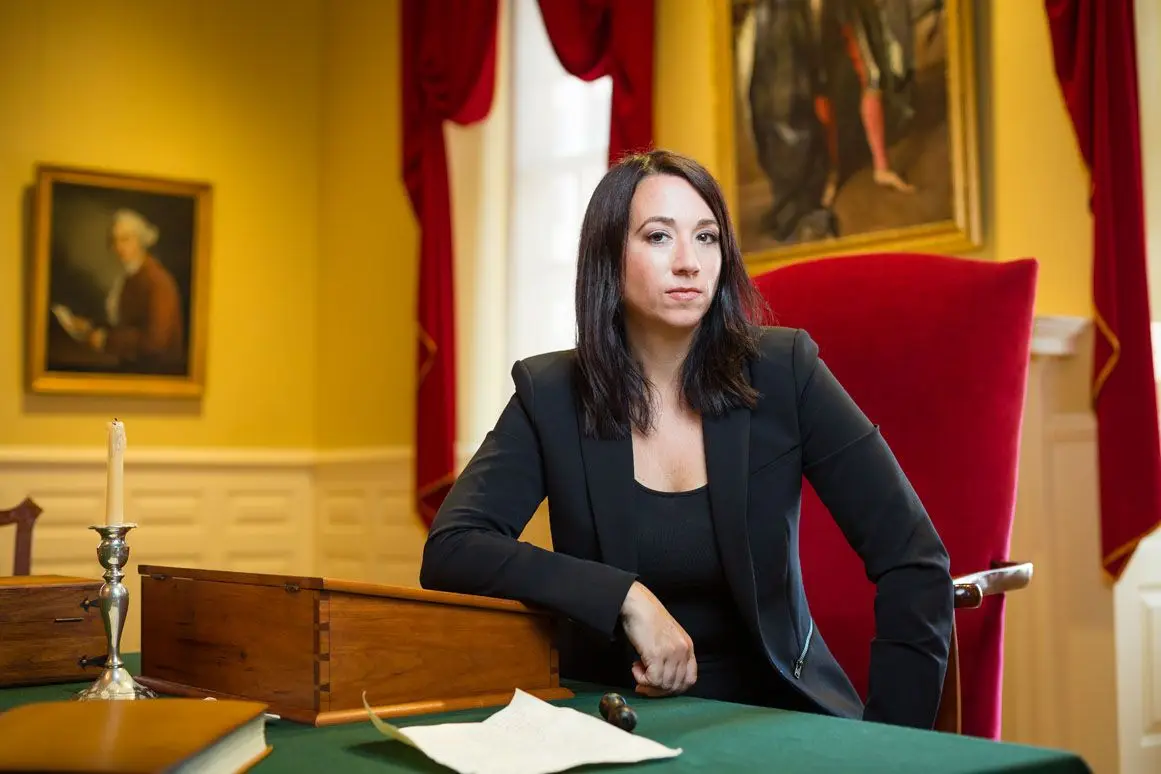
Emily Cherniack is the Founder and Executive Director of New Politics, an organization that seeks to help Veterans seek public office.
Emily Cherniack is steeped in the traditions of servant leadership. From her service in AmeriCorps and employment with City Year AmeriCorps, to being part of the founding team of Be the Change — where she led a coalition of over 200 organizations to engage 250,000 people for a Day of Action in support of the $6 billion Edward M. Kennedy Serve America Act of 2009 — Emily has worked tirelessly to serve our country and support others who serve. In 2018, Emily was named to the Politico 50 as one of the 50 "thinkers, doers, and dreamers driving politics."
Emily’s path to politics came when her boss and mentor, Alan Khazei, decided to run for the US Senate in 2009. Khazei asked Emily to become his Deputy Campaign Manager and, although he was defeated, Emily learned a great deal from his campaign and the power of political leaders who chose to serve country before self.
This experience led Emily to conclude that our current system for recruiting political talent is broken. The current talent pipeline is intentionally exclusive, and has significant barriers that prevent transformational leaders from successfully running for office; the only way to change that is to change the pipeline. New Politics was founded in 2013 to address exactly that.
Emily graduated from George Washington University with a Bachelor's Degree in Criminal Justice and Psychology and a Masters Degree in Education Policy. She lives in Boston.
To learn more about Emily and New Politics: https://www.newpolitics.org/emily-cherniack
Disclaimer: All political views expressed by Emily during the podcast are hers and do not necessarily represent the views of the Warrior Soul Podcast or its Host. The Warrior Soul Podcast is not affiliated with any specific political party or perspective and merely seeks to bring tools, tactics, strategies, and ideas to the US Military Veteran Community to help its members to live their best lives. That mission entails bringing on guests from multiple political perspectives whether the Host agrees with them or not. It is our hope that anyone who disagrees with Emily can look past that to see the tools she brings to the table to help the Veteran community get more of its members into public office.
Transcript
Machine-generated from the episode audio and lightly edited — may contain errors.
Chris Albert (link to this point)
What's going on, everybody? Welcome to the Warrior Soul podcast. I am joined here today by Emily Cherniack. Emily, did I pronounce your last name correctly?
Emily Cherniack (link to this point)
I'm impressed. That was excellent. Yes.
Chris Albert (link to this point)
Thank you. She works with an organization that helps veterans run for office and get into politics. And Emily, do you want to just give the audience a little bit of background about who you are, where you're coming from, what your organization does?
Emily Cherniack (link to this point)
Sure. It's an honor to be here. So I originally, I come, I did not do military service, I did national service. So I did AmeriCorps out of college and, you know, kind of got into politics by way of my former boss who ran for the US Senate in Massachusetts in 2009 and really saw this significant barrier to I think saw this world of I talk about it like The Matrix where I swallowed the red pill and this entire world appeared before me that I never knew existed. And it was just this crazy and counterintuitive space called campaign world.
And so what I realized is that, you know, for me, it was about I asked the question about who gets into politics. I never thought about it before. And so I thought, who gets into politics? What does it mean to be in politics and to run for office? And I sort of thought about what kind of people that ended up running.
And what I saw was that not a lot of service people were running, not a lot of veterans. And so that's what inspired me to get in, to start my organization, New Politics, which is really about recruiting and supporting servant leaders, people who have served this country through the military and national service programs like AmeriCorps or other public service types of programs or organizations. And they're really about country first and community first. And can we bring these leaders into the political arena because many of them are not running. We have the lowest number of veterans in the history of our country that are in elected office right now.
And we really think that if people who put the country first and more of them were in office, we would have a different country for the better. So that's really the goal and the mission of of the organization.
Chris Albert (link to this point)
So and so, you know, politics, when whenever we talk politics or anything like that, people kinda lurch back in in fear because things are so so divisive now. Is your is your organization based on party? Is it do do you work with one party? Do you work with all parties? How how does that work?
Emily Cherniack (link to this point)
We are bipartisan. You know, we have some litmus tests. Like, believe that, you know, we believe in science. You know, we believe that, you know, climate change is real. I don't care if it's a private sector solution or government solution, how everyone will solve it.
But, you know, there's certain things we have, but we are bipartisan. We work on both sides of the aisle, and we fundamentally believe that our country needs leaders from both parties elected to to make our country better.
Chris Albert (link to this point)
Okay. Yeah. Cool. Yeah. You know, one of the things I'm always talking about on the show is that, you know, we see a lot of people on social media. They're posting memes.
They're they're talking about how angry they are about one thing or the other. But what they're not doing is is getting out there into their communities and actually taking action. And and I think really important that we actually do that. You know, we take a role in our communities, whether that means, you know, being involved in your local school board or, you know, running for higher office. I think that's that those are all things that we should be doing.
What are some things that veterans should consider if they did want to start? You know, where does it start for them?
Emily Cherniack (link to this point)
Yeah, I mean, I think I first want to say veterans are uniquely situated and uniquely suited for political life. I know that feels counterintuitive because you're, you know, kind of in the military, you're told to not be political as part of the being part of the military, but the skill sets that veterans have learned, you know, how to lead a team, how to, you know, bring people together towards solving a mission, right? Working for people from different backgrounds and in diverse situations. All those skill sets are real leadership skills that have learned in the military that are really invaluable in political life. And so I think, first of all, just recognize that veterans have a unique set of assets that are, you know, suited for the political arena in that way.
And then I think, you know, the other piece of this is that, you know, veterans can There's lots of ways to get engaged in politics and it can be just showing up to a political meeting in your community. It can be just like talking to local electives in your community and going from there, but there's lots of ways to get involved. But I think firstly, I just wanna emphasize that veterans are uniquely suited to be leaders in our political life.
Chris Albert (link to this point)
Yeah, absolutely. I think that a lot of veterans underestimate themselves and what they can do. I think a lot of veterans think that, you know, that they're not good with dealing with people or that they're not good with with, you know, communicating with others and that sort of stuff. But, you know, by nature of doing the jobs that we've done in the military, you have those skills. You you have worked with people.
You have led people. You have influenced people in in in a lot of aspects. And I think that's important to remember.
Emily Cherniack (link to this point)
Yeah. And I think politics is so It's also intimidating. It's not transparent. It's just, there's no like obvious entry points. So I think for New Politics, our goal is to really show veterans, you know, the ways to get involved in politics.
So whether we have a training that you can go through that helps you think about what is your political pathway. And then we help connect, you know, connect you to different facets of the political system, whether it's you wanna work on a campaign, you wanna run for office, you wanna work for a state house or a local elected or the Capitol Hill. Right? There's lots of ways that people can engage in political life, and we really try to help guide veterans along the way so they can do that.
Chris Albert (link to this point)
Now I've had I've had several people on the podcast who have run for Congress. And and, you know, one of the things they were talking to me about was the fact that they got to make a lot of phone calls. Like, one of the gentlemen that was here, he he had a list. And every day, he'd have to sit down for two or three hours trying to call people up, trying to trying to, excuse me, get donations, trying to, you know, get people out to vote and that kind of thing. There is a lot of lot of groundwork that needs to be done.
Right? And and in order to do that, you can't just do that by yourself. You have to have a good team around you. Do you guys give guidance as far as, like, building a team, trying to build a good campaign staff, that kind of stuff too?
Emily Cherniack (link to this point)
Yeah. We really help run a process around hiring. We really help try to find the right staffers because it really matters. And I would say too, I mean, I think running for Congress is important. I think a lot of veterans are drawn to Congress because of their sort of experience overseas.
But I would also argue that, you know, running for city council or even state senator, state rep, I mean, are different types of campaigns. You know, kind of money you have to raise as a member or as a congressional candidate is like a million dollars. Whereas if you're running for state senator, state rep, it's like $30,000 or $40,000 So it's a really different level and you can really go and knock on doors and meet a ring in your community that is voting for you. So sometimes we really try to get to veterans to understand that maybe the first step is not Congress, but it's maybe running for the state house, which also, by the way, has important legislative goals around redistricting, around funding for education, around all the things that impact veterans on a daily basis really are about the state that they live in. And so I think trying to get people to understand that Congress is, yes, important, but the state legislatures are equally or sometimes more important when it comes to certain policies.
Chris Albert (link to this point)
As is the city council. I mean, I think a lot of people found out how important their city council was over the last few years. And I think that, you know, if you want to have that kind of impact, it is important. You you should know your community. I mean, I think about I have a I I studied politics for a long time.
I I had a PhD in political science, and and one of the things I'd constantly get slammed home is the fact that most people don't even know who's on their city council or who who some people don't even know who their mayor is, you know, or who's representing them in the state house. And it it it's pretty pretty insane to me when you consider the amount of impact that a lot of these people have on you.
Emily Cherniack (link to this point)
Absolutely. And that's part of the education that we try to do at New Politics, I think, because you're right, people just don't, they don't know, and they don't understand what these jobs are and what they do. So it's really important. And even like on school boards, you know, you decide the budgets, you decide the superintendent. I mean, these are really important key decisions you're making, and and it really matters.
So I I I 100% agree.
Chris Albert (link to this point)
So with the campaigns you've worked with in the past, you know, when when a veteran runs for office, what are some of the common questions that you would get from them at the beginning? And, you know, how would they find you? How would they get in touch with you?
Emily Cherniack (link to this point)
So there's a couple ways that we kind of try to recruit. And so it's a referral. You know, some people will refer us to others that that they know are thinking of running. We really try to advertise in terms of like social media and digital and try to get the word out that way, as well as just our partner organizations. There's a lot of organizations, the nonprofits that we partner with that try to get the word out as well.
So there are various ways that people come to us. I think that the interesting thing about veterans is like, while they're uniquely suited to be excellent political leaders, I think getting over some of the barriers that are uniquely, kind of they face uniquely being veterans. So for example, when you have to kind of tell your story when you're sort of campaigning and talk about who and you veterans, that's A, something they're not used to doing when they're in the Corps because they're sort of one of, you're one of many, you're not really supposed to be individual. And so I think really translating kind of the veteran experience and leadership experience to civilians. I mean, 1% of our country has served.
A lot of us don't understand what it means when someone says I've served in this country, right? So I think how do veterans tell their story? And I'm not talking about war stories, That's not what it is, but it's sort of like what Seth Moulton was running and he was like, I'm not gonna tell any stories about me in combat. He's like, that was just like off the table. And I was like, I get that.
But people, most people don't even know what the difference between a Marine is versus a Air Force versus Army. Right? Like, there's just a lot of things that people don't understand around leadership. And so one of the things that he talked about is he said, in the Marine Corps officers eat last. He's like, that's how we're trained.
And that resonated with people so much that people just, it was like a leadership, a small story, but when people heard that they thought, wow, this guy is someone who doesn't put himself first. And what a contrast that is to politicians who seem to always put themselves first. So I just think telling stories about who you are and why you do the work you do, people have to get to know you to vote for you. And so really getting veterans to sort of kind of unpack that and and try to translate those their stories into so that civilians understand kind of the kind of leader that they are.
Chris Albert (link to this point)
Yeah. The storytelling element, I think, is difficult for almost everybody. But I think that anybody who wants to do anything in life in general, it's really important to know your story and to have it in a way that you can tell it because that's also part of leadership. I mean, human beings have communicated through story for thousands of years, you know, and I think that it helps people understand you better, helps people to understand your mission better, and it helps people understand ideas better. Even in marketing situations, it's so important to to connect yourself with a story.
Emily Cherniack (link to this point)
Right. Exactly. And then the other thing that it's hard for veterans is that being a candidate is, like, all about you. I mean, it's sort of about you representing a bunch of people, but your name on a sign. Right?
All these things feel very weird for veterans who have spent their life being sort of anonymous when they're in service.
Chris Albert (link to this point)
Mhmm.
Emily Cherniack (link to this point)
And so really kind of unpacking for them why like, we had one candidate that that had a campaign sign that we did not get to her before she did this, but it just said team. Like, that's what her sign said. And we were like, your name's not on the sign.
Like, people have to know who you are. Like, you're running. Right? And it just But like, because there's just so team oriented and all these things. So just getting people to sort of, like, be more about them, that like they're sort of the They're like the product.
Right. And they have to kind of be out there. And I think that's That is a hard thing for a lot of our candidates is to be. It feels really selfish and narcissistic to, like, be about your name on a bumper sticker, your name on a sign. Right?
And so getting people to understand why that matters and why it's in service to the mission of making our country better.
Chris Albert (link to this point)
Right. I work when I was young and and when I first got out, I worked for a member of Congress for a while. And one of the things you learn when you do that is that the entire office is centered around one person, you know?
Emily Cherniack (link to this point)
Yes.
Chris Albert (link to this point)
And and and that can be really weird because, you know, you have this whole, like, staff that's dedicated to you, dedicated to educating you on certain issues, dedicated to helping you conduct constituent services in in your name and that kind of thing.
And, yeah, I I imagine that's gotta be really weird for people when when they're stepping into this whole thing.
Emily Cherniack (link to this point)
Yeah. It is.
Chris Albert (link to this point)
One of the things so, you know, there there is also this issue here. Like like I said before, things are becoming incredibly divisive. And because they're incredibly divisive, you know, the whole door to door, you know, knocking on on on on people's doors, pressing the flesh, shaking hands, that kind of thing, It almost seems like it's more dangerous these days than it's ever been. Is is that the way it is or is that just something that, you know, maybe is more blown up in the media than than we think it is?
Emily Cherniack (link to this point)
Yeah, I think it's more blown up. I mean, we always say like Twitter doesn't vote when candidates sort of go down these rabbit holes about Twitter. And I actually think if you find if you're out in the community and you're knocking on doors and talking to real people like, yes, our politics isn't a divisive place. I'm not gonna like sugarcoat that, but I think we are more alike than we are different. And I think when we're, especially when we're campaigning in our own communities, you you do find that people are genuinely nice and interested in wanting to sort of hear, even if disagree with you.
You know, they do just want to know and appreciate that you're knocking on the door and talking to them about, you know, about the campaign, about the election. I think we get a, you know, misconstrued, you know, thing about Twitter because we just think, like, everyone hates each other, but that's not totally what's happens on the ground.
Chris Albert (link to this point)
Right. Right. What about, you know, still today, I mean, there's a high percentage of people who are in office who graduated from like Ivy League schools, who have law degrees or MBAs. I mean, if somebody doesn't have those things, are those necessarily roadblocks or or do you think more and more people who who might not have gone the path of college are getting into office these days?
Emily Cherniack (link to this point)
I mean, clearly, if like Ivy League education mattered, we would not be stuck where we are, right? Like we have a lot of smart people in Congress allegedly smart and like we are trapped and can't get anything done. So I think it's actually by refreshing and better if people don't have these kind of degrees. I think, you know, it's really just I mean, the reality is politics is a system of privilege. And so it's not about the fact, the Ivy League degree doesn't mean they're smarter, it just means they've had access to networks and resources that other people haven't had access to.
So I think that's more of the challenge. The barriers are just steeper for someone who might not have networks of people with money. And so actually at New Politics, we just launched the New Power Project, which is really about recruiting people from, you know, that don't have resources and really trying to set them up for success by investing more in breaking down those barriers, especially for, you know, candidates of color and those that have significant barriers that they face just in the communities. So, we really recognize that. And there's just a huge barrier in general to run for office if you don't have the resources.
And so, we're really trying to combat that because you don't have to go to Harvard to run for office. I mean, LBJ, I think, I don't even know if he had a college degree, but he just read a lot of books, but he was brilliant. But he didn't have a formal like, Ivy League training that others have, and he was a great president. So, I think there's lots of examples of people that have succeeded in life and have done well in politics without significant education.
Chris Albert (link to this point)
Yeah. Yeah. And there's a lot of really cool stories there. Like, Truman actually wasn't even financially solvent when he was president. And and
Emily Cherniack (link to this point)
Yeah.
Chris Albert (link to this point)
They actually had to create a pension for him because if he didn't have a pension when he got out of office, he he would have been destitute, which which is another pretty crazy story. And Lincoln too, I think, also wasn't financially solvent when he came in. Well, that's cool. So, what's your focus for 2022 and moving on into the the presidential elections to 2024? What what how are you guys running your recruitment? What what types of people are you looking for?
Emily Cherniack (link to this point)
Yeah. I mean, this cycle, you know, 70% of our races are down ballot. We're a big believer in the pipeline work. You know, 50% of Congress comes from the state legislature. So if you're really trying to build a bench of leaders that are ready to step up in a few years when the congressional seats open up, you know, that's really our focus.
So we'll have 35 congressional races and then 115 down ballot races this cycle, which we're on track to do. And then, you know, next cycle, we're recruiting, we're starting to recruit now for 2024. We have a few races this cycle where we're taking on incumbents and primaries who we think are bad actors for democracy. Matt Gaetz and Bob Good is people who are challenging. Think next cycle, again, trying to scale our recruitment and scale our candidates.
We're doing 150 campaigns this cycle. Our goal is to do over 200 next cycle and really continue to do that because recruitment takes time. You know, it takes a few years to get someone in the pipeline from, you know, sort of recruited to actually a candidate and running. And so the more we can kind of get those servant leaders in the mix now, the more chance we'll have for a 2024 election cycle.
Chris Albert (link to this point)
Okay. And so when you say servant leader, what does that term mean to you?
Emily Cherniack (link to this point)
So we support all veterans running just because they're veterans. So being a veteran is a filter that we think the leadership skills that are learned in service are really valuable in political life, but we do look for people that align with the core values of courage, integrity, empathy. You know, they're really ones that are about service to others. So there are some veterans in office that aren't that way that we don't support. So we really look for the ones that are about, you know, putting the country first, putting the community first and doing what's best for all of us.
Chris Albert (link to this point)
Awesome. Awesome. And so, you know, if a veteran is interested, what kind of things should they get together and and, you know, how how would they get in touch with you?
Emily Cherniack (link to this point)
They can go on our website, newpolitics.org, or feel free to shoot me an email, emily@newpolitics.org. I'm happy to connect you to the right people on our team. I can't stress enough how, like, the future of this country depends on veterans getting involved in politics. And I know it's not fair to ask because veterans have sacrificed so much already, but our country will not live up to the potential of who we can be without people who have put this country first getting into the political arena and doing that again.
Chris Albert (link to this point)
Yeah. And that's a good point. It's not really a pleasant job when you when it comes down to it. Right? It's not like it's not all glamour.
It's not all it is really about service. Right?
Emily Cherniack (link to this point)
Mhmm. Yeah. And it's funny, you know, Congressman Congressman Moulton, who I had recruited to run in 2014, I was kind of worried that he would maybe hate the job. Like, he'd never done politics before. So when he won, I was like, oh, God, is he going to, like, not want you know, he's going to be like, Emily, look what you got me into.
This job sucks, right? Like I had no idea. And I had asked him a few months into it and he said, I haven't felt this way since I was a Marine. And he meant that because he was serving others, he just said, I haven't felt this type of, for him, when he was in Marine, he was serving others and he's in Congress, he's serving others. And I think for him, it was really amazing to be back in public service.
And so I think despite all the challenges that being elected means and the tough stuff, it it really is that ethos of of the spirit of public service that that keeps him inspired and I know keeps the other our other electeds inspired that that we work with. So it's powerful.
Chris Albert (link to this point)
What are some questions you wish I would ask you in front of this audience?
Emily Cherniack (link to this point)
I mean, you're done you've done a great job. I mean, it's why you have a podcast. I think you're a great interviewer. I mean, you're an expert in politics. I guess, is there anything that you that you think is that resonates or you think you're like, I don't know.
That sounds a little like, you know, Pollyanna talking about it.
Chris Albert (link to this point)
No. I mean, I'm trying not to let my own cynicism, like, poison the waters and everything. Like, I think having having worked in Washington and and having studied like, when I when I say I was a political scientist, it means like I was studying these things from the perspective of trying to look at them as if they were some sort of scientific phenomenon.
Emily Cherniack (link to this point)
Right.
Chris Albert (link to this point)
And one of the things that it did to me in the time that I was in academia is it did.
It made me extremely cynical about a lot of things. And that's one of the reasons why I also left academia and went into business was because it was an extremely almost isolating experience because what I found myself was when I was talking to people, I'd be constantly analyzing them. You know, I couldn't even have an opinion about a news story without analyzing myself. So, you know, I'm trying not to let that shine through. But at the same time, I think what you're doing is extremely important because, you know, I think we've got this generation of veterans who answered a call and they went out and they put their lives on the line.
And I think that all of us need to take a role in shaping the society around us. And, you know, I think it requires all types of different voices to do that. And so, you know, for me, I'm I one of the things I wanted to do with this show is is to make sure that those out there who who would like to answer that call believe that they can do it more so than anything. You know?
Emily Cherniack (link to this point)
Yeah. No. I agree.
Chris Albert (link to this point)
With so with everything that you've been doing, are you hopeful for the future of the country? Like, do you do you think that that there is hope that at some point we're all gonna come together and and, you know, potentially unify around certain things? And and where do you think that hope is?
Emily Cherniack (link to this point)
I'm really hopeful. I mean, I think do I think it's gonna be coming together in like rainbows and sunshine? No. But I am really hopeful in the leadership that I see. And I think we don't the good news is you don't need 535 amazing leaders, right?
You just need a tipping point. It could be 40% of Congress that comes from these backgrounds or 35% even. So I think what we'll see is these incredible leaders that are going to be, and already are, I mean, they're changing our country and our laws and our policies, everything from, you know, James Talarico, who won the State House in Texas a few years ago, and he helped lead the walkout in Texas when the voter suppression laws were coming and he orchestrated, you know, that whole thing and stood up for democracy. He also, you know, got diabetes insulin down to $50 per, you know, per thing, right? I see it in the women members of Congress like Mikie Sherrill and Melissa Slotkin and Chrissy Houlahan and Abigail Spanberger, who are really working together to come up with policies and laws that are protecting not only our communities, but also really thinking about how we operate overseas and internationally.
And I see it in David Crowley, who was a county executive, the first African American elected in the history of Milwaukee. And it was a seat that Scott Walker held before he ran for governor. David has already done significant movement around healthcare and economic moves for Milwaukee. The last thing I'll say is I had Pat Ryan, who in Upstate New York is combating COVID and economic instability in his community as a county executive. He's a West Point Army guy.
And so I see what they're doing and how they're changing and shaping their communities. And they're just getting started and we're going to see them running for statewide office and running for Congress. So I see them out there. And so I think for me, it's a real privilege to get to work with and be connected to all these amazing leaders on a daily basis. So I am hopeful because I know that they're coming and they're doing the work and they'll be running for federal office one day.
So I think for all of us to have hope and have patience because help is on the way.
Chris Albert (link to this point)
For somebody who actually does get elected, let's say you move to your state capital or you move to to Washington, D.C., what are some tips that you might have for for them? Because, you know, having lived in DC, I know it could be a a daunting place and and, you know, having been around some state houses and things like that, I know that that it could be interesting, especially for somebody who who might not be used to to those types of surroundings. Do you have any advice for them if if they do?
Emily Cherniack (link to this point)
Yeah. I think I think two things. One is, you know, get roommates if you can. So, like, Jake Auchincloss and Jared Golden are both members of congress, and they're both marines. They live together in DC.
They are able to kind of just have a space where they can just be service guys together, once they're off the clock. And then I think the other thing is to keep people around you who keep you centered. I think when Congressman Moulton, he first got down to DC, he did monthly dinners with his army or with his Marine veteran guys, and they just have dinner and they'd hope they keep him grounded, right? Because they don't care that he's a congressman. And so he would make sure he did that so that people would, he could just be around people that didn't care what he was.
They're just like, well, you're just Seth, right? And so I just think there are ways to, I think it really matters keeping a village of people around you, keep you centered. And whether that's through roommates or through dinners or through things like that, I think the most important thing you can do is is, you know, keep people around you who are not going to be enamored with what you are. And they're really gonna be honest and and direct with you about who you are.
Chris Albert (link to this point)
That's another important thing to bring up on the campaign trail itself. That could be pretty grueling too. Right? And and
Emily Cherniack (link to this point)
Yeah.
Chris Albert (link to this point)
You know, I've seen people working on campaigns and and, you know, living off of pizza and that kind of thing. Any tips for them for for how to survive that?
Emily Cherniack (link to this point)
I mean, I think just, you know, remembering that, like, it's a marathon, not a sprint, and, there's always work to do and, but the work is important, but not as important as you are. And so we can't do the work if we're not healthy and we're not, you know, rested and all those things. And so I think people sometimes get a little caught up in the urgency of a campaign when, you know, you're not an ER doctor, right? You're not like triaging a patient on an ER table. Like it's gonna be okay. Like if you don't put in the field numbers tonight, like it's gonna be okay.
You know, like you can do it in and the the campaign will still survive. So I think we sometimes get caught up in the pieces like that where we're we're, like, overly anxious about things. But yeah. Mental health and taking care of and taking care of yourself is really the priority.
Chris Albert (link to this point)
Yeah. And do you guys work with families at all while they're going through this kind of thing? Because I I can imagine it's it's crazy for somebody's significant other children, you know, while, you know, mom or dad are away or or, you know, dealing with a crazy news clip or things like that. Do do you guys work with them at all?
Emily Cherniack (link to this point)
We do. I mean, the kids actually are pretty resilient and I find the children are actually they're actually fine. You know, they think it's fun. They get to hang out with mom or dad while they're like, you know, canvassing and going in parades. So that's like fun for them.
I think the hardest part is on the spouses. And we do, we work with them. We have set up like little spousal support groups so that like they can all connect with each other, you know, during a campaign season because it is hard. And we always say to I always say to potential candidates, if your spouse is not on board and they don't understand what it means, you know, then don't run. Because if you cannot have a 100%, you know, support from your spouse, it will not go well for you.
Chris Albert (link to this point)
Right.
Emily Cherniack (link to this point)
And it's just so important. And it is hard. And I think just being really clear about the roles and what they need and, you know, there needs to be time carved out for family time and that's okay. And just being upfront about all that and being clear and organized about schedule is really important.
Chris Albert (link to this point)
Awesome. Awesome. I think that covers about every question I had. Can you remind the audience a little bit, again, how do they get in touch with you? Are you guys on social media?
And where can they get started?
Emily Cherniack (link to this point)
Yeah. So again, our website is newpolitics.org. Feel free to There's a form on the website too about interested in being a candidate. You could fill that out or feel free to just send me an email at emily@newpolitics.org. And we're on social media, Twitter is newpoly.
And yeah, feel free to follow us and we're really here to be helpful to you and to be of service. We think the country is better when more people who have served this country are in politics. So we're really here to support you and and help guide you on your political journey and and ask that you think about being involved in the political arena because our country needs you.
Chris Albert (link to this point)
Awesome. Awesome. Well, thank you so much, Emily. To everybody out there. Yeah, no problem.
No problem. To everybody out there, like I always say, regardless of where you're at, what you're doing, try to make the world around you a better place. And that starts with you. Right? Get your house in order.
Make sure you're taking care of your family. Make sure you're keeping your mind in order. Make sure you're taking care of your body. And also make sure you're taking care of your community. Like Emily said, it starts with your local local surroundings and then, you know, taking care of your state and then potentially moving on to the federal level.
And I think this is a great thing to consider for a lot of people. With that, guys, I wanna thank you so much for listening. This is Chris Albert and Emily Cherniack, and we are out.
Emily Cherniack (link to this point)
Thank you.
Chris Albert (link to this point)
Yeah. No problem.
Host of the Warrior Soul Podcast and founder of Warrior Soul. Worldwide trainer and nutrition coach, contributing author at Testosterone Nation and Muscle and Strength.