Podcast episode
Episode 7: Winning the War We Call Life
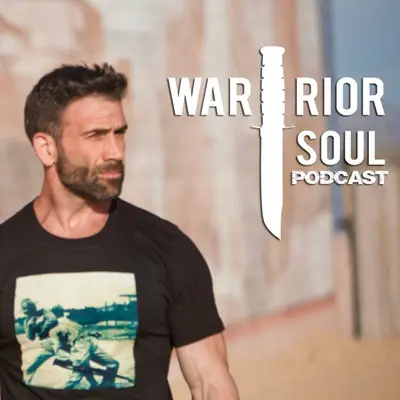
Hosted by Chris Albert
The Warrior Soul Podcast
Transcript
Machine-generated from the episode audio and lightly edited — may contain errors.
Chris Albert (link to this point)
Good evening, and welcome to the Warrior Soul Podcast. My name is Chris Albert. I am your host, and I am the owner of Warrior Soul Apparel. Thank you so much for listening. Tonight, we're gonna be talking about an important subject, and that is winning the war we call life.
Why is this so important? Well, you might look at a title like this, and you might look at this subject, and you might think to yourself, well, is this some kind of self help program you're promoting, Chris? Is this some sort of 12 step program? And it's not that those programs are bad or anything like that, but I think this is something a lot of us don't incorporate into our personal management enough. And that is understanding where we want to end up.
Right? You get up, you grind every day, you work, you push, you try to win your day to day battles, your day to day skirmishes. But at some point you have to ask yourself, is all this getting to me getting me to where I want to go? Is all this going to put me in a situation where I am going to be happy with my life? Where I am going to be satisfied with what I'm doing?
Where I'm going to feel like I'm growing in my values? And I'm gonna feel like I'm being who I wanna be by getting to the place where all this stuff is bringing me. And I can tell you so much from my own life's experience, where I pushed for certain things, and I made certain things happen. And when I got there, it was almost an empty feeling. Because I wasn't really asking myself the question, what is my endgame?
And does this endgame match with what I want? Just to give you an example, for a long time I thought that I wanted to be an academic And for a long time having the letters PhD after my name were pretty important to me. And so after I got out of the military I went to school and I got through my bachelor's degree. I got through my master's degree and I decided to go into a PhD program. And the reasons why I wanted to do this, I mean I can tell you my family though we are very working class, we were immigrants, you know, came from Italian immigrants and they always put a huge emphasis on education from the time I was a little kid.
Mom said you've got to go and get your degree. You've got to get as educated as possible. And I remember my Uncle Cosmo on his deathbed. I'm talking to him and he's like Chris you've got to go and you got to get that PhD. You've got to get your doctorate.
I didn't really understand what getting a doctorate entailed. I didn't understand what getting a PhD entailed. I didn't understand where it would bring me. But it sounded like it was something that people respected a lot, and it sounded like it was something that would allow me to go places allow me to get some sort of you know awesome life out of it. So I went to graduate school and I went for four years and I was actually pretty good at it.
Was actually good at being a social scientist. I did some really good research. I actually liked the material the reading material a lot, but the process of doing research and of writing journal articles that most people aren't going to read. Now I'm talking about these big bound journals that you find in the back of libraries of university libraries, not your local public library of university libraries, that maybe you know a few 100 people subscribe to that they get them in the mail, and these people are only in your academic field. And when you go to conferences, the only people you're associating yourself with are not only just people from your academic field, but they're also people who are focused on your particular niche in academia.
So my niche was studying Conflict Resolution. I studied war, but it's not as cool as it sounds. Basically what I did was I took these theories and I drew them up using mathematics, using a form of mathematics known as Game Theory. And I would draw up these theories from these theories. I would generate hypotheses from these hypotheses.
I would look to the data and I would create tests on the data to see if the hypotheses were correct or not. Now if any of you were still awake, yeah I have to understand that this was not something I wanted to do for the rest of my life. Were cool projects, and I enjoyed getting praise from people whenever I did some good work. But I really lived a very lonely life, and for someone getting out of the military going into a transition, it wasn't great. I was drinking every night.
I wasn't taking care of myself. I was smoking a pack and half of cigarettes a day, and I looked in the mirror one day and I looked like I was 40 years old at least, and I was only about 29, almost going on 30. And I said, Chris, you've got to do something different. And so that's when I got into fitness. And that's when I started doing bodybuilding shows and really starting to dedicate myself to understanding the human body.
I left graduate school. I became personal trainer and eventually started my own gym. But and that all set me on the path to talking to all of you tonight, you know, from being a personal trainer where when those values didn't match up with who I thought I was anymore, I dedicated myself to growing this company. And now finally, I feel like I'm actually doing something that matches up with who I am. You know, people, creating art through my t shirts, spreading good ideas, and these are things that I always wanted to do.
But I was so caught up in trying to check this box from my family, trying to get this degree, trying to get that degree, trying to get this form of status to impress other people that I wasn't ever asking myself, Chris, what is gonna make you happy? What kind of life do you wanna lead? What do you want your life to look like? Do you want to live in a library for the rest of your life? Crunching numbers?
Do you want to go almost blind from looking at a computer screen? Do you want become so immobile that you can hardly walk, and you can hardly breathe when you go up a set of stairs? No, it's not what I wanted. It wasn't who I was. It wasn't who I wanted to be.
So that's why I left Academia. What I want you to get out of this podcast by the end of it is to be able to ask yourself, are the things I'm doing every day adding up on my journey and getting me to where I eventually wanna be? And I want to convince you by the end of this podcast that you need your own vision. You need to write down what you want your life to look like five years from now, ten years from now. And you need to have a good idea of what it's going to take to get there.
They need to constantly analyze everything you do, and ask yourself, does this match up with my vision? Does this match up with how I want my life to look like? And who I want to be? And if it doesn't, then you have to make some changes. There's a book that I recently read that I want to recommend for all of you, and it's called Hannibal and Me.
And it's an awesome book. It's a really good read. It's by a German journalist named Andreas Kluth, and Kluth used to be an investment banker, and he was one of these guys that was making all this money, like living the life that a lot of us would like to lead. He had an amazing apartment in London. He had awesome clothes.
He had a great car. He had a great job where he was making obscene amounts of money. But he found himself extremely unhappy because all he did was work. He was working his life away. And he basically had to ask himself a question when he got to a certain age, and it was, am I happy with who I am and what I'm doing?
And to find some answers, he went and examined one of his childhood heroes, That was Hannibal. Hannibal was a Carthaginian general, an ancient Carthaginian general. And I'm not a big history buff. Well, yes, I I love history, but I'm not a big ancient history person. Don't know much about Carthage, but I can tell you that Carthage was in North Africa.
And it was an empire whose center was located somewhere around Tunis in Tunisia, modern day Tunisia. And it extended up as high as Spain, and went throughout the North Of Africa to different places. And Rome and Carthage were basically in a constant battle with each other over who was going to rule the ancient world around the Mediterranean. And Hannibal's father was a very prominent Carthaginian general, and he led Carthage's armies against Rome. Rome handed him a humiliating defeat, and Hannibal's father was forced to try to regain his reputation.
So when Hannibal was a young boy, he went with his father on a conquest to retake what then was called Iberia, but now it's called Spain. And Hannibal's father took some land back there, but then was drowned to death during a battle against the Romans. And Hannibal throughout his childhood developed an immense hatred of for the Romans and made it his life's mission to destroy the Roman Empire, and to regain his father's glory, and to bring Carthage back to prominence. So a few years later, the general that was elected to replace Hannibal's father was assassinated, and Hannibal himself took the realms, took the reigns of the Carthaginian army. And, eventually, Rome screwed up by forming an allegiance with a city state in Spain, and Carthage declared war.
And then begin Hannibal's quest. Now I don't want to get too deep into this stuff because this podcast is not about ancient history, but it is pretty cool what Hannibal was able to do. So rather than attack Italy, the Italian Peninsula from the sea, which was what the Romans were expecting, Hannibal decides to take his army. He's got horses, he's got battle elephants, and he's got thousands of men through the mountains. So he crosses the Pyrenees between Spain and France, and then he crosses the Alps.
And in between, he fights all these Gaulish, I think they're called Gaulish, Gallic tribesmen, tribes people. And these were some crazy tribesmen who wore mud in their hair. They had their hair all spiked up, and they fought naked, and they had these long swords. And he subjugates them, integrates them in his army, takes them along with him, and crosses the Alps. During this trip, he loses a lot of his army.
He preserves all of his elephants, but his men start to dwindle. And he gets, down on the other side of the mountains with a much smaller army than what he started with. But here's the cool thing about Hannibal. He was a brilliant tactician. And so he fought three battles against the Romans and won each of them on the Italian Peninsula.
And in each of those battles, Hannibal was outnumbered by at least two to one by the Roman army. And here's where I want to get to the first part of our discussion. We talk about winning the war we call life. But a lot of times we have to ask ourselves, when we're fighting our battles, is the way we're fighting the battle gonna cause a victory? Or is it gonna cause a defeat eventually?
And we're gonna start this by talking about Hannibal's victory at the Battle of Cannae. Now as I said, Hannibal was a brilliant tactician. In order to execute his tactics, he often tried to learn everything he could about the general he was facing. And the funny thing about the Roman army was this Rome was a very fierce republic. They elected their generals and their generals only served the term six months.
Not only did they elect one general to lead the army, elected two, and the two generals had to share command. In order to share command they would command on alternate days. So when we're in a battle one day one general command and then the next day another general would command and that's the way they operated. And so when Hannibal was scouting out the Roman armies he would send spies over, he would observe them, he would, you know, send small forces to attack them to see what they would do. He always tried to learn which general was the hot head, Which one would respond with anger?
Which one would go into an attack without even thinking about it? And Hannibal would always try to draw the Roman army toward him because he wasn't fighting on his home ground. He was thousands of miles away from Carthage. So the only way he could gain an advantage was if he was going to draw the Roman army into a location that he predetermined, that he planned for. So he was always thinking one step ahead of the general he was facing.
The most famous battle that between the Romans and the Carthaginians is called the Battle of Cannae. And I'm gonna give you a little description of this battle from the book Hannibal and Me. Just to set this up, the Battle of Cannae occurred after a previous battle called the Battle of Lake Trasimene. And Hannibal handed the Romans a crazy defeat at Trasimene. I mean, he basically slaughtered them.
There were body parts floating around the lake and the Romans remembered this. And so after that battle, they elected a dictator, and that dictator served for six months. And during that time, Hannibal just marched his army around Italy. He allowed his men to recover from the battle. And then eventually, he put his army into a position that he knew the Romans would find.
And he'd been scouting out the new Roman general. His name was Varro, and he knew he was a hothead. And he was paired with another very calm Roman general, so he waited until the day that Varro was in charge. And this is where we start. Hannibal made sure that he knew exactly when Varro was in charge.
Since his last victory, Hannibal had marched to the Adriatic city, to the Adriatic Attic Sea, and around the countryside, letting his men recover. Many of them were suffering from wounds and scurvy. Hannibal then made his way to a huge grain depot near a village called Cannae. He placed his camp so that the Romans coming after him would be facing into a wind that whipped the dust of the plain into their eyes. Then he waited, letting the two Roman consuls bicker.
On a day when Varro was in command, Hannibal provoked. So basically he sent a small group to attack the Romans. Back to the book. The Romans had assembled their largest army ever, some 86,000 men. Every free born man of fighting age was there, almost all of Rome's aristocracy, many of its senators, and both consuls.
Varro, excited that it was his day to lead, ordered his army to march out and line up. In an awe inspiring spectacle that took several hours, the vast Roman army got into formation. As its long columns jogged out and then turned hard right to form one rectangle of men, then the next, and the next. The Carthaginians facing them were also a sight to behold. Right in the middle and slightly in front stood the Gauls, as ever mostly naked with spiked hair or winged helmets and long swords, howling at the top of their lungs.
Next to them were the crack Iberian troops, who wore their traditional white tunics with purple borders and carried short stabbing swords. At the end of each wing, Hannibal placed his Libyans, the ferocious and dependable heavy infantry, a lot of whom were now carrying Roman shields or helmets taken from the corpses at Trasimene. The Romans exploded with rage when they recognized their own weapons. Both armies kicked up tall plumes of dust. The Romans outnumbered the Carthaginians two to one, so that Varro's plan was simply to attack and punch through the Carthaginian metal, then turn both ways and mop the enemy up.
It was simple, typically Roman, and typically Varro. And Hannibal knew exactly what was up. But this time he did not have topography to help him. He was on a plain. There was nowhere to hide an ambush.
Hannibal somehow had to create an ambush dynamically by letting the Romans themselves do it for him. Hannibal began by sending his cavalry to overwhelm the Roman cavalry at the extreme wings. With the horsemen chasing each other off the battlefield, both cavalries were temporarily out of the picture, although they would return. The cavalry was the one part of Hannibal's army that was numerically superior. So Hannibal was confident that his own men, rather than the Roman riders, would return to join the fighting.
Now the infantry battle began, with the vast Roman force crashing into the Carthaginian line. But Hannibal had placed his army in peculiar order. In the middle in front, jutting out in a strange bulge with a flamboyant but untrained Gauls, who, as Hannibal knew, would make a lot of noise but then lose discipline in retreat. This is exactly what happened. But because the Gauls were jutting out, the Roman center was the first to engage.
And those Roman legionnaires just to the right and left of center naturally and instinctively turned toward the middle to attack the retreating Gauls from the sides. The Romans behind them followed without even meaning to. The entire Roman army was thus punching and stabbing its way into the soft center of the Carthaginian line, which gradually gave way. But on the wings it was a different scene. Here Hannibal had placed the toughest warriors, his Libyan and Iberian veterans.
When the Roman line finally touched them, the Carthaginian line held firm. Over several hours the engaging armies thus bent into what looked like from above a half moon or a horseshoe. As the Romans pushed into the middle and the Carthaginians almost enveloped them on the left and right as they were as though they were a huge pocket. Patiently, Hannibal waited, knowing that timing would now decide the battle. Then, in the distance, Hannibal saw his cavalry returning and galloping straight for the Roman rear.
Hannibal gave the order to his trumpeters at the extreme flanks to close the circle around the Romans. Very quickly, the Romans were completely surrounded. Suddenly, their numerical superiority didn't matter, because most Roman soldiers were now standing in the middle of other Roman soldiers, unable to move and waiting their grim turn as those facing out from the circle dropped, like layers of an onion being peeled. From this point, the Battle of Cannae turned into a pure and dreadful slaughter. The Romans were pressed together like herrings in a can, and the Carthaginians butchered them methodically.
Limbs, skin, flesh, and blood formed a vicious lake on which the remaining Romans slipped and fell, never to get up again. Most died slowly from cuts and slashes that bled them dry in hours or even days. Man, you know I I've heard about the Battle of Cannae before reading this book, and I often think to myself that must have been absolutely horrible for the Romans, especially the ones at the center. You know, sitting there waiting your return, because you can't do anything, and watching as your brothers, your comrades were hacked apart. Absolutely awful.
But let's think about this for a second. Why did the Romans get themselves into this trap? How did a Carthaginian army that was outnumbered two to one slaughter an entire Roman army. Here's what it was. The Romans, the general who was in charge, he was fighting with his ego.
He let his confidence in his numerical superiority outweigh his ability to think about tactics. So when the Romans charged the center, they were doing exactly what Hannibal wanted them to do because Hannibal already knew they were going to do it. He knew that the Roman general was a hot head. He knew that the Romans were cocky. He knew that the Romans were basically gonna try and take his army on head on.
And so he positioned his men in such a way that the weakest were in the center that allowed the Romans to push through, and then that allowed his stronger soldiers to surround them. So he played upon his strengths, and he used the enemy's strength against him. He used the enemy's ego against him. But above all, he used the enemy's emotion against him. He knew that they were angry.
He knew that they wanted revenge for what his soldiers had done to them at the Battle of Trasimene. And so he knew exactly what the Roman generals were going to do. There's another awesome book and I've talked about this before on the podcast. And this is How to Win Friends and Influence People by Dale Carnegie. He's got a really good quote from this book.
Let me see if I can pull it up here. It is, when dealing with people, let us remember we are not dealing with creatures of logic. We're dealing with creatures of emotion. Creatures bristling with prejudices, and motivated by pride and vanity. If you understand this, if you understand that most people are led by emotion, most people are led by pride, by ego, by vanity, then that gives you a huge advantage in dealing with other people.
And that gives you a huge advantage in understanding what tactics to use against other people. But you also have to remember it as it applies to yourself. You have to remember that anything that makes you angry is likely going to cause you to do things that probably aren't going to lead to a good outcome for you. You have to remember that in any situation of conflict, whether that be with your girlfriend, your husband, your wife, a co worker. Before you react, you need to think about what you're going to do.
And so the big lesson I want you to take from this is in dealing with other people, never react, always respond. Reacting doesn't give you any time to think about your situation, and whether what you're doing is actually contributing to your overall mission, right? Your overall quest in life. You just do it. Responding on the other hand gives you some time to think.
And it allows you to detach yourself from the situation a bit, and allow yourself to really see the bigger picture. For instance, you get into a knockdown drag out fight with your girlfriend, or your your lover, or your husband, or whoever you are. You have to think about what you want the outcome of that fight to be. You know, if you're if you're actually taking the time to fight with them, it probably means that you haven't lost all hope in the relationship. And it probably means that you love them in some way.
So the end outcome you probably want is to have a loving husband, a loving wife, a loving girlfriend, to have a stronger relationship, to have them understand you a little bit better. But if you approach that situation with anger, if you continue the fight, if you continue to make it worse, what is it doing for the overall outcome? Is that making you a happier person? Is it making your relationship better? Is it putting you in a better place?
Is it making your life better? I don't think a lot of us think about this when we get into these little skirmishes and fights. And you have to think how much time do a lot of us spend in conflict with others, and how many of these conflicts if we actually win are going to actually have a huge impact on our lives. Probably not a lot. And this is where tactics come in.
If you understand that that other person you're in conflict with is also a very emotional human being. If you understand that their thoughts probably aren't driven by logic, then you also understand that you could give them the most logical argument in the world for why they're wrong. And they're still not going to see it your way. So what do you do? Well, first thing is this, you have to really pick and choose your battles.
And you have to ask yourself if what you're fighting for is really that significant. If it isn't, then you might want to pick another fight, and you might want to occupy your time with something better. The other thing is this, you also might want to try and see it from their way. Detach yourself from the situation a bit. Maybe if you're a human being, your argument is also guided by emotion.
Maybe you're also being irrational. Maybe your logic isn't as good as you thought it was. And so you really have to come out of yourself a little bit to understand, am I on the right side or the wrong side here? That doesn't have to be in front of the person, but you can walk away from the fight for a little bit to think about that. And then finally, if you're continuously fighting with a person and their presence isn't making you happy, If they're doing nothing but dragging you down.
You have to think whether or not keeping them in your life is actually good for your long tail game. Is it going to lead to a win for you in the end? Where you're living a life that you want to live? We've talked about that before. And so this is one area in our life where tactics play such a huge role.
And there's other areas as well. When we think about professional advancement, and I'll give you an example of this, when I when Warrior Soul was first gaining a name for itself, would get all of these emails and messages and Instagram messages, texts, and Facebook inboxes from athletes. A lot of them were like physique athletes because I was in the bodybuilding world at the time, but it just be people and they'd say, you guys, do you guys have sponsorships right now? Do you have a sponsorship right now? You know, I'm I'm an athlete looking to be sponsored, and I'm training really hard, and I'm trying to make this dream come true for myself.
Will you sponsor me? And every time I get one of those messages, I think to myself, wow, this person doesn't have any idea about tactics. And he's not able to place himself in the mind of a business owner who's trying to improve his company. Every person who contacted me was basically saying, hey, can you do this for me? Can you make my dream come true?
Can you help me to do this? But rarely did I ever get anybody who came to me and said, you know what I love your company, I love the brand, and I want to do everything I can to help you to make that brand better. I'm going to do a video series on your brand and how awesome it is. Or I'm gonna do this blog about veterans issues, and you guys can use it in your blog if you want to. But I'm gonna mention Warrior Soul Apparel in it, and hopefully this will help you guys out.
But instead, it was all me me me me me give me give it to me help me this way. Right? And when I see that as a business owner, all I see is a spoiled brat. I see somebody who's been given everything in their lives, and I see someone who doesn't know how to work to get opportunities. If you are trying to get somebody to do something in your life, life, if you're trying to influence somebody in some way, the only way to get somebody to do something, unless you have them at the barrel of a gun, unless you're trying to force them through physical means, is to get them to want to do it.
Is to make them understand the benefit in them getting and them doing what you want them to do. And it has to be the benefit to them. You know, if you're going for job interviews, during your interview, you should have researched a little bit about the company beforehand. You should know a little bit about the problems they face every day, And show how your experience can help them out. Make suggestions during the interview.
Talk about ways in which you could help them to improve their working conditions, improve the department you're applying for, to streamline their costs, to do anything that's going to help the person who's interviewing you out, to make their job easier. And you have to remember that if you can't do that, you're never going to get anybody to do what you want them to do. These skills, this idea of tactics, it carries over. It carries over into everything. All of our interpersonal relations, our professional careers, our ability to advance ourselves in society.
You know, I and we talked about this. I was on the Alpha cast last week. You know, did an interview with those guys, and they're awesome guys. And and I'll put the I'll put the episode out on my website when it comes out. But one of the things we're talking about is there's websites out there, there's social media influencers, who are basically portraying the veteran community as being a bunch of drunks, a bunch of pissed off people, a bunch of unfriendly people, and a bunch of people who, you know, don't really want to do anything in their lives except be left alone.
And these same influencers, these same groups, these same people are claiming that they're helping veterans. And yeah, I think there's a difference between entertainment and actual life advice. But how are you helping the veteran community by talking about how pissed off we all are? How is that not increasing the stigma attached to veterans? How is that helping us to get jobs?
How is that helping us to get investments? It's not, you know, and don't lie to yourselves. None of that is. If you go out there and you live up to the stereotype, then people are going to treat you that way. Now, as I said before, if you've been through combat, that's, of course, one of the hardest experiences a human being can go through.
And if you're a little bit dark, if you don't act like a lot of other human beings, that's okay. But you also have to understand that it doesn't give you a license to act like an asshole for the rest of your life. Nothing gives you a license to act like an asshole for the rest of your life. And regardless of what you did in your past, regardless of what you accomplished while serving in the military, how amazingly you served. And I do appreciate you for that.
And I do love you for that. But you have to realize that if you use that as an excuse for being an asshole, you're not helping yourself. You're not allowing yourself to get anywhere. And I could sit here, and I could say, I could play up all the stereotypes, and I probably get a million subscribers to this podcast. I could sit here and play a drunk veteran.
I could pretend I have Copenhagen in my lip right now. I could sit here and say that I'm drinking a Natty Light, while I am freaking looking at porn, while talking to all of you. But I'm not gonna do that because I think you're better than that. I think you're meant for better things. I think that you have a better life in store for you than that.
If you try something else. If you try a different approach. If you allow yourself to understand that your experience in combat can make you better. It can give you a better understanding of human beings. It can allow you to become successful in your life and to live the life you want to live.
A life that you couldn't have lived unless you've gone through that experience. If you apply what you learned, and you employ the correct tactics. The thing is, I'm putting this emphasis on tactics, but we also have to be concerned with something else, and that's strategy. Strategy is the bigger the bigger picture. Is what I'm doing right now going to lead me to that pie in the sky?
Is that going to lead me to the life I want? You know, the battlefield, we all remember having to understand the commander's intent. Right? What was the mission supposed to accomplish in the first place? Are we going to divert the mission to fight a battle that really won't matter to the outcome of the commander's intent in the end?
No, we're not. You know, we're gonna remain focused. We're gonna push forward toward the objective, and we're going to engage the forces that lie between us and the objective. But expending our energy on anything else that doesn't match the commander's intent could lead to us not accomplishing the mission at all. And the first person to really talk about strategy was man by the name of Carl von Clausewitz.
Other authors had talked about it a lot before. I mean, talked about tactics a lot before. Like if you look at Sun Tzu's Art of War, that's a very tactics heavy text. Right? Appear weak when you're strong.
Appear strong when you are weak. You know, the epitome of victory is to defeat the enemy without ever having fought him. Those are very tactics oriented pieces of advice. But when we're talking about strategy, we're talking about the bigger picture. Carl von Clausewitz made the statement, War is an extension of politics, A lot of people take that to be, you know, a justification for war, but it's not.
It's saying if you're going to get into a war, better understand what how it's matching the political outcome, right? You better understand how it's contributing to what you want. Because otherwise it's just waste. And we saw this as a country in wars like Vietnam and Korea, where the outcome wasn't defined. Right?
We didn't define what our vision for victory was. And people could argue that the real outcomes of those wars didn't end up being what we wanted it to be. You know, Korea is currently in a stalemate, and it's been that way since the end of the Korean War. We have a North Korean regime there that is unpredictable, and that's caused a massive disruption on the planet. And at some point, we're probably gonna have to deal with them.
Potentially, we're gonna have to deal with them in a more violent war than we got into with them in the first place. So how do we take lessons about strategy and apply them to our own lives? I mentioned at the beginning of my academic career. I mentioned how I spent years working on a PhD that I never finished. Because I eventually found that despite all the work I was putting into it, despite the fact that I actually enjoyed some of it.
I really didn't want to spend the rest of my life being an academic. Didn't match what my values were as a person, and it didn't match the vision I had for my life. And here's the thing, in order to understand whether or not what you're doing is going to lead to the life you want. You first have to understand your own vision. You first have to understand what that thing is you're fighting for.
What is it? What does victory look like for you? You know, for me, I want a happy family. I want to marry my girlfriend Shauna. I wanna have kids with her.
I wanna live in a house down somewhere around San Diego, be close to the water. I wanna be able to spend a lot of family time with her and my children. I want to be able to travel. I don't want to have a boss. I want to spend a lot of my time reading.
I want to be exercising and taking care of my body for the rest of my life. And I want to help veterans. I want to spread good ideas around the world, but particularly around this country. And I don't ever want to do anything in my life that doesn't match my core values of honesty, hard work, integrity, love. And you have to think about that because I'll tell you about another situation I was in.
I've said this on a video before, but around three years ago, I was living out of my car. I had made a bunch of really bad financial decisions. I got into a business that really wasn't playing in my favor. It was a great business. It still exists today.
It's successful, but I don't own it. And I was in a really bad marriage. And I found myself in a situation of desperation, where I had to get out of that car no matter what. And so I started doing online training. I had a pretty good reputation, and I got a few clients right off the bat.
You know I'd previously been CT Fletcher's nutrition coach. I've been Mike Rashid's nutrition coach. Those guys are really big on social media, so they helped me out. And before I knew it, I had a 100 clients. Now that sounds awesome, right?
I was making a lot of money, more money than I'd ever had. I was able to move out of my car into a rented room, and then from the rented room into an apartment. But when you have a 100 online clients, and you're a person of integrity, and you're a person of honesty, you customize every plan. And so I went from a life where at one time I was staring at a computer screen twelve hours a day thinking about politics, to a life where I was staring at a computer screen twelve hours a day trying to help people lose their fat asses. And I don't say that to say anything negatively about my clients.
I'm just saying that generally. I actually loved my clients and I loved helping them get to their goals, But it still wasn't the life I wanted to live. It was just a recreation of the life I was living when I was trying to get my PhD, but with a different subject matter. And I still found time to get to the gym. I still found the time to find fitness.
I still found time to hang out with my girl, Shauna. But still, I wasn't out experiencing the world. I wasn't doing things that I wanted to do with my life, and it had its impact. And so eventually I burned out, and I said to myself this is this is not what I want to do. I wanted I had opened up Warrior Soul while I was going through that process, and I couldn't find time to work on it.
I couldn't find time to create the content like I'm doing now. So eventually I had a choice, and that was to either make Warrior Soul a success, or to be miserable as an online trainer for the rest of my life. And the choice brought me here to all of you, talking to you on this podcast. That choice brought me to reaching out to thousands of veterans around the world. And it brought me to a place where I know I'm working on something that if I achieve it, if I make this company everything I want it to be, I'm going to be able to help all the people I want to help and live the life I want to live.
Had I thought about this back when I was living in my car, or had I thought about this even you know six seven years ago while I was working on my PhD? Had I taken a look at my vision, and my values, it might have saved me a lot of pain. It might have saved me a lot of the unnecessary battles that I fought in academia as an online trainer, and it might have allowed me to put my full focus on what I wanted my real victory to be. So in your life, ask yourself every day with everything you do, is this battle I'm fighting leading me to where I wanna go? Am I working on this thing? If you say you're going to school, you're going to college, and I'm not encouraging you to drop out of college, but think about what you want to do with that degree. You want to become a lawyer? Why?
So you can be a lawyer. Okay, what is is great about being a lawyer? Well, you want to practice law. What does the lawyer do on a day to day basis? Think about it.
What is your life going to be like on a day to day basis as a lawyer? You might have a lot of money, but are you going to be doing the things that you want to be doing? Are you going to be happy? Is the work going to match up with your core values? And that's not me talking negative negatively about lawyers.
All I'm saying is you've got to think about these things. You got to think about how anything you do matches up with who you want to be. And it gets back to that idea that I expressed in a few podcasts ago that death is a messenger for us. Death sits there and reminds us that we only have a limited time on this earth. We only have a little bit of time to live the life that we want to live.
Why would you spend even a minute of it doing something that's not going to lead you to that place where you feel fulfilled, where you feel like you're living according to your values, and where you feel like you're being the person who you want to be. So I hope that after listening to this podcast tonight, that you get out a notebook and you write down in a couple of paragraphs what you want your life to look like five years from now, or ten years from now, or twenty years from now. In fact, think about what you want your life to look like on your deathbed. And then think back from that. Write it all down.
Get it out. And keep it someplace that you can look at and reference whenever you got to make a tough decision. And ask yourself every time, Is this gonna bring me there? And then write down goals. Write down everything you need to do to get to that place. For those of you out there who feel lost, who feel like you don't have anything to work for, start by thinking about your ideal life. Because once you have that in your mind, you'd be able to figure out the pathway. So that's about it for the subject matter for the night. I want to thank you all for listening to this. But first, I want to talk to you about a couple of different things.
The first is if you want to support this podcast, you can go to the Warrior Soul Fitness website, click on the Onnit link, and you can get access to some of the best supplements in the world made with earth grown nutrients. You get access to Alpha Brain, which is a supplement that I take, that helps me to think better, helps me to do all the work I need to do, like create these podcasts and the videos that I do. Helps me with my grind and helps me to really think about where I'm going. And their MCT oil, which is also excellent, helps me to keep my brain sharp throughout the day. I add it to coffee.
I add it to shakes. And, they've also got these awesome Warrior bars out right now. And for those of you who are trying to do the low carb thing, these bars are absolutely amazing. They're made of buffalo meat and berries, and it's kinda like having a protein bar but without all the crap in it. The other thing I wanna tell you is that if you want to get any of the books mentioned on tonight's podcast, can get them through amazon.com.
But if you want to support the podcast, can also get them through the reading list link on the Warrior Soul Fitness site. I've compiled a reading list for a bunch of different areas of life that I think you should all check out. I'll also post links to these books right underneath the podcast in the blog at the Warrior Soul Fitness site. And you can all work to help to get smarter, make yourself stronger, make yourself a better human, and to get you to be the person you want to be. So I'm about tapped out for the night.
I'm going to go and I'm going to eat some dinner, and then I'm going to get back to work and carrying myself to the place that I want to be. We'll talk to you all soon. Have an amazing week. Love you all. Peace.
Host of the Warrior Soul Podcast and founder of Warrior Soul. Worldwide trainer and nutrition coach, contributing author at Testosterone Nation and Muscle and Strength.