Podcast episode
Jake Wood: Crossing the Rubicon to Lifelong Service
Hosted by Chris Albert
The Warrior Soul Podcast
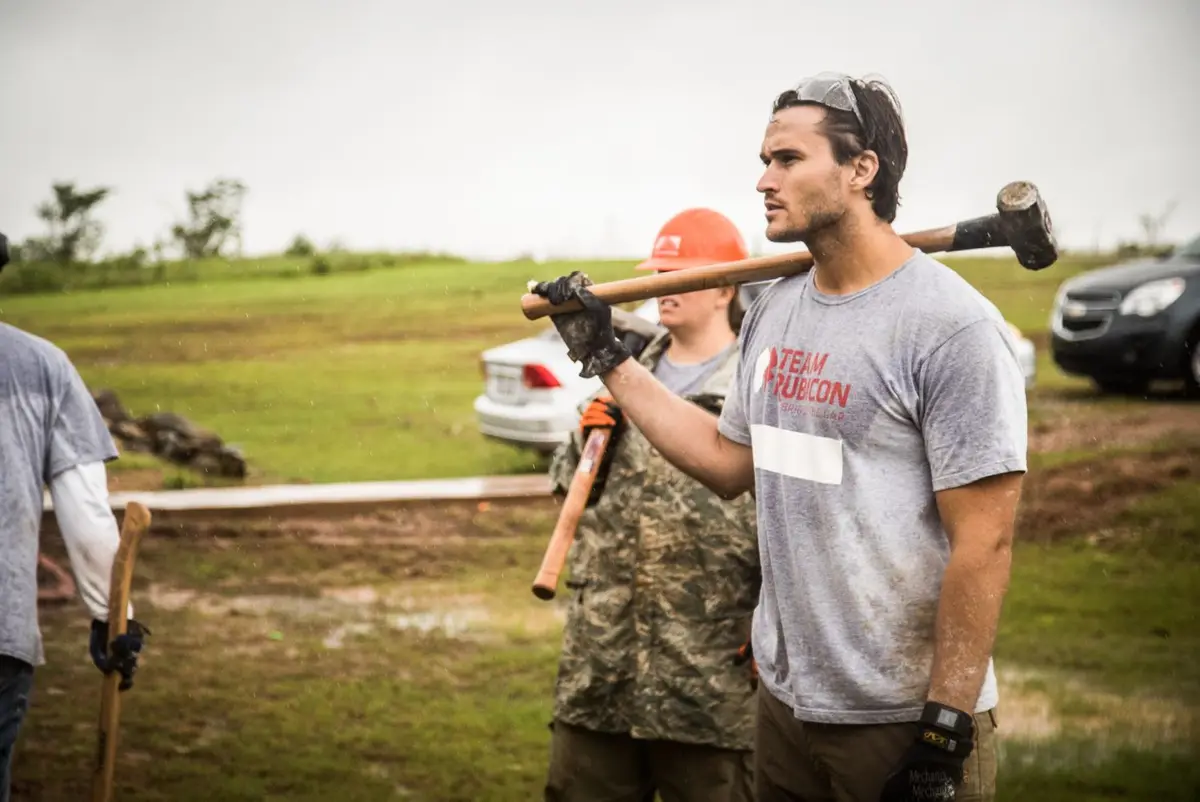
Jake Wood is a US Marine Corps Veteran and the co-founder and CEO of Team Rubicon. He is also the author of the new book Once a Warrior
Jake Wood is a United States Marine Corps Veteran, the co-founder of Team Rubicon, and the author of the book Once a Warrior.
Jake’s story starts as a college athlete, playing football at the University of Wisconsin. As college was winding down, he knew that he wanted to serve in the military, but the traditional route college graduates take toward an officer’s commission was blocked by obstacles due to his football injuries.
So Jake decided that he was going to enlist. He joined the Marine Corps and became an infantryman, and then eventually, a scout sniper. Jake served multiple deployments to Afghanistan.
When it came time for Jake to get out, he was deciding on whether or not he wanted to pursue his MBA, and then a massive earthquake hit Haiti.
Jake decided that he was going to go down to help with the rebuilding effort. After landing in the Dominican Republic, Jake met up with a number of other American veterans and civilians who were also going down to help with the effort.
He crossed the border of the Dominican Republic into Haiti with them. Along the way, the idea for Team Rubicon was born.
Since then, Jake has built Team Rubicon into a massive volunteer organization that consists of hundreds of thousands of members. He was awarded the Pat Tillman Award for service in 2018, and recently published the book Once A Warrior.
You can find Jake’s book here: https://www.amazon.com/Once-Warrior-Veteran-Mission-Closer/dp/0593189353
You can learn more about Team Rubicon here: https://teamrubiconusa.org/?gclid=Cj0KCQiA48j9BRC-ARIsAMQu3WSHN1vKj2WVrj0PjLJDXXe37PopP06N78amLSyRpnW6uEyb_w7AUBkaAkVLEALw_wcB
Transcript
Machine-generated from the episode audio and lightly edited — may contain errors.
Chris Albert (link to this point)
You know, one of the things I'm always saying is that if this country is gonna get better, if this country is gonna go on the right path, we have to step up as a community. Veterans are the sleeping giant in this country, and it is time for us to step up. That's why I wanna talk to you about The Citadel, the Military College of South Carolina. Now you might have thought about The Citadel in the past as this corps of cadets, this military institution, but they have programs for veterans that don't involve you joining the corps of cadets, don't involve you wearing a uniform every day, and don't involve you living a military lifestyle. If you wanna do that, great.
But if that's not what you're up for right now after your military career, then you don't have to do that, and you can access some of the best programs in the world. The Citadel has some hot degrees in intelligence, tactical strength and conditioning, engineering, and project management. And there's five student type options for veterans. There's graduate college, there's evening undergraduate, there's active duty students, non cadet day program, returning cadet veterans, and online programs. The academic offerings include undergraduate, graduate, college transfer, graduate certificates, and online degrees.
Veterans have access to every single academic degree the college offers, and they have the most flexibility when it comes to their schedule. They can major in anything offered to the cadets and would take those classes during the day with the cadets. But then there's other programs offered in the evening or online and graduate programs to choose from too to make things so flexible for you. The US World and News Report has named the Citadel the number one college for veterans in the South. And for veterans who choose to take classes on campus, they get to be a civilian student in a military environment.
They don't have to wear uniforms like I said before. They don't have to join the military culture of the Corps of Cadets. The atmosphere is a really good transition environment from military to civilian life. There's an organic mentorship that comes from taking classes with the cadets. The cadets wanna talk to you guys.
They wanna hear your stories. They wanna know what it was actually like to be in the military. A lot of the a lot of these men and women are gonna go on to serve as officers in the military, and they're gonna exact change. And they need to hear from you guys. They you also get access to The Citadel's alumni network.
Like I said, this is one of the most illustrious institutions in the world. And when you join the Citadel and you graduate, you're part of their alumni network. That includes so many leaders. It includes so many business leaders, so many leaders from the military, and so many leaders from the government. The college's core values of honor, duty, and respect align with veteran culture.
They align with who you are, and it's something that you're not gonna get anywhere else in this country. There is tons of special assistance for veterans at Citadel, and whether you're a veteran or active duty military personnel, you can take advantage of these programs. You also get access to the veteran student success center, the career center, the academic success center, the student veteran association, and all campus clubs. If you wanna play rugby, you could do that. If you wanna you wanna lift weights, you could do that.
You get access to everything that the students get. There's fellowship opportunities. There's tons and tons of financial assistance. So if you're interested in getting a degree from The Citadel and building your life, head over to citadel.edu/veterans.
Chris Albert (link to this point)
This is Chris Albert, and I'm here to remind you of one thing. Someday, you're going to die. Now that's not some morbid statement or scary idea. It's solid fact. Your time here on this earth is limited.
And we need to be reminded of this as much as possible for one simple reason, to live your best life while you can. This is the Warrior Soul Podcast.
Chris Albert (link to this point)
What is going on, ladies and gentlemen? Welcome to the Warrior Soul podcast. My name is Chris Albert, and this is where we deliver tools, tactics, strategies, and ideas to help The US military veteran community to live their absolute best lives. And today, I have an absolutely awesome guest for you. His name is Jake Wood.
He is a United States Marine. He is also the cofounder and CEO of Team Rubicon. And if you haven't heard of Team Rubicon, it's this amazing organization that gets veterans together to volunteer for disaster relief. Jake, after he got out of the Marine Corps, decided that he wanted to continue serving in some way. And he heard about this earthquake that happened in Haiti.
He went down there to try to provide some help. And along the way, he ran into a bunch of other people and a bunch of other veterans who were looking to do the same thing. And they met up in the Dominican Republic, and as they were crossing the border, it was kinda like Caesar crossing the Rubicon, the point of no return. And Jake decided that this was something that he wanted to continue doing. So he developed this organization.
He grew it. And today, there are hundreds of thousands of members out there helping people. It's an absolutely awesome concept. Jake is also the author of a new book. It's called Once a Warrior, and he recently was awarded the Pat Tillman Award for service.
He's just a really great dude. I mean, like, when I talk about your service not ending after you take off the uniform, this guy took that and he took it to the extreme. Because not only is he helping, he has gotten hundreds of thousands of other people to try to help as well. Just awesome. Awesome.
So you guys are gonna really enjoy this episode. And, man, that's all I gotta say. I'm gonna stop yapping my gums. Let's get into this conversation with mister Jake Wood. Jake, welcome to the Warrior Soul podcast.
How you doing today, man?
Jake Wood (link to this point)
I'm doing well. How are you doing?
Chris Albert (link to this point)
I'm doing well. Like I told you before, it's a busy season for me, but really trying to task organize and, push through it. You know, and I think it's kind of a crazy time for everybody. Right?
Jake Wood (link to this point)
Yeah. I mean, that's that's the name of the game here in 2020.
Chris Albert (link to this point)
Absolutely. Absolutely. Just expect the unexpected. But, you know, I have a lot of admiration for you and your organization. And, you know, I think everybody out in this audience is looking forward to hearing about that.
Tell us a little bit first about where you come from, how you grew up and what eventually got you into the Marine Corps.
Jake Wood (link to this point)
Sure, you know, pretty standard upbringing. I grew up in the Midwest for for most of my life. You know, two parent household that you know, I guess maybe not standard, right? I may be a little lucky, you know, two loving parents. My dad always had a job, but.
You know, grew up, you know, thinking that I might join the military at some point, but ultimately not making that decision out of high school. I ended up taking a football scholarship to to go play football at the University of Wisconsin, which was an awesome experience, awesome opportunity. I played offensive line and and, you know, that program is is probably like the premier program in the country for for offensive linemen. So definitely went there with hopes and dreams of playing in the NFL. They were quickly dashed. Turns out I wasn't that good.
And my life really, you know, started to take a turn towards where it ended up. During my freshman year, nine eleven happened, which I think most people who've served since then were influenced in a major way by that event. I I didn't join then, though. I I kept playing football. I played for four years and didn't really make the decision to join until after the last game of my senior year.
I I got done playing, was about to graduate, was was influenced a lot by Pat Tillman's death, you know, as a football player. And ultimately just decided that I wasn't ready to enter corporate life. I wanted to go, you know, serve my country. So I ended up in the Marine Corps and, you know, enlisted in the Marine Corps in 2005 and did four years, you know, as an infantryman and a scout sniper and got out in o nine.
Chris Albert (link to this point)
How big are you? You said offensive line for University of Wisconsin that requires some size, right?
Jake Wood (link to this point)
How big am I or how big was I?
Chris Albert (link to this point)
I guess a little of both. Right?
Jake Wood (link to this point)
Yeah. Well, when I played, I I was six six and two ninety. And to provide some context for that, at two ninety pounds, I was 25. You know, they, you know, it was a great experience, like I said, and I got to play. I spent most of my three my last three years as a as a backup, you know, second string offensive tackle.
I ended up backing up a guy who's gonna be a hall of famer, pro football hall of famer named Joe Thomas, You know, phenomenal athlete and football player. And actually broke has the NFL record for most consecutive snaps. He played 11,000 consecutive plays without ever stepping off the field in the NFL, which is just insane, which extended all the way back through his time at Wisconsin. So because he never got hurt, I never got in much. But it was a great, you know, great opportunity.
He taught me a lot about toughness, taught me a lot about hard work and teamwork and all those things that you'd imagine playing football at that level.
Chris Albert (link to this point)
Wow. Yeah. I can imagine because I I played a little offensive line in defense, and I am all of five foot eight, a hundred and eighty pounds right now. And back then, I think it was more like one sixty five. Yeah.
I used to get tossed around like a rag doll.
Jake Wood (link to this point)
I mean, that's the kind of football I grew up playing. I grew up, you know, I grew up in Iowa. I was definitely most often one of the biggest guys on the field, you know, and the the offensive guard lining up next to me on the offensive line probably weighed all of a hundred and eighty pounds soaking wet. So that's just how football is in that part of the country, man.
Chris Albert (link to this point)
Yep, exactly. Exactly. So, you know, you you went through, got your degree. And then, you know, you decided to enlist in the Marine Corps, right? You didn't go to officers candidate school or anything like What led to that decision?
Jake Wood (link to this point)
Well, I mean, couple of things. There were the practical reality that I had a bunch of surgeries from injuries playing football. So I'd had my shoulder repaired and reconstructed. I had my other shoulder I'd blown out and dislocated, but my foot had been reconstructed. When I spoke to an officer selection officer, he very quickly let me know just how much paperwork I was going to be for him.
And and this was also 2005. So this is the Marine Corps was not having trouble meeting its recruiting mission at that time. I mean, they had people lined up out the door to sign up and join. And so frankly, this guy basically told me that he wasn't gonna put a whole lot of effort into getting me in. And that's coupled with, you know, I started having conversations with people that were coming back and in exploring what I really wanted to do, which was, you know, lead Marines and be in the infantry.
They said, listen, go be a squad leader. It's a squad war. You know, if you go in, become a non commissioned officer, you're going to get your chance, you're gonna get everything you bargained for. And many people don't know, like you can't get a guaranteed MOS when you go in as an officer, you're at the mercy of the Marine Corps.
Chris Albert (link to this point)
Yep.
Jake Wood (link to this point)
I could have gone in as an officer. Could have ended up being, you know, nothing wrong with any MOS in the Marine Corps, I could have been a supply clerk. It could have been anything. That's just not why I was joining, right? Yeah, so I enlisted and it was a great was a great decision.
I'm really proud of the fact that I served in that capacity. I ended up getting out of the Marine Corps as a Sergeant. First tour, I went over as a fire team leader as a Lance Corporal. Two weeks in, my squad leader got blown up and I found myself promoted to corporal leading squad Marines. Mean, like, that's not the way you want to get that job, but you know, all too often that's how it happens.
And so, it was a great decision.
Chris Albert (link to this point)
Did you go through a Parris Island or San Diego?
Jake Wood (link to this point)
I was a Hollywood marine.
Chris Albert (link to this point)
Hollywood. Nice. Nice. So let me I gotta ask you this because I remember I went in when I was when I was 19. And I would see some of the guys who were even like a year younger than me, 18.
There was just a huge maturity difference at that age. I think it's like, it's it that that maturity difference is so tight when you're in your younger years. Now you're about probably four years older than most of these guys are going through boot camp with. How was that for you?
Jake Wood (link to this point)
I mean, not only was I four years older, not only was I 22 or 23, I just got done playing four years of college, like division one, big time college football. So, you know, I, yeah, had a level of maturity and, you know, physicality and mental toughness that I don't think a lot of those guys had, you know, which was enormously advantageous. Yeah, I wouldn't say boot camp is easy. I mean, it's never, it's not designed to be easy, you know, the easier you appear to be having, the more you get picked on by the drill instructors because their goal to make it miserable for everybody. So you're just, you're really only just putting a halo on yourself if you're, you look like you're cruising.
But yeah, I mean, was fascinating to be in there with, you know, at times 17 year olds. I mean, 17 year olds can go to boot camp. They just can't serve in combat. So yeah, very, I mean, it was a distinct difference, but that being said, were some 18 year olds that, you know, they carried themselves like they were 30, you know, and you'll always have that. But, you know, I was fortunate.
I got, you know, I was immediately placed into leadership roles within the platoon at boot camp and was able to help a lot of those younger guys, I think cope, you know, from being away from home for the first time, you know, help them with, you know, some of academic stuff you have to do in the Marine Corps, you know, in boot camp, like the memorization of Marine Corps history and stuff like that, that I, you know, I would tutor some of those guys at night and really just help them. I think have some perspective like, hey guys, listen, they're playing games with us. Don't take it personally. Don't internalize what's happening right now. They're playing games.
Just don't let it get to you and just, you know, it was it was helpful.
Chris Albert (link to this point)
Yeah. Yeah. I can imagine. Plus, you know, being six foot five and boot camp must have made it hard to be the gray man. Right?
Jake Wood (link to this point)
Yeah. I mean, I'll I'll I'll yeah. I mean, I yeah. Yeah. I mean, for drill instructors, it's like a game of whack a mole.
They're always looking for the one that's sticking out so they can whack them back down. And when you're, you know, when you're the, when everybody knows that you're the college graduate, when everybody can see that you're six, six, I don't know. I was six, six, two thirty five. I mean, I joked the other day. Kinda, you know, I was like Rob Gronkowski.
Like I was like, I was a big physical looking guy when I went in. Now I weigh two thirty five and I look like a pile of chewed bubble gum, but back then, you know, pretty put together. So yeah, I I got I got picked on a lot. Let's put it that way.
Chris Albert (link to this point)
Yeah. Yeah. So you get through that, you know, you go through ITB and and then you you're out in the infantry. Right?
Jake Wood (link to this point)
Mhmm.
Chris Albert (link to this point)
And you ended up becoming a sniper, right?
Jake Wood (link to this point)
After my first tour, which was in Iraq, I came back and took the indoc for the sniper platoon. Yeah.
Chris Albert (link to this point)
Gotcha. Gotcha. And so what was your time in like?
Jake Wood (link to this point)
You know, across across both my tours or in the You have to go. Yeah, across both my tours. I mean, yeah, so I was stationed with the second battalion seventh Marines in Southern California at a infantry combat base called 29 Palms, which is really the worst duty station in the Marine Corps. Most
Chris Albert (link to this point)
That's where my fiance is from.
Jake Wood (link to this point)
Yeah. Yeah. So I mean, most people would chuckle when they hear that. You know, two seven had just rotated back from a tour in Iraq when I got to them. And so, you know, those guys were coming back from a relatively tough combat tour that had taken place in 2005.
And we immediately just started training to go back. So I was with that battalion for about nine months before we rotated into Iraq in 2007. And we were part of the surge. We were sent to the Anbar Province, you know, in 2007 ended up being the deadliest year of the war. It was a very violent tour. We took a lot of contact with the enemy. Like I said, my squad leader got wounded early.
Couple of guys in my squad were killed. And so it was hard. Came back and I really loved having that role as a squad leader, you know, just three fire teams, 13 marines, really at the point of friction every single day in that mission. And, you know, was slated to go to squad leaders course when I got back. But we had done some work with the battalion sniper platoon while we were over there.
And I really just fell in love with the guys that were in that platoon. And not like, you know, not at a personal level, but just the level of proficiency and maturity. I saw them demonstrate every single day. You know, when I was a squad leader, I'd spent half my time walking around kicking guys in the boots, telling them to clean their weapons and you know, that's your job. I would have much preferred that they were just cleaning their weapons without being told.
Right?
Chris Albert (link to this point)
Right.
Jake Wood (link to this point)
And so when I whenever we would have this sniper team embedded with our platoon, I would just, you know, I'd look I would spend a lot of time with them. A couple of them were college graduates and college athletes as well. So we had some things in common. But I just really valued the professionalism with which they approach their job. And their chief scout at the end of the tour asked me to try out for the platoon and so I did.
I went to the indoc. I don't know, was a week long, pretty hard. Got selected into the platoon, which was great. Spent a bunch of time training with them after that and then got selected to be sent to sniper school, which was a big honor. Not everybody that gets into a sniper platoon ends up going to sniper school.
And so you have this big dynamic of platoons that people in the Marine Corps know, people outside the Marine Corps don't know. You have hogs and pigs. So a hog is a sniper, somebody in a sniper platoon who's actually a sniper, has graduated from sniper course. A pig is a marine who's in the sniper platoon that has not graduated sniper school. And, you know, it's a stark line between the two, even though pigs are still probably some of the most proficient Marines in the battalion.
In that sniper platoon, they're just treated like crap all day, every So I came in of course, as a pig and did what pigs do, got hazed every day. And then I got a chance to go to sniper school. And there's nothing worse than a pig that washes out of sniper school. Goes back to the platoon, right? Because you've now dishonored the platoon.
So I showed up and frankly almost failed just about every single day. But I was fortunate enough to graduate at the end, got my hog's tooth, which marked me as a sniper. And it came back. That unit rotated over to Afghanistan shortly after I graduated sniper school actually. And so we got sent to the Helmand Valley, which at the time in 2008 was mostly controlled by the Taliban.
The Brits were technically in charge of that AO, and they were taking so many casualties that the British public was demanding their withdrawal from the country. And they were considering it, which is why the Marine Corps, well, the Pentagon really, you know, threw two battalions of Marines in there as they try to convince the Brits to stay. So they were very, they were unscheduled rotations. And so our battalion went in there without what's called a MAGTF, a Marine Air Ground Task Force, which is how the Marine Corps would typically deploy a battalion. And what that basically means for your listeners is that about a thousand Marine infantrymen were sent into the deadliest province of Afghanistan with no air support, no tanks, no artillery, and no organic logistics element.
And just told to hold the line. And the whole idea was just try to buy time until the Pentagon could muster the resources to send like, you know, sufficient battle elements in. And so we spent seven months in there really just getting punched in the face every day, trying to hold that line. Our sniper team, sniper team in particular was working in a city called Sangin. And we were trying to hold onto this city called Sangin with about a 100 British forces, about a 100 Marines and 10 snipers.
And it took the Marine Corps, the following year it took the Marine Corps three battalions to pacify that city. Wow. So 3,000 troops a year later to try to hold it. And we were doing it with two fifty. And so that just gives you a sense for just how rough that tour was.
It was pretty bad.
Chris Albert (link to this point)
What's the biggest lesson you learned from that experience?
Jake Wood (link to this point)
Have air support. Mean, yeah, that's obviously a joke, but it's but it's it's also true. You know, I think it's, careful the fights you pick, know what you're getting into. And we did. I don't know the biggest lesson I think I learned.
We obviously, as a sniper team, we had a tough mission and that mission was going out on these missions. And, you know, we were fully empowered with our own set of rules of engagement to go out and engage the enemy, hunt and track the enemy. And so we had to make really consequential decisions every day, life and death decisions. And I was very fortunate to have a team leader that was, you know, a marine of like really the highest integrity, in addition to being one of the most proficient Marines I knew. And, you know, he never he never asked us to do anything that would jeopardize our integrity in that environment.
So despite all the moral ambiguity that we were navigating, he was very good at making our decisions that we faced black and white, focusing on what's right and what's wrong and never doing anything that, you know, to save our own skins that that that would compromise who we were at our core. And, know, I think that type of leadership is tough and I think a lot of people lack it. So I'm very thankful for that.
Chris Albert (link to this point)
And that's something that completely translates over to the civilian world. If you can see it, right? Because, you know, I'm in the corporate world now, running a company and, you know, as a leader, those opportunities come up to save your own skin, or to do something for the good of the team and the company. And and, you know, if you don't have that understanding, then you can make a lot of really bad decisions that are going to affect other people in many negative ways.
Jake Wood (link to this point)
Yeah, I mean, it's it's, you know, lot of people find a lot of reasons why they should put profit in front of integrity or market share in front of, you know, their honor. And, you know, you can you can do that. It's gonna catch up to you at some point.
Chris Albert (link to this point)
Absolutely. So so you get through that. And and, you know, when did you decide you were gonna get out? What what what led to that?
Jake Wood (link to this point)
You know, I was grappling with that decision towards the end of my Afghan deployment. There was an event that happened where a bunch of civilian Afghans were wounded and killed in a Taliban attack that was just completely shameful, I guess is the right word. And you saw a bunch of kids wounded. It wasn't the first time I've seen kids hurt, but you know, ended up, they ended up evacuating some of these casualties to our forward operating base. And we were trying to stabilize them and get helicopters in to evacuate them to Kandahar for surgery.
And I was working on a kid that had been shot through the leg. And that was just really, I mean, it was just really hard and, you know, 25 feet away, a young girl died, you know, with holes in her chest. And so, you know, I think, you know, I look back on those, you know, I think I just reflected in that moment about what I, you know, how I wanted my, what I wanted my life to be defined by. And I, you know, listen, I'm proud of being a Marine. I'm proud that I served my country.
I'm proud that I, you know, went overseas and did what my country asked of me. But I just didn't want war to define who I was. And so that that really got me thinking that I wanted to get out. Then, you know, listen, practically speaking, I came back and I got transferred to Marine pre scout sniper course, which is kind of a precursor to sniper school and really a grueling three week like haze fest. And so as an instructor there, you know, I was I was running around with these pigs and I just my foot, I had a football injury that I just, you know, was deteriorating and haunting me. So I just realized like, I'm not sure I could even do four more years physically if I if I wanted to. And so I, you know, just made that choice to get out like like everybody does at some point.
Chris Albert (link to this point)
Yeah. And it, you know, I think getting out is kind of similar to getting in in that, you know, when you step on those yellow footprints at Parris Island or San Diego, all of a sudden it becomes very real. You signed up for this. It's in your face. There's no way getting around it or anything like that.
I think it's kind of a similar feeling when you get out except it's a little bit delayed. You know, you have you have that that thing that you've been thinking about, you know, that date and then you get out and and things seem good for a little bit at least in my experience and then, you know, the reality hits you. It's time for something else. What was that like for you? Did you have an immediate decision that you were going to go do something? Were you planning on doing something? You know what happened there?
Jake Wood (link to this point)
Yeah, I mean, you know, was in a unique situation and then I had a really good four year degree as I was getting out as an enlisted guy. Right? So, you know, I think one of the. I I was in an advantage there. That being said, you know, I I I had a undergraduate degree in business, but the only experience I had was as a sniper.
So, you know, I knew that that was gonna be a hard sell if I went out and tried to test the market. Bear in mind, I'm getting out in late two thousand and nine. The economy just crumbled. It's the worst labor market in, you know, fifty years.
Chris Albert (link to this point)
Right.
Jake Wood (link to this point)
So, you know, I kind of thought to myself, alright, you know, I'm still trying to process these combat tours. And so I figured I'd go get my MBA, which would take two years and give me both, you know, make me a little bit more marketable, give me the opportunity to start developing a professional network, and also just give me two years to decompress. So that was really the only plan I had other than, you know, try to take a couple months to travel the world and, you know, see see parts of the world. I didn't need to carry a gun. And, you know, the now like fairly well known story is two months after I got out before I even started grad school, the Haiti earthquake happened and because I didn't have a job and I was just waiting for grad school, I just decided to go down to Haiti and help.
And that was, you know, what launched Team Rubicon and, you know, has really, you know, served to define my post military life.
Chris Albert (link to this point)
Yeah. I've heard this story and, you know, you get to I heard you got to the airport at in the Dominican Dominican Republic, And then you started running into other people who are going to volunteer and you guys kind of formed a team there that crossed the border together.
Jake Wood (link to this point)
Well, that's part of the story. I mean, the first part is I got four guys together before we flew down. But, you know, we were flying from four different parts of the country. And as we were all in route to the Dominican Republic, we each met people that wanted to join the team. So by the time we started going towards Haiti, we had eight, which was pretty amazing.
I mean, I was sitting there at the baggage claim of Santo Domingo and the last two people seeing the baggage claim were me. And I was wearing, you know, my Marine Corps cami trousers. Right? So I was pretty identifiable with like a rucksack on. And there was a guy in blue hospital scrubs.
And he walked over to me and he said, hey, you look like you're going to Haiti. And I said, yeah, he goes, well, I'm a doctor. I'm an ER doctor in Washington DC. He also happened to be a veteran of the army. He was an MP in the army back in the late seventies.
And he's like, you look like the kind of guy I want to go with. Can I tag along? I said, yeah, let's go, man. Let's rock and roll. Know, it was there were a lot of moments of serendipity that that enabled that first team to do what it did.
Chris Albert (link to this point)
Yeah. And it's crazy because, you know, you took that step flying down there and then things kinda just opened up for you there and you ran into these people. You know, it's just crazy how life works like that. If you open yourself up a little bit, you take a little bit of action, things can happen for you.
Jake Wood (link to this point)
Yeah, absolutely. I mean, I think, you know, life is just a series of moments and we have to make decisions in those moments. And sometimes those can be can prove to be quite consequential. You know, so yeah, I mean, Rubicon, where it is today, none of it would exist if that earthquake hadn't happened or if I hadn't gotten off the couch to do something. And so it's really amazing to think that this beautiful organization that's engaged tens of thousands of veterans and served hundreds of communities, you know, would be nothing.
I mean, literally would not exist had those circumstances not come together.
Chris Albert (link to this point)
With so, yeah, you guys have come so far in what you do. You know, you just recently won the Pat Tillman award. You know, why did it end up being called Team Rubicon?
Jake Wood (link to this point)
Well, you know, when we first had this small team going down to Haiti, you know, like anything in the military, it didn't happen if you didn't give it a cool operation name. So we decided to name the team and, you know, we'd settled on Rubicon because it's a historical reference to a river that Julius Caesar crossed two thousand years ago that served as kind of the point of no return for him in his March on Rome. And, you know, we saw that border that Haiti Dominican border as our Rubicon, the point of no return for us. And so, you know, just kind of stuck after that small team called it Rubicon, Team Rubicon. Here we are a decade, decade later.
Chris Albert (link to this point)
It's awesome. So for everybody at home, you know, can you can you kind of describe what you guys are doing now? What what what your organization is doing regularly and and you know how how people will become involved?
Jake Wood (link to this point)
Yeah, so we're nonprofit organization that recruits, trains and deploys military veterans for disaster response work. Tap into the skill and experience of veterans to respond events around the globe and here in The US. And we've scaled now to about 130,000 volunteers across the country. We've responded to almost 800 disasters over the last decade. And it's pretty remarkable see, you know, what can happen when you take a military approach to crisis management and emergency management, which is what we do.
And so, so, you know, we take people from all walks of life. It doesn't have to be exclusively military. We have about 30% of our volunteer force are non military background. Some of them police and fire and other. But other people have never worn any uniform of any type in their life.
And that's perfectly fine. We'll give them the training they need. So, yeah, it's it's it's come a long way in that time. And, you know, it's it's supported by a lot of people.
Chris Albert (link to this point)
How do you scale something like that from from a single trip to Haiti to to where you are now with with that many members, that many people out there doing the the awesome work you guys are doing?
Jake Wood (link to this point)
I mean, know, there's no secret sauce. It's a lot of elbow grease. I mean, we we put our nose to grindstone every day. We worked our asses off. You know, there there were plenty of moments along the way where we had to make crucial decisions.
And, you know, in in those decisions, we always just, you know, we we bet on ourselves. And, you know, we were fortunate that we'd built strong strong team that could rise to the occasion in those moments. And, you know, I think that's it. You know, we you know, lot of hard work and, you know, the future. Our future was not written in stone.
Were plenty of times we almost failed. We just never gave up.
Chris Albert (link to this point)
Right. Right.
Yeah, that's that you guys have an amazing story. You definitely have an amazing story. And and, you know, I have a lot of respect for what you've done and everything that you're doing out there for for the veterans at home who are listening to this right now. How do you become involved? What what's what's the process like?
Jake Wood (link to this point)
You know, I you know, I encourage people to go to our website teamrubiconusa.org. You know, we're easy to Google. We're easy to find Facebook, Twitter, Instagram, Snapchat, you know, fuck, we probably have a TikTok now. I don't even know. Who knows?
We probably won't for long once it gets shut down.
Chris Albert (link to this point)
But I'll do a duet with you if you want.
Jake Wood (link to this point)
Yes. Do some break dancing. And, you know, from there, you know, it's not like if you sign up, you're you're enlisting into some obligation. Right? You're signing up and saying, hey, I want to be I want to make myself available to serve my community if or when something bad happens.
And we have people that sign up and, man, they may not do anything with us for three years, but three years later, the tornado hits their hometown and they're out there with us. We also we have other people that sign up. Three days later, they're out the door and they're responding to a hurricane across the country and they and they for the next three years, they're doing something every month. And so it's everything in between. It's kind of a choose your own adventure.
You get to select how involved you want to be. At the end of the day, we just need people who have that spirit of service. And for those with the military background, we need you to bring all those those skills you learn, decisive leadership, how to lead, how to follow, how to, you know, operational planning, logistics, risk identification and mitigation, like all those things that you did running, you know, counterinsurgency mission was running, you know, routes in Iraq, you know, planning air ops in Afghanistan, like, we can leverage all of that for what we're doing.
Chris Albert (link to this point)
Awesome. Well, Jake, one, I just want to acknowledge you. You know, it takes a lot to do something like you did to fly down to a place you've never been to, you know, volunteer like that. But not only that, to continue doing it, and to build something that has since affected so many people, both the people you are helping, but also the people who you have gotten involved. And, you know, I think it is amazing what you are doing. I think that you are an absolutely awesome person.
And, you know, to to all the veterans at home listening to this, you know, one thing we constantly talk about here is, you know, your service not ending. Once you take that uniform off, it's it's a constant thing. So, So, you you know, I just wanna tip my hat to you and and give you my respect for for for doing all this.
Jake Wood (link to this point)
Well, I I I appreciate that, man. We we built this organization on the backs of thousands of people. So, you know, I only get a sliver of the credit. But, you know, we have the potential to do a lot of good in the world. I, you know, I always implore veterans not to stand on the sidelines, get out and be pillars of strength in their community, whether it's with Team Rubicon or something else.
You know, you have so much potential coming out of your service. Don't let it go to waste.
Chris Albert (link to this point)
Absolutely. Absolutely. Anything else you wanna you wanna tell the audience here, Jake?
Jake Wood (link to this point)
Well, I'll just do a shameful plug. I I just released a book this week called Once a Warrior. It's a it's a memoir. It's a story of my service, a story of coming home and building Team Rubicon.
So, know, it's gotten some great reviews already. It's available anywhere books are sold. It's called Once a Warrior. We'd love to have you pick one up.
Chris Albert (link to this point)
Yeah. We'll get the links for that up on the show notes for this episode as well. And, you know, people can find that online. They can find it at local bookstores as well.
Jake Wood (link to this point)
Yeah. Yeah. It's it's being carried by all the big independent bookstores, Barnes and Noble, you know, any of the big box retailers. And then, you know, of course, on that big behemoth called Amazon.
Chris Albert (link to this point)
Absolutely. Absolutely. I'm definitely going to be picking up a copy. And then, you know, we'll definitely get the links for that up on this show on the show notes for this episode. Well, again, Jake, I want to thank you so much for coming on here.
I want to implore everybody out there to get that book, to definitely check out Team Rubicon and everything that they do. And, you know, just like Jake said, I want to implore you guys not to sit on the sidelines on this to get out there and do something. There are constant wars fought around this kind of I'm not talking literal wars, but around the world, there's battles for survival. There's battles to to just live. There's battles to just just, you know, make this world a better place.
And and you could take part in those. So don't sit back and think it's all over. It's constantly going.
Jake Wood (link to this point)
Yeah, absolutely. Thanks for having me.
Chris Albert (link to this point)
Absolutely. To everybody out there, thank you so much for listening to the Warrior Soul podcast. We'll be back at you next week with some more awesome content. This is Chris Albert and Jake Wood, and we are out. Alright, guys.
There you have it. That is my conversation with mister Jake Wood. Definitely have so much respect for what this guy has done. Just an absolutely outstanding individual and a real example for the rest of us. You know, he's taken it to the extreme, but, you know, for you guys, there are numerous opportunities to change this world.
It starts with your family, starts with your own community, keeps going. You know, you can actually have an impact if you decide that you want to have one. I highly suggest you check out Team Rubicon, and I highly suggest you check check out Jake's book, Once a Warrior, available on his website or on Amazon. I'm gonna have everything linked on the show notes for this episode. And with that, I wanna thank you guys so much for listening.
We're gonna be back at you next week with some more awesome content. Get out there and live your best life while you can. This is Chris Albert with the Warrior Soul podcast, and I am out.
Host of the Warrior Soul Podcast and founder of Warrior Soul. Worldwide trainer and nutrition coach, contributing author at Testosterone Nation and Muscle and Strength.