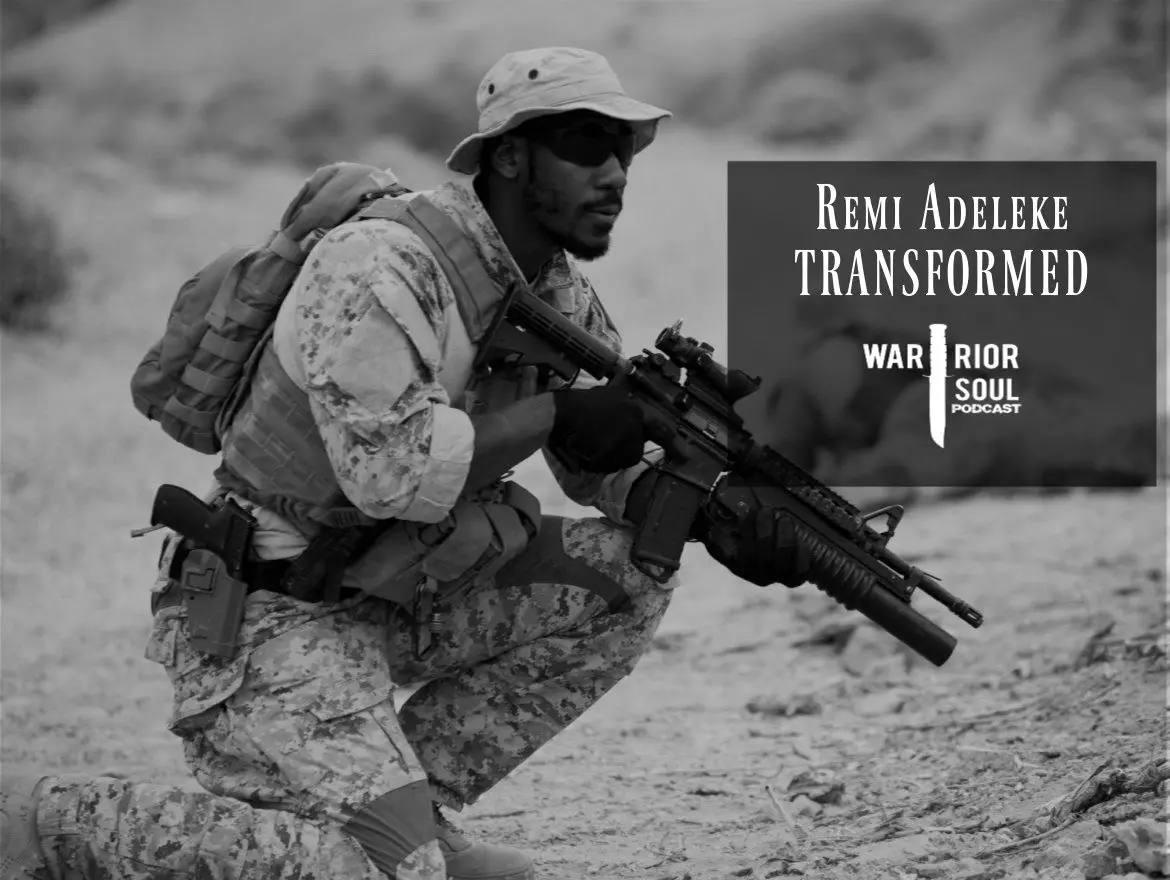
Remi Adeleke is an actor and author who served as a US Navy Seal.
Born in Nigeria to a well to do family, Remi’s father died when he was only 5 years old. Upon his death, the Nigerian government froze his family’s assets, and Remi’s American mother was forced to move him back to the US.
Growing Up in The Bronx
Remi grew up in a rough neighborhood in the Bronx. By his teenage years, he was dealing drugs and running scams. After a drug deal gone bad, he decided that this life wasn’t for him. As a child, he’d seen the movie The Rock, and he told himself that if he were ever to join the military, he’d be a Navy Seal. With a new perspective on his life, he acted on this old ambition.
Becoming a Navy Seal
After going to the Navy Recruiter’s office, he learned that there were two warrants out for his arrest. With the help of his recruiter, Remi was able to get those warrants expunged and was able to join the Navy. After two attempts to get through BUD/s Remi made it through and became a Seal. He went on to serve for 13 years until leaving the Teams in 2016.
Transformers 2
Shortly after leaving, Remi found his next mission. A chance role as an extra on Michael Bay’s Transformers: The Last Knight led him to a full speaking role, and Remi’s acting career was born.
This is a story about transformation, determination, and sheer faith in God. Remi’s upcoming book Transformed chronicles his life and everything that led to his current success.
To pre order Remi’s Book: http://www.transformedstory.com
To subscribe to Remi’s YouTube Channel: https://www.youtube.com/channel/UCd7m4t3XMEfSn2hgLvxKowQ
To follow Remi on Instagram: https://www.instagram.com/remiadeleke/
Transcript
Machine-generated from the episode audio and lightly edited — may contain errors.
Chris Albert (link to this point)
This is Chris Albert, and I'm here to remind you of one thing. Someday, you're going to die. Now that's not some morbid statement or scary idea. It's solid fact. Your time here on this earth is limited.
We need to be reminded of this as much as possible for one simple reason, to live your best life while you can. This is the Warrior Soul Podcast.
What's going on everybody? First off, I wanna say Merry Christmas to all of you. We're publishing this episode on Christmas Eve because it's just a really inspiring story. The guest today is mister Remi Adeleke. And Remi was born in Nigeria to a wealthy family.
And when he was five years old, his father died. And the Nigerian government took his family's money, took everything. And so his mother was forced to take Remi. His mother was American, forced to take Remi and move them to the Bronx, New York City.
And so Remi grew up in a really rough environment. By his teenage years, he was he was dealing drugs. He was running scams, and he was going down a really dark path. And one day, he decided after a a drug deal gone wrong that he wanted to join the military. That not only did he wanna join the military, he wanted to become a Navy SEAL.
And so went down in the recruiter's office. He had some warrants on his record. He had to go through a bunch of things to get those warrants expunged, and that's a twist of fate we'll talk about during the episode. But he got into the Navy. He went through Navy boot camp, went through BUD/S the first time, failed out, and then eventually got back into BUD/S, completed BUD/S, became a Navy SEAL, and went on to serve thirteen years in that organization.
Really inspiring story if we just stop there, but once Remi got out of the Navy, he was in a position where he didn't know what he was gonna do. And so through a few more twists of fate, he found himself trying out for some movies. And he got a role in the latest Transformers movie, Transformers two, and just a really really inspiring story here. He's got a book coming out called Transformed. It's coming out in April, and you're gonna get so much from this conversation as far as how Remi was able to turn his life around several different times.
The the the sheer amount of faith this man has in just believing in himself and and never giving up, never quitting. So really awesome conversation we've got here. Before we get into it, I just wanna say a couple of things. If you haven't been to this podcast before, this is the Warrior Soul podcast. And here we deliver tools, tactics, and strategies to The US military veteran community to help them to live their best lives.
The reason why we do it is because over the past decade and half of war, we've faced a lot of things as a community. High suicide rates, high rates of veteran homelessness, high rates of chronic disease and depression. And there's a lot of people out there trying to raise awareness about these issues, but I don't wanna just raise awareness. I wanna deliver solutions. So every time you listen to one of these episodes, you're gonna find a story, a strategy, a tactic, or something that you can apply to your life right after you listen.
And if you're not a veteran, stick around because everything we're gonna go over here today could benefit you as well. I also want to say this, you know, we don't do a lot of marketing or advertising around this podcast. Everything is surely done through referrals. Right? So that means that all we ask of you is that you share these episodes out, that you let other people know about the show so that it can help them as well.
And if you can, pay us the highest compliment by writing us a written review on iTunes. It really helps us let other people know about the mission and what we're doing here. Beyond that, I just want to say that this podcast would not be possible without the good people at F Bomb Nutrition, really awesome company run by amazing people. They make delicious packets of fats, macadamia nut butters. They mix them up with chocolate, with sea salt, with pecan butter, with coconut butter, really delicious stuff, and they got a new product out, their cheese crisps.
Cheese Crisps, they flavor them up with buffalo. They flavor them up with chili. Really good stuff. If you wanna try out f bombs, can head over to www.dropanfbomb.com, and you can use the code Warrior Soul at checkout to get 20% off your first order. With that, let's get into this inspiring conversation with mister Remi Adeleke.
What's going on, everybody? This is Chris Albert here. And listen, I got a really awesome guest for you guys this week. Super inspiring. Just an absolutely amazing story.
Remi Adeleke is here today. And Remi, first off, I want to welcome you to the show.
Remi Adeleke (link to this point)
Thank you. It's an honor to be on. Thanks for having me, brother.
Chris Albert (link to this point)
Absolutely. And, you know, I was reading a lot about your story. And and first things first, it's, you know, you went from Nigeria, moving to the Bronx, to, you know, getting yourself into a little trouble and then on to the military and eventually on to the Navy SEALs and then on to the movies. And I want to get into each step of that, but I want to take it back to the beginning first. You were born in Nigeria, right?
Remi Adeleke (link to this point)
Yes. Was born in Western Africa. My father, he was a well known Nigerian engineer. He engineered some big projects all around the world. One of his most notable projects is a project by the name of the Lagoon Development Project, and that was one of the first man made islands in the world.
We now know it as Banana Island. So we lived in Nigeria. And because of his success, not just in Nigeria but outside of Nigeria, we were a very wealthy family. So we lived the life of opulence in Nigeria. I mean, Nigeria is very westernized because it was colonized by the Brits that many decades ago.
So they westernized and national language is English. There are tribal languages. But for the most part, we lived really, really good at life. Cars, nannies, drivers, flew all over the world. We had it all.
Chris Albert (link to this point)
Wow. And so your father died at a very young age, right?
Remi Adeleke (link to this point)
Yeah. Yeah. So in 1987, it very mysterious because my father was in an illegal battle with the Nigerian government. So the Nigerian government had literally just stripped our family of everything. So we went from rich to poor.
And then within two days before my mom and I realized everything was gone, my father died in Nigeria. And that was 1987. So I was five at the time.
Chris Albert (link to this point)
Wow. Do you have memories of him?
Remi Adeleke (link to this point)
You know what? It's funny you bring that up because I was just thinking about that the other day looking at my son. My oldest son is five, about to be five and my youngest is going to be four. And I honestly, I was asking myself, I wonder if something happened to me, would they remember me? Because I don't remember much of my dad, to be honest with you.
Chris Albert (link to this point)
Yeah. Yeah. I never I mean, my father left when I was, I think, three or four. And I remember being four, but I don't remember my father at all. I don't remember And him at it's it's funny how the human mind works like that.
If something is not repetitive, it's not it's not gonna sit there with you.
Remi Adeleke (link to this point)
I think this one used to say that word repetitive because that that was something that came to mind. I I said to myself when I was looking at my youngest son today, was up and said, you know, maybe because I'm in his life, if I was to just because he like, tomorrow, he will remember who I was. You know, a week from now, he'll remember who I was. But I think as time passed, we thought being in his life on a repetitive consistent basis, then that's when that those memories kind of dissipate. It's a weird science behind.
Chris Albert (link to this point)
Yeah, yeah, it's so weird. Because I try so hard sometimes and to think back to that time period, because I never even had a picture or anything like that. Know, you left a lot of questions. So, you
Remi Adeleke (link to this point)
know, Did you ever get a chance to meet him? Did you ever see him? Later in life though?
Chris Albert (link to this point)
I have no idea. No pictures, no nothing, like nothing, nothing at all. And, you know, my mom, and you probably can relate to this, you know, with a mom, whenever I ask my mom about something like that, would be like, well, you don't need your dad, know, everything is cool, everything, you know, but did you have a lot of questions growing up? Did it reflect back on you as far as your self confidence and things like that?
Remi Adeleke (link to this point)
No, you know what, it's because of the loss of my father.
Chris Albert (link to this point)
Yeah.
Remi Adeleke (link to this point)
Man, not until I think one time when I was eight, I remember I was eight years old and we were in the bedroom that me and my brother shared a small room and we had the bare minimum in there. And I remember we had this wooden dresser and we had this lamp that didn't have a shade on it. And we had these pullout beds that we would share a sleep on. And I just remember looking around my room and realizing, wow, we don't have much of anything. We're not dirt poor, but we don't have anything.
And I remember staring at the picture of my father, and then I was just starting to ask myself, I if my dad was here, would my life be different? And I broke down crying, and I just remember my mom came in and she was like, What's wrong? And I said, if my father was alive, our life would be different. Like the reason why we live the way we live is because I don't have a father. So I associated a father with financial security.
So yeah, that was when I was eight. I'll never forget that.
Chris Albert (link to this point)
Yeah. It's funny how it works because, know, I I I was horrible at baseball when I was younger and, you know, when it hit me was going to baseball practice and and, you know, not knowing how to throw a baseball, not knowing how to swing a bat, that kind of stuff. You know, I I, you know, I had a similar moment. That that that's that's insane. So you literally went from having a lot of wealth in Nigeria to being forced to move to The United States to the Bronx and then kind of having to start all over again.
Remi Adeleke (link to this point)
Yeah, yeah. So yeah, man. My mom's a trooper, man. I credit a lot of it to my mom. She held it together after my father died, and she shares this story with me right, like, days after my father died.
My mom was American. So my mom met my dad in New York, and then they got married, and then she moved to Nigeria with him. So that's why she, after she died, she was just like, There's no way I'm raising my kids in Nigeria. I'm bringing them to The States. It was hard.
When she got back to The States, she called up a family member and asked his family member who had some money, Hey, my family has my kids have no we have no food, we have no nothing, is there anything that you could do to help us out with his family member said, Hold on, let me call you back in five minutes. Five minutes later, his wife called my mom back and said, don't ever how dare you call my husband asking for money? Don't you ever call my husband asking for money? And they click hung up with my This is like days after my dad died. So I think it was at that point that my mom realized, like, I had nothing, and I'm in The Bronx with these two kids, and it was really, really rough.
There were times when I remember going to the office where she had to pay the rent or whatever, and She would have to ask for extensions. I remember there were times my brother remembers this better than I do, but there were times when my mom wouldn't have enough food to feed herself. She had just enough food to feed my brother and I. So she would put the food on the table, and she would stand in the doorway of the kitchen and watch us to make sure that we ate the food. Wasn't easy.
It wasn't easy that, you know, growing up in The Bronx, especially in the '80s, you know, the crack epidemic. We lived in somewhat of I don't even want to say it was like a middle class neighborhood it was, but it was slapped back. It was in the middle of like one of the most poorest districts in The Bronx. And so, you know, I walk out our, you know, our community and they were crackheads on the street, people getting robbed, jumped, killed. I mean, it was a bustle.
It was rough. It wasn't easy. My mom did a good job of trying to protect us from the elements, I would say. But, you know, there were times when it crept in. I remember when I was a kid, my apartment got robbed, you know, multiple times by a crackhead, you know, and it wasn't easy.
It wasn't easy. But, you know, looking back, that was the best environment for me because it really instilled in me perseverance. It really instilled in me this mindset that you know what, there's nothing I can't do. Can make it in Nebraska, you can make it in New York, you can make it anywhere. So it was a hard environment that proved to prepare me for my future.
Chris Albert (link to this point)
Yeah, I think people forget what New York City was like in general during the nineteen eighties. Oh, yeah. Because you go there now, even the Bronx is very different. I mean, it's it's it's it's still not the the most economic prosperous borough, but it was way different back in the 1980s than it is today. My mom's from North Jersey and we used to go down to that area all the time and it was just, was like a different world.
Remi Adeleke (link to this point)
It was, I remember going into the bodegas because the Dominicans where I grew up, they owned, well they worked at a lot of bodegas, they owned a red bodegas on Fordham Road, which was the street I grew up on. And I remember going into the store one day and seeing mafia guys, straight up mafia guys, Italian mafia guys walk in and shake the guy, shake the owner down, like, Hey, where's your rent? You're supposed to pay us. So I mean, not only did you have the gangs, not only did you have the crack, which is crack epidemic was huge, but you had the mafia, John Gotti, all of those boomers. I mean, that was a big, big deal around that time, you know, so it's a jungle man.
Chris Albert (link to this point)
What do you think because I know you you ended up getting a little bit of trouble yourself, but but what do you think really saved you during that time? Was it was it your mom? Was it was it did you have a natural mindset that said, you know what? This is my line. I'm not gonna cross it.
What was it?
Remi Adeleke (link to this point)
Well, it definitely was my mom's discipline, would say. When I was a kid, she would spank us. You know, she would just she didn't play around. She would give it to me and my brother. She would spankers with belts, extension cords, I mean, I keep her hands on, she was spankers.
And what that did for me was that instilled this mindset that there are consequences for actions. There are always consequences. Like in my mind, I always knew even when I was selling drugs, even when I was, you know, running scams, bringing in thousands of dollars a week, you know, selling illegal forms of drug deals, when I was doing all of this stuff, in my mind, I always knew if and when I get caught, there will be a consequence. So one day I got involved in a deal with a drug dealer really, really bad. I talk about it in my books, won't go into all the details.
But I had to pay him this money, I paid him this money. And after that, I was just like, that was like the consequence for me because my life was threatened, my mom's life was threatened, and that was my, okay, you need to wake up, because this is getting real, real serious. So I credit it to my mom disciplining me the way she did when I was a kid, because that is still, again, this mindset there, consequence of action. I got into what I got into, that's when I really woke up. Was like, I need to change the course.
Chris Albert (link to this point)
When you started when you started dealing drugs, how did that come about? Was it did somebody approach you and say, hey, I've got this opportunity for you? Or did you approach somebody and kind of seek it out? How did that start?
Remi Adeleke (link to this point)
I wanted money. Mean, know what I mean, that's the way it is. And I started about, you know, it started for me before selling it, but I out stealing from my mom, a little money that she had. She used to have money under the mattress. I would take money under the mattress, and I would steal from the local bodega stores, and then that progressed to getting jobs and stealing from jobs.
I had this crazy sneaker scam that I was running out of a sneaker store, I was working at where instead of charging the customers, I would charge them, but I would pocket the money and I would ring it through the register, and then that progressed to selling drugs. I just wanted money. I mean, and I wanted more money. I wanted more money. Nothing ever satisfied me.
And that's when you're in that life, you are never satisfied. It doesn't matter how much money you make, you will always want more. And I just always wanted more. So how I got to it was, my grandmother lived in Washington Heights. A lot of drugs, I moved in and through Washington Heights, that whole area.
And I knew a place where I could go buy what we call weight at the time, which was a lot of drugs, and I went and I bought it, I would buy it, and I would go and I would sell it. New York City at the time was saturated with drug dealers, everybody was trying to get a drug dealer, so. And I wasn't trying to get in a competition when nobody get to a shootout. So I went up to Poughkeepsie, New York, Upstate New York, I would sell drugs up there, sell it, come back down, buy some more, go up and sell it. But I just wanted more.
I wanted more. Even selling drugs wasn't enough for me because it was just like, I was making money, but it was just like, I need to make more. So that's when I got involved in the legal cell phone scam where I was selling illegal phones to drug dealers. And at that point, I was bringing in thousands of dollars on me a week. I mean, I was bringing in like $5,000 $6,000.7000 dollars a week.
And that's when I was like, Okay. But I started and again, another thing was I was big into music. I love hip hop music. I love hip hop culture. I grew up on it all.
And I wanted to be a rapper, and I wanted to be in the music business. So what I did with the money, wasn't just collecting the money just so I could buy a car, which I did do, have nice things with that, which I did have, but I wanted it so that I could invest into a record company. So I had a business mindset even at a young age, and at 19, I started a record company. I had artists assigned to me, we were going down to Virginia, making the music, I have a compilation album, which is still on my desk, I still keep it. That's the compilation That's awesome.
You know? So we had a compilation album. We had it. We had a big a good thing going on. The way I ran that money was I was ran a record company as I was funneling money from my legal activities into the record company.
Chris Albert (link to this point)
And so So it was kinda like you were financing your dream through the drugs. Right?
Remi Adeleke (link to this point)
All illegal activity, yeah.
Chris Albert (link to this point)
Right, right. And so when you were doing this, know, at the time, like you said, the eighties was a crazy, crazy time. This is still the eighties, right? When you're
Remi Adeleke (link to this point)
No, no, I'm doing this. This is the nineties.
Chris Albert (link to this point)
Nineties, nineties.
Remi Adeleke (link to this point)
So Late '90s, early 2000s.
Chris Albert (link to this point)
Yeah.
Remi Adeleke (link to this point)
High school, out of high school. I graduated high school in 2000, so this is between high school and being out of high school.
Chris Albert (link to this point)
Yeah. So so so back then, like, you're looking around and and, you know, you're looking at your community, you're looking at what's going on. Was there ever a point in your in your mind that said, oh my god, what am I doing? Like, what the heck what the heck am I doing right now?
Remi Adeleke (link to this point)
Only when I hit that bottom. When I got involved in that deal, it was bad. That was that was it. That was outside of that. Mean, I was reckless.
I was doing a lot of crazy stuff, but I never questioned it. I was just like, I'm on the rise, I'm gonna make it, I'm gonna be this big CEO of a record company, I'm gonna be like Jay Z and all of these cats. But outside of that, no, it wasn't until I got involved in that deal that really shook me up that I was like, what the hell are you doing?
Chris Albert (link to this point)
And so, you know, at this point, you're making money, all this stuff's coming in, and, you know, that's hard to walk away from, right? So so what was your next thought when you said, all right, this happened, I can't do this anymore. What am I going to do? What was your next thought?
Remi Adeleke (link to this point)
I stayed home for six months and did nothing. Really? Did nothing for six months. Like the only thing that I did do was I tried to shop this album that I just showed you. I tried to shop it to a record company, Def Jam Records.
And I had one of the producers I was working with, he had a connection to Kevin Liles. Kevin Liles, I mean, anybody could look him up, but he was one of the biggest music executives at the time at Def Jam Records and Jay Z, Ja Rule, DMX, all of these people were signed at Def Jam. And so I had a meeting with him to to sell my record company to to shop my my my compilation album too. And that was kind of like the only thing that I did try to do was try to make it because I had burnt all the money illegal. After I had made him back the money, I was putting all the money into the record company and finally anticipated.
So my last ditch effort to sell a record company and get a label deal. But when that didn't happen, I just stayed home for six months and did nothing. Nothing. And then in June 2002, I was laying in my bed and I heard this voice speak to me literally, like it was a boy in that voice that You need to get out of here. You need to join the military.
Man, like looking back, like it was a crazy situation because the military was contrary to everything I was. I hated the police, I hated anybody in the uniform. I remember being in high school and making fun of the ROTC kids because they wouldn't have tight uniforms. I hated authority, I liked my clothes back, gave my hats backwards. So there was no way I was going to join the military.
So I remember having an argument literally with this voice in my room. You would have thought I was crazy. I was having an argument with this voice in my room. And finally, you know, after the argument ended, I looked around in the same room that I broke down crying in like a decade earlier, a decade plus earlier. And I was just like, what else do you have?
You have nothing else. What else do you want to do with your life? So that's when I was like, Okay, Okay. I'll try this military thing.
Chris Albert (link to this point)
Yeah. It's funny because I think in the Northeast in general, and I'm talking across communities, joining the military is almost a it's either an act of desperation or it's an act of rebellion, Yeah. I think because, you know, it's it's just an interesting thing because, you know, when I went into the military, I it was an act of rebellion. My mother I have an Italian mother. She said, I don't ever want you to go in the military.
And when she learned I was joined in the marines, she chased me around my house with a broomstick, like, for for, like, an hour trying to break my leg so I couldn't go. And then you know, but but I also think, you know, there there are so many people who who look at the military as as something a little bit more promising and a little bit more a little bit more, you know, that where they could set their lives up from there. Right? If they they feel like they have nothing else. And and I feel like we're we're we're in those two camps, you know, the two of us, but, you know, if somebody's trying to set their lives up, why do they choose to be a Navy SEAL?
What was going through your head that said, I want to be at the tip of the spear?
Remi Adeleke (link to this point)
Well, I'll back up for a little bit. Back in 2000 or 1995, I saw a movie by the name of Bad Boys, and that kind of inspired me to be a hero in a sense. And then a year later, Girl by the Name of The Rock came out, and that was the first time I ever saw a herd of Navy SEALs. And so when I saw that, I remember, you know, I'm this young ghetto kid from the Bronx, and I saw these dudes coming out the water. I'm like, Yo, that's dope, man.
Those guys are dope, man. Like, I wanna do that. I wanna be a Navy SEAL. But, you know, it wasn't a reality for me. It was just more just like me saying right now, I wanna run for president.
Like, yeah, like So after a few days, that whole idea kind of dissipated, and I went back to doing the things that I was doing. But when I finally made the decision to go and join the military, that's when I was like, Okay, if I'm going do this, I'm going be part of the best. You know I mean? I'm going to be the best of the best. I'm not going to just go in and just be in the Navy.
I'm going to be whoever the best is and the best in my mind at that time, even to this day, you know, is the SEAL teams, you know? And so, but I, you know, I knew a lot of issues with that woman, couldn't swim in. I was skiing. I didn't have the academic scores. And when I went to the recruiter, she ran my back, I had two more sock breasts.
I had a warrant in New Jersey and I had a warrant in New York. So I couldn't even get in the military, you know, so, but that's kind of why I chose it.
Chris Albert (link to this point)
Wow. Yeah. You know, the rock got me too. When he's walking through the cemetery at the beginning and he's wearing those dress blues, I was like, oh, man. I gotta do that.
Remi Adeleke (link to this point)
Yeah. Yeah. Yeah.
Chris Albert (link to this point)
It's it's it was some people will be like, what are these guys talking about? The Rock's the worst movie of all time, but but Oh, classic. Got me. Yeah. It is a classic.
But Nicolas Cage, I don't know. I don't know. Nicolas Cage is a little bit little bit crazy, man. But so you're at this point, you make the decision. Right? You you you say, I'm gonna be part of the best of the best. But you have these warrants out there. What do you do?
Do you go handle the warrants? Do you do you go check check
Remi Adeleke (link to this point)
Yes. So what happened was after she ran my background, and she found out I had the recruiter, I found out I had the warrants, I got up and I walked out the walked out the recruiter's office. I was like, Dang, like, I hear this voice telling me to join the military. I called him join the military, and now I'm about to go to jail, so I'm thinking that she's gonna call the cops on me. So I get up to leave, and right before I got to the door, she said, Well, you go I said, I'm leaving. She said, I got warrants.
I came to the military. She said, Do you have a suit? Do you have a suit? I said, No, I don't have a suit. She said, Do you have a collared shirt or pants?
I was like, Yeah, I can get one. She said, Come back tomorrow. So I came back the next day, and she took me to both judges, the judge in New York and the judge in New Jersey, four of my advocate on my back. She was in her dress uniform. She said, this guy is trying to turn his life around.
Like, what can we do for him? Like, you know, nine eleven had just happened. And so the judges both unanimously said that this guy is serious about turning his life around after that war, we'll clear his record. She cleared my record. The judge is cleared, expunged my record, but I still wasn't allowed to join.
Because as you know, when you go to MEPS, they ask you all these questions. How did your record get expunged? Did your record get sealed? Did you have a record? Did you recruit to tell you to say no by all these things?
So anyway, she got it all cleared at such fast time that when I went to go MEPS, I was able to check note everything. She flushed my paperwork, and that's how I got in. I snuck in.
Chris Albert (link to this point)
Oh, wow. You owe that lady a lot. That's amazing, man.
Remi Adeleke (link to this point)
I had two years later.
Chris Albert (link to this point)
What was that?
Remi Adeleke (link to this point)
She died two years later,
Chris Albert (link to this point)
three years later. Did she
Remi Adeleke (link to this point)
She died, she had this autoimmune disease in her heart. And I just found that out when I was writing the book. When I finished writing the book, you know, my mom read the book and she was like, Man, because she didn't know about the story. Because my mom didn't know everything that was going on when I joined the military, because I straight up left. As a matter of fact, told my mom, Listen, God, I lied to my mom and told her, some guy stopped me on the street and told me he's putting me in the military and I got to go and I had no choice.
And I remember she was crying. She was like, Oh, you're to die. Don't know. She lost it. She didn't know what was going on.
So when she read my book and she read, she finally found out everything that happened, she was just like, you know what's gonna happen, Remi, you're go to a book signing for this book, your recruiter's gonna show up, and she's gonna, you know, she's gonna, she's gonna be able to see how what she did make a difference. I was like, I hope so. And as soon as she said that, I got this thought in my mind, because I had forgotten my recruiter's name. And I said, Oh, I got my military record. And so I ran into my office desk and I pulled out my military record, I found her name, which I haven't gotten for like fifteen years.
And I googled her name. And when I googled her name, that's when I found out she died. And, but I got in contact with her family. And you gotta you gotta interview her brother, when you get the chance, my brother, he was in the military too. I got in contact with her brother and be able to share the whole story of what happened.
He shared with me how she was driving around The Bronx, and sneak drug dealers and to tell drug dealers, listen, I see where your life is going, join the military. So she would do that. I ran, so I was led to the right person at the right time. Here's another crazy part of that story. First, I went to the Marine Corps recruiter's office, because in The Bronx, you know, all offices are like a strip mall, indoor strip malls.
And so I went into the Marine Corps recruiter's office first and I sat down. And when I sat down, there was no one in there. There was coffee on the desk, there was no one in there. And I sat there for like fifteen minutes, and then I got up and left and went to the Navy recruiter's office. And when I go into the Navy recruiter's office, I run into the one recruiter that took a huge risk for me, and I was able to get into the military.
Chris Albert (link to this point)
Wow. Wow. So you're I know this about you just from from hearing you speak before, I could see why, but but you are a man of faith. You're a strong believer in God. And, you know, just hearing about everything that that happened in your life, even up to that point, that's that's just absolutely amazing. I mean, as far as the the the hand in your life and and guiding you toward that position?
Remi Adeleke (link to this point)
Absolutely. Absolutely. I truly believe it was all divine intervention. Fluctuated between atheism and agnosticism until I was 26, and I truly believe that even I didn't believe in God, I made fun of God, I mocked God, all of those things, God was still with me because He knew what I would eventually become. And He knew how I would change, and He knew that I would be who I am today.
So man, it was the grace of God. I mean, when you think about it, just the odds of me hearing a voice telling me to join the military on a specific day, and then that day I go to this one recruiter. Mean, you know, and every other person who's joined the military knows. When you go to those recruiters offices, if you have anything on your record, they kick you out, they tell you go right away. Yeah, it was a hand of God.
Chris Albert (link to this point)
Wow. So you go from there and then, you know, you go you probably head out to Great Lakes Training Area for Navy boot camp. And then from there, is it straight to BUD/S? Or what did you do prior to that?
Remi Adeleke (link to this point)
No, from there was I couldn't swim. Wanted to go to the BUD/S, but I couldn't swim. I didn't have the academic school and I was skinny. Couldn't bend to do a push up. So I got stationed at my, well, I went to A school first, which I was a Corbin someone's school.
But after boot camp, I went to the corpsman A school, which was right across the street from NTC. And then I got stationed at Naval Hospital, Camp Pendleton. So my first duty station was Naval Hospital, Camp Pendleton, and that's where I really buckled down and trained. That's where I I didn't have a car, but I would run three miles from the pool, jump to the pool. I almost drown, but figure it out and learn, try to swim, then I would run three miles back to my barracks.
I would make up workouts, then I got an ASVAB for Dummies book, I would just study the ASVAB book and do that. My life revolved around ASVAB book, working at the hospital, working at the family practice clinic, and swimming and working out. And I checked in January 2003, and I checked out in January 2004, BUD/S. So that was kind of my journey. But, you know, I went to BUD/S twice, actually, the first time I went, I made it through first phase, made it through hell week, got to second phase, which was die phase.
Well, I'll back up for a second. After I had prior to making it through hell week, I had failed every swim, because I had just learned how to swim. And I remember just to get in the BUD/S, we had to do a 500 yard swim, but I never knew in prep later for BUD/S that you had to swim with fins. So when I checked in the BUD/S and I did the first swim with fins, I put those fins on and I think it was like I was drowned. I was like, what am I doing with these?
I've never trained with these things like musical sweatpants, you just have to do a 500 yard swim and then everything else was physical. Didn't know that you had to do up. So the oceans one times, the passing time was eighty five minutes, and I would say one hundred and twenty minutes, I would feel every one of them. So after made it through Hell Week, the instructors, they decided to double roll me two classes to teach me how to swim with the pins. So they double rolled me, I passed my swim in the first phase, but when I got to second phase, the swim times dropped from eighty five minutes to eighty minutes, and I failed all my swims in second phase, and then I failed a test or a pool week.
So the instructors at that point was like, Hey, dude, you're a good dude, you're hard. You do everything else, but you can't swim, so you can't be a SEAL. So I got kicked out of SEAL training. And then I went, that's when I went to First Marine Division Camp Pendleton.
Chris Albert (link to this point)
Wow. So you went through SEAL training once and then went back to First Marine Division?
Remi Adeleke (link to this point)
Yeah. And then at this point, went to First Marine Division. I was in the infantry trials, battalion one four. I was in the scout sniper pursuit for a little bit, but then I kept on getting into arguments of fights with the gunnery sergeant because I didn't like authority. And I didn't want to be there.
I got moved to eighty one's. But yeah, I did a year and a half there. When I got back, it was another whole God thing. My LPO BAS, the battalion station, he ended up becoming getting promoted while we were deployment to first class. So when we got back from deployment, he got sent to the command career counselor's office.
So he went from being in charge of 10 corpsmen to being in charge of like 500, 600 corpsmen at the time for all the first Marine Division. So because he was my LPO, he knew I worked for BUD/S, he was just like, hey, dude, I'm a hook you up. Because at the time, you had to do two deployments and get your FMF in or do three years. So he's like, dude, he pushed my package right through. So when I got back from my first deployment, I went right back to BUD/S.
Chris Albert (link to this point)
Oh, wow. And so during that time period, you know, you're going through deployment and everything like that with with the Marine Corps. Were you were you training while you're on deployment? Were you was it just highly focused there? Where were you deployed to?
Remi Adeleke (link to this point)
Yeah. So so well, few places. One, so I didn't knew, but a lot of it was we spent a lot of time in Kuwait because we were Gotcha. I forgot what the exact term was, but there were there were a lot of casualties taking place in Iraq at the time. We were on Iraq, Kuwaiti border.
So I spent a lot of time, I spent like three months in Kuwait waiting to cross over. So I got a lot of great workout time in there. So I was in the gym. Really get what's in a pool, forgot the name the basswood on, but then it wasn't really a pool, but I I was in the gym just crushing it. And then as soon as I got back from the point that I was in the pool just getting after it then.
Chris Albert (link to this point)
Constantly. Constantly. And then how was BUD/S second time?
Remi Adeleke (link to this point)
It still sucked, but it was easier. It sucked. Mean, it sucked as BUD/S. Mean, and it was, know, funny thing was there was a rumor going around, if you made it through Hell Week before, you don't have to go through Hell Week again, and that was a lie. So I had to go through everything all over again, the beatdowns, the surf tortures, and it was crazy because, you know, on the attrition rate, it was like 80%, 90%.
So, you know, my first class, I saw like hundreds of guys quit. My second class, I saw hundreds of guys quit the first time I was in college, and then I went back and I was at class again, hundreds of guys quit, you know, and then I'm still there. So it sucked. It sucked. But, you know, I made it through.
And I was able to really apply a lot of lessons that I had learned the first time going on the second tower. And I knew when hell was going to end, and I knew when certain evolutions were going to end, because I've been there before. But yeah, the class I ended up graduating with, they started out with two seventy and twenty nine dudes, man.
Chris Albert (link to this point)
Wow. Wow. So that's like, what, like 11%, 12% of everybody? Wow. That's the
Remi Adeleke (link to this point)
military class, man. 20 guys, 30 guys, 25 guys, two seventy two fifty. That's the norm.
Chris Albert (link to this point)
And then what was next for you?
Remi Adeleke (link to this point)
What was next was I went through at the boards, went to SQT, which was SEAL Qualification Training, and then I got my Trident, and then I went to a team on the West Coast, and that's where I had my career in. I was at team, then I jumped to another specialized team for a little bit and I jumped back to the same team I was at, and then I finished out my career with another team. So yeah, I had a great career, did, ended up doing a total of three deployments all to The Middle East, know, I try not to give specifics because the Pentagon still hasn't cleared my book and I'm doing okay. Yeah, man, had a great, great time, man. Going down the ranks, kicking down doors, doing direct action missions, reconnaissance missions.
I was the intel guy, so I was also a guy who would wear civilian clothes and bearded up and go out with an MP5 or, you know, m four and and do all kinds of, like, you know, sneaky peeky stuff. So I had a phenomenal career. I had a great time with SEAL teams, man.
Chris Albert (link to this point)
Awesome. And so, yeah, I I mean, we hear a lot more about this stuff now because the Navy SEALs are are, you know, they're we we hear a lot about Navy SEALs these days ever since the the War on Terror started. And and, you know, life as a life in the SEAL teams, it seems like it's it's constant deployments, constant training, constant trying to sharpen your sword, maintain, you know, maintain that high status. What you know, did did you meet a lot of friends in the SEALs? Did you did you were there were there people who influenced you while you were there as far as, you know, what, you know, what your career should be like? What what was that like?
Remi Adeleke (link to this point)
Oh yeah, I mean, this is the brotherhood, man. Like, the crazy thing is, like, I'm closer to most guys I've been to circle for went through BUD/S with than I am some of my old family members, man. And that's just the way it is, because you know, you're both together. Mean, it's hard to explain unless you're actually in the book. It's literally, it's like a brotherhood, man.
It's like the Spartans. It's like the samurai. It's like you're more than brothers, you know, and so there were so many guys who influenced me, inspired me, you know, I mean, it's like, I mean, SEALs go out and have like people who, you know, like Jocko Willink and all these other SEALs go out and speak and they inspire people, but just imagine being at work every day with the Jocko Willink of the world or
Chris Albert (link to this point)
Right.
Remi Adeleke (link to this point)
Of the world or and Jocko, he pulled my platoon to work up before we deployed, and he kicked us in the nuts, man. Mean, he was, I mean, what workup is, you know, you have to do a training cycle. Your platoon had to train in every realm before you deployed. So you had to do the skydiving as a team. You had to do diving as a team.
You had to do, you know, close quarter combat shooting as a team, had to do urban tactics as a team, land warfare as a team, and Jocko put on continuing through training one time before he retired, he put us through land warfare, and the man, saw our dude, man, kicked us nuts. Yeah, man, you go through all of this stuff and with these guys who are just all top notch men, you know what mean? It's hard to explain. It's almost like living in a dream and everybody's pushing everybody all the time. You're always challenged, you're always wanting to get better, you always want to shoot better, you always want to jump better, always want to do things better because the guys around you always wanted to do things better.
So everybody wants to do things with excellence. So it's a whole another world. It's a whole another level that, man, unless you're in it, you don't really understand it. And I go and speak at Jockey and you have these other guys who go out and speak, and you're just getting a glimpse of what it is to be in that community. It's a fan phenomenal community.
And to this day, I'm super close with a lot of guys I went to training with or deploy with. You know, their their kids hang out with my kids, all my their wives and my wives get together, their wives are best friends and stuff. So it's like, all little community there.
Chris Albert (link to this point)
So so what if there's any one lesson that that you learned from being a Navy SEAL that that that's really served you in, you know, the rest of your life, what do you think that would be?
Remi Adeleke (link to this point)
So many. I mean, I mean, it is like a million. The one that comes to mind is care about your people. Just care about your people. I had a lieutenant, he was a platoon commander, was a phenomenal leader, We called him Mr. T, and that dude, he just cared about us. You have some leaders who look at their support as stepping stones to get to the next rank, or they want their platoon to be stellar so that they look good in front of the higher ups so that they can get a promotion or get a CEO billet or an exo billet or whatever. But this dude, he wasn't about that. He was just all about the people and that personal life. How are things going on at home?
How are things going on with you? What can I do to serve you? And that really stuck with me. It really did. And to this day, that's something that I try to do when I'm on a movie set or whether I'm with my sister here.
I try to show a genuine interest the people that I'm working alongside of, and especially the people who are working for me. So they know that I don't just see them as a tool that I'm using to get what I want, but I see them as a personal soul. And I'm not here to just lead them, but I'm here to serve them. So that's one lesson. Mean, another one is do things right the first time.
I mean, that's something that they teach us in BUD/S, bro, is do things right the first time. And because if you don't, you're gonna have to do it all over again. So you're gonna waste your own time after doing it all over again. So that's something that I try to do every single day in my life. I try to do things with excellence.
You know what I mean? Whether I'm writing a screenplay, whether I'm and that's something that I've been dealing with because I just finished writing this film, And I'm about to send it out to different directors and producers in the industry. And I was just in the car earlier today with major, major film company. And if I said that company name, everybody would know what it is. And they were like, know, send us your stuff, send us your screenplay, we want to read it, we're eager.
And I just said, I said, just give me a few days because even though it's done, because I have this Navy SEAL mindset to do things with excellence, I wanted to be excellent. So I sent it out to some producer friends, writer friends, and I said, Hey, want you to read it, vet it, give me back, give me your feedback, I'll implement it, then I'll send it out. So, you know, here I am, I have one of the biggest film companies in the world wanting to read my film, and I could just hand it to them. But I'm like, no, I'll be patient and wait because I want things to be done right. And that's, again, that goes back to my training.
Communication is something that was a massive lesson. It's not just about what you communicate, it's about how you communicate what you communicate. I learned that because I worked intel. I had to work with locals who didn't speak my language. I had to work through interpreters.
I had to collect information that if I collect a loan, could potentially mean the difference between life and death of me and my teammates, because I was using that information to go on mission. So another big lesson I learned is, again, it's not just about what you communicate, it's about how you communicate what you communicate. And sometimes the way we communicate, it's in a way that we understand because it's the way we live, but it's not always the way the person to our right to our left understands even if they're speaking the same language. And so those are just three that I could spot off the top, yeah, so many lessons, so many lessons.
Chris Albert (link to this point)
No, that's absolutely amazing advice and amazing insight. I gotta ask you this because, you know, you you went through your career and then, you know, you were led out of the out of out of the SEALs into the civilian world. Yeah. What what made you decide to leave and what was it like for you when you stepped out?
Remi Adeleke (link to this point)
I stepped out in 2016 and there were like two things that really was a combination of things. One was my kids. So my first son was born in 2014, my second son was born in 2015, and my dad died when I was five as I've shared, And I just was like, I need to be around you. I need to be home. I don't know why, but I know what it's like to not have a father in the house.
And you know, not that I was fearful of dying, but just being gone as much as you are as a senior, you're just gone a lot. That's just the reality of it. And I had just finished coming off a time where I was kind of on like somewhat of a surety type deal. And I was just like And I was supposed to, you know, get ready to deploy and all that. And I was just like, I've got to be home.
And so that was one of the reasons why I got out, was because I needed to be home with my kids. Secondly, I just felt like, you know, I prayed about it, being my wife prayed about it. I felt like God was telling me, you know, it's time to move on. And it wasn't what I wanted to do. Like, I was living a dream, you know what mean?
From Bronx to the SEAL teams, having a great time, a great career. And so, you know, I didn't want to leave, but, you know, I obeyed that voice and, you know, I got out January 2016. And then three, four months later, got put in the movie. It went down.
Chris Albert (link to this point)
Yeah. That's the thing. Because I'm picturing you get out, you're trying to figure out exactly what you're gonna do. You've got a new family. Right?
Young family. And so that's always something that probably weighs upon any father's mind is if I get out, what am I going to do next? But then there's this huge massive opportunity as far as getting into the movies. How did that all come about?
Remi Adeleke (link to this point)
Yeah, that's a whole crazy story, man. So I got out in January, man, like I was struggling financially. I was trying to figure out my wife, because she's a doctor, but it was just one of those things where you can't I'm a man, I can't just have my wife pay all the bills and my kids. So I struggled and started to apply for the agency, the CIA. And it's a crazy story because I was going through the interview process and going through, you know, fill up the paperwork and everything and then all and everything was going well with the guy with the recruiter and then all of a sudden like he just dropped off the mat and he stopped communicating with me so I figured I didn't qualify for the job And it was a big contradictory because I got out of the military.
This partly didn't spend time while I had the kids. Later, I ended going back into a field that was going to take me away three to four months on and then three to four months off. But anyway, that happened and then a good friend of mine who was a SEAL, whipped the butts together, we deployed together, he got killed in Iraq. And when I went to his memorial service, the SEAL approached me and at the end of the service, respectfully of course, he was just like, Hey man, there's some people throwing your name around up in Hollywood, they're trying to get you on project. I was like, Throwing my name around.
Was in grad school at the time, I was you know, finishing up my master's in strategy. And so I would I had not been in Hollywood. I had not been thinking about being in Hollywood. And so when he said that, was like a bit surprised. Like, he was like, hey, let me get your number.
And I was so standoffish. I was just like, I didn't give you my number to pass on to this whoever. So eventually he ended up getting my number from another SEAL, and he passed it on to this person in the film industry who had been looking for me. This person called me and one day when I was writing papers for grad school and said, Hey, what are you doing tomorrow? I was like, Well, I got school and I was like, you want to be in a movie?
I was like, Sure, what is it? She's like, Transformers. I was like, Okay. And so she said, I was like, I think I can make that happen. So she said, Send me some pictures.
I sent her some pictures, just random pictures, headshots, anything professional, just random pictures. Then she had emailed me back, she said, Michael Bay, whose first two films inspired me to be a SEAL. Right? They're full circle at the moment. He's like, Michael Bay, show me pictures.
We want you on set tomorrow. So I'm like, sure. So the next day, I'm on set with Michael Bay shooting the first scenes of Transformers, and then and then now, which it was just supposed to be one day, and then one day then a few weeks two weeks later, she called me back and said, Michael Bay wants to keep you on. Are you available to fly to Arizona? So I went to Arizona, filmed out there for a week.
And then I went to Michigan, filmed in Michigan for two weeks. And after two weeks, one of the production assistants approached me and said, hey, Bay wants to keep you on until we wrap filming. So I was like stayed on until the back of December of twenty sixteen. Now it's 2016. And then yeah, and that just opened up so many doors.
Wow. So many doors from Transformers opened up, that's how I come. So I signed an endorsement deal with Jockey and then that's the Transformers movies, what led to my book deal with HarperCollins. And then, you know, got other commercials and all this other stuff to where I'm at now. So that's kind of how I got into it.
I was not trying to get hit up on Instagram all the time from people who are trying to be actors. They're like, I want to be an actor. I'm just struggling trying to figure out, like, you know, I'm like, dude, like, don't ask me, dude. Like, I snuck in the back door without even knowing what do I was sneaking into somebody, you know, I was trying to get into this business.
Chris Albert (link to this point)
That's amazing. How did, how did they find your name in the first place? Did they, were there people talking about you or is there, was there just, Were you in a database or something like that?
Remi Adeleke (link to this point)
Well, was through the SEAL network because there's a lot of work in the industry for SEALs, just SEALs, but Delta, especially for some guys to consult on films so the films are more realistic. So Michael Bay was not just looking for people, he was looking for real SEALs to be in the film as roles and consult as well. And so it was through the SEAL network, one of the guys who worked with Bay was a former SEAL, so he heard about me and I guess they were looking for some diversity in the films, were looking for African American SEALs, so that's kind of how they got on me then.
Chris Albert (link to this point)
Awesome. Awesome. Now, with your book Transformed, goes through your story. What what is it you're trying to convey to the reader with this book? What what kind of because I assume whenever you get a book, a book's a fabulous thing because it it can implant an idea, it can it can inspire people. What kind of transformation, so to speak, is are you looking for in the reader?
Remi Adeleke (link to this point)
Man, so much, man. I wrote the book. I wrote every word in the book. I didn't have a ghost writer, and even my editor, when I turned my book into her, she read it, and she was just like, it's not much for me to do. And I just I say that all the way, but I say that because I think it's not every writer writes their book.
But I wrote my book, and I wrote it intentionally, and there were a few messages that I wanted people to get across. One was when you look at my story, you'll see that there were people that came into my life during different parts of my story, from the recruiter, a mom, obviously, the guy who ended up being a career counselor, and there's so many other people, I call them heroes, even Michael Bay, who was like, hey, come be a mom. Are all of these people who came into my life that helped me to get to where I am today. And so one of the messages that I want to share is that, you know, be that extending hand to somebody in need, you know, because people always tell me, hey Remi, you're inspiring me, you do this, do that. I'm just like, yeah, but I wouldn't be here or who I was if it wasn't for these 200 people that you will never ever know.
You know what I'm saying? And so, you know, one of the message I try to get across is go help that kid. You see a kid that you don't know, you see a kid struggling, like you're a judge or you're a police officer, you're a doctor, you're the neighbor of a kid, you're the neighbor of somebody, just go, you never know how, what you can do, or maybe even just what you can say can change the trajectory of that person's life. So that's one big message and another one is, you know, in the book is, you know, we may not be the one that changes the world, but it may be what we say to that person, that one person, who then becomes the one who changes the world. And that's another message, you know, perseverance is obviously when you read the book, when people are reading the book, they're just like, Oh my gosh, like, you went through hell over and over and over and over again, and you're still here.
And when I was writing the book, dude, I was just like, I can't believe I went through all of this stuff I went through and still didn't quit and didn't give up, you know? And I get that's the heart of the book is never quit, dude. Like, never ever give up. Like, you're going to have setbacks in life, you're going to be so close to the finish line and something is going to happen, and you're going to have to start all over again, but do it like it is worth it in the end. Yes, the pain sucks.
Yes, the setbacks, the failure, the having to go back home to your family and friends and say I didn't make it. That sucks. But you know what, there's always tomorrow, and pick your head up and take the day off and then get back into the next phase, but don't quit. I think that's a big part of the message, perseverance. Then also, I can make it with all of the setbacks I've had in my life coming from Africa, single parental, involved in the stuff I was involved in, you can make it.
Like, there's no excuse, you know, I get hit up from people all over the world, you know, especially in Africa where I come from, and they say, oh, I can't, like, are not going well in my life, or my government doesn't help me or this and that, like I can't make it. I'm just like, no, there's always a way. I don't care what, and some people will probably hear this and be like, no, that's not right that you say that part. I'm just of the belief that there is always a way to make it out the situation we're in. You may not like that way, but there is a way.
I have a cousin of mine and I'll say this, know, he's always found himself in bad situations that he has put himself in. And I have given him so much money over the years, I have given him thousands of dollars and it's gotten to a point where I told this kid, said, You are not getting a nickel for me ever again to call me up crying as much as you want. You gotta know what you're gonna get. And one day he called me up crying and he was in masks because he was out of money and he has kids and he has this snack on and he's just like, There's no way I can make it out of this situation. There's no way I pay my bills.
There's no way I could do this. And I said, your legs work? He said, yeah. I said, do you have access to a plastic bag? He said, yeah.
I said, okay, you want to make out the situation you're in? He said, yeah. I said, okay, here's a plan. There's a partner by your house, I'm sure, because I've been in the house before, walk through that park, dig in the garbage can and pull out cans. Go to another garbage can and pull out cans.
You do that all day long. You take those cans from recycling centers, you will get 5¢ per can. Will it suck? Will it be humiliating? Absolutely.
But will you be more positive than you were before you started that? Yes, you will. And even if you make twenty, thirty, 40, that is something that you can use to invest in something else, even if it's investing in gas so that you can drive something in and go get a better job. But you can make, you can get out. You just have to be willing to do the messy, humiliating work.
I'm not talking about something that goes against your convictions like prostitution or, you know, mean, selling drugs or anything ridiculous. Talking about the humiliating, mopping floors, working every day, whatever it is, so that you can make that money to get to that next step. The issue isn't that people can, you know, make it honest just if they don't put in the work, you know, and they're not willing to do the extra hard work. Now granted, there are countries where it's just I've been to third world countries where it just sucks, it's bad. I mean, it's almost impossible to to to get ahead.
But for the most part, I'm just up to believe that there is always a way.
Chris Albert (link to this point)
That's so true, man. I mean, that that is such a good message to have and such a good message to convey to everybody. There is always a way. I mean, I've constantly, I've I've been through situations like that. I was living out of my car at one point.
I was hopeless feeling like, you know, nobody in the world cared about my situation, but it didn't matter. It didn't matter until I started caring about my situation, and I started putting work into myself and doing the things necessary to to move myself forward. And, you know, what I see in you is that, you know, somebody could look at your story in a bunch of different ways. If they look at you when when you were a teenager, they look at you as being a product of your environment.
Remi Adeleke (link to this point)
Yeah.
Chris Albert (link to this point)
But at the same time, if you look at it right now, if you look back as an adult, your environment was training you the whole time. Your environment was was honing this thing inside of you. And now you get a chance to put it out there, and now you get a chance. Because if you came from if you were born with a silver spoon in your mouth, and then you Which I was.
Remi Adeleke (link to this point)
Which I was.
Chris Albert (link to this point)
Well, yeah. Yeah. You were. But it it it it it stayed there. Right?
And then you became a Navy SEAL and and and all this stuff. I mean, sure people care about Navy SEALs and and absolutely, it's it's huge. But the story you have now, that's so such an amazing story to say, I came from The Bronx, I was selling drugs, I was, you know, at the bottom of the barrel, and then I was able to turn my life around and become one of the best of the best. That's amazing, man.
Remi Adeleke (link to this point)
Absolutely. Yep. Thank you, man. God be the glory and hard work,
Chris Albert (link to this point)
You know, and I just want to say this before we jump off. Most of our listeners here are combat veterans, US Marine Corps, US Army, and what do you have to say to them? Because some of these guys, as you know, have been going through some hard times themselves. What's the one piece of advice you could say to those guys who are either on the verge of getting out or who just got out of the military and they're going to start their new lives right now?
Remi Adeleke (link to this point)
Well, I would say a few things, would say if you're just getting out or you're about to get out education, I'm a big believer in education, please, I tell veterans all the time, when you get out, take advantage of 100% TA while you're in. Even if it's just to get your associates or get you know, non important stuff out, just get some education and use your Post-9/11 GI Bill. Like, and the reason why I say that is because we as veterans, especially combat veterans, like we have critical thinking skills, we have team building skills, we have all skills just that we acquired over the years that you cannot acquire anywhere else, but on the battlefield or maybe even if you didn't get a chance to go down range and get shot and do all that kind of stuff. You still have skills that you've acquired over the years by supporting those who've gone down range or from, you know, training. And so, so if you can match those skills with education, you are an asset.
You know, I remember before getting out, I didn't want to go to college because I was just like, Oh my goodness, like I already have it all. Grew up in The Bronx, I got street smarts, I became a SEAL, I know all of this stuff. But when I got my degree and then when I went and got my master's, it just gives you so much more credibility and it just opens up so many doors for me, so many doors for me, because people want to hire veterans, especially a veteran who's educated. So, education is important to me and my family. And so that's one of the big things I would say, your education plan worked out and start taking advantage of that TA so that you can use your Post-9/11 GI Bill for part of your bachelor's, your master's and your PhD.
Second thing I'll say is, know, have a plan, have a plan in place, have an idea of what you want to do. I talked to, you know, some of my buddies, maybe guys who are not, you know, SEALs, but, you know, some guys who, a lot of guys who supported me got out and they're just like, man, you know, I'm jumping from this job, and that job, and this job, and I I don't don't really know what I'm going do and going through problems with my marriage, you know, my life force me to do something, I'm like, man, like, try and before you get out or when you get out, think about, okay, what are my skills? What are the things that I like to do that I will be able to do and not be miserable? That won't be like a job to me. Because for me, when I was in the SEAL teams, I wasn't a job to I mean, that was, I was just living and then getting a paycheck now, like, I don't work for anybody.
I don't, like, I work for myself, you know, I signed a publishing deal with HarperCollins, it pays me money, I speak and I get paid for that. I'm just writing a film that I've been blessed to be able to sit at this very computer and write and not have to worry about how I'm keeping my lights on because of the way I've taken care of my money and also because of how I set myself up from a business perspective. And so, you know, but I say all I have to say is I love I hate the weekends. I do. I hate the weekends.
Just I'm talking to my wife and my kids and having a weekend for my family. But come Sunday, I'm just like, man, I'm ready to get back to Monday. I'm ready to get back to Monday because I love the thrill of doing what I do every day and being able to work for myself and being able to write myself checks. You know, will have an S corporation, so I'll write myself checks. So yeah, man, be smart with your money.
That's another thing I would tell veterans, be smart with your money. I've met so many, I've known veterans in and they get out, roll out their end, they get back in deployment, they buy that freaking Mustang or they buy that whatever, and they burn this money and yeah, that Mustang looks good for two years, but you know what, after two years, new one's going to come out, no one's going to be thinking about that Mustang anymore. Take your money and invest it or save it, so that when you get out, you can afford to have time to figure out what you want to do, if you haven't figured out yet. Or you can take that money and invest in the business, invest in your business. You know, I am of the belief that every single, again, I might take a hit on this, but this is my personal belief, this is not biblical doctrine, this is my personal belief.
I am of the belief that every veteran has the potential to start his or her business when they get out. That's my personal belief. Even if it's even if it's just you starting an s corporation that's in your last name, you know, Adeleke Enterprises, and going out and doing consulting or going out and training people for, you know, running them through workouts or going out and speaking in different conferences or creating something and then taking that money and investing it back in your business so you can write your own checks. It's not that hard to get incorporated and it's not that hard to begin to build a brand even if it is through like what you're doing with your podcast so that you can invest in yourself and create your own wealth instead of go work with somebody and get make $60.70, $80,000 a year, but you're still working with somebody who can't get that far. Another reason why I got out and this was, you know, really a reason that I thought about at the time, but it was something that when looking back, I thought about, there were a lot of people that told me when I got out, like senior chiefs, the chiefs and all that stuff, man, what do you want do when you get out there?
Like, you're so cold. I of 13 got and a half years. And it was like, you're retirement, you pissing away your retirement, this and that. And you know, when I think about it, I'm making more now than in one year than I will probably make in fifteen years or twenty years of retirement. You know what I'm saying?
But if I stayed in and yeah, you know, as a CEO, you make good money. If I stayed in, that amount of money wouldn't equate over time what I can make in one year by investing in myself and investing in my own business. So it's like, you have to make a choice as to whether you want to work for somebody and you're going to have a ceiling amount of money that you can make or whether to get out and invest in your business or invest in something that inspires you or maybe even if it's a nonprofit or stay in and work with somebody. I can't work for anybody. I will never work for anybody over there for the rest of my life.
Chris Albert (link to this point)
I won't either. I I made that. I I learned that right after I got out of the Marine Corps. I could I just can't do it. And that's not I have nothing against anybody who wakes up every day and and earns their money, but but it's just not me.
It's just not me anymore.
Remi Adeleke (link to this point)
It's not me. Much respect. Much respect to those who do it. You know, it takes, you know, special calling. That's not me.
I have no to I mean, no disrespect to anybody that does that because, again, we need those people who are willing, we need the police officers, we need the doc, my wife's a doctor, we the lawyers, we need the garbage man, we need, you know, all of these different people that do what they do in order for society to thrive and exist. So I'm not minimizing that in any way. I'm just saying for myself personally, I just felt like this, that's just me. I'm just saying that.
Chris Albert (link to this point)
Yeah. And I think it's important to realize that, like you said, I think any veteran has the ability to to have their own business. I also think it's important to understand that, you know, you don't have to it it doesn't necessarily have to be entertainment or movies or anything like that. What Remi is telling you right now could be applied to anything. All of you probably got some knowledge in your head that other people could benefit from, whether that's physical fitness, whether that's organizational skills, whether that's leadership skills you learn.
Alright? Absolutely. And one thing I wanna add here, just because I see it in you, and it's implied, but but but you didn't talk about it today, but it is implied. Make sure you marry the right woman and have a good relationship. I think that's important to understand because I could see it in you, could see it in the smile on your face that you have a happy home.
Remi Adeleke (link to this point)
Yeah, no, absolutely, absolutely. You it very, you're be very popular. But yeah, you know, it's good to have a great partner who supports you and who you support. And you know what, I'm gonna be honest, marriage isn't easy. It's not gonna be easy.
Mean, you're first one to admit it. Me and my wife, we've gone through our challenges. You know, she's super, you know, strong willed, super strong willed, and it's a blessing and a curse to have two strong willed people married, yeah, man, I have a great partner, and my wife had been married for seven years, you know, she's a trooper, we have, she's pregnant with our third son, so we have about to have another boy, and you know what, you are absolutely right, man, When you choose that person, be wise and be patient. And don't just get with somebody for the wrong reason because they just had because they have money or they have this or they have that. Get with them for the right reasons so that we could live that long lasting life together and enjoy each other, support, serve each other.
Chris Albert (link to this point)
Outstanding. You know, Remi, Juan, I wanna thank you for coming in today. Your your book Transformed, it is gonna be out April 16. Am I right?
Remi Adeleke (link to this point)
Yeah. April 16. So 04/16/2019. I apologize for all those who already pre ordered and you were expecting a January my book. It was supposed to be done in July, August, and here we are months later, and it's still not review for me to publish, so I can't publish, so we have to book release date to April 16.
However, if you go to transformedstory.com, transformedstory.com, and you pre order the book, I am giving away exclusive content right now in the form of videos that the general public are not receiving. There are other videos, exclusive stories and what I call them, I call them cutting the floor stories, and these are all stories that didn't make it into the book. And they're not told by me, they're told by people who have been a part of my life since the beginning of time. But yeah, if you pre order the book, you'll have access to that later as we get closer release, they will release other exclusive content such as, you know, a chapter we read and other stuff like that. So go ahead and preorder on transformedstory.com.
Chris Albert (link to this point)
Outstanding. Yeah. And we'll get all the links for that up on the show notes. To everybody out there in the audience, thank you for listening today. And and like I said, there's a lot of gems in this conversation, ranging in everything from from the life lessons that Remi's learned, all the way up to to talking about business.
Please get out there, apply these things. You know, don't don't just sit here and listen, apply these things to your own life, and get out there and live your best life while you can. Thanks, and thank you, Remi.
Remi Adeleke (link to this point)
Thank you, my brother. God bless you. Much love. Bye everybody. Thanks for having me.
Hit me up on social media, Remi, L A K, Facebook, Instagram, Twitter, LinkedIn.
Chris Albert (link to this point)
Absolutely. We'll get those up on the show notes as well.
Remi Adeleke (link to this point)
Yes, sir.
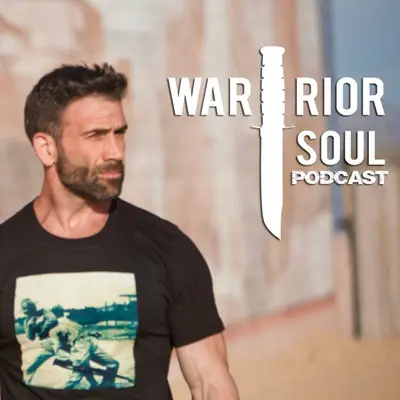
Host of the Warrior Soul Podcast and founder of Warrior Soul. Worldwide trainer and nutrition coach, contributing author at Testosterone Nation and Muscle and Strength.