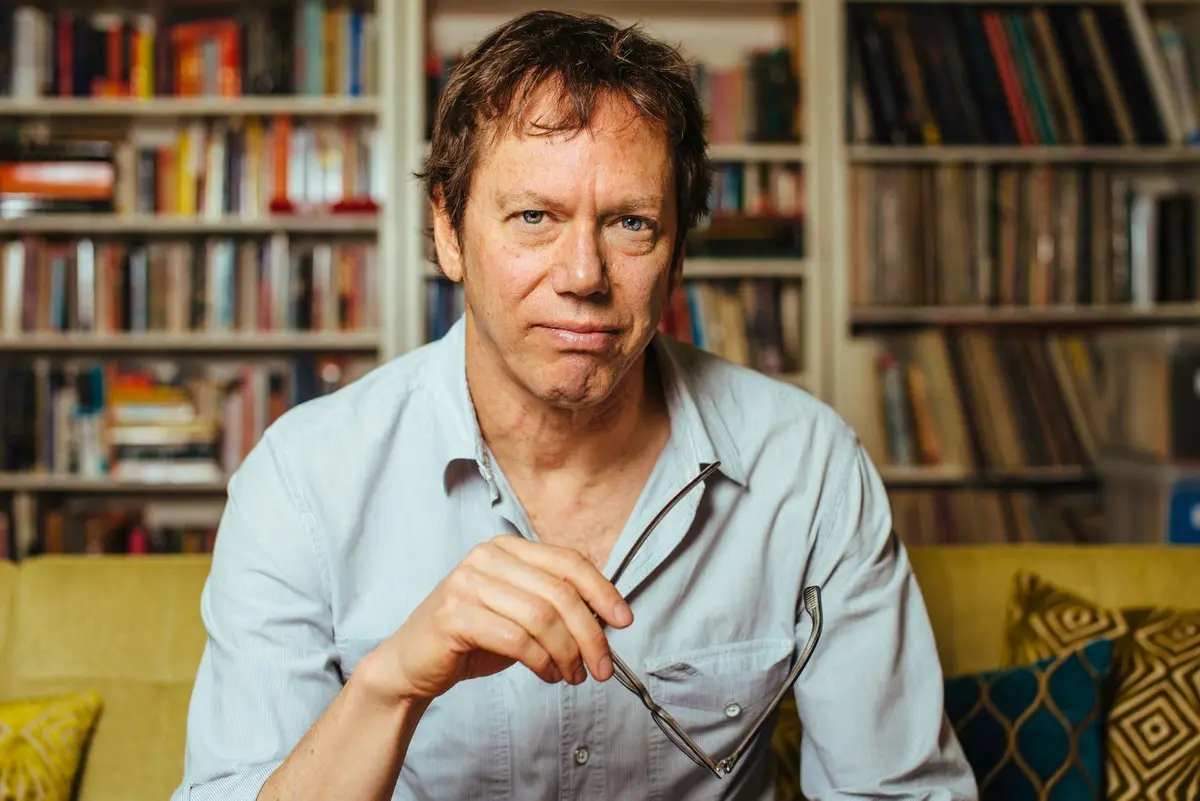
Podcast episode
Robert Greene: Power, War, and Human Nature

Hosted by Chris Albert
The Warrior Soul Podcast
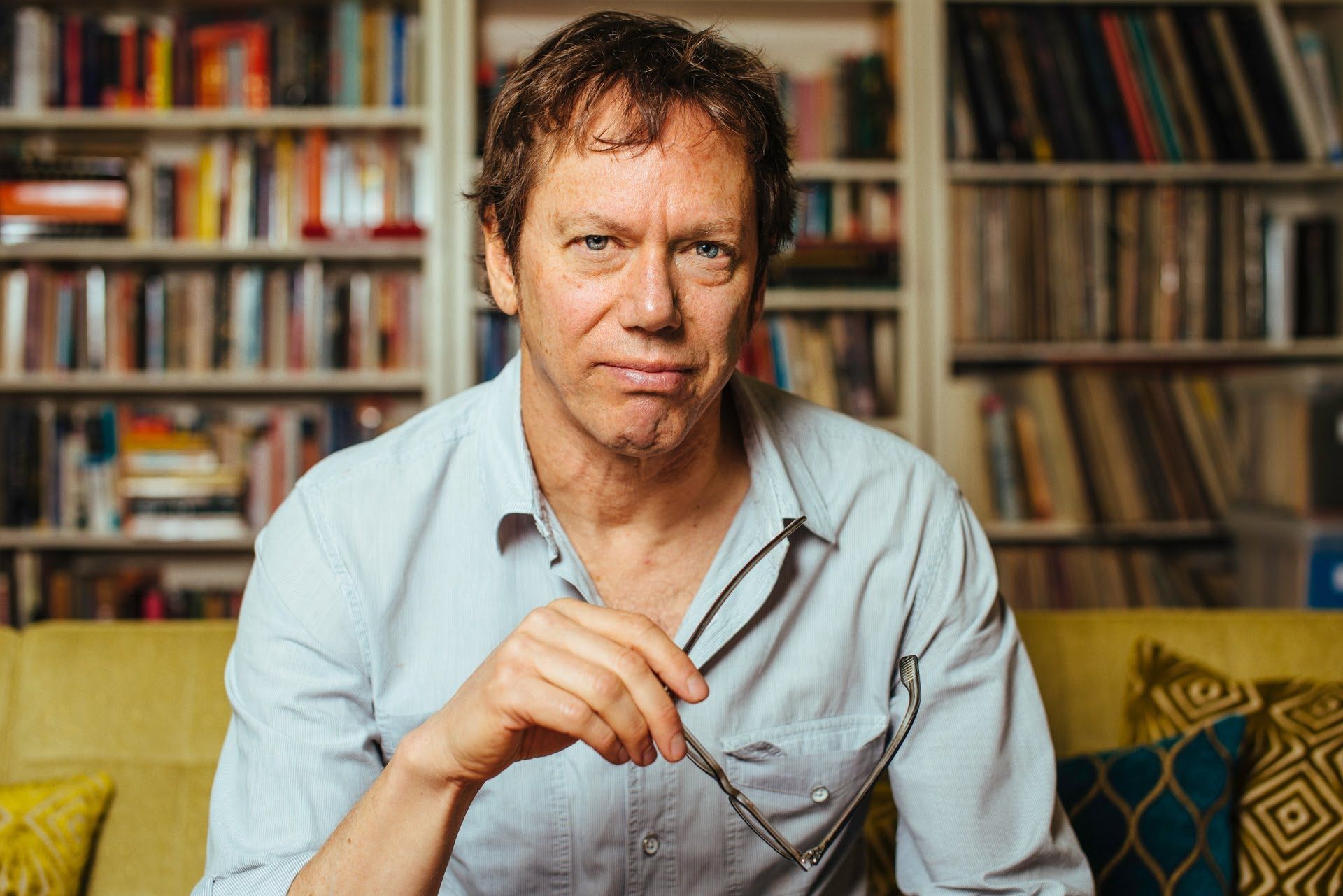
Robert Greene is, in my opinion, the most important author of our time while also being one of the most misunderstood.
He is a five-time New York Times Best-Selling Author and his books are studied by celebrities, corporate leaders, and the highest echelons of the military, but this is not what makes his work so important.
Robert writes about the most important subject of our day: how to navigate the ins and outs of complicated human dynamics. In an increasingly interconnected world where we are practically staring over each others’ shoulders through technology, understanding the concepts that Robert writes about is more important now than it ever was.
That is not to say that anything has truly changed. It’s tempting to believe that we, as human beings, can evolve past our primal drive to tear each other down. Using examples throughout history in each of his works, Robert demonstrates that these tendencies have always been a constant and he shows that our modern times, if anything, have exacerbated the effects of these tendencies.
As I mentioned in the introductory paragraph, Robert is also highly misunderstood as an author. His first book, The 48 Laws of Power, was highly praised, but also highly criticized by some because they believed that he was reinforcing our most destructive and dark tendencies. But, as you will discover in this interview, Robert is highly driven to help people to live better lives by understanding the people around them, but more importantly, by understanding themselves.
The discussion in this interview is centered on Robert’s latest book, The Laws of Human Nature, which is one of the most valuable books I have read in my life. Robert wants us to understand that we are not “angel-like” creatures descended from Heaven. We are highly capable of treachery, intrigue, and mayhem, and the more we understand this, the better off we’ll be.
I also have to say this: I have had many New York Times Best-Selling Authors on this program. Few have brought the sheer passion and desire to help our audience that Robert brought to this interview. You will learn:
- how Robert found his way to becoming a book writer in his late 30s after holding nearly 80 jobs ranging from construction to private detective work
- why it’s so important that we all become students of human nature
- how Robert organizes himself to undertake such massive writing projects
- why studying history is important for success in today’s world
- why understanding your own human nature is so important to becoming successful
- why having your back against the wall with no other options is such a powerful situation to be in
- how admitting to your own mortality and the shortness of life can help you to live a better life
- how to approach Roberts books to get the most out of them
- why owning a cat can help you to better understand the world
Transcript
Machine-generated from the episode audio and lightly edited — may contain errors.
Chris Albert (link to this point)
The Warrior Soul podcast is written, produced, and edited by me, Albert. Our mission is to provide tools, tactics, strategies, and ideas to US military veterans and anybody else willing to listen to help them to navigate toward living their absolute best lives. If you find these episodes helpful, please share them out with somebody that you know of that can use them. And if you really like the podcast, please also head over to iTunes and write us a written rating and review. It really helps us to spread word about the show, and it really helps to get these tools in the hands of others who really need them.
This podcast is sponsored by f bomb nutrition. They make awesome delicious packets of macadamia nut butters. They mix them up with chocolate, with sea salt, with pecan butter. They're absolutely delicious, and they also have a number of other fat fueled snacks, like their meat sticks and their cheese crisps. They're amazing people who are sending boxes of this stuff out to the troops on the front lines, and they're offering 20% off to our listeners on their first orders.
If you head over to www.dropanfbomb.com and use the code Warrior Soul at checkout, you'll get 20% off of that first order. And I'm gonna keep the announcements short and sweet today. If you can, stick around to the end. I got a really special announcement about a brotherhood that we're creating here at Warrior Soul. So hope you enjoy this episode.
I hope you get a lot out of it. And without delay, let's get into it.
This is Chris Albert, and I'm here to remind you of one thing. Someday, you're going to die. That's not some morbid statement or scary idea. It's solid fact. Your time here on this earth is limited.
We need to be reminded of this as much as possible for one simple reason, to live your best life while you can. This is the Warrior Soul Podcast.
Throughout the course of our lives, we inevitably have to deal with a variety of individuals who stir up trouble and make our lives difficult and unpleasant. Some of these individuals are leaders or bosses, some are colleagues, and some are friends. They can be aggressive or passive aggressive, but they are generally masters at playing on our emotions. They often appear charming and refreshingly confident, brimming with ideas and enthusiasm, and we fall under their spell. Only when it is too late do we discover that their confidence is irrational and their ideas ill conceived.
Among colleagues, they can be those who sabotage our work or careers out of secret envy, excited to bring us down. Or they could be colleagues or hires who reveal to our dismay that they are completely out for themselves, using us as stepping stones. And that is a passage from the book The Laws of Human Nature, the very first paragraph, in fact, from that book. And today, we have the author of that book with us, mister Robert Greene. Robert is a New York Times bestselling author.
His other noted works include The 48 Laws of Power, 33 Strategies of War, Mastery, and The 50th Law, which he wrote with rapper 50 Cent. I have to say that this interview was one of my favorites. And that's because whenever I read, it's very much like a conversation with the author, which I think reading should be. I'm a big advocate of active reading, asking questions, putting notes in the margin whenever something rings true for you. And when you read a Robert Greene book, it's literally, particularly in the first chapter, it's literally like he's peering into your soul, describing you, describing your thoughts, describing your insecurities.
And he's coming to you as a friend, someone who is trying to prepare you for the very difficult world out there. And this is particularly true of his book, The Laws of Human Nature. And the reason why I think this is my favorite interview is because there was this very surreal moment where Robert was speaking to me. And I remembered going through each of his books and the notes I'd put into the margins. And it was very much like one of the most active reading sessions I'd ever had.
Having him on the show was very much like that. And what I have to say is this, I've had on a lot of New York Times bestselling authors. I've had on many people who many very important people who've come on to the show. Robert brought such passion to this conversation, such a desire to help our audience that I was absolutely astounded by the end of the show with the amount of value that is contained in this next hour of material or so. This is an absolutely epic interview and one that I believe is evergreen.
If you're listening to it twenty years from now, from the time I'm recording this, it will still be relevant. If you're listening to this a century from now, it will still be relevant. So what I wanna say to you, regardless of what time or place you're in right now, is that in addition to reading or to listening to this interview, you need to go out and you need to get these books. And don't do what most people do, skimming through the books and and, you know, just kind of trying to easily get information, I think you need to spend some time with these works. I think you you really need to see what Robert is saying.
And that's particularly true of the book we speak the most about in this interview, the laws of human nature. That's his latest book. I have to say that I read this thing cover to cover, and there wasn't a chapter in here that was superfluous. There wasn't a word that was superfluous. Every single bit of it was relevant and important.
And I'm emphasizing that for you because as you go into this interview, I want you to be primed because Robert is somebody who's brought a lot of value to this world. And it was an absolute pleasure to have him on this show and an absolute honor to be able to interview him. So I hope you get a lot out of this. And, with that, let's get into the show.
Robert, welcome to the show.
Robert Greene (link to this point)
Thanks for having me, Chris. My pleasure.
Chris Albert (link to this point)
Absolutely. You know, I'm a huge fan of your work. I just got through the laws of human nature, and I was reading a bit about your background. And it brought to mind I know a lot of people call you the modern Machiavelli. And I know there's a lot of preconceptions about who Machiavelli was, but I I I was reading over Machiavelli's letter to Vettori, and he talks about himself.
A lot of people don't know it, but he was persona non grata in Florence for a while, he was kinda expelled out to his land. And in that letter, he talks about the fact that he's working all day long. He's he's in the mud. And then he comes back, and he puts on the robes of a statesman, and he talks with dead rulers and and has cases with them. And I was reading about your story, being a classic student.
And then I know you you had over 80 jobs over your lifetime before before you wrote these books.
Yeah. Do you think that that level of kind of detachment that Machiavelli had in his life from being away from court and your own life of of kind of drifting along. Do you see any parallels there?
Robert Greene (link to this point)
Well, I hate to put myself in, you know, comparing him me to him because he's he's on a higher level. I mean, he is Machiavelli after all, one of the most famous or infamous people in all of history. But basically, what happened to him was he was a mid level diplomat for the city Republic Of Florence, and, the Medicis, who used to rule rule Florence, and had rid of the republic, returned to power around 1510. And because Machiavelli had supported the republic and not the Medicis, he was sort of thrown into exile. And in that time, he he lived on a farm outside of Florence and kind of collected himself and thought about his situation.
And he wrote The Prince's most famous book to get back into the good graces of the Medicis and perhaps get a post with them. And the thing is, had been around a lot of powerful people in Florence in his work as a diplomat. In the laws of human nature, I have the story of Caterina Sforza, and he was one of the main diplomats who dealt with her in that story. So he had been around, he knew the Borgia, etcetera. So, you know, he was a very astute observer, and after he was in disgrace, that's when he like put all his thoughts together.
I never had myself personally the kind of high power positions that Machiavelli had. I worked in Hollywood and in journalism. I mean, I've been around some some big name directors, if you will, and I observe them very closely. But so I don't know if if I'm quite comparable in that sense. But the one thing I would say is because I had so many different jobs in so many different fields, so I worked in a detective agency, I worked for magazines, I worked in Hollywood, I worked for an online encyclopedia company, I worked as a tour guide.
I taught English in Spain. I worked in a hotel in Paris. Because of the very different experiences, I saw people in power in all different guises, in all different arenas of life. And the only thing I share with Machiavelli is I do have that sort of detached perspective, where I'm looking at not what people say about themselves and not their excuses and not all the moralizing and verbalizing. I look at their actions and I analyze them, so I had been around a lot of different kind of bosses and saw all sorts of manipulative games.
Nothing quite on the grandiose level of the Borgias like Machiavelli had, or in a kind of a banal Hollywood California scale, but they kind of informed a lot of my thinking, which is that the game of power that Machiavelli was observing in the early sixteenth century has not really essentially changed, because human nature hasn't changed. And he's quoted as saying that, you you think humans have changed, you know, as if like the sun would stop, would stop revolving around the sun. So I believe that the same thing that he observed with the Borgias, the Medici, etcetera, I saw on a less bloodier level in my work in all these different areas, particularly in Hollywood.
Chris Albert (link to this point)
You know, in talking a little bit more about your story, and I want to talk a little bit more about that concept of change in a second, but our audience out here is contains a lot of people who are going through transitions themselves. We had a lot of we have a lot of combat veterans from the US army and US marine corps who are are ending their careers right now and kind of trying to figure out what they're gonna do with life. In your story, your book, the 48 laws of power kind of didn't take off or didn't even take shape until you were in your late thirties. And prior to that That's right. To my understanding, you were kind of drifting around.
You you wanted to be a journalist and somebody had told you that you weren't a good writer. And my That's right. Question is, you know, how did you get through that rough time in your life to to get to the point to where you were able to gain the opportunity to write that first book?
Robert Greene (link to this point)
Well, you know, everybody is different, but I'd say the one thing that was about me, was I had a lot of setbacks. I wasn't very successful. And I've always been quite ambitious, but I never lost faith in myself. I mean, had moments of depression where I thought, where am I going in life? But deep down inside, I always felt somehow things would click together.
I was meant to be a writer. I felt that I was good, that I had something important to say. I just couldn't figure out what it was that I wanted to say. So, you know, if I had not wanted it so much, and I'm talking about since I was like eight years old, if I thought of myself as, ah, I could write, but I could also become a lawyer. You know, if I said, oh, I could be a lawyer or code something else, then I would have never made it as a writer.
I'd probably be a total failure today. But I always I kept saying to myself, I gotta keep trying. I gotta keep trying. And I tried all sorts of different kinds of writing. As you mentioned, journalism, I tried to write novels, and then I got into Hollywood screenplays, and I hadn't found what it was that really clicked with me until I was offered the opportunity to write a book. But the main thing is, the main lesson that I would give is having a sense, a deep sense from within of your destiny, of what your calling in life is, of what you were meant to do, what really excites you in life, and then trying different things, like I tried different things, and never giving up, and accumulating skills. Because in that time period that we're talking about, from my 20s to maybe when I was 38 and wrote the 48 Laws of Power, I worked in journalism, which taught me how to write under a tight deadline, taught me how to create a good lead, how to write a story quickly and succinctly. Working in Hollywood taught me how to dramatize the story and make things because I'm always telling stories in my books. And then I have learned real research skills in both those areas.
So all of those skills came into definite play when I wrote the 48 laws of power. So if you know what you want, and you don't give up on yourself, and you keep trying, and you accumulate skills that are related to what you want, I believe that sooner or later something will happen, an opportunity will come your way and you'll be prepared for it. That's sort of what happened to me.
Chris Albert (link to this point)
And that idea of of if you had a fallback, maybe you went to become a lawyer or maybe went into the corporate world and got a got an amazingly high paying salary or something like that. That calls to mind a lesson from the 33 strategies of war.
Robert Greene (link to this point)
Oh, I know.
Chris Albert (link to this point)
Burning the ships.
Robert Greene (link to this point)
Right? I know. Was just about to say that it's it's called death ground, baby. You're on death ground. If you feel like you've got if you feel like you can go back to those ships and sail back to Cuba, then you're never gonna conquer Mexico, and there's and no more glory. If you feel like the ships are burned, Cortez has burned the ships, we have no choice. It's either advance under the capital and defeat the Aztecs or die here, then you're gonna fight like hell.
So I didn't really have any other I mean, I could have taken money from my parents, gone to school and done these other things, but I didn't want to. And I felt this is the only thing I was meant to do. So you're right. I had a sense of urgency and desperation, and I didn't have that feeling, oh, I can always go back to school or do something else. To me, was either make this book success or that's it, Robert.
You're you're finished. You're through.
Chris Albert (link to this point)
Yeah. There's huge power in that, and and it brings to mind another question here. Once the 48 laws of power took off, I mean, becoming a New York Times bestseller, was that how did you keep that drive alive to say, okay. Now I'm gonna go and I am going to create some some more equally awesome and wonderful books. How how did you keep that drive and that desire to keep working alive there?
Robert Greene (link to this point)
Well, it's part of it kind of almost shades into neurosis that I'm deathly afraid of failing, that as I said before, I'm ambitious, and I've always felt like, you know, the next venture that I do is going to fail miserably and people are going to hate me and my books aren't going to sell and I'm going to be homeless. I'm going to be back to having those crap jobs that I have. Part of the death ground thing. Just never feel quite secure. And so when I approach a book, it's with the idea you're starting all over, Robert.
You have no fans. You have had no success. This book can easily be the last one that you write. It's not good. Have a tremendous desire to reach an audience and to help them with their lives and to actually change them.
And so I focus very deeply. I don't sit there and go, oh, well, I can just live off the royalties for the 48 Laws of Power. I can just spin that out into some lectures. A lot of writers do that. They just have one book and they just keep taking that same idea and rehashing it over and over.
But I didn't I'm not built like that. I just really, really, really want to keep reaching new challenges and get the reason is, Chris, to be honest with you, is I don't feel happy or comfortable when I'm writing a book just for money. I want to write something that's going to be really changed people. It's really going to reach the truth of what I'm trying to write. And so I'm motivated, I'm deeply motivated to get at the core of what I'm trying to communicate, and I'm thinking very deeply about my audience and what their needs are and how I can help them.
So it's just a matter of what your focus is, you know, where your attention goes. If your attention and your emotions go towards making money, or having a lot of fans, or getting a lot of attention, then it's going to kind of warp the creative process, and you're probably going to make some very terrible mistakes. But if your desire is elsewhere, if your desire is the work itself, if the pleasure you get in it is actually creating something good and lasting, then the money will come, the attention will come. But what are you emphasizing? And I've always emphasized the work itself because that's what gives me the most pleasure.
Chris Albert (link to this point)
Yeah. And, you know, there's also this concept, and you bring that up in in the laws of of human nature as far as mortality goes. And Yeah. You know, what what was interesting was that I was reading the laws of human nature coinciding with the brothers Karamazov by Dostoevsky. Book.
Absolutely Yeah. Book. And you had this story in there about Dostoevsky and and how he he was about to face a firing squad. And at the last minute
Robert Greene (link to this point)
Right.
Chris Albert (link to this point)
He was he he he was commuted. Can you talk a little bit about that? And and as, you know, it's been since 1998 since you you published that first book, as you're getting older, are you feeling that a little bit more?
Robert Greene (link to this point)
Well, the Dostoevsky story is is always intrigued me. He's one of my favorite writers, perhaps my favorite writer of all. And what happened was he kind of a he drifted into left wing politics, radical politics when he was a young man, and he was arrested by the czar and his spies with a group of other people who and they were accused of conspiring against the Russian government, and they were awaiting trial, they thought, we're gonna get maybe a couple years in Siberia, that's it, because we really didn't do anything. And instead, the tsar decided to play this really nasty trick on them. He decided to make it look like he was going to execute them and then bring them up to the action to the firing squad up to that last moment, and then have a guy come in on a horseback and say, the tsar forgave and commuted their sentences and sent them off to Siberia.
He just wanted to shake them up and scare them. But for Dostoevsky, he really, really thought as he was getting to the head of the line that these were his last moments on life. And it completely altered him. It altered him chemically. It altered his whole physiology.
He never got over that moment. He felt like, from then on, I'm not going waste one moment of my life. I'm going have this tremendous sense of urgency. I'm going realize that I could die at any moment now. And I always thought that was sort of a beautiful, beautiful story, and there's obviously more to it than that.
But for me, yeah, I I mean to tell the story over and over again, but last year, after the book after I finished The Laws of Human Nature, I suffered a stroke. And, if my girlfriend hadn't been in the car at the time, I I would be either dead or have severe brain damage, because she called 911 right away and basically saved me. So I was very, very close to dying, ironically enough, just two months after I finished the chapter that you mentioned. But what I wanna hit people over the head in that book, in that chapter, and in all of my books, wrote about it in the book I did with 50 Cent, is that it doesn't matter if you're 60 like I am or if you're 28, you could die tomorrow. You are a mortal creature.
You carry your death within you as much as you feel your fingers and your organs and your blood flowing through that signal you're alive. Just as much as you feel that life within you, you also carry your mortality with you. All of those bodily functions are going to shut down at some point, and you're going to enter this zone that nobody none of us can claim we know what it is. It's impossible. It's on the other side.
But I want to give you a sense that you don't have all of this time. You think you're young. You think you have all this future ahead of you. You don't want to think about your mortality. And I'm trying to tell you in this chapter that you're creating problems for yourself that you're not even aware of.
You have anxieties, the denial of death creates this kind of latent anxiety in people where you're never quite comfortable. You're always sort of haunted by fears and dread and anxiety. Damn it. Sorry.
Chris Albert (link to this point)
It's okay.
Robert Greene (link to this point)
You're always kind of haunted by this sort of gnawing sense of something. You've not come to terms with your own mortality. And I'm trying to tell you at any age, it's actually something a superior stage to reach, to come to terms, to confront your mortality, instead of turning your back on it and running away, turning around and looking at it square in the eye, and something like a soldier can definitely relate to, and it's something that's very powerful in the Zen Samurai tradition, sort of getting in touch with that visceral sense of death that comes from the belly that could happen at any moment, and overcoming that, and making peace with it, and understanding that your life is short and you have to make the most of it, and that this thing that you fear the most is actually the source of something great. It connects you to all other living things, connects you to all other people, and there's nothing to run away from. It's actually something you need to embrace, And so it was kind of ironic for me that I wrote all of that kind of as an abstract sort of intellectual thing, and then two months later, I was facing it in a very real kind of existential way.
Chris Albert (link to this point)
Well, that's so true. And I read that chapter in your book just after a good friend of mine died from a brain aneurysm at the age of 39. And
Robert Greene (link to this point)
Oh, wow. That's Sorry to hear that.
Chris Albert (link to this point)
Well, it was a really rough, rough time. And I have to say that that reading that chapter definitely brought some solace to me, but it also brought a sense of I have to get to work. I have to I have to make something of this life in honor of him and and in honor of all the people that I've lost and and all the brothers and sisters that we've lost here in the military because I think a lot of guys go around with the fact that, you know, we're stuck here. They're in another place right now, but the the fact is we're all going to that place. It's gonna end.
It's a fact.
Robert Greene (link to this point)
Yeah. I think that's a very beautiful way of putting it. Like, you owe it to the other people who died either in combat or not in combat. You owe it to them to make something of your life, to give back to what the military gave you, to give back to community, to give back to the human race. I like to think that you were born to contribute something to this world.
It doesn't have to be something grand, it doesn't have to be you have to be a political leader or a CEO. It can mean that you actually just build something really great with your hands, or you're a really good parent, or you know, just whatever it is, you feel like you destined to do something with the way your brain is wired, with the way your experience, and that you're giving back, you're contributing to the world of whatever it is that you create. I think that's a very powerful motivating force. But also I think your idea of all the people who died early, who you watched die, I watched people in my life like my father, the sense of the way to sort of honor them is to create something beautiful in this world to help other people. So I I I, you know, I I very much agree with your the way you put it.
Chris Albert (link to this point)
Absolutely.
I appreciate that. And one of the things I wanna I wanna talk about a a little bit is your process here because any book that you've written, you go through, and and the material is just so rich with amazing stories of amazing people. I mean, in in in laws of human nature, have Coco Chanel. We have Queen Elizabeth the first, Stalin, Caterina Sforza. And I know that you've read a lot of history, but in my mind, the organizational process in putting this stuff together, do you do you have a process there as far as, like, timeline?
Or do you do you do you how long does it take you to kind of put this stuff together? How do you collate it in your mind?
Robert Greene (link to this point)
Well, recalls to me the saying that, Otto von Bismarck once said, which is you don't really wanna see how a sausage is made, because if you saw how a sausage is made, you would never eat it. Well, my books, you know, it's kind of a boring, laborious sausage like factory that I put it through. I start off reading dozens of books. I don't really give myself any kind of I try to make it as wide a search as possible in human nature that covers neuroscience, anthropology, psychology, you name it. And as I'm reading the books, I start to get excited by certain ideas.
This is a book about human nature, so what are these timeless elements in human nature? And as I'm reading a book, I start underlining it, putting little notes in it. So by the end, I've completely covered the book with my own little scribbles, and several weeks later I go back and I put put them on note cards and I organize. I put a little title at the top of each note card. So one book might have four different themes in it, and I kind of cover those themes on different cards.
And then months later I've got accumulated several 100 cards. I start taking those cards and seeing what the themes are of them, and those themes I now start to separate into chapters. So for instance, I have I keep seeing in the neuroscience how the human brain, how we're so much governed by emotion, that emotions are so much stronger than our ability to rationally think through anything. And I see this over and over and over again in different forms and different stories. Okay, there's a chapter there on human irrationality.
And the same thing goes on for envy. The same thing goes on for grandiosity, the idea that we humans, if we have success, we tend to believe we have godlike powers and we become grandiose. So I'm looking for these larger than life themes that transcend, you know, the twenty first century that goes thousands of years, even more than that, and once I have all of my cards and my chapters, then I start writing, and I have to take all of that material and kind of weave it into a story. I don't want the reader to think, to be aware of all the work that I've put into it. I don't want them to be aware of all the different little books that I've read and all the different little note cards I've taken.
I want them to read a seamless narrative and to enjoy and to learn, and that takes a lot of work and a lot of effort. 48 Laws of Power I did in two years, which I really cannot believe that I did. I must have been dreaming. I was also very young. Ever since then, each book has taken a bit longer until I'm afraid the last book took five years to create.
So it's sort of a long slog and you have to be patient, and you have to know, you have to trust this process that I go through, that eventually the book will take shape. That's sort of how I do it.
Chris Albert (link to this point)
And I know you practice Zen Buddhism, and a lot of times, I've written quite a bit. I was a PhD candidate for a while. I remember one of the things about writing when I was working on my dissertation prospectus is that there's always this kind of lonely thing you kind of go through when you're left with your own thoughts. Is there a a meditation ritual that you have each day? Are are there things you do to allow yourself to cope with that over something like when you're working on a book for, you know, two to five years?
Robert Greene (link to this point)
Well, Zen meditation, it's called Zazen, the meditation part, which is the main part of Zen, is sitting meditation. And the whole point of it is to empty your mind, to not have any thoughts. And if you can reach that point of emptiness, which I'm afraid I haven't reached yet, then you reach a state of enlightenment. And for someone who spends so much time obsessing over stories and research material, the ability to completely empty my mind to drop things, not have anything in, to have no thoughts pop up is a real challenge, can tell you. But it's also extremely therapeutic and extremely helpful because sometimes I'm working so hard that I go to bed.
Before I meditated, I've only been doing this for about nine years now. My head, my head, my brain was racing with all these thoughts. I couldn't go to sleep. I mean, there's a good a good part of that, which means, you know, ideas are constantly coming to you, but you need the ability to turn things off. And I find exercise, which I do every day, is a great way to do that.
The meditation is like that, but also the meditation is a good way to deal with certain issues and problems in your life. So the whole point of Zen meditation is to connect you to reality, and reality is nobody cares about your emotions, your thoughts, your worries, your anxieties. A thousand years from now, you'll be dead and buried. The birds will still be singing. People will still be falling in love.
You'll be completely forgotten. All of the things that you worried and stressed about, nobody will care or even know, and that is the reality of it. And so you want to let go of all of the emotional baggage that you carry with you, because they have no connection to reality. Know, world isn't changed because you're worried about something, the world just goes on. And so you want to deal with facts and the realities of life, and not with all of these fears.
In Zen, they call it putting a head on top of a head. You're walking around with two heads, maybe even three. You're thinking too much about things. You're creating your own problems, your own anxieties. Zen is a lot about letting go of all these things, which for someone who's spending so much time writing it alone, it's a very healthy process.
I mean, could go on for several hours about all the beauties and the benefits of it, but those are sort of the main things that I confront when I'm meditating.
Chris Albert (link to this point)
Absolutely. And Talking about the laws of human nature versus your first book, 48 Laws of Power, we mentioned before the idea of change and how when we're talking about something like human nature, that doesn't change. Human dynamics, those don't change. The ideas behind power. But at the same time, a lot's also changed, right, with with the onset of social media, with with our increased activity with each other.
And it seemed like a lot of these things out there that are out to get us, well, they they've kind of been exacerbated by technology and by this increased increased level of communication that we have with each other. Were you considering that when when you got into the laws of and I know you were because you mentioned it a bit in the book, but how did that play into your conception of what you wanted to do here?
Robert Greene (link to this point)
Well, it's not I covered a little bit. My editor was actually getting a little bit annoyed because in every single chapter of the book, I talk about how social media makes what I'm describing even worse. So if it's irrationality, social media makes us more irrational. If it's envy, social media certainly feeds our envious tendencies. If it's about conformity and how we tend to absorb the ideas of other people, social media has made that worse.
So basically, what I'm trying to say is sure things change. You know, Socrates did not have the Internet, obviously, and that there's a difference there. But if you look at it this way, over the course of hundreds of thousands of years, our brain developed in response to certain factors, certain environmental factors. You could even say millions of years if you want to go back pharma, and that brain evolved having to deal with predators in the environment that were going to kill you, literally eat you alive, had to deal with hunting in a very difficult environment, to deal with getting along with the fellow members of your group or your tribe without the benefit of language, which hadn't been invented yet. And in that period, all so much of our brain was wired in a particular way.
We inherited from animals the fact of emotions, but we developed a whole other level of emotions that were pretty much set hundreds of thousands of years ago by our primitive ancestors. So we humans are definitely extremely susceptible to the emotions and the thoughts of the people around us. You, the listeners out there in this world, you're not as much of an individual as you think. All of your ideas and your emotions are definitely blends of what other people are thinking and doing. So don't go around thinking of yourself so much as an individual, you're actually kind of a product of human nature of all of your ancestors.
So I to hit you over the head with this. If this came over hundreds of thousands of years of development, do you think in the space of thirty years with the Internet, we're going to change that? We're gonna rewire the human brain? What a stupid farcical idea. It's impossible.
The brain that we inherit is what it is with its limitations and its strengths. And what you see with social media and what you see with the Internet is all of those strengths and all of those weaknesses only become intensified. If because of our made the way our brains are wired, and I describe in the book why this is, why the human brain operates by comparing information from the world, and how as a social animal that means we're continually comparing ourselves to other people. If that was a problem hundreds of thousands of years ago, as it definitely was the problem of envy, and it is even among chimpanzees, Imagine what it is on social media when you're hearing what everybody around the world is doing while the fabulous vacations, all the great jobs that they have, all the great people they're meeting and falling in love. It's like a machine to generate envy.
So all of these factors that make us who we are, are only intensified and exacerbated by the Internet. And so, you know, I was telling people this years ago when it came to blockchain and Bitcoin. I'm saying human nature has a dark side to it, has a definite shadow element that I talk about in the book, and you better believe that when something like Bitcoin comes along, which you think is going to liberate everyone, you're going to be able to transact money without any kind of government interference, you better believe that criminals, the dark side of human nature, are going to take this and warp it into something else, and look what's happened. And it's the same thing that happened with the internet and social media, all of the trolls, all of the people with their kind of, you know, unmet anger and their resentments and their hatred, etcetera. It just becomes a feeding ground for those various elements that are stewing in us, that have been stewing in us for thousands of years.
So I want you to get over this notion that we're these modern, sophisticated, high-tech people walking around with our smartphones. No, we're actually definitely driven. We're definitely compelled by these forces that we inherited, that we have no control over to a great degree, and that we're not nearly as sophisticated as we think we are.
Chris Albert (link to this point)
Absolutely. And, you know, one of the things that I was doing at the beginning of the year, I was I was working on a project, and I was doing a lot of research into the blockchain community. And and what had fascinated me about that was that there was this initial utopian idea. But if you actually, like, delve into those communities, they're fiercely tribal as well between different sort of blockchain elements, different currencies, and things like that. And it it it's one of the most tribal places on. So and I I it just surprised me how even with a piece of technology like that, people can become fiercely, fiercely tribal and and go back to those those kind of primitive primitive behaviors.
Robert Greene (link to this point)
Yeah, I mean, mentioned in the introduction of the book that human nature, we're like the puppets that it moves. And when we create some new form of technology, human nature simply takes over and transforms it into something else that it wasn't intended to do. Telephone originally was intended to just be this kind of machine for business. It was not meant to be something that was personal or for chatting up with people, and then because we're a social animal, we transformed it into something else, on and on and on. And so this sort of notion people had in the late nineties of this unfettered zone where people are gonna be free to communicate and purchase whatever they want.
They're not aware of that other side of human nature that's gonna definitely eventually warp this tool that we've created. And that's not to say the Internet and social media doesn't have immense liberating possibilities. Just as I'm trying to make the point in the book that human nature is not all negative. We have some incredibly positive possibilities as an animal that can cooperate, a social animal. But until we come to terms with this nature that we've inherited, until we realise that we're not rational, until we realise that we have a dark side and that we are prone to feeling envy and grandiosity and have aggressive impulses, until we come to terms with who we are, that we're descended from primates, not from angels in the sky, We're gonna have this problem over and over again.
And I say I said in the book, in two hundred years, some new bit of technology will be invented, and everyone will gush about the incredible possibilities, and the same thing will happen over and over again until we come to terms with our own nature.
Chris Albert (link to this point)
Absolutely. You know, and and there's this constant theme through the book where we have this dual problem where we have to come to terms with that with ourselves, but also identify these tendencies in other people. And and for a lot of our listeners out there, you know, they're coming out of a situation in the military where it's very much perceived as a meritocracy. Right? So you you spend a ton of time in rank.
You're gonna get promoted if you do if you have a good shooting score, if you're if you're doing well on your physical fitness tests, you're you're you're gonna move forward. But in the civilian world, it it there's it's very much also dependent on your network, who you know, who you socialize with. And, you know, the big thing is this audience is stepping into that world right now. So Right. You know, your book is extremely is something that I would definitely recommend for these guys to check out because they're gonna need to to school themselves up a bit on these things, on these matters.
And that's not to say that those elements are absent from the military. There's there's definitely, definitely people who who kind of corrupt the system and and and who utilize their positions in the wrong ways. But but it's very much more apparent, I think, in the civilian world.
Yeah.
Robert Greene (link to this point)
Well, you know, it's a theme that's been running through my book since the 48 laws of power that people are very tricky and deceptive, not everyone. I maintain that in a group of 100 people, you might find five to 10 who are more manipulative or more ambitious, who are more ruthless than other people. They're willing to do things that you wouldn't do, and you'll never realize until it's too late, because we're a very trusting animal. We tend to take people's appearances for the reality. If someone smiles and says nice things and flatters us, we tend to drop all our defenses and think that that must be who they really are.
But we're not aware of the fact that people can be very deceptive and tricky and complicated. That's not to say that people are totally evil or totally good. We're all a mix of these things.
Just to say that a lot of people are manipulative, even yourself. You will occasionally will will have recourse to manipulative acts. Children are born that way. Children are very can be very manipulative. So we have that bred into our nature.
But I want you to be aware and don't be so naive and so innocent, and don't take people's appearances for the reality. And so you have to you know, I've wrote books about strategy, and so when you're in the military and you're about to go into battle, you're a leader definitely better think of strategy, and your other sub leaders a little better think of tactics. And when you're in politics or business, obviously in a competitive environment, But you have to think that way in life. Life is battle. Life is war, and people are tricky.
And there are rivals out there, and there are people who don't have your best interest at heart, and people are competing for the same slices of pie. I don't mean to say it's all dog eat dog, but there's a definite aspect of life. And the greatest skill that you can have as a social animal is to be able to judge people. So for instance, in the book, I have a chapter on character. And what I'm trying to say in that chapter is there's an element in people that's what's deeply, deeply engraved inside it, and that's what the root of the word character is.
It's something they have patterns of behaviour that go back to their early childhood that have to do with how they were raised, with even the way their brains are wired, and they can't even control it. And some people have a good character, they're strong, they can take criticism, they know how to work with other people. And the people who have very weak character, they can't take any kind of criticism, any kind of failure, and they just crumble. They can't handle stress. They want all they're motivated primarily by getting attention.
They don't focus on the work and results, on and on and on. And the ability to judge a person's character, whether it's strong or weak, will save you so much misery in life. It'll mean that you won't hire that lazy person who's gonna make you do all the work and then they're gonna take the credit for it. It means you won't get in a relationship with some narcissistic person who's going to ruin your life, in which you're gonna have to spend all of your time trying to please them. You know, it means that you won't work for that.
You'll recognise a very toxic work environment by a boss that you don't want to work for, who's going to set you back years and give you all kinds of emotional trauma. The ability to gauge people's character is like one of the most important life skills. And so that's sort of what this book is about in general, just being able to recognise the toxic types and how to avoid them and how to not give them the power that they have and how to find and how to work with other people and how to understand what motivates basic human psychology. I have a chapter in the book on the influence, what really motivates people and how you can become a superior persuader or influencer in life, on and on. So, you know, I can't think of anybody who wouldn't benefit from that kind of information.
Hate to sound kind of grandiose myself, but that's how I feel about it.
Chris Albert (link to this point)
I definitely agree with you. You mentioned the shadow side earlier and and that you have a chapter in the book talking about embracing your shadow side and incorporating some unstructured time in your day every day to kind of kind of let it out. Could you talk a little bit about that?
Robert Greene (link to this point)
Well, the concept is, basically, you came into this world as kind of a complete person, a child that had a full range of emotions. Some of those emotions we would classify as positive. You had great deal of love for your parents. You wanted to get along with them and get along with your siblings. You wanted to please people.
You wanted to do, etcetera, etcetera. But a lot of it also was negative among things, what we would classify as negative. You could be vengeful. You could be very envious if another sibling was getting more attention than you were. You could be even aggressive, and you could even I remember when I was a kid, I would fuck people in the face, something I obviously lost the habit of doing.
Children have full range of emotions, and it makes them a complete person. And slowly as they learn to socialize and become better human beings and get along, they kind of tamp down those negative sides of what are perceived as negative. But those are elements that are part of who they are, it's part of your nature, It's part of your personality. And you can't just get rid of them by ignoring them or repressing them. They'll come out in your twenties and thirties and all kinds of weird behavior.
You'll suddenly get angry at someone and you don't even know why, and you'll explode and you'll say something you really regret. That's your shadow side acting out. You've been repressing it, but it comes out. It comes out in moments of stress. It comes out when you do things that you will later say, I don't know what came over me.
It was as if there was somebody else, it wasn't me, etcetera, etcetera. And so I want to make you aware that everybody has this shadow side. You're not as sweet and angelic as you imagine. You have aggressive impulses. You do have desires sometimes to hurt people.
You have other things that could be classified as antisocial. I don't want you to get into them. I don't want you to be acting on them. I just want you to be aware that's part of your nature and that you have them, and that the best thing you can do with this dark shadow side is find a way to use it productively. So you take your kind of aggressive energy and you put it into your work, into making something really great product.
If you if you if you're there's somebody out there that you that's doing something that kind of irritates you, you create something that's that's so brilliant that even they will have to admire you for what you've done. You get revenge in that kind of way, but you find ways to channel that dark energy into something positive. And I talk in the book about Michael Jordan, for instance. Michael Jordan, when he was younger, he realized that he had a really kind of nasty bitter side to himself. He couldn't stand anybody who had success, more success than he did.
He wanted to always get the last shot in, and he was kind of stewing with these emotions. And by the time Phil Jackson became the coach, he saw that this guy had kind of emotional problems that were holding him back. And what he needed to do was he needed to channel all of that dark energy into being a superior player, into being a great leader on the team, into winning championships, and to to take the competitive impulses and just make himself the greatest basketball player in history, which he was. Kobe Bryant had a similar kind of thing. We find it a lot in athletes, but you also find it in CEOs and people who have a dark side.
Steve Jobs had a very dark side to himself, and it came out in a lot of his mistreatment of his employees. But the positive side of it was he was a perfectionist and he wanted to make most perfect products, technological products on the planet. So he channeled his competitive kind of angry side of himself into creating, to being into creating the absolutely most perfectly designed products. So don't deny or repress this side and try to be something that you're not. By embracing it, you actually kind of feel liberated.
You kind of feel like you're more like the child. You're more an authentic human being, and you're using this energy, this aggressive energy that comes from the dark side, and you're channeling in something positive. I know for me in my books, I have a lot of anger. I've always had a lot of anger, particularly about people who I think are hypocrites and no patience for people who pretend to be something that they're not. And what I did was I channeled that energy into my books.
I don't know if you can sense it, but there is sort of a kind of undertone of anger about people and their stupidity and their kind of irritating qualities and about how they get away with way too much in life. So that's how I channeled my own kind of dark side.
Chris Albert (link to this point)
Yeah. I whenever I've I've picked up one of your books and I cracked it open, it usually at the very beginning, I start to sense that, from from the first sentence. And I don't know if it's it's you kinda getting yourself psyched up and entering in with that. And maybe that's one way you're generating inspiration. But I definitely sense that throughout as I was reading it at the beginning of each chapter as well.
Robert Greene (link to this point)
Yeah. Well, very perceptive of you. Yeah. I mean, for instance, I worked, I was on the board of directors of a publicly traded company. And this is sort of my first real view of the business world up close, kind of how Machiavelli could observe the Borgias.
Now I could observe the business world and from a very powerful position. And I was sort of struck by the incredible stupidity and shortsightedness of people. I have no business experience. I have no MBA. My knowledge of finance is extremely thin, but I do understand people and politics and interpersonal relationships, and I do understand audiences and customers and how you create a brand and how you appeal to them and the psychology of that.
And I was appalled at the level of petty conventional thinking that I saw in the business world, that everyone was always sort of attuned to what Wall Street was going to do, and how are they going to view this positively or negatively, completely ignoring the customer base and what we needed, that was the most important thing. In other words, people had no sense of priority. They worried about things that didn't matter and about things that really did matter they didn't care about. And I was shocked and disgusted by it. And so in my chapter, my first chapter on irrationality in the laws of human nature, I discussed how the business world fell off the cliff in 2008, how all these brilliant Wall Street educated people with all of their knowledge and all that money that they put into their education, all their experience, they all they all led to this incredibly stupid bubble, bubbles that have occurred throughout history.
They all were like lemmings leaping off a cliff. So this idea that people are experts or in business or know what they're doing is just nonsense. They're riddled with the same irrationality that you'll find in the public. And so people's stupidity that I witnessed in the business were really, really was part of the the great motivating factor for the laws of human nature.
Chris Albert (link to this point)
And this brings up something for me because I hear a lot of veterans who come out of the military, and and they'll go into the civilian world, they'll go into the corporate world, and they'll mention a lot of the same things that you just mentioned. You know, the the the the way that people lead, the way that people interact with each other. And I I think that the lesson here is this what you did was you channeled that into this book. And what I see a lot of veterans do, they they do something different. They get frustrated.
They quit. They wanna leave the job. They tell the boss off or something like that. But the idea is that they take what they're seeing, that anger that's generated from what they're seeing, and they can channel it into doing better work, something you mentioned earlier in the interview.
Robert Greene (link to this point)
Well, you know, that that that would be good, but it doesn't sound so easy. You know, I understand the predicament. You come out of the military with a different particular mindset. You know, general Patton, who I admire a lot and I wrote about in 33 strategies, he's he he had no stomach for bureaucracies and people's political games. All he cared about were results.
So if he had a lieutenant who did things kind of against the book, but got a good result, he applauded them. And and so he couldn't deal. He couldn't suffer fools gladly in the real world, and I understand that very much. So it's not easy coming from that environment, and the thing is the main thing you want to do is be careful about your first steps in life as you come out of the military. So, you know, are you the kind of person that can handle bureaucracy and handle?
Are someone who doesn't really want doesn't have an entrepreneurial mindset, which is fine because a lot of people don't. You're better working with someone, you're better having a paycheck. But then you have to come to terms and understand that that's who you are and accept it and find the right position for yourself. But what I'm trying to say is before you leap into a career, know yourself, know what your personality, your type. If you have no patience for people's pettiness or for bureaucracy, then don't join a large corporation, even though the paycheck is good, because you're going make yourself miserable and you're going to probably commit some terrible faux pas that will really set you back.
Know who you are, know your strengths and weaknesses, and try and find a position in which you may not, you know, it may not be perfect, but you'll be able to learn in it, you'll have responsibilities in it, and maybe there won't be so much politicking because there'll be you'll be dealing with 10 people instead of a thousand. It depends on who you are, but be very careful about that first step that you take once you leave the military. Spend a couple months with a journal and kind of go over your life and your history and your childhood, and sort of take some time to go over and think what motivates me, what do I really like, where do I feel excited, where do I feel like I'm at my level. You know, I used to swim a lot, I don't swim as much now with my stroke, I'm getting back there. And there's like swimming against a current and creating all of your own resistance by kicking too hard. So you're like swimming against the own resistance that you create or kind of going in a smooth glide. And when you're in the right career, things glide.
You make the right choices. Yes, there'll be hardships. Yes, you'll be moments tedium, but you'll overcome them because you're going in the right direction. You have to make that first choice with a lot of thinking and prudence, and don't just rush in to the first job that's offered to you. That would be my main bit of advice.
Chris Albert (link to this point)
Absolutely. From the perspective of a reader, mentioned in your blog, and I'm going to ask this both about your book, The Laws of Human Nature, but also about your body of work. You mentioned in your blog that there's a specific way to read this book, The Laws of Human Nature. And what would that be in your mind? Would you approach it?
Because when I read it, I I read it cover to cover straight through, and I found it very engrossing. But is there an order of chapters that that you think people should should go through?
Robert Greene (link to this point)
Well, the main thing in life is to learn. And, so this book is designed to kind of alter your thinking from the inside out. I wanna get inside your brain and change how you look at the world. And I don't care how you do it. I don't care if you start chapter 18 and work backwards or roll some dice and decide, I'll start with that chapter because that's what the dice said.
It doesn't matter to me. Go with who you are, with how you're wired. If you only but don't be one of these people that think there are shortcuts in life, that you can read just the opening paragraph, or that you can read just one or two chapters because the rest don't apply to you. This is a book where every single chapter, I swear to you, every single chapter has some application to your daily life. So read all of the chapters, take notes if you can, try and think about people in your life who kind of have similar stories or who remind you of these historical figures I'm talking about, and kind of let the book absorb it into your own bloodstream, into your own brain, and let it kind of, know, read it cover to cover if you want, if that's how you are, and then go back and go over your notes and think about it on a deeper level about how this would apply to yourself.
So for instance, I have a chapter on nonverbal communication, which is very important, particularly if you're like, you know, getting in your career and you want to understand better the people you deal with. I maintain that 95% of what people are really trying to say comes out non verbally in their body language, in their tone of voice, in their gestures, in their eyes. It's a language that you have to learn, and I have a whole chapter on it, and I want you to take the exercises that I literally give you in that chapter about what to do, and I want you to do them. I want you to go to a cafe and observe people and take notes about them based on what you see about not hearing what they're saying, but based on their body language. I want you to next time you're interacting with a friend who you assume you know everything about, stop listening to your own little internal monologue and pay deep attention to their eyes, for instance, and how when you say one thing, their eyes light up or a certain look of disgust crosses their face and just come away with one nugget of information you would never notice about them from that day, and then take that exercise and expand on it. I give you many, many ideas of how you can literally apply this in your day to day life. And I I think on the second reading, you can begin to do that. I don't wanna over burn you with work. We all have so much to do and so many things in our lives.
So I don't wanna make this homework. I don't wanna make this a boring task, but think of it this way. If you can become excited by people, if you can be excited about the psychology and figuring them out, like you figure out a puzzle, like you're a quarterback figuring out a defense that you're facing. And thank God the football season is starting tonight. If you can figure out people on a higher level and understand their psychology, it's like fun.
It's exciting. You're like, life becomes so much easier when you're able to play on that higher level and you're not making all kinds of naive decisions and misinterpreting what people say or do and not taking everything personally. So the homework and the work you put into this book, I know I'm sounding grandiose again, but I believe it will pay really important dividends in the end that will turn into something very pleasurable for you.
Chris Albert (link to this point)
Well, what I'll say is that as I was going through the book, I almost kind of developed this this sense of urgency in myself to pick up the book every single day. And that that tended to develop between chapters two and three. I immediately, you know, kind of got into my mind. I have to read a bit of this book every single day. And, you know, what I'll say is that that, you know, the book never, at any point, got dull for me.
I thought, you know, as I was going through this, it was it was everything. Like you said, every chapter was important. And and that's the sense I got from it. But I have to ask the same question about your body of work because, you know, your books, I I see them as parts to a whole. And so, you know, we have power, we have war, we have seduction, we have mastery, and we have human nature.
In your mind, is there a particular order that that people should approach your body of work in?
Robert Greene (link to this point)
Well, everybody's different. The last book is my longest. So if you're somebody that's a little bit wary of reading a book that's a bit dense, maybe you don't start with that book. Maybe you start with the 48 Laws of Power. My shortest book is The 50th Law book that I co wrote with 50 Cent, and that's a very valuable book.
It teaches you how to overcome your fears in life, not just fears of death or whatever, but just fears of failure, fears of all the kinds of little fears that hold us back. So if you're not a reader, you could start with that. But, if you are a reader, if you are someone that really enjoys the process of learning and improving yourself and you're not daunted by the longer length of a book, then I would actually begin with the laws of human nature because it's the most primary book. It's kind of like a dictionary for all the other ones. And then I would go back and do the book on power and and war and seduction, and then and of course, it depends on your circumstances.
Mastery is a book that is designed to help you early on in your career. So if you're 22 or 23, and you're just starting out and you don't know where to go, you've just left the military and you don't know where you need to turn, this is a book that actually that would be the one that I would start with because it really is a way to get you to connect with yourself and understand your calling in life and how you can accumulate the right kind of skills out of you, a good apprentice in life, and how eventually you're going to develop all of these skills into some kind of creativity and become a master. So if you're unsure about your next career move or where you are, I would start with mastery. But if you're little if you're dealing with you have a little bit more experience and you're dealing with a lot of people and you're having problems with people, I would start with the laws of human nature and then go from there kind of thing. That would be more of the process.
Chris Albert (link to this point)
And do you have any projects you're working on now for the future?
Robert Greene (link to this point)
Well, the project I'm working on now is sort of a takeoff of the eighteenth chapter in the laws of human nature about confronting our mortality. And this concept that I built in that chapter, I built in my other books of the sublime, and how we tend to get so mired in day to day reality and conventional forms of thinking that we kind of create this sort of circle of limitation in our lives. We only think certain thoughts. We only do certain acts. We only go to certain places, we only associate with certain people.
And I find that that's a real problem in the world today, particularly with technology when people are not socialising enough, and there's a lot of fear in the world. And I'm saying the sublime is an experience where you go past your limits. You go outside that comfort circle and you experience something new. You travel to a different place. You even have maybe a brush with death as you climb a mountain that you never climbed before.
I mean, literally doing that. Or you take on a project that you it's a little bit above your what you think you're capable of. You press beyond your limits, and that the ultimate limit is death itself. That's the ultimate kind of circle that limits all of us. But if you're able to confront death itself and overcome that fear, then you almost become someone who's limitless.
You become truly a powerful, empowered human individual. Because the thing that we fear the most, you don't fear anymore, you come to terms with it. So it's a book about I'm calling it about the sublime, and I'm building the concept. It's about learning to explore past the limits that you set on your life, because they're making you miserable, and they're making you uncreative, and they're making you like everybody else in the world, and I want you to free yourself up from those kind of limits.
Chris Albert (link to this point)
That sounds amazing. That sounds amazing. You know, couple of things, Robert. Number one, I I have to give a shout out to my jiu-jitsu professor, Jake Beaney. When he found out I was interviewing you, he's he's a giant fan, and he said that your books had influenced him so much, not just in the pursuit of his his black belt, but but also in in the pursuit of of of teaching others and and teaching every teaching others his art.
So so that's one thing I wanted to mention to you.
Robert Greene (link to this point)
I'm honored to hear that. Very honored. I really appreciate hearing things like that.
Chris Albert (link to this point)
Absolutely. Absolutely. The other thing I wanna see is this is is that I I want to acknowledge you because I've interviewed a lot of a lot of bestselling authors. I've I've interviewed a lot who were who were on The New York Times bestselling list. But I have to say that that in this interview, the passion that you brought to this and, you know, the the the the amount of time you spent here and the amount of feeling that you brought to this conversation, I could see that this stuff is is what you live and breathe.
And I appreciate you for coming on here and and giving your absolute best. And I want to thank you from the bottom of my heart for coming on here today.
Robert Greene (link to this point)
I really appreciate it, Chris. It was it was I really enjoyed it. I really enjoyed your questions. You know, I'm not there's a lot of things I'm not good at in life. I never was good at working with my hands.
I wanted to be like a basketball player, but I wasn't gifted with the right kind of skills for that. I can't sing and I'm not a really good dancer. The only thing I can do is the one thing that I do do, which is books, writing, and it's all I devote my time and energy to. So to get the feedback that I'm getting from you and from others, it keeps me going. It's like fuel for me.
So I really, really appreciate hearing what you said.
Chris Albert (link to this point)
Absolutely. Absolutely. And then one last thing, I I know you're a cat guy. You've Yeah. And and I know he oversees your work and everything like that. I'm a new cat owner. Any keys to cat ownership?
Robert Greene (link to this point)
Well, you know, think of it. When you look at your cat, look at this marvel of evolution. It's like you have the smartphone in your hand, but I go, wow. What a brilliant piece of design. Well, the cat is like this piece of evolution that was designed over millions of years of history of evolution, and they're absolutely this marvel.
They have powers and skills that other animals simply don't possess, and I'm talking about mountain lions and panthers and tigers and your house cat, you know, and just observe them because they're fascinating. The thing about a cat is they don't waste any energy. Everything they do is for a purpose. If they're hunting a mouse, they don't sit there and run around doing all kinds of things trying to catch the mouse. They lie perfectly calm and still.
They see it, they've tracked it, they just lay there, and at the right moment out comes that paw and they grab it. So they're kind of this marvel of engineering. And so don't get caught up in all the preconceptions about cats and about how they're unloving or unemotional. In fact, they're extremely affectionate, and they give to you what you give to them. If acknowledge their nature, if you don't try to change them, if you don't try to transform them into a dog, you let them be on their own, you let them have their independence, you don't bother them when they don't want to be bothered.
But I could spend hours observing this cat and marvelling at this sort of perfect hunter that was evolved throughout history, and how they have managed to now completely take over human beings. You know, it's like a cat, you're the cat is you becomes your master. They kind of determine your life. They kind of end up controlling you. And that's sort of their ultimate power in life.
So I'm endlessly fascinated by their psychology and by just this sort of marvel of evolution. So I think that's how you have to approach your cat.
Chris Albert (link to this point)
That's brilliant.
Robert Greene (link to this point)
And beware of it and beware of its claws.
Chris Albert (link to this point)
Definitely. Definitely.
That's brilliant.
Thank you again, Robert. And where's the best people best place that people can follow you?
Robert Greene (link to this point)
Well, I have a website. I've had it for a long time. It's power, seduction and war. The and is spelled out. Powerseductionandwar.com.
And there you'll find links to my Facebook, my Instagram, my Twitter, and also to my other books, The 50th Law, mastery and the new book, and all the podcasts that I've been on.
Chris Albert (link to this point)
Awesome. And we'll get a link to
Robert Greene (link to this point)
Awesome.
Chris Albert (link to this point)
Awesome. We'll get a link to that up on the show notes for this episode. I want to thank you again, Robert, and to everybody out there. You know, we went through a lot of material today. And and my suggestion for you is to definitely go out and get these books, especially the laws of human nature.
But I think this body of work is so important for all of us. And like Robert said, don't try to take the easy way and and just skim through, you know, savor this, go through it, make sure you have a pen, a piece of paper, put yourself into a room, make a ritual out of it, in a comfortable position and and really learn here because, again, this stuff applies to each and every one of us. And I wish you all a wonderful day and, get out there and live your best lives while you can because like we discussed here today, we don't have forever. Take care, everybody. Alright, ladies and gentlemen.
All I have to say is, wow. I was absolutely astounded by the end of that interview as to how much we had covered and how much value that Robert had presented. I hope that you got a whole lot out of it, and let me know what you think. Like I said, when you get a chance, get a hold of these books. We're gonna have links to them up on the show notes.
I definitely think that everybody should read the laws of human nature and, of course, Robert's other works. As I said before this podcast, we are starting a new group here at Warrior Soul, and it's very much related to some of the things that Robert and I discussed. It's called the Warrior's Obituary Society, and it's a group for men that's empowering them to live their absolute best lives, lives worthy of epic obituaries. I've been wanting to do this for a while, create a brotherhood type of group around Warrior Soul. And the way that this group works is we bring in members, we take them through an eight week development program.
This program includes fixing your finances, working on your fitness, working on your relationships, but above all, defining your vision and your goals and what you want to accomplish in this life. And once you're through that eight week development program, you take your seat as a full member. And throughout both in the program, in the development program and afterwards in perpetuity, what we're doing is each week we're getting together on a live call. We're talking about our goals, talking about our vision, setting up key performance indicators, and pushing each other to accomplish those things. We've got a great mix of military, veterans, and civilians in this group from many different backgrounds.
And like I said, the whole idea is to push push each other to be our absolute best. The group is not run on social media at all. We keep our own private Slack workspace, and we set up channels to chat with each other about important topics like career, like business, like fitness, and finance. And it's been absolutely amazing so far. It is a paid program, but it is not extremely pricey.
But I wanna say this, the value that you're gonna get from this is absolutely life changing. So here's the deal. If you are interested, if that piques your interest at all, what I want you to do is either DM me on Instagram or send me an email over at chris@warriorsoulagoge.com. That's chris@warriorsoulagoge.com. We're not just looking for anybody.
We're looking for the right people to enter this group. We want to bring quality people who are going to be positive, who are going to push our brothers toward their goals, and as we get new members who are going to step up and take up leadership positions within the group itself. So if that piques your interest, let me know. And with that, I wanna thank you guys for listening. Please share this episode out.
Please let people know that the Warrior Soul podcast exists. And if you can, head over to iTunes and write us a written rating and review. Talk to you guys later. Get out there. Live your best lives while you can, and I am out.
Host of the Warrior Soul Podcast and founder of Warrior Soul. Worldwide trainer and nutrition coach, contributing author at Testosterone Nation and Muscle and Strength.