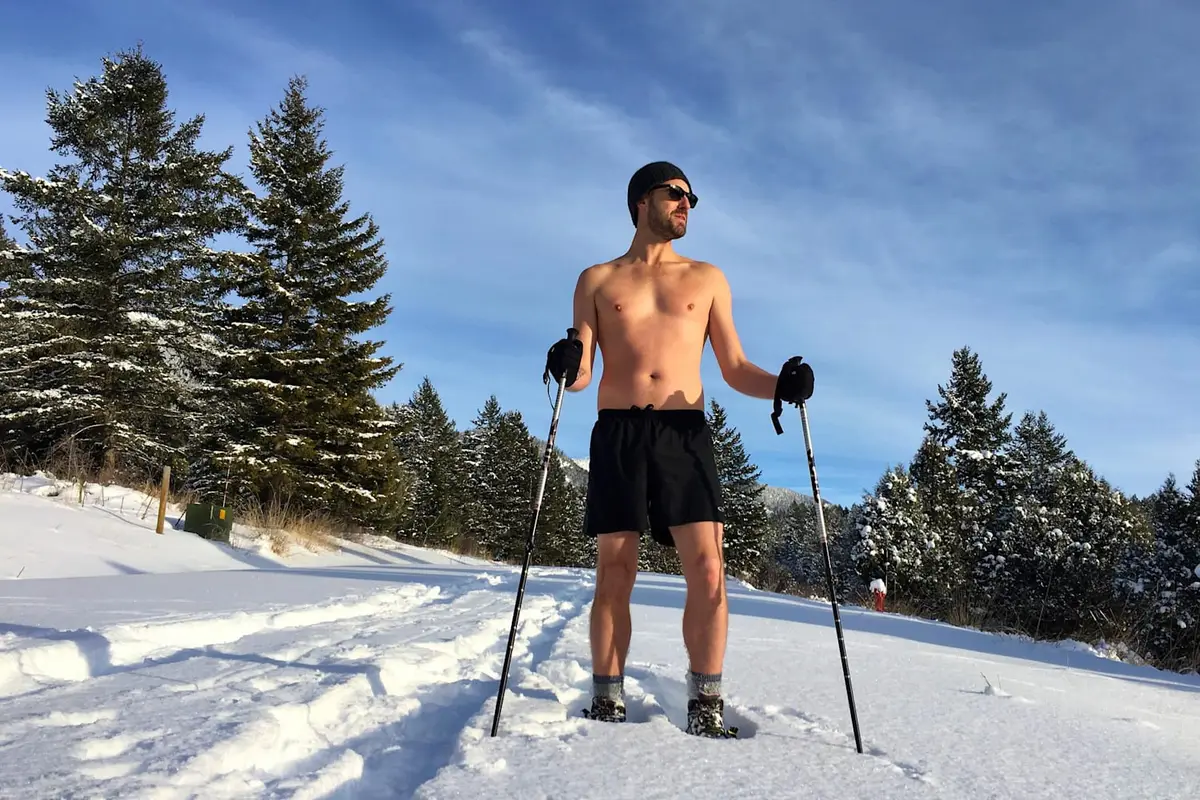
Scott Carney is a New York Times Best-Selling Author and investigative journalist who explores the limits of human physiology.
Scott Carney is an anthropologist and journalist who explores the limits of human physiology.
Scott’s curiosity is driven by the following conundrum: as modern society has advanced, human beings have seemed to venture farther and farther away from their natural states. We have exchanged much of our natural past for comfort, and we’ve paid for it with a pandemic of obesity and chronic health problems.
Yet those evolutionary advantages that allowed us run down game and travel long distances in diverse climates are still accessible. Scott’s work explores how the average human being can tap into this ability.
His New York Times Best-Selling book, What Doesn’t Kill Us followed his adventures with Wim Hof, the Ice Man. Wim is known for being able to endure extreme cold. He holds records for being underwater in brutally cold temperatures, for running across the Arctic Circle in a pair of shorts, and for climbing Mount Everest in shorts.
Scott began that book trying to debunk him, but tried Wim’s methods and found that they actually worked. This ignited a firestorm of curiosity, and in his new book, The Wedge, Scott explores how human beings can control their automatic reactions to fear and extreme environments.
Get your copy of The Wedge: Evolution, Consciousness, Stress, and the Key to Human Resilience at https://amzn.to/3bq16y6
Transcript
Machine-generated from the episode audio and lightly edited — may contain errors.
Chris Albert (link to this point)
The Warrior Soul podcast is written, edited, and produced by me, Albert. Our mission is to provide tools, tactics, strategies, and ideas that help The US military veteran community to show up as the wisest, strongest, most capable versions of themselves in the civilian world. If you're not a veteran, stick around because anything we talk about will most certainly apply to you as well. This podcast is made possible with the help of f bomb nutrition. They make delicious packets of fats that you can carry around anywhere with you in little portable packets.
They make macadamia nut butters. They mix them up with chocolate. They mix them up with sea salt. They mix them up with coconut butter. They're absolutely delicious, and they're really good for you.
They don't have any sugar. They also make a lot of cheese snacks. They make meat sticks, and it's just a great company. These guys send packages of this stuff to the troops who are on the front lines overseas to supplement their MREs, and we didn't ask them to do that. They just did that on their own initiative.
Really great company. If you wanna get 20% off your first order of f bombs, head over to www.dropanfbomb.com and use the code Warrior Soul at checkout. This podcast is also brought to you with the help of Save the Brave. Savethebrave.org is a five zero one c three charity for veterans. They run camaraderie events that include fishing, golfing.
They also do a lot of work with gold star families. And unlike a lot of other organizations, their board doesn't take a salary. Really great organization that is doing amazing work. So go and check them out at savethebrave.org. With that, thank you guys so much.
Let's get into today's programming.
This is Chris Albert, and I'm here to remind you of one thing. Someday, you're going to die. Now that's not some morbid statement or scary idea. It's solid fact. Your time here on this earth is limited.
And we need to be reminded of this as much as possible for one simple reason, to live your best life while you can. This is the Warrior Soul podcast.
You know, when we think about human beings in today's day and age, one of the things that's glaringly apparent is that a lot of us have alienated ourselves from our own physiology. We've basically turned into, I guess you could say, beings who seek convenience more than anything. You know, we're surrounded by food. We're surrounded by comfort. There's very few of us out there who've been cold.
And I see this knowing that I'm speaking to The US military veteran community, amongst whom in America are probably amongst that very small percentage of people who've actually explored the limits of their endurance. And when I say endurance, I don't just mean being good at running. I mean, actually being outside when it's cold, not having any place warm to go to, being outside when it's hot, not having any place cool to go to, experiencing hunger, experiencing thirst, sleeping on the ground, that kind of stuff. Right? And my guest today did what I think is one of the best explorations of human endurance, and the human mind, and human physiology.
And his name is Scott Carney. And the book we're gonna be talking about is The Wedge, it's being released on April 13. And The Wedge, it's it's it's an interesting concept. He talks about it as the wedge between our automatic response to something and our ability to just relax and accept it. Alright?
You know, not not allowing the stress of the situation to affect us or intimidate us or scare us off or get us to freak out. And he's, an anthropologist who practices journalism. And the cool thing about Scott is he's not one of these authors who just goes through a bunch of reference books and things like that. He actually goes out there and he does this stuff. And one of his earlier books, it's called What Doesn't Kill Us.
And in that book, it speaks about his experiences with Wim Hof. Because Scott, as a journalist, was initially trying to debunk Wim Hof, trying to show that he was a charlatan. And then when he actually went out and did one of Wim Hof seminars, he he actually found that the stuff worked and he became fascinated by it and that's why he wrote a book about it. But The Wedge contains a whole bunch of other characters. A few of whom are my friends.
A guy named Michael Castrogiovanni who I am trying to get back trying to get to come on the show. He's a good friend of mine. Really awesome guy, but he is the creator of something called kettlebell partner passing. And that's where you're actually passing a heavy kettlebell through the air, catching it, and then the other person passes it back to you. Something a lot of people would see is very dangerous, but it's actually one of the most awesome things I've ever done.
And also Brian McKenzie, one of the most knowledgeable people in endurance in the world and breath work. And through this, Scott talks about his experiences with all these things. We he also talks about psychedelics, He talks about, you know, dealing with a VR chamber where you're you're you're getting a shark attack simulated and all these different things. And Scott's one of the most interesting people I've ever had on the show. And I love his commentary.
I love his writing. And I think you guys are gonna get a lot out of it today. The things he writes about are things that I really wish that I knew earlier back when I was in the Marine Corps, you know, when I was dealing with frigid cold a lot of the time and and when we were when I was dealing with more difficult physical situations than I am now. But I'm also grateful that I know it now in my forties because it allows me to seek out things that are going to put me into a higher state. And I think you guys are gonna get a lot out of this.
And it's definitely one of the most interesting interviews I've done here. So with that, I'll stop yapping. I will let you get to the interview, and let me know what you guys think about this after you listen to it. Scott, welcome to the show, man.
Scott Carney (link to this point)
Oh, Chris, man. It's so good to be back.
Chris Albert (link to this point)
Yeah. We had you on a while ago. I think it was, about two years ago to talk about your other book, which was absolutely awesome. And today, we're gonna be talking about The Wedge, which I just got through. And I think it's an outstanding book that well, I think both of your books have huge implications for what we're going through right now as far as the COVID nineteen crisis slash pandemic that's going on. But a few different things, man. You know, your first book was called what doesn't kill us, and, you've got a really interesting background. Just for the audience, can can you talk, give them kind of like a three minute synopsis of who you are, where you're coming from, and why you're so interested in this stuff?
Scott Carney (link to this point)
Yeah, sure. So I'm originally I come out of anthropology. I was an anthropologist working on stuff out of India. And after sort of working there on sort of my dissertation, I actually dropped out of my PhD program to become an investigative journalist, where I worked there for another three years and my first big project was on organ trafficking. I did this big book called The Red Market, where I examined all the ways people buy and sell human body parts.
So sort of like really, really dark, intense stuff. And I did that for about six years. And then my next book was something called The Enlightenment Trap, where I had this experience while I was in India, I was leading this abroad program for American college students, where one of my students in my program committed suicide on a meditation retreat. She jumped off the roof of a monastery in sort of like a really rural area of India, killing herself. And the reason she did it is because she thought that she was on the cusp of enlightenment and she had to leave her body and that she was on the, just about to get all of these essentially superpowers, which led directly to what my next book was, which is The Enlightenment Trap, which is essentially why meditation could possibly kill you and drive you mad.
And I spent a long time looking after false gurus, people who go on these very intense spiritual journeys and end up having really, really bad outcomes, which led me directly into the book, What Doesn't Kill Us, because I'd been sort of out there debunking these like really bad actors out there. I heard about Wim Hof in 2010 when he was not really a big figure on the international scene. And I heard that he was offering people superpowers, sitting in ice water for really long amounts of time, having conscious control over parts of your body that you don't have conscious control over. And I figured that he was just another one of these bad actors. So I flew out to Poland where he has a training center on a commission from Playboy magazine.
And the crazy thing is, instead of debunking him like I had intended, I ended up being able to do the same things he could. We were dunking ourselves in water, doing his breathing protocols, and all of a sudden in under a week, I'm climbing up a mountain in Poland in a bathing suit warm. And that led to what doesn't kill us, where I am sort of looking at Wim Hof's method and asking the question, well, is this a superpower? Is this like prana from heaven coming down and giving you powers? Or are there evolutionary principles that make this work?
And it's evolutionary. I look at the scientific reasons why we are able to thrive in extreme environments. And at the end of that book, which you should totally check out because it's a New York Times bestseller, a lot of people liked it. But at the end of the book, I climbed up Mount Kilimanjaro with Wim Hof at a blisteringly fast pace, basically in a bathing suit almost all the time up to the top. And I had this realization when I got to the top of the mountain and it's negative 30 degrees outside, which is I didn't get here because I was fighting the mountain, right? That I was fighting the environment. I got there because I was cooperating with it. I had the cheesiest thought that any that I've ever had in my whole life, which is I am not on the mountain. I am the mountain, which, you know, and I always laugh when I say it because I know how cheesy it sounds. But at the same time, it's true. I feel like this intense amount of connectedness to everything around me. And as I'm coming down the mountain, and that book is sort of like, that's the conclusion of what doesn't kill us, I'm trying to figure out for myself how I can take the core principles of what Wim does in cold water and his breathing techniques and use it outside of that and really apply the central concept into absolutely everything. So I spent the next roughly two and a half, three years looking at that content and that is what I call the wedge.
And that's how this book that's how I ended up on your podcast again.
Chris Albert (link to this point)
Yeah. And so this concept of the wedge, can you can you define that for us to start? Because like I said, this book is great. It's it's got a lot of great stories, and it's it's got a lot of great people in it that I know and love. What what is the wedge, and why is it important?
Scott Carney (link to this point)
So the easiest way to think about the wedge is a way to separate stimulus from response. So I first thought of it while dunking in ice water with Wim Hof. And so let me use the example of ice water. When you jump into an ice bath, there's the stimulus of this intense cold on your skin. And then there's your automatic response.
Just think about taking a cold shower right now, you're going to clench up and you're going to be like, oh, I don't want to be in ice water, right? And what you do in the Wim Hof method is essentially you get into that really stressful environment and then you relax, you do the opposite thing that your body automatically wants to do. And when I first did this with Wim, like I just had this image in my mind of like a wedge, like a literally like a block going in between that place of the stimulus and response, and then using that to open up space so that instead of just reacting to the environment, I have a measure of control over how I want to do things. And that sort of basic concept and it gets much, much more sophisticated in the book itself, but that's sort of the easiest way to describe it. You can apply that to any sort of stress, right?
You go to hot, you can go sleep, you go to sound, like anything that is an external trigger or an external thing coming in your senses. You have this like a little moment where you can say, okay, I'm gonna redirect what my body automatically wants to do and give it the option to do something else.
Chris Albert (link to this point)
What what does that feel like? And and the reason why I say that, you know, I take cold showers every morning. I've done a lot of difficult things in my life. I've I've done ice baths with Tone Floreal. I've done done, you know
Scott Carney (link to this point)
I love Tony.
Chris Albert (link to this point)
Tony's a great guy. Tony's a great guy. I've I've done a lot of martial arts. I've done a lot of endurance sports. Yeah.
For you, as as you were going through this stuff, what does it feel like? Because one of the things I I really like about your work, and, you know, you can really tell you have the anthropological background because you get out there, you get in with the people, you you're experiential, and then and then, you know, you use your journalistic skills to report on on on what you found.
Scott Carney (link to this point)
Yeah.
Chris Albert (link to this point)
What what did it actually feel like for you to, you know, to be in these different situations, and and what's the difference between you now and you before?
Scott Carney (link to this point)
Sure. Well, in every one of the situations, the action the question of what does it feel like, it's actually different in every sort of stimulus, right? Hot feels different than cold. Fear feels different than joy, right? There's that basic idea of what a feeling is incredibly diverse and it's also incredibly subjective, like how something might feel for me could emotionally feel very, very different for you. So I can't give you like one thing, but if you think about ice water, usually the sensation is clenching up in some ways, but there's also this upward feeling, right?
There's this feeling of like some sort of like thing rising up your spine that once you dissect the clenching up, you realize it comes from below. And so it's really paying attention to sensations, whatever they are, and then modulating whatever the sensations come to you and deciding that you have a choice in what those sensations are. And I like to think of it though often, you there's this thing about flow and grit, right? In America, we love grit. Like there's a desert in front of you and you're gonna go freaking just get through that fucking desert and you're gonna push yourself.
And it's like you against the environment, right? And Americans love grit. We are like, that's our, that's one of the ideals of like human performance is that you can express yourself on the environment. For me, however, I don't particularly, it doesn't speak to me in the same way as the other idea, which is flow, which is connecting with the environment, which is like saying, okay, I'm here and I'm gonna work with those sensations, work with the environment to get across. And oftentimes flow feels really, really good.
And grit feels like torture, but you can do the torture and flow feels like, Oh, man, everything's like connecting and going well. So although I think there's a place for both, mean, don't get me wrong, like grits can really important, we evolve to have grit, but we also evolve to have flow. So I'm looking more on these sort of pleasurable flow states in the book. And interestingly enough, in one of the chapters, and I'm sure we're gonna talk about this soon, I'm doing this kettlebell throwing and I'm sure you've done this with Tony at some point or another, But the first time I ever threw kettlebells, Andrew Marr, your bud, was actually with me when we were doing that. And that's sort of like, in some ways he was there for the very first time that I felt that.
And kettlebell throwing is really about flow. It's really about getting to an instantaneous flow state.
Chris Albert (link to this point)
Yeah. I'm a I'm a big fan of Michael Castrogiovanni. He's a good friend of mine. And, you know, I I I went out and I tried kettlebell kettlebell passing in San Diego, I think, just shortly after we interviewed you the last time. And, it is it it it's an amazing exercise. It's innovative, and it's the the the big thing I love it is that connection you feel with the other person when you're going at it and and, you know, you you you're in that flow state, and it it almost gets to the point to where you're not even thinking anymore.
Your body's just reacting and it's passing this thing and you have this amazing connection with the other person.
Scott Carney (link to this point)
Right. And really, for me, what was happening is I was actually leaving a lab at Stanford where we're talking about the fear, like how to use fear to sort of control bodily processes. And the method that the doctor had was basically putting you into a virtual shark tank. A VR simulator of you swimming with great white sharks. And for some people, this triggers an outrageous fear response as you might expect.
But for me, I'm like, yeah, that's a virtual shark. Like, it's not gonna eat me. Like, didn't do anything for me. I didn't feel anything. And I was leaving the lab with a lot of like insight with how we wire fear into our brain.
I was thinking, man, I really want something stronger. And that's when I get this text message from Tony, Tone Floreal. And he was like, Scott, you gotta go check out my dude's kettlebell throwing. I'll put you into a flow state. And it was a text message.
I was like, my first reaction was like, that sounds lame. Because I'm not a gym rat.
Kettlebells I associate with like overly big dudes who are usually of Russian accents. I was like, whatever, that sounds cool. But I also had time and I was like, okay, I'll give it a shot, like whatever. And then I, you know, and like a few hours later, I'm meeting Michael, and we're on this hill in San Francisco. And Andrew Marr is there and Tony's there and Michael's there.
And I'm standing right across from Michael. And you know, Mike, like he's like the nicest dude in the world. But if you just are looking at him, he's a big guy, right? He's like a gorilla, right? Mean, he's standing across from me with his giant shoulder, like arms as big as my legs, right?
And he's got this cannonball in his hand and he's like, I'm gonna throw this to you. And the first time you do it, it's for me and for most people I talk to, there's this sensation of fear, this, anyone who's hearing this who has never thrown a kettlebell, what they're thinking is probably, oh, well, you're gonna break your freaking foot, right? There's an obvious danger of breaking something when you're throwing weights around. So Michael, there's this ritual at the beginning of kettlebell passing where you look in each other's eyes and then you swing the bell as you're doing that and you shift your attention after like the second swing from each other's eyes to the bell. And as he's doing this, it takes three swings, like my butt is puckering.
And I'm like, oh shit, I'm gonna catch this freaking bell. And when two dudes face off against each other, it's usually about competition, it's usually about a sense of violence or I can beat you or something like that. Even though I knew, I'd already known Michael for at least an hour and I knew he wasn't gonna do that. There's still this sort of innate sensation that comes there. Then he throws the bell and I catch it, and then because we're both looking at it, because we are in the presence of danger, you both have to coordinate your movements and it goes from being fear to flow to basically being a dance between two people, where if one person is trying to be better than the other, you both fail.
And it's a beautiful, beautiful practice because it's not just about getting strong and you will get strong throwing kettlebells. It's really about connection. It's about empathy. It's about trust. It's about becoming, feeling something with another person without using words, right?
Were so like language heavy, and I'm very language heavy, and I'm a journalist, right? I think in words all the time, but there's something about physical connection, which is really great. And it's really cool to do it with another dude because in The States, you don't really have physical connections with other guys, right? You have that with your girlfriend or your wife or your partner and how it's organized. But this becomes a sort of a way where you're like, Okay, I trust you.
I'm giving something of myself to you. And it's literally a weight.
Chris Albert (link to this point)
Right. Right. And and one of the things you know about that as well, I I mean, there there is so much there's so many things that go beyond the physical training itself when it comes to kettlebell partner passing because, I mean, if you look at the the instructor certification, for example, that that that he does, I think you gotta pass for an hour straight with a with a specific weighted kettlebell, which, you know, I've seen some people's hands after that, and and, you know, they they get a little bit torn up. But it's at at that point, it's mostly about the mental and and just keeping yourself there and keeping yourself present for an hour and and part of passing with this other individual who's helping you through this process, which is, I think, amazing. It's it's it's seems like it's a transformative experience.
I've partner passed for upwards of ten minutes, but never an hour period of time.
Scott Carney (link to this point)
Yeah. I am sort of of two minds about that sort of thing. Because the thing I love about kettlebell partner passing is that there's a low barrier of entry for people. Can get in and it's this immediate connection on this immediate thing that you can do together. And I actually when think about Michael's certification program, I think for a certain type of person, it's great, because it's about discipline, it's about being in this state for a long period of time.
But I think it's actually a different experience. It's actually That doesn't actually speak to me as much as sort of like community passing with a bunch of people and like having a blast and like going from seeing people go from fear into flow over the course of ten minutes. I find that actually really, really appealing. I sort of like look at the way Michael has the actual hour long certification program. I see that as almost like medieval monk stuff, right?
Like, it's like old timey kung fu. And I might think for some people like do it like he's got this whole program. Absolutely, if that speaks to you. But I actually get something sort of different out of it than that.
Chris Albert (link to this point)
Yeah. I think that's for the instructors. And and, obviously, you know, Michael, he's, you know, he's actually spent some time with with Catholic monks. And I think that's that's part of it and what he's trying to to bring into the instructor, the instructor, I guess you could call it class or segment of kettlebell partner passing. But but for the average person, I think exactly what you said, it's that feeling.
For me, it was a feeling of just like you when you first saw it going from, hey. This is lame to absolute joy and really, really enjoying it so much because it it puts you in a better mood automatically when you when you first get it and you're passing and you're present and you're connecting. You know, everybody has a big smile on their face, and, that that feeling of danger, it turns into trust, and you guys, end up feeling a stronger connection with the person you're passing with.
Scott Carney (link to this point)
Yeah, absolutely, absolutely. And knock on wood, I've never actually heard of someone actually getting seriously injured in in kettlebell partner passing. Not to say it can happen, but that presence of danger is still there, but it's a slow enough practice. Like you're not like winging these bells at each other, like top velocity. It is, I would say overall reasonably safe, as safe as skiing anyway.
Chris Albert (link to this point)
Yeah. I mean, I I would say it's it's safer than putting yourself under a 500 pound bar and squatting, you know, or or Yeah. Trying to lift hundreds of pounds, you know, and and you could get some some really equal, you know, explosion coordination for athletes and things like that. But Right. There was another one of my favorite people in the book, Brian McKenzie, who who is a master of breath. And I thought that chapter was was really, really interesting because of the the different things that you you can, you can do through your breath. That's Right. That's always fascinated me about the work that Brian does and of course the work that Wim Hof does. What was that like for you?
Scott Carney (link to this point)
Yeah, it was interesting because in What Doesn't Kill Us, I also met with Brian McKenzie. And at that point, he was adapting Wim Hof's breathing method. For people who don't know, Wim Hof's breathing method is basically hyperventilating, so breathing really, really fast and then exhaling and holding your breath for long periods of time. And you find out that when you've breathed a lot, you've blown off a ton of CO2. And CO2 is like when you feel like you have that reflex to gasp, it's not because you've sensed low oxygen in your blood and your lungs, it's actually because you have high CO2, which is what you exhale during respiration.
And for whatever reason, the way we're wired is we detect the byproduct of respiration, we don't detect the oxygen. So what Wim Hof does is he breathes out a lot, you blow off all your CO2 and you can hold your breath for a really long period of time. And you can also, after you've done that exhale, you can also do things like a lot more push ups than you ever thought you could do. Like you have this anaerobic boost because of that. And you know, the first time I did it, I went, I doubled the number of push ups I could do while holding my breath. And that was really eye opening and shocking. So Brian in What Doesn't Kill Us was like, well, cool, I'm going to take this phenomenon in the Wim Hof Method and I'm to apply it to endurance athletes. And I'm to try to like, if someone can do like twice as many pushups, what if we take that moment of a boost and apply it to sprinting and apply it to rowing and any sort of cardio event like that.
And he was at that point, he was experimenting with these methods. And we were all like, well, this sounds really promising. Is that the logic sounds so let's go see. Fast forward three years, I come back to him and he's like, yeah, that was all sort of a bust. I did this like sort of rapid breathing training with people and while it makes them sprint much faster while they're doing the breathing, he wasn't actually seeing long term athletic gains in sort of the top athletes that he trains.
Because he trains Olympians and, you know, NFL players.
Chris Albert (link to this point)
His wife is an Olympian too.
Scott Carney (link to this point)
Yep. She's an Olympic gold medalist. I think she's gold and silver. Anyway, amazing group. But he was like, look, I wasn't seeing those long term gains.
And the reason was is that if you think about the Wim Hof method as like sort of blowing off the roof of what your abilities are, so you're hyperventilating, you're sprinting, you're going really faster, it really helps you in the moment to sprint. But what he wanted to do was create an underlying physiological change that sort of lasts in all events. He wants to raise the floor essentially of a person's athletic ability. And so what instead he's doing is instead of blowing off CO2, he wants to give you higher tolerance for CO2 in your body. So if you can tolerate higher CO2, that allows you to exert yourself a lot longer, a lot further, and that is what gives you a longer boost.
So he has done essentially the opposite protocols of Wim, and it's related to what free divers use, it's also related to this something called the Buteyko method. And you can learn more about that in Patrick McKeown's book, what's it called? The breath, what know the name, Patrick?
Chris Albert (link to this point)
We've had Patrick on the show, a while ago, but but definitely great, great method. I'm trying to remember what It's Oxygen Advantage. The Oxygen Advantage. Exactly. Yep.
Right.
Scott Carney (link to this point)
Right. Like pop quiz. Oh, essentially, what these are, are, learning to hold your breath or like breathe slower. So when you breathe slower, you allow more CO2 to come into your system. And then at first it sucks, like if you're doing cardio and you're breathing like slower, it becomes much more difficult because you're not feeling it with oxygen, you have more CO2 in your system.
And then over time, you suddenly find that you can perform much better after you get used to CO2 tolerance. So the primary method for Brian would be to breathe through your nose while you're doing cardio. And most of us breathe through our mouths because it's the faster transference of air, right? It's a bigger hole. And when you breathe through your nose, you just can't move as much air.
So you have to force your body to adapt to working with sort of more limited resources. And what he finds with this is that when you put people in and you train their CO2 tolerance, and then in the event, right, whatever the performance event is, then you switch to sort of oxygen breathing like Wim Hof does. Then you've both raised the floor and you've blown off the roof. And that's where he's seeing. These are just amazing results for the people he works with.
Chris Albert (link to this point)
And that that's so awesome because, you know, if if you look at the history of endurance sports, you know, particularly back in the nineteen nineties, there was a lot of triathletes who were kinda dropping like flies, you know, from from heart attacks and and from, you know, just complete total body chronic inflammation, from the ways they were training and and overtraining. And we see that a lot in the military community too. A lot of people tend to overtrain when they're they're about to do a do a school, And it leads to a lot of injuries. And and the thing is, I think if things like this were trained more and taught more, it could save the government and save the military and save all of us who who who have any athletic hopes at all a lot of money and a lot of worry.
Scott Carney (link to this point)
Yeah. And injury. Right? And just, you know, it it can it can keep us more fit. It can keep us more in tune with ourselves.
And honestly, it's something different. And there's just something to be said for doing something different every now and then, right? Just trying something that's outside your comfort zone. I was trying something that is I'm gonna push you in a different way.
Chris Albert (link to this point)
Right. Exactly. Exactly. And that's so important. That's so important.
You know, speaking of something different, there there's a big section in here on psychedelics as well. And and, again, I just wanna say for the audience out there, We're not going through the whole book. This is a fantastic book that you gotta buy. But but, you know, when it comes to psychedelics, we talked about that a lot here on the show. Mhmm.
You know, What have you learned about psychedelics and what should we all know about them?
Scott Carney (link to this point)
Yeah, so I do psychedelics in two different chapters. Actually one is technically not a psychedelic, it's an empathogen, but it's MDMA, which is, it's the party drug ecstasy, it's the love drug. And what it does is I did it with my wife in a couples therapy session with two psychiatrists in the room. And what we were trying to see is with MDMA does is essentially it makes it more or less impossible to react anything but a positive emotion to whatever you're doing. And I look at it as creating an environment chemically, so it's an internal environment in you where you sort of have to respond in a good way. Now, if we put that in the context of a couple and we put that in the therapeutic context, what happens is you can have conversations about those things that are so difficult for you to talk about. Now, good relationships, my wife and I have a very good relationship, we're very strong, but every relationship has like these islands that you don't wanna go to, right? Where you're just like, I don't really wanna talk about this because it just is gonna be a bigger fight than we want.
And it's just better not to go there. And in general, I would say that having islands is totally fine. Like go have islands. Like that can be a great mechanism for surviving. But sometimes it's also good to visit them.
And what ecstasy allows you to do or MDMA allows you to do is go to these places, have these conversations, then you have that release. You'll be like, oh, I get it because you have to respond empathetically. And I'll give you an example. Now this isn't an example that's specific to what we talked about, but you could sit down with your wife or your partner and say, look, I hate your mother. And usually you're gonna get, you know what?
Imagine if you say that to your spouse right now, it's gonna be, well, fuck you. I hate your mother too, man. And it's gonna blow up into this like really horrible, you know, that's an island no one wants to go to, right? But he this environment, it's like, oh, tell me more about that. I understand that feeling this way.
And then you can have a productive conversation about that and fully explore the thought without reaction. You you see how this is a wedge between that automatic reaction to understanding what the underlying principle is. Over the course of, and we were probably tripping for three hours on ecstasy, the psychiatrists who were in the room were like, Oh my God, this was the most amazing experience for us because it was like watching eight months, eight or nine months of couples therapy happen in three hours. And they were just astonished by that. And then you carry the lessons out because it's not like that psychedelic makes you a different person.
You're still you. You still had this conversation, but now you can look back at the whole conversation instead of just that initial reaction. And I would say that for us, we are not a couple that was in like dire straits, but it probably made us like 10% happier in our relationship. We went over like lots of things that made us, were sort of minor difficulties and we sort of just cleared them out. And I'd suggest someone who does this, you do it in a clinical setting because taking it seriously is actually really important.
You're just dropping ecstasy, you might just end up like rubbing each other for the whole time, which is fun and all, but that's not really what we're trying to get at here. And the other thing that's super, super important, and I have to highlight this is if you are on an SSRI, sort of a selective serotonin reuptake inhibitor, or any sort of antidepressant, you probably shouldn't consider MDMA therapy as a good thing for you because that can actually because these two drugs are sort of have opposite reactions in your body, you can end up with a dangerous condition called serotonin syndrome, but can lead you into a depression that's gonna be very difficult to get out of. So that's just keep in mind when we're talking about this. And psychedelics are definitely the more difficult side of the wedge practices because if you're throwing kettlebells or if you're in a float tank or you're doing these other things that I do, you can just up and walk away. You'd like, that's not working for me, I'm done. Whereas with a psychedelic, you're there for the ride.
And if things are going wrong, you still have to be on the ride. You can't get out. So it's definitely something that you have to be called for. You have to feel like this is something that I really need to do, and you wanna do it very seriously.
Chris Albert (link to this point)
Right. And and particularly with with, you know, something like Ayahuasca where there's a lot of tourism going on.
Right.
You really want to make sure that whoever is guiding you is somebody who is a tourist being taken advantage of at the least as far as these things go, right?
Scott Carney (link to this point)
Yeah, being with a good shaman is very important if you're doing Ayahuasca. So I did go do Ayahuasca, I went down to Peru and I was actually with two different shamans, one woman named Luzma, another guy named Tony. And they create a space which is therapeutic. They create a space which is, they give you something to hold onto. Actually, the biggest role of a shaman is other than giving you the right amount of medicine and feeling in some ways the same things you are while they're, because they're also on Ayahuasca while you're doing it.
But they provide a drumbeat, like a sound, just like a constant the whole time. And that actually becomes very useful because as your mind is spinning out in all of these different places, it gives you something to come back to, something that's steady and calming and that for many people is very useful and for me was very useful, very grounding, but they also sort of have to be, here's the thing, with these drugs, you never really know what's gonna happen, right? It is a risk, you're getting out there and you might go crazy and kill yourself. Like, I I can't tell you that wouldn't happen. In fact, I know several stories of people who had really bad experiences that it would have been better for them not to do Ayahuasca at all. I've even known people with good shamans who've had those experiences who probably shouldn't have done it at all. And this is why I think it's really, really crucial that you are called to this, that this is something that you you feel up to, and and and you you feel up to it knowing that there's a risk, that that's associated with it.
Chris Albert (link to this point)
Right. Right. I've done I've done DMT in the past, and, you know, the the big scary message I got from it there is is whatever was on the other side, the beings were like, don't come back here until you're ready. And it was a very intimidating message. And luckily, I I was surrounded by people who who definitely cared about me because when I came out of it, I was I I was a bit unsorted, to to say the least.
Right.
Scott Carney (link to this point)
Yeah. And DMT is, well, very intense. It's also only, like, like, eight minutes or something like that. Right? It's really, really short.
Chris Albert (link to this point)
Fifteen minutes. Fifteen minutes. But, it's definitely not something feel like a million years. Yeah. It's definitely not something you should take to an abandoned warehouse with your friends, you know, after school or anything like that.
You definitely, definitely want the proper guidance, and you want people around who you can trust and and who are gonna take care of you. Hey, guys. I hope you're getting a lot out of this interview. You know, the Warrior Soul podcast is built with the mission to empower its listeners to live absolutely epic lives. And that's why we recently created a group called the Warrior's Obituary Society.
This group is built to empower its members to live epic lives worthy of epic obituaries, and it starts with an eight week development program. And with this development program, what you're gonna do is you're gonna outline a vision for your life. You're gonna get very specific about what you want. Because without that specificity, you don't know where you're going, and you don't know what you're doing. From there, we help our members to develop specific goals, objectives that they are gonna push toward, and that their fellow members of the Warrior's Obituary Society are going to hold them accountable too.
From there, we're getting down into specifics. We're going to help you to develop and customize your own personal fitness and nutrition plan to help to fuel your body and fuel your mind for the quest ahead. From there, we're going to work on your personal finances. We're going to help you to knock down debt. We're going to help you to start saving money and to create a plan so that you can start investing in your dreams.
Then we're going to get into your business and career. We're gonna help you to develop the skills that you need to develop yourself so that you can have a major impact in the field you choose. If you choose to go into business, we're gonna help you to set up the foundations that you need to create your own company and get started on your path in life. From there, we're going to be working on your relationships. We're going to help you to develop a world class network.
And all along the way, you're gonna have your fellow members of the Warrior's Obituary Society pushing you in every single area. We meet once a week over a live call, and we're constantly communicating over our own private floor forum on Slack. We don't do anything over social media, and that's because I don't want anybody feeling like anyone's looking over their shoulders, and I don't want you exposed to the crazy distracting alerts that you get on Facebook and some of the other social media platforms. Normally programs like this cost thousands of dollars. This one does not.
For the price, it is the best development program on the internet. And that's because our mission here at Warrior Soul is to empower people to get more out of life so that they can in turn make the world a better place. We've got a great mix of active duty military, US military veterans, and civilians in this group. We wanted to keep it really eclectic so that we get a lot of different types of views up there and a lot of different people with different areas of expertise. If you think that this is something that would be of interest to you and that this is something that could empower you to live your absolute best life, head over to www.warriorobituarysociety.com.
That's www.warriorobituarysociety.com, and you can sign up today. And if you have any questions about it, just reach out to me at chris@warriorsoulagoge.com. That's chris@warriorsoulagoge.com. I'm happy to even sit down with you for a phone call for a few minutes to see if the group is right for you. I look forward to seeing you guys in there, and let's get back to this awesome interview.
With, so so a few other things, man. You know, like you, I am a PhD dropout and, you know, a science PhD.
Scott Carney (link to this point)
Join the club.
Chris Albert (link to this point)
Yeah.
I I wanna talk to you a little bit about your path as a writer, because I, you know, I I think that that these stories are just so interesting. What what made you leave anthropology and and say, I wanna do this instead?
Scott Carney (link to this point)
Yeah, well, were two things. One more immediate and one more sort of big picture. The immediate thing is that when you're in a PhD program, your relationship with your advisor is very, very important. And if you have a bad advisor, you can get screwed. And I had an advisor and we did not get along in the slightest.
So that was a really bad mark on my PhD progress. The other thing that was not good is that I've gotten to this point, I've done three years of coursework, I've done a lot of preliminary research, I've gone out into the field, work in India mostly, gone out there, done research, come back, I learned the languages, I know all this stuff. And I'm looking forward to the future that I have in front of me. And it's like, well, I'll go into, maybe I'll get a job, I'll write my dissertation and like seven people will read it because it's basically your committee. You might publish it and I'll get read by like another 30 other experts in your very, very, very small field.
And then for the rest of your career, you're trying to get tenure, you're playing these political games within the institution. And while you do have a great impact on students, and I loved the teaching aspect, you're very much bounded by the rules of the institution. Now, what I did instead is I said, well, I can still apply all the things that I love about anthropology. In every book I've ever written, the fundamental question is what is is it this? About being human?
Like how does this stuff make us human? What I'm able to do is ask the same questions, but get to an audience of millions of people who really should be benefiting from the insights of these disciplines, which are very relevant to people. But when you're in ivory tower, forty, fifty people who then argue on like stupidly small points, you made this citation incorrectly or, well, I think you should have been more Marxist in your approach. And like the stuff you're like, fuck off. Like, I really wanna talk about big issues about humans and investigative journalism for me has been incredibly rewarding because I'm able to take these big insights, have really interesting adventures, and also make them applicable to people all around the world.
Chris Albert (link to this point)
You know, I had the exact same experience as you and came out with the exact same conclusions as far as things go because I don't think people realize how constraining academia is. And, you know, you really you really do get caught up in an echo chamber as far as the peer reviewed journals go and as far as, you know, lines you shouldn't cross and and things you shouldn't look to and evidence you shouldn't include. You know? And and, you know, I see that in your work
Scott Carney (link to this point)
your PhD in?
Chris Albert (link to this point)
Political science. I was my expertise was in international politics and quantitative methodology, which, by the way, you know, in social science, quant guys eradicated had around ten years ago. But at the same time, within department politics Mhmm.
If you were a quant guy, you were kinda like you were kinda like the guy that everybody would devolve into calling a Nazi at different periods of time. And, you know, that was just kinda the way things go. But I loved the teaching aspect of it. I loved the idea that I could sit there and read and then write Mhmm. And then go teach and then come back and read and write some more. At the same time, it was one of the most isolating periods of my life because I I did I was working on my PhD at the University of California at Santa Barbara, which is a paradise, by the way. It's on the Pacific Ocean Yeah. And and it's gorgeous.
Scott Carney (link to this point)
Great program too.
Chris Albert (link to this point)
But at the same time, it was a bubble. It was absolute bubble. And, you know, I I I was just craving not being on a university campus for a while, you know, and and started doing some crazy things because of that.
Scott Carney (link to this point)
Totally. And you can have much more impact in the real world.
And the problem with academia is that there's this sort of insular idea that if you do become popular, like if you are trying to address the American America, right? People in the normal non academic audiences, they sort of turn their noses up at you. They're like, you're not real. And it's silly because some of these things are really important. My first book was on organ trafficking, which had been written about in the academic literature for decades.
And at that point when I was writing, most people in the world thought that organ trafficking was more or less an urban legend. Like, oh, people don't have their kidneys stolen. That's like Dirty Pretty Things. Like that's like a movie plot. But we're like, no, no, this is really happening.
It took, I'm probably one of the only popular writers who covered that subject. Was like, look, no, it is happening. Here's how it happens. Here are the people who are affected. And I think I was able to have a much more important and valid impact because I went popular, like because of my work and people who followed my work.
I was we were able to outlaw surrogate pregnancies in India, where they were taking foreigner foreigners were flying to India, giving their embryos to Indian women, and they were locking those women into like basically putting them under arrest for nine months as everything was controlled about them and treating them as like baby factories. And because I went popular, I was able to have that impact in the world, and that was really good.
Chris Albert (link to this point)
Well, the other thing is the impact on yourself too, because, you know, you're able to talk about that as a bad thing, and you're able to talk about that as from a very human perspective. One of the things for me, I found myself growing increasingly nihilistic during that time period, you know, particularly when it comes to something as far as politics go, you know, which normally brings up brings about great emotion. But because maybe my opinions didn't match up with the rest of the discipline on certain things, I found myself becoming completely nonopinionated and just approaching everything with this cold perspective where I didn't bring any emotion to anything. And for for, you know, seeing what you're doing now, you know, you're able to bring your feeling. You're able to bring that human experience.
And for me, for a while, I had to retrain myself to do that. I had to to open myself up a bit, and, that was a that was a crazy experience for me.
Scott Carney (link to this point)
Interesting. You know, I think that anthropology might be a little bit different than political science in that because one of the things that anthropologists are actually very good at now is not pretending to be objective. Right? They're they're not out there being like, look. It's not like we're just looking at data as like in a laboratory with lab coats on.
It's like, no, the anthropologist is in the middle of everything. And they've acknowledged since the 70s essentially that they are participants, whether they want to be or not, they're part of that group. And this is why my journalism, I also don't pretend to be objective in it. Like I pretend to be very subjective. It's like, I'm here, I'm gonna try to be fair and that being fair is very important, but like, I'm not gonna pretend that I have some sort of eye of God, dispassionate view of the world because, you know, when I'm talking to say Brian McKenzie or Wim Hof, I'm trying to debunk Wim Hof.
Wim Hof knows I'm trying to debunk Wim Hof, and it's important for the reader to know that context as they go in so that they can make informed decision about what they think of me. And and I think that's a much in the at the end of the day, a much more honest way to do at least this sort of work that I'm doing.
Chris Albert (link to this point)
So so now speaking about that that human perspective, obviously, the events of of the last week or two, that we're going through right now, the date today is actually 03/25/2020 as we're recording this. We have we've gone from feeling, you know, relatively secure in a good economy to kind of having the world turned side down right now. And and there's a lot of things hanging in question with the COVID nineteen pandemic and, you know, the world kind of kinda shutting down. What are what are some things that people could take away from the wedge and your other work, What Doesn't Kill Us and and some of your other books, that that they could bring with them during, you know, what might be a very hard time to come?
Scott Carney (link to this point)
Cool. So I wanna flash back to, like, last week when all of these cities were first going on lockdown. And basically, the entire country had this enormous adrenaline and cortisol releases. We're all super stressed out about it. And I'm at home with like most people, we're just starting the social distancing stuff.
And I have opinions. I have opinions about public health policy, I'm going to tell you about them. And I wrote stuff on the internet, which was very informed. And I think it's very smart. I think still sort of holds up right now.
But I find myself getting in fights with people who are smart people as well and also have their own opinions. And we're always refreshing the browser, trying to change the stress of the world itself as if refreshing our browser is gonna change freaking anything. And I'm stressed out. You know, we do this in politics too. Know, there's the right wingers, there's the left wingers, there's the people in the middle, there's the crazy people.
Everyone's all over the place. And we refresh our browsers and we yell at each other on Twitter, which is the stupidest fucking thing in the world because you and me, and I would say almost everyone listening to this, has no ability to affect the world with our anger on social media. It's like, what we're trying to do is control things outside of our control with our emotions and with our anger. And it's very human. It's also very, very stupid because what happens is you get angrier and angrier because you're not seeing any effect.
I did my tweet, why didn't everyone understand me and get what I was saying? All you're getting is more and more this echo chamber of anger coming up. And what happened the next day for me is like, and I was like, you know, got in a fight with some cousins and anyway, it sucked. And I roiled about it all night long and I was anxious, I barely slept, right? And the next morning, I was still really anxious and I my, I have this normal breathing stuff that I do, I do Wim Hof breathing and do three rounds of it.
And I did it and all of a sudden my head cleared and I was like, Oh, what the fuck was I doing? Like, why was I going in a cycle, going back forth over and over on something honestly none of us have control over. But what I do have control over and what I realized in that moment is like, I control over me. I have control over how I react to this. And whether or not we all die because of COVID-nineteen or the political administration or the opposition or whatever we're thinking about right now, that is out of our control.
But what we can do is find physical outputs, especially things where our minds are running crazy, to interrupt those cycles and become much more adjusted. That after I did that, then I came back to the internet and I was like, oh, look, I was an asshole here and I was right here and whatever. And I can be like, but none of it mattered. And I actually had a lot more empathy for even the people who are yelling at me because I realized they're going through the same exact thing. They're also trying to control the world with their refresh button, which is not the way the world works.
So what I'm saying is right now and for me, the Wim Hof method that was the wedge that sort of like broke into that cycle and broke it. I think that right now, especially as we're isolated and we're in home, it is very important to double down on physical activity that keeps us sane, because we evolved with our species is about 300,000 years old, but we go back much farther, we go back billions of years until we were single celled animals. And up until about one hundred years ago, every time we had a stress, usually there was a physical response to it, right? Like there's a bad thing out there, like a lion chasing me. And so I release adrenaline, I release cortisol, it gives me an energy boost, I have a chance of surviving the lion.
The threats had physical responses. The temperature is changing, okay, I have to My body needs to change for that. What's happening in the world right now is we only We mostly only have existential threats, things that are distant in the in the future. Oh my god, my taxes are going. I'm losing my job, which is legitimately bad.
But you can't fix your lost job with your adrenaline response. Like, can't fix losing your job by getting really, really anxious. Instead, what you do is when you feel anxious, you need to go then find a physical outlet for that anxiety. That's super, super important right now.
Chris Albert (link to this point)
It's so important. And, you know, as as we're talking about this, you know, I'm thinking to myself about twenty four hours ago, you know, I've been, like many people, affected economically by this situation. And, you know, last night, I found myself sitting here staring at the computer screen, like, just kinda mesmerized by what was going on and and kinda paralyzed into inaction. And, you know, that's when I I said to myself, you know what? It's time to go outside and do a run, and social distance myself that way because sitting here at the computer or refr hitting the refreshing the browser or watching Fox News or CNN or MSNBC isn't going to solve the problem.
It's we've got to stay strong through this, and we've got to to we've really got to come together with our family members, support them, come together as communities, you know.
Scott Carney (link to this point)
And and, you know, follow we have to follow the health guidelines, whatever our country is suggesting right now, we gotta go do that to keep everyone healthy, but we don't need to yet go down the rabbit hole. Like there's no problem with looking at the news, get your overview. Oh, today, Congress is passing a stimulus bill that may or may not help us all. I'm thinking like, what are people gonna think in three weeks about this? I don't know.
But this is a thing that's happening in the news right now. And it may or may not happen. It's good to look at that and be like, okay, now I'm informed. But don't unless you can have an effect on that, which I know I can't have an effect on that. If you're a senator, then maybe there's a different practice you should be involved in right now.
But you should be aware, be informed, take the best advice to keep you healthy and then distance yourself from it. Come away and be like, I can do other things. And there's another insight from the wedge, is so fascinating. I got this from Andrew Huberman, is that our eyeballs are a trigger for our sympathetic nervous system is that when you saw that lion on the horizon in the olden days, Literally the way that the lens in your eye, the way it focuses on that thing in the distance triggers autonomic fight or flight response or has an impact on that. So when the lion's far away, you know, your your focal length is really long.
And even if you know that lion is angry at you, it's it's it's a subdued response because you know, because distance is important for a threat. And as that lion gets closer, your lens moves in your eye. And there's a signal that goes into your fight or flight responses that automatically triggers that threat until the lion's on top of you and that's the shortest focal length and that's one of the ways just because the way your lens is moving and the way that signal is going into your brain that triggers fight or flight responses. Now, there's an evolutionary mismatch going on right now because when we have our phones in front of us, it doesn't matter what the message is on the phone, right? But like you read it and it's only three feet from your face.
And so it's automatically triggering your fight or flight response. So any information you get is triggering with your adrenal glands. And so you see something that's politically bad or environmentally bad or public health bad, that's triggering your anxiety responses just the way we are freaking wired. And so getting away from your phone, literally distance from your phone is useful. Like staying away from your screen by a few more feet actually has an impact on the way our bodies work.
And that's just bananas. Like how unfortunate it is that biology and our technology are just so out of whack right now.
Chris Albert (link to this point)
Yeah. Yeah. It's it's insane, man. And that's a big thing I recommend to everybody. Just get that thing as far away from you as much as possible. You know, I I I'll keep my phone in my kitchen during the workday while I'm in my office, and I will actually just schedule ten minutes throughout the day in different periods to try and go look at it when I need to. But but that thing will will I mean, it'll strike so many nerves. It'll make you angry.
It'll it'll hit that dopamine receptor in there and all kinds of different things. So definitely Have
Scott Carney (link to this point)
you ever had the sensation that you wanna, like, throw your phone? Have you ever thought about what that's like? You know, when you get really angry and like I had this the other day, I wanted to like throw my computer out the window. I didn't do it. But like, why is it that we have that urge sometimes to do that?
Like, hit my printer the other day, I like, you fucking printer, right? But why is it we do that? Like, it doesn't make any rational sense that we would want to physically throw our phone, but it's because our fight or flight responses need a physical output, right? It's they need a physical output to do something. And and it's like our caveman brains taking over to do that.
So this is why we should be throwing kettlebells right now and not shucking our phones out the window.
Chris Albert (link to this point)
It's hilarious because I actually have a crash pad in one of my closets in case I get angry at my phone, and I'll just throw it at the crash pad.
Scott Carney (link to this point)
I think that's also fine.
Chris Albert (link to this point)
Well, Scott, man, number one, I wanna thank you for spending the time with us. The book's called the wedge, Evolution, Consciousness, Stress, and the Key to Human Resilience. What's the date this book is gonna come out, and and, where can people find it, and where can people connect with you?
Scott Carney (link to this point)
Yeah. So April 13, it's out everywhere. You can connect with me at my website, Scott Carney dot com. Go there, sign up for my mailing list, and you get the first chapter for free. And you can see if I'm like totally full of shit or actually know something.
And you can buy the book everywhere online that you can buy books like Amazon, iBooks. There's an audio book if you really liked my voice, not filtered through Darth Vader Zoom mistakes, but just by general voice, then there's an audio book and I'll read it right into your ear. And yeah, and also Twitter, Instagram, I'm on all those places as well. But I'd love you to sign up for my mailing list so that I can send you very occasional emails that are sometimes smart, sometimes funny, and sometimes idiotic, and you get to choose which is which.
Chris Albert (link to this point)
Awesome. Awesome. We'll get the links to that up on the show notes. And finally, you know, I just wanna acknowledge you. You know, I I know it's not easy to write books, and, you know, the way you do it as far as getting out there and getting your hands dirty, I know that that takes up a lot of, not only time, but also energy.
And you're very immersive in everything you do. And I just wanna thank you for bringing this information to the world.
Scott Carney (link to this point)
I mean, I appreciate that. And I also think I have the best job in the world. I love what I do. This is, I'm so lucky and blessed to be able to go out and have adventures that other people are actually interested in following. So, and thanks for having me on the show again.
Chris Albert (link to this point)
Know, Absolutely. Wash your hands. We'll wash our hands. Wash We'll our definitely have to have you on again sometime soon, you know, as as as things develop out here. And highly recommend the book, guys. Get out there. There's there's a lot of information here that can help you for coming or whatever it is that's coming. And then, you know, get out there and live your best lives.
Keep your minds positive. With that, guys, we'll be back at you next week with some more awesome content, and we'll talk to you soon. Alright, guys. I hope that you enjoyed that episode with mister Scott Carney. I absolutely love talking to this dude.
I love talking to him the last time, and I loved talking to him this time. He is a great writer. I love both of his books that I've read. He's got other books out there besides the two. The two that I've read, which I highly highly recommend is What Doesn't Kill Us, and then of course, the one we spoke about today, which is The Wedge.
Scott is shining a light on things that can make us stronger, less fragile as human beings, and I think that that is so important these days. It's so important that we carry on. It's so important that we allow the challenges in front of us to make us stronger and to not bend before them, and it's so important that we take care of ourselves during these difficult times. Listen, guys. We have just come up on four years of doing this podcast.
Well, I have come up on doing four years of this podcast, and I say we because you guys have been here with me. I can't tell you how much I appreciate every single one of you who stuck by this show, who has supported this show, who've been telling people about this show, and and letting other veterans know that it exists. And that's the big thing guys. I don't care if you guys ever spend a dime with Warrior Soul, as long as you are telling other people that we exist and put helping me to get this information into the ears of more veterans, I am a happy person. So please help me to keep up the momentum.
We've been growing like crazy. Our downloads have been increasing every single month, and that means that we're helping more people. So please share these episodes out. Please head over to iTunes, write us a written rating and review, and, you know, pay us the highest compliment by, you know, telling your friends and family about us. If you know of other veterans, awesome.
If they're not veterans, the information here can still them too. And if you wanna support yourself in other ways, we've got some ways of doing so. Number one, we've got the Warrior Soul shop. If you want an amazing t shirt, you wanna show your support for Warrior Soul, you can head over to warriorsoul.shop. We got some great graphic design tee tees, and we've also got some great skivvies shirts.
I'm a big fan of the skivvies shirts. They're really comfortable, and I've always been a fan of skivvies shirts ever since I was in the marine corps. They're absolutely awesome. And we also have the Warrior Soul Academy that's up at warriorsoul.academy. That's a collection of my works.
My writings on fitness, my writings on business. I've got some courses up there that'll show you how to start your own clothing brand, how to start your own lifestyle brand if you wanted to do that, if you wanted to get into online business, maybe during this time of transition, there's some resources up there for you as well. And then beyond that guys, if you want to join our group, the Warrior's Obituary Society. It's basically a mastermind group where me and a bunch of guys get together and support each other through our goals. That means that we are holding each other accountable, we're getting together on a live call each week, and every new member that comes in goes through an eight week development program.
That's where we're getting you really focused on your goals, really focus on your vision. A lot of people out there never outlined division for themselves. Never really thought about doing it. And for the first time, a lot of these guys are actually admitting what they want in their lives. So if you're interested in that, www.warriorsobituarysociety.com.
It is the greatest honor and privilege of my life, and I put this up there with serving in the military to serve this community. You guys mean so much to me, and I hope that you know that there are people out there that definitely care about you, including myself. If you're having problems, please reach out. We don't want any veterans to be out there feeling alone. So with that guys, I will leave you for now.
I'll be back at you soon with some more awesome content. This is Chris Albert with the Warrior Soul Podcast, and I am out.
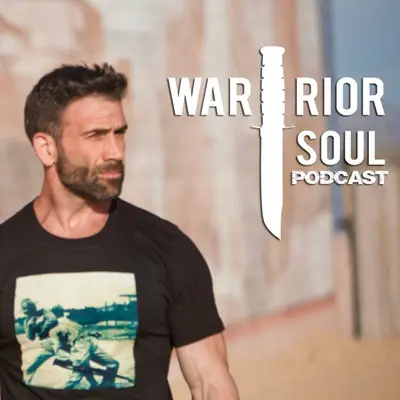
Host of the Warrior Soul Podcast and founder of Warrior Soul. Worldwide trainer and nutrition coach, contributing author at Testosterone Nation and Muscle and Strength.