Podcast episode
Taking Action to Fight TBI in Veterans with Andrew and Adam Marr
Hosted by Chris Albert
The Warrior Soul Podcast
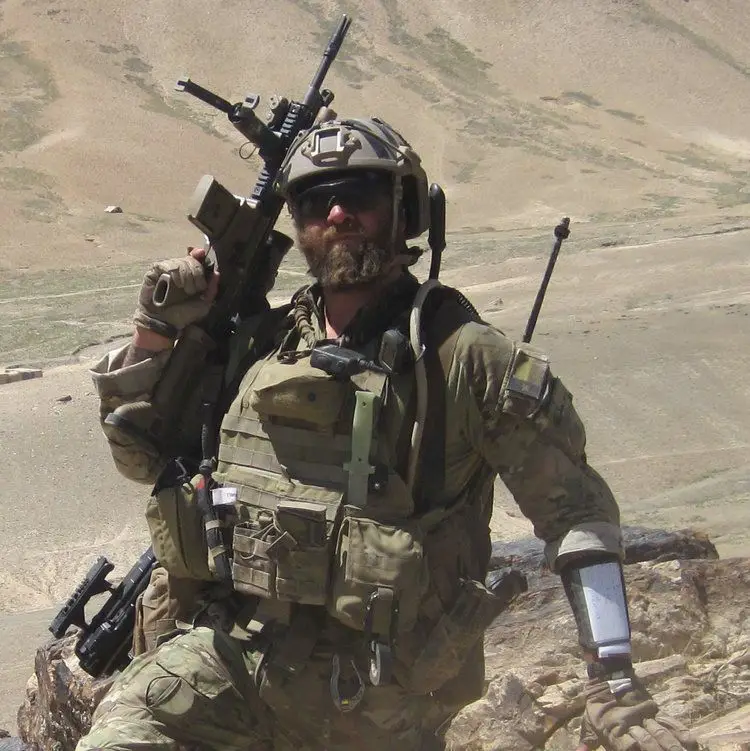
Andrew Marr is a US Army Special Forces Veteran who's story of healing after being afflicted by severe TBI is outlined in the book Tales from the Blast Factory. His brother, Adam Marr, is a US Army Aviation Veteran who cofounded the Warrior Angels Foundation with him.
Andrew and Adam Marr are the founders of the Warrior Angels Foundation, a non-profit organization dedicated to providing healing solutions to veterans afflicted by traumatic brain injury.
Andrew served as a US Army Special Forces Green Beret on multiple deployments to Afghanistan. He was a breacher, and consistent indirect exposure to explosions created massive inflamation that turned off most of his brain activity.
A once thriving man, Andrew fell into a pit of sickness and despair while trying to support his wife and five children at the time. Andrew was medically retired from the Army with few options for continuing and no help to heal his unseen wounds.
After months of suffering while trying to find a solution, Andrew found Dr. Mark Gordon, who put him on a protocol of restorative nutriceuticals that healed his brain and his body. Today Andrew is back to life as a high-functioning individual, capable of excellence.
Andrew's story is outlined in the book, Tales from the Blast Factory, which he coauthored with Adam. He is also the subject of the award-winning documentary Tales from the Blast Factory.
Adam, who served as an Army Aviation Officer, came up with the idea to create a 4x4x48 challenge modeled after David Goggins grueling four mile run, every four hours, for forty-eight hours to raise money for the Warrior Angels Foundation.
They will be running the challenge in March at their home-base in Texas, in conjunction with teams simultaneously running it around the country.
To learn more about the challenge and how you can participate: https://warriorangelsfoundation.org/4x4x48/
To get the book Tales from the Blast Factory: https://warriorangelsfoundation.org/product/book-tales-from-the-blast-factory/
To watch Quiet Explosions: https://www.amazon.com/Quiet-Explosions-Healing-Joe-Rogan/dp/B08MWV5VP8/ref=sr_1_1?dchild=1&keywords=quiet+explosions&qid=1607110014&sr=8-1
Transcript
Machine-generated from the episode audio and lightly edited — may contain errors.
Chris Albert (link to this point)
What is going on, ladies and gentlemen? Welcome to yet another episode of the Warrior Soul podcast, and today is a very, very special day. I am here with my good friends, Andrew and Adam Marr from the Warrior Angel Foundation. Both of them have been friends of the show for a very long time, friends of mine for a very long time. Love the shit out of both of them.
How are you gentlemen doing?
Adam Marr (link to this point)
Oh, doing great.
Andrew Marr (link to this point)
Great to be here, Chris. Good to see you again, brother. Longtime friends of the show is correct. I think we first started doing shows together in 2016, if memory serves me right, man. So story story history here with Warrior Soul and us supporting it, man. Honored to be back on the show.
Chris Albert (link to this point)
Absolutely. Absolutely. And and you guys have been busy. Like, two two industrious dudes right here been putting a lot together, moving things forward. A little bit about the Warrior Angel Foundation and and Andrew's story, and I'll let him talk about this for a second.
But I first heard of Andrew when he was on the Joe Rogan Experience podcast talking about his story, and I was absolutely floored by it. This is a man who who who served in the Green Berets, suffered severe traumatic brain injury, was able to come back from it using some protocols that I'm sure Andrew's gonna talk about. And and his brother, Adam, was a US Army Pilot as well. And together, you guys have created this outstanding foundation that has done so much good for veterans across the country and and is making headway and actually creating a solution to to so many of the problems we face with traumatic brain injury. So Andrew, I'll let you take it from there.
You want to just refresh the audience a little bit about who you are and where you come from?
Andrew Marr (link to this point)
Yeah, for sure. Like you said, my background was in Army Special Forces. I was an athlete my entire life, college athlete, played football. And once my undergrad was done, natural progression for me was special operations. Looked at all the different branches there.
Green Berets to me made sense as an entry point, had aspirations of moving outside of that at inception, but that was where I wanted to be. And I knew what I wanted to do and I wanted to go and test myself in combat, suffer a crucible and be with other like minded sick individuals. And it was the best time of my life. Went from being an A team player my entire life and no different on teams to one day waking up and just being a complete disaster in every aspect of the word. And so you could see the contrast of who I was to who I had become was couldn't be more juxtaposed.
So all the cognitive declines, the emotional declines, the physiological declines just made life almost unworth living, especially when you add in all of the different medications and things that I was put on. So, that was kind of my backstory, man. I couldn't figure out really what was going on except life was coming off the rails and that started a slippery slope. Now I'd really like to get Adam's perspective because you always hear me talk on blue in the face, but kind of, I think, high level, Adam, what was it like for you when someone that you loved was going through all these issues and there wasn't a scratch on my body and we couldn't really get good information on it other than all of a sudden this psychologically sound visual is no longer psychologically sound. You can't take the things he's experienced and we didn't know what to do to where we're at today.
I think it would be unique to hear you talk about it.
Adam Marr (link to this point)
Yeah. Cause this is, you know, 2013 was your last deployment. So 2013, 2014 timeframe as you're kind of going through all this and our military careers, you know, kind of parallel to one another. So, you know, I commissioned and went to flight school and became an aviator and was kinda had our parallel pass where, you know, I'm going through doing the Apache helicopter pilot thing, doing the special forces thing.
And then it was around that twenty thirteen, fourteen timeframe that, yeah, like just all these signs and kind of symptoms of something, you know, kind of much larger at play going on. And so I remember one event distinctly where you just called me crying and sobbing. Was like, Oh my God, is somebody dead? What What's going on here? Because it was such a foreign behavior, you know, from you.
So Andrew's my older brother by two years. So I always grew up, you know, with looking up to older brother, but you know, he's just larger than life. He's this very strong character. It's only later in life that I found out I was a decently strong person just because I was measuring to like world class strength. So he's just a very strong, capable individual to go from that, you know, kind of, you know, heights of success, you know, just overachiever, goal oriented, very driven, very happy, charismatic person to now being like a shell of that and exhibiting these behavior traits that were very abnormal at the time.
So this is thirteen, fourteen timeframe. The answers that you can find today just with the Google search, all the work that's been done in the last five, six, seven years with traumatic brain injury, PTS awareness, mental health, it wasn't readily available. So we just had conventional wisdom and medicine that was really trying to kind of write the problem. So for me as the family member, it's very scary and it's almost even more so because you have even less control. You see this person you love spiraling, you know, one thing after the next into like, I'm overly medicated.
I can't function and do the things that I set out to do in life. And on top of that, the only control I can have is from the self medication I can do with alcohol just to numb the pain and feel some sort of normalcy or comfort. And you can see how that symptomology and cause and effect multiplied by all the thousands and thousands of veterans that have gone over and been in similar environments, situations, head injuries, head trauma, fight or flight characteristics, putting that physiological and psychological stress on themselves can get to a point where they see that suicide is the only choice. And that's where we were really at thirteen and fourteen. And so you kind of went on this hero's journey of healing, which to me to this day still astounds me that on 13 medications, like at your complete worst, alcoholic by your own metrics, ready to kind of call it quit.
You know, you had a real decisive point where you just made the decision to say, like, I can either die or I can get better. And if I can get better, like, what does that look like? And whatever it takes, like, I'm going go and do it, but then you backed it up and then you did it. And then you brought others along, you know, for the ride, which was kind of the foundation and ethos there.
Andrew Marr (link to this point)
Yeah. Awesome. I would agree. And I think that's a good point, Chris, is that, you know, even in our most difficult external circumstances, it's things that we tell ourselves that matter most. And what history has proven clearly is that irrespective of external circumstance, we can architect and engineer our response to life. And we own that. That might be the only thing that we own. And once I understood that, man, I kind of felt free to go and pursue life on the terms that I wanted to play on. And those terms initially was, fuck it, you get better. I don't care.
Every doctor I come across says this is a no go. And I don't care where I got to go, who we got to see, what mountain we gotta climb, doesn't matter. Because in my mind, it was already done. But that's not special or specific to me. This is a condition that we vibrational frequency that we can all take hold of and emanate and resonate through us.
Chris Albert (link to this point)
Definitely. Definitely. I should also mention I was just gonna mention real quick that you guys have written a book together called Tales Blast from Factory, Outstanding book that chronicles Andrew's story, and you get the perspective from Andrew. You get the perspective from from Adam. Also, something that that we have to mention here, at the time, Andrew had five children and a saint of a wife, who is an absolutely amazing woman, and he now has seven children. They had twins after after after this. Right?
So you guys you guys are are are were dealing with this with all that going on in the background too, and and and I think that's important to the story as well. Because one one thing I know about Andrew is how committed he is to his family, And I think that that's a big part of this story in driving his dedication to try to get better as well.
Andrew Marr (link to this point)
Yeah, for sure. I mean, my identity, Chris, prior to the injury was solely wrapped up in being a Special Forces operator. And so life throws us curveballs. And the curveball I got was, hey, you know this thing that you thought that you were put here to do? Can't do it anymore.
And there was no transition, military transition time. It was like going a 100 miles an hour to completely falling off the train, not knowing why, finding yourself on the street, medically retired. All your pay benefits take about a year to turn back on. And I'm wondering, how am I supposed to provide for a wife or a family, much less try to take care of myself? You know, that was all about eighteen months timeframe.
But that's it, man. And I had to realize, you know what? My identity was not as a special forces operator. So what really was it about that that I really was grabbed onto? And you don't get to do introspection on yourself until kind of you can remove yourself from that operational environment because it's just go, go, go, go, go.
And all you're thinking about is the next mission. You just never, never any time spent thinking about that. And I realized, man, like throughout my entirety of my life, I'd always been laser focused on what I wanted to do. And it was very simple from the time I was 10 until I couldn't do anymore. I wanted to play football.
And after it was with football, I wanted to be special forces. And then I wanted to be the best husband and father that I could be, period. What I really understood, Chris, was that what were the drivers of that? Drivers of that were purpose and fulfillment. And those were found for me through contributing and performing to the best of my abilities, to something that was just greater than myself.
And once I really understood that, it was easy to go back to my core fundamentals. Okay, well, I can no longer do this, that ship has sailed. I am still a father, I am still a husband, and I owe it to them to do the best I can, to be the best I can. And that's what kind of sent me on a new path, took me from one timeline into another.
Chris Albert (link to this point)
Awesome. Awesome. Adam, I I wanna talk to you a little bit too because, you know, you guys are going through this here and and, you know, you see the changes that Andrew's made. How did the Warrior Angel Foundation come about? When when did you guys create the idea to to create a foundation out of this to get this information out to everybody else?
Adam Marr (link to this point)
Mhmm. Yeah. Originally, I mean, I think we started ideating on the concept of it in like the fall, late fall of twenty fourteen. And, you know, the simple origin story is Andrew's like, Hey, I I think he had started seeing a little bit of improvement. I don't know if he was yet on the Gordon protocol at that point or where that came into the fix, but, and Andrew's talks widely about this as well.
Anything that could be done as a treatment modality to heal the brain in some capacity, went after and sought. And so that took him to hyperbaric oxygen treatment, magnetic resonance and things like that. And so some of these things, he started to see a little bit of improvement. So early on in his kind of road to recovery, it was, Hey, there's too many guys that are exposed to what I've been exposed to. There's too many folks that are hurting and there has to be a better way.
So we need to create this foundation because nobody's really answering this call right now. And then I think around that time was when he actually got plugged in with Doctor Gordon and just saw the incredible results from the nutraceutical protocol, but that was really it. It was, it came from Andrew and his experience with other operators and knowing the environments and conditions that they were exposed to, the toll of, you know, ten, twelve years of combat operations, you know, at that time had done to the community. And it was, let's go out there and let's find a solution.
So I was originally going to get out of the military and my goal was just going to be to go back and get my MBA. I was looking at the oil and gas sector and moving down to the, to the Houston area. And so that was kind of the plan. And then everything kind of started unraveling with Andrew. And once he started to get better, he's like, well, I'm going back to Dallas to start and I'm going to focus on this nonprofit.
Why don't you change your plans and do that? And I was like, yeah. For me, the opportunity to work with my brother, we had a lawn mowing business in high school and in college. And so we had a lot of fun getting out and doing some landscaping and that's really Marr Brothers
Andrew Marr (link to this point)
Mowing.
Adam Marr (link to this point)
Marr Brothers Mowing. So that was actually my business. And then once I started to become a little bit successful, Andrew became a partner owner. But he brought a lot of, well, just labor to the equation.
Andrew Marr (link to this point)
Organization, structure. No, it was a basic one.
Adam Marr (link to this point)
No, so we had an absolute blast, right? And then, you know, we just kind of went our separate ways for the military. So for me, this was an opportunity to come back and work with, you know, one of my favorite person on the planet. I had really no idea or expectations for what this would become, what our core offering would be for the nonprofit and the lives that we would impact directly and indirectly. But it just all came from just knowing that there was a problem and some solutions out there that weren't really being talked about and a need to go and provide them.
Andrew Marr (link to this point)
Yeah. I mean, it's the story of accidental entrepreneurs. And we lived the problem. So when you live it, you know it better than anybody else. You know what others are dealing with.
And the current solution set led us to believe, there's got to be a better way than this. This is ridiculous. And so then we just after we found what worked and understood the science behind it and then the economic effectiveness behind it, it was, Okay, well, do we reverse engineer that? That's exactly what we did. We understood that there was a gap in the system, we could, in some small way, provide a little bit of a bridge over that gap from people who needed help and had no answers to could get help or could get answers.
And that was really the start of it. And I mean, we were way ahead of time, as a matter of fact, because this is 2015 and we put together the whole virtual telemedicine model back then. Now it's an everyday thing. But that wasn't the case prior to March 2020. Telemedicine was some wild construct for the majority of the population.
And so we were able to do it with our ecosystem that we were able to put together this operation where individuals could receive world class care without ever having to leave the comforts of their own home. So we're just incredibly proud of being able to put that together. And things just grew over time. They just snowballed over time. This wasn't some big grand master plan.
We just put our heads down and did the work. One year we could help 10 people, another year we could help 20 people. And last year in 2021, we supported financially over 600 individuals to get care. So it's just been just absolutely incredible to see where it started and where it went from. And I think another thing that we realized kind of early on is that, you know what?
We can't touch physically everybody that has this issue. And we're going to wait on the government to solve any problems here. So what we can do is, obviously, we can physically touch and support those with the resources that we have or that we earn directly. But the asymmetrical approach was how can we deliver information in a way that individuals can receive it who need it and know now that they have a alternative from what they were told was at the desk. That to me is really, I think, of the most important things that we have done is continue to find different domains and platforms to push out good communication so that individuals can receive it.
So here it's really, it's knowledge is power type of thing. And it's really what we've been doing is giving others psychological permission that, Oh my God, everything that he just said that he was going through, like I am experiencing that. And I also am experiencing this with the medical industry, industrial complex, and how do I navigate that? So whether or not we personally help somebody or personally, an organization financially supports them, now we have this overwhelming body of evidence. You come to our website and you can do the research for yourself. You don't have to take my word for it. There's plenty of good stuff on there with the book, with the audio book, with the film, with all the podcasts and the media that we continue to do.
I mean, that's really what it's been about is saying, Hey, you know what? There is an alternative. And I think, you know, in a day when we're trying to shut down free speech and shut down any dissenting viewpoints on alternative methods to heal ourselves, we're still finding a way to go out there and get that message out.
Chris Albert (link to this point)
Right, right. And that's something I wanted to bring up here. I don't want it to turn turn into a big conversation about COVID or anything like that, but medical freedom is an issue now. And and, you know, we see a lot of people out there trying to battle to to make their own choices in health care. And, you know, one thing I could say about Andrew and Adam is that these guys have been fighting that fight for for much longer than COVID's existed.
And and, you know, the the things we're seeing right now with what's going on with that debate, these are things that Andrew faced in the realm of traumatic brain injury, you know, being told that he can't go outside of the VA VA protocol and and that, you know, if he does, it's it's not gonna be approved or anything like that and and not getting anybody within the medical establishment to listen. And and it's frustrating and it sucks. And and, you know, in a lot of ways, like I said, Andrew's been fighting this forever, right?
Andrew Marr (link to this point)
Oh, man. To tell somebody that you could mitigate inflammation with nutraceuticals, that you could take other certain essential minerals and vitamins, and then to replenish any hormones that are lost because of injuries, you would have thought that we had tinfoil on our heads, some of the responses that we got. Insanity. And it wasn't until I see the current state of affairs unfold in front of me, was like, oh, we've been seeing this for a long time. And so it's just funny, man.
Anything that is a alternative to that certain narrative, it's like, there's only one way and and there's this one pathway and it's through these pharmaceutical means and everything else is nonsense. Well, we've just proven, our evidence suggests that's strongly not the case.
Chris Albert (link to this point)
Right.
Adam Marr (link to this point)
I think a lot of work been done and a lot of ground has been made in the last six, seven years, but I still think that there is a significant amount of work ahead. I think the medical situation you're describing with COVID has really accelerated that and spotlighted that Chris, and really put it on people's radar. But yeah, like Andrew was saying, I just, I remember, you know, in the 2015 timeframe, like a lot of like our communications and messaging was around the validity of the science. It was like, we had to combat and, you know, sometimes just shows not to have discussions with people because, know, even nowadays, if they're not receptive to the information and the science behind it, I don't know how much you can convince them otherwise.
Andrew Marr (link to this point)
I would say our first three years, we were in a defensive posture at all times, like, and I had to be armed. I mean, I went in and I educated myself. And a lot is due to Mark Gordon being my direct mentor to make sure that I was representing myself and the organization well. But we had to be prepared to fend off anybody that we were talking to.
And so it wasn't, it was like, it almost came off like a sales pitch, but we had to be ready at all times to be able to fend and back up. And you should be able to do that anyways. But now somebody wants to poke holes, you know, or proverbial holes. I don't care. I don't get down to shape.
Man, we got a mountain of evidence. We've got all this clinical results and efficacy change lives. I could care less what you think, accept it or not. That makes no difference to me. We're going to continue doing what we're doing.
And that's kind of cool spot that we're into now because it didn't start out that
Adam Marr (link to this point)
And I think one of the things that you spotlighted, how you originally got plugged in with us was the 2015 episode 700 Joe Rogan, Chris. And so I think one of the biggest things and, like we knew Rogan was, was big. I mean, it was big in 2015. We thought it was like, it'd be like the magic bullet, like the end all be all we get on the podcast and, you know, all our problems are solved and how naive to kind of think that, but in some respects, it also was way more than our greatest and wildest expectations. And then Andrew has been on two more times.
And of course, Rogan has only just exploded in his dominance of the podcasting market and what he is. And so when you see like the messaging has really been the same since then, the science has been the same, the peer reviewed science and validation and the clinical application of it. But now like through this platform and mediums like Warrior Soul also like doing the work for the last five or six years and everybody else has really helped change the narrative and the culture because we've reached so many people that now they're armed with this information, they're armed with the science and they're going. So the people that, you know, don't believe it anymore, don't want to get on board with it. Those are like, those ones are, I would say more few and far between now.
And so that's why we kind of fill this new era in the foundation where we're really, you know, accelerating our way forward with our collaborators, partners, and other nonprofits that also aren't waiting for government, you know, solutions saying really taking that entrepreneur mindset and saying, where are the problems now that we're returning our injured A players and really looking at everybody in the military as such, we give them their health back and we allow them to find a purpose and the passion for their life with a new lease on life, they're going out and achieving incredible things and they're doing incredible things and they're doing it on behalf of the veteran community. So you're starting to see these network effects that have been taking place over the last five or six years. And there's some incredible organizations, organizations that we continue to partner with as well that are doing things that we can do, or we're not specifically focused on, but we know that there's a spectrum of care that's needed to really be able to heal from these twenty years of sustained combat operations. And we know we have a very niche place in that, but at the same time, we know that we're stronger together and collectively with some of these other organizations.
And maybe that's a good place to kind of pivot to the four by four by 48. Right. Right. Because we're actually looking at some of these nonprofits and partnering together for this event coming up.
Chris Albert (link to this point)
Yeah. I I wanted to mention that you guys have as I mentioned, you've been working very hard. You got a piece of land now, and you're you're kind of expanding your mission. And we've got this event coming up in March that I'm gonna head down to Texas to participate in. I'm looking forward to.
But people are gonna be participating around the country, and and you've got some some really awesome organizations involved in this. I saw Heroic Hearts in there. I saw FitOps in there and there's some others that you could talk about and there's going to be some awesome people heading down there too, right?
Adam Marr (link to this point)
Yeah, yeah, exactly. So kind of to go to the, I guess the kind of the best starting point is yes, we have about 40 acres that we recently got here in Central Texas and the Sam Houston National Forest, which is absolutely beautiful. And as I've kind of left and come back to the foundation full time fulfilling, you know, my purposeful passion, you know, driven work realization of that. We were just kind of looking for the right event to kind of incorporate the land that felt right for the foundation. And Navy SEAL, David Goggins made an announcement after Thanksgiving that he's going to be doing the four by four by forty eight challenge again this year in March.
And so we actually had two individuals that did this challenge for us last year for the foundation. So one did an Instagram fundraiser and the other did a Facebook and man, they went out and they ran four miles every four hours for forty eight hours doing it on behalf of Warrior Angels Foundation and raising almost $10,000 as they're spotlighting our mission and the work we're doing, helping to spread that awareness. So we were just one really blown away by the effort and what they did there. Then we just had the idea, what if we invited some of the nonprofits and some of the folks from the special operations community to our land? We'll host the event in kind of an austere condition.
So we're going to be camping there on the land. We'll depart every four hours from the start line. We'll take the trail into the Sam Houston National Forest, two mile turnaround for a four mile leg. And then you'll complete that iteration, you know, back at our quote unquote campsite. And then we'll do that 11 more times in a forty eight hour period.
And so it's a struggle and it's a shitty challenge for people who-
Andrew Marr (link to this point)
No, no, Chris loves shit like that. Chris fucking loves.
Adam Marr (link to this point)
Yeah, I mean, it's for those that want something, you know, bigger than ourselves, something that's really hard that you're going to have to work for. And so we knew it was going be a bit of a challenge and a struggle, but we said that's what we really want. And that really kind of embodies us and our ethos.
Andrew Marr (link to this point)
Yeah, you know, some people do galas and we're not, I'm not fashion galas. We attend galas quite frequently. I love a good gay Our wives always love to attend it and get dressed up. You know, that just wasn't us, us as individuals, us as an organization and kind of, you know, blessed to the point that we are, we are like, how can we do the things that we want to do with the people do the things we love with the people we love, bottom line. And we have this 40 acre ranch.
How can we use this to the betterment of our community and to the humanity at large? And that was, oh, okay, great suckfest. Because when those guys did this fundraiser for us last year, I was like, what is the four by four by 48? Like, people said this, making money for us. This is awesome.
And so basically it was like, Hey man, how can we get the people that we love together that we really support, do something together, raise a shit ton of money and have an awesome party at the end? And so this was all Adam's brainchild. And again, all our credit goes to Goggins. Goggins is his brainchild, but we've been the organizing force to put what we're calling as the new leaders on the edge of neuro restoration, psychedelic assisted therapy type of care, and bringing all those together. And that's what it's going to be about, man.
And it's not just people all over the country, Chris, we've gotten out people participating from all over the world. You go to our website and you can get all the information on it, but we have a discord community in there. And so I'm posting my training every day and my nutrition, and we've people from all over the world now and they're on Discord and discussing how they're raising money on their end and how their training's going. And so now we're just really built this kind of cool online community that's global. And this has been all in less than thirty days.
Adam Marr (link to this point)
Yeah. Listen, this challenge has got my aviator ass out there and I did eight miles yesterday. And so that's not in the DNA for an aviator. I mean, and it was great, man. I was like, Oh, and you know, it's funny, that's like, that's what people that are coming to this challenge are saying is, you know, I just need something like COVID kicked me in the ass.
You know, I just need something larger than myself, a reason to get out there and get after it. And that was kind of the ethos, right? We wanted to stay true to, you know, Goggins' challenge of, Hey, like do something bigger than yourself. Get off your couch, get off your ass, get out there, run it. If can't you run it, walk it.
If you can't walk it, crawl it. We wouldn't recommend crawling it. But what we did is we just said, Hey, we're going to go out and allow folks to kind of claim their free fundraising page on our website. So we kind of built the backend for it. So folks can get out there.
They can join the discord if they just want to take on, you know, the challenge and do it, or you can get a team and some friends together and raise some funds. And so the cool thing is like, yes, you can raise funds for Warrior Angels Foundation, but we also wanted to spotlight some other incredible nonprofits in the space. And so, like you said, you can go and say, I want to do the WAF Spec Ops 4x4x48 challenge, but I'm going to raise funds for Heroic Hearts Project, which is psychedelic assisted therapy to help treat veterans that are suffering from trauma and post traumatic stress. And then similarly, Vet Solutions, Veterans Exploring Treatment Solution, Vets, another psychedelic assisted therapy, doing the same thing and doing some incredible, really leading in the space with respect to psychedelics and that as a modality of treatment to heal from PTS for our veterans helping to pass legislation that Andrew was also a part of passing Texas House Bill eighteen oh two. So just some really incredible things.
FitOps, Nine Line Foundation and Special Operations Association of America. And the cool thing is Andrew is on the board of SOA along with a lot of other really great individuals that have a lot of them committing to come down and take part. So you want to talk about some of the participants that are actually going come down to the land? We want to invite as many people as we could. Obviously we only had a few months to kind of plan.
So we're keeping it small this year, but we have some really exciting folks that are participating.
Andrew Marr (link to this point)
Yeah, what's cool is every organization is putting go their team. So the team from SOA has got people of the likes of Chris Miller, who was the last acting Secretary of Defense under Trump, Morgan Luttrell, and some other surprise guests that go away to announce there. We've got the winner of Survivor, former Marine, Ben. How do you pronounce Ben's last name? I believe it's Driebergen.
Yeah, Ben Driebergen, awesome dude. He was in our film Quiet Explosions. And all of the founders of every one of those organizations will be there. And so I don't know, this is Chris Albert is gonna be there. Oh yeah, Chris Albert, no doubt. Chris Albert and the lovely Shauna. And I can't even remember all the people, man, so were balls deep in putting the logistical thing together. But we have that we put update social media quite frequently and all the information's on our website, man.
But it is a pretty awesome cast of characters that are coming to come together here. And we're going to get a lot of great content out of there. Chris, we're thinking about doing like a speed round of, know, this is, what do they call those? Ultra races, do ultra podcasting with it. So it's a podcasting station.
Hell yeah. Come back after every four mile rotation, have somebody run through a podcast. So we do extreme podcasting in between the extreme four, you know, four miles.
Chris Albert (link to this point)
Hell, yeah. No. That's that's awesome. I'm I'm I'm so down for it. I'm so down for it.
I got a I'm I'm
Andrew Marr (link to this point)
because, you know, people are people are proudly and not thinking clearly, and that's the best time to have great conversations. Yeah. We figured we could probably get some stuff to hold over some people.
Adam Marr (link to this point)
Yeah. For sure. Black men.
Chris Albert (link to this point)
Absolutely. It's gonna it's gonna be cold too. So, Adam, I'm I'm gonna be cuddling up next to you in the sleeping bag there. It'll be fun. But I'm gonna I'm gonna I'm grappling it.
Andrew Marr (link to this point)
Is version two, Chris. We got ideas for version two. I'll I'll I want to get your support on, and I'll lean on you for ways that we can do that. Well, that'll be a future episode, but that'll be another thing. Because really what we want to do is create these events that people are really excited to do.
And the fundraising is like a side thing. Like if you're into it, do it,
Adam Marr (link to this point)
Great, awesome.
Andrew Marr (link to this point)
And you get to support these groups. We've vetted them, we verified them. You can go and do the same. But it's really just a challenge to get out and do something, to commit to something, to be a better version of yourself. And we want to do several of these a year that, again, like the fundraising is a main focus, but it's a byproduct and has to build community with the people that we're close to, but not maybe in the same geographical location.
So that's what we're gonna see a lot more from from us moving forward in the future.
Chris Albert (link to this point)
That's outstanding. That's gonna be this I'm super excited about this. I'm super excited about everything you guys got going on. And and I think, you know, there's so many people who talk about doing stuff, and there's very few people who who who take it to action. And and you guys are people who actually take action and and and make stuff happen.
And and, you know, I think that's what this community needs. It's it's and and that's the only way we're gonna get forward with things being the way they are. I mean, we need people who are committed to taking action and actually doing things. There there there there's no ifs, ands, or buts about it.
Adam Marr (link to this point)
Well, Andrew has to because that's his handle on Instagram defined by action. Mine's just Adam Marr. I gotta keep him guessing.
Andrew Marr (link to this point)
Exactly, exactly. We have these incredible leaders, leaders such as yourself, that's been a mentor for so many, for years now. And the point being is the best of the generation of the last twenty years, irrespective of whatever you think about the combat situation, the best of the generation said, fuck it. I'm in. I'm in 100%. And many of them have returned, but they've yet to come home.
And this is really about us helping to return those proven leaders back on and back into game of life. We don't heal anybody. We don't do shit. We just give them access to information and access to something that where they can have the ability to heal themselves. No 12 step program.
None of this. We need those types of individuals that are already proven back on, because I think there's a specific plan in place to turn them off. Maybe that's not relevant to this conversation. But when we put those people back on back in the game of life, we see good things ripple throughout the homes, throughout the community, throughout the country. And I think if it's, if not us, then who type of mentality.
So I think it's up to us to lead and to continue to lead. And if you don't like it, you fix it. You change it. You don't fucking sit around and whine about it. You do something.
And if not, go over there to the barbershop and fucking talk about it, man. But I we don't got time for that over here. We're do we're doing.
Chris Albert (link to this point)
Exactly. Exactly. That's awesome. I love you guys, man, and and this is gonna be absolutely outstanding. With before we head out, a couple things.
Where where can people go? Where where is the website for this stuff up right now?
Adam Marr (link to this point)
Yeah. It's just one it's one of our main tabs on our core website. So you can go to it, warriorangelsfoundation.org. And it's one of the top menu items, four by four by 48 or warriorangelsfoundation.org/4x4x48. And then you can also get links to it from any of our social medias, Facebook, Instagram, LinkedIn.
Chris Albert (link to this point)
Awesome. And and tales from the blast factory, that's still up. Where can people get access to that?
Andrew Marr (link to this point)
Yeah. Anywhere books are sold, and we now that's what we have five years later, we released the audiobook. And so you have the audiobook now, and we read it. So you got Mark Gordon with the foreword. Yeah, Gordon with the foreword, Adam with the intro.
And then, you know, the rest of this reading through. So I always like it when the authors read the book. And so that was important to us. And then of course, that turned into the, it just blows my mind, man, the award winning film that was in consideration for the Academy Awards for both best picture and best score. How hilarious is that, Chris?
That's awesome. And that is available on any platform outside of Netflix. So those are that. All our podcasts can be found on our media page, on our website, and all of our articles and links out to different research and our clinical results. If you want to get support, you can navigate that through our website as well. So it's a one stop shop there now, our social media, all those types of things.
It's funny, Chris was trying to get me to post social media years ago, and I would just not do it. And I said, God, I don't care, man. And then, you know, that's one of Adam's main focuses here, is driving our social media. It's it's so necessary. I must have been so difficult to handle for you and me giving you the
Chris Albert (link to this point)
I just remember.
Adam Marr (link to this point)
And that's yeah. I'm not doing it.
Chris Albert (link to this point)
I I I just remember I'm still
Adam Marr (link to this point)
It might be helpful to you. Yeah.
Chris Albert (link to this point)
I'm just standing there. I'm like, hey. Hey, man. Why why don't you post a little bit? And then I get this big hulking figure looking at me wide eyed being like, no.
Adam Marr (link to this point)
Yeah. There was a point in time we had conversations about like deleting the Warrior Angels Foundation Facebook page. I had to fight Andrew.
Andrew Marr (link to this point)
I was like, we're done. We're done with social media. And he's like, he had a conniption fit. He's like, you realize how many people follow us. And so we kept it. That was a good thing.
Adam Marr (link to this point)
Yeah. It's actually surprising over the years, like how much donation dollars have come in through Facebook. So for all the gripes you have, there's feed the beast, it's a double edged sword, but more than anything, what it was and what social media is as a way to connect and share that message. And so that's what we're about and what we're continuing to do going forward is really share content that centers around our core mission set, which is to help provide treatment, outreach, education, and research. And through that, it's really about helping folks to find answers that they couldn't find somewhere else.
And that helps instill a sense of hope, hope that this will work for me too, and ultimately lead to healing. And so that's the type of content we share because we want to inspire others, educate, let them know what's happening and that this too can work for them, as evidenced by these folks. And meanwhile, we want to continue to be a bastion for the future and helping to prepare that through the research efforts and geopolitical things that we're starting to get more involved in as we've gained this momentum over the last six or seven years. And so it's not just to say, Oh, we need followers or X, Y, Z. It's about really getting the core of this message equipped to as many people as possible so that if they're struggling or at a future date and time when X event happens, you're equipped and you have that knowledge.
It's a common place. And so that's really what we're we're fighting for.
Chris Albert (link to this point)
Absolutely. Absolutely. And I I just wanna take a minute before we go to acknowledge both of you guys. I think what you're doing is amazing. You know, from the beginning, Andrew has been a huge figure for the Warrior Soul podcast.
You know, greatly involved with the show throughout the show's history. It's a big reason why we've had some of the guests we've had on here. And, you know, I love the guy like a brother. He's you know, we practically lived with each other for a little bit, friggin. And and, you know, I love both you guys.
I love what you're doing. And, you know, I'm here to support you guys a 100% no matter what you guys are doing here because I I believe in your mission. I believe in everything you do. And and I think that that you guys are helping so many people in our community. So thank you both.
Adam Marr (link to this point)
Yeah. Right back at you, Chris, I know coming out to California when I didn't get the chance to live out there when both you guys did. But getting to be in the mountains, be at the beach together, spend spend that time and work out, man, I just could not have felt more like I was with my family when we were with you. And so I always enjoyed that and just so grateful for your friendship and support for the mission for the family and everything that you do in this space for your listeners and for the for the community, man. It's just amazing.
Chris Albert (link to this point)
Absolutely, guys. Well, thank you guys both. I'm gonna get the links to everything Warrior Foundation up on the show notes. I'm gonna get everything up for the event up on the show notes as well. To you guys out there, I hope that you you you listen to what we said here today.
I hope you're taking action in your own lives, and I hope if you have the time, you you find it in your schedule and your life to participate or figure out a way to help this mission. I I think it's a worthy mission, a worthy cause, and, you know, we're we're fighting not only for a bunch of people's lives, but also for, I think, the future of this country. So thank you all for listening. We'll be back at you soon with another awesome episode and some great updates for for everything the Warrior's a Warrior Angels Foundation has going on with this awesome event. So we'll talk to you guys soon.
This is Chris, Adam, and Andrew, and we are out.
Host of the Warrior Soul Podcast and founder of Warrior Soul. Worldwide trainer and nutrition coach, contributing author at Testosterone Nation and Muscle and Strength.