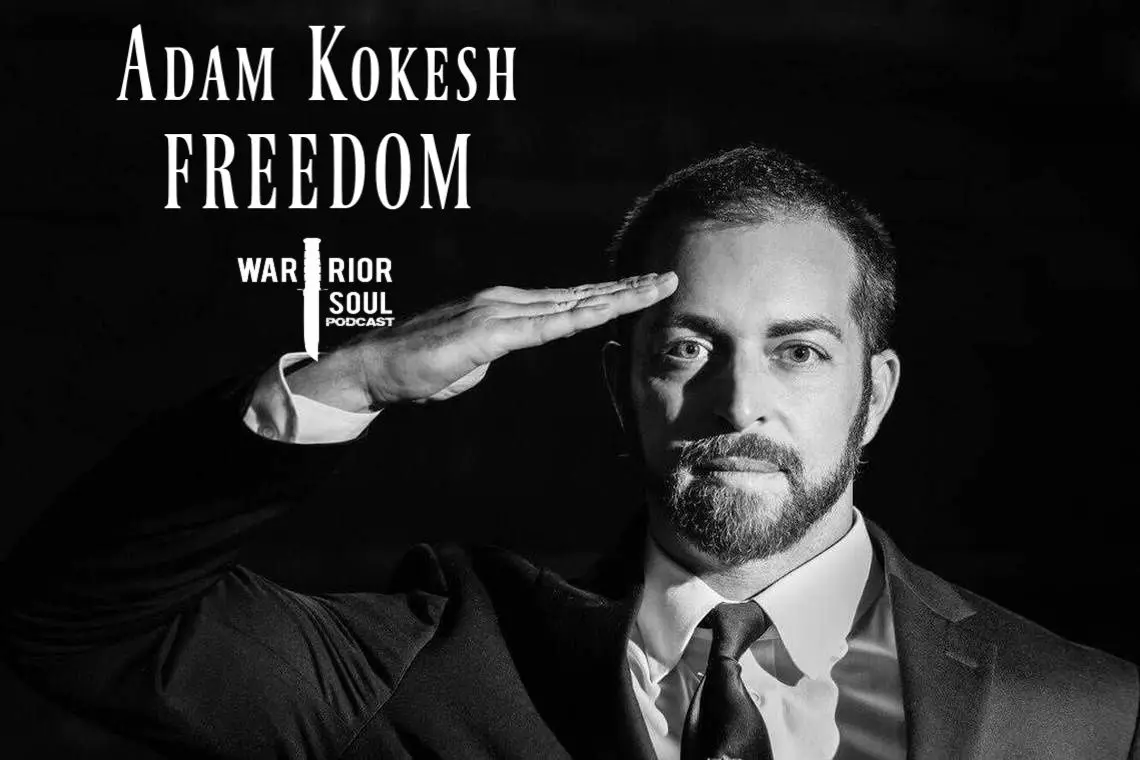
Adam Kokesh is a Libertarian activist, author, Veteran, and candidate for President of the United States.
Adam has a long history of challenging the status quo of American Politics. This began with protesting the Iraq War with Iraq Veterans Against the War.
Some of his most notable protests have ended in his arrest. These include dancing in the Jefferson Memorial and loading a shotgun in Washington, DC’s Freedom Plaza.
Recently, Adam published his book Freedom, and sent a copy of it to every address in the city of New Orleans. He is also the host of a Youtube talk series titled Adam vs The Man.
Adam’s presidential run is based on a platform for the peaceful and orderly dissolution of the United States government in favor of 50 independent states.
To learn more about Adam and his candidacy: www.thefreedomline.com
Transcript
Machine-generated from the episode audio and lightly edited — may contain errors.
Chris Albert (link to this point)
This is Chris Albert, and I'm here to remind you of one thing. Someday, you're going to die. Now that's not some morbid statement or scary idea. It's solid fact. Your time here on this earth is limited.
And you need to be reminded of this as much as possible for one simple reason, to live your best life while you can. This is the Warrior Soul Podcast.
What's going on ladies and gents? Welcome to the Warrior Soul Podcast. And today, I have one of the most interesting guests I've ever had on this show. Interesting and controversial. His name is Adam Kokesh, and Adam is what you could term a radical libertarian activist.
He'd also term him as an anarcho capitalist. To give you an example of what this means, Adam is currently running for president of The United States or what he would call not president of The United States. He says that his first act in office would be to issue an executive order for the peaceful dissolution of the United States government into 50 independent states. What he is envisioning is a completely voluntarist society that's based on private enterprise rather than government. He says that taxation is theft in all cases, and he's got a lot of really interesting views.
Another interesting thing about Adam is that he's got a rap sheet as long as my arm. You need to visit his Wikipedia page to know what I'm talking about. He's been arrested for a number of his of his activities, which have all been with the purpose of highlighting violations of individual freedom. So for example, he's been arrested for dancing in the Jefferson Memorial. Yes.
There is a law against dancing in the Jefferson Memorial. There's a really cool YouTube video that demonstrates him being arrested while dancing in the Jefferson Memorial. Definitely check that out as well. He's also been arrested for loading a shotgun with live shells in Freedom Plaza in Washington DC. All this is to highlight the fact that somebody can be arrested in our society for doing something that really isn't hurting anybody else.
And, you know, in in a lot of ways, it's violating the constitution of The United States. Now, I wanna say that there is a whole lot that Adam says that I agree with, and there's a whole lot that he says that I disagree with. But in today's society where politics are so divisive and we have a media arm in this country that likes to put single-minded views out there with sound bites that don't really get into the issues. I really enjoyed this conversation with him. He is a smart, thoughtful, and compassionate individual who I think has a genuine love for freedom and for people.
I also think that you're not gonna find conversations like this on the mainstream media. And when you do put people into positions where they have to go into a sixty second or thirty second or twenty second sound bite in order to cut for commercial break, you're not gonna get the whole story. Like I said, really interesting conversation, really interesting guy. I think you guys are at least gonna get a lot here that really makes you think. Before we get into the conversation, I just wanna say that this podcast is brought to you by F Bomb Nutrition, really amazing product made by amazing individuals.
They make delicious macadamia nut butters, mix them up with chocolate, with sea salt, with pecan butter. They also make some delicious cheese crisps, and you need to check those out as well. They're awesome. You can get 20% off of your first order of f bombs by heading over to www.dropanfbomb.com. Use the code Warrior Soul at checkout, and you will get that discount.
With that, let's get into this conversation with mister Adam Kokesh, activist, author, US Marine Corps veteran, and now candidate for the nonpresidency of the United States. Adam Kokesh, how are doing today, man?
Adam Kokesh (link to this point)
Outstanding. Yourself?
Chris Albert (link to this point)
Doing well. Doing well. Just got through the Christmas holiday, and that's a lot of heckness right there. But, dude, one, thank you for coming on.
Adam Kokesh (link to this point)
Well, Chris, I got I got a I got a I I gotta be a terrible guest and interrupt my host here and say, it's seeing a marine corps flag on the wall behind you brings brings so many warm and traumatic memories back. But but it's always good to talk to another another crayon eater. I mean, Soul.
Chris Albert (link to this point)
Man. Absolutely.
I've you know, I think we're gonna hit along. I got I'm ready over here. I got my my my nine millimeter. You got your mace because you're not allowed to have a weapon. Right?
We're gonna get into all that. But for those of you who don't know Adam, before you listen to the rest of this episode, I highly suggest you go to the Wikipedia page for Adam because it's one of the most interesting Wikipedia page I've ever read in my life. There's a long rap sheet on there. There's crazy history. He's got arrested for everything from dancing in the the Jefferson Memorial, I think, to loading a a shotgun with live shells in Freedom Square in Washington DC.
And now he's run for congress. Now he's running for not president of The United States and wanted to bring him on because he's one of the most interesting characters I've ever heard about, ever seen, and ever interacted with. So welcome, Adam.
Adam Kokesh (link to this point)
Well, thank you so much for Chris. Thank you so much for all that. It's a it's a great great way. Just just go read his Wikipedia. It's yeah.
It's it's it's an interesting read. We're we're waiting for someone to to to to make the documentary based based on based on all the all the mythologies about me on the Internet. But I I since you introduced me there as as a as a presidential candidate, I do have to I I have a big caveat kinda disclaimer with this if if if I may. I'm glad you said not president because, you know, it's it's not unfair to introduce me as a a libertarian candidate for president in 2020. But as I always point out, I'm really running for not president, and the platform is a reflection of ethical values.
And what I mean by that is well, let me step back. A part of me really dies inside when I'm introduced as a presidential candidate because you have to be a freaking psychopath of some of some magnitude to say, I wanna be president of The United States Of America. I wanna be in charge of the biggest military in the world, and and I wanna have all this power over other people. Like, you know, there's something wrong. We know this.
Like, we know this. We look at the political process, and you and and we we we get tricked, distracted, deceived into into into fighting over policy and minutiae and personalities, and you don't ever step back and go, all of these assholes think they're better than the rest of us. What the fuck are we doing buying into this? Are we like and and you have to question your own sanity then as as a victim of this system. So now you're probably going, gee, Adam, how the heck can you call yourself a presidential candidate?
Well, it's very simple because as much as I am truly technically running for president of The United States, we file the paperwork. We have a an FTC approved committee, an accountant, and a budget, and a website, and all of that. It is much more accurate to say that I'm running for not president because the platform here is the peaceful, responsible, orderly dissolution of the United States federal government leaving us with 50 independent states. Now sounds like a big deal. And in terms of getting rid of the evils of government, yeah, big deal.
When it comes to the practical, what is life in your state like, what is daily life gonna be like aside from, well, your income's gonna go way up. You're not sending your kids to bullshit wars. You're not being served, you know, spied on by the surveillance state. You don't have to deal with the drug war, the militarization of police. We're only talking about getting rid of the 3,000,000 people who work for the federal government out of the 22,000,000 who work for state and local and federal altogether.
We're talking about just trimming this destructive evil layer of fat off the top. And this came about because someone challenged me. They're like, well, Adam, you're a libertarian. You're a voluntarist. What would you do if you were president?
And I was like,
Chris Albert (link to this point)
So let me ask you this.
Adam Kokesh (link to this point)
That's the fundamental difference of this campaign.
Chris Albert (link to this point)
Yeah. That's the that's the main difference. You know, in your history, you served in the United States Marine Corps. You you you deployed to deployed to Iraq. When you got out, like a lot of people at the time.
You looked at the war, and you said, this isn't good. It's not good what we did here. We didn't get in for the right reasons. The the loss of life is
Adam Kokesh (link to this point)
I have Chris Chris, I have I have to confess. You you have to remember both of us were still gullible enough to deploy the Marine Corps. Right.
Chris Albert (link to this point)
We joined in the same year. I went in in '99, and you went in '99.
Adam Kokesh (link to this point)
Yeah. How about that? And I have to confess that my I I was against the war before the war, but I fell for the rhetoric around the occupation. Mhmm. That's what it was.
It was an it was a military occupation. Right. And and and I I thought that what we were doing was cleaning up our mess and responsible for policy. And I volunteered knowing that the war itself was a was a bad idea, but still still thinking, which is really not I I I say thinking. This is more believing falsely than thinking.
Because if I had really thought about it, it would have been obviously false. But that the Marine Corps was still, you know, a net positive impact on the world and that that that that that we can go and and you can you can heal wounds with guns. So I volunteered. I volunteered to go in in 2004, and I I wish I could say it was my own intellectual process that led me to these conclusions, but, no, I was prodded by by some of my own bad decisions, including bringing a pistol back from Iraq the first time I volunteered to go, which which in and of itself was was only a mistake because I got caught. It's not an it wasn't an ethical crime.
There's no victim. I didn't it wasn't a war trophy or anything like that. I bought it. But I, you know, I got in trouble with the marines. And when I volunteered to go back, they wouldn't send me back because I was I was under investigation.
So as a sergeant who spoke Arabic with civil affairs experience, I'm sitting at a barracks at Camp Pendleton mowing lawns and, like, checking in PFCs. You know? So was I was I was to go back. What what I had to be pissed off to figure it out. Why did I wanna go back?
Chris Albert (link to this point)
Yeah.
Adam Kokesh (link to this point)
Why? Get a purple heart the first time.
Chris Albert (link to this point)
You didn't get what?
Adam Kokesh (link to this point)
I didn't get a purple heart the first time.
Chris Albert (link to this point)
You didn't get a purple heart the first time. So you wanted to go back to to get the purple heart.
Adam Kokesh (link to this point)
I To give to to give more and this is and you know this, Chris. This is like there there there's a distinct switch that is flipped for marines.
And and maybe you can say for army special forces, and, yeah, I'm gonna brag about the branch BS here. But, no, they do they do flip a switch in the marines, in your brain, in the training. And part of it's the selection process, but there really is there's a different mentality in Marine Corps boot camp than with any other branch of service that that that implants in your brain, you haven't given enough for your country until you've died.
Chris Albert (link to this point)
I can I I can agree with that? I think that, you know, Marine Corps boot camp in and of itself, it's almost like a tearing down of the individual. It's a tearing down of of the the ego. It's tearing down of I mean, you're speaking in the third person for three months for God's sake. Right?
And so at the end of it, I was thinking in the third person. And so you get out.
Adam Kokesh (link to this point)
This recruit, sir. Yep. This recruit needs to prove the head, sir.
Chris Albert (link to this point)
No. When I I I when I used to think I, my butthole would clench up a little bit.
Adam Kokesh (link to this point)
Yeah. Yeah. You know, I I I even even as in so my start in activism was was with the Iraq Veterans Against the War. When I got out, it was just, this is bullshit. I'm not I I have to tell my story so that the American people know.
But even back then, like, I resisted that. You know? And even up until like, man, Chris, like, right today, just hearing you say that, I'm like, I I used to say, no. They don't they don't break you down. If if you're defined by your bad habits, it'll look like they break you down because they get rid of all your bad.
And it's like, no. And and the way you just pointed it out to me, I had I haven't considered this in years. But, yeah, it's it's that it's that sensation in your butthole that lets you know they've got to your brain.
Chris Albert (link to this point)
So, you know what? After your deployment, you get back and you start you start your activism. Now what was going in your through your head when you started your activism? Were were you already thinking in in anarcho capitalist terms?
Adam Kokesh (link to this point)
Or No. No. No. No. So, yeah, it's it's it's my my ideological journey is worth understanding, but, you know, still relatively simple.
So my parents were were anti authoritarian, you know, and and, you know, growing up, my dad would tell me, you know, the stories he would brag about were, you know, when he got got away with stuff in school or, you know, whatever. And my mom had us listening to the to oldies, you know, classic rock and singing along, and I got, you know, a big part of that spirit. So I was libertarian in a in a very superficial sense. I I mean, I I tell this is kind of an apocryphal story, but it it's there there was some point in high school where they said, alright. It's civics time.
Who wants to be a republican? Who wants to be a democrat? And I was like, woah. Woah. Woah.
Woah. I don't have a choice. I have to be totally fucking lame? Like, I this is America. There's gotta really, there's gotta be another option.
And they said, well, there's those crazy libertarians over there. They like to be left alone. And I was I was a punk kid. You know? And I was like, yeah.
Alright. Yep. Sign me up for that. But that was, you know, socially liberal, fiscally conservative, and that was about as far as my understanding went at the time. So I and by the way, as as as a libertarian who understands that libertarianism is not a political philosophy.
It's an ethical philosophy that you apply to politics. It's I own myself. You own yourself. This is the foundation of ethics. It's wrong for me to hit you because I'm violating your self ownership.
Right? It's wrong for me to steal your property because I'm taking something that's yours. It's wrong for me to enslave you. Like, this is if you don't have a basic foundation for ethics, you really can't build any other part of a worldview consistently. So maybe that's too general a statement, but
Chris Albert (link to this point)
might be No, I get where you're coming from, because one of my friends I think you've spoken to one of my friends, Doctor. Michael Robillard from Oxford. He Yes. Talks about this stuff quite a bit as far as ethics go and and and individualism. But but like you said, it's the the application of that philosophy to politics.
I I completely get that.
Adam Kokesh (link to this point)
The reason I am so passionate about communicating libertarianism as the ethical philosophy that it is rather than the political philosophy that people want you to think it is is because I, as a teenage boy, was inclined to libertarianism. And if someone had come to me at that point and said, oh, Adam, the reason that you resist authority, the reason that you can see that that's bullshit is because you are starting to get ethics. Now they won't teach you this in any government school because government is premised on violating ethics. But if someone had come to me then and said, Adam, libertarian oh, you wanna be a libertarian. Let me explain what that really means to you.
Let me tell you why there's this consistent, beautiful, ethical philosophy at the core of freedom. I never would have enlisted. I never would have volunteered to go to Iraq. I never would have thought it was okay to kill because a politician said so. Mhmm.
And so I enlisted in the marines at 17 when I was still in high school, the delayed entry program, '99. And and and I, you know, I wanted to have my life on the line for something I believed in, and I thought that this was the best way to do it. While I was in the marines, even then, I would argue politics, but it was, again, from not that ethical perspective, just from that, you know, basic libertarian common sense perspective. And it the message is so powerful. The the this message of of freedom as ethics that that it it it really threatens to I don't wanna say, you know, overthrow the current system. It it it really has the potential for us it it it is the evolution of humanity to our next phase beyond statism, beyond violence, beyond centralized control based on coercion. So you could say, yeah, it's a threat. It's the biggest threat there is to the entire current system to say, hey, universal ethics.
It's not that hard to figure out. You're unethical here. Let's let's change the system. And, again, just to go back to the, you know, my practical philosophy here or prac I should say practical approach to how we apply this, it's localization. I I don't want I don't want a revolution.
I want an evolution. It's more peaceful. It's more sustainable. It's more compassionate. That's how we achieve this this philosophical ideal.
It's not by, you know, attack everything that's that's not perfectly in line with it. Because there are the other thing is that when you when you get this, when you understand this, it also allows you to prioritize, you know, of all the evils in the world, what what causes the most pain and suffering? What what's what's the most destructive? And and, you know, you can't help but look at government when you ask that question from that perspective of compassion. How do we apply this truth of ethics to make the world a better place for other people?
So when I got back from Fallujah in 2004, I I was disgruntled, but not not enough to snap me out of it. You know? It was more of the frustration with the my experience not living up to George Bush's promises. You know? I volunteered to go to Iraq with a civil affairs team.
Mhmm. I was reserve artillery, and I volunteered to go active duty specifically because I believed in the humanitarian compassionate message there that was being sold to the American people as the reason for continuing to send troops into Iraq to to to occupy, to to rebuild the country. And and we were subsidiary to the infantry units there. They were responsible, as you know, for having areas of operation or AORs, areas of operational responsibility. And civil affairs was a way for them to pacify people when they felt like they needed to.
Whereas the impression that I got and I think the American people got was that civil affairs, if not in in in those words, but that the civil affairs types of efforts in Iraq were going to be the priority and the tip of the spear. So I actually volunteered to go back still. I won't I like I said, I didn't get the Purple Heart. I I didn't feel like I had sacrificed enough, so I wanted to go back. And that was when I got in trouble for the pistol and ended up at Pendleton.
And it was when I got out at that point that I was disgruntled enough to really question stuff. And and it it again, I I have to stay extremely humble in this that it wasn't like, I read a book about libertarianism, and I figured it out, and I understood the world. And that was it. Here, read my book, and everything's better because, you know, now that's what I'm all about. But Yep.
It it really was a process, and especially given the the personal investment and the like, you know, it's easy for a kid who's who's even just who's gone to a government school and been propagandized for twelve years about statism to to snap out of it. You know, you read one book and you go, okay. I got it. But imagine if you put your life on the line for those lies. Imagine if you've invested your entire life into those lies.
Imagine if you were a cop for forty years. Imagine if you worked for a government bureaucracy your entire life and retired. Imagine, you know, all just if you've been on welfare your entire life. And and not because you're one of the lazy ones, but because you're you're you're a legitimate charity case who's just you know, you were or some birth defect, and society wants to take care of you. And that's the government is is the way that that that society does that now.
Chris Albert (link to this point)
Well, these are all things I mean, and I wanna get into a lot of this stuff. With with Iraq, I have to say, you know, I wasn't in favor of the war, and I went. I still volunteered, still went over there. Didn't do much while I was there, but, you know, the the whole thing that I saw when I came back was that we had this very easy roll into Iraq, right, where where all of a sudden, it was like mission accomplished, everything's done. But then over the next few years, it quickly devolved.
And we ended up, you know, getting ourselves kind of wrapped up in a quagmire there. Now, history being, you know, hindsight being twenty twenty, you know, you look back and you see all those mistakes that were made. You look at maybe Ramadi today as opposed to Ramadi 2006, and it's a much better place, I would say, than it was back then. And the way history works, it's kind of weird because I don't want to sit there and say that maybe Iraq would have been better with Saddam Hussein in charge, but I also disagree with the fact that we went in there in the first place and we spent so many American lives and and caused a lot of destruction. Right?
And so a lot of times, I feel like if I sit here and I criticize that movement every step of the way, I'm kinda sitting here, and I'm kind of armchair quarterbacking the whole thing. So that, you know, as far as far as everything goes there, do you feel like Iraq today is in a better place than it would have been had we left it had we left it alone with Saddam Hussein, or could it have evolved?
Adam Kokesh (link to this point)
No. Not even that's I mean, that's I I mean, you can you can say what you want about Saddam, but you look at the quality of life and the and it just the value of stability. And, again, this is why I'm not you know, you can call me a revolution here if you want, but I'm I'm I'm not an advocate of of revolution so much as evolution. I think that's that's an important distinction there. And you did point out benefits, but you just look at the overall quality of life.
I I mean, you know, it it how how many what what the population of Iraq was before the invasion about 25,000,000, something around a million people died. Like, can you like, the that's like, in The United States, that's one in twenty five people. And I think that's a conservative estimate, and that's just death. Just the one metric of death. Not I mean, you'll get Fallujah.
Fucking a. Birth defects were depleted uranium. You wanna make any case that a country where birth like, no. It's you can't say by you you have to torture logic to try to say that Iraq is is is in any way better better. And and and that is kinda personal for me because I watched those rounds fall in Fallujah.
And then years later, I had to go and look online at the pictures of the children with birth defects as as a result of of of what what I was a part of. Like, there there's no way. It's it's sick. It it it's really sick to to even try to make that case. But you think one in twenty five dead?
Like, in in The United States
Chris Albert (link to this point)
Yeah.
Adam Kokesh (link to this point)
The the the we have about three hundred and thirty million people. I mean, just doing the math real quick, that would be about thirteen million people dead. Right? Mhmm. You you think you think in any well well, the economy's thirteen million people died, but but the economy's a little better now.
Like, no. No. No. No. You know, you don't you you don't get to say crap like that with a straight face.
It's it's and and be taken seriously by someone who has any sense of the perspective of of the destruction. So let me get conflict.
Chris Albert (link to this point)
Let me get into this aspect of it now because, you know, you you came out and you get into activism. A lot of people in your position would have kind of been lured in by the left. They would have been lured in by by socialism. They would have been learned in by lured in by a lot of the
Adam Kokesh (link to this point)
Hold on. Hold on. You're doing my dad. I want I want it, Chris. I'm sorry.
I don't I don't just totally mean to interrupt, but I have to go back because, like, I didn't get to finish the part about just the evolution here for what brought me to to to volunteerism. I really wanna want people to get that. And and I know exactly where you're going because it connects exactly to that question because my first full time activism was Iraq Veterans Against the War, and I was surrounded by lefties. And I was there as this arrogant young libertarian. Well, I'm a libertarian.
I know I'm right about everything. I just have to prove it. You know? And we would and and it was being surrounded by other veterans who were generally leftist, and many of whom had been you know, because the antiwar left dominated the antiwar movement more than than libertarians. Oh, you see libertarians were antiwar even when there's a democrat doing it.
But it was that I was in these really good conversations with people who I knew weren't lying to me. They genuinely believed what they believed. And I knew that I genuinely believe what I believed. And I knew that these guys were activists, that that these were guys I I'm getting arrested with on on a regular basis. That they're you know, we're we're doing civil disobedience.
We're we're, you know, around Washington DC, New York doing the the you know, we did the mock combat patrol street theater stuff together. And, like, they're they're arguing with me about education policy. They want more government in charge of education. And and I'm going like, that can't be right. And I'm arguing for the market based perspective.
But until I was able to understand the ethical case that was at the foundation of every case I was making, I wasn't we we the the conversations were unsatisfying intellectually because I was always thinking, like, I've I've just the the analytical brain, like, there's gotta be a right answer to this. I genuinely want the best education for every American child. This person genuinely wants the best education possible for every American child. Why can't we kind of just figure this out? And so that challenge intellectually led me to want to come to a more consistent understanding.
I I've actually I'm not gonna say his name because he hasn't come out publicly about this yet, but there was one guy in Iraq Veterans Against the War who was an outspoken member of the Communist Party. And him and I were were somewhat rivals within Iraq Veterans Against the War. And he he came to me this year. I mean, this is from working together in in 2000 I mean, gee, was it? Two thousand seven and eight?
Mhmm. Like, going back a decade. He contacted me recently to go, I'm sorry. I think you were right about everything. And I I I I'm I'm obviously, like, you know, a little mischaracterized there.
But he was basically like, I'm not a communist anymore. And, you know, so well, you know, I I and I don't I don't I I'm I don't wanna, like, mischaracterize or misquote this particular individual. But I I've heard similar, you know, maybe less dramatic cases of people coming to me saying, yeah, finally, after all those years. But that was the process for me. And it really does feel like I've settled on, yeah, this is ethics.
And it's kinda like you can't unlearn what you have learned. I've tried. You know? And I would make the case that nobody who becomes a libertarian ever goes back and that anybody who's gone back was never a libertarian in the first place, or they didn't get it. And even when you join the libertarian party, which I'm not just running for the nomination of, I'm a huge advocate for.
In in the book that that we're about to deliver 200,000 copies of to every mailbox in New Orleans, you know, there's a big plug for for the libertarian party in there. And specifically, since it's going to New Orleans, you know, the Libertarian Party of Louisiana is in there. When you join the Libertarian Party, you have to check a box that says, I do not support the use of force to achieve political or social goals. That means ethics is more important to me. Yes.
I'm asserting. Yes. Even in politics, I will do the right thing. I will not be tempted by arguments of practical outcomes, of of ends justifying means. No.
The the the means must be ethical. When you really get it at that level, you don't go, fuck it. Let's just go back to pointing guns at people and telling them what to do. No. You don't like, it's it's it it doesn't happen.
So that that's been the process for me. But, Chris, since since you mentioned and and I wanna go back to that that last question that I interrupted of yours about, you know, veterans in in IVAW being tempted by the left. And and and I I wanna open this up to someone bigger if if you wanna get back to that question, of course. Please, you know, it's definitely worth getting into in in a more more precise pointed way. There's a a sort of identity crisis among the warrior class right now in the modern era, where it used to be that being a warrior could mean I do what the political class tells me to do, and I'm willing to do whatever violence it takes to protect my country as defined by my government.
Mhmm. And the lies of collectivism behind that are not surviving scrutiny in the age of the Internet. And there are a lot of guys coming home. And, Chris, like you mentioned about, you said in your own process that when you got out and you were looking for a more consistent worldview that you hid in grad school for a while.
Chris Albert (link to this point)
I did. Yeah. And we mentioned that before the call we got on the before we hit record today. But I spent ten years in higher education after I got out, all the way up through PhD. Pretty much, like, wasting those years in a lot of ways and going through a lot of the same kind of philosophical, I guess you could say self torture that maybe brought me to different conclusions.
But but, you know, in a lot of ways, I hear exactly when I when I hear you speak, a lot of what you're saying, and like I said, I don't agree with everything, but a lot of what you're saying is is very logical. And here's the thing, because I was surrounded by leftists in graduate school throughout the whole time, what I can say is that what you're preaching and what you're discussing is more ethically consistent than anything I've heard from the left because the left preaches nonviolence. But I'm reading Gulag Archipelago right now by Alexander Solzhenitsyn and talks about the violence associated with leftist movements. And we know that there has been millions of deaths caused by leftism. So what you're saying right now, it's it's it's slight it's revolutionary, but it's also very logically consistent.
Adam Kokesh (link to this point)
Right. Yeah. And and, you know, I'm I'm definitely I I will put it as a mark to my own credibility that I'm one of the people who will always say, don't just believe something because I said it. If if if I've told you anything, if you've heard anything from me, you know, aside from the petty fact to my story. But in the bigger sense, if you have heard anything from me that rings true for you, don't accept it because you heard it from me.
And this is this is because I want it to sink in. You know, I don't want you to because a lot of people have have been like you know, I'll I'll have conversations with people on the street. Oh, yeah. Freedom. That sounds good.
You know? And and you can tell that they're not really absorbing it. And and if I say, hey. Freedom ethics connects. Therefore, government's illegitimate.
Let's move past it. That's I I want you to go through that process for yourself and know it the same way that I know it as as as a fundamental truth. Now, Chris, part of my story I I I didn't get to there was that that when I got out of the marines, I actually did I went to grad school myself. I was getting a master's in political management at at George Washington University in Washington, DC. And I I didn't wanna be the guy in in front of the camera.
I wanted to I wanted to be a political operative. I thought that, to me, that was more fun to be the to be a campaign manager or or campaign consultant type. And then with the Iraq Veterans Against the War, I was you know, I became a national figure with that, you know, very quickly and, you know, realized that that that I had something that that I had to to represent with my own face that I had to come out and and say with the credibility of, yeah, I got the freaking tattoo. Yeah. Listen to me because I was in the war, and they're lying to you about, know, like, all that kind of stuff.
But there what what I wanted to get at that, I think, you know, for our audience today, and and I I know you have some veterans who are listening to this right now, that there there I I think there's kind of a a and I this identity crisis. Right? Like, this identity crisis in the warrior class is we're realizing that there there's something deeper to being a warrior, to being a man generally, but not necessarily, and this is not a male exclusive thing, but to being a person who decides that their role in society is to be a protector of the innocent, to be a defender of justice, to be someone who is willing to serve a greater cause with your life. And and that's a really big deal. And and even, you know, you hear the term warriors, warfighters.
Yeah. You know, like, kind of stuff when when you're in the marines to to blow smoke up your butt and and make you feel better about who you are and what you're doing and all that. And and as a result of that, I've kind of, like, I've kind of shied away from from thinking about it in in those terms. But I wanna I wanna plug a group here, if you don't mind. This is Wake for Warriors.
And these guys do wakeboarding retreats for vets. And it's a lot of disabled vets and wake surfing. And I I didn't even know wake surfing was a thing till I went out with them, but I was doing it by the end of the week, and it was freaking amazing. They got guys with with one leg, I mean, with prosthetics up on on on boards. My buddy, Mike Nelson, who I I posted a picture of him on my Instagram if you guys wanna go back and find it.
He's blind. He's a he's a an army medic special forces Afghanistan veteran who is going blind and is fully legally blind. At this point, it's he sees shapes and shadows. As far as I know, I mean, but he's he's he carries a stick. I mean, this dude's blind.
They got him wakeboarding. I'm sorry, wake surfing. So, like, he he's wake surfing by by sound and and we actually had him do it with a mask on at one point. So, like, no. He's not doing this by sea of shadows and stuff.
No. He is like he's he's wake surfing blind. You know, he put on a unicorn mask. It was hilarious. Great great pictures in that.
But there was something for me because I've a lot of us, like you said about hiding, it's kind of like we're right now, guess we're technically middle aged, you and me at this point.
Chris Albert (link to this point)
Technically, I don't like to say that. But, yeah, we're getting there, man.
Adam Kokesh (link to this point)
But as as as life expectancy gets I want life expectancy to keep going up so I don't have to be middle aged ever. Right. Wanna never be middle aged because life expect yeah. But but no. But but for our generation of of, you know, slightly older than enlistment age veterans, there there is a see, think when you use the word hiding there, and I don't wanna presume about your experience, but we are kind of hiding from something because we know and there are so many great quotes that come to mind on this point.
But that, you know, the real enemies are not to be found in the sands of some far off land, but rather right here at home. The real enemy assholes in the suits in Washington DC who send innocent people to die for for no better reason than than greed and money and power. And we all know this. You know? It's like, we all we all know it, and it's hard to admit.
It's really fucking hard to admit because there's big implications. If if you join the Marine Corps because you thought the Marine Corps was a was a good force in the world, if you volunteered to go to war because you thought that you were helping people by by by pointing guns at others, you know, if if you really believe that and then you realize and you acknowledge, you admit to yourself, the real enemies are in the capital. Mhmm. Yeah. You don't stand up and do something about that, you're not a warrior anymore.
Yeah.
Chris Albert (link to this point)
I and I hear what you're saying there. I and, you know, when I when I say hiding hiding in grad school, I was hiding from everything. I mean, was hiding from responsibility. I was hiding from I was trying to hide from my own alcoholism at the time. I was hiding from, you know, I every my whole family said I should go and work for the government afterwards.
And I went I did an internship at the State Department for a while afterwards, and I just couldn't deal with the narrative that was coming out of a lot of people's mouths because you've been around Washington DC. Right? You you you go, you socialize around there. What's the conversation like with somebody you first met in Washington DC? It's, oh, where do you work?
What do what do you do? Who do you know? What what can you do for me? That kind of stuff. And and that's pretty much what it was like in DC when I was down there.
And, you know, in this day and age where we have this political division, and, you know, I I know your own feelings about president Trump, but but when I hear people categorizing him as as being so evil and so this and so that, but not necessarily taking a look at Hillary Clinton or some of the other politicians that were out there and and realizing that
Adam Kokesh (link to this point)
Blind consistent standards?
Chris Albert (link to this point)
Right. Right. It's it's pretty much the same thing. That kind of stuff drives me insane because and and I consistently find myself defending president Trump because of that, because people are applying standards to him that they're they're they're they're blind to when it comes to every every other candidate. And it's just that with him, a lot of this stuff's a bit more apparent, a bit more a bit more out there because he's not a trained politician like most of
Adam Kokesh (link to this point)
Right. Well, I act I and so I actually think Trump represents a a major step forward for humanity. And and I hate to admit this is, you know, and put it in such positive glowing terms because he is he does still represent a lot of the current evil paradigm. Trump is willing to do violence against peaceful people to maintain his power. Let's like like, at its core, it is absolutely fucking evil.
Taxation is theft. War is murder. Police are a gang. Like, it's just it's not
Chris Albert (link to this point)
So so when you say when you say violence, you mean taxation. You mean the all of these things that because taxation is implied violence. Right?
Adam Kokesh (link to this point)
Well, I well, hold on. I I use the terms very precisely most of the time. I do slip up occasionally, but, no, I I use violence to to refer to a a physical act of aggression that is a violation of self ownership. So when I say taxation is theft, it is that government does not own you and doesn't own your things, and it is taking something from you by coercion, and that is the threat of violence Correct. And or the threat of force.
So, if you don't pay your taxes, eventually, they take your stuff. If you don't comply, eventually, they take you and lock you in a cage. That that's the you could say that there's no violence. No. That's that's violence.
That's that's force being applied against an individual who doesn't deserve it. That that that's force being applied in an unethical way to violate someone's self ownership to to take value from them. You are stealing from them. You are violating them. You are either enslaving or claiming ownership over them that that's illigent.
So Trump actually is is a response the fact I should say Trump's presidency, the fact that he was able to be elected president is a response to the positive shifts underlying that in society. George w Bush ran on a noninterventionist foreign policy and then gave us the global war on terror. Donald Trump ran on and on in the richness foreign policy, and he still doesn't have absolute control over the monstrous bureaucracy. But generally speaking, I I see he's genuinely moving the needle in a positive direction there. Significantly.
And I'm willing to say, heck yeah. Celebrate that. That's awesome.
Chris Albert (link to this point)
And more so than Obama. Correct?
Adam Kokesh (link to this point)
Yes. Yes. And and that's oh, that's yes. Absolutely important to point out.
Hard for the left to admit that that Trump has been more distinctly anti interventionist and and and promoting of peace even though his rhetoric is combative as it is. And and I'm not gonna pretend to be an expert in, you know, Kissinger style realpolitik. Is is Trump needling Kim Jong Un helpful or not? You know? Hey.
Let you let let him play his game and have his strategy. That's fine. I do genuinely believe that as much as Trump is that evil psychopath who wants to be president, still that he is, as an individual, somewhat more reasonable and compassionate than than The other type past. Before.
Chris Albert (link to this point)
Yeah.
Adam Kokesh (link to this point)
And and now people are saying Trump versus Clinton. Adam, if you see this as possible, you gotta support Trump over Clinton. It's like, no. Because, again, I see the underlying dynamics here. And if if Clinton was elected, you you could play all these different what if games.
But in terms of, like, the bigger picture, not that meaningful of a change because yeah. And and, you know, again, I respect that people will will add up the details differently than I do. That's fine. You wanna see some some benefit from Trump that that's more substantive, that's fine. But I could just as well play that game with Clinton and say if Clinton was elected, we wouldn't be arguing of, is Trump just barely libertarian enough for us to be quiet and and support him?
No. We we'd all be fighting the system. We people would be waking up so much faster because there really is something distinctly offensive in in the statism of of Clinton. It's worse propaganda. It would be like so a lot of people who look at the state from this perspective go, oh, presidents aren't elected.
They're selected. And it's important to point out how that's true and the limitation and the truth of that because they keep people off the ballot. They control the selection, but the actual process of selecting a president, they allow to happen by popular vote. And we have the account of like, they can't really get a in in the modern era of the Internet accountability and polling and exit polling, they they can't really get away with, you know, stealing. Like, if Hillary Clinton was was polling at 90% and then on election night, they're like, nope.
It's Trump by a hair. You know, they would you know? No. I'm sorry. Just just to discredit the system too much.
Right? So they they want the best front man for the system that they can get. They want a good prop they want if you're the powers that be, if you're the Rockefellers and the Warbucks and whoever it is that's that's the, you know, the real string pullers here, you want the American people to get the best propaganda they can get to pacify them. And the best way to find that out is market testing. And the best way to do all of this at once is with an election.
And so they they genuinely want there to be a certain contest in the election, but not for the reasons they stay.
Chris Albert (link to this point)
Well, yeah. I and as far as everything goes, I mean, the message of Clinton doesn't match up with a lot of the things we know about her. You know, for example, one of the things that that really turned me off about her was her talking about the legalization of cannabis publicly, but also going back to her
Adam Kokesh (link to this point)
Like, yeah. No. No. You've been sitting in the senate for how long and didn't say shit, and now I'm supposed to
Chris Albert (link to this point)
Well, none of that. She said behind closed doors that she'd never allow it to happen. She would do everything she could to fight the legalization of cannabis, which really, really turned me off, because, you know, I told you before we hit record, I don't even like cannabis that much as it doesn't feel good, but it's the one thing that helped me out of all the medications I ever got for my ulcerative colitis. Right? It's the one thing that helped put me into a relaxed state. It's the one thing that medically helped me.
I don't touch this stuff right now because I'm out of it, and I really don't like being high, but it helped me so much, and it could help so many veterans out there. It could keep them off of pills. It could keep them off of opiates, which are extremely dangerous.
Adam Kokesh (link to this point)
And I've done a I've done a lot of work on this. When I was with the Iraq Veterans Against the War in DC, I was a I I ran a peer support group for vets with PTSD. I went to the VA in DC, the flagship of VA health care, and said, hey. I'm having trouble sleeping. Can I talk to someone?
They sent me out of there with a little paper bag, five prescriptions. Three of them had suicide listed as side effects. The Veterans Administration, as an arm of the government that doesn't care about you, is willing to kill you as a vet. They're willing to see you die by poison as if it's the best medicine available based on that lie in order to pay off the lobbyists and the CEOs and all the shareholders of the pharmaceutical companies and the paper companies that want hemp illegal, which we we we have. Fortunately, it looks like that's gonna be opening up very soon.
Very excited about that, the farm bill. But, I mean, we look at the police. People be police exist to protect you. There are police departments all over America today where they have been busting people for cannabis on a regular basis, and in their laboratories, they have rape kits that have not been tested. They are willing to let veterans die and women be raped.
I should say to let rapists go free who could otherwise be caught, just to be precise here. They are willing to do that for their own interest. Pretty pretty sick when you when you step back and you understand it properly.
Chris Albert (link to this point)
That's a it's pretty insane, man. And, I mean, as far as everything goes, that that issue in and of itself is is the the one big thing over the past few years, I think that's changed my own political philosophy more than anything. Just understanding that concept of the fact that if I know of something out there that could help me or that could help other people that you could be put into a cage or trying to get that thing. That's that's very, very it's disgusting to me. And, you know, I I think that the more the like you said, the Internet allows us to educate ourselves on what's going on out there.
The the more the Internet allows us to to develop our own knowledge and our own arguments, the less they're gonna be able to do this. The less they're going to be able to do this because we're seeing a lot of pushback with cannabis now. Kratom, which is something else that I got exposed to over the last year. You know, I've seen so many different campaigns to try to make kratom illegal. Ohio, Florida.
The LD fifty on kratom, literally have to take you have to take tons of it in order to die. They found an LD fifty on it, but it's it's ridiculously high, and people are trying to take that away from people. I I just can't can't get with it.
Adam Kokesh (link to this point)
Well, Chris, if if if I may, since we're we're coming a little bit towards towards the end of our hour, zoom out for a little bit and talk about the bigger picture and and and what I'm working on here with the presidential campaign and and with the New Orleans book bomb that that or I should say, Operation Big Easy Book Bomb as its formal title. Because I and I'll I'll tell the story of this book very briefly that I I started writing this when I was in jail in in DC in solitary confinement. And people would send me all the best libertarian books on on philosophy and literature about, you know, social science and civics and and and government and all that. And and what I realized is that, like, very few people convert to a new worldview from a conversation. I've I've and and and I I'm, again, honored for this opportunity to share this with your audience.
But this is an this is an introduction in in that sense because I understand when when you have these deeply held beliefs, you have to displace them for yourself. I like to use the flat earth round earth model, although the modern flat earth movement kinda ruined it for me. So who are those trolls?
Chris Albert (link to this point)
You might you'll get hate mail from that.
Adam Kokesh (link to this point)
People used to think see, I always have to do that caveat first now, but, no, people you like, I don't think it today anybody actually thinks the world is flat. I think they're all just trolling us. It's all bullshit. Bullshit. They just they just yeah.
I'm falling for it right now because I'm even mentioning it and for you know, giving it any credibility of existing. But, no, people, like, used to think the worth the the world was flat in the center of the universe. And then someone came along and said, maybe it's round and it's not the center of the universe. And, well, you know, they kill people for saying stuff like that. But with the old model, they had all these you know, the the orbits of the stars and the celestial bodies going around this flat Earth.
And in order to explain what they were observing now with telescopes, they had to make these really complicated equations. And when when they came along and said, no. Maybe the Earth is round. It's not the center of the universe. All of the equations got really simple.
They go, oh, yeah. Normal orbiting patterns of, you know, ellipses, and it's all yeah. Math it's geometry. It all makes sense now. Physics is normal.
How about that? Right? It it holds together. The the universe makes more sense. And eventually, this model displaced the old one.
You know? And if you had this model in your head and someone said, no. Here's a simpler model, but I've done all this work. I've put all this effort. I've thought about this for years and years and years.
I look, I did all these calculations, and I put all this effort into making this work, and I know that this is true. No. It's no. It's simple. But the no.
It's simple. No. No. No. It's like and this is exactly statism versus freedom.
You know? Well, no. Government loves us, though, but it gets open, but the police are there to prevent this one cop helped me this one time. But but there was this one war that had this one good outcome with this one thing. Or But sometimes taxes go to pay for roads, and god, all that goes no.
Taxation is theft. War is murder. Politicians are criminals. The nonaggression principle is based in ethics. That's the foundation of freedom, and this is the truth.
And it's way simpler, and it rings true. There's a lot less math. There's no excuses. There's no bullshit. You get to stop lying to yourself.
And that's the gift of this message, and that's that that that's what I did my best to give people in a way that they can do the math to displace the old model of statism with this. And so it's a 100 so I when I was in jail, I took I had all these great books, and I said, I'm gonna take all of their strengths and none of their weaknesses, and I am going to become the very best rip off artist the freedom movement has ever known. To take all of their best qualities and none of their bad ones and combine it into one ultimate conversion tool, primer that lays this out in a way. Now there are no historical facts in this book in the sense that I'm not trying to say government is wrong because this one thing happened here and then and then no. What this lays out is the truth in a purely philosophical way that as you read it, you go, okay.
All of my data, all of my observations of government, they fit into this model a lot better than what the Democrats and Republicans are trying to sell me. This makes a lot more sense. And it it I've done depending on how you wanna count what is a national tour, you know, I've done five or six mostly with this book, some with the Iraq Veterans Against the War. But but since I got this message, everywhere I've gone since I got it for myself, I've asked people, how did you wake up? How did you become a libertarian?
And I've never heard anyone say, Well, I was in this Facebook flame war, and this guy I was arguing with, he just made the perfect meme. And I was like, Yeah, must be right about everything. You know, I've never heard anyone say, well, I was at a bar, and there was this guy yelling at me about politics. And and he turned the volume up just enough that I was able to really, really understand what he was saying, and that would convert. No.
Like, it's not that it it happens in in quiet contemplation. You know what? It happens when you're able to sit back and consider your own worldview that you've been that you formed in your head from primarily what you've been told and how you've been lied to and instead go, wait. No. I'm going to I'm gonna take my observations.
I'm gonna draw my own conclusions. And and what this book does is it gives you that model by which you can see how your observations aren't the exception. And you're not the weirdo. No. You're not the only one who feels this way.
You know? Your observations are correct. It's the narrative, the story that we have been fed to explain reality that's false. And and and getting past that is right now the most important thing that we can do for humanity because the vast majority of human suffering that I see on Earth today is directly connected to this lie, this myth, this great superstition of authority that if enough people vote, we can we can put ethics to the side. Not true.
Chris Albert (link to this point)
Awesome. And your book is at freedomline.com. Right?
Adam Kokesh (link to this point)
That's it. Free in every digital format possible, including audiobook. And so so, Chris, the big the big thing I'm working on here, and this is what's so exciting, because this book is only a 100 pages, I can get it printed in China of all places for just 30¢ each.
Chris Albert (link to this point)
Well, here's something I wanted to ask you.
Adam Kokesh (link to this point)
Hold on. Hold on. I can also as you see the postage printed on the back there? Government warning. I can get this oh, that the government warning's fun too.
My book was actually banned in prisons.
Chris Albert (link to this point)
Oh, wow. The this publishing publication contains information which poses a threat to the security, good order, and discipline of this institution. Interesting.
Adam Kokesh (link to this point)
Yeah. Yeah. And that was so we had a fan who bought a copy of my book and tried to send it to someone in a federal prison. And we got a letter from the warden saying that the book is banned in prisons. So I take that as a great endorsement.
And what we're just so I just raised and spent a $131,000, which for me is more money than I've well, I never I I I didn't even have most of it. I was able to get donations to go directly to the the printer and the and the bulk mailer for this one, for for for a big chunk of it. But it's certainly more money than I've ever put towards anything in my life. And we've got 205,000 copies of the book printed. They are as we speak.
Today is December 27. And yesterday, I got an email from our bulk mailer that the books have been sorted at the warehouse in Sacramento, and they have been picked up by FedEx. And they are on their way to every individual United States Postal Service substation in the city of New Orleans. And from January 4 to January 11, we got a week window. We can't do it all in the same day.
We are using the government mail service after all. Excuse me. Basically, everybody in the city of New Orleans is gonna get this book at the exact same time. And using the word here very metaphorically, I hope that that kind of forces people to have an opinion on it. And, you know, you put a book in someone's hands, it's kinda hard to throw it away.
But even the, you know, the three paragraph summary on the back, if they read that, that's a pretty good introduction. And just to be able to put that in front of, you know, a few 100,000 people is is really exciting for me. Now, strategically, the way I see this, our movement of of of libertarians, and by that, I mean, the people who get it philosophically. I mean, if you say socially liberal, fiscally conservative, or freedom inclined excuse me. Some some surveys will say that, you know, 15% of America or 11%, I think, was the the latest from Pew Research is that, you know, 11% are libertarians and and kinda know what that means.
I have a little bit higher standard, but I I I respect a a broad and inclusive definition of of libertarian. I want it to be inclusive. But in terms of people who understand it enough to understand it consistently and to understand the imperative implied by this, we're really only about 1% of the population. You know, out of 330,000,000, there may be three or 4,000,000 of us. Again, depending on how you wanna slice it.
But there's about 10% that's that that identify as libertarian but don't quite understand it yet. That's kind of our low hanging fruit. That's our target audience. If you think about conservatives and and liberals, you know, they only really represent about in terms of, like, real intellectually committed people who will argue with you and advocate as liberals or conservatives, they only really make up about 5% of the population each. That's, like, the hardcore base.
And so for us as 1%, to be fighting against two fives that are working together against us, it doesn't really make sense. We need to grow the moon. We need to grow the base a lot more before our engagement in politics becomes more than an exercise of spreading the message. Right? And I think I and by the way, I am running to win.
I'm not running an educational campaign. I believe on a separate level here that we can unite people on localization. That localization unites people because it's the everybody gets what they want strategy. I don't have to argue with you about philosophy or politics to the role of government. If you want a community organized like you want in your community, you wanna live with conservatives or liberals, fine.
As long as you're not holding anybody prisoner, and as long as you're not forcing your views on your neighboring communities, that's okay with me. That bring we don't have to be united under one government to be united in American values of respect for other people's rights and freedoms. That's so huge. So right now, if if if we can just get this message to that right 10% and that takes us our movement really from 1% to 10%, that's enough of a political force that we can start winning elections based on localization, taking government apart from the top down until it gets down to the community voluntary ethical individual level essentially. And if we pull this off the way that I envision it in New Orleans next week, you're gonna be seeing a lot more of these.
And this this is the big easy book bomb. You know? Who knows? Maybe maybe phase two of this operation is the American carpet book bomb.
Chris Albert (link to this point)
What? I gotta I I gotta ask you one question before we get off. And and this is something that that, you know, I was thinking about before, and it you just mentioned China. Right? To what extent does this movement have to go international for it to become successful?
And the reason why I asked that is because in the world system we live in right now, we live in a system of nation states. There is there is a China, there is a Russia, there is, you know, there are other powers out there that, you know, they operate on the state basis. Alright? And they do wield power just like The United States. So what to what extent does this need to go international, and how would that go about if you were to say become the not president of The United States and dissolve the the US government?
Could that be done in a world where China and Russia exist?
Adam Kokesh (link to this point)
Chris, thank you so much for setting me up for that. And if you don't mind, I have some very passionate feelings about that because I believe a big part of what you have implied there, and I I know to a certain extent you're just playing devil's advocate, is that somehow being more free America, being more American, being more in line with the vision of a national defense that our founders advocated is somehow going to make us weaker in the world.
Chris Albert (link to this point)
Well, I'm not I'm not saying that. What I am saying is is let's say we dissolve the US government. Right? And I'm not saying that that, you know, that involves
Adam Kokesh (link to this point)
What if China takes over? Yeah. What if China wants to invade. Right? That's right. Cool. That's Am I right?
That's Right. Right. Exactly.
Chris Albert (link to this point)
What if they come what if they trying to be?
Adam Kokesh (link to this point)
Right. Right. Right. No. No.
And it's it's the the question is a reflection of how dumb, dangerous, ineffective, and un American militarism is. The founders of this country were against having what they called a standing army of any kind. They were for a militia based defense because they knew it was more ethical and more effective. And we have been lied to from the very beginning about war when it comes to what war is. We are taught that wars this is in the very language.
Wars are fought between countries. It was America versus China versus Japan versus Germany. It's utter bullshit nonsense. Wars are not fought between countries. You gotta stop and think about this and really absorb it for a second.
Wars are conducted by governments using violence to expand their protection rackets, and I cannot stand it. I when you said we earlier talking about Iraq, I go, okay. Yeah. We can say that. But when I hear the average American say, we invaded Iraq, no.
The fuck we didn't. You were sitting at home on your couch. We didn't do it's really important to separate responsibility here. The military did this. The government did this.
Not the people, not the country. America is too good for this government. And to say it is an insult to America to say America did something when it's the government that did it. That is a huge insult. And so if you say we need a military to keep us safe, no.
Having a military makes us less safe because governments will only invade countries to take them over if they think they can govern them. Mhmm. Why is Afghanistan the graveyard of empires? Because they refuse to be governed. The best defense, as the founders of this country advocated, is a well armed population that refuses to be governed by anyone.
You're afraid of China coming in? I say, come on in to a free America. Shop at our stores. Dine at our restaurants. But the minute you send a tax collector to my door, he's gonna get shot in the face because this is America.
You think China's gonna invade that country where admiral Yamamoto in World War two said, no. We can't invade the Mainland because there's a rifle behind every blade of grass. Yeah. That's America. No one is gonna take over this country, only ourselves.
It is only our own internal weakness, our own conflict, our own gullibility, our own inclinations to injustice and and violence and coercion through government and control and fear that lead us to the enslavement of the tyranny that we experience today. No one can fuck with America but America, and we are the answer to this. China is not a threat to a free people. The government of China is the greatest threat to the Chinese people. When we talk about this movement going global, absolutely.
And what makes me excited about this moment for The United States is that if we really claim this, if we really take this opportunity, if we really if we we get to lead the world in freedom once again as we did in the first American revolution, incidentally, by once again overthrowing the biggest empire the world has ever seen. It used to be the British. Now it's the American governments. And when we do that, what we will have given to the world is true Americanism. That heritage of not just not just being bigger and badder and better than everybody else.
That's bullshit. No. But being being righteous, being willing to put your life on the line for something you believe in and stand up for what you know to be right. And right now, we know that government is wrong fundamentally, undeniably, irrevocably, at its core, ethically wrong. And the sooner we move past as a species for humanity, the better off we will all be.
So when America does this, again, you think you think America gets rid of we get rid of our federal government, and I don't know, GDP doubles, and productivity doubles, and people are freer and happier. You think the people of China are gonna go to their government and say, hey. Let's invade those happy people. No. They're gonna go no.
No. No. And if China's government goes to the Chinese people and says, oh, look. America's weak now. Let's invade them.
No. The Chinese people are gonna say, wait a second. They got rid of their central government and the sky didn't fall? What are we paying for our central government again? Oh, yeah.
Way too much. We don't need you either. That's how this is gonna play out. Those are that that that's how these dominoes fall. And I could be wrong about my premises here, but I can't find any that are more in line with observable historical facts.
And we're about to find out in practice if I'm right.
Chris Albert (link to this point)
Awesome. Adam, I wanna thank you so much for coming on. And, you know, like I said, everybody head over to freedomline.com. Check out Adam's book. He's also got Kokesh for president up. And be sure you check out that Wikipedia page because you'll be like, holy shit.
Adam Kokesh (link to this point)
And, Chris, if I may just say one more thing again, thank you for this opportunity. And, for people who are watching this, especially in today's Internet, it's crucial that that we support independent media. So please support Chris's work and and any other independent media outlets online who you know are spreading a message of righteous contradiction of the mainstream media.
Chris Albert (link to this point)
Right. You're not gonna get this on CNN, Fox News, or MSNBC. So talk to you guys later, and get out there and live your best lives while you can.
Host of the Warrior Soul Podcast and founder of Warrior Soul. Worldwide trainer and nutrition coach, contributing author at Testosterone Nation and Muscle and Strength.