Podcast episode
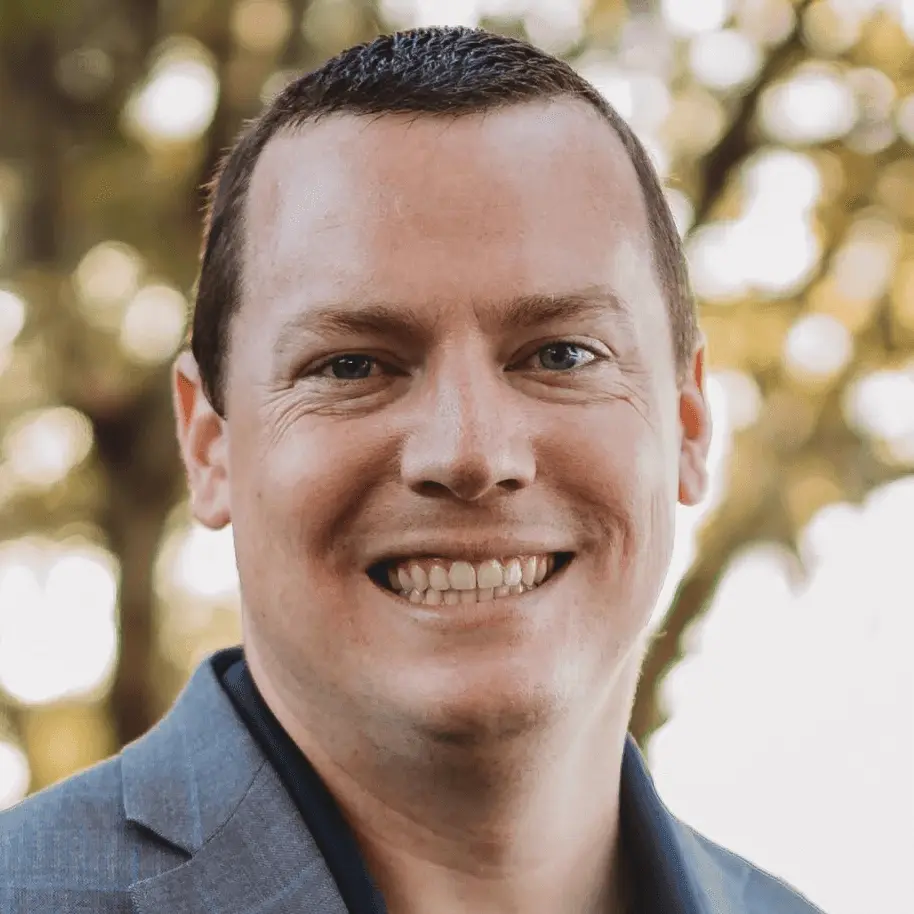
Benson Munyan: Clinical Psychologist and Veteran
Hosted by Chris Albert
The Warrior Soul Podcast
Dr. Benson Munyan is a clinical psychologist and a US Army veteran
Dr. Benson Munyan is a veteran of the US Army, having served tours spanning across the Iraq and Africa as an artilleryman and small arms instructor before accepting a commission as a Healthcare officer. He currently specializes in the treatment of anxiety, depression, and trauma at Neurocove Behavioral Health, LLC, which he founded.
Websites:
Transcript
Machine-generated from the episode audio and lightly edited — may contain errors.
Chris Albert (link to this point)
The Warrior Soul podcast is written, edited, and produced by me, Albert. Our mission is to provide tools, tactics, strategies, and ideas that help The US military veteran community to show up as the wisest, strongest, most capable versions of themselves in the civilian world. If you're not a veteran, stick around because anything we talk about will most certainly apply to you as well. This podcast is made possible with the help of f bomb nutrition. They make delicious packets of fats that you can carry around anywhere with you in little portable packets.
They make macadamia nut butters. They mix them up with chocolate. They mix them up with sea salt. They mix them up with coconut butter. They're absolutely delicious, and they're really good for you.
They don't have any sugar. They also make a lot of cheese snacks. They make meat sticks, and it's just a great company. These guys send packages of this stuff to the troops who are on the front lines overseas to supplement their MREs, and we didn't ask them to do that. They just did that on their own initiative.
Really great company. If you wanna get 20% off your first order of f bombs, head over to www.dropanfbomb.com and use the code Warrior Soul at checkout. This podcast is also brought to you with the help of Save the Brave. Savethebrave.org is a five zero one c three charity for veterans. They run camaraderie events that include fishing, golfing.
They also do a lot of work with gold star families. And unlike a lot of other organizations, their board doesn't take a salary. Really great organization that is doing amazing work. So go and check them out at savethebrave.org. With that, thank you guys so much.
Let's get into today's programming.
This is Chris Albert, and I'm here to remind you of one thing. Someday, you're going to die. Now that's not some morbid statement or scary idea. It's solid fact. Your time here on this earth is limited.
And we need to be reminded of this as much as possible for one simple reason, to live your best life while you can. This is the Warrior Soul podcast.
What is going on, everybody? Welcome to this edition of the Warrior Soul podcast. And today, I have a gentleman on the show named Benson Munyan, and he's a unique individual. He's unique in that he holds a doctorate in clinical psychology, and he is also a US army veteran. And I wanted him on the show because he has this kind of unique perspective.
He is somebody who has dealt with a lot of issues as a veteran and also helps others to to cover overcome their issues. And I wanted to talk to him about that. I wanted to talk to him about his path toward becoming a clinical psychologist, and we had a a really great conversation. You know, and and I'm trying to bring more of this to the show. People who've gone out there who have found solutions and who are actively helping others.
And that happens through situations like this where we have mental health professionals from the veteran community, but also in entrepreneurship, business, fitness, everything that you can imagine that's going to add up to a a great and wonderful life. You know, if you look out at the news right now, these aren't the best of days. Right? So we've got this pandemic going on. We've got massive unrest.
We've got a whole lot of angry people. And it's easy to get lost in that. And it's easy to think that, hey, you know what? This world is such a screwed up place. I'm just gonna put everything on the back burner right now.
But we've gotta constantly move forward. And if we don't, what's gonna happen is is, you know, you're gonna wake up one day and you're gonna wonder what the heck happened to your life. And, I've been in that position before, and a big reason why I do this podcast is because I don't want you to be in the same position. So with that, now I'm rambling. Let's get into this conversation with doctor Benson Munyan.
And yeah. Let's do it. What is going on, everybody? Welcome to Warrior Soul podcast. I am here with mister Benson Munyan.
Benson, how are you doing today?
Benson Munyan (link to this point)
I'm doing great. I'm really excited that we get to talk today, thank you for having me.
Chris Albert (link to this point)
You're you're in Florida too. Right?
Benson Munyan (link to this point)
That is correct. I'm out of the the Orlando area.
Chris Albert (link to this point)
Nice. What what made you move up to Mickey Mouse Central?
Benson Munyan (link to this point)
It's a good question. Me and my wife and my son moved down here back in 2013, when I was starting graduate school up at the University of Central Florida. So we actually relocated down here from Utah, which is where we previously, and we sort of unexpectedly fell in love with the area and been here since.
Chris Albert (link to this point)
Nice. Nice. That's how I ended up in California for a time period. I went out. I just went out there for graduate school.
And then one day, up and found myself being a Californian. And now I'm out in Florida. So didn't work out. It worked out pretty well. I think, you know, fifteen years is a good run for any place to live.
Right?
Benson Munyan (link to this point)
But I think that that's a pretty good run. And I think that if you'd asked, if you'd asked us, like, I guess, going to stay down there, the initial answer was no, or not. And then we sort of just built our lives here anyway.
Chris Albert (link to this point)
Yeah, yeah, exactly. So what were you going to grad school for?
Benson Munyan (link to this point)
Yeah, so I came down to the, I came down to UCF for a doctoral program in clinical psychology. So the lab at UCF was specializing in treatment of PTSD, which is the niche that I sort of wanted to build my career into, specifically with service members. So treating anxiety, treating depression, really sort of specializing on post traumatic stress disorder, and some of the emerging technology that's now being implemented. So things like virtual reality and technology, really some pretty cutting edge stuff, all working towards helping veterans, which is kind of something that I've built my professional career around.
Chris Albert (link to this point)
That's awesome. That's awesome. And you were in the military prior to that, right?
Benson Munyan (link to this point)
Yeah, so I'm a US Army veteran, enlisted into the Army back in 2005. Went in, did basic at Fort Benning, then went to AIT at Fort Sill for field artillery, that's why I enlisted into, and then back in 2016 commissioned into our medical, where the goal was at that point in time to go and do clinical psychology of the service, which is that goal has now shifted.
Chris Albert (link to this point)
Okay. And what's it shifted to?
Benson Munyan (link to this point)
Pretty much just sort of enjoying family life and the civilian sector, is not really what I had intended. But, you know, this decision came up, I think a year or two ago, where, again, just sort of over time goals and priorities sort of shifted and family time sort of was a priority over things like going to drill and particularly in Florida, that was kind of a difficult prospect because I think my unit was out of Georgia, which is a pretty long haul for a weekend.
Chris Albert (link to this point)
I don't think people realize that when when they get out and they join the reserves, because the reserves is a lot of work. Right? And people don't realize that because you have to maintain your your professionalism as a soldier. You have to maintain your job, and you gotta maintain your family. That's three different things that you re that take a lot of work.
Each thing takes a whole lot of work that you got to focus on. You got to balance. So you got to try and try and, you know, steer the narrow path, I guess. And and I have a lot of respect for those guys.
Benson Munyan (link to this point)
Yeah, it's a very, very different dynamic than active duty. I got out of active duty in 2009, I went right into the reserves. And as a single soldier, which at that point in time I was, it was really easy. I could take off, I could go do two weeks, you know, in like California, I'm in a really good, go to training missions, come back. And there were probably times where my family had like no idea where I was, which is more of a communication problem than anything, but it wasn't disruptive, right?
Because there was nothing else really going on, I could just sort of work around it. But as again, the life sort of established and having two boys and career and things like that, it becomes a lot to manage. And I think that's one of the things that over my time in the reserves taught me was like, you are the only point of contact for your career management, particularly as an officer, like that's on you. Like getting to schools and fitness and all of this stuff that's really sort of built into active duty and actively supported. And not all of the support, but a lot of that structure and support to sort of keep you on track, all of a sudden is really yours to sort of own.
And for me, at least managing two careers wasn't really something that I felt I needed to do.
Chris Albert (link to this point)
Right. Right. Particularly, you know, as you're coming out, you're getting fresh into the into the psychology career, and you are trying to to kind of find your way there. It's it's I mean, there's a lot to learn. There's a whole lot to learn on on any career path.
So we were talking a little bit prior to us getting on and and talking about, you know, what we wanted to to discuss here today. What made you choose this career path? What made you decide that you wanted to to to go down this path of of helping veterans of of, you know, doing it in this particular way with psychology? What what what kind of struck that that match for you?
Benson Munyan (link to this point)
Yeah, so there are a few different answers to that. My decision to go into working with veterans in some capacity was directly influenced by my time in the service, and problems that I observed other individuals going through across, both my time in active duty and then my time as a small arms instructor in the reserves. During my first tour to Kuwait and Iraq, a good friend who I had been through basic training and AIT with, started to have some pretty significant problems, which at the time, I did not have a full understanding or realization of just the magnitude of what was going on with this person who I knew pretty well at that time. And then when I went into the reserves again, there was another instance where someone highly capable soldier, foreign ranger, again, just someone I was working very closely with had a lot of problems and was having a really hard time getting the help that they needed. And at that point in the reserves, I was already in college, was going through a lot of the generals, the general education requirements, I was just decided that like, there is something that I can do about this.
I can sit around, I can continue observing this, or I can try and take a active role in the solution or a solution to try and increase access and help these people who for the last, I think at this point five to six years of my life, I've been surrounded by the role to go into working in the role of a clinical psychologist was driven by something actually much more simple, that was chemistry, and the fact that I sucked at it. And so somewhere along the lines, I had actually initially began working through pre med, which of course requires chemistry, which it turns out I am not very good at chemistry.
Chris Albert (link to this point)
Chemistry killed me too. Impossible. It's
Benson Munyan (link to this point)
You know, after nine grueling weeks, and I knew going into it, I knew day zero, this is going to be hard. This is not something I've ever dealt with before. So I had a tutor, I had like lab set up, I had built this entire little empire around doing well in chemistry. And after nine weeks, I was miserable. I was absolutely, I just hated everything about that semester.
And nine weeks in I decided, well, you know what, this is the first chemistry class of four that I need before I'm even going to be eligible for the MCAT, and this isn't worth being miserable. Is there a different way that I can do the same thing that I want to do, help vets, that isn't going to require this out of me. The answer to that was yes. I walked into my chemistry final, I think with a D, the way that the course was all sort of weighted out was that final was just ridiculously heavily weighted. I got a 54%, which actually brought me up to a c, which was passing, and I never took chemistry again.
Yeah.
Chris Albert (link to this point)
That's kind of the same story I had. I actually ended up getting a b minus in chemistry, which I don't know how I did it. But I literally, like, worked, I think, like, eight to twelve hours a night. Like, not eight to twelve hours a night. That's impossible.
But I was all night, every night trying to study, going to office hours. I remember going to the labs. I remember being horrible in the labs, like, getting chemicals all over the place and stuff like that. And, like, it was just it was just a really rough situation, and and I definitely definitely empathize with you there. So you you kinda you found this other path and you decided, hey.
I'm I can do the same thing that I wanna do here without the chemistry. So once you figured that out, you you decided you're gonna go down this psychology path, right, which is more like social science, I guess you could say, than like a hard science. And I say that lovingly, because I'm a social scientist too. I became a political scientist, which still involves math. It's like statistics and things like that.
But what was that like for you?
Benson Munyan (link to this point)
It was definitely a shift. But I think that what I appreciated about moving into psychology was that there in a lot of the hard sciences, right, there's a right answer, right? So with chemistry, there's a formula for everything, and you're going to arrive at a conclusion. And psychology, that's still kind of sort of true, but there are a lot more kind of like invisible moving pieces. And that we can come up with some theories and some kind of estimated guesses or educated guesses about why things are going on.
But we also have a lot more ways of explaining any sort of individual thing. So there's a lot, I think a lot, at least for me, a lot more opportunity to sort of think and explore different perspectives, which I really appreciated. Fortunately, I was able to identify some mentors early on after I've made that decision, that really sort of helped me in adapting to this new sort of trajectory. And also really had a pretty good understanding of why I was getting into it and sort of shaping my experience to allow me to explore psychology sort of within the context of what I wanted to do and where I wanted to end up.
Chris Albert (link to this point)
Awesome. And so you go through that experience, and then you're going through you get through your undergrad, you go through your PhD program. Did you do that right afterward?
Benson Munyan (link to this point)
Almost. So let me think about that. I, undergraduate was done in 2012. I started in the doctoral program in August '13. So yeah, pretty much. I think between the two, I had been working an odd job for like DISH Network doing installs.
I think I'd been there less than a year when I told my boss like, I've got a doctoral program and it's across the country. They weren't all that pleased with me. That's alright, it was the next step.
Chris Albert (link to this point)
So you move out here to Florida, you're going into, into that doctoral program, did they set it up like, was it cohort style? Like, you have a cohort that you're going through with. And and by for the audience, I think we're nerding out a little bit here on grad school, but a cohort is kinda like it's like your boot camp class, I guess, is the best way I could put it. It's like a group of people that you go through your initial coursework with. And then, I guess you go all the way up to defending your dissertation with and then from the dissertation on you're kind of on your own, right?
Benson Munyan (link to this point)
Yeah, so so my group, I think was was eight students. We all started that same time and for the bulk of it, all of your coursework remains constant. So you're at the same group for the majority of the academic work going through your classes. And once you start getting into your individual research projects, your master's thesis, your doctoral dissertation, then things sort of fan out and become more individualized. And then once once the curriculum portion is ended, you're sort of left to your own devices to get through it.
But that was the that was the model, right?
Chris Albert (link to this point)
Yeah. Yeah. And I, for those audience members out there who are thinking of going to graduate school, and I I I wanna get into more of the the the stuff you're doing with veterans in a second, but I think this is interesting for guys. For for those audience members who are thinking of going to graduate school, one thing I tell people constantly is that if you're thinking of going to for a PhD, it doesn't necessarily mean that you're necessarily smarter than the next individual. It means that in the body of knowledge, if the body of knowledge is like a circle, you know, like a little more, like, it's like a little blip on that circle.
Right? So you're going deep into a single subject, like really, really, really deep into that subject. Right?
Benson Munyan (link to this point)
Yeah, yeah, that's a good analogy. And I've actually seen it illustrated that way before, where the entire idea of a doctoral dissertation is that you're bumping out that sphere of knowledge, just a hair. And the goal there is that you're contributing to the literature, whether that's quantitative, whether it's qualitative, you're contributing to that, you're bringing in something new to your field that has never been done before. There are lots of different ways to do that. And what a doctorate means in terms of career really depends on the field.
And so I don't necessarily need a PhD to do therapy, there are lots of very talented master's level therapists. The difference between a PhD when it comes to psychology oftentimes has a lot to do with, in my specific case, like research knowledge and then some of the theoretical stuff that may not be really fully needed to do therapy, but it's helpful for things like research.
Chris Albert (link to this point)
Right. The closest thing I think in the military to a PhD would probably be like a warrant officer, where you get somebody who's who's very specialized in one thing, they become the best in that that one thing. And and they're kind of bumping out the knowledge, whether it be on weapons to whether it be on tactics, that kind of stuff.
Benson Munyan (link to this point)
Right. Yeah. They're they're sort of the tech the the technical expert or the subject matter expert for whatever that that thing is. Now that's a good way of that's a good analogy.
Chris Albert (link to this point)
Right. So when you were working on your dissertation, what was your dissertation on?
Benson Munyan (link to this point)
Yeah, so I was actually looking at whether or not smell, ironically, contributes to or matters in the context of PTS treatment. So if we are adding smells that are related to things like traumatic experiences, so diesel fuel exhaust, burning rubber, smoke, do these things add anything to the experience, or make the process more efficient, or more powerful, so that we can effectively heal faster. So I was looking at this specifically with virtual reality. So can we leverage odorants during virtual reality therapy for PTSD to make things more effective? The answer to that is pretty messy.
So I won't bore you with the details, but the answer is maybe.
Chris Albert (link to this point)
You know, I could see that because there's a couple of smells that kinda get me. Like, like, if I mix the smell of, like, coffee with cinnamon, I'm back on watch. Right? We used to have this guy who'd grind up coffee and grind up cinnamon into the coffee, and it, like, made this, like, awesome mixture. And it just makes me think of of being back on watch.
Certain fuel smells definitely get me there. Cordite like smells definitely get me there. What did you did you find anything that kind of led down that path or?
Benson Munyan (link to this point)
So we had done that there was two sort of sequential experiences. We did one that was pretty, there was one that was really generic. So it wasn't military specific, it wasn't with veterans. We had people essentially going through something like an amusement park or a carnival where we had smells that sort of indicated like, yeah, this might actually work out. And then we took that and we went into a system called Bravemind, which is kind of the cutting edge virtual reality for exposure therapy for PTSD.
So it's got scenes from Afghanistan, from Iraq, and it's really customizable to whatever traumatic experience might have happened. And then we started introducing smells like smoke and burning rubber and koronite. And they increased the sense of realism and what we call presence, which is kind of like someone's ability to feel like they're really there. But it really didn't have a significant effect. Now, there are a lot of limitations to the study and that we weren't doing actual treatment with them.
So there's a lot of work to be left to be done to see if this is something that's going to pan out. So again, the answer is really sort of maybe I'm hoping that we'll be able to finish that.
Chris Albert (link to this point)
Yeah, that's kind of the nature of the work where it becomes a little bit messy and you don't get a set answer, you know, but I just in my mind, I'm thinking, you know, the smell of diesel fuel and the rattle, the rattle of the engine that you get, where it's like, just like, yeah, that that kind of stuffs
Benson Munyan (link to this point)
that I think, yeah, sorry, one of the one of the real one of the things that we know about smell is that it's got a direct connection parts of our brain like the hippocampus where memories are stored and accessed. It's not filtered in the same way that vision and hearing sort of get processed before they hit, it's really a straight shot. So like those smells that you've mentioned, like choroid and things like those get mapped on in a very, very tightly way to memories. And that if nothing else, if okay, so it doesn't increase how much we feel like we're really there when we're going through treatment. If it doesn't make things more powerful, then the one thing that might be helpful is that during treatment, one of the advantages I say, and I say that, which is sort of dependent on your perspective, but you can't turn your nose off, right?
It's not something that you can avoid, which is something that sometimes can be helpful in treatment and that you're presenting this thing that people, despite perhaps desire in that moment to sort of break away from isn't really possible, right?
Does that make sense?
Chris Albert (link to this point)
Yeah, no, it makes total sense because I started meditating around a year and a half, two years ago. One of the things you start to notice when you're meditating is that if there's a sound around you, you can't control that sound. You can't keep that sound from entering your brain. Right? Unless you could try to wear earplugs or something like that.
But I if something were to go off, like, outside my house right now, I have no control over keeping that sound from getting into my ears. And it's the same thing with a lot of different sensations like smell, right? You can't control smell from entering your nose. You can't control bodily sensations, things like that. If you get an itch, that's not something you control, it just kind of happens, right?
And I think noticing that kind of stuff and acknowledging it allows you to kind of understand that you're separate in a lot of ways from your thoughts. You're separate from a lot of the things you think. You're separate from the impact of your environment on you, right? You as an identity are different from those things. And I think meditations helped me a lot in kind of realizing that kind of sorting things out.
Benson Munyan (link to this point)
Yeah, and it's a really powerful thing when all of the pieces sort of come together. There was a time where I was walking along campus, and I was sort of taking it out of the way route where I'd taken this route before. And there was this particular little section where they have one of those gigantic, like conic size generators, which at campus is their backup generator. And I'd walked past it before, but it had never been running. And on this particular day, it's Florida, so it was hot.
There was gravel that they had just put down, the generator was running, and I think I might have been wearing boots that day. And as I was walking past that, I just got the strongest, like, resurgence of feeling like this reminds me of walking around in theater. Like I've got the smell, I've got the noise, I've got the gravel under my feet. And it was eerie, how I knew exactly where I was, but where I was, was very, very different than where I felt like I was, because again, all of those little pieces, which again, our senses are always on, all pointed to somewhere else.
Chris Albert (link to this point)
Yeah.
And I think, again, it goes back to that idea of, you know, your thoughts like so a lot of times thoughts enter our brain, right? And and they can seem like they are taking us over, right? So you're sitting there and you're remembering something. It could be something horrible. And you might be at work, you might be there with your family, but all of sudden that thought just grabs a hold of you and takes you somewhere else.
And you might be in the safest place possible, You might be, you know, with your with your wife, with your kids. You might be out in public, you know, at a mall or something like that. But when that thought grabs you a lot of times, just feels like you're not there anymore. Your brain is somewhere else. And I think that one of the things that's that's really kind of helped me is understanding that that thought is something I can't control.
But at the same time, if I realize that it's something that I can't control, and I acknowledge that thought, then I'm able to kind of bring myself back to the present. Does that make sense?
Benson Munyan (link to this point)
Yeah, yeah.
So our brains do a lot of things. And over the course of a lot of our adult lives, like we're trained to be all over the place, right? Multitasking is highly valued. We're not really good at it, but it's something that is highly valued. And, you know, what you're describing in right, sort of observing the thoughts and observing, you know, whether or not this is something that we brought in, or this is something that was brought in out of memory, and acknowledging that, look, this isn't really where I am right now, that can be a really, really helpful strategy, and way to sort of step back and look at how are we feeling?
And where am I? And can help us sort of get back to whatever that committed action is that we need to take right now living our life towards where we want to get.
Chris Albert (link to this point)
So when you look at what's been going on in the veteran community over like the last decade and a half, right? And it's crazy to think like it's 2020 right now. And, you know, almost seventeen years ago was was the the start of the Iraq war. I think it's almost eighteen years ago when the when we were in Afghanistan. I mean, like, it's two decades.
Right? I'm I'm an old man now. I can't believe it. I just woke up one day, and I'm I'm 41. Right?
But when you look at these this pack past decade and a half, where do you think what do you think we've learned about veterans and about how to reintegrate veterans into society over over this last couple of decades?
Benson Munyan (link to this point)
I've got so many so many thoughts. What a question.
Chris Albert (link to this point)
Yeah. I I know it's packed, That's why we have So podcasts,
Benson Munyan (link to this point)
I see, I see a lot of it's sort of like an after action report, like there are things that we can say, things that we can approve, and there are things that are going well, right? The things that are going well, I think is that we've got a lot of veterans who are doing a lot of good work in trying to set good examples for how veterans can reintegrate, what veterans success can look like post service and adapting to their new environment. So there are a lot of companies that have come out of last fifteen to seventeen years, that are veteran owned, veteran led, and sort of moving forward and demonstrating like, we can succeed outside of combat missions, right? This is something that can be done. I think that where there is work to be done is presenting that in a way that isn't stigmatizing.
And that there are things and ways that we can do this to where it's a more accessible, that it helps bridge the gap in terms of culture between warrior culture and veteran culture and mainstream civilian culture. And that is a sort of a tricky thing to do. And that there are other areas where there is still a lot of work to be done in that course, right, like veteran suicide is it's a problem. It's high. It's far too Access to services like mental health is something that is always going to need to be improved. There are actually things organizationally, like at the service level, that I also think need to be improved in that we should be trying to do more in active duty to treat and prevent problems before that transition, which one could argue, well, that's not the services mission, their mission is to go out and win borders. Yeah, you're absolutely correct, that is the goal.
And if this stuff is not being dealt with on the active duty side, I would make the counter argument that that's actually a national security risk. You've got war fighters who have needs, which the office of the inspector general just came out, what, two weeks ago and said, that something like 47% of active duty service members are not getting the mental health referrals or appointments that they need, which is an astronomical number, given that there are organizations set to do this. And so there is a lot of stuff that still needs to be done to improve where we're going. I think we all have roles that we can play in improving where we are and getting to where we want to be.
Chris Albert (link to this point)
Yeah, I got to say when I was young, you know, when when I first got out, I I was angry. I was angry at the Marine Corps. I was angry at the military. I was angry angry at the government because I thought it was their job to try to prepare us. One of the things I think I've come to terms with is kinda something you just said, which is it's not the Marine Corps' job to prep me for the civilian world.
Right? They they put a lot of money into erasing civilian out of me and out of my personality. Right? And and they they changed me into something that I volunteered for. Right?
I think that we where I'm I'm I think we're gonna find some common ground on this is I think that one of the benefits of the misfortune of a multigenerational war where we have twenty years of of war fighters going out and and training and and going into theater and then coming back is that we as a society of veterans have this generational knowledge of what it's like not only to go to war, but what it's like to come back to try to raise a family, to try to start a life, to try to leave an impact on society. And one of the things I think that we all need to do a better job of is working together as a group to try to help each other out. And I think that we've done a a better job almost than any other generation has of this. Right? So, like, the World War two generation, they they they went, they did their thing, they came back, they transformed society, and I take nothing away from them for that.
What we're seeing today though, I I mean, we've got guys like Adam or or like I think it's Adam Hayford, if I the the CEO of Black Rifle Coffee, who started something out of nothing and and created this company that's rivaling Starbucks right now. You know, that amazing. You know, we've got guys like my my friend Ryan Michler from the Order of Man podcast who who's gone. He he was in the National Guard. He served in in in Iraq, and then he came back, and he started this awesome message about being a man and and being the best man you could be.
You know, we've got got men like yourself who dedicate themselves to this craft of clinical psychology so that you can then come back and help other war fighters and to help them reintegrate. And I think that that's something we're seeing on a on a very wide basis now, but I think we need to continue that work. And I think that at the end of the day, it's not gonna be the government that does this for us. It's gotta be us. Right?
Benson Munyan (link to this point)
Yeah, it's easy and sometimes tempting to want to hand over the reins. And it's true that, and it's for everybody, every branch of the service is all volunteer. We made a conscious decision to pursue a career in the armed services for anywhere from three years and beyond. Acknowledging that we were going into something that could be difficult. It's not the services mission to prepare us for civilian sector, right?
That's absolutely correct. And of course, like the Department of Veterans Affairs, their entire job is taking care of veterans and helping provide medical care and all of that stuff, which is exactly what it's supposed to be. Taking care of veterans is not a new idea, this goes back to ancient Greece. But if we hand over the responsibility of that, of taking care of ourselves to somebody else, who's going to take that more serious than you and I?
Who is that going to affect more than you and I? No one. On the flip side of that, it's going to affect the people who are closest to us. And the example in Black Rifle Coffee and there are a lot of veteran companies, like Article fifteen Clothing, and there was another one, there are lot of there are other sort of veteran led sectors, like in entertainment that have come out. And I think particularly in the roles where they've found success, and they have found a footing, and they found an audience.
And there have been some success stories where this has been the whole point, find an audience like that's mission numero uno, where okay, you've got it, great, mission accomplished. Now, what do we do with that? Right? And how do we continue on so that others can find that same thing? And I think that one of the sort of controversial elements is that there is the stigma or stereotype of what it means to be or what being a veteran or a combat veteran looks like, right? So, and again, right, total gross generalities like, Oh, you went to war, did you shoot someone, right? Who hasn't heard it? Or Oh, you're a veteran, do you have PTSD?
These are the types of things where the question itself lends itself to a stereotype or to stigma, or what it means to be these people and defying these expectations and finding success, whether that, where that skill comes from, whether that's something you picked up in the civilian sector, whether it's something you picked up in the service, it doesn't matter, right? And just like you said, right, the marines or any other branch, they're going to train out a lot of the civilian, but that's not necessarily a bad thing, right? It's got some effects for downrange, it's got some effects for adjusting back to civilian side, sure. But what they're training into you are skills. And this is something that we had talked about briefly over the phone, where you are not left empty handed leaving the service.
You are left with a very, very specific skill set, regardless of what your MOS is, right? You have from basic training moving forward, you have got tools that you probably didn't have prior to training, right? Like understanding hierarchy, what business doesn't operate on some variety of a hierarchy, right, we can operate within frameworks. As you go through, you start heading, you know, E5, E6, sergeant, staff sergeant, junior, senior, NCO, we start building out our skill set, right, planning, supervision, leadership, right. You can take that and you can do stuff with it.
And this success, right, we can take that toolset of planning and bootstrap that and say, okay, where do I want to go? What do I want to do? What is my mission now that I'm not in the service, right? Is that starting a family? Is that going back to school?
Is that building a company? What do I want to do with that? And even if we don't have a concrete answer, right? At some point, right, and we talked about a little bit before, I did not know from the onset that clinical psychologist was going to be the role. Kind of knew sort of what I wanted to do, but not necessarily what that was going to look like.
And that sort of cemented itself along the way. But if I know like, look, I need, I want to like build stuff, I want to work with my hands, that is a starting point, right? We can work with that and build our way forwards. And I think that helping people, and by that, I mean, our fellow veterans take the tools that they have, and the strengths that they have, and map that onto success through unconventional ways or ways that perhaps we don't think about, is where we've got our greatest strength is because we've got a lot of adaptability, it's one of the things they always hammer into us, right? Think on your feet.
And it's something that we need to support each other in moving forward and doing. And some of the things that I've been doing in outreach is, you know, looking out and contacting some of these folks who we talked about and said, look, you've got this mission, is the stated mission that you've said that your organization has, right? What's the roadmap, Right? How are we going to get there? Or what do you mean by that?
Let's clarify it, let's make it more specific, because as things become more specific, it becomes actionable. Saying that we want to reduce suicide, veteran suicide is wonderful. Like no one is going to argue that as a great goal. Where it gets heavy, is the how, right? The devil's in the details.
And I'm not going to name names, but it's something that I've asked some federal led organizations with the stated goal, what's the plan for this? And let me help, right? Like, I've got the expertise, I don't want the money, right? I want to help my buddies. Let me help and what's the roadmap?
And that is a conversation that either as the expert, or as the veteran, the end user, we've got to have.
Chris Albert (link to this point)
Yeah. Yeah. I think there's there's a lot in what you just said. There's this concept of of meta learning. Right?
And it's it's something I've heard a lot of veterans say. You know, I served in the infantry. I I don't have any translatable skills to the civilian world. And and the fact of the matter is you do. Right?
Because if you're able to learn something, right, you know, mastering mastering a rifle, You're if you're able to learn how to to give an op order. If you're if you're learning how to organize to patrol, you're learning how to do things. Right? And and you can translate that into, you know, entrepreneurship. You can translate that into building relationships.
Right? When you're preparing for a patrol, you gotta go out. You gotta make sure you got the radios together. You gotta make sure that that you got the ammo together, you've gotta talk to other people outside of your unit in order to make sure all that stuff is in order. Right?
And those are things that as an entrepreneur, you have to do. Right? Every day in my business, I am out. I'm talking to other people who are either gonna buy our product or are gonna help support our product or are gonna help distribute our product. Right?
And and these are things that that can definitely translate over to this real world. On another level, though, I've heard a lot of people kinda lament the World War two generation in that in World War two, a large percentage of our country went to war. You know? And and if you didn't go to war, you were supporting the war effort in some way. Right?
You were working in factories. Right? You were you were helping to keep the country running. You were helping to keep things supplied. And over these wars, over the last couple of decades, it's it's been a very small percentage who've actually borne any sacrifice.
Right? It's it's been a very small percentage of people who actually picked up arms. It's been a very small percentage of peep there's a very small percentage of people who work in defense contracting. And so there's a lot of people out there who don't know and I've heard people lament this. At the same time, I think that what that lends itself to is an idea that we, in our community, we are the new revolutionaries.
Alright? We are the the the people who think a little bit differently. And because we think a little bit differently, there's a lot of advantage in that. We we get to see things that other people don't. We get to to come up with solutions that other people won't ever come up with.
And I think to some extent, we have to start seeing the fact that we served, the fact that that we have gone through these things as an advantage rather than a disadvantage, where we have something not in on our resume, not on paper, but but in our minds and in our know how that 99% of other people don't have, and we need to take advantage of that. We need to harness it, and we need to use it.
Benson Munyan (link to this point)
Yeah, I work with a colleague who likes to remind me and my professional peers that the people who we work with day to day, of course, veterans, before we even get the job, have gone through something and completed something that a fraction of a percent of the population have, which is basic training. And that the fact that someone is a veteran means that for an undisclosed amount of time, they have navigated systems that are rigorous, that are difficult, in circumstances that could be at their worst, straight up deadly. And coming out of that, again, there's a lot of resilience, there is a lot of strength, there is a lot of, keep gravitating towards the word latent, which just means invisible. There's a lot of invisible characteristics that can be leveraged towards success, whatever that looks like. And I think that continuing the conversation and figuring out, right, like what can we do, Not only for ourselves, not only for our brother, but also brother or sister, excuse me, but also our community.
How can we build this up? And, know, it's funny, I was listening to one of your podcasts about like meme wars and not wasting time. And as much as I enjoy memes, right? What can I do now to build up the guys to my left and right? What can I do now to build up the community, to build up awareness, to build up solutions and systems or organizations to further this?
And what that can look like, could be anything. In Florida, we're kind of fortunate, there are a lot of what I'll call unofficial resources and everything from fishing charters that are geared towards veterans with mental health problems. We've got some pretty well established groups, even on like social media, like Facebook, that are all geared towards veterans support and they're surprisingly healthy communities. And on the flip side of that, some of the stigmatizing stuff is that again, we as veterans and particularly veteran culture can be to the outside observer, sometimes shocking, and that we understand dark humor. We use dark humor and what that might look like and be surprising to people who haven't been through the same experiences and, oh my gosh, what does this mean about these people?
Well, means that they've through something hard, right? And that's okay. And building on all of this and just sort of being aware of how all of this stuff is sort of integrated in moving veterans forward, there are lots of ways to do
Chris Albert (link to this point)
Yeah. Yeah. No. There definitely are. And I think there's there's an aspect of this, and I wanna I wanna be careful about what I say here.
But Sure. There was a situation in boot camp where I realized, like, yes, it was a very serious thing, but at the same time, I started to realize it was also a game. Right? And it was in large part theater. Right?
You know, the drill instructors are acting as character caricatures of, you know, something that that their instructors had taught them. Right? And and to some extent, we as we go through the military, we we all become caricatures of our drill instructors, particularly in the Marine Corps. I think that's a thing, right, where we're we're we're kinda imitating what our drill instructors did. I know in the army, they do that a lot as well, but we're kinda imitating our drill instructors in a lot of different ways.
And in a lot of ways, there are many things in the military that are theater. Right? That isn't just endemic to the military. I think that's endemic to life too. As you go out into the workplace, there's a lot of theater out there.
There's a lot of games. Right? And if you start to realize that a lot of your interactions with other people are in the realm of games and their theater, then you'll start to realize that maybe there's a lot of things you could take a little bit less seriously and enjoy life a little bit more, and you can start to to see certain things for what they are. Like like social media, for example. I think far too many people take social media too seriously these days.
You know? And and and what's going on in the news? If you if you start to really look closely at what the anchors are doing and and what they're seeing and the messages they're bringing, the headlines they're putting out there, you start to realize that a lot of that is is a game too, a game to try to get people to to click more headlines and and to to get more views. And I think once you understand that and you understand how to play the game a little bit more, you can not only move yourself forward, but you can take away a lot of stress.
Benson Munyan (link to this point)
Yeah, there is, everyone's got their role to play, right? Whether that's a DI, whether it's a drill sergeant, whether it's us, in that there is a function and a utility to what is going on, and taken at face value, right? And that these things are being presented to us in genuine ways, in particularly with social media, is got some negative outcomes, right? People can put whatever they want on social media, right? They can present whatever they want.
It's not necessarily reflective of reality. And that when we were aware of that, that, and again, sort of like working on a theme that we sort of talked about, or at least utilizing and sort of recognizing and being aware and mindful of that, allows us to take a step back and reorient ourselves to what's going on right now. And how is that impacting our experience? And it may be that it's not something that we need to take all that serious. And it may be that we do, it may be that we don't need to.
But if we're thinking about that, if we're disconnecting from that sort of like first person experience, and just sort of thinking about what's going on and what that means for us. And particularly in the scope of the grand, grand scope of things, that can be very, very helpful.
Benson Munyan (link to this point)
Yeah, man. My goals right now are a couple of things. One, I want to overwhelmingly, you know, encourage veterans, families of veterans or active duty military, to look around them and see what roles they can play in building out the community, in creating something new for themselves, their family, their loved ones, their friends, their brothers and sisters in arms. You know, personally, you know, I'm going to continue working with vets. I'm fortunate that I have a lot of different ways that I get to do that.
You know, that's my primary clinical role or sort of my side project, which is actually building out a private practice that's sort of going to be oriented towards trauma. I do that because it's what I like to do. And I'm fortunate that A) I like what I do and that has got some personal meaning for me, but also the community who I really want to help. And in some ways, some people can say, oh, you're lucky you get to do what you like. Well, you can make that for yourself, right?
And again, that's going back to that responsibility thing where we can find a way into a career or into a passion or even a hobby, right? That is going to be positive either for us or the community or both. But no one is going to do that for us except ourselves.
Chris Albert (link to this point)
Right.
Yeah. I think that there's a world of opportunity out there right now. Know, for example, Benson and I got on this call at 05:30AM, and and we're doing this prior to to going to work. Right? And I got a day job now, and Benson's got a day job.
And and, you know, we're sitting here because we care, but also because we love talking about this stuff. Right? And I think that if you've got something that you love doing and you wanna pursue that, then you've got to make the sacrifice in order to do that thing. Right? And I think that, you know, we all have the same number of hours in the day and, you know, I I think there's ways we can can find particularly in this day and age with technology and and and everything that's that that that's come into this world.
I think that there's a lot of ways to do those things.
Benson Munyan (link to this point)
That really only limited by by ourselves. And who wouldn't love to have an extra ten hours in the day? I would for nothing else other than sleep. But whether it's five minutes, whether it's five hours, taking action towards a goal, towards something that is important to you, even if the rest of your day feels like crap, is better, not only psychologically, right? But just in terms of productivity is going to be better than not doing it. And I forget the commencement speech. And I think it was a Navy SEAL or a rear Admiral talking about just make your bed in the morning, right?
Chris Albert (link to this point)
A great.
Benson Munyan (link to this point)
Yeah, right.
Do, if the rest of my day is a total dumpster fire, right? At least I made my bed. Taking that same five minutes to build something, to explore something, to have a conversation, or even just to think about what that is going to be, is incrementally going to move you towards that thing, even if that thing hasn't been identified yet. I think that's what I would leave people with is it doesn't have to be a PhD, it doesn't have to be a master's, it doesn't have to be a degree. There is something out there with your name on it, that you can do with the skills that you have right now, that is going to help you, that is going to help the people around you. And it may not fall into your lap.
That's okay. That doesn't make it unachievable. It's just got to be found.
Chris Albert (link to this point)
Most certainly. Most certainly. Benson, where can people find you on social media? Do you hang out on social media?
Benson Munyan (link to this point)
I keep it geared to the ground is what I'd like to say. So my website, neurocovebehavioralhealth dot com, or if you're in the Orlando Metro Area, it's orlandotherapy.online. I'm also low key, some monitoring Twitter, which is Benson Munyan PhD, any of those places, if someone had any questions, whether that's mental health related, career transitions, better in life, by all means, I'd be happy to help if I can, or point out additional resources as much as possible.
Chris Albert (link to this point)
Awesome, awesome. Well, thank you so much for coming on today, Benson. Just want to acknowledge you. Thank you for doing the work that you do and for dedicating, you know, this portion of your civilian life to helping our community out. And yeah.
Benson Munyan (link to this point)
No. I I appreciate the opportunity. I'm I'm glad that we were able to connect. The viewers don't know, but this is something that we've been talking about doing for quite some time, And I'm hoping that we get to do it again.
Chris Albert (link to this point)
Yeah.
Yeah. I've been kind of boxing. I I put my gas through the wringer now because I got so little time with everything. But like I said, we we get it done. I I I just went through a cross country move and and moved from the I'll just say this in a positive manner.
The great state of California to the even greater state of Florida. So it's been it's been something in the making for a while. I've been talking to Benson for a while, and I'm glad to had him on. And I think for for everybody out there who listen to the show, you know, it's time to take action. Right?
You you you've got a life. You you're you're here. You're now. You're breathing. Right?
Your ears are open. So like I said before, you can't stop the sounds from coming into your brain, but you can choose what you're gonna act on and what you're not gonna act on. And you can either act on those impulses to not do anything and to to retreat to the interior and to to keep to yourself, or you can listen to what we've been saying here, and you can build an awesome life. So I I hope you choose the latter. And Absolutely.
With that, you know, thank you guys so much for listening. We'll be back at you later on this week with some more awesome content. This is Chris and Benson, and we are out. Alright, guys. I hope you enjoyed that conversation with doctor Benson Munyan.
Really great guy. He'd reached out to me a while ago and we've been trying to put this show together for a bit. I will have all the links to his practice up on the show notes. You can reach out to him and yeah. I hope you got a lot out of this.
You know, guys, things have been a little bit crazy for me over here. As I've said over the last few weeks, I don't have a regular studio. I am kinda doing this mobile thing with my laptop. We're we're staying in an Airbnb right now waiting for our house to close. I'm looking forward to getting a regular studio up.
And, you know, life is crazy. What you're seeing out there on the news, what you're seeing out there in society, it's easy to have yourself get lost. And, you know, I hope you guys realize that I'm not talking to you guys as a Republican, as a Democrat, as as anything but a veteran, a brother who's trying to help you guys out. Because I truly believe that regardless of your race, regardless of your your your political ideology my political ideology has changed multiple times over the course of my lifetime. And and I believe that we in this community, we are all in the same fight together, trying to move forward, trying to make good things happen for society.
And that's why I do this show, because I really want you guys to step up. I want you to step up in your communities. I want you to step up in your families. I want you to step up for yourselves because the only way we're gonna be able to change things is if we're in position to do so. So wherever you are, whatever you're doing, don't just listen, take action.
Put things into practice. Start working on yourself. You'll feel so much better, and you'll you'll get a lot more out of life. It just takes a bit of effort. And so I'll be back at you later on this week with some more awesome content.
This is Chris Albert, the Warrior Soul Podcast, and I am out.
Host of the Warrior Soul Podcast and founder of Warrior Soul. Worldwide trainer and nutrition coach, contributing author at Testosterone Nation and Muscle and Strength.