Podcast episode
Dealing with Trauma and Making Your Book a Reality with Colonel Bruce Hurd
Hosted by Chris Albert
The Warrior Soul Podcast
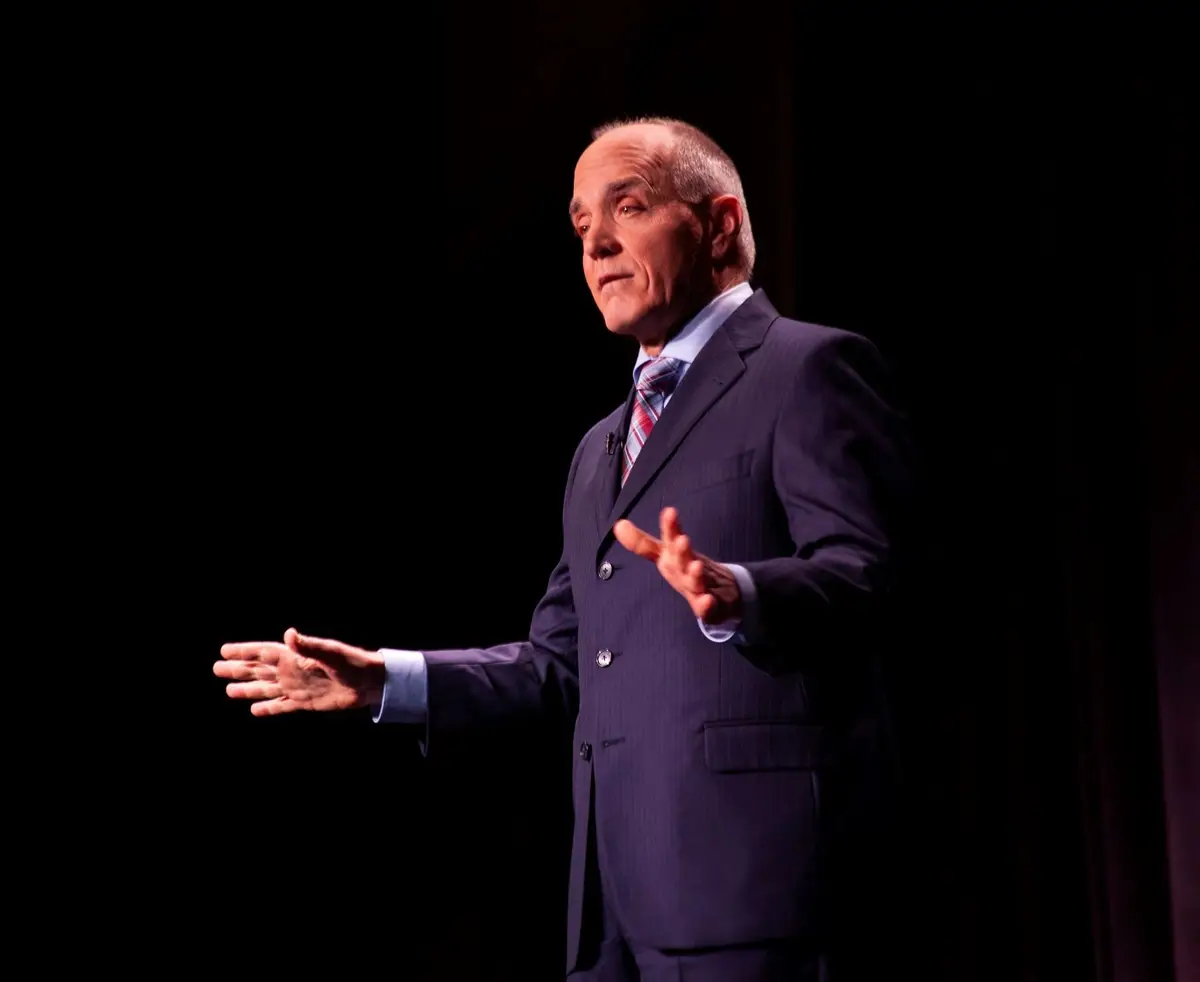
Colonel Bruce Hurd is a US Air Force Pilot, author, and creator of the Make Your Book a Reality writing retreat.
Colonel Bruce Hurd is a retired US Air Force Pilot, author, and creator of the program Make Your Book a Reality.
Colonel Hurd’s first book Aim Point: An Air Force Pilot’s Lessons for Navigating Life guided readers through the lessons he learned in his 30-plus years as an Air Force pilot and how he applied them to overcoming trauma in his life.
He wrote this book with the help of a writing retreat that his wife purchased for him. The experience of the retreat made a profound impact on Colonel Hurd, and he decided to improve upon the concept to create his own.
Today, Colonel Hurd is guiding other writers through the process of writing their own books, and he came on to talk about his life and his program: Make Your Book a Reality.
Transcript
Machine-generated from the episode audio and lightly edited — may contain errors.
Chris Albert (link to this point)
The Warrior Soul podcast is written, edited, and produced by me, Albert. Our mission is to provide tools, tactics, strategies, and ideas that help The US military veteran community to show up as the wisest, strongest, most capable versions of themselves in the civilian world. If you're not a veteran, stick around because anything we talk about will most certainly apply to you as well. This podcast is made possible with the help of f bomb nutrition. They make delicious packets of fats that you can carry around anywhere with you in little portable packets.
They make macadamia nut butters. They mix them up with chocolate. They mix them up with sea salt. They mix them up with coconut butter. They're absolutely delicious, and they're really good for you.
They don't have any sugar. They also make a lot of cheese snacks. They make meat sticks, and it's just a great company. These guys send packages of this stuff to the troops who are on the front lines overseas to supplement their MREs, and we didn't ask them to do that. They just did that on their own initiative.
Really great company. If you wanna get 20% off your first order of f bombs, head over to www.dropanfbomb.com and use the code Warrior Soul at checkout. This podcast is also brought to you with the help of Save the Brave. Savethebrave.org is a five zero one c three charity for veterans. They run camaraderie events that include fishing, golfing.
They also do a lot of work with gold star families. And unlike a lot of other organizations, their board doesn't take a salary. Really great organization that is doing amazing work. So go and check them out at savethebrave.org. With that, thank you guys so much.
Let's get into today's programming.
This is Chris Albert, and I'm here to remind you of one thing. Someday, you're going to die. Now that's not some morbid statement or scary idea. It's solid fact. Your time here on this earth is limited.
And we need to be reminded of this as much as possible for one simple reason, to live your best life while you can. This is the Warrior Soul podcast.
What is going on, ladies and gentlemen? Welcome to the Warrior Soul podcast. My name is Chris Albert, and this is where your we empower The US military veteran community to live their best lives by delivering tools, tactics, strategies, and ideas to help them to show up as wiser, stronger, more capable human beings in the civilian world. And this week, we've got a guest for you named colonel Bruce Hurd. Colonel Hurd spent over thirty years in the air force as a pilot.
And when he got out, he decided that he wanted to write a book. Now here's the thing. There's some people who say that, you know, everybody's got a book in them, and I believe that. There are a lot of people in this community who could benefit from writing, whether they ever publish or not. But there's probably a lot of you out there who could publish, and there's probably a lot of you out there who got some real stories to tell.
And colonel Hurd had a lot of stories to tell. He had a lot of trauma in his life growing up. He had a lot of trauma that he experienced in his adult life. And what he did was he wrote a guide for how an Air Force pilot approaches life. And he published that book, and he did it with the help of a writing retreat.
And he thought that the concept was great. It really helped him to get all of his thoughts out there, and it helped him to build the foundation of what would become his book. So he took this concept, and he decided to improve upon what he saw, and he started his own writing retreat. And I brought him on today to talk about his life, talk about his career as an Air Force officer, his career as a pilot, to talk about how he got into writing, to talk about trauma and how he's dealing with trauma, and how he is using writing to get his thoughts out on paper and to help him to deal with that trauma and to talk about how he's now helping others to do the same. Trauma is something that a lot of us in this community have dealt with, and a lot of a a lot of us in this community are still dealing with.
And this is one way that you can deal with it in a highly effective and highly productive manner that is going to help other people as well. So without further delay, let's get into this conversation with colonel Bruce Hurd, author and creator of Make Your Book a Reality. Colonel Bruce Hurd, welcome to the Warrior Soul podcast.
Bruce Hurd (link to this point)
Thank you. It's a it's a real pleasure to be here. Thanks for inviting me.
Chris Albert (link to this point)
Yeah. You know, we got in contact a few weeks ago and heard a little bit about your story, heard a little bit about what you do. And and I thought this would be a great episode for for right now. Let's start like this. Can you give everybody just a little bit of background on yourself?
Where'd you start? How'd you become Colonel Bruce Hurd?
Bruce Hurd (link to this point)
Sure, let me yeah, absolutely. Starting right from the beginning, I was born and raised in California, in the Bay Area. And I went through air force ROTC. That's how I got my commission at the University of California Berkeley, which was an interesting life choice in the mid seventies.
Chris Albert (link to this point)
That's if you were trying to go to the military, right?
Bruce Hurd (link to this point)
Yeah, exactly. Being in the air force training, we actually stood up on campus quite a bit. We were the only ones that had haircuts and everything, but it was a good experience and Berkeley was great. After I graduated from Cal, I got my commission, of course, at that point. And then I went to air force pilot training.
Reese Air Force Base, Texas, just outside of Lubbock. And my intent when I went in the Air Force was not to make it a career. I planned on doing my best and doing a really great job. My dad had served the Army Air Force during World War II, so it kind of ran in the family. And I was going to get out after fulfilling my commitment six years and fly for the airlines or whatever I wanted to do at that point.
And I found that I really enjoyed it. I enjoyed the air force. I enjoyed what I was doing. I liked the job itself, but most of all, I liked the people that I would be in, but that was great. And it was quite an adventure too.
So thirty years later, I ended up retiring. And after retirement from the air force, ended while I was in the air force, my flying career was in tankers, just as a reference point there, KC-135 and KC-10 tankers.
Chris Albert (link to this point)
Is that the one, they do the refueling?
Bruce Hurd (link to this point)
Yeah, air refueling.
Chris Albert (link to this point)
Oh my God, I've seen that on video and when I used to play the video games like you had to like line it up and everything like
Bruce Hurd (link to this point)
It's and it's like in real life, you gotta line it up. And it was interesting because the, just kind of a side note here, the KC-135 what is and remains the Air Force main tanker and it was built in the 50s and 60s. And it's been modified since then. It's got new electronics and bigger engines and stuff, but it's still the same airframe. And with that aircraft, we could just offload fuel.
But then I spent most of my career in the KC-10, which is a jumbo jet DC-10 tanker, and we could do both offloading and receiver refueling because we had some extraordinarily long missions, especially doing fighter drags across the ocean, things like that. Wow. And that was kind of more along the lines of video games and that you had to line it up behind the other aircraft. And as the receiver pilot, we would do most of the maneuvering. The tanker would pretty much, when we were in tanker mode, tank would pretty much stay straight and level and don't make any quick moves.
Chris Albert (link to this point)
Yeah.
Bruce Hurd (link to this point)
So that's what I did there. And then after the Air Force, I went into a completely different career field and became a senior software development program manager at a large company here in San Diego, where I live now. And I did that for eight years. And then I voluntarily went part time and I had recently I become an author published a book last year. And that's where we are right now.
Chris Albert (link to this point)
Nice, nice. Well, I want to talk about I want to talk about, you know, how you became an author, I wanted to talk a little bit about about your transition out of the military and into the civilian world. But I want to take it back a little bit. What did you major at? What did you major in at Berkeley?
Bruce Hurd (link to this point)
I started off as a science major, a physics major. And I can remember distinctly in a lab near the end of my freshman year, I think we were doing refraction or something. And I can remember looking at the lights and the prisms and the lab and going, this is I have no idea what I'm doing. So it's, I think it's time to maybe change my majors and I was doing okay. But realized that it was just gonna get much worse from there. So I looked around and I did a little bit of research and I changed to being a business administration major.
Chris Albert (link to this point)
Oh, nice.
Bruce Hurd (link to this point)
And so I graduated with a degree in business administration, with a focus in finance. That's what I got my degree in. And then I, while I was in the air force, I actually did the night school while I was at March Air Force Base near Riverside. We had the college yeah, professors it's just right over here. And the professors from University of Southern California would come out to the base and teach us at night.
And I got a degree in systems, a master's in systems management. So that's as high as I got.
Chris Albert (link to this point)
Awesome. And so, you know, you're at Berkeley for four years and then, you know, you're obviously you're doing your course training while you're there and you probably had to go to schools in the summertime, right? When you when you were trying to when you were going through the ROTC program there?
Bruce Hurd (link to this point)
Yeah, the way they did it now, I think they've expanded it or I'm sorry, the way they did it then. Although I believe they've expanded it now to every summer, they only had we only had one summer commitment. During the four years of ROTC and it's between our sophomore and junior year. And we went to a summer encampment that which was kind of misnamed. It sounds like, I mean, we call it summer camp, which wasn't really summer camp, it was kind of basic officer training, although we at that point in our ROTC training, we knew had a march and salute and all that stuff, it was pretty intense.
So we went through that, that was our summer training. During the four years of ROTC, we had classes, academic classes. And the first two years, the freshman and sophomore year were conducted under what was called the general military course. And it was pretty light in terms of any sort of a burden. Think we had a one unit class each quarter.
So it was not anything too overwhelming. And we met once a week and practiced marching and saluting and wearing uniform and all that stuff. It was after summer encampment that we really got serious about things. And that was a big step between sophomore and junior year. And in junior year and senior year, we had a three unit class every term, and we were in leadership roles in ROTC.
And so that's where we got most of our leadership experience at that point prior to coming on activity.
Chris Albert (link to this point)
Nice. Nice. And, you know, the reason I asked this is because we we got a lot of guys doing the opposite where they're getting out of the military, they're heading off to college campuses and things like that. And, you know, it could be a little bit of a culture shock, but I can't think of anybody better to to talk about surviving that than somebody who went to Berkeley in the 1970s. How did you deal with some of the campus differences that might have existed if if they did exist?
Like, how did you navigate yourself through that?
Bruce Hurd (link to this point)
That's a really good question. And I talk actually talk a little bit about my book, but just in summary, well, let me take a step back, I actually went to Cal Berkeley, because I was a I lived in California, I was a resident of California. And of course, get a break in the tuition. And I applied for both Air Force and Navy scholarships. And so I needed to pick a campus that had both.
And there were only two in the entire University of California system, UC Berkeley and UCLA. And because of, and I did that specifically because in case I didn't get a scholarship, I wanted to be accepted at a school that had lower tuition. And being a state resident in a state school, the tuition, of course, is a lot lower. So that's kind of how I ended up at Berkeley. And of course, I wanted to go to a good school that had a lot to offer and would offer a prestigious degree.
And does that then and now, what I didn't think about was the campus environment at Berkeley. And it was as an ROTC student, you don't institutionally stand out and that it's not a, we didn't have to wear our uniforms around campus or anything like that.
Chris Albert (link to this point)
Yeah.
Bruce Hurd (link to this point)
Dressed like regular students went to class like regular students. We took courses like regular students. We just had this added responsibility of taking the ROTC classes and going to our training once a month. We did stand out because literally because of the haircuts, everyone else on campus, all the other guys on campus had long hair and we had our military haircuts and there were also army and Navy ROTC students. So we were not alone in that regard, but all of us were, stood out.
And it was a little bit of a challenge in that, for the most part, the vast majority of students kind of left us alone and didn't bother us, but there would be some confrontations from time to time. And I can remember literally my second day on campus, where walking back from ROTC training, my first ever ROTC training in my uniform back to the dormitory. And I was confronted by an older student and his girlfriend. You asked me how many babies that I killed that day. And it was like, woah, where am I?
I mean, it was kind of a, it was meant to be intimidating. And I, first of all, you're going, or I was going, why are you talking to me like this? And what did I ever do to you? But there were some antagonistic students at Cal Berkeley, not me. So what eventually happened was that those of us who were in ROTC grew closer together.
We bonded, and in fact, my commissioning class, 15 of us in my commissioning class of 1977. We got to know each other, got to be good friends, and we actually meet every two or three years. We have a reunion and get together. So we made some really good friendships that have continued to this day. So when you asked about how did I navigate that?
The academics would have been the same regardless whether we were ROTC or not, but socially and emotionally, we navigated it by joining together and becoming friends with each other and supporting each other. And that's where my roommates came from. For the most part, they were other ROTC students, friends of mine.
Chris Albert (link to this point)
Okay, that's an important that that's such an important thing. And, know, let me say this, I think the UC system out here in California is a great choice for people. I mean, as far education wise, because, you know, particularly, you can go over to you can head over to a community college or a city college for a couple of years and then transfer over into the UC. And and it's the much less expensive option than than, you know, a lot of other choices that are out there. And and the thing is, I know a lot of guys out there are saying, well, I don't have to pay for college because I'm a veteran, things like that. Yeah.
You get the GI bill, but it doesn't cover everything. And and, you know, you wanna really, really be careful about the amount of student loans you're taking out. So this is a pretty good choice. The other thing I'll say is, you know, that when you get on campus, and and I know the media blows this up, of course, there's gonna be elements out there. There's gonna be professors who are adversarial.
There's gonna be students who are adversarial. At the same time, you know, you can you can find people on campus. There's usually veterans groups on campus. There's usually people there who are there to help you to to go through that system. Because, you know, when they talk about diversity and and things like that, veterans are on that diversity list.
Remember that. They want veterans to be able to graduate from that school. So so, you know, there's definitely resources to take advantage of and and definitely finding friends in the right crowd, friends who are gonna help to support you and friends who are gonna be there for you. I think that's a really important aspect there.
Bruce Hurd (link to this point)
Yeah, and if I could just add something to what you're saying, you're 100% spot on. When I was going through ROTC, there were prior enlisted in the training cohort that I went through, guys and women who had been enlisted, I think they were all from the air force. So they were naturally inclined to go with the air force, but I know the army, Marines, Navy all have the same types of program, But they applied for and got ROTC scholarships and the ROTC scholarships paid for tuition and gave a small stipend. And then also, you hit on the GI Bill, which is a huge plus, the post-9/11 GI Bill, and just to make a pitch for that or to plus up that. When I started my job as a software development program manager, I did not have a background in software development whatsoever.
It was all a foreign world. The reason I got this job was that our big customer was the air force for this one big program. And they wanted an air force colonel with a top secret clearance to run this program, to be the face to the customer. And that narrowed the field down a lot, which was very fortunate for me. And the theory was, company said that, you know, we'll teach you what you need to know about software.
What we want now is someone who has credibility with the Air Force and has the security clearance that we need to plug you in like right away. So and that was great. It was a wonderful opportunity. I was very fortunate and I appreciate it a lot. What that meant though, was that I kind of had to learn on the fly and how this relates to the GI bill is that I was eligible like all the people that there are many of the people that you are on your listening on this podcast.
I was eligible for the GI Bill. And I went to the local community college here, Mesa College in San Diego, and they had a computer and information associate's degree, which they offered at night. And so I took two and a half years of night classes and got my associate's degree in computer science. So I was not touching the code, I was not programming, but I could speak computer to my software engineers and test engineers and technical writers. And that would not have really been feasible without having access to the GI Bill.
So that was a wonderful opportunity. I encourage anyone who is out there thinking about it to take advantage of that opportunity. And I even went beyond that. I got a UC San Diego extension here, which is eligible for GI Bill payments, actually had a project management certification that I went through and got that. And that helped me get my project management professional certification.
Yay for the GI Bill, big plus.
Chris Albert (link to this point)
Yeah, absolutely. I mean, and we're in a really, really great time and place. I mean, I know COVID-19 kind of highlighted this, but I mean, there's a lot of mode modalities of learning these these days. I mean, we're using Zoom right now and and a lot of classes are taking place over Zoom. There are a lot of a lot of programs you can go through to learn about tech.
One thing I recommend for everybody is to learn a little bit about accounting. Everybody, particularly if you're going into business, everybody should learn a little bit about accounting. You know, there are tons and tons of programs out there where you can learn accounting online and and just so many great things. So, you went into this career in tech. When did you decide you wanted to be an author?
Bruce Hurd (link to this point)
So, good question. Thanks. Thanks for asking. I retired from the Air Force in 2007. So got commissioned in 1977, retired in 2007, and got this job at a large defense tech company here in San Diego.
And it was perfect. That's exactly what I needed. So no complaints whatsoever. But what I found was that, of course, in 2008, we had the great recession or whatever one wants to call it, the big drop before the latest big drop here. And what I found was that the, well, of course, the government contracts started drying up and our company was focused on government contracts.
And for example, there were six project managers when I got into this division in 2007, and by 2013, there were only three of us remaining. And the overall boss of the San Diego operation was leaving. And they needed someone to replace them. And the big program that I was in charge of was going away. So either I got that job or I was gonna get laid off and I competed with other folks and I did end up getting the job.
So I got ramped up to being the San Diego site lead for our operation. But they never really took away anything from what I had been doing. And so I was still in charge of a lot of other aspects, not just this big program that was in kind of a stasis mode. And I found that I was kind of meeting myself coming and going. I was putting in twelve hour days and eight hours on the weekend.
So it was a little bit much. And when my daughter finally, not fine, my daughter graduated from college and she was our youngest, we didn't have those expenses anymore. And my wife and I took a look at, why am I doing this? Why am I still doing this? And so at age 60, I was 60 at the time, I elected to go to part time mode and I'm still in part time mode.
They just call me on occasion when they need help with some proposals. And part of it was because I wanted to ramp back on the number of hours that I was putting in at work. It was just getting to be a bit much. And part of it was that I wanted to write. So this gets to your question about writing.
I felt compelled to write about the experiences I had, both as a child, but also and most especially in the Air Force. And it was with a real deep sense of appreciation for the experiences I had and all the wonderful people I had met. So I started writing about that. And as I got into it, I found that I was focusing on four or five specific major incidents or events in my life. And these revolved around traumatic events in my life, many of which were growing up.
Just as an example, my mother was an alcoholic. And so that, I classify that as an event, but it was like an event that lasted into my 30s. And there was a lot of emotions surrounding that and a lot of shame associated with it. Shame of having gone from that, shame of the experience that that involved. And I felt, again, as I'm writing about this, I felt really compelled to look at it and shine a light on it, because I did not want to be in control of that or afraid of it anymore.
And that's where the real impetus kicked in and where I really got serious about writing my book. Because I dealt with these issues, my mother being an alcoholic. Another one was I went through a real painful divorce as a young captain in the Air Force. And so I felt the need to talk about that. And by dealing with that, and dealing with those emotions that surrounded those events, and taking a good look at, you know, what I did to contribute that, what's my responsibility for these events or for my feelings about these events, taking a look at all of that.
And by exposing that and shining a light on it, it helped an awful lot in terms of the healing process, my healing process, dealing with those emotions.
Chris Albert (link to this point)
Now, you know, with with these events, right, and as they came up, you know, a lot of times, we don't realize the impact that that certain events have on us. Right? I mean, I've I've been through a bunch of different traumatic events that, you know, at the time, they they came, they passed. Right? They happened, and they had a big impact on me.
Right. But a lot of times when it comes to trauma, we don't realize the full impact it's it's actually happening on us. It's somewhere deep inside of us. We don't let it out. We don't show it to other people.
We we we don't put it out there or hang the flag or anything like that. Did was there a point where you realized that these traumatic events were having some kind of an impact on you and and and you said, okay. I wanna put this down on paper. I wanna explain this. Was it was it for your own purposes?
Was it was it so that you could put this out in the world to help other people with trauma? I'm sure it was probably a bit of both. Right? But but was there a specific time period where you said, well, wait a minute, this happened, this happened. And did it all come up, come back in like a single rush or anything like that?
Bruce Hurd (link to this point)
Yeah, that's boy, this is a what a wonderful question. And just like you mentioned, the answer is yes. The As I was, I think, looking back, of course, hindsight's 20/20 and everything, but looking back, I'm sure I realized that these events had a continuing effect on me throughout my whole life. There were things that I just wouldn't talk about because they were embarrassing. They didn't necessarily show me in the best light.
And part of it was I did not want to see myself as a victim. So by discussing these things, I did not want to come across as a victim. Plus the the emotions associated with this is scary. And it's it can generate a lot of fear when we think about, well, if these people, these friends of mine or these colleagues or people, you know, if I put it in a book and people who don't even know me will be reading about this. If these people knew about these things, would they think less?
Would they Yeah, well, would they think less? Would they be embarrassed for me? And that's the worst situation I felt I could get into. So part of it was that realization, but also I wanted to write because as I, and it was almost a switch and I'll talk about this in a second, but I wanted to write because I really felt that this was the time to heal at this one specific moment. I need to sit down and I need to put it all out there with all of the emotions attached to it.
And I want to discuss what did I learn from these experiences? Because that was a key point that I wanted to get across all of these things, all these different events that happened to me in my life, good and bad. They're co creation. On some level, I created all these things that happened to me, it was in conjunction with all of the forces of the universe, or however you want to want to describe it. So why did this happen?
What did I, well, how did I feel when it was happening? How do I feel now? And what did I learn? And I did not, it really became a very, I would say over a weekend, over a specific weekend, it became really apparent that I needed to put this down. I needed to write this book.
I needed to not only write it, but I needed to publish it. And I needed to publish it in a manner that I was proud of it. I did not want it to be a stream of consciousness journal, type it up and put it out there. I want them to write it so that people would be interested in reading it and take it from there. So, and the triggering event for all of this, I mentioned over the weekend was a, and my wife, bless her heart.
She knew I wanted to do this and she knew about what I wanted to talk about, wanted to discuss. And she found a retreat, a writing retreat that advertised that you can write your book in a weekend. And mean, that time it sounded great, let's try it. And it worked out wonderfully. Now, the end result was not a book ready for publication, but it was the core essence of my story.
I wrote down about those specific events that I wanted to talk about, and over the next year and some odd months, and I my daughter got married in between all of in the midst of all this stuff. So I had and I took a break for a while. So if I abide myself the entire time, it would have taken much less time than that. But over the next year and two or three months, I wrote, I expanded what I had originally written and I edited myself. I got a copy editor to take a look at it too, and shine it up, make sure everything looked good, and someone knew format it, so that it was ready to be published in both on Amazon and in other areas too.
So that retreat was really key. That's what really jumpstarted my whole author experience, because I don't think I would have had the specific time or the energy to do it. And after the retreat, I enjoyed putting it down and in the connected inspired writing method that I had learned. It was joyful to finish the book as opposed to looking at it as something that's going to be impossible to do or falls in the too hard to do category.
Chris Albert (link to this point)
That's very cool. Did you self published or did you did you go to
Bruce Hurd (link to this point)
Self published, I self published there. There's pros and cons with both self publishing and finding a publisher. And if an author can get picked up by a publisher, that's great. That's really good. There are publishers out there that will publish anyone and you kind of have to take a, if someone is interested in going with a publisher, that helps in a lot of ways, and that a lot of it, they do a lot of editing, they have people who are professional editors and copywriters and things like that, formatters, who will lead the author through the process, and that's fantastic. So the author just does the writing and then whatever editing direction comes along.
So that's good. One of the issues with getting a professional publisher is that once you sign on with a publisher, they control the book, have the rights to the book. It's up to them whether they finish it out and publish it in a timely manner or not. And like any sort of a business, the publishing business, they focus 90% of their time on the books that they feel are gonna sell the most, sell the most copies and, you know, that's 10% of the books. So if an author is one in that 10%, that's fantastic.
That's great. And I would never discourage anyone. If someone really wants to go the publisher route, then I would caution that if you're going to do that, make sure that you're not selling the farm when you're signing a contract, make sure that you'd get a reasonable return on book sales and that there's some sort of emphasis on the book that you're giving to take care of. So that's what I'd recommend. Now the writing program that I went through, they emphasize heavily self published because you get it out there, you get it the way you want to do it.
And there's more onus on the author to do all the steps that are required. But there are contractors out there. There are independent contractors that can help with that and do just as good a job as the publishing.
Chris Albert (link to this point)
Right. Right. That's a it's a really important thing. I mean, I I was researching, writing my own book earlier this year, and, you know, there's a number of different routes you can take there. There's a self publishing route.
You know, if you're gonna try and get a publisher, you gotta write a book proposal first. And the book proposal could be quite significant, as far as what you're gonna do. And so you gotta spend a lot of time thinking about it, thinking about the market, thinking about where where the market's going in terms of what your book's gonna be about and things like that too.
Bruce Hurd (link to this point)
Yeah, absolutely. That is all correct. There's another method that's coming out and you may be aware of this, Chris, it's called the hybrid method. And it is, they will do all of the publishing house if they take you on, they will do all of the publishing house support like editing, formatting, book cover, things like that. And you pay them a fee upfront, but you control, but the author controls his or her book afterwards.
So it's a little bit different than the standard publishing house versus the self publishing. I'm glad I went self publishing. I got it out quicker than anticipated between, I think it was about a year and a half between when I started and when I finished. It actually, because I self published, did, not only did I do it in paperback and ebook, but I made a hardcover version. And I also did an audio book where I was the narrator.
And you don't have that freedom if you're with a publishing house. So it's, I have it in four different versions for those who would be interested.
Chris Albert (link to this point)
So as you're going through and you're kind of reliving all these events in your life that had happened, You know, I I one thing I know is that writing can be a very isolating experience. Right? So you you know, you're working on your own, you're you're spending long hours in thought. You know, as this stuff was coming out, how did you deal with that emotionally? How did you deal with the impact to that?
Did you feel like you were reliving a lot of this stuff or?
Bruce Hurd (link to this point)
Yeah. Yes, I did. And again, this is a really great question because it can be isolating and it can be alone. And when I was doing it prior to the retreat, it was all by myself. And the writing I did prior to the retreat, the retreat was less emotional and I stayed away from a lot of the topics that were the most painful because I it was kind of like I just didn't want to go there because what was the payoff now once I got to the retreat, and I'll tell you that this is looking ahead here.
What I had such a positive experience in the end, going through the retreat and the book publishing process and the book launch, and I've done book signings and stuff that I, most of the questions I get when I'm at book signings, for example, aren't so much about my air force experience or about any of these other things that happened in my life. They're mostly about how did you write your book? What tips can you give for writing your book? So based on that, and that's not just veterans, although a lot of veterans do that, anyone. What I have done is I have actually started a program called Make Your Book a Reality.
And it's based on this writing retreat that I went to at the end of twenty seventeen. And it's using the same methodology, although I've expanded the program. And this gets back to your question. I'm answering your question. In that, it's important to not feel alone.
It's important to feel connected and inspired. And as part of a group and knowing that you're not gonna be left out there to dry, that you're not gonna do all this emotional stuff. Whoever your guide is, or your mentor is gonna say, okay, that's it, have a nice day. So what I offer is a, and what I found out was that after the retreat, I felt abandon is the wrong word because I still was in touch with these people and they would give me advice and stuff. And that's great.
And I liked it, but I really had to be self motivated to see it through. And what I offer is not only the retreat experience, but also some one on one guidance moving forward so that I can help people make a book that is interesting, that readers will enjoy that structured in a way that takes the reader on a journey that the reader will like. So my program offered more than just writing. The secret of the retreat, will tell you is that we do a couple of prep sessions ahead of time, and this is the same thing that I went through. So it's not, I didn't make it up, but I've expanded it.
And I go through a couple of prep sessions ahead of time, where we talk about it. And we do, we practice what's called inspired, connected writing, where basically the author, we're together as a group and I do mine virtually, so we're a virtual group. But the author writes for eight hours a day for two days straight, and listening to alpha wave music and writing as quickly as they can, because the key is, and it worked really well for me, and it's worked for hundreds and thousands of authors, is you got to get out of your thinking mind, because all of us, especially military folks, tend to be very logic based. And, you know, you got an objective, how are going to get to the objective? And we come up with structures associated with what our book should be.
And we try to fill in the structure as opposed to writing from the heart, you know, where does our inner being want us to go with all of this? And through this inspired connected writing program, that's what people are accessing. They're accessing their inner being, it's heart centered writing to where they are writing what they're being called to write. And people are amazed. I was amazed at where this writing took me for one thing, and also with what topics I was being drawn to.
And that's where I got to the traumatic topics, but I was remembering things associated with them and inclusions associated with them and the lessons coming from them that I had not accessed before. And that was a real revelation that inspired me and made me want to continue on with the book. And then after the retreat, I would get myself in that same connected frame of mind. And I would do my editing and expansion and revision of my book.
Chris Albert (link to this point)
That's amazing. That's amazing.
Bruce Hurd (link to this point)
So it helps with the loneliness issue you talked about. Yeah. It's if you're part of a group and you've got someone who you know is going to be there and help you through the post retreat writing process to help guide the author along, then it makes it that much more friendly, welcoming and productive. And in turn that inspires the writer and they can move forward what the, where they want to go.
Chris Albert (link to this point)
That's awesome. So when you were when you decided to put this retreat together, you know, whenever you're putting a business together, I think it it really is important to scratch your own itch. So if you see something out there that you could potentially do better, a problem that you had that that you have a solution to now that you could show others, I think that's awesome. When you were putting this together, what, you know, there's some moving parts there, right? So you have the pre work that comes in and then people actually come to the retreat.
How'd you put that together? What do people go through when they're coming to you?
Bruce Hurd (link to this point)
Okay, I'll be the first to admit that in a lot of areas like social media marketing and things of that nature, don't know what I don't know. So I actually signed on with a social media marketing expert who does a group course over the course of a year. And that helped me understand how to make my program more attractive and where to put it out so that the right people, the right target audience gets a view of what I put together and that they would be interested in contacting me. So that's a part of it. Also, I decided that I had an idea for the retreat and I had a construct, but there were some questions as to what works, what doesn't work, what might I need to change.
So I didn't want put it out there without having gone through kind of a beta version first. So what I did was, I got ahold of an audience. So people, wonderful people that I know here in San Diego, and invited them to go through this entire process. And I would give it to them for free. And for the first time around, and my goal there was not only to experience this and to see what worked, what didn't work, what changes I needed to make, but also their responsibility to me was to provide feedback every step of the way and say, okay, this works, this doesn't work, this you might need to do better, give me suggestions as to what it can improve both and what really did well, what did they really enjoy about it?
And then I also asked them to put together some testimonials associated with it, that that could be part of the marketing campaign as well. So to answer your question, I chose to ask for expert help in areas that I knew that I didn't know anything about. And then once I put together a program, the very first time around, I wanted to do it under the auspices of doing a trial run and getting feedback and not being so worried about whether I'm supplying the customers with value for their money. I didn't want to be concerned about that first time around since a lot of it was kind of a voyage of discovery in terms of putting it right. But and it worked out really well. It worked out better than I could have hoped for. So it, that was a success in that regard was doing a trial and getting expert help in areas that I needed it, I felt I needed it.
Chris Albert (link to this point)
Yeah. And and again, that's a really important aspect of I think doing business in today's day and age. You know, you you create the idea, you create a prototype, you get it out there. And then, you know, it nine times out of 10, it's not going to be perfect the first time. Right.
And it's really important to learn what the customer wants, not what you want out of your own head. You want to learn about the customer, what their what their their problems are going to be coming in, and how you can make this the best experience possible for them.
Bruce Hurd (link to this point)
Absolutely. Absolutely. That is that is correct.
Chris Albert (link to this point)
So what kind of things did you learn? What what have you learned about the writing process in addition to writing your own book? What what did you learn about other people as they're going through this?
Bruce Hurd (link to this point)
Well, what I learned was, I mean, it is really kind of fascinating is that I am in the phase right now, I'm helping many of them actually do one on one counseling as far as their books go. And it's a kind of, it's a wide range of people. What I've learned is that a lot of people have a lot of fear associated with the writing process and writing their own book. And it all revolves around fear of failure. And that can take a lot of different forms there.
They aren't sure what they're going to write about. They're worried that what if I write something and people don't like it? What if I start and I don't finish and I'm going to feel like a failure and all these things. And that helped me to know that I needed to emphasize the connectedness that I offered them in the sense that I'm not gonna let you fail on this. If you commit the time and the effort into putting it together, then I will help you to assess successful conclusion.
And it's amazing how when people feel that they have someone in their corner, someone who knows what they're doing and can help them. Now, I'm not writing their books for them. I'm not, you know, it's their book, it's all about them, but I can offer, I can tell them what I'm seeing about their book and I can help them create a book that speaks well to their story and that they'll be excited about putting out there. And it's working really well. So that's the biggest lesson that I learned.
And there's some smaller ones, smaller lessons about the prep work that I do for the retreat. I had some suggestions about put this in there, leave this part out. And then the post work that was almost an, well, I wouldn't call it an afterthought. It was intended, but I found that there's a much more robust need for that than I had anticipated. And it comes down to the one on one counseling and encouraging people and working with them.
And they have to make a commitment to it as well. I can't do it for them, but they're willing to jump on it and do the work that I'm there with them, and it'll help.
Chris Albert (link to this point)
Awesome. Awesome. So when people are trying to to figure out whether or not they want to do this, so let's say there's somebody at home, who they think they've got a book in them, and they're thinking about coming in and trying to do your your your retreat. What would you tell them if they're on the fence?
Bruce Hurd (link to this point)
So what I would say, first of all, I'd be encouraging. A survey was done, I think it was five or ten years ago, fairly recent. And 80% of adults, which is an amazing number, believe that they have a good book within them as an author. So most people walking around feel that they have a really good story. And that's absolutely true.
That is 100% true. And I would say that if you're talking to an audience of veterans, that the number's probably closer to a 100%. I mean, it's amazing. You look at all of us, we all have stories. And I would encourage people to take a look at writing the story down.
There are lots of things that being an author does for you beyond finishing this, perhaps a lifetime goal of writing your own book. There's a self confidence aspect associated with taking on something like this and finishing it. I mean, that's incredible. That's such a wonderful feeling. And I felt like I could do anything after doing that, because it took a lot of took a lot of effort, but I was so proud of it, proud of creating something that was really professional looking and a product that it was really great at.
Plus, I enjoyed having something. I have two kids, adult children, and you know, that I could show this to them and they could understand me better and my brothers and my sister could understand it. And friends that I had lost track of for years found my book, and we reconnected. So there's a self confidence aspect. People also feel like many of us feel like we want to be of service and writing a book can be absolutely of service to others.
This is the way that we can help serve others, which is a wonderful feeling in itself. And credibility, it provides credibility if one can write, if you have a business, especially give a business and you have a book that you can say, I've written this book that gives you credibility as a business owner, especially if that book is semi related to your product. But there's a lot of good stuff. And most of all, I would say that especially for veteran community, it's wonderful therapy by expressing my emotions. And that's the key to writing a good book is expressing emotions and digging deep and not being afraid to say these things that you've been hiding that I've put it in my term, not being afraid to say those things that I've been hiding for so long.
It has been wonderful therapy So just to express there's a lot of great reasons to write a book and I can help. I can help. I mean, you don't need me. That's great. But if you want help, then I can certainly.
Chris Albert (link to this point)
That's awesome. That's awesome. Where can people find this? Where can people find you and find the program?
Bruce Hurd (link to this point)
So wonderful, thanks. Thank you for asking, Chris. So I have a website, and it's www.colbrucehurd.com. That's one way or you can just send me an email directly and ask about it. And that's a colonel Bruce Hurd's just same way.
It's the abbreviation for colonel, it's colbruce h u r d dot comgmail dot com. And just ask, just ask about it and I'll provide info. I'll give you a free ebook talking about the best ways to start your book and answer some questions that authors typically have or authors that are just getting started. And we can start a dialogue. And in fact, I've got a retreat coming up.
I do them about every other month. And I've got a retreat coming up about a month now in July, but and there'll be one, you know, later this year, probably one or two more. So it's not urgent. Like it's going away. It'll be around and I'm here to help.
That's where you can find me.
Chris Albert (link to this point)
And how many people have gone through the retreat so far?
Bruce Hurd (link to this point)
I've got twelve, twelve people. So I'm in the middle of a second one, just starting the second one. And there were eight in the very first one. So it's a brand new program.
And I've actually got an introductory rate associated with you can find that on my website and everything.
Chris Albert (link to this point)
Cool. Very cool. The, you know, number one, I want to thank you for coming on.
Bruce Hurd (link to this point)
Oh, thank you.
Chris Albert (link to this point)
I really appreciate you coming out here to talk a little bit about this stuff. Number two, you know what I'd say to everybody out there, I mean, a book is an awesome way to just get things out there. Right? It's an awesome way to to get your mind out there. Writing in general, I'm a I'm a huge fan of writing.
I I I write in my journal every morning, and it kind of helps me to cleanse my thoughts, to put myself back together. And, you know, I think, at the same time, like we said before, writing can be a really, really isolating process. And, if if you you're one of those types of people who thinks too much about it, things like this could really help. So so I think that's a great opportunity for people out there, particularly in the veteran community who who might think they have a book in them, to try to get it in. So, I think that'd be awesome.
Bruce Hurd (link to this point)
Absolutely.
Chris Albert (link to this point)
And that's Sean. Hey.
Bruce Hurd (link to this point)
That is fantastic. Thank you. Thank you, Chris. Yeah, the whole idea is to make it accessible and make it fun. That's the whole goal.
And this is not a, the whole retreat. It's not a sharing experience. People don't have to share anything. They're not gonna be graded on, not gonna be judged. It's not pressure.
There's no pressure associated with it. Writing experience is designed to open people up so they can express themselves in a safe helping environment. And that was my specific intent. So that the people who want to write and want to tell their stories can do so and be successful and realize how amazing they are because they're absolutely. Awesome.
Chris Albert (link to this point)
Awesome. Well, Colonel Hurd, thank you very much. You know, to everybody out there again, I think this is a great opportunity to try something here. You know, there's this this definitely definitely looks like it's a great opportunity to to try to get a book out there. And, you know, these are interesting times.
A lot of you might be on different career paths now than you were a few months ago. You know, you might have had, you might be dealing with a lot now that that you weren't a few months ago. And in times of chaos, there's always opportunity. And you could put yourself on a path here that, you know, you might not thought of thought you'd be able to before. So definitely check out Colonel Hurd's, retreat.
We will get links up to, everything up on the show notes. And, I think that's it for the week. Any last words, Colonel Hurd?
Bruce Hurd (link to this point)
I want to say to everyone on call, I know this is a veteran audience, and I will tell you, I am extremely proud of being a veteran. And I'm extremely proud of all the men and women in your audience. It's wonderful group. This is why I stayed in the Air Force for thirty years, is to work and be around a community of people just like your audience. And I haven't stopped helping since I left the Air Force.
I want to continue to help. And this is the way that has come to me that I can help the most. And I hope people will take me up on the offer. And if they don't, God bless you. That's fine.
That's wonderful. I wish you everyone on the call, nothing but the best. And thank you, Chris, very much for having me on here. This has been a real pleasure.
Chris Albert (link to this point)
Absolutely. Absolutely. And with that, guys, I wanna say this, get out there and live your best lives while you can. This is Chris Albert and Colonel Bruce Hurd, and we are out.
Bruce Hurd (link to this point)
Thank you.
Chris Albert (link to this point)
Alright, guys. I hope that you enjoyed that conversation with colonel Bruce Hurd, and I hope you take a look at his writing retreat program that he's been putting out there. I think it's a really, really good option for those of you who think you have a book in front of you. And, you know, I think writing's one of those things that can truly help people to to move forward, to deal with their trauma, to deal with things in a way that's also gonna help other people. There's so much you can get from a book, and there's so much you can get from writing a book.
So definitely check that out. I am continuing this mission here to help The US military veteran community, to empower The US military veteran community to live their absolute best lives. I am still in transition. We're still waiting for our cross country move to Florida. Gonna be heading out of California on July 6 and then driving across country.
I am making a commitment to continue to publish along the way because this podcast is what helps to get me up in the morning, frankly. Helping this community is what helps to get me up get me up in the morning. So hope you guys are doing well out there. We'll be back at you later on this week with some more awesome content. And this is Chris Albert with the Warrior Soul podcast, and I am out.
Host of the Warrior Soul Podcast and founder of Warrior Soul. Worldwide trainer and nutrition coach, contributing author at Testosterone Nation and Muscle and Strength.