Don’t Train Like an Old Man
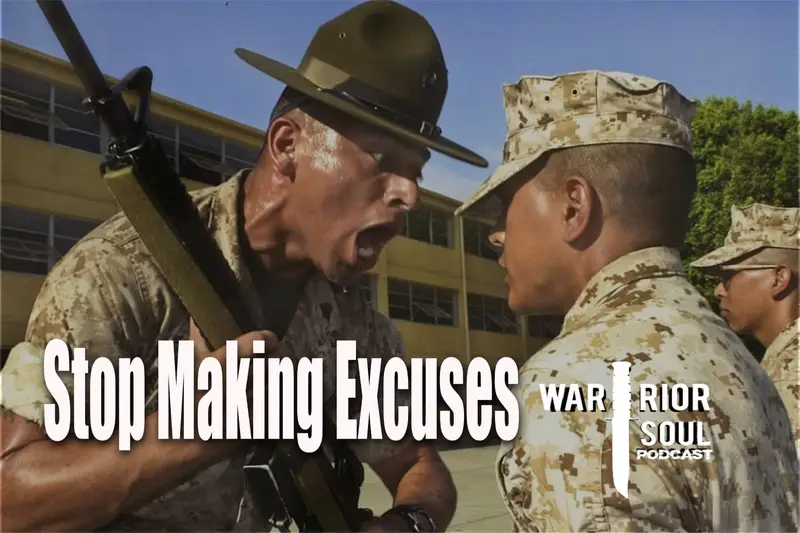
Many men hit their mid 30s and something clicks in their minds telling them that they need to take it easier. When it comes to fitness, we see guys retreating to things like just playing golf or going for walks for their physical activity. But the last thing you should do is train like an old man.
That’s a mistake. Training is even more important as you get older.
In this episode Chris discusses rules he’s imposed on himself in his late 30s for his training. These include some things that are counterintuitive, and they include:
- Training with free weights rather than machines
- Avoiding machine cardio
- Increasing the number of activities you’re doing
- Eating more fat
Transcript
Machine-generated from the episode audio and lightly edited — may contain errors.
Chris Albert (link to this point)
This is Chris Albert, and I'm here to remind you of one thing. Someday, you're going to die. Now that's not some morbid statement or scary idea. It's solid fact. Your time here on this earth is limited.
You need to be reminded of this as much as possible for one simple reason, to live your best life while you can. This is the Warrior Soul Podcast.
What's going on, everybody? Welcome to the Warrior Soul Podcast. And today we're gonna be talking about training for men over the age of 35. Now, this is a big one, and I think, you know, a lot of us, when we hit a certain age, right, I posted a quote earlier in the week, it was from Ben Franklin, and he said that most men die at the age of 25, we just don't bury them until they hit age 70. And it's a very profound quote and it applies to so many different things.
A lot of us, we don't have as many friends and we don't have as many relationships once we get older and we get married and we kind of let our social lives go and we stop surrounding ourselves with individuals who can be friends to us and support us in the hard times. And physically, a lot of guys out there, they impose a lot of limitations on themselves. They tell themselves it's not worth it to train anymore, they don't want to get injured, they start making a bunch of excuses. And what I want to talk about today are a few rules I've imposed on myself as far as training goes. I'm turning 40 years old in just a few months, hitting that big four o, and training is such an important part of my life, Such an important part in making me feel good.
Such an important part in increasing my mental strength, not just my physical strength, but my mental strength. Because, you know, I'm an entrepreneur, life gets hard for me, life gets stressful, and I need to get some training time in order to keep my head straight. And I think that applies to most people. We've got a veritable pharmacy of chemicals that get released whenever we do physical activity, whenever we get our heart rates up. It makes you feel really good.
That's also obviously very important for our health. We're seeing more and more Americans suffering from diabetes and a lot of people don't know this, but twenty five percent, one in four of veterans admitted to the VA system has full blown diabetes. That's ridiculous, we need it to stop, and we need to do something about it. So hang around for this. Before we get into the episode, I just want to say a couple of different things.
Number one, if you haven't listened to this before, this is the Warrior Soul Podcast. My name's Chris Albert and what we do here is we provide information, tools, tactics, ideas, and expert opinions to help The US military veteran community and anybody else who's willing to listen to live their best lives. The reason why we do this is because, obviously over the past decade and a half of war, we've been dealing with a lot of issues here in the veteran community related to veteran suicide, increased veteran homelessness, depression, increased rates of disease. There's so many things going on out there that I think are limiting the capability of the veteran community from having an impact on this country in general. And, you know, what you find out there as far as content goes that's targeting the veteran community, a lot of it's entertaining.
You know, a lot of it's focused on giving you a laugh. And if it's not entertaining, it's it's focused on getting you pissed off. Getting you pissed off about specific issues. And the thing is, you know, we heard all this stuff about veteran suicide, and I'm not saying that any of these other people, you know, trying to do all this stuff to entertain veterans are wrong. I'm a big fan of a lot of them, and you know, I'm not talking anything bad about them, but we've been hearing so much about these issues related to veteran suicide and veteran homelessness, and all we've been hearing are things that raise awareness, telling people that it's going on.
What we haven't heard are a lot of freaking solutions. So my job here, as I see it, is to deliver actual tools, because you know what, the US government isn't gonna do anything or if it does do anything, it's not actually going to help you in any way to pull yourself out of whatever pit you're in or to help you to thrive, right? And that's the big thing. I don't think we should just be focused on stopping veteran suicide. We should be focused on teaching all veterans how to live their best lives so they can get out there and dominate life.
That's what this podcast is about. It's not about making you feel good. It's not about making you pissed off because of whatever issue. It's not about telling old sea stories or anything like that. It's about giving you tools that are gonna help you to live your life that you can apply right now.
And we don't ask anything in return for this. You know, we are a company, we do sell clothing. Awesome if you wanna buy that. But listening to the podcast is completely free. And if you wanna do something in return for us, all we ask is that you share these episodes out with other veterans or other people because obviously non veterans can get help from listening to this stuff too.
Other people who could benefit from hearing it. And the best way to do this is to go to iTunes and write us a five star review. Let people know about what's going on, let other veterans know about this movement and what we're trying to do here. The only other announcement I have to make is from our sponsor, amazing people, F Bomb Nutrition. And I would not have had them sponsor us if I thought they were a bunch of assholes.
They are absolutely amazing people and they've been sending their product, boxes of their product to the troops overseas to help them supplement their MREs. What's their product? They make absolutely delicious packets of fats and they have these macadamia nut butters that are absolutely outstanding. I eat two or three of them every single day. They got macadamia nut butter mixed up with coconut, macadamia nut butter mixed up with chocolate, with sea salt, with pecan.
So delicious and it has no sugar in it. I'm always talking about the benefits of a high fat diet. If you want to get 20% off of your order and support an amazing company, head over to www.dropanfbomb.com and use the code Warrior Soul at checkout. You get 20% off. Really great stuff.
So with that, let's get back into the subject matter. Training for men over 35. And I've seen this story over and over again. A lot of guys, when they get out of the military, they get discharged, they go home. And when they get home, all the discipline, all the training, all the PT that they did goes out the window.
And I don't know, everybody's got a different reason for it. You know, people get wrapped up in their civilian lives, their new jobs. Some people just don't feel like it. Some people tell them, tell themselves that they don't need to do anything anymore. And that's the worst possible thing you can do.
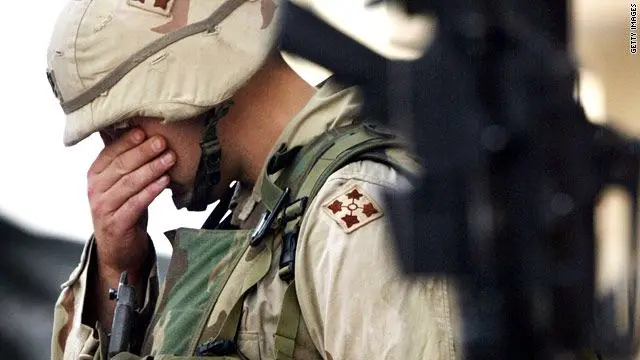
There's so many guys out there who are suffering from depression who could be helped by physical activity. And I understand that a lot of you out there are injured. I understand that a lot of you out there are dealing with injuries and you're dealing with pain and you're dealing with all this stuff, but there's a lot of different ways to train. There's a lot of different ways to train and regardless of what injury you have, you could find a modality that works for you. What I want to get into here, and if any of you are seriously injured, and I absolutely mean this, I absolutely 100% mean this, Go to our private Facebook group, the Warrior Soul Fitness Academy.
Join that group, tell me what your injuries are, and I will help you to find a platform. I will help you to find a modality that works for you. I promise you that. Head over to our private Facebook group. It's not anything that advertises, not an advertisement.
This is a literally no bullshit saying, I wanna help you out. So head over to that private Facebook group and I will help you to find a modality. Just message me from there or or put a post up on a wall. Alright? So let's get into some of these rules that I've established for training for men 35.
And so this information is gonna apply to those of you who, you know, you might be 35, you might be 30, maybe you're slowing down a little bit, but if you're trying to keep your training up and you're trying to still push yourself and you're trying to still get the most you can out of your body, this is gonna apply to you. So a few different things. Obviously, I've had to slow down a little bit since I've hit my late thirties, alright? So probably all the way up until I was about the age of 36, 37, when I walked into the gym, my goal was to lift as heavy as possible, right? And so, you know, I was a power lifter and a body builder.
I was looking to get big, I was looking to get, put on as much muscle as possible. But mostly I was looking to get strong. And so I would do things like, you know, load up the bar with four zero five pounds and rep it out. I would do a lot of a lot of really heavy stuff that I can't do now. Right?
And the reason why I can't do it now is because one, I don't have as much weight on my frame anymore. Back then I was about two hundred and twenty pounds. Right now I keep myself at about a hundred and eighty. But my big thing for you guys is this, you know, obviously you are not gonna be able to do what you used to do when you were younger, Right? And so while I want you to push yourselves and I want you to challenge yourselves, I do not want you to get injured.
I do not want you to get injured. And I don't want you to do anything stupid and and wind up with an injury that's gonna put you right back on the couch. Right? So the number one big rule that I have for myself, and this is, you know, since I've hit the age of about 37, is that I do not lift a weight that I cannot lift for five perfect reps without breaking my form. Okay?
I do not lift a weight that I cannot lift for five perfect reps without breaking my form. And there's a bunch of different reasons for that. Obviously, the injury. But the other thing is this, I don't really have a reason to lift any heavier than that. Right?
I don't really have a reason to lift any heavier than that. And that's because I'm not a competitive power lifter anymore, and I'm not gonna get benefited by doing any sets that are lower than five repetitions. Okay? You know, with jiu-jitsu and a lot of the other things I've gotten into later in life, you know, I just started jiu-jitsu last year. One of the things I discovered was that even though when I first walked into the gym, I was able to to squat well over 500 pounds, I was able to deadlift 600 pounds, I got broken in half by a dude who was about a hundred and thirty pounds and, you know, had no muscle in his body.
And I got broken in half because that dude knew technique. He was fit enough to keep up with me endurance wise and, you know, literally I just rubbed my face on the mat. And after that first day of jiu-jitsu, it clicked in my head. I said, you know, why the hell am I trying to break my back with these heavy weights when it's not, obviously not gonna help me to improve my ability to defend myself, my ability to carry myself, and it's not going to help me to perform any better. So, you know, I still challenge myself, but I do not lift a weight that I cannot lift for five perfect repetitions.
Okay? The the next thing is this, and the rest of these rules are are are gonna be a bit counter intuitive for you. And yeah, I come from a different direction than a lot of people are gonna tell you. So the first rule, or the the next big rule that I want you to understand is this, don't train like a fucking old man. Don't train like a fucking old man.
And now what do I mean by that? Well, there's a bunch of little things that come into this. Number one, I do not lift with machines. Right? And when I'm talking about machines, I'm not talking about cables, not talking about I don't lift with anything that is going to control my form for me.
Right? I do not lift with anything that's going to control my form for me. Now, why is this? Alright. So a lot of guys, when they get older, they think, oh, I'm gonna go lift weights and you know, I'm older now, so I need to just hang around on the Nautilus machines.
Alright? But it's counterintuitive, Right? It's it it there's a counterintuitive element to this that you really shouldn't go for those machines, and there's a way that they're gonna hurt you. And it's because of something called Wolff's law. Alright?
What is Wolff's law? Wolff's law states that your bones are going to adapt to the demands you place upon them. Okay? Now, why is that important? Well, as we get older, our bones get weaker.
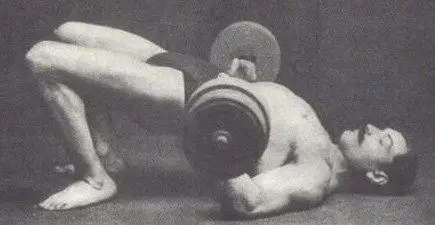
Okay? So if you are going to get over there and you're gonna just lift with machines, you might get some benefit with it, but you're not gonna make your bones as strong as you would from doing squats, from doing dead lifts, from doing overhead presses, from working with free weights. You're just not. Right? And and so one of the things I look at my training as right now is it is it's an investment not for, you know, the next six months, not for the next year.
It's an investment in the rest of my life. So a lot of people, as they get older and they hit their sixties, their seventies, one of the biggest things that affects senior citizens and their mortality rates is actually breaking bones. Because a lot of people, they'll fall, they'll break their hip, they'll break a rib, they'll get a serious bone breaker injury and that puts them into a place where they can't do anything. Right? It's a lot harder to recover from something like that when you're 60 or 70.
And so, I look at dead lifting and squatting and overhead pressing as kind of like my insurance policy for when I get older because I want to make sure that my bones are going to be very, very strong. The other part about it is this, there's mobility element to all of these exercises. So if you stop squatting, I'm not talking about putting a bar full of 500 pounds on your back, I'm just talking about putting any weight on there, even if it's body weight, even if you're doing a goblet squat with a dumbbell in front of you. You're going to get much more benefit from that, the bone pressure, but also from the mobility aspect of it. Being able to put yourself into a squat position, Being able to externally rotate your shoulders so that you can do an overhead press properly.
You know, being able to lift a weight off a floor. Right? That's something you're probably gonna have to do for the rest of your life. Know, you wanna be able to pick up your grandkids, if you wanna be able to pick up a package. You know, being able to lift a weight off the floor properly, that's what dead lifting is.
And so I highly recommend that you avoid machines as much as possible and you incorporate the three main lifts and I actually think that they're more important for you as you enter middle age than they ever were back when you were 20. I think everybody should deal with them, but they're more important there. Now again, I just wanna say this, I understand some of you are injured. I understand some of you, you know, might not be able to perform a squat right now. Some of you might not be able to perform a deadlift right now because of a bad back.
And in those cases, you should be doing other exercises that are going to help you to be able to squat or deadlift or overhead press again. Working on your mobility, working on your squat mobility, right? Working on your hip hinge, right, which is the main movement for a deadlift. Working on these things so that eventually you can reincorporate those exercises back in. These are extremely important and so remember that.
The other law you should understand here, because we talked about Wolff's law, states that your bones are going to adapt to the demands that they're placed under, but also Davis's law is really important here too. And that is basically the same thing as Wolff's law except it applies to soft tissue, your muscles. Okay? And it states that muscles will also model along the lines of stress. Now, why is that important for what we're talking about here?
Well, it's because if you're just focusing on machines and you're isolating your muscles, what's gonna happen is you are going to strengthen certain muscles, but then other muscles are going to fall by the wayside. For instance, I see a lot young guys, they only bench press, or they bench press every single day. Right? And that might work for a few years. Right?
They might feel fine for a few years. But when they get to be, you know, five years in, what I see happening to a lot of guys who just they bench press all the time, but don't work their rear delts or don't work their lats like they should, what happens is they start to develop something called shoulder impingement syndrome. And that's a really painful condition where you're getting lots and lots of pain in your front deltoid. A lot of guys can't lift their arm over the head. They can't lift it straight up over the head because they've developed shoulder impingement syndrome.
And you know, you need to be doing things that are going to work not just the prime movers, but that are also going to work the supporting muscles. Right? The secondary movers. And so, squats, the bench presses, the dead lifts, the overhead presses, they all do this, but you also need to be working the opposites, right? So if you're bench pressing all the time, you should be doing bent rows, right?
You should, if you're overhead pressing, should still be doing pull ups, right? If you're squatting, if you're squatting, you should be doing leg lifts, right? Hanging leg lifts, hanging leg raises, right? All of these prime movers, for all your prime movers, you need to be also moving and executing movements with the supporting muscles, Okay? And that's basically why I don't like a lot of machine workouts or guys going to just the Nautilus or anything like that because it's just going to work your prime movers, not going to help you with your supporting muscles or anything like that.
So here's the other thing, guys. You know, aside from from making sure that you're doing workouts like that, you should also be pushing yourself. Okay? And I this is another thing that bothers me a lot. I see a lot of guys, they'll instead of, you know, doing very high intensity training exercises for cardio, they'll go over to elliptical or they'll go over to the the StairMaster, and they'll just do that for cardio. Right?
And that's why I get a lot of people coming to me saying they don't have time to train because they're like, I don't have two hours to spend on the treadmill or the elliptical, you know. And here's the thing guys, that's an injury waiting to happen if you're just doing the elliptical. Alright, I'm not saying that the elliptical is bad or the treadmill is bad or the stairmaster is bad. You can work that into your training if you want to. But it shouldn't be the only thing you do.
Now why is that? Well again, it goes back to Davis's law. Alright? Remember what you're doing when you're on an elliptical. You're basically moving in the same pattern over and over and over again.
So once again, you're using certain muscles and you're neglecting others. And if you're doing the same pattern over and over again, it's going to leave you wide open for the most common injury cause that's out there and that is overuse injury. Right? Overuse injury comes because you're working certain muscles, not working the others, and that develops muscle imbalances and this is where we see a lot of people developing knee problems, back problems, joint problems, all types of different things, Right? So this is another recommendation.
I would not I would not train steady cardio more than three times a week. I would be doing instead of steady cardio, I would be doing high intensity interval training where you can incorporate numerous different exercises. So you can work in burpees, you can work in air squats, you can work in lunges, can work in push ups, pull ups, you can even work in dead lifts and things like that if you want to. The way I like to go about it is, I'll usually do is an AMRAP, as many rounds as possible for ten minutes. And what I'll do is I'll wrap kettlebell and I'll do 20 kettlebell swings and I'll follow that up with 10 push ups and then I'll follow that up with five burpees and I'll do rounds of that for as many rounds as possible in ten minutes and by the end of that, you'll you'll feel it.
Your lungs will be burning. Right? So the reason why that's a much better idea than just, you know, steady cardio, number one is because the overuse injury that I was talking about. Number two, it's going to get you better heart rate variability. Right?
And why is that important? Well, rate variability is a marker to to determine how your central nervous system is working. Right? And if it's not working very well, what happens is your heart, has a steady beat. Right?
So it's boom, boom, boom. And that's bad. And a lot of people think you want it to be a steady beat. You want there actually to be better variability between heartbeats. Boom, boom, boom, boom, boom.
Right? So different timing. Sorry, my boom imitation of the heart probably isn't helping out. So you want there to be different different intervals between your heartbeats. And what that says is that your central nervous system is working awesome.
Right? Because if you just do a bunch of steady cardio, that's a surefire way to ensure that you're not gonna have very good heart rate variability. And one of the things that was happening back in the the late eighties, nineties with triathletes, a lot of triathletes were dropping dead of heart attacks, and the reason was because their recovery was awful, right? All they were doing were these steady death marches. These these long steady death march cardio sessions, and they were overtraining.
They were also getting lots and lots of inflammation from the food they were eating, which is very, very high carbohydrate. And if you ever read wanna read a book about this, I highly recommend Beyond Training by Ben Greenfield. Just a really, really awesome book that talks about the dangers of overtraining, the dangers of incorporating too much steady cardio and and not treating your nutrition in the right way, and how you can avoid things like, you know, the types of injuries I'm talking about and the types of chronic diseases that tend to come from high levels of inflammation that set in with endurance athletes. A lot of you guys out there particularly got to be careful of this because a lot of the time you spend in the military, you're doing a lot of these PT programs out there along with not eating the best food, that delivers a really high level of inflammation. Right?
And I think one of the big reasons we're seeing so many really bad traumatic brain injuries, obviously because of the blasts, but also because the bodies were already inflamed when they were working themselves into combat. Right? And that's also a big potential reason why we're seeing really high suicide rates because brain inflammation sets in and that shuts down hormonal precursors in your brain that go into producing testosterone levels. That causes depression when that gets shut off. So, you know, when you're training, you want to train to prepare your body to protect your body from these types of things and it should help with that.
And that's a big reason why I recommend doing HIIT training rather than just doing steady cardio. Another thing, and this goes into what I just said, is that you should be varying your workouts as much as possible. Right? So what does that mean? Well, you should be incorporating a lot of diverse activities into what you do, and again, I think this is even more important as you get older.
I just started doing gymnastics rings. I never used gymnastics rings in my life, and I just started doing them. Why? I started noticing that my shoulders were getting a little bit stiff and that was because I was working out with barbells all the time. And you know, was probably overworking certain muscles and underworking others.
So the gymnastics rings, they give me a great opportunity to stretch out my shoulders, they also give me an opportunity to vary those movement patterns from my wrist all the way up to my shoulder. And my shoulders feel way better ever since I started doing the gymnastics rings. Right? It's another big reason why I started doing jiu-jitsu because I wanted to get varied movement patterns into my day that would help me with my mobility, help me avoiding injury. And know, ever since I started jiu-jitsu, I've noticed my balance is so much better.
I noticed that my ability to move, my agility is so much better. And it's not like we're practicing agility there or anything like that, but I've been moving my body in different ways and that is only going to help you as you get older. So vary your activities, pick up new hobbies, try hiking, try going out and rolling some jiu-jitsu, try some of those Ido Portal movement practices that you see up there on YouTube. There's all these Ido Portal movement routines that you can do, like walking like a lizard, or doing duck walks, things like that, work those into your routine. Try a yoga class, Yoga is a great way to increase your mobility, increase your flexibility, and also to just just give yourself a time out.
Give your brain a time out. Right? It's huge for helping you to get into a better positive mental state. So some recommendations there. Alright, and the final thing, because I feel like I'm blabbing on and I'm sorry if I am, but the final thing is make sure that you're eating more fat, getting your essential fatty acids.
Now, why is this important as you're getting older? Well, one of the big things that happens as we get older is our testosterone levels start to deplete. And the big precursor to your hormones, to testosterone, is cholesterol, and if you're not getting enough fatty acids in your diet, then you're not going to have the raw materials necessary to make testosterone, right? So you want to make sure that you're getting your essential fatty acids. You should be taking omega-3s, right?
I hear so many guys out there telling me that they're suffering from achy joints, suffering from body pain, all these things, and fighting inflammation will help this, and omega-three fatty acids help you to fight inflammation. You want to make sure that you're taking a good triglyceride form fish oil or a good high DHA EPA algal oil. That's a omega three that comes from algae if you don't eat meat, right? But make sure you're getting a good omega-three supplement. But also make sure you're getting a good amount of fat in your diet.
I'm not saying you have to go ketogenic, but including some good healthy fats can definitely help with your brain power, can definitely help with your recovery, help with your joints, help in reducing a lot of that pain. You also want to make sure that you're not binging out on sugar all the time, right? So get rid of the junk food, get rid of the candy, the snacks, all that stuff. And you know, focus on eating good, healthy, whole food, right? A lot of people don't think that your injuries, that your joint pain is related to your diet.
A lot of people only associate it with your the way you're exercising. But how you eat has everything to do with those pains, those aches that you're feeling. Alright? That's all I got for today guys. If you've got any questions, I want to repeat what I said at the beginning of this.
If anybody out there is suffering from really bad injuries and you're looking for a training paradigm, you know, join the Warrior Soul Fitness Academy. It's like I said, it's completely free and you can come on there and just ask me a question, tell me what kind of injury you have and I will help you out with it. Alright? I promise you that. If for those of you who are looking for more, if you are interested in potentially working with me, but maybe you don't have the money to to do one on one training or anything like that.
I do one on one clients, but but this is a much better way for most of you. You can also join the Warrior Soul Agoge. And the Warrior Soul Agoge is our our our paid private group. And on the Warrior Soul Agoge, I have a library of workouts up there. I'm designing workouts on the daily to post up in the private Facebook group for the Warrior Soul Agoge, the team workouts that we're doing together.
We also do calls together. And it's not just gonna be like a webinar or anything like that. You're actually gonna be able to get onto a Zoom call. We'll be able to see face each other face to face. You can ask me whatever questions you want about anything you got.
And there's also a nutrition plan, a nutrition program in there. And what I try to do is I try to teach you how to create your own optimal nutrition plan and I could work with you during our live calls and over the private Facebook group to help you with that. So So if you're interested in that, the Warrior Soul Agoge is only $24.99 a month less if you sign up for the whole year. And it's a way of working with me one on one personally if you're looking for extra assistance with all your stuff. But if you don't wanna do that, that's fine.
We give a lot of stuff out here for free on the Warrior Soul podcast and also up on the Warrior Soul Agoge YouTube channel, which is also completely free. Tons and tons of information about training, about nutrition, and things to make you better. So again, I wanna thank you for listening, and if you liked this episode, please share it out and let us know by leaving us a review on iTunes. Thanks for listening guys and I will talk to you all very, very soon.
Host of the Warrior Soul Podcast and founder of Warrior Soul. Worldwide trainer and nutrition coach, contributing author at Testosterone Nation and Muscle and Strength.