Podcast episode
Episode 18: Thoughts from the Rio Olympics
Hosted by Chris Albert
The Warrior Soul Podcast
Had an amazing time down at the 2016 Olympic Games last week. I wanted to take this opportunity to give you some lessons I’ve learned from the trip including:
– My own fear of getting out of my comfort zone and how that may be holding me back.
– Some things I’m reading and listening to now that could really help you out.
– Some basic tips about nutrition that I think can help you to live your life better
Books mentioned:
https://www.amazon.com/Seeing-What-Others-Dont-Remarkable/dp/1480592803
Transcript
Machine-generated from the episode audio and lightly edited — may contain errors.
Chris Albert (link to this point)
Good afternoon, and welcome to the Warrior Soul Podcast. My name is Chris Albert. I am your host and the owner of Warrior Soul Apparel. First things first, if you hear a little bit of barking behind me, it's because people have just decided to clean my gutters, and my dog doesn't like that very much. Second, I'm just getting over the flu, so I'm gonna try not to cough.
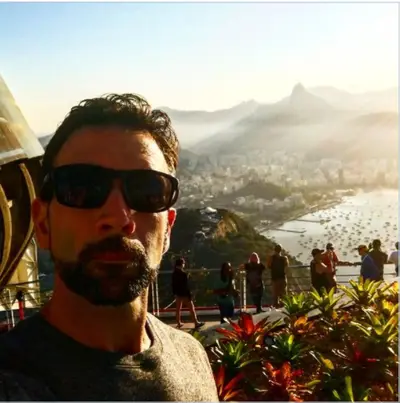
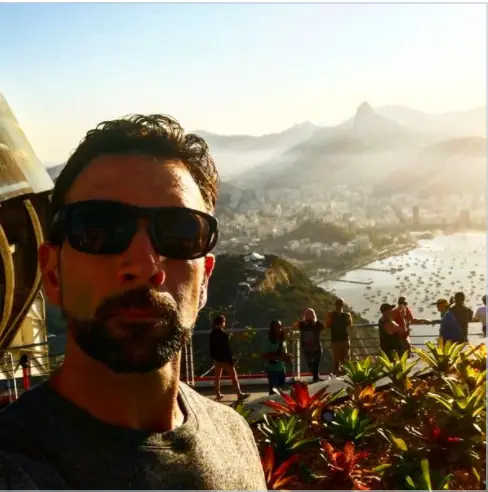
I'm gonna try not to hack hack up a loogie. I'm gonna try not to snort, and I'm gonna try to get through this podcast without any major issues. I wanted to get this episode out though because I am fresh back from Rio De Janeiro, Brazil, where I got to witness the two thousand sixteen Olympics, and it was an absolutely amazing experience. Today's episode is gonna be giving you some lessons from that experience that I had down there, just some things that I learned that I took away with me. And also, today's episode is going to be about fitness and nutrition, and specifically, fitness on the go.
Fitness when you don't have a whole lot of time to be taking care of yourself. Because one of the things I think that we as veterans have to realize is that we spend our youth literally kind of tearing our bodies apart. If you served an infantry or if you served in the field or even if you served aboard ship or in any capacity where your sleep was limited, where you're around different types of things. That stuff catches up with you, and it even catches up with you after you get out. And so this next this episode, and one of the next episodes, I'm gonna be bringing fitness expert Ben Greenfield on to talk about different types of measures we can take to protect ourselves for those who are still active in the military.
And for those of us who've gotten out, who wanna avoid some of the health problems that could be hanging around the corner because of some of the things we did in our youth. Some of those things had to do with actual military service like being out in the field and dealing with things like rifle cleaning fluid being on your hands when you were eating or you know doing some of the other things that you know we tend tended to do back in the day like maybe drink a little bit more than we should or, you know, smoke a lot of cigarettes or dip a lot of Copenhagen. Some of you might still be doing that, and and we'll talk about that as well. But this episode, I really wanna focus on the Olympics. I wanna focus on the travel to Rio De Janeiro, Brazil.
And I want to give you some of the lessons I've learned from that. And I also want to talk a little bit about fitness and nutrition and some of the things that I did while I was on the go. Because these can translate to things that you can do when you're hard pressed for time to to help preserve your your body, but also to help you with things like fat loss, to help you build some muscle, to help you to get back in shape. So first things first, I was really lucky to head down to the twenty sixteen Olympics, and it was a once in a lifetime experience. My girlfriend got me in the trip as a gift, and I have to tell you and I have to be honest with you guys.
At first, I didn't want to go. Now, I know Brazil has been going through a whole lot of negative press lately. Excuse me, needed a sip of my coffee. I know Brazil has been going through a lot of negative press lately. I know that we've been dealing with a lot of different types of things going on as far as the security issues down there, as far as, you know, issues with the sewage, issues with the plumbing, and things like that.
But that's not why I didn't wanna go. And I wanted to be honest with you about this because it pertains to kind of the spirit of this podcast. You know, I'm always telling you guys to forget about fear, to overcome fear. I'm telling you that fear is a liar. Well, the reason why I didn't wanna go was because of some of my own fear.
A fear that if I'm not here working fifteen hours a day in front of my computer, producing designs, getting things out there, getting content out there, getting podcast episodes out there, that things are just gonna fall apart. And, you know, my girlfriend really put her foot down, and she was like, dude, if you're gonna come down there, you're gonna have a good time. And you're not gonna do work. You're not going to be in front of your computer twenty four seven. You're gonna actually come out.
You're gonna experience Rio De Janeiro. You're gonna experience the Olympic games. And I'm thankful that she made me do that. But the big thing I wanna convey to you is that while I tell you all this stuff, and I'm sitting here on mister overcome your fear, put fear to the side, get rid of it. I understand something now from this trip, and that is that it is really hard to do that.
And it is really hard to put some of those fears aside. You know, I've always dreamed about going to an Olympics Olympic games, and I've always wanted to go to Brazil. And I nearly put a once in a lifetime opportunity on the back burner so that I could work more. And when I think about that, when I think about the possibility that I really thought about not going, that is something that bothers me. And it's something within myself that bothers me.
And that tells me that there's certain things that I do that although they might seem like kinda hardcore where I wake up at zero 4AM every morning, I get my coffee ready, I come in here, I write, I I start work. You know, some of that might be attached to a certain level of comfort. And comfort, no matter where it is, you know, if you're I tell you to get comfortable being uncomfortable, and that's that's led to a lot of my success. But in some ways, sometimes you gotta shake up that routine. Sometimes you gotta really look at yourself and say, what's holding me back right now?
Maybe my tendency to come in here and grind my ass off in the office and not get out to see the outside world, maybe that's holding me back a little bit. So what I wanna post all of you, as one of the lessons you can take from this is, what fears are holding you back right now? What things in your head? What false assumptions in your head right now are holding you back? Because I can tell you what my false assumptions were.
My false assumptions were that if I'm not posting social media every couple couple hours, if I am not producing content, if I'm not sitting here trying to figure out ways to grow this business, my false assumption was that this business would fall apart. And the reality was that I had to trust the people I work with. Had to trust the marines who work with me up in Santa Barbara to produce these t shirts. I had to trust my brother Andrew who runs my advertising. I had to trust the people who work with me that they were gonna help carry the ship and that they were gonna navigate it just fine without me.
And so my false assumption was that if I go away, everything's gonna fall apart. Now I'm not saying that that means I need to sit back on my butt and and take things easy and not work and and not be a leader because I need to convey my vision to them before I left. But at the same time, if you have to be there a 100% of the time and you have to be there dictating what goes what, what goes where at all the time, then that means that there's something wrong with your leadership ability. And that means that there's something that I have to practice so that I'm confident enough and competent enough as a leader to let my business let my business in the hands of the people who work with me and work for me, and and leave it here for a little bit, and allow those people to do their jobs. So for you guys, I wanna think about I want you to think about what false assumptions you have in your life that are holding you back.
What things that aren't necessarily true that you believe to be true that could be holding you back. And these could be fears of different types of things. It could be a fear that, you know, a fear of breaking out of your routine. It could be a fear of, you know, not being able to see your favorite TV show. It could be a fear like me that if you put your business down for a little bit, it's gonna fall apart.
Or it could be a fear that if you try something new, things are just gonna fall apart. Know, you could have fear of trying trying new things. There could also be the fear of pain. The fear of not having enough time for your family if you start a new workout routine. A fear that, you know, you're gonna feel like crap if you start that new diet to lose weight.
A fear that if you start a new business, it's gonna be too much work for you. Whatever that fear is, and some of the fears I'm talking about could be complete BS, or it could be something that you're actually experiencing right now. But think about what that false assumption is that's holding you back, and and try to figure out a way to identify it. One, identify what that false assumption is, and two, figure out why it's false. Why is it false?
You know, for me, my false assumption that the business was gonna fall fall apart was false because the business doesn't require me to be here at my computer all the time. And and that's why that assumption is false, but you need to figure out why your assumption is false. Why is it a false assumption? Why do you have that false assumption in the first place? And part of the reasons why I had my false assumption in the first place was because, you know, I have this feeling that I have to be needed.
I have to be going through some sort of pain, some sort of work in order for my business to be successful. And if I'm not doing that, I feel like, you know, the business is falling off course. If I don't have enough to do, if I'm not constantly working on something, I feel like the business is falling apart. And that's a false claim. That's a false assumption.
And the reality is that if I'm not handling handling all these menial tasks a lot of time, like answering emails constantly or working on social media constantly. Maybe I could be expanding this business a little bit more. Maybe I could be expanding Warrior Soul Apparel a little bit more. Maybe I could be handling a lot of those t shirt requests that I'm getting from people all over the place, from our army brothers and from our navy brothers and and creating more Marine Corps shirts. And these are all things that that that I need to work out.
And basically, need to sit down with a piece of paper, figure out what assumptions I'm having right now are false, figure out why I'm having those false assumptions, and then figuring out solutions for overcoming them. And sorry for beating that dead horse there, but but I really think that this is a crux of something that holds so many people back. And it's definitely something that's been holding me back for for quite a while. The other thing I wanna talk about was being in Rio itself. You know, like I said, Rio got a lot of negative press leading up to the Olympics and even during the Olympics.
And I have to say being down there was absolutely amazing. They did a really great job in hosting these Olympic games. Never once did I not feel safe. There was Brazilian military probably every 200 meters. Now I also realized that when I'm not there and when the Olympics aren't going on, it might be a very different city.
But from what I saw, everything looked very secure. The city was actually pretty clean. You know, I've been in a lot of cities around the world. I've been to a lot of places around the world, including The Middle East and different places where I was walking through raw sewage. And the fact that there were some open sewers there didn't bother me so much.
But there are certain things that while I was there reminded me that I'm very thankful to be from The United States. Know, little things like Wi Fi. You know, I I I think that's something we've actually come to take for granted here in The US. It was really hard to get Wi Fi in different places down there. And I know there's Internet cafes, and I know it's gotta be easier than I think it is.
Maybe I'm just I was just a dumb foreigner, but I couldn't hook into the Internet anywhere, which was probably a good thing because that kept me from getting into work and get my girlfriend pissed off at me and and stick my face in my phone and actually experiencing Brazil in the present. But the only place I was able to get Wi Fi was in the apartment that we were staying in. We We stayed there with on an Airbnb. And what I would do is I would do Insta Snaps all day long and, you know, they they would be in my phone, but they wouldn't load into Instagram. And then when I got back to Wi Fi, I would I would load them up to my story so that people could see what was going on at the Olympics.
I really wanted people who've never seen Rio to be able to see that place and to be able to see the Olympics and to be able to see some of the events we went to. But it was when I think about it, if back when I was homeless, back when I was living out of my car, back when I had absolutely nothing and I was just starting out my businesses, If I wasn't able to walk into any coffee shop or any Starbucks and sit there and do work with their Wi Fi for free, I don't think I'd be where I am today. I know that sounds like such a little stupid penny penny thing. I still think I would have been successful. I would have found a way, but it wouldn't have been so easy to start up an Internet business.
It wouldn't have been so easy to start up my my online training business, and it wouldn't it wouldn't have been so easy to start up Warrior Soul Apparel. I I I'm very thankful that places like Starbucks exist. I know a lot of people hate Starbucks. I know a lot of people hate these kind of hipster coffee shops that have the free WiFi. But I'm so thankful for them.
You know, I'm very thankful for the fact that we have public libraries with free WiFi service that allowed me to come in and do my work there to get myself back on my feet and get myself out of my car, living in my car and and into the rented room that I eventually got where I launched this business from. And if I didn't have that, and things would have been a lot different. You know, the other thing is little things that we take for granted here, plumbing that works all the time or, you know, being able to put toilet paper into the toilet. It's kinda gross, but in a lot of countries, you can't put toilet paper into the toilet. You've gotta put it in a trash can that they have next to the the toilet.
Brings me back to my Marine Corps days, you know, going to the bathroom in the ditch, you know, using MRE toilet paper to wipe myself, things like that. I don't wanna bring up bad memories for all of you or get too gross here. But, you know, I maybe I've become a nasty civilian and but I I kinda like using a toilet now and I kinda like being able to put my toilet paper into the toilet, so to speak, and they don't have that there. And the other thing is there's zero water pressure and things like that. And, again, that's me being a soft American, being a soft, privileged, you know, person who needs my my powerful shower, needs my powerful toilet in order to survive.
And and maybe, like I said, maybe I've been out of the Corps too long, and some of my old infantry friends would probably come in and bash my head about now. But just little things that I think we all take for granted here in The US. Things like social mobility. You know, when we're we're traveling around Rio De Janeiro, you see the favelas and you see the state of the buildings. The holes holes in the roofs, the holes in the the walls.
You see bullet holes everywhere and things like that. Not that I went too deep into the favelas, but we took a lot of public transportation. And on the buses and on the trains, you can see into them. And a lot of people just don't have the means that we have here. And you know, I think that even, like I said, I was lucky to be homeless in The United States in Southern California.
I don't think that I could've had a better place to be homeless in my life or or in the world. And I was lucky for that. And I I just have so many blessings in my life that I've gotten from being American, from from being from this country that I'm so thankful for. And, you know, being having been around the world with the Marine Corps, having been to Iraq and to some of these other places that don't have all the conveniences, I was already appreciative of this, but I needed, I think, to be reminded of a lot of the privileges we have here. And I'm very thankful for those, and I'm very thankful again to to be from The United States.
That being said, Brazil was a pretty freaking awesome place. It's absolutely gorgeous. We did some hikes through through Parque Lage in in Rio De Janeiro, which is kind of the world's largest urban forest is right below that Christ the Redeemer statue. Went around there. I didn't see one mosquito, so I don't think I have Zika.
I'm gonna go get tested for it in a week when I go for my physical at the VA, but but I didn't see one mosquito down there. You know, the beach called Copacabana Beach was absolutely amazing. I don't drink, but if you drank, you can get a caipirinha down there. And it was actually really inexpensive. It was about the Brazilian real was about 32¢ to the dollar.
And so we're getting food there really inexpensively. We're getting, you know, like a full steak dinner for, like, for two people for $20, which was absolutely amazing. I mean, here in Southern California, you get that for maybe $60. So that was a really great experience. And it was just, like I said, great being around the Olympics, seeing those athletes, seeing them compete at the highest level.
One of the other lessons I realized from watching the Olympics is, you know, I've coached a lot of different types of athletes in my life. You know, I had a a pretty good career as a personal trainer. And, you know, I've coached some high level elite athletes, but I've never seen them all competing in one place at the same time at such a level. And I have to say that you really don't see somebody push themselves unless they're in that kind of company. So one of the lessons that I'm taking away from the Olympics is that we all really need to keep good company around us.
That's gonna push us all the time. You know, you you're not working up to your optimal potential unless you're around people who are gonna push you, who are going to get you to push yourself to your limit, who are gonna get you to push yourself beyond that point of exertion to to achieve at the highest level. It's just not gonna happen. So really think about the people who you're hanging around with. You know, they say you're the average of the five people you hang around with the most.
And for me, over the last few months, I've been pretty isolated. You know? So maybe I'm the average of my dog, my girlfriend, and a couple of my neighbors. But I what I've been trying to do is I've been trying to do what a lot of you are doing right now. I've been trying to listen to podcasts.
I'm a big fan of the Jocko podcast. You know, I think it's a a podcast that all veterans should listen to because Jocko really brings some amazing insights into how we can all live our best lives. And, you know, his handle on books, his handle on literature, his handle on the lessons that we've learned from serving in the military and serving in combat and applying those to life, that is an absolutely amazing talent that he has to to translate that into ideas for leadership and ideas for the way that we should be living our civilian lives. I I there is no better podcast in my mind than than than Jocko and Jocko Willink. And and his book, Extreme Ownership, has been absolutely amazing.
So, you know, if you can't be around people who are gonna push you, then then at least you can listen to people who are gonna push you. You know, Jocko's a great one. Fitness wise, my favorite podcast is is Ben Greenfield and I again, Ben's gonna be a guest on this show coming up the next episode. And the cool part about Ben is, you know, I don't have a lot of respect for a lot of the way the fitness industry has gone lately. The bodybuilding industry, which I was once a part of, really, I think the knowledge base in there about health and fitness is ten years from now, we're gonna look back on it.
We're gonna be like, dude, we were back in the stone ages. A lot of the knowledge that's being put out there, think at best is going to keep people just doing the same thing over and over again. And at worse is going to really hurt people's health and really hurt people's well-being. And the reason I say this is because I practiced a lot of this myself in the past. You know, I as a trainer and as a nutrition coach, I experimented with almost every nutrition protocol I could find.
And I've experimented with almost everything I could find when I was a bodybuilder. And I'll admit free and fully that that included performance enhancing drugs. And just because I wanted to grasp on this stuff. If I was gonna coach professional bodybuilders, if I was gonna coach professional athletes who are gonna be using these things, then I wanted to know what they did. I wanted to know what those diets did.
I wanted to know what each supplement did. And I read everything I could. I took a lot of different classes, a lot of certifications. And, you know, one of the things I realized when I started to look at the popular fitness material that was out there on YouTube and on Instagram is that so much of this industry doesn't know what it's talking about. So much of this industry is leading people down the wrong path, the path toward unhealthy lifestyles, the path toward unhealthy eating habits, and a path toward I think a lot of psychological issues.
Because when I ran my fitness YouTube channel, I wouldn't get so many messages from guys who were so depressed because they couldn't get the body they wanted. And you know, we used to think about women having self image issues, women having body issues. And I see it more often now in men. Men who are depressed about how they look, men who are depressed about what their bodies look like, what they're able to do. And, you know, the way I think about things, and I think that if you're in a place where you don't wanna be right now, as long as you're putting the effort in to work on it, as long as you're putting the effort in to to push forward to make yourself better, then that's a victory.
You have to pat yourself on the back for that. I think that's an amazing thing. And, you know, I I don't know. Maybe I'm getting off the off the subject here, but I think that as long as we keep pushing ourselves and keep trying to get the best knowledge possible about what fitness truly is and about what is gonna be good for us and what is not gonna be good for us. I think that that's that's that's a huge thing.
And so the reason why I recommend Ben Greenfield is because he's one of the only real popular trainers I see out there who actually cite scientific knowledge, who cites the actual articles in his blogs. And no, he's not a bodybuilder. He comes from a very different field paradigm than I do. He was a triathlete, and now he's an OCR obstacle course racing runner. But his knowledge about fitness, his knowledge about nutrition is is so detailed and so so elegant that he's able to take a lot of these complex things that people don't understand break them down for people.
That's one of the reasons why I love his podcast so much. You know, and and read read as much as possible. The current book I'm reading right now is Seeing What Others Don't, The Remarkable Ways We Gain Insights, and that's by Gary Klein. And, basically, what that book talks about is what we were talking about at the beginning, trying to get around those false psychological barriers that we put up to ourselves to to see things in a different way, to gain new insights about what can bring you closer to what you want to accomplish and to what you want to do. And I'll put a link to that in the show notes for this episode.
I'm also reading The Book of Five Rings by Miyamoto Musashi. And maybe I'll I'll do a review on these books in a couple of episodes. Musashi's book, Musashi was a ancient Japanese swordsman. And his book mainly talks about the strategy of fighting with swords, fighting with two swords. And I'm just breaking into that one.
That was by recommendation by someone from Instagram. So I thank you for that. And then, you know, beyond that, I'm back home now just trying to get myself back in shape and trying to recover from that trip. Now some solid things that you can do fitness wise to really kind of push yourself to the next level, but that aren't necessarily gonna cause a huge dent in your lifestyle and a huge overhaul of what you're currently doing. You know, one of the biggest things that I've realized about nutrition and fitness over the last few years is that in many ways, there are certain foods that if I eat them at certain times, they will completely take away from my energy.
Now a lot of people think of carbohydrates as something that builds energy, something that gives you energy. And if you read a nutrition book, that's what they're gonna say. If you want energy, eat a bunch of carbohydrates. So over the years, what I've seen a lot of people do is they'll have these really carb heavy breakfasts, like tons of oatmeal, tons of cream of rice, toast, like four or five slices of toast, and they'll they'll load protein on there, like tons of scrambled eggs. You know, at one point when I was when I was coming up in bodybuilding or powerlifting, I was eating like 10 to 12 eggs a day along with four to five pieces of toast and some oatmeal for breakfast.
And, you know, I think back to it and I would get so sleepy and lethargic by eleven, twelve noon 11AM, twelve noon. I really couldn't even think. I couldn't do my schoolwork. You know, back when I was in the Marine Corps, I would try to load up on stuff on the chat at the chow hall. And I remember sitting in sitting in classes after after eating breakfast when we're back in back in the rear and just falling asleep, doing everything I could stay could do to stay awake, you know, and and loading up dip and, you know, taking every cigarette break I could and trying to, you know, sip on water as much as I could stay awake, but I couldn't do it.
My brain just really wasn't working. And what I've discovered through my studies since I since I've gotten into nutrition coaching, I since I started training people, is that in a lot of ways the insulin production that occurs when you eat a breakfast like that really makes us inefficient at creating energy. Takes away from our brain power Because what happens is, you know, gets gets secreted. It takes a lot of that sugar that's running through your bloodstream, you know, and what you have to remember is that insulin gets secreted when we carbohydrates, but also gets secreted when we eat protein. And it takes a lot of those sugars and it shuttles them directly either to our fat cells or to our muscle cells.
We're lucky, if we're lucky, it gets shuttle to our muscle cells or fat or or or liver cells. But nine times out of 10, it's gonna go to your fat cells. If you've been overeating carbohydrates, you ate a huge breakfast, and you haven't expended a lot of energy, it's gonna go straight to your fat cells. Where it's not gonna go is it's gonna immediately take the sugar away from your brain, and you're not gonna be burning fuel for your brain on a regular basis. All of sudden, it's gonna dip.
So one of the things I've been doing for the last few years is I've been either fasting for breakfast or I eat nothing but fat. I'll have some coconut oil or some MCT oil with my coffee. And, you know, I really won't eat anything till about thirteen hundred, fourteen hundred in the afternoon. And when I do eat, I'll have like a salad, and I might have a little bit of protein with that with that salad. But I also have a lot of olive oil and and some nuts and some good fats with it.
And that's what gives me energy. I'm a fat adapted person. Now I don't want you to do this right off the bat. If you listen to this, I want you to read a book. And the book is called, The Art and Science of Low Carbohydrate Performance.
And that's by Volek and Phinney, V O L E K, and P H I N N E Y. And that book is something that changed my my that book is something that really changed my perspective on how to eat because it really demonstrates how using fat as energy can be a as an energy source can be a much more efficient way of allowing your body to work. And when I switch to this method of dieting, rather than you know, it used to be when I was doing like a plain old bodybuilding diet when I was just just eating, I would I would get really fat during certain periods, and then I would have to lean out. I would have to cut up. You know, with this method of dieting, I'm lean all the time.
I'm I'm ready to go all the time, and I always have energy. I don't need to eat in order to have energy. And we think about bodybuilders. You know, a lot of bodybuilders like to think of themselves as like super evolved people who have these superior genetics. Well, think about it like this.
If we're in the middle of a zombie apocalypse or or shit hits the fan, do you really want to be around somebody who has to eat every two hours in order to keep their energy up to fight zombies? I really wouldn't. You know, I I'd rather be around somebody who who needed to eat, like, once or twice a day. And and so while I'm not huge, while I'm not freaking hulking, I don't wanna be that big. I wanna be freaking functional.
I wanna be able to fight off zombies if I need to. I wanna be able to fight off anything that comes at me. I wanna be able to move. I wanna have energy, and I want that energy to be steady throughout the day. Because, you know, my work as an entrepreneur, I am constantly working.
I'm constantly trying to think. I'm constantly trying to think up new things. I don't wanna have to stop and eat every two hours. And so one of the things I'm gonna be talking about with Ben Greenfield is different ways that people who are currently active duty might be able to hack their nutrition in order to get more sustained energy. Because when you're out in the field and you gotta stop and pull out your MREs and eat pound cake all the time and you're hungry and and you kinda fluctuate your blood sugar all the time, that's really not good.
And and not only that, I mean, it it could lead to different types of health issues down the line. You know, there's a lot of stuff we do in the military that's not necessarily healthy. And when you're out in the field, you are constantly tearing at your body. You know, those 20 mile humps, they can wreck your knees, they can wreck your joints, and if your level of total body chronic inflammation is higher from from the food you're eating, which is quite possible from from the MREs, and the amount of sugar that's in them, that can lead to prolonged recovery from injuries. It can lead to a lot of aches and pains down the line.
It can lead to heart disease down the line. And so that's stuff we all need to be concerned about. I don't know how many guys I've seen, at least from the infantry, who today have back problems, today have joint problems. And I think a lot of this stuff can be avoided just by better nutrition. Now that being said, I realize that a lot of this is uncontrollable for you because you're given MREs.
But what I wanna get into is different things you could take with you to supplement those MREs that might inhibit a lot of those effects, that might take a lot of those, lessen the impact of a lot of those effects. Another thing that, you know, we were talking about a couple episodes ago with Andrew Marr, is the fact that inflammation can really affect your brain. And anything that affects your brain can affect your hormonal processes. So a lot of the things we're seeing like depression, like the symptoms of PTS, like prolonged symptoms of traumatic brain injury, I think they can also be lessened or actually avoided through better nutrition before a brain injury happens, before a traumatic event happens. And if we're getting better nutrition into our bodies, or even getting better nutrition into our bodies after service, I think we could take a lot of those symptoms away.
So one of the things I'm trying to do with this podcast and with everything we do here at Warrior Soul Apparel, is to encourage you all to live better lives, to encourage you all to live your best life. And I think that a lot of that's achievable through nutrition. Now what I said before about being fat adapted, that's not necessarily with for everybody. Not everybody can can be on what's called a ketogenic diet. But we can all avoid a lot of sugar.
We can all avoid a lot of the preservatives that that from processed foods that we eat. We can all avoid inflammatory foods. And we can all eat more anti inflammatory foods that are going to help us feel better, going to help us think better, going to help us have sex better, and gonna help us perform better, and and just live better, more optimal lives. And that's something I wanna encourage for all of you. One of the things for me while I was in Brazil was I fasted a lot.
I didn't eat anything in the mornings. I only ate toward the evenings. And the reason why I did that was because a lot of the food down there was like cheese bread and a lot of french fries and and things like that. I didn't wanna put that into my body earlier in the day so I don't have a huge insulin spike and then not have enough energy to get through the games, fall asleep in the stands, and things like that. So I brought a bottle of MCT oil with me.
That's medium chain triglyceride oil, which is a derivative of coconut oil. I put that into my coffee. I brought my own coffee down there because all they drink down there is instant coffee crap from one of those Nespresso machines. And we we I I did that. And then in the evening, I would have a big meal with with some beef.
And the beef act down there was actually really good, really tasty, and hit the stomach really well. And then since I've been back, I'm actually doing a three day fast right now. All I'm drinking is coffee and green juice along with some MCT oil and grass fed butter. And that is mainly to keep my digestive system back on track. As I've told you all before, I suffer from something called ulcerative colitis, which is an autoimmune disease.
And that can really wreak havoc on me. And one of the things I do to manage it is I I go on fast from time to time. But I hope this discussion on nutrition wasn't boring for you. I hope I wasn't going too far off the reservation for all of you. I hope you all don't think I'm a nasty hippie.
I just really want to start to get into more of this stuff for you because it's it's something I've done for the fitness community for a long time. And I got away from the fitness industry because I really wasn't a fan of the vanity. I wasn't a fan of just helping people reduce their fat asses and get abs. What I really want to do is to help my brothers and my sisters in arms from the veteran community to to live better, to think better, and to perform better, and to overcome a lot of these challenges that have been tossed at us over the last few years. Now that being said, I wanna hear from all of you.
And, you know, my email is info@warriorsoulapparel.com. You can hit me up on Facebook anytime. You can hit me up on Instagram anytime. My Instagram handle is at warrior soul apparel or on Twitter at warrior soul gear. Anytime you wanna ask me something, anytime you wanna know about something, anytime, any way that I can help any of you out, please let me know.
That's why I'm here. I really wanna make this podcast beneficial for all of you, and I really want to help you to the utmost of my ability. And that's all I got for today. We'll be back at you with fitness superstar Ben Greenfield this coming week. And I will talk to you all soon.
I love you all. Have a great day. Peace out.
Host of the Warrior Soul Podcast and founder of Warrior Soul. Worldwide trainer and nutrition coach, contributing author at Testosterone Nation and Muscle and Strength.