Podcast episode
Episode 13: Fighting PTS and Depression through Meditation and Mindfulness

Hosted by Chris Albert
The Warrior Soul Podcast
Forward to the Podcast
The Podcast Episode
Show Notes:
Throughout history, warriors who were exposed to the horrors of combat have had to face the prospect of returning to their communities, and throughout history warriors have had to see to their own healing processes.
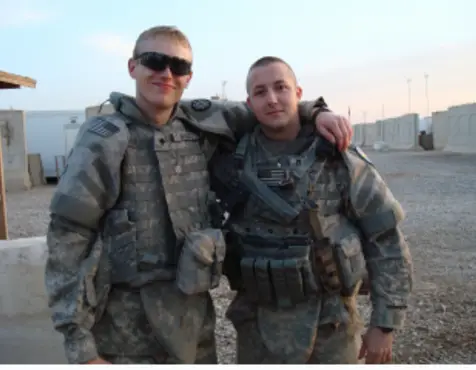
In this episode, I had the pleasure of interviewing Adam Magers of the Warrior’s Ascent. Adam is a US Army veteran of the war in Iraq. Warrior’s Ascent teaches returning warriors how to heal their minds, bodies, and souls through holistic healing practices. Utilizing mindfulness and depth psychology, the Warrior’s Ascent does not take the modern approach of merely seeking to fight the symptoms of PTS. Rather, they teach practices that allow the veterans they help to achieve mental and physical wholeness.
Warrior’s Ascent Web Site: http://www.warriorsascent.org/
Twitter: @warriorsascent https://twitter.com/WarriorsAscent
On Depth Psychology and Carl Jung: http://www.cgjungcenter.org/clinical-services/what-is-depth-psychology/
Transcript
Machine-generated from the episode audio and lightly edited — may contain errors.
Chris Albert (link to this point)
Good morning. Welcome to the Warrior Soul podcast. My name is Chris Albert, and this is episode 13. When we go through our lives and we come across different events and we move forward, we a lot of times try to look at it like it's almost a logical sequence. You know, we do what we openly think.
We follow the actions that are recommended to us. But a lot of times, those actions and our thoughts are done in an environment of something else, something that's a little bit deeper. I think in a lot of ways, our fear prevents us from diving too deeply into our own minds at times. And when we neglect that aspect of our thought process, yes, we might be avoiding something that's potentially scary or that's potentially uncomfortable or that's potentially not congruent with what how we're currently living. But at the same time, if we don't examine that in a lot of ways, we're leaving something behind and we're possibly leaving behind something that can help us help us to overcome beliefs about our past, and help us to overcome different types of challenges we're gonna have in our own minds in the future.
I have as a guest on this podcast today a gentleman named Adam Magers. He's from an organization called the Warrior's Ascent. They're an organization that helps veterans to find alternative paths and alternative treatments to PTS and to some of the psychological problems we've been getting or dealing with over the last decade. And, he has a really, really interesting approach. Adam, I wanna welcome you first of all to the Warrior Soul podcast.
Somebody just ripped the cord on a lawnmower right outside my window. So if we have any problems hearing each other, just let me know. But can you tell us a little bit about what you do and what your organization does?
Adam Magers (link to this point)
Yeah, absolutely. Basically Warrior's Ascent has a couple of different programs and all of them kind of combine in a concerted effort to support veterans with post traumatic stress. Our kind of flagship program is called the Academy of Healing and what that is, is it's a five day program where we do two things really. One is we provide some really powerful healing experiences for warriors and the second is we provide them with a lot of training in terms of taking on some different holistic practices that are evidence based and have been shown through research to change people's brains, change their neurotransmitter levels, result in very real changes and basically reducing the symptoms that people experience. So it's real healing, it's not just a distraction, it's not just coping methods, it's real healing, it's measurable.
Throughout those five days we train them in a variety of different things but it's all aimed at helping the warrior to heal the mind, the body, and the soul because we know that war affects all three. The way that post traumatic stress has been looked at in the past, it's been treated as if it's just a mind thing. So the dominant approaches to treating post traumatic stress focus on the mind and the mind alone and the way that you think and the truth about post traumatic stress in psychological trauma is that it really does affect all three things. It affects the soul for a lot of psychologists. They would debate whether or not we even actually have a soul, but we would argue that we do indeed have a soul and the perspective that we apply called the depth psychological perspective is rooted in the soul.
All these things to us are just the different areas that we kind of address and for us you can't approach this issue without looking at all three of those things.
Chris Albert (link to this point)
That's awesome. And I want to get into exactly what the depth psychological approach is and your specific approach. Can you tell us I want to hear your story. I want to hear how you came to this and how you came to this kind of technique and and through your own experiences. Had you tried anything else and and and how did you come to these ideas?
Adam Magers (link to this point)
Absolutely. So I was in the army for eight years. And when I deployed to Iraq, I deployed with the one thousand, one hundred thirty eighth Sapper Company, which is combat engineers. So our task I was in Iraq from 2007 to 2008 and our task was to provide route clearance patrols. So basically IED hunting, Improvised Explosive Device hunting.
So our job is to get the bombs off the road. And so we cleared all the main MSRs throughout Baghdad. And then when the battle of Sadr City kicked off in March of o eight, we were tasked that mission. So my unit actually led the assault during the battle of Sadr City, clearing all the routes throughout Sadr City for the duration of that conflict, which is about three months. So I came home in the summer of o eight and everything seemed fine.
I did a lot of drinking over the next year then eventually just one day everything just completely broke down. It was just a sudden and complete breakdown. It was extremely surprising. Everything seemed great and all of a sudden one day I started having panic attacks and once those started, it didn't stop. So it was just relentless.
So within a few weeks, I took myself to the VA. Before I ever saw a therapist, they started dishing out the medications, so they put me on a variety of different antidepressants.
Chris Albert (link to this point)
Really?
Adam Magers (link to this point)
Yeah, so I was on antidepressants for several months. About a month after I started seeing a psychiatrist and getting put on meds, they eventually set me up with a therapy appointment.
I did not connect well with that therapist so I ended up finding a civilian therapist that I paid for out of pocket who I felt was better and basically began the long road of unpacking everything that I'd been through. I soon discovered that if I was going to really have a chance of overcoming this, I was going to have to look a lot at my whole life, childhood trauma, all the other things that had an impact on me throughout life and just my general way of being. So from August 2009 to now, I basically went through a variety of experiences and initially I had found a lot of healing just through spiritual experiences. So I would say that a variety of my healing took place not in the therapy room, but through spiritual experiences that were meaningful to me and then eventually I was introduced to the depth psychological perspective, the work of Carl Jung and Joseph Campbell and from there everything spiraled out of control. I basically tumbled into this unknown world of knowledge that had been hidden, found that it was very ancient knowledge, all these ancient perspectives on healing and overcoming trials and the more I was exposed to that, the more I saw how relevant it was for other veterans.
And so a buddy and I, Jay Waldo, we deployed to Iraq with me. We we started our own nonprofit a little over two years ago and you know, today, we've served approximately 115 warriors. We are now on pace to serve about 100 to 125 warriors each year through our program and it's been remarkably successful. Most of the warriors that have come to our program have just been desperate for something, desperate for change, desperate for transformation. A lot of them have been suicidal.
We have lost one of our warriors to suicide and you know, I mean inevitably because of the work we do, we will unfortunately lose more. What a lot of these folks are dealing with is incredibly difficult to overcome, but we do have a vast majority of them go out after the program, report dramatic life altering improvements to their health. Their wives will write us letters and tell us how dramatically their husbands have changed. They'll write us and tell tell us how much it's changed their whole family and their work life and everything else. All in all, it's been extremely successful.
Chris Albert (link to this point)
That's amazing. That's amazing. You mentioned a couple of things that I want to touch back on and circle back on before we move on to discussing some of the specific things you do. You mentioned spirituality and the depth psychological approach. You know, I I was trained as a a social science social scientist.
I hid out in school for a really long time and and went up through PhD in in political science where we studied psychology, where we studied positivist psychology and things like that. Can you explain to me a little bit about one, what you meant by spirituality and two, what the depth psychological approach is?
Adam Magers (link to this point)
Sure. So in terms of spirituality, I would say that that's really up for each individual's interpretation. For me personally, I experienced a number of things that could not be explained by anything other than some divine force living in the universe and within me that was making meaning of the terrible things I was going through. And so for instance, really critical junctures of my own journey, I would have profound dreams or I would have what is known as a synchronistic experience. Synchronicity is a concept that most people have experienced but may not know what the word means, but synchronicity is an acausal principle.
So there is nothing that causes these two events to happen, but they just do happen. And they are very meaningful coincidences so you may be thinking or hoping or praying about how you really would like or need something and then low and behold, there it shows up for you. Or any combination of just coincidences that are too bizarre to have just simply happened. That there is just this awareness that something beyond the experience itself was kind of being orchestrated from something, somewhere. So I had a couple of really really meaningful experiences in terms of what I was praying about at these critical junctures of my life and then just out of nowhere, things that were, I mean quite honestly just miraculous occurred.
So for me, my experience with spirituality kind of combines the synchronistic experiences, the dreams, the practice of stillness and cultivating emotional and spiritual maturity within yourself, prayer, meditation, even art. These practices can kind of stir up something within us, something deeper, something that is deeply connected to the emotions and to our sense of purpose and meaning. For me that is what spirituality is. In terms of the depth psychological approach, really the father of depth psychology technically is Freud. Freud was one of the first people to mention dreams and the depth approach essentially means it's basically a deep psychology.
So it's not talking about behaviors, it's talking about something much much deeper and we often forget that the root of the word psychology is soul, so it's psyche and psyche is the Greek word for breath or soul. Whenever So Freud wrote, he used the word Seele, s e e l e, Seele and what that meant was soul, explicitly soul. It is the German word for soul And as he is using this word, Freud was very punctual. He received a lot of awards for writing. He wrote exactly what he meant and when he was writing, he was talking about the human soul.
Unfortunately when the American behaviorists, which were way behind the ball game at this point in time, began to convert Freud's works, they substituted the word Seele for psyche or mind. So they basically took his works and they mistranslated it and so they basically they used this word psyche which most Americans didn't know what it meant or they used the word mind as if to say well this is just really a function of the mind. Early in the field of American psychology when it was very immature, we kind of got off on the wrong foot. Following Freud, we're actually kind of coinciding with Freud was Carl Jung. And Carl Jung, when he was in his early 30s, was a medical doctor first and foremost and in being a medical doctor and experiencing a number of curious ailments of his patients, he began to ask questions about what it was that was going on with him because it was obvious that a lot of their problems were psychological. That they would have these somatic or bodily symptoms that were absolutely rooted in the psyche.
So it wasn't just in the mind, was in the soul of the person and he was seeing all these metaphors that there would be a metaphor for an illness. So it's almost as if the physical symptoms were trying to tell the person something that came on a soul level. So it trying to drag the person to deal with critical aspects of their well-being from a psychological perspective, a soul perspective. Carl Jung is really the one that made the huge breakthroughs in terms of dream work and the study of the soul. Jung noted across a wide variety of the spectrums of studies regarding human well-being that there are some commonalities.
There's a lot of things that all human beings share in common. And Jung was fascinated with religion and with mythology and with the studies of stories of aboriginals or the native Americans or Celtic mythology or African mythology, whatever it was. And in studying these things, he found that there was a common pattern to the story that you would have a hero who would begin their journey, they would have this call to adventure, so they're first existing in the status quo and just this typical world, so imagine Luke Skywalker or Frodo Baggins or whoever. They are in the status quo, they have this thing happen that provokes them to have this call to adventure and they cross this threshold from the known world that they live in into this unknown world where all the rules change, everything changes and from there they usually receive some divine assistance, they may need a helper or a mentor and then down here somewhere they go through the abyss, which is this deep dark hole of despair where they have to face the shadow. Know, so Darth Vader or the emperor or the shadow from the Lord of the Rings or Sauron or whatever it is and then they come out the other end transformed. So there is a symbolic death and rebirth, metaphorical or literal. After that, they receive healing and atonement and they return back to the known world with the elixir of healing to help their tribe. So Carl Jung noted that this pattern was everywhere.
Joseph Campbell expounded on this work much later. At the same time, not only is this pattern common universally in these themes, but themes of the virgin birth, themes of the divine child, all these things are common themes that are everywhere. Not unique to Christianity or Judaism or Islam or Buddhism or whatever, but they have all these things in common and not only that but there are these archetypes. And what an archetype is, is it's basically a pattern, an instinctual pattern of the soul. And the archetypes, some of the examples of our archetypes would be the hero archetype, the maiden or what is known as the anima, the female image of the soul, so Princess Leia, Arwen from Lord of the Rings, so on and so forth.
You have the shadow or the villain. You have the wise old man, Yoda, Gandalf. You have the wise old woman, you know, mother earth, Galadriel. You know, we could go on and on.
Chris Albert (link to this point)
It's interesting that you you seen that because what I'm noticing now in the business world is you're seeing that that that whole story cycle. That's actually being taught in business schools right now with the onset of social media and everything like that. People they call it the hero's journey. And you'll see it in every major, like, self help person. They use the hero's journey.
New personality based businesses like anything with a figurehead, they'll have a hero's journey in it. It's really interesting.
Adam Magers (link to this point)
Yeah. And advertising agencies are tapping into it too because they know that if they can speak to your soul, they can lure you in.
Chris Albert (link to this point)
That's awesome.
Adam Magers (link to this point)
They teach this to storytellers because it's a way to get buy in from the person's soul to really get them caught up in it. There is certain language there that our soul speaks and it's representative of it's not present only on a macrocosmic level that's universal, but it's also present in a microcosm which is the individual. Each individual's life, should they answer the call to adventure, follows this journey and that's where purpose is and Carl Jung was the first one to find this and point it out. And actually a gentleman named Adolf Bastian was the first one to kind of like catch on to these concepts and he called these elementary ideas or Elementargedanken is what he called them in his literature. So elementary ideas and Jung took it further, so when we talk about these things that we are seeing everywhere, it all was kind of rooted in Jung, but even more so, even more compelling and this is where it starts to make a great deal of it really ties into the realm of working with veterans is the concept of the archetypal patterns that arise in specific cases. So one case of an archetypal pattern is the archetype of initiation.
So whenever there is a human need, an archetype arises to kind of fill this theme. We see it universally and it arises from the human soul. So an example would be all throughout the world from the aboriginals to the native Americans or Europeans, Africans, Russians, Indo Europeans, Mongolians, it doesn't matter anywhere, anywhere in the world. When young boys began to grow into adolescence, they became a threat to the tribe because once their hormones get pumping, you never know where they might stick their private parts or what kind of trouble they might cause. They get unruly and if anybody spends time with teenage boys, they know that they are a pain in the ass. Well, ancient tribes, they weren't stupid and so as an instinctual response, listening to the instincts, they developed initiation experiences and these initiation experiences contained a myth that would teach the young boy how to become a man and to develop psychologically, to become emotionally and spiritually mature, to respect boundaries of the tribe, to know the myth of the tribe and the purpose of life, to know how they relate to the cosmos and what's amazing is that not only do tribes all over the world instinctually do this, So it's not as if it was passed from one tribe to another, oh, you got little boy problems? Well, why don't you apply this initiation method? You know, it wasn't being marketed and spread like that.
It was instinctual. It arose out of the human soul. So this is what archetypal means. It's arising from that deep soul place. So there we have the archetype of initiation, not only are they having initiation ceremonies, but the stories are remarkably similar and the processes are remarkably similar.
There is usually a descent into an underworld as part of a story and then the ascent, the warrior's ascent if you may, out of that place to complete this trial of strength and to reclaim your life and to kind of step forward in this new direction. So that's what Warrior's Ascent is really all about as it goes back to this archetype of initiation and this ancient theme and even more compelling and this is one of the things that is just it's a damn shame that in our society as advanced as we think we are, that we are not applying this archetype of initiation or the archetype of the warrior's return. So we are living, we are a living breathing example of the myths that went bad for the warriors because there's a number of myths about warriors returning from combat who descend into madness and despair and who do not return from it. And that's what our society is experiencing right now. We are a living breathing example of all of those warrior myths.
So the warriors get caught up in their emotions, they cannot escape them and they get caught in rage and anger, They are hyper masculine and they remain in that place the undoing of their character and their nature. They are so tormented by what they have experienced they are not able to recover. Now, there are a great number of stories from around the world about warriors who do heal and in each and every case where we have a story about a warrior healing, the story encompasses the warrior encountering a female character who teaches him how to get in touch with his emotions, how to soothe the hyper masculine and over aggressive tendencies, to develop creativity, to express emotions through art, through music, through storytelling, to find purpose and meaning, to become more relational and compassionate and nurturing. So a couple of examples of these stories, one would be the Navajo myth of the twin brothers. And in this story, these twin brothers go to find their father who is the Sun And upon going on this journey, they have to overcome a number of struggles along the way.
It's a typical hero's journey and they find their father who arms them with weapons, trains them to do war. They return back home to their tribe where they defend their tribe from all of the monsters that have flicked the tribe. So they're fighting demons, they're fighting monsters, they're fighting enemies. And after the wars have ended and they've done their job, their energy has changed. Now they're so violent and they're so full of rage and anger and despair that the people of the tribe are afraid of them.
So they kick them out of the tribe, they send them away. Mhmm. And the warriors are basically left for dead in the desert, these twin brothers. And Skymother comes to them and Skymother who takes them in and teaches them how to sing and they learn how to sing and they sing about the horrible things they've experienced and they sing about their difficulties. And in doing that, they return to the tribe, they sing their stories and the tribe is able to help them relate again, to help them recover and with some time they are able to reclaim their place within the society and heal.
So that's a Navajo myth about the warrior's return. There is also a Celtic story about a warrior who is basically the same story. But in that case, it's three women that take him and dunk him in these three vats. The first time they dunk him in a vat, the water boils so rapidly, the water boils so rapidly that it bursts the vat so they stick him in the next one and the water boils as big as fists because there is so much rage in this man that he is boiling this ice cold water and then by the time they dunk him in the third one, he is able to calm enough to where he can start relating to the people again. So basically the same story, but all these stories are so many of them and what these stories are trying to teach us is that once the warrior becomes psychologically imbalanced and caught up in this false masculinity, that they needed to survive.
You need that, you know, if you've been to war, you know, and I know a lot of people listening to this have been to war and been to hell, you've got to be a tough son of a bitch if you're going to hang in there. You know, there's no room for it to be soft when you are in combat and so you do have to take on that psychic way of being. This really hard masculine attitude and that's how you survive, but when you come back, you have to restore the psychic balance and that's kind of what these stories are saying is now we have to bring in the feminine because all psychic illness or all illness or basically anything in the world that becomes sick becomes sick because of an imbalance. So if we work our bicep too much, we're going to tear our tricep. It's all going to be balanced, everything has to be balanced.
So yeah, it's really about restoring the psychic balance and that's kind of what our organization seeks to do.
Chris Albert (link to this point)
There's a lot that you said there as far as everything goes with the story of the Warrior's Return. I mean, you think of the most famous story of a warrior returning, The Odyssey.
Adam Magers (link to this point)
Yes.
Chris Albert (link to this point)
And you think about all the stuff that Odysseus had to go through. And, you know, you have goes from this kind of and and Odysseus was always known for being smarter than everybody, which, you know, he came up with the Trojan horse and but he had to use other aspects of his mind and other aspects of his personality in order to survive that journey home. But then he gets home and then he, you know, it's he kinda turns the place into a charnel house after he finds all the suitors waiting for his wife and everything like that.
Adam Magers (link to this point)
Exactly.
Chris Albert (link to this point)
And then I just you know? But I know you you're you're limited on time here. Specifically, what are some of the things so somebody comes into your program, what do you work work with them on? I mean, there's probably a lot of mindfulness there. There's a lot of meditation practice, trying to get people to the point where they can actually meditate, you know, because that takes practice in and of itself. What what do you how do you start with somebody?
Adam Magers (link to this point)
Yeah, I've got about ten more minutes here. At our program, we basically are applying that archetype of initiation that we talked about. So it's a really powerful healing experience. If there is anybody who is thinking about learning some of the things I'm talking about, I highly encourage you to apply and come to the program. It's warriorsascent.org and you can find everything you need in terms of how to apply and to come to the program.
It's free, so we don't benefit monetarily off of this or anything like that. So it's just a free program where we want to teach other warriors stuff and the experiences are life changing. But if you are not able to come, you are not sure, there are a number of things that you can do today that would kind of get you on this road and one of the other really important things we talk about at our program is mindfulness. Long story short, there is a plethora of research that has shown that psychological trauma and chronic stress changes your brain in a negative way. It causes the limbic system to become hyperactive and that basically prevents you from enjoying your life.
The good news is that mindfulness can reverse these changes. Practicing meditation or yoga can actually reverse the changes in the brain and improve functions of the prefrontal cortex and decrease the activity in the limbic system. So it's life changing. I'm a meditation practitioner. I've been for a couple of years and it's been hands down one of the most important things I've ever done.
I can teach you how to meditate right now and just to make it really simple, mindfulness is just a constant awareness on the present moment and you are not passing judgment on your experiences. So whatever feeling or symptom or sensation that arises as you experience a thought, a feeling or sensation, whatever arises as you are doing this, you simply label it and want you to go away. So if I am sitting here, I can meditate, I can just be still and focus on my breath and any time a thought comes up I will say that is a thought and then I will return to the stillness. Every time a sensation comes up I say that is a sensation. I am feeling my heart race, that is a sensation And as you label these things, your brain begins to rewire itself and literally change the brain and it also improves your neurotransmitter levels and everything else.
You can get on the internet and do research on mindfulness, just how to meditate and see what you find.
Chris Albert (link to this point)
Are there any apps that you'd recommend? Like do you like the Headspace app or do you like any of those any of the ones out there?
Adam Magers (link to this point)
Yeah. You know I use a one called AisinMadi, but I've also heard of one called Calm, and there's a ton of them out there. I would just highly discourage you from paying money to learn how to meditate. So there are a lot of organizations out there that make you want to pay a lot of money to receive a mantra to learn how to meditate. Please don't do that. My philosophy on it is that it's an instinctual part of being human and you shouldn't have to pray, pay to learn how to pray or meditate. It's automatic, there's no mystery to it. So a lot of people want to mystify meditation and make it seem really difficult, hard to understand. There's nothing to it. Mean, it's it's really just watching what you're experiencing.
Chris Albert (link to this point)
Yeah. And I agree with you. And I think that, you know, and and speaking of which, those mantras, you can find those on the Internet. I'm not gonna out that other organization because I don't wanna step anybody's toes, but you can find those out on the Internet if that's what you wanted to do. But the one thing I really wish didn't happen, I wish this never got tied up with a lot of the whole ceremony and ritual that goes into it because I feel like it's driven a lot of people away from something that can help them so much.
And science is actually catching up with it and it's demonstrating that it can. We're seeing so many studies now that show that meditation actually increased the quality of life and increased the length of life that actually change your chromosomes and lengthen the ends of your chromosomes so that you're going to experience a higher quality of life.
Adam Magers (link to this point)
Yes.
Chris Albert (link to this point)
And even the breathing part, I mean, you watch this guy have you watched this guy Wim Hof?
Adam Magers (link to this point)
Where you I've heard I've heard of him, but I'm not too too familiar.
Chris Albert (link to this point)
He's actually subjecting himself to studies now, but he he was able to fight off endotoxin that was injected into him. And and the guys, like, run across the Antarctic or run across the Arctic Circle barefoot. He ascended Mount Everest in underwear and all kinds of stuff, but that's a different story and a different show. So how when somebody comes down to see you guys, how long are they there? How long how much time do you spend with them?
What what's the process like there?
Adam Magers (link to this point)
Yeah. So usually they if they're coming from out of town, they fly in on a Sunday. We pay for everything. We pay for the hotel. They start class on Monday.
They go through a really powerful healing experience. I'm not going to lie, it's not easy. It's emotionally difficult for the first couple days. Does smooth out. You talk to anyone who's gone through our program.
If you want to contact us and say I'd like to talk to someone who's gone through, we can refer alumni for folks to speak to, to just hear from them rather than from me. But most of the alumni would say like it's an absolutely life changing experience. They spend five days with us and then they fly home either Friday afternoon or Saturday. And really that's all they need. Mean a lot of it is just teaching people how to do the work.
So you know meditation is a huge part. I also really encourage people, especially if they're creative types, to start journaling, to start sketching, to start drawing. Not to worry about what other people think about it, but just do whatever comes naturally out of your soul. So no judgment there, just do what's natural to you. I really encourage people to attend therapy if they have a lot of dreams, if they dream frequently, or maybe if they don't and that seems problematic to them, depending on how they feel, I encourage them to see a therapist, especially a depth oriented psychotherapist or a Jungian analyst.
Jungian, if you just spell it Jung, it's J U N G. So I'd say if you're having dreams, you want to know what those dreams are trying to say to you because they're trying to help you. See a Jungian analyst. This is not voodoo weird stuff. These people are legit.
A lot of them are doctors and everything else. It's not a well known area of psychology, but it is legitimate. It's absolutely legitimate. In our society it's not common because it's difficult. In our society we typically don't like to do things the hard long way.
We want to do it the quick and easy way. And unfortunately, if you have post traumatic stress, there's no easy way out. You've got to do the work. For Warrior's Ascent, for this organization, we are committed to building a quality home. So I use this metaphor of building a timber frame home.
It takes skill and it takes time, but it is a structure that's going to last. We are not trying to get you in and get you out and treat the symptoms and send you on your way. This is not stick frame construction we're doing here. This is long and meaningful work, but it pays off. So that's kind of the nuts and bolts of who we are and what we do and where we're coming from.
Meditate, keep a dream journal, keep a journal, see a therapist, draw, paint, don't act nicely, talk to friends, you know, be vulnerable. You know, it's an extremely essential part of connecting with other people and don't be so hard on yourself. We're all our own worst enemies. Don't hesitate to reach out to us if you need anybody. Can contact us through our website, shoot us an email, we'll have somebody reach out.
Chris Albert (link to this point)
Absolutely. And I'll be putting all that stuff in the show notes as well. Also, you know, we have this this awesome psychological approach. As far as the body, do you have any quick tips as far as things people should be doing to take care of their bodies?
Adam Magers (link to this point)
Yes. So we in particular, military veterans seem to be fairly disconnected from their bodies mainly just because when you are in training, you have to shut your body off. If you listen to what your body needs, you wouldn't be finishing a ruck march because your body is not down with that. Your body is screaming stop and as soldiers and marines were saying I don't care what you want, I've got a mission to complete. So we are experts at shutting off our body.
Trauma does affect the body. In fact, training in itself is traumatizing to the body and so you're going have to do some extra work to bring it back. The body has its own intelligence and it tells you what it means. So listen to your body, start to be still, especially if you start to meditate, your body is it's going to be uncomfortable to notice your heartbeat. I used to have panic attacks just thinking about my heart beating.
It used to scare the shit out of me. So it's hard, it's hard work. It's difficult to start listening to what your body is trying to tell you, but yoga stresses from you. Do some body work, Go get massages regularly. Maybe consider acupuncture.
Those have been things that have shown to have some benefits for folks with post traumatic stress. Maybe get a lacrosse ball and lay down on the ground and massage the sore parts of your body. All these things things you can do, but your body is more intelligent and knows what you need better than I do. So listen to your body. It's remarkably intelligent and it will tell you what it needs and all you have to do is listen and respond.
Chris Albert (link to this point)
Absolutely.
Adam, I just want to thank you for coming on today. I know you've been pressed for time this morning, and you have a really busy schedule. But I also wanna acknowledge you for the work that you're doing. I think that this is extremely important work. I would love at some point in the future to have you on again and talk a little bit more specifically about, what's going on over there at Warrior's Ascent and and, to talk about some success stories that you've had in specific cases.
I think I think the world needs to hear about this, and I think that our community needs to hear more about this as well. So I definitely look forward to speaking to you in the future. And I'm gonna put all of your information up on the show notes. And for all of you out there, I I understand that a lot of this stuff may seem out of left field, and I understand that a lot of this stuff may seem a little bit weird. But at the same time, we're living, breathing organisms.
And we have to discover aspects about ourselves that we don't think about. The aspects of ourselves that we've alienated ourselves from. And we have to get back to that if we want to be true, whole, complete beings. So thank you, Adam, for doing this important work.
Adam Magers (link to this point)
Yeah. Thank you, Chris. You guys are doing great work as well. We think a lot of you guys. Certainly proud of you and all of our veteran brothers and sisters who are doing work like us.
We are a community and we're committed to standing shoulder to shoulder with you guys and other folks like us. And, you know, we're just trying to play our part and, you know, be more than happy to come back on the show and talk anytime. But thank you so much for everything you're doing as well and really looking forward to it.
Chris Albert (link to this point)
Thank you, sir. Alright. To everybody out there, thank you for listening to this episode, and we will back be back to you next week. Talk to you soon.
Host of the Warrior Soul Podcast and founder of Warrior Soul. Worldwide trainer and nutrition coach, contributing author at Testosterone Nation and Muscle and Strength.