Podcast episode
Episode 31: A Diet and Lifestyle that Helps Your Brain Grow with Dr. Brant Cortright

Hosted by Chris Albert
The Warrior Soul Podcast
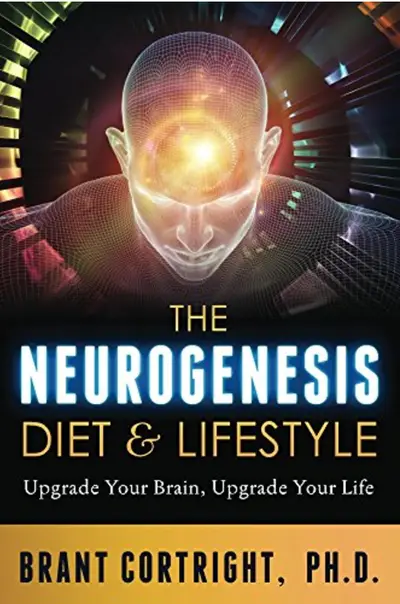
Brant Cortright, Ph.D., is the author of The Neurogenesis Diet and Lifestyle: Upgrade Your Brain, Upgrade Your Life and a brain health coach. He is a Professor of psychology at the California Institute of Integral Studies. As a licensed clinical psychologist he maintains a private practice in San Francisco that focuses on an integral/holistic and neuroscience-informed approach to brain health and depth psychotherapy. He specializes in depression, stress and anxiety, career and meaning, as well as relationship and intimacy issues.
He has authored two previous books, Integral Psychology and Psychotherapy and Spirit (both published by SUNY Press.) He speaks and gives workshops around the US, Europe and Asia.
For Doctor Cortright’s Book:

For Nordic Naturals Omega 3:

Healthy Bars for the Field:


Transcript
Machine-generated from the episode audio and lightly edited — may contain errors.
Chris Albert (link to this point)
What's going on everybody? This is Chris with the Warrior Soul Podcast and this is episode 31. You might not have known that your brain can actually grow. You can actually generate new cells in your brain And today we have the distinct pleasure of interviewing a neurogenesis expert. Neurogenesis is a situation where your brain can generate new cells.
And his name is Doctor Brant Cortright. Doctor Cortright is a professor of psychology at the California Institute of Integral Studies. He's also the author of the Neurogenesis Diet and Lifestyle, Upgrade Your Brain, Upgrade Your Life.
We're going to link that book in the show notes if you want to take a look at it. But Doctor Cortright maintains that neurogenesis is not only important for your brain, it's important for you, your life, your spirit, your health, and the overall fitness of your body. When we have neurogenesis, we're generally happier or more active. We're able to have more sex.
We're able to do some amazing things when we're in a state of neurogenesis. But if we're in a situation where neurogenesis is not possible, we tend to fall into depression. We tend to become more sluggish and we become unhealthier. And so Doctor Cortright's book is all about how to get your brain into neurogenesis.
And he goes through things like nutrition and different lifestyle factors like mindfulness and meditation, being around people you love, and other awesome tips on how to get your brain into a state of neurogenesis. In this episode we go into some specifics as far as veterans go and I'm talking about things like the medications were given at the VA to aid things like depression. We talk quite a bit about post traumatic stress and different nutritional factors that could help out with post traumatic stress. And he gives some advice as far as things that active duty service members can take with them into the field and on deployments that could help in alleviating stress and help the brain to remain in the state of neurogenesis. We also get into some other interesting subjects like masturbation for instance.
I'm not going to scare you that's only about two minutes of the podcast, but Doctor Cortright maintains that masturbation is actually a very healthy practice. We also get quite a bit into nutrition and one thing that Doctor Cortright recommends that I am in full agreement with is the utility of a high fat diet in maintaining your overall health and especially your brain health. We talk quite a bit about fish oil and omega-3s and the types of foods that you should include in your diet if you want to achieve neurogenesis.
And if you're interested in learning more about Doctor Cortright and his recommendations, we're going to be linking his book, his website, and a lot of the recommendations he makes in the show notes over at www.warriorsoulagoge.com. That's www.warriorsoulagoge.com. And that's going to be under the podcast section. And this is episode number 31.
And if you're interested in expanding your brain in other ways, I highly suggest you check out the Warrior Soul Agoge website. We've got some amazing stuff up there as far as our articles, our videos and our other podcast episodes. Definitely check those out. We've also got courses up there now. We've got courses on business.
If you want to run your own e commerce company and set up an online clothing company for example like I did, I have a full course up there on how to do it step by step. In addition to that we now have fitness courses up there. We have the Warrior Soul Fitness Foundations Course. That is a basic course that will take you through everything you need to do to set up your own fitness and nutrition regimen and stay on it consistently to burn fat, to build muscle, to be healthier, and to live your best life. It includes nutrition and workouts.
And we also just released the Warrior Soul Keto Camp. For those of you who are interested in doing a high fat diet and living the ketogenic lifestyle, we have a full camp up there that will take you through the entire process of adaptation and that camp also includes workouts, training, nutrition. We have a full grocery list and a full cookbook available and that cookbook also includes low carbohydrate high fat desserts. So if you're interested in checking those courses out please do and they are over at www.warriorsoulagoge.com as well. If you're unsure about jumping into a course or anything like that, we also have a free mastermind group that you can join where we give you free workouts every day.
So check that out at warriorsoulagoge.com And we're almost done here I promise. If you are interested in increasing your natural levels of growth hormone secretion, we have a supplement up on the Warrior Soul Agoge website under supplements that's called Dinotropin. Dinotropin is a human growth hormone secretagogue and unlike a lot of other human growth hormone supplements out there this one actually works. It is a natural formulation of amino acids developed by some of the top experts in the field that has been clinically proven in over a 100 cases to increase your natural secretion of growth hormone. So you can check that out if you're interested in that.
And then finally if you're interested in some amazing t shirts, amazing clothing, top quality veteran gear you can always find that at warriorsoulfitness.com that's www.warriorsoulfitness.com And now that I'm through yapping your ear off, let's get into the show and the interview with Doctor Brant Cortright.
Chris Albert (link to this point)
This is Chris Albert, and I'm here to remind you of one thing. Someday, you're going to die. Now that's not some morbid statement or scary idea. It's solid fact. Your time here on this earth is limited.
We need to be reminded of this as much as possible for one simple reason, to live your best life while you can. This is the Warrior Soul Podcast.
Andrew Marr (link to this point)
Hey, everybody. It's Andrew and Chris with the Warrior Soul Podcast, and I am extremely excited and honored to bring you our guest today, doctor Brant Cortright. And I heard doctor Cortright's lecture last year in San Diego on the neurogenesis diet and lifestyle. And that was another moment for me when I I realized the importance of living a lifestyle that was congruent with the information he was putting out in that lecture. And then since then, I've been able to read his book, The Neurogenesis Diet and Lifestyle, and incorporate a lot of those principles into my own life.
And so that's why I'm so excited to bring him today to have him give this information to you guys. Doctor Cortright, thank you, sir, for coming on and spending time with us today.
Brant Cortright (link to this point)
Thank you for having me. It's a pleasure to be here.
Andrew Marr (link to this point)
Doctor Cortright, what is neurogenesis, and and why is it important?
Brant Cortright (link to this point)
Good question. So neurogenesis is the process of creating new brain cells. It's the genesis of new neurons. And it used to be thought that the brain stopped growing, stopped making new brain cells after we were in our early twenties or so. And that after that, it was just one slow die off. But then they discovered, actually, less than twenty years ago, that actually the brain makes new brain cells throughout our entire lifetime.
Up until the time we die, we're still making new brain cells. Now it's only been in the last few years that the significance of that has become clear. So it turns out that the rate at which you make new brain cells, your rate of neurogenesis, is the most important biomarker for brain health, probably the most people have never heard of. So a low rate of neurogenesis, that is a low rate at which your make brain is making new brain cells, is associated with cognitive decline, with memory problems, with anxiety, with depression, with stress, and even lowered immunity. And the opposite, a high rate of neurogenesis is associated with cognitive enhancement, with rapid learning, with protection against depression, anxiety, stress, and robust emotional resilience.
And it turns out that most people can increase their rate of neurogenesis by five times, maybe even more than that, with really dramatic effects in all areas of their life. So that's what this book is about, how to increase your rate of neurogenesis. It's really a holistic approach to brain health that focuses on the rate of neurogenesis.
Andrew Marr (link to this point)
And I wanna I wanna go into that, doctor Cortright, the holistic approach talking about the body, the heart, the mind, the spirit. But before we jump into there, in regards to neurogenesis, I guess the antithesis or the under other end of spectrum of that would be a neurotoxin or neurotoxicity.
And can you can you def define that and just explain that a little bit more for our listeners?
Brant Cortright (link to this point)
Yeah. So neurotoxins come in many forms. A neurotoxin is something that either actively kills brain cells or damages them in some way. And it turns out we live in a pretty neurotoxic world.
Neurotoxins, there are many forms. So as you you mentioned, this holistic approach to the brain. So the brain integrates every level of our being. We exist on many levels, on a physical, bodily level, on an emotional level of the heart, on a mental level of the intellect, and on a spiritual level as well. And the brain integrates all of these.
We experience everything through the brain, Every desire, every thought, every feeling, every memory, every sensation, everything we experience through the brain. And so the quality of our brain really determines the quality of our lives. So it turns out that nobody really knew this. We all kinda stumbled into this innocently. But there's a lot of neurotoxins in our environment.
Some of them are physical neurotoxins like mercury, for example, or heavy metals. They kill brain cells. Mercury, I think, is the most powerful neurotoxin known outside of plutonium. Just a few molecules of it just shrivels and destroys brain cells. There's a lot of different neurotoxins that are physical poisons like that.
There are also emotional neurotoxins, and we can get into this, but intense stress is one of them. Intense stress can actually kill neurons. There are mental neurotoxins. For example, lack of stimulation. Being in, for example, solitary confinement causes a great amount of brain shrinkage and damage to neurons.
So inflammation would be another one. It's not really so much a specific chemical, but it's kind of a lifestyle. So chronic inflammation is deadly for the brain, and it slows our rate of neurogenesis way, way down. So this is really a two pronged strategy. We need to avoid neurotoxins and things that slow down neurogenesis, and we also need to do those things proactively that increase our rate of neurogenesis and the health of the brain.
Andrew Marr (link to this point)
That's a great explanation. And and, again, I I wanna jump into each one of those pillars to a complete and holistic lifestyle. But what was fascinating that stood out right away, doctor Cortright, was getting into the book and and hearing or reading about the SSRI research and coming to the new understanding that, that that's not really going to the underlying condition, and there's a reason that it's not working or it only works for a small sector of the population. And can can you expand a little bit on that? Because it's just truly fascinating and and really freeing information when you truly digest it.
Brant Cortright (link to this point)
Yeah. Yeah. I I'm glad you picked up on that because that that's what kinda got me into all this as well. So there's been this widely believed myth that depression and even many types of anxiety are a result of low serotonin levels in the brain. And when antidepressants first became big with Prozac in the nineteen eighties, the pharmaceutical companies hit payday.
Prozac and all the different other antidepressants that increase the serotonin levels in our brains are right now a $16,000,000,000 a year industry for the pharmaceutical companies. And the idea is that these SSRIs are selective serotonin reuptake inhibitors. So what they do is they prevent your brain from kind of erasing serotonin signals so that there is more serotonin floating in the synapses between your neurons. And this is a very simple idea that it's easy to understand and easy to market, that people who are depressed or people who have certain kinds of anxiety suffer from low serotonin levels. And what they need is an SSRI.
They need an antidepressant to increase their level of serotonin. Well, it turns out this is a complete myth. It is none of it is true. It turns out that actually that most people most of the studies done of people who are depressed show normal levels of serotonin. And there's actually quite a number of studies that show most people who are depressed have higher than higher than average levels of serotonin.
There's a few that show people have lower levels, but the vast majority show they have either average or higher than average levels of serotonin. Now there's about 50 known trans neurotransmitters, and there's also, different kinds of hormones, neuromodulators, neuropeptides. About 20 different neurotransmitters regulate mood. And there's an incredibly complex conversation between these different neurotransmitters, neuromodulators, neuropeptides, hormones, to think that one particular transmitter is responsible for depression is way, way, way, way too simplistic. But it it has resulted in this huge bonanza for psychiatry and for the pharmaceutical companies.
But it turns out that the way they work has nothing to do with this theory of low serotonin. What the SSRIs do, what the antidepressants do is they actually increase the rate of neurogenesis, and it's that that brings a person out of depression. So for example, when you start taking Prozac, your rate of neurogenesis goes up, but it takes about two, three, four weeks for those new brain cells to come online and get integrated into the existing circuitry of the brain. Well, that's how long it takes for people to come out of depression when they take an SSRI. When you take an SSRI within hours, your serotonin levels are through the roof, but there's no change in mood for two or three weeks.
Why is that? They could never figure that out until they realize that, actually, it's this increase in neurogenesis which creates the relief from depression or relief from anxiety. They've done this experiment in many different ways. For example, they've increased the rate of neurogenesis but kept the serotonin levels at the same rate they were before. And the monkeys or the rats or the whatever get undepressed.
Then they do the opposite experiment where they increase the serotonin levels, but they prevent the neurogenesis from increasing. No change in depression even with sky high serotonin levels. So the pharmaceutical companies, I think of them as the cartels, know this. They know that the whole serotonin deficiency theory of depression is a myth, but they've got a good gig going. 16,000,000,000 a year.
That's pretty nice. They just wanna sell more product. I actually have a client whose cat is on Prozac right now.
Andrew Marr (link to this point)
Oh, man.
Brant Cortright (link to this point)
I I know. It's crazy. One in four American women between 25 and 45 is on Prozac or some other antidepressant. It's huge. Doctors prescribe this stuff like candy.
Anybody can walk into any doctor's office, say I'm depressed, and walk out with a prescription for Prozac or some other SSRI. Well, the SSRIs, it turns out, work in less than fifty percent of the people, and they also come with some pretty serious side effects from most people. The most common one in over fifty percent of the people who take SSRIs is loss of libido, loss of sex drive. And that in itself is pretty depressing, it seems to me. So what this book is, it's really natural ways to do this.
This book is kind of a natural antidepressant book because there are a lot of natural supplements, nutrients, things that we can do to increase our rate of neurogenesis that don't have any side effects.
Andrew Marr (link to this point)
Doctor. Koch That's just go ahead, Chris.
Chris Albert (link to this point)
Oh, sorry about that. I know you're a really big advocate for fat and including fat in the diet. And it fascinates me what you just said because we have this information going out about antidepressants, SSRIs. And on the other hand, we also have had for the past fifty years information that was highly inaccurate going out about fat and demonizing fat.
Can you describe a little bit about what your recommendations are for fat intake without giving away the whole book, of course, but what types of fats we should be eating, what types of things we should be focusing on in our diets?
Brant Cortright (link to this point)
Yeah. You zeroed in on, I think, one of the most important parts of this book and one of the most important keys to brain health, which is our diet. So, again, the book is at a holistic approach to brain health, body, heart, mind, spirit. And there are things we can do physically, emotionally, mentally, spiritually to increase our rate of neurogenesis. Just there are as odd, there are things which decrease our rate of neurogenesis.
But there's a whole chapter in the book on diet because diet, it seems to me, is the most important piece in all of this. So if you wanna build a beautiful high end house, you need to use high quality lumber. You can't use decaying wood or rotting wood. And it's the same with the brain. To build a high quality brain, we need high quality building materials or foods.
Now the brain is composed of about two thirds fat. And of that fat, one third of it is DHA. Now DHA is one of the three omega three fatty acids. So what we want is a diet that is high in good fats, low in bad fats, and I'll we'll get into the difference in just a second. And also, for most people, in sugar.
It turns out that sugar and a high carbohydrate diet cuts our rate of neurogenesis in two, cuts it in half. What the brain needs is a lot of good high quality fats and a lot of omega three fatty acids, particularly DHA. So let's go into just some of the different good fats here and why they're good for the brain, and let's start with DHA. So they did a series of experiments with monkeys where they raised monkeys one group of monkeys on a low omega three diet and another group of monkeys on a high omega three diet. And then they looked at their brains afterwards.
And the monkeys on the low omega three diet had very simple undifferentiated brains. But the monkeys on the high omega three diet had very complex, richly differentiated brains, almost like human beings. DHA is the most important building block of the brain. It's something we need to give kids, babies. If there's one thing I had would have to do over as a parent, it is I would give my growing children a lot more DHA every day.
A lot of the brain's growth over the last few million years, they think, is linked to increased omega three and, human beings eating seafood, fish, and meat because natural meat is has a good omega three balance to it. So I think this is also really important when it comes to any kind of brain damage or concussion or damage somehow to the brain, whether it's through concussion from a war injury or whether it's a biking accident or whether it's a football injury. Concussions can damage the brain, and I imagine your podcast has done a lot with this, and Doctor Mark Gordon is clearly an expert on all this.
Chris Albert (link to this point)
We've also had Doctor Michael Lewis on who discusses this at length.
Brant Cortright (link to this point)
Oh, great. Great. Okay. Okay. He's the one that did when brains collide?
Chris Albert (link to this point)
Yes, Yes, sir.
Brant Cortright (link to this point)
Okay. Great. So you know then all about the importance of omega three, but particularly DHA. That's a huge piece of it. So I know he recommends, like, three grams a day of omega threes.
Most omega three form formulations, you've gotta be careful because what you want is a formulation of omega three that is molecularly distilled. A lot of the omega threes you get come with a lot of mercury in them, which you don't want. If it's molecularly distilled, it won't have any mercury or any toxins in it. And most of the formulations also have more EPA than they do DHA. So omega three consists of three fatty acids, ALA, EPA, and DHA.
And in terms of brain health, DHA is the one we want. So most people want about fifteen hundred milligrams of DHA every single day. Most formulations you get will give you a lot of EPA or even ALA, but not much DHA. So you need to be careful and selective. I know that Nordic Naturals makes one that's called DHA Extra XTRA.
That is molecularly distilled, and it's very easy to get the amount of DHA you need from that. Also, some of the formulations are not well shielded from light. So omega three oxidizes pretty easily with light and heat. So you wanna keep it cold and in the dark. And this leads into another part of getting good fats.
When we talk about good fats, what we mean is nonoxidized fats. Mhmm. What oxidation does is it turns it rancid. And when oxidized fats get into your bloodstream, what they do is they oxidize the cholesterol layer. That does two things.
It increases your inflammation levels, which is disaster for the brain. It also increases atherosclerosis. Oxidized cholesterol hardens your arteries, and it's one of the major causes of heart disease. So we want to avoid oxidized fats. So oxidized fats are fats that are rancid or that are heated to high temperatures.
Chris Albert (link to this point)
So are we talking about like roasted nuts or like cooked heated oils and things like that or some examples of Yeah.
Brant Cortright (link to this point)
Some god. So good. Some basic some examples. So examples would be deep fried foods.
Chris Albert (link to this point)
Okay.
Brant Cortright (link to this point)
French fries, fish and chips. Deep fried oxidizes the fats, and it's a disaster. The other would be cooking vegetable oils. That's right. Nobody should be cooking vegetable oil.
Vegetable oil oxidizes at very low temperatures, and it's a disaster for the brain. We wanna be cooking with coconut oil or with lard or with butter, ghee. These things can maintain a pretty high temperature, and they're fine. We also wanna be careful of our omega six, omega three balance. So we need a certain amount of omega sixes, but not very many.
It's hard to not get enough of those. And we wanted omega six, omega three balance. That's about one to one or maybe two to one. Well, the modern American diet has a ratio more like 20 to one or even 30 to one or 50 to one. Now that's a highly inflammatory diet, not good for the brain.
And, again, your rate of neurogenesis slows to a crawl when you've got a high inflammatory levels in your body. We need to be able to mount an inflammatory response. Inflammation is good in the short term. Right? We need it to knock out a cold or to heal an injury or prevent infection, but the problem is chronic inflammation.
And the average American diet of high sugar, low fat, and bad fat produces high levels of inflammation. And this is really bad for the brain.
Chris Albert (link to this point)
Omega-six is in almost everything that we eat that's packaged. I mean, it's crazy how much, you know, we see we see these plant based foil That's right.
Brant Cortright (link to this point)
That's right. And, also, it's in most commercial meat. Most commercial meat has a omega six, omega three ratio of, like, six to one, which isn't so good. Whereas grass fed beef has about 1.85 to one, which is just about perfect. So what we want to eat are things like avocados, olive oil that's not cooked, butter, grass fed meat, pastured eggs, pastured chicken, grass fed or natural organic bacon, and pork.
Nuts nuts are good. And most nuts even that are roasted tend to be okay as long as it's not roasted at too high a temperature. So we want a lot of that. We want a moderate amount of protein. We don't want too much protein.
But we most people need to have a low amount of carbohydrate. And so what we want is low carbohydrate vegetables. So lots of salads, lots of nonstarchy vegetables like broccoli, chard, bok choy, spinach, sprouts. But we wanna stay away from potatoes and starchy vegetables. Because, again, the high carbohydrate diet, what it does is it produces it eventually all gets turned into sugars.
Even if you're not eating sugar, if you're eating a lot of carbohydrates, that eventually converts to sugar. And over time, that produces insulin resistance, and insulin resistance is also a disaster for neurogenesis and the brain. So it turns out that about eighty percent of the people in America have some degree of insulin resistance. Type two diabetes is becoming increasingly prevalent. And so a good blood test for everybody to do whenever they go to the doctor is something called a hemoglobin a one c.
And what that is, a hemoglobin a one c, it's a snapshot of your insulin levels, of your insulin resistance over the last three months. So, again, about eighty percent of the population has higher than optimal levels of their hemoglobin a one c, and you wanna bring this down as fast as possible. Anything over five point o is not good because the rate of cognitive decline and your hemoglobin a one c levels track each other perfectly. The higher your a one c levels, the faster your rate of cognitive decline. So the standard American diet right now is producing Hello?
Chris Albert (link to this point)
Sir?
Brant Cortright (link to this point)
He is.
Andrew Marr (link to this point)
Yeah. He's he's frozen for a second.
Chris Albert (link to this point)
Doctor. Corey? We got you back. You just froze for just a second there about about fifteen seconds ago.
Brant Cortright (link to this point)
Ah, okay.
Chris Albert (link to this point)
Okay.
Brant Cortright (link to this point)
We're back, though?
Chris Albert (link to this point)
Yes, sir. Yes, sir.
Brant Cortright (link to this point)
Okay. Okay. So, yes, we want good fats. We wanna not do bad fats, and we wanna make sure that if we are doing a lot of carbohydrate, that we're not insulin resistant, and we can handle it. But, again, even if we're doing a lot of carbohydrate and we can handle it now, pretty soon if we do this chronically, probably it's gonna create insulin resistance.
And at some point, we're gonna have to scale back.
Andrew Marr (link to this point)
Doctor Cortright, you spoke of living or the benefits of living in an enriched environment and what the research has shown and then, different ways that we could apply certain principles to make sure that we're living in an enriched environment, and that's what the holistic approach is talking about. But can we speak specifically to, emotional, factors and on the spiritual level and spiritual practices that will help us to, go closer to an enriched environment as opposed to moving further away from it.
Brant Cortright (link to this point)
Yes. Good. Good. So an enriched environment consists of optimal stimulation physically, emotionally, mentally, and spiritually. So physically, we've been talking about some of the things that that involves in terms of diet.
The book goes into about 30 different nutrients we can do that have been shown to increase neurogenesis. Omega threes is one of them. Blueberries is one of them. Something called Hesperidin is one of them that's also quite important because it keeps new brain cells alive. And the book goes into a number of those.
But there's also a number of other physical factors such as certain kinds of exercise, sex. It also increases neurogenesis. But there's also a lot of emotional factors that go into this. So there are emotional factors that decrease neurogenesis and hurt the brain, are neurotoxic, and there are emotional factors that enrich the brain, stimulate the brain, and increase our rate of neurogenesis. So, again, it's a twofold strategy.
We wanna avoid what is neurotoxic, and we wanna do what is helpful and nourishing to the brain. So some of the emotional factors that are neurotoxic are fear and stress, particularly chronic stress or overwhelming stress. So a certain amount of stress actually is good for the brain. The brain needs moderate stress and short term stress. Stress actually makes us stronger if it's the right kind of stress, if it's short term and if it's moderate.
It's sorta like when you work out Mhmm. You exercise your muscles, you stress them, but then you stop. They break down, and they build up even stronger. If you were to keep exercising, they would just break down, and it would they would degrade. It's the same with stress.
A little bit of stress challenges us and makes us kind of bring forth new potentials, new capacities. It challenges the brain to sort of become more of who we are. Without challenge, we would just sort of be all rolling around in sort of fluffy, gooey, and I guess it wouldn't really develop. Stress the optimal stress is really good for us. It's sort of like a Goldilocks place.
There's this there's this optimal stress that challenges us and brings forth new abilities. That that's wonderful. And it also that kind of stress increases neurogenesis. It increases new brain cell growth. But what's damaging to the brain is chronic stress, and that's the stress that most people are faced with twenty four seven.
There's just constant constant stress. So there's never a chance to decompress, to unhook, and just come back to a homeostatic balance of relaxation, feeling good. The other thing is intense stress. So I know that many veterans have experienced brain injury from, IEDs and from other things causing concussions. But there's another form of brain stress from PTSD that also can be neurotoxic.
So in an intense battlefield situation, that kind of severe stress can actually kill neurons in the brain. And some people can lose up to a quarter of their hippocampus with intense, intense PTSD. So it's important to be able to work with that, to work with the PTSD both emotionally and physically. So physically, we want to increase the hippocampal, neurogenesis. Again, neurogenesis happens in a few parts of the brain, and the hippocampus is the main place it happens.
The hippocampus is responsible for memory processing, forming new memories, and it's also responsible and involved in emotion regulation. So PTSD, we get a smaller hippocampus. And so what we wanna do is increase we wanna have the hippocampus come back to full strength, which it can do when we increase our rate of neurogenesis. But we also wanna work emotionally with this with PTSD. So we wanna do some kind of work with some sort of trauma work, whether that's with CBT or whether that's with EMDR.
EMDR is an amazing way of working with trauma, like big t trauma. There are a number of ways. Even they're actually using MDMA now with treatment resistant trauma and having really excellent effects, like long term effects with MDMA. It's still at the research stage, but they're hoping to use this, in the near future. There are a number of different therapeutic strategies working with PTSD.
I'm partial to EMDR myself. There's also somatic approaches. So working both emotionally as well as physically to increase the hippocampal neurogenesis is really important here. So stress shrinks the brain and practically freezes neurogenesis in its tracks. Another thing is a bullying atmosphere.
If we're being bullied, that also slows neurogenesis way, way down. What we wanna do and the other thing is isolation, emotional isolation. People who are not in social contact with other people, this has a big negative effect on their rate of neurogenesis, and they are much more prone to depression and anxiety. So what we want is this enriched environment. So what the research has shown is kind of common sense in a way, which is loving, supportive relationships, and our rate of neurogenesis takes off.
We wanna be around people who really love us, who really see us, who really get us, and who really support us, who can really put a supportive hand on our shoulder when we're down and just let us know we're okay and, that we'll get through this. We need people who we can relate to in a completely carefree way, who we can just let our hair down around. We need, like, a a partner, a primary love person who just can be very deeply intimate with, sexual with, because sex increases neurogenesis. But sex with love increases it even more. Let me stop there.
Chris Albert (link to this point)
Just There there is so much I wanna ask you right now. I got to start with this, but I'm going to come back to a couple of things you just said there. Talking about active duty military who were serving in combat zones and given everything that we've talked about so far on this episode, you have them in a situation where they're eating MREs, meals ready to eat, where that are loaded with sugar, loaded with omega-six, loaded with oxidized fats. You have them in a situation where they aren't getting sex. They're not around their primary lovers or anything like that.
You have them in a situation where they're dealing with great amounts of stress. And it seems to me like through that situation, we're creating the perfect storm for PTSD to occur later on.
Brant Cortright (link to this point)
Yeah, you're absolutely right. You're absolutely right. The meals should be totally different. The meals should have high good fat to protect the brain.
Chris Albert (link to this point)
What I was gonna ask you is what would you recommend as far as anything that's portable that some of these guys might be able to take with them when they are going on deployment?
Brant Cortright (link to this point)
Well, there's a number of new sort of paleo bars that are out
Chris Albert (link to this point)
Mhmm.
Brant Cortright (link to this point)
That are high in good fat and protein and very low in carbohydrate. So Dave Asprey makes a bulletproof bar. Julian Bakery makes this, bar that actually has ketones in it, which can protect the brain in a situation like that. There's a there's a number of bars out there, trying to think of some of the others, that have a lot of good healthy fat. One is called too busy to eat.
If you look around, again, most of the protein bars are too high in protein and too high in sugar. But there's a few sort of paleo oriented ones that are coming out, are much better and which you can take with you. So that would be a good thing to do.
Chris Albert (link to this point)
I'm gonna link those on the show notes as well. And then one other thing, just to get down into the deep, dark and see the aspects of deployment, I've heard about masturbation and its effects on the brain. I'll flat out say it, Marines, soldiers, sailors, they're deployed, there's definitely masturbation going on. I'm trying to say all this with a straight face. Do you know anything about the negative effects of masturbation on the brain?
And is it something to be avoided, or is it without giving you sense?
Brant Cortright (link to this point)
The opposite. I would think that if you can have a date with yourself, you're gonna enhance neurogenesis. We wanna be able to have sexual pleasure even if we don't have a partner. And so masturbation, like, yeah, the more the merrier.
I don't think you can go wrong there. That this you know, sexuality is kind of self regulating. You just don't want to after a certain point, and that's fine. You you don't need to worry about It's all good. We want that kind of pleasure.
That's gonna be helpful and neuroprotective for sure.
Chris Albert (link to this point)
Okay. The providers of the porta potties in Iraq and Afghanistan will thank you.
Andrew Marr (link to this point)
Going into the spiritual aspect of it, doctor Cortright, again, I I can't talk about enough the importance of of understanding this information and realizing, like, hey. Being around toxic people creates a the opposite of an enriched environment, what we we often call the non neuro permissive environment. And then so how are some some spiritual practices, or what are some spiritual practices that you can recommend that that help not only with with us on the spiritual level, but also to hey. If we're in an environment where the work or the people that we're around are toxic, what can we do to kind of mitigate that? You know, not only by through our thought alone and saying, okay.
I'm just not gonna let that bother me, but what can I do in my personal time to say, I'm gonna take this time to really get in sync and and sync and try to sync up with with my higher self or whatever that is for the individual?
Brant Cortright (link to this point)
Yeah. Good. Good. Yeah. Because this this puts us in the driver's seat again, and we can do this.
So it turns out there are two different spiritual practices that appear to have a really profound effect on our rate of neurogenesis. One of these is mindfulness practice, and the other one is different heart opening practices. So let's go into each one of these a little bit first. So mindfulness comes in many different forms. Mindfulness is essentially the process of coming into the here and now, coming into the present moment, and opening to it more and more.
And there are many different forms of mindfulness meditation. The most common one, the one we use most often probably, is meditation on the breath. And there's a few ways of doing it. But, again, the most common way is to simply put your consciousness into a particular part of your body, say your belly, and you just notice the effects of the breath on your belly. And you just become very, very tuned into the subtle sensations of breathing.
And the idea is to simply let go of other thoughts, other feelings, other body sensations, just to watch them all go by and keep coming back to the breath. And as we do that, over ten or fifteen minutes, our thought begins to settle down and we become more and more deeply relaxed. It helps if we can do this with eyes closed and breathing through the nose and breathing with our belly. Belly breathing and breathing through the nose also helps us to relax, and just watching the breath also allows us to relax. But as we relax, we begin to get in touch with a deeper, more centered, peaceful part of ourselves.
There are other kinds of mindfulness practice. Some, you pay attention to different physical sensations, and then you pay attention to emotions, then you pay attention to to thoughts, and then you pay attention to all of it. In other mindfulness traditions, you just start off paying attention to all of it. Just bear attention. You just watch whatever happens in your consciousness.
You watch the world around you. You listen to the sounds around you, and you just pay attention to all of your thoughts, all of your feelings, all of your imagery, all of your body sensations, and you just watch them go by. Sort of like watching a cloud passing in the sky. You just watch it all. And, after a period of time I mean, the first thing we realize is how out of control our mind is.
Right? How the mind is kinda like this drunk monkey. Right? Not just a monkey, but a drunk monkey that's just careening all over the place. But slowly begins to settle.
The dust begins to settle, and we begin to wake up, and we come into the present moment more and more. And as we do that, we're more centered, we're calmer, we're in touch with a deeper part of ourselves. And that seems to have a profound effect on neurogenesis and on the entire length of the hippocampus, on the mental part, on the physical part, on the emotional part, on the entire axis. The other form of spiritual practice is different kinds of heart opening practices. So devotional prayer or compassion practices, forgiveness practices, or different bhakti yoga practices.
So, for example, putting your consciousness in your heart area physically as if you're located in your heart and then tuning in to a feeling of love or of surrender to the divine or of aspiration for the divine, simply aspiring for the divine and for all things divine, And then following that feeling of aspiration or love or surrender deeper and deeper into the heart. These are heart opening practices that also have a very robust effect on neurogenesis and, again, on the entire length of the hippocampus, the mental, the physical, and the emotional parts of the hippocampus. So and I think people need to do an experiment with different spiritual practice and see what works for them. What gives you a result? Have you actually tried these different things out?
Where do you feel most centered inwardly? And then when you do this, say, the morning for fifteen or twenty minutes, it carries you throughout the day, so you're no longer as reactive. And when you're more centered, then you're more able to emotionally regulate and not be just sort of reactive to everything and stressed out by everything. It's something that just keeps it serves us throughout the entire day.
Andrew Marr (link to this point)
Yeah. It's it's the gift that keeps on giving, and I I can speak to both both those practices that you just talked to, doctor Cortright, I've been introduced to them. You know, they're new to me in the last, three years, but both of them have had a profound profound effect on my life. And I think a lot of times for just reasons of how we're brought up in this culture, we we don't we don't really understand how important these practices can be.
But for instance, we're talking about open heart meditation or or working on on opening the heart. You know? To to go in further for that for for our audience, what what I was able to to feel on that, and it's been recorded through almost all recorded history, is this profound sensation of, of love. And, that comes at you in a way that can be so overwhelming, it's hard to verbalize. But these are things that we have.
It's our birthright to get in touch with them, and and these are the ways that we're we're able to do it. And mindfulness, meditation practices, that was instrumental in the fact that you start to understand just like you're saying, doctor Cortright. You watch the ticker tape go by, and you realize, okay. Well, I'm observing that go by.
Interesting. So I'm not what I'm feeling at this exact moment, there's something observing that. And these are some of the profound things that have happened to me on a personal level that I think, our audience if you ever take the time to do it, you will you will benefit from it, and you will see an immediate benefit in your life and the people that are are around you. And that just goes to building the enriched environment. So I just wanna throw that in there for listeners, but thank you for expounding on on those topics that you were right.
Brant Cortright (link to this point)
Yeah. Thank you for sharing that. That's beautiful. That that's absolutely right. That that as we tune into the heart more and more, it the gates of the heart begin to open.
And in many different traditions, both in India as well as in the Christian tradition as well as in Islam, the soul is actually located in the heart. In Hinduism, the soul is located behind the heart chakra. Islam talks about this deeper soul in the heart. And Christianity also, Christ is always pointing to his own open heart. So there's something about a deeper part of our consciousness that is connected to the heart.
And as we put our consciousness there, it begins to open, and the love and the joy and the peace begin to come forth. Yeah. That I I very much appreciate what you're sharing here.
Andrew Marr (link to this point)
Yeah. And, you know, when you do it more and more, doctor Cortright, I I have found through my personal experience is that you start to become aware of maybe behaviors or programs that are running your life that consciously you would never say, wanna do that or I wanna act this way or I wanna think this way. And it allows you, like you said, to come back to the present moment because when you stop to think about it, that's all there is is now. Starts now. You know?
We never I've never arrived at the future. I've never really been in the past. There's just now. And you start to think about, well, if I just ex if I expand on that, you know, depression is worrying about something that that has no effect on me right now or or possibly or worrying about something that's not present, that's I'm I'm making I'm making that more real than it needs to be. And by returning to the present, that gives us the ability to to tie into those areas.
Yes.
Chris Albert (link to this point)
Fear is a lie you tell yourself in a lot of ways. And I definitely agree. I've been doing mindfulness meditation in the morning, but one thing that has been helping me a lot is I've just recently gotten into martial arts and specifically jiu-jitsu. And I kind of feel like it's almost like a moving meditation. Because my heart, when I'm in there, I've got cauliflower ears now, I'm 38 years old.
My joints are bothering me, but when I'm in there and I am actively doing it, I come back from there feeling like a million dollars. And I always get my best ideas for business, for for life from my jiu-jitsu sessions. And I think it's it's been awesome.
Brant Cortright (link to this point)
Yeah.
Chris Albert (link to this point)
That's great.
Brant Cortright (link to this point)
Martial arts, yoga, even conscious running and conscious weight lifting Mhmm. Can be a form of mindfulness practice in the body while we're doing that. Yeah. That's great. Yeah.
Andrew Marr (link to this point)
And, to expand on that, like, I think these are these are things that we can incorporate in our life. Like, how then can I be more conscious with everything that I'm doing? Because I think that's that's what what you're talking about, doctor Cortright? And it's realizing, okay.
I can be conscious in the present moment walking from here to the car or doing laundry or art. Start looking at these as opportunities to work on being in the present moment. And I think that's a great way to work on these some of these practices that we're talking about.
Brant Cortright (link to this point)
Yeah. Yeah. Absolutely.
Chris Albert (link to this point)
One thing got caught right, because I know we're coming up on the hour mark, but I wanted to ask you just one more question related to nutrition, and that is in regards to veganism and vegans in general. In your experience, is the vegan diet, I mean, given what we talk about here, does the vegan diet have a negative effect on neurogenesis? And if so, what can they do? Somebody who still wants to be kind to animals live a vegan lifestyle, what can they do to increase their levels of neurogenesis? Yeah.
Brant Cortright (link to this point)
That's a good question. And and it is a challenge with a vegan diet. If you don't do eggs, you don't do milk, you don't do butter, it's very difficult. But there are some things you can do. So you wanna eat a lot of nuts.
You wanna eat a lot of olive oil, avocados. And there is one way to get omega threes, and that is that's just been developed through algae forms of DHA and omega three. So people have been doing linseed oil for a long time, but it turns out that that only has ALA in it. And ALA doesn't convert. I think it's something like, like, 3% of it converts to DHA.
So you actually cannot raise your your DHA levels by taking any sort of vegetable oil. The only way you can do it is a new form of, DHA, which they now get through algae. So I would highly recommend that if you are, vegan, you get some kind of supplementation with an algae form of omega three. Otherwise, your brain is gonna suffer. It's not gonna be good for your brain.
Andrew Marr (link to this point)
Yeah. And the the mechanistic approach that Western medicine has taken says, okay. You're you're depressed. You obviously, you're you're deficient in in serotonin. And the evidence now is supports that that just doesn't work, and we know why now that's the case.
And we're going being able to go back now is to say, okay. Well, if it's if it's not just serotonin or it's I need to improve the rate of neurogenesis in my hippocampus. How can we do it? Doctor Cortright's book so elegantly goes through, hey.
Here's a holistic approach going through body, heart, mind, spirit that you can work on cultivating yourself, and the body has an innate ability to heal itself when it's in this enriched environment. And the book is is a is a road map for you to cultivate that for yourself, for you to be your own personal scientist and see what you're doing and see what those results are. And so, doctor Cortright, thank you for putting this re all the you know, doing going through all the research, putting this all together, and and giving a tool to humanity that says you can take control back. You can live a high quality life by running and making a decision to do these things.
Brant Cortright (link to this point)
Thank you. Thank you for having me. And and I really appreciate it, just the quality of this discussion. I I I appreciate a lot what you guys are doing here in this podcast.
Andrew Marr (link to this point)
Oh, thank you so much Yeah.
For This is gonna again, this is information going to our audience that they probably didn't have access to. And so, Chris, I'll I'll let you close it out and and go from there.
Chris Albert (link to this point)
Yeah. Absolutely. And that's what this podcast is about. We wanna put veterans and active duty military members in touch with information that they wouldn't have gotten otherwise and to kind of push back against a lot of the stuff they've been fed over time. And so Doctor
Cortright, ideas and your knowledge of neurogenesis, this is just the kind of thing we're looking forward to provide to the veteran community. And we thank you so much for coming on here and thank you so much for putting these ideas together.
Brant Cortright (link to this point)
Great. Great. It's been a pleasure.
Host of the Warrior Soul Podcast and founder of Warrior Soul. Worldwide trainer and nutrition coach, contributing author at Testosterone Nation and Muscle and Strength.