Podcast episode
Episode 66: Why Bacteria is the Key to Your Health and Happiness with Dr. Rodney Dietert
Hosted by Chris Albert
The Warrior Soul Podcast
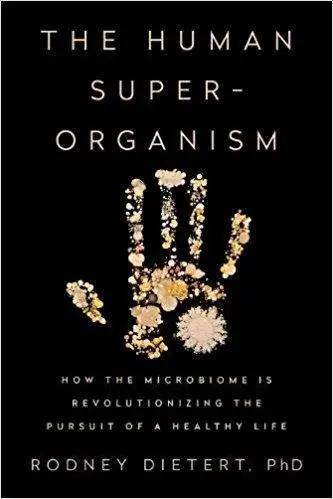
When we think of avoiding disease and infection, most of us think about germs and bacteria. Anti-bacterial soap and antibiotics have become staples of modern life. But in many ways, bacteria is the key to our health, and we’re now finding that it actually influences whether or not we get disease, our mental state, and to a very large extent, our genetic makeup. Dr. Rodney Dietert, Professor of Immuno-Toxicology at Cornell University, discusses the importance of bacteria to our health and our lives in his book The Human Superorganism and he came onto the podcast to discuss the implications of this for Veterans and civilians battling with chronic disease and mental illness.
About Dr. Dietert

Rodney Dietert is Professor of Immunotoxicology at Cornell University, Ithaca, NY, USA and author of the 2016 book: The Human Superorganism: How the Microbiome Is Revolutionizing the Pursuit of a Healthy Life from Dutton Penguin Random House. Rodney is in his 40th year Cornell University faculty. He received his Ph.D. in immunogenetics from the University of Texas at Austin in 1977. Rodney has more than 300 publications, including 200 papers and book chapters, with most concerning environmental risk factors, developmental immunotoxicity, and programming of later-life, non-communicable diseases. Recently, he has focused on the importance of the microbiome in health and safety. Among his prior authored and edited books are: Strategies for Protecting Your Child’s Immune System (World Scientific Publishing, 2010), Immunotoxicity Testing (Springer, 2010), Immunotoxicity, Immune Dysfunction, and Chronic Disease (Springer, 2012) and Science Sifting: Tools for Innovation in Science and Technology (World Scientific, 2013). Rodney previously directed Cornell’s Graduate Program in Immunology, the Program on Breast Cancer and Environmental Risk Factors and the Institute for Comparative and Environmental Toxicology and served as a Senior Fellow in the Cornell Center for the Environment. Outside Cornell, he was President of the Immunotoxicology Specialty Section (SOT) and Editor of Springer’s toxicology book series, Molecular and Integrative Toxicology. Recently, Rodney appeared in the 2014 award-winning documentary film on the microbiome titled, Microbirth. In 2015, he received the James G Wilson Award from The Teratology Society for the Best Paper of Year (2014) with a peer-reviewed publication on the microbiome.
For Dr. Dietert’s Book:

Transcript
Machine-generated from the episode audio and lightly edited — may contain errors.
Chris Albert (link to this point)
What's going on, everybody? Welcome to the Warrior Soul podcast. This is Chris Albert, and today we have a really special guest. His name is doctor Rodney Dietert. And doctor Dietert is a professor of immunotoxicology at Cornell University, and he's the author of an amazing book called The Human Superorganism.
And this was actually a recommended guest from one of our fans. He said you have to have doctor Rodney Dietert on. And I went, I got his book, and I read it, and I was absolutely fascinated. The book is actually about the influence of microbes on our health, bacteria. And what you come to understand when you start to read this book is that bacteria are not just little things that are crawling on us and in us.
They're actually big influencers on our health, and they're also huge influencers on our genetic makeup. Doctor. Dietert argues that only 1% of our genes are actually, you know, our mammalian genes. The other 99% are made up by our microbiome, the universe of bacteria that lives on us and inside our intestinal tracts. And this has gigantic implications for our health.
Those of us who were raised on formula, who weren't breastfed, were more prone to certain types of autoimmune diseases. I was raised on formula and I have ulcerative colitis. But it goes beyond this. Doctors have been giving out antibiotics like they are candy for a long time now. And antibiotics have a really big destructive factor on our microbiomes.
They completely destroy that universe of bacteria that lives in our intestinal tracts, and this can lead to all sorts of noncommunicable diseases. And the conversation we had is extremely interesting, and it's got really big implications for all human beings, but especially veterans who are so prone to both noncommunicable noncommunicable diseases and to the effects of injuries that they've sustained while on active duty. Things like post traumatic stress can actually be influenced. Things like post traumatic stress and depression can actually be influenced by whether or not you have a healthy gut microbiome. I should say your recovery from post traumatic stress can actually be influenced by this.
This. Of course, there's a traumatic event, but a healthy gut microbiome might make you more resilient. Similarly for traumatic brain injury, as we've discussed on this podcast before, inflammation is a huge factor, and having a healthy gut microbiome can also help you to heal that traumatic brain injury and reduce the amount of inflammation that may be causing other symptoms like depression and, post traumatic stress like symptoms. Anyways, I'm losing my voice because I was at a football game earlier this week, and I was screaming. But, I wanna give you a note from our sponsors, f bomb nutrition.
They're at www.dropanfbomb.com, and they are awesome. They make these amazing portable packets of fats, and they have a bunch of different healthy oils that you can take around with you like coconut oil, olive oil, and avocado oil. But what I really like are their fuel packets. They've got this amazing coconut oil and macadamia nut butter mixture that is a staple of my everyday diet and really helps me to stay in ketosis, helps me to really not feel hunger, and this stuff tastes absolutely amazing. They've got another one that's chocolate flavored.
They mix up some sea salt in there that really helps you with your electrolytes, and it's just a a really great way to get some nutrition in. So if you wanna check them out, you can go to dropanfbomb.com, or you can go to www.fatissmartfuel.com and use the code Warrior Soul, and you'll get 20% off of your first order. With that, let's get into this episode of the Warrior Soul podcast with doctor Rodney Dietert, the author of the Human Superorganism.
This is Chris Albert, I'm here to remind you of one thing. Someday, you're going to die. Now that's not some morbid statement or scary idea. It's solid fact. Your time here on this earth is limited.
And we need to be reminded of this as much as possible for one simple reason, to live your best life while you can. This is the Warrior Soul Podcast.
Hello, everybody. This is Chris Albert with the Warrior Soul Podcast, and it is my pleasure today to bring you professor of immunotoxicology, Rodney Dietert. I'm sorry, sir. I didn't mean to mispronounce your name. He's the author of an extremely fascinating book called The Human Superorganism.
And this is really important for me and for a lot of people out there. I suffer from a disease called ulcerative colitis, and at various points in my existence, this disease has made my life a living hell. And it's also made a lot of other people's lives a living hell. And that's not the only autoimmune disease or chronic disease, non communicable diseases, as Doctor. Dietert is going to get into in this podcast.
But there's a lot of these going around. It seems like everybody's coming down with one of these things these days. And in the veteran community, this is also important because one of the primary, I'd say, exacerbators of the symptoms is inflammation. And when we think about inflammation, we also think about the effect on the body and the brain. We've got one in four veterans suffering from diabetes in the VA system these days.
We've got veterans suffering from heart disease, which is also caused by inflammation. High statistics of cancer, and of course, we're dealing with a lot of issues as far as post traumatic stress and traumatic brain injury. So first, Doctor. Dietert, I want to welcome you to the podcast. Can I call you Rodney?
Rodney Dietert (link to this point)
Just Rod is fine, Chris. Thank you very much.
Chris Albert (link to this point)
Awesome, Rod. Thank
Rodney Dietert (link to this point)
And can I start by I know you have a number of veterans and active military as listeners, and I wanted to express my deep respect and deep appreciation for their prior and their current service? It's a real honor to be on a program where they may be listening.
Chris Albert (link to this point)
Well, thank you so much, sir. And you were a military kid yourself, right?
Rodney Dietert (link to this point)
Yes.
Chris Albert (link to this point)
Yes.
Rodney Dietert (link to this point)
Was born at Fort Lee, Virginia just as my dad was finishing up his his duty.
Chris Albert (link to this point)
Awesome. Awesome. Well, sir, let's let's get into this because, you know, when you talk about something like the human super organism, we all tend to think of ourselves as humans, and that classifies us as mammals, we have bodies. But what else is there that affects our health? What what is this thing called the human superorganism?
Rodney Dietert (link to this point)
Well, we've known for a while, or at least some scientists back as early as in the nineteen sixties were telling us, you know, we're we're not sterile. We've got we know we have infections, but we also have bacteria and other microorganisms that are really part of our day to day life. But that really didn't sink in until the twenty first century. It's really only been about the last decade that we became aware that they're not simply just bystanders hanging out, but they've been there for millennia. They've been there from our earliest ancestors playing a critical part in our life.
And that if you actually start to count up numbers of cells in our body, numbers of genes in our body, they're the majority. They're a slight majority by number of cells, and over 99% of our genes are actually from the microbes. They're from bacteria, viruses, other things called archaea fungi. And that's really stunning because those genes are doing things just like the genes on the human chromosomes. So we spent a lot of time thinking that the Human Genome Project and analysis of our genes and some corrective therapies were going to solve cancer and really set aside a lot of human misery in terms of disease.
But the reality is that's the 1%. The 99% are on the microbes and in a sense that's good news for us because those 99% we can change, probably easier than we can change the genes on our chromosomes as a whole.
Chris Albert (link to this point)
That's absolutely fascinating. And it's crazy because I remember when everybody was talking about genes and I was competing in the bodybuilding world and everybody would talk about genetics and they had these crazy kinds of gene therapies that were coming around in addition to some of the chemical enhancements that were there. But now we're starting to understand that these microbes, they not only live on us and in us, they actually influence our own genetics and they influence our own genetic makeup. Is that correct?
Rodney Dietert (link to this point)
Absolutely. It's a two way street in terms of communication. So our immune system, for example, receives a lot in our brain, receives a lot of signals from the microbes, but in turn they will also communicate back. So it's bidirectional, but it starts at birth and probably there's even some influences from mother's placental microbes influencing as we develop in the uterus. But at birth is where the big seeding occurs and we literally grow up with the microbes And we need that for our immune system to distinguish what's safe and what's not safe.
That's part of what helps prevent autoimmune diseases and what tells us what a real threat is in terms of pathogens. Are are neurological systems needed or are gastrointestinal? And so we really can't function in a healthy way and in a way that separates and tells us what is really outside us and what's inside and what's safe and what's not safe. We just don't have a good frame of reference without growing up with those microbes. And so our ancestors practiced various their way of life on a daily basis had these as just a regular part of of their growing up.
And we were more agrarian. We prepared food food locally. We grew up with animals. We, in some cases, farmed ourselves. You know, our ancestors were farming or they were herding or even nomadic.
They were still getting exposed to the soil and to the animals. And that helped keep their microbiome robust and in good shape. And it turns out that the benefits of modern life and urbanization and the food revolution and antibiotics, while they saved countless lives, they had a downside we never realized because all of those things actually tended to take away and erode, the microbes that we need to be a part of us. So in a sense, we're not actually whole if we have our microbiome degraded or our microbiome destroyed. And the estimates are that, for example, in The US, we've lost about 35 to 40% of the diversity of our microbiome compared with, for example, the the indigenous peoples in the Amazon.
But they can lose it too. They can do it within two generations by moving to a suburb of Sao Paulo, starting to eat that diet, and then moving finally into the city. And within two generations, they can all of a sudden go from no cancer, no obesity to the same cancer rate and obesity rate that we see here. So it can happen very quickly. In our case, it's happened over time and it's been very unintentional. Nobody was trying to do that. Everybody was trying to do something useful for food production, for nourishment, for for the best we thought at the time. But in retrospect, it wasn't it wasn't what we need.
And so a way opportunity now to begin to think about ourselves differently, Think about ourselves more like being a walking coral reef or a mobile tropical rainforest, which in a sense, your ego goes down a little bit. You say, wow, it's not just me, the human at the pinnacle of everything, but it's you the representation of Earth's biota. You're you representing really a chunk of Earth's life. And you've got microbes in you that are really related to those that are at the bottom of the Marianas Trench and in the Dead Sea, in the Great Salt Lake, and under Antarctic glaciers and in the upper atmosphere and, you know, in volcanoes and in geysers in Yellowstone, you've got relatives in your gut. And so in a sense, you're more awesome than you ever thought.
You're awesome in the sense that you you cultivate that garden, that you intentionally realize what you are, and that you then feed and nourish and be a part of this connectivity and this wholeness, in terms of us as as something more than a mammal.
Chris Albert (link to this point)
You know, it's fascinating to me how far we got away from understanding that and how far we went away from actually understanding that we're living, breathing animals. And to give you an example of this, you know, when I was born in 1979, and I was in the generation of, I guess you could say, you call them formula babies, where people, mothers were actually being told not to breastfeed their children because the doctors were saying it was unhealthy and that it could lead to all sorts of different things. But we know now that that's not the case and it's pretty much the opposite of what you really want to be doing, unless you have some sort of disorder that would prevent you from giving nourishing milk to the baby. Is that correct?
Rodney Dietert (link to this point)
That's absolutely true. I mean, milk is really the the the standard. It's the normal standard, and it's tailored and designed. It's it's been honed over millennia to be exactly what we need. And that is not to say that that formula can't be useful and may be necessary in some cases.
But one of the things, for example, that breast milk has is a variety of different complex sugar molecules. And nutritionists have known for a long time that our mammalian cells, our human cells can't digest those. We can't do anything with them. And they thought, well, it's just a throwaway. Why are they there?
But, you know, nature doesn't throw things away. They're there for in intention. We just didn't understand it. So it turns out what they're there for is that they feed the microbes. There are specific microbes that need those sugars that reproduce, that grow, that metabolize, that produce, products, enzymes, and other metabolites that we need that come from breast milk sugars.
So you're feeding the microbes as much as you're feeding the baby's mammalian cells. It's a huge part of breast milk are these sugars just for the microbes alone. In addition, breast milk transfers more microbes. It's a second seeding process. So the first seeding process is vaginal birth, where the baby actually becomes coated in, swallows and acquires the mother's microbiome and also bystanders.
The father can have a role in that. But imagine that if you separate that, if you break that bond of seeding when the baby comes down the birth canal And there's actually also some, you know, it sounds gross, but there's some cecal mixing as well. So it's gut microbes are involved in addition to the vaginal microbes and the baby gets all of that. And that's, in a sense, that's really the genetic contribution of the mother to the baby. It's more than the chromosomes and it's the founding species the baby needs to start off life, then nurtured by breast milk.
So they're maturing, they're changing, the bacterial species are shifting as breast milk comes into play and breast milk changes in composition over the breastfeeding period as well. It's not, you know, one month from the next, there are some subtle differences and they are helping the immune system and the microbiome and the brain mature as well. And so it's the ideal when breastfeeding is possible. So diet matters early on. But also, as you might imagine, cesarean may be medically necessary, but we've seen a rise in elective cesarean. That's Because we thought it was, you know, we didn't see any adverse outcomes with the baby short term. We didn't really know what to look for long term, like NCDs, type one diabetes, asthma, childhood asthma, childhood obesity. But now we know those are elevated elective cesarean delivered babies. So what happens is the baby not only doesn't get the microbiome seeding, but often because it's a surgical procedure, the mother will have prophylactic antibiotics, which in turn also destroy her and the baby's whatever the baby would get in terms of the microbiome or damage that. And we now know that every round of antibiotics a child receives from birth to age one, it elevates the risk of things like childhood asthma and obesity.
Each one destroys part of the baby's microbiome that was not intended to be damaged. So my advice to physicians, to pediatricians is, it's not don't use antibiotics when you if you have to, you have to. But put back that part of the baby that you didn't intend to destroy. In other words, put back the microbes the baby need that were bystand killed as a bystander to the pathogen. And and and so it it has us begin to think about how you use antibiotics with complementary probiotic therapies, with ways to do exactly that and ways to protect the baby's microbiome, even as you're treating, an infection that needs to be managed.
So it's managing the whole baby, managing the mammalian part, but managing the microbes and managing it along development. And again, it begins with us realizing that sanitation and hygiene is important, but there is such a thing as over sanitation. Sorry, if I don't move around, if I don't exercise here, my lights go out. Keeps us moving, you know, which is good. So those things become important that you you it's not that you subject yourself to a life threatening infection or present a high risk for that, but that in over sanitizing the house and not letting our kids play in soil and not letting our kids have exposure to animals early, and not having the kind of things that our grandparents had, we are not allowing their microbiome to flourish like should and could.
Chris Albert (link to this point)
So, you know, we have all these things and there's so much here, you know, the antibacterial soap, the formula feeding, the massive amounts of C sections that are being done today. I mean, there's my girlfriend is a nurse, she's a post operative nurse, and every day she has C section after C section after C section come through. And it's almost to the point now where we're seeing more and more mothers elect to have them done or get pressured by doctors to have them done. And then we have the antibiotics being given out like Tic Tacs for every little thing, and they've been given out for so long. I guess the question is, what is going to be the result of this, and where are we headed?
And just to give some examples at home, what types of diseases, problems can people be experiencing because of all these, both environmental factors and actions that we're taking that are destroying our microbiomes?
Rodney Dietert (link to this point)
Right. Well, in the book I share sort of my personal story as well because I'm in my sixties and I had thirty years of a round of recurrent sinus infections that became bacterial, required antibiotics. And so I went thirty years with approximately a 100 rounds of antibiotics over most of my adult life. I was never really well. I was either getting sick on antibiotics, and even when you finish the round, you don't feel that great, really.
And part of it is we didn't put the bacteria back. We didn't rebiose is what it's called to restore
Chris Albert (link to this point)
your mitochondria. Doctors don't tell you to do that.
Rodney Dietert (link to this point)
No. Well, we didn't know. We didn't know. And it turned out what was causing this, I had some environmental allergies, but I had what's called gastrointestinal, esophageal reflux disease or GERD, which is an NCD, a non communicable disease, and the acidification of my larynx and my sinuses and changing that environment subjected me then to, if not controlled immediately, to recurrent sinus infections. And so that was the missing piece that the specialists finally recognized. They still didn't have a solution for it, mind you, but recognized that that was precipitating this cycle that never ended for more than thirty years. Well, that led to all kinds of other issues again just because of this ongoing in NCDs. Because once you have one, you're at a higher risk of others as well with the inflammation being the link between them.
So I finally was able to break that cycle. And I think the last three years I've only needed one round of antibiotics instead of three to four every year, one over three years. And what happened was I had to remove some dietary precipitating factors that I identified by accident. Actually, I wound up at a as a residential meeting that lasted six days in Germany, was eating local foods. And after the fifth day, my pants didn't fit.
They were falling off me. Literally dropped the pants size because the abdominal inflammation went down.
Chris Albert (link to this point)
And that was after how many days?
Rodney Dietert (link to this point)
About five days, literally. Wow. And I was eating and not exercising a lot. We were sitting around in meetings all day. It was a science conference.
And literally, but getting out of gluten, US food filled gluten, and some dairy and some other things and just eating I was eating local Frankfurt, Germany food, and all of a sudden it changed things. And I realized a lot of what I was carrying around was actually abdominal inflammation.
Chris Albert (link to this point)
Type of food was it? It like a probiotic rich sauerkraut or was there
Rodney Dietert (link to this point)
Well, of that was there, but I mean, I had some breads, but they were hard rolls and I'm absolutely convinced that the gluten content was different. And so we were eating diversified food, but it was all cooked in house at this on a university campus basically and at an institute there. And it was all local source food. And so I got back and did some food elimination, but I realized also that I could recognize the minute the GERD started. And I through the science literature and then doing something that I sort of a three step process.
I I asked, what are the good probiotics where there's a lot of research on them, identified those. And then I kind of did a trip advisor thing. It's like if you're going to stay in a hotel, you want to know if anybody had a good experience or not or bad experience. So I started to look for personal experiences with the probiotics that had a lot of research behind them and identified those that were people that actually use them and seen differences and then tried them. And I was able to identify my wife is doing the same thing.
We identified a group of four in this case that will stop the GERD. So if I'm traveling and I get into gluten or I get into there's some nuts if I overdo particular nuts. Some things you can tell, but, you know, if you're on the road, you can get into food components that you don't realize, but I know the feeling in the stomach and the gut, and I can now control that with probiotics, and it never leads to the sinusitis and I don't need the antibiotics. So I think it's just a personal story, but what it shows is here I am essentially now at retirement type age and I can change my health situation. I wish I'd known thirty years earlier what to do, but I can do that by managing the microbiome, by ensuring that I am not getting depleted any more than, you know, I might be.
And we also do we also essentially do evaluations of it. So we can tell what our microbiome profile is by having it analyzed, and then we can look at the effects of drugs and we can look at, rebiosing with the probiotics. So that became very important and I think what it says is if I can do that in my older age, you can do it at any time and see some benefit. The earlier the better, you know, please help babies and children start out right and continue on that path. That's my, you know, that's my request to everyone that it can be empowered to do this kind of thing.
But, you can do it in old age and it will help. And it's already helped myself and my wife tremendously. The other thing I want to mention is, again, with the best intentions, my title is immunotoxicology. The second half of that is toxicology. And a lot of my career has been on determining how to test for safety of drugs and chemicals, particularly for the immune system.
So the drugs and chemicals we use today are based on safety testing toxicologists have done to determine what's a safe level or what's a safe dose with the best methods that were available. But I have to tell you, they did not include safety for the microbiome. They were based on the old model that we're the human mammal and we've got a model what's safe for the human mammal. So think about that. You know, food additives, things in processed food, drugs.
Rodney Dietert (link to this point)
Yes. NSAIDs will now, again, a single dose? No. It's you know, the dose matters. But if you have to take NSAIDs at a prolonged basis, they will change your microbiome.
And in fact, people now that do the gut microbiome analysis of humans, they can go in and they can tell you whether you've been taking, one type of NSAID or another type of NSAID because the profile of damage differs. So then you take an NSAID and you're at risk for gastric ulcers if you take those too long, but you've got good news because you can take antacids, you can take proton pump inhibitors. But guess what? They damage a different part of the microbiome. That's Not because not because anyone was doing anything wrong. It's just the best safety at the time didn't include testing if they damaged bacteria, and they do.
Chris Albert (link to this point)
Well, that's highly relevant for our audience because one of the things, I mean, it's a joke in the military that, you know, whatever you have wrong with you, they're gonna give you Motrin.
Rodney Dietert (link to this point)
Right. Right.
Chris Albert (link to this point)
Right. You know, I've taken Motrin so much during that time period, and and there's so many guys out there that are taking it on a regular basis. It's because you get beat up, you know?
Rodney Dietert (link to this point)
You do, you do. And I'm not saying, again, I'm not a medical doctor, so I'm not in any way giving medical advice. Keep that in mind. I'm talking about just about safety evaluation. And it's all what's the risk, what's the benefit.
So I'm not saying, you know, I I take, NSAIDs if I've got a real problem, but I recognize that taking them more than over a day, I'm increasing you know, I'm probably gonna start to kill things I don't want killed. So it's a matter, again, of frequency and dose. But it's just something I mean, we thought these were the safest things in the world, and they're not. And it turns out that some drug companies that have been very diligent and have reported actually their surveys, internal surveys at at, scientific conferences. The results, are that really a majority of the existing drugs that that particular manufacturer has on the market Alter the microbiome. What about That's not surprising because we never knew to test, you know. So so we're gonna eventually, we're gonna have safer drugs. We're gonna reduce side effects. We're gonna have more holistic strategies for managing our health that are different. But we should know that the chemicals and drugs out there now have not been vetted because we never knew to do that.
So I've told my colleagues, toxicologists, I've said, I've got good news, bad news. The good news is we've got work ahead of us galore. We're never going to be out of work. Bad news is we don't know what's safe Well because we didn't know to test the right way.
Chris Albert (link to this point)
And I definitely wanna get into that because it seems like you're in an interesting space in in in science right now. And I definitely wanna wanna talk about that potential paradigm shift. But when it comes to anti inflammatories and some, you know, more holistic methods, are other like natural anti inflammatories okay, like curcumin or there's a product I used to take called Phenocane and had a strong curcumin in it. Used to take it for headaches. Are those a lot more beneficial or less harmful, I should say?
Rodney Dietert (link to this point)
I think it depends again. Sort of be supplement or the compound. They each have their different toxicity and risks benefits even for the mammalian end of things. But certainly, kind of things are going to come more into play. Absolutely.
And it turns out there are going to be probiotics and microbes that themselves are anti inflammatory. And particularly when you feed when you provide the bacteria and its food in the same supplement, or, you know, then you you get a double benefit because you're supporting the growth and the metabolism of that bacterium that has an anti inflammatory property. So, yes, again, my wife and I take supplements that are anti inflammatory, and controlling inflammation is a big part of my day and I think is gonna be a useful strategy and it won't just be NSAIDs. I mean, even things like omega three fatty acids, those are those are anti inflammatory in a different part of the pathway than some of the some other drugs. So it's vitamin e and selenium have anti inflammatory components.
They support enzymes that that are helping to protect, ox oxidation of of our cells in different ways. So we're gonna have kind of a broad spectrum approach, but a lot of it is gonna be more natural and using other kinds of supplements in the microbes in their food themselves as well.
Chris Albert (link to this point)
So when we talk about different types of foods like gluten and sugar and some of the things that we normally think of as causing obesity and causing other negative health factors, they're not just adding fat around our waistlines, or the person is not just necessarily getting fat because of the energy balance, or it could still be because of the energy balance, but the gut microbiome is also exacerbating that. Is is that how we should
Rodney Dietert (link to this point)
Yeah. Exactly. I can I'll you one example. And there are not all not all of our microbes are equal in terms of their importance or significance. And the reason for that is some of them are are duplicated where if you got any one of 10 in sufficient numbers, you're good to go for those enzymes and those metabolites.
They share a lot of functions, a lot of genes and a lot of functions. But there are some that are called keystone species, and these have unique functions. They're they're not duplicated or there there may only be one other bacterium that duplicates. And so, obviously, if you lose those, if those are killed, you lose a critical function. So one of the critical functions is in the tissues we call our mucosal tissues, our airways, our gut, for example.
Those tissues, like the gut, they are really the the difference between the outside of us and the inside. You realize that the a part of our gut is really exposed to the environment, you know, through our mouth. It's actually part of the external environment. Inside of that is inside of us. So the lining, the barrier of the gut, and the protective layer called mucin.
Mucin is really important because it keeps, it's like a good fence, make good neighbors. You know, it keeps some of the bacteria we don't want in direct contact with our mammalian cells, our gut lining away. And so regulation of that, the mucin layer, is critical. And there are there is a bacteria called Akkermansia is the the genus name of it. And that bacteria it actually digests mucin, but in doing that, it encourages our gut lining cells to make more.
So it continues to be an active production of mucin process. When they're in place, they're getting fed, but they are signaling so that we're making more mucin and we keep the right layer there and it's good. If you damage those, you will get a path to obesity and metabolic syndrome. Right then and there. Some increased infection risk also, but right there, that's all you gotta do. Well, guess what does that? Two of the most common things in processed foods that, we call emulsifiers. So polysorbate 80 is one of them and carboxy methylcellulose will selectively kill this Akkermansia bacteria and will compromise the gut lining so that you start to get bacteria in the gut that normally don't come in contact with the lining that do.
And they stimulate the cells that I love to study, macrophages and inflammatory cells, and they think that the body's under a massive attack, start producing inflammation, that changes the fat tissue arrangement. And the macrophages, they're actually macrophages in fat tissue, they change to this pro inflammatory state and that causes what we call beige fat or brown adipose tissue. The adult version is beige. That causes it to become the white adipose tissue and to change its metabolic profile. And that is a way to get to obesity.
It is not the only don't get me wrong. It's not the only cause of obesity by any means, but that is an easy way to get there. And, you know, all you have to do is kill that one species of bacteria. So that species is pretty important. And we're now realizing that some of the food components and chemicals, cadmium will do that.
Some of the heavy metals will kill Akkermansia. So it explains why they're called obesogenic toxicants because, they're actually, their toxicity to the mammalian system is almost secondary to what they're doing in the microbiome. And we're realizing that we need to know first what it does to the microbiome because that's what sees it first. So if you drink arsenic, you know, or you have water with some arsenic or lead, you're in you're in Flint, Michigan or were there and we're drinking some higher lead levels. What's gonna see it first?
The gut microbes. Mouth microbes first and then on down. Right? So what actually happens for your body burden of lead or arsenic or cadmium or, you know, Agent Orange. Okay.
What happens first is what the microbes do with it. So they can be a good protector for us or if it's damaged, allow things in even more readily. So we have different individual variation in our susceptibility to some of these things to a single dose. Doesn't make arsenic safe. It just says single dose of arsenic, your risk, we now know actually, know which bacteria determine the risk for a given dose of arsenic based on how they metabolize it. So they're the first to see it. What they do with it actually determines the internal dose for your body and the rest of the model that we've always used for safety comes after the microbiome. So we've actually advocated a complete turn it on its head way to do safety testing where that has to come first. Same thing, if you breathe in, it's the microbes in our airways, our nose, and our lungs, on your skin. Your skin is just filled with microbes.
And actually, you have dry areas of skin, so there's a desert loving microbes and your armpits and some of the other areas that are moist. That's tropical rainforest microbes. They love dampness. And they're completely different. And those people that study the microbiome of the skin, they can tell what commercial products you're using by doing a map of your skin.
They've done three d mapping and they can say, oh, you're using antiperspirants here, you're using various cosmetics. You're using sunblock. So again, sunblock has a benefit, but some has some detriment and we need to really get to where we're reducing that kind of risk. It's going to lead us to develop healthier products. But in the meantime, we need to be empowered to make some choices and to be careful and to understand what will support our microbiome.
Chris Albert (link to this point)
And that's the thing, think people need to realize that, you know, your skin is not just something that covers your body, it's an organ that that operates. Your digestive tract is not just a tube that runs from your mouth down to your butt and that you know, that you pass food through. I mean, there's a lot of really important things in your digestive tract. There's 75% of your immune systems located there. It's directly connected to the brain via the vagus nerve.
That's some stuff to be concerned about, right?
Rodney Dietert (link to this point)
Oh, absolutely. But it's a tremendous opportunity too because the gut's been called the second brain for good reason. It turns out there are more neuroactive chemicals, including neurotransmitters, that are made in the gut than are made in the brain, which to me is just it's remarkable. Now some of those are made by the gut lining cells that I've already talked about, but a large percentage of that that's made in the gut comes directly from the microbes. And different bacteria will make serotonin from the bacteria that make dopamine, from the bacteria that make GABA, that make acetylcholine.
So guess what? You can change your brain chemistry by changing your gut microbes.
Chris Albert (link to this point)
That means you can you can end up depressed if it's not healthy. Can feel good if it is. That's Yeah.
Rodney Dietert (link to this point)
And in fact, we now know that this controls mood, controls behavior, anxiety, controls food cravings. So for example, I grew up in San Antonio in the in, you know, I was born in Virginia, but grew up in San Antonio in the fifties. I was probably getting a lot of Mexican food, but also fried chicken back in Texas in the fifties. And so I cultivated my garden of gut microbes that wanted fried chicken. They used that as their energy source. Now I've been told I really should eat kale. I really want know, I should eat kale. But my microbes grew up on fried chicken and they don't want kale. And they actually those microbes know how to put a hurt on your body in terms of not getting their energy supply. So if you all of a sudden been eating pasta for a while and you want to change your diet, good luck.
Because it's not just choice. You know, people think that their willpower isn't enough or something. No, the microbes are actually making you hurt and making it doubly difficult for you to change your diet because they're calling for the energy source that they've been using. And they're in predominance. You've cultivated them and they now control the chemistry in your brain.
And if you don't continue to eat that, you're gonna not feel so good. You're gonna notice the difference suddenly. You won't be aware of what's doing it, but it's like, wow. No. I really do crave pasta.
Well yeah. So so the the you know, what I've advocated is change your diet and your microbes at the same time. Install the microbes. So I need to put in microbes that want kale as I'm trying to eat kale. And I've I've I've got a better shot at that dietary shift being smooth, easier, and and successful.
You know? And so but the other thing is knowing which which of these bacteria make serotonin, which make dopamine, which you can now and and people have shown there's good now even, human studies that are showing you don't need hardcore antidepressant drugs, which are one of the most prescribed that we have actually. Sleep meds and anxiety depression meds are some of the most prescribed drugs in The US.
Chris Albert (link to this point)
And they're amazingly Yeah.
Rodney Dietert (link to this point)
And they have side effects and you will not need those in the future because literally it's changing a part of changing your ratio, your balance of microbes. So it's not even putting anything in that's foreign to you, it's simply boosting up something that's underrepresented in your gut microbiome that needs to come to the forefront and you can change your mood. And they've done that. They've shown you can reduce stress, you can reduce anxiety, you can turn on a dime in terms of mood when you do that, when you get the metabolic benefit of the differential gut microbes. So that's really gonna be the future.
And whole new area of science is called psychobiotics. And they're gonna be books coming out on that very shortly. You'll see a book from some of the experts on that. That's really wonderful as well. They've done terrific research and that's the future of help.
And, you know, I myself have some PTSD from a prior life trauma. And I can tell you that so I'm concerned with anxiety and sleep and all of those issues and managing that and the the gut microbes and the food that they want is an important part of managing mood behavior, food cravings, and things like that.
Chris Albert (link to this point)
So for the guys at home who are potentially dealing with depression, potentially dealing with PTS, or even potentially dealing with traumatic brain injury and the result symptoms as they're healing themselves, as they're trying to go to go through therapy, as they're trying to get their life together. One of the things they should really be focusing on is is really improving that gut microbiome and it can make a world of difference as to whether or not the treatments are actually going to be effective for them, right?
Rodney Dietert (link to this point)
Yes, absolutely, absolutely. And part of that is having, know, ideally where you have a physician who's and there are gonna be training programs on this certification, but have a physician who's open to this, who realizes and a nutrition or dietitian who's open to this and is gonna be working both ends of it and not just saying, oh, go eat this diet or something like like that. Because again, the cold turkey dietary changes can be very, very challenging. But rather we'll be working with trying to help the rebiosis as well with the microbiome. And again, you'll see that with the reduction in inflammation, the changes physiologically that all go with that.
One of the things I could mention is there are studies now that show that exercise, for example, a good healthy amount of exercise actually is useful for the microbiome. I mean, it helps it to be more robust, to be more diversified. On the other hand, and they've done this using laboratory animals, so mice on treadmills and things like that, if you make them run when they don't want to run or make them run longer than they want to run, it damages the microbiome. Oh, wow. A stress effect, right?
A major stress effect.
Chris Albert (link to this point)
I've heard of triathlon.
Rodney Dietert (link to this point)
Yeah.
Chris Albert (link to this point)
Yeah. Having horrible guts, horrible
Rodney Dietert (link to this point)
Yeah, horrible guts. Exactly. And now there's a way to balance to get into a homeostasis, you know, by, first of all, you know, what's a use what's exercise that you can tolerate, but ensure that, boy, if you're damaging the gut in the process of going to a high, high level of exercise, then repair that, restore that. That's really no different than taking antibiotics in terms of the effect on your microbiome.
Chris Albert (link to this point)
That's yeah. Wow. That's crazy. And there's a lot of guys who probably listen to this who probably push a lot as far as
Rodney Dietert (link to this point)
Sure. Sure. Absolutely. And and there's now hope to really be able to hit a hit hit in a comfort zone, in a in a wellness zone where where and, you know, again, my wife and I do some of the analyses so we can keep track of the microbiome profile. And we can see, for example, my wife was once prescribed a drug that was supposed to be very limited in its effect, very targeted, and it completely obliterated her gut microbiome and she had to rebiose and it took her nine months to get it back to where it had been before the drug.
So we use that just as a way to track how are we doing, you know, and we can measure. So I think that's going to come into the future. You get, you know, your physician does an annual checkup and you get blood pressure and you may even have a blood, you know, blood chemistry or blood profile analysis, you know, done, you're gonna have you're gonna have annual microbiome profiles as just a matter of your record.
Chris Albert (link to this point)
Let me ask you this because I've been consistently told by my doctors that my lifestyle decisions are not going to have an effect on my ulcerative colitis. Over and over and over again, they say the only thing that's going to have an effect is the medication. And I know I'm not the only one who's being told this. Why are doctors so resistant to this? Is it because of a lack of education?
Is it is it because of I mean, my deepest, darkest of thoughts. I think there's conspiracy theory out there that maybe some of the pharmaceutical companies are threatened. But why in your opinion, is there any resistance to understanding this at all?
Rodney Dietert (link to this point)
I think that physicians do the best within the framework of their box. And they're certainly trying to help patients as they know best. Some of them have been reading more or have, you know, again, they don't have a lot of time. So part of it is the information that's being delivered. And so they're not necessarily a first line exposed to some of the latest microbiome research if they haven't had time and the drug companies are not providing that.
The good news is the drug companies you might think, for example, that my message would not be well received at FDA and pharmaceuticals. But in fact, I gave a book talk at the FDA in the drug evaluation sector of the FDA last summer and have also talked at a number of pharmaceutical conferences and are on some advisory boards there because that's the future. I mean, they're I don't begrudge drug companies making money. I want their drugs to be useful and safe. And that means safe for the microbiome.
And it means they need future drugs are gonna work with and through the microbiome. They are absolutely gonna be microbiome centric, if nothing else, maybe more so than mammalian centric. So that's my message to them. And it's like if you want to make money in the future and you want to still be there, you will be operating this way because that's human biology. It's not, you know, it's not a fad.
It's what we are. So And it's what your drugs hit first. So I think the message hasn't filtered down to physicians is essentially what I'm getting at in a major way. But I can tell you that my physician actually just retired. I've just had to shift my primary physician.
But in the last two years while I was working on this book and after I had the dietary change, I lost weight. All of a sudden, I wasn't having the sinusitis, recurrent infections. I didn't need antibiotics. And he was asking, said, I tell people to lose weight. They never do it.
You did it. What did you do? And I said, Oh, that's because I changed my diet and I changed my microbiome. And he said, Well, I wanna read the papers.
Chris Albert (link to this point)
Wow.
Rodney Dietert (link to this point)
To his credit, he did.
Chris Albert (link to this point)
That's awesome. He did.
Rodney Dietert (link to this point)
And so my hope is he'll pass that on now as a retired physician, but GP. And so it's simply a matter of finding the GPs that are doing that, finding the specialists that are doing that. Obviously, the specialist treaty who was treating my ear, throat, nose and diagnosed the GERD is, again, open to these kinds of things because he knew what was going on, but still the solution outside of traditional allopathic medicine wasn't really there. And so I think you're going to see more physicians doing it. It may be a matter of finding those that are open to it.
They're integrated medicine people, osteopathic doctors, again, there are a variety of physicians that have different experiences and include different aspects. And I think you're going to find that more and more, they're incorporating this, but also as the drug companies are educating on the microbiome. And again, there is really real hope there, but that, you know, it takes time for those kind of things to filter down, where they're actually selling products and the people that are meeting with the physicians are actually have a microbiome based product to sell. That's gonna take a while.
Chris Albert (link to this point)
As consumers, when we're looking for, say, a probiotic supplement or something to help our gut microbiome, what types of things should we be looking for? Because you walk into the health food store and you see shelves and shelves of these things now. Are there specific types of things we should look for on the label?
Rodney Dietert (link to this point)
Well, unfortunately, it's kind of the wild wild west. You know, just because something could be sold doesn't mean that
Chris Albert (link to this point)
Right.
Rodney Dietert (link to this point)
That's gonna be useful for you. You could be wasting money. You may not know the quality of what's in there. And so I think that there, you know, again, I'm not prescriptive in my book because I don't believe one size fits all. I think there are several variations on healthy microbiomes and but there are there is information coming out that's medically based, again, where there's good research behind it.
And I provided resources to links that are updated regularly, the International Scientific Association of Probiotics and Prebiotics, that's really government academia industry infused and is a wonderful up to date organization. So their website really has good quality information both on the papers, but also on products that are out there. There are going to be books that MDs are putting out. Again, I'm not prescribing, but they will talk about things and practices that I think are effective. And in my case, I used what we did was to go to the literature and identify those that were really in the forefront of that had a lot of research on them.
Again, it had been tested for what they did, for example, among college students with stress, you know, coming in through semester exams and things like that, which ones were used over in Africa to reduce heavy metal toxicity. And you could again, you could protect against environmental hazards in some cases by having a healthy microbiome. Those kind of studies, then looking for the products and looking for whether other people had benefited. And then in the end, it's got to work in your own body. If after taking it for a while, you can't notice a difference, don't waste your money.
Know, it's got to now there is one that's a really great probiotic. My wife and I tried it. Could be we didn't try it long enough or in the right circumstances, but that particular one didn't seem to work for us. It was kind of expensive. So it's not among the ones that we go to, but I recognize that it helps a lot of people.
So again, in the end, it's got to work for you or don't waste the money. But there are some things, there's even some on and again, in regular chain drugstores, there's a product and I don't want to mention individual products. But there's one that will be touted in MD based books that is pretty routine. You can pick it up in any city, any drugstore, and it's pretty good. It's among the four that we use.
It's not not the best. It's not the the the critical one among the four that we use, but it is if I'm on the road and I can't get anything else, I'm loading up on that and I can get it nearest drugstore. So, people are going to have them available. The other thing is look at some of the fermented foods that your ancestors used to eat. Right.
If you eat if your grandfather, like my case, my grandfather ate sauerkraut, Right? Came over to Texas in the eighteen fifties from Germany, was the miller millers were their trade. And my grandfather ate sour sauerkraut. My father ate it as a kid, not as an adult because my my mother really didn't have a history cooking it or having it in the family. I really didn't get to eat it early on.
Other people have kimchi, they may have kombucha. Again, whatever it is, it's a chance to try it out again and see how that does because those, if they're refrigerated, if they have live cultures, again, that's a natural food source that supported our ancestors and can help your microbiome as well. So there are food based, culture based, you know, different yogurts with natural products. There's an old again, are beverages in Japan that go back to the 1930s that have active cultures in them and have helped some populations quite a bit. And again, the list, you'll see some of the MDs putting out.
So I apologize about not wanting to mention a specific
Chris Albert (link to this point)
No, that's completely fair.
Rodney Dietert (link to this point)
It's never because it might not work for an individual. But I think there's going be an ever increasing line of products. There are, again, there are going to be companies that are providing not just the bacterium but the food source along with it. So it's a whole product.
And they're gonna you know, the trials will be there as well to tell you exactly what they're doing. And as you get your microbiome analyzed, which the cost is coming down and there are more people doing it and more data. Again, as you have more data than the companies, the quality of what they provide you with for information is better. And it's going be a matter that you can look in there and see, I need this. This is what I need.
This is where I can get this. And then in the end, see if it doesn't change your metabolism and how you feel. That's the key. It's got to be your body. And as you know, a physician, the best drug in the world, if physician says should work, unless it works for you, that's not precision medicine.
It wasn't precise for you. One of the examples I can give, again, on the safety end is I mentioned in the book, digoxin, a long time heart medication that's helped a large number of patients. Digoxin has a narrow efficacy range or a narrow range where it's effective. Above that, it's toxic and it can kill people. Below that, it's ineffective.
But it turns out whether it works or not is dependent upon one specific species of gut bacteria and the amount you have. So guess what? A physician could prescribe it at the dose recommended for humans for effectiveness and being safe, and it could kill you because your level's different or it could not work in you because you have a different level or it could work. But now we know the bacterium so the physicians can take digoxin, they could know your microbiome profile and they're gonna say, I'm gonna give you a week's worth of this bacterium before I give you digoxin.
Chris Albert (link to this point)
Got it.
Rodney Dietert (link to this point)
Or I'm going to change the dosage of Digoxin. They need to do that on every med, quite frankly. You know, I mean, really, that's where it's gonna head. So that'll be real precision medicine. Real personalized medicine is working to match even pharmaceutical allopathic meds with your microbiome.
And if need be, adjust your microbiome so they work. Cancer drugs only work through the microbiome. Recent survey in The UK said, you know, cyclophosphamide and drugs like that. They work in half the patients, not in other half the patients. You could make them work in virtually everybody by adjusting the microbiome.
Chris Albert (link to this point)
Wow. I wanna ask you, because this is gonna be my last question, but around ten years ago, I was in a PhD program, and I read a book called The Origins of Scientific Revolutions by Thomas Kuhn.
Rodney Dietert (link to this point)
Mhmm.
Chris Albert (link to this point)
And you seem to be in this really cool space in in the timeline of your career where, you know, thirty years ago, you weren't talking about this at all. You were talking about other things. But there was kind of this this glimmer of light that happened for you, and now it seems like it's completely changing everything. How is that for you as a scientist? And and has this been scary at times?
Has it been been has it been, you know, life changing for you? What describe that for me.
Rodney Dietert (link to this point)
Yeah. It it it has been life changing and and and in surprising ways. So I I did work on the immune system and on safety for the immune system all my career and got into working on how non communicable diseases are more similar than we used to think or are really connected and with inflammation at the root of them or miscontrolled inflammation. So all that was part of kind of every year progressing along that line. But what was amazing was I never worked on the microbiome.
Never really worked on infectious agents or even though I worked on the immune system. But all of my work on the microbiome, this book, my papers, I've appeared in a documentary movie. The whole change in my career happened strictly because of having an opportunity to write a paper where I got stuck. And the paper was to identify the one thing you could measure in a newborn baby that would best predict whether that baby's life was filled with health or filled with disease. And I thought I had the answer that was vested in the developing immune system and my whole life's work, but I couldn't get past second paragraph.
It was terrible. I couldn't write the thing, I was stuck. And I woke up in the middle of the night from a dream. And I don't even remember the details of a dream, it was really vivid. It like, wow, I've been dreaming.
Wow, do I have this idea, big picture idea? And the idea was the baby needs to be self completed at birth. I called it the completed self hypothesis that the best thing you could measure was the extent to which that baby was completed with a robust diversified microbiome. That was the signal.
Chris Albert (link to this point)
Wow.
Rodney Dietert (link to this point)
You know, I mean, things change. You eat different diets, you're exposed to different chemicals, you have a different life. They all affect your health. But the one thing you could measure that would be the best predictor then is microbiome completeness with a diversified microbiome. So I wrote a paper and it was in kind of a physics oriented journal.
Actually, I thought nobody'd see it, but two UK filmmakers saw it. They made a documentary movie where this was one of the main themes. It led to more lectures and invitations, more papers. I actually met another microbiome researcher who became a microbiome researcher because he had a dream, amazing dream that he had published. So I thought, Oh, I'm such a wimp.
I should have the courage to publish that this was just from a dream. Was nothing about my career, nothing I was trained to do, nothing I ever thought I'd be doing, just gut instincts from a dream. Right? So I wrote that, I wrote a paper and I also wrote, I mean, I wrote more the state of things and that this was actually a malleable birth defect kind of thing. It was like a birth defect if you don't have your microbiome installed, but it can be restored.
It can be changed. We can do something about it. And that paper won the best paper of the year award from the Teratology Society, a scientific group I was not even in at the time. I was not a member of. So I'm like, wow.
So everything just has magically sort of opened up by essentially trusting my dream. Trusting my gut instincts. Yeah. We've had And not going with my career, not going linearly.
Chris Albert (link to this point)
Yeah.
Rodney Dietert (link to this point)
But and after that, you know, I mean, I actually teach creative creative problem solving to Cornell students, to undergraduates, teaching them how to think linearly, but also how to use every other tool you could imagine to, problem solve, to really get themselves a different way of perceiving things, a different observer, be a different observer. And so that so I've planned none of this. This was all, unfolding. It still does. There are days where I sit here and say, I'm not sure what I'll be doing next.
I guess I'll wait till something shows up. And it's almost better to operate that way than to plan the next five years. So I don't yeah. But you have to trust. You have to get to where, you know so for me, it's been it's been amazing.
It's been magical. And, you know, it is, yeah, it's nothing I could have planned.
Chris Albert (link to this point)
That's, you know, we hear so much about a lot of people turning to dimethyltryptamine and psychedelics and things like that to get through similar states. And think it's always amazing when somebody can can do something that just came to them from instinct, and it could have such a huge impact and and lead to such inroads in their lives. And and, you know, I've had similar experiences myself, and that's kind of why I'm on the path I am. So that's an amazing story, sir. That's that's awesome.
I wanna I'm gonna let you go, but I want to tell everybody about your book, The Human Superorganism. I read this on a flight in a single sitting, and it's absolutely fascinating. It's an amazing piece of work. And it everything about it was interesting to me, and I rarely read books from cover to cover. I'll usually read the intro I do the old social scientist thing where I'll read the introduction and things like that.
This I read from cover to cover. And it it enthralled me. It it it was fascinating, and it taught me so much about the human body, about my own experience as somebody who's suffering from some of these non communicable diseases. And I think in it, there's also a glimmer of hope for a lot of you out there who might be suffering from non communicable diseases, who might be suffering from some neurological issues due to post traumatic stress, depression, or traumatic brain injury. And I definitely highly recommend the book, and we're gonna have a link to it up on the show notes for this show.
Doctor. Dietert, Rod, is there anything else you'd like to get out to our audience before we go?
Rodney Dietert (link to this point)
No. First of all, thank you so much for telling them about the book. I mean, some people have indicated that they just don't think about themselves quite the same after they read it, and to me, that's the best news possible. And so I I appreciate your kind comments. And, you know, my goal is just to try to try to do something useful and to try and provide information so that people can be empowered.
And I think that that's the thing. If I can change in my 60s and all of a sudden not need meds that were actually, know, had a downside and were also making me unhealthy even as they were resolving infections, then other people can see benefits too. And they can do it through combinations of things, but they really become empowered. It really is a matter of managing your own body and managing it differently, managing like the coral reef. We know how to protect the coral reef better than we used to.
We also now know how you can help your own body better than we used to as well. And Chris, I thank you so much for the chance to be on the show. Thank you for reading the book and the kind words. And again, I am so grateful to your audience, those people who are veterans, and those who are serving now. And I I appreciate and give gratitude to you every day.
Chris Albert (link to this point)
Awesome. Well, thank you, sir, and thank you for everything you do. And to everybody else out there, I hope you got a lot out of this episode. Again, I highly recommend the book. And now what I want you to do is to get out there, take action, and make sure that you're living your best life.
Host of the Warrior Soul Podcast and founder of Warrior Soul. Worldwide trainer and nutrition coach, contributing author at Testosterone Nation and Muscle and Strength.