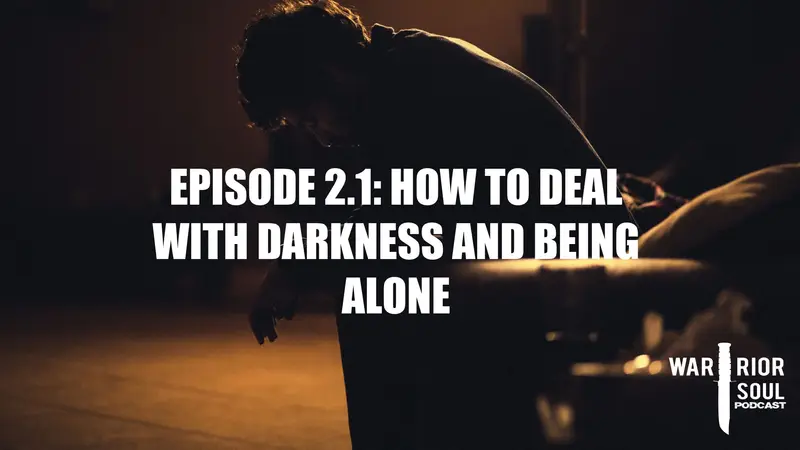
In this episode, Chris and Albert discuss the importance of living like you're dying. Far too many people go through life believing that they actually have something to lose. This holds them back from being their true selves.
Transcript
Machine-generated from the episode audio and lightly edited — may contain errors.
Chris Albert (link to this point)
What is going on, Warrior Soul Nation? This is Chris Albert Palmitessa, and I am here with my brother Albert Carrasco. We are coming at you. Today is Friday, October 28. We got a lot of things cooking.
We're gonna talk to you a little bit about those. Couple of things before we get into our conversation. If you're not subscribed to the Warrior Soul podcast, please do. You can get us on iTunes, Stitcher, Google Play, and all the major podcasting apps. You can also find us on YouTube.
We've got a YouTube channel, that is called the Warrior Soul Agoge. You can find us up there. And if you're not following us on Instagram, follow us at Warrior Soul Agoge. That's Warrior Soul, a g o g e. And with that, let's get into the conversation.
What is up, Albert? How are you doing today?
Albert Carrasco (link to this point)
I am having a really good day.
Chris Albert (link to this point)
Nice, man. You got a really good smile on your face. Good energy coming off of you.
Albert Carrasco (link to this point)
Thanks, man. I I try to focus on that. Obviously, I give myself the space and time to feel whatever is going on. But for the most part of the rest of my day, I gotta be on, you know, like, I got stuff to do.
Chris Albert (link to this point)
Yeah.
Albert Carrasco (link to this point)
So let's get it handled.
Chris Albert (link to this point)
We all do, man, but it's good to it's good when you can acknowledge that and and, you know, feel yourself in the moment enjoying life. You know? We wanted to get into a few different things today. You know, we've had this kind of message, I think, from the beginning of Warrior Soul. You know?
And and just to give you guys a little bit of history, like, I started this podcast and and and Warrior Soul with Albert, you know, after I'd gone through a whole bunch of different things. You know, I I, was living out of my car for a little bit. I was kind of I I was going through kind of, like, what I call my broken period. I I had a marriage that failed really badly. I had a business that failed really badly.
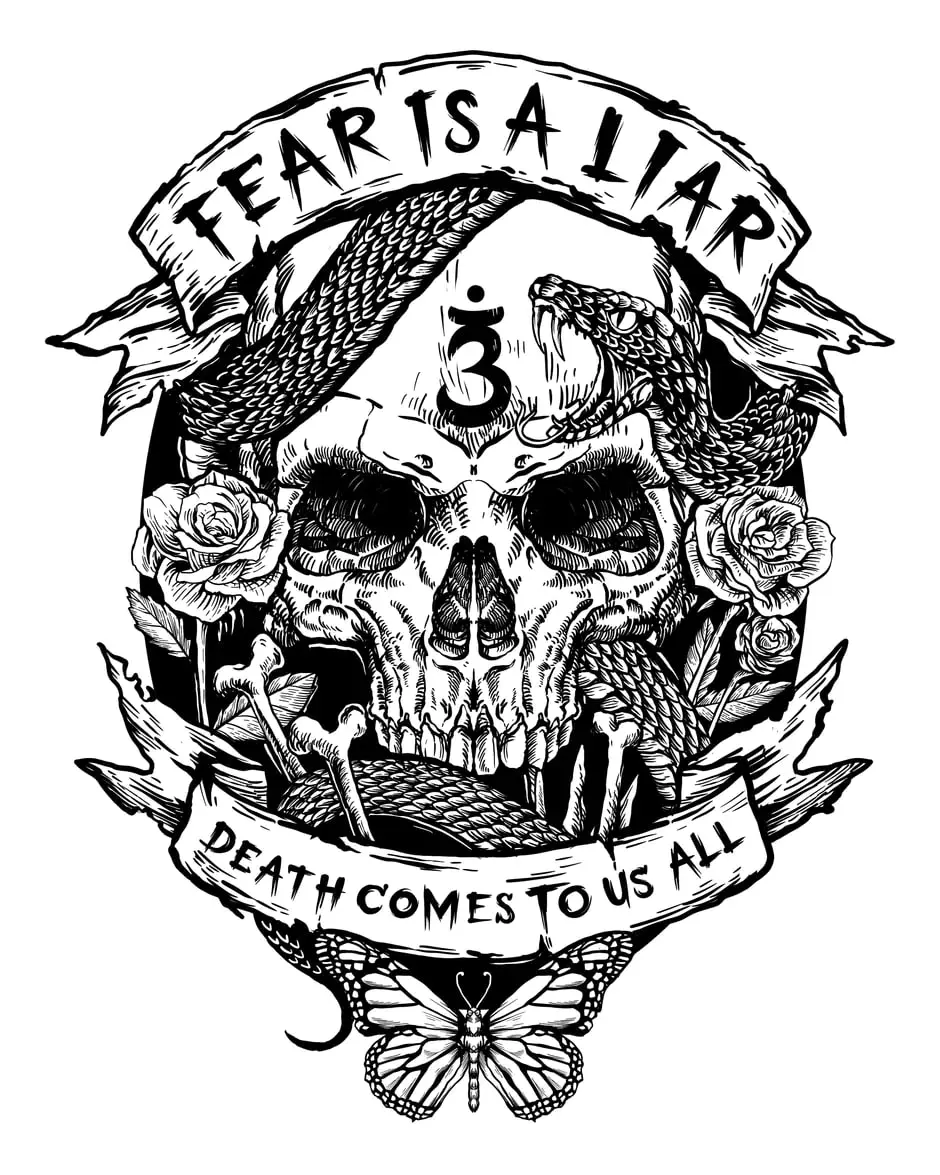
But, you know, I kept kind of relying on, having been through a lot already to get me through those things, you know, having served in the Marine Corps, having gone through hard things. I think when when you go through things like that, it it it preps you for for the things you're gonna face in life. But, one of the things that that we've been trying to convey here on the show comes down to this statement. Fear is a liar. Death comes to us all.
And it's kind of a recognition of sorts. You know? Whether we like it or not, every single one of us is is here temporarily. So, that means you're you're gonna die someday. Right?
And and that's not necessarily a bad thing. Right? Because what it means is that whatever you're going through right now, whether it's it's it's it's painful, if it's difficult, it's not gonna last forever. But the other aspect of it is this. That means that life is something to be cherished.
Right? Because we only get to be here for a little bit. So that means any minute you're not doing something that that's fulfilling you, that's helping you, that's that's, you know, making you you that that's fulfilling a purpose in your mind. That's that's something that that you're losing. And I think it also means that, you know, you don't have anything to really lose by by taking a risk and and actually going after your dreams and going after the life you want.
So we wanna dive into this a little bit deeper today. And and, Albert, you know, what have you I mean, you've you've been with me from the beginning. We created that that shirt originally together, and and, you know, we're working on new iterations of it now. What's your take on that that statement?
Albert Carrasco (link to this point)
Well, first of all, the very first time that you showed me that slogan, I really liked it. And I really liked it because I have understood death for a really long time. Actually, in a funny way, I think the Lion King is the first way that we are taught about death as a society because it's like, oh my god, his what is Simba's dad dies? Like, what does that mean? And then, you know, like Disney does a really soft way of introducing that concept.
But for me, you know, my first friend that was killed because of gang violence was when I was in fifth grade. And back then, I thought that was normal. Now in my thirties, obviously, I know it's not normal. Kids shouldn't be getting shot because of gang violence. Like, 10 years old.
Come on. And so, you know, I I've seen death in a lot of different ways throughout life. And so when you gave that to me, was really like, okay, I do believe that. But what does it really mean? And the way that we designed the design this time, I'm really happy with, and I'm really excited to put it out this weekend.
So for those of you guys listening, that design is going to be available on the website this weekend. And what comes to mind is how we think about death as a collective society. And I think that death is one of those things that we tend to fear because of the way that it is explained to us and the way that it is shown to us. Whereas if we thought about death as like if we accepted death, let's say, a young age, we accepted that it is a gift to be here. It really is a gift to be here.
So the time that we have, we need to make the best of it Because we know how the brain works and how patterns are developed and behaviors reflect those patterns in our brain, then our behaviors as a collective would be very different if it was really, really in our core to make the best of our life. But because fear of death is something that we're taught from a young age, then a lot of our behaviors reflect fear. So that's why people hold back. And so I kind of want to pause there and see what you got to say before I go any deeper on my side.
Chris Albert (link to this point)
Yeah. No. I I I completely resonate with that because, you know, I've I've watched so many people in my life, you know, people I've grown up with. My my my mother, you know, for example, she's she's lived a very what's the word? A very, you know, concentrated life on just survival.
Right? Just trying to put money on the table, try to try to put food on the table, try to make money. And and I get that because she was a single mom with two kids, and she was trying to survive. But trying to get her to to kind of see the beauty that's out there, the beauty of life and and and really understand that, you know, the time she has here, it's precious. It's it's almost like trying to talk to somebody who's in the matrix.
Right? It's like like trying to pull them out of that. And I think so many of us, we go through our day to day, and it's just job, you know, commute, come home, eat dinner, go to bed, come you know? And and you're not really thinking about life. All you're thinking about is going through the motions to get to the next step so that you could eventually get to bed or eat something.
You know? And it's a tragedy in my mind that so many people go most of their lives like that. You know? And I think one of the problems for veterans as they come out of the military is, you know, in the military, yeah, you do have that mindset where you're going from thing to thing to thing, but it's also like you're you're you're coming out of this thing that at least going from thing to thing to thing had a purpose to it. Right?
And then when you get out into the civilian world, there's not a real purpose. It's just so you could fill your bank account or or or or make enough money to put food on the table, and that's it. And I'm not saying that those things aren't important. We all gotta worry about putting food on the table. We've all gotta worry about survival.
But in the midst of trying to survive, understanding that that life is in fact a blessing and doing what we can to make the most out of it. And that's not necessarily, you know, going out there and shaking the world. It means, you know, being there for your loved ones and and having those meaningful moments with them. You know, taking a moment out of your day to to talk to your significant other and see see how his or her day went and and, you know, being there for him or her, you know, in in in a way that a partner should be. You know?
Being there for your kids in a way that a parent should be. You know what I both of you and I, you know, we we didn't have fathers in our lives or anything like that. Like, we we we we lacked a certain amount of that in our childhoods. You know? And I think, there's a lot of people out there, even though they've had kids and they love their kids, they're they're they're letting their childhoods pass them by as adults.
You know? And or it their their their kids are gonna be grown up before they know it, and they didn't get that time with them that they wanted. And and it's because they weren't present and in the moment when they could be. Yeah.
Albert Carrasco (link to this point)
Yeah. Exactly. And so just to, like, maybe put some more, like, tangible or easier to visualize, right, for the example. If we all knew that we lived to 30 years old, let's just say that that was a fact. Everyone only lives until 30.
Then you would actually like, no. Okay. Like, with every passing second, you are closer to your time expiring. So what would you do differently if you knew that you only had thirty years? And so what I think I see a lot in our society, is that people I'm gonna call it like a subconscious arrogance because it that's the way I see it.
It's like you are taking life for granted. And because it's kind of a known fact that people keep living longer and longer and longer, People like, I don't have to think about death. It's like way out there. So that actually makes them like move slower. This like motivation to take action isn't really there or all this stuff.
And like even like, let's say with eating healthy or not sleeping, abusing drugs, alcohol, all of those things, they're like, no. No. Modern medicine is getting better. I don't have to think about that. Like, oh, like, you know, I can get a surgery.
I'll do this and this. And, like, dude, if if we didn't have modern medicine, people wouldn't be living as long as they are. And that's another thing that we shouldn't be relying on. Modern medicine should be there as a backup, but we shouldn't be relying on that. So we keep, as a society, pushing away from all these things that we can do to take care of ourselves, which is eating healthy, going to bed at a certain time, not abusing substances that are bad for our bodies.
Right. All of these things. So I really think that if people knew that I only have so much time and these are the types of things that allow me to make the best of my time, people might live very differently.
Chris Albert (link to this point)
I definitely agree with that, man. Like and I think, like, I think that the other aspect of it is this. You know, how many dreams have people given up so that they can be more comfortable? You know? There there's a lot of things that that look like they're awesome when they're on TV, and, you know, you you dream about doing them when you grow up or something like that.
But then you get out there and you try it your first day or or your second day, and and and and they get too hard. But more importantly, there's a lot of people out there that once they've had a certain amount of that in their lives, they just stop dreaming, and they just stop thinking about where they could be. And they don't know. They don't live in a world of possibility anymore. They they they live in a world of limitations and limitations that they've created around themselves with their own minds, you know?
And there's so many people out there that would love to be doing something differently, but they make up all these excuses as to why they can't do them. And the reality is that those excuses all suck because we're all going to die. And there's literally no reason in the world why you shouldn't at least try to go after what you want.
Albert Carrasco (link to this point)
Mhmm. Yeah. And on that note, you know, I I think this is a place where I'll use first person experience just to give an example because I don't wanna, you know, speak on hypotheticals and I don't I don't want someone to hear it and, like, think I'm talking about them. I'm just gonna talk about me for a sec. I can say here openly that I have lived during a lot of my life where fear was the dictator in my life.
And so there were times where in order to break out certain patterns, I went all in, which we talked about with renegotiation in other episodes. And I convinced myself, I'm going go all in on this one thing. So what happens? Let's say it didn't work out. And now because of again, I didn't have the coping mechanisms.
I didn't have a support system. I didn't have the knowledge that I do now. I was devastated. And I actually thought, this might be it. My life is over.
How will I ever recover from this? And so then I kinda, like, use that as an excuse to stay down. I didn't get back up. Right? Because now I had, in that moment, forgotten, dude, the clock is still ticking.
This little thing happened, and I'm kind of milking this end of the world thing in my head, but it's not the end of the world. I can get myself back up, and I can go all in on it again. So how much time do I need to feel bad about what just happened before I can get up and go again? And that's something that becomes very important to me now. And like I said at the beginning of this podcast, I haven't said this to anybody, much less publicly.
This is about to be said publicly. Every morning, I have to give myself space to feel sad about the things that I have been through and the things that have happened to me because it is me honoring what I have been through and the pain and suffering that has happened to me. And I actually sit down and I'm just like in that and I feel it and then I'm like, okay, this is enough. Like, I just kind of intuitively know. Good.
Now, when I get up, I'm getting up for real and I'm going after my day because I- like I said, I got stuff to do and I'm going to do it and I have a purpose. And then the rest of my day is awesome. Instead of like that stuff that will like subconsciously creep in throughout the day, My day is so much more productive because I give that space in the morning. Something new, by the way. I've only been doing it for a few months.
And that like, it's another way where like I don't know. I like We talked about this. I'm not scared. I don't feel really scared anymore. I'm excited.
I'm excited to to do stuff.
Chris Albert (link to this point)
Right.
Albert Carrasco (link to this point)
And it's even crazy to say that out loud because that's new. Like like, let's say when I was in even in the Marine Corps, I was figuring some stuff out still. And I and even though it's high performance, I was ridden by fear. I just didn't want anyone to see it. So that fear would manifest other places.
Chris Albert (link to this point)
Yeah. Yeah. No. Absolutely. And what you said there is really important because I think that we live in a society where everybody expects to be happy all the time.
If not happy, they expect to be comfortable at least. Right? And maybe that doesn't include happiness. Maybe it just includes a state of of mindlessness. And I feel like whenever we feel sadness or whenever we feel anything uncomfortable, what society does is they say, oh, hey.
Take this pill. Or, oh, hey. You know, take this drug to make you feel better. Or, oh, hey. You know, you don't have to go do that.
You know, it's it's too difficult. Just just sit here and and watch Netflix all night. You know? And I think that the the the problem with that is that all these things, they look good to us in our minds. Right?
Like, oh, I don't have to feel that that pain. Oh, I don't have to feel that discomfort. Oh, I don't have to feel sad. But the reality is if you don't allow yourself to feel sad, you never learn how to deal with being sad. Right?
If you don't allow yourself to feel discomfort, you never learn to to deal with discomfort and to do the difficult things that are gonna get you to the next level. And I think giving yourself permission to feel sadness and to not, you know, be like, oh, something's wrong with me. I feel sad. You know, it doesn't mean anything's wrong with you. You feel sad.
Right? Your body's having an emotion, and and and it's a normal part of life. Right? Allow yourself to feel it so that you can get on and and and do the other things that are gonna make you happy.
Albert Carrasco (link to this point)
Yeah. Yeah. And especially in I mean, it's even more amplified in the military culture where emotions are weakness. Right? But I actually don't think so.
I I firmly believe that being able to feel them and understand why you're out of alignment throughout your day or why you project such negativity onto other people, especially, like, sometimes the people you love the most because they're the closest ones. They're the ones you project. Maybe other people will see you all the time. They're like, oh, no. They're so nice.
But then it's like, well, they're nice to everybody, but to that person they trust the most to show their shadow side. Right. And that's not fair to them. You know? They love you.
That's not fair. Like, you you gotta do you gotta take care of yourself. Like and that's where I'm learning. Like, cause I know I've been mean to people before and it sucks and, you know, it's not it's not nice to know that, but I didn't know any better back then. And I had, like I said, no coping mechanisms, no support, no processing, no understanding.
And the other thing that came to mind as you were talking about that goes with, like, time. So we don't actually fully understand. I I know there's, like, a lot of stuff I love with, like, the quantum theory stuff, but we don't understand why we experience time in the linear way that we do. So think of, like, the amount of time that passed between this podcast starting and right now, you would have to use time as a measurement to say x amount of minutes just passed. But if I asked you to compare that amount of time to yesterday or ten years ago or twenty years ago, you actually can't describe to me the difference of how that time passing feels.
Because the feeling of the time elapsing, you you can't describe. It just happens. You don't feel it. You cannot explain it to me without using time as a measurement. So the reason I'm saying that is this, the same way that in the blink of an eye, the beginning of this podcast just passed or ten years ago just passed or twenty, whatever, you were just in elementary school.
You just got out of the Marine Corps. You just did this. You just did that. One day, twenty years from now, that same feeling's gonna happen. You're gonna look in the mirror and be like, where did all that time go?
Right. So if you haven't thought about it that way, think right now. Look in the mirror. Where did all that time go between now and you being five years old? Really think about how that feels.
Where did that time go from five years old to right now? You don't know. So what can you do to appreciate the time that you have left? Whatever that is, because we don't know. It could we don't know for any of us to live a better life and to use lessons that we, through our own either awesome experiences or some of us through our pain and suffering, to stop that cycle and to make this planet a better place.
Because we have all of the tools to do that, and it's time that we start helping each other out.
Chris Albert (link to this point)
That's a really important thing to think about too because, you know, there's a lot of guys out there who are, you know, maybe 31, 32 who are out of the military now, and they wish that they were 18 again and could do it all over again. Right? But, you know, I'm 43, and I wish that I was 31, 32 again. Right? And I'm sure that when I'm 50, I wish that I was 43 again.
And then when I'm 60, 70, 80, I wish I was 50 again. You know? So, like, I think that longing for the past, like, it's it's a roadway to nowhere. You know? And you've gotta realize it for what it is.
Like, allow your past to empower you, but don't ever allow it to trap you in that that that game of, oh, I wish things were like they were back then. Because someday, you're gonna wish things like they were now.
Albert Carrasco (link to this point)
Yeah. And with that topic of things is that by, you know, let's say romanticizing your past, you're actually robbing your energy from the present moment because you are idolizing what you already know. And by doing that, you're automatically saying, what I already know from yesterday is better than what could be happening today or could be happening tomorrow.
Chris Albert (link to this point)
Right.
Albert Carrasco (link to this point)
And so something that's very difficult for us to do is to embrace the unknown because, especially those of us who have been through traumatic experiences, we don't like to lose control. So to trust that something that you don't know or have no control over is gonna be good for you is really difficult. I'm not gonna sit here and say it's easy because it's not. But by daily effort and by practice and embracing the unknown and taking note every time that something you had no clue happens really good and you're like, wow, I never knew that that would have happened the way it did, and I'm really happy it did. Take take note of that and start, you know, finding the things that you can do where your life starts becoming more awesome right now and therefore tomorrow.
Chris Albert (link to this point)
Exactly.
Albert Carrasco (link to this point)
Exactly.
Chris Albert (link to this point)
Yep, man. I think, like, I think, like, part of it too is, like, you know, you you get home at the end of a day of work. Right? And your day is still heavy on your mind, and all you wanna do is turn that brain off. You know? And and I think for some people, it's like trying to fit trying to find that energy to to, like, to be present and in the moment, it's it's it's really difficult.
How do you overcome that? Like, when you're coming home from a long day and you are you're you know, you've gone through a million different things. What how do you get yourself and and and get yourself to come back to the present?
Albert Carrasco (link to this point)
So a lot of For for anyone listening that doesn't know, I am in yoga teacher training right now because it's part of the direction for Warrior Soul. And Asana, which refers to the postures and, you know, the poses, that is one of eight limbs of yoga. So it's not everything. The mindfulness component is really big for me. And so, for example, I was just telling you on the phone earlier how I have to hire employees to do the screen printing now.
Like, I have to. Like, because I have to have help because it's getting too much for me. And I last week, I worked really late multiple days. Like, we're talking 10:30, eleven midnight. And it's been a while because I've been really good with my schedule where I haven't done that to myself before, like for for a good amount of time.
And I was sitting there working on a really big project that just took way longer. It was way more complicated, way more labor. And I was I found myself getting frustrated. And I thought to myself, you know what? This frustration is coming to me as a teacher right now.
Because if I don't do something to change this, then I'm gonna be stuck. And then I'll take on another project just like this, and I'll repeat the exact same pattern. What this means to me is that I have to really feel this frustration and understand that this is why I have to change it.
Chris Albert (link to this point)
Right.
Albert Carrasco (link to this point)
What am I going to do to change it? Because if it happens again, now I I welcomed it again. If I take no steps to change it, then I'm not I'm just going to be like, oh, this stuff is happening to me. I have no control. Well, actually, I I do got some control.
So I really just allow to feel whatever it is that's happening. What is it telling me? What How is it going against my truth?
Chris Albert (link to this point)
Mhmm.
Albert Carrasco (link to this point)
Because the truth is, want to be happy and love what I'm doing all the time. And if anything is robbing me from that feeling, then it's telling me you're not in alignment with your highest vision of happiness.
Chris Albert (link to this point)
Right.
Albert Carrasco (link to this point)
So what do I got to do to change it? And what can I do? And what's realistic? And if I have to go through this, like, hard thing for a few more months or whatever, like some people are in jobs, they can't leave right away, this and this, then at least start making a plan. Right.
What can you change?
Chris Albert (link to this point)
Right. And I think that's the that's the big problem that people have. Like, when they find themselves in that situation where they're not living to their highest vision themselves, then they get sad about it, and and they get depressed about it, and they feel like they're trapped. And and what you're saying is, you know, that feeling is actually teaching you, and it's saying maybe it's time to do something different. Maybe it's time to to to create a plan.
Maybe it's time even if you can't make an immediate change, maybe it's time to start figuring out how you can. And at least you know that, and and and life is signaling to you that so that you can make the change. Right?
Albert Carrasco (link to this point)
Yeah. And it'll continue to get louder, honestly. And like, just in the same way that you just said, like, you know, it makes you feel depressed or so. There's things in my life that made me feel depressed. I can use one of my relationships as an example where I really wanted to make it work.
Really, really wanted this relationship to work. So I dumped all of my energy and all of my time and dreamed up all this stuff, but it it was destined to fail. And it was really hard for me to accept that that relationship wasn't gonna work. And every time that I tried harder and harder and it didn't work, it made me more sad. But what that meant was that teacher is telling me louder, get out of this, dude.
Right. Come on. It's time to move on. And in the moment, like I said, wrong coping mechanisms, no support, whatever, whatever. At the time, I wasn't open.
I wouldn't have given you a call. Be like, Chris, I'm really fucked up over this. Like, can you walk me through it? Can you help me understand? Now if something's really crazy, I'll give you a call, bro.
But, like, back then, I wasn't talking to anybody. I was just like in here. I didn't want anyone to know that there was even the possibility that I was going through a hard time. Right. So those teachers get louder.
So anyone listening, you will know exactly what I'm talking about. Whatever you're going through, that's getting louder. So what can you do about it? What can you do to make your life easier? Even that, you already have ideas.
Chris Albert (link to this point)
Yeah. No. That's that's really great stuff. And I think if you're in that position, it's it's something you just start doing right now. You know?
And, like, it'll make such a big change in your life if you just change that perspective. You know? I think one of the things I I I wanna talk about quickly before we we get off is, you know, if somebody is and and I wanna, like, condense it down to, like, a couple of action items that somebody can do. If somebody is in that position where, you know, they're they're not living their truth, where they're not happy with where they are right now, what are, like, three things they could do three to five things they could do immediately that could begin to put them on the path to to getting somewhere better? Like, I know it's, a difficult question, like, to start off with, but, like or, like, to Yeah.
Completely initially rattle something off. In my mind, the the thing they the the first thing they could do is to identify what is causing the unhappiness. Right? Like, write it down. Because I think a lot of people, they actually have a problem identifying what's actually causing that unhappiness.
So, like, I think you've got to start to get to know yourself a little bit more. And this is where meditation and and and journaling, they come in handy. Right? Get yourself a notebook every morning. Like, if something's making you unhappy, write about it.
Right? And and in those writings every morning, in that morning practice, you're going to begin to chisel out exactly what it is that's bothering you so that you could identify it and then change it.
Albert Carrasco (link to this point)
Yeah. I think that that's important definitely to be able to identify what those things are. Maybe if you haven't, like, make on your phone, like, a little note or keep an actual notebook. And every time that you get angry or you get sad or something, you feel an emotion that you know isn't in alignment with you being happy. Write it down and figure out, wow, stuff is making me unhappy.
If it's like a friend or this, notice, like even the people you talk to, the activities that you do, how do you feel? How do things and people make you feel? Very important. The other one actually that I think is really important is to don't make really intense, drastic changes right away. Because some things are salvageable and some things can be worked out, and it's not worth just like I know it's impulsive sometimes and, like, especially me back in the day, would be like, tear it all down.
I'm out. Gonna go. And then it's like, I would calm down and get out of that energy and be like, wait. Maybe I didn't have to destroy everything as quickly And as I you'd be surprised. I'll throw out like some of my friends as an example.
I'm really blessed to have the friends that I've had in my life. I mean, I even said this to you and Ricky the other day. Like, dude, I've been such a wild card for so much of my life that I'm surprised you guys put up with me because but but again, right, and I'm laughing, and I know you're smiling because you know exactly what I mean. The idea in my head that you guys wouldn't have been there for me or that you guys wouldn't have understood or had compassion for me, that was all in here. That was all in my head.
Alright. Because I was so afraid to say it. So for anyone listening, if you feel like people might not be on your side or might not care this or this, that that might not be true. People might be like, dude, I really wanna be there for you, but you won't even show me how.
Chris Albert (link to this point)
Right. Yeah. We wake up so much of that stuff. We build our own walls. You know?
Albert Carrasco (link to this point)
Yeah. So I would say, like, the you know, that would be another one. And the other one the last one that you can do is start to, like, reconnect. You know, like, when you're a kid, how curious you are, like, how you would stare at something and be like, that kinda looks like this and looks like this. And, like, you look at clouds, you're like, oh, I see, like, a wolf or this.
Start getting curious again. And reconnect with that and start to think of the possibilities of where your life can go, where if you, one, remember that you're going to die one day, and two, weren't so afraid, what would you do? What would you do with the rest of your time here?
Chris Albert (link to this point)
Right.
Albert Carrasco (link to this point)
And and I think that coming up with those dreams and goals and then a plan to achieve them and building up your support system or even, like, maybe if you don't have a huge support system, like, you know, not like, I would say, like, sometimes we reject the people that are wanna be there for us. So I get that because I've done it a lot. Then at least reconnect with yourself in a way that allows you to pursue your goals and, like, in the way that you know you need to.
Chris Albert (link to this point)
Right. Yeah. That's really important. One other thing I wanna put in here, and this is gonna be the simplest thing you could do, absolutely simplest thing. Think about the how you're going about your day, and think about how many times you mindlessly pick up your phone or how many times you come home and the first thing you do is you pop yourself on the couch and turn on the TV or, you know, you're immediately waking up and and going to your computer and checking emails.
Give yourself a half hour, you know, in the morning and in the evening to be without TV, without media, without phone, without anybody. Give yourself some quiet. Right? Give yourself some stillness. And in that time, that's gonna allow you to get you to get to know yourself again.
Because a lot of times, the voices that are in your head, the the things that are causing the negativity, they're not even your own voices. Right? There there there's something else that's been put there. You gotta remember your thoughts are not exactly you. Right?
A lot of times, it's stuff that's been put in your head through being in contact with all the constant data that we're receiving out here in this universe we live in. So so give yourself some of that time, and that's gonna help you with all the journaling and everything else we brought up here.
Albert Carrasco (link to this point)
Yeah. Yeah. Important.
Chris Albert (link to this point)
It's important. Well, that's all I got, man. You got anything else you wanna end off with?
Albert Carrasco (link to this point)
I think that the last thing that came up while you were explaining that is the way that I perceive movies and, like, just my everyday life, actually, is I remember that the world around me is a mirror always. So it is reminding me of where I want to go and where I definitely don't want to go. Know, like, some people or things like even in movies, it'll remind me like, dang, I used to be like that. I don't want to go into that anymore. I don't want to be that way anymore.
And it doesn't like it's not an excuse to, like, get all high and mighty and say, oh, I'm not like that anymore. It's more like, I understand that person's pain. I know what they're going through. You know, if they allow me, I'll, like, be there for them. But, like, in movies I was watching a movie last night with my housemates, and it was so toxic, the relationship that the couple had.
But the way the movie presented it, because it was a comedy, it made me think of how, like, the film industry desensitizes us to how bad certain dynamics are. Like, there is nothing about that relationship. And I felt like if that was real life, those kids be raised by horrible parents. Mhmm. But it was a comedy, so it was funny.
To me, it was It made me sad a little bit. And it made me sad to think that that's That we as a society see that as Okay. So it's like, just start to, like, think about, is that really the life that you want to live when you when you're watching anything, when you're being around people? So that's all. Just the mirroring aspect.
Chris Albert (link to this point)
Definitely. Definitely.
Albert Carrasco (link to this point)
We got nothing else.
Chris Albert (link to this point)
Awesome, brother. Well, it's always great talking with you. To everybody out there, you know, these these episodes we're doing are here for you to use as a guide and to use and in terms of taking action for yourself. I know there's so much media out there that you could be listening to, and we really appreciate you guys listening to us. And we hope that that you take this stuff to heart and that you're using it to build yourselves up.
You wanna learn more about Warrior Soul, you could check out, like I said, all of our social media, Warrior Soul Agoge, other episodes of the Warrior Soul podcast, the Warrior Soul Agoge YouTube channel. We've also got our our site. We've got our our gear up at warriorsoul.shop. So definitely check this stuff out, and, we'll be back at you next week with some more awesome content. Chris Albert Palmitessa and Albert Carrasco.
We love you all, and we are out.
Albert Carrasco (link to this point)
Bye.
Host of the Warrior Soul Podcast and founder of Warrior Soul. Worldwide trainer and nutrition coach, contributing author at Testosterone Nation and Muscle and Strength.