Podcast episode
Healing and Medicine with Joey from Devil Doc Talk
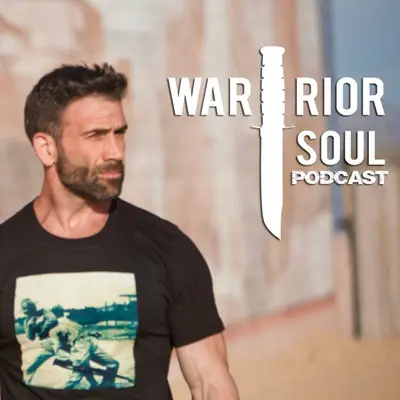
Hosted by Chris Albert
The Warrior Soul Podcast
Joey Martinez is an FMF Corpsman Veteran and host of the Devil Doc Talk Show.
Joey’s been through a lot of struggles with post traumatic stress and with pain. He’s been a good friend of our show since we started. In spite of his own struggles, Joey has always tried to help others and he uses his skills as a broadcaster with Devil Doc Talk to reach those most in need of a kind and helping voice.
We brought Joey onto the show to talk about some of those struggles, and to discuss some of the issues surrounding pain, PTS, and life. We also discussed his show and the new direction he’s taking it in 2019.
Transcript
Machine-generated from the episode audio and lightly edited — may contain errors.
Chris Albert (link to this point)
This is Chris Albert, and I'm here to remind you of one thing. Someday, you're going to die. Now that's not some morbid statement or scary idea. It's solid fact. Your time here on this earth is limited.
We need to be reminded of this as much as possible for one simple reason, to live your best life while you can. This is the Warrior Soul Podcast. What's going on, ladies and gents? Welcome to the Warrior Soul podcast. And this week, we've got one of my favorite individuals in the world on the show.
His name is Joey Martinez, and he served as a navy corpsman, went on to create the Devil Doc talk show and started as a veteran talk show, and now he's expanded it to what he says all of humanity. And Joey's a really smart individual. Really, he's got a really huge heart, and he wants to help people. He wants to help people get through their trials, get through their tribulations, and he's also a big supporter of the arts. Every time I talk to him, I really enjoy it.
I think you guys are gonna enjoy it as well. We get into a lot of stuff today. We get into talking about cannabis, talking about kratom, talking about living your life and and being happy and and doing everything you can to to be you. So you guys will really enjoy this conversation. Before we get into the show, I just wanna say this podcast is brought to you by f bomb nutrition.
They make awesome delicious packets of fats, macadamia nut butters. They mix them up with chocolate, with sea salt, with pecan butter. Super delicious. They also have these awesome cheese snacks that they've just come out with. You can get 20% off of your first order of f bombs when you head over to www.dropanfbomb.com when you use the code Warrior Soul at checkout.
Definitely go and check them out. Amazing company run by amazing people. With that, let's get into this episode of the Warrior Soul podcast with mister Joey Martinez of the Devil Doc talk show. What is going on my brother? How are you doing these days?
Joey Martinez (link to this point)
Pretty good, man. You know, just raising the family and focusing on getting better mentally and physically and spiritually. Just trying to make better decisions and healthier decisions, and that's about it. Just starting out some good projects too. Starting to push forward the whole audio engineering thing a little bit more.
You know, it's nerve wracking, but at the same time, it's it's one of those things I passionately like. I very much enjoy being able to record audio and whatever it is, if it's a podcast or if it's, you know, fully sound or ADR for film. And, you know, it's pretty fun. It's very, it's keeping me on my toes, keep my brain juicy, you know, got to keep those, those brainwaves loose. But besides that, just the same old me just raising the two kids and the wife and, you know, just trying to trying to keep alive.
That's best we can, right?
Chris Albert (link to this point)
Exactly. That's all you can do, man. So you as far as like getting more mentally healthy, what do you mean by that? What what's going on with your life right now? Like, what do you mean going through?
Joey Martinez (link to this point)
Yeah, no, that's a good that's a great question. Actually, I haven't been able to really able to talk about it too much. Well, I started getting medical treatment a few years ago, actually tons of years ago, it was back in 2010. And it was for PTSD and TBI. Honestly, if you read up on it, there's a lot of new information on that it's practically impossible to tell the difference and, or they're correlative or whatever they correlate to one another, the big old brain words there, right? So I started getting the medical treatment, and I was doing okay. Then as the years went on, certain things happened, certain adversities, certain challenges, and things just became a little bit more. What's the word here affected by all the different, you know, everybody reads about it, you hear about the different types of symptoms and, and all the different things with PTSD, nightmares, whatnot. So things started just not going well. And then after a few years of just trying to figure it out with the VA, it wasn't really going the right ways.
So my wife and I started to do a bunch of different things like transcendental meditation, looking up different things on just different mental tools to say, you know, techniques to calm down and self regulate. And so my wife and I kind of been building on that for several years. But this past year has been a lot more difficult. So we actually had to reach out and I started getting medical treatment with the Telemental Health Program with the VA. And I speak accolades about it because it's a real great program.
If people haven't tried it or not too interested in it or don't know anything about it, just look it up. It's the VA's Telemental Health Program and what it does is pretty much what we're doing here. Being able to talk online. I don't know if they record or not to be honest. I don't think so.
But that might make people a little bit nervous about that. But to me it's a really great way, right? It's a really great way to reach your care physicians and connect because for me traveling is a huge issue where I live. It's about an hour to the local VA down in Mojo where they have this accessory, this specific treatment plan guy or some crap, right? And so we were actually able to figure it out in June of last year And I've been kind of doing an intense program with CPT and CBT with very great psychologists.
And to me, it just really re sharpened those tools me and my wife had found. And of course, talking certain things out, you know, the recent adversities, difficulties that are going on, and actually learning a bunch of new tools too, and different ways to kind of redirect things, you know, turning that negative into a positive. You know, as bad as things get, you know, if it's out of our control, then who are we really to bitch and moan about? Know, it's like, if it's way out of your control, that you can't do anything about it, then there's really no worry, there's no problem. It's really what I've noticed is, it's re kind of connected those different avenues like, hey, let me turn back to podcasting.
I started doing a couple of shows here and there. Let me start asking people about programs and stuff that they're doing, things they got going on, seeing how I can help, you know, seeing how I can get re engaged in the community and get out of my cave, so to speak, you know, and for a few months there, was pretty dark. So I'm very glad that, you know, things are going in the right direction and, you know, each step is every day is each step. And like me and my therapist say, it's baby steps. Not to take it from What About Bob?
It's really one of those things that work, you know, baby steps to plan, prepare, and the things you learn in the military, can reutilize and kind of restructure at any point in time in your life, which was kind of what me and my wife and my family were going through this year. It's just trying to rebuild the foundation and get going in the right directions.
Chris Albert (link to this point)
Well, you show the Devil Doc talk show. I mean, like, it's it's it was always a great show. And and you get a real talent for podcasting. Right? You got a real talent for talk.
And I I always appreciated that about you because, you know, you touched on a lot of different issues that that people might have been struggling with. And, you know, you made people see them in kind of a different light, you know, and what, what, because you're coming back to that now, right?
Joey Martinez (link to this point)
Yes. Yeah. And actually in a bigger way too. It's great that you brought it up because it really is a passion. I'm very humbled by what you're saying because to me for many years, I didn't know if I was doing the right thing.
And it's hard, especially in today's day and age, you know, you got artists and competition and whatnot. For me, it was really just a therapeutic way to reconnect and share my unique perspective. I'm not saying it's unique, like, like nobody's ever thought of it, but more so I really wasn't afraid to share it. And you know, I'm not going to lie, it's bitten me in my ass a couple of times. And to me, that's really good though.
It tells me that I'm pushing things at the right pressure points, you know, really, if certain things buckle, and then a few years later, it's literally the most relevant content, but we created it like years before. And now you can see people talking about it and one of the biggest things was cannabis, know, and different type of modalities, naturopathic or whatever the homeopathic, whatever the word is, techniques, you know, transcendental meditation, was talking about that a lot. To me, but it was more so being able to reconnect with people, like you were saying talk. I always found that valuable with people. I am a very much so a people person, people pleaser, if you will, but not to the point where I'm going to kiss anybody's ass, know, I'll be very blunt about that shit.
But when it comes to theories and the evolution of medicine, the evolution of sound, the evolution of connectivity. Know, me and my buddy were just talking last night, of course about politics, but I don't know if you like talking about politics or not or your listeners, but it was about the president. And to me, you know, here's a good point to my part was, this is the most accessible president in the world's history, period. You can hate him, you can love him, you could not care any which way, but the accessibility to voice your opinion and really be heard, I think is outstanding. And I think that a lot of Americans kind of take that shit for granted.
To me, know, me and my buddy, he wasn't bitching or moaning or nothing, but we were just talking about circumstances and the situation because we're still in the shutdown, one of the longest, actually the longest in history. And to me it was intriguing because of course we talked about people going out pay and different programs, even worrying about VA pay. I reminded them, no, that VA is paid a year in advance, so recoup. Just you guys out there, veterans worrying. You know, certain programs, yeah, it's difficult.
But let's say you're having a bad day and you want to vent, okay? You can literally hit up the White House hotline and you could send them emails, you might not feel heard, okay? But I promise you somebody's reading those emails. I ran into a couple of the people running for Congress this year on both sides of the table. Everybody's great candidates, so nobody bite my head off.
But we talked about the accessibility, and it's a huge, huge, very important thing, especially with this president that I just can't shake or tell people to be upset about because either way you feel about it, VA programs, if you're having problems, there's hotlines and phone lines and there's connectivity. To me, that's huge and that's very big.
Chris Albert (link to this point)
Well, you can even hit them up on Twitter at this point, right?
Joey Martinez (link to this point)
Yeah, I've hit them up on Twitter, Facebook. I've done all the different VSOs, spoken to representatives from just about every district in Southern California. And then also the White House hotline, which is the veteran hotline. Yeah. And then there's the email program too.
Chris Albert (link to this point)
You know you know one thing I was thinking about and and I've been thinking about since since president Trump came into office is, you know, a lot of people I think that party lines are shifting on so many different situations. Take cannabis for example, right? A lot of ten years ago, you would have thought, okay, the Democratic Party is more in favor of cannabis reform and things like that. But I think since Trump took office, we're seeing more and more movement on the Republican side toward making cannabis more available to people who want to utilize it.
Joey Martinez (link to this point)
Absolutely. You can't knock it. You can if you're just watching either one cited news product. I do find journalism, if you don't remember the Hearsts and Hearst Castle do your research, It's based off of journalism, right? Journalism has always been a product, it always will be a product. I think that a lot of the journalism has gone away from being a little bit more integrity, integrity, fucking soft part, integrity, right? I think that a lot of journalists have swayed towards the more entertainment based news. But with that, there's a lot more going on. And with the cannabis conversation, I think if you were to look at both sides of the parties, there's certain advocates that are actually there for movement in the scientific field of medicine.
And then there's those that are still stuck on the stigmatization of what marijuana was. Now, compare the differences to saying the N word and saying African American, you know, you can literally be livid about either or, but the term marijuana was actually constructed and utilized for racial profiling. When the laws shifted in the 30s, and it's the same with alcohol actually back in the day, when everything shifted, there was this polarity, you know, like the stigma is beyond what the society can flip or comprehend. And nowadays you see it shifting even in the Republican Party. And I laugh at it because, you know, everybody says, you know, rich white money.
And I go, Yeah, but hey, I don't care if you're smart, dumb, or broke or rich, you look at cannabis nowadays, and you have to at least admit it's going to be a huge industrial age, like it's a green industrial age. To me, it's going to be a trillion dollar market within easily fifteen to twenty years, if developing goes right, if people don't want cling on to those stigmas, medication wise, it can replace a lot of different medicines. So of course, there's going to be competition. Look at steel and hemp back in the day, was part of the problem. But at the same time, people have this accessibility, like we've just previously discussed, the internet, being able to complain, being able to voice their opinion.
And we're seeing that in a lot of the developmental areas of cannabis, that there's just too much founded data. And that's about it. That's where we're at. We're kind of in the walking phase, you know? And I think that's very smart as a nation and especially as a state.
California's laws are a little bit upside down. The regulatory parties are a little bit upside down right now. But when you look at other states, they're kind of getting the motion going. People are getting a little bit more comfortable with operating, I should say, above water, where people can see it. I think that within about five years, that government programs definitely will be funding research for that.
I just don't think it's going to be tomorrow for sure. If it is, wonderful, but it will take time.
Chris Albert (link to this point)
Absolutely. One thing I mean, I used cannabis when I was dealing with my ulcerative colitis flare ups and it helped me out quite a bit. One of the problems I noticed though was that when it became recreationally legal, a lot of the rules changed around the dosing and the prices changed as well, and it got a little bit more expensive. What do you think about that as far as far as cannabis becoming more and more expensive for the medical user?
Joey Martinez (link to this point)
Well, I think it's a horrible situation. I find myself in as well, if you're listening. Other people that are out there that have, you know, there's, I think always focus on veterans because I don't want to exclude anybody from the conversation, but a lot of veterans do prefer cannabis now, especially or Kratom is another one. I have not tried it. I'm very interested in it.
Chris Albert (link to this point)
Nice. Yeah.
Joey Martinez (link to this point)
Awesome. I've never tried it, know, and I want to because I got off opiates last year in February and a lot of other veterans, me and them had conversations about opiate uses and you know, it has its place. And some people are a little bit more aggressive towards it saying, No, it doesn't, you know, cannabis can do all better. And, you know, I have my own opinions. But to me, I think that when you're looking for an alternative medication, that fighting the stigma and actually accepting it as the medication that you're taking.
Like, you know, when you're a kid and your mom gave you some Tums, was like, Oh, made your tummy feel just a little bit better, right? Because it's your mom, gave she you fucking Tums. You're like, Yay, mommy loves me. And also, this might be a Tums plug, but I eat the Tums stuff. It could just be calcium bicarbonate, it doesn't matter.
Host of the Warrior Soul Podcast and founder of Warrior Soul. Worldwide trainer and nutrition coach, contributing author at Testosterone Nation and Muscle and Strength.