As veterans move into the civilian world, many of us feel innate insecurities about our experience and education in the new context. In this episode, I discuss overcoming this insecurity and beating imposter syndrome.
Transcript
Machine-generated from the episode audio and lightly edited — may contain errors.
Chris Albert (link to this point)
You know, one of the things I'm always saying is that if this country is gonna get better, if this country is gonna go on the right path, we have to step up as a community. Veterans are the sleeping giant in this country, and it is time for us to step up. That's why I wanna talk to you about The Citadel, the Military College of South Carolina. Now you might have thought about The Citadel in the past as this corps of cadets, this military institution, but they have programs for veterans that don't involve you joining the corps of cadets, don't involve you wearing a uniform every day, and don't involve you living a military lifestyle. If you wanna do that, great.
But if that's not what you're up for right now after your military career, then you don't have to do that, and you can access some of the best programs in the world. The Citadel has some hot degrees in intelligence, tactical strength and conditioning, engineering, and project management. And there's five student type options for veterans. There's graduate college, there's evening undergraduate, there's active duty students, non cadet day program, returning cadet veterans, and online programs. The academic offerings include undergraduate, graduate, college transfer, graduate certificates, and online degrees.
Veterans have access to every single academic degree the college offers, and they have the most flexibility when it comes to their schedule. They can major in anything offered to the cadets and would take those classes during the day with the cadets. But then there's other programs offered in the evening or online and graduate programs to choose from too to make things so flexible for you. The US World and News report has named the Citadel the number one college for veterans in the South. And for veterans who choose to take classes on campus, they get to be a civilian student in a military environment.
They don't have to wear uniforms, like I said before. They don't have to join the military culture of the corps of cadets. The atmosphere is a really good transition environment from military to civilian life. There's an organic mentorship that comes from taking classes with the cadets. The cadets wanna talk to you guys.
They wanna hear your stories. They wanna know what it was actually like to be in the military. A lot of the a lot of these men and women are gonna go on to serve as officers in the military, and they're gonna exact change. And they need to hear from you guys. They you also get access to The Citadel's alumni network.
Like I said, this is one of the most illustrious institutions in the world. And when you join the Citadel and you graduate, you're part of their alumni network. That includes so many leaders. It includes so many business leaders, so many leaders from the military, and so many leaders from the government. The college's core values of honor, duty, and respect align with veteran culture.
They align with who you are, and it's something that you're not gonna get anywhere else in this country. There is tons of special assistance for veterans at The Citadel. And whether you're a veteran or active duty military personnel, you can take advantage of these programs. You also get access to the veteran student success center, the career center, the academic success center, the student veteran association, and all campus clubs. If you wanna play rugby, you could do that.
If you wanna you wanna lift weights, you could do that. You get access to everything that the students get. There's fellowship opportunities. There's tons and tons of financial assistance. So if you're interested in getting a degree from The Citadel and building your life, head over to citadel.edu/veterans.
This is Chris Albert, and I'm here to remind you of one thing. Someday, you're going to die. And that's not some morbid statement or scary idea. It's solid fact. Your time here on this earth is limited.
We need to be reminded of this as much as possible with one simple reason, to live your best life while you can. This is the Warrior Soul Podcast.
What is up, ladies and gentlemen? Welcome to another edition of the Warrior Soul Podcast. My name is Chris Albert, and this is where we deliver tools, tactics, strategies, and ideas to help The US military veteran community and anybody else willing to listen to live their absolute best lives. This podcast is for veterans. It is by veterans, and we've been doing this for five years.
So we have plenty of content up here. I have gone from publishing three times a week to publishing once a week. It's just because of where I am in my life right now. I am the general manager of a factory over here in Florida. We are in our busy season.
I would like to get back to publishing three times a week, but for the time being, we have to deal with one. I'd also like to get back to getting you guys some more awesome interviews. We had one last week with mister Dustin Robinson from Iter Investments, and he's also with mister Psychedelic Law. He came on to talk about psychedelics and their impact on mental health. It was a really, really great episode, and I hope you get a chance to listen to it.
We also have a new website up at www.warriorsoulagoge.com. We revamped a few things, made the platform a little bit easier to find content on, also made it easier to access our store where we carry a lot of awesome t shirts and other types of gear that you can wear around the house or wear out and about. I think they look great. People seem to enjoy them. So get over there to warriorsoulagoge.com and check that out.
Today, I wanna talk to you about something that has been on my mind lately, and this idea that our community kinda has a chip on its shoulder. Now what do I mean by that? Well, you look around the world, and you see the way people are. Right? Like, the other day, I was at a function. It was for work, and, you know, I'm around all these people. And these people have mostly gone to Ivy League schools.
They have earned high income since they've been out of college. They have led companies. They have done all kinds of awesome things. And in my mind my mind, I I can't stop thinking that I'm just some kind of anomaly or peasant or somebody who just doesn't deserve to be there. Right?
And and I'm saying that out loud right now. It's not something I've said out loud before. It's this thing that we all call impostor syndrome. Right? And I know a lot of veterans who feel it, not necessarily while they're in the military because I feel like when we go into the military, it becomes part of us, part of our identity.
You go through this transformational process that turns you into a soldier, a sailor, a marine, or an airman. Right? And you go through that process. You earn that title. But a lot of times in the civilian world, you end up in positions where, you know, you just end up there.
Right? You just end up there. I never thought that I'd be leading a company at this point in my life. Never thought that I would be in charge of a factory. Right?
A year ago, didn't have any of that on my mind, but but I'm here now. And I worked hard for it, and I know that I'm extraordinarily capable. I know that I have the skills necessary to do it. But I always have that thing in the back of my mind that says, well, what the hell are you doing here? Right?
What makes you think you could do this? Right? And and I think a lot of us go through that. Maybe it'll come to you in your civilian job. Maybe it'll come to you when you go to school.
Right? When you go and and and get out and try to get your your education. It happened to me there a lot, particularly when I was in graduate school. And, you know, I think it's something that we need to talk about. It's something that we need to deal with, and it's something that we need to work through as a community.
Because here's the deal. You know, I I know this. I say this all the time. I believe that our community, the veteran community, is the most highly skilled, one of the smartest, one of the most capable groups of people on this planet right now. I know this.
I I've ingrained it into my soul. I say it to you every week, but there's still this thing in my mind that is telling me, hey. What the hell are you doing here? And I know that a lot of you are going through that too. So so how do we get through that?
How do we get through that? And it goes back to something I said on Instagram yesterday. You've gotta make yourself believe you're capable. Now what does that mean? That means that that you've got to go out there.
Whatever you're doing, you got to dedicate yourself to being the best at it just as you did when you're in the military. Right? Like, right now, I'm reading four different accounting books. I'm reading books on leadership. I'm reading books on manufacturing, books on Six Sigma, books on on, you know, the Toyota way.
And I'm trying to ingrain these skills into myself, and I'm trying to put myself on the path to believing that I deserve to be where I am right now. And you need to do the same. Alright? We can't sit here and and just go through our minds and say, oh, you know, I don't deserve this, or oh, I don't I don't I shouldn't be here, or oh, you know, these people are all, you know, from a different class than I am, or from a different position in life than I am. We've gotta earn that position in life.
We gotta get there on our own terms. And if you are somebody who has dreams in life, if you are somebody who wants the finer things, who and when I say the finer things, I don't mean, like, cars and fucking mansions and things like that. Maybe it maybe that includes that. And if if so, that's fine. But I mean, you know, having an impact.
Right? Getting out there and leading in the civilian world. Getting out there and and, you know, having an impact on a company or having an impact on society or or having an impact by teaching people or or or doing something meaningful with your life. Right? We all have to be comfortable with having an impact in the civilian world.
We have to be comfortable around civilians. We have to be comfortable environments that we haven't been in before. Right? And it's a process. Just as boot camp was a process, just as your your skill schools were process, just as any other skills you went through in the military were a process, this is a process too.
And you gotta take it step by step. And so, again, read as much as you can. Learn as much as you can. Take courses. Find mentors.
Find people in the know. Try to to endear yourself to people in the know, try to make friends with people who know more than you, try to surround yourself with people who might be a bit ahead of you, and don't let your insecurity get in the way of your happiness. Right? That's such an important thing to remember. If you let your ego and your insecurity get in the way of who you wanna be, you're gonna be an empty, lonely person for the rest of your life.
And I've done that far too many times before. Let my ego, my insecurity get in the way of my happiness. I've walked out on things. I've walked out on opportunities that that could have put me five, ten years ahead of where I am now because I let my ego get in the way, because I let my insecurity get in the way, because I didn't wanna be seen as stupid, because I didn't wanna be seen as low class, because I didn't wanna be seen as weak. Right?
When if I just asked for help, if I just reached out, if I just tried to find people who could mentor me, I'd be in a much better place. So and here's the other thing. You know, it's not as hard as people make it out to be. You don't have to go out there. You don't have to pay, you know, 2 to $5,000 to some mentor who's gonna take you through.
Just pick up a book. Go on YouTube. Get on these this you're listening to a podcast right now. Search for a particular subject matter on iTunes.
Right?
There might be a few duds out there, but but there's definitely gonna be something good. There's definitely people putting good things out there into the world. So rather than just sitting back and looking at, you know, what social media is doing in our society, and, yeah, there's a lot of negative stuff it is doing to us right now, but use it for the good things, the positive things, the things you can learn. Alright? That's all I got for today, guys.
Please bear with me as I get through this extraordinarily busy time. Gonna get back to publishing more regularly again. But thank you to everybody who continues to support this podcast and who continues to support Warrior Soul. This is Chris Albert, the Warrior Soul podcast. Get out there and live your best life while you can, and I am out.
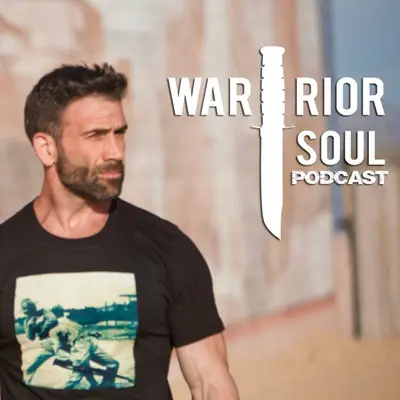
Host of the Warrior Soul Podcast and founder of Warrior Soul. Worldwide trainer and nutrition coach, contributing author at Testosterone Nation and Muscle and Strength.