Podcast episode
Bringing Psychedelics To The Mainstream: Dustin Robinson
Hosted by Chris Albert
The Warrior Soul Podcast
Dustin Robinson, founder of Mr. Psychedlic Law and Iter Investments
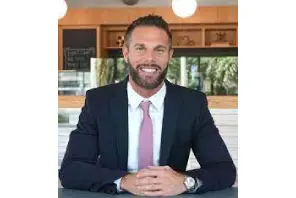
Dustin Robinson is a lawyer, accountant, and the founder of Mr. Psychedelic Law and Iter Investments. Iter is a venture capital fund that invests in companies working with psychedlic plant medicines.
Dustin Robinson is the Founding Partner of Mr. Cannabis Law – a full-service law firm exclusively focused on cannabis and psychedelic industries. Dustin is licensed in Florida as an Attorney, a Certified Public Accountant, and a Real Estate Agent. He focuses his practice on providing legal, accounting, financial, and business consultation to various businesses operating in the hemp, marijuana, and psychedelic industries.
Dustin has worked at one of the largest national accounting firms – Deloitte – as well as one of the largest national law firms – Holland & Knight. After working at Holland & Knight, Dustin applied his legal and accounting background in the business world while running a multi-state manufacturing company.
Dustin is deeply involved in the cannabis industry through his law firm – Mr. Cannabis Law – and various cannabis-related organizations, including CannabisLAB, ASTM D-37 Global Standards for Cannabis, Leafstyle360, and Broward County Medical Marijuana Advisory Board. Dustin also serves as the Legal Director for NORML of Palm Beach; he is on the Legal Committee for the Florida Hemp Council; and he is on the Operations Sub-committee for Hemp Industries Association. As a member of the Board of Directors of Minorities for Medical Marijuana, Dustin advocates for social equity and inclusion in the cannabis industry.
Dustin is also the co-founder of Mr. Psychedelic Law – a 501(c)(4) focused on using medical and spiritual research to drive responsible legal reform in Florida for psilocybin mushrooms and other entheogens. Dustin has drafted Resolutions for psychedelic decriminalization for various cities in Florida and hopes to build a responsible legal framework in Florida for the commercialization of psilocybin mushroom and other entheogens. Dustin has built a team at Mr. Psychedelic Law that consists of the top lawyers, lobbyist, doctors, scientists, and spiritual leaders in the state of Florida. Dustin is also represents various psychedelic non-profits including Mind Army and Ketamine Fund.
In April 2021, in partnership with seasoned private equity investor Robert Velarde, Dustin launched Iter Investments, a venture capital firm that aims to deploy capital primarily in businesses operating in and around the burgeoning psychedelics industry.
Transcript
Machine-generated from the episode audio and lightly edited — may contain errors.
Chris Albert (link to this point)
You know, one of the things I'm always saying is that if this country is gonna get better, if this country is gonna go on the right path, we have to step up as a community. Veterans are the sleeping giant in this country, and it is time for us to step up. That's why I wanna talk to you about The Citadel, the Military College of South Carolina. Now you might have thought about The Citadel in the past as this corps of cadets, this military institution, but they have programs for veterans that don't involve you joining the corps of cadets, don't involve you wearing a uniform every day, and don't involve you living a military lifestyle. If you wanna do that, great.
But if that's not what you're up for right now after your military career, then you don't have to do that, and you can access some of the best programs in the world. The Citadel has some hot degrees in intelligence, tactical strength and conditioning, engineering, and project management. And there's five student type options for veterans. There's graduate college, there's evening undergraduate, there's active duty students, non cadet day program, returning cadet veterans, and online programs. The academic offerings include undergraduate, graduate, college transfer, graduate certificates, and online degrees.
Veterans have access to every single academic degree the college offers, and they have the most flexibility when it comes to their schedule. They can major in anything offered to the cadets and would take those classes during the day with the cadets. But then there's other programs offered in the evening or online and graduate programs to choose from too to make things so flexible for you. The US World and News report has named the Citadel the number one column for veterans in the South. And for veterans who choose to take classes on campus, they get to be a civilian student in a military environment.
They don't have to wear uniforms, like I said before. They don't have to join the military culture of the corps of cadets. The atmosphere is a really good transition environment from military to civilian life. There's an organic mentorship that comes from taking classes with the cadets. The cadets wanna talk to you guys.
They wanna hear your stories. They wanna know what it was actually like to be in the military. A lot of the a lot of these men and women are gonna go on to serve as officers in the military, and they're gonna exact change. And they need to hear from you guys. They you also get access to The Citadel's alumni network.
Like I said, this is one of the most illustrious institutions in the world. And when you join the Citadel and you graduate, you're part of their alumni network. That includes so many leaders. It includes so many business leaders, so many leaders from the military, and so many leaders from the government. The college's core values of honor, duty, and respect align with veteran culture.
They align with who you are, and it's something that you're not gonna get anywhere else in this country. There is tons of special assistance for veterans at The Citadel. And whether you're a veteran or active duty military personnel, you can take advantage of these programs. You also get access to the veteran student success center, the career center, the academic success center, the student veteran association, and all campus clubs. If you wanna play rugby, you could do that.
If you wanna you wanna lift weights, you could do that. You get access to everything that the students get. There's fellowship opportunities. There's tons and tons of financial assistance. So if you're interested in getting a degree from The Citadel and building your life, head over to citadel.edu/veterans.
This is Chris Albert, and I'm here to remind you of one thing. Someday, you're going to die. Now that's not some morbid statement or scary idea. It's solid fact. Your time here on this earth is limited.
And we need to be reminded of this as much as possible for one simple reason, to live your best life while you can. This is the Warrior Soul Podcast.
Welcome to the Warrior Soul Podcast, ladies and gentlemen. This is where we deliver tools, tactics, strategies, and ideas to help The US military veteran community and anybody else willing to listen to live their absolute best lives. Today, we're gonna be talking about a subject that we have covered a bit in the past, but I don't think enough. We're gonna be talking about psychedelics. Now here's the deal.
Psychedelics have had a certain stigma around them since the nineteen sixties. People think you can lose your mind. People think you're a junkie. People think you're a drug addict. People think all types of things about you if you start talking about using psychedelics.
But here's the deal. Psychedelics have been used for thousands of years for healing purposes, for community purposes, for religious purposes, and, of course, also to help people feel good and have a good time. I don't think there's anything wrong with that last part. But these days, people are looking more and more to psychedelics to help with things like post traumatic stress and depression. And here's the deal.
We all have this beautiful thing called the mind. We're born with it, but it doesn't come with an operation manual. And one thing that I have found from my own use of psychedelics is that their use helps me to understand my mind a bit better. Of course, there's a whole host of other elements that can come into play here, the religious elements, the spiritual elements, which I think are important. But for our purposes here in the veteran community, a community that is looking for healing, a community that is looking not just to survive out there, but also to thrive, I think that these could be really valuable tools for us to explore as a community and for our country to explore as a society.
Today's guest is a man named Dustin Robinson. He is a lawyer out here in Fort Lauderdale. He is a cannabis lawyer, and he also works with psychedelics. He's got a website called mrpsychedeliclaw.com. He's also the founder of Iter Investments.
That's I t e r. I'm sure I'm mispronouncing it. But that is a venture capital fund that goes out and seeks opportunities to fund businesses that are working with psychedelics. We had a really interesting conversation. He is a great person.
I think he's doing absolutely awesome work. And without further delay, let's get into the conversation.
Dustin Robinson, welcome to the Warrior Soul podcast. How you doing, man?
Dustin Robinson (link to this point)
Doing great. Excited to be here.
Chris Albert (link to this point)
You know, we were talking just before this. I I wanted to bring you on because you are an expert concerning the legal matters behind cannabis and and psychedelics. You also started an investment firm that is or private equity firm that is trying to bring some of the psychedelic medicines to market right now.
And really interested in what you're doing. So I really appreciate you being here.
Dustin Robinson (link to this point)
Man, thank you for having me. It's an exciting time in the industry and happy to play my role.
Chris Albert (link to this point)
How'd you get into doing this stuff?
Dustin Robinson (link to this point)
Yeah, so I started off my background is I'm an attorney, I'm also a CPA. I founded a law firm that was exclusively focused on cannabis, and had been running that law firm for quite some time. And about probably thirty one months ago, several of my cannabis clients started reaching out, wanting to get involved in psychedelics. So at the time, I'll be honest, I didn't know much about psychedelics. I had never tried a psychedelic.
And quite honestly, I was part of one of the people that, you know, has that social construct around it that has the stigma. So, I had a client that wanted to do a mushroom grill out in Jamaica, another one wanted to do a resort out in Brazil, really, at the time wasn't really too interested in getting involved in it. Once again, I kind of had that stigma related to psychedelics. And then the doctors I represent started reaching out to me. I represent a good amount of the cannabis doctors here in Florida, also represent one of the biggest franchise marijuana clinics down here that has a whole network of doctors.
I have a really strong network of doctors. To my surprise, I was just getting a lot of inquiries from them wanting to get involved. Some of them want to do research, some of them want to do open up their own ketamine clinics. Ketamine's a schedule three compound. So it's actually FDA approved and a lot of doctors are using it off label for various mental and behavioral health issues.
And the doctors started sending me research. And I'm kind of, I'm big on facts and science and data. I'm not a big anecdotal type of guy. And as I was reading the research they were sending me, I realized that the preliminary research was really demonstrating some very strong efficacy around these compounds as it relates to various mental and behavioral health conditions, as well as things outside of the mental behavioral health industry, really, even for inflammation and things of that nature. So just diving deep into the research and talking to more and more mental health practitioners.
And the more I talk to them, the more I realize that there's kind of this unanimous understanding amongst mental health practitioners that the current pharmaceuticals just aren't working for I mental and behavioral was a little naive to all that stuff. And so realize that we have a huge problem, you know, mental health, we're in a mental health crisis, we have a situation where there's not really a solution out there being that the current pharmaceuticals aren't working. And here are is a class of compounds that the preliminary research is showing that they're extremely efficacious and not only efficacious, almost equally as important, they also have a great safety profile. So ended up helping some of those doctors with some research projects, ended up launching a couple of different ketamine clinics with those doctors. And ultimately at the end of twenty nineteen, launched a nonprofit called Mr.
Psychedelic Law focused on legal reform. In the middle of all this, I had my own psychedelic experience and totally changed my understanding of these compounds. Kind of grew up my whole life thinking that these were compounds that were debilitating, that they were addictive, they were bad for you. And my experience with them was quite the opposite. I really felt that the research I had been reading, I started experiencing it within my own brain, neural pathways opening up, dendrites being built, and really started to understand what these compounds are really about.
And I found that they were more mind expanding, you know, not mind limiting, but mind expanding, and really was able to understand it a great deal better. So through my my advocacy and and legal work started just getting a lot of startups reaching out, got very involved in in, you know, helping with some startups, got very involved on the advocacy side. We we drafted a bill that we filed here in Florida to to legalize psilocybin. It didn't get passed, but it it got the conversation started, which was really the intent. And ultimately, kind of fast forwarding to just several months ago, we launched a venture capital firm focused on deploying capital within the space.
And so really, I come at this industry from perspective, offering legal assistance from from an advocacy perspective, you know, trying to help change the laws. But really, the the legal and the advocacy stuff I realized was just not enough. We needed significant capital to be deployed to continue the research and to prove out, what we've already kind of known, over the course of thousands of years of these compounds being taken. So right now, the venture capital firm is really focused on providing that capital, for the research that needs to be done. And and we're continuing our efforts on the advocacy side.
We plan to have another bill we'll be filing, in this next legislative session. It's gonna be a bit different than the last bill. It's gonna be mainly focused on research. And we actually think we're gonna get some pretty good support, and we think we have a good shot at it passing. So very excited to be here and to kind of tell my story.
And really, I think one area where I'm a little bit different than a lot of people is that, and I think this helps me relate from an advocacy perspective, is that I was sitting in the seat of some of these people that have these stigmas just a couple years ago. I really didn't necessarily believe in these compounds. And now I'm a I'm obviously a full believer, I've dedicated a large portion of my life to really helping bring these transformative medicines to life and getting patients and veterans and other people that need these compounds, getting them the access to them so that they could, you know, find use them for their healing powers.
Chris Albert (link to this point)
That's awesome, man. If if you don't mind me asking, what what type of psychedelic journey did you take when when when you tried it?
Dustin Robinson (link to this point)
Yeah. The first one, you know, most of my psychedelic experiences, I have nothing against recreational. Obviously, compounds are illegal, so I I don't advocate for for any illegal use of these compounds. But mine have been mainly therapeutic and really under advisement of doctors. So, my first experience was at a doctor who I actually represent at their ketamine clinic.
So my first experience was really an experience with ketamine. And my second experience was with psilocybin. And really, it was the both of those experience that really helped shape my perspective on these compounds and really changed the whole way I think about them. So it was certainly a transformational experience. And what was most like, most amazing part of these compounds was the lasting effects well after, you know, you take these, it really helps reset your mind and kind of help you gain a new perspective on the world that we live in, and a new sense of oneness with the world and with nature.
Chris Albert (link to this point)
Right. And I think, you know, one of the things that's good about organizations like yours and doing this in a medical setting and also maybe even doing it in a organized setting with a shaman and a guide is that you get the set and setting right. Right? And that's what a lot of people don't get when they go into recreational use of these compounds is that, you know, if you take a heroic dose of mushrooms or if you take some some dimethyltryptamine, that's not fun necessarily. It's it's something that is going to bring you in front of yourself.
It is going to speak a truth to you, whether you want to hear it or not, and and you're going to be there, and you're going to go through it. And I think where a lot of that stigma comes from is is when people aren't necessarily prepared to do it, and aren't necessarily ready for what's being given, given to them. And if you just take it in a party setting, you're not going to get you're not going to get that that effect of being brought before your truth, right?
Dustin Robinson (link to this point)
Yeah. And then, you know, if you look at our website, on our nonprofit website, we put in big bold letters, responsible legal reform. Our focus is on making sure we roll this out in a responsible manner. I mean, what happened in the 60s and the 70s, I mean, you know, there was tremendous research happening back in the 50s and the 60s. And, you know, unfortunately, I think some people abused some of the compounds and, you know, maybe it got into the hands of the hippie counterculture.
And I think that's kind of what led, you know, to the listing of these as Schedule one compounds. I think it's important that when we have these legal reform initiatives, that it's responsible, and we're making sure that we don't let, you know, irresponsible things happen with them, because these are powerful compounds. Anything that's powerful could be used for good, but it could also be used for bad, right? And so it could have negative impacts if you're in the wrong set and setting. So it's super important.
The sense setting, like you said, it's what we're really advocating for and what we're investing in is really this mental health crisis. We're trying to solve this issue. So I believe that these are mind expanding and people without mental health issues could, you know, really elevate their state of consciousness when done in the proper setting. But first and foremost, we need to heal the people that are suffering from depression, PTSD, and all these other various mental and behavioral health issues. And you know, I have friends that come to me and they're like, yeah, I don't know about this whole thing you're doing with psychedelics.
I, you know, I take them, I have a good time and I giggle a lot with my buddies, but I don't know how they're going to help with mental health. And tell them, look, the experience that you are experiencing when you're doing it with all your buddies and doing it at whether it's at a club or something like that, totally different experience than what we're really working on, which is doing it in a proper set and setting for healing purposes. So, you know, when you put on a blindfold and you're talking with a shaman or with a doctor or a therapist, you're gonna have a totally different experience with these compounds than if you're taking MDMA, you know, at UltraFest a bunch of your buddies listening to medicine. That there's anything wrong with that, I'm not opposed to that, but each different set and setting, each protocol you put yourself under is going to be a totally different experience. And I think that's where a lot of the research is focused.
If you think about what MAPS is doing with MDMA for PTSD, Rick Doblin is very, very specific that a lot of this therapy is based on the protocols, not just the MDMA, it's doing it under the right set and setting and under their protocol, where the real healing actually occurs. And then the preparation and the integration thereafter is also a key component to it as well. So you're absolutely right. Set and setting is something very important. And and I think we're just scratching the surface on on what we understand is the ideal set and setting for various different indications.
Chris Albert (link to this point)
Right. And you also have not just the heroic dose scenario where you're actually going on a journey, you also have, you know, the micro dosing scenario where people are just trying to optimize themselves in their daily lives or trying to overcome depression or just trying to be a little bit more sharp throughout the day. And psilocybin, microdosing psilocybin, microdosing LSD could have a huge effect on your daily productivity, how you feel each day, your energy levels, a whole host of things, right?
Dustin Robinson (link to this point)
Yeah. And, you know, the microdosing, like, started this off talking about research and data. There's a lot more research and data on the macrodosing side as opposed to the microdosing. So, you know, I've you know, dozens of decks of companies that are launching micro dosing companies, and we're certainly excited about the potential. But it's also important for people to understand that the micro dosing side of things is mainly anecdotal at this And so, that doesn't mean I don't believe in it.
But we definitely need to start putting some significant capital behind that to really research it and truly understand what's happening in the brain. Yeah, doing, you know, a micro dosing regimen is gonna be a much different experience and probably different healing effects compared to a macro dose.
Chris Albert (link to this point)
Let's talk a little bit about the venture capital side. You know, kinda wanna get a little bit into the process. Don't wanna get too far out into the weeds and and everything. But like, you know, an entrepreneur comes to you, they've got a a pitch deck, they're looking to raise money for a project. And then your job is to mainly put them in touch with funding sources.
Right?
Dustin Robinson (link to this point)
Yeah. Well, we we are the funding source. So we have our own capital that we've we've pulled and and we we are the funding source. So my job is really to pick the companies that we believe are really going to have a transformational impact on healing various indications. So, you know, people ask me all the time, is there really enough companies to invest in or enough companies doing this?
We get a lot, a lot of pitches, you know, on a daily basis. We're receiving different companies that are reaching out to us that are trying to develop different therapies or retreats or functional mushrooms or the clinic model technologies. There's so many different aspects to this industry. People don't recognize this. There's just a huge value chain that is now being developed within this space.
So there's no shortage of companies that are out there trying to build their business. But there's also going to be obviously, like any emerging industry, there's going to be a lot of companies that do not succeed. So, you know, my job is to, you know, look at these companies. We have a very specific investment thesis where we believe the future is going. And, you know, generally, when we look at these companies, we, you know, first step is really discerning whether they even fit within our investment thesis.
If not, don't really take the next step. But if they do, we get very heavily involved in diligence and understanding the company, understanding any intellectual property the company might have, any sort of FDA pathways they're planning to take. And really, you know, once we invest, we also help them build out their team and help them strategize to help ensure ensure success.
Chris Albert (link to this point)
What stage generally are the companies in when you when you come out, they're generally startups, right?
Dustin Robinson (link to this point)
Yeah. I mean, we're, you know, we're focused on seed and series A round companies, and generally, that's going to be startups. So, yeah, you know, there are currently clinical trials going on. MAPS is in phase three clinical trials. You've shown a Compass Pathways in phase two clinical trials. There's various phase one clinical trials going on.
But yeah, we generally will get involved in the early stages, generally, even before there's any sort of IND or anything like that, to study these molecules. But usually, there will be some sort of IP behind what they're looking to do, and there'll be a team that's built, and there'll be a business plan. But yes, we get involved very early on.
Chris Albert (link to this point)
Well, that's cool, man. How close do you think we are to actually having, you know, products that that we could go to or therapies that we could go to?
Dustin Robinson (link to this point)
Yeah, I mean, I think I think MDMA will be FDA approved commercialized probably sometime in 2023. They're being approved under what's called a REMS, a risk evaluation mitigation strategy that the FDA imposes upon these companies, which means they'll need to be delivered at a facility. So the therapist will need to be certified and the site will need to be certified. So the rollout, what a lot of people are overlooking is how complicated and difficult the rollout and commercialization will be of these compounds. So once MDMA gets approved and commercialized under MAPS, they'll need to be certifying therapists.
Therapists did not go to school to understand psychedelic assisted therapy. So this is a totally new paradigm that they're going to have to learn. And then these sites are going to have to be certified as well, most likely. And really, the infrastructure doesn't necessarily exist for psychedelic assisted therapy. The current paradigm is people who have depression go to see a psychiatrist or PTSD or whatever it might be.
They see a psychiatrist, they get prescribed Zoloft or Xanax or some SSRI. They go to the pharmacy and they take it at home. Under this paradigm, you go to a facility and these compounds are administered. So the rollout and the commercialization will be relatively complex. And then also getting the insurance companies on board will be complex.
Now, psilocybin is in phase two clinical trials, I think that will be FDA approved and commercialized sometime in 2024, 2025. And that is under a REMS as well. So that will have some of the same challenges. With that being said, that's all FDA stuff. Oregon has recently passed Measure 109, and they're under a two year rulemaking period.
So, psilocybin will be probably available in Oregon sometime in, I'd imagine 2023, 2024. But people need to understand that that Oregon model is still federally illegal. So it's not legal. But then also what I'd encourage people to do that may be suffering from PTSD or or major depressive disorder, treatment resistant depression, whatever it might be, to go seek out some of these clinical trials, because there's sites all across the world that are doing these clinical trials. So even though you can't get these compounds prescribed, if you're a volunteer for some of these clinical trials that are going on with these compounds, you know, you can gain access through those clinical trials.
Chris Albert (link to this point)
Yeah, there's also some some not for profit charities that that also take people down to Peru. I had Jesse Gould on here from the Heroic Hearts Project. He actually takes veterans down to Peru, and they they do Ayahuasca ceremonies down there. And I think there's a few others as well. I wanted to ask you, you know, aside from psilocybin, MDMA, and the ones that you spoke about, is there anything going on with like DMT or Ayahuasca or anything like that?
Dustin Robinson (link to this point)
Absolutely. Yeah, there's, you know, all these compounds, you know, right now, what's what's mainly been research is kind of what we call the first generation of psychedelics, which is just the compounds we already know about, whether it be psilocybin, MDMA, 5-MeO-DMT, DMT, mescaline, peyote, ayahuasca, 2C-B, there's a whole list of them. But also, what we're excited about is kind of the second generation of psychedelics, which are really analogs of those compounds. And then there's kind of this third generation of new chemical entities that are just psychedelic inspired. So really just completely new compounds that are being developed to, you know, hit these receptors, the 5-HT2A and B and then these other receptors that are hit by the natural compounds, there's these new chemical entities that are being created by some of these startups to address these issues as well.
So there's really just a lot of different compounds. We're excited about, you know, DMT, 5-MeO-DMT, we just invested in a company called Beckley Psytech, which is which is researching 5-MeO-DMT. They're also doing some research with respect to microdosing psilocybin. So yeah, there's there's a whole lineup of different psychedelic compounds and then next generation psychedelic compounds that are being researched for really various different indications.
Chris Albert (link to this point)
Awesome. I want to take one more course before we go. And that is to say that we have a lot of veterans out there, obviously, who are interested in the subject matter, you know, psychedelics and therapies. There's also a lot of veterans out there who are just getting out of the military, looking for a new career path, looking for for a way to go. How does somebody get into finance and and and this type of a career that you're in?
Dustin Robinson (link to this point)
Yeah, well, you know, one thing I'll say just to all the veterans, if you want to get involved, go to the nonprofit website, mrpsychedeliclaw.com, and just click on Get Involved and fill out the form. We are right now drafting, like I said, a research bill. And what's important is when we tell this story, we got to tell the why. And the why is because there are veterans and others, but but there's a lot of veterans out there who have fought for our country that are suffering terribly with with no solution out there.
Chris Albert (link to this point)
Right.
Dustin Robinson (link to this point)
So it's a total injustice, and and and we owe it to humanity to at least research and explore these different psychedelic compounds, whether or not they even do have efficacy, even pretending that they let's pretend they don't have efficacy. The current model is not working for these veterans. So I think we owe it as a society to research other options, and psychedelics happen to be an option that is very, very real. So the first thing I'll say is any veterans, especially if you're located in Florida, would love to connect with you, would love to kind of get you involved in the movement and the team and love to hear your story. But then if you're looking to get involved in any capacity, there's a lot of different opportunities.
I mean, obviously, like, if you're looking to get involved in the finance side, you probably should have a finance education, if you're looking to get involved in the legal side, have, you know, have a legal background. But there's a lot of different opportunities. Know, we've talked to multiple different veteran groups that are doing some of these retreats that you're talking about, where they, they go to another country and provide some of these therapies. So really, wouldn't say, there's one particular area, whether it be finance, legal, there's a lot of opportunities within this industry, whether your background is in marketing, legal, finance, HR, you name it, this is an industry that is growing, it's emerging. There's a full value chain out there for various types of positions.
So if you're passionate about it, keep your eyes open, reach out to me, I'm happy to kind point you in the right direction, but there's tremendous opportunity out there, and especially for veterans. People are really, a lot of these companies are being created for the purpose of helping veterans. So whenever we look at a deck and it's got a veteran on their team, we definitely you know, add some points to that particular company, because we love to see that, you know, the people that are working with that company are also the people that will hopefully be getting healed by what that company is working on.
Chris Albert (link to this point)
Awesome, awesome. Very cool. You know, I want to see this, I after getting out of the Marine Corps, had a lot of rough things happen to me. I'm autoimmune disease, dealing with depression, dealing with a whole host of different issues. And you know, I went down the same route with medicine, you know, tried to go the pharmaceutical route, didn't work out really well.
And, you know, having been introduced to some of these compounds, they've definitely had a positive impact on me. I don't try to impose my story on anybody else or try to push anybody else toward these types of things, if they're not ready. But I think exactly what you said, at least researching these things, at least getting out there and doing the science and doing the hard work, rather than pushing them off to the side and saying, hey, these are evil compounds. And if you use them, you're a scumbag. I think that we've done that for far too long.
And we alienated a whole host of tools that have been used for thousands of years. So I really, really do appreciate what you're doing. And I thank you for it. I thank you for taking up this this work.
Dustin Robinson (link to this point)
No, thank you for your service. And I want to thank you know, all the veterans out there that are watching this, you know, you're not alone, you know, there's people that are working hard on this. And you really shouldn't be stuck with the current pharmaceuticals that just aren't working. And not only aren't working, have horrible safety profiles and a high dependency rating. These are things where the veterans really should be getting out and demanding that these things be researched.
Because just like you said with a certain setting, I don't know that just if some veteran watching this decides to take psilocybin on, you know, at his house, whether that's really going to have a healing impact. It's really the set and setting, and having the proper support, doing the preparation required, setting your intent, and then working with a therapist, or a shaman, or a healer to help you integrate what you've experienced into society. So there's a whole process that goes into this. So it's hard to say that veterans should just go out there and do psychedelics. Once again, I don't advocate for any illegal use of this.
But that's why we need to create some legal framework where there's research, and there's an understanding, and there's a place for veterans and others who are suffering, a place for them to go where they could do this under the proper set and setting. So I thank you and all your viewers and the veterans. We appreciate all the service you've done. And I think collectively, hopefully, we could make this world a better place and and heal a lot of veterans and a lot of other people who are suffering.
Chris Albert (link to this point)
That's awesome, Dustin. And and where can people learn more about you, learn more about Iter Investments and and learn more about, Mr. Psychedelic Law?
Dustin Robinson (link to this point)
Yeah, we have we have a website, mrpsychedeliclaw.com, iterinvestments.com as well. We're on all the social media under those hashtags. So yeah, follow us, reach out on the website. Each each of my websites have either get involved forms or contact forms. So if you want to get in contact, just fill out that form and, you know, be happy to talk to you.
Chris Albert (link to this point)
Outstanding. Well, thanks again, Dustin. And to everybody out there, I definitely hope you got a lot out of this episode, you know, learning about these compounds as they go. Hopefully, hopefully, you know, the future brings a lot more promise as far as what these things can bring to the table for our community. And, no matter what you're going through out there, keep the faith, keep working, and live your best lives while you can.
This is Chris Albert with Dustin Robinson, and we are out. Alright, guys. There you have it. That is my interview with mister Dustin Robinson, Mr. Psychedelic Law, and Iter Investments. We are gonna have all the links to get in touch with Dustin, everything that Dustin's working on up on the show notes for this episode at warriorsoulagoge.com.
That's a g o g e. And I hope you got a lot out of this. I I think this is an area we don't talk about enough. I think that there are tools out there that a lot of us could be using. And, of course, we're not encouraging anybody to go out there and break the law.
You should be doing this under legal circumstances, trying to get the proper guidance, trying to make sure that you are doing this the right way. Again, it's always a pleasure to speak to all of you. I hope that you're getting a lot out of this show, and I will be back at you next week with some more awesome content. This is Chris Albert with the Warrior Soul podcast, and I am out.
Host of the Warrior Soul Podcast and founder of Warrior Soul. Worldwide trainer and nutrition coach, contributing author at Testosterone Nation and Muscle and Strength.