Podcast episode
Make America Grateful Again with Michael Reagan
Hosted by Chris Albert
The Warrior Soul Podcast
Make America Grateful Again with Michael Reagan
Remembering the US role in World War II
Michael Reagan is a political commentator, Republican strategist, and the son of President Ronald Reagan.
Michael has made it his mission to get America to remember its history through the Reagan Legacy Foundation. His latest project is the Walkway to Victory, a World War II memorial brick walkway at the Airborne Museum at Saint Marie Eglise in Normandy, France.
The walkway is lasting and fitting tribute to those who liberated France and Europe during World War II, and it follows from Ronald Reagan’s legacy as the first sitting President to visit Normandy on D Day. It also serves as a reminder that those young men saved the world during World War II.
In this interview we discuss the Battle of Normandy and why it’s so important for Americans to remember their history and the sacrifices that those young made on those beaches.
We also discuss some current events. We discuss what’s going right, what’s going wrong, and what our current leaders could learn from President Ronald Reagan’s Legacy.
To learn more about the Walkway to Victory World War II Memorial and the Ronald Reagan Legacy Foundation: https://www.reaganlegacyfoundation.org
For Michael’s book Lessons my Father Taught Me: Click Here
Transcript
Machine-generated from the episode audio and lightly edited — may contain errors.
Chris Albert (link to this point)
This is Chris Albert, and I'm here to remind you of one thing. Someday, you're going to die. Now that's not some morbid statement or scary idea. It's solid fact. Your time here on this earth is limited.
You need to be reminded of this as much as possible for one simple reason, to live your best life while you can. This is the Warrior Soul Podcast.
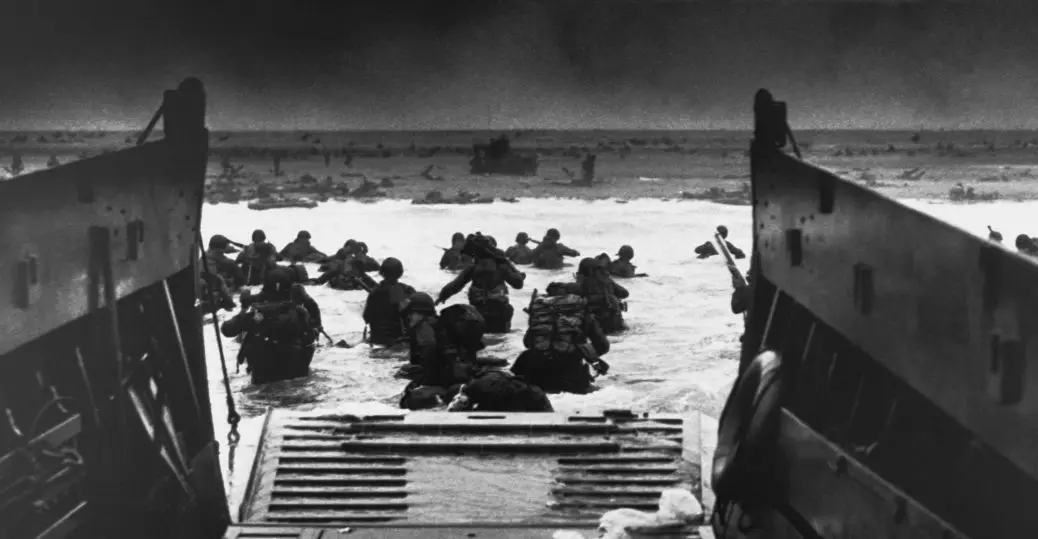
Today, on this day that you're listening to this episode is Veterans Day. We celebrate Veterans Day in this country to demonstrate our appreciation for those who've sacrificed so much for everything we have. And when I think of veterans, obviously, this podcast is meant for veterans. You know, I I shudder to think that I'm included in this group, because there are so many, many amongst you who are listening to the show, and many more who've done so much more than I ever have. And when I think about sacrifice, I think of those young men during World War two who got off of the boats at Normandy on d day and landed in the water to try to run toward a beach with a wall of lead coming at them from embedded machine gun positions.
I think of those airborne troops who dropped behind enemy lines under a hail of bullets, all because they were fighting to save the world. Now they were fighting for our freedom, for The United States, but but they were really fighting to save the world. And what gets my goat about things these days, is that many people, many people, I won't say everybody, there's a in fact, it's probably not most people, but in certain circles here in The United States, become fashionable to think that The United States is not a great country. And the reason why that gets my goat is because those Americans who landed on that beach at Normandy, they didn't know you. They didn't know who you are. They didn't know your ambitions. But they chose to fight.
Many of them chose to die for our freedom and not just at Normandy. You know, when you think of the entire Pacific campaign, landing on the beach at Tarawa, or at Iwo Jima, Okinawa, you know, all of these campaigns from the past, they highlight something about us. And that is that this country was once filled with people willing to sacrifice for the ideal of freedom. Now, my guest today is Michael Reagan. Michael is the son of former president, the late president Ronald Reagan.
And, you know, having him on the show was was a great privilege for me because, one, when I think of his father, I don't just think of a conservative icon. I think of an icon of a man who loved America, who espoused the ideals of America. And that's not a political statement. Whether you agree or disagree with president Ronald Reagan's policies, you can't argue that the man didn't love America. And so I brought Michael on to talk about a project that he's got going on through the Reagan Legacy Foundation, and that's called Walkway to Freedom.
And what Michael is trying to do is to educate Americans on our real history, on the things, the sacrifice that made our country what it is, and that have given us so many things that many of us are not appreciative of. Now, am I saying that The United States is perfect? No. At its inception, of course, we were not perfect. But the ideals laid out in our founding, those are things that we've worked for, we suffered for.
Through the civil war, the thousands who've died during the civil war. You know, the many, many people who suffered through the civil rights movement, trying to bring this country back to its ideals. The United States Of America does exist. It is an ideal. It's something that evolves and that we work for.
And that's the thing about ideals. Right? You might have an ideal self in your head, but that ideal is up there and it's something that you're working for, it's something that you might might never achieve, but the idea is to try to come as close to that ideal as possible. And my point is that, you know, in achieving any ideal, you're never gonna come out perfect. But the fact that you're working for it, the fact that you're willing to sacrifice for it, that is what will make you great.
And that is what makes this country great. The fact that we continue to evolve, we continue to work, and the fact that so many have sacrificed in order to try to bring that ideal to life. And so I hope you enjoy this interview. It's it's one that I took great pleasure in, having the son of of president Reagan on our show. Michael is also a political commentator himself.
We get into numerous subjects on this on this episode. He's been one of the most honest and objective critics, I think, of president Trump coming from the Republican side. And, you know, he's he's not one of these guys who's a never Trumper, he's somebody who simply points out what what can be done better. He's also got a lot of commentary on our culture here in America and and everything that, you know, is going on today. So we had some discussion about that, and I think you'll find this episode very, very interesting.
Beyond that, you know, I want to say to all the veterans out there, everybody who's ever put on a uniform, everybody who's ever served, thank you. Thank you for your service to this country. Thank you for the sacrifices you've made. To the families out there of the fallen, thank you for paying the ultimate sacrifice. And, you know, I wish you a very, very solemn and and awesome Veterans Day.
A day to remember those who've who've paid that sacrifice. Now, for those of you who've never heard this podcast before, my name is Chris Albert, and this is the Warrior Soul podcast. What do we do here? Well, the idea here is to bring tools, tactics, strategies, and ideas to help veterans and anybody else willing to listen to live their best lives. Why do we do this?
Well, because over the past decade and a half of war in The US military veteran community, we faced a lot of very very dark things. A really high suicide rate, a really really high rate of depression, veteran homelessness, and very high rates of chronic disease. And while there's a lot of people out there who want to raise awareness about these issues, and I think it's great, raising awareness is awesome, people need to know about this stuff, but I'm not here to raise awareness, I am here to deliver solutions, to give you strategies, to give you motivation, so that after you're done listening to an episode, you can go out there and apply something to your life. And we do that through three different types of episodes. This here is an interview episode, and that's where I bring out an expert or a commentator to discuss an issue.
We also have our fitness notes episodes, those are published on Wednesdays, and that's where I go into a tactic or an idea to help you with your your physical fitness. Then on Fridays, we we cover mental strength with our Warrior Notes. And those are, you know, tactics and strategies to help you to enjoy your life more, to get more done, to push yourself forward toward that ideal of being a better you. And I don't ask for anything in return here, all I ask for is that you share these episodes out with people. That you give an episode to somebody who who could use it, or who would be interested in it, and that you pay us the highest compliment that you can by writing us a review up on iTunes.
And and that's it, really. And, you know, we do have a sponsor for this show and they help us to make this show possible. They help us to pay with pay for bandwidth. They help us to pay for the software that goes into creating the show. And that is f bomb nutrition.
They are an amazing company. And we are so thankful for them, not only for their amazing products, but for what they do. What do they do? They send boxes of their product overseas to troops on the front line to help them to supplement their MREs. What is their product?
They make awesome, delicious, and nutritious packets of fats. I'm a huge fan of their macadamia nut butters. They mix them up with chocolate, with sea salt, with pecan butter, with coconut butter. They're so good. So good, and there's no sugar in them.
Really, really awesome product. And you can go over to www.dropanfbomb.com and use the code Warrior Soul at checkout to get yours for 20% off your first order. And with that, I want to now step into this Veterans Day conversation with Mr. Michael Reagan to discuss Normandy and why we should all be grateful for the sacrifices that so many made to give us the opportunities that we have in this country today. Michael Reagan, I wanna welcome you to the show today.
Michael Reagan (link to this point)
Good to be with you.
Chris Albert (link to this point)
You know, we're talking today on the the eve of election Tuesday, and this episode is gonna be published on Veterans Day. And it seems like we're at a point in America where a lot of people are kinda detached from our history, and that seems like it's having an impact on us as a people and our society. Would you agree with that?
Michael Reagan (link to this point)
Oh yes, absolutely would agree with it. That we don't teach history, and it's not getting any better. It's getting worse. And if you're going to learn history, it's gonna be a revisionist history of the world where you need to be angry at The United States Of America for the things that we have accomplished, the things that we have done, instead of how The United States Of America has saved the world. They haven't punished the world.
They've saved it.
Chris Albert (link to this point)
Absolutely. And, you know, I was just looking at a video of your father, president Ronald Reagan, and he was the first sitting president to visit Normandy on d day. And, you know, when I think of your father, he was he was an icon, not and a lot of people consider him an icon of of for conservatives, but I think he was an icon for Americans in general. And listening to his speech there and remembering the sacrifice that those young men made on that day, I think that a lot of us don't understand exactly what they went through to save the world, as you put it, and to really save a people who wasn't The United States that they were fighting, that they were liberating at the time, they were liberating a foreign country, but why is it important that we remember that?
Michael Reagan (link to this point)
It is important to remember. We did save the world. I mean, the those boys of Pointe du Hoc, scaling those cliffs. And and you really need to go there and and stand in that spot where my father gave the speech and look at those cliffs and look at the water and you will just walk away in awe that the boys of Pointe du Hoc, scaled those cliffs under unbelievable fire from the Germans and began the process of taking back France and literally saving the world from a German army and Hitler and what have you. So it is so important to teach those things but we don't.
I remember a few years ago I was playing golf with a young man, 28 years old and it was I think the year before the seventieth anniversary of D Day or maybe two years before. And I had been invited to fly to Paris, drive out to Normandy and raise the American flag at the American cemetery. And that's an exciting moment for me to be asked to do that. And here I am playing golf with a young man 28 years old and we're just talking on the golf course. What do you do?
What do you do? And I said, hey, tomorrow I'm leaving Paris, France driving out to Normandy, and I've been asked to raise the American flag on on Sunday morning at the American cemetery. And this 28 year old man looked at me and said, why is there an American cemetery in Normandy? He had no idea why. He never learned why.
And I was just absolutely dumbfounded by that. And I I I looked at him. I said, do you did you think d day was the day your report card came home? Is that what you remember? But he had no idea, no concept about that. I was in Berlin, a few a couple of years before the twentieth anniversary of the fall of the Berlin Wall, and I was walking around the area where they have it all marked out where the Berlin Wall stood, and I was talking to a high school student there who was visiting. I said, what do you know about the Berlin Wall? He said, well, the Americans put it up to keep the communists out of, their sector.
Chris Albert (link to this point)
Oh my god.
Michael Reagan (link to this point)
And I looked at him and said, really? I said, I must have missed that in school someplace. But but, again, it's the lack of of teaching history and not not thinking as it's important as it truly truly is. And and so you have a generation of young high school students believe Americans put it up to keep communists out of their sector because there was nobody there to, in fact, tell him any different. And when I was there a couple years before this the twentieth anniversary of the fall of the wall, there was no mention of Ronald Reagan anywhere, anywhere.
And now because of my foundation, we have a plaque in the ground by the Brandenburg Gate commemorating speech of 06/12/1987. We have a Reagan exhibit at the Checkpoint Charlie or Mauer Museum there in Berlin because I was just absolutely taken aback that my father wasn't mentioned. This kid had no concept, no idea. And we've basically done the same thing now in in Normandy or at Normandy, France, with my father, as you said, the first president to visit Normandy on d day. I mean, there were so many firsts my father put in place.
The first to salute getting on and off air force one and and marine one. I mean, that was the first. Nobody had done that before that time, and now, of course, every president does it.
Chris Albert (link to this point)
Yeah. And I I definitely wanna get into that because, you know, I I remember those words. Mister Gorbachev, tear down this wall. That's a that's a phrase that rings through American history. And it's one of the most iconic phrases of all time.
But, know, for myself, I was lucky in a way lucky and unlucky because I never had a father. But the men that I was exposed to were my grandparents, my grandfathers who were World War two generation. My grandfather served as a US Navy Seabee. And he would tell me he would tell me stories about the way the world was back then. And, you know, I think that there there might be a partial cause here because we're losing the World War two generation.
I mean, just due to age and everything like that. But but what are we missing in our education system? What's going on at the the the primary school, the high school and also the collegiate level now that's causing people to have these real blocks when it comes to understanding our history.
Michael Reagan (link to this point)
Well, what you have is you have, you know, those people who had Haight Ashbury back in the nineteen sixties who are now the professors at the at the universities who are leftists, who've never really uplifted America at all, who have blamed America for everything known to mankind if you will and this is how they're educating the youth of The United States Of America and the world That we've caused the problems, we've caused these things to happen that are happening in the world. And they leave school believing it. You take people who want to say something that is different and tell the other side and you see what happens to them when they go on college campuses, they need armed guards to watch them, they're shouted down, students of the school set fire to the school, bust windows in the school because you know, they don't want another voice to come on campus and say, wait a minute, here's the other side of that story, here's the other side you know of the equation. And and that's what's sad that this is happening in America. And when you think that, you know, you have those who put their lives on line, for this great country for freedom.
If they were alive today, they would cringe with the fact that what they fought for is being torn apart because they're not gonna be and there isn't freedom of speech any longer on a college campus and that high school campuses down to grammar school campuses that nobody wants to hear another opinion about what's going on if it differs from theirs. And so what you have is you have people, you have young people who sometimes don't say anything for fear. They're they'll be flunked out of school. They won't pass the class, whatever it might be.
Chris Albert (link to this point)
Yeah. It seems like we're almost losing our ability to debate and to to have disagreements without hating each other. And, you know, I can think back to to other presidents, you know, you take somebody like like president Kennedy, who who, you know, Democrat party had a a particular way of viewing the world, But that was fundamentally different from a lot of the things you're seeing today on the left. And, you know, I can think of your father, for example, you know, I had the pleasure of working for a member of Congress after I got out of the Marine Corps, and he would tell me stories of meeting with your father, and feeling like, you know, there was nobody else in the world, your father would welcome people in, regardless of their party. I not only heard that from him, who was Republican, but but also from Democrats that when they went to meet with your father, it was as if he made it as if he was they were doing him a favor by coming into the Oval Office and you make them feel welcome and make them feel like like they were there even though they had disagreements.
Michael Reagan (link to this point)
Oh, absolutely. You know, I wrote a book called Lessons My Father Taught Me, and I think you can get it on Amazon. And and I learned about America and learned about the military, learned about the Marine Corps, the Army, the Navy, the Coast Guard. As I drove out to the ranch, my father is a four and five and six and seven and eight and nine and 10 year old out to the ranch we had in Malibu at the time and that's how I learned about America. I mean he would sing to me you know the the Marine Corps hymn, he would sing to me army, the air force, and this this is how I learned about American, about the military.
We there's a lot of people out there that will say, you know, politicians only care about America or care about the military when they're running for office and then they forget. My dad cared about this stuff, he was like the Boy Scout. Sister Maureen and I used to say my dad running for president was like a Boy Scout going for his Eagle badge. I mean, he just really was. He was that Boy Scout kid who was just in awe of other people, was never in awe of himself, in awe of United States Of America and you really look at his speeches, they're unbelievable and he was a great reader.
I tell young people when I go speak, said readers are leaders and my father was a great reader of everything. And one of the great speeches he gave was not only there, Pointe du Hoc, but the speech he gave in Moscow, Moscow University, the last real speech he gave when he visited there and it's a good idea for people to read those, and listen to what he has to say because those things that he was saying then ring true today. If you hear the speech today, it rings absolutely true again. And he was amazing but everybody tells the same story when they met my dad. It's like you're the only person in the room and he spent the time with you, he looked you in the eye and he gave you time and he loved being with people, he used to yank him out of a room because he just wanted to be with people.
Chris Albert (link to this point)
Absolutely, absolutely and those are skills that I think that anybody listening today could apply. I mean just the ability to interact with people and to influence people through your personality, that's something that could help anybody out there and I definitely think it's something we're losing in this day and age where we're communicating more and more across Twitter, across Facebook, across instant messenger and things like that.
Michael Reagan (link to this point)
Well, you know, we're bringing up a generation of hate. Mhmm. You know, you can we can't have debate. I hate you or you hate me. You look at the election taking place, you know, there's a hope that you hate Nancy Pelosi more than you hate Donald Trump.
It's, then you go back, you look at my father, Tip O'Neill didn't agree with my father in any issue known to mankind. But the fact of the matter is Tip O'Neill took the the tax package to the floor that got passed. They found a way at times to work together even though they disagreed with each other. And that really just can't happen today. Social media out there, you know, it it's almost like you're disallowed.
And it doesn't matter which side. You're just left from sitting down with the other side and negotiating anything. And politics is the art of negotiation. That's what it is by definition. But today, you can't negotiate.
And if you do, the fear is to decide that you're on will unelect you and put somebody else in that place.
Chris Albert (link to this point)
You you've been a very, very objective critic of president Trump and and, you know, in a way that that I don't think a lot of people are are criticizing him. I mean, you you you've literally tried to to give some helpful advice, I think, so than than most other political commentators. What what is he doing right, and what is he doing wrong?
Michael Reagan (link to this point)
Well, what he's doing right is everything with the economy. Mhmm. What he's doing wrong is is taking personal. Because attacks are always personal. And so the attacks back are personal.
My dad never made politics personal. It was always about the issues. It wasn't about personal attacks because you have to work with those people again. At some point, you're gonna work with somebody. And if you attack them personally, it's gonna be very hard to sit down with these people later on and and do anything else.
I mean, look at the McCain issue. Now there's people listening going, John McCain isn't wait a minute. You know, the president of The United States said he wasn't a hero and never apologized for that. And when he needed John McCain's vote on health care, he didn't get it. Why?
Never apologized. And I tell people, I said, my father would have gotten the vote from John McCain Mhmm. Because he would have invited John McCain as he invited Tip O'Neill and his wife to the White House for dinner that ultimately gave us the largest tax break in American history, the the president should have invited John McCain and his wife and family to the White House for dinner and apologize to John McCain for saying the things he said about them about him on the campaign trail. And if he would have done that and humbled himself, I think he would have gotten John McCain's vote on Obamacare, the repeal and replace of Obamacare. Now what happens when I say that, what I I get attacked.
Mhmm. You're you're a Trump hater.
Chris Albert (link to this point)
Right.
Michael Reagan (link to this point)
You're anti Trump. You've never been a Trump supporter. It has nothing to do with being a Trump supporter or not being a Trump supporter. It has to do with I'm trying to give you some ideas on how to get that vote so you can get your health care bill passed in the Senate of The United States. But there are so many people who are so thin skinned today that they don't want to accept, you know, any criticism at all or any any ideas of what it might take to to in fact, you know, move forward like I tweeted the other day at Reagan World.
I said, you know, the president would be at 60% approval rating if he didn't tweet and he didn't call people names. He'd probably be at 60%. Mhmm. But he just can't help himself except to, in fact, do those things. And that's and that's and that's sad that he he he does those things, and you only pray that, you know, someday it might change, but I I doubt if it will.
So I I pay attention to what I'm doing with, you know, I do that, but I pay attention also what I'm doing with my, with Reagan Legacy Foundation, my Walkway to Victory and and where I can really, use, put my father out there, where he needs to be, Normandy, Germany, Poland, Gdańsk, Poland and other places that he was so instrumental in bringing freedom to.
Chris Albert (link to this point)
Yeah. And and I think that this goes back to, you know, the subject matter that that we came here to talk about, which is is the walkway to victory at Normandy. And, you know, the idea of working for a purpose that's greater than you. And and the reason why I say that that brings us back to is because when we think about the presidency itself, it's more important than the person who holds the seat. Right?
The presidency as an institution is more important than the person who holds the seat. And when I think back to the day I took my oath of enlistment to join the United States Marine Corps, I realized through that, through my experience at Parris Island, and through my service, the rest of my time in my service that, you know, there were things that were more important than me. There was was an idea that, that this institution, this thing that I was serving is is more important than I am. And I think the question is, how do we get back to that? How do we get back to people serving purposes greater than themselves?
Michael Reagan (link to this point)
That, you know, that all comes from inside someone, all comes from from knowledge, from education. You know, you're gonna learn more about America if you stay off of Twitter and out of social media because it's just an angry group of people there for the most part. Negative, like a negative a lot of negativity, feedback. You need to go. You know what you do?
You go go and get on a plane. Fly to fly to Berlin. Go there. Visit Berlin and understand what these people are going through. Learn learn about that.
Go to go to Normandy, France. Go to Sainte-Mère-Église, Normandy, France. A lot of people don't even know about Sainte-Mère-Église. First time free by American d day. When people got went and saw Saving Private Ryan, they had no idea where the paratroopers are going.
Mhmm. They were all coming in. Where were they going? They're going to Sainte-Mère-Église and that whole area where the bridges were. That's where they were headed.
If people saw The Longest Day, and I'm sure many of your listeners probably seen The Longest Day, you have Red Buttons hanging from a church steeple. You know, you're from a church steeple in Sainte-Mère-Église, Normandy, France. And and and there's a whole story about that. As the first town freed by American, 4AM of the of of d day morning, first town freed by America. The original, you know, when you go visit, Normandy, you visit the American cemetery where I think there's 9,600 graves there.
There used to be 15,000, but they were all spread out throughout Sainte-Mère-Église. And when the French, the Americans made the agreement for a national cemetery, they gave the availability to to the loved ones at home to have their loved ones brought back home to be buried in America instead of going to the American cemetery. That's why there's 9,600 at the American cemetery, but there was 15,000 spread out throughout Sainte-Mère-Église and and that's the whole area. And in fact the wife of the D Day mayor is known as the mother of Normandy because she took care of those grave sites each and every day up until she died. It's a great story.
Instead of asking someone else to tell you the history, you need to go learn the history of those areas and that's why we've worked through my little Reagan Legacy Foundation, that's why we worked so hard at Normandy to uplift those who who parachuted in the airborne eighty second and the one hundred and first and the five zero five and all those glider pilots that came in on D Day and honor them. We have a Ronald Reagan Center we built a couple of years ago there at Sainte-Mère-Église partnering with the Airborne Museum and now we have this Walkway to Victory where people can go online to walkwaytovictory.com and they can purchase a brick in the name of a loved one or someone they knew who fought in the European theater during World War II and they can have a brick inlaid there at the airborne museum. So every place you walk will be the memory of someone who gave their lives, who fought in this fought in the war to bring us freedom.
Chris Albert (link to this point)
Yeah. I think that's so important. And a few weeks ago, we had on captain Dale Dye, who is the military adviser for Saving Private Ryan, the Pacific, and and Band of Brothers. And he's actually creating a movie right now called No Better Place to Die. It's gonna be about the gliders, the the glider pilots who who who came in and and took part in that operation.
Michael Reagan (link to this point)
Yeah, and that's where they were going. Sainte-Mère-Église and know, which you have the Germans flooding the fields and what have you. So a lot of these glider pilots died bringing our men in on that morning and if you go to the airborne museum there at Sainte-Mère-Église, they have a whole area dedicated to those glider pilots and we have a video that we filmed the Reagan Legacy Foundation film that plays there and again that's why we're doing this Walkway to Victory to remember these people and so many others that were the heroes truly of World War two. That European theater was so important.
Chris Albert (link to this point)
Let me let me ask you this because, I've I've been to a number of other places where World War two battles were fought. I I lived on Okinawa as a marine, and and I saw, you know, how difficult it must have been for those those marines to take over that island. When in Normandy, what is the the the feeling amongst those who live there toward the monuments and toward everything, that that that's up there right now?
Michael Reagan (link to this point)
You know, every year on d day, they they in fact honor the one hundred and first and eighty second, the five zero five and what have you. John Nicholson was there on the seventieth anniversary and General John Nicholson was single at that time and we're together the whole time of the anniversary. We had sponsored 25. Here's what's sad is we sponsored 25 D Day vets to go back for the seventieth anniversary of D Day because they couldn't raise the money elsewhere. Think about that.
We have 300,000,000 people living in United States America and they couldn't raise the money to be able to go back for the seventieth anniversary which should most likely it was the last time they would be alive for an anniversary. And so we had some friends come to us, and we raised the money for them to be able to go But the people who live there, the streets are named John Steele, the the red button that's hanging from a church steeple in Sainte-Mère-Église. When you drive in the same area, there's a there's a parachute hanging from the church steeple with, of course, a dummy on the end of it. The the name of that that soldier was John Steele. And just down the street from that from that steeple, from that church is the John Steele restaurant.
The streets are named after those who saved Sainte-Mère-Église and people talk about the French hate Americans go out to Normandy see what happens. They don't mind the monuments at all. They they those those monuments mean something to them. On the seventieth anniversary, one of the young men, 93 years old, that we sponsored to go for the seventieth anniversary jumped out of a plane tandem over Omaha Beach And, when he landed, media went up to him and said to him, how is that? And he looked at me and said it was better than last time they were shooting at me.
Chris Albert (link to this point)
Oh, wow.
Michael Reagan (link to this point)
You know? And then we had we had dinner. An hour later, we're having dinner at the John Steele restaurant at at Sainte-Mère-Église. You go out to La Fière.
La Fière, which is a stone's throw of Sainte-Mère-Église. It is where the the deadliest small arms fire of World War two took place, you know, over the bridges. You know, you had, like, 300 or 400 or 500 dead in a three day period of time. They had to call a truce to collect the bodies of the of the wounded and the dead before they went back to fighting. And on on d day, what they do to honor, the the airborne, they do a flyover in the afternoon over La Fière with the paratroopers bailing out and it's just filled.
Sky is filled with canopies on on d day in the afternoon or the day after to honor the airborne. I mean, it's an amazing place to go, but when you see what they had to go through on the beaches, on those cliffs, that's why we started the Walkway to Victory. People can go to walkwaytovictory.com and order a brick, to honor someone they knew, heard of, who fought in the European theater. They can go to Reagan Legacy Foundation and see it there. We have the video.
People can watch the video we produced for Sainte-Mère-Église and it's to sit there and be able to speak with those people and you know being a Reagan's kind of cool because they love my father and I mean they're in tears when they're talking to me. I'm in tears when I'm talking to them. It's just amazing. You see somebody you know around Veterans Day, D Day, Memorial Day, and what have you, who's wearing a cap from the second World War, Vietnam War, doesn't matter. Give him a hug.
Tell him you love him, you care about him. Because these guys did things that maybe none of us ever would have done.
Chris Albert (link to this point)
Yeah, and I think it's important to know for even those of us who are younger veterans, know, I think of my own service and I'm proud of my service, but what I went through is nothing like what somebody who was storming the Beaches Of Normandy would have went through, or or Tarawa or Okinawa or or Iwo Jima or any of these battles. I think it's important that we remember exactly what these guys did because they literally did save the world.
Michael Reagan (link to this point)
Oh, they did. Oh, they absolutely did. And, you know, you know what people forget when they visit the the Beaches Of Normandy and all that stuff? They forget the 6,000,000 landmines. Yeah.
That's what they forget. You know, all this and landmines? Yep. And you go, wow. And it's it's it's amazing.
You know, the, former lieutenant governor of Texas, blank on the name at this point, but but his his father led the charge from the air on on Omaha Beach and strafed strafed the beach, blowing up those landmines Mhmm. So that so that the men could come come on the beach and begin their process, their their move through Normandy to join up with those who were in Sainte-Mère-Église. His father was the leader from the air. He flew 58 missions during World War two, went home, and he got home. He was home, like, two years, got hit by a taxi cab.
Chris Albert (link to this point)
Oh my god.
Michael Reagan (link to this point)
You tell me. Wow. Yeah. In fact, the museum the museum at Omaha is dedicated to that to that major. Unbelievable.
Chris Albert (link to this point)
Wow. To go through all of that and then and then to have that happen.
Michael Reagan (link to this point)
Get hit by a taxi cab.
Chris Albert (link to this point)
Yeah. Yeah. It's just a it's a crazy thing about life and I've seen
Michael Reagan (link to this point)
And yet but but when you go to you visit all these beaches. I mean, Sword Beach, Omaha Beach. You just you just see them all, and you just you're in awe of what what they accomplished, and that was the world working together against evil.
Chris Albert (link to this point)
Mhmm. Right. Right. And when you think back to that time, you know, we were all Americans. We were all Americans.
And there wasn't there wasn't this hate you see today. There wasn't this divide that you see today. It was it was us standing against evil. And I think there's a notion out there right now that, there is no evil. And and the fact of the matter is that there is.
Michael Reagan (link to this point)
No. No. There's a notion that America is the evil one. Right. Right.
That's the notion because that's what's that's what's being taught. Mhmm. That we're the evil ones and and what have you. And it's, it's like the USS Ronald Reagan. My foundation, Reagan Legacy Foundation, we have a scholarship program for the kids that serve in the USS Ronald Reagan and and their family members who are at home trying to better their education.
We're the only ones that do that. We give thousand dollar scholarships to the men who serve, men and women who serve, and we give $2,000 scholarships that they have a family member at home trying to better their education. And she's now home ported in Tokyo keeping an eye on on North Korea. But I have I have members from my brother Ron, love him to death, but he's very liberal. Mhmm.
And he he he says, I've asked him to go on the Reagan. Says I'll never visit USS Ronald Reagan because it's a weapon of mass destruction. Yeah, I've seen and I go, yeah, but that weapon of mass destruction gives you availability. They have the freedom of speech and freedom to do the things that you do, but he won't go on it. And and that's that's really sad that there are people in the world, whether it's my brother or not, who believe that, you know, our aircraft carriers through our planes or what have you are nothing but weapons of of mass destruction. Mhmm. And they're not.
My father certainly didn't believe that and didn't live that and and so on. So, you know, I I'm honored to carry the legacy of my father in that way to work with the USS Ronald Reagan and have the walkway to victory at Sainte-Mère-Église, Normandy, France to, to build the Ronald Reagan Center at Sainte-Mère-Église and partner with the with the airborne museum there on the things that we do and partner with the ship and what we do in in Berlin.
Chris Albert (link to this point)
Well, let me ask you this because I've got to ask you this because, I'm from New England, I live in California.
Michael Reagan (link to this point)
And that's unfortunate. Yeah, know. I don't know which one's unfortunate, but that's okay. No, they won the world. They won the World Series.
Okay, they did get a good job.
Chris Albert (link to this point)
I, I, I'm a gun owner. I I'm a conservative, and I, you know, I live here in California. And I have to ask you this. Is is there any hope for this state as far as the Republican Party goes?
Michael Reagan (link to this point)
At this point in time, no. I it'd be it's unfortunate is the people who live here now think this is normal. Mhmm. They they weren't here when, you know, California was number one in education. They weren't here to understand that California was the golden state not because of the sunshine but because of opportunity that was given.
And that's what's really sad and again our education system doesn't tell them any different if you will. And so I I don't know if it's gonna change in in my lifetime. Hopefully hopefully, will. But you have a state that's decimating the middle class, decimating industry who's moving out, not in. And so I think it's it got some real problems.
You know, I'm a I'm a hunter, and I'm I'm ticked off that next year I've gotta start using steel shot to hunt birds, which I think is the dumbest thing on the planet. Like, really? And there's I'm still looking for that one needle. The only reason that lead poison birds is because when you hit them, they died, not because they ate the shot when it was on the ground. I mean this is crazy and the laws that they pass here, this is the way they have gun control, let's you know, let's limit the you know what they can use in their shotguns, their rifles, what have you.
And, everybody's concerned about that. But if you're not a hunter, you don't know about this stuff. If you're a hunter, you do know about this stuff. And it's sad you know what's happening to our state and the laws, the fact that we had major fires this year caused by the, by companies, by utility companies who caused these fires, this decimation in the state of California votes to allow the utility companies to raise their rates next year to help, cover the cost of the lawsuits they're going to lose from the lawsuits they're gonna come their way for the fires that they caused. You're going, wait a minute.
So my house burned down because the utility company, you know, started a fire, and I went in court money from the utility company, utility company is now gonna raise my rates to offset the loss they just incurred from my suit. This is nuts, but this is what's acceptable now in the state of California.
Chris Albert (link to this point)
So it's an interesting place to live. I've never seen anything like it in my life.
Michael Reagan (link to this point)
Thank God they have thank God they have weather and the ocean.
Chris Albert (link to this point)
Yeah. Exactly. Exactly.
Michael Reagan (link to this point)
And Weather and the ocean, and my kids and my grandkids are here. So the kids and the grandkids aren't going anywhere. My wife was from Nebraska. She says if they ever move, they may have to come visit her. She says I'm not moving to snow.
I'm not moving to rain. I'm not moving somewhere where there's no ocean, and I'm not gonna move somewhere where they have, like, big mosquitoes. So I'm I'm here. I'm a California girl now. I said, that's that's okay.
That's a good thing.
Chris Albert (link to this point)
Just an understanding that you pay a price for the climate and the and the beauty.
Michael Reagan (link to this point)
Oh, yeah. You pay you pay you pay a price for it and what have you, but it it is it is what it is. And, you know, I've I've I've I was born I was born and raised here. Yeah. I told people I was lucky enough.
My parents didn't meet till they got here. Didn't have to move from somewhere else to get here.
Chris Albert (link to this point)
Mhmm. I have to let you go in a couple of minutes, but I I just wanna ask you one more question because like I told you before we came on, most of our audience here are combat veterans from the US Marine Corps and the US Army. And a lot of them are still young. And a lot of them are trying to to enrich their lives by going to get an education. A lot of them are on these liberal college campuses.
A lot of them are are trying to figure out the way forward in this very confusing time. What advice do you have for those guys out there?
Michael Reagan (link to this point)
Go to school, get your education, and get your diploma. Do that. But in the meantime, read history. Go back and read those history books. When you see my dad, if you go to the Reagan, Reagan Ranch Center, Young America's Foundation has that.
And you see the books that my dad had in his library, he actually read those books. He didn't have them in the library to impress people, he actually read them. As I said earlier, readers are leaders. It's so important that you read the history of that time, of what was going on so you understand it. Don't let the history books of today get in the way of the real history of yesteryear.
Don't let that happen. And it's so important to really do that. And when you have a chance to sit down and talk to one of the old guard, about the military, about what you're doing and feel honored to be able to serve. When I go on the USS Ronald Reagan, you got 19, 20 year old kids on this ship We're saving the world. 19, 20 year old.
I remember when we were home porting there a few years ago, and captain said, take over the helm, Mike. You used to race boats. I go, really? I turned around. There was a young kid there, and I said, how are you, young man?
He said, I'm 19, sir. I said, where are you from? He says, I'm from Kansas, sir. I said, what do you drive back home? He said, well, I don't have a driver's license, sir.
I don't drive back home. I'm thinking to myself, this kid is driving a multibillion dollar aircraft carrier right now but doesn't have a driver's license for a car back home. Interesting. But to meet these kids on the ship and visit them, I'm lucky because I can do that. I mean, I'm lucky.
My dad has a ship named after him, an aircraft carrier. So I'm able to go on that ship and meet the kids on a regular basis even though now she's in Tokyo, not down in San Diego at Coronado. But it's so important to read history and learn history. You want to learn about Ronald Reagan, go to the Ronald Reagan library in Simi Valley, California if you're ever out there. Read some of the really good books.
God and Ronald Reagan is a great book to read about my father. Lessons my father taught me that I wrote. I've written about eight books but that's probably a really good one because it talks about growing up and what he taught me as a young boy. Read those kinds of books that are out there and know and know that I'm out there, my dad's gone, my sister asked me to do what I could to keep my father's legacy and before she passed away and in 2001 Maureen died of melanoma and I said I would and so that's why I have the Reagan Legacy Foundation. You go to reaganlegacyfoundation.org, see what we're doing, go to walkwaytovictory.com and honor someone you met.
You may have only met that person but you know their rank and serial number when they serve and get a brick, it's 250 bucks for a brick and money goes to support the airborne museum in Normandy, France and it goes to support scholarships for the men and women who serve on the USS Ronald Reagan who are out there saving the world. Education, education, education, that is truly the answer to what's going on and you've got to get the right education and it's available but you got to look for it. It's not going to slap you in the face. You got to look for it.
Chris Albert (link to this point)
Absolutely. And those are amazing parting words and we are going to get all the links for all everything up on the show notes for this episode. Michael, I just want to thank you again for coming out here and talking to me, not coming out here and talking to me, we're talking over the phone, but but for getting on with me. And I also want to thank you for the work you're doing and acknowledge you because I think that preserving our history is one of the most important things that that anybody can do and getting people to remember these things. I want to change it from from make America great again to make America grateful again, because I think that's what we truly need to be is grateful for what we have and grateful for what we've been given in this country.
Michael Reagan (link to this point)
Absolutely. You're you're so absolutely right that shining city on the hill my father talked about and and what have you, what I tell young people when I speak at the Young America's Foundation conferences like I did a couple weeks ago. I say, you know something, know what you believe but more important know why you believe it. If you're going to fight the issues, you gotta know why you believe something and by educating yourself correctly, you will start winning battles, not losing battles.
Chris Albert (link to this point)
Absolutely. Michael, thank you so much. And to everybody out there, take these things to heart and get out there and live your best lives while you can.
Host of the Warrior Soul Podcast and founder of Warrior Soul. Worldwide trainer and nutrition coach, contributing author at Testosterone Nation and Muscle and Strength.