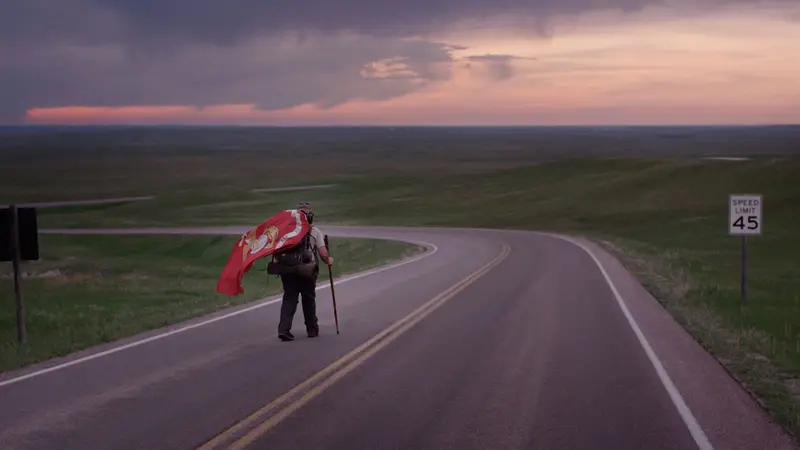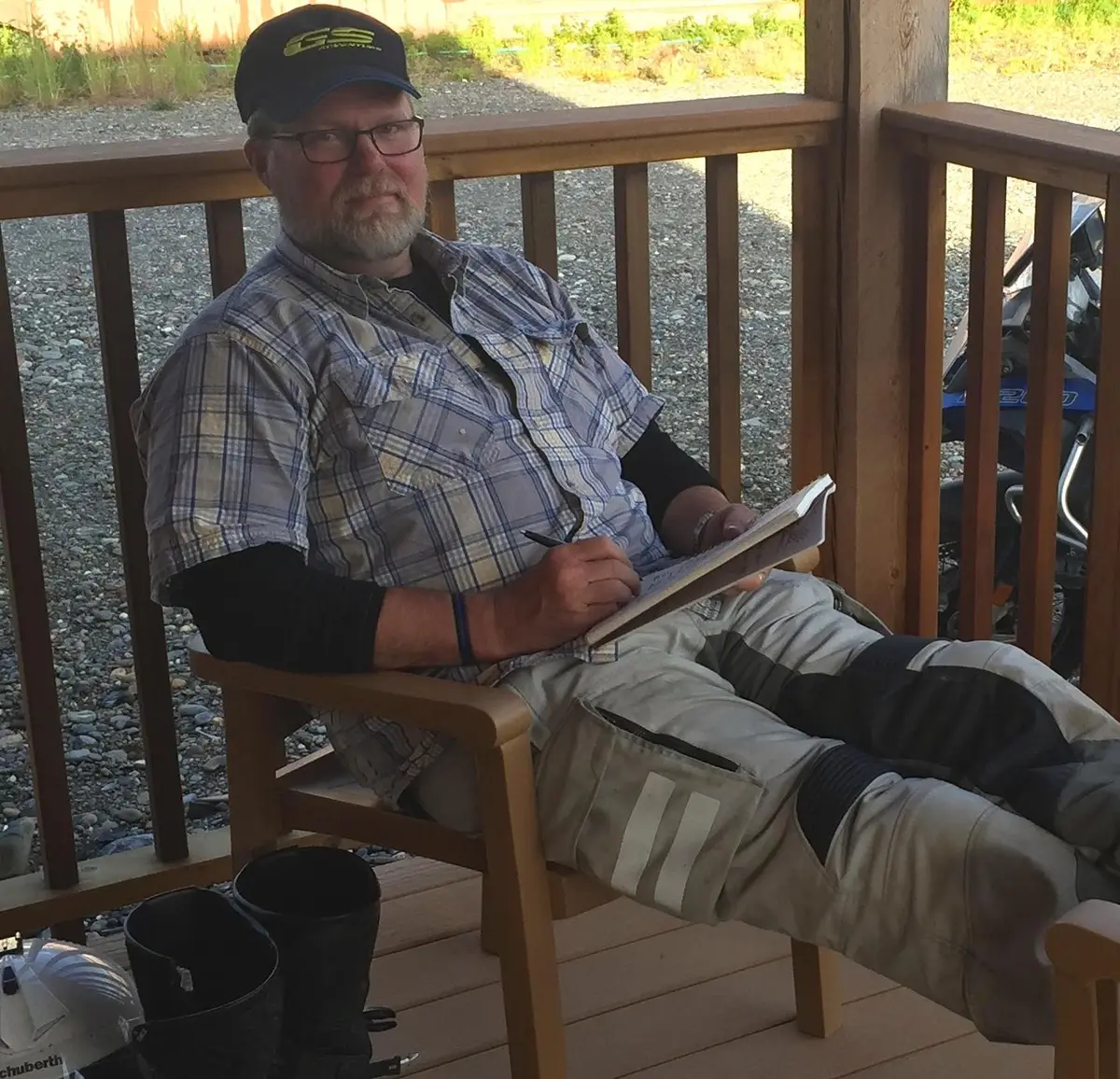
Marc Cameron is a former US Marshall and a current best-selling author who created Arliss Cutter and Jericho Quinn
Author Marc Cameron has written many books including his vastly popular Jericho Quinn and Arliss Cutter series. He’s also taken up the pen to continue Tom Clancy’s work in the Jack Ryan series.
But if there’s any secret to Marc Cameron’s success beyond his extraordinary dedication to his craft, it’s that he’s lived a very full and rich life.
Marc served for decades as a United States Marshall after doing a stint as a local police officer. He comes from the great state of Texas, and chooses to live in the beautiful and wild state of Alaska. He holds a second degree black belt in Jiu Jitsu, and enjoys sailing.
Marc is able to write such amazing stories because he’s created amazing stories for himself throughout his life.
In this episode, you’ll learn how Marc became a top selling novelist, why he chooses Alaska as his home and for the setting of many of his novels, and some amazing life lessons that only experience can bring.
If you would like to learn more about Marc’s work or pick up a copy of his latest book in the Arliss Cutter series, click here: https://marccameronbooks.com/.
Transcript
Machine-generated from the episode audio and lightly edited — may contain errors.
Chris Albert (link to this point)
What is going on, ladies and gentlemen? Welcome to the Warrior Soul podcast. This is where we deliver tools, tactics, strategies, and ideas to help The US military veteran community and anybody else willing to listen to live their absolute best lives. You know, I've been doing this podcast for five years, and I've had the honor to speak to so many great people. People like Nick Koumalatsos and and Pat McNamara, both veterans who are doing amazing things in the civilian world.
I've had the chance to to speak to great authors like Robert Greene, the author of the 48 Laws of Power. I've had a chance to sit down with Grant Cardone and and so many others, you know, Ryan Michler of Order of Man and and so many other great people. Today is no different. I'm speaking to mister Marc Cameron. Marc served for thirty plus years as a US marshal.
And in that time, he went on some great adventures, and what he's done is he's translated that life into a career as a fiction author. If you've heard of Marc, it's probably because you've read one of his novels. He's got the Arliss Cutter series out there. He's got the Jericho Quinn series out there. He's also worked on some of the Tom Clancy series, Jack Ryan.
So, you know, this guy is is a top notch author. He put some great books out there. He's got his latest book out now. It's called Bone Rattle, and that's part of the Arliss Cutter series. But beyond that, this guy is he's just a really interesting fellow.
Really interesting, really awesome fellow too. You know, like I said, he spent a lot of time with the US Marshals. He's got a second degree black belt in jiu-jitsu. This guy is such a great author because he's lived a lot of life, and he studied people. And, you know, today, he came on to talk about his new book, but also to talk about some of the things that go into doing the work he does.
You know, he brings a lot of advice here to the table, and I have to say that this is one of the favorite interviews I've ever done. It was a really great conversation, and he actually said it was one of his favorite interviews too, which, you know, I don't wanna give myself a big head over here, but but I think it was a really, really awesome conversation. You guys are gonna get so much out of this. We're gonna have all the links to Marc's work up on the show notes for this episode at www.warriorsoulagoge.com. That's a g o g e.
And I'm gonna stop yapping my gums over here so we can get into this episode with the author, the man, mister Marc Cameron. Marc Cameron, welcome to the Warrior Soul podcast. How are you doing today, sir?
Marc Cameron (link to this point)
Good. Thanks for having me on, Chris.
Chris Albert (link to this point)
Where are you located right now?
Marc Cameron (link to this point)
I am in my home office in Anchorage, Alaska.
Chris Albert (link to this point)
That's awesome. How is it up there?
Marc Cameron (link to this point)
It's warming up. We're in the mid forties today. Balmy mid forties. I just got back from Texas visiting my mother where it was in the nineties, so I'm happy to be back where it's a little cool.
Chris Albert (link to this point)
I'm in the, the opposite, which is, Fort Lauderdale, Florida right now. So it's good and hot outside.
Marc Cameron (link to this point)
We love coming to visit you in the winter, but we're we're in the kind of the crummy, muddy, dusty season right now that actually I think I talked about it in the beginning of Bone Rattle. Yep. Everything's melting and you've got 60,000 dogs in the city and all their leavens are turned into dust. It's a it's probably I love Alaska, but we call it breakup. And that's my my least favorite time of the year here.
Chris Albert (link to this point)
Yeah. I was reading about that, the breakup, the the land mines that you find from the dogs after the the milk happens and everything like that.
Marc Cameron (link to this point)
That's right. Everything's so beautiful when it snows, but then you you learn as things recede and melt that things are not quite what they seem. Yeah. So
Chris Albert (link to this point)
I I grew up in Connecticut, and then I did a lot of Arctic cold weather training when I was in the Marine Corps. And I I I grew to absolutely hate the cold. So when I had the choice to move somewhere, I said, I'm I'm gonna go somewhere where I'm never gonna be cold again. So Yep.
Marc Cameron (link to this point)
I I hear you. I I grew up in Texas where it was super hot, and I'm not I'm I'm the opposite. I can put on a lot of clothes. Of course, I wouldn't have to do marine corps stuff and going out and, you know, hardship in it and doing that sort of thing. So we I I love the cold.
Chris Albert (link to this point)
Yeah. Well, you did serve in the in the US marshals for over twenty years. Prior to that, I know you're a police officer, a local police officer. And and, you know, you got into writing, and and you took over for Tom Clancy, on a few of those books there, and and you've got your own series here. You have this Arliss Cutter series and a few others.
How'd you get into writing?
Marc Cameron (link to this point)
No. I really wanted to write since I was a little kid. I we took a lot of road trips when I was a boy and it was just me and my sister for the first fifteen years where I had a couple of brothers, three brothers come along. We'd take road trips and my father was a storyteller himself and he but he didn't like the radio on in the car. He liked it quiet.
And so I I spent a lot of time on long road trips in the back of my dad's Plymouth Valiant writing just to entertain myself because there wasn't any music playing and they were, you know, two or three days of driving and I really kinda my mom kept me supplied in pencils and legal pads and I just always loved to write. So when I got into law enforcement, you've been around, you know, police before, I'm sure and military folks as well, we're kind of living the kind of life where it lends itself to stories. And so I get a a real kick out of kinda hanging out, listening to other people's tales. And, it just sort of naturally the the the transition took a while. I mean, I I spent twenty years writing and getting rejection letters, but the transition to wanting to write and writing, you know, while I was working was pretty smooth.
Chris Albert (link to this point)
I gotta ask you about that. You know, those rejection letters, I've written stuff before, not not in the length of a book, but I've written a lot of articles and things like that. And, you know, I also did some some graduate work, was in a PhD program. And one of the most isolating things, in the world for me was writing. And and I can imagine for you getting those rejection letters, rejection letter after rejection letter, what what kept you going during that time period?
What was what was the thing that that made you really, really wanna push there?
Marc Cameron (link to this point)
That's a good question. And I I guess the the short answer is I wasn't writing to get published. I was writing because I enjoyed writing. I wanted to get published. And to me, especially by the time I got on with the marshal service, I had a good job.
I'm quoted all the time as saying that being a successful novelist is the second best job in the world. Being a deputy marshal was I miss it all the time. It was the best job for me that I could have ever had. And so during that whole time when I know, really the kudos should go out to my wife because I would come home and like you said, it's kind of isolating you. I would go in and when other family things were going on, I mean, love my kids, I love my wife and we'd do things together, but every spare moment I had, I was with the you know, with my typewriter.
And these I was writing on a typewriter that my wife gave me back in 1984. So I just enjoyed the process. I enjoyed telling stories and kind of use those, you know, I'd read, the book hadn't been written then, but like books like Stephen King's On Writing, where he talked about his rejection letters and other writers and how they got rejected. Most, I should say every because I know a couple of kind of immediate success stories, but it's very rare. You write and plus writers, well, you've written articles and short things as well.
And it it's harder to write short stuff than it is a novel. What did, Thomas Jefferson say? You know, I'd written you a shorter letter, but I didn't have the time. It's it takes time to craft something concise. And with a novel, can in fact, my novels always end up 10,000 words longer than the published book because I go and I excise things.
I think most novelists do that. So I just use those stories from other writers, to to kinda realize this is all part of the process. The rejection letters are part of the process. And actually the Arliss Cutter books came about actually the Jericho Quinn series came about because of a rejection letter I got from a major, New York publisher. I'd already had some westerns out under the pen name Mark Henry.
And my agent, I wrote some western or some thrillers about Alaska. And my agent Robin Rue with Writers House, who's a fantastic agent. She's been my literary agent now for seventeen years. She couldn't sell them. And, you know, I couldn't blame her, but the the books were maybe you know, I was still learning to write a thriller type novel, but I got a bunch of rejection letters.
And I and up to that point, I had a drawer full from articles I'd written and short stories. But I got this rejection letter from this large publisher, editor at this large publishing house, and it was a page and a half long. And as you know, if you've ever gotten one, rejection notes are usually the tiny little line. They could get 25 of them on each sheet of paper, and they come sort of fluttering out of the envelope that you provided for your own sword to fall on. And, but this rejection letter was very effusive in its praise of my writing, not my book, but my writing style, and went on to say what I should be writing.
You need to write something over the top. Think of Jason Bourne. With your background in marshal service, you should think about this. Geopolitical. And then he ended the the editor acquiring editor ended the note by saying, and really, who cares about Alaska?
This is back in the early two thousands. And who cares about and my protagonist were some Alaska native kids and indigenous folks. And and he said, who cares about Alaska? And readers are really not gonna warm to these Alaska native kids. And it really upset me, made me mad because this was where I live.
This is what I enjoyed storytelling about. But I went and wrote this kind of over the top series about a OSI agent that rides a motorcycle and has a Marine Corps gunnery Sergeant buddy. Fun book to write, but I thought it would be a one off. I'd write Jason Bourne, kinda James Bond esque kinda thing. And they bought the series and we've done 10.
And those books actually became the the the avenue that I got the Clancy books for. But then ten, eleven, 12 books down the road, I was able to sell enough books, get the publishers to bully. Plus The United States or the world fell in love with Alaska and that changed. We got, I don't know how many reality shows are being filmed up here at any one time. And I was able to rework those first books and change some of the plots around and use some of the things I knew that I got rejections on. And those became the Arliss Cutter series.
Chris Albert (link to this point)
That's amazing. That's amazing. Do you think, know, had you not been a writer, do you think transitioning out of the marshal service would have been a lot more difficult for you? The reason I asked that is because our audience here, you know, mostly veterans who've done their service, they're getting out now or they've been out for a while. A lot of them are looking for their next thing.
How did it help you in that way?
Marc Cameron (link to this point)
That's a you know, I'm so glad you asked that question because I have friends in the military. Clancy books give me sort of open doors into military folks. And I won't say what his actual job was, but he was a very elite high up guy that's getting out as a officer that commanded a lot of really elite folks. And we've sort of compared notes because I was the chief here. And there's a real you know, my my youngest son is a SWAT operator.
He's a sniper. He's loves his job. He's got all these buddies. And, you know, SWAT teams, they have, like, you know, a red team and a blue team. And I go out and talk to his buddies, I'm, you know, I'm part of the gray team.
I'm gone. I'm not. They don't wanna hear my war stories. I'm the old dude that carried a six eighty six revolver. I'm not relevant anymore.
Or you could think that. Right? And so I have a lot of talks with my retiring friends in the military and law enforcement. It's really easy to tell yourself that lie that you're not relevant because you're not doing the same job. But the truth is you just have to find something that not to make you relevant because you already are.
You just have to find something that reminds you of that relevance. And for me, was writing and helping other people tend to a podcast like you got going that serves other people reminds you of your relevance when it comes to other human beings. And really the military, the law enforcement, it's all a people business. And we are, you know, in in the in the our job is to protect the people we love. Go about it in different ways.
You know, our our missions are different, but not being able to do that, and being kinda ripping the Band Aid off is is hard. It it it sounds like you've chatted with folks, maybe you had some of that.
Chris Albert (link to this point)
A whole lot. A whole lot. Absolutely. You know, and that's one of the things I mean, I I talk to guys all the time, and, a lot of them are trying to get back into contracting or or or or trying to kinda relive this life that they once had in their older years. And, you know, I think, you know, to some extent, that could be a way, but there's also another way, which is trying to remake yourself and trying to find the next mission. And and, you know, coming of age, I guess, the best word for it is gracefully, you know, and and, you know, not trying to hold on to this thing that just doesn't exist anymore. You know?
Marc Cameron (link to this point)
No. Absolutely. That's exactly right. Not not that next mission is a perfect you should write a book because that that is a perfect description of what we should be doing.
Chris Albert (link to this point)
Absolutely. Absolutely. The you know, take it thinking about your characters and and and the type of people that you write about and hear the stories that you create, how do you come up with the characters? How do you come up with those personalities and and think about all the details and intricacies of a human being? Because that's essentially what you're doing.
You're creating a human being, right, out of your imagination. How does that come about?
Marc Cameron (link to this point)
And, you know, they don't come about out of whole cloth. It's it's it's about observation. And you you know, we we come across interesting folks all the time, whether law enforcement, it might be the quote unquote bad guys, the outlaws that we deal with, the people that we've that I've worked with, you know, shoulder to shoulder, the the bad bosses, the the really good bosses, the jerks in the back, you know, in the backroom, in the squad room that no other deputy could get along with because they were just constantly making weird decisions. And but you you learn from everybody, and I sort of, I mean, I took mental notes, but I took notes notes. And not that I based any one character on any one individual, but I certainly looked at the human condition you talked about, what makes people tick.
And I think that's a real I get asked the question a lot about, from writers now, from people wanting to write and learning to write. And I the advice I always give is just to get your nose out of your smartphone. We've stopped. I just flew back from Texas, as I mentioned, to visit my mom and sister. My son's in the Air Force in Lackland going through his medical residency.
And so we're visiting the grandkids after a year and some months because of COVID for the first time. But I noticed walking through the airport, nobody's looking around. Everybody's been overlooking at their phones, sort of air hockey bumping off each other as they're walking kind of automaton. And I'm guilty of looking at my phone more than I should, but I may get a point when I'm in public like that to stand back against the wall and watch people. And that's what I did growing I I tell everybody being a deputy marshal and a a uniformed police officer and detective and all that, particularly being a deputy marshal because the quote unquote boring stuff that we do, like hauling prisoners across the country in a caged sedan, you learn a lot about human nature when you got two of them in the backseat of your Chevy Caprice, and you're listening to them talk, and they're chatting with you, and they get bored.
And so you talk as human beings. And, it's it's thriller writer one zero one. I mean, it it's just learning about people.
Chris Albert (link to this point)
Absolutely. Yeah. I mean, I it always bugs me out when I see how much people aren't paying attention to their surroundings. You know? And my job right now, I work in a factory.
So we get a lot of young guys in here and they're just not aware. If you're not aware in a factory, you could you could come out of the factory missing parts that you had when you went in there. So
Marc Cameron (link to this point)
Yeah.
Chris Albert (link to this point)
Absolutely. So that that that's something that that really bugs me out. But also in public, you know, I look around at people when I'm stopped at intersections, and they're literally, like, dazed out or they're looking at their phone. And you never know what's gonna happen. I mean, I I I just don't get that.
Marc Cameron (link to this point)
Nope, I agree. I agree. A 100% our kids, I would harp at my kids all the time about plugging up their ears with their earphones while they walk the dog or just were out and about and just being aware and, you know, and it's like you mentioned, being out in public, you never know what's gonna happen. It's a safety issue, but I think it's a safety issue for our psyche too. We need to be present in what's going on around us.
And I think that's something that people are lacking a bit now, myself included more than I used to be.
Chris Albert (link to this point)
Tell me a little bit about your latest book here, Bone Rattle. It's come out. What's the story there?
Marc Cameron (link to this point)
Yeah. So the this is the third in the Arliss Cutter series. Arliss Cutter is a former army ranger who I mean, the little backstory of him is that when he was 16 years old, he he met a beautiful young 16 year old girl in Florida, in Minnesota Key out when he was swimming with his brother who's older than him. And the brother was cooler and taller and smoother, and she married the brother. And so in the beginning of this series, Arliss has been married four times. He's been to the mill he's been in the military.
Some tough stuff happened to him in Afghanistan, but he's come back to work with the marshal service. Some things have happened in his life, and I've met people like this. I'm kind of one of these people. I don't let bad, like, bullying behavior stand, and he's the kind of guy that just draws a line very clearly that doesn't matter if it's his job or whatever is in jeopardy, he's gonna stop that kind of bullying behavior. So he's he's kind of a a brash guy.
His brother gets killed. He has to move up to Alaska to help take care of his sister-in-law, who he still has carried a torch for, and her children. So he's fish out of water, this Florida boy in Alaska, having to stay in the same house with a girl that married his brother and take care of her kids. And then he comes up against various mysteries along the way. But he's he's tall, he's gruff, he's he's kinda quiet and taciturn, and he's got this really loud kind of obnoxious, but in a sweet way, Polynesian gal that's his partner named Lola.
And she's just a super good partner to sort of rein him in when he needs reining in. But she also provides a foil so that he can teach her man hunting, tracking, all that kind of stuff. So the books generally deal with some different part of Alaska. I've been on personally on tracking missions down in Southeast Alaska where a guy chopped another guy's head off and fled into the woods. And we tracked him for three days before we found him. And up on the North Slope, Garden Judges was the second one.
And, this one has to do with some political issues down in, Juneau, which is our state capital. And you can't get to it by car. The joke is that the only three ways to get to Juneau, Alaska are by plane boat or birth canal. And so, that sort of isolates things. And so marshals, because of our duties, deputy marshals can can enforce any federal law, and we can also assist locals.
And so I just sort of work from that, and he ends up assisting the state troopers in the Juneau Police Department and going after some really creepy violent criminals that are that have a native, Alaskan native bone rattle that's worth a lot of money and sort of the hunt for that. So it's an adventure story that I hope, you know, I I want it to be a page turner that people like the adventure, but the characters to me are very real. And the and Alaska itself is a real character with the weather and the the, just the vastness and the isolation of it. Because I we've lived here twenty two years, and if I can write a story that makes people want to come to Alaska but feel a little bit of trepidation because it's such a wild place, then I've done my job. We we always joke that, you know, in Alaska is a great place because you step out of the RV and into the food chain.
So
Chris Albert (link to this point)
That's awesome. That's awesome. I flew into Juneau once on the way back from Okinawa. And, I remember I think the plane took, like, a little bit of a a steeper, decline into the airport because of the mountains surrounding it. Right?
Marc Cameron (link to this point)
Yeah. Yeah. Yeah. The big glacier right there. And, yeah, it's a cool approach into Juneau.
Beautiful.
Chris Albert (link to this point)
That's awesome. That's awesome. With, when you talk about Alaska as a character, you know, you're you're from these these two, you know, I guess you could say, what's the word for Texas and Alaska? They're they're two states with personalities. Right?
You know? I was from Connecticut growing up. Nobody's gonna get a tattoo of Connecticut or anything like that. I think I saw one person with a tattoo of Connecticut, I was like, what are you doing? But, but Alaska, you know, or or Texas, being from either one of those places says something about you. And and what's that like for you, you know, being a Texan in in Alaska and and and also, I guess, at at this point, also considering yourself a full full blown Alaskan.
Marc Cameron (link to this point)
Yeah. You know, it's it's, it's kind of fun. We joke about it up here. The there's a when I first moved up here, you know, pipeline's been going for decades now, but, there's a lot of Southern folks up here that, you know, oil men and women that work on the oil, you know, on the North Slope. And up here, they just call it the slope.
You're a slope worker. Many of my friends work up on the slope. But there's a old joke that still told that happiness to an Alaskan is watching a a Texan leave with an Oklahoman under each arm. You know? But but now there's very few people that were born here.
And, you know, I mean, I shouldn't say there's few, but I think the people like me have sort of overwhelmed the Alaskans that were born here and went to school here. And if I just went by the number of people, my friends that were actually born here, and I do have a few. But we do we do joke about it a bit. I I talked to my friends in Texas. I have a t shirt that's got a picture of Alaska with this tiny little scale sized Texas on it, and it it says, you know, Alaska pissing off Texas since 1959 because now we're the, you know, we're the biggest state now.
Right? But I still hold allegiance to Texas as far as, you know, that's my home and I stayed and I love the people there, but Alaska gets in your blood. And, it is a bigger, a larger than life both of them are larger than life states with real personalities that you know, in Texas, if you start in McAllen and drive north, it could take you more than a day to get out through the Panhandle. And Yeah. Alaska, you can't even same way except a couple of days, and you can't even get there by by car.
Chris Albert (link to this point)
What do you do when you're when you're not writing? I know, you're a martial artist. You practice jiu-jitsu. Right?
Marc Cameron (link to this point)
Mhmm. Yeah. And, you know, less and less practice, the older I get. Jiu-jitsu is one of those beautiful arts that it's the pliant way. So I still stay involved in strategy and I work out. I don't I don't mix it up on the mats like I used to, but I a little bit and roll around, you know, practice arrest techniques with my sons and grandkids and whatnot.
But I consider myself kind of a tactical grandpa now, so I like to stay tactically aware. I you're rarely will you ever see me in, anything that looks like a, you know, shoot me first vest or shirt or pants or Oakley glasses or anything like that. There's nothing wrong with that. I just don't wanna look like I need every advantage I can get if the crab hits the fan. And so I wanna look as much like the grandpa that I am so that if I need to do something, I can keep my strategy.
But I enjoy sailing. We have beautiful waters up here for sailing and I enjoy motorcycle trips. I've ridden up and down the Alaska Highway many times, on a BMW GS Adventure, one of the bigger kinda like the the suburban of the, you know, the Chevy Suburban of the BMW motorcycle world. I and I I rode it a couple of years ago, rode it with my youngest son. He rode it on a Triumph Scrambler, and I had the big old GS.
But all those things I Oh, and I fish, love to fly fish. We fill the freezer up here with meat. My wife fills a freezer with fish and I fill the other one with red meat. So we're very avid outdoorsman. I still love to track and get out anything outdoors, but there's really not a time that I'm not riding.
If my son and I have done some remote adventures and that we've flown into and he takes pictures of me. Still, at least for a couple hours a day, it's sort of a illness with me, I guess. I've just got to create a little bit.
Chris Albert (link to this point)
What's your typical daily schedule like?
Marc Cameron (link to this point)
So my office is just right across the hall from our bedroom. So I get up. Whenever I wake up, I go ahead and get up. And, the older I get, the earlier that is. And I try to get some writing done before I check any emails or anything like that.
And, you know, write for a couple of hours. And then one of the things that I really try to do, and I didn't make this up, I think Hemingway did it this way. Elmore Leonard did it this way. I try to end my writing day on some sort of rising action. So metaphorically speaking on the back swing of a punch.
So that the next sentence I write is the punch landing or the the chase, you know, in the middle of the chase, car, boat, foot pursuit, whatever. Something where there's action. So that when I sit back down the next morning, I'm starting right where I already knew I was going and get that writing blood going, if you will. And then if I have know, cause I don't write like writing exposition, but you have to in a book, you have to do some explaining and pointing things out. But if I I just noticed about myself that if I can get going and sort of first rattle out of the box, write some action.
And then I try to write about 2,000 words a day. I'll take a break in the middle of the day, do some research, answer emails. And I've kind of learned that if I have action and I write in this fight scene or chase scene or tense action scene, it doesn't have to necessarily be physical action, but some tension. And if I write 2,000 words and I haven't got to another action scene, then my plotting is off and my timing is off. I need to reevaluate the way I'm telling the story.
Chris Albert (link to this point)
Gotcha.
Marc Cameron (link to this point)
And then I and then I generally edit a little bit in the afternoon, do some more research, and then spend time doing family things. And then I'll write a little bit in the night or read. With the Tom Clancys especially, I do a lot of reading and interviewing and studying. And for the Arliss Cutters as well because I don't know everything about all the different parts of Alaska. So I like to call and talk to people that are there and pick their brains.
Chris Albert (link to this point)
That's that's really I always find it so interesting to see, you know, how people set up their days because, everybody's different, but you also see certain patterns amongst successful people, particularly writers. You know? And I I've heard that before, you know, try to try to end off on a rising action or or, you know, so that you can get right back into it the next day and set yourself up for success the next day.
Marc Cameron (link to this point)
Yeah. Because it's so easy, especially in this day and age. And I had and Bone Rattle came out Tuesday. And so luckily, everybody's talking about it. It's it would and and I would say, I don't read my reviews.
I don't I don't see any good in that. It's like knowing your IQ. If if you're really smart, then you get, you know, sort of a big head. And if you're not really smart, you get depressed. And reviews, I love to get reviews, and I I'm glad for people to send in reviews for other readers.
But I don't I don't write to the reviews because frankly, by the time people read Bone Rattle, I've already finished the fourth one. It's it's in the editor's hands, and I'm working on another Tom Clancy. So I'm at least a book and a half, sometimes two books down the road. And
Chris Albert (link to this point)
Oh, wow.
Marc Cameron (link to this point)
So I it doesn't do me any good, and I can read.
And I have such a I think many writers have kind of an impostor syndrome where we're always terrified that people are gonna come to their senses and realize, oh, well, that guy's an idiot. So I could get 55 star reviews and not believe them. And I get one one or two star review and it it upsets me. Not Yeah. You know, I just I just makes me feel sad for a little while, and I shouldn't be that way.
I should be more resilient. But I know that about myself, and I learned it from the first couple of books. So I don't bother myself with that. So but even with that, with Bone Rattle coming out, I can answer emails. I can go to Instagram.
I can go to Twitter. I can go to Facebook and do an endless circle of not doing any writing, but answering messages and checking on what I posted here and responding. And it it it will it will kill you as a writer. It just completely dams your forward progression. So I have to be on social media, but I loathe it and stay away from it as much as I can as a writer.
Chris Albert (link to this point)
Same here. I can't stand it, but I gotta be on there.
Marc Cameron (link to this point)
Yeah. Exactly. We have to be. One of the things as far as timing, and this is the it's not a secret. It's an obvious thing, but it's the thing that's helped me the most in my life, really.
I had a professor in college, a theater professor. My wife and I met in the theater, and she actually thought I was gonna be a theater professor when we were getting married instead of a copper, but I tricked her and became a cop instead. But I had this theater professor and he took I guess he saw that I was kind of a procrastinator. And he took me off to the side when I was a freshman in college. And he said, Marc, you will never amount to your full potential unless you learn to utilize those fifteen minute segments of time that everybody else wastes.
And so many of my great swaths of my book have been written while I was waiting for an airplane or
Chris Albert (link to this point)
Wow.
Marc Cameron (link to this point)
When the jury was in the deliberation, and I had to sit outside in the hallway as a young deputy, you know, with a notepad, and I would have an idea. And instead of killing time or playing video poker or Words With Friends or whatever or Angry Birds, I wrote a scene. And it doesn't take long if you do that all the time with those fifteen or twenty minute because it's easy to say, well, you know, I just play Minesweeper or whatever. Yeah. It's it's easy to fritter those away, but you add that up, you get a heck of a lot done.
Chris Albert (link to this point)
Yeah. Absolutely. Absolutely. And it's a a a big thing that I learned over my times, particularly right now, you know, we're in a company with with very little time. I've gotta I gotta fit things in when I can, you know.
Right now, I'm I'm doing this while my guys are on a break. So I'm like
Marc Cameron (link to this point)
Yeah. Exactly. Exactly.
Chris Albert (link to this point)
Well, that's awesome, Marc. I, you know, I really appreciate you coming on here. You know, like I said, our audience out there, they're they're they're mostly veterans who who are getting out or or or been out for a while. They're looking for that next thing. What piece of advice would you give them as they're trying to find that next mission?
Marc Cameron (link to this point)
You know, for me, my my wife, she knew it was gonna be hard for me, and so she sent me we were fortunate enough with the writing. She sent me out of the country. She said, Marc, go to Japan and research this book and get completely away from what you were doing before. But obviously, not everybody can do that. But I would look for ways to to serve other people.
Go out and try to you know, people that wanna go into, like you said earlier, contracting or things like that, that's like the other job. Good good on them. That's great. We need that. But there's sometimes it's it's, for myself and for friends of mine, it's healthier to look at other venues for that next mission you were talking about.
And I think I think stuff like you're doing where people talk about it and getting with friends that are you know, the the Central Intelligence Agency does a fantastic job of according to my friends, of walking people out the door, getting them ready to go, sort of of inoculating them, if you will, of what it's gonna be like on the outside world. And one of my acquaintances named Gary Schroen, he wrote a book called First In. He was the guy that was Jawbreaker that went over after nine eleven and basically got everything ready for the people that became the horse soldiers, the a teams that came over and worked with the Northern Alliance. Well, that book begins when he's 57 years old and about to retire. So and then it talks about them asking him to stay and him going to do this and then retiring.
There's plenty of life out there after you retire. It may not be the same thing, but I think talking to folks like you, talking to peers that have gone before, it reminds us that we're relevant and still have something to offer. And anything that somebody can do to remember that they're relevant and important and have things to offer. I don't think it matters what job they go into.
Chris Albert (link to this point)
Yeah.
Marc Cameron (link to this point)
Whether, you know, creativity is I'm surprised. I'm amazed at how many well, another very good friend of mine is a retired lieutenant colonel from the Marine Corps, Rip Rawlings, and he's become a novelist. And we've worked together on some things. He wrote a fantastic book with Mark Greaney called Red Metal, and he's had to make that. He's a lieutenant colonel in the Marine Corps, commanded a lot of folks, and now he's retired.
So he's writing. So he's done something artistic. I mean, other people start businesses. It doesn't matter. You just you gotta get this headspace right first, and I think I see that talking to you that you understand that.
Chris Albert (link to this point)
Yeah. Yeah. That's, I mean, that's something I've it it honestly is a hard lesson to learn. I mean, it took a lot of time and, you know, had to had to really work on myself, had to figure things out a lot, and that is what this show is about is is helping guys figure that out and and and talking to people like you who've been through so much and who have accomplished so much that I think that helps helps people out a lot too.
Marc Cameron (link to this point)
Well, good on you for doing it because it's harder than people believe. I I talked to folks right before they retire and warn them, and to a person, they come back and say, oh my gosh, you were absolutely right. I had no idea that it was gonna be this emotional.
Chris Albert (link to this point)
Mhmm.
Marc Cameron (link to this point)
Because, I mean, you you go from one day, you're, you know, part of the team, you got a top secret clearance, you got a red badge, you got your m four or whatever. And the next day, it's almost like your Chuck Connors marched out of the gate with your sword broken and your bow they don't say that, but you feel like an outsider.
Chris Albert (link to this point)
Yeah.
Marc Cameron (link to this point)
It's it's it's tough. But it happens to it happens to everybody. Yep.
Chris Albert (link to this point)
And it's nothing it's not even the the the tragedy. I think it's the emptiness that follows. Right? It's like, that's the thing. It's like staring at a blank wall or or trying to figure out how you feel like there's more pages to be written, but you're having trouble filling the page.
Marc Cameron (link to this point)
Yeah. Exactly. Exactly.
Chris Albert (link to this point)
So well, Marc, again, I wanna thank you so much. Where can people follow you on? You said you you had a Twitter account, you had an Instagram account. Where where's the best place for people to follow you and keep up with you and your writing?
Marc Cameron (link to this point)
Yeah. So on Twitter, I'm just mark mark cameron one, the number numeral one. On Instagram, I'm Marc Cameron Books, and on Facebook, I'm Marc Cameron Books. Then I have a website. They can email me through the website, but they're gonna see I I keep people up to date on book releases and stuff, but mostly on my social media, they're gonna see pics of Alaska and adventures and my grandkids.
Because I just I don't wanna be the kind of guy that totally overwhelms people with buy my book, buy my book, buy my book. So
Chris Albert (link to this point)
Yeah. No. Absolutely. And and you live in a great place, so so filling up with pictures like that. That's awesome. And, you know, the big biggest thing I'm getting from you here is that, you know, I think you became a writer through living, you know, through through living life.
And and you're telling people to get out there and live life. And and from that, you'll amazing stories. Right?
Marc Cameron (link to this point)
Absolutely. Absolutely. Even if that story is just your own story, it's it's worth it to get out and do some
Chris Albert (link to this point)
That's awesome. Well, again, Marc, I wanna thank you so much for coming on. I wanna thank you for doing what you do. And, you know, to everybody out there, I hope you got a lot out of this interview. We'll have all the links up for Marc's books, Marc's social media followings, and his website up on our website when we publish this episode. And, you know, take this advice to heart, people.
Get out there, live your best lives while you can. And thanks again, Marc.
Marc Cameron (link to this point)
Thank you, Chris. I appreciate it. Thanks for what you do.
Chris Albert (link to this point)
Take care, everybody. Alright, guys. There you have it. That is an outstanding conversation with mister Marc Cameron. Like I said before, we're gonna have all of the links to Marc's work up on the show notes for this episode at www.warriorsoulagoge.com.
That's a g o g e. And, man, I hope you got a lot out of this. I know I did. It was really great talking with Marc, and I've been diving into his book Bone Rattle, which I think you definitely should. There's both an audio version and the hard copy.
You can check those out. And with that, guys, you know, like I said before, get out there and live. Right? Marc's been able to do what he's done because he's had such a full life, and he gets to understand things about human beings that most people wouldn't because of what he's done. And if you go out there and you live, you are going to have some things to talk about.
So don't hesitate. Just get out there and do it. This is Chris Albert with the Warrior Soul podcast, and I am out.
Host of the Warrior Soul Podcast and founder of Warrior Soul. Worldwide trainer and nutrition coach, contributing author at Testosterone Nation and Muscle and Strength.