Podcast episode
Walking the Bastards’ Road with Jonathan Hancock
Hosted by Chris Albert
The Warrior Soul Podcast
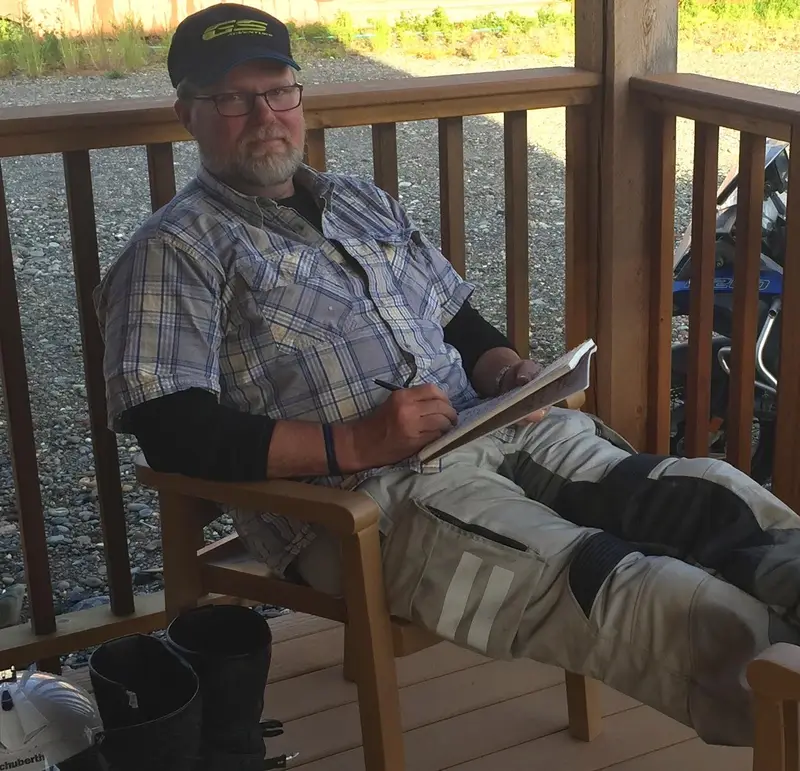
Jonathan Hancock is a US Marine Corps Combat Veteran who walked around the United States in an effort to deal with his PTSD. He is the subject of the movie Bastards' Road.
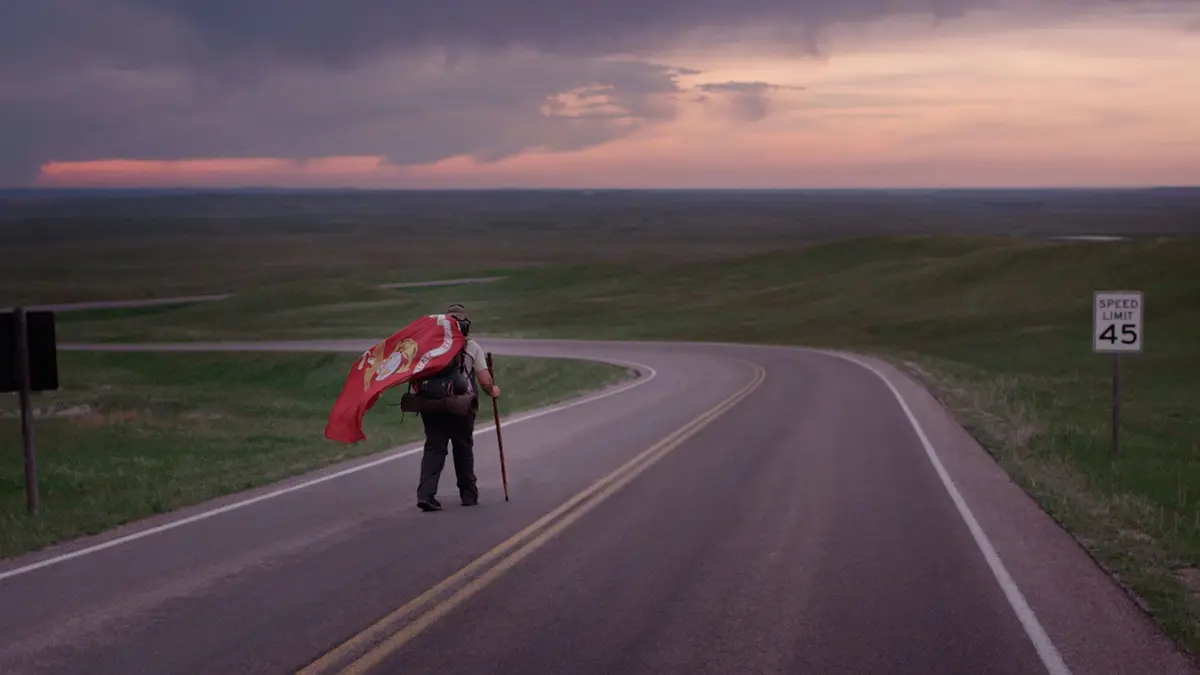
Bastards’ Road is a documentary that follows US Marine Combat Veteran Jonathan Hancock on his walk across the United States visiting his fellow Marines while wrestling with his own demons.
After serving with Second Battalion, Fourth Marines, in the bloody Battle of Ramadi, Jonathan finished out his 8 and a half year Marine Corps career in military intelligence. As a civilian, he began attending the University of Maryland.
During this time, Jonathan began to deteriorate. Drinking all the time, missing class, and wrestling with the demons in his head, Jonathan was at the end of his wits.
After attempting suicide, Jonathan decided that enough was enough, and he decided that he was going to walk cross the country visiting the Marines he’d served with and the families of his fallen brothers.
Partway through the journey, a classmate of his from high school who had gone on to be in film-making caught wind of Jonathan’s journey. He reached out and offered to help Jonathan document his journey in a movie. This is what eventually turned into the movie Bastards’ Road.
Bastards’ Road is coming out May 11, 2021, and you can learn more about how to stream it at https://www.bastardsroad.com/.
Transcript
Machine-generated from the episode audio and lightly edited — may contain errors.
Chris Albert (link to this point)
You know, one of the things I'm always saying is that if this country is gonna get better, if this country is gonna go on the right path, we have to step up as a community. Veterans are the sleeping giant in this country, and it is time for us to step up. That's why I wanna talk to you about The Citadel, the Military College of South Carolina. Now you might have thought about The Citadel in the past as this corps of cadets, this military institution, but they have programs for veterans that don't involve you joining the corps of cadets, don't involve you wearing a uniform every day, and don't involve you living a military lifestyle. If you wanna do that, great.
But if that's not what you're up for right now after your military career, then you don't have to do that, and you can access some of the best programs in the world. The Citadel has some hot degrees in intelligence, tactical strength and conditioning, engineering, and project management. And there's five student type options for veterans. There's graduate college, there's evening undergraduate, there's active duty students, non cadet day program, returning cadet veterans, and online programs. The academic offerings include undergraduate, graduate, college transfer, graduate certificates, and online degrees.
Veterans have access to every single academic degree the college offers, and they have the most flexibility when it comes to their schedule. They can major in anything offered to the cadets and would take those classes during the day with the cadets. But then there's other programs offered in the evening or online and graduate programs to choose from too to make things so flexible for you. The US World and News report has named the Citadel the number one college for veterans in the South. And for veterans who choose to take classes on campus, they get to be a civilian student in a military environment.
They don't have to wear uniforms, like I said before. They don't have to join the military culture of the corps of cadets. The atmosphere is a really good transition environment from military to civilian life. There's an organic mentorship that comes from taking classes with the cadets. The cadets wanna talk to you guys.
They wanna hear your stories. They wanna know what it was actually like to be in the military. A lot of the a lot of these men and women are gonna go on to serve as officers in the military, and they're gonna exact change. And they need to hear from you guys. They you also get access to The Citadel's alumni network.
Like I said, this is one of the most illustrious institutions in the world. And when you join the Citadel and you graduate, you're part of their alumni network. That includes so many leaders. It includes so many business leaders, so many leaders from the military, and so many leaders from the government. The college's core values of honor, duty, and respect align with veteran culture.
They align with who you are, and it's something that you're not gonna get anywhere else in this country. There is tons of special assistance for veterans at The Citadel. And whether you're a veteran or active duty military personnel, you can take advantage of these programs. You also get access to the veteran student success center, the career center, the academic success center, the student veteran association, and all campus clubs. If you wanna play rugby, you could do that.
If you wanna you wanna lift weights, you could do that. You get access to everything that the students get. There's fellowship opportunities. There's tons and tons of financial assistance. So if you're interested in getting a degree from The Citadel and building your life, head over to citadel.edu/veterans.
This is Chris Albert, and I'm here to remind you of one thing. Someday, you're going to die. And that's not some morbid statement or scary idea. It's solid fact. Your time here on this earth is limited.
And we need to be reminded of this as much as possible for one simple reason, to live your best life while you can. This is the Warrior Soul podcast.
What is going on, everybody? Welcome to the Warrior Soul podcast. My name is Chris Albert, and this is where we deliver tools, tactics, strategies, and ideas to help The US military veteran community and anybody else willing to listen to live their absolute best lives. And over the past five years, we've talked a lot about things, and I've talked to some amazing people. And one overarching theme that comes up for our community, the veteran community, is that when you get out, you need to find another mission.
You need to find something else that you're going to obsess over, that you're going to wanna wake up and do every day. You need to have goals. You need to have a mission at hand. And my guest today, somebody I've been wanting to talk to for a while, learned this the hard way. His name is Jonathan Hancock and served for eight and a half years in in the Marine Corps, served part of a service with second battalion, fourth marines, and he served in the battle of Ramadi.
And he lost a lot of people, and and he ended up getting out. And he went to college like a lot of us do. And as it is for a lot of us as well, college wasn't really what he thought it was gonna be. And he wasn't going to classes. He started drinking all the time.
He he kept getting this negative voice in his head that told him he was a screw up, and he ended up attempting suicide. And he he he recovered from it, got over to the VA in time, but he figured out that he wanted to do something and and that something was walking across The United States Of America while visiting those he served with and also visiting Gold Star families, families of the fallen. And he did this journey, along the way, somebody got word of this, gentleman that he went high went to high school with. And that that gentleman was a filmmaker, and and they got together, and they started documenting his journey. So his story is coming out in the movie Bastards' Road.
That is coming out May 11. It's gonna be streaming, and it's a movie that I've been wanting to see for a while. The the the trailer looks awesome. The artwork, the imagery looks really awesome, and the story is absolutely awesome. He walked 5,800 miles, didn't do it in a straight line either, and we get into that in the conversation.
It's kind of this circuitous route that was made up by, you know, just just traveling to where his friends were at. And he went from the Maryland area all the way out to the West Coast. And it's amazing. He's an amazing guy. This movie is gonna bring tears to your eyes.
It's something that that one review said will shake you to your core, but I think it's a movie we all need to see, and it it's it's a story we all need to hear. And for a lot of us, it's it's also our story. It's a story of remaking ourselves in this new civilian world and and trying to keep going. So I'm really happy to be talking with him, and you guys are gonna get a lot out of this conversation. So without further delay, let's get into this conversation with mister Jonathan Hancock, the subject of the documentary Bastards' Road.
John Hancock, brother, welcome to the Warrior Soul podcast. How you doing, man?
Jonathan Hancock (link to this point)
Thanks for having me, brother. Awesome, Just down here on the border of, Arizona and Mexico. Just hanging out and, got off work early just so I can come do this for you, brother.
Chris Albert (link to this point)
Really appreciate that, man. I've heard so much about you, so much about your project. Can we start this off by you kind of giving the audience a little bit of synopsis about who you are and and what you've done?
Jonathan Hancock (link to this point)
Yeah, absolutely, man. So I'm an 8.5 Marine. I joined September or I graduated boot camp 09/07/2001. Oh, Days later, the towers fall, a plane goes down in Pennsylvania, and the Pentagon's hit and the whole world changes. Combat was on the future for me forever. And so I spent the first four years in second time fourth Marines known as the magnificent bastards. There's no three 11. I was an infantry squad leader, we ended up going we, we missed the we missed the boat on the initial push OIF one into Baghdad.
We were out in Okinawa. And so our second deployment was to Ramadi. And that would be the worst fighting that any Marine any any unit has seen since Vietnam. We took a heavy, heavy casualty rate about one in four, was a twenty six percent casualty rate, and then came home from that. And I went over to counterintelligence, human intelligence became a interrogator and a source handler and worked for a boatload of units, everything from bottom of the barrel to the tier one operations units, and got out September 2009.
And then went to University of Maryland and double majored in Arabic and Russian. And so that's kind of the it's kind of the background on, you know, my military service.
Chris Albert (link to this point)
Yeah, that's, I, you know, I've heard so much about two four. I'm good friend Scott Huesing, who wrote the book Echo in Ramadi. Really great guy.
Jonathan Hancock (link to this point)
Know the guy's a good dude. I've been friends with him for a long time.
Chris Albert (link to this point)
He's he's an awesome, awesome individual. One of the best people I know. And and I know you guys went through a lot. When you got out, you head over to a place like the University of Maryland, and and you're there, you're taking classes. What was that like for you?
What was going on?
Jonathan Hancock (link to this point)
That was a real fish out of water experience for me, man. You know, I had gone from being in cohesive units and depending on each other and, you know, mission accomplishment and, you know, just getting the job done to having a really relaxed schedule. And you know, I'm on my own boss on my own program. And it got real weird for me, man. And I just I couldn't really assimilate into it.
You know, this is at a time when there's heavy protesting of Afghan and Iraq, there's heavy protesting of military on campuses. And so I just kind of shut my mouth because I didn't want to deal with it. And I didn't want to, didn't I want to be one of those veterans that just, you know, stands and screams at other people. So I was like, I'll just move on with my day, you know, feel free to protest, whatever. I don't care.
But I think a lot of that really took its toll on me, man. And, you know, I didn't have any real friends in the area. I mean, I'm from Maryland. I did have friends, but, you know, I didn't have anybody there at the university. So I was, you know, I was this older guy, I was a combat hardened veteran, going to school with kids that you know, were just now wiping their own ass. Yeah, you know, I mean, they're just coming into the world, and they don't understand any of what I've been through. Of course, I don't think I did a really good job of trying to explain it either. And I understand why now. And that's, you know, I was really having a hard time. And so I used alcohol as my, I call it the coping mechanism, because it wasn't necessarily alcoholism.
It was really just trying to find something to numb everything out. And that was alcohol for me. And so I just became a bar fly man, and I stopped going to class. And you know, there's the first DUI. And then a year to the day of the first one, there's the second one.
And all of a sudden, I'm, you know, I'm staring at a mirror. And, you know, I'm telling myself, you know, you're, you're never gonna, you're never gonna, you know, be a good guy again, you're a bad father. You're not a good Marine, you've done the Marine Corps name wrong, you've done your family's name wrong, you know, you should probably just end this. And so I went down that road, and I ended up swallowing a medicine cabinet worth of pills. And as I was, you know, as the stomach is wrenching, and things are really happening, and then those pills are taking hold.
I realized I didn't want to do that. And so I got in my car, and I drove from College Park, Maryland to Baltimore, Maryland, and to the VA center there, the VA hospital. It's usually about a forty five minute trip. I did that. I did that driving about sixteen-seventeen minutes, so I was cooking.
But you know, life was on the line at that point. And I had already made the mistake. So I was trying to, I was trying to, you know, go back in time. And so I got to the hospital and they, man, they pump my stomach and you know, I came to in the emergency room and you know, I'm okay and I'm here. But I had to go to the psych ward for a few days and, you know, be under observation and all that.
And while I was there, man, I just, I was I was in such a dark place. I just, you know, I didn't know what to do. And my folks had like come up to the to the bedside when I was in the emergency room. You know that that's that was one of the hardest things I've ever had to do is, you know, look at your mom and dad in the eye and tell them to try to kill yourself. And that was that was rough, man.
But, you know, I get into this hospital, and we're doing puzzles because they're safe. And, I was watching the news one morning. It's like November 2014. And I see on the news, this dude named Mike Viti, and he was an army cat. He had graduated from the military academy from West Point.
And he experienced combat and experienced some loss. And he ended up walking one kilometer for each person that was killed in Iraq or Afghanistan since the one kickoff. And it's just right there that it just like something just hit me like a ton of bricks. And it was like, got to go walk across the country, John. And I'm like, I'm dead.
Yeah, all right, let's go do it. But you know, I don't know how to do that. I'm three zero eight pounds. I'm absolutely massive at this point. I'm in no physical shape whatsoever.
And so I got out and I got on a mountain bike that a friend gave me. And I rode a mountain bike for ten months, man. And I went from three zero eight pounds to about one hundred and ninety eight pounds. Then I said, Okay, now I can go walk across the country. And I can go visit with my brothers that I served with in 2/4, the Magnificent Bastards.
And I can go visit with the Gold Star families of our fallen. And so that's what I started doing, And I just, I had this mission, and I just had to get the weight off. Anyone that would talk to me, you know, it's like, are doing? How are you losing all this weight? And I'm like, I ride 60 miles a day on my mountain bike, you know, I'd ride from College Park into DC down to Arlington back and I do that two or three times a day.
Yeah, I would continue to do it and just work just continually work and just put miles under this bike. And that's really kind of how it all kind of came to fruition. And then you know, here comes 09/11/2015. I'm super excited. I can't sleep.
And so 01:15 in the morning, I start walking. And, you know, that's all she wrote.
Chris Albert (link to this point)
Yeah, and I want to get into the journey. But I wanna get back into this kind of state of mind you were in there because I I I've experienced this. I hear this from so many people. Yeah. That that horrible voice that that comes up.
Yeah. You you know, that that that negative voice, you know, you're a disgrace. You're you're this. You're you're you're you're doing the Marine Corps wrong. You're doing your brothers wrong.
All these different things that come up in our heads. And and I've never come up with a a good answer for for really how to deal with it except to find something else to keep you busy. And find something to get you going.
Jonathan Hancock (link to this point)
Yeah, you're not you're not wrong, man. Hear it all the time still, you know, you haven't done this right, or you know, you're still not doing that right. But I found that the thing that works and the thing I think that, you know, we all need to remember is, is physicality kills it. Right? Like, pushing yourself through something on a daily basis kills that voice. And that is the only thing I have found that can truly rip that that voice out of my head. And I have to push, you know, because after I'm done with this today, I'm going go do another 10 miles on the trail before the sun sets. And I have to, I have to go put myself into a position where I'm building my body, breaking my body, building my body and doing it on a cyclic rate. And it just and you just kind of keep doing it. Is the only thing I have found that and probably actually being open about what you're feeling. So I think if I if I combine those two things, and I have, and I combine those two, those two ideas together, walk and talk, you know, and that's really all it is for me.
Chris Albert (link to this point)
Yeah. No. And I think that's so important. And I think, you know, beyond that, I think there's a lot of people who don't understand that too. Because, you know, my woman, she's she's always wondering why I'm constantly moving, why I constantly gotta go running, why I constantly gotta go to jiu-jitsu, why I gotta do this, even when I'm tired, you know, and I think it's so important to do that. The other thing I wanna get into here is, you know, you get out of the Marine Corps, you go to college, and I think so many people have it in their minds that, hey, I gotta I gotta go get this four year degree, and I gotta go do this. And I want to talk about this because there there there's a mistake there in the path, I think. And and that's the idea that you're gonna get out, you're gonna go sit somebody somewhere for four years, and you're gonna be in a holding pattern. Do you see that as a as a mistake?
Or do you see that as something that that kind of you just ended up there?
Jonathan Hancock (link to this point)
You know, I was the only one in my in my family that hadn't gone to college. And so it was kind of it just felt right. It felt like the necessity to do that. Now, looking back on it, I should have never gone to college. I should have gone I should have gotten out and done whatever my my path was leading me towards.
Trades are really where it's at, man. Like I really I still want to be an underwater welder. Like, I want to do that with my life. I can't I'm getting married, married, I just, you know, it's too dangerous. I'm gonna die like she'll be alone like it's but you know, that was I really wanted to do that welding and underwater welding was really the gig for me.
Really thought about it. And, you know, anyone that says you have to have a four year degree, it's wrong. It's absolutely wrong. You don't need a four year degree, especially with the amount of experience you have coming out of the military, you don't need that. And then for you to subject yourself to that, if you're not in the right state of mind already, you're pushing yourself in, you're setting yourself up for failure, you're putting yourself into a position where the the current climate of the college world is not is not necessarily a great climate for a warfighter to go into.
Chris Albert (link to this point)
Right.
Jonathan Hancock (link to this point)
And there's no real reason to subject yourself to that amount of ignorance and and you know, herd mentality. Right. There's no reason to do that. And if you can find a way to do it, awesome.
But you know, I did end up going back to school and I ended up graduating from the number one business school in the nation out here in in Phoenix, I came to Thunderbird and graduated 12/17/2019. And so you know, I promised myself I got out for that reason of college and that I didn't want old me to get the best of me. And that's why I did it.
Chris Albert (link to this point)
Very cool. Yeah. And I again, you know, you got it right, you hit it right on the head. It's you don't need a four year degree, what you need is a mission and a plan. And that's the biggest thing.
Like, you have to have a reason for why you're doing it. And you have to have a plan and a mission that kind of lights your fire. Otherwise, it's gonna be it's gonna be a haystack. It's gonna be crazy. Absolutely.
Jonathan Hancock (link to this point)
And I'm I'm proof of that.
Chris Albert (link to this point)
Me too. Me too. And and so back to this journey you went on. Right? September eleventh, one fifteen AM, you're starting off on this journey.
How much planning went into this? Did you know that this was eventually documentary? Did you know that this was going to be chronicled or anything like that?
Jonathan Hancock (link to this point)
No, this was that documentary was the furthest thing from my mind. I had started and I just started walking to the guys I served with. And so my first direction was I was supposed to head south, but I ended up heading north because I had a guy that lived in Germantown. And then I had another guy that lived in like Westminster right on the Pennsylvania border. So I'm over like, I'm going north just to turn around and come back.
And I was like, man, this, I started this one wrong. That's to show you there was zero planning. You know, I would just kind of let everybody know this is what I'm doing. And, hey, let me know where you live. And so I've kind of collect the next four or five guys or closest guys to me that would kind of draw me all the way down to Miami.
And I would just kind of hit them as I went down. And so yeah, and then I would, after I hit Miami, I traced The Gulf back into Texas, all throughout Texas up into Lubbock, and then into Colorado, and then east to Nebraska in the North Platte, and then up into South Dakota, and then I hook a left, and now I'm going into Wyoming, and then Montana, Idaho, Washington, and then down the Western Seaboard. So this this whole journey was one year, three months and a day of my life, seven pairs of shoes, 5,807 miles. And, you know, that circuitousness of the route shows exactly how I didn't plan it. Right.
And that it was really like, oh, you live over here? Let me turn around and walk back east when I should be heading west, you know? Yeah. And so yeah, there was there was zero planning involved. I would kind of plan it the next one or two guys out or the next one or two Gold Star families out depending on where I was.
And then as I was going, I got down into Slidell, Louisiana, and my best friend from childhood called me and he goes, Hey, man, got this guy we all went to high school with his name's Brian Morrison. I was like, that name sounds familiar. And he's like, well, he graduated a year before us. I was like, Oh, okay. Yeah, I mean, that's why I probably don't know him that and he was a jock and I was a pothead.
So those two just don't mesh. So I yeah, he was like, Hey, he wants to talk to you something about filming you or interviewing you or something. And I had done quite a few little local news blurbs, know, those two minute whatnots, kind of get your story out, whatever. And I think that really kind of illuminated Brian. And he called me and he goes, Hey, man, I've been following you through our mutual friends on Facebook and whatnot.
And I'm super interested in your journey. And I really want to talk to you about maybe doing something about this. But you know, we really just kind of started out feeling each other out and understanding who each other was. And then I had had a VA appointment that I couldn't miss because I was still well, I think I'm still going through it. The whole comp and pen stuff, you know, I mean, that's that I've been doing that for eight years now.
But I flew home from Lubbock, Texas to go to a VA appointment. Now you can't miss those because if you miss it, you get stuck to the bottom of the deck, they'll call you ten years from now. So it's like, I can't miss this thing. So let me halt the walk for a second pause, fly back. I'll do this.
Brian lived not a mile from my folks house. And so I after this VA appointment, I came back and I was like, Hey, man, I'm home. Like, do you want to get together? He's like, Yeah, absolutely. So I walked down to his house.
We had a two hour interview. And then I said, Okay, I think we can, you know, I think we can do this. And so then Brian would fly out to me, seven or eight more times along the walk. And then he would film me on the side of the road. And of course, I'd always dump a GPS pin to him like, this is where I am today.
And then he'd find the closest airport in the area and then just fly to that airport with as much camera gear as he could possibly stack in vehicle, come out to me and meet me. And then over the course of time, my brother started learning that I was doing this.
Over the course of time, the all my brothers had learned that I was you know, there's a camera guy attached to me now sometimes and I had I kind of called them and asked them, you know, hey, man, do you mind? Or would you be okay with being on camera and maybe given some interviews? I don't know where this is gonna go. I have no idea what we're really doing with this. But we're I guess we're documenting it.
And they're like, sure, man. No worries. The only question is, is, you know, is Brian on the level? And I was like, Yeah, absolutely. And they're like, Okay, man, then yeah, we'll do this for you.
And so I never got any pushback from any of my Marine Corps brothers. Never got any pushback from I wouldn't, I wouldn't say all of the Gold Star families. There are quite a few Gold Star families that just weren't ready to visit with me. And some of them just weren't ready to talk. And that's fine.
And I, I never pushed that issue. If you're not ready, you're not ready. And I'm not about to be the one to try to like force a function on you.
Chris Albert (link to this point)
Yeah, yeah, no, absolutely. That's definitely understandable. The first couple of nights, right, when you're going off on this walk, right? It's 01:15 in the morning, September 11. What was that feeling like when when you first pushed out?
Jonathan Hancock (link to this point)
So I was, I was really actually quite scared. I had, I thought I'd made a massive mistake. And the first the first few nights were actually because that I only walked the first day another like 20 miles down the road because that's it was a German town. And then I stayed with Marine Corps brother for you know, three days, and then I walked another 30 miles. And I stayed with another brother.
So I didn't ever sleep in the woods for the first like two weeks. And then finally, when I'm starting to head back south again, like all of a sudden now I'm camping in the woods. And, you know, I'm trespassing. Side note, if you walk across the country, you're going to trespass a lot. It's just gonna happen. But I, when I started sleeping in the tent, first couple nights, that's when I realized how absolutely final my decision was, and that I had sold everything I had owned. Anything that I owned of any value or any use was in my ruck.
And I was using it. So I, you know, it that was that was a real mental hurdle for me to get over it. And I almost didn't get over it. I was down by AP Hill in Virginia. And I mean, broke down. And I was like, I can't do this.
I've messed up. And I called my mother and I was just bawling. And I was like, you know, I screwed up. I can't do this. This is this is wrong.
I don't know what I'm doing, why I'm doing it. And she, you know, she kind of she kind of threw out a pretty humbling kind of thing. And she goes, Well, I can come pick you up right now. You're only three and a half hours away. And I was like, Oh, man, I've been walking for two weeks.
I'm only three hours away.
And it was kind of a it was an immediate out. And then I didn't want it. And, you know, my I I could be given this immediate ability to quit. And then I was like, No, I don't want to do that, because that's all I've done since I got out of the Marine Corps is quit everything.
Chris Albert (link to this point)
Right.
Jonathan Hancock (link to this point)
And I didn't want to quit anything ever again. And so I just, I don't know what happened. But I just said, Okay, mom, I love you. I'm gonna keep going. And, you know, I got to Virginia Beach, I met with a couple of my brothers down there.
And man, I just never looked back after that. Just it was just full steam ahead. Let's just keep going. Like, you're do it until there's nothing left in your gas tank.
Chris Albert (link to this point)
Yeah, that's, I can't imagine you're at that invisible line. Right? Especially when you're walking. If you're if you're flying or if you're you're driving or anything like that, that's one thing. But you're on foot.
So there's there's, an invisible line there that says, okay. At this point, I could potentially turn back. That lasts for a while because you're on foot.
Right? Right.
And that's the psychology I'm thinking about in your head, because that must have taken extraordinary willpower not to take that easy out and not to say, hey, I can turn back right now. This is a bad idea.
Jonathan Hancock (link to this point)
Right? Yeah. And that, you know, and it was looming for a while. And, you know, every day I wanted to quit, because it sucks. And it's hard.
But you find that over the course of time, I was learning about myself. Again, I was learning, I was learning to be accountable again to myself. And I had lost self accountability a long time ago. I had blamed other people for things I was losing all of that. And it was just, it was just being picked apart as I was walking.
And it all these memories that used to flood back in this just cacophony of memory and sound and everything in my head was now really kind of streamlining and I was able to access the memory I wanted to even if it was a difficult one. And I was learning how to cope with that memory and like be with that memory versus just having it all just slam into you.
Chris Albert (link to this point)
Right.
Jonathan Hancock (link to this point)
And it was just as that kept going, the physicality kind of went away. Right? It's like, okay, sure, I got blisters. And yeah, my legs hurt. But like, no worries.
It's nothing you haven't felt before. And then, you know, all of a sudden, your your memories aren't as bad. And you're not, you're not crying all the time. You're not you know, you're not just busting out into these weird, like crying sessions that just would happen sometimes, you know, and it just it, it continually built, rebuilt my brain, my mind, my spirit, my body. And I was just rebuilding myself from the absolute bare bottom.
Chris Albert (link to this point)
Yeah. And you have a lot of time to think on the road.
Jonathan Hancock (link to this point)
That's all got.
Chris Albert (link to this point)
Yeah. Yeah. And and I imagine I mean, I've I've been in situations like that, and it it's funny because we have these cell phones around us all the time now and and and things like that. And we we don't ever have that time to kinda explore the inner reaches of our minds, which I think is one thing that might be particularly dangerous for our generation of veterans. Right?
Because nobody who'd been through through war before had ever had to deal with constant, you know, noise coming at them like it is like it does for us.
Yeah. And I think, you know, not being able to explore those dark depths that that leaves a lot of things unturned, and it it keeps them bottled up, and it keeps them from coming out, you know?
Jonathan Hancock (link to this point)
Oh, yeah. Absolutely. It does. And then, you know, a couple that with our constant need to be techno technologically linked to others. Because that somehow has us feeling like that's a real connection. And it's not right. It's not like you're waiting for that, or that that re comment on some social media site. You're waiting like you keep checking things. It's it really sucks.
And to not have that and to you know, only use my phone for either listening to music, or some sort of navigation, like, okay, well, where am I right now? But other than that, I didn't use it. I just having the ability to take that out of the equation, and focus on myself and focus on the relationships I was building with people along this walk and along this entire journey, was really the most massive benefit. It was the human connection that I think I had lost. And that, you know, technology kind of supplanted with this idea of relationships, which really weren't.
And so I, I really got back into those relationships and those those human connections that I know that I had missed for so long.
Chris Albert (link to this point)
Wow. Wow. So with this documentary project, right, you talked about how it started up. You know, did you have any doubts about doing it when when they first contacted you? What was going through your mind when they first when they first hit you up?
Jonathan Hancock (link to this point)
I mean, I was I was pretty reticent when Brian hit me up. I was like, don't know about all this man. Like, that's not really what I'm about. And then I slept on it, right? And he was like, Well, just give me a call tomorrow, you know, think about it.
And I was like, Yeah, sure, I will. And so I slept on it. And I woke up the next morning, and I was like, Well, wait, John, you've been saying for the last 1,300 miles, that all you want to do is get your story to as many people as possible to show them as maybe sort of a cautionary tale, if you will, of like, hey, you don't have to go down this road. I've been down this road. Like, know what's down there.
Don't go down there. Like, learn it from me. So I was I was all of a sudden, it just became a little bit more, you know, common sense to say, Yeah, you probably should endeavor this and you probably should, you know, kind of entertain this idea and see what happens from it, right and take that ride. And I think that's all I really learned how to do. Along this walk was take that ride.
And, you know, say yes, more than no. And, and just experience all the experiences that come your way. And that that was one that I, I was like, Okay, well, let's do it then. Let's absolutely do it. And let's just see where it goes.
Now, none of us had any idea that this thing was gonna turn into the rocket ship it is turning into.
Chris Albert (link to this point)
Yeah.
Jonathan Hancock (link to this point)
And I'm I'm floored by it. I'm absolutely humbled. And it is an amazing experience to watch other veterans call me, write me emails, just say like, dude, you like, you are changing lives, you have saved my life. Is, it is nothing short of a miracle to watch that. And for me to be a part of that is amazing.
And I, I wouldn't have had that opportunity had I said no.
Chris Albert (link to this point)
And, you know, when we you mentioned, like, no, none of you knew it would be as big as it is. And, you know, one of the things I the imagery in, I guess, the the the kind of thumbnails that you guys use and things like that, that immediately caught my eye. And I was like, okay. This is gonna be a a a big deal. Right?
I knew it when I saw some of the some of the the the, I guess, the artwork that was attached to it because it it caught my eye. And then it immediately evoked some curiosity as to what was going on there. Right. But as it's grown, how has that been for you? Because I know that you started this with one thing in mind.
By the time you ended the journey, there there's there's probably a completely different set of things going on. How was that that switch for you as that was happening? Did you know Did you realize, oh my god, this is a massive responsibility or anything like that?
Jonathan Hancock (link to this point)
You know, I think a lot of the people on my team are actually a lot more concerned for me than I am for me. Because, you know, they don't and they've even said it, they're like, we don't want you to, you know, go get overwhelmed and feel that, you know, the whole world's crashing down on you, we're here to take a lot of that burden off of you. But now I'm understanding that I am that thing, right? I am that mouthpiece that other veterans want to be, but maybe can't be. And I have the mic. And so I have to I have to use it. And I've, I fall back onto my, onto my veteran brothers onto my Marine Corps brothers, and onto what I know I'm capable of, in order to kind of push through this. And it's not hard when it's all true, right? It's not hard when, when you're, when you're just living your life, and you're telling people about your life.
It's not, it's not difficult then. And, you know, now that I've started this nonprofit, and I take other veterans hiking long distances, I mean, tagline is walk long distances, figure some shit out. You know, like, that's all it is, man. But that is, those are the things that I find are at the core of my morality and my principles are to help others and to help other veterans get through what they're struggling with. But I only know how to do it one way, you know. So like, that's all I'm doing is I'm just doing it my way, and I'm allowing that to happen. So when, you know, these all these massive, you know, media things start happening and like all of a sudden, like, hey, your story's out there for, you know, potentially 300, 400, 500,000,000 people.
Well, bring it on, man, because I need 500,000,000 people to understand what I've gone through so that they don't have to ask the dumb questions anymore to other veterans who may not feel ready to talk yet. They may actually have the ability to learn something about, and it's not overarching stereotypes, but to learn an idea about what veterans can and probably do go through, so that they can be more of a listening ear, right? And they can absolutely just understand a little bit more of where someone has come from, so that they don't have to create that awkward, you know, thank you for your service and all that stuff that goes down. Right? Because that gets real awkward for veterans.
So allowing allowing this to take place and allowing this to do what it's doing, I think is actually helping me because I don't have to I don't have to do anything that I'm not comfortable with. And I'm comfortable with all of it, you know?
Chris Albert (link to this point)
That's awesome. That's awesome. In the film, there's a line and something to the effect of a lot of people in this country look at veterans or as as if we're damaged goods. What what does that mean? What and how do you think that came about?
Jonathan Hancock (link to this point)
So I can tell you where it came from. It's but that's Aaron Bushrow, who was he was actually my radio operator. He was shot in the face in Ramadi. It actually the the bullet hit his chin, and traveled down his jawline and then went out and lodged in his flak collar. He still got the he still got the round.
But I mean, it was insane because I thought he was dead. Right?
Chris Albert (link to this point)
Yeah.
Jonathan Hancock (link to this point)
But yeah, that was he that guy that I mean, he just had he had every guardian angel on the planet that But I understand where that comes from. And it's and I think it's from one it's from as far back as Vietnam, when veterans would come home and just be just disparaged and trashed on. But it mainly stems from Hollywood. And it mainly stems stems from the entertainment industry, where they take whatever they want. And then they say that's PTSD.
And that's what it looks like. And make it a veteran, make it a Marine. And he's gotta have flashbacks and make him hyper violent and angry and all of this. That's where all of that comes from. And it's all wrong, and I disparage Hollywood on a daily basis because of it. Because all they do is get it wrong.
Chris Albert (link to this point)
They had that I can't remember the name of the movie, but I was so pissed off when it came out. And it was about this this marine who had come who would they thought he was dead, but then he comes back and his brother's dating his girlfriend. And then he goes like full blown psycho and things like that in the movie.
Jonathan Hancock (link to this point)
Wasn't that called brothers?
Chris Albert (link to this point)
Yeah. I think it was called brother.
Jonathan Hancock (link to this point)
It was called brothers or something. But, I saw I was like, I turned it off halfway through. I was like, this is stupid.
Chris Albert (link to this point)
Yeah. The the dumbest freaking movie. Whoever made that one, shame on you. Whoever made that movie.
Jonathan Hancock (link to this point)
Yeah. No joke.
Chris Albert (link to this point)
Yeah.
Jonathan Hancock (link to this point)
I don't know who your adviser was, but he probably lied to you. Yeah.
Chris Albert (link to this point)
Yeah. The it it really, really awful. And it, you know, what bugs me out is, like, you do that to any other group in this country right now.
Jonathan Hancock (link to this point)
Oh, yeah. You're gonna have protest 75 miles long.
Chris Albert (link to this point)
You do it to us, and we're just gonna keep plugging along. Know?
Jonathan Hancock (link to this point)
Right. We just take it and we look at it and go, well, that's stupid. And then we turn it off and never talk about it again. Yeah. Problem is, is that the civilian community looks at it and goes, that's exactly what it's got to be because we're being force fed it.
And I'm absolutely tired of it. So, you know, for this film to come out when it did, like right now, I wish this film came out years ago. But, know, I mean, we've had the editing process. I've never understood films and to understand how to actually edit a film and to watch that happen. I mean, man, you talk about like the slow grinding gears. It is, man, it was tough to watch because I'm like, alright, is it can we release it now? And they're like, it's not a word. We haven't even done music yet. And I'm like, what are fucking put a track on it. Who cares? But yeah, it was it was interesting to watch. But, you know, I'm glad it's out now. And I'm glad it's I'm glad it'll be out May 11. And then everyone can start to see that Hollywood has always been wrong. And that if you really want to learn about a veteran, one, watch this film, but to ask a veteran a question.
Don't don't go to your news sources for it, because they're not going to get it right. Don't go to Facebook for it. Don't go to Hollywood for it. None of them are getting it right. So you know, leave them alone.
Allow veterans to tell their own stories. Don't let Hollywood tell the stories for us, you know?
Chris Albert (link to this point)
Yeah, exactly. Exactly. What were some of your favorite moments from the journey?
Jonathan Hancock (link to this point)
Probably too many to count, but So many. I will tell you that I started out thinking that 99% of this population was either going to be indifferent or rude to me. And that is not the case. In every single state, someone would see me on the side of the road, pull over, ask me what I was doing, I tell them, they'd be like, alright, you're done walking for the day. And then I'd like, yeah, what then they're like, get in the car, drive me to my house, you're going to take a shower, you're going to sleep in a bed, cook you a hot meal, and then I'll drop you back off the next morning, you can keep going on your way.
And these are complete strangers. Some of them had nothing to do with the military. And that was amazing to me to just see that amount of connection between humans and support between humans was amazing. Common only because we're American. I thought that was so badass.
And then, you know, the experiences that I had, I encountered every single animal except the grizzly bear in North America. And I am okay with that. I don't need to encounter a grizzly man. I'm
Chris Albert (link to this point)
You see mountain lions?
Jonathan Hancock (link to this point)
Oh, yeah, absolutely.
I got stopped by a mountain lion and blotched Oregon for three days.
Chris Albert (link to this point)
Oh, man.
Jonathan Hancock (link to this point)
Oh, man, it was this big. This Tom must have been two fifty two seventy five pounds a big cat. And it just it was it came anywhere between twenty and one hundred feet of me for three days just walking with me watching me and I was like, I'm gonna die here.
Chris Albert (link to this point)
Yeah.
Jonathan Hancock (link to this point)
But I this sounds kind of hokey, but it's kind of cool. Every day an animal, a rare ish animal showed themselves to me. Yeah. And I experienced a white wolf on top of the Bighorn Mountains in Sheridan.
Chris Albert (link to this point)
Oh, wow.
Jonathan Hancock (link to this point)
And it's so very like 20 feet away type stuff. And you're like, holy shit. And I have all of these really cool animal experiences that are just for me. And it's really kind of I mean, it's kind of hokey, but it's really kind of like an animal whisperer thing. You know, it's like the animal kingdom or the animal energy in the world, like, kind of helped me along and gave me these really cool views, and like, gave me the appreciation for being in their backyard.
Right. And being so vulnerable. Because if, you know, if a bear wants to, if a bear wants me for a snack, like you're getting a snack, I mean, like, I'm not fighting you. Like, if a grizzly saw me and was like lunch, I'd be like, yeah, well, I mean, I'll get your napkin for you, buddy.
Chris Albert (link to this point)
Yeah.
Jonathan Hancock (link to this point)
But just the amount I don't know that was just so cool. And just the the animal experiences and the human experiences were, man, they're so neat.
Chris Albert (link to this point)
Any favorite locations?
Jonathan Hancock (link to this point)
About a million but top three would probably be Coeur d'Alene, Idaho.
Sheridan, Wyoming, I probably shouldn't say that out loud, because all the Californians are gonna come here now. And then most probably, God, that's so tough. I'd have to say probably like, right on the border of Montana and Idaho, right up on that finger of Idaho, like going over Fourth of July Pass, there's a little, like a little podunk town called Mullan. And it is I mean, it's probably got four or five people in it. But man, what a neat little place and just it just small, gorgeous areas.
Chris Albert (link to this point)
Wow. What was finishing the journey up like for you? You know, how did that how did that feel? And I imagine, you know, there's kind of this feeling, you know, like, when when Forrest Gump stop stops running across the country, they're like, what are you gonna do now? And it's like, I don't know, kinda like anticlimactic. Was was it anticlimactic? Was it
Jonathan Hancock (link to this point)
Yeah, I mean, accomplishment.
It was an absolute accomplishment. And I it was, you know, flanked on all sides by my brothers. And you can see it in the film, you know, there's so many people that end this journey with me for the last eight miles. And then there's, you know, almost 3,000 people at this war memorial for fifth Marines. And it was just it was amazing to have the the incorporation of the active duty Marine Corps units of 2/4 and then a couple of other fifth Marine units involved.
That was amazing and so very humbling. And I felt like the new generation was honoring our fallen in a in a very real way that they could then see because, you know, now I've got these guys, these battle of Ramadi, you know, hardcore veterans who have shown up and are now a part of this with me. And for the new generation to see that I thought was amazing. But I was telling somebody about this the other day. And I was like, know, right after the right after the walk, you know, I went and I got my haircut the next day, you know, shave the beard off. And it was like two days later, I'm flying back.
And, you know, I'm in the airport and busy as hell. Everyone's, you know, everyone's busy at LAX or whatever. And I'm just standing there and I'm like, should have probably like just kept walking. Like I probably should have just walked home. And but you know, I mean, but it's over. But it didn't feel over. It just felt like it was paused. And then I think that's what really drove me to build Bastards' Road Project, which is my nonprofit.
And it was because, like, I felt a hole in me again, like I've been doing this thing for so long, and I had been so positive about it, and it had changed me so. So, you know, for the better, I was like, I have to I have to keep doing that. And I think that's, I guess why I started it. I was like, need to I need to do this again. And I need to do this for other veterans.
Need continue on this path, whatever this journey is, I have to continue this. And that was, man, that was it. Because, you know, it was a little anticlimactic after after all the pomp and circumstance and you know, the confetti, you know, kind of dissipates. Yeah, it's like everybody goes back to life. And it's like, okay, so that was the thing for that day.
And now it's like, alright, what do you do now? And that's why that's why I continue to do all this hiking and all this stuff. Now. It's like I just I it's I'm still on that path.
Chris Albert (link to this point)
Yeah. Tell me about the project. What's the five zero one c three about? What what do you guys do?
Jonathan Hancock (link to this point)
Yeah, man. So it's Bastards' Road Project. And you can find that at bastardsroadproject.org. We're newly formed and absolutely certified through the IRS five zero one c three. Been around for about a year and we take veterans on long distance hikes through national parks and wilderness in order to show them not only what I had gone through, but to show them not only are they capable physically and mentally, but these are huge, huge healing effects of being outdoors and being around other veterans, and just being able to joke and laugh and commiserate through the suffering because I'm gonna take you on some really tough hikes.
And you know, we'll be out there for two, three, four days a week at a time sometimes as we go forward with this thing. So we just did one out here in the Superstition Wilderness back on the weekend of March 19. And I took them up and over the Superstition over Flatiron, which is one of the one of the top five toughest hikes in Arizona. I mean, you're talking 3,004 feet elevation change in under two miles. I mean, you're I mean, you're just you're basically rock climbing with a rock on. It's pretty impressive. But those and then you know, took them down through Weaver's Needle and just we ended up only doing about twenty-twenty one miles over two days, but to see them experience that and those guys hadn't done 21 miles and I don't know, since the Marine Corps since whatever service they were in, you know, so for them to see that they could still do that, and then that they accomplish it and they're still laughing and joking around as they're doing it, even though they're struggling, it brought them back to a place of I am capable, I am healthy, I do love this, like I need to be in the woods more. These guys still go hiking now. You know, it's really it's really been like, it's very fine to see that. I love to watch veterans leave my program, go back and say, like, I'm going hiking this weekend, dude.
And I'm like, absolutely. Like, go do it. And like, they'll go spend the weekend out in the woods. And I'm like, how do you feel, man? They're like, I feel awesome.
So it's just it's it's what I want to do, man. And it's what I want to show other guys they're capable of.
Chris Albert (link to this point)
Very cool. Any any other things you're working on? Like, what is what is life gonna look like for you? I don't want to I don't want to do the whole like five years from now thing. But like, I know you have this mission.
Are there any other things you're dedicating yourself to right now?
Jonathan Hancock (link to this point)
So there's, there's an idea out there for me in the future after a few years of this, if after we expand it, after we expand this into quite a few different states, and I got to find a couple different mes who are capable of hiking in those states and know those states and know those know those trails and whatnot. But I'd like to, again, give the female veteran side their due diligence with this as well, because I'm not female veteran. So I don't I can't align I can understand your service, and I empathize with it. What I can't do is I can't be the person to tell you, you know, my experiences and think that you're in any way going to connect to them. Because, you know, and let's just face it, like MST on the female side of the house is way higher than on the male side of the house.
And so I don't know how to deal with that. So I need a female veteran who is capable of hiking these long distances who has this passion, so that we can start opening this up to the female veteran population as well, because that's, they're underserved, and I want to help. And so there's that. But then, ultimately, I'd also like to try to figure out how to change some of this collegiate nonsense for veterans. What I mean by that is the immediacy of Oh, you're on the GI Bill?
Absolutely. You're accepted to our school, come on in. But then you're going to have to take English 101. And you're going to have to take all these core classes. And I want to abolish that because that is the thing that screws veterans up.
They're like, dude, I don't need to take a philosophy class, right? I don't need it. Right? Or, you know, some admin guy who has been doing paperwork for the past four years of his life gets out and now they're like, okay, write this 10 page paper. And he's like, I write 10 page papers every day.
I don't need to do this shit. So I'm trying to figure out how to streamline the collegiate process for a veteran so they don't get hung up, and they don't get frustrated off these non essential bullshit classes that they call core curriculum. So that's that's kind of another idea that I'm kind of working with, and I don't know how to do that and what to do with that. I believe that's probably going to have to involve Congress and the Senate, a couple of other things. Should be interesting to get into. Politics is not for me.
So I don't think I'll ever go down that road. If I stay right here for the rest of my life and help veterans and just try to make their experience in life after service better, then I think I'm okay here. But you know, I mean, who knows? Maybe I'll just be a movie star. I don't want to do that.
But secretly, I might. No, there's I mean, there's there's certain ideas out there that haven't, you know, even really kind of shown themselves to me yet. So and again, it's really about the ride. And so I just, you know, you say yes more than no. And you, you put yourself into something 100%. And you just see where it goes.
And, you know, I've done that so far. And it's taken me to all these really neat places. And so if I continue to do that, I'm sure it'll take me to some places I haven't even thought of yet.
Chris Albert (link to this point)
That's awesome, man. Where can people see this movie? When is it? When is everything getting released? Where can people go see it? How do they access it?
Jonathan Hancock (link to this point)
So May 11, it drops on all platforms where except for Amazon Prime, where you can purchase for rents or buy. Right now it's on preorder on iTunes and Apple TV. It's called Bastards' Road. And then eventually, at some point, we're hoping that some large streaming service decides to acquire the film and put it in their permanent library. And, you know, so it's okay.
So then maybe one day it'll be available on Netflix forever. And that's fine by me. But now May 11 is the drop date and you will probably see it a lot of different places. But yeah, right now preorder on iTunes and Apple TV and then May 11, it'll be all over the place.
Chris Albert (link to this point)
That's awesome. That's awesome. Well, I hope that definitely gets picked up too. I encourage everybody out there to go out there and check this out when it comes out. Know I'm going to be on there.
Jonathan Hancock (link to this point)
Yeah, brother, thanks for your support on that man. Seriously. And bring some tissues. And, you know, I'm sorry that I'm gonna make you cry.
Chris Albert (link to this point)
It's all good. I probably I'll probably cry like a baby. That's Yeah.
Jonathan Hancock (link to this point)
Well, I've I've seen this. I I can't even count how many times I've seen this thing, and I never make it through it without crying. So
Chris Albert (link to this point)
Oh, man. Yeah.
With what about social media? Where can people hook up with you there?
Jonathan Hancock (link to this point)
So on the Facebook side of the house, it would be Bastards Road or Bastards Road Project. On Instagram, it's Bastards Road Movie or Bastards Road Project. You can find me at on Instagram at one the numeral one magnificent bastard. Yeah, I think that's all I think I got a Twitter too. But I don't ever really use it. But that's the numeral one mag bastard. And then I got a LinkedIn, but that's for the professional stuff. But yeah, so that's I mean, that's where you can find all that stuff.
And if you find, if you find one of them, you'll find all of them.
Chris Albert (link to this point)
Cool. Well, we're gonna get the links to everything up on the show notes. John, man, you know, I I just want to acknowledge you. You know, a lot of us go through stuff, and a lot of us get stuck. And there's a good amount of us out there who are stronger than we think we are. And and I say that here every week. Every one of you out there is stronger than you think you are. And and, John, you went out there and you proved that, and you're proving it for others. I I really appreciate you doing this. I really appreciate you taking that risk and and crossing that invisible that invisible line where where you had the point of turn turning back, but you didn't do it.
And I appreciate you bringing this to the world, man. So thank you so much. And thank you so much for coming here today, man.
Jonathan Hancock (link to this point)
Yeah, Chris, thanks so much for having me brother seriously. And you're totally right, man. I mean, we are, we are superheroes, and we are stronger than we absolutely know. And you have been through something that ninety nine point nine percent of the population will never experience. And you walked away from it, maybe unscathed, maybe not, but you you came out of it.
And for you to do that and then think that you're a lesser of a person later is absolutely wrong. And I can't can't sit by and allow that to be a thought process anymore. We're strong as oxes, man. And we can do anything. We move mountains.
And, you know, that's all I'm trying to do is help others move mountains.
Chris Albert (link to this point)
That's awesome.
That's awesome. Everybody out there, get out there and see this movie. And like the man said, get out there and move mountains. Live your best lives while you can. This is Chris Albert and John Hancock, and we are out.
Alright, guys. There you have it. That is my interview with mister Jonathan Hancock, the subject of the movie Bastards' Road. Like I said, this movie is coming out May 11. I think everybody needs to go out and see it, watch it, talk about it, share it with your friends.
A really important movie for our community. Hope you guys are getting a lot out of these episodes, and I know you got a lot out of this conversation. If you did enjoy this podcast, please share this with your friends. Share this with your family. Share this with your brothers.
Look, I don't have anything to sell you guys. I don't sell anything except for this show. I just want people to share this information out with with others, for our community. We are the sleeping giant in this country. We're stronger than we think we are, and we can change things.
We can make this country better. We can turn this country into whatever we want to. And that's why I do this show. That's why I continue to do this show. So thank you guys so much for listening.
I'll be back at you later on next week with another episode of the Warrior Soul podcast.
Host of the Warrior Soul Podcast and founder of Warrior Soul. Worldwide trainer and nutrition coach, contributing author at Testosterone Nation and Muscle and Strength.