Michael Reagan is the son of former President Ronald Reagan and the President of the Reagan Legacy Foundation
On June 6, 1984, President Ronald Reagan gave an address at Pointe Du Hoc in Normandy, France.
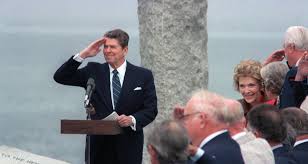
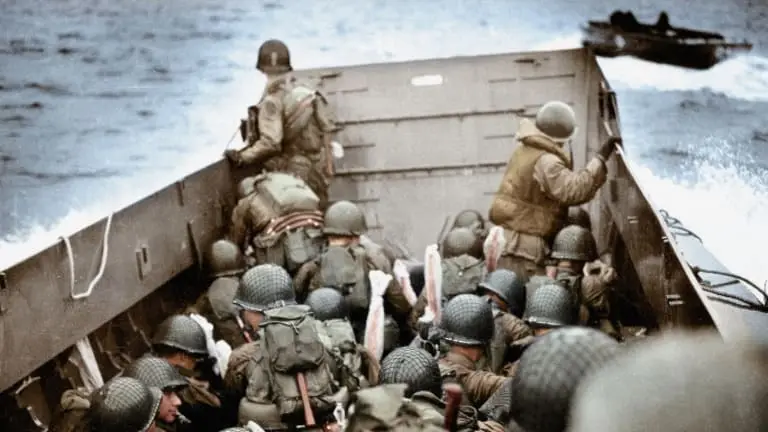
Reagan came to honor the thousands of men whom, 40 years earlier, fought to save the world from Nazi domination during the invasion of Normandy.
Today, the Reagan Legacy Foundation is doing everything it can to keep the memory of those brave soldiers alive.
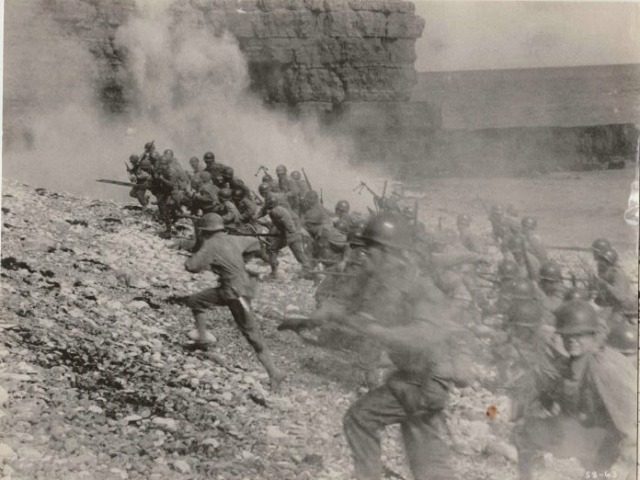
Through its work with the Walkway to Victory at Pointe Du Hoc, the Reagan Legacy Foundation is building an everlasting memorial to their bravery.
As we did last year, we brought Michael on to talk about this important project and why it’s so vital that we keep this history alive.
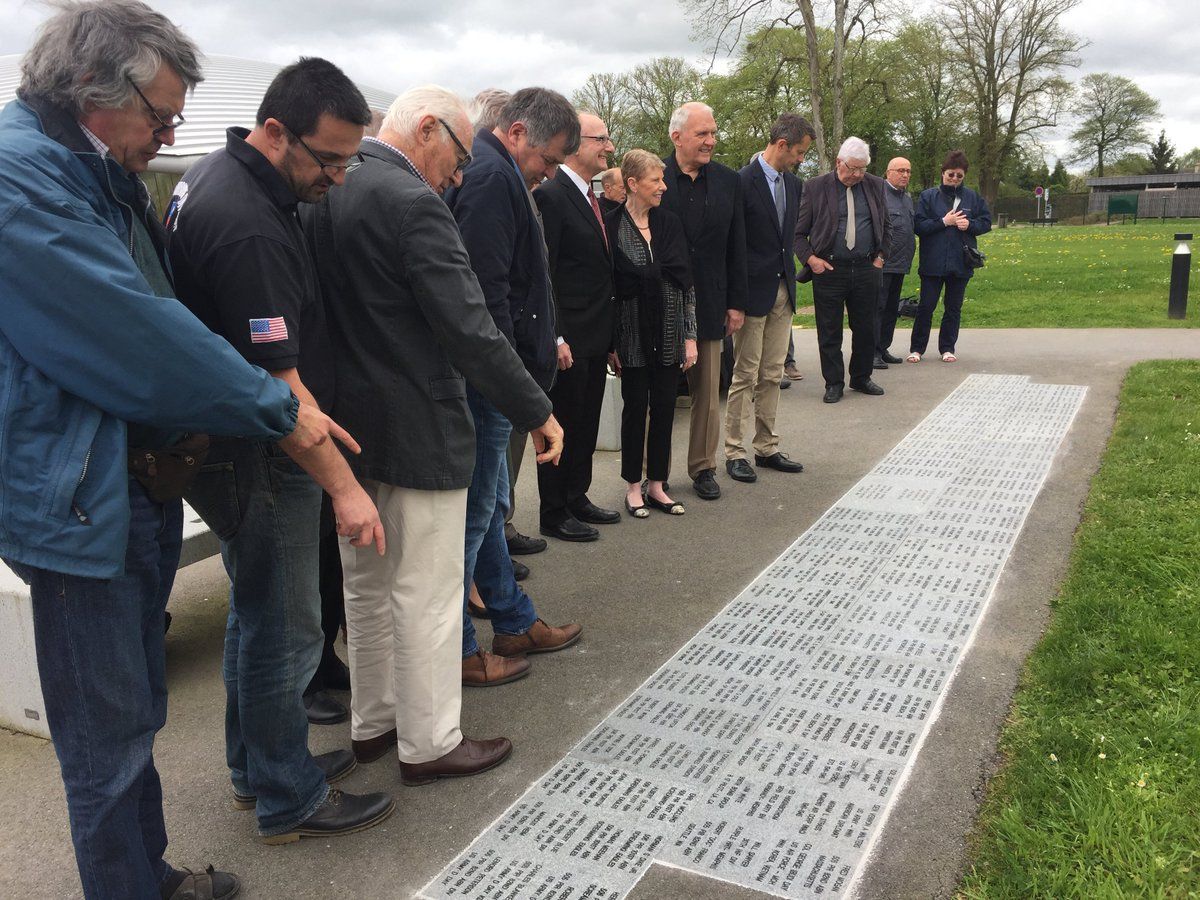
To make your donation to the Reagan Legacy Foundation’s Walkway to Victory head over to www.walkwaytovictory.com.
Transcript
Machine-generated from the episode audio and lightly edited — may contain errors.
Chris Albert (link to this point)
The Warrior Soul podcast is written, produced, and edited by me, Albert. Our mission is to provide tools, tactics, strategies, and ideas to US military veterans and anybody else willing to listen to help them to navigate toward living their absolute best lives. If you find these episodes helpful, please share them out with somebody that you know of that can use them. And if you really like the podcast, please also head over to iTunes and write us a written rating and review. It really helps us to spread word about the show, and it really helps to get these tools in the hands of others who really need them.
This podcast is sponsored by f bomb nutrition. They make awesome delicious packets of macadamia nut butters. They mix them up with chocolate, with sea salt, with pecan butter. They're absolutely delicious, and they also have a number of other fat fueled snacks, like their meat sticks and their cheese crisps. They're amazing people who are sending boxes of this stuff out to the troops on the front lines, and they're offering 20% off to our listeners on their first orders.
If you head over to www.dropanfbomb.com and use the code Warrior Soul at checkout, you'll get 20% off of that first order. And I'm gonna keep the announcements short and sweet today. You can stick around to the end. I got a really special announcement about a brotherhood that we're creating here at Warrior Soul. So hope you enjoy this episode.
I hope you get a lot out of it. And without delay, let's get into it.
Chris Albert (link to this point)
This is Chris Albert, and I'm here to remind you of one thing. Someday, you're going to die. That's not some morbid statement or scary idea. It's solid fact. Your time here on this earth is limited.
And we need to be reminded of this as much as possible for one simple reason, to live your best life while you can. This is the Warrior Soul Podcast.
Chris Albert (link to this point)
What is going on, ladies and gents? First off, I wanna wish you a very, very happy Veterans Day. Today is November 11, the day on which we honor those who have put on a uniform and signed a contract to put their lives on the line for this country if need be. And as a veteran oriented podcast, it is my great honor to be serving you guys, to to be doing this show week in and week out to help you to make the best out of this life. One thing I think though that is extremely important is to remember something.
And that is to remember that no matter how hard any of us had it, there was a generation of young men who did what many considered at the time to be impossible. And what I'm talking about are the generation of men who served during World War two, particularly those who would jump off of airplanes or get off of boats and head out into what was basically a wall of lead, attacking nested machine guns that had every opportunity in the world to to lay out their fields of fire onto beaches that were completely completely dialed in by the enemy supporting artillery. That happened, of course, in The Pacific over and over again through the island hopping campaign, and it also happened on the beaches of Normandy during d day. Our guest today is somebody who has been on this show before. His name is Michael Reagan, and he is the son of former president Ronald Reagan.
And Ronald Reagan has a special place, I believe, in American history. As a president who was a unifier, as a president who was really, really in love with America. And he did his best to honor those veterans of that great generation who saved the world by actually going to Normandy on the anniversary of d day. And now the Reagan Legacy Foundation has built something called the Walkway To Victory. Michael came on last year to talk about the walkway, and we wanted to bring him back on this year because I think it's so important that we remember.
We we need to remember that at one point, the world as we know it was in jeopardy, and it was because of those brave men who were willing to charge those machine gun those machine gun nests, who willing to charge into hell that we are all sitting today in this amazing country where absolutely anything is possible. So with that, I'm not gonna delay any longer. Let's get into this conversation with Michael Reagan to talk about the great things that the Reagan Legacy Foundation is doing to preserve that history. Michael Reagan, welcome back to the show.
Michael Reagan (link to this point)
Good to be with you.
Chris Albert (link to this point)
Awesome. We had you on last year to talk about the walkway to victory. And I gotta say, I was just up in Solvang, California, and I was walking down a street that your father had actually dedicated while he was governor of California. It was called the Avenue Of The Flags. And I went into the museum there and dedicated it in, I think, 1968.
And he talked about how amazing it was to see just the sea of flags that was around him. And it reminded me of this, this this project that you've been working on for so long because just this this sheer love of the country that your father had and understanding that that what you guys do there at the Reagan Legacy Foundation by creating this walkway to victory and by preserving our history. I mean, essentially, you're reminding us of the sacrifice that so many young men made in World War two when they saved the world, literally.
Michael Reagan (link to this point)
Yeah. I and that's what I certainly hope it does. And I know the effect it has on family members and or friends or on the participants who can look down and see their name on a brick dedicated to them there at Sainte-Mère-Église at the Airborne Museum. I mean, really brings tears to their eyes when they see it. And I just yeah.
I can't help myself but really tear up and talk about the Avenue The Flags. That's in Buellton, California.
Chris Albert (link to this point)
Yep.
Michael Reagan (link to this point)
And I just I just I just rededicated that on the anniversary.
Chris Albert (link to this point)
Oh, that's awesome. That's awesome.
Michael Reagan (link to this point)
So I was I was there rededicating it to Avenue Of The Flags in Buellton, California. So that is a good analogy. It's it's really you know, it's it's about America. It's about honoring those who who came before us and not not forgetting what others have done, which allow us to do the things that, in fact, we do.
Chris Albert (link to this point)
Absolutely. And, you know, the audience you're talking to right now, a lot of us have served in the military. A lot of us are combat veterans. And I think, know, you one of the things we have to remember is that going into Normandy on d day, just I mean, we've seen the movies. We've seen the imagery.
But actually having to to have been there and to have been on on, you know, one of the boats coming in and seeing the shore and seeing how embedded the enemy was and seeing the the obstructions and and, you know, a lot of these guys were 17 years old, and the the amount of combat they got into. And and not just them, I mean, the people who served in The Pacific as well, the marines and the the soldiers served in The Pacific. But those were were were some brave young men. I mean, I can't imagine what it must have been like. And and even those of us who've served in combat today, I don't think could imagine the scale of of what that was.
Michael Reagan (link to this point)
Oh, the scale was so very enormous that day and the buildup to that day, d day. It really was. And you go visit places like Guadalcanal or you visit Normandy where they had the battle of the bulge and what have you. You just see what these men went through as kids, as 17 year old kids, if you will. It's amazing what they did.
Tell people, when I'm talking about history or whatever, I said the best history lesson you can give your kids is take them. You've been to Paris, drive three hours north and go up there. Go to Normandy. Stand there at Pointe du Hoc or go to Omaha Beach or go to Sword Beach. Go up and and look at it and understand what they had to accomplish in order to win the war.
And it started there at Normandy, France. And I think my dad really understood that so much too because I grew up with a dad who driving out to the ranch at any given Saturday morning to go ride horses and shoot ground squirrels and go swimming and chop wood. But I used to listen to him sing the battle hymn of the republic or he'd sing he he would sing every military anthem. I would hear it in the car on the way out. I mean, he was like a boy scout, this guy.
And he lived truly what he believed. And I think that's what took him to Normandy to be the first president to actually go to Normandy on D Day and give the speech he gave at Pointe du Hoc. No other president ever been there on D Day. And of course, now every president since my father has picked D Day to be the day that they go to Normandy, France. And that's wonderful that they followed on in those footsteps because those men who served and the women, they're going every day, they're disappearing.
They're passing, they're 99, 100, 101, 102 years of age. And to find a way to honor them today with the Walkway to Victory that we've partnered with the Airborne Museum, to me is just the least that we can do.
Chris Albert (link to this point)
Right. And and another thing is to remember that, you know, at that point in the war, I mean, there were no foregone conclusions as to who was gonna win. And and I think that's something we need to remember as well. Because, you know, what and and we look at it I think we look back on it today, and it's it's almost like we live in this world that was handed to us. And and I think we forget that.
It was handed to us by a generation of great Americans who who truly laid it all on the line. And, you know, when I was thinking about and it it was in Buellton, California, and I was in the museum just above Pea Soup Andersen's. And for your father to have have done that in 1968, you know, when he was governor and then carried that spirit over into his presidency, I think that that's what made him such a great president, and that's what what you know, I think that's a spirit that so many of us wish could be emulated over and over again.
Michael Reagan (link to this point)
Yeah. He was just he he was someone He could not believe that an American would ever think of going overseas and blaming America for anything. It just galled him that somebody would point a finger at American and blame us for ills in the world. Because he would say, where would the world be without us? I mean, we are The United States Of America.
We're important to the rest of the world. We're we're free country. I know when I go up my dad's library in Simi Valley, and I love going up there. And and out there's always groups of kids going through fifth graders and sixth graders and seventh graders going through. And I'll always catch up with them someplace.
A lot of times, I'll get them right there in front of the right in front of the the right, I guess, just outside the door where you have the Berlin Wall. And one side of it's all colorful and butterflies. But I always tell the kids, since they're looking at that and taking pictures and with their teacher, I said, go to the backside. Go around the other side of that. I said, because the photos you just took of the butterflies and the pretty colors, that was West Berlin.
They they were free. They were free. Go to the backside and look at the backside because that's the side that wasn't free. Right. And it's like a lesson of these kids.
And then I sit them down and I say I said, I wanna take you back to 1961. 08/12/1961. You're at school. You're in fifth grade. You come home from school and you save your mom, mom.
Aunt Sophie invited me to come over to her place tonight and see a movie and have dinner. And your mother says, you're all wonderful, honey. Tell my sister I love her. If it gets to be too late, spend the night. So you go 08/12/1961.
You go to Aunt Sophie's, you see a movie. You spend the night. You come home November 1989.
Chris Albert (link to this point)
Yeah.
Michael Reagan (link to this point)
That's That's how quickly you can lose your freedom. And these kids just look at you and they don't believe it. That it can happen that quickly. And and and and and all we can do is try to educate our youth, the next generation, about how quickly they can lose their freedom and how important America is and how important it is to honor those who came before us, are willing to fight and give of themselves for our freedoms and the things that we are able to do today. But we've gotta hand me down hand that down.
And too often, I think we look we look to school to educate our kids, and they're certainly not doing that.
Chris Albert (link to this point)
Right.
Michael Reagan (link to this point)
Especially when I play golf with a young man. I think I told you last year who taught you know, didn't know why there was an American cemetery at Normandy at all. He was gonna he didn't know. Had no idea. Yeah. I I I just looked at him. I you're kidding. He wasn't kidding. He had no idea. Was 28 years old.
Had no idea why there's American cemetery in Normandy. And so, you know, you can't you can't count on the educators at schools to educate our children on the greatness of America and of those that came before us, we gotta do it ourselves.
Chris Albert (link to this point)
Right. And if we don't,
Michael Reagan (link to this point)
it's not gonna get better.
Chris Albert (link to this point)
That's a big reason why organizations like the Reagan Legacy Foundation are so important. The the work that you're doing to preserve that legacy, to preserve that history so that it does get taught, so it does get out to the American population. Because, you know, it even though we're we're actually not that far removed from World War two, it is amazing how much that knowledge actually gets lost.
Michael Reagan (link to this point)
Yeah. It's yeah. I was just there. I was just at Normandy in in July of this year. And to go there and see the bricks and see the names.
And I do in fact, a couple of people were with us. We had about 40 people we took with us. And a couple of people came along just because they had purchased bricks and wanted to come with us so they could see the brick that they had purchased through the name of a loved one. And it was interesting because I called and they said, make sure that brick's in the ground. I have friends coming with me, dear friends who bought a brick and that bricks not there.
They will hit me with another brick. Make sure it's in the ground. But again, if the people wanna go see it and and what we set up is I have a friend of mine, Phil, who so loves the walkway to victory idea. He said, but I don't know anybody, Mike. I don't know anyone.
I just don't. I said, that's okay, Phil. I said, how many bricks would you like to buy? He said, four. I said, good.
It's a thousand bucks. $250 a brick. And I said, send a check to to the Reagan Legacy Foundation in the memo, put Brick Project.
Chris Albert (link to this point)
Mhmm.
Michael Reagan (link to this point)
And I said, I will get the names, four names that'll go on those bricks and send you the information on those four soldiers so you will know who you just supported. And, you know, I called my good friend Diane Hine, Forever Young, got four names, having the bricks being made now, sent him the information and the thank you from from the four four soldiers. And it brought tears to his eyes. He's like, I gotta do more. I gotta do more.
But, again, that that's a way he he could, in fact, with work the project was I'm gonna sponsor someone. I may not know him, but you find the name I'm in. And it's it's just really a nice thing to do and be able to see.
Chris Albert (link to this point)
That is amazing. That is amazing. And, you know, walking around a place like that as well, you get to you get to see the the geographic gravity of the situation. I mean, I remember I was a marine stationed in Okinawa, Japan, and I would walk around that island, and I would be astounded by the fact that we ever took that island, just because of the the cliff sides and the things like that. And, you know, when you go to a place like Normandy and you you could see the shore and you could see what they had to crossover and and you could see where the embankments were, that's that's when it I I think it truly hits you.
You know, that that that was an insane insane venture, but it's one that that that we were able to do.
Michael Reagan (link to this point)
You know, one of the one of the soldiers we sponsored for the seventieth anniversary, we sponsored, I think, 24 or 25, d day vets to be able to go back for the seventieth anniversary. And one of them, was really interesting because Diane, again, Hine, who who works with them and we work with her too. He went up to her and said, Diane, this is great being here for the seventh anniversary. I know you got plans to take a group of us to to, you know, the the anniversary of the battle of the bulge. He says, but can I just tell you something?
Diane says, what's that? He says, we were there in November. We don't wanna be there on the anniversary. Can we go in the summer? It's really cold in November where we had the battle of the bulge.
We've done that. But now we're, like, 95 years old. We don't wanna be there on the anniversary. Just tell us about the anniversary. Can we go in, August?
Chris Albert (link to this point)
Come in, you know, sip some wine and take Diane just
Michael Reagan (link to this point)
Diane looked at it said, I didn't think about that. I said, yeah. Really? I said, they're not they're not 17 at the Battle of the Bulge in freezing snowy weather. They're now 95 years old.
There's a god. I don't wanna die there.
Chris Albert (link to this point)
You know? Exactly. Exactly. You know what? And this this brings up another good point.
This episode is gonna be published on on November 11, Veterans Day. And, you know, as we're coming up, you know, like you mentioned, we're losing a lot of our World War two generation very quickly. We've been losing them for a while. Do you know how many World War two vets are still alive right now?
Michael Reagan (link to this point)
Boy, I I wish I could tell you. Not a lot. You know, it's, that's why what they've done with Normandy. That's why, you know, they used to have the celebration every ten years. Now they've made it every five.
Because if they wait ten, there may not there's gonna be come a day not too distant future where there's gonna be no one left standing
Chris Albert (link to this point)
Yeah.
Michael Reagan (link to this point)
Except for what we can do to memorialize them, in this project there at Normandy, France. That's all we can do. And it's I don't know if they sent you a photo. There's one photo of the group sitting in chairs looking down at the brick project and Diane's on her knees pointing on a brick to one of the one of the guys. And he just got tears in his eyes because he sees his name.
Somebody's gonna remember him. Yeah.
Chris Albert (link to this point)
That's I mean, just going there with them must be must be so I mean, the emotion, the being carried back when they were young, when they were, you know, when they were when they were fighting. That must have been I mean, I'm thinking about it right now. I'm just getting my tears coming up in my eyes.
Michael Reagan (link to this point)
Well, I get I get I almost get embarrassed to this day because they come up to me and and they because of because of my dad.
Chris Albert (link to this point)
Mhmm.
Michael Reagan (link to this point)
You know? And, you know, they call me they call me sir and they salute me. And I'm going, no. No. No.
No. No. No. I salute you. Don't you don't slick me.
No. But you're the son of Ronald Reagan. And it is. You sit there and they have said that the respect they have. I wish you could bottle the respect they have, had then and still have today, bottle it and give it to this generation.
You know what I mean?
Chris Albert (link to this point)
Yeah.
Michael Reagan (link to this point)
Absolutely.
Chris Albert (link to this point)
And one thing I think with my generation of veterans, there's so many lessons I think we can learn from that generation. You know, they came back and they so many of them went on to do so many amazing things and building businesses, working jobs that were so important to keeping America on track, and bringing a lot of those values back home. And I think that for my generation of vets, I I see us doing that, and I wish we were doing it on on a bigger scale and and taking charge. And that's a lot of of what this podcast is about, which is motivating our current generation of veterans to to take charge of their lives and to to really impact this country in a positive way.
Michael Reagan (link to this point)
And Yeah. Speaking about that, one of one of the one of the soldiers that we sponsored and and what have you, he was from Pennsylvania. Get out when he got out the war, he went back to Pennsylvania. And him and a buddy has started changing oil and cars to make a living. Mhmm.
And that's what they're doing. But they got tired of crawling underneath the car. So what they did is they just dug a hole in the ground, and then they had the cars just drive over the top of them, and they changed the oil that way. And somebody said, well, that's a good idea. So they opened another one and another one and another one and then ultimately sold the idea.
Today, have companies called Jiffy Lube.
Chris Albert (link to this point)
Yeah.
Michael Reagan (link to this point)
So it's amazing. You talk about coming back, though. There's a great Netflix. Maybe you see the Netflix show called Five Came Back. Steven Spielberg produced it.
Mhmm. And I would suggest it is great to watch. It's it's a story of five directors, Bill Wyler and Stevens and John Huston and John Ford and Frank
Chris Albert (link to this point)
Capra.
Michael Reagan (link to this point)
These are five directors, major Hollywood directors. Careers were unbelievable who gave up their careers to join the military for the war. And they're the ones who did the filming. The the the film that we see, the videos that we see of the concentration camps or what have you, that's these guys.
Chris Albert (link to this point)
Mhmm.
Michael Reagan (link to this point)
They were the first ones in, but they gave up their careers to go there in in the war and and help. And there's a great great story on Netflix called five came back. It's really worthwhile to sit there, watch and see their stories of each one of them. And and they're not the only ones. You I mean, you have some great, you know, great actors and actors, Jimmy Stewart, Yogi Berra.
Chris Albert (link to this point)
Yep.
Michael Reagan (link to this point)
You know? You don't think of Yogi Berra in uniform. You know what I'm saying? Yeah. You think of them in a Yankee's uniform, but you don't think of them in a uniform.
So you got Yankee yeah. You got Yogi in there. You got Jimmy Stewart. You got, gosh, Joe DiMaggio. Yeah. And and and these guys who gave up careers to to to be in the military. And I mean, I look today and I see the the young man from the Arizona Cardinals who gave up his life and career.
Chris Albert (link to this point)
Yep.
Michael Reagan (link to this point)
Pat Tillman. Right. Pat Tillman to to be in the military after 09/11 and what have you. People do just people who gave so much, especially in World War two. My mother, of course, went out and sold war bonds. That's what she did. So you saw those things back in that day. And you see the sports guys, Hollywood group, directors, all getting in the war because they they believed in America. They believed in the we're doing the right thing, and we were.
Chris Albert (link to this point)
Yeah. And then you had the great Audie Murphy who, you know, won the Medal of Honor, was the most decorated fighting man of World War two, and and he came back and started an acting career. Right?
Michael Reagan (link to this point)
Oh, yeah. Hey. In fact, he played himself in the movie.
Chris Albert (link to this point)
Yep.
Michael Reagan (link to this point)
To hell and back. I mean, plays so he he Audie Murphy plays Audie Murphy in hell and back, which is a great movie. I mean, proves a little you know, somebody who's under six foot can really do something. I mean, was amazing. Yeah.
And he was a great actor, died too young. But was the most decorated soldier in the history of The United States Military until David Hackworth. Was it Hackworth? Yeah. Yeah.
Came about And we died a couple of years ago, cancer. We became friends, Lieutenant Earl to it Hackworth. And but again, Audie Murphy became an actor, went over there, and nobody thought he had a shot at doing anything. He end up being amazing.
Chris Albert (link to this point)
Yeah. And, again, that just that that legacy of people just coming back and then just the the the impact they had here, the impact they had on our culture, and and, you know, the way the country just got behind everyone and and and put a 100% into that war effort. You know, the there's a podcaster, his name is Dan Carlin, who has this this series. It's called Hardcore History. He did an excellent one on on World War one called Blueprint for Armageddon, but he did one as well recently.
It was called Supernova in the East, and it was about the war war against Japan. And, you know, he talks about how much of of the fact that the war turning out the way it was was never a foregone conclusion. Any side could have won this war. And it was just through that determination that we were able to do it.
Michael Reagan (link to this point)
Oh, absolutely. Absolute determination. We're able to do it. Everybody was in the right place at the right time. Like David Eisenhower.
I mean, just go through the whole process with those five star generals that were out there. Yeah. You know, having to put up with Montgomery. So
Chris Albert (link to this point)
you know? And everybody having to put up with MacArthur. He was
Michael Reagan (link to this point)
Yeah. Macarthur. Yeah. We had MacArthur. They had Montgomery.
He he go on from there. It was yeah. But they all all those personalities and it was you know, anybody look at D Day. You have America, you have the Brits, you have the Canadians, you have all these people involved in it. It it really it goes back to to my father's statement on his desk.
No telling what a man can accomplish if he doesn't worry who gets the credit.
Chris Albert (link to this point)
Absolutely. Absolutely.
Michael Reagan (link to this point)
And the lives that were lost that day on Omaha Beach, Sword Beach, Pointe du Hoc and all through the system were amazing. And the people there in Normandy, France, Sainte-Mère-Église, they remember all of them. The streets are named after some of these paratroopers. They're there. The wife of the D Day mayor actually took care of the grave sites.
There are 15,000 grave sites there around Sainte-Mère-Église. And the wife of the D Day mayor took care of every one of those gravesites, stayed in contact with the loved ones back home and birthdays and holidays and all of those things. And when the French and the Americans made the agreement for the American cemetery and they allowed those at home. If you wanna have your loved one sent back, we can do that. And that's why there's 6,900 grave sites at the American cemetery, but there were 15,000 spread out around Sainte-Mère-Église. And then she would go down to the American cemetery and take care of those grave sites until she passed. I mean, people talk about, well, French don't love America. Well, you're in the wrong part of France. I mean, just know, you're just not in the right place in France.
You gotta understand the personality and so on and so forth. But those people at Sainte-Mère-Église and throughout there. I mean, here's the first town freed by American d day morning, 04:00 in the morning. And to think that every house in Sainte-Mère-Église to that whole area had a German live in it. It was occupied by a German.
And and we go in there and and and and save them. People go see Saving Private Ryan. You know, if you'll see that movie, ever see it again. All the parrot the paratroopers were all headed that direction. Right.
That's where they were going. La Fière, just outside Sainte-Mère-Église, where you have the you have one of those bridge calverts, where they're the smallest or the deadliest small arms fire of World War II. You had 500 dead over three days. They had to call a truce to collect the bodies of the dead and the wounded. They went back to fighting there at La Fière.
The history there is just simply amazing as you go through that area. And it's it's to be such a great thing to take your family family vacation and take them to Normandy. I kids kids cannot stop asking questions
Chris Albert (link to this point)
Yeah.
Michael Reagan (link to this point)
Once you get there.
Chris Albert (link to this point)
And if you're coming into Paris, how far out is it about?
Michael Reagan (link to this point)
It's about a three hour drive. Three hour drive. Train. You can train.
Chris Albert (link to this point)
Mhmm.
Michael Reagan (link to this point)
And then, you know, car in from there. Put some you can you can go you can go up there and stay. Get a get a room. I mean, you don't have large hotels if there's not like the Marriott hotels stuck in Sainte-Mère-Église. Small little, you know, small little towns, small little hotels, bed and breakfast, things of that nature.
And you could train you could train up there and spend a couple of days in that area. You it's unbelievable.
Chris Albert (link to this point)
Yeah. That would make
Michael Reagan (link to this point)
good talk to people.
Chris Albert (link to this point)
A great vacation if you go if you if you head over there and then if you head up to London and you do the Churchill War Rooms, that that's another great great place to go because you get to see where, you know, a lot of the the the British strategy was formed and and how they were living through the blitz and and through everything.
Michael Reagan (link to this point)
Oh, yeah. It's it is. It's it's the history is is so amazing to to to be to be there living it, if you will. And see it and talk to people whose family members were of course affected by it. Would Not last time, but it was just not too long ago.
One of them visit Saint Mary because I go to almost every year anyway. So I can't remember which year it was, but one of the sons of the D Day mayor he gave me a cutting from a parachute from d day.
Chris Albert (link to this point)
Mhmm.
Michael Reagan (link to this point)
And the d day mayor had three two three sons, and they're like bird's eye view just off the square seeing all the paratroopers come in.
Chris Albert (link to this point)
Yeah.
Michael Reagan (link to this point)
And they went out and collected stuff afterwards. So they they just were hoarding everything they can find. So it's really they gave me a cutting from a from a parachute from d day, which just, you know, wow. This is really Yeah. This is really something.
Chris Albert (link to this point)
Yeah. And that's I mean, there were so many different aspects from it. I mean, there was the the the guys getting off the boats, the the paratroopers coming in. I had on I had on captain Dale Dye last year well, and he's he's working on a movie, I think, about guys who were paragliding in.
Michael Reagan (link to this point)
Oh, the the the the gliders that came in?
Chris Albert (link to this point)
Yep. Yep.
Michael Reagan (link to this point)
The you know, the this the one fee the one thing you do not wanna be in Mhmm. Is a glider. Right. Because the they flooded the fields. And then the gliders would come in, hit the hedgerows. So if you were in the front of a glider yeah. If you were asked to be on a glider, you want to be in the back of the glider. Not in the front of the glider. Because the front of the glider was hitting hedgerows.
Chris Albert (link to this point)
Yeah.
Michael Reagan (link to this point)
And what a lot of people don't know, a lot of a lot of those kids drown.
Chris Albert (link to this point)
Mhmm.
Michael Reagan (link to this point)
Because we really look at history. Lot of those who serve come from the mid mid part of this country, Midwest. Right. They're farm kids. They don't have swim.
They swim? What's that? You know, we we plant corn, wheat. You know? We pick.
We don't swim. And so they had to actually ultimately, after that, they had to bring in, I talked to one one day, a a lifeguard to come in and give swimming lessons to the kids in the military because they were losing kids in the military because they were drowning. So you had a you had a a kid in the Navy on a Navy ship falls in the water. You know? Well, what's that all about?
Chris Albert (link to this point)
And that's why we have swim quals today. I had to go through swim qual with the Marine Corps and and and I don't know if the Army does swim quals today, but the Marine Corps definitely does, the Navy does. And and that's a that's a really, really big point. I mean, a lot of these and we have to remember that a lot of these kids, you know, just a few months prior were at home where their biggest worry in the world was, you know, talking to girls and and cars and and Coke and and trying to get a drink of Coke. And then, you know, a few months later, war breaks out.
They're they're in the military, and then all of a sudden, they're they're there on d day, and that's how it was.
Michael Reagan (link to this point)
Yeah. Always okay. I always kid with the kids on the USS Ronald Reagan because the the camos they wear daily camos they wear are like blue camos. Mhmm. And I go like, so if you fall in the water, what?
How do we find you?
Chris Albert (link to this point)
You're camoed.
Michael Reagan (link to this point)
The same color as the water. Best thing to do is not fall in the water. But again, they had to give they had to give swimming lessons because so you had so many kids end up even three feet of water. You know, they always tell you about, you know, you buy a bucket and they always have a thing on there. Kid can drown in a bucket of water.
Well, we had kids drowning in three feet of water or two feet of water in the in the fields that were flooded by the Germans.
Chris Albert (link to this point)
Right. Right. Now with the Reagan Legacy Foundation, you guys have have put this walkway to victory together. Why does and we talked a little bit about this, but but why does the Reagan Legacy Foundation exist, and and where can people go to learn more about it?
Michael Reagan (link to this point)
Well, you can go to you can go to walkwaytovictory.com. They'll take you right to that page. Walkwaytovictory.com. The foundation website is reaganlegacyfoundation.org. Reaganlegacyfoundation.org.
It's the the the foundation really started right probably in tune with the USS Ronald Reagan when she was christened and home ported here in California in in San Diego. And I wanna do something for the kids on the ship. And so we began started a scholarship program where we provide a thousand dollar scholarships to the men and women who serve on the Reagan. But we provide $2,000 scholarships to family members who are left home, who are also trying to better their education. And nobody else does that.
Chris Albert (link to this point)
That's me.
Michael Reagan (link to this point)
Nobody else does that. We do that because if you're serving, get some help from the government. If your family member back home, you get no help from the government.
Chris Albert (link to this point)
Right.
Michael Reagan (link to this point)
So that's why we give $2,000 to a family member. And we started that back 2004 maybe. And we've done a couple of golf tournaments raising money for the scholarship program, but that's how it started. And then it just kinda evolved from there. What else can we do?
And we moved on to Berlin. I visited Berlin just prior to the twentieth anniversary of the fall of the wall and found out there was no mention of Ronald Reagan in Berlin. No mention at all. And I said, well, this is nuts. And so I put together a program with Frau Hildebrandt and her husband who passed away a couple years ago, who own and run the Mauer Museum, also known as the Checkpoint Charlie Museum, where all the artifacts, how people escape the stories of that are all there at Checkpoint Charlie Museum.
And we put together, the money and didn't purchase, but purchased basically a room at that museum dedicated to my father. And we dedicated that room the day before the twentieth anniversary of the fall of the Berlin Wall. So that was really kinda neat that way. Now, since then, we've been able to get a plaque in the ground between the Brandenburg Gate and the Hotel, commemorating my dad's speech at 06/12/1987. And then I think my father's foundation, the presidential foundation has worked with the Germans and they're gonna put a statue of my dad up on November 9 this year, which date that the wall in fact came down.
So we began a process, started with a museum, but took me three years banging on the heads of the Germans, which is a red red government in Berlin for them to finally say, okay, you could put a plaque on the ground. So we did that. Now now my dad's foundation has taken over with the with the Reagan statute they're gonna be putting up on November 9, which is neat. We worked with the Poles to put a statue of my father and Pope John Paul in Gdańsk, Poland. Mhmm.
And then we started with Normandy. And it really started with the kids saying to me, why is there an American cemetery at Normandy? I went, wow. And so we began that work in Normandy, produced a couple of videos that we have that show at Normandy. We build a Ronald Reagan Center at the Sainte-Mère-Église for people to have meetings on you name it, freedom I would hope.
And that's what we do. And then we have the Brick Project, which is really our the Brick Project is so important to us right now. So we've got the building built. We've got the stuff done in Berlin, statue in Poland. We still have the scholarship program and the Brick program.
And what we do is we raise money for the scholarship program. The Brick program, however, the profits that we get from there that come back to the foundation, I mean, it's not huge, but the profits that we do get are turned back around into scholarship money, for the kids that serve in the USS Ronald Reagan. So all the money is spent in one way or another.
Chris Albert (link to this point)
Outstanding. And how big is the, walkway right now?
Michael Reagan (link to this point)
Well, I mean, the walkway you you see, if you if you go to Saint Mira, they've got a lot of there's there's a lot of walkway to cover. Mhmm. At the because they have, like, four separate buildings. They have it with the gliders and everything all these other things that they have at their at the at the museum. They're in in Sainte-Mère-Église at the airborne.
So the walkway takes up like one section, but there's a lot of sections because it's like four different buildings walking to and from and out ingress, egress. So we have a lot of room to cover and we're talking to them. We're there in July. And so what happens if we fill this all up? He said, well, we got a whole town.
Yeah. So we went, okay. We're we're good with that.
Chris Albert (link to this point)
That's awesome. That's awesome. And and
Michael Reagan (link to this point)
And again, and if people don't know anybody, but they wanna they they they wanna they wanna support the Brick project, they as I said, they can it's on the web, reaganlegacyfoundation dot org, and send a check to the Reagan Legacy Foundation. In the memo, just put Brick Project. And what we'll do is we will, in fact, find someone who did serve, of which we know many, and have the names. And then you will get the the thank you, and you will get all the information on that person that you sponsored a brick for to be put Sainte-Mère-Église.
Chris Albert (link to this point)
That's amazing. And you you mentioned it was $250 for a brick. Right?
Michael Reagan (link to this point)
$250 for a brick or 500 if you want wanna put more information.
Chris Albert (link to this point)
Awesome.
Michael Reagan (link to this point)
We get an know, and this d day, on the seventy fifth anniversary d day, we prevented we we presented Susan Eisenhower with a brick for her grandfather.
Chris Albert (link to this point)
That's awesome.
Michael Reagan (link to this point)
Oh, yeah. It was great. Great.
Chris Albert (link to this point)
That's that's really great. The and, again, just there's so much there. So it's the walkwaytovictory.com. The the bricks, the 250 to $500. And that's I mean, that's a good price to be part of that project and to
Michael Reagan (link to this point)
And and we're a five zero one c three. So Yeah. It's tax deductible. Yeah.
Chris Albert (link to this point)
And plus the money the the the profits are going back to a really good cause in helping those sailors out on the on the USS Reagan.
Michael Reagan (link to this point)
Oh, yeah. The who's now she'd been in Tokyo, Japan now for, gosh, quite a few years. Yeah. She's over there at the Obama Center there.
Chris Albert (link to this point)
Yeah. I'm heading out there next year. I'm gonna have to pay a visit.
Michael Reagan (link to this point)
Oh, is that right?
Chris Albert (link to this point)
Yeah. I'm gonna head out there for the Olympics. It's a little bit of a family tradition. We we had to we went down to Brazil the last Olympics to root for team USA. We're gonna head out there to Tokyo to root for team USA.
And and I'm I'm definitely I need to get out to Normandy.
Michael Reagan (link to this point)
You're about well, if you get if you get to Tokyo, though, which is where the Olympics are, hour about an hour and a half south is where the USS Ronald Reagan sits.
Chris Albert (link to this point)
Awesome. Yeah. I'm gonna have to pay visit out there because I've always I've always wanted to see I I mean, I just love ships. They they fascinate me. The the the technology, the the the massiveness of them. I mean, since I've been in the Marine Corps and and, you know, heading out to San Diego to check the ports out out out there and just always fascinated me.
Michael Reagan (link to this point)
I was just at the MCRD big dinner the other night.
Chris Albert (link to this point)
Oh, really?
Michael Reagan (link to this point)
Yeah. They invited me down there.
Chris Albert (link to this point)
That's awesome. That's awesome.
Michael Reagan (link to this point)
Went there with my good friend David Webb. So the I was at the MCRD dinner. I guess they're gonna want me to come back next year, you know, also. But, again, it but, hey. The you get on the USS Ronald Reagan, who's the first group you see?
The marines.
Chris Albert (link to this point)
Yeah. Yeah.
Michael Reagan (link to this point)
You get on. You salute. Boom. You get and you're looking at you're looking at the marines before anything else. See a couple of marines.
Chris Albert (link to this point)
Yep.
Michael Reagan (link to this point)
So good.
Chris Albert (link to this point)
What can I tell you? It's just yeah. We're everywhere. We're everywhere.
Michael Reagan (link to this point)
You're yeah. You you you all are everywhere. Yeah. But who who was who was it that said, who has it on their excuse me. On the challenge coin, my dad's statement about marines.
Never having to you know, some people have to some people worry worry all the time if they've ever accomplished anything. Marine doesn't have to worry about yeah. Problem. Yep. Right.
Doesn't have to worry about that. That's not an issue for a marine.
Chris Albert (link to this point)
Your father had such a way with words and and such ability to inspire and and and and just really carry the vision of the nation with his words.
Michael Reagan (link to this point)
I agree. I you know, I just sit there and because as I said, I've got my dad's library. You can listen to the speeches he gave today, and they they will affect you today as they affected you 30 ago.
Chris Albert (link to this point)
Yeah.
Michael Reagan (link to this point)
I mean, just they will affect you that way. He just he did. He had a he had a way with words. And and as I tell you, when I go to Young America's Foundation and kick off their high school or college conferences up at my dad's ranch center, their ranch center by the ranch. As I tell them, said, readers are leaders.
You wanna be people talk about my father. My father led because he read. And so get off your cell phones and really start reading because readers are truly leaders. And it's so important to to know those things and have that knowledge. Because when when when my dad spoke, he knew what he was talking about.
He he didn't have to guess at it. He he knew it. And he knew what he believed and he knew why he believed it.
Chris Albert (link to this point)
Yeah. That and that is such an important habit. I mean, we in the Marine Corps, we had the the commandant's reading list, and and at every rank, there's a set of books you're supposed to be reading. But I think, you know, even in daily life, the first first hour of my day is always set aside and I wake up early to to do some reading. And I think it's just such an important habit to have because, mean, in our day and age, there are so many media channels.
And through these media channels, you get various types of information. And and the thing is this, if you're not up on your history, if you're not up on understanding what other people in other times went through, then you can lose a lot of perspective. And you end up looking at your own life and you say, oh, this is so hard or oh, this is so difficult. But when you read about, you know, a young soldier during World War two, what they had to go through, or if if you read about some of the great personalities out there, you know, that like your father, or if you read about guys like like Arnold Schwarzenegger, you know, who who who came to this country and worked his butt off and and and and did everything he could to make it. I mean, there's so many different things you could learn just from reading, and and it's it's a habit I think everybody needs to pick up.
Michael Reagan (link to this point)
Oh, absolutely right. It's how many stories you read about immigrants that came to The United States Of America and, they weren't here for a handout, they're here for a leg up.
Chris Albert (link to this point)
Right.
Michael Reagan (link to this point)
And they got that and changed the world, changed the world. And we have too many kids people today, young people spoiled thinking you you why can't I start at the top?
Chris Albert (link to this point)
Right.
Michael Reagan (link to this point)
Would be nice to start at the top. But, you know
Chris Albert (link to this point)
Well, you don't want to because you need to go through the work necessary in order to to if you don't go through the necessary work, you get to the top, guess what happens? You're not ready for what's gonna come.
Michael Reagan (link to this point)
When I tell people when I tell people I and I this is the way I was raised. When I tell people my dad won the governorship of State of California back in 1966, I was working on a trucking dock in Los Angeles loading oil well freight from five at night to 01:30 in the morning. And that's where I'd been for like two years. That's what I was doing. When I was in college, I was working at a car wash to get some extra money.
I mean, it's just that's what you did. Because why would you do that? Well, because want I wanted to, like, have a date on Friday night or Saturday night maybe or maybe have dinner and, gee, pay the rent. You know, little stupid stuff like that. Yeah.
You You were working on a trucking dock? I said, yeah. I was working on a trucking dock, loading oil well freight five at night. I was loading a I was loading out a 40 footer with a 20 foot backhaul of rock bits and and and and pipes for for drilling. That's what I was doing every night, Monday through Friday.
I think I was getting $2.10 an hour. Teamster Teamster's wages. You know? I'm going to yeah. But that's what you did.
Chris Albert (link to this point)
Right.
Michael Reagan (link to this point)
And and and today, you have people say, well, that'd be beneath me. Then that's your problem.
Chris Albert (link to this point)
And that's the thing you gotta remember. These guys who who fought at places like Normandy and fought in the Pacific, they went through that, and then they came back here and they worked. Right? They they put themselves to they put themselves to work, and and there were no real handouts. You know?
That's the that's the way it was, and that's what that's why they came back and transformed this country.
Michael Reagan (link to this point)
Yeah. Thank god for them. Thank god for them. You know? You know, my dad was, you know, my dad was the first one to, as governor to, invite those John McCain and that whole group that was sitting there for how many years at over at the in in Vietnam was that he invited them to the house for dinner.
You know? And when everybody else was snubbing the Vietnam vets, he was embracing and bringing them in.
Chris Albert (link to this point)
Yeah. Yeah. He was a he was a really, really great man. And and, you know, just hearing the stories of him when you walked in the room, you were in a meeting with him. He was the only person you were the only person in the They were the only you you were the only person that mattered.
And and
Michael Reagan (link to this point)
He did he did 300 training films during the second World War.
Chris Albert (link to this point)
Mhmm.
Michael Reagan (link to this point)
One of them was on parachuting. And the and he when he came out of the cavalry to join the to join the army, you know, he had the only way to get in the army was to memorize the eye charts because he was legally blind without glasses.
Chris Albert (link to this point)
Mhmm.
Michael Reagan (link to this point)
And so, you know, he memorized the eye chart. So when he went in for his eye exam, joined the army, he asked him, read line four in a b d, are you? That's it. You're in. And couldn't even see it, but he had it memorized.
It's how badly he wanted to serve. And he ended up retiring as a captain from the military the first time. Second time was a little bit heavier than that. But retired as a captain and did 300 training films. Everybody gave something.
Chris Albert (link to this point)
Yeah.
Michael Reagan (link to this point)
Yeah.
Chris Albert (link to this point)
That's a that's I mean, just the lessons from that generation from the warriors, also the civilians who who who put the work into the factories to keep the machine going. Everybody, the families, the Gold Star families. I mean, just an amazing lesson for us as Americans.
Michael Reagan (link to this point)
Well, yeah.
Chris Albert (link to this point)
Well, Michael, I want to thank you for coming on again today. I just want to acknowledge you for doing this work. It's it's so important that we have things like this, and it's so important that that we remember and that we don't allow our history to get distorted, that we don't allow our history to get lost in in noise that's out there. And and things like this, the Walkway to Victory, the work that the Reagan Legacy Foundation is doing, you know, it it it really helps to remind us that there were Americans who saved the world. And the world we live in is the way it is, and I think we live in a better world than anybody could have imagined at that point because of The United States.
It's because of that generation of Americans.
Michael Reagan (link to this point)
Thank you for letting me come on again, and thanks for the conversation. Enjoyed it.
Chris Albert (link to this point)
Absolutely. Absolutely. And to everybody out there, if you're looking to put a name on the Walkway to Victory, make sure it's Walkway to Victory dot org. Right?
Michael Reagan (link to this point)
No. Walkwaytovictory.com.
Chris Albert (link to this point)
Walkwaytovictory.com.
Michael Reagan (link to this point)
It's reaganlegacyfoundation.org, but it's walkwaytovictory.com. And and it's something else to everybody to know. Veterans Day is the eleventh today. But we need to honor them tomorrow.
Chris Albert (link to this point)
Exactly.
Michael Reagan (link to this point)
And the next day. And the next day. Our program runs twenty four seven, seven days a week, all year long. We need to honor these every day.
Chris Albert (link to this point)
Exactly. Exactly. And and, you know, for those of us who have served, the greatest way of honoring them, and and even if you have served, you still need to honor those who came before you. The greatest way of honoring them is by coming back and living an amazing life. Putting your work in making putting yourself into position to to keep this country as the greatest country in the world.
And it's it's so important that we remember that. So, Michael, again, thank you so much. And everybody out there, happy Veterans Day. To all the veterans out there, thank you for your service. To the families out there who who who stood behind those veterans, thank you as well.
And we'll be back at you next week with some more awesome content. Alright, ladies and gents. I hope that you enjoyed that conversation with mister Michael Reagan. It is so important that we remember, that we remember those brave men who stormed those beaches, that we remember what they did, that we remember how they saved the world. And I think we're losing a lot of that.
History isn't being taught like it once was in our schools, and I think that it's extremely important that we teach our children what happened. It's it's really up to us. Now here's a big thing. You know, we're living this life. And as we're going about it, a lot of times, it feels like we're falling into a script.
It feels like we're doing the same thing day in, day out, week after week, month after month, year after year. And there's a lot of us who are out there who aren't happy, who aren't taking advantage of living in this amazing country and in this amazing time and place. That's why we created something here at the Warrior Soul Agoge called the Warrior's Obituary Society. And the goal of this group is to empower its members to live absolutely epic lives, lives worthy of epic obituaries. The program starts with an eight week development program.
At the beginning, you are going to develop your vision. You're gonna get very clear about what it is you want to accomplish. From there, we're gonna work on specifics. We're gonna develop specific goals, then we're gonna work on getting you to create your own personalized fitness plan. Something that's gonna keep you in shape, not just for a few months or a few weeks or anything like that.
It's gonna keep you in shape for the rest of your life. From there, we are going to work on your finances, getting you into financial shape, taking care of that debt, and getting you into a position where you can start investing and growing your money. And then from there, we're gonna work on your dreams. If you want to have a specific career or a specific type of business, we're gonna teach you things that can get you there. As we move along, you're gonna have a live call each week with the group, and you're also gonna be interacting daily with the other members on our private forum.
We don't do anything over social media within the group, and the reason for that is because we don't want anybody looking over your shoulder, and we don't want you getting distracted by the million different notifications you get when you log on to social media. So if this is something that would interest you, head over to www.warriorobituarysociety.com and check it out. And if you've got any questions, feel free to email me over at chris@warriorsoulagoge.com. And I'll be happy to answer your questions or even get on a call with you if you wanna talk about it. So thank you guys so much for listening.
If you enjoyed this episode and you're enjoying the podcast, please consider heading heading over to iTunes and writing us a written rating and review. And also, please share these episodes out. And with that guys, I'll be back at you later on this week with some more awesome content.
Host of the Warrior Soul Podcast and founder of Warrior Soul. Worldwide trainer and nutrition coach, contributing author at Testosterone Nation and Muscle and Strength.