Podcast episode
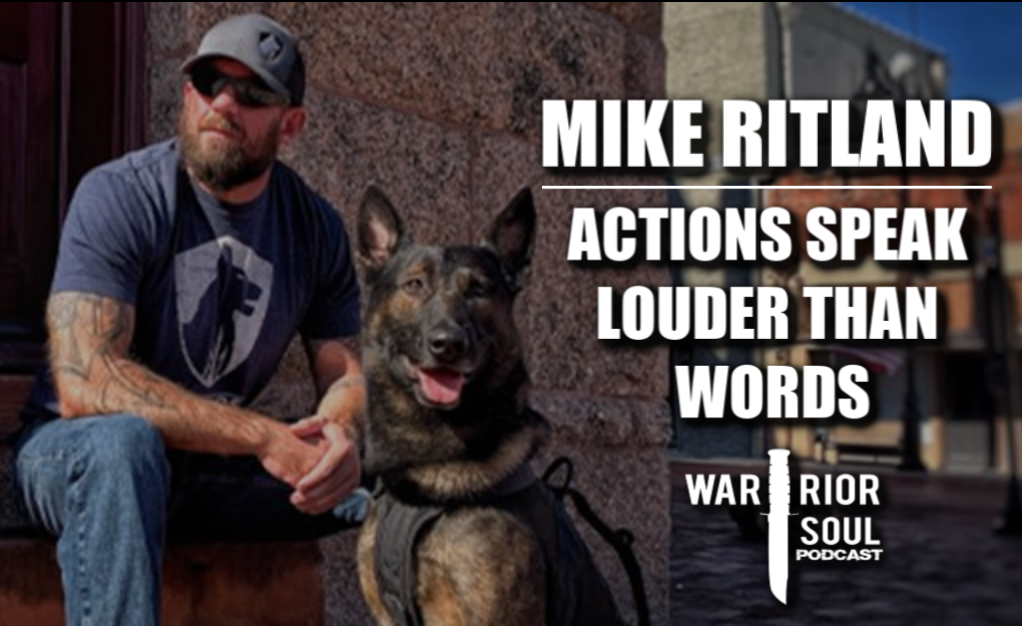
Mike Ritland: Actions Speak Louder than Words
Hosted by Chris Albert
The Warrior Soul Podcast
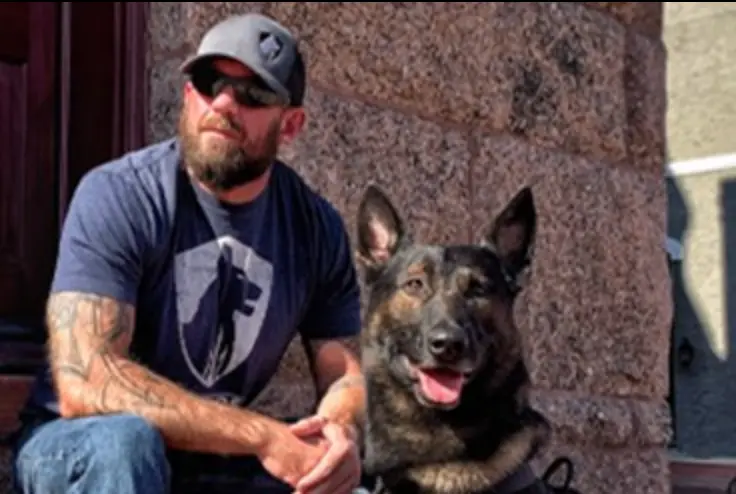
Mike Ritland is a veteran of the US Navy Seals and is one of the top area experts in the world on training and handling working dogs. He is also the host of the Mike Drop Podcast.
Mike Ritland is a veteran of the US Navy Seals and one of the top area experts in the world on training and handling working dogs. Additionally, Mike is the host of the Mike Drop Podcast where he interviews some of the most interesting people in the world from both inside and outside the SOF community.
Mike’s show is currently one of my favorite podcasts for many reasons. He isn’t afraid to speak his mind on any issue, and he’s an excellent interviewer that doesn’t just duplicate interviews he hears from other podcasts. Two of my favorite episodes of his are his interview with Johnnie Walker, the famous Iraqi interpreter, and Eddie Gallagher, the controversial Navy Seal who got railroaded by the media.
In this interview, Mike did not disappoint. He delivered some solid business and transition advice, and we talked a bit about politics in our day and age. You’ll learn:
- why it’s important to find your purpose
- why you need to surround yourself with good people
- how Mike made the transition from the military to business
- what working with dogs has taught him about people
- his opinion on various matters including education and politics
- what Mike considers his most informative interview
To learn more about Mike, his business, and his podcast, click on the following links:
Mike’s Instagram: http://instagram.com/mritland
Main Page: https://mikeritland.com/
Trikos International: https://trikos.com/
Team Dog Online Training: https://teamdog.pet/join-trikos-team-dog/
Mike Drop Podcast: https://mikeritland.com/mike-drop-podcast/
Transcript
Machine-generated from the episode audio and lightly edited — may contain errors.
Chris Albert (link to this point)
The Warrior Soul podcast is written, edited, and produced by me, Albert. Our mission is to provide tools, tactics, strategies, and ideas that help The US military veteran community to show up as the wisest, strongest, most capable versions of themselves in the civilian world. If you're not a veteran, stick around because anything we talk about will most certainly apply to you as well. This podcast is made possible with the help of f bomb nutrition. They make delicious packets of fats that you can carry around anywhere with you in little portable packets.
They make macadamia nut butters. They mix them up with chocolate. They mix them up with sea salt. They mix them up with coconut butter. They're absolutely delicious, and they're really good for you.
They don't have any sugar. They also make a lot of cheese snacks. They make meat sticks, and it's just a great company. These guys send packages of this stuff to the troops who are on the front lines overseas to supplement their MREs, and we didn't ask them to do that. They just did that on their own initiative.
Really great company. If you wanna get 20% off your first order of f bombs, head over to www.dropanfbomb.com and use the code Warrior Soul at checkout. This podcast is also brought to you with the help of Save the Brave. Savethebrave.org is a five zero one c three charity for veterans. They run camaraderie events that include fishing, golfing.
They also do a lot of work with gold star families. And unlike a lot of other organizations, their board doesn't take a salary. Really great organization that is doing amazing work. So go and check them out at savethebrave.org. With that, thank you guys so much.
Let's get into today's programming.
This is Chris Albert, and I'm here to remind you of one thing. Someday, you're going to die. Now that's not some morbid statement or scary idea. It's solid fact. Your time here on this earth is limited.
And we need to be reminded of this as much as possible for one simple reason, to live your best life while you can. This is the Warrior Soul podcast.
What is going on ladies and gentlemen? I have an absolutely outstanding guest for you today. His name is Mike Ritland. Mike served as a United States Navy SEAL. He's also one of the top area experts in the world when it comes to working dogs.
He's authored three books and he is the go to guy when it comes to trying to find a dog who's gonna do a job, whether it's for the police, whether it's for the military. You name it, this guy knows about these dogs better than anybody else. He's also got an absolutely outstanding podcast, and I am a huge fan of the Mike Drop podcast. He does it in a way that I believe is different from what most other people are doing out there. And here's the deal.
When it comes to podcasts, and I don't like bad mouthing other podcasts because I've fallen into this too. But when it comes to podcast, a lot of them are just kind of clones of each other. Like, you listen to an interview, guests will go on to multiple different shows, and when you hear a guest on one show, the interview sounds exactly like the same thing you get when you go to other shows. That doesn't happen on the Mike Drop podcast. He does a really excellent job.
He goes deep, and he brings on some guests that you're not gonna find anywhere else. A couple of my favorite episodes, he did one with Codename Johnny Walker. Johnny Walker was one of the interpreters in Iraq. He was an Iraqi interpreter, and he worked with the Navy SEALs. And he wrote a book about his experience.
And that interview that Mike did with him, I think every American should be required to listen to that interview. It just was absolutely outstanding. He also brought on Eddie Gallagher. He gave Eddie Gallagher the Navy SEAL who was accused of doing all kinds of horrible things. He gave Eddie Gallagher a chance to speak, and he didn't go easy on Eddie.
And one of the things I say to Mike during this interview is you got things from Mike doing the interview that you wouldn't have gotten from somebody from 60 Minutes because Mike has his expertise as a Navy SEAL. He understands leadership. You're not gonna get that from some reporter or anything like that. And I love the the the way that he gave Eddie a chance to speak and to tell his side of the story of things. I had a great conversation with Mike.
We talked about how he got his business started, how he made his transition out of the SEALs. We talked a bit about politics, and that's another thing about Mike. He's not he's not scared to offend anybody. And and that's where I tried to bring this interview, and I really wanted to bring that out of Mike in this interview, and I hope I did a good job of that for you. At any rate, I'm a huge fan of Mike.
I'm really, really happy he came on the show. Hope you guys get a lot out of this interview. Hope you enjoy it. And here's the deal, guys. This is the Warrior Soul podcast.
What I do here is I bring information to empower US military veterans to live their best lives so they could show up as wiser, stronger, more capable versions of themselves in the civilian world. Try to deliver tools, tactics, and strategies for you guys so that you can apply them right after you listen to one of these episodes. If you enjoy this podcast, I don't care if you ever spend a dime with Warrior Soul ever. All I need from you is to share these episodes out and spread the word about us, and you do that in a couple of ways. You could share these episodes with somebody who needs them.
You could tell people about the show. You could head over to iTunes and just write us a written rating and review. And also, please make sure you're subscribed to the podcast. None of that costs you anything. It takes just a second.
And every time you do it, you're helping me to put this information to the ears of more veterans. So I appreciate all of you. I really appreciate Mike Ritland for coming on here, and I'm gonna stop yapping my trap over here, and let's get into this awesome conversation. Mike Ritland, welcome to Warrior Soul podcast, man.
Mike Ritland (link to this point)
Thank you. I appreciate you having me on.
Chris Albert (link to this point)
I was just telling you before we hit record, I am a huge fan of your podcast, man. You do the job really, really well.
Mike Ritland (link to this point)
I appreciate that very much. I'm always humbled to have support of anybody, but especially fellow podcasters and interviewers. So that means a lot coming from you. I appreciate it.
Chris Albert (link to this point)
What what made you decide to get started?
Mike Ritland (link to this point)
You know, so it was kind of a combination of a few different things. I'd say primarily, it was just a lot of different people had asked if I'd considered it or if I would consider it, or they just thought it was a good idea. And and, you know, I kinda I wouldn't say scoffed at it, but I just I was like, oh, it's your opinion. I appreciate it. But you know?
And just after a couple years of being kind of approached or asked about doing it enough, I was like, well, you know, screw it. Why don't I give it a shot and see how it goes? That in conjunction with I I do legitimately enjoy, you know, sitting down with the people that I've had on and and having that opportunity to kinda, you know, ask whatever you want to, you know, the people that that have the stories that they have. To me, it was just it was a really neat opportunity. And I think the last thing is, I would say, equally as big of a deal in terms of it contributing to why I started, which was just with everything being so politically correct, you know, in today's day and age with between media and even a lot of other podcasts that are sponsored by corporations that, you know, wanna edit it or or censor certain things.
They don't wanna talk about certain things. They don't want certain swear words or whatever. Right? You know, there's a a significant portion of the population that that really craves and is is starved for that type of dialogue because it's so rare and so few and far between nowadays. So it gave me an opportunity to kinda be myself.
You know, sometimes when I'd go on other people's shows or whatever, they would ask, you know, hey. Can can you not say this? Or, you know, I'd rather you didn't swear or, you know, I'd prefer not to talk about x or or whatever. And so it's a bit on the cathartic side for me, I think, and almost in a like a therapy therapy or therapeutic way, being able to let the hair that I don't have down and just talk about whatever whatever suits our fancy. So it's it's been a neat neat project going on right at about two years now.
So I've I've really enjoyed it.
Chris Albert (link to this point)
That's awesome. That's awesome. You know, just being a podcaster, there's a couple of things here. Number one, being a podcaster, I look at a lot of podcasts. I listen to a lot of podcasts, and so many of them are just kinda clones of other podcasts.
You know? You get the same guests, people, same questions. You've had some absolutely awesome guests. That that Johnny Walker episode you did was outstanding. I I was listening on the way back from 29 Palms because I had to go out there, and it was just I I was enthralled the whole time just just listening to the comments.
Mike Ritland (link to this point)
That's awesome. You know, to me, that's really the best compliment I could I could receive. I mean, to me, the goal is is you you don't want the even if it's a three and a half or four hour episode, which, you know, many of them are. You know, to me, if if that's the end of it, people are like, fuck. I coulda listened to you for another five hours.
Like, then I I did my job right. And that's really my goal is to is to be entertaining. Yeah. Not necessarily shock jock value. You know, a lot of times people, I think, kinda ask, you know, why why the edge or, you know, why ask some of the questions you do.
I mean, and for me, it's really about that's what I'm interested in. I know there's a lot of other people that that would ask or or want that same question asked. And I you know, the whole don't you know, we don't give a shit about your feelings in the in the prelude is it's not like a Howard Stern or, you know, Johnny Knoxville jackass kinda thing of let let's see, you know, what's what's the most ridiculous thing we can say to get a rise out of somebody. That's for sure not not the angle. I don't I I never go out of my way to piss anybody off or ruffle any feathers.
I just I don't consider that, you know, if I do. Like, I I don't care if I do ruffle feathers or piss people off. So it's been a good balance, think, of, you know, kinda cutting through the bullshit and and getting the the real story, so to speak, from, you know, a lot of people that being on a lot of other interviews, especially mainstream media, but even a lot of other podcasts that people just, like you said, aren't really asking the the questions that I think most people wanna ask or or they're all kinda the same, and and it's just pretty generic. And, you know, to me, if if I listen to a podcast and then, you know, twenty minutes in, I'm just like, man, I this is just boring. I I don't even wanna listen anymore, then then, you know, you you lose me there.
And so I'm not know, really, goal is to is to not be that guy. But
Chris Albert (link to this point)
Yeah. You know, the other aspect of it is this, man. And and what I like about it is that you really do dig into the human being. It's not it's not like some shock jock kind of thing. But the other aspect of it is this, man.
You know, with the way things are going on today in in the political realm and the and the, you know, the SJW realm and everything like that, I I think that people forget that this experiment that we have in a a a constitutional republic is is still an experiment. And I think what what podcasts like yours do and and some of the other ones like Jocko's and and, humbly, I'll say mine as well, is that what you're essentially doing is is you're training people how to be free. Right? And and I think that's important. It's so important because people forget.
You know?
Mike Ritland (link to this point)
I would say absolutely. And I think maybe even more importantly is is you at least help them or help give people an ability to at least think freely, you know, because the the action will follow the mind in most cases, I think. And and that's, I would say, our society's largest problem, and I'm not immune to this. Don't think anybody is. I think we all get ingrained and conditioned in some ways, whether it's keeping up with the Joneses Joneses with materialistic bullshit or or whatever it is, is that sometimes you get kinda brainwashed into that.
And I think probably the the thing that I love most about the podcast as a medium is that there's there's no middleman. There's no corporate influence. There's no bullshit, or at least it has that potential to be raw and completely unfiltered. Obviously, the bigger they get and the more, you know, you get approached by big corporations that, you know, that wanna be a part of it and disseminate it and take it to the next level, which, you know, I've had had on on more than one occasion offers to do that and then have turned every one of them down because at the end of the day, there was always, you know, the the contract was always, you know, full creative control, and you can ask and talk about whatever you want. But there was always the fine print at the very bottom that said if if there's something that we deem offensive or just not in align with our brand values, blah blah blah.
We have the authority to take it out. And I said, fuck. No. Yeah. You know, the the whole reason people listen to my episode, you know, the nine people that do, you know, is is because I I don't don't don't take that into consideration.
So, you know, I think that's an important distinction for sure.
Chris Albert (link to this point)
Well, I wanna come back to this in a second. I wanna I wanna you know, for for pretty much anybody who listens to my show probably knows who you are, and they probably listen to your show before. But I I wanna get a little bit back in your background. Served as an Navy SEAL. You're one of the top area experts as far as dogs go.
And, I wanna talk a little bit about your career because I know that you had to get out because of a lung infection. Correct?
Mike Ritland (link to this point)
Well, sort of. I mean, I I was offered the the chance to stay in or the the opportunity, I guess, is probably a better word. But I was not convinced that medically I really would have been able to do it. When I first was diagnosed with a lung condition called valley fever, or coccidioidomycosis, I was actually offered a medical retirement then, and this was back in 2004. And at that time, my first child was on the way.
It was fairly newly married, and, you know, I had no no college degree, no plan on on getting out of the military at that time. So it really kinda caught me off guard. And so I just asked the master chief and then kinda that I was working for at the time who I I still keep in touch with to this day, amazing guy. But, I just I kinda told him what was going on. I said, look.
Here's the deal. And so he worked a deal with, you know, the BUD/S master chief at the time, and and they kinda figured out a way to move me over to the basic side. Because the the biggest stipulation was after my, almost nine months of convalescent leave, which is almost unheard of in the military, was that, you know, you can't be around anything that will cause lung irritation. In pretty much every aspect of being a Navy SEAL, you're in environments where that's the case. The only exception is being a BUD/S instructor.
There's not a lot of stuff going on there, lung irritant wise. So I went over there and finished my time there, got my degree, had had both my kids, and did did some other schooling through the GI Bill while I was there and and formulated kind of a better plan to to be way better set up to get out. Then at that time, I still offered a handler position on the West Coast SEAL canine program. They offered that position, but honestly, I was not convinced that physically I would have been able to to really keep up with with it. You know, I lost about 40% of my lung capacity, for good.
And so it was just, for me, it was it was largely a personal decision of saying, you know, I I think I can, a, make more of an impact by starting my own company and training lots of dogs, handlers, putting on courses, importing, breeding, whatever. You know, I'd I'd rather be around now that my kids are here. You know, I've been gone nonstop for the last twelve years. And, and then lastly, I I just I wasn't a 100% confident in my own physical ability to to be able to do the job and provide, you know, asset type augmentation by being a liability to the team. And so all of those things combined, it was relatively easy decision for me to get out.
Still still tough to separate after basically growing up in the Navy, because I I came in right at 18 and and got out when I was a little over 30. So, you know, kind of the the grow growing up years of your life, if you will. But but, ultimately, I, you know, I wouldn't be where I am today had I stayed in, and and I think everything's worked out pretty well.
Chris Albert (link to this point)
Yeah. I wanna wanna ask you, you know, what was that like for you psychologically? Like, were were you were you initially focused on potentially opening up a business, or did that come to you after a while, or was there a period where you had to adjust and had to say, okay. This is my new life now, and this is what I gotta work toward.
Mike Ritland (link to this point)
So it it was psychologically not difficult at all, which I feel very, very fortunate in being able to say that because with a lot of guys, I don't think it is. And I think the reason that it wasn't for me looking back on it is is that because I had a pretty tangible plan and purpose built, you know, execution style plan of of of how to go about obtaining that goal. And there there was an element absolutely of of me wanting to start my own dog company, and and do dogs for a living, so to speak. I I was not a 100% sure on how I was gonna do that. And so when I first got out, I actually took a job with ExxonMobil as a drilling rig supervisor.
So I went I went you know, I did a little bit of contract stateside contract work teaching some just basic pistol and rifle marksmanship to some active duty army first first armored division guys through this contractor program that was going on at the time. And while I was doing that, you know, got the interview at Exxon, got the job, and then started working for them, you know, within a couple weeks of being separated from the Navy. And I spent that time, which was only I mean, it wasn't even quite a year. It was just shy of a year. It was about ten months that I worked for them.
And and while I was doing that, you know, I was getting everything set up. I you know, it was a unique position schedule wise, and then I I had two weeks on and two weeks off. So the two weeks I was on, I was I was gone and working and and whatever. But then when I was home, I had two full weeks to to work nonstop on, like I said, laying concrete and putting kennels up and and administratively getting stuff in order. And I I partnered with a couple of of other special operations guys that had pretty extensive contractor experience, as well as business experience.
And then we we launched the first dog company. Did that for a few years. Kinda had a little bit of a falling out, myself and one other gentleman, with with the other guy. Just leave it at that, you know, and spare you the details. But and then started my my current one, Trikos, right after that.
And and that's when, you know, I I finished up my time at at the West Coast on the multipurpose canine program for the SEAL teams out there. It all kinda kinda came together at once as as as I left the West Coast. I started a new company, and and then it was just me a 100%. Wrote the books, did the 60 Minutes, and kinda launched into my own own dog company from there. But to your question, circling back, even though, you know, if I think back to, like, what I thought I would be doing back then versus what I'm doing now and and the pivots that I've made and and the transformation process that's taken place in that, you know, almost twelve years now, You know, while I didn't plan every step of the way, you know, it it was what I wanted to do in terms of make a living working with with dogs in some capacity in in these types of dogs.
So having that as kind of the backdrop that I I always kept my my pivots and my, you know, adjustments that I needed to make business wise like any entrepreneur does, that was always at the forefront and provided the the necessary context for me to continue to to do everything how I was doing it. So, you know, again, I've seen a lot of guys struggle with getting out and not having a purpose and being pretty fucking miserable, and I and I feel for those guys. And I, again, I think it just makes me even more humbled and and and just very gratuitous knowing that that I didn't have to deal with a lot of that. So
Chris Albert (link to this point)
Well, it's a you're fortunate, but you also you also found the purpose. Like, you can't you can't just kinda sit there and wait for purpose to show up. It you you kinda go out
Mike Ritland (link to this point)
No. For sure.
Chris Albert (link to this point)
Get it. Right?
Mike Ritland (link to this point)
Yeah. I mean, it it has to be something that you enjoy. I mean, to me, without the enjoyment and the passion and the and the drive and desire to wanna do whatever that is, you know, purpose, like you said, it's it's not just gonna manifest itself out of an activity. You know? So if there is anybody listening that that is you know, has struggled with that or is struggling with that, I mean, to me, start there, you know, figure out whatever it is that you know, what what do you like doing the most that's at least productive.
I mean, if it's playing fucking video games. Now granted, there are people that do it for a living and actually make millions of dollars, but, I mean, that's, you know, the outliers. To me, that's not really a plan. That's like playing the lottery thinking and thinking that that's your fucking retirement plan. You know?
Like, that's not not really, applicable, but, you know, finding some some some purpose and something that's that's productive and then figuring out a way, you know, to turn that into, you know, something to be monetized or a business or or at least a career or something of that nature, I think, is a is a really good and positive, important first step, to finding that that purpose that I think a lot of people lack.
Chris Albert (link to this point)
Right. Right. Exactly. It's got to, you gotta bring value to the table. And if you're just sitting there and you're just thinking and philosophizing and and doing things that aren't gonna bring value to the table, then then it's not gonna work out, and you're not gonna you're not gonna have something that people are gonna want to to take part in and to support you with.
Mike Ritland (link to this point)
Agreed. I think that's one of our our society's biggest problems is you know? And and it's the way that we've collectively raised our kids, I think, for a couple generations now, and and they've always been told that they're special and that they're valuable and they're important. And, you know, and and some of that is is good and and necessary. But when it's overdone, you know, to me, that's that's where you cross over into an entitled societal generation where now they they have to be told that they're amazing at everything or their their self esteem and confidence holds like a fucking lawn chair, and they become useless.
You know? And and while that, I think, has the potential to be, you know, a little bit of a balancing act in in making sure that you affirm kids growing up and and help with their self confidence, it can't be so much to where it turns them into entitled little pricks. And, you know, being a father, the way I've tried to couch that is is essentially, you know, find things for them to to to do and and to overcome, you know, test them a little bit, and then tell them that they've done a good job. Because to me, if you you know, it's like the the kids that you see on American Idol that just plain fucking suck. You know?
And their mom's like, no, honey. I'm your biggest fan. You're amazing. Like, no. You're not.
You suck. You know? And and the fact that this is the first time you've been told that tells me, you know, that, unfortunately, your parents did it wrong. You know? And and just like with a lot of things, you know, the road to hell is paved with good intentions.
Like, their heart was in the right place, and and it's born out of a good place, you know, out of out of love and and good intentions. But, unfortunately, it has it has the unintended negative consequence of the exact opposite impact you were hoping to have. And and so, you know, there's there's an element of that, I think, that, you know, that that should be reflected on societally. But
Chris Albert (link to this point)
Absolutely. I I agree 100% there. Coming back to that, you know, as far as business goes, you mentioned you had some early struggles with a with a falling out. And, you know, that's that's been a similar experience for me. You know, I fell flat on my face multiple times when I was trying to get in a business.
You know, when you're you're starting a business, a lot of times, it's like drinking from a fire hose. Did you did you take business classes when you're when you're going to school? Did did you where did you learn most of the stuff? You said you had mentors. You had people around you who were who were teaching you a bit.
But but Yeah. Was that a little bit crazy at the beginning, or or was it was it something that that you learned as you went along and you finally found your footing?
Mike Ritland (link to this point)
So I'm saying a little bit of both. I I I did not take any business classes. I I have no formal business training other than, you know, the school of hard knocks. Having said that, you know, the the painful lessons that I learned initially, you know, are ones that I look back on now, and there's for sure a silver lining to them. You know?
And and it was hard, really hard at the time because I I felt completely robbed, which I was, frankly. I mean, I I I was. I mean, myself and and the other guy that I I actually am still friends with, both of us were completely fucked over by the other guy. You know? And so for me, it was a it was a good moment, I think, in in being able to utilize the mentality that the SEAL teams had had really forged into my young impressionable mind as an 18 year old, 19 year old checking in the SEAL Team Three, you know, and spending over a decade around, you know, some of the best men on the planet and and really being taught how to handle yourself in the face of both danger and and fear and defeat.
You know? And and while I think, generally speaking, people kinda fall into one or two categories, and that's they they let that victim mentality define and control them, their emotions, their actions, or their their inactions in many ways, or you you either use that to to fuel, you know, the the the getting up and saying, okay. Well, you know, success is the best revenge, and I'm gonna shove it up their ass now. You know? And and to me, like, almost every decision in life really kinda boils down to that.
I mean, everybody's handed a shit sandwich at some point. Some people over and over and over, you'd think they're at the shit buffet with how many times they they get handed that. And, really, the the only thing that separates people who are legitimately successful versus everybody else is the person that I I don't give a shit what happens. You you you move on, you put it behind you, and you focus on the next thing. And and, you know, primary lesson I have learned as as a entrepreneur and businessman, having had several different, you know, revenue stream ideas that I put a lot of work and thought into and thought was a home run, and it completely fucking failed.
You know, I can tell you, you can sit around and feel sorry for yourself, or you can completely fucking forget about it and move on and and just, you know, on to the next and and and put, you know, put those lessons in your back pocket and and know, you know, the the the reasons why it failed, and and don't make those mistakes again and and stay positive and just keep crushing it.
Chris Albert (link to this point)
That's great advice. That is great advice. You know? And and without getting into the specifics of what happened with you and the and and the other guys, probably a good thing to say here, a good take home piece of advice would be to have a good operating agreement in place if you're getting into business with other people too. Right?
Mike Ritland (link to this point)
Well, it is. You know? But I guess for me, it's one of those things where, you know, those those ultimately are only as good as the people that are are drafting them and signing them.
Chris Albert (link to this point)
Mhmm.
Mike Ritland (link to this point)
You know? And for a guy like me that had, at that point, zero business experience, I mean, literally absolutely zero business experience, I just didn't know any better. You know? We had an operating agreement, but it didn't matter because it wasn't a it wasn't a good enough one to to protect me from what happened. And, you know, from my experience, you know, the the the ability to work around those if somebody is is a shady prick, you know, is is gonna be there.
You know? And so to me, even more so than a solid operating agreement, yes, that's important. I think an even more important thing is making sure that the person that you're signing that with is as trustworthy as you can possibly get. There's no guarantees, but it was a tough lesson learned for sure and certainly made me wise up on on some things. But I would say that at least as much as trying to understand paperwork better and and having better things in place ahead of time as it it taught me not to trust people just because they were cut from the same cloth as me.
Or on the transverse, don't not trust somebody because they have a totally different experience than than me also. So for sure, it was good lessons learned.
Chris Albert (link to this point)
So I And, you know, in addition to to, you know, all the business knowledge that you have and and, you know, your your public persona with your podcast, You are one of the top area experts in your field, which is with working dogs. And wanted to ask you because you make these parallels a lot on your show. What are some of the things that dogs have taught you about human beings?
Mike Ritland (link to this point)
I I would say dogs have taught me more about human beings than human beings have in that, you know, there's an element of of face value, black and white, simple basic psychology that exists in a dog's mind that that you can use and and apply it to everyday life and and relationships. And that number one is that communication is absolutely everything. You know, and you hear that a lot. It's a very cliched, you know, kinda bullet point when people are talking about business or whatever. You know?
But but the reality of it is is that, you know, that's something you have to focus on for it to to really count. And I think a lot of times, people, even though they know that, they may say that, they're still not very good at communicating. You know, the nice thing about dogs is that, you know, you can't explain shit to them. So every everything has to be done in in action. You know?
And just that that simple tactic or or principle or technique, whatever you wanna reference it as, you know, has been more valuable than anything is because, you know, you you can talk a great game. You know, one of my favorite adages is, you know, what you do speaks so loud, I can't hear what you say. And I'm a firm believer in that. Most people, when they think, I need to be a good communicator, that means you need to be well spoken. While, yes, it's important, what's more important is do you back it up with your actions? You know? And and the best way to communicate is to show people who you are.
You know? And and when you don't do that, you know, Obama was a phenomenal communicator.
Chris Albert (link to this point)
Right.
Mike Ritland (link to this point)
In my he he was a fucking snake oil salesman. You know?
And I and I think that's where people get the maybe the misconception on the communication piece is thinking that I need to be able to to sell ice to Eskimos and and be this bullshit. There's a lot of people that are good good at that, and and maybe it gets you that cell or that foot in the door or whatever. But, you know, when it's time to answer the fucking mail, people are are gonna pull your card and know you're full of shit if your actions don't back it up. You know? And the and the beauty and the simplicity and the elegance of of a dog that that you can't bullshit a dog.
You know? You you have to follow through with your actions, and you have to use your like, the bond and the relationship and the trust and and that teamwork element that that you just have to put the time in and and invest in the relationship with that dog for him to trust you enough to do some of the things that we're asking them to do with or for us that that that makes it so that, you know, it just kinda becomes second nature, and and you you start to, you know, integrate that that physical communication piece into your day to day life. And so there are a ton of other parallels that exist in in dogs and dog training from, you know, selection of the right dogs, same as selection of the right spouse or coach or, you know, business partner or boss or employee or whatever is it. You know, how important selecting that right person or right entity is first, you know, makes everything easier to, like I said, the communication thing or even just having balance, you know, balance in your life, balance in in training, balance in nutrition, balance in outside versus inside time balance for you know, work versus play balance in in nutrition.
I mean, you name it. You know, there there are far more parallels in dogs and dog training to everyday life than I think a lot of people realize. And, you know, it's interesting. One of the the neatest and and most, I guess, flattering and and satisfying pieces of feedback that I get from my online training community, which is, you know, people that, for the first time in their life, they're the ones doing the training with their dog and communicating with their dog and and having the ability, you know, to actually train and communicate with their dog and and actually understanding the how and the why behind it. But to me, the neatest part of it is that there there are so many elements of of the other aspects of their life that improve because of that.
You know, understanding that, you know, that you you've gotta put the time in and invest in the relationship and be able to communicate through your actions. You know, it it it's really neat to see how many people it improves their their marriage, their relationship with their kids, their, you know, in in the workplace relationships or, you know, if it's a coach with his athletes or a teacher with their students or you name it, it all kinda translates and parallels into basic relationship investment. And it's just it's really neat to see it help people, and that was the for sure, the ultimate goal that I had in in starting it.
Chris Albert (link to this point)
Let's it's really interesting what you do because it's yes. It is about dogs. The dogs selecting the dogs, selecting the proper breed, selecting it for its genetic qualities. But at the same time, when you're placing a dog, you've really gotta be a good judge of people. Right?
Mike Ritland (link to this point)
Absolutely. I mean, so for the, like, for the personal protection dogs or police dogs, working dogs that I I select, there's absolutely a huge component of that. Police and military, it's it's less. I would say that it's still for sure there, but you've got a lot more flexibility. The the personal protection dogs is enormous that way where, you know, you've gotta be a a very, very astute judge of of people's character and their situation.
And, you know, I've been doing it long enough to know, you know, just just based on the dynamic that a a household may have that that's interested in a dog. I, on a regular basis, turn business down or or just say, you know, hey. I don't I don't think this is a good fit and and essentially talk them out of a of a sale because it's it's just not the right fit. On the same token, you know, from from that training standpoint is, you know, understanding the the right fit, whether it's, you know, a certain breed or the individual in a breed. You know, a lot of the, or I I would say, all of the online training components of of what I do are, you know, people coming to me and and signing up for the online training.
These are normal, you know, everyday house house pet owners that just want, you know, their dog in a in a better spot than they're at. They're not happy with their relationship, and they're not happy with where where the dog is at from a training standpoint. So, you know, I I have a series of videos and and online forums that I go in and answer answer questions every week and interact with them and and answer, you know, questions of some of their problems and and what have you. And, you know, just seeing the the transformation when that that light bulb goes on, people understand, you know, what to do and how to do it and and most importantly, why it works. That that's when they they kinda cross over into being able to apply it to a lot of other things as well.
It's just that's really neat to see.
Chris Albert (link to this point)
Hey, guys. I hope you're getting a lot out of this interview. You know, the Warrior Soul podcast is built with the mission to empower its listeners to live absolutely epic lives. And that's why we recently created a group called the Warrior's Obituary Society. This group is built to empower its members to live epic lives worthy of epic obituaries.
And it starts with an eight week development program. And with this development program, what you're gonna do is you're going to outline a vision for your life. You're going to get very specific about what you want. Because without that specificity, you don't know where you're going, and you don't know what you're doing. From there, we help our members to develop specific goals, objectives that they are going to push toward, and that their fellow members of the Warrior's Obituary Society are going to hold them accountable too.
From there, we're getting down into specifics. We're going to help you to develop and customize your own personal fitness and nutrition plan to help to fuel your body and fuel your mind for the quest ahead. From there, we're going to work on your personal finances. We're going to help you to knock down debt. We're going to help you to start saving money and to create a plan so that you can start investing in your dreams.
Then we're going to get into your business and career. We're going to help you to develop the skills that you need to develop yourself so that you can have a major impact in the field you choose. If you choose to go into business, we're going to help you to set up the foundations that you need to create your own company and get started on your path in life. From there, we're going to be working on your relationships, we're going to help you to develop a world class network, and all along the way, you're going to have your fellow members of the Warrior's Obituary Society pushing you in every single area. We meet once a week over a live call and we're constantly communicating over our own private forum on Slack.
We don't do anything over social media and that's because I don't want anybody feeling like anyone's looking over their shoulders and I don't want you exposed to the crazy distracting alerts that you get on Facebook and some of the other social media platforms. Normally programs like this cost thousands of dollars. This one does not. For the price, it is the best development program on the Internet. And that's because our mission here at Warrior Soul is to empower people to get more out of life so that they can in turn make the world a better place.
We've got a great mix of active duty military, US military veterans, and civilians in this group. We wanted to keep it really eclectic so that we get a lot of different types of views up there and a lot of different people with different areas of expertise. If you think that this is something that would be of interest to you, and that this is something that could empower you to live your absolute best life, head over to www.warriorobituarysociety.com. That's www.warriorobituarysociety.com, and you can sign up today. And if you have any questions about it, just reach out to me at chris@warriorsoulagoge.com.
That's chris@warriorsoulagoge.com. I'm happy to even sit down with you for a phone call for a few minutes to see if the group is right for you. I look forward to seeing you guys in there, and let's get back to this awesome interview. Obviously, you're a very busy man. You've got multiple components of your business.
You know, right now, you're on the road, just made a delivery. And you said a lot of times when you're delivering the dog, you're actually driving out to keep the dog off a plane. How how do you structure your week and your days to stay on top of everything?
Mike Ritland (link to this point)
Well, it's I mean, to me, it's it's really an element of prioritizing. You know, there's plenty of people that are every bit as busy as I am or busier. There's plenty of people that are less busy that are that are a mess. You know, to me, just like anything else in life is that you've got to determine, okay, like, almost like an ER nurse would triage a a bus crash, you know, and there's 30 people coming in. Well, there's only four doctors and and eight nurses and a handful of techs and whatever.
So, you know, let's figure out what, you know, what juice being worth to squeeze, what's the most important, what's the the biggest priority, and and then kinda task your way through those things. And that's I'm I'm certainly not saying that I have it completely figured out and that I'm I'm always firing on all cylinders. There's times where I I misprioritize or drop the ball on something or or what have you. But, to me, the the best way to at least minimize and mitigate that as much as possible is to have some sort of scheduling system, whether it's a a Panda Planner that you're actually writing in or, you know, using the calendar on your phone or computer or or, you know, whatever in between, is that you have some system of saying, here's how I'm gonna keep my things organized. Here's how I'm going to prioritize my day.
And, you know, when you get to the point where, you know, enough people are contacting you or asking you either for your advice or, you know, they want, you know, to pitch a business idea or they want you to come, you know, speak at an event or train a dog or sell them a a personal protection dog or come to a a police dog seminar or whatever, you know, that there you've gotta learn to say no. And there's there's certain things that, you know, I I'll just say, you know, hey. I appreciate the offer, but but no. Thanks. You know?
And and to me, when you get to that point, then it it gets even more important, you know, just to look at every opportunity and say, okay. Hey. This this may be a good opportunity, but is it better than the than these other ones? Or, you know, from a cost benefit analysis standpoint, you know, am I going to be throwing my time away by spending however much time it's gonna take to do x, whereas y is is way more efficient and more profitable, you know, from a from a time management standpoint. And I think you've gotta look at your personal life that way too.
You know, pick the things that are important and realize you can't work a hundred and forty hours a week every week and and keep your sanity and and mental health and and have any relationships in your personal life that are worth a shit. And so you've gotta prioritize those as well, and you've gotta balance all of that. And I think for me, the combination of of triaging and and prioritizing, you know, what's the most important and not not feeling bad or guilty or giving a fuck about cutting the things that you just don't have time or just aren't important enough to you, just cutting them away and forgetting about them. You've you've gotta be able to do that and and not, you know, feel bad about it, but that's that's what's helped me enormously, at least try to stay on top of everything.
Chris Albert (link to this point)
Right. And and I think what's important about that is that if you're doing something that's not gonna contribute to your overall mission, that's not gonna fulfill your purpose, then, essentially, what you're doing is you're you're cheating yourself. Cheating the people around you, cheating whoever's depending on you to get those more important things done. And, you know, what happens is you end up getting dragged all over the place, and and you can really end up in a place that that is is not gonna it's gonna be further away from where you wanted to go in the first place than you ever thought. Right?
Mike Ritland (link to this point)
No. Absolutely. You know? And and that's, again, the the parallel between business and personal life, I think, is pretty exact and that, you know, it's, you know, jack of all trades, master of none. You know, you you can be okay at a bunch of different things, or you can be a an absolute fucking Jedi at a handful of them, or or maybe it's just one, and that's fine too.
But, you know, you you've got to to prioritize things and then understand what's what's giving you the most bang for your buck and and not, you know, waste you know, step over a dollar to pick up a a dime. You know? And and and that, I think, is something that plagues a lot of people as they they end up wasting a lot of their time on shit that that really is meaningless, you know, and and miss out on a lot of things that that they should should be focusing more on, and it would probably make them a lot happier.
Chris Albert (link to this point)
100%. 100%. And you gotta know what your overall goal is. You gotta know what your vision is in order to get there. Right?
You have to know
Mike Ritland (link to this point)
For sure.
Chris Albert (link to this point)
Where you wanna go.
Mike Ritland (link to this point)
Well, yeah. I mean, for sure, that that helps, and it's important. And the reason I the the only reason I hesitate to say that it's necessary is that, you know, some people just don't fucking know. You know? And that's okay too.
You know? But what I will say is for that person that just doesn't know, start start somewhere and and start prioritizing things. And in in prioritization, you'll you'll learn if it was if you were right or not. You know? If you never do it, you'll never fucking know.
And, you know, that's the only way you're gonna get good at prioritizing just like every other thing in your life is you gotta fucking practice it. And if you don't, then you're gonna be, you know, floating around and and and drifting around in a sailboat with no paddle or or a rowboat with no paddle rather. And and then where are you? You know? So you you've gotta just just put one foot in front of the other and and start trying to do it, and and that in and of itself will will be your best teacher as to how to do it.
Because a very common question when I give that advice, people say, well, how do you how do you know what to prioritize? Well, fuck. You don't. You know? You don't until you start trying it.
And then at the end of every week, reflect a little bit on that, you know, or whatever your cycle is. You know, maybe it's every morning. Maybe it's once a week. Maybe it's, you know, twice a month. Maybe it's every month.
Whatever your scheduling kinda pattern is is that, you know, as you go into the next scheduling, you know, mindset or or session is reflect on the last one and and realize where you screwed up or where you nailed it. And just over time, you'll get to where, you know, you can schedule yourself and be really efficient and know what's worth worrying about, what's worth putting time into, and what's not.
Chris Albert (link to this point)
Yeah. And you bring up a really important point there too is you can't wait until everything's perfect for you before you start practicing something like that. Right.
Mike Ritland (link to this point)
It'll it'll it'll be dead it'll be dead before that happens. So
Chris Albert (link to this point)
Exactly. Wanna get just get back to the podcast real quick because, again, Mike Drop podcast. I I listen to it regularly. Love the show. You know, who was there a guest that that really surprised you?
I know you know a lot of the guys you bring on. I know that that that a lot of them are operators like you. Was there anybody who particularly surprised you as far as what you learned from them or as far as what they went over?
Mike Ritland (link to this point)
The first one that comes to mind is Dr. James Mitchell. I don't know what episode number it was, but it was in the first it was in the first year. So it was it was earlier on. It was maybe in the teens or early twenties maybe.
But so he was the he wrote a book called Enhanced Interrogations, and he was basically an Air Force colonel that as he was getting out of the Air Force, he's retiring and and as his last kind of several years in in that branch, you know, had a had a instrumental role in helping with SERE school, like the, you know, the logistic or not the logistics, but the the curriculum side of, you know, the the psychology based tactics and and what to do and why and and all of that kind of stuff. So a lot of the brains behind the tactics and techniques used in SERE school and in interrogating. And what what fascinated me the most was in reading the book is seeing how many parallels there were, again, as as being a dog guy, but, you know, how many parallels there were between dog training and interrogating in terms of it. It really all boils down to you're trying to you have a desired result, and you're manipulating the environment and the subject. You know, in his case, it's it's a prisoner.
In my case, it's a dog. And some people may say, fuck your dogs are prisoners. Well, in in essence, sort of, they kind of are. You know, obviously, you're you're utilizing completely different tactics and techniques to make things overwhelmingly positive, but you're still conditioning an animal to to do what you want. You know?
And and so I was really fascinated by the parallels between how they use the environment and and their sessions with these prisoners to get what they want out of them. And and where I think to pinpoint the, like, the most surprising thing just from the from the entire conversation was that, you know, they they weren't there to punish the prisoners, and that's where where a lot of people had a hard time wrapping their mind around when they heard, you know, they were letting them work out and giving them, like, GNC supplements and and letting them practice and and, you know, utilize different martial arts, you know, techniques and and things to to exercise and to practice, and and a lot of people were pissed in hearing that. You know? But the biggest takeaway that he said was, you know, our job is is not to punish these guys. That comes, you know, once they go through a trial if if they do and and then whatever the sentence is, then that's their their punishment.
We're interrogating them. So our job is to is to get as much out of these these people intelligence and information wise as we possibly can, and and how well he kinda details his accounts in that book of of how he went about that was was really fascinating for me. You know, the bringing SOF guys on is fun. You know, we have a lot in common. Usually makes for a really good and entertaining discussion and and chew the fat or shoot the the shit session, which, you know, everybody loves, and and they're popular.
But those are are pretty easy. I mean, it's kind of a a softball for me, whereas, you know, a guy like that that, you know, has a very different background even though he was in the military and his experiences in his book, you know, talking about right after nine eleven, how the CIA brought him, you know, into their umbrella, and and he played an instrumental role in in breaking Khalid Sheikh Mohammed, the the mastermind of nine eleven. You know, he spent hours and hours and hours interrogating this guy, and and, you know, there's a lot of, you know, different sections of the book that really kinda synopsize some of his discussions with some of these guys, and and it's it's both scary and entertaining at the same time. But, you know, that was probably probably my favorite interview.
Chris Albert (link to this point)
That sounds absolutely fascinating. You said the book was Enhanced Interrogations?
Mike Ritland (link to this point)
Yeah. Dr. James Mitchell is the author and the gentleman that I'm talking about. I didn't want the interview to end, you know, while I was doing it. And, yeah, it was just it was fascinating.
Chris Albert (link to this point)
Awesome. That's awesome. You also recently gave Eddie Gallagher a chance to tell tell his side of the story, which which I definitely like that episode as well.
Mike Ritland (link to this point)
Oh, thank you. Yeah. I mean, to me, that was a really important one to be told. There was, you know, pretty heavy narrative that was that was out there in the media that was largely inaccurate. You know?
And and so I I felt partially obligated to say, you know, hey. I'm not gonna, you know, throw the guy softballs and and stroke his ego and and say you didn't do anything wrong and not ask any tough questions. Like, I I wanna ask you the same the questions that I have and and the same ones that most people have. And, you know, I thought it was a great interview. It it certainly gave me a lot of positive perspective on on who he is and and what he didn't do and and, you know, kinda how the whole thing transpired to to be what it was.
You know? And I think that's important, you know, to unfortunately, you know, when Trump got involved and even something as simple as, like, a lot of people that that hate Trump or, you know, that by default because he got involved, hate Eddie, you know, because Trump had some role in it, does a huge disservice and and kinda puts the cart before the horse and and gives you the, you know, guilty until proved innocent type of environment, which is toxic. And a lot of people, you know, primarily on the left, but there's certainly plenty of either middle of the road or even right wing type folks that that don't like him or think that that he's a murderer or whatever. And then the biggest misconception, I think, that I took away from is that a lot of people think that he was pardoned by Trump, and he wasn't.
Chris Albert (link to this point)
Right.
Mike Ritland (link to this point)
Know? I mean, he he he was railroaded in terms of pretrial confinement and and access to lawyers and and just a reasonable ability to be able to organize his team to be able to to rightly defend himself was was cut at the knees over and over, and all Trump did was level the playing field enough to give him what he was duly owed, which is, you know, a shot at his day in court, which, you know, he had to fight to even get that, and and even still with all of the challenges, you know, was was wildly acquitted by a jury of his peers. You know? So that's the process. That's how it's supposed to work, and it did.
You know? And and it only worked, I think, even remotely well or how it was supposed to do some assemblance thereof is because Trump got involved and made sure that he was at least given a fair shake because at first and for the better part of a year leading up to the trial, he he just absolutely wasn't. And to me, partisan and politics aside, anybody that has the mentality of, well, fuck him anyway, like, that's dangerous. That's I mean, that's really dangerous, you know, to say, well, I hate our president. Since he got involved, fuck that guy too.
He shouldn't have his fair shake. Send him to fucking prison. You know, that's that's communist Soviet gulag bullshit. You know? And and if and if that's what you think is is just, then then we've got much, much bigger problems than somebody who you think is a war criminal who who isn't even.
So it was an important interview to do for sure. It was one that I knew that at least in some ways, would take some flack on, and then I don't give a shit. I don't ever do interviews or not do interviews because I'm worried about you know, somebody thinking negatively. You know, I I do the ones that I think should be done, and and I'll I'll never apologize for that.
Chris Albert (link to this point)
What I really appreciated about that interview, as opposed to, let's say, if, like, 60 Minutes did an expose, and they they they sat him down. Having you as an experienced operator interview him brought forth so many valuable leadership lessons because you saw the human dynamics behind everything that was going on. And I thought that you brought that out really well during that interview. And and if anybody wants to get educated on that situation, I I highly recommend listening to that episode.
Mike Ritland (link to this point)
No. I agree. I mean and and I think, you know, not to to piggyback off of or steal any of Jocko's thunder, but, you know, when I was on his podcast, like, the the parallels between his first book, Extreme Ownership, and my training book, Team Dog, is they're they're really similar. And that, you know, ultimately, like, you've gotta take the responsibility if things are fucked up. And if you don't, then you're never gonna grow.
You're never gonna learn, and and there's gonna be, you know, continued resentment. So, you know, to me, it's important to say, you know, one of the questions that I wanted to make damn sure that I asked him is, like, where where do you feel you fucked up, and and how do you think you could have done better? Because nobody's perfect. And so it's easy to sit there, especially being railroaded like that, to just motherfuck the other guy and say that they they were in the wrong a 100%. But, you know, it's always, you know, two sides to every story.
And and, you know, here's an opportunity for you to to hold yourself accountable publicly and and explain what that looks like. And and I think it was he did a great job in in talking about it.
Chris Albert (link to this point)
Now I wanna bring this up before we get off because it it's kinda like the elephant in the room as as this conversation goes, But, you know, the way the country is going right now, with, a lot of political correctness, a lot of the the leftists out there. I want to ask you this. Do you feel like there's been an actual change in the country, or do you feel like there's just a minority that's very loud right now because of social media and all that bullshit?
Mike Ritland (link to this point)
Well, I think it it started as the latter and has turned into the former, unfortunately. And that's because the the vocal minority outshouts the silent majority is that the silent majority, I think, what what you've seen since, say, like, 1990 has been a a a casual and gradual shift towards what the the vocal minority is screaming, and it's almost conditioning everybody else to abide by their bullshit. You know? And it continues to to go down and down, you know, further and further. I mean, when you look at just say the presidential election, you know, if you take 2008 Barack Obama and put him on the debate stage, which is going down tonight in South Carolina, so which will date this episode.
But he he I mean, he would he would look like a Republican, you know, which I mean, to me or or borderline. I mean, he he would look like a far right Democrat. You know? So I mean, because I think a lot of people don't even realize, like, in that in 2008, in that election, like, even then, he said, I think, you know, marriage is between a man and a woman. Like, imagine I mean, imagine one of the the Democratic candidates saying that.
Like like, they would they'd probably get hung. You know? So to see just from 2008 to now, like, how far gone is in terms of leftist policies that are, you know, all of these social engineering experiments policies that, from my perspective, have so little to do with what's really important or worth worrying about. You know, to me, it's it's fucking scary.
Chris Albert (link to this point)
Yeah. It's it's very scary. And, you know, one of the things that that bothers me a lot because after I got out of the military, I went into academia for a while, and I I taught at at the University of California for a little bit, ended up leaving. And one of the things that really bothers me is that, you know, traditionally, we've looked at colleges as a way of upward mobility. So everybody wants to go to college.
Right? When you go on to college campuses these days, it's like a complete indoctrination factory for this type type of thought. And, you know, I'm I'm seeing less and less value for people to send their kids off to a four year liberal arts education, because it seems like everybody's just getting indoctrinated.
Mike Ritland (link to this point)
From my perspective, a 100%, and I would say that it's it's not less and less value. From from my standpoint, there's zero value in going to college and getting a liberal arts degree in in whatever, you know, seventeenth century French fucking literature. Like, that that is useless as tits on a board at this point. The the only college degrees, in my opinion, that are worth having are something that's a tangible skill set that has follow on training, a doctor, a lawyer, you know, coding or or web design or, you know, anything in the tech industry, frankly, you know, engineering, things like that where there's a specific skill set that you have to learn on the job that, you know, isn't somebody's fucking opinion. You know, those are really the only degrees that are that are even worth some of the paper that they're fucking printed on anymore.
Most degrees, I think, are an absolute fucking scam at this point.
Chris Albert (link to this point)
Uh-huh.
Mike Ritland (link to this point)
You know? And and it it sucks that that's the case, but it is between what they cost and what you get out of it. You know, to me, the the American teenager is being fucking swindled by by the institutions that are historically regarded as higher education. I think it's an absolute crock of shit.
Chris Albert (link to this point)
Right. And and not just the American teacher not just the American teenager, but their parents and also taxpayers because we're ending up paying for a lot of these loans that aren't getting paid off.
Mike Ritland (link to this point)
Yeah. Absolutely. You know, for to me, it it borders on criminal letting, you know, 18 year olds take out, you know, a $160,000 in loans that's gonna take them the rest of their fucking life to to pay back between compounding interest and the fact that whatever shit job they get out of out of college isn't gonna come anywhere near, what it's gonna take to pay that off in in any kind of timely fashion. And so, yeah, I mean, I I ultimately, the the student suffers, but, yeah, in a lot of ways, the parents may suffer or, you know, the ultimately, the taxpayer, especially if, know, a guy like Bernie Sanders that, you know, says free college. Let's let's just say hypothetically that he actually had the ability to pull that off, which I don't think he does.
I mean, between getting even if if he got elected, I I don't see that happening and that the I don't think the house and senate is gonna approve something like that because they've got a constituency to answer to and try to get reelected from that that is gonna have their ass in a sling, you know, for doing something like that. So, you know, I paid my student loans off. Even with the GI Bill, I still had, you know, tens of thousands of dollars of student loans that I had to pay off. You know? And so me, just like, you know, millions of other people across the country, feel like you're getting the short end of the stick, and then some when people who didn't pay them off and and, you know, weren't responsible enough or educated enough to or educate themselves enough on the deal that they're getting themselves into thinking that it's gonna be okay on the other side.
You know, they're they're being rewarded, and the people that did the right thing are being punished. And that's a real good way to to cause fucking anarchy in this country.
Chris Albert (link to this point)
Definitely. Definitely. I definitely agree with you on that. Well, Mike, number said I love your show. I I think that the lessons that you bring out just just because you're so real in how you talk to people and you bring things out of your guests that that I don't think anybody else could do.
So I think you're doing a great job with that, and I wanna thank you for coming on here to talk to me and to talk to my audience. And knowing that that most of my audience out there are US Marine Corps, US Army veterans, any last parting pieces of advice for these guys?
Mike Ritland (link to this point)
Well, first, I just I'd like to say thanks for, a, having me on, and b, for the kind words on the show. I I'm, again, humbled and honored that, you know, to have that kind of feedback from you, so I appreciate it. In terms of, you know, advice for them, you know, to to bring it back to one kind of singular thing is just is find your purpose. And that that sounds like a a fucking bumper sticker or a T shirt or whatever, but it it's legitimate. I mean, that that's where happiness lies.
You know? I I can tell you from having been, you know, in different spectrums of the socioeconomical socioeconomic classes, you know, the the the bracket that you're in has largely no effect on your happiness. You know, there's times where I've been way more broke than I am now and happier or vice versa or whatever, and I I can just tell you from experiences that money and success isn't what makes you happy. You know, what makes you happy is is feeling like whatever the fuck it is that you're doing matters. You know?
And and to me, that's what purpose is. You know? You you again, you hear people say, oh, find your purpose. You know? Whatever.
Like, here here's the reality of it is that whatever the fuck it is that you get up in the morning, that should excite you. And if it doesn't, then you need to figure out whatever it is that that is going to make you excited to get out of bed. And as you're falling asleep at night, thinking about what you're gonna do the next day to to continue whatever it is that that you're excited about. If that's not taking place, fix it. You know?
And and in because until you do, you're not gonna be happy. You're not gonna be satisfied, and you're gonna wake up when you're 68 fucking years old, and you're gonna be like, where the fuck did my life go, and what did I just spend the last seven decades doing? And to me, that's no way to no way to live it.
Chris Albert (link to this point)
That is so true. That is so true. And you know what? A lot of you guys listening out there, you guys are still young, and every day is a chance to figure that shit out. Every single day is a chance to figure that out.
And, yeah, man, that was absolutely amazing. And, again, I wanna thank you so much for coming on. To you guys at home, I wanna say this. Number one, make sure you're checking out the Mike Drop podcast. We we mentioned a couple of the interviews here.
Every show I've listened to was absolutely outstanding. Definitely check out Mike's books. Where where can people reach out to you on, on your website or social media? Where's the best place?
Mike Ritland (link to this point)
Sure. So for the online training, it's just teamdog.pet, and you can sign up there. You can go to trikos.com or mikeritland.com to find kinda everything else that I have going on. I've got a bunch of products, dog crates, a collar and leash, CBD oil, dog food, dog treats, you know, a lot of different dog products that all carry the Trikos label that that are worth checking out. Speaking and all that kind of shit, mikeritland.com is fine.
On social media, it's just at mritland on Instagram, just Mike Ritland on Facebook, and then each of my other brands, you know, Trikos. And then, you know, at that Trikos dogs or just Trikos International on Facebook. Mike Drop podcast, same thing. You can you can Google it and find it. It's on all the the normal, you know, podcast outlets as well as on YouTube, the video version.
But last thing that that we didn't talk about, just I started a nonprofit about ten years ago called the Warrior Dog Foundation where we retire former either special operations, military, police, government law enforcement, federal law enforcement, working dogs. These are all dogs that were going to be euthanized if we hadn't taken them. We've taken in over 170 dogs in the last ten years, and it's something that, while it's a labor of love, it's incredibly rewarding, and, it's something we're very passionate about. So warriordogfoundation.org, is is where they can find that, and, any any and all support is greatly appreciated.
Chris Albert (link to this point)
Wow. That that that is amazing. I I had no idea that they would get euthanized after their service. That's insane.
Mike Ritland (link to this point)
Yeah. It's it's not, common. You know? Again, in in ten years, taking a 170 dogs where you know, in an industry where there's are between 45,050 dogs and handlers, it's a very small percentage, but these are all the dogs that the Hannibal Lecters of the working canine world. They're the dogs that are very dangerous.
They're at a point where the handler, the trainer, the collective entity that had them, that was operating with them, has determined this dog is too dangerous or too big of a pain in our ass to be able to retire to a handler or another member, and either euthanize them or they have to go to a sanctuary like Warrior Dog. So, it's for a lot of people out there, fuck. I'd love to give one of those guys a home. By all means, if if you have the resources and the level of competency training wise to accommodate it, please do apply through warriordogfoundation.org. But I will say there's a reason we have all of these dogs, and it's not because they're easy to deal with.
Chris Albert (link to this point)
Right.
Mike Ritland (link to this point)
It's it's the exact opposite. So, you know, they're they're very, very difficult to deal with, but but it's worth it. And it's it's really nice to, you know, get up and and walk around the kennel building and see, you know, right now we've got 25 dogs, you know, and and every single one of those dogs, can look in their eyes and think, you know, because we had the ability, and the and the support and generosity of of people all over the country and even all over the world, donate and and help out our cause is is is that I can look each one of these dogs and know that they're not, you know, in a box full of ashes on somebody's desk because they didn't wanna deal with them or couldn't deal with them or or whatever. So, it's it's a very rewarding, element of of what I do. It's a big pain in my ass, but, but I do love it.
Chris Albert (link to this point)
Well, that's amazing, man. We're gonna get all those links up on the show notes for this episode for you guys to check out. And, again, you know, like I said, go check out Mike Ritland. Go check out Trikos. And you guys listen.
Life is a precious thing. Right? And, that's essentially what all this stuff we talked about today comes down to. So that you guys can go out there, and you can live amazing lives, because serving in the military should be one of the greatest things you do with your life. It shouldn't be the only thing.
And Mike's demo definitely demonstrated that, and, hope you guys do too. So with that, guys, wanna thank you all for listening, and we'll be back at you later on this week with some more awesome content. Mike Ritland, thank you again. And, this is Chris and Mike, and we are out.
Mike Ritland (link to this point)
Alright, guys.
Chris Albert (link to this point)
I hope that you enjoyed that interview as much as I enjoyed speaking to Mike. I I once again, I have to say, I really like Mike. I really like his podcast, the Mike Drop podcast. We're gonna have links to his show as well as all the links to every aspect of his business, his online training, Trikos. We're going to have links up for the Warrior Dog Foundation.
Everything will be up on the show notes for this episode. And if you enjoyed this episode, please do us a favor. Let people know. Share this episode out. Write about it on iTunes.
Give us a written rating and review, and make sure you subscribe to the podcast. Beyond that, if you want to support the Warrior Soul podcast in other ways, I talked about a number of them at the beginning of the show. You can check out our shop, warriorsoul.shop. We've got some amazing t shirts up there. You can check out the Warrior Soul Academy up at warriorsoul.academy.
That's where I got a lot of my books on fitness, on nutrition, on business. If you're looking to build your own ecommerce brand or if you're looking to build your own coaching business, I've got courses up there for you on that. And then beyond that, we've got the Warrior's Obituary Society, which is something that I talked about toward the middle of the show. That's our private mastermind. And you guys can come in, you can find a group of like minded individuals who are going after goals, who are going to hold you accountable to those goals.
And we've got our eight week development program that's going to help you out with getting really clear on your vision, getting really, really specific on what you want to accomplish, focusing in on your fitness, focusing in on your personal finance, your relationships, your career, or your business. So you can check that out at www.warriorobituarysociety.com. And as always, we will be here with more content. If you wanna check out our other episodes, you can find us on iTunes, Stitcher, Google Play, YouTube, any other podcast player in the world, we're on it. And you can always go to our main site at www.warriorsoulagoge.com.
That's a g o g e. If you wanna follow me on Instagram, it's at warrior soul agoge, a g o g e. If you wanna follow me on Twitter, it's at Warrior Soul Gear, g e a r. And that's it guys. Thank you so much.
I'll be back at you later on this week with some more awesome content. Get out there and live your best lives while you can, and I am out.
Host of the Warrior Soul Podcast and founder of Warrior Soul. Worldwide trainer and nutrition coach, contributing author at Testosterone Nation and Muscle and Strength.