Podcast episode
Mike Robillard: The State of American Academia
Hosted by Chris Albert
The Warrior Soul Podcast
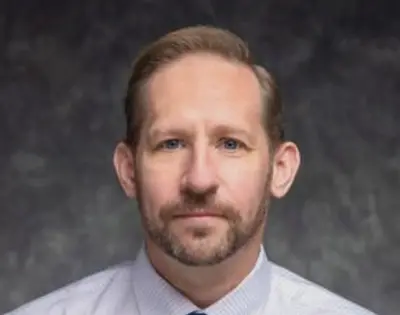
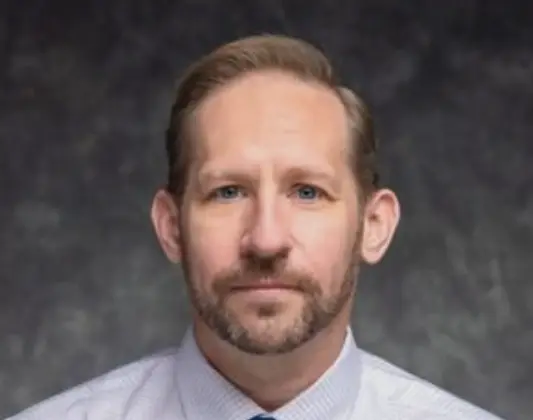
Dr. Mike Robillard - Co-Founder Christian Veterans United
Dr. Mike Robillard is a US Army Veteran and author who earned his Ph.D in Philosophy from the University of Connecticut before doing a post-doctoral fellowship at Oxford.
Mike has since left academia to co-found an organization called Christian Veterans United, which seeks to restore the values of discipleship in Christ, duty to country, and masculine virtue to the American psyche.
Mike joins a number of former academics who believe that the American university system has become derailed. In this interview, we try to deliver some practical advice as to how this situation can be fixed.
Transcript
Machine-generated from the episode audio and lightly edited — may contain errors.
Chris Albert (link to this point)
You know, one of the things I'm always saying is that if this country is gonna get better, if this country is gonna go on the right path, we have to step up as a community. Veterans are the sleeping giant in this country, and it is time for us to step up. That's why I wanna talk to you about The Citadel, the Military College of South Carolina. Now you might have thought about The Citadel in the past as this corps of cadets, this military institution, but they have programs for veterans that don't involve you joining the corps of cadets, don't involve you wearing a uniform every day, and don't involve you living a military lifestyle. If you wanna do that, great.
But if that's not what you're up for right now after your military career, then you don't have to do that, and you can access some of the best programs in the world. The Citadel has some hot degrees in intelligence, tactical strength and conditioning, engineering, and project management. And there's five student type options for veterans. There's graduate college, there's evening undergraduate, there's active duty students, non cadet day program, returning cadet veterans, and online programs. The academic offerings include undergraduate, graduate, college transfer, graduate certificates, and online degrees.
Veterans have access to every single academic degree the college offers, and they have the most flexibility when it comes to their schedule. They can major in anything offered to the cadets and would take those classes during the day with the cadets. But then there's other programs offered in the evening or online and graduate programs to choose from too to make things so flexible for you. The US World and News report has named the Citadel the number one college for veterans in the South. And for veterans who choose to take classes on campus, they get to be a civilian student in a military environment.
They don't have to wear uniforms, like I said before. They don't have to join the military culture of the corps of cadets. The atmosphere is a really good transition environment from military to civilian life. There's an organic mentorship that comes from taking classes with the cadets. The cadets wanna talk to you guys.
They wanna hear your stories. They wanna know what it was actually like to be in the military. A lot of the a lot of these men and women are gonna go on to serve as officers in the military, and they're gonna exact change. And they need to hear from you guys. They you also get access to The Citadel's alumni network.
Like I said, this is one of the most illustrious institutions in the world. And when you join the Citadel and you graduate, you're part of their alumni network. That includes so many leaders. It includes so many business leaders, so many leaders from the military, and so many leaders from the government. The college's core values of honor, duty, and respect align with veteran culture.
They align with who you are, and it's something that you're not gonna get anywhere else in this country. There is tons of special assistance for veterans at The Citadel. And whether you're a veteran or active duty military personnel, you can take advantage of these programs. You also get access to the veteran student success center, the career center, the academic success center, the student veteran association, and all campus clubs. If you wanna play rugby, you could do that.
If you wanna you wanna lift weights, you could do that. You get access to everything that the students get. There's fellowship opportunities. There's tons and tons of financial assistance. So if you're interested in getting a degree from The Citadel and building your life, head over to citadel.edu/veterans.
This is Chris Albert, and I'm here to remind you of one thing. Someday, you're going to die. And that's not some morbid statement or scary idea. It's solid fact. Your time here on this earth is limited.
And we need to be reminded of this as much as possible for one simple reason, to live your best life while you can. This is the Warrior Soul Podcast.
What's going on, ladies and gentlemen? Welcome to the Warrior Soul podcast. My name is Chris Albert. This podcast is where we deliver tools, tactics, strategies, and ideas to help US military veteran community and anybody else willing to listen to live their absolute best lives. Today, I'm gonna be joined by a friend.
His name is doctor Michael Robillard. Doctor Robillard is a army veteran, served as a United States army officer as a West Point graduate. He was deployed to Iraq. He is also a PhD in philosophy. He got his PhD from the University of Connecticut and then went on to do a postdoc at the University of Oxford in England and then has since worked at the University of Notre Dame and is now pursuing a outside effort to kinda shine the light on what has been going on in academia over the past few years and what has been going on in academia over the past few years.
Well, if you haven't noticed, things have gotten very woke within academia. And there's nothing wrong I wanna say this upfront. There's nothing wrong with woke ideas. There's nothing wrong with people putting things out there outside of the norm. Right?
I don't have any problem with postmodernism or critical theory or anything like that. What I have a problem with is the idea that there is any one single way to think. You see, the issue with academia these days is that if you are approaching things from anything other than a critical or postmodern perspective or a woke perspective, then you are systematically pushed out. Now, how do I know this? Well, I was also in academia.
Up until a few years ago, I was pursuing a PhD in political science at the University of California at Santa Barbara. And I was pursuing this craft from a quantitative perspective. And one of the things that happened with me was that I kinda saw the writing on the wall about ten, eleven years ago and decided that I didn't wanna be a professor in the social sciences. It just wasn't going to go well for people with my perspective. Our kids who are heading off to college or pursuing higher education are not being presented with a balanced perspective.
They're being presented with a systematic approach to change thought. And if you're not familiar with what critical theory is, it's basically a system of thought that focuses on challenging power structures, tearing down norms, dissecting them, and then kind of questioning everything. There is no truth, and any attempts to impose truth or or try to find the truth systematically through scientific means is considered a form of oppression. So in some critical theory circles, the very use of quantitative methods, scientific methods, numbers is an oppressive device. Michael has also kind of seen the writing on the wall, and he is noticing the impact it is having on society.
If you have any alternative perspective that doesn't match up with what they consider the the preferred way of seeing things, then then you are systematically pushed out. It's happening over and over again. We're seeing it over and over again. I'm seeing it pop up everywhere. And Michael and I get into a good conversation about why this is the case and what the potential solutions are.
Some of this conversation might venture out into the weeds, and and I definitely wanna ask you to stick with it. We do get into some practical things. And and the bottom line is is this. This battle, this war is not just gonna be won on Twitter and on social media. It's also not gonna be won with violence or by by name calling or or any of the other crap we see out there.
The way it'll be won is by you guys going out there and living a good life. Going out there, earning money, having fantastic careers, teaching your children well, being participants in your local community. We get into that quite a bit. And I I really urge you guys not just to listen here, but to to make a commitment to go out and have an impact on your community, a positive impact on your community. Lead by example.
And I believe that this country is the greatest country in the world and that we can turn things around. And I say that to you regardless of what race you are, what what whether you're a Republican or a Democrat, whether you are somebody who is rich or somebody who is poor, you can have an impact here by doing some of the things we talk about today. So without further ado, let's get into this conversation with myself and doctor Michael Robillard. What's up, Mike? Welcome back to the Warrior Soul podcast.
How you been, man?
Mike Robillard (link to this point)
Not too bad, man. Not too bad. Thanks for having me back. Yeah. It's, it's been a while.
It's been what? Three years, I guess?
Chris Albert (link to this point)
Yeah. Two and a half, three years, something like that. Yeah. Yeah. What have you been working on?
Mike Robillard (link to this point)
A lot of different things, man. You know, I think last time we talked, I was I was at Oxford trying to do stuff with counterterrorism counterterrorism ethics. And, you know, that was going along fine, finishing up a book on civil military relations and veterans issues. And I ended up getting a postdoc in Notre Dame last year. So I jumped to that instead.
And I just finished up doing that in June. And I guess I was, I don't know, a bit upset with the the wokeness of of academia. And, you know, we were taught we we we were talking
Chris Albert (link to this point)
Yeah. We talked quite a bit about that. Just for the audience, tell tell them a little bit about who you were before you got in academia. What what what did you do? And and where do you come from to?
Just
Mike Robillard (link to this point)
Yeah.
Chris Albert (link to this point)
Yeah.
Mike Robillard (link to this point)
Good point. Yeah. So I mean, former West Point grad graduated in o two. I did one tour in Iraq in in o three and o four with the eighty second Airborne Division. Finished up there in o seven or so.
That was my only tour. Then I I got out and and got into grad school for philosophy doing military ethics, mainly focusing on, like I said, civil military relations and the the just the what I saw is the the lopsided distribution of war fighting responsibilities onto a very thin sliver of of American society. So my dissertation, essentially, is like a long argument for a return to a draft or a citizen soldier model of service. Gotcha. That so and that that's what got me to Oxford.
Chris Albert (link to this point)
Mhmm. So Awesome. And and so, like, you've you've been doing that. You got out of your PhD program. You were at UConn.
Right? And then Yeah. You went over to to Oxford. You're doing the postdoc there. And then and then you went over to Notre Dame.
So so what has been going on in the world of academia these days? I mean, it looks from the outside a little bit crazy. What what have you been noticing and why Why are you feeling that pressure there?
Mike Robillard (link to this point)
Yeah, well, I mean, I'm glad that confirms some of my thoughts because from the inside, felt and still feels pretty crazy as well. I I know we were talking about this a bit in 2018, but now by 2021, I feel a lot of, if you wanna call it, wokeism or intersectionality and and then sort of the expressions in its more pernicious form in CRT and transgenderism. It's really strengthened even in the last two and a half years or so. So much so that I decided to write an article about a month ago that I published on Substack, and it was entitled, how how I left academia or how academia left me. And it's just comment commenting on, yeah, wokeism essentially taking over the the academy even further.
And since then, I think I've had 24,000 views and dozens of academics and students and colleagues reaching out to me to say, I'm glad you wrote that. That confirms my experience as well. I'm just you know, I I can't say anything because I I haven't got tenure yet, etcetera. I think it's a pretty pretty system wide kind of problem.
Chris Albert (link to this point)
Would so so give me some specifics on what kind of things you were noticing. Like, I I know there's there's this general feeling of of wokeism, but, like, what's, like, a tangible thing that that that's happened or or or that you've experienced?
Mike Robillard (link to this point)
Well, mean, I think, you know, by now, most people are familiar with what happened with Weinstein at Evergreen in 2017. They've seen the mobs surrounding Jordan Peterson and folks like that. Since then, there's been several arguments, particularly within made trying to respond to the transgenderist ideology. There's one woman, a fem third wave feminist named Rebecca Tuvel, who wrote an article arguing for transracialism in Hypatia.
Chris Albert (link to this point)
What is that?
Mike Robillard (link to this point)
Hypatia is the leading feminist.
Chris Albert (link to this point)
Well, I mean, what is transracialism?
Mike Robillard (link to this point)
So the idea being that that that you could just declare yourself like, I could just if I felt like I was a black guy, I just declare myself as such, and then I would be one, or or you have to regard me as one. So that's a complete that's that's a complete legitimate logical entailment of transgenderism. And she was dragged over the coals for that and, you know, completely maligned and, you know, a bunch of people calling for her resignation. Holly Lawford-Smith.
Chris Albert (link to this point)
Was she being serious about it or was it like meant to be like
Mike Robillard (link to this point)
It was like an academic exercise. It was saying, look, if we accept that one can stipulate that they are a different sex. Right? I mean, we can call it gender, but, you know, that they're that's what they're stipulating. Why can't we do the same thing with race?
And, you know, it's you know, philosophers and and academia, it's supposed to be a space where people can kinda test out different ideas. But, you know, the the shame mobs and, like, the death threats really came after her. And academia sort of split along those lines to to either come to her defense or to to try to call for her resignation. So, I mean, that's like one instance. Right? And I don't think that that is a it's not a good data point to be happening in a free and open society, you know, especially if somebody who's ostensibly was a leading edge progressive about two years ago is now suddenly being cannibalized. And and you're seeing the same thing that this happened to JK Rowling and Noam Chomsky probably about a year ago as well.
So it's a it's a very odd, far left cannibalization that's happened.
Chris Albert (link to this point)
What so so just for the audience at home, I mean, like, who is Noam Chomsky? I know who Noam Chomsky is, but who is Noam Chomsky? And and, you know, why why what what do you mean by cannibalized?
Mike Robillard (link to this point)
So, you know, Chomsky made his academic contribution mainly in linguistics. So he's you know, made a lot of good developments in theories of linguistics and semantics and syntax. He's he's sort of the main founder of deep grammar. But beyond that, he became, like, a huge, like, kinda crack political theorist, having no training in political theory whatsoever. But, you know, he's one of these smart ivory tower guys at MIT.
They can make a a lateral move into political theory, and a lot of people listen to it. So, you know, he wrote Manufacturing Consent in, whatever, late eighties, early nineties, and that became sort of his hallmark book to to critique, essentially, the entire underpinnings of of Western civilization and and America arguing, you know, that all of these institutions are are really systems of power that are that are controlling people and etcetera, etcetera. You know, it's sort of your boilerplate, at the time, far left critique of America and Western civilization. But he had always been the godfather of critiquing American values up until, like I said, maybe a couple of years ago. And now suddenly, they are turning on the godfather of of the left and saying that he's not progressive enough because he's not bending the knee to cancel culture and critical race theory and and transgenderism.
Chris Albert (link to this point)
Sign on to, like, a letter calling for more academic freedom or something like that.
Mike Robillard (link to this point)
Yeah. Yeah. And several several other you know, Peter Singer, other folks that are, you know, they're they're your sort of canonical left leaning environmentalist vegan sort of folks. It just it wasn't enough for this this new, you know, pernicious version of of leftism that is hostile exceptionally hostile to the idea of of having free and open speech and discussion in academia.
Chris Albert (link to this point)
Alright. So so what does this mean for, you know, the audience at home? Right? Most of these guys and gals are getting out of the military. Some of them are trying to go to college.
What what is what are they stepping into?
Mike Robillard (link to this point)
I mean, I would say at this point, it's a pretty, pretty, pretty saturated space. I mean, some of you are gonna have you're you're gonna have holdouts like at certain places at Oxford and certain pockets at Notre Dame, maybe at more Catholic or traditionally conservative schools like a Claremont or Hillsdale. But for the most part, it's, you know, broad liberal arts colleges, and your Ivies even, I think, capitulated to the pressures of shaming mobs. And this has echoes or has hallmarks of some of the far leftist student movements of Maoist China. It has hallmark elements of you know, 1917, you know, Soviet Union.
It has elements of, like, Pol Pot. So any any sort of you know, if you speed up on read any Solzhenitsyn and his commentary on how the academics were essentially overtaken and then eventually cannibalized.
Chris Albert (link to this point)
He was from the Soviet Union.
Mike Robillard (link to this point)
And Yes. He's Eastern Orthodox.
Chris Albert (link to this point)
Gulag Archipelago. I'm just because I I know this. You know this, but they they people at home, they don't you know what I mean? They they might not know it.
But he was somebody who actually survived the Soviet gulags and Yes.
Mike Robillard (link to this point)
Yeah. And wrote about Pulitzer Prize winning writer. You know? Yeah. Spent an exceptionally long time in in the gulags and and wrote about it and essentially did, like, a postmortem analysis of, like, what what was it how how did it happen to his country.
And I think that's the thing. Like, Americans always think that, like, oh, that's that's something that happened in history, or that's the type of thing that happens in some other, you know, Banana Republic somewhere, but never here, never never in in America. And I think that what we're seeing now is the beginning of Rod Dreher refers to it as the creeping pink police state. And I think that that's you know, that kind of soft totalitarianism is latent in not just academia, but the military and, you know, the sports and media in Hollywood. A lot of the institutions, both free market and state, are are laden with this this unquestionable woke ideology.
Chris Albert (link to this point)
Do you do you think that, you know, the I mean, what it sounds like to me, this is like a it's actually a minority of people who are are driving this. It's not, you know, your average everyday, not your average everyday Democrat. And just like, you know, some of the right wing extreme groups are are aren't your average everyday So yes. Republicans. Right?
Mhmm. You know? So so, I mean, why is a minority wielding so much power in academia and in in popular culture and and across the social media sphere?
Mike Robillard (link to this point)
Yeah. That's a really good question. I mean, I well, first of all, let me agree with you there. I think I think that is correct. I think it is a very small minority.
But, I mean, they're exceptionally vocal, and they're exceptionally well organized, and they're very good at using social media and collective tactics to shame everybody else or to cow everybody else into silence. So even your, yeah, your your center left economic liberal or something is is pretty much shut down by by a lot of these far left. I don't know. I don't wanna call them arguments, but ideologues. So, yeah, I think it's just they they've been very, very good at being the squeaky wheel and getting what they and getting people to pay attention to them.
And then people aren't on the left stepping up to to really shut them down heavily.
Chris Albert (link to this point)
Yeah. I I mean, I also think that there's this there's this innate desire amongst people to try to appear smart or sophisticated and things like that. And I think a lot of people latch on to these these ideologies because they wanna seem like they're in in some sort of club, some sort of elite club of people who think like this. And and, you know, particularly, you see that around Hollywood. You see that in in the media, you know, and and people want to hang that flag, and they wanna they wanna appear to be a member of the cool club.
Right?
Mike Robillard (link to this point)
Yes. Yep. Yeah. That's your that that's an actual analysis. Yeah.
Your the the minimal inch the entry into the cool club is that is that you need you need to genuflect before before the the, you know, the the secular idols of of the present moment. And and that's it seems like what these are. And if you do that and you speak the lingo, then you're part of the club. Yeah.
Chris Albert (link to this point)
Right. Right. Now, you know, I mean, I think one of the things that that one of the ways they get to you is, you know, you think about the history of this country, which hasn't always been awesome. Right? Slavery was an absolutely horrible thing.
Yep. Yep. You know, prior to the civil rights movement, you know, so many horrible things happening to African Americans, you know, things that happened to to Native Americans and things like that. At the same time, I mean, if you actually look at this country in comparison to other places, the the amount of opportunity here to all people, the the amount of of freedom that people have here to express themselves, to to create things, to to build things. Yep.
I mean, it's it's it's been, you know, in my opinion, it's it's it's an amazing feat to have a country like this. But I think the way they get you is by, you know, rightfully so shining a light on these things and getting us to see them. But but also to take it a step further and saying, No, this country can't change. It's not. It's not.
It's never changed. It's never gotten better. Right.
Mike Robillard (link to this point)
Yeah. Right. Yep. I I think so. I mean, it's that I mean, no doubt that our country, like any country, has or any sovereign nation that exists at all, has some sort of history of conflict and injustice and violence.
And we should definitely own up to those darker parts of our country's history. But on balance, in total, it comes down to whether or not you affirmatively believe that the country is a good country overall and that its existence is a good thing and a beacon for the world. And more broadly, I would say the same about Western civilization. Or you think that it's rotten with the core, and we have a moral duty to erase it. And you're beginning to see this with the increasing attacks churches and Columbus statues and historical monuments in general, and then rewriting of the history books to say that this country, unjust it from the core, and everything that's followed from that is somehow unjust. And then there's some irreparable karmic debt that needs to be repaid until we fully erase the project as such.
And I just think that that's that's going way overboard. That that's not even something that MLK would have been on board with. His was a forward looking vision. As a Christian, Aristotomian's vision. It wasn't a let let's balance the karmic scales vision.
Chris Albert (link to this point)
So let me ask you this. You know what? People know what the Soviet Union did. Right? They know what Stalin did.
And it's out there. It's in the history books. Why this obsession with Marxism, with communism, with, this whole equality of outcome thing?
Mike Robillard (link to this point)
I guess I would probably contest you on that first point. I think that the majority of Americans and particularly this new wave of college students, that they're not very grounded in the histories of of these these failed and and violent and pernicious communist and socialist projects that that have been attempted over and over and over again. I mean, you you could run it back to the the Jacobins and the reign of terror. Right? It's it's that same complete disregard for any any gratitude to our forebearers, a complete disregard of any other moral or prudential value aside from a quality of outcome.
And it's like, why should that be the case? Why in the moral universe, why should equality trump everything? Right? Like, you you have other values. You have merit.
You have virtue. You have liberty. But for whatever reason, it's this one runaway value of of equality or or or equity, you know, equality of outcome that just it it ends up bulldozing the foundations of everything. And then, you know, it's like you your your country, you end up sawing off the limb that you're sitting on. So even the people attempting to, like, you know, create some new revolution out of scratch, they actually end up usually, not doing so well.
Chris Albert (link to this point)
What what is the way out of this?
Mike Robillard (link to this point)
I mean, I think several things. Right? I mean, first of all, I think we need to return to, you know, our our our Christian and classically Western values. You know, we need to to to get back to the great books, get back to the classics, get back to the to the Western canon. I think we need to have a real return to a robust notion of citizenship.
Right? You know, you have so much tribalism on the left and the right, but, like, seldom just does the word of, like, the concept of citizen enter into the equation. But then you'll hear this within, like, your audience knows this well. The veteran community, I you know, I'm preaching to the choir, but I feel like we we're inculcated with a a notion of citizenship in the classical, like, Greek sense, and that it seems to have really, really fallen out of the the popular discourse right now. So I guess that'd be the second thing.
And I think the third thing is, like, to encourage people to just have some kind of like gratitude. Know? It's like if everybody is just excessively focused on why somebody else has something they don't or why something didn't work out the way they did. If, you know, if it's just this this loop of envy and anger and and no orientation towards gratitude, then, you know, that that's just not a a good that's not a good mindset to be in as an individual, and it's certainly not a good mindset to have amongst a broad base of your citizenry.
Chris Albert (link to this point)
With this this idea of of citizenship. Right? So, you know, you can go down a lot of different rabbit holes in that. But but, you know, what to you means being a good citizen? What is that?
Mike Robillard (link to this point)
I would say, you know, having a, I think it's an extension of a Christian notion of neighborliness. So I'm treating others as I'd like to be treated. I'm respecting other people's boundaries, but I'm also you know, demanding that they respect mine. And, you know, if I leave my my lawnmower on the edge of your lawn or something, you know, rather than you going to the court and sue and suing suing me and running to this, like, ultra litigious means. Rather, you just come over to me and say, hey, man, you know, why be careful next time and don't leave your lawnmower at the edge of my lawn.
And I say, okay, sorry, my bad. And then we just, we're just neighborly to one another. Right? And I think that people are extend that in in public discourse and, you know, that that sort of that ethic is is reestablished, then, you you know, we're not gonna have this entire architecture of everybody trying to sue one another because they don't know one another.
Chris Albert (link to this point)
Right.
Mike Robillard (link to this point)
So I think that that that would be important.
Chris Albert (link to this point)
Well, let me let me ask you this too. Because when you say Christian, you know, automatically people, they start thinking of, you know, Footloose with the the town where dancing Right. Yeah. Yeah. Like that.
And, like, the kind of, you know, I guess, could say parochial behaviors of puritanical type things.
Mike Robillard (link to this point)
Right. Yeah.
Chris Albert (link to this point)
So like, when you see that, are you is that what you mean? Do you mean that that we need to go back to maybe more puritanism? Or are you talking more about the whole looking out for your neighbor thing?
Mike Robillard (link to this point)
Yeah. I'm saying, you know, that that, you know, definitely, like, the actual parables that Jesus taught, but then also, you know, I'm I'm a Roman Catholic, so I'm saying, like, that that entire edifice of, you know, scholastic foundations that you know, from from Aristotle through Thomas Aquinas that you see folks later on, like Montesquieu and then Jefferson, borrow these ideas and then and then build them into the the constitution that we're, you know, we're living under and that we're, you know, fighting to defend. And Right. Or that we did fight to defend. And, you know, so I think just a a return to reinvestigating and and reorienting ourselves.
So, you know, what what were the metaphysical and theoretical underpinnings of of the American constitution and the the original American conception of citizenship as articulated by the founding fathers. Right. And I think that that that is inseparable from the Christian intellectual tradition.
Chris Albert (link to this point)
Right. Yeah. I think just going back to to being a good person. Right? And and for for like it or not, most of our conceptions in the Western world of being a good person stem from the Christian definition of being a good person.
Right? Taking care of your neighbor and things like that. I think there's also a danger here, you know, on both sides. I mean, where if we try to battle this the wrong way, we're going to end up being very much like they are right now. You know, I Yeah.
And and and constantly categorizing ourselves as victims and and complaining about this whole thing with, you know, living good lives ourselves. Right? And you know, what what bugs me out, I follow this, one of my favorite authors, he's he's an author who writes about stoicism. I'm not going say his name, but he's a very famous author, who's written a whole series about stoicism and stillness and all these And different he claims that he follows this philosophy. And then he goes up on his personal Instagram page, you know, and rightfully so, I think he's running his his business, and he's requesting that people are wearing masks.
And and, you know, even though he lives in Texas, and Texas has said, you don't have to wear a mask, but he's requesting that people wear a mask when they come into a store. And somebody had sent him a letter, a very respectful letter, saying that, know, hey, I can't come to your store anymore because I just don't want to wear a mask. And she was very nice about it. She just said, you know, hey, I don't want to wear a mask. I don't feel like it's right. I'm a big fan of yours, but I'm not going to come to your store anymore.
And he posts the letter. It was an anonymous letter, but he posts the letter. And rather than saying, okay, you know, then don't come to my store. I respect your opinion. He goes and he says, well, look at look at what this Karen sent me.
Look what this Karen sent me.
Mike Robillard (link to this point)
Yeah. Yeah. Yeah.
Chris Albert (link to this point)
Yep. And and and immediately lost respect for the guy. I mean, doesn't I love his work, even though I I disagree with him politically. I love his work, but but he didn't have to take it there. Right?
Mike Robillard (link to this point)
Right.
Chris Albert (link to this point)
Yeah. Look what this Karen is doing. Right?
Mike Robillard (link to this point)
Yeah.
Chris Albert (link to this point)
Put that label on her.
Mike Robillard (link to this point)
Yep. Yeah, I think so. I think that there's a very there's a very easy way for folks to fall to to fall into to a similar thing, where rather than assertively trying to be an example or or live a flourishing life or to create a flourishing world around them, they're similarly in a in a in a complaining reactive mode just to just against the the other side, which is we yeah. Which just ends up being a mirror image.
Chris Albert (link to this point)
Yeah. No. Exactly. And I think that that if you wanna fight this thing, the way to do it is is to be a good citizen, to be active in your community, to be active in your children's lives, to to, you know, participate in trying to form the school system in your community, participate in, you know, trying to ensure that there are roads to success for those around you and things like that, right? To get out there to work hard to achieve, to make sure you're voting, make sure that that that you're educating yourself on issues, and to fight this the right way.
Mike Robillard (link to this point)
Yes. Yeah, I totally agree. There's something you said there that I think is it's another thing that I would add in explicitly to to the notion of citizenship is that you mentioned the word local. And I think that that is also similarly missing within our vocabulary, this idea of of localism, right, where you're watching the news and you're being bombarded with international news and national news and even stuff at your local state level. And it's just the aperture of what you can process informationally and handle.
It's just I think what the Dunbar number is something like, you know, people can remember maybe a 100 to 120 people would be like a big, you know, tribe. And then after that, people just start abstract. So, you know, I think just a return to, like, focusing on, like, the the American town. I think that that's, like, a manageable, like, area of operations, if you will, that I think the average citizen or the average, you know, American can, like, mentally handle and and and and concern themselves with without getting their mind is just overwhelmed with with this, you know, this entire storm of international and national level problems. That it's just it's overwhelming.
It's impossible to manage.
Chris Albert (link to this point)
Yeah. No. Absolutely. Absolutely. And I think that, you know, just like anything in life, we have we have all these distractions that get that take us away from what's right in front of us and and push us over toward things that that are hardly ever gonna really affect us.
I mean
Mike Robillard (link to this point)
Yeah.
Chris Albert (link to this point)
Yeah. That will. But yeah. I gotta get going here in a second. But I I I know you got an event coming up, and and I know you wanted to talk about that.
What what are you doing?
Mike Robillard (link to this point)
Yeah. Yeah. Thanks for remembering that. It's a, you know, it's a two day faith and freedom conference for men at Woodstock, Georgia at a church there. You can go to christianveteransunited.com to get information about it.
We have, you know, an assortments of, you know, Christian veteran and patriot speakers talking, broadly about those themes and how they affect men in America. And it's not explicitly Christian, but some are Christian, some are secular or just constitutional oriented. But that's that's the theme of it. I got some speakers like Jesse Lee Peterson, Terrence Popp, and other folks. So, yeah, go to christianveteransunited.com to check out that information.
Chris Albert (link to this point)
Awesome. Awesome. Well, Mike, I I really appreciate you coming on here. And, you know, I I think what you're doing is great. You know, is is where can people connect with you?
Where can people get in touch with you? Are you on social media still?
Mike Robillard (link to this point)
I am. Yeah, I finally broke down and, you know, it was I was resistant to it, but I finally got a Twitter account. So I'm doctor d r underscore m underscore Robillard at Twitter. And you can find me at Mike Michael Robillard dot com, and that's where my my writings are. And the link to the men's conferences there as well.
Chris Albert (link to this point)
Awesome. We will get that up on the show notes. Anything you want to finish up with here?
Mike Robillard (link to this point)
No, no, that's all, man. You know, I just appreciate you having me on, you know, thank you so much for this opportunity to talk to your audience. I love what it is that you've built and and, you know, you're you're living an example of you walk your talk, man. Try.
Chris Albert (link to this point)
Try. I think, you know, for the audience at home, you know, we talked about some complex issues today. And I think the the big takeaways here are are kinda what we said before. Get out there and be active. Be present in your community.
Be present in your life. Don't, you know, don't sit back and and and be a passive participant here. Right? If if you want this country to survive, if you want, America to survive as as we all know it, then then you've gotta be an active participant. That doesn't just mean getting on Twitter and screaming at people.
That means having a positive impact on people's lives.
Mike Robillard (link to this point)
Right?
Chris Albert (link to this point)
Yep. Doesn't doesn't mean just going out there and and fighting with fists or anything like that. You need to actually actually influence people, and and you do so positively by educating them, by by by helping people by being a good person.
Mike Robillard (link to this point)
So it goes back to the military lead by example. So I guess that's, that's the theme.
Chris Albert (link to this point)
Exactly, exactly. To everybody out there, get out there and live your best lives while you can. This is Chris Albert and Mike Robillard. Alright, guys. There you have it.
That is our interview with doctor Michael Robillard. I hope you guys got a lot out of that. Above all, I hope that you are making a commitment to getting out there and having a positive impact. Like I said, there's only so much that you can do battling it out on social media and posting memes and and, you know, fighting with the other side on Twitter. What I want you to do is I want you to get out there and have a positive impact.
You know? Be the person that that you would wanna follow. Be the the neighbor that you would want to have. Be the leader in your society that that you would want to have. And when you come across people like this, you know, do your best to try to help them out.
Don't don't try to be antagonistic. Don't I mean, obviously, I want you to protect yourself. I want you to I don't want you to be a wimp. But I want you to be an example of of what America should be. And I think that's what we should all strive for.
So with that, guys, I wanna thank you so much for listening to this podcast. I hope that you are enjoying the content. I'm gonna do my best to get some more out to you in a more systematic manner. And, with that, I wanna thank you so much. I'll be out to you next week.
This is Chris Chris Albert with the Warrior Soul podcast, and I am out.
Host of the Warrior Soul Podcast and founder of Warrior Soul. Worldwide trainer and nutrition coach, contributing author at Testosterone Nation and Muscle and Strength.