Podcast episode
Nick Pineault: The Inconvenient Truth About Covid-19 Testing
Hosted by Chris Albert
The Warrior Soul Podcast
Nicholas Pineault is widely known as "the EMF Guy" and is one of the main voices in the healthy technology movement.
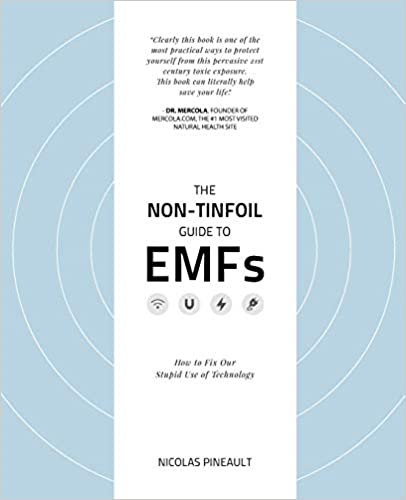
Nick Pineault, widely known as “the EMF Guy” is the #1 Bestseller of The Non-Tinfoil Had Guide to EMFs. Nick is an advocate for safe technologies and he is a leading voice discussing the effects of electromagnetic pollution on our health.
Very early on in the Covid-19 crisis, Nick wrote an article titled “Navigating Through The Coronavirus Panic: 8 Inconvenient Facts About Covid-19 Testing.” It was one of the most well-researched, well-written articles I had read on the subject and it was covering facts that the media was neglecting entirely.
Facts like the potential 80% false-positive rate of Covid-19 tests.
It’s important to note here that Nick is not saying that Covid-19 doesn’t exist. He’s not delving into conspiracy theories. He’s basing his opinion on widely published research along with references to CDC and WHO policy.
We had a great conversation about this crisis, it’s impact, and what we should all be aware of as we move forward.
To learn more about Nick, head over to https://theemfguy.com/.
To get The Non-Tinfoil Hat Guide to EMFs by Nick Pinneault: https://amzn.to/2YYSwnb.
Transcript
Machine-generated from the episode audio and lightly edited — may contain errors.
Chris Albert (link to this point)
The Warrior Soul podcast is written, edited, and produced by me, Albert. Our mission is to provide tools, tactics, strategies, and ideas that help The US military veteran community to show up as the wisest, strongest, most capable versions of themselves in the civilian world. If you're not a veteran, stick around because anything we talk about will most certainly apply to you as well. This podcast is made possible with the help of F Bomb Nutrition. They make delicious packets of fats that you can carry around anywhere with you in little portable packets.
They make macadamia nut butters. They mix them up with chocolate. They mix them up with sea salt. They mix them up with coconut butter. They're absolutely delicious, and they're really good for you.
They don't have any sugar. They also make a lot of cheese snacks. They make meat sticks, and it's just a great company. These guys send packages of this stuff to the troops who are on the front lines overseas to supplement their MREs, and we didn't ask them to do that. They just did that on their own initiative.
Really great company. If you wanna get 20% off your first order of f bombs, head over to www.dropanfbomb.com and use the code Warrior Soul at checkout. This podcast is also brought to you with the help of Save the Brave. Savethebrave.org is a five zero one c three charity for veterans. They run camaraderie events that include fishing, golfing.
They also do a lot of work with gold star families. And unlike a lot of other organizations, their board doesn't take a salary. Really great organization that is doing amazing work. So go and check them out at savethebrave.org. With that, thank you guys so much.
Let's get into today's programming.
This is Chris Albert, and I'm here to remind you of one thing. Someday, you're going to die. Now that's not some morbid statement or scary idea. It's solid fact. Your time here on this earth is limited.
And we need to be reminded of this as much as possible for one simple reason, to live your best life while you can. This is the Warrior Soul Podcast.
What is going on, ladies and gentlemen? This is Chris Albert, and welcome to yet another edition of the Warrior Soul Podcast. This is actually the first edition of the Warrior Soul podcast that is being recorded outside of the original place that I started the podcast. I am currently at a staging point in the mountains of San Bernardino, and I will be here in this cabin for the next couple of weeks before we start heading out east. I am moving from California to Fort Lauderdale, Florida, and I'm really looking forward to that.
Nothing against California. Well, yeah, there I do have some things against California. It's but I I wanna say it is a really beautiful state. It's got some great people. It's got some beautiful countryside.
It's just time for me to move on and time for me to start something else. So I'll be working with a company called Fortress Anchors out of Fort Lauderdale. They make marine anchors and their product is entirely American made. And I couldn't be prouder to be working with that company, to be filling that mission and to be supporting American manufacturing. It means the world to me.
I'll be doing marketing for them. So really looking forward to that. And today, I bring a very special guest to you. His name is Nick Pineault. He's known as the EMF guy on the Internet.
But he wrote an article a few weeks ago called I think it was 19 inconvenient facts about COVID nineteen testing. Right? 19 Inconvenient Facts About COVID-nineteen Testing. And I'll post the article here for you to read. It was a really well researched, really well written article.
And it was one he was one of the first people to really bring up the fact that, hey, we might be going overboard here with this whole government shutdown thing. I've thought this for a long time. From the day California shut down, I thought it was one of the worst cases of government overreach that I ever saw. That's not me saying that the virus isn't a real thing. That's not either of us saying that the virus is being caused by five gs towers.
But it is to say that if you look at the numbers, whether you're looking at our numbers, whether you're looking at the Chinese numbers, whether you're looking at the numbers in Sweden where the government hasn't shut anything down, there is clear evidence that the government has overreacted to this situation, and it's hurting people. It's hurting our economy. It's hurting people who have put their lives into businesses. It is hurting people. It's hurting their families.
It's hurting their children. It is causing rising suicide rates. It's causing rising rates of domestic violence. There is evidence that the 911 calls are off the charts right now with domestic violence calls. When you destabilize an economy, when you put military age males out of work, as many of you who listen to this podcast know, that is a secret for destabilizing society, and it's wrong.
And so Nick and I talk about the evidence, the evidence that suggests that this was overblown. He's very fair. He is he is very evidence based. If you look at his article, it's there are tons and tons of citations on there. This isn't some conspiracy theory kind of thing.
So if you disagree, feel free to. My suggestion is to take a look at the evidence that Nick presents, make your own opinion on it, that's what this country is supposed to be about. We're supposed to have good debate about the issues. We're not supposed to be treating this like the Gestapo, where anybody who is a contrarian gets ostracized. We're supposed to have debates like this.
So if you disagree, form your own opinion and come on, let's debate. But if you're coming at me like somebody who's some of these other people I'm seeing out there who just don't want to debate, they just want to throw a bunch of shit, then all I'm going to do is block you and and frankly ignore you. So you guys will enjoy this episode and I think you'll get a lot out of it. So with that, I also wanna say thank you for listening to the Warrior Soul podcast. If you enjoy the podcast, feel free to write a review up on iTunes, and feel free to share any one of these episodes out.
We're here to empower The US military veteran community to live their best lives and to show up as wiser, stronger, more capable human beings in the civilian world. So with that, guys, I won't delay any longer. Let's get into this conversation with mister Nick Pineault, the EMF guy, and we are talking about the COVID nineteen crisis. Nick, welcome to the show.
Nick Pineault (link to this point)
Hey, Chris. Thanks for having me.
Chris Albert (link to this point)
Where where are you located right now?
Nick Pineault (link to this point)
Well, usually, I'm in Montreal, but right now I'm in Sherbrooke. That's two hour drive East of Montreal, and that's in Quebec in Canada for maybe people have no idea where this is.
Chris Albert (link to this point)
Awesome.
Reason I brought you on, you wrote rash a few weeks ago about this we're we're currently all in about the the panic surrounding COVID nineteen. And, you know, just just from my end, as I was looking out, you know, at at what was going on in the news the news universe, there was it was death, destruction, apocalypse, you know, people dying, this, that. And it seemed like people were tossing a lot of logic to the side in order to to go with a certain narrative of what's going out there out there right now in the world. And it seems to me as if there is almost a backlash against anybody who tries to bring any other logical answer to the table aside from the fact that they think we're in the the apocalypse and and that, you know, all this this crazy things are going on and that maybe this this crazy shutdown that we're doing is not a good idea. You know, I wanna talk about the article, but did you get any backlash for the article when you put it up?
Nick Pineault (link to this point)
I jeez. Actually, no. Surprisingly, no. And I and I think that's because I'm I'm someone who actually, that that won't that won't be the case for a lot of people listening to this, but I I'm I'm one to avoid conflict, you know? So that's probably not something that people in the military tend to do.
Right? But it it makes me very balanced in the sense that I try not to to get into the politics, the argument, this I'm I'm right, you're wrong kind of thing that oftentimes if if you have a very partisan view, like this is the truth and everyone else thinking otherwise is an idiot, you tend to attract people to you that love you. And then you you also attract people that hate you at the same time. So I I try to be balanced enough and and really push the politics aside in in most of what I do. I I do my my work around the effects of radiofrequency radiation emitted by cell phone.
It's a charged topic in itself. So to me, I don't need to get into the politics and I stick to what the scientists say. So I love to look at the science and the facts. And I I got basically one person who told me I have the the reasoning ability of a third grader. And that's that's about it.
That person wasn't happy with my article. And I said, well, and he said, not not not not to call it out on him. Everyone is I've overreacted myself during this crisis. It's very hard on nerves for everyone, whether it's the lockdown or just the overall stress, the the images we see about the the deaths everywhere and, the uncertainty, the agendas. I mean, it's a stressful situation.
So I'm not I'm not to blame the guy, but he said, I'm a I'm a former, logic teacher and and you have the the rational ability or reasoning ability of a third grader. And I said, well, if you're a logic teacher, you know that your comment is just basically a an ad hominem attack against me. You haven't argued a single point about the article. And what happened is the person deleted his comment. So, you know, what I'm looking for is really people who argue with the data and not try to argue with me like, oh, you're you don't have any credentials or it kind of attack you personally.
It's it's I think it's just a false of logic doing that. And unfortunately in The US, you know, I'm in Canada, so I'm kind of far enough from from The US kind of left versus right or democrats versus republicans or this versus that. And I I see it from afar and I think a lot of people are falling into this is a political issue. Like, at the moment, it is just like that. Democrats seem to think that coronavirus is extremely dangerous and Republicans or I I'd say Americans who have a stronger sense that we need to, fight for our rights, right, to to just go outside and and move on with our lives.
Right? Because the lockdown is so yeah, it's giving the government a lot of power. There's denying that. Well, they seem to be more on the side. Well, our rights matter more and they look at the numbers and they see the same thing that I'm seeing.
So, you know, in the end, it's not a I I didn't make it a a political issue. And I think that's why the there there's been no backlash so far, which is very surprising because overall, as you mentioned, people get very, very emotional if you even mention things that in the past and in in in past situations would would have been just considered participating in an open democratic debate, which is well, for for example, the the first thing that just I think even people listening to this, if if you don't agree with, like, the COVID dangerously, like how dangerous it is, is it is it a very killer virus or is it just like the seasonal flu? Let's not even get into that. I think the main argument that is the strongest is that when we look at intervention that touch everybody like a lockdown, right? And that has a detrimental effect on the economy, to say the least.
Some call it, well, the worst crisis that we've ever seen ever seen with almost thirty million Americans losing their job within six weeks or at least filing for for insurance claims. The same thing is seen across all countries. Even countries that have not locked down like Sweden have seen basically their business reduced to 20% of what it has been since the tourism industry is dead. And so the consequences of that are economical. And that's when people make the mistake of saying, oh, well, lives matter more than money.
Yes, I agree with that. I'm a humanist myself, like every every life matters. But the health consequences of an economic crisis is something that is known. We've seen economic crises throughout history and we have the data that supports the idea that if people become poor, there's more addiction, there's more suicides, there's more depression, anxiety, domestic violence, people buy more guns and some shoot them by mistake, violence, uncertainty and poverty leads to death. So that's something that is known and just that in itself is controversial to say these days, which is crazy because in the end and I've seen several scientists made this argument, but they're not reported in the media because it's so inconvenient.
Well, a lockdown saves people, maybe, and it will kill people too. And that's inconvenient because who do we choose to save and to kill? Right? Well, that's right. We need to include everyone.
That's doctor David Katz, who who's the guy from from Yale, who has done an interview just last week, I think about that. And he said we need to include everyone, all of society in this decision, which means that if you choose to continue the lockdown, you will see more suicides. You need to look at the data and your prediction models as far as how many lives are saved. If they don't include what's called the deaths of despair, the consequences of a lockdown, well, it's straight up silly. And guess what?
Well, unfortunately, the modeling that we have relied on in America, same thing in Canada, same thing in Quebec, and mainly from The UK, the Imperial College of London, they do not include the consequences, how many lives could be lost from a lockdown. So it's a one-sided view of an issue, and it does does not include the the economic consequences and its related health consequences.
Chris Albert (link to this point)
Yeah, I think that because and this is the thing. I think one of the things we're seeing out there is that the people who say that they're for the lockdown, they say we're going with the best scientific advice possible and one of the things that, well, have done a bit of modeling myself. I did PhD work in social science and we used to use models to make hypotheses. But but when it comes to a model, a model is not a a an accurate reflection of reality. It is something that helps us potentially to understand that reality better if our assumptions are correct.
And the thing is when when we're looking at something like this, there's a lot of assumptions that that, you know, are coming out of left field where where we we we don't know. We we've never faced anything like this before, right? And and so those assumptions that that we are basing, shutting down the whole world economy on, in in many ways, they they might be, you know, completely completely, you know, in outer space somewhere. And what I liked about your article is that, you know, you brought up these questions. Here's some facts about COVID nineteen testing that, you know, might might put us on shaky ground as far as this this shutdown goes.
Nick Pineault (link to this point)
There's a lot of as far as testing goes, you know, it's it's a mess. How how can I say this? It's it's a lot of uncertainty in testing. There's false positive where you test for COVID nineteen. You say, oh, yes, you have COVID nineteen.
In reality, you don't. So it's a false positive. The opposite is also true. There's a lot of false negative. I've seen fifteen percent lately as a number that is more recent than than even my my article.
So fifteen percent false negative might be even more dangerous because you say, well, you don't have COVID nineteen. Go ahead and mix in with the elderly. In reality, you had it, but it wasn't detected. So in that case, sometimes they run multiple tests. So in reality, the test is unreliable.
And there's also arguments that I've seen just yesterday. So it's brand new info. I'm just looking at news every single day. Doctor Wodarg from from Germany has identified that for the first time the CDC has admitted that the coronavirus or COVID nineteen sequence has been found via the same RT PCR test that that has been used so far in cats.
And what he argues is that, wait, wait a minute. If you can detect detect COVID nineteen in cats, it's not like some people took that news and said, oh my God, COVID nineteen is spreading in cats now and we get a shelter or animals. And actually, was of that impression. I was like, oh my god, that's concerning. What are we going to do with dogs and whatnot?
But it's not. His view is that this proves that the test is not specific enough. And in cats it probably detects other coronaviruses because coronaviruses are known to be mainly viruses in animals and this is why while the Wuhan strain or the SARS-CoV-2 is a strain that has or it's it's plausible that it came from bats or anyway, there's a whole a whole lot of scientific debate over that. But basically, if you can detect it detect it in cats, it might mean that the test itself is not precise enough to detect SARS-CoV-2. It might detect just SARS or it might detect other coronaviruses that we know are in circulation.
And that's something, you know, that not a lot of people known at the beginning of this, me included. I haven't studied virology really. Didn't really care for it because I'm on another topic altogether, but I had to learn it. Basically, I learned that, you know, in circulation, in the whole broad category, every winter or even all year long of flu like illnesses, you have a lot of different viruses or even bacterial infections that are known to cause what's called the flu like illnesses. And these can also include colds, for example.
So you have the flu, you have cold, and it can lead to complications like pneumonia. And these are more deadly for the elderly and with pre existing conditions. Very, very similar as the death profile we see from COVID-nineteen. So all that to say that you have coronaviruses, it's an entire class of different viruses and we have certain strains that scientists know are more prevalent and this will vary from season to season. And generally speaking in Germany, and that's the work of Doctor Wodarg, he says seven to fifteen percent are coronaviruses usually in these diseases. So it's not something new that we have coronaviruses, which also it demonstrates the possibility that if the test is not specific enough, well, you can maybe think this is COVID-nineteen, this is the new coronavirus when in reality it might be older strains or strains that are present in millions of people around the world every single year.
Chris Albert (link to this point)
Right. And so I had somebody else on who was talking about this. Mean, I mean, it's upwards of close to a potentially eighty percent false positive rate.
Nick Pineault (link to this point)
Yeah. There's one study in China that has been now has been retracted. And I don't know why exactly. And the researcher, the main researcher in China said it was for basically for political reasons to put it very so I think in China, if I I I don't believe in in in conspiracies, but I mean, the the the communist party is known to be not so gentle and people who publish certain things or say certain things. So who knows what happened with this study?
But if it's right, it did show eighty percent false positive. I I have seen fifty percent false positive from other studies. I have seen several other indications that these tests are not so reliable. So it really begs into question the, how many cases there are really. But in reality, all this doesn't matter that much now in the story, because now the serological studies.
So when you study population at random, basically in different states or different cities or different countries, and you look at the presence of antibodies. Now, this can tell you if the person has the virus or had the virus in the past. It's it's kind of a the virus leaving a mark on the ground as it goes by. It goes into your home and there are like left stains on the floor. So that's the same thing here.
So that's a marker for virus that has been in people's body. And you look at there's been so many serological studies just in The US that is almost overwhelming to look at. But in New York State, as I have seen numbers as high as forty percent of the entire population could have had the corona, the the 19 as of now. So if that's true, well, it does mean that just in the city of New York City, there's almost the same number of people who might have had COVID compared to the entire world right now, which is three million confirmed cases. So if these numbers are true, it means that, well, it doesn't matter that much how many tests we do at the moment because in reality the spread is way beyond what we taught.
In Santa Clara County in California, Stanford has showed that it was fifty to eighty five times more prevalence than what was previously taught. So imagine that previously we thought there's only a thousand people in California who had COVID. Now we realize it's actually fifty thousand to eighty five thousand and it makes it it means two things. Right? It can be a bad news because, oh my god, we cannot control this virus.
But in reality, as Stanford scientists have said themselves, there's Jay Bhattacharya who was interviewed ten days ago about that. He said, well, I don't believe we can contain the virus anymore. You know, people say flatten the curve and but I think flattening the curve, yes, to to keep hospitals in check. But in reality, aside from New York City and certain key areas in the world, hospitals are not overwhelmed. In Quebec, for example, we have around a thousand beds in the ICU that are occupied and 8,000 total capacity.
So it's mainly empty. So if your medical system can handle these extra hospitalization, then the the it's okay. You can actually have COVID, nine nineteen in circulation. People get it and the hospitalized will be able to take care of. That was the entire argument from day one.
If you cannot if if the curve goes like this and and and up on on the ceiling, well, eventually your medical system crumbles and then you have excessive deaths that could have been prevented. And that's exactly what flattening the curve is all about. But people have started distorting this idea. Think even even medical, well, health officials in Quebec have said, you know what? We're gonna reopen schools May 11, only primary schools and the kids are still gonna do social distancing.
And I was like, what? What are you talking about? I mean, first, COVID nineteen does not kill much people 18 years old. The teenagers and children are actually less at risk from COVID according to all the data we have worldwide compared to the flu. So the flu has already killed around, I think it's one hundred and fifty or one hundred and seventy kids in The US so far, or was it in New York City alone?
I think it's all all of US. So it's killing some people, the flu, some children, especially those at risk, maybe with leukemia and different preexisting conditions, but even maybe healthy ones. But COVID overall is less dangerous than the flu. So we shouldn't really we can at this point, I think think this is concerning for the elderly, the very sick people with compromised immune system. There's an argument for that.
But for kids, there's not. It's fear right now that I see. And, you know, in the press conference, our Prime Minister, Legault, really said, you know, we're going to reopen schools, but in case there's an outbreak of COVID, we might close the school again. They seem to be trying to be doing two things at once. First, they talked about herd immunity and getting children infected with COVID so that way after that they are quite potentially or plausibly immune to COVID so then they can go with their grandparents and they won't really be transmitting the virus or at least they will themselves develop an immunity.
And at one point you have when you have fifty, sixty percent of the population that has immunity to a virus, generally it dies down because there's no one to give it to. So it's it's really what is what what this herd immunity idea was all about. So that's the first idea. And the second idea is, well, we don't want anyone to catch COVID ever. So it doesn't work.
It's it's it's kind of two approaches that that melt into one that are completely contradictory. And I see that why they're doing that is that the government and whether it's in Quebec or in most states in The U. S, depending on on the state you're in, especially California and the states that are, let's say, on the gun right now about COVID, they're they're literally, literally still freaking out. Their argument becomes, I never want COVID. I'm too afraid of COVID.
And it has become a thing where even parents don't want their kids to go outside because they think they're going to die from COVID. Even if the data clearly states that the flu is more dangerous for kids, we should have kids just go on with their lives, I think. And then and then the the teachers teaching their kids, these kids should probably be a little bit younger than usual and be in good health. And there's arguments for that. But overall, the schools can be reopened.
And that's why Switzerland and The Netherlands and Denmark has already reopened schools. It's more than it's almost two weeks ago now. So, you know, there's a lot of confusion about it. And I think it's mainly fear driven at this point and not data driven what we're seeing overall the the paranoia around around children especially.
Chris Albert (link to this point)
Right. Right. And and you know, like you said, there's a lot of contradictory stuff coming out. We keep hearing about herd immunity, but we are told to stay inside, to not come in contact with anybody or anything like that. And I think there is this and this might be a bad analogy, but you know, I look at some of these people, because I look at social media from time to time.
I try not to, but I do. And then I'll look at the comments, and and, you know, as you said, people don't want to look at studies. And and what it reminds me of is that Japanese soldier who was found in 1972 on a Filipino island and he had to have his old commanding officer tell him that the war was over as far as World War II was concerned. I feel like that is the kind of mentality a lot of people are adapting about this. Do not want to see here any statistics about the truth.
That Stanford study you mentioned, I know it caught a bunch of backlash from people, from fellow scientists even, just for exploring the possibility that this stuff might be overblown. And so the psychology to me is one of the more interesting factors to this. It's a little bit disturbing to me, but but it's one of the more interesting factors to this.
Nick Pineault (link to this point)
Is, you know, there's a there's such thing as the confirmation bias. I'm not immune to it. It means you're basically you're everyone is is looking to confirm what they think they already know. So I already know. Let's say in my head, I already know that COVID is not dangerous.
Then a news comes. I see on my social media feed, COVID is not dangerous. And I'm like, yeah, I knew it. And then the same, the opposite would be COVID is super dangerous. There's more cases, more death.
I knew it is dangerous, so I'm gonna stay inside. So everyone is kind of confirming their own biases in this story. But looking at the data, you know, people who have criticized Stanford for their findings and the fact that basically what they said and and one of one of researchers on it was John Ioannidis, who's one of the most prestigious US scientists at the moment who's still alive. This guy is the top 100 scientists in the world at the moment. He's been cited over a 100,000 times in the medical literature or in other studies.
So just to give you an example, like this is not this is not a classic amount of of citations. It's an overwhelming amount of citations. So he's extremely respected, especially for his work around biases anyway. So Ioannidis reveals that and he says, well, if we extrapolate these results to all of the population, it means that the death rate we're gonna see in the overall population. So if we take all ages, all people will be similar as a seasonal flu.
Zero point one percent to zero point four percent. And this is why people and then people jump on that and and who are convinced COVID is extremely deadly and they've been traumatized by the last months of media coverage for sure. They say, no, no, no, this can't be true. This is unacceptable. This is ludicrous.
And even this is dangerous information because now people will stop doing social distancing and everyone would die. Well, it's what they're missing is that at the same time that that study was published, I identified what is it? I mean, I could if I dug more, there's probably 35 similar studies that show the same things around the world. In Sweden, so Stanford was published April 17, they found zero point one percent to zero point four percent mortality based on antibodies. Sweden found eleven percent had antibodies, similar results in elderly homes, they found thirty three percent antibodies on April 19.
There's been another study in the LA County, April 20, 55 times more cases than previously thought. So something similar as Santa Clara. Geez, it doesn't stop. There's a University of Helsinki, so a Finnish epidemiology professor, Mikko Paunio, who said, well, looking at the data, same thing, zero point one percent. There's been the Danish blood donor study where their infection fatality ratio.
So the death rates, in other words, zero point zero six percent to zero point fourteen. There's it never stops. There's now the New York data that came that came out. There's the Center for Evidence Based Medicine at University of Oxford in The UK. They argue the same thing.
0.1 to 0.03 or 0.36. Sorry. There's the Newcastle County. There's the Miami study. There's the the Geneva study in Switzerland.
There's the France and the antibody study, the Colorado, the other things in Germany, the homeless in Boston had thirty six percent of them had had the virus most asymptomatic. And then the death rate in among the homeless was extremely, extremely low. So it's not one thing. I could go. I could go on and on and on.
And I'm writing on new article and it's going to take me, I think, forty, fifty more hours because there's there's too much data out there. But basically, it's not one thing. Right? It's people react to this one study and say, oh, it might be wrong for this, for this reason, for this reason, for this reason. But look overall, what has been published in every single country who has done these serological studies.
So you look for antibodies in random populations and every study finds that the prevalence of COVID has been underestimated by 50 to one 100 times. And what this means is basically our timeline was wrong. We thought that COVID, for example, in The US that the first death was, I think I don't remember the exact timeline. Sorry, don't quote me on this one. But basically, puts it several weeks before what we thought was the first death.
It's actually several weeks before that. So in other words, COVID was spreading while the media and everyone thought, well, oh, COVID is kind of going on in Europe and we hope it's not coming to us. It was actually already there. And it means that we we are trying to apply, you know, a lockdown and contact tracing kind of finding, oh, Nick has the virus and now he talked with Jerry and now Jerry has the virus and he went to the mailman and then you kind of contact trace. They've done that in South Korea.
They've done that in China when you have the technology to do so. Unfortunately, it does require a lot of surveillance technologies. So there's it can be good to kind of contain the spread, but it was too slow. Our response was we basically had the response that we should have had at the beginning, but we weren't aware that that COVID was everywhere. So at the moment, if COVID has been has been seen in forty percent of the population in New York State, the stopping the spread and that idea that no, I never want COVID in my life.
Well, everyone's gonna get it or almost so we can protect to some extent the people who who might get killed from it. And I'm all for it. There's different solutions we could apply for that. And it's still unclear how we're going to protect them for their own for the end of time. Right?
Because, I mean, I'm thinking about my my wife's grandfather. He's almost 95 and he's stuck in his apartment. You know, it's a it's a it's a nursing home and and they have small apartments. They're still independent. He's still cooking his own meals or sometimes.
And and at the moment, it's it's difficult for me because at the moment, he's pretty much a prisoner, but for medical reasons. So, you know, it's it's it's alright because I want him to to to to to thrive and to survive. And, yes, he's at risk. He's 95. I mean, you're at risk from anything at that age.
He's he's frail. And I mean, this is normal stuff. At 95, I'll be the same. But what do we do with him? Because he sheltered, he's staying in the apartment.
He cannot play cards with his buddies. He cannot dance anymore. And all the activities he used to be doing to keep himself in good health, including just going into the sunshine, taking a walk. He cannot do anything. And he's basically having his meal delivered in front of the door like a prisoner.
And I'm not saying it's necessarily a bad thing. I'm I'm kind of stuck at the moment at knowing what we'll do with the elderly and people who want to protect. But what I'm convinced of at the moment based on everything I've told you so far is that well, point 1%, even if it's 0.5, we need to restart the economy because it is a low death rate for people 65 without preexisting conditions. So people who are healthy and able to work, we need to go back to our normal lives, basically, including children. And I think that unfortunately, the shock has been so tremendous that parents are still unsure who to believe, what to believe in.
The government, unfortunately, is not taking a stand and saying, you know what? New data has come out. Go back to work. Go back to your home. They've done that in certain states in The U.
S. And I was impressed with that, often not necessarily because of science, but for constitutional reasons. But it is still it's still valid. You know, I'm not I'm not here to judge that, but they're doing their I think they're doing the right thing, going back and protecting those who might be more frail with all we can testing in in in nursing homes and and continuing to study how to better treat those who do fall ill, those who get hospitalized. We're seeing progress in that.
We're seeing that maybe ventilators are not the best thing to do. And, you know, this morning I was in shock. I saw a study published April 22, fifty five thousand seven hundred patients in New York City who have had COVID and were hospitalized and the mortality rate among those who were on ventilators, 65 years old and older is ninety seven point two percent. This is not standard, a standard mortality rate for people on ventilators. So it does mean that the procedures that we're taking are possibly causing more harm than good, and they need to be revised. And at the same time, other hospitals have been kind of steering away from ventilators great avail. So again, this is a whole medical mess. I'm not here to put blame on what doctors have been doing or not.
This is a new threat, possibly a new disease. Yes. But we need to react fast. And I think that unfortunately, the politicians have not had the courage so far to say, you know what? This is new data that we have.
There's 30 studies around the world. It is safe to go back there, restart the economy, minimize the side effects of the lockdowns, which we've done because a lot of people will be in poverty and governments like in Quebec have been printing money. Yeah. We're just going to print money and give you checks. That's cool.
Well, there are future consequences for my children here and for me and for three generations down. So it's not. Yeah, we can help people short term, but that is also a problem. We need to restart the economy. We need to make people confident that they can reinvest, that they can purchase homes, that they can move on with their lives.
And at the moment, it seems like most people in positions of power are are are kind of doing two things. Yes. If they seen the data, they kind of say, okay, well, we're gonna reopen the floodgates a little bit like we're doing in Quebec. But at the same time, they're stuck with the story that, oh, no, no, don't worry. I'm gonna protect you from COVID.
So they're not taking a stand with the scientists to say this is not as dangerous or not even a fraction as dangerous for the overall population as the WHO initially said, three point four percent mortality. That was very early. And that was, I think, unfortunately, something that ended up hurting a lot of people, the the these early figures and the way they've been recuperated in the media. But this is not the story right now. It is a very, very different story.
And like you said, a lot of people don't want to hear about these numbers. And they're like, you're trying to shake them into reading the studies and seeing that. Yeah, the evidence is there that the mortality rate for the overall population will be similar as the flu season, which is a good argument to stop the lockdowns, get people back to work. And then, of course, we can have different versions of that depending on your medical system. That's a whole point.
So if your medical system is overwhelmed, where well, maybe you you slow it down a bit. But if it's not here in Quebec, it's it's it's empty in a lot of states, hospitals in Minnesota. What is it? I cannot find my numbers here. I think it was something like the Minnesota medical system is losing 40,000,000 a day at the moment.
So, you know, a lot of hospitals are going broke. A lot of medical systems are going broke because people don't show up at the hospitals right now for other things. And and and some some of it is because of fear and some of it is because we've shut down everything to treat just COVID patients. Well, it's time to readjust now. The COVID patients are not there, right?
They're there in certain states, in certain hospitals. We can take care of those. And this is these are exceptions and not the norm. We need to reopen right now. We need to be confident that things will be Okay because the science is there.
And if we make a mistake, we can always come back to the freaking lockdown like like like Quebec recently said two days ago. Oh, we'll just lock down again. Okay, well, we have that option. Cool. But in the meantime, really doubt we're seeing that because there's a downward trends in the the number of deaths, the number of infections.
The entire planet, except certain areas that are getting in late, maybe some parts of Africa. But at the moment, looks like the crisis has been adverted and the death rates simply aren't there. So I don't see any reason for against lifting up the lockdowns, getting people back to school, except if your your hospitals are still overwhelmed. In that case, we got to take care of that first. And then you open the floodgates gradually.
But, yeah, that's really there. There's no argument at the moment.
Chris Albert (link to this point)
I really think and part of this is the amount of political division here in The United States. I mean, obviously, it's kinda the elephant in the room. Right? People people hate president Trump. And and Yep.
Anything that president Trump says, they're going to oppose whether whether it's got logic to it or not. Obviously, he said some things where he he he should have put his foot in the foot in his mouth. But Yeah. Know, I think that that there's some logic to some of the things he brings to the table. And and, you know, it just seems to me that that division, that unwillingness to work together is is just hurting us more than anything right now.
Nick Pineault (link to this point)
I I agree completely. And and as a non American from the outside, I have a hard time finding solutions to that problem. Kinda the the the only thing I can say is that whether you're you're a Democrat or Republican, all alt right, all to level, whatever you want or nothing. No. No.
No attached to anything. I don't really care. But look at the look at the data. Try to look at the science. Follow certain scientists from The US if you want.
John Ioannidis is one that is that is great at Stanford. He's one of the top. And what he's saying is sound. It's rational. There are good interviews that he that he's done where he really explains his position and his opinion.
I mean, yeah, I'm not the scientist here. I'm just I'm just merely the messenger of what Ioannidis has been saying. Reopen, lift the lockdown. So let's look at scientists who are really doing science and not politics here. And, unfortunately, if if you look at even Anthony Fauci, there's a lot of conflicts of interest that I don't like it.
I don't see addressed. And that's not to say that everyone is evil. I don't I don't get into conspiracies. Once you get into into it too deep, there's a place and time for that, but that's not my style. If people involved in this have will get money if a vaccine is developed versus other solutions to fight the virus, I have a problem with that.
That's called a conflict of interest. My conflict of interest in COVID is basically nothing. Well, maybe I'll get more clicks on my website and that's my business. I write on the Internet. I produce information about EMFs and I want to sell my books.
So maybe that's my conflict of interest, but at least I'm disclosing it. You know, the fact that Bill Gates is on TV on the CNN special a few weeks back with Anderson Cooper, and he's basically the spokesperson for COVID and how dangerous it is. And I don't see Bill, why are you the guy who's gonna give advice on that? I just don't. So I don't see it.
I don't think so. He's not a medical expert. It might. He might have a lot of experience with vaccine policy and philanthropic work. And even even then, there's a lot of rabbit holes to go down to whether it's this has been good for humanity or not.
But let's not even get into that. The fact that he strongly believes that vaccines are the answer. Okay, that's fine. But he has, he has a bias towards vaccination And that's fine. But we should interview our US based or North American based scientists to to say, Okay, what do you think?
And this is not Anthony Fauci. This is John Ioannidis. This is Jay Bhattacharya from from Stanford and a few others that have been talking and saying, well, the numbers aren't there. The data isn't there. And basically, the first time I saw Ioannidis in a in a major newspaper article, it was in The Wall Street Journal, I think, was might have been Washington Post a few days back.
So this is the first time he's quoted in the media, except from one one small article on on on March 17. So basically, the media doesn't want to talk to the guy, but he's one of the best resources we can have in the midst of all this craziness. So you should be on TV or maybe we could have one scientist that believes lockdowns are effective and a second one, lockdowns are not effective. Let's debate. This is the way you come to a balanced understanding.
If you just have Bill Gates on, it makes zero sense to me. So there's a lot of examples throughout this crisis of relying on people who have tremendous conflicts of interest. And let's just talk about WHO. I'm not an expert on WHO. I've seen reports and it doesn't date from yesterday, dates from twenty years back now about WHO being greatly influenced by lobbyists, by different corporate interests.
And basically, they've been defunded by by a lot of nations. And instead, you get philanthropists and you get donated donations basically to the WHO that might or might not influence their their decisions, but you decide. It's called a conflict of interest. So there the WHO is becoming in in my mind, in my interpretations, less and less independent as time flies by. So the decision that Trump made of to defund WHO, maybe the way he explained it wasn't so.
Oh, they they called it wrong. And now it's more than that. I think there's fishy things happening at a lot of large organizations. And if if there's corporate interest in these organizations, then, yeah, I'm I don't think WHO is in the right position to make their calls. And, you know, something that nearly killed me two days ago is when WHO came out.
And even after all these studies I mentioned, 0.1%, 0.4%, it looks like the next seasonal flu season, the deaths worldwide are slowing down tremendously. We're seeing two hundred thousand deaths and a lot of these deaths will end up not being COVID deaths. And that's another topic in itself. But I think not even half that are COVID deaths, in fact, or deaths due to other things. But if we don't get into that, let's take the face value number, two hundred thousand respiratory infections from COVID and that's related to that.
It's not a huge figure compared to two point six million deaths yearly worldwide from respiratory infections. So it's not such a huge deal. But even with that in mind, the WHO came out two, three days ago and said and and made the comparison again, comparing COVID with the Spanish flu, which is unacceptable. This is completely ludicrous. You you shouldn't say that this is fear mongering at this point.
And I simply don't understand like this. I I thought I told that to my wife. She said, really? I mean, we're kind of past that now. We're it's not the Spanish flu.
Maybe it's like the Hong Kong flu and and the the death rate was 0.5. And, yeah, it's it's deadly than a seasonal flu or maybe it is like a seasonal flu, but it's not the Spanish flu. Spanish flu killed two two percent overall. And it's not like Ebola and it's not like other transmissible diseases that we know are way, way more dangerous than COVID. So I think at this point, the WHO should seriously be ignored.
I don't I don't I don't know how. And again, I'm super polite. Other people would would be screaming at the WHO. But I think I think we need to come back to local expertise. So in The US, have an independent, multidisciplinary committee that is created with people, people from Stanford, the best minds in The US, and they come to an agreement.
Same thing in Canada. We could have a lot of good Canadian experts and come to an agreement. And then if WHO says something, we might or might not agree with them, but at least we have local expertize and we're not outsourcing our brains so much that now we're just waiting to see what the WHO tells us and we trust whatever they come up with. So yeah, basically, what's important at this point is is to note that Sweden, this is what they've done. They had several experts, their own scientists, top level scientists, and they've been consulting them before consulting the rest of the world. So it's a kind of nationalism as far as scientific expertize goes that I think needs to be brought back because you need to believe in your scientists that you know are independent and not in an international organization that's funded by people who you don't know who's what event agenda they have or what corporate interests or what are their plans. You need to have something local. And Sweden did that.
They had all the pressure of the planet to put to go into lockdown. They didn't. And at the moment, some people are kind of pointing fingers. Oh, you see, they have more deaths per capita than their neighbors. But overall, the crisis has been completely adverted and the death rates are comparable again to the studies I've cited.
So Sweden, their non lockdown measures have been proven right all along. That's that's the only way I can say it right now.
Chris Albert (link to this point)
Right. You know, I mean, there is so much here. There is so many aspects to this issue. Know, and I also want to mention, got a couple of minutes left because this is not your central work in what you do. Are normally focused on EMFs.
You are the author of a book called The Non-Tinfoil Hat Guide to EMFs. Yep. And somehow, this all got played in with five g five g situation with what David Icke was saying. And then my friend Brian Rose eventually had a video removed from YouTube and Facebook is now if you if you mention anything regard to five g, if you mention anything regard to in regard to COVID nineteen and any alternative to what the the WHO says is now diverting viewers to the WHO to see what their guidelines are on COVID nineteen. So we have this kind of streamlining of of, I guess, could say any kind of relevant argument that would go against their truth as to what they're saying is is now being diverted back to the the the standard narrative.
But, you know, one, what's your take on on that as far as the free speech and and the way that's being handled? And number two, what's your take on, you know, some of these theories about five gs and and people burning down towers and things like that?
Nick Pineault (link to this point)
Sure. Well, there there there's a lot there. I'll try to be concise. So quickly, what I think is that the presence of electrosmog in the air, because this is really what what this is. Let's start with smog.
Okay, there's been good studies that have came out just last week about the strong correlation between smog, the presence of smog, or especially the the 2.5 ppm particles that we know are the most dangerous for our respiratory tracts and COVID nineteen deaths. This link isn't so implausible. It's not that controversial either. So people say, oh, yeah, you know, smog and then your lungs are all messed up and then you get COVID and well, it's an infection of the lungs. So, you know, you put two and two together and it makes sense that it probably aggravates or even, puts you in a very weak spots as far as lung health goes.
So that's something that has been seen, you know, the high smog levels in New York City, in Northern Italy, in Spain, in Wuhan. So all the worst outbreaks have been seen in very high smog areas. It's a correlation. It's not causation, but it just adds. It's another type of preexisting condition.
We know that people with preexisting condition or old age, if you're 65 and over. Well, that's one characteristic that you fall into this category of higher risk for COVID, but also environmental. If you live in a city where the air that you breathe damages your lung over time, that's another stress your body that that puts you at risk for COVID infection. That's I think that's demonstrated. I think it's fair and I don't think most people would argue with that.
We also have similar studies with SARS in 2003, where areas that were more touched with SARS infections generally were the most the highest pollution areas in China and around the world. So it's a it's something that just makes sense. As far as electrosmog goes, it's still very controversial because just the the the recognition that EMFs or electromagnetic fields. So like, let's say radiation from your cell phone or Wi Fi routers or these cell phone towers do something to the human body is still controversial in itself. So it starts we're really starting.
It's a it's a topic that's emerging scientifically and WHO for for what it's worth, because I've been talking against them. They've been they've been classifying EMFs as a as a class 2B carcinogen since 2011 and following the same criteria that have been used during this 2011 decision. But looking at the new data that has come out in the last ten years as far as the link between radio frequency radiation from your cell phone and brain cancer, for example, or different types of cancer, a lot of independent scientists say, you know what? It should be re reclassified higher as a class two a, which is probable carcinogen or a class one definite carcinogen, which would put your cell phone radiation in the same category as smoking or asbestos. So it's really what is emerging in EMF science right now is that probably we're going to see while the industry, of course, doesn't want that, but eventually we're going to see your cell phone radiation being flagged with a cancer risk sticker.
It's already starting in some countries, even in Russia. They have a great science around that and recognition of the problem. And whatever you think of Russia, I don't care. But basically, it comes to EMFs, they are really pioneers, and they're starting to put labels on on different products that says, well, don't put it near your head. You can have it a little bit distensor where you can use speakerphone, for example.
So that's the main issue. So we're starting on to have a scientific understanding. And then people have hypothesized that a high five g area, five g is the fifth generation of wireless or cellular network. So basically, it requires the installation of millions more antennas throughout the world. And in the city of Wuhan itself, five gs has been activated in December.
And they've made the correlation that, oh, maybe COVID. Some people have went as far as saying COVID doesn't exist. And in fact, what we're seeing is people reacting to the five gs towers. And this range from this extreme understanding that COVID doesn't exist to maybe it's a co factor. Five gs made it more likely to catch a COVID infection or maybe people's immune systems have been weakened by the radiation and then you get the virus and you cannot combat it as easily.
I think it makes sense. The data on EMFs and immune system isn't definitive, but it is likely. I would say it is likely. I feel confident to say, you know what? If you live in a city and you're exposed to cell phone towers, we know it impacts sleep, for example.
So your sleep quality goes down, your healing ability goes down. We know that sleep sleep deprivation will have a detrimental effect on your immune system. So there are a lot of consequences of living right next to a cell phone tower that I'm saying that then a lot of people would argue, no, there's no effect. But there's a lot of good studies that do show a strong correlation of people, people's health reducing when you get closer and closer and closer to a cell phone tower. So is it five g that caused the entire COVID thing?
I don't I don't think so. But, you know, you know, what happened is that I started researching that link and I simply didn't find that COVID was a was an issue, explosive enough to really want to pinpoint it on anything else. Because in the end, if the mortality is so low, if it's it is basically what some have called it. I find the term in English so funny, a nothing burger. I love it.
So basically, they've called it basically a non issue, a kind of a scientific fiasco where we thought it would kill millions and millions and millions of Americans. And yet, yes, it did kill people. And yes, that is tragic. But we don't know what fraction of this are really COVID deaths. So it's even with with further research, I think we're going to find that overall, hasn't been such a huge issue compared to other issues that we have in today's society, including cancer and a lot of pressing issues that kill a lot of people.
So because of that, of my positioning, finding that, you know, COVID is not as dangerous as they claim it is, I didn't want to go forward and say, oh, it is five g or it is that or is it that? I'm like, well, it's not an issue per se. And I think it has been a little bit confusing, the message about five g radiation and whatnot. So I I I don't deny that there's a possible correlation just like with smog. If you live in a high electrosmog environment, maybe, yeah, maybe you're more prone to infections.
I I would tend to think that myself. And a high electric smog environment is really simple. It's a city and but it also correlates with population density. It correlates with the number of people you kiss, you hug, you go near to. So your potential for infectious disease is also much higher.
So we don't know if it's causation, correlation or a little bit of both. So it's really hard to to say. But overall, five gs, what it means for the average person listen to this is just more and more and more electrosmog. So, you know, the science is bizarre because when it comes to to cell phone radiation, users want more speed. They want more download.
They want the four k videos on their new iPhone and whatnot, but they don't want the radiation. So most people want like, oh, no, I don't want to see the cell phone tower. I know it's dangerous. I don't want to put it near my head. So it's bizarre because the users want more speed.
They want to watch four k videos on their subway train, on their new iPhone, but they don't want the radiation. So if you tell them the radiation isn't good for you, they're like, oh, yeah, you're right. It's it's super dangerous. So it's, it's kind of very ironic where we're at. And at the same time, the same irony is see is is seen in overall in society where science is showing every year that goes by, there's more and more data showing that this type of radiation is bad for you.
But at the same time, we install more and more and more antennas. And with five gs, it's going to be millions more. So it's it's it's it's a bizarre state of affairs. Very quickly, if I can summarize the five gs problem is just more electro smog. So do we want more electro smog or should we have less of it?
And probably it's, it's the same thing at the moment as, starting to install like, factories everywhere that are polluting the air. And we know that smog is going to increase 10000% across The U. S. No one would want that, but you see it, you see the clouds and you would say, oh my God, no, that's ludicrous. We don't want that.
We want, smoke free factories and zero waste technologies. So we have to demand that the technologies require lesser and lesser and lesser radiation to function the same. And right now, it's not a requirement. And even the average user isn't demanding for the safer technology. So that's really why why I'm still advocating for that and why I wrote my book three years ago.
And it's still unfortunately, it's a problem that's still growing. So we're still in in that that increasingly problematic curve of electrosmog. And eventually, we're it's gonna go down because we're gonna find new ways to have more wired connection. I'm on a wired computer. I have an Ethernet cable plugged in so you can there's a lot of things that you can do.
And with cellular communications, we're going to have to find better ways to emit less and have better connectivity. If engineers put their minds to that, it will be possible, but it has to be mandated by the government. And at the moment, the the radiation limit rules are extremely lenient to say the least. They they basically can do whatever they want. So this is the five g problem.
And as far as censorship goes, it's it's horrible what we're seeing because these companies, YouTube, Facebook, and all the the tech giants, I I just don't know what's in their mind. They wanna do good. I think some of them working for the corporations wanna do good and say, you know what? We're gonna fight misinformation. But the problem is who's saying what is misinformation?
We don't have a an independent committee on on the ultimate truth worldwide at the UN or even the UN is another topic of discussion. But we don't have an independent committee on truth. So who's deciding what is credible and what is not? Well, right now, anything that isn't WHO will get banned if it's COVID related. And WHO, we know there's probably huge conflicts of interest.
So we're in deep trouble. We're getting censored, and the truth is getting distilled down. And, you know, freedom of speech is is really getting crushed at the moment. And because of that five g COVID link story and people making theories, they've been starting to ban all five g related content. So even me for my work, I don't make that link.
I'm not engaging in that discussion that much, but I will probably get penalized on Google. I might be I might get banned from Facebook, from YouTube. And it's it it will be more not impossible, but more difficult for me to get my message out. That is just, hey, guys, no, it's actually a huge problem. Electro smog and our credible scientific studies and we need to reduce the levels.
We need to start practicing safe tech habits and not put a cell phone in your pocket and this and that. But I will get censored even if I don't have a message that is conspiracy theorists or hateful or anything like that. So unfortunately, you take these these arbitrary decisions on what should be censored and what should not. And you cut off a lot of people freedom of speech for nothing, literally. So I think it's a slippery slope.
And I think that It's, it's not the way to go to censor materials on the internet like that. And I think that, well, you know, the, the, the David Icke interview, a lot of what he said, I don't, I never listened to David Icke in my entire life, so I don't endorse him or anything. But a lot of what he said about five g, about the surveillance, and a lot of it makes sense made sense to me. A lot of it was valid, and he knows what he's talking about when he come when he when it comes to electrosmog. So all I can say is that it was valid.
And then some of his views, maybe people don't agree with, but should you shut down an entire news, alternative news channel over it? No. I don't I don't think you should. And I think that now, London Real is gonna do is their own thing. And, what YouTube and Facebook and Reddit and LinkedIn better better be ready for is alternative platforms that become bigger than theirs.
And when it's going to happen, they're going to freak out. And you will see these tech giants retract their their policies on censorship because they will be forced financially to do so. And this is what's coming for them long term. I I would tend to predict that.
Chris Albert (link to this point)
Right. I'm looking forward to that day, to be honest with you. Yeah. You know, in the meantime, I'm going to have to figure out a way to get this show out to people.
Nick Pineault (link to this point)
Exactly. Oh, you were mentioning just the fact that you mentioned five g and COVID. You know that there are, Google bots and and Facebook and YouTube bots listening to the videos, transcribing them, and then deciding if it's valid or if it should be banned. So it's all AI based. So the AI is listening to every video on the Internet or as much as they can.
It's crazy. It's not even human based. So there's no judgment there. It's like, oh, this is COVID and five g. Right?
Chris Albert (link to this point)
If you know anything about machine learning, there's a huge margin of error there. Exactly.
Nick Pineault (link to this point)
Exactly.
Chris Albert (link to this point)
And a lot of people, you get silenced needlessly.
Nick Pineault (link to this point)
Yep.
Chris Albert (link to this point)
Well, Nick, number one, I wanna I wanna thank you so much for coming on here and talking about this. The article is called I think it was it was inconvenient facts about COVID nineteen panic. Right?
Nick Pineault (link to this point)
Yeah. Eight eight inconvenient facts to consider. I don't even know my own title, but there's gonna be I don't know when this is going to come out. But within my my goal is May 4. May 4 is supposed to be in Quebec when the let's say the lockdown is going to be lifted a little bit.
So I wanted to celebrate that by publishing my second article. I don't even know if it's going to be lifted, to be honest. They're kind of freaking out still. But I'm going to have I'm going to have a second article and this one's going to get into just to tease it out, the differences between covid and what I call CP, the corona panic. So and why I think that we've been fighting two different viruses.
And some people like me are kind of fighting COVID right now, which is zero point one, zero point four percent mortality rate. And some people still think that it's CP out there. The kind of deadly virus is gonna kill everyone. So I I think it's gonna be a good read. But, I'm, yeah, I'm slowly getting, hacking away through it, and it's a very difficult task, but it's gonna be a it's gonna be a nice one.
Chris Albert (link to this point)
I'll look forward to that. And people can find you. What's your your main website is theemfguy.com. Right?
Nick Pineault (link to this point)
theemfguy.com. Exactly. Yeah.
Chris Albert (link to this point)
theemfguy.com. And then on, where do you hang out the most on social media?
Nick Pineault (link to this point)
It's mainly Facebook, but I'm not very, very active on social, but you you'll you'll find me there. If you wanna follow my work, it's really the EMF guy. You'll find my my newsletter, and I have a free report about five g that is, very factual and calm. You'll find it on the main page. So it's, there's going be more information.
I want my information to, you know, this is, this is one of the first times in my life that I'm big. Let's say I'm, talking about another issue just because I'm politically involved or personally involved. So I, it's a little bit, I hesitated a lot before doing that and doing an interview like that. Did two interviews, worldwide about the topic of COVID, but to me, it's, it's, citizen scientist job that that that I'm taking on to just debate about it again. And I don't have all all all the truth.
Don't either about EMFs. It's always a topic of debate. But if we can stay calm, we can stay rational, and we can stick to the facts and the figures and then bring them to the table. We'll get through it. And this is really what I want to offer on my website.
This is more information and also practical information about what the heck should you do with your cell phone and with your Wi Fi router and how to kind of reduce your EMF load, so to speak.
Chris Albert (link to this point)
Absolutely. Absolutely. That's awesome. Well, again, Nick, I want to thank you so much to everybody out there. I want to thank you guys for listening to this.
Those of you who have gotten past the firewalls and found the found the episode that are gonna be put up to keep people from listening to this. And, you know, above everything, I think the real enemy is fear. It's always fear. Mhmm. It's fear is gonna keep you from living your life.
Fear is gonna keep you from doing the things you wanna do. Fear is gonna constantly keep you looking over your shoulder and turn you into a bitter person. And so I I think if anything, if we control what the government does and control you. So, again, I wanna thank everybody out there for listening. We'll be back at you later on this week with some more awesome content.
And this is Chris Albert and Nick Pineault, and we are out. Alright, guys. I hope that you enjoyed that episode with mister Nick Pineault. Again, I highly suggest you go and check out that article. We're gonna have it linked up on the show notes for this episode.
And if you wanna check out more about Nick, you can head over to www.theemfguy.com. That's www.theemfguy.com. He's a really great guy. He's a really, really good thinker. I love his writing.
I love the way he approaches these issues. He doesn't approach it to from like a tinfoil hat perspective. He's the author of a book called The The Non-Tinfoil Hat Guide to EMFs and How They Affect Your Health. And there's some real evidence to suggest that these little radiation magnets that we're carrying around with us, our cell phones, could have a significant impact on our health, and and I wanna have them on again to talk about those issues. You know, I've been doing the Warrior Soul podcast now for for four years and this has been the greatest mission of my life.
I love doing this show. And like I said to you at the beginning of this podcast, I am doing some other things. I've got some other projects. I'm working with Fortress Anchors mainly because I'm called to it right now. I think that bringing America bringing manufacturing back to America is such a a huge mission, and I wanna be a part of that.
But my work here with Warrior Soul is never going to be over, and it's it's gonna continue throughout my life. So I don't want you guys to worry about this podcast not continuing or anything like that. Life has been hectic over the past few weeks. I've still been trying to put out three episodes a week. I might miss an episode over the next week or so because I do have to travel to Florida briefly to set some things up for the move.
But either way, I am committed to continuing this show for you. All I ask from you guys in return, like I always say, I don't care if you spend a dime with Warrior Soul. You know, we love it when you buy T shirts. We love it when you you sign up for our mastermind because, well, the mastermind is outstanding, the Warrior's Obituary Society. But the real thing here is I'm trying to reach as many veterans as possible to help to change their lives.
So if you enjoy our episodes, please share them out. Please write us a written rating and review. That's all I really want from you. And beyond that, we are gonna be back at you later on this week with some more awesome content. If you've got feelings, if you've questions, reach out, hit us up over social media.
Happy to debate. Happy to do an informed debate, a civil debate. Like I said before, I just don't tolerate trolls or anything like that because you're taking away from the mission. So with that guys, we'll be back at you soon. This is Chris Albert, the Warrior Soul Podcast, and I am out.
Host of the Warrior Soul Podcast and founder of Warrior Soul. Worldwide trainer and nutrition coach, contributing author at Testosterone Nation and Muscle and Strength.