Podcast episode
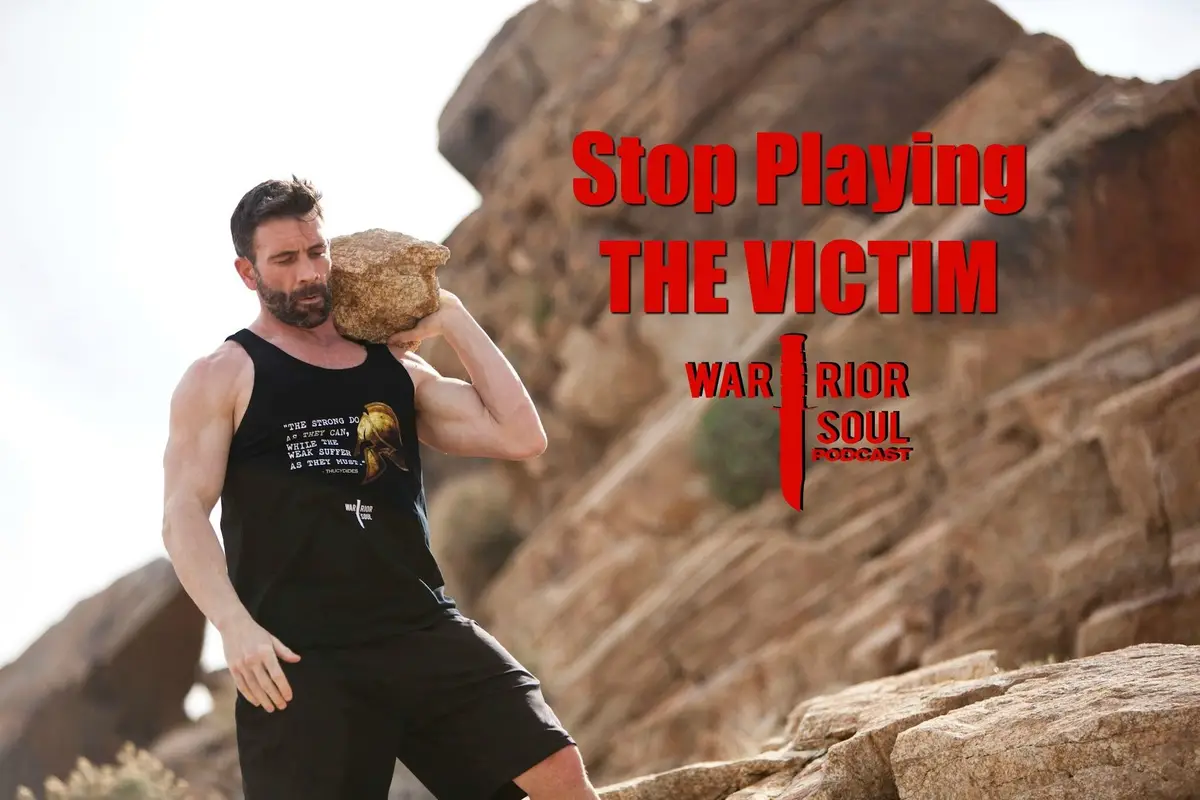
Stop Playing the Victim: What My Deadbeat Father Taught Me About Life
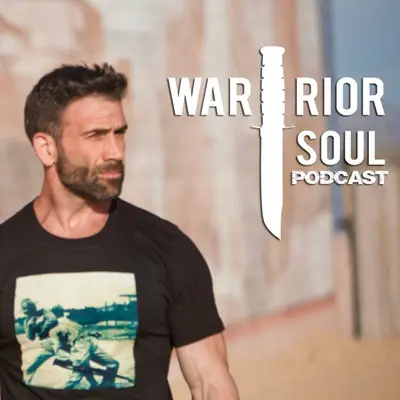
Hosted by Chris Albert
The Warrior Soul Podcast
One of the hardest things for a man to realize about his life is that most of the walls he runs into have been constructed by himself…
In our lives there is an inherent temptation amongst us to blame the world for our problems. Many enjoy playing the victim and complain about this or that holding them down.
The danger here is that, when you do play the victim, you immediately submit control of your problems to outside forces rather than doing what you should be doing: working on yourself.
Sponsored by FBOMB Nutrition: Click the Image Below and get 20% off your first order when you use the code WARRIORSOUL at checkout!

Transcript
Machine-generated from the episode audio and lightly edited — may contain errors.
Chris Albert (link to this point)
This is Chris Albert, and I'm here to remind you of one thing. Someday, you're going to die. Now that's not some morbid statement or scary idea. It's solid fact. Your time here on this earth is limited.
You need to be reminded of this as much as possible for one simple reason, to live your best life while you can. This is the Warrior Soul podcast. You know, one of the common themes of this podcast and Warrior Soul in general, if you follow us throughout our social media, through our YouTube channel, through all of our media platforms, is that life is full of tragedy. Right? Nobody's immune from that.
Nobody's immune from having bad things happen to them. But there's a lot of people out there who think that tragedy or hardship or difficulty somehow makes you special. But it really doesn't. You know, when we think of people who we admire, people who have changed history, people who've created things in this world, You think of people who faced hardship, who faced tragedy, who faced the difficulties that all human beings face on this earth. But they somehow overcame them.
They met the challenge. They pushed through. And that's the big thing that I think everybody has to realize. It's not what happens to you in this life that matters. It's how you respond to it, how you handle it, how you act in spite of the difficulty, in spite of the tragedy, in spite of the hard thing that's happened to you.
There's a few quotes that convey this pretty well. One is this: Adversity toughens manhood, and the characteristics of the good or great man is not that he has been exempt from the evils of life, but that he has surmounted them. And that's by Patrick Henry. Another one here is Life brings sorrow and joys alike. It is what a man does with them, not what they do to him that is the great test of his mettle.
That's by Theodore Roosevelt. And if you ever want to really be inspired as a man and you're looking for quotes like this to help to get you through your day, definitely check out Ryan Michler's Instagram. It's at Ryan Michler on Instagram. He's the host of the war of the Order of Man podcast, not the Warrior Soul podcast. He's the host and founder of the Order of Man podcast, and he's been a past guest here on Warrior Soul.
Well, back to the subject. You know, I really think that the true secret to getting through this life, to doing what you need to do to have an impact while you're here on this earth, is to accept personal responsibility for every single thing that happens to you. And that goes back to, you know, that idea, not seeing yourself as the victim, but seeing yourself as somebody who's been challenged, and then going out and meeting that challenge head on. And this is a mindset that is not easy to adopt. You know, I played the victim for a very, very long time.
And I think that it's had a huge impact on my life. As far as halting my progress, I think I could probably be, you know, a lot further ahead than I am now in life had I realized this much earlier. But the problem is that a lot of times, the most difficult thing to do when you're facing a dead end in life is to realize that that wall that's in front of you is something that you constructed yourself. So what I'm going to do here is I'm going to go into a little bit of a story about myself. And as I go through this story, I want you to understand that, you know, I'm still putting this work in just like you are.
That's one of the reasons why I do this podcast. This is it's one of the reasons why I talk about these issues. You know, it's not that I have it all figured out. It's that I'm still searching. I'm still trying to put that work into myself to become better so that I can push myself forward.
And I don't think that there's anybody out there who is in a place where they don't need to work on these things. I think even if you've attained a good degree of success in your life, if you're at a point where you say, oh, I don't need to work on anything, then you're probably the type of person who needs the most help. So story begins when I was a kid. You know, I went I went to a summer camp. And for most of my childhood, I think up until about four or five years old, I hadn't really realized that I didn't have a dad.
I had a mom. She was good to me. And I had a grandfather, who, you know, he tried to teach me things like how to fish and and how to hold a rifle, that kind of stuff. But I never had a father. And wasn't until I heard other kids talking about their fathers while I was at summer camp that I came home one day and I asked my mom, mom, what happened to my dad?
And she wouldn't really give me any information. Now, and to this day, my mother still has a real problem talking to me about my father. And I never really knew why. I've never seen an actual picture of the guy. Right?
I know his name, and that's because of research that I've done on my own. I know that he was an immigrant from from Germany when he was very young. But beyond that, I I never really knew anything. And that was until about the age of 27, where I moved out to California, and I was kind of on my own. But I had a friend who was a lawyer.
And she knew about my story and she knew that I had never known my father. And she offered to put a search out on him just to to figure out where he was and if I then wanted to, you know, reach out and connect with him then I could. And she did that. She put a search out on him. She found the man died in 1997.
That was the year I graduated from high school. And he died in halfway house. And when I think about that, you know, the idea that my father never taught me anything, that my father never had any lessons to give me, that's untrue. It's it's not true at all. And it's because I think about what it must have felt like for him to be on his own deathbed, to be at the end days of his life, and to realize that he lost all his chances, that he'd put himself into a position where nobody really cared about his death, where nobody would mourn him, nobody would ever, you know, really care that he even lived.
And the thing is we see people like this all the time. And a lot of us wonder, you know, at least I wondered about my father, how did it ever get to that point? How could he let it get to that point? And I didn't realize it, but the answer was always staring me right back in the face. You know, throughout my life, I'd used the fact that I didn't have a father as an excuse.
I used it, you know, as an excuse for for times when I wasn't doing well in school. I used it as an excuse for times when I was having problems having relationships with people. I used it as an excuse for times when I was acting like an asshole. You know, little thing about me is the reason I live in California right now. The the the big reason I live in California is because when I got out of the Marine Corps, I was involved with a woman, and and she'd been with me for years.
She stayed with me through deployments. She she stayed with me through alcoholism. She stayed with me through through self pity, and she stayed with me even though I had been cheating on her. And lo and behold, one day she smartened up and she said, you know what? I'm leaving you.
And then a couple months later, she'd been dating one of not a friend, but a guy that I knew. A guy that I played football with in high school. Somebody who who I'd considered a friend. And before I knew it, they were getting married. And before I knew it, they were having children.
And all that time, while while she was out there, you know, improving her life, making the proper decisions for herself, I was complaining. I was complaining about being the victim. I said, how could she do this to me? How could he do this to me? How could the world do this to me?
And I became bitter. And I kept falling myself into this pit of despair where I continued to drink, I continued to to womanize, and I continued to. Be a wretch of a human being. And finally said to myself one day, you know, I can either sit here and watch this for the rest of my life and sit here and be bitter and stay on this same barstool, or I can get out of here and I can can run away from this. And so I ran away, and that's how I ended up in California.
Thousands of miles away from my family, thousands of miles away from anyone who ever loved or cared about me. And when I moved out here and I experienced loneliness, I found myself blaming the world for it. Blaming every single thing that I could find. You know, the fact that I she left me, the fact that, you know, I'd spent time in the military, the fact that, you know, I I would think to myself, hey. You know, nobody wants to hire veterans anymore.
Right? Nobody wants to to to to give me a fair chance, a fair a fair deal. But what I wasn't doing that whole time that I was complaining was improving myself. I wasn't making myself better. I wasn't making myself stronger.
And above all, I wasn't turning myself into the man I needed to be in order to grow, in order to handle the obstacles that were before me. I was just making excuses as to why those obstacles were stopping me. What I want you to understand here is this. When you play the victim, and you fail to take personal responsibility for your actions, when you blame the world rather than blaming the person in the mirror, you allow the world to control you. You allow the world to come at you with every single thing it has, and you allow yourself to fall victim to it without any real preparation, without any increased understanding of how you can deal with it when it happens again.
And that's why you see so many people going through the same cycles over and over again in their lives, continually playing the victim, continually keeping themselves into pits of despair. And that's why people never improve. So here's my advice to all of you. Whatever is going on in your life right now, whatever it is, stop seeing it as a curse and stop seeing it as a blessing. Start seeing it as a challenge, a challenge to be overcome.
Start learning lessons from every single thing that happens to you in this life. And the lesson should be centered around what you can do as a person to deal with them. You know, there's a lot we can't control in this earth. We can't control if if an earthquake is going to happen. We can't control if there's going to be a hurricane.
But what we can do is we can earthquake proof our houses and we can hurricane proof our houses. So how are you tragedy proofing yourself? How are you responding to the situations that that come before you? Training to make yourself physically stronger? Are you training to make yourself more physically endurant?
Are you training your mind so that you can better deal with the problems in your life? Are you putting effort into making your relationships better? Are you putting effort into making yourself more attractive to other people so that you can get people to help you out through life? Or are you just sitting there and saying I hate most people, I can't deal with most people, I don't like being around most people? Because if you're doing that latter thing, it's a self self fulfilling prophecy.
You're gonna end up lonely. You're gonna end up lying on that deathbed with nothing but your regrets, And you're gonna end up in a position where you're gonna wish that you'd done something, that you'd taken more charge in your life, and that you put yourself in a better path. You know, as I said to you before, this is something that I'm still currently working on. I'm not immune to to falling into victim mode. I'm not immune to to falling into some of the same old cycles I was in.
But what I am able to do now is I'm able to recognize and I'm able to catch myself when I find myself falling into those cycles. And that's when I sit down and I say, alright, Chris. What do you need to improve in order to overcome this situation? What do you need to make better? Because I know that the second I sit there and I start talking about things as if they're curses and and turns of bad luck, moment that I'm giving up control over my life.
I think something that every man needs to do in today's day and age is to understand what you can control and what you can't. What you can control, not the situation itself, but your perception of the situation. You can't control whether or not it's gonna happen, but you can control whether or not it's gonna break you. And if you'll allow it to break you, then you've got a whole lot to learn. I wanna thank you guys for listening to this today, and I hope you're getting some value out of these Warrior Fitness notes.
You know, if you guys can do me a favor, if you like what you're hearing and you wanna hear more of it or even if you don't, you can get on to iTunes and and just leave us a review. Let me know what I'm doing right and what I'm doing wrong. Let me know if there's content you'd rather hear about. Let me know if there's issues you're facing in your life that I can help you with because that's what this podcast is for. You know, we've had a lot of talk over the past decade and a half about preventing veteran suicide, and my goal here isn't to prevent veteran suicide.
My goal is to teach all veterans how to truly live. And by doing so, we'll keep veterans from ever falling down that dark path. So can pay us the, the the the favor of just leaving us a review, letting us know what we can do better, that'd be much appreciated. And if you wanna pay us the highest compliment that you can give us and share this episode with somebody who needs to hear it, I think that would be absolutely awesome as well. Also wanna let you know that if you're looking to get more, if you're looking to to gain some tools that can help you with your life right now, we currently have the Warrior for Life program open.
And what this is, it's a free program. Anybody can become a member of it. It includes a private Facebook group along with a free testosterone optimization checklist, a free testosterone optimization workout, along with weekly tools to help you to push forward in your own life. And if you're interested in signing up for that, like I said, it's completely free. You can find it up there at menshealth.warriorsoulagoge.com.
That's menshealth.warriorsoulagoge, and that's agoge.com. A final note, I wanna give a special thanks to our friends over at F Bomb Nutrition. They make delicious packets of fats, and my favorite are their macadamia nut butters. Absolutely delicious. They mix them up with chocolate, with sea salt, with pecan butter, and they come in these awesome portable packets that you can carry with you anywhere you want.
There are awesome people running this company. They're sending packages of this stuff over to the troops overseas, and they they wanna do everything they can to help active duty military members and to help veterans. So I love them, and they've been great supporters of this show. If you want to try f bombs, can head over to www.dropanfbomb.com and use the code Warrior Soul at checkout, and you'll get 20% off of your first order. With that, once again, I wanna thank you all for listening today, and I'll be back at you very soon, another episode of the Warrior Soul podcast.
Host of the Warrior Soul Podcast and founder of Warrior Soul. Worldwide trainer and nutrition coach, contributing author at Testosterone Nation and Muscle and Strength.