Podcast episode
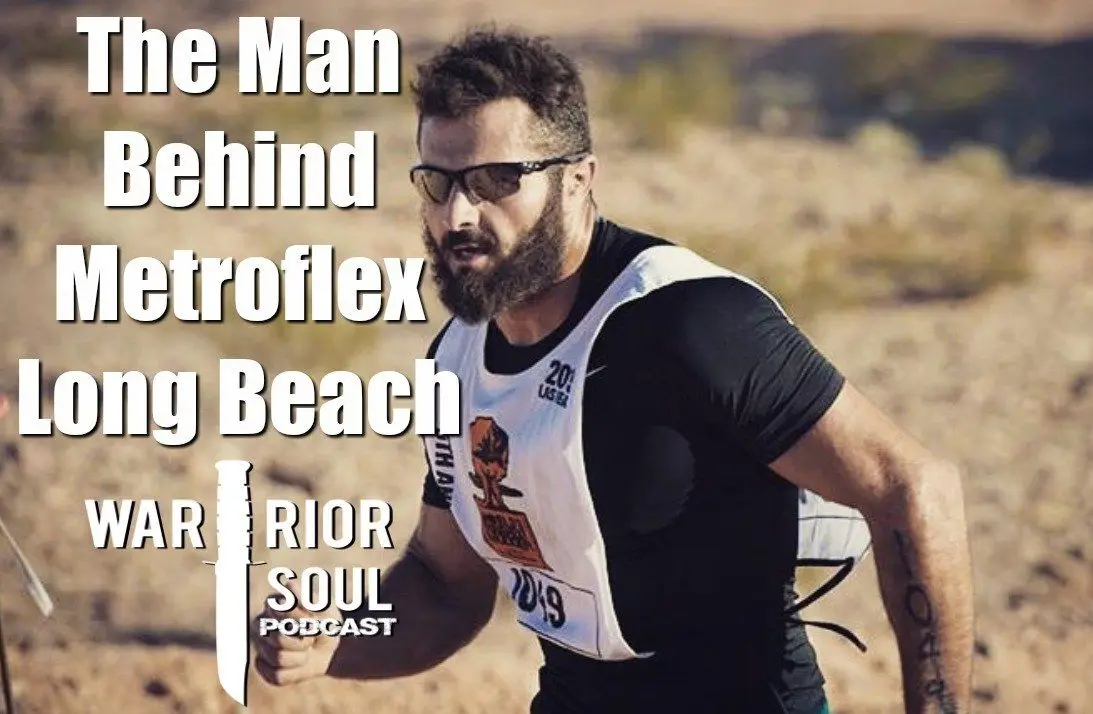
The Man Behind Metroflex Long Beach – Eddie Avakoff
Hosted by Chris Albert
The Warrior Soul Podcast
Eddie Avakoff is the renaissance man of the strength training world. He competes or has competed in Elite Level OCR, Crossfit, Triathlon, Powerlifting, Water Polo, MMA, and Jiu Jitsu. He was one of the first high level endurance competitors to apply powerlifting principles to endurance training. He’s also an avid advocate of strongman training and tactical shooting.
Eddie is also an accomplished entrepreneur who started one of the most famous gyms in the world, Metroflex Gym, Long Beach.
Interview begins at 00:08:00 minutes.
Sponsored by: FBomb Nutrition. Use the code WARRIORSOUL at checkout and get 20% off of your first order! Click on the image below!

Transcript
Machine-generated from the episode audio and lightly edited — may contain errors.
Chris Albert (link to this point)
What's going on, ladies and gentlemen? Welcome to the Warrior Soul podcast. We're nearing on our hundredth episode of the podcast. To tell you the truth, I haven't really been counting, but I know we're nearing episode 100. And I gotta say, it's been an absolutely awesome experience here.
I've gotten to talk to so many interesting people, many of whom are some of the most interesting people in the world, and we've been able to deliver a lot of tools, tactics, ideas, and practices to The US military veteran community that can help them to live their best lives. And the reason why we do that here is because we truly believe that the veteran community is the sleeping giant in this country. And we want veterans to step into leadership roles, not just in their military careers, but in the civilian world. When they get out into the civilian world, I think it's so imperative that they step into those leadership roles to influence the direction of this country, to influence others into becoming the best versions of themselves, to influence the organizations that they become a part of. And, you know, we all know that over the past decade and a half, veterans have been going through a lot as far as high suicide rates and as far as high rates of veteran homelessness and as far as high rates of chronic disease in the veteran community.
And what we're trying to do here is overcome that so that veterans can have the influence that they need to have on this country in order for this country to remain the awesome place that it is. So what we have for you today is an episode with somebody who I consider to be one of the most interesting people out there. This guy is a water polo player. He is an endurance athlete, a triathlete. I think he's done some some really high level Spartan races.
He's an elite Spartan racer, big in the o c OCR community. He's an MMA fighter, a jiu-jitsu practitioner, a strong man competitor, a CrossFitter. I mean, this guy has done it all. And his name's Eddie Avakoff. And if you don't know him, you'll probably know the gym that he created and that I helped him to create.
It's called Metroflex Gym in Long Beach, California. And that gym has produced many athletes in and of itself, and and a lot of athletes have called it home at one time or another. We're talking about guys like CT Fletcher, Mike Rashid, Frank McGrano, a lot I think Baby Slice, a lot of MMA fighters, a lot of pro bodybuilders, a lot of high level elite power lifters. You name it, they've trained out of there. It's also provided the background for a lot of media in the fitness industry.
So you'll see it in the background of a lot of, you know, health and fitness magazine shoots, a lot of really popular YouTube videos and things like that. And Eddie's really built a business that reflects himself. When you walk into that gym, you're gonna find an OCR course in the back parking lot, for example. You'll find strongman implements. You'll find an MMA cage.
You'll find jiu-jitsu mats. You'll find every power lifting implement that you could ever think of. You could find tons and tons of bodybuilding equipment in there, tons of gymnastics equipment, and it's really an athlete's dream. I wanted to bring Eddie on because over the years, number one, he was one of the first guys who actually started to incorporate strength training for his endurance ventures. And that's, you know, something that I think that is becoming more popular now.
But back in the day, people had never heard of it. Triathletes never wanted to become stronger. They thought it would make them a little bit too bulky and they thought it would take away from their performance. But Eddie actually flew out to meet with Louie Simmons, Westside Barbell, spoke with him, got his insights, and started developing his own training tactics to help train endurance athletes with strength techniques. And the result of that has been a lot less injuries, a lot less overtraining, and some really ingenious tactics.
In addition to that, like I said, Eddie is one of the most interesting people I've ever met in my life and I think you'll find a lot of tips in this episode as for not only fitness, but also for life and and really pushing yourself to your limits and not being satisfied with the status quo. Before we get into that conversation with Eddie, I just wanna tell you about a few things going on here at Warrior Soul. Number one, we just started our Warrior For Life program. And one of the things that I really wanted when I started Warrior Soul, and especially when I started this podcast, was not just to be a place where people consumed content or, you know, looked at images or watched videos without it taking any real action in their lives. And the Warrior For Life program is a community that we're creating around Warrior Soul.
It's a community for US military veterans and anybody else who wants to join to support the cause to help them to push themselves on a daily basis, to push themselves toward their fitness goals, and to help them to push themselves toward their life goals. When you join up, you're gonna get the best information we can give you about health, nutrition, fitness, training, everything you can think of. You're also going to get access to a community of veterans and like minded people who are also on the path to working toward becoming best the better versions of themselves. So and it's completely free. And if you wanna sign up, you can head over to www.warriorsoulagoge.com and just click click on the main sign up link on the home page there.
And all you just sign up for free, like I said, and anybody who signs up, they're also gonna get a twenty one day testosterone optimization workout and a free testosterone optimization checklist. One more quick announcement before we get into the show. This podcast is sponsored by F Bomb Nutrition. Awesome people. Awesome company.
They make delicious portable packets of fats, and I'm quite fond of their macadamia nut butters. They've got macadamia nut mixed up with chocolate, mixed up with sea salt, mixed up with coconut butter. I just went camping and I was eating these throughout the camping trip to keep my energy up, and they're absolutely delicious. You can get 20% off of your first order of f bombs if you head over to www.dropanfbomb.com and you use the code warrior soul at checkout. So with that, guys, I'm gonna stop yapping over here, and we can get into this episode with the man behind Metroflex LBC, mister Eddie Avakoff.
This is Chris Albert, and I'm here to remind you of one thing. Someday, you're going to die. Now that's not some morbid statement or scary idea. It's solid fact. Your time here on this earth is limited.
And we need to be reminded of this as much as possible for one simple reason, to live your best life while you can. This is the Warrior Soul podcast.
Alright, guys. What's going on? I'm here with my old friend, Eddie Avakoff. Eddie, how are doing today, man? You doing, bro?
Good, man. Good. How's life down there in Long Beach?
Eddie Avakoff (link to this point)
Long Beach is good, dude. I I was checking out the Junior Olympics water polo games, which happened to be right next door to my house all weekend. So I went to Junior Olympics for water polo way back in 2002 and 2003, which seems like an eternity ago. But it was cool to see the young athletes, and it's such an underrated sport, water polo. It's you ever you ever play some water polo, Chris?
Chris Albert (link to this point)
No. No. I heard I've heard it's like dirty as hell. Like, you get in there and people are like under the water, like elbowing you and like throwing kicks and and and hit me in the teeth and stuff like that. Right?
Yeah.
Eddie Avakoff (link to this point)
Like, above the water, the waterline, it's like soccer meets basketball. Like a basketball formation and and the games play basically like soccer. Under the water, it's like wrestling and Dutch kickbox. It's fucking annoying. And it it it's one of the most and I've done a lot of sports as you know.
I've played I've played them all. And I I really gotta say, if it's not the hardest sport I've ever done with wrestling being the hardest sport, it's definitely second place. I I can't decide. Because if you're not in water polo shape or you're not in swimming shape, it will definitely be the hardest sport you'll ever play, period.
Chris Albert (link to this point)
Yeah. I I mean, it it just seems like that. Like, because you're constantly you have to be constantly moving in the water. You're dealing with other people in the water. You're you you gotta tread water, which is one of the hardest things for a lot of people.
And swimming alone is is just intense. Like, I was a wrestler in, like, the best shape of my life, and my coach was a psycho, and he made a swim against the swim team. And, like, I was so out of shape when it came to getting in the water.
Eddie Avakoff (link to this point)
Yeah, I mean, there's a whole different, it's crazy because a lot of people are like, they just say this broad encompassing word cardio. And they think it just means like you don't get tired or you can, you you have the oxygen to sustain an activity. But there's so many different types of cardio. Like I could be in great running shape, and if I'm not sparring regularly, I won't have the cardio for MMA. And if I'm not swimming regularly, I won't have the cardio for the pool.
And so I think that, I mean, and then you can get into the science behind like the VO2 max and like anaerobic versus aerobic training, all that stuff. But at the end of the day, if your cardio isn't diverse, I don't think you really have the true cardio.
Chris Albert (link to this point)
Yeah.
Eddie Avakoff (link to this point)
Like, you know, to be that well rounded athlete. And just the same, there's like a cardio to, you know, to any sport, really. You know what I mean? Like, you know, basketball is a game of short sprints and football is a game of short sprints, then you got marathon running, which is a long endurance kind thing. So water polo is its own animal as far as cardio is concerned.
And it's funny, even when I'm in decent swimming shape, like for the triathlon, man, when I go back to my high school for like the alumni water polo games, I fucking drown. And I get shit on by these like 15 year olds who are, you know, usually like the varsity versus the alumni kind of thing. And man, it is just something else. Unbelievable,
Chris Albert (link to this point)
I wanna mention a little bit of your background here because it's pretty crazy. So number one, you know, I met you at UCSB, you know, what is it like ten, eleven years ago now, twelve? I think it's a long time. But in your youth, you were a little bit overweight. You went to high school, got into athletics.
You you started wrestling. You started doing water polo. You started doing triathlons. And Yeah. As a as a triathlete, you were one of the first people, and I think prior to some of the big name people who are doing this, one of the first people who started applying power lift power lifting techniques to triathlon training.
You actually went out to visit with Louie Simmons of Westside Barbell, learned some techniques from him, started cross fitting, gotten into jiu-jitsu, MMA, Spartan racing. I think you're also into tactical shooting. And on top of that, you're the the founder and owner of Metroflex Gym Long Beach, one of the most hardcore gyms on the West Coast that I helped you start with everything. But is that all accurate? You've done a lot of stuff, right?
Eddie Avakoff (link to this point)
Nailed it, bro. Yeah, dude. I don't know. I think it's like a product of I just can't stay content. And one other notable athletic pursuit I did, and I'm not saying it to toot my own horn, but I'm just saying it because of the merit that it has in functional training is a lot of Strongman.
Chris Albert (link to this point)
Yeah, that's it. I forgot about that.
Eddie Avakoff (link to this point)
I was obsessed with Strongman for a while. I still kind of am, but I took it as a challenge when I started watching these World's Strongest Man videos People being like, dude, never make it to that level. And yeah, I'm not going to be a three hundred pound six foot four Viking. I'm five'eight and like a buck sixty five, buck seventy. But I just loved how raw and truly functional that training was, and it still is.
You know what I mean? And I thought that at the time when I kind of discovered Strongman, which really was like ESPN two Sunday morning World's Strongest Man reruns. I began to see how inaccessible the sport was at first. And you know, because I mean like Atlas Stone started at three hundred pounds, right? Like the average person wasn't able to do it.
And that's when we opened Metroflex, that was like one of the main things we were after. It's like, let's get tires for everybody to flip and let's get these Atlas stones a little smaller. I still remember making Atlas stones with you in the back. Cali.
Chris Albert (link to this point)
There's pictures of it,
Eddie Avakoff (link to this point)
The big plastic bathtub thing churning the cement.
Chris Albert (link to this point)
Yeah. But That was a crazy day. Let me ask you this, Eddie. Like, because you started triathlon and endurance training at a time, I think, like just before it started to make the turn when people started to get a little bit smarter about their training. And, you know, if you think like twenty years ago, triathletes back in the 90s were dropping like flies. Like injuries, they were getting heart attacks, you know, they were eating these crazy high carbohydrate diets, and then, you know, they weren't doing much weight training or anything like that. Was it that influenced you to say, you know what, I wanna be strong and I think that being strong is gonna help me help you with my endurance?
Eddie Avakoff (link to this point)
Well, I always understood and felt like a lot of this stuff, it's weird. Like I'll kind of have these like self revelations and then later on end up reading literature that validates it through science. It's like, oh good, okay, everything I thought was like, it's like proven now because it's tough to like feel something or feel a certain way and not have that like scientific evidence to back it up. And you're very research driven too. So I always felt like the squat was helping me in such a way.
It was like the muscle I have that I'm achieving while doing these heavy lifts, it's muscle that I'll be using on the race. A lot of people are like, well, muscle weighs, you know, it's weight you have to carry while you race. And I'm like, yeah, it's a little bit of weight I have to carry, maybe a pound, but the amount of production and force I get out of it, it's well worth, like the juice is worth the squeeze.
Chris Albert (link to this point)
Yeah.
Eddie Avakoff (link to this point)
And I'm like, and I'm like, I'm not gonna try to be like a two forty two triathlete. Although there is some people that are like, there's this guy named Alex Viada,
Chris Albert (link to this point)
Yep.
Eddie Avakoff (link to this point)
Who's the author of a hybrid training book. This guy's like a fucking monster. And he goes on like a 100 mile bike rides and he's like a heavy lifter. But anyway, for the average person, I'm like, you know, I just want to achieve a body fat that's low enough in a mass that's great enough to produce the force that I need.
And it's kind of like there's that perfect equilibrium of trajectory in my opinion. And it's like throwing, I forget who I listened to say this, but it's like throwing a baseball into the air versus throwing a lot of paper or throwing a bowling ball. There's that perfect amount of lightness and weight to allow it to travel at optimal distances speed. And that's kind of what I based on. And then when I went and met with Louie at Westside and he explained the concept of anaerobic training translates aerobically, but the inverse does not apply.
It kind of blew my mind. Was like, holy crap, that's right. And can I give an example of that?
Chris Albert (link to this point)
Yeah, yeah, just to clarify real quick before the example, for everybody out there, he's basically saying that you can get better at running by being stronger, but you can't become stronger by just running, right? That down a little bit?
Eddie Avakoff (link to this point)
Yeah. Let's take a deadlift for example. And you got two athletes and one guy has achieved a one rep max at 500 pounds and one guy doesn't want to go over two twenty five. Let's see if it's a three fifty.
The five hundred pound dead lifter, you can almost guarantee he can rep out three fifteen. But you can't necessarily guarantee that the three fifteen guy that always reps out three fifteen can deadlift 500.
Chris Albert (link to this point)
Right.
Eddie Avakoff (link to this point)
And it's that concept that says anaerobic training, the more anaerobic and explosive it is, the more it can translate aerobically near versus not apply. Or you take somebody that wants to run. You can take two runners. One guy runs marathon, one guy runs sprints. You can almost guarantee the sprinter will hold his own in an endurance event.
But you can't necessarily guarantee that the marathon runner will be able to sprint. And so, well, at least competitively. So I kind of base my workload, and this is, I guess, different than what the triathlon scene was in the 90s, is less is more at times. And that the more anaerobic the training, the more it carries over to the aerobic. Now that doesn't, that's muscular and that's force production and everything that still needs to like test the VO2 max. And even your body's like efficiency of breaking down energy and glycogen and sustaining through a long race. But these guys in the 90s were like, well, my race is a 100 miles, so I'm going to run a 100 miles every single day.
And it was like that concept where it's like, well, do what you always done, you get what you always got. And that wear and tear is eventually going to break you down. Just like any machine that you run, like you take a car and you drive it up and down the coast, the California Coast, 50 times a year, it's going to break down before the car that's driven efficiently. So I always got to remind myself that my body is this very valuable machine and I need to run it as efficiently and as safely as possible.
Chris Albert (link to this point)
Yeah, and I think, you know, one of the things about you too is because like you said, know, you're five foot eight, one hundred and sixty five, but you've got strength for your size, but you've also got this this crazy kinda engine as far as endurance goes and and amazing work capacity. And, you know, I think a lot of us, we used to watch you when you were you were working out down there in Metroflex, and I've seen you in action at a Spartan Race. I mean, like, you you just go, man, and and it's insane. I appreciate it, man.
Eddie Avakoff (link to this point)
Yeah, I don't know. I think it's like one of those things where you test your max and as soon as What doesn't kill you only makes you stronger. And it's been a long evolution of just testing my max and then testing the new max and then raising the bar and testing that max. You know it, old max is now your warmup and the kind of thing. The same thing applies to running and to a weightlifting to anything.
Chris Albert (link to this point)
So you're older now, right? Like you're over 30 years old. And I think as we all know, as you get older things kind of change. How's your training changed since you hit 30?
Eddie Avakoff (link to this point)
That's a good question dude.
Yeah, I definitely, you know, I always tell people and everyone I guess is different, but I always tell people the day I turned 25 was the day I woke up and I was like, I wish I had pep in my step. And like, I know 25 is a young age to feel that like, Ugh. And I'm not like saying like I'm broken down at 25, I was like, Where is that 19 year old like, I want to just go, go, go, go, go. And whatever, like I kept training or whatever. And it was almost like, no, no, no, I'm fine, I'm fine.
Like everyone's like 29, 30, that's your prime. I think that as I'm getting older now, I'm maturing in the sense to recognize that I'm not 19, 20 years old and able to just like, I call it the get out of jail free card where you just like trash your body and the next day you're like, oh, I'm good, let's go. And then you trash your body and the next day you're like, I'm good, let's go. So I'm 30, almost 32, I'm 31 right now. And I am recognizing that I don't have the same pizzazz as I used to.
That said, I can still redline with the best of them, but I pick and choose those redlines, those days to redline very sparingly and very cautiously. And I know that there's always a price to pay when I do decide to hit that button.
And so it's just a matter of like, like I said earlier, like sometimes less is more. And I'm at the point now where I recognize that and instead of doing like a six hour session in the gym, like I used to, I'll like be like forty five minutes to an hour. Okay, I got more in the tank, I'll use the tank and I'll go have some food and relax. And then I'll go back out there and I'll do another hour or two. And it's like, I have to break it up that way or else I'm gonna have a bad week.
You know what I mean? Like one day isn't worth four days of feeling lethargic.
Chris Albert (link to this point)
Yeah, man. I'm about to turn 40 next year and I think it's, you said it exactly as as you should say it. I mean, you gotta pick and choose what you're gonna red line on. And and, you know, I I I think to back in the day when we were at Metroflex, you know, you used to see guys doing, like, 200 rep triceps and stuff like that. And you gotta ask yourself, well, why 200 reps?
Why not 50,000? Or why not, you know, why not 50? You know? And and if you're choosing a red line on that little stuff, then a lot of times you're putting your body in jeopardy. You're putting your muscles in jeopardy, your joints in jeopardy.
Eddie Avakoff (link to this point)
Yeah, and the tendons.
Chris Albert (link to this point)
Yeah, the ligaments and the tendons and everything.
Eddie Avakoff (link to this point)
I mean, muscle grows 17 times faster than tendons do. And a lot of these people, whether you're using chemistry, I'll just put it that way or not, like you need to recognize that the tendon growth needs to catch up to the muscles or else you're only as strong as your weakest link. And I always was like, yeah, I would see these 100 rep, 200 rep sets and I'd be like, that's cool. Like definitely going to get sore from that. But at what point are you, has the muscle just been ripped up?
Like, once the muscle's ripped up, the only thing you got to do is repair it and that's through rest. So if I'm going to rip my muscle at rep 40, why am I going to rep 100 in the first place? And it's like, I mean, if it's for this mental fortitude kind of thing, well fuck that, you know, it's time to go and everything. Be that as it may, fine. So you're mentally, you're training mental right now.
But as far as like trying to build muscle and improve your body and improve the system, I think that again, it goes back to less is more and training smarter the harder.
Chris Albert (link to this point)
Right, right. How's your nutrition changed over the years?
Eddie Avakoff (link to this point)
Good question. I'm actually like, I've been all over the place, dude. And then not just all, like some bad, some good. I remember when we first opened Metroflex, I was a huge advocate of a bunch of small meals throughout the day. It was pretty much for the most part, paleo.
Although as I got deeper into the nutrition game, I began to realize the carb deprivation was kind of costing my energy, and it was especially because of the amount of workload I was doing. And then I came across John Meadows, I think you were actually one of the first people who introduced me to John Meadows writing and stuff. And then I actually got to meet the guy through Ed Ku and people over at Kratos, which is another gym I helped open. And he explained this mountain dog diet, which was basically in a nutshell, a paleo diet with the addition of the following carbohydrates, brown rice, sweet potato and oatmeal. And I found that those three carbs, I also added white rice right after workouts because glycemic index, but I mean, sweet potato and oatmeal.
I was like, this is perfect because now I'm getting the carbs I need and I'm not getting the inflammation that I was getting from like having like bread and pasta and all that crap. So I did a lot of, for lack of a word, mountain dog dieting on my own. And I got a lot of good results from that. And then as I had the kid and I settled down with Nancy and life, know, I'm like, I'm a dad now. I began to like, you know, let's go get ice cream.
And I started kind of like falling off my diet and like for a period, like say I got fat, but like, you could definitely see the inflammation in my gut. Let's just put it that way.
Chris Albert (link to this point)
Right.
Eddie Avakoff (link to this point)
And now, I mean, a lot of people will talk about intermittent fasting and stuff like that. And I'm not doing like a strict intermittent fasting kind of schedule, but I'm creating windows for myself of when I can eat and when I shouldn't eat. And I think everyone's different and I'm the type of person that gets a lot of inflammation and a lot of just like negative byproducts from when I eat late at night or when I eat even like after like six or 7PM.
Chris Albert (link to this point)
Yeah.
Eddie Avakoff (link to this point)
So I make my window pretty much like a lot of people are doing that getting rid of fasting like a four hour window. I'm like, that's insane to try to only eat between those four hours, but some people do it and God bless them. And I bet your food tastes amazing when you're doing it that way. But I make myself like a seven or eight hour window. I still keep it like under the kind of like the guidance or like the guidelines that John Meadows advocates with, you know, and a little bit of what Stan Efferding has been talking about with his vertical diet, like a lot of red meat and stuff like that, like good red meat.
Like I'm having like bison and if I have a cow, it's not gonna be ground beef, it's usually gonna be a good steak. And a lot of eggs, a ton of fats, and I feel good man. And my energy's good and my inflammation is definitely down and it's able to sustain me pretty good.
Chris Albert (link to this point)
Yeah, fasting, I think, for for guys guys over 30 is definitely one of the best ways to go. I'm I'm in agreement with you. I I do an eight hour window of fasting. I do? Yeah.
I tend to backload my carbs a bit toward the end of the day after I train. And that way, I'm not yet necessarily using my carbs as a fuel. I'm using them more as a recovery tool to to try to replenish the glycogen. But since I started
Eddie Avakoff (link to this point)
Oh, totally.
Chris Albert (link to this point)
Yeah, and you remember back in the day, I mean, had gut problems, ulcerative colitis, really, really bad.
I was absolutely miserable. And fasting is one of the tools that really helped me along with a high fat diet. I think definitely got rid of a lot of that inflammation there. And you know, I remember you were one of the guys, you literally using heavy whipping cream as a pre workout for a while too, right?
Eddie Avakoff (link to this point)
Yeah, actually I'm sitting here right now drinking my iced coffee, no sugar, add heavy cream.
Chris Albert (link to this point)
That's awesome, that's awesome. That was Eddie's daily ritual. He would come in with a giant iced coffee with heavy whipping cream and pound that and then go go hit a crazy workout.
Eddie Avakoff (link to this point)
Yeah. No pre workouts.
Chris Albert (link to this point)
No pre workouts. None. None like that. So one of the cool things about, you know, what you do, you've been able to set up Metroflex, I guess, kind of in a way that reflects your own athletic interests. And so while it's it's really it's known as a power lifting and bodybuilding gym, I mean, there's so much more there.
It's like, you get you can do gymnastics there. You can do MMA. You can do pretty much anything you want. I I think you have an OCR course in the back. Right?
Eddie Avakoff (link to this point)
Yeah. Yeah. I try to have the gym reflect the window of all my athletic interests, but not only that, but if you look at like the broad, like the commonality between them all, they're all athletic pursuits that are in a way functional, but more than anything, they're fun. And I don't care if it's Zumba or some weird like run on the treadmill under red lights kind of bootcamp thing. Like as long as you're having fun doing your physical activity, it's gonna be successful.
Because who the hell wants to do something that feels like a chore, especially for the long haul? And so I felt like the sports and the athletics that are offered at Metroflex are the ones that I find most fun. And I pursue in them not only for my own interest, but how can you be like a respectable gym owner offering such and such athletic avenues and not knowing really what the sport calls for? Like, if I didn't do power lifting, would have never known the importance of having chains or bands or special bars like a Texas deadlift bar or pull blocks or any of that stuff. And if I didn't do MMA, I would have never realized the importance of having certain MMA equipment.
And the last thing I ever want to do is unvalidate myself through my own ignorance and just like, you know, people like want to have a conversation with me about a particular sport. And either I come off as a bullshitter or somebody that just doesn't know. I'm sorry, I don't know how to talk about that. And it's like you offer it in your own gym. It's like a restaurant owner not knowing his own dishes, you know, that they're serving.
Like, I'm sorry, I've never tried that. Like you've never tried your own fucking whatever. So I just I always wanna validate myself and and back up what I preach. And so
Chris Albert (link to this point)
Yeah. You've gotten into to jiu-jitsu and MMA. How did how did that start up?
Eddie Avakoff (link to this point)
Good question. You know, as we talked about, I love doing strength training, I love doing cardio. And when I would be running my marathons, I felt like there was definitely a strength attribute I had that was kind of going to waste. And when I was doing my power lifting or whatever, there was this cardio attribute that I was kind of like not utilizing. And I was like, fuck man, like, how do I get the best of both worlds? And everyone was like, dude, you'd make a great fighter. You'd make a great fighter. And so I try to always every year adopt one new practice or lifestyle change that, you know, like a bucket list thing, you know, like one year I'm gonna enroll myself in some sort of music school and learn music production or whatever.
Like, there's just these things I wanna do before I die. One of them is like, I wanna learn how to fight. Because I learned early on, you could be the best athlete in the world. You could be the fucking greatest CrossFitter. Like it doesn't mean you can fight.
And a lot of people think that like, Oh, I'm strong. I'm gonna win a fight. It's like, no, you're fucking not. Like I'll put my money on 125 pound UFC guy over any like, you know, two hundred pound like bodybuilder muscle head. And that's not even like the muscle uses up oxygen kind of thing. That's just like, you don't know what to do when somebody is going be throwing kicks and punches or grappling you. You just don't. And so I took it upon myself to start learning and it was nice that I had the resources available to me to A, train every day, B, awesome boxing and jiu-jitsu coaches at my facility. You know what I mean?
It was like, I would have been a fool not to take advantage of this if that was something I wanted to do. So I took off and I ran with it. And I fell in love with the fight game. I still train every day. I actually have a black eye on my left.
Actually I have two black eyes, but the left one is from a head kick I sustained on Saturday. The right one is like, I think I bumped somebody's elbow in jiu-jitsu two days prior. And I have this big scratch on my nose. I look like I just went through the ringer dude. And like, I love it.
My ears are cauliflowered out of control. And it's just like, I don't even care because it gives me a level of confidence and it's a craft that I will never ever, even after a hundred thousand hours, will never fully perfect. And no one ever will. It is an ongoing for the rest of your life craft that you can always improve and you will never be perfect. And so that's what I like about fighting.
It allows me to use my strength, my stamina. It allows you to think instead of just kinda, you know, lot of these sports it's like, well turn your brain off, just go CrossFit, marathons, just turn your brain off. This is like, you are so in the moment and in absorbing every movement and reaction that your opponent's doing. It's so fascinating to me. And in the midst of the combat, there's something rather relaxing because nothing else around you matters.
Everything in your life is white noise when you're in a cage with somebody who's trying to fight you. And I find it almost therapeutic, even in the midst of getting your ass beat. Like there's something about like blocking everything else out and just being in the absolute moment of the present. And so that's why I like fighting. And more than anything, I like jiu-jitsu. Jiu-jitsu is, I don't know, to me, it's just, there's such a harmony and an equilibrium about it. Wherever you do, there's a counter and however you move, there's an inverse reaction to it. And I just, I'm absolutely fascinated by jiu-jitsu. It's basically all I watch all day long when I'm not training. Or yeah, it's just jiu-jitsu videos and technique.
And I work with private instructors and I'm not gonna stop until I get my black belt. And I, it's just, it's a part of my identity.
Chris Albert (link to this point)
That's awesome.
Eddie Avakoff (link to this point)
You do some jiu-jitsu too, don't you?
Chris Albert (link to this point)
Yeah. I started I started about a year and a half ago, and I I have not been as as as as you have, but I absolutely love it. And I think it's, you know, it's almost like a chess match when you're doing it. And the first day I A 100%. Right? Yeah.
The first day I walked into a jiu-jitsu class, I mean, I was two hundred and ten pounds. I could dead lift 600 pounds. I could squat 500 pounds. And I got broken in half by a guy who was one hundred and thirty pounds. And it says something about that sport.
It says something about the ability of somebody to overcome somebody with superior strength and to just you know, dominate them. I think that's awesome.
Eddie Avakoff (link to this point)
Yeah. You look at Royce Gracie, the first UFC champion and a jiu-jitsu pioneer and he he always, you and UFC has weight classes now, but back when they first started, I mean, it was like 160 Royce Gracie versus like a two fifty pound like monster. And it's so fascinating to me to see somebody that's small use their opponent's size and weight and aggression even to their advantage. And so, I mean, it's all about obviously technique and whatnot, it's the ultimate neutralizer. And you can take as a self defense mechanism, besides a CCW, I think that is the best self defense one can have.
Like again, obviously a gun and learning how to use that firearm regularly, like a sport and you practice because when shit hits the fan, you're not gonna be like, well, went to range one, here we go, I'll protect my family. Like you need to know how to fucking use that gun inside and out just like you know how to do any other sport, right? It's like Olympic lifters know how to clean under a barbell. And so, jiu-jitsu being like, you know, let's put the guns aside. Jiu-jitsu, I think is the ultimate form of self defense because you can take a pro boxer, Floyd Mayweather, I don't know, some legit boxer, and you put them up against an ordinary blue belt, some just regular old blue belt in a street fight, and I will put all my money on the blue belt.
Because as a self defense form, once you neutralize the distance, the boxing is useless. Like what is that guy going to do once he's on the ground? And the jiu-jitsu guy knows how to move around somebody's body, especially someone that doesn't know jiu-jitsu, as if it were, and I don't know who I'm quoting on this, but I heard this phrase, as if it were alien. And I was like, yes, that's exactly what it is. Because when you have somebody that knows jiu-jitsu and someone that doesn't, the way that jiu-jitsu guy moves around his opponent's body is like an alien.
And you, before you even know it, that person's on your back with his hooks in, choking you, and you don't even know, before you even know how to get out or what you're gonna do to defend, you're already going unconscious.
Chris Albert (link to this point)
Yeah.
Eddie Avakoff (link to this point)
Or your arms are already slightly broken. And especially now as I'm getting really deep into the jiu-jitsu game, the amount that you can do is just, it's not even funny. What you can do to manipulate, you can tear people's ACLs in a moment, you can just snap people's arms, you can break their necks, you can choke them out in any position. It's it's like a superpower. And so as a self defense form, I think it's amazing.
As an exercise form, I think it's amazing. Strength, cardio, everything. Here's
Chris Albert (link to this point)
That's one other another thing, I mean like as far as martial arts go, it's the only one where you're gonna be Where you're gonna you know, a really live fight from day one. Right? You know, you'll be able you're gonna be able to go in there. You're gonna be able to grapple. You're actually gonna have that feeling of somebody attacking you.
Even if you are getting choked in half and getting choked out, you're learning from that because you're you're learning how to deal with that stress of somebody actually coming at you and attacking you. 100%. How to remain calm under pressure, how to get out of bad situations. I think a lot of people like,
Eddie Avakoff (link to this point)
I hate I I don't know why, but I hate when people work jiu-jitsu with a dummy. And they take the mount and they practice like, Oh, unmounted this guy. It's like, dude, and they're throwing arm bars on a dummy. It's like, dude, you don't even know how to maintain that position against a flailing moving body. But I think that what's great about jiu-jitsu in the community is that even when you do get your ass handed to you, very rarely will you see someone with the arrogance to be like, I fucked you up and move on.
Chris Albert (link to this point)
Yeah.
Eddie Avakoff (link to this point)
Maybe I belong to a really, really good school and I've trained at a bunch of different jiu-jitsu places and they all seem to represent the sportsmanship and the brotherhood that's like, hey listen, I beat you, here's why, here's what you did wrong, here's what you can do in the future to prevent that, let's drill that. And we work on it and we do it over and over, and then we'll go back live and then I'll have this extra piece of ammunition in my arsenal. Like, he's mounting me, but he said to get to my side and push both of my hand onto his knee so I can get my knee outside of his knee. And it's like, you begin to learn how to connect the dots and be like, I need to get back up. How do I get back up?
Okay, Tisa turn to your side. And it's like, it's so cool because I feel like I'm looking at this giant map, right? And there's like a fog of war and I can't really, like I know like the land, but I can't see distinctively like the trails of this map. And slowly as you learn more and more, you begin to reveal those trails and you begin to add a C to get from one point A to point B and how to get to point C. And that's the game.
And that's why I find it so fun because once you finally do learn enough where you can connect all these movements and all these techniques together,
Chris Albert (link to this point)
it is like a chess match.
Eddie Avakoff (link to this point)
And it's a fun one. And as another way to like, like another simile, it's like doing a dance when you have two people that know jiu-jitsu. And I'm gonna turn this way and he's gonna turn with me, but then he's taken this position. Now I have to sweep out and get this position. And when you have two people doing jiu-jitsu and just that's why it's called flow and they're flowing.
I mean, it's it's graceful more than anything else. And that's to me, it's just so cool.
Chris Albert (link to this point)
It's awesome.
Eddie Avakoff (link to this point)
It's it's so fucking cool, man. And so, yeah, I love the community. I love jiu-jitsu. As a strength and conditioning, it's awesome. But can I say one thing that I have a gripe, not even a gripe with jiu-jitsu itself, but what I've come to see as I evolved as a fighter?
Chris Albert (link to this point)
Yeah, absolutely.
Eddie Avakoff (link to this point)
And maybe you can attest to this a little bit. So as you get into jiu-jitsu, especially being like a weightlifter, well the one thing we have is this tightness in strength, right? And a lot of people probably that wrestle you're like, damn man, you're fucking strong. And when you don't have the technique, you have to rely on something else. So you rely on your strength and you start squeezing and you start holding people and you're like, oh my God.
And when you leave the class, you're like, man, my forearms are pumped, my shoulders are pumped, I got a great workout. And as you begin to learn more and more technique, you begin to kind of fall onto relying on the technique rather than your strength. And whether that's a good or a bad thing, it's something we need to identify because over time I almost was deconditioning myself. As I got better at jiu-jitsu, I learned so much technique. I was no longer straining and struggling to hold people and squeezing them really tight to maintain the position.
And what I began to see is I was almost getting weaker.
Chris Albert (link to this point)
Yeah.
Eddie Avakoff (link to this point)
And it wasn't until I Well keep going, what were you gonna
Chris Albert (link to this point)
No, yeah, I mean, I haven't experienced that myself just because I'm such a novice, but I've heard people talking about, particularly gait training, as making you slower, and making you less explosive, and making you less strong. And and it's interesting to hear you say that.
Eddie Avakoff (link to this point)
Yeah, man. Like, I kinda was beginning to realize that my coach, Antonio McKee, who's my MMA coach, and he is such a good coach. I mean, he coaches some of the best Bellator fighters, UFC fighters in the game. Antonio McKee, he runs a gym called Body Shop in Long Beach and Body Shop is down the street from Metroflex. I go there in the morning and I train with these guys and then they come over to Metroflex at night for strength and conditioning.
And he, it's funny, he advocates these things and almost like, what the fuck is this guy talking about? And then like six months later, I'm like, holy shit, this guy was right. And it's about like so much, but he would always explain to me, he's like, man, he's like, you need to maintain the weights, you need to maintain the resistance training, otherwise you're just going to get out of shape and deep condition. And then when you got a guy with the technique and the strength and conditioning, then you're in real trouble. So I urge anybody who's out there that's learning jiu-jitsu and learning combat or whatever, to give up on the other athletics that they were once doing, because it's a very addicting sport and it's easy to just be like, Well, fuck weightlifting, I'm gonna go do jiu-jitsu all the time.
It's like super easy to do that. But it wasn't until I took a knee to the face and shattered my nose. Like it crumpled into my face like an accordion. And I was unable to compete in combat for about four or five months. And it just so happened to be right at the time when the CrossFit open started.
So I like, ah, fuck it, I'll start CrossFit. And I started doing CrossFit again and doing the open. And I realized how out of shape I had gotten, especially with the weights. I mean, like I knew how to move receive the weight and all that good stuff. But like, I'm like, what the hell happened to my squat?
What happened to all this other stuff? And so right now I'm in a really good place because I maintain my cross fit, I maintain my weight training. I still obviously do shit ton of jiu-jitsu. And it's really nice to find that balance between them all. And it's difficult to do, but I'm just trying to, maybe there's even just one person that they hear this, that's maybe like, you know, where I was a year ago in my shoes and they're loving jiu-jitsu and they're like, yeah, fuck the gym.
And I'm like, don't give up on the gym. Don't give up on the weight training. And it goes back to what we first started in the very beginning. It's like those heavy squats and those heavy dead lifts and those compound movements have such a benefit to any sport and anything you do.
Chris Albert (link to this point)
Absolutely. And I know you've got a client coming up in a second. One thing I want to ask you too is is something you alluded to. I've seen you getting into tactical training and and and tactical shooting. How how's that been for you?
And and are you getting into competitions with that?
Eddie Avakoff (link to this point)
Or I haven't done any competitions. My dad has been a competitive shooter for almost fifteen, twenty years. I and it's funny because he's blind as a bat. He he'll drop something on the floor and he's like looking and he has glasses and he can't see it, but when you put him behind the barrel of a gun, he has dead on accuracy. It's crazy to me.
And so I really wish growing up that I took more of an interest in shooting guns. Like high school, like I said, was doing water polo and wrestling. And so my dad would like, do want go to the range? I'm like, no, that's okay. I go a few times, but it was like more to go like get a cheeseburger after with him and stuff like that.
And now that I'm like into the sport, I'm like, God, all of this time I've been missing out on so much fun. But it took my buddy Jerry, and you know Jerry, who does executive protection and firearm instruction. He actually, he got in a breakup, right? And so as one of his best friends, it's like, you know, my duty to be there for him. So I'm like, come on, what do wanna do? You wanna go shooting?
Let's go shooting. And I, you know, we'd go here and there kind of thing. And he's the one that really kind of like got me into treating it like a sport. And I began to realize, as I said earlier, like man, without the proficiency in handling a firearm, like constantly changing the magazine, constantly like what to do when it jams, what to do like this, that, how to fire a firearm while moving. It made me realize how vulnerable I was in a false sense of security I had thinking that the gun in my closet, an intruder breaks in, I'm gonna fuck them up and save my family, how long I was.
And so I began to realize that if I was gonna protect my family with a firearm under the second amendment, I need to practice it like a sport. And so we do range days that involve either combat accuracy. So there's steals and we're moving from cover to cover and we create drills. And a lot of these drills he finds from other firearms instructors and they, I guess they, you know, they all fit the community, so they share information. And then we also have days where it's just straight on pinpoint accuracy.
And we work on three meter targets, five meter targets, 10 meter targets, 15 meter targets, 20, you know what mean? And we'll constantly change the variables. Like there's one where there's, it's a eight by 10 paper target and there's five dots, one in each corner, one in the middle. And we talk about like, okay, we've got to go for dot one, dot two. It's just like simple things like that. There's ones where we work on swiveling, where we stay stationary, but we have to swivel a little bit to the left and to the right.
I never realized how important holding the gun is. Like for example, how I hold the gun with, I'm right handed. So I grip the gun with my right hand to use my left hand to stabilize and how important that left stabilization hand is in holding a gun. And just like little things where it's like, it's such invaluable information. And I think that anybody, you know, we talk about gun control.
I feel like anybody can just go in and pass the 15 question written test. It's like, now you get to own a gun and it's like such a false sense of security. Like I'm gonna go, I'm gonna use this, they're gonna go to indoor range, use it like once a year, and then they think they can protect their family. And it's like, dude, you can't protect shit. Like you probably would, you'd fumble just getting the gun out of your like little blue case.
You know what I mean? So I thank Jerry all the time for, you know, this free basically firearm instruction, the consistency that we go and the fact that he, you know, he's like, Hey man, you haven't been in the range in a while, let's go. And when he says he haven't been in the range in while, I'm talking like even a ten day gap, he starts calling me out. So it's important to me to keep going. We gotta go, Chris. We gotta go shoot some guns.
Chris Albert (link to this point)
Dude, I want to. I want to. And you know, one of the things, man, is is this. The best training I ever got in the Marine Corps was a was a close quarter combat course where, you know, we were we were hitting ranges, you know, like five, ten meters, double tapping, shooting in the brain box, stuff like that. And the thing about that type of training for anybody who has never handled a firearm is that that muscle memory stays with you.
It's a perishable skill. You need to keep going, but that muscle memory, it stays with you. And and you know, that stuff that that I really really loved about my time in the Marine Corps is that I got to familiarize myself with a lot of different firearms. Living here in California, the firearm laws, and I don't wanna get all political, but they're a tragedy. And they're a tragedy because the public is not educated on what these weapons actually do.
As far as, you know, all the politics around the AR 15, a lot of people don't realize that that, you know, a pump action shotgun can be way more damaging than an AR 15 can be. And that that, the AR 15 doesn't have anything that, say a nine millimeter semi automatic handgun can do. Especially in close ranges and things like that. And I just think that the public needs to be educated about these things and that we need to preserve our rights to carry and it pisses me off.
Eddie Avakoff (link to this point)
Yeah. I know California is a interesting state when it comes to that kind of stuff. All I have to say is we got to test our skills driving once in a while, right? The DMV makes us go and provide proficiency in a driving test. And I don't know why there's not more of an attention to just make sure people are proficient with their firearms as well.
But I mean, like they, and I don't think taking them away from us will necessarily solve the problem, but I just feel like people, like you said, just need to be educated. And I don't see why people don't want to be more educated. It's such a fun activity in the first place. It's just something that I just, I don't know. Wanna, wanna, I'm gonna do for the rest of my life.
Like, I'm always gonna wanna go to the range, shoot guns. I like shooting bow and arrows. I get a euphoria when I hit a bullseye. In any way, shape or form, it could be a fucking dart board in a bar. I like to test my accuracy.
And that's one of those skill traits that I think that's overlooked. Everyone wants to work on strength and power and nobody wants to work on agility and coordination and accuracy other characteristics that really embody the encompassing word of fitness.
Chris Albert (link to this point)
Absolutely, absolutely man. Well, Eddie dude, it's number one, I wanna thank you for coming on today. You know, And number two, I just wanna acknowledge you, man, because you were doing stuff back in the day that before it was popular. And and what do I mean by that? Functional training, including strong man techniques in in in a normal gym setting, you know, using using strength training to to to train for endurance events.
And I don't think you get enough credit for bringing a lot of these ideas out because, you know, through being the owner of Metroflex Gym, a lot of this stuff you've done has gotten out there to the public through osmosis. And I think I think you deserve more credit for that, and I think you've had a huge impact that a lot of other people don't really realize.
Eddie Avakoff (link to this point)
Well, appreciate it, man. I appreciate you acknowledging it. Yeah, man. I mean, I'm not the type of person that go run around and be like, hey, hey, that I was doing that stuff. I came up with that stuff. I just, you know, keep it to myself. But you know, imitation is the highest form of flattery and it's nice to see that the stuff I advocate and try to, you know, show to my members and to the public, people adopt. And like I said in the very beginning, it's always nice to know when I deep down feel something about a training technique or a nutrition habit or whatever. And then later on find the validation through research and I'd be like, Oh my God, there it is.
There's the scientific explanation of why I feel this way is the right way to do something. So, and I appreciate you, man, because, you know, I always tell people there would have been no Metroflex or there would have been no, you know, I don't know what my career would have been without you motivating me to move my ass down to Southern California to pursue this dream of running this gym, you know what I mean? You were a mentor of mine and a inspiration of mine. And, you know, in the UCSB days, like you were the only one that would want to hang out on a Saturday afternoon and watch Ronnie Coleman videos and watch strong man shit. So I still remember like going down to Santa Barbara and visiting you and like making eggs in your apartment and you drinking coffee out of the French press and just like, you know, lifting weights and being fucking guys, you know?
So look at those times as some of the most fun moments and memories of my life.
Chris Albert (link to this point)
Absolutely. So Absolutely. Well, we gotta get together again soon and I definitely gotta come shooting with you guys and maybe get down to Metroflex for a role. I think that'd be awesome.
Eddie Avakoff (link to this point)
Cool, man.
Chris Albert (link to this point)
And to to everybody out there in the audience, we're gonna get all of Eddie's info, the Metroflex website up on the show notes. And, you know, take some of the lessons that you wanna learn today, you know, as far as training smarter, introducing new techniques, new practice in your life every year, that stuff is gold. And you know, to everybody out there listening, get out there and live your best lives while you can. We'll be back at you guys next week with another awesome episode.
Host of the Warrior Soul Podcast and founder of Warrior Soul. Worldwide trainer and nutrition coach, contributing author at Testosterone Nation and Muscle and Strength.