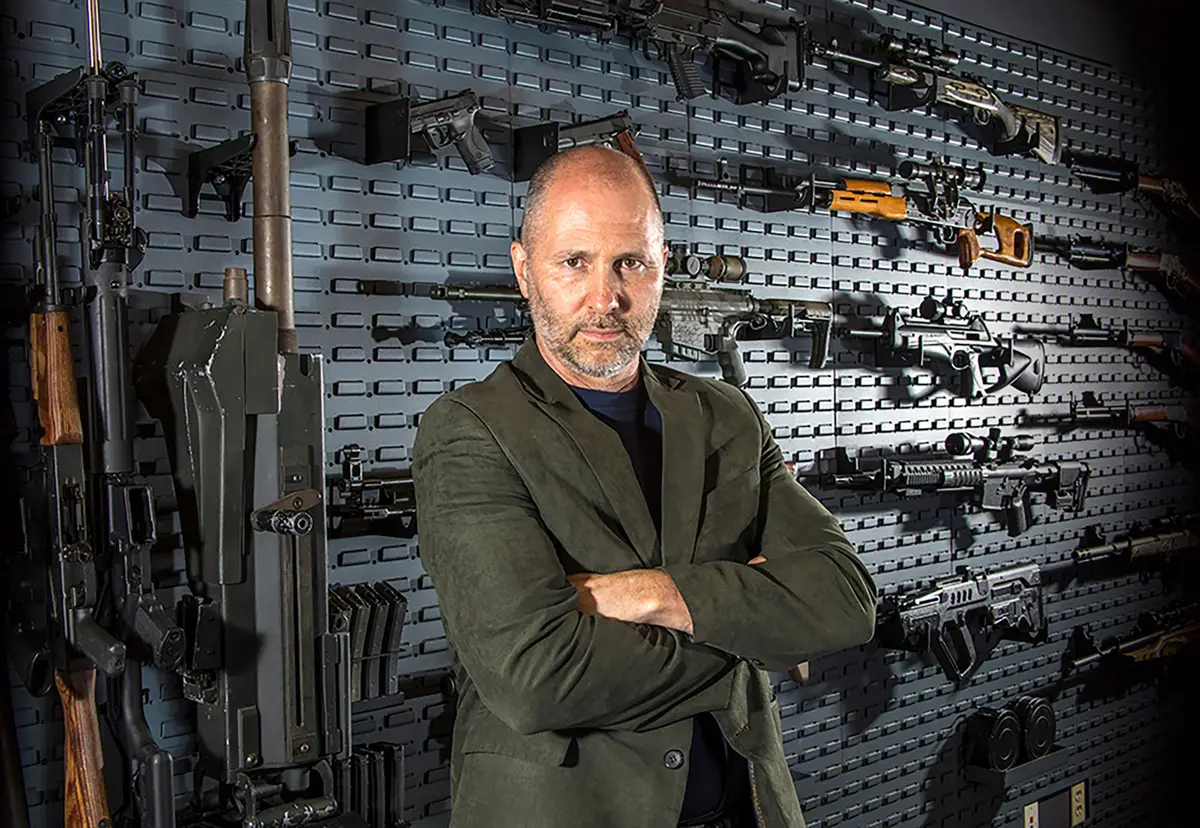
Tom Kubiniec is the visionary CEO of SecureIt Tactical, the leader in today's Gun Storage Industry and one of the fastest growing companies in America.
Tom Kubiniec is a leading authority in military weapon storage and armory design. His company, SecureIt Tactical Inc. is recognized as one of the fastest growing companies in America. SecureIt is the largest supplier of weapons storage systems to the Defense Industry and now the fastest growing supplier of residential gun safes in America.
Tom has developed storage systems for special operations units using his own patented technology. He’s brought innovation and invention to an industry that has not changed in decades.
Learn more about SecureIt Tactical at https://www.secureittactical.com/weapon-storage/
Or visit their YouTube Channel at: https://www.youtube.com/channel/UCZb3HLZuU80PVoAFxf_UDLQ
Transcript
Machine-generated from the episode audio and lightly edited — may contain errors.
Chris Albert (link to this point)
You know, one of the things I'm always saying is that if this country is gonna get better, if this country is gonna go on the right path, we have to step up as a community. Veterans are the sleeping giant in this country, and it is time for us to step up. That's why I wanna talk to you about The Citadel, the Military College of South Carolina. Now you might have thought about The Citadel in the past as this corps of cadets, this military institution, but they have programs for veterans that don't involve you joining the corps of cadets, don't involve you wearing a uniform every day, and don't involve you living a military lifestyle. If you wanna do that, great.
But if that's not what you're up for right now after your military career, then you don't have to do that, and you can access some of the best programs in the world. The Citadel has some hot degrees in intelligence, tactical strength and conditioning, engineering, and project management. And there's five student type options for veterans. There's graduate college, there's evening undergraduate, there's active duty students, non cadet day program, returning cadet veterans, and online programs. The academic offerings include undergraduate, graduate, college transfer, graduate certificates, and online degrees.
Veterans have access to every single academic degree the college offers, and they have the most flexibility when it comes to their schedule. They can major in anything offered to the cadets and would take those classes during the day with the cadets. But then there's other programs offered in the evening or online and graduate programs to choose from too to make things so flexible for you. The US World and News report has named the Citadel the number one college for veterans in the South. And for veterans who choose to take classes on campus, they get to be a civilian student in a military environment.
They don't have to wear uniforms, like I said before. They don't have to join the military culture of the corps of cadets. The atmosphere is a really good transition environment from military to civilian life. There's an organic mentorship that comes from taking classes with the cadets. The cadets wanna talk to you guys.
They wanna hear your stories. They wanna know what it was actually like to be in the military. A lot of the a lot of these men and women are gonna go on to serve as officers in the military, and they're gonna exact change. And they need to hear from you guys. They you also get access to The Citadel's alumni network.
Like I said, this is one of the most illustrious institutions in the world. And when you join the Citadel and you graduate, you're part of their alumni network. That includes so many leaders. It includes so many business leaders, so many leaders from the military, and so many leaders from the government. The college's core values of honor, duty, and respect align with veteran culture.
They align with who you are, and it's something that you're not gonna get anywhere else in this country. There is tons of special assistance for veterans at The Citadel. And whether you're a veteran or active duty military personnel, you can take advantage of these programs. You also get access to the veteran student success center, the career center, the academic success center, the student veteran association, and all campus clubs. If you wanna play rugby, you could do that.
If you wanna you wanna lift weights, you could do that. You get access to everything that the students get. There's fellowship opportunities. There's tons and tons of financial assistance. So if you're interested in getting a degree from The Citadel and building your life, head over to citadel.edu/veterans.
Chris Albert (link to this point)
This is Chris Albert, and I'm here to remind you of one thing. Someday, you're going to die. And that's not some morbid statement or scary idea. It's solid fact. Your time here on this earth is limited.
And we need to be reminded of this as much as possible for one simple reason, to live your best life while you can. This is the Warrior Soul podcast.
Chris Albert (link to this point)
What is up, ladies and gentlemen? Welcome to another edition of the Warrior Soul podcast. My name is Chris Albert, and this is where we deliver tools, tactics, strategies, and ideas to help The US military veteran community and anybody else willing to listen to live their absolute best lives. Today, I've got an episode with Tom Kubiniec, and he is the founder and CEO of SecureIt Tactical, a company that makes customized safe rooms for weapons, helps you to store your weapons in a secure area. He teaches us a lot about myths surrounding gun safes, myths surrounding how you should be storing your weapons.
But above all, what I wanted to bring him on for was to kinda listen to his entrepreneurial story. You know, whenever we see a company out there doing something pretty cool, it always helps to go and research the company the the people behind that company. See what they've been through. And you might be sitting out there. You might have an idea.
Right? You might not have an idea. Maybe you you just need a little bit of inspiration or a little bit about knowledge a little bit of knowledge as to how business works in this country. And I think that the more we understand this, the entrepreneurial journey, the basics of building a business, the more that innovation will occur in this country, the more that people will start businesses, the more that the the environment will be a more business friendly environment, and the more jobs and opportunities for us to get our skill sets out there there will be. So check this episode out.
I think it's a great one. I really enjoyed speaking with Tom. And with that, let's get into the episode. Alright, Tom. Welcome to the Warrior Soul podcast.
How are doing?
Tom Kubiniec (link to this point)
I'm doing great, man. I'm doing great. It's it's good to be on.
Chris Albert (link to this point)
Nice, man. Nice. So you're with SecureIt Tactical, a business you've created. Tell us a little bit about the business.
Tom Kubiniec (link to this point)
SecureIt, I started it in 2002 as a spinoff of another company I was running and we were doing data storage, data security. At that time we were selling tape storage, actual computer backup tapes and then laptop security cabinets. The guy called me and said, Hey, can you store an MP5? I'm like, Sure, what's an MP5? Little machine gun.
It was the FBI. I thought it was fascinating. He started looking at weapons storage. And that was right beginning of 2002, created SecureIt and got involved with weapon storage. By 2010, we were the largest supplier to the US military for small arm storage and armory design services.
We build armories for the SEAL teams, special forces, big army. Right now we've got a big project in Okinawa that COVID just had this thing upside down. We actually have 22 containers on the water right now heading to Okinawa to get this project just to get it going.
Chris Albert (link to this point)
Oh, wow.
Tom Kubiniec (link to this point)
It's about the first third of the project. This will be probably three years of build.
Chris Albert (link to this point)
Yeah. Materials crazy. Logistics is crazy right now. It's really hard to get anything into a port.
Tom Kubiniec (link to this point)
We bought 22 containers. We own them. It's that crazy because we bought them. It's cheaper to buy them than it was to try to rent and use and go through logistics. We're gonna ship everything there and then we're selling the containers in, in Japan.
Chris Albert (link to this point)
Oh man.
Tom Kubiniec (link to this point)
It's crazy. That crazy. But you know, I've got a great, great, great group of people and these guys, you know, our whole company is big on outside of the box thinking we're really big on doing it different is probably better. And that we take that approach. Everything we do is trying to take a different angle.
Chris Albert (link to this point)
Were you into weapons before you started this or?
Tom Kubiniec (link to this point)
No, not like this. No, I mean, I've had firearms. I would go to the range. Enjoyed shooting. My background is a musician.
I was a professional guitar player. I lived in Hollywood for several years and then in Burbank, my big thing was being a musician. So it's a pretty interesting, almost humorous path to go from being a guitar player, how I had hair past my waist at one point. And from that path to, we're now the largest builder of armories probably globally. So I just kept turning over stones and say, Hey, what's this?
What's that? And I went from musician to computer supplies, to laptop storage, to weapon storage. And the weapon storage just really resonated. Once we started working with the military and we saw what these guys had, how bad their armories were, Our mission became design and build systems that makes the warfighter more efficient, better prepared and able to meet the demands that these guys have to put their lives on the line. And then, you know, we were doing that, you know, up thirteen, fourteen, we're going to shows and Navy SEAL guys where they'll come to saying, can you make something from a house?
I said, well, we really don't make them. Our model 84 cabinets are, I've got one here. It's a big cabinet. It's a little too big for a house. We sell them, people use them.
And some of the SEALs would get them. And we kept getting hit with these questions. And that coupled with sequestration under Obama had defense budgets cut. And we were, were hurting sales wise because the military wasn't spending money. And we do a lot with law enforcement, but we really took a hard look at the consumer market.
And we started looking at it and realized that everything we saw in the military in 2002, just how bad the armories were, the same thing is in the consumer market. It's even worse. The gun safe industry, I mean, they're just trapped in 1952. It just they they've never changed.
Chris Albert (link to this point)
Tell me about some of the problems. Like what were what was the thing you saw in armories and gun safes that that made you say, okay. There there's there's a USP I could develop here. This is a business I can get into and do something different.
Tom Kubiniec (link to this point)
In the military, what they were transitioning from the m 16 battle rifle to the m four. The m 16 is a was a very rigid system. It's a 39 and a half inch gun. They're all pretty much the same. There's some nuance differences, but the platform was very standard.
The M4 is just is a modular, it's a weapon system. It's not a rifle. I mean, in the basic infantry unit, they've got an M4. You get into special forces, they've got that rifle with a SOPMOD kit. They've got 14 different attachments.
You've got different barrel lengths, different stocks. There's so much configuration to the gun and the weapon racks the military had been using since the early sixties weren't designed to be adaptable. They were rigid metal pipe frame racks that held all. And as we saw the volume of gear associated with military weapons was growing exponentially. All that gear is high value or sensitive has to go in the armories.
We realized they needed a flexible solution. And we coined the term Home Depot development. We actually went to Home Depot, walked the aisles to look just to brainstorm on storage solutions, came up with our cradle grid solution for storing guns, for actually an adjustable system that stores firearms and stores weapons. We designed that having never seen what the competitors were building at the time. And, we presented it to, it was Youssef, U.
S. Army Special Forces Command, that's now part of SOCOM. And they loved it. It was a very simple, simple system, one bracket, one piece, adjust on the fly to hold anything from an M4 to a 50 cal or Mark 19, any weapon in their armory. And then the rest of our system is bins, trays, storage boxes for all the gear.
And you can source we would supply the material, but you could source it at almost any hardware store so they could solve problems downrange with storage. And one of the best analogies for our system and this applies to our consumer products. The Marine Corps out in Okinawa or out in Pendleton called our rack the Tetris rack. They start at the bottom and build. The guys at third group in Fort Bragg, they call their rack the Lego rack.
Our competitors are making weapon racks. We made a tool. CradleGrid is a tool that allows an armorer to configure his rack and his armory in a manner that meets the mission or meets what he needs. And if things change, which they do often in the military, the system adapts. Look at consumer guns.
There's been a broad shift, a big change in consumer firearms. You go back and guys are going hunting with lever action or a shotgun. Not many people had scopes. Most of the guns were around 30 to 36 inches, a bird comes a little longer. Gun safes came out and they developed that system with all the little W's to hold the rifles.
And that's been the that's just the way that that's what's developed. And that's what we have. But now you've got everything down from those AR pistols to long bird guns to there's so much modularity and so much flexibility in civilian firearms. It's kind of mirrored the changes in the military. Traditional gun safes don't work.
They don't hold varied lengths weapons. They also don't hold weapons with optics. I mean, we've got a Liberty safe holds 40 companions of 40 gun safe. And we got video we demonstrate with modern, a mixture of modern sporting rifles, a r fifteens. I've got some hunting rifle.
We've got 11 guns in 12 all just stripped down lever action rifles. We're still only getting about twenty twenty one or less than half the state of capacity. And that's indicative of this industry. They don't build safes to hold guns. They build safes to sell safes and gun safes are designed to look good at empty.
I did find that out when I was touring a plant. We had met with a senior team of a couple of safe manufacturers early on. Our first thought was, let's partner with a safe manufacturer. If we're gonna go into consumer products and license our technology. After meeting them with them, we walked out and said, wow, we can't do this because their whole mindset isn't about what's best for the gun owner or what's best for the gun.
It's how do we sell safes? And I spoke with a plant manager who gave me a tour. The corporate guys quiet about stuff. Plant managers, he would explain to me, they designed the safes to look good empty because that's how they're sold. You walk into a big safe distributor, walk into Bass Pro or something.
The safes are designed so you open the door, it's empty it and looks good. And they're figuring if their safe looks better empty than the one next to you, next to them, you'll buy that one. You go to SHOT Show and you look at the safe companies, all their safes are empty. You come to the security booth, every one of our cabinets is maxed out. We fill them with guns.
Safe industry can't do that because there's no way they can hold what they say. And the little w system that they use really doesn't work. You know, when you
Chris Albert (link to this point)
So with technology you're you've created. Right? So tell us a little bit about that, and tell us about, you know, how you came up with it. You you mentioned you were walking around Home Depot. You were you you were trying to get inspiration from that, but but how'd you come up with this system?
How long did it take you? You know, how did that all come to be?
Tom Kubiniec (link to this point)
It didn't take a long time. I knew we wanted to create something and I actually, I had a, at the time I lived in California. I didn't own an AR 15, but I bought some airsoft just to have the form factor. I actually had quite a few military guns and airsoft and I took a block of wood, and started cutting out shapes and pieces, trying to figure out the best shape to hold these different weapons and to hold them differently because our cradle holds AR 15 at the barrel. You can lower the cradle, hold it at the at the grip, fore grip.
You can actually drop it down and have it hold the weapon at the mag well. And what you're doing is you're you're changing how the gun stands up in the rack. So you're buying space between the gun and the rack to drop in storage bins and store gear behind and around the weapons. We want to give the military as much flexibility they want to. And the spacing of the system and the size of the saddle, the cradle, how it holds guns, it'll do everything from you know, 50 cal machine guns to Mark 19s.
We designed the base of it to be rifle stocks, spade grips. It'll do mortar, cannon, but it'll basically it's very simple, but it does a lot. Know, one of the, when I present to the military, one of my opening statements is always, you know, if you've got a junk drawer in your kitchen, most people do, it's that one drawer that all the odds and ends end up in. There's always a few tools in there. What do have in there?
You have a screwdriver, small hammer, pair of pliers, maybe some tape. You keep the simplest tools handy because with the simplest tools you can solve the most problems. And that was a mindset, you know, You walk in the office here and big science says innovate and simplify. It has to be simple. The simplest tools always are the ones that last.
A crescent wrench has been around forever. It's just so simple. Mindset and we made CradleGrid is an extremely simple system. And then we use a louvered back panel, which is, it's not proprietary to us. It's an industrial louvered back.
Now we make it much heavier. We do a different powder coat on it. So it's far more durable. But again, designing something that is flexible, easy to understand, easy to use and easy to expand, easy to live with, to get more, it's just as opposed to a gun safe is a rigid box that you're basically, it's up to you to kind of balance your guns in there. There was a article in, I think it was The Truth About Guns, talking about gun safes.
And they made the claim that their research showed the bulk of all damage and wear to civilian firearms, rifles occurs going in and out of gun safes. You know, the articles that I didn't take time to really go into the fire, but I believe it because, you know, in those systems you're digging to get to the gun in the back, you got to dig through a bunch of guns. You know, you know, it's in the back. You've got a couple of, if you have a big collection, our system is all based on some basic principles, straight line access, one arm, one gun. All our guns are always stored in one row.
You open the cabinet with one hand. This is from an armory standpoint. You open a rack, grab a rifle, close the rack and lock it all doing it. And you're never laying a gun on the ground. You're never digging through.
It's all presentable. You've also got what we call organizational awareness. You can glance at the cabinets, you know, everything's there in the military. Our military cabinets have a punched pattern, a diamond pattern punched into the front, they can walk through the armory and look in and they know that everything's there because they have to do a visual sight count. Well, if you've got a big gun collection, couple of cabinets, you don't know, somebody could have taken one of your guns, your kids, friends, whatever.
And you might not even know it's missing for months. Our cabinets, everything we do is based on 13 inches, 12 inches, 15 inches. They're all shallow. Again, our systems are designed to store firearms where it makes sense in your home, not in the basement, not in the den next to a fireplace, not, know, safes are great big heavy things. They take a lot of space.
It's got a huge door that swings out and they force you. You have to put a safe kind of in the middle of a room or against, well, in a big room, typically a basement. I see advertising in, know, with a fireplace and like a big den, which is crazy to put your safe out in the open. Use the term decentralized storage, break up the safe, store your guns in smaller modular lightweight cabinets. And if you're gonna own firearms and secure them, do it in a way that makes sense.
Right. If people go to our website, they can learn more about decentralized storage, home to store firearms is also like the best places to store firearms to give you a tactical vantage and you've got a break in or a bit of a home invasion. You know, I can go through FBI crime data, can it's available online, but these break into a home, They're going master bathroom, master bedroom. They're looking for drugs, valuables. Typically, if they find them, they're gone.
Then they'll hit home office, den, dining room, and they're out. Most break ins occur. The thief is in and out of the house in under nine minutes. Most break ins occur during the day. So you look at firearm storage, if they see a big safe and if they're prepared, they're they're they're gonna take the safe.
They won't take the safe. They're just gonna cut it in half.
Chris Albert (link to this point)
So let me let me ask you this. Again, want to get into the process of this because I'm fascinated with the idea of products are going to be and how you create these things like this. I'm in manufacturing myself, and I know a lot of the people out there in our audience, there there are people who've been in the military looking for different paths and and some trying to follow this entrepreneurial path. But, you know, once you had the design, you had it together, then you had to go and you had to figure out how to put together a manufacturing plant, right? Or or or
Tom Kubiniec (link to this point)
Well, it's I use Home Depot development, never design and build something that's already being built or has already been designed. So we actually, I'm not gonna, I can't go into too much detail because some of it's proprietary, but we actually found a company that was making an industrial storage locker that was kind of close to what we wanted. And we approached them saying, look, you're 75% there. What we'd like you to do is take the design you've got, make these changes. And these not math.
There was some shallower that we designed a door system that was similar to what they were doing, but it was an The military security requirements had to have certain locking features. And we worked with them. They were selling in the industrial storage space, which is a really boring kind of a business. They did a great business. We took their cabinet, put fabbed up a cradle grid mock up, filled it full of guns.
And one of the reps came over, he saw it and he just lit up. He said, that's the coolest thing I've ever seen. His product full of guns. So I hit it off with the owner of the company. In fact, we're still very good friends and we got them to, they were so close to being there.
They made some changes and they produce all of our military cabinets. So those are made in Connecticut. We've got manufacturing in Mexico and maquiladora, where there's assembly welding and back for powder coating, for everything we do military. And we try to follow that as much as you can. Don't design something just because if there's something already out there, you use that as a base and work from that.
If somebody if a lot of the works already been done, we would never copy or patent or steal a design. In fact, we don't make products because we want a price point or because other people are selling them. When you look at handgun storage, we've never had a handgun storage solution because there's a thousand of them out there. We do have a handgun. We didn't have original idea, but we do now.
We have a design for a new way of storing handguns. I can't go into a lot of details on it. Product should be released early next year. It should have been released this year. Came down to me.
I made a mistake and we developed basically in a wrong direction and developed our way into a corner with a product that ended up having a design flaw that we could not get past. And we had to step back and you know.
Chris Albert (link to this point)
Yeah, no, I gotcha.
Tom Kubiniec (link to this point)
You know, and sometimes that happens. I did learn though, when you're in product development, take the one thing you don't know and design that first. We designed the easy part first. And so we're gonna solve that problem when we get there. Well, we couldn't solve it.
So we had to change the original design. However, it's going to be a game changer for, handgun owners, in terms of a flexible solution that it's something that you can live with in terms of it works with you. Our gun cabinets are lightweight, our agile cabinets are number one seller. It's a lightweight modular gun safe. That's easy to live with.
Average American moves every six point three years now. The two most left behind things when you move is a hot tub and a gun safe. You may pay $1,500, 2,000 for a gun safe. You move in eight years, moving companies won't touch a gun safe. You gotta hire a gun safe company to remove it from your home and package it.
There's 4 or $500. Truck is gonna ship it to your new home. $405,100 could be more. And once it gets there, you gotta get another safe company to unload it and put it in your home. It's cheaper to leave them or just to give them away.
And that's what happens to most gun safes. So our systems are lightweight modular. I mean, the agile cabinet is a KD. It ships flat, you assemble it. It's a patented, we call it slide lock technology.
It's again, extremely simple. It's eight bolts. Once you tighten those eight bolts, I'll put it up against any welded safe, any welded cabinet. It's extremely strong, extremely rigid. And because of the way the construction goes, you've actually got stronger sides than on a gun safe.
Our larger answer cabinets isn't all welded cabinet. Again, they're shallow and our 12 gun cabinet is a double door safe, which is very, it's unusual. There's a few out there, but it's pretty unusual in the safe industry. They don't wanna spend the money. The gun safe is so deep and depth in a gun safe works against you.
But the reason they're so deep is the weight of the door would make the cabinet tip over and that, you know, as a which is very dangerous if you got kids. So they make those cabinets really deep. So the door opens, it doesn't tip over. Right.
Chris Albert (link to this point)
Yeah, go ahead. So, you know, I, and I believe I've heard you talk about this before as a myth, but, but what about the myth that a safe should be heavy or that your storage unit should be heavy?
Tom Kubiniec (link to this point)
Yeah, it's, This is my opinion. I can't prove it, but I believe that the safe industry looked at this and saying, a safe is heavy, there is a perception of security. A heavy safe has to be secure because it weighs a thousand pounds. When you disassemble a safe or deconstruct it, you realize it's 11 to 16 gauge steel is the outer part of the safe, same stuff that we use. And this lined with one, two or three layers That's the rate. They call it for fire protection.
They actually need to make it heavy to offset the weight of the door. I'm doing my research and talking with these guys. When you look at a safe, a gun safe, look at their marketing materials, they focus your attention on the door and they're gonna show you their high end safes are gonna have twice as many bolts. They're gonna have corner bolts. They're gonna have a special locking system with hardened steel drill plates and all plates, all these things that make that door.
So there is no way a thief is gonna open that door. And he's not. However, he's gonna ignore the door because the rest of the cabinet is anywhere from 11 to 16 gauge steel. And if you take a modern or just take a circular saw, I've got one from 1989 when I bought my first house, a skill saw, it's a cheap saw, which you buy a modern carbide steel blade. They're about $25.
They use these blades and these saws for cutting rebar on jobs in industry up to half inch rebar cutting it all day long. These carbide blades cut through gun safes like butter. I took a Fatboy, just a big safe, 40 gun safe. And I walked around it and I cut it completely in half in a minute, eighteen seconds. Then I took and just cut a 12 by 12 hole in the side of a safe.
And that was under twenty seconds. So the notion that gun safe is secure because it's heavy and made of steel is nonsense. But again, this is the industry living in 1960. Because if you go back to '16, when these safes were all becoming popular, I see it's early '70s, they went to UL for a class rating. UL rates safes and it's done for the insurance industry.
If you have a jewelry store and you have $5,000,000 worth of jewelry, your insurance company is gonna say, you want us to ensure that you have to have it in a UL class B or class A safe. And they know how secure those are. And those are very secure. So the gun safe industry went to UL say, we need a trading for these. We wanna be able to say UL rated.
And UL gave them a rating. It's called RSC. It's class RSC, which is residential security container. And there's a sticker on the door of every gun safe pretty much sold in America says RSC. You'll notice the word safe isn't part of the designation because UL would not allow the use of the word safe because these don't meet the minimum standard.
What the class RSC standard is, is this box, this safe will block access from one person with a pry bar of less than 18 inches, a hammer of less than three pounds and a small hand drill. When you think about that, that's a guy with a striped shirt and a little mask in 1965. I mean, that is a 1960s, early seventies threat level. When you come forward to today with modern, I've got a 20 drive battery drill. I put a carbide blade in it.
I'm cutting through these things. It's just easy. And you hack right through them. They were never designed for this. And the notion of security because you're using steel, even if you go to a plate steel safe, which is incredibly heavy, quarter and steel, it slows me down a little bit with that saw, but marginally it's not much.
The best security is secrecy. And that's why we design and develop the concept of decentralizing your storage. So, in my home, I store guns, bedroom is the least secure home in your room in your house. I've got a rifle under my bed. It's in a fast box, not on my bed frame, silent, fast access.
I've got the gun in my hand in under two seconds. Front hall closet, you know, the coat closet next to your front door, very secure area. Thieves never looked there. I've got a agile cabinet in there. I've got six rifles.
Now I've got a pretty good collection. Just So I've got various vintage guns, but I also have an AR 15 in their magazine in Magwell's ready to roll. My kitchen pantry, I've got a small cabinet. I've got four guns, one of which is a pump shotgun. That's also an exit point of the home so you can arm yourself and get out.
And I go through my home and that's how I set everything up is people spend a lot of times in their kitchen during the day. Thieves don't go in the kitchen. So it's nothing there of value, but you've got fast access to a gun. That front hall closet, if you go to your front door, somebody's knocking at the door, you decide not to let them in and they want to kick the door in. I'm armed in three seconds.
And then in my home, I've got a guest bedroom that I've got the bulk of my collection. Guest bedroom is set up with a bed, nightstand, a lamp, piece of generic art on the wall and nothing else in the room as a chair, it's one chair. So a thief, if he's running the house quickly, remember time is their enemy. They're moving fast. They look in their guest room.
They're not spending any time in there. Yeah. In that edge of quad system, I've got 24 rifles. That bedroom is also at the end of a hallway. So in the event of an invasion with my family, that's the room that we go to.
If you can get if not, there's guns located throughout the home you get to. But in that room at the end of a hallway, I'm armed. Anybody that wants to get to us has to come through that hallway. There's just no way. It's constriction point.
And we can be, you know, laying there with AR fifteens right down and there's no way they're getting to us.
Chris Albert (link to this point)
Yeah. You guys got to put together a YouTube channel of you ripping apart safes and then showing
Tom Kubiniec (link to this point)
We've done those videos. I've got one that was over a million views. That was with cut off wheel. It's we get trolled so hard for doing it. We do have the videos they're out there.
We are when, COVID hit the company went remote and the fascinating thing is we're not going back to the office but we stopped making our videos. We've got a studio. I mean, is part of our studio I'm sitting in today. And we were doing this week at SecureIt, but because of the way things are going to be stopped. And then we got so busy.
The company's growing so fast. We've recently started hiring people in our marketing department. So we're gonna be back to shooting videos on a very regular basis. We've got the secure channel that I'm gonna do a channel as a CEO. And we will go back to this.
There's a couple of fascinating videos that we're gonna shoot that people are going to love to see. And they're going to point out some serious dangers of some of the storage devices that are out there. Because for us, it's, you know, yeah, we want to change the way America thinks about firearm storage to make them safer and better prepared. Personally, I want to change the gun industry. This whole industry, I mean, not just safes.
To me, it seems like it's stuck in the 50s and the 40s and how they market, how they do everything. More talking about these points, you know, whenever there's a second amendment issue on the news, they always interview a retired policeman or a great big gorilla guy full of tattoos. It's never a a mom, a single mom who wants to defend her. It's never an FFL owner. It's never, you know, it's a John Bartolo talks about this all the time on his show.
Chris Albert (link to this point)
You ever watch, Colion Noir?
Tom Kubiniec (link to this point)
No, I haven't.
Chris Albert (link to this point)
Check him out. I mean, he's a lawyer. He's a real real smart dude. He, he does gun reviews. He does all kinds of stuff.
He talks about the laws and things like that. I mean, like really, really great channel. He's super informative.
Tom Kubiniec (link to this point)
That's good. I'll check it out because there's so much bad information out there. There's so much just, there's so many. I mean, the whole social media landscape in the fire is affable, you know, with big boobs and guns, who cares? You know, I mean, who cares?
And then companies send out hundreds of rifles to whoever wants one that will do a review provided you do a good review. There's so few people who are actually honestly doing product reviews that are accurate because you know what? Not every gun is a great gun. Good ones out there, but there's some bad ones. There's some companies out there right now that I think are putting out some, the demand for rifles and shotguns and hangers is so great that they don't wanna slow down production to make an inline fix or change.
And Yeah. I mean They have problems that need to be fixed and they're just not doing it.
Chris Albert (link to this point)
That's the big thing. I mean, right now demand is so high in the gun industry. I mean, demand is high everywhere. I mean, people are just looking for stuff right now. I mean, I'm in the boating industry.
There there there's companies out there that have, you know, five year waiting list for boats, $500,000 boats, that kind of stuff. So I know. I mean, it's insane right now. But, you know, I think that that education has to get out there. I think that, you know, I'm I'm all about the second amendment.
I'm I'm I think that that that gun ownership is part of America. It shouldn't go away. But I also think people need to be trained. Right? They need to they need to understand these weapons.
They need to understand safety. They need to understand, you know, the dangers of of storing a firearm in their house when there's kids around and things like that. Right? And and they should be educating their children about them, not not not inducing fear or anything like that because I think that that is how a lot of kids end up, you know, not understanding these weapons in the first place. But, you know, I think I think we've got a bit of ways to go, and and, you're right.
You know, I think the the the whole industry needs to modernize.
Tom Kubiniec (link to this point)
I do. I I I wish they hope, but it's it's one of the one of the problems is that I see it right now. Everybody's so busy. There's such a demand for gun business is booming. However, once this boom goes away, what happens then?
These manufacturers because it's not, mean, the rate of sales right now isn't sustainable because a lot of people are buying their first guns or buying a second gun for a different purpose, but it's not sustainable. And it's at these times when sales are high that the industry should be focusing on the narrative and on the messaging and talking about the second amendment and why this is important and they're not. Middle East, I'm not seeing it.
Chris Albert (link to this point)
Yeah. Like I said, I think check out check out Colion Noir there. Check out, you know, some of these other other YouTubers out there. I mean, I think some of them are are are actually trying to do this. Colion Noir really tries to educate people about the law, the threats the threats to the second amendment, things like that.
I think it's he does does a great job of it. But, you know, where are you looking to take the company? What does the next few years look like for you?
Tom Kubiniec (link to this point)
We're on a pretty steep growth curve. And, we're hiring a lot of people right now and I always make the same statement. A couple statements I make. I talked to everybody to hire and this company is a band of misfits out to change the world. That's how I put our change a piece of the world.
And I do like to hire people who are the outcasts the outsiders the different thinkers. So many people have no creativity. They did kids are born 100% creative. That's all they have And then it's unlearned or beaten out of you through all sorts of social pressures of going through school and growing up and parenting and everything. And there's a lot of people that just lose their will and their ability to be creative.
So we look for the people that are the outliers the people the quirky know for this and I also want people that will challenge each other and challenge me. Mean, I don't want anybody agreeing with me. In fact, I've hired a few young people who are out of the gate were like telling me I was nuts and people look in their eyes like what? And I love, need, you know, I tell people without feedback, I'm going a 100% on the ideas that I think are right. Give me feedback.
And I, you know, I have no ego attached to this. I want to make, I wanna make a change in America. And we have great debates and I think we're doing a really good I think we're getting there. The goal of the company truly for me is to change the way America thinks about firearm storage. In doing that, we'll be at $130,000,000 a year in sales.
We're growing, we're Inc. 5,000 fastest growing companies in America. I think the growth rate is going to be accelerating as we we're still in that phase of early adopters in terms of the market penetration. And there's a there's a tipping point where mass market gets appeal and goes in. Early adopters are the guy to wait in line for the iPhone and they're the guys who have to have the first of new technology.
But there's a point where it goes mass market and we're not quite there yet, but we're still growing as fast as we can.
Chris Albert (link to this point)
What kind of people are you looking to hire? I mean, we got an audience of, people who love firearms right now and maybe they wanna get in touch with you. What positions are you looking for?
Tom Kubiniec (link to this point)
Recently, we've been hiring a lot of customer service positions only, you know, when you're a direct to consumer company, the cornerstone of that is customer service. And, I tell them all, are fanatical about customer service is we're not in stores. You can't kick the tires. We have a buy it back guarantee. So if unsure, you can buy it.
We'll buy it back if you're not happy. And our customer service department, these guys, they have the freedom to solve problems and they're good. And we've hired a lot of them. We've hired marketing. We've built a market.
We've just now started building product development, which was that was the light of the puzzle for us. I do most of the product development along with my number two and it was kind of a community effort. But as the company's grown, there's I mean, we're being pulled in too many directions. So now we're actually building a product development department.
Chris Albert (link to this point)
That's awesome. That's awesome. And the people you're taking on, they could be remote or they got to be where you are in New York.
Tom Kubiniec (link to this point)
Oh, we are, I've got people in Phoenix. We got, Austin, kind of the Chattanooga ish area, Louisville, Indianapolis. So yeah, it doesn't matter in post COVID world. We have very, very good communication technology. We have a very good system of accountability within this company.
So this notion, get people, I've got several like CEO groups that I meet with other CEOs to talk about business challenges. And they're all well, they're working remote. How do you know they're working? I don't care. And they think they look like I'm nuts and saying, and I tell my people this, I'm not paying you to work.
I'm paying for results. Right. And that's a conceptual thing they have to understand is if you can get the result I want in four hours and spend four hours, it's going to take a month and a half, take the month and a half. I want the results. But if you can do it in four hours, rest of that time, you know, what else can you show me?
Because now you're growing in the now you're like, show me something, what else have you got? And that's, it works really well. The other side of that is we run an open book company. So we go through our finances in detail with the whole company every month. Our CFO lays out income statement balance sheet.
We do an educational component of how to read these documents, how to look at cash flow. Cause I tell everybody here, I want to treat you like owners. I want you to make decisions the way I would make them understanding the numbers and what and why we do what we do. The last part of that one is we establish a goal, a number we're shooting for. We beat the goal and a portion of that money, we beat the goal.
Chunk of that big chunk of that money goes into a pool is divided up between all the employees in the company based on payroll basically. And I've got a lot of young people fresh out of college or just fresh into the job world. Last year, bonus checks were 22 to $72,000 It was a game changer. We killed it last year and we're doing well this year, but I got two people buying their first houses. As an owner, there's nothing better than watching these people explode.
And they're so motivated. You know, I've got guys saying, why are you giving out that big bonuses? I said, well, the money wouldn't have been there if they hadn't crushed it. And I set a goal for where I wanted the company. They beat the goal.
So the bonus is based on how much they beat it by. So there's remote, but they're all busting their asses. I know they are. I see what's happening. And then we use a system of how we actually get things done.
That's radically different than most companies. It's called EOS, Entrepreneurial Management System. And it's a different way of running a company.
Chris Albert (link to this point)
That's the yeah. I know the book. It's Traction. Yeah. Yeah.
Tom Kubiniec (link to this point)
Traction. Yeah. We we we have adopted that system. In fact, we're one of the big success stories with that solution. I've been on their podcast before.
I've done some marketing work with the
Chris Albert (link to this point)
Gino Gino Wickman. Yeah.
Tom Kubiniec (link to this point)
And I'll tell you what, anybody out there running a business, small business, get an implementer, don't do it yourself. It's worth it. And it's a game. It is an absolute game changer for us. That's why we're growing at the rate that we're growing at.
And we're just, we hire remote people, we train them remote. And once they understand how the system works and they're in it, they just
Chris Albert (link to this point)
That's awesome. That's awesome. Yeah. So you're the visionary, you have integrators and things like that, right?
Tom Kubiniec (link to this point)
Yep. It's a great relationship for me because and they actually they call it a visionary and integrator. Visionary that's me. I'm the I'm the idea guy. I'm the guy that's speaking to you today.
I mean, I'm the guy that's back to the company facing forward projecting out what we do, meeting, greeting, doing all that. And my integrator is a I call him the executioner because he executes. He did not executing people. He makes sure everything gets done. And by having that relationship, it really frees me up to focus on the creative side of this business.
One of the reasons our product development is good are, you know, our creative side of our company does really, really well because I'm not, I don't deal with operations side other than talking to the people see how they're doing. I'm not involved in operations at all. We had a warehouse go down bad. And I know a lot of guys would be up all weekend going crazy. And I'm like, all right guys, what's, what's the plan?
Good. I had a golf, I was going golfing with some friends that day. I went out and play and you know what? And then I told a couple of guys, you're playing golf. I said, you know what?
They're better. They can solve this problem. I can't solve it. I'm just going to get in the way. And, yeah, it's it's just, it's a lot of fun.
Everybody here is just having, I mean, we have a lot of fun. So it's a
Chris Albert (link to this point)
Well, I got a book recommendation for you and your team if you wanted to check it out. It's called Financial Intelligence. It's by Karen Berman. And it's a really great guide if you're trying to get people to understand financial documents like balance sheets, cash flow statements, income statements, and it goes through step by step. It's really easy to understand.
And for those of you at home who are trying to get your careers together and you're trying to figure out what you're gonna do, understanding accounting principles, I know it sounds boring as heck, but but it's a huge part of business. It's a it's a huge part of of being able to contribute to a company, too.
Tom Kubiniec (link to this point)
So I tell you what, it's it's a shame that they don't teach basic finance in high school.
Chris Albert (link to this point)
Yeah.
Tom Kubiniec (link to this point)
But from the basics of understanding credit card debt, term loans for buying like you're buying a car, all they just don't teach you. What ends up happening is just the opposite is they teach you debt is something you're have your whole life. You manage your debt. You're going go into debt for your college. You're going to have debt for your house.
And that's just part of life. It doesn't have to be. Yeah, no, exactly. You make a choice to go in debt. The problem is our education system is really pushing kids to go to college, to take on crazy debt for brand name college.
And one of the funny things here is I looked at our job, solicitation several years ago for hiring employees. You a listing there for you almost have a bachelor's degree or what it was. I looked and go, why do you have that in there? Like, we want kids to to college. I go, okay, why?
And she looked at me and I said, I didn't go to college. I dropped an F on their company. I didn't go to college. I take that off the application. I don't care.
You know, what I love to see is Eagle Scout. Boom. There's somebody, somebody who's been working since you were 14 and always looking at ways to make money, to move forward, to achieve on their own. We look for people who are who like to learn on their own because once you're adult out of school, a lot of people stop learning, but the ones that don't are the ones that achieve. And I like to find people who just like to look at things and always look for the new way, the different way of doing things.
So college to me doesn't mean anything. And I'll tell you this with the way colleges are. I will not hire somebody from there's a handful of schools on a list. I'm saying, I'm not hired. I don't have baggage of what these kids are coming out with their understanding of the world.
I don't want it part of my workforce. So we specifically target and it's a lot of high end schools that we taught to say, will not hire a graduate from that school. Wow. I wish more companies Wow. Would do that because it would get these schools to actually start teaching reality.
I mean, I don't wanna get political or anything, but they're teaching ideology. And that's and you you know what? You can't get a project done based on ideology. You have to actually get it done.
Chris Albert (link to this point)
I get you. I get you. Absolutely. Well, how can people, learn more about more about SecureIt Tactical? How how can people order one if they want?
And how can people get in touch with you guys if they they wanted to apply for a job?
Tom Kubiniec (link to this point)
If you just Google the word SecureIt, you'll see our YouTube channel. It's secureitgunstorage.com is our consumer site. They're also a secureittactical.com and that is our defense and military site. There's a ton of information out there. We've got a pretty big YouTube channel, a lot of videos.
Again, we're a direct to consumer company. So we're trying to make it as efficient as possible. If we put our stuff in Bass Pro, they want to make 40%. Well, we gotta take a cut ourselves and then we gotta raise the price so they can make money. So I don't need to pay those guys.
We're better off going direct to our consumers, talking to our consumers. We have pretty good outreach to the people who buy from us. And we're pretty engaged with our customers. We spent zero on advertising for the last two years. Just about zero, a little bit here and there, but, and we're growing at record pace.
It's all word-of-mouth. We're not just selling a gun cabinet. We're selling a whole new concept in firearm storage. And then the store guns defines your defensive capability and your safety and security. And the people that buy our product, they like it, they get it and they share it and they tell their friends.
And that I mean, that's it's a grassroots, we want to call it viral marketing. It's absolutely working. You know, it's it's great not having to spend $500,000 on TV ads or something.
Chris Albert (link to this point)
Awesome. That's awesome. Well, Tom, I wanna thank you so much for coming on today. Really appreciate all the the knowledge and the wisdom that you brought here. Anything you wanna finish off with for our audience here?
Tom Kubiniec (link to this point)
You know, I mean, we're out of COVID. I think the world's gonna get back to normal shipping in a couple years, but just you know what? Get rid of the damn masks. Get outside. Get back to enjoying your lives.
We've been we've been dealing with this crap for a long time. I just want everybody to get back to you know, nobody knows how many days they have left. Make today, make tomorrow in port. Day of your life to have today. A day that you'd probably want when you're 95.
Make it important. Make a difference. You know, make a difference in the life of somebody else. And, you know, there's I think things are heading in a good direction in this country. I think politically, the BS that's going on right now, I think it's short lived.
I hope it is. I hope so too. But I think there's gonna be a backlash against the craziness. There's a very small group of people that have a very loud voice. Most Americans don't.
And I always tell people when the people that just want to be left alone finally get involved, this thing changes.
Chris Albert (link to this point)
Yeah, absolutely. Absolutely. Well, again, Tom, thank you so much, man. For everybody out there, I hope you got a lot out of this episode. We will have links to SecureIt Tactical up on the show notes so you guys can go check it out.
And like I always say, get out there and live your best lives while you can. Alright, ladies and gents. That is our interview with mister Tom Kubiniec of SecureIt Tactical. Definitely go out there and check them out. We're gonna have all the links to SecureIt Tactical up there on the show notes, you can head over there to Google.
Check them out. Lot of stuff in this show. Lot of stuff in this episode. You know? Of course, talking about weapons and weapon storage, but more importantly, that entrepreneurial journey, you know, figuring out what you wanna do, how you're gonna accomplish it, and once you've created it, how you're gonna manage it.
Such an important skill set to have in today's world. I hope you guys are doing well out there. I know I've been a little bit slower with the content lately. It's because I have been super busy, but we're still publishing every week. I will be back at you later on this week or next week with some more awesome content.
This is Chris Albert with the Warrior Soul podcast, and I am out.
Host of the Warrior Soul Podcast and founder of Warrior Soul. Worldwide trainer and nutrition coach, contributing author at Testosterone Nation and Muscle and Strength.