Transcript
Machine-generated from the episode audio and lightly edited — may contain errors.
Chris Albert (link to this point)
What's going on? This is Chris Albert and this is the Warrior Soul Podcast. Welcome to Warrior Tips. You know, in a lot of ways, I've studied strength throughout my life. You know, I was a personal trainer, I was a strength coach, and I studied physical strength and how to get people physically stronger.
As a US Marine, we studied mental and physical strength, and that's true of all the branches of the military service. You know, you study mental strength to get yourself through hard times, and you study physical strength so that you can adapt and overcome in any physical situation that you need to get out of or solve a problem in. So physical strength and mental strength work together there. As an academic I studied war and I studied the strength of states and how they influenced other states on the world stage. But what I've come to understand about strength throughout my life and throughout my studies is that strength never has anything to do with a physical act.
You know, there's so many of us out there who want to accomplish big goals. You know, we want to squat 500 pounds, we want to build a business, we want to become successful. We want to successfully transition out of the military service and into the civilian world. But what we forget about strength a lot of times is that it's never a physical act, right? Strength is a series of acts that we do throughout our lives.
You know, when you're in the military you learn that you have to consistently make hard choices for the good of your unit, and for the good of your branch of service, and for the outcome of the mission. And in order to understand how to make those hard choices and in order to understand how to do your job, have to train for it. And it starts at the beginning when you're a recruit and you slowly transform yourself into a Marine, a soldier, a sailor or an airman. When you get out and you go into the civilian world, similarly that transition is not going to happen overnight, know, and in a lot of ways you don't wanna transition completely. You wanna bring your military perspective to what you're doing.
Just like when you went into the military, you probably had some core values that led you there in the first place. And that allowed you to successfully get through recruit training, and eventually after you were trained in the proper protocols and the proper manners of how to act, those attributes of yours allowed you to get through your four years successfully, or eight years, or twenty years, whatever it was. The bottom line is that throughout your life and all the successes you had, you made a choice. In fact, you made a series of consistent choices to get to success. You made the choice to go to training, or you made the choice to wake up early every day to get yourself physically fit.
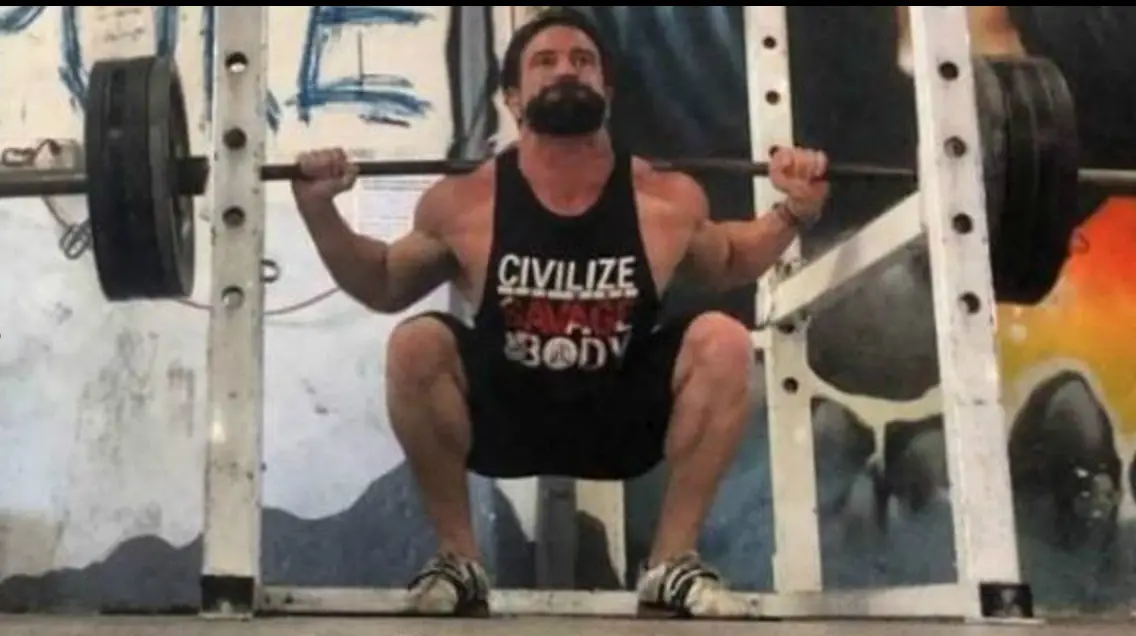
You made the choice to crack open some books in order to get smart enough to do it in the first place. You made a choice to do your job every day, and that is your collective strength. Just like if you're in the gym right now, in order to get strong you have to make the choice to get to the gym every day. Strength is voluntary, strength is a choice. Squatting 500 pounds doesn't make you make you strong.
The choice to train to squat 500 pounds is what made you strong. And so anything, with anything, throughout the rest of your life, when you look at a goal, don't just think that you're going to transition, you know, immediately to accomplishing that goal. You have to remember those choices that you made to have the successes you've already had, and you also have to understand that just because you've made those choices and just because you've had some success, or just because you served in the military or accomplished anything else, if you're a college graduate, if you've had some success in some other realm, that doesn't necessarily mean that you're gonna be strong today or next week. You have to make the hard choices throughout the rest of your life. You have to consistently commit to yourself to say that I'm going to do this, and I'm gonna keep doing it until the day I die.
Because the other thing is there is no endgame here. As long as you live, you have a commitment to being strong. And as long as you live, that commitment is gonna be based on the choices you make. So my challenge to you right now is to say that if you're in a difficult situation, if you're making the transition to the civilian world and and you're just not liking it, or if you're starting a new job, or if you're trying to get through college right now, or if you're trying to improve yourself physically, lose weight, get stronger, make the choice. Commit to the choice, and make that choice every single day until you get to your goal, and then make more choices to make yourself even stronger.
Strength is a lifelong obligation, and the more you commit to it, the stronger you will become. And the second you stop committing to it is the day you become weak. I wanna thank you for listening today. We've got some great episodes coming up for for you. Next week, I'm gonna be interviewing Andrew Marr of the Warrior Angels Foundation.
Andrew is a an ex special forces soldier who started a foundation that is working to help veterans with issues like traumatic brain injury and post traumatic stress disorder through alternative therapies like hormones, balancing out hormone imbalances and introducing veterans to the proper nutrients that are gonna help them. And on top of that I've got news of a really big guest coming at the end of the summer, and I will announce that at a later date. But again thank you all for listening and I look forward to talking to you again this week. Talk to you soon.
Host of the Warrior Soul Podcast and founder of Warrior Soul. Worldwide trainer and nutrition coach, contributing author at Testosterone Nation and Muscle and Strength.