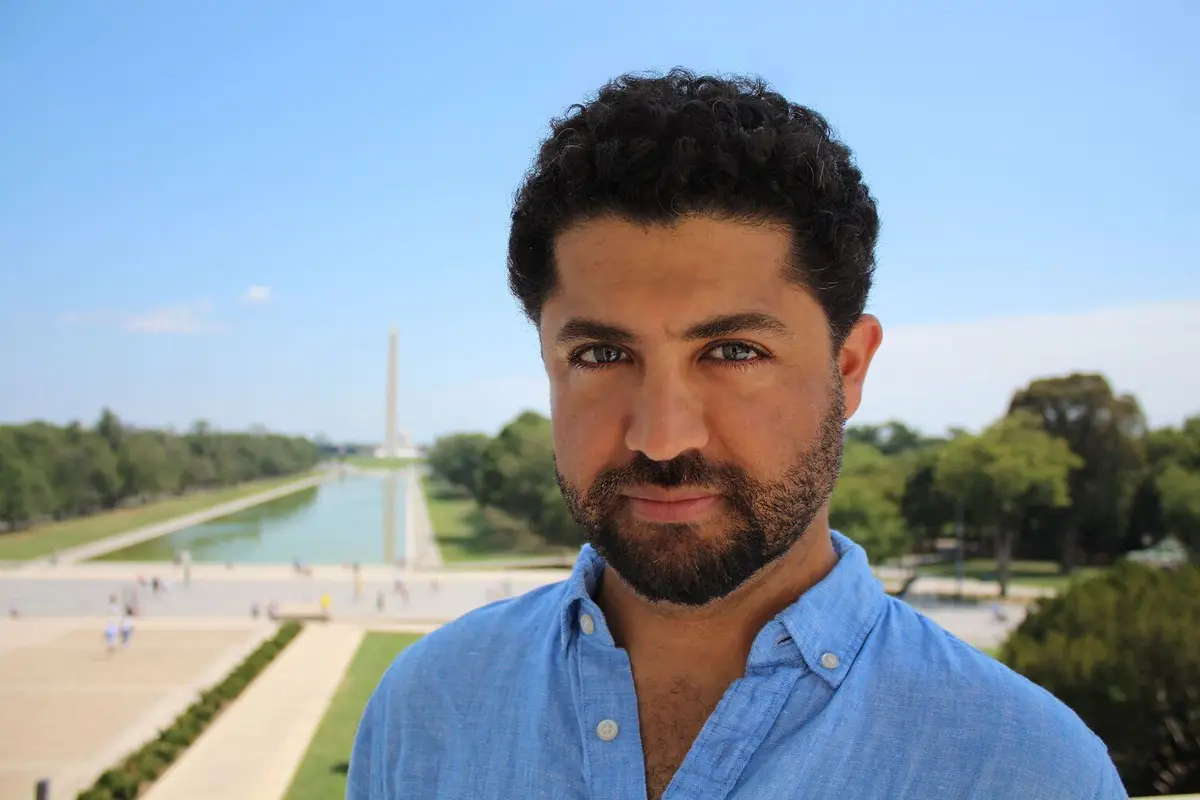
Baktash Ahadi is a filmmaker, public speaker, Podcast Host, former Peace Corps Volunteer, and former Afghan Interpreter
At a young age, Baktash Ahadi moved, along with his family from Afghanistan to a town in rural Pennsylvania.
At the time, not many Americans knew much about Baktash’s homeland of Afghanistan at all. That changed dramatically after the events of September 11, 2001, when Al Qaeda militants attacked New York City and Washington, DC.
Al Qaeda had set up a stronghold in Afghanistan with the aid of its Taliban government. With the US invasion of Afghanistan, Baktash’s identity as an Afghan-American was now front and center.
After serving as a Peace Corps volunteer in Mozambique, Baktash decided to contribute to the US effort in Afghanistan as an interpreter and cultural liaison. Serving alongside Marines, Baktash remained in Afghanistan for three years.
Since his service, Baktash has dedicated himself to telling inspiring stories of those who’ve sought to make the world a better place with his podcast Stories of Transformation.
In this episode you will learn:
- what it was like to be an interpreter serving alongside Marines
- why achieving cooperation between Afghans and US forces is so difficult
- how Baktash is dealing with the mental impact of his service
- why he stayed in Afghanistan for three years
- what the experience taught him about people and life
Learn more about Baktash’s story and listen to his podcast Stories of Transformation at: https://www.baktashahadi.com/podcast
Transcript
Machine-generated from the episode audio and lightly edited — may contain errors.
Chris Albert (link to this point)
The Warrior Soul podcast is written, edited, and produced by me, Albert. Our mission is to provide tools, tactics, strategies, and ideas that help The US military veteran community to show up as the wisest, strongest, most capable versions of themselves in the civilian world. If you're not a veteran, stick around because anything we talk about will most certainly apply to you as well. This podcast is made possible with the help of F Bomb Nutrition. They make delicious packets of fats that you can carry around anywhere with you in little portable packets.
They make macadamia nut butters. They mix them up with chocolate. They mix them up with sea salt. They mix them up with coconut butter. They're absolutely delicious, and they're really good for you.
They don't have any sugar. They also make a lot of cheese snacks. They make meat sticks, and it's just a great company. These guys send packages of this stuff to the troops who are on the front lines overseas to supplement their MREs, and we didn't ask them to do that. They just did that on their own initiative.
Really great company. If you wanna get 20% off your first order of f bombs, head over to www.dropanfbomb.com and use the code Warrior Soul at checkout. This podcast is also brought to you with the help of Save the Brave. Savethebrave.org is a five zero one c three charity for veterans. They run camaraderie events that include fishing, golfing.
They also do a lot of work with gold star families. And unlike a lot of other organizations, their board doesn't take a salary. Really great organization that is doing amazing work. So go and check them out at savethebrave.org. With that, thank you guys so much.
Let's get into today's programming.
This is Chris Albert, and I'm here to remind you of one thing. Someday, you're going to die. Now that's not some morbid statement or scary idea. It's solid fact. Your time here on this earth is limited.
And we need to be reminded of this as much as possible for one simple reason, to live your best life while you can. This is the Warrior Soul podcast.
You know, when you think about it, if you're an American who is listening to this podcast right now on your smartphone, and you're sitting in your house and maybe you've drunk some tap water today, maybe you went to your refrigerator to get yourself a snack, maybe you went to the local grocery store to pick up some food for your house. If you really really think about it and if you've been to different areas of this world where the things that I just talked about could mean that you're putting your life at risk, well when you think about it, you really won the lottery. Right? I think about that a lot. I think about that every day when I am out running around my neighborhood, just enjoying the houses, the streets, the smells, the leaves, enjoying California.
You know, I think about the fact that that I literally won the lottery because we literally could have been born anywhere in places where life is not so easy. It's one of the things I thought about when I was in Iraq when I would see the children running around because I didn't like it there very much. But one of the things I would tell myself is that well, I only have to be here for a few more months to to these children and these people. Well, this is home.
Right? And and I think that a lot of us who are in this community, we understand that, but there's a lot of people here in The United States who don't. My guest today is somebody who has some unique insights on this. His name is mister Baktash Ahadi. And he was born in Afghanistan, and then his family immigrated from Afghanistan to The United States to Pennsylvania to escape the Soviet war in Afghanistan. And when he came here, he decided that he wanted to serve this country.
So he did a couple of things. Number one, he served in the Peace Corps. And if you're not familiar with the Peace Corps, we talked about it a bit when I had, Josh Guerrero on. He was a Peace Corps volunteer as well who also served in the Marine Corps. And the Peace Corps is an interesting organization because you're serving The United States.
You're heading off into a country that is normally very far behind as far as resources go, behind The United States in terms of what we have here. So you're going into a very remote area, you're teaching people about business, you're teaching people about agriculture, a lot of times they have medical volunteers who go and provide medical services. But it's a great way to serve the country, it's a great way to learn about an area of the world that you might, you probably would have never ever thought to even learn about. And then once he did that, he did that for a couple of years in Africa, he decided that he wanted to continue serving and so he became an interpreter and he worked alongside the United States Marines and the United States Army in Afghanistan. And he stayed there for three years working with the Marines there.
And he learned a lot. And today he is actually working with the United States Department of State. And he's teaching diplomats about things they should know about Afghanistan before they go. So this is a guy who has a lot of knowledge about that area of the world and a lot of perspective And I wanted to bring him on. We had an excellent conversation.
I think you guys are gonna get a whole lot out of this. We talk a bit about Afghanistan. We talk a bit a lot about life and a lot about perspective. So hope you enjoy this. And with that guys, I I just want to say a couple of things.
Number one, shout outs to our sponsors, F Bomb Nutrition. They make delicious packets of fats, macadamia nut butters, coconut macadamia nut butters. It makes them all like coconut butter with chocolate with sea salt. They're delicious. You can carry carry them around with you wherever you wanna go with them.
They're portable. They also make some cheese snacks, some meat sticks. Really awesome company. If you want to get 20% off your first order of f bombs, you can use these to supplement your MREs if you're still in or or if you're going on a hiking trip. I take them with me all the time.
Head over to www.dropanfbomb.com. Use the code Warrior Soul at checkout. You'll get 20% off your first order. The other thing is I want to send a quick shout out to my guys at Save the Brave. Savethebrave.org.
Great organization. They create camaraderie events for veterans around the country. They do golfing events. They do fishing events. Save the brave offshore takes veterans out to these deep sea fishing trips.
Really, really awesome organization. Their board does not take a salary. They're doing some great work with Gold Star families, and you can learn more about them over at www.savethebrave.org. And finally, listen. The only thing I really want you guys to do here, I don't care if you spend a dime with Warrior Soul.
I don't care if I don't I really don't care if you ever buy a thing from me. All I'm really asking you to do here is to subscribe to the podcast, to share these episodes out, and head over to iTunes to write us a rating and review. My mission is to get into the ears of as many veterans as possible. And the only way I'm gonna be able to do that is with your help. So if you do that for me, that would be absolutely awesome. And with that, I'm gonna stop yapping my gums, and let's get into this conversation with mister Baktash Ahadi on the Warrior Soul podcast.
Baktash, welcome to the Warrior Soul podcast, man.
Baktash Ahadi (link to this point)
Oh, it's a pleasure to be here, Chris. Thank you for having me.
Chris Albert (link to this point)
So I was I was going through your story a bit, man. You know, I watched a little bit of your TEDx talk and, you know, you've got a you get an interesting background, the the Peace Corps serving in serving with serving in the Peace Corps, which we we just had a guest who was in the Peace Corps. I was telling you that before we hit record, but also serving as an interpreter. And for the guests for for the audience at home, could you just, you know, three to five minutes, just give us a quick summary of your life so far?
Baktash Ahadi (link to this point)
Sure. Sure. Okay. Yeah. So the elevator pitch of my life.
So essentially, I was born Afghanistan. My family's life was in danger. We had to flee. Spent seven days, six nights going through the Hindu Kush Mountain Range of Afghanistan. Got to Pakistan.
Spent two years in makeshift homes in Pakistan. Then eventually, my father put in a case for us to come to The United States. An organization based out of Carlisle, Pennsylvania sponsored us. So we landed in The United States in 1986. I was five years old and Carlisle became our new home.
It was essentially where I was raised until I went to college in Central Pennsylvania. I went to school to a place called Susquehanna University. And nine days after I started school, nine eleven happened. And so I kind of I kind of break up my life into two parts, pre nine eleven, post nine eleven. Mhmm.
Chris Albert (link to this point)
Me too.
Baktash Ahadi (link to this point)
Yeah. And that happens to a lot of people. And and we can talk about the implications of nine eleven and how we kinda process that later if you'd like. But, ultimately, nine eleven brought Afghanistan not only back back not not only did it bring Afghanistan back on the map for my family, but it brought Afghanistan back on the map for The United States and the world.
Chris Albert (link to this point)
Yeah.
Baktash Ahadi (link to this point)
So what ended up happening was, the world expected a lot of answers from me being an Afghan American in terms of why these people were doing what they're doing, what's going on in Afghanistan, who are the Taliban, who are Al Qaeda. And so it got me deeply curious about answering, the question, why do people do what they do? And so when I graduated from college in 2005, The United States, after it invaded Afghanistan, took its eyes off the prize, as I like to say, and set its sights on Iraq.
Chris Albert (link to this point)
Uh-huh.
Baktash Ahadi (link to this point)
And, personally, I was not interested in being involved in that in that in that operation, in that war. And so I joined the Peace Corps because I wanted to serve my country, and I got to serve two years in Mozambique. And I tell people it's the best education of my life because only good things can happen once you get malaria two times, don't have running water, electricity, you come back every single day. Like, every morning when I turn on my faucet, I think to myself, thank God, don't have to fetch water today. So I came back after the Peace Corps, did some consulting work for two years here in Washington DC, which is where I live. And the timing was such that Obama, December 2009, announced the surge in Afghanistan. And one month later, I was recruited by a DOD contractor to essentially, go and serve in Afghanistan and, eventually spent three years there, as a military interpreter embedded with the marines.
Chris Albert (link to this point)
Well, that's awesome, man. It's a crazy story. Now, I guess my first question for you is this. You know, given that that a lot of people are looking for answers about Afghanistan, you know, as an Afghan, what should people know about Afghanistan that they don't currently know? What what would you say?
Baktash Ahadi (link to this point)
Yeah. Oh my gosh. There's so much to unpack there, Chris. There's just so many differences. And what's interesting is as it pertains to American foreign policy and the way America likes to fix problems, what's interesting about America's role in the world is that America approaches countries and issues and topics always trying to fix things.
It's just part of who we are as an American as an American. That's who we are as a country. That's who we are as a nation. That's who we are as people. And so in the context of a place like Afghanistan, often what happens is, whether it's our foreign policymakers here in the nation's capital or military generals, They try to apply Western American approaches to places in which they don't necessarily understand.
I mean, in the context of the Afghan war, people keep repeating the same mistakes. And I think a lot of it has to come down to the fact that many people don't understand the Afghan psyche.
Chris Albert (link to this point)
Right?
Baktash Ahadi (link to this point)
They don't understand Afghan values. They don't understand that Afghans have been dealing with forces coming in and leaving the country for not only decades, but it's almost part of the Afghan identity at this point. Mhmm. And so I often tell people the most important ism in Afghanistan is not tribalism, is not Islamism, it's opportunism. Right?
And the reason for that is because Afghans know that today, it may be The United States that's interested in Afghanistan. Tomorrow, it may be the Chinese. After that, it may be the Russians. So at the end of the day, Afghans know how to play this game of calculus based on who's providing the support and whose interests are in Afghanistan at that time. And so that's one thing.
Another thing, another tool that can help people better understand how Afghans differ in their thinking is something that I like to call the chance versus choice framework. And so in The United States, I would argue that we as Americans fundamentally believe in the power of choice. Mhmm. We judge people based on choice. We judge people based on whether or not they're gonna make an appointment at 08:00.
If they show up late, we kinda make a judgment call based on them showing up late. And we have this saying that time is money. But ultimately, we have that because not only do we value time, but we also know that we also believe as Americans that if I say, Chris, meet me at the Starbucks at 08:00 and you show up five minutes late, a judgment call is made whereby, I think to myself, man, why is Chris making me wait? He knew that there was going to be rain today. He coulda planned the trip better.
He could have made it here on time. And so what happens when you show up at the Starbucks, you automatically say, Baktash, I'm so sorry. Coffee's on me. I'm sorry for making you wait. And we have this.
We have to ask why does this interaction happen in America. This interaction happens in America because we fundamentally believe in this power of choice whereby we believe that we have the agency to make our own destiny. Okay? That's what we believe in America and it's and I would argue it's what what's what's made America as strong and as powerful in its short lived three hundred years of life. Right?
In the context of a place like Afghanistan, the framework for understanding a person's identity does not come down to the power of choice. It comes down to the power of chance. What do I mean? Ultimately, people in the context of a place like Afghanistan believe in things like fate and destiny more so than they do in the agency of themselves and the power of choosing their own destiny. That is a major difference.
And one simple example will will demonstrate this. I'm sure a lot of your listeners, maybe yourself, those that have served in places like Afghanistan and Iraq, understand that when people say they're going to be somewhere at 08:00 or they say that their plans are going to happen, oftentimes those things don't happen. We have to ask why? What is the actual why behind it? And it's because of this framework of chance.
Like, we've all heard the saying inshallah. That kind of helps people better understand, like, okay. Ahmad's not gonna come today. He says inshallah. I don't know if it means yes.
I don't know if it means no. I don't know if it means for me to f off. I don't know what it actually means.
Chris Albert (link to this point)
I've heard I've heard somebody say this before that that actually means it's probably not gonna happen and you shouldn't hold your breath.
Baktash Ahadi (link to this point)
It it so why is this why is this conversation important, Chris? It's important for your viewers to understand that the framework for understanding a person's reality in a place like Afghanistan comes down to this idea of chance. For example, in conversations in daily conversations in Afghanistan, people use the words fate and destiny all the time. Now let me ask you. When was the last time that you used the words fate and destiny in a conversation you've had in The United States?
Chris Albert (link to this point)
Man. Freaking man. I think my girlfriend asked me to do something earlier today, and I said, if the fate of the gods are in the favor, then the dishes will get washed.
Baktash Ahadi (link to this point)
But let's be honest, you're being facetious. Yes. So think about it. Right? So you're you're we're doing it from a place of of of almost poking fun of of this concept because Right.
You know? But the point is we don't use that sort of language to express our reality here in The United States. Right? That's not what we u that's not what we do. We do it often in the context of United States when something bad happens.
Chris Albert (link to this point)
Right?
Baktash Ahadi (link to this point)
Like, somebody passes away and dies, and what happens is we say, oh, it was meant to be. Right? Or but it's always after the fact. And it's really interesting to talk about this and to know this because in the context of a place like Afghanistan, that language is used to essentially create a sense of identity in that environment.
Chris Albert (link to this point)
Gotcha.
Baktash Ahadi (link to this point)
And so and so that's that's one example of how it's it's we we tend to think that other people want what we want as Americans and that other frames of understanding reality mask and or mirror ours. And what's interesting is that's not the case. That's not the case in a place like Afghanistan.
Chris Albert (link to this point)
Right? Well, the the other thing to think about here and and I think that the one of the problems is that the media, when you're looking at the media, the media does everything in like sixty seconds sound bites and and, you know, it's it's always this black and white picture. But when you're talking about a situation, you know, they heard about this concept of tribal identity over and over again and all these different things. But I mean, what it comes down to is if you're in an area that's controlled by a specific group of people and your family survival is based off of aligned with whoever's there, then that's what you're going to do. Right?
Baktash Ahadi (link to this point)
Precisely. And that's another thing too. Thank you for explaining that. So we often have to think about, again, in the context of The United States, we we can't fathom what complete chaos means, and we can't understand this concept known as siege mentality. And right now in Afghanistan, what's happening is siege mentality. And so that's simply understood as people getting what they can while they can because they don't know what's going to what's going to happen tomorrow. Mhmm. Right. And now that that happens in places of scarcity. Right? Chris, we are so blessed to be living in America because we live in a country of abundance.
Chris Albert (link to this point)
Mhmm.
Baktash Ahadi (link to this point)
We, in fact, have so much in America that the things that we have are killing us. Too much entertainment, too much sugar, too much sex, too much all of these things. So we live in a state of abundance all of the time in order for us to thrive in America. We actually have to cut things off. Right?
Like, have to stop all of this. And so that's another thing that people don't understand is in the context of a place like Afghanistan. People live in a place of scarcity. So they're always so we talk about in terms of corruption. If you live in that environment whereby you don't know whether or not tomorrow is going to bring, let's say, I don't know, paycheck or work or a way for you to kind of provide for your family or a force in the presidential palace that's going to take care of you.
You're going to live for the day. That's another thing that's really different about The United States in a place like Afghanistan is The United States is fundamentally aspirational in nature. We know this because, Chris, when you came back from serving, what's the first thing people ask you?
Chris Albert (link to this point)
They ask me a lot of things, man. But, you know, the first thing that so I mean, my mom was like, hey. You wanna grab some pizza or something like that. Right? And then they'd ask me what I was gonna do.
And we had this interesting conversation where we're sitting around on our way back, and it was me, a couple of my buddies, the Navy corpsman, who was this cool Mexican guy. And we're all talking about like, hey, I'm gonna go to college and hey, I'm gonna start this business. And then the Mexican guy was like, I'm gonna open up a whorehouse in Tijuana. And that was one of the most memorable conversations I ever had. But, yeah, man.
That's what we, I mean, we're talking about marines here.
Baktash Ahadi (link to this point)
So No. It can be it can be raw and crass. But ultimately, what ends up happening is after the jokes happen and after people are like, oh, man. I'm glad to see you. People often ask you within the first five minutes, what's next?
Right? Right. The very fund that's a very American question. And and we this is demonstrated by if you go to Barnes and Noble, if you go to a brick and mortar bookstore, the largest section of a bookstore in America is self help.
Chris Albert (link to this point)
Self help. Yeah.
Baktash Ahadi (link to this point)
And now we have to ask, why does that happen? Right.
Chris Albert (link to this point)
Because we all believe we could be bigger than what we are. Right.
Baktash Ahadi (link to this point)
We can believe we're bigger than what we are, but also we often, we also believe in this idea of being able to not only be bigger, but also change who we are.
Chris Albert (link to this point)
Mhmm.
Baktash Ahadi (link to this point)
Like fundamentally change who we are. So today, let's say you're in the marines. Tomorrow, you're a podcast host. The next day, if you come up to me, Chris, and you say to me, you know what, Baktash? This podcast thing isn't really a thing anymore for me.
I'm kind of sick of it. I'm thinking about going to med school. I'll say to you, great. Go for it. Like, I'll even encourage you.
Right?
Chris Albert (link to this point)
Right. Right.
Baktash Ahadi (link to this point)
It's this thing that we fundamentally believe that we can change who we are. And that's like a positive thing because I mean, the foundationally America, people came here to essentially be who they wanted to be.
Chris Albert (link to this point)
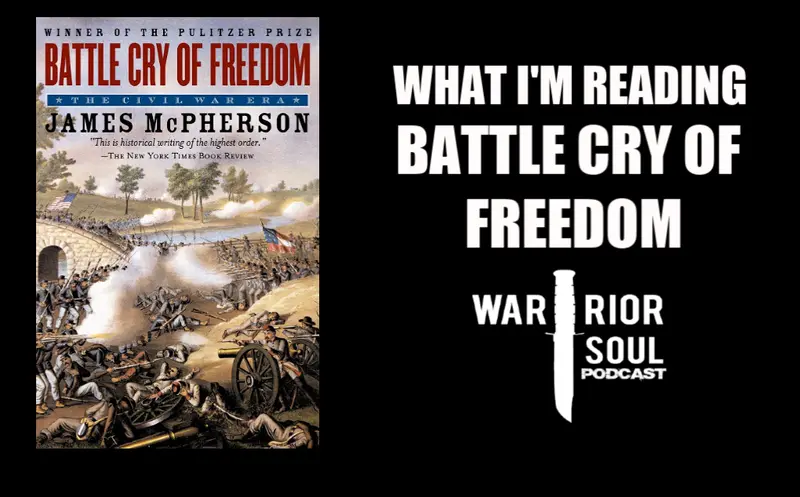
Right? It's it's interesting that you bring I just finished a book, and it was called Battle Cry of Freedom. Have you ever read that book? It's one of the best books ever written, the best single volume of the American Civil War ever. And what's interesting is that the very land you're sitting on right now in Washington DC, I mean, if you went five miles in one direction, it was the Confederacy.
If you went five miles in another direction, it was the Union. Right? And that concept, that idea of of values, the the idea of your your geographic location is very much going to very much going to determine how you feel about a situation or an issue. That is something that I think got transformed in that very time period between 1861 and 1865 here in The United States. Because prior to that, I mean, The United States was a loosely tied group of of of states.
Right? After that, the federal government got much more power, and we started seeing ourselves not as a union, but as a nation. Right? And I think that that a lot of that transformation that that got exacerbated through the rest of the nineteenth century, and then World War one happens, is World War one was pretty much the determination of nation states throughout the world. Is what solidified this concept of nation states.
Then World War II and the order that came about after that. It is an interesting thing because this concept of nationality, nation states, and geographic identity really is a product of the twentieth century. Right? The way we view things. Right?
Baktash Ahadi (link to this point)
Totally. I think I think fundamentally, this notion of of of what we're talking about kinda took place in the nineteen fifties and sixties after the world after World War two, the start of the Cold War, us unifying because we had a common enemy, everybody in the government working together against the Soviets and the ideology of communism. You know, the boomers or the baby boomers that came back, this idea of people feeling like The United States was the greatest place in the world. And so when you started thinking in terms of what's next, what are we gonna create, what are we gonna innovate, This was a wonderful thing and that's what set The United States off relative to other countries. Last sixty, seventy years, it's been unbelievable to be an American.
There's no greater prestige than being an American That may be tested and arguably different now. But until about 2005, 2006, I mean, America could do no wrong in many ways.
Chris Albert (link to this point)
Right. Right. Well, let me ask you this because if you see video clips of Afghanistan circa 1950, 1960, things look very modern there. You know, women are walking around wearing makeup, carrying purses, things like that, very cosmopolitan in the capital. And then, you know, with the the Soviet invasion, things seems to regress a lot.
And and, you know, obviously, when in times of chaos, people go back to very fundamentalist thinking, and they they they they retreat to that. Is that the case? Is that what happened? Was that the catalyst?
Baktash Ahadi (link to this point)
That's a wonderful question. It's a complex question. It's a simple question that leads to a complex answer. But, fundamentally, think about how human beings think about how human beings become when there is no so we have to ask what the purpose of government is and what the fundamental thing a government does. In the context of the West, we often think that the government provides us with services, a police force, a firefighting force.
Right? But, ultimately, in the context of governance, government has to be able to monopolize force. Right. And that's something that Afghanistan wasn't able to do once the Soviets invaded. That's where the conflict starts.
What ends up happening is people step back into the things and places that they know that that can take care of them, and that's where people have been for the last forty years, Chris. And so your comment about Afghanistan being a relatively modern place in the nineteen fifties and sixties, it was, but specifically, it was modern in the capital.
Chris Albert (link to this point)
Right.
Baktash Ahadi (link to this point)
What's interesting is, again, the way the media kinda portrays what Afghanistan was then and there during this golden age is representative of a small group of people that lived in the capital.
Chris Albert (link to this point)
Mhmm.
Baktash Ahadi (link to this point)
Those that run the country, those elites. In the context of the West, in the context of The United States, my parents had the same sort of experience. They only knew what they saw on television before we came to America. So their understanding of America was that every city looked like New York City and every city had bright lights, and you could get money out of cash machines. Right?
And and you know what's funny about all this, Chris, is that, as the world has it, we landed outside of Amish country in Pennsylvania. And for anybody knows the Amish, they dress in black and have big beards. So my father's from Kandahar. And what's interesting about Kandahar is everybody dresses in black and has big beards. So when my father landed in The United States in Pennsylvania.
He thought God played a sick joke on us. He thought to himself, why?
Chris Albert (link to this point)
Yeah. No. That's hilarious.
Baktash Ahadi (link to this point)
Right. So why did he take me from one place that that that where everyone looked a certain way to a completely different country across an Atlantic Ocean. Everybody looks the same as where where where he's from. And so I share this story with you because it's really interesting. We can't judge a country based on a single population.
Chris Albert (link to this point)
Right.
Baktash Ahadi (link to this point)
Right? We can't do that. And and I think the media and people that think of Afghanistan from nineteen fifties and sixties and seventies, they have to also remember that what exists now in parts of Afghanistan has always existed before this mini skirts and the makeup. The burqas, for example, have been around for millennia. Right.
The way in which people have been living a bit mean, they've been I mean, I'm sure some of your your your audience members have been to some of the most remote places in Afghanistan where you can't find plastic, where people still think the Soviets are in Kabul, where people still think the king is in Kabul. So when people often ask me what the biggest problem that Afghanistan faces, I would argue that it's isolation. Although there's a government in Kabul, the government in Kabul can't provide monopoly of force to protect its citizens in remote places in Afghanistan. It can't provide any services whatsoever. These villages have been self sufficient for thousands of years. They don't need a government. The government doesn't need them.
You know, like, I'm sure a lot of your audience members, the marines, these guys that go into these black hawks and these Chinooks, they land in a village. They think themselves, oh my god, I've stepped back in time. They literally have. So I often I, you know, I encourage people to think about the role of isolation and what it does for and against a people.
Chris Albert (link to this point)
No. Definitely. I mean and and when you think about this world, I mean, we we've ventured to every corner of the world, but there's still so much about it that we don't know. Right? And and there's still uncontacted tribes.
You know, a few months ago, we had that guy who who was trying to be a missionary and and landed on the island and ended up getting himself killed. One of the Rockefellers one of the Rockefellers actually got killed in New Guinea trying to do the same thing at some point. And and, you know, there there is definitely a lot we just don't know and don't understand. And I think that, you know, when we we approach a situation like this, you know, you have this concept of the nation state, right, which which we consider is something that provides security, that provides services to us. And when you live in a world of nation states, nation states expect to deal with other nation states.
And they they they they expect to have their rules, the rules of governance and things like that. And, you know, when you step into a place like Afghanistan where governance is a very different thing, then then it's going to be like two worlds colliding, and there's gonna be a lot that people don't understand. I wanna bring this up too because, you know, obviously, part of your life here, right, having come from Afghanistan as a young child and and living in Pennsylvania, even though it was rural Pennsylvania next to the Amish, and then going to a place like Mozambique, you know, serving the Peace Corps. When you went back as an interpreter and, you know, you're speaking the local language, how did people approach you? What did they what did they think of you?
Baktash Ahadi (link to this point)
Oh, that's a wonderful question. I think it depended on who I was speaking with.
Chris Albert (link to this point)
Mhmm.
Baktash Ahadi (link to this point)
Now, again, Afghanistan is not is not a monolith. There are different types of people all over the country, and they often have a perception of what it means to be an American. And people have some people have a more fluid of an understanding of what an Afghan is, and some people don't. So what's interesting about that is Afghanistan has gone through forty years of war. When I went back in 2010, at that point, Afghanistan had been going through thirty thirty two years of war.
And what war does is it does a number of things to people and it does a number of things society. It causes death, and death leads people to come together, but it also leads people to leave. Why do I share this with you? It's it's important to know that in the context of a place like Afghanistan where, you know, people, you know, live in these terms of chance, fatalism, people understand why others leave. Mhmm. Right?
Chris Albert (link to this point)
Right.
Baktash Ahadi (link to this point)
So in the context of me going back, everybody in Afghanistan has a family member that has left. Everybody that's abroad from the Afghan community has an Afghan fam that has a has a family member that's still in Afghanistan. So many ways, we're still very much connected like this with the with the country. If I went and spoke, let's say, to a village elder in the middle of, let's say, Badghis province or in the middle of Helmand, if I was with the marines, if there was an attack the day before, if somebody was killed, then, of course, they're gonna be perturbed with me and or the forces I was supporting and or with. Right?
Because I'd often go out with the marines and the commandos. So it just depend on what that person's experience was. The one thing that we have to remember is these poor villagers that live on the countryside of Afghanistan, they're sandwiched between two forces. Mhmm. Those of ISAF NATO and the Afghan military, and then the insurgency to include the Taliban, Al Qaeda, Haqqani, you name it. So they're sandwiched. And often, we would ask people what it is they want. They wouldn't at first, would say schools, clinics, this, and the other. But, eventually, they would essentially just want us to not come back. Because when we would go into these villages on our operations, it would cause them a lot of strife.
Because the moment we got into our birds and helicopters and left, the Taliban would show up, the insurgency would show up and say, what information did you give them? What do they know about us now? What's going on? And so, to answer your question specifically, it often depended on who we are dealing with. Again, when we'd be dealing with people in city centers and they knew we were an access point to let's say more resources, they'd be quite quite cordial.
It just depended on what was at stake and who the audience was. But what's interesting is nobody judged me for being like people often say this like, since you're an interpreter with Americans, what do they see? How did they see you? Did they see you as, like, a traitor? No.
I didn't have that experience whatsoever. I didn't have that experience whatsoever. And even to a certain extent, I almost found that some people felt like they they wished they could have a way to get out. Does that make sense?
Chris Albert (link to this point)
Gotcha. Yeah. No. I can see that. I can see that. Do they consider themselves Afghani?
Like, is that an identity
Baktash Ahadi (link to this point)
You mean the Afghans?
Chris Albert (link to this point)
Yeah.
Baktash Ahadi (link to this point)
Did people They hold on to national identity.
Chris Albert (link to this point)
Yeah. Do they hold on to, like, a national identity, or is it more regional?
Baktash Ahadi (link to this point)
Oh, that's a wonderful question. So what's interesting about this idea of what it means to be an American because we have a strong sense of American nationalism. Right? And this comes based on the way we were raised. It's school with a pledge of allegiance.
Every sporting event we go to, there's a Star Spangled Banner. Right? Like, we have this as part of our national identity, and it starts from a very young age. Mhmm. Now to be an American means to be a part of a whole in which there's prestige associated with being an American.
And also, too, we in the context of America expect certain things from what it means to be an American.
Chris Albert (link to this point)
Mhmm.
Baktash Ahadi (link to this point)
Right? We can count on the police force. We can count on the firefighters. We can count on social security. We can count on all these things.
Right? We can count our banking system. And I say this too because in the context of Afghanistan, people have a sense of being Afghan. Mhmm. They have a sense of being Afghan when there is something to compare it to.
Chris Albert (link to this point)
Right. Right.
Baktash Ahadi (link to this point)
And the reason I say that's because if there isn't anything to compare it to, then what ends up happening is in a place of scarcity, people categorize themselves by in group, out group. People may be contesting and or fighting over a water source. Write land. You name it. So that if there isn't an overarching body whereby it can control people and kind of mitigate violence and or conflict, then people are always going to be going back and forth in terms of getting their share, so to speak.
So I would argue I say this because identity is very fluid based on who's asking the question based on what's at hand. Here in The United States, we don't have that. So it leads to a different understanding of identity. Does that make sense?
Chris Albert (link to this point)
Yeah. No. I understand that. And and the thing is and again, it goes back to this concept of of niche. Because like like I said, a 100 and a 160, a hundred and seventy years ago, where you're sitting, you'd be calling yourself a a Virginian.
You know what I mean? You know, if you were from from the North, you'd call call you'd I'm a Connecticut Yankee. Right? Something like that. And I think that's the this idea of a national identity, it's an it's an important concept to understand because, you know, I heard I was listening to an interview on the on the Mike Drop podcast a couple of weeks ago.
It was this guy. He's a famous interpreter. His name is Johnny Walker. Codename Johnny Walker. He wrote a book, and he was an Iraqi interpreter.
And one of the things he said, because during the first Gulf War, he served in in the Iraqi army. He said that there wasn't this overarching feeling like he had to fight for Iraq or fight for the survival. And he said even during the American invasion, the Iraqi army wasn't really mobilized. They were like, okay. You know?
And that's why you saw so many so many Iraqis surrendering and things like that. And it's it's an interesting it's an interesting interview. I highly suggest people go and check that that that interview out. It's on Mike Ritland's podcast in the book too, Codename Johnny Walker. But this concept of nationality, I think is very different in different places and it speaks to the psyche of the people you are dealing with.
Because like I said before, it is not about, okay, hey, I want a safe and secure Afghanistan. Is about, okay, I want my family to survive right now.
Baktash Ahadi (link to this point)
No. That's absolutely true, Chris. I think it's important to kind of understand a love for what nationalism is a love for one's country. Mhmm. We in America love America because of what it can give us what what it can give back to us.
Chris Albert (link to this point)
Mhmm.
Baktash Ahadi (link to this point)
Right? It's a it's a it's a reciprocal relationship. We give to it. It gives back to us. In the context of a place like Afghanistan, there's if you give to your country, what does it actually give back to you?
I would argue very little if anything. Right. But what gives back to you in a place like Afghanistan? Your family, your tribe. I often tell people so I I I teach Americans here in Washington DC. I I run a course at the Foreign Service Institute here at the State Department. I often start the course by telling American diplomats that family for Afghans is like freedom for Americans.
Chris Albert (link to this point)
Mhmm.
Baktash Ahadi (link to this point)
It is something that Americans are willing to die for because it it is is a value that is established in this country, and it's something that allows people to do what it is they want. It allows us allows us to pursue that happiness that our forefathers wanted for us. In the context of Afghanistan, and I would argue many collectivist cultures, those developed and those that aren't necessarily developed, family is the thing that gives you identity. And in a highly individualized country like The United States, we have to have something that we hold on to. And here in the context of The United States, people move from city to city based on a job opportunity or based a based on the weather.
And the country's vast and it's beautiful, but we make choices based on the things that we want. This may be specific to America. I'm not sure. If you explain this to a person in Afghanistan, you're gonna leave your town, your city for a job opportunity. Mhmm.
Well, look at you like you're from Mars. Why would you go to Gander? Your entire family is here. Why would you go to Bishkek? Why would you go to Peshawar if you don't have to?
And so I often I mean, I urge people to think about it in these terms. It's like, we love America because of what America can give to us.
Chris Albert (link to this point)
Mhmm.
Baktash Ahadi (link to this point)
That sense of nationalism comes from that. I mean, for me, let me make it personal. I fell in love with America because I know that America gave my family everything that it possibly could, and it it's exactly something that Afghanistan couldn't give my family.
Chris Albert (link to this point)
Right.
Baktash Ahadi (link to this point)
And that's why I serve that's why I serve my country in two different forms with the Peace Corps and in the military. A soft power approach and a hard power approach because I wanted to demonstrate my loyalty to this country. And I'd say this because I deeply I'm very in love with the with the not only the idea of America, but that with the way in which I'm able to live in this country. Mhmm. You know, like, we believe in the power of choice and that is such a powerful thing.
I hope people like in your audience understand this. It's such a powerful thing and it really can change your entire outlook. It could change your attitude. It could change your entire life and it comes from a belief that's in this country. And I think that's amazing and it doesn't exist everywhere.
Chris Albert (link to this point)
Hey, guys. I hope you're getting a lot out of this interview. You know, the Warrior Soul podcast is built with the mission to empower its listeners to live absolutely epic lives. And that's why we recently created a group called the Warrior's Obituary Society. This group is built to empower its members to live epic lives worthy of epic obituaries.
And it starts with an eight week development program. And with this development program, what you're going to do is you're going to outline a vision for your life. You're going get very specific about what you want. Because without that specificity, you don't know where you're going, and you don't know what you're doing. From there, we help our members to develop specific goals, objectives that they are going to push toward, and that their fellow members of the Warrior's Obituary Society are going to hold them accountable too.
From there, we're getting down into specifics. We're going to help you to develop and customize your own personal fitness and nutrition plan to help to fuel your body and fuel your mind for the quest ahead. From there, we're going to work on your personal finances. We're going to help you to knock down debt. We're going help you to start saving money and to create a plan so that you can start investing in your dreams.
Then we're going to get into your business and career. We're going to help you to develop the skills that you need to develop yourself so that you can have a major impact in the field you choose. If you choose to go into business, we're going to help you to set up the foundations that you need to create your own company and get started on your path in life. From there, we're going to be working on your relationships, we're going to help you to develop a world class network, and all along the way, you're going to have your fellow members of the Warrior's Obituary Society pushing you in every single area. We meet once a week over a live call and we're constantly communicating over our own private forum on Slack.
We don't do anything over social media and that's because I don't want anybody feeling like anyone's looking over their shoulders, and I don't want you exposed to the crazy distracting alerts that you get on Facebook and some of the other social media platforms. Normally programs like this cost thousands of dollars. This one does not. For the price, it is the best development program on the internet. And that's because our mission here at Warrior Soul is to empower people to get more out of life so that they can in turn make the world a better place.
We've got a great mix of active duty military, US military veterans and civilians in this group. Wanted to keep it really eclectic so that we get a lot of different types of views up there and a lot of different people with different areas of expertise. If you think that this is something that would be of interest to you, and that this is something that could empower you to live your absolute best life, head over to www.warriorobituarysociety.com. That's www.warriorobituarysociety.com and you can sign up today. And if you have any questions about it, just reach out to me at chris@warriorsoulagoge.com.
That's chris@warriorsoulagoge.com. I'm happy to even sit down with you for a phone call for a few minutes to see if the group is right for you. I look forward to seeing you guys in there, and let's get back to this awesome interview. It's an interesting thing because it also I mean, to some extent, and I think we're seeing this more and more. It and you alluded to it earlier.
But, you know, with freedom, there also comes responsibility. Right? With the power of choice, there comes a lot of responsibility. And, you know, we might have a choice of a million different things to get from the grocery store or a million different restaurants we can go to. But we also have the choice of getting heart disease and becoming obese or, you know, being healthy.
And that is that is an issue. And, you know, same thing with with financial circumstances. I mean, we can do whatever we want with the money we get. At the same time, we can overspend ourselves and and put ourselves into really dire financial straits, you know. And it it it it's a situation here where I think a lot of people don't realize or they're not brought up to put they're brought up to believe in the possibilities, but they're not brought up to be trained in the fine the fine aspects of freedom.
Right? Where where you actually have to have discipline. You actually have to you have to take care of yourself.
Baktash Ahadi (link to this point)
No. I think that's a that's a that's a that's a nuanced, perspective and a good one to have. So with freedom comes responsibility. Sure.
Chris Albert (link to this point)
Sure.
Baktash Ahadi (link to this point)
And you know what's interesting about the human condition is, we actually are happier, and we can find freedom through discipline. When we're given too many options. Right? What is it called? It's called the paradox of choice.
Chris Albert (link to this point)
Right.
Baktash Ahadi (link to this point)
Right? A simple example of this is when everybody like, for example, I came back from Mozambique, and in Mozambique, there's only one type of peanut butter that you could have at the local local store, and you're happy that they had it. Mhmm. Came back to United States after being in a little, you know, a little village for two and a half years and came back and went to the Safeway and went into the peanut butter aisle and saw that there were 50 different types of peanut butter, Chris.
Chris Albert (link to this point)
Yeah. You want chunky. You want you want smooth. You want mixed up with cinnamon. You want it mixed up with jelly.
You want it all, you know, all these different things. Right?
Baktash Ahadi (link to this point)
Thank you. And so what ends up happening is I end up I end up standing there in the aisle dealing with analysis paralysis. Which one do I want? Which one do I want? What's gonna taste good?
And I literally first time I bought peanut butter when I came back from Mozambique is I bought peanut butter by closing my eyes, reaching out, and just grabbing whatever came. And you know what's interesting about this? So once I bought it and I went home and I started to eat it, I started thinking to myself, I bought the smooth smooth type of peanut butter. Jiffy is what I bought. The whole time I started thinking to myself, man, maybe I should have gotten the chunky.
Maybe I should have gotten the chocolate swirl. And Yeah. What's interesting about that is all of a sudden your mind plays tricks on you based on the amount of exposure you had of options.
Chris Albert (link to this point)
Right.
Baktash Ahadi (link to this point)
And and and this is this is this goes back to your point. So with freedom comes responsibility and commitment. So in the context of it being a place where there aren't these options, you psychologically almost discipline yourself to love the thing that you have, whether it's one type of peanut butter, your wife, your kids. In the context of The United States, we can have anything literally on demand, whether it's another girlfriend, another wife, peanut butter, another movie, ice cream, whatever the case is.
Chris Albert (link to this point)
Yeah.
Baktash Ahadi (link to this point)
And so that's what you're referring to. What we have to do is we have to be disciplined enough to say to ourselves, freedom doesn't mean we can have. Freedom simply means that there are options, and that is a blessing. And we have to be smart enough to understand who we are to choose the best option for us.
Chris Albert (link to this point)
Sure.
Sure. Absolutely.
When when you're dealing with diplomats and you're training them and and to to head over, what are what are some of the common mistakes you've you've seen people make in terms of our foreign service and in terms of, you know, state department officials who are going over there?
Baktash Ahadi (link to this point)
Yeah. So I think I understand the essence of your question. Some of the common mistakes is that, you know, through this through just me interacting with diplomats is people don't know why Afghans do what they do.
Chris Albert (link to this point)
Right.
Baktash Ahadi (link to this point)
They don't have the perspective for better understanding. Again, I often tell them, by the end of the course, people come to the realization that human beings are going to be human beings based on the environment in which they live. And often, I'll ask why questions. For example, why do Afghans sit on the ground? Why do Afghans eat with their hands?
Why do Afghans have such a strong propensity to believe in God? I ask why questions. And what I often get are what responses to why questions. For example, I will ask the question, why do Afghans sit on the floor? And people will say, because of culture, because of tradition.
That's not an answer. That's not an an answer to a why question. That's a that's an answer to a what question. And so my job in many ways is to explain why is it that they sit on the ground, where have they been coming from, what sorts of what sorts of decisions have been made such that this is a common practice relative across the country? Right?
Or why Afghans drink so much tea? Not that they drink tea. People know that they drink tea, but why? And so in many ways, teaching this course over the last three years, Chris, has taught me to be really good at asking better questions. And I find that people already have a preconceived notion of what they think is the truth when in fact they aren't even answering the right question.
Chris Albert (link to this point)
Right.
Baktash Ahadi (link to this point)
Does that make sense?
Chris Albert (link to this point)
Yeah. I could see that. You know, especially in a situation like the foreign service where the person's probably highly educated, they speak a foreign language, they had to pass the foreign service exam to get there in the first place. Their head is probably so far up their asshole that they I used to live in DC, and I worked for the state department for a while, and I had to deal with those assholes for a bit. You said
Baktash Ahadi (link to this point)
it, not me. You said you said it, not me.
Chris Albert (link to this point)
Yeah. But but yeah, man. No. I can definitely see that. And, you know, let me ask you this question.
When you were working with the marines, you know, what were some of the situations you had to deal with as far as acting as a go between between the marines and and the the the people?
Baktash Ahadi (link to this point)
Oh, that's a great question. Thank you for asking that. And I'd also like to share too that I'm in the process of writing my memoir about this experience as a combat interpreter in Afghanistan. And the way I like to kind of explain it is by saying that I was quite literally at odds and at war with two with my two identities in the context of war. Mhmm.
And what's interesting is not only am I dealing with these demons internally, but I'm also dealing with expectations and preconceived notions of what people expect of me in this environment, whether it's the American marines or the Afghan commandos or the Afghan civilians.
Chris Albert (link to this point)
Mhmm.
Baktash Ahadi (link to this point)
It was also let me just give you a simple example. It's really interesting. I work with a lot of marines, and they're wonderful people. But what's interesting is sometimes the US military has a tendency to people that join The US Marines sometimes, it's their first time stepping out of The United States. Mhmm.
And so Afghanistan or Iraq may have been the first time they'd ever been abroad. And so for many ways, it's this place where it just it's so, so different. It's almost like landing on Mars.
Chris Albert (link to this point)
Right?
Baktash Ahadi (link to this point)
Mhmm. And so what's interesting about that is, again, I come from a place of empathy by saying this, but what's interesting is I don't have an accent. I was raised in The United States. I speak perfect English. Some marines that I would be working with would speak to me just as you and I are speaking.
We talk about the Super Bowl, and we talk about prom, and we talk about all these things that makes up an American experience growing up here. But the moment they would hear me speak in Dari, something that they just that's my mother tongue, something that they just don't know. All of a sudden, I felt like they saw me as somebody who is an outsider right away. It's almost as though they couldn't trust me.
Chris Albert (link to this point)
Mhmm.
Baktash Ahadi (link to this point)
And it's an interesting kind of psychological thing that happens. It would happen right in front of me. I would literally see people's faces of of submarines just literally just change. And and and and it was really interesting because the same thing would happen with the Afghan commandos. They would see me speak to they would we'd be talking about the weather and last time the Taliban was there and this, that, and the other.
And all of a sudden, they see me speaking with Americans in English. They just be like, oh my gosh. Like again, this this thing would happen psychologically. They're like, is he one of us? Is he not?
And so I literally found myself in this space where I was always in the middle. It was hard for me to identify with one group or the other 100% in that context because as you well know and as your listeners well know, in the context of war, you just never know. People are on edge. People are always thinking about the worst case scenario with red on with green on blue attacks and all this stuff. It was an interesting place to be, Chris, and it often depended on where I was, who I was speaking with, and what was at stake, whether I was dealing with an insurgent in terms of an interrogation, whether or not I was briefing somebody interpreting on intel operation, or we're going to build a well in a village in the middle of, you name the province.
It was always really dependent on what was at stake and it was an interesting experience, man. It was an interesting experience to kinda be at war with my two identities in the context of war.
Chris Albert (link to this point)
Mhmm. No. I I can I can see how that would be really difficult because you've you've gotta be a go between and you're you're dealing with these two cultures and you're dealing with an 18 year old marine who, you know, first time out of the country, that's gotta be crazy? So like I was saying, you know, I I could see that because, you know, a lot of the marines I dealt with I I was enlisted man. A lot of marines on my team, they'd be, you know, 18 years old, fresh out of high school.
And by that time, your brain is not even, you know, fully formed at that point. And and if your your entire reference point is, you know, your town or or people you grew up with, it'd be real difficult for people. Right? And cognitively, it's just a lot to handle.
Baktash Ahadi (link to this point)
You know, I often I often ask a question of of of my of my of my students at the state department. Who are the most dangerous people in the world? And you get, you know, all types of responses. But, ultimately, we realize it's young men between the ages of 18 and 23 because they don't believe in mortality. They don't they live off of impulse.
They live off of urges because their prefrontal cortex hasn't fully developed, so they understand the site that this this notion of the future. Right? Implications of the decisions that you make. And so every government is really good about getting young people to join their armed forces. They're impressionable.
They're idealistic. It's a wonderful thing. There's a reason why we call them the infantry. Infant meaning young baby, not understanding the world, you know, able to be formed, right, mentally. And so, I only understood this when reflecting upon my experience in Afghanistan. It's Sure, we often say he's just young or they're just young. We have to ask exactly what's happening biologically, physiologically, and cognitively to young men in the context of service.
Chris Albert (link to this point)
Right. Right. And then on places like Afghanistan, most of the population is 40.
Baktash Ahadi (link to this point)
Right? Hey. So it's hard it's so I'm glad you asked this. So statistics in the context of Afghanistan are very difficult to acquire just because a a a census doesn't really happen. So they take they take guesses, ballpark sort of guesses.
So for your audience, anybody who ever tells you that x percent of anything in Afghanistan is a reality is actually lying to you. They just don't know. So they're saying somewhere between 60 to 65% of Afghans are not only under the ages of under the age of 25, but under the age of 14.
Chris Albert (link to this point)
Wow. Wow.
Baktash Ahadi (link to this point)
So so, Chris, we have to ask, what are the implications for the government? Because as you well know, if young men who are the most dangerous people in the world don't have football or soccer or a military to join, what are they gonna do? They're gonna cause problems. Gonna join an insurgency. I mean, I can say this with confidence.
I'm lucky I'm not in jail. I'm sure a lot of your listeners are lucky they're not in jail. When you think about all of
Chris Albert (link to this point)
you yeah.
Baktash Ahadi (link to this point)
Think about all the dumb things you do as a young man. You don't think about the future. And so in mass, we have to ask what is the Afghan government going to do with all these young men going forward? There's a huge, you know, youth bulge, and they have to they have to figure out what to do with these people.
Chris Albert (link to this point)
Yeah. No. That's a that's a really big deal. I mean, yeah, young men join gangs. They do all kinds of crazy stuff.
And let me let me switch gears here a little bit because I I know we're coming up on time, but you just started a podcast. Right?
Baktash Ahadi (link to this point)
Yes, sir.
Chris Albert (link to this point)
Tell us a little bit about it. What made you decide to get into the game?
Baktash Ahadi (link to this point)
Sure. Well, I appreciate the question. My podcast is called Stories of Transformation. And essentially, I interview individuals who have done something remarkable with their lives, who have gone through some hardship, learned their craft, and found their purpose and have an inspiring message for the world. And I launched it last month, and it's doing quite well.
Gosh. You know, I I'm in the process of writing my memoir, like I said, and I'm talking to my literary agent, and she told me that I should have some content that I create in order to have a platform. And, you know, I've always been daddling with, like, film, producing this, making that. But I really decided to take this this plunge in 2020 and really throw myself at podcasting. And it's really paid off, man, that my podcast right now, it's it's on Apple's top 50.
50 chart for the for the category of documentary. It's, you know, it's a wonderful way to to really get to know people that in many ways I have no business speaking to. You know what I mean? Like, and I say this I say this too because only in this world right now, Chris, are we able to reach out to people and have meaningful conversations where ten, fifteen, twenty years ago, we'd have to pay an organization or a school to get into a network that will allow us to have access to those people. And I'm thinking like the Ivy Leagues or like a club here in Washington DC.
Now, we're able to essentially create our net worth. Sorry, our network just by reaching out to people. And if anything, it's a wonderful way to expand my network, get to know people and really share meaningful stories of people that I think are really great. And so it's been really good. It's been really good.
Chris Albert (link to this point)
That's one of the awesome things about podcasting is just the people you get to talk to. I've had conversations with Robert Greene. I've had conversations with Grant Cardone, some amazing people. And it's just it's I mean, people ask me, like, how how I do it. I mean, it's it's simple.
I mean, start, you know, and and, you know, it's it's it could be a fight to to, you know, get a little bit of notoriety, but it's definitely worth it. And if you got something to say, try it out, you know.
Baktash Ahadi (link to this point)
No. And and and and again, you you said something really beautiful there. You said just just start. And again, comes back to the beginning of our conversation. We fundamentally believe in the power of choice, and you believe that you're able to create your own destiny.
Chris Albert (link to this point)
Mhmm.
Baktash Ahadi (link to this point)
And that's a beautiful thing. And and, you know, I know a lot of the stuff that you talk about is this idea of, like, looking inward and reflection and being smart about our time that we have here on this planet. Again, the one thing that we haven't talked about yet is coming back to United States after being away for three years because I I didn't have any r and r's or anything while I was there there. I stayed in country the entire time.
Chris Albert (link to this point)
Oh, man.
Baktash Ahadi (link to this point)
You know, a lot of your a lot of your a lot of your listeners will will this will resonate with a lot of them. The most difficult part about my service wasn't being in Afghanistan as an interpreter. I loved my job. I loved seeing the immediate implications of the work that I was doing. I really love the cause that The United States and the Afghan government had in terms of eradicating extremism and helping the country rebuild.
I fundamentally believe in that cause. And what's interesting about being in the in the context of conflict for three years, they're like, Baktash, you're still here, and I loved it. But what was really difficult wasn't being there. It was coming back. And it was really difficult to come back to United States and find this sense of normalcy that everybody just kinda dealt with.
And for quote about is this PTSD that we deal with, the veterans that come back and they think to themselves, like, gosh, what am I living for now? Why can't I count on people? Why are people not giving me the time of day? And I think what people need to realize, and this may resonate with a lot of your listeners, is that people don't love war because of war itself. People love conflict and war because of who they become to somebody else.
Chris Albert (link to this point)
Right.
Baktash Ahadi (link to this point)
Right. That's a really important thing. And that's the that's the thing that people don't realize that haven't served. It's like, we're not adrenaline junkies. We're not those people. At the end of the day, when you're in a place where your your your your lives are at stake, you go back to what it means to actually be human.
To be there for somebody, to save somebody, to to be able to count on somebody. When you come back to a place in which again, there's just so many options and choices. The last thing people wanna do is talk to us about our experience because it's nothing that they can essentially understand based on the experience they've ever had in their lives.
Chris Albert (link to this point)
Right.
Baktash Ahadi (link to this point)
And so there's this great sense of alienation that I felt when I first came back. Right? And it was really difficult. Chris, it was really difficult for a while to deal with that. But I'm lucky, man.
I'm lucky. I'm lucky that I got through it and I'm lucky that I found I know you're you're into working out and and I want to share this with you as I found therapy of my PTSD through by being in motion. I found therapy through being in motion and what's what I think is really important is that when I first came back, I went through short term PTSD, and I'm one of the lucky ones, and I found my therapy by being in motion. Anytime I made a commitment to myself that anytime that I found myself sitting in a room, letting my thoughts get the best of me, again, falling back into the person that I was in the context of conflict, I made a commitment to stand up and just walk, get on a bike, go for a run because what's interesting about movement, and you you understand this, Chris, is that it makes your mind actually become present. Right.
To focus on movements, have to focus on the next step. You have to focus on whether or not there's gonna be a car that comes out in front of you. If you're on a bike, it makes you fundamentally be present. And you can't get caught you can't let your thoughts get the best of you because if you do, you're gonna cause an accident. That's the last thing you wanna do.
And so I did this as a practice. I did this as a practice and I still do it fundamentally changed who I was and it seriously healed me. Like, sure, still have nightmares. Sure, I still deal with, like, all the stuff that people deal with in the context of conflict. But now I know that it's a normal response to the environment which I was in, and now I know that my thoughts don't get the best of me.
It's wonderful. It was it was the thing that saved me. They changed who I was, and it seriously healed me. Like, sure, still have nightmares. Sure, I still deal with, like, all the stuff that people deal with in the context of conflict.
But now I know that it's a normal response to the environment in which I was in. And now I know that my thoughts don't get the best of me. It's wonderful. It was it was the thing that saved me.
Chris Albert (link to this point)
No. Absolutely. I mean, exercise is probably the best thing in the world as far as things go. I mean, you've got like a veritable pharmacy of happy chemicals that come out whenever whenever you got anything going on and your heart rates up and you're sweating and just get outside and you get into your body. I mean, that's an amazing thing and it's something that's accessible to all of us and it's free.
Baktash Ahadi (link to this point)
It's free and it's amazing the endorphins that you get and it's amazing how nobody ever says after they work out that they regret they worked out. It doesn't happen.
Chris Albert (link to this point)
Does One time. One time I did. I was after a crosshair. No, I'm never doing that again.
But yeah.
Baktash Ahadi (link to this point)
Oh, you're too funny. You're too funny. Yeah. Well, nonetheless, it's, it's, I found, I found therapy through motion. And if it, if it, if it, again, if it falls into this I think it falls into the space that you operate in.
And hopefully, it helps, at least, you know, solidify the message you've been giving your audience for the longest time is that motion matters, exercise matters, and it's the thing that's gonna save you.
Chris Albert (link to this point)
No. Absolutely.
Absolutely. Well, awesome, man. Well, where can people find you? Where can people find your podcast? And where can people, learn more about the, I know you got your memoir you're working on.
Where where can people, connect with you?
Baktash Ahadi (link to this point)
Yeah, I appreciate the question. So, that I have can be found on my website. So, it's just www.baktashahadi.com and I can spell that. That's baktashahadi.com. And, yeah, reach out.
Tell me your story, and it'd be great to be in touch with anybody that's, you know, part of your audience that wants to get in touch, man.
Chris Albert (link to this point)
Awesome. Awesome. We'll get those links up on the show notes. And I want to thank you for coming on. I want to thank you for for sharing your story.
I want to acknowledge you. Thank you for your service, in the Peace Corps and as an interpreter. They're both really important roles. And and, you know, thank you for educating those diplomats as they head off to do work for The United States. That's also very important work.
Baktash Ahadi (link to this point)
Well, I appreciate the opportunity, Chris. And thank you for the work that you do. And thank you for inspiring everybody that's listened to, man. So thank you.
Chris Albert (link to this point)
Awesome. Awesome. And to everybody out there, hope you got a lot out of this episode. Definitely connect with Baktash. He's doing a lot of great work out there and doing a lot of great work with his podcast.
And we'll be back at you next week with some more awesome content. This is Chris and Baktash. Get out there and live your best lives while you can, and we are out.
Alright, guys. I hope that you enjoyed that interview with mister Baktash Ahadi. I know I did. I learned a whole lot, and I hope you did too. Couple of things, guys.
Number one, like I said, if you can make sure you are subscribed to this podcast, make sure you write us a written rating and review. And if you really enjoyed the podcast, please share this episode out with somebody else who would enjoy it or who could use the information inside of it. Beyond that, if you want to support the podcast in other ways, head over to our shop at www.warriorsoul.shop. We've got some great clothing up there. If you're looking for courses, if you're looking for information on fitness, on building your own business, head over to the Warrior Soul Academy that's up at www.warriorsoulacademy.warriorsoul.academy.
I'm sorry guys. And beyond that, if you are looking to support yourself in other ways, make sure you check out the Warrior's Obituary Society, our private mastermind that includes a full eight week development program that includes fitness, that includes personal finance, that includes focusing on your career or your business, and we do live calls each week. It is a really great opportunity to connect with some of the other warriors out there. If you want to check that out, that's up at www.warriorobituarysociety.com. And of course, as always, if you want to check out more content from Warrior Soul, head over to www.warriorsoulagoge.com.
You can sign up for our newsletter there where you will get no spam whatsoever and nothing but these episodes in your inbox every single week. I want to thank you guys so much for your support. I want to thank you for spreading the Warrior Soul message and for supporting us on our mission to empower US military veterans. And we will be back at you later on this week with some more awesome content. I've got some great awesome interviews coming up for you with Gary John Bishop, the author of Unfuck Yourself and Stop Doing That Shit, with Austin Alexander, really awesome Instagram influencer in the US Navy, active duty military veteran, and so many more amazing guests coming your way.
Again, thank you guys, and this is Chris, and I am out.
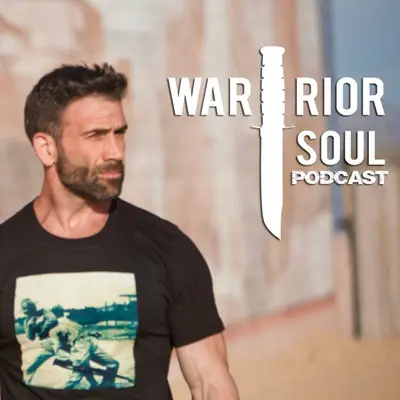
Host of the Warrior Soul Podcast and founder of Warrior Soul. Worldwide trainer and nutrition coach, contributing author at Testosterone Nation and Muscle and Strength.