Podcast episode
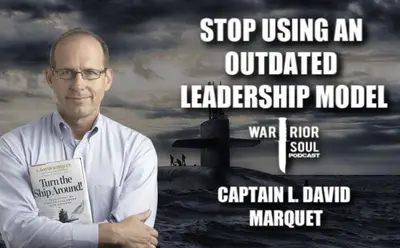
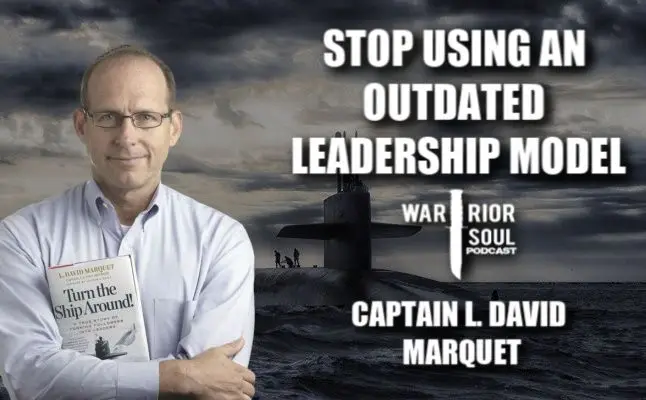
Captain L. David Marquet: Leadership is Language
Hosted by Chris Albert
The Warrior Soul Podcast
At a turning point in his career as a US Naval Officer, Captain L. David Marquet was given command of the worst-performing submarine in the fleet, the USS Santa Fe.
During his command, Captain Marquet managed to turn the Santa Fe from the worst performer in the fleet to the best. Famous author Stephen Covey spent time on the Santa Fe and called it “the most empowering organization he’d ever seen.
Captain Marquet’s “secret” was that he was able to transform his crew from a group of followers to a group of leaders. In 2009, Captain Marquet retired from the Navy and began bringing his intent-based leadership method to the corporate world. He’s been able to help some of the largest companies in the world transform and grow.
His first book, Turn the Ship Around, was called the “best how-to manual anywhere for managers on delegating, training, and driving flawless execution” by Fortune Magazine. His latest book Leadership is Language uncovers the linguistic traps that imprison leaders and teams into outdated thinking that can turn costly and even deadly in many situations.
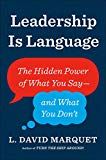
Captain Marquet came onto the Warrior Soul Podcast to impart his knowledge onto the small unit leaders and veterans who’ve now found themselves in the civilian corporate world.
In this conversation you will learn:
- a new playbook for leadership
- why the language you use is important
- how to free yourself of the old playbook
- how to empower everyone on your team to become leaders
- wisdom on living your best life in the civilian world
You can find Captain Marquet’s book Leadership is Language here: https://amzn.to/2tfLQ6G
You can also find Turn the Ship Around, Captain Marquet’s first book here: https://amzn.to/2S90WU2
If you liked this episode, be sure to check out:
Transcript
Machine-generated from the episode audio and lightly edited — may contain errors.
Chris Albert (link to this point)
The Warrior Soul podcast is written, edited, and produced by me, Albert. Our mission is to provide tools, tactics, strategies, and ideas that help The US military veteran community to show up as the wisest, strongest, most capable versions of themselves in the civilian world. If you're not a veteran, stick around because anything we talk about will most certainly apply to you as well. This podcast is made possible with the help of f bomb nutrition. They make delicious packets of fats that you can carry around anywhere with you in little portable packets.
They make macadamia nut butters. They mix them up with chocolate. They mix them up with sea salt. They mix them up with coconut butter. They're absolutely delicious, and they're really good for you.
They don't have any sugar. They also make a lot of cheese snacks. They make meat sticks, and it's just a great company. These guys send packages of this stuff to the troops who are on the front lines overseas to supplement their MREs, and we didn't ask them to do that. They just did that on their own initiative.
Really great company. If you wanna get 20% off your first order of f bombs, head over to www.dropanfbomb.com and use the code Warrior Soul at checkout. This podcast is also brought to you with the help of Save the Brave. Savethebrave.org is a five zero one c three charity for veterans. They run camaraderie events that include fishing, golfing.
They also do a lot of work with gold star families. And unlike a lot of other organizations, their board doesn't take a salary. Really great organization that is doing amazing work. So go and check them out at savethebrave.org. With that, thank you guys so much.
Let's get into today's programming.
This is Chris Albert, and I'm here to remind you of one thing. Someday, you're going to die. Now that's not some morbid statement or scary idea. It's solid fact. Your time here on this earth is limited.
And we need to be reminded of this as much as possible for one simple reason, to live your best life while you can. This is the Warrior Soul podcast.
What's up, ladies and gents? Welcome to another edition of the Warrior Soul podcast. This is Chris Albert, and our mission on this podcast is to empower US military veterans and anybody else willing to listen to live their absolute best lives. And I do that by delivering tools, tactics, strategies, and ideas that help you to show up as a wiser, stronger, more capable human being in your life, in the civilian world, wherever you're showing up. And a lot of times, I'm speaking to somebody who is a lot smarter and much more accomplished than I am, and that is the case today.
My guest today is Captain L. David Marquet. Captain Marquet took over the absolute worst performing submarine in the US Navy, and he turned it around into the best performing submarine in the US Navy. He's written multiple books on leadership, and he came in today to talk about his latest book, Leadership is Language. Now, I absolutely love this book. There is this is the thing about books, particularly business books.
Like, are certain books that you can read where you read the first chapter, and then you get the whole book. And then there's other books that you read where every chapter, every page, everything in the book is important. And that's the case with this book. Everything in this book was important. And what's awesome about it is that it shows you how language can trap you into certain situations.
How language can trap leaders into certain situations and certain actions. And a lot of the language we use when it comes to business, when it comes to getting things done is outdated. It comes from an old industrial age model that is of no longer value. Alright? So for those of you out there, those of you who are still in the military, you know, you small unit leaders, those of you who have leadership or mid management positions, you need to check this book out.
And this interview goes into a lot of the spirit of the book, you know, and we also talk a bit about life. Captain Marquet is a really interesting dude. He's been through a lot and, you know, I really enjoyed talking with him and I love to have him back on again. But, yeah, check this out. I have the link to the book up in the show notes, and let's get into this conversation with Captain L. David Marquet, the author of Leadership is Language.
Captain Marquet, welcome to the show.
L. David Marquet (link to this point)
Hey, Chris. Thanks for having me on your show.
Chris Albert (link to this point)
So first things first. I had the chance to go through your book. The book's called Leadership is Language, The Hidden Power of What You Say and What You Don't. And that book is, by the time we release this, it's gonna be released out to the general public. And, first off, I wanna commend you on this because I find a lot of business books these days, you you can go through the first chapter and kinda get the whole thing, but every chapter in your book had something new, some some new scripts, some new new tip, new new tactic that people could apply here.
And and it's a big reason why I wanna bring you on the show and why I'm excited to have you here today.
L. David Marquet (link to this point)
So it's not a 50 page book written in 300 pages?
Chris Albert (link to this point)
Nope. Nope. Yeah. Every you got so
L. David Marquet (link to this point)
Well, you for that. Yeah. No. It was a huge struggle condensing. The hardest part for me on this one was this structure, which I think is the magic of any book that works.
I mean, the prose really matters, and there's typically some big idea, but then the structure of how you convey that to me where the real grit has to happen.
Chris Albert (link to this point)
Yeah. I was thinking that because, you know, the way you have things laid out here, I mean, there there's a lot of abstract thinking that, obviously had to go into it. I've got a background in social science and did a PhD in political science. There's a lot of lot of preliminary thinking I can see that you put into this. But the way you break it down, I mean, it really, really speaks to the person in the trenches who's actually dealing with people.
And I was talking to my to my girlfriend this morning, who's a high acuity nurse, because she runs into a lot of these types of problems. And I was saying, you know, once we're through this, she's gotta take a look at this book. You gotta Yeah. Check take a look at some of these scripts that are in here.
L. David Marquet (link to this point)
Super.
Chris Albert (link to this point)
So, you know, you you you wrote a book called Turn the Ship Around, US Navy Captain, and, you know, there there's obviously a big maritime theme in the book, and, obviously, I want people to buy the book. But we had this concept of the El Faro. And as we get into this conversation, maybe that's a theme we probably want to go back to. What was the El Faro and why why is it so significant for for this book?
L. David Marquet (link to this point)
So the El Faro was a huge container ship, 790 feet long, which in 2015 sailed from Florida to Puerto Rico, a trip she had done many, many times, and ran into a hurricane that was known to be there. The crew knew they were heading into the hurricane. Nevertheless, drove straight into the hurricane and sank, and all 33 souls were lost. Now the interesting thing about El Faro is that ships have black boxes like airplanes do, and the National Transportation Board was able to recover the black box from the El Faro. So we have a 500 page transcript that has every word spoken on the bridge during that twenty five hours prior to the ship sinking.
So we hear the captain and the first, second, and third officers and the chief mate talking about what they're doing, what they want to do, what they wish they could do, and you get a brilliant insight into the decision making. My frustration with leadership books has always been, like yours, They're either so abstract, you can't do anything with it, or they're based on this idealized world where, of course, everyone speaks up, of course, everyone who sees a problem raises their hand. And oh, by the way, because I just said, Hey, if you see a problem, raise your hand. Oh, that solved it. That made it happen.
And of course, that's not how it works. And this is a real team, a professional team. It's a mistake to say these people were somehow bad mariners.
Chris Albert (link to this point)
They weren't. Right.
L. David Marquet (link to this point)
The problem as I read that is that good people using the wrong playbook, using the wrong set of language patterns. And and if you could just reimagine, and I do in the last chapter, if I reimagine the language patterns, they could have made better decisions, and they would all be alive.
Chris Albert (link to this point)
So the thing is our our language, particularly in these types of these types of settings, right, where we're basing ourselves in this this industrial era type language that can constrict us as far as the options we see in front of us and the actions we eventually take. Right?
L. David Marquet (link to this point)
Yes. So we all speak industrial age language. The language that sounds natural to you is industrial revolution language. You can't help it. So when we say, oh, we wanna we wanna be a can do organization industrial age.
What would be what would be the alternative? A can think organization? I mean, just sounds weird. Right?
Chris Albert (link to this point)
Right.
L. David Marquet (link to this point)
We do we you know, we're gonna operate by with clock, you know, clockwork. We have, all hands meetings. We discuss something, and then we vote on it. Simply the structure of doing the thing in that order, discussing then vote, results in a reduction of variability, a collapsing of people's views towards the middle or towards the boss or towards the first and loudest person who spoke, and it reduces the outliers. Now think about it.
All innovation happens out here in the outlying positions. The first time someone said, well, we could do all this stuff in the cloud, it sounded weird. The first time someone said the water in Flint, Michigan is poison, it sounded weird. All innovation, creativity, and the progress that we make as a as a species comes out here. So when we run meetings, yeah, if you're right, great.
And you're gonna get everyone to do it. And then the one time you're wrong, everyone's gonna get on board, and you're gonna you're gonna be Kodak making print film. You're gonna be Blockbuster renting DVDs. You're gonna be GE going bankrupt, whatever it happens to be because you missed the big picture because everyone's just doing what they were told as opposed to engaging in their thinking. And so over and over again, there's opportunities to change our language.
The industrial age language, some things are harmless. Like, if I put cc on an email, what difference does it make? But some things, they like the way we run meetings, the way we ask binary questions. Is it safe? Are you sure?
This forces a person to almost take responsibility for the future, which is impossible. So we don't and we don't learn anything. Is it safe? Is it gonna work? Yeah.
Okay. Great. Well, then that makes it that that that settles that Means that we're dealing with highly complex is the stupidest thing, but this is the way we talk. We gotta change that. We gotta update our playbook.
Chris Albert (link to this point)
Well, that's a you know, one of the things here, and I was thinking about this before we got on because, you know, had this right now, we're in a really relaxed situation. We're talking on a podcast. Had this same conversation occurred fifteen years ago between you and I with me being an e four in the Marine Corps and you being a US Navy captain, there's this concept of hierarchy there. And my butt would be so curled up, I'd be able to taste it in the back of my throat while I was talking to you. So it would be like, you know, there's that whole psychological thing going on there.
One of the things you see in the book, one of the problems is that the the leaders speak up first and they color the conversation. They they direct the conversation to where either, know, purposely or inadvertently, they they they they color the conversation and they direct it to where they think it should go. Right?
L. David Marquet (link to this point)
Right. Right. And we do it all kinds of different ways from just a disapproving look to a, hey. What do you that yeah. Like, you already know what I think the right answer is, and so there's this big impediment to speaking up.
We call it hierarchy first. We have another transcript that we have or is the investigation into the Deepwater Horizon oil spill fire, which killed, about 20 people in the Gulf Of Mexico and released millions of gallons of oil to the environment. There's a there's a moment that where where the rig has been on fire for nine minutes, and there's an engineer in front of a button, which he has to push it. And this is the sort of irretrievable disconnect, which is gonna operate these hydraulic rams to pinch the pipe shut down at the bottom of the ocean. And he's hesitating to push it.
The rig is already burning in 100 foot flames, and then he's about to do it. And someone says, no. No. No. You need to you you need permission.
And then someone says, okay. You have permission. Then someone says, no. You need permission from the offshore installation manager. So someone not even on the rig.
And then someone else says, no. No. No. That's silly. Just push it and then they and then they pushes it.
But think about it. Our brains are processing this. I don't wanna irritate the hierarchy in the same way as it's processing. I'm gonna burn and to death in a fire. And this is because our old tribal wiring is don't don't irritate the tribe.
Because if you irritate the tribe, you get kicked out of the tribe. You get kicked out of the tribe, you die. So our humans wiring that ends in high hierarchy has hijacked that wiring for their own purposes. This is why bad bosses still get people to go along with them is because I've done it Where I wanted to be I I worked for a horrendously toxic leader and I put up with it because I wanted to be a team player blah blah blah all the things you know that you used to justify it But it's because I hire my my wiring had been hijacked by the hierarchy powers that be. And we do this, and then we say, well, why didn't you speak up?
We have accident after accident where we say where a sailor says, yeah. I saw something weird, but I I didn't say anything. Or I tried to, but no one listened. Why is this? It's because we're running the system the wrong way.
Chris Albert (link to this point)
So for our audience out there, this is gonna come about in in two types of situations, and you you mentioned this in the book. Either either people die or businesses go out of business. Right? And and and that's what happens. So, you know, for for some of the business examples that you bring up, you bring up Kodak with the situation where they're not looking at digital cameras at all.
L. David Marquet (link to this point)
Black box Kodak invented digital cameras.
Chris Albert (link to this point)
Yeah.
L. David Marquet (link to this point)
But it was a threat to the rest of the to to the print part of the business, which was making all the money. And so it was like a virus in the system, and the antibodies went pop, and they killed it.
Chris Albert (link to this point)
Get rid of that. Get rid of that.
L. David Marquet (link to this point)
Get rid of that. Yeah.
Chris Albert (link to this point)
And the same thing with Netflix and Blockbuster. I mean, like, Blockbuster's not not paying attention or or or they kinda write it off, they're they're they're just continuing. And that's the the problem. They're continuing. They're not
L. David Marquet (link to this point)
Continuing.
Chris Albert (link to this point)
Thinking about
L. David Marquet (link to this point)
Exactly. It's it's it's like Newtonian physics for hierarchies. Continue what you're doing. The hierarchy is a momentum. When Ford started the Model T in nineteen o four, they basically made they continued because there's a lot of production costs in changing the line. So they made the same model for over twenty years. Now you're in the twenties, and the world has changed. America is much more affluent. The roaring twenties are happening.
People want flashy cars. GM is run by a guy named Alfred Sloan at this point, and they start they doing they're doing more frequent updates to their models, and they're doing things like big fans and fancy, fenders and all those kind of stuff. And then so people are shifting over to them. Meantime, we're still doing the model t over here at Ford. It looks old.
It looks stale. It looks tired, and Ford had to shut down his line for a long time. It was six months or more to retool the whole thing. By this point, GM caught up. Ford, prior to that, made more cars than everyone else combined.
And after that, it was became a free for all. They they lost their edge because the organization hierarchy is always designed to continue doing what you want as long as it's possible. That's why it's so hard for someone to say, and raise their hand and go, I'm not sure we're chopping down the right forest here. There's so many cultural barriers against that, but it stems fundamentally from this industrial age playbook that we're running with.
Chris Albert (link to this point)
So what are are some of the beginning solutions? So for for those guys out there who are heading into the civilian world, some of them are going into to civilian jobs. Some of these guys are still in the military, you know, working working in line companies and things like that. So so what is the solution here? What how do we change this?
L. David Marquet (link to this point)
So I think this transition from military life to civilian life can be much more powerful than than a lot of people play it. In the in the book, I had talked about a concept called red work and blue work. Production work, doing work, activity, and thinking cognitive reflection. That's the blue work. Red work is the doing work.
And so during a day you may be you do, you're doing, doing, doing, then pause and see how we, how we reflect. Are we chopping on the right forest? Okay. Now go back to chopping. But these, this rhythm plays out in your life as well.
So you can do something for ten or twenty years and then have a career in the military and then pause and have a period of reflection. What do you what do you wanna do? You wanna keep doing that kind of work? Because you can do that kind of work. You can work from DOD contractor or whatever.
You can just keep doing that kind of work. But if you don't deliberately pause and think about it, you may find that you're just continuing when you really want to call an end of that chapter of your life and do something else that's totally different. You wanna go be an explorer. You wanna be a photographer. You wanna you wanna be a travel writer.
You wanna be a teacher. You wanna be something else. And I think if you have any kind of military pension, you have the opportunity to pause and really think about it. It changed my life.
Chris Albert (link to this point)
Mhmm.
L. David Marquet (link to this point)
The fact that I had my pension, because I would have never been able to write a book because I didn't make any money for two years.
Chris Albert (link to this point)
Right.
L. David Marquet (link to this point)
I would not have been I wouldn't have done it if it a, I had a pension, and I had a wife who's got Scotch Irish frugal frugal genes. I was like, hey. For the next and she wanted me to write a book. Said, well, here's the deal. I'm not gonna make any money for two years.
So can we live like, yeah, we we moved to Florida. It's cheap. You can live nice in Florida. Yeah. Now we're we're living at a three bedroom, two bath house that costs a $150, and I got other retired captains.
Oh, well, you know, that doesn't look good. I gotta go live in a million dollar house in McLean, Virginia. That's on you, brother. But now my life to me is very fulfilling and it's gone in a direction that would never have gone if I'd said, oh, I gotta go work for Lockheed Martin.
Chris Albert (link to this point)
Well, yeah, because, I mean, you're going around, you're speaking at Google, you you you develop this persona. Yeah.
L. David Marquet (link to this point)
Go all over exactly. I go all over the world.
Chris Albert (link to this point)
Exactly. Exactly. And and and here's the thing. I mean, for those guys at home, because that choice I mean, maybe you don't have a pension, but a lot of these guys have the GI bill. And so there is this kind of red work notion that says, okay.
I've got to I've got to either get out of the military and immediately go into the job, or I need to get out of the military and I need to go to go to college and and do this because that's what everybody's telling me to do. But you can also have that option of saying, okay, I'm gonna take a step back. I'm gonna think about what I really wanna do and and where I wanna go and how I want to live this life, right?
L. David Marquet (link to this point)
And I think the GI Bill is a tremendous benefit. And I'm coming to grips because it expires after fifteen years, and I'm like at the ten year point. And I haven't used mine yet. And I'm really thinking that it would be a great opportunity for me to go back to school. And I also discovered recently you could take all online courses and you still get a housing allowance, which is half the national average housing allowance.
So it's a little less than $1,000 a month, even with all online courses. So you basically have no excuse not to do it. You could still get a job. You could still work. It be hard to do fifty or sixty hours a week, but you could still work and take online courses with a GI bill.
You get booked stipend, you get tuition covered, and you get this thousand bucks a month. And, oh, by the way, it also there's hundreds of international organizations that you can go to. You can go to London. You go to Berlin. You can go to Barcelona.
You can go to Singapore. It's amazing. It's a tremendous benefit. And here's what's gonna happen. At one point in your life, you're taking care of your kids.
And then finally, they kind of get old enough and they leave. And then at some point, you're gonna take care of your parents. You got a window. Unfortunately for me, they kind of overlapped because my my kids took a little long to launch, and my wife's parents, are a little bit older. So they kind of overlapped.
But if you have a gap in there where you're not taking care of your kids or your parents, then, you know, move to learn a new language, take classes in Berlin. Anyway, I and you get paid to do it.
Chris Albert (link to this point)
Yeah. Well, none of that, because there's another window there in your twenties where it's before you maybe you just got out the military, you make any decisions, maybe you're not married yet, maybe you don't have kids. Yeah. You don't have many bills. You can live off ramen noodles and sleep on a couch for a little while and go do something crazy.
Right?
L. David Marquet (link to this point)
Right, that's another time, yeah. Then, and then there's sort of, I do see people who are bold and take risks, they have kids. To me, that's a little scary. I'm not sure I'm that risk embracing because I always wanted to make sure my kids were going to college, but now they're all graduated, so I don't really care. Like nothing bad is going to happen to me because at the end of the day, if it all falls apart, it's still my pension and my healthcare from the VA.
But I think we it's what happening in our head. These aren't real fears. You're gonna get fed. You can buy enough calories on one one hour minimum wage a day at McDonald's to feed yourself. So you're gonna get fed, and all this other stuff is just fears that our brains just manufacturing. And I and and I and I see it's easier to see in other people than in yourself. I see in other people.
I was like, what's holding you back? Here you here's a bigger life in between. There's this ugly dark thing called fear and and you're not going through there, but I can see if you did this this this, but you got to go through this immediate intermediate step and something's holding your back. But from a rational perspective, it's not
Chris Albert (link to this point)
there's nothing.
L. David Marquet (link to this point)
It's it's well, it's not it's not true. It's, fear of failure, failure of social rejection, fear of being judged by other people. I I had this distinct memory. Took my kids I'd go to the pool when kids were little. And, like all the other parent mostly the other parents, I was the cool.
I would sit in the lawn chair with a book, you know, play in the pool with my kids. That's messed up. That's why you're wet doing it. Whether it was one dad, like he didn't give a fuck. And he was like in the pool playing with his kids looking like a Goofball, but having a ball as playing as kids are having a ball.
All the other kids are starting to play. Care. He's just doing he's living the most fulfilling life for him and his family. So I got in the pool and but it was weird because it like it took something to get me in the pool. I wish I was not that kind of person.
You got to get in a pool ladies and gentlemen.
Chris Albert (link to this point)
Yeah.
L. David Marquet (link to this point)
You don't live a life sitting on the side of the pool.
Chris Albert (link to this point)
Oh, you're right. Yeah. I mean, I see that in myself too because I'd be the guy with a book there just just sitting there and not getting in the pool. And then I'd be like
L. David Marquet (link to this point)
And you're a big outdoor fitness guy.
Chris Albert (link to this point)
Yeah. Yeah. Exactly. And and that's the thing though, because, I mean, there's just there's so many things you sit there in life, and you could just sit there and observe life where you take part in it. And Yeah.
And that's that's such a big, big factor. And So much of what you talk about in this book is just about being present, having the presence of mind here.
L. David Marquet (link to this point)
That reminds me of something else. Wish I did when I was younger, and this is the most important, I'll say I'll say this, like, seven times. This is the most important piece. If I have anything that's worthwhile, this is it. If you're moving and it doesn't matter what job you're in.
I don't care. Stay in the job you're in. Leave the military. Get a new job. Number one, you gotta invite feedback.
You gotta go to somebody and say, hey. How how did I show up in that meeting? Was I too aggressive? Was I not forceful enough? Was I did you feel like you were listened to?
How well did you feel you were listened to? What could I have done better? Don't pepper them with all those questions at once, but just start with one little small thing. And especially when you're gonna go into a culture, which is slightly different. And one cool thing about the military was the hierarchy is spelled out.
It's visible because I could look and say, oh, you're a two star admiral. Oh, you're a captain. Oh, you're whatever. And I could figure out in the civilian world, it's a little murkier. And the civilians kind of learn to pick up on the clues.
Sometimes military guys don't pick up on the clues so well. So but but the whole point is whether it's this or anything, what you're wearing, how you're speaking, which groups you're you're showing up to, ask for feedback. Get find someone who cares about you, who loves you, and say, hey. Can you help me with this? Call me out if I'm whatever.
And and that will help you in the long run more than it doesn't matter where you start. As long as you're getting feedback, you'll get better, and then that'll happen.
Chris Albert (link to this point)
Let me ask you this, because I think this this also translates a lot because I I get a lot of messages from veterans who who've gone out into the working world, and they say, okay, civilians don't understand me, or civilians think I'm I'm too too too direct and too business like all the time and and things like that. And I get a lot of feedback like that from veterans. What what do you think are some of the mistakes they're making as they enter their civilian jobs for the first time?
L. David Marquet (link to this point)
Look, no one's gonna under no one understands you. There's no constitutional right to being understood. Get used to it. I I I think you wanna be in a workplace where people care about you. But but what you're saying is two different things.
So number one where I'm too businesslike, I just want to do the business, but people won't take the time to understand me. Okay. Well, that's two sides of a different problem. Take the time to understand them Right and then they'll take the time to understand you in in the book I I talk about this a little bit the play is called connect The old play was conform in the military. We conform to our role and I truly believe that what we need now is the connect play. We need to connect as human beings because in the workplace, and it's not a military civilian thing. This is just in the workplace to get the most out of people. When people have to make decisions, which is why you're hiring people to think and make decisions, emotions have to come into play.
All decisions pass through emotional wiring before they get they come out. Think about, hey, what house are we gonna buy? And you'll you'll watch people make these decisions. They don't say, well, know, put square footage and distance from the beach and a formula and it says this one, says, people say, I can see myself living there. I can see our family.
I just feels right to me. It's always an emotional thing. So in order to have healthy decisions, you got to have healthy emotions. In order to have healthy emotions, you got to have human connection. So We want to connect as humans.
Is it gonna be frustrating that it was really frustrating for me? I was one of those guys exactly like, okay Don't tell me how your weekend was just tell me, you know, why the reports late and so now I'm trying to no. I do take a minute to see how people are because I would care. It wasn't like I didn't care. I cared about them, but it just wasn't expressed because I felt the pressure of the clock to get to the work.
And so I think I do think I'm a better human now taking time to ask about how was Johnny's kindergarten graduation and that and that kind of thing. Because here's the thing, in the moment it may feel like you're getting a little bit less done, but that person now will do 10 times the work, they'll do better work and it's just there there may be one second where they have a where they have to make a choice. Do I speak up and say, I think we're having an imminent problem or not? And if they in a healthy environment and they speak up and say, yeah, and you divert and you don't have a crash, that you would that may have paid for all those conversations. So, yeah, I I was I was that person that that was saying that.
And I think connection is important. Now you can't sit around at work and just watch cat videos all day, obviously. But
Chris Albert (link to this point)
Obviously not. Obviously not. Hey, guys. I hope you're getting a lot out of this interview. You know, the Warrior Soul podcast is built with the mission to empower its listeners to live absolutely epic lives.
And that's why we recently created a group called the Warrior's Obituary Society. This group is built to empower its members to live epic lives worthy of epic obituaries. And it starts with an eight week development program. And with this development program, what you're gonna do is you're going to outline a vision for your life. You're going to get very specific about what you want.
Because without that specificity, you don't know where you're going, and you don't know what you're doing. From there, we help our members to develop specific goals, objectives that they are going to push toward, and that their fellow members of the Warrior's Obituary Society are going to hold them accountable too. From there, we're getting down into specifics. We're going to help you to develop and customize your own personal fitness and nutrition plan to help to fuel your body and fuel your mind for the quest ahead. From there, we're going to work on your personal finances.
We're going to help you to knock down debt. We're going to help you to start saving money and to create a plan so that you can start investing in your dreams. Then we're going to get into your business and career. We're going to help you to develop the skills that you need to develop yourself so that you can have a major impact in the field you choose. If you choose to go into business, we're going to help you to set up the foundations that you need to create your own company and get started on your path in life.
From there, we're going to be working on your relationships. We're going to help you to develop a world class network. And all along the way, you're going to have your fellow members of the Warrior's Obituary Society pushing you in every single area. We meet once a week over a live call, and we're constantly communicating over our own private floor forum on Slack. We don't do anything over social media, and that's because I don't want anybody feeling like anyone's looking over their shoulders, and I don't want you exposed to the crazy distracting alerts that you get on Facebook and some of the other social media platforms.
Normally programs like this cost thousands of dollars. This one does not. For the price, it is the best development program on the Internet. And that's because our mission here at Warrior Soul is to empower people to get more out of life so that they can in turn make the world a better place. We've got a great mix of active duty military, US Military Veterans, and civilians in this group.
We wanted to keep it really eclectic so that we get a lot of different types of views up there and a lot of different people with different areas of expertise. If you think that this is something that would be of interest to you, and that this is something that could empower you to live your absolute best life, head over to www.warriorobituarysociety.com. That's www.warriorobituarysociety.com, and you can sign up today. And if you have any questions about it, just reach out to me at chris@warriorsoulagoge.com. That's chris@warriorsoulagoge.com.
I'm happy to even sit down with you for a phone call for a few minutes to see if the group is right for you. I look forward to seeing you guys in there, and let's get back to this awesome interview. You know, another thing here is that, you know, you're you're an author. You've you've you've had one book out you're two books out, and this is your third. Right?
And and you've developed you've developed, I think, this niche for yourself in this kind of new economy that we have, you know, the the the this personal branding economy. When you reflect on that, number one, did you think that this is how it was gonna pan out? I know you said you waited for two years. You were trying to what what made you decide you were gonna you were gonna pursue this route?
L. David Marquet (link to this point)
I thought there was an my wife convinced me the story we had was important to tell. There was no grand plan. I was like, oh, I'm gonna be an entrepreneur. Oh, I'm gonna carve myself up. It was I wanted to tell a story that I thought would help humans understand how to be leaders in a way that made more leaders as opposed to made more followers, which would not fulfill their lives.
And so after I left the ship as captain, that was great. We we we set records for retention and performance. And nor a lot of leadership books are written the very you know, the next year.
Chris Albert (link to this point)
Mhmm.
L. David Marquet (link to this point)
Oh, this is what we did. Where's the first? Blah blah blah. Or it's not not so much as what we did. Oh, we took care of our people.
Well, how? I don't know. Just be vague on that. Ten years later, though, the Navy had promoted the tenth of my officers to be submarine commander. So out of our small wardroom of officers, we now had 10 guys going to be submarine commander, which is a highly disproportional number. We were banking leaders by treating people, acting like they could think, treating them like they could think, and giving them control over their situation. And so this was the story because I thought it was a different story than what I normally saw. And that was the story I wanted to tell. And then people started buying the book and one thing led to another.
It's really interesting because for me, I talk about this red blue. I'm a numbers guy. I was on the math team. I'm an engineer.
Chris Albert (link to this point)
I'm an I can tell that by the way the book is written.
L. David Marquet (link to this point)
It's Yeah. Yeah. Yeah. I'm a nuclear submarine commander. So writing a book, it's like, what?
No. That's like his word. That's words. I'm not a word guy. But now my whole life is about telling stories, and it's like one half of my brain was shrunk and the other was big, and now it's like reverse or something.
Chris Albert (link to this point)
Or it's evening out, right?
L. David Marquet (link to this point)
It's evening out, yeah. But but it I I think one of the powerful things that my team and I can do is we look at language with an engineering perspective. And we talk about so I use the phrase sometimes we're reengineering the language. And, I hate this word soft skills because it sort of denigrates this very important work that we do by interacting and treating other human beings. And there's there's side one of the things I talk about in the book is we just counted so from this El Faro story, we just counted when the when the captain and and an officer and the crewmen were on the on the bridge. So three peep three three person teams. We just counted the number of words each of them said for each period when those three people were on the bridge.
All three different officer watch rotations. Guess what? Exactly the same pattern all three times. The person who said the most words, on the average, about 50% of the words was the captain. The person who said the next most words, about 45% of the words, was the officer.
The person who said almost no words. In one case, this the captain was on the bridge for about three hours. The crewman said three words, One four two. He was answering the question, what course are we on?
Chris Albert (link to this point)
That's it.
L. David Marquet (link to this point)
So so in every case, if I just told you this person said person one said this many words, person two, person three. Now guess who where they are in the hierarchy and you just match the word count with a hierarchy position, you'd be a 100% right. And so there's math behind this. And so when you're in a meeting, you wanna what you wanna do is even the share of voice. If someone's quiet, invite them to speak.
If someone's talking too much, if it's you, especially, pipe down. Be curious, not compelling. And by evening the share of voice, you'll hear more diverse opinions. You'll have a stronger team. And that quiet person may know the answer.
Your job is to get it from their brain out onto the table to make them feel safe enough to do that.
Chris Albert (link to this point)
You, you another thing about your career is that you took over what was one of the worst performing submarines in the Navy and turned it around into the best, and you'd mentioned that. And one of the things you said in the book was that at the beginning, your officers were showing up. They didn't have name tags on. The uniforms looked like looked like awful and everything like that, and and the Marine in me was going crazy. Yeah.
I knew that. But but, you one of the things you said was that if somebody showed up with their name tag, you wouldn't chastise the ones who didn't have their name tag on. You'd say, thank you for wearing your name tag, and you'd point at them. Right?
L. David Marquet (link to this point)
Right. Yeah. Our brains are wired to focus on errors and problems because that's how our species survive. We avoided danger. But when from an organizational perspective, you want to strive it's better to achieve excellence than avoid errors. And or and there's you can look for evidence of is this avoiding errors, or is this achieving excellence?
If you're keeping track of the number of days since the last work accident, that's an avoiding error construct because we're avoiding an accident which puts people psychologically in a certain as opposed to achieving something. So yeah, so it's funny when I got to the ship, so I got diverted at the very last minute to the Santa Fe, which was as you said, of the worst performing ships, had the worst morale as measured by retention. And I was trained for a different class of submarine, so that made it more interesting. And the officers, they'd been so beaten up. I mean, the whole crew, but the the officers are the guys I, you know, sat with.
We sit down in our morning meeting. They had all these rumpled shirts, and their heads were down. They looked beaten up. And but, of course, just by random Brownian motion, at least one person has been wearing their name tags. So I cited them out and say, hey.
And then the next day, two were and three were and four, and they kinda went on from there. And it just it struck me just the power of a few positive words and, what could happen. Another thing we did, to play out the importance of languages, we the very first time we were getting underway. So I took over the ship. Two weeks later, we're gonna go underway.
We're gonna have an inspection. So this is like eight inspectors everywhere shooting torpedoes, all the hard stuff. And we were just so terrible. And people said, well, we want people to be proud of the ship, but you can't order people to be proud of the ship. So we boiled that down to say, well, what would that sound like?
Well, when I came into a room, when one of the visitors came into a room, one of the inspectors, we would greet them. We would say, hey, inspector Jones. Welcome to the Santa Fe. My name is Petty Officer Smith. I said, We use three names there.
Jones, Santa Fe, Smith. I call it the three name rule. And I said I told the team, hey, guys. Here's what I want you to do. When you see one of the inspectors, you're gonna greet them using these three names.
Now something as simple as telling your people how to greet someone, some people shy back and like, well, that seems a little bit pedantic, but people aren't actually trained how to engage in those situations, and so you get all kinds of random behavior. The result was it was amazing. During the inspection, I would see, like, I don't know, maybe 10% of the people were actually doing it, 10% of the crew. And I was getting frustrated, but I had I had to keep alive, and we had to not sink ourselves kind of a thing. So I was focusing on that.
I didn't say anything. But at the end, my commodore, my boss came out there and said, it's amazing. It's a new ship. We can't believe it. Blah blah blah.
And they gave us a grade of average, which was shocking because of the nuclear submarine force, that actually means numerically average. It made no sense because we were it's like two weeks ago, we were so bad. So I like, what happened? I said, well, so you're you're you're and he didn't know the rule. He just said, hell, they seem very proud of the ship.
They're excited. There's there's a quickness in their step. He he was saying things like this, and this psychologically, like, I hijack their brains. But the key is you can't tell people to be, quote, proud. You just gotta give them a little tool and then practice it yourself, and then it catches on.
And don't chastise the people who aren't doing it. Just say, yes, Seaman Jones, that's exactly what we're talking about. The way you greeted the commodore when he came in here, that's exactly what we're looking for. That's what you say. And then he tells the next guy who tells the next guy who tells the next guy.
You don't need to tell everybody.
Chris Albert (link to this point)
And then it it just virals through. Yeah.
L. David Marquet (link to this point)
Boom.
Chris Albert (link to this point)
The And a submarine, of course, is very easy. Yeah.
L. David Marquet (link to this point)
It is the most viral place there is. Yeah. But but but even in most organizations, communication can can gets transmitted pretty quickly. Just he just say, hey. There's gonna be some I heard there's gonna be layoffs to see how fast that gets going.
Chris Albert (link to this point)
Yeah.
I don't I don't want you to comment on anything politically unless comfortable with that. But but, you know, obviously, we're we're in this situation right now. You know, we're talk we're talking on January 6 today, and we've we've had this situation with things going on with Iran. And there's a whole lot of language going on from multiple directions when you go on social media, when you you hear from the administration. Obviously, this stuff translates over to foreign affairs and to to the roles of government.
Right?
L. David Marquet (link to this point)
Yeah. So I think there are a couple of differences. I mean, in a company, everyone is theoretically aligned to the same objective. So there's this assumption of good intent. And I don't know about politics, I'm baffled, but I would say many of the patterns that you see in political commentary suffer from the same faults of this industrial age playbook, which is people don't listen.
We try to be compelling, not curious. So when someone comes up to me and says, well, I think we should do this, and you say, I think we should do that. Let me tell you how stupid you are for thinking what you think. That's not helpful.
Chris Albert (link to this point)
Right.
L. David Marquet (link to this point)
Now if these are just one off conversations, then we can get away with a bad behavior. But if it's a team where I'm gonna talk to you over and over and over again, and at some point we're gonna need to collaborate to get something done, then the more resilient and adaptive and agile team leader says, oh, yeah, tell me more about that. How does that align with our principles? How does that align with our purpose? Whatever it happens to be.
Because they're telling you they see something you don't see. They're telling you you had a blind spot or or they're seeing a way, a path that you don't see. Now at the end, you can you don't have to agree with them. You don't have to do what they say. I'm not saying that.
They don't say don't say everyone what they want. That's not what I'm saying. What I'm do I am saying is it better for you and them to listen to what they have to say before making a decision. We say be curious, not compelling. But so many questions are asked.
So why would you want to do that? Even that sends a signal, I think you're wrong. I think you need to defend your position. I think you're an idiot, and I'm smarter than you. So so you want to ask a question in the most neutral.
Oh, how would that help the client? Oh, how does that make things? I I my my simple trick is start the question with what or how?
Chris Albert (link to this point)
What or how?
L. David Marquet (link to this point)
Yeah. It's impo you can't ask a binary question. So it's not is it safe? How safe is it? Will it work?
How likely is it to work? Is that assumption true? How likely is that assumption to be true? Because now what you hear is the difference between, oh, I think it's about 51% chance. 99, that's different versus, yeah, it'll be because now you're forcing them to take responsibility for the future, which and obviously can't, like I said.
Chris Albert (link to this point)
Awesome.
Well, one, I wanna say, like I said, this book, every chapter in it, there's something new. There's so many new things in here that, you know, the scripts, the the plays. I found it really compelling, and I love the way you laid it out. I could see the engineer in you because this is actually it's it's not abstract at all. You you break it down for the people in the trenches, and that's awesome.
L. David Marquet (link to this point)
Thank you very thank you very much.
Chris Albert (link to this point)
Where can people where are people gonna be able to find us?
L. David Marquet (link to this point)
Hey anywhere books are sold leadership is language. It's coming out in February. I'm super excited It was a lot it was tough on me a hard work this time. I think even harder than the first book And, but I I I do think we've come up with something that will help you with with your business life, with your work, with your families, and in your own life. And I'd love to hear how it goes.
My email is david@turntheshiparound.com. Feel free to send me a note. I'm on social media, L. David Marquet, Twitter, Instagram, Facebook, etcetera, LinkedIn, whatever. So say hi to some of your story. Love to hear how you doing.
Chris Albert (link to this point)
Absolutely. And and some of those guys are still in the military too. I think this would be great. I wish I had things like this when I was in the Marine Corps. Now we've got all these crazy, like I wish, like, Twitter and, like, YouTube was around when I was in the Marines.
I would've been such a better Marine.
L. David Marquet (link to this point)
But Yeah. Right? Plus oh, by the way, you know what you know now.
Chris Albert (link to this point)
Yeah. Exactly. Exactly.
L. David Marquet (link to this point)
And that.
Chris Albert (link to this point)
Put my 40 year old brain into my into my dumb 18, 19 year old body. That would've been great.
L. David Marquet (link to this point)
Right. Right. Yeah. That's like the the 15 year old who says, the son who says, yeah, when I was 15, my dad was such an idiot. I was amazed that by the time I was 25, it was amazing how much he'd learned.
Chris Albert (link to this point)
Oh yeah, no, it's crazy. It's crazy. Well, thank you so much for again, for coming on Captain Marquet.
L. David Marquet (link to this point)
Yeah. It's my pleasure.
Chris Albert (link to this point)
Love the book. And to everybody out there, check out the book. We'll have the links up on the show notes so you guys can get it. And go back through this. Once you've once you've read the book, go back through this conversation, pick up some notes.
And with that, guys, get out there and live your best lives while you can. This is Chris Albert and Captain L. David Marquet out. Man, I really enjoyed that conversation. Captain Marquet is just a great person, really really smart guy. And like I said, if you check out his books, there's there's a certain way that people write where everything is just logically laid out, and you can can really like just get it.
Right? And that's the way he writes. It's literally so logically laid out that that you're going to get this stuff. So again, I highly recommend you go get that book, Leadership is Language. It was just just released prior to the release of this episode.
So you guys need to check that out. I'll have links up on the show notes where you can get it, and I'll have links where you can find Captain Marquet as well. And again, I just wanna say thank you to you guys for listening to this episode, for supporting the Warrior Soul podcast. I've always said it's one of the great pleasures of my life to be serving the veteran community and serving this audience. It is absolutely outstanding, and we've been growing man, we've been growing like crazy.
I am reaching the like, I reached the record for downloads halfway through the month. That's how insane it's been. So you guys are doing great work by sharing these episodes out, and I'm gonna ask you to continue to do so, so we can keep this momentum going. Keep sharing those episodes out. Follow us on Twitter at Warrior Soul Gear.
Retweet those episodes. Follow us on Instagram at Warrior Soul Agoge, and and and share our stuff, like our stuff, tag people on our stuff. Share the episodes out as much as you can. The biggest thing I can ask of you is to head over to iTunes and write us a written rating and review. That helps so much to drive the algorithms.
It helps so much in terms of getting iTunes to recognize the show for what it is. So if you could do that, that's awesome. We've also got our YouTube channel, The Warrior Soul Agoge where you can follow us there as well. And that's that's about it. If you guys wanna support us in other ways, you can do so by heading over to Warrior Soul shop.
The the Warrior Soul shop, we've got some amazing t shirts. We got great skimmy shirts. We've got some great graphic design t shirts, printed, designed, shipped, done everything by US Marine veterans up in our Santa Barbara location. And, if you want to support yourself, we've got the Warrior's Obituary Society. You should check that out.
We did an announcement at the middle of the show, and that's up at www.warriorobituarysociety.com. Other than that, I've got some great episodes coming out for you guys. I have mister Michael Franzese. He is a former caporegime of the Colombo crime family. He is on the podcast.
I'll be releasing that one in about a week. That was a fascinating conversation. And we've got a lot more to come after that. So thank you guys so much. This is Chris, and I am out.
Host of the Warrior Soul Podcast and founder of Warrior Soul. Worldwide trainer and nutrition coach, contributing author at Testosterone Nation and Muscle and Strength.