Podcast episode
Craig and Fred: Achieving Stubborn Positivity
Hosted by Chris Albert
The Warrior Soul Podcast
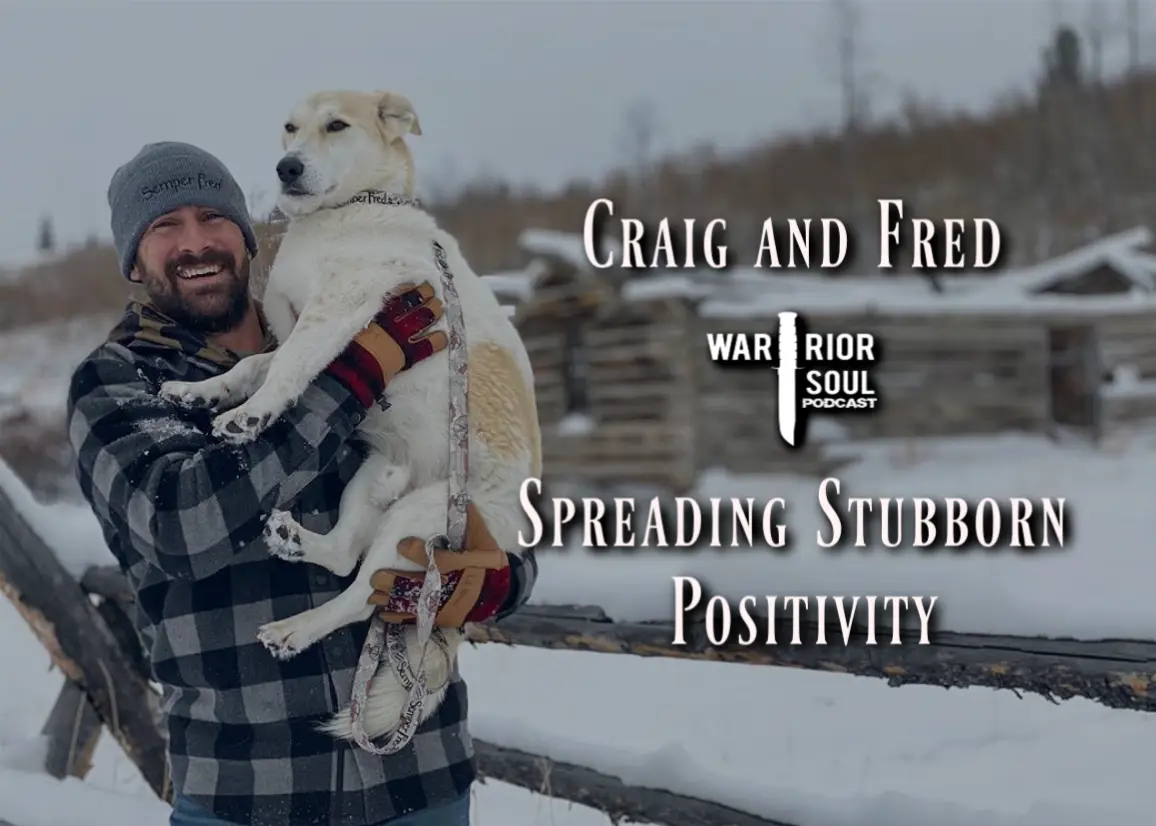
Craig Grossi is a US Marine, and author. Fred the Afghan is a handsome dog. Together, they are the creators of Craig and Fred.
Like many stories we bring to you on the Warrior Soul Podcast, the story of Craig and Fred begins on a battlefield. Battlefields are known to be places of horror, sacrifice, and death. They are also the sources of some of the greatest stories ever created.
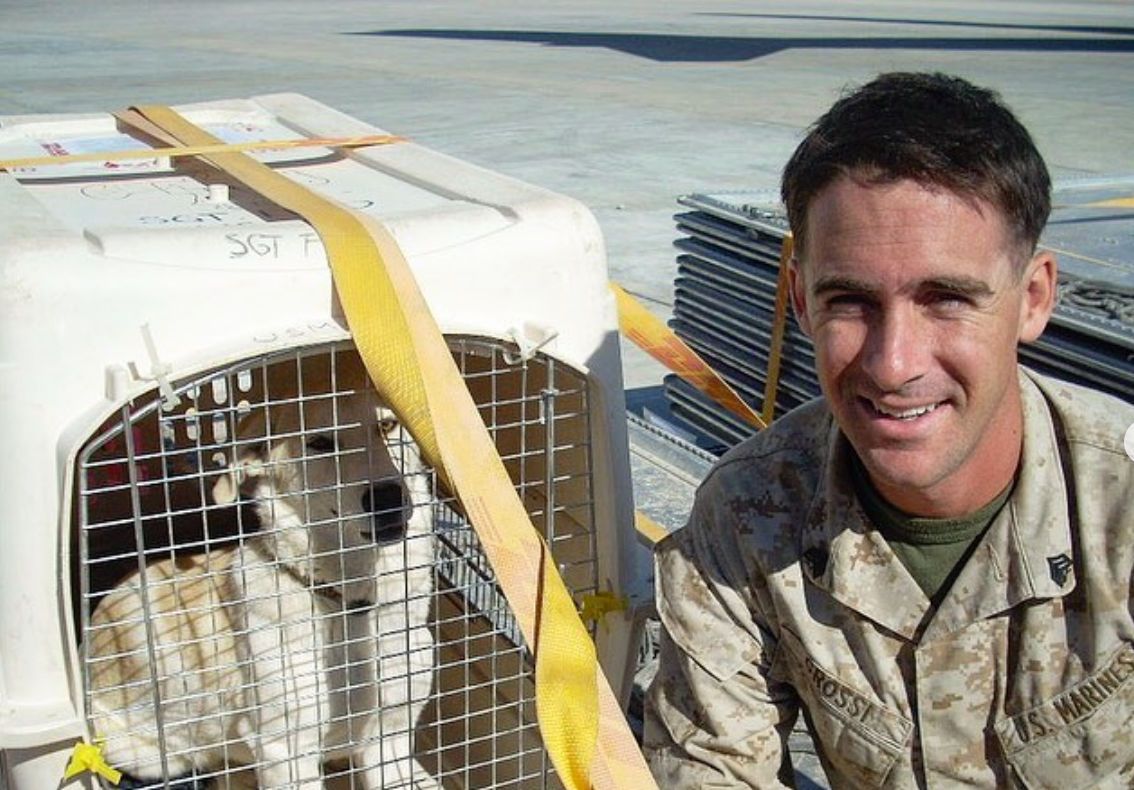
Craig and Fred have a great story. It’s the story of a US Marine, named Craig Grossi, who found a little dog in Afghanistan whom he named Fred. That dog worked his way into Craig’s heart, and into the heart of his fellow Marines. Then Craig decided to bring Fred home to the United States.
The book, Craig and Fred has inspired thousands of people from across the country and across the globe.
I’ve been lucky enough to befriend Craig and Fred the Afghan, and to get to know both of them. I can say that both have huge hearts and a desire to help others gain the same stubborn positivity that made their story so great.
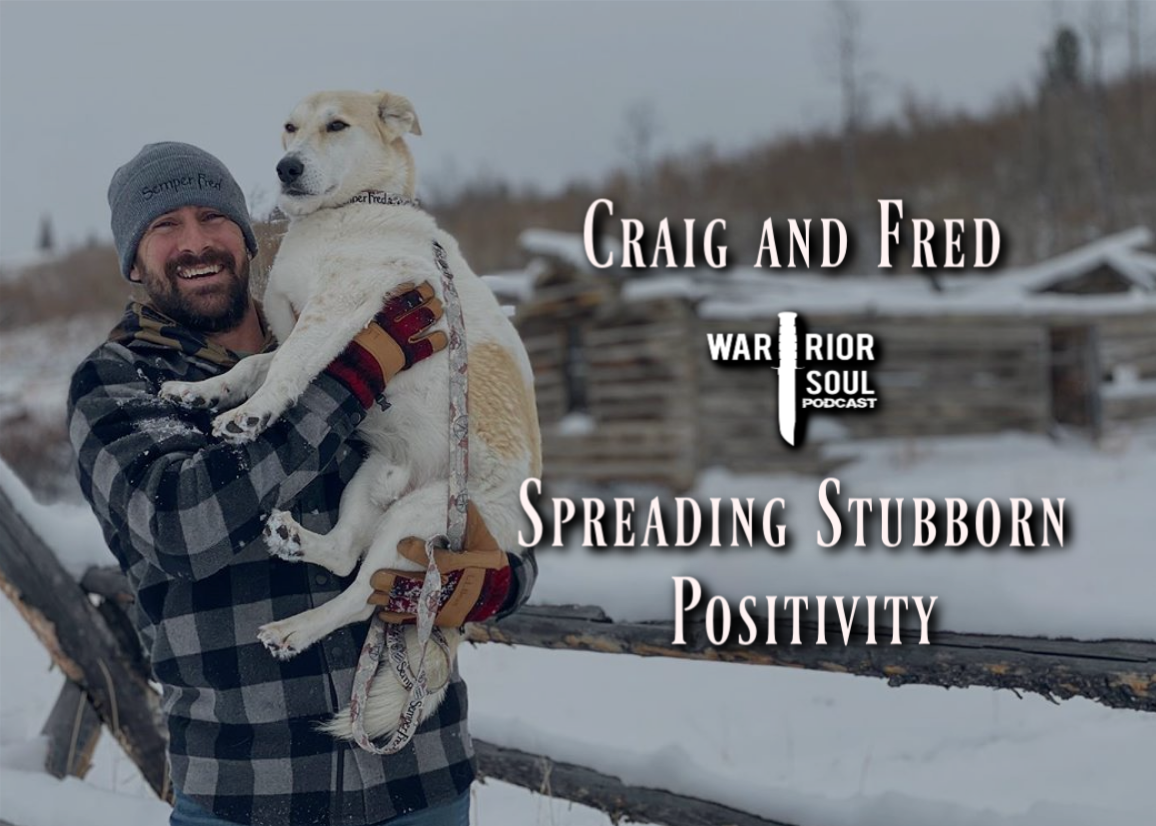
This is why I bring Craig Grossi onto the show each year around Christmas time. It’s a story that can unite us in such divisive times and it’s a story that can lift us up.
Get the book Craig and Fred by clicking this headline.
Follow their journey on Instagram at http://instagram.com/fredtheafghan.
Transcript
Machine-generated from the episode audio and lightly edited — may contain errors.
Chris Albert (link to this point)
The Warrior Soul podcast is written, produced, and edited by me, Albert. Our goal is to empower US military veterans to live their absolute best lives, and we do that by providing tools, tactics, strategies, and ideas that they can apply into their lives to become wiser, stronger, smarter, more resilient, and more capable human beings in the civilian world. If you're not a veteran, stick around because anything we talk about here can obviously apply to you. And if you like what we have to say, any information we provide, and the guests we bring on, please head over to iTunes and write us a written rating and review. It really helps to spread word about the show and to get this helpful information into the hands of more veterans so that they can in turn improve their lives and shape the future of this country.
This podcast is brought to you by the amazing, the wonderful f bomb nutrition. They make awesome, delicious packets of fats. These are portable snacks that you can carry with you anywhere. It's so hard to find a low carb snack out there, but these guys have done it. They got macadamia nut butters, they mix them up with chocolate, they mix them up with sea salt, they mix them up with pecan butter.
They've got awesome meat sticks, and they've got these delicious cheese snacks that they put out there. Plus, they're an amazing company. They send boxes of this stuff out to the troops on the front line. It's not something we ask them to do, it's something they volunteered to do. So if you wanna get some of the best low carb, high fat snacks on the planet, head over to www.dropanfbomb.com.
Use the code Warrior Soul at checkout, and you'll get 20% off your first order. This podcast is also brought to you by the amazing awesome people at Save the Brave. Save the Brave is an organization that provides camaraderie events for veterans. They do fishing events. They do golfing events.
They do other sporting events, and they also do a lot of work to help gold star families. And look, we've all heard stories about veterans charities where the executive boards are taking these giant salaries, and I don't have a problem with that at all. But here's the thing, I wanna make sure that whatever organization I'm talking about is doing amazing work. Savethebrave.org is doing absolutely outstanding work. Their board doesn't take any salary whatsoever, and they are having an amazing impact.
They're focused on getting veterans to live their absolute best lives, and that's what this podcast is about, and that's why we wanted to work with them. So if you're interested in volunteering or donating to save the brave, head over to www.savethebrave.org and make your donation or your request today. Finally, this podcast is brought to you by Warrior Soul Apparel. This is a clothing company that I actually helped to start a couple years ago as we were beginning the brand Warrior Soul. We've got some amazing t shirts.
We've got skivvy shirts with some pretty funny funny sayings on there like, I love Jesus, but I cuss sometimes. We've also got some awesome hero shirts. We have the amazing hard times breed hard people series, and these are just great shirts that I've helped create, and they support the show. So if you're interested in getting some Warrior Soul shirts, head over to www.warriorsoul.shop. And finally, if you're interested in joining a new group that we are putting together here at Warrior Soul, a group for those who are looking to live epic lives worthy of epic obituaries, stick around to the end.
We'll have some information for you to check out. With that, let's get into the episode.
Chris Albert (link to this point)
This is Chris Albert, and I'm here to remind you of one thing. Someday, you're going to die. That's not some morbid statement or scary idea. It's solid fact. Your time here on this earth is limited.
And we need to be reminded of this as much as possible for one simple reason, to live your best life while you can. This is the Warrior Soul podcast. What is going on everybody? It's Christmas. Well, it's going to be Christmas in a couple of days.
And there's a reason why I am releasing this episode on today, December 23, two days before Christmas. It's because it's one of the most inspirational and feel good stories that I've ever come across. It's the story of a US Marine who is serving in a combat zone in Afghanistan. Him and his unit are in a compound and they're catching fire every single day. And in the midst of that experience, they spot a little floppy white dog.
And that dog ventures over into the compound, befriends this marine, befriends his unit, and wins his way into their hearts. And at that point the Marine in question faced a choice because you know if you've served and you've been deployed you know that it's against the rules to feed the dogs, to do anything with the dogs whatsoever, to have contact with the dogs. But he decided that he was going to sneak this dog back and that he was going to rescue him from that combat zone. And he did that and today they've got to live happily ever after. Now there's a whole lot more to that story.
There's a lot to do with combat. There's a lot to do with the dog's story that you should know about, and you could read about it in the book Craig and Fred. And the author's name is Craig Grossi, and he's a friend of mine, a very good friend. And, we got to meet when he came out here to Pasadena along with his fiancee Nora and Fred. And, they they were given a presentation out there.
They got to talk about the book, and they introduced Fred to the crowd, and they literally filled this library up. Across the country from anybody they knew, they filled this library up with fans of this story. They've been all over the place spreading this message of stubborn positivity. The story of a dog whose attitude was so contagious, it translated to a bunch of gnarly, you know, stubborn, pig headed recon marines who are serving in this compound and warmed their hearts. And that's what I love about this story because it transcends everything, Transcends class, transcends politics, transcends religion, transcends absolutely anything you can think of. And at a time like Christmas, which I know is a Christian holiday, But we need to hear stories like this. In times like this, when when everybody's so divided, we need to hear uniting stories like this. So number one, invite you to listen to this episode. It's the third episode I've done with Craig and Fred.
And number two, I invite you to go and read this book. It would make an amazing late stocking stuffer if you can get your hands on it. It would make an amazing story to tell your children. And I think that everybody could benefit from reading it. So with that, let's get into this conversation with Mr.
Craig Grossi, and we'll have some cameo appearances if you're on YouTube from his pal Fred the Afghan. And let's talk about this, the stubborn positivity that they're bringing to the world. Craig Grossi, man. How you doing?
Craig Grossi (link to this point)
I'm good, man. Real good. Yeah. Life on the road.
Chris Albert (link to this point)
Dude, it's great having you back on the show. Thanks. Know you and Fred and and Ruby and Nora are getting into some crazy stuff out there. Where are you at now?
Craig Grossi (link to this point)
Now, we're in Jackson, Wyoming. We rented a little cabin for the week. We kinda gotta get caught up on a on a lot of work. We got some new exciting Fred kind of merch coming out. We we came up with this new line.
We're calling it Semper Fred. And so everything is Oh, that's awesome. Instead of Semper Fi, it's Semper Fred. And I I feel like I I I don't remember when it jumped in my head. We were driving, I'm sure, somewhere, and I was like, Semper Fred.
Because it's Fred is it's it's complicated and simple at the same time, right? Like his story and his journey, it means a lot of things to different people and and but overall, it's always been kind of this this commitment to positivity and stubborn positivity and and resilience and gratitude. And when I think when I was thinking about it, it's even more fascinating. Like, I I think I told you the last time we talked or one of the times we talked when it was I I got a message from somebody from Norway. It was actually an an Afghan refugee.
Somebody he was when he's when he was a kid in the nineties, his family fled Afghanistan, and they settled in Norway. And he wrote me this really amazing message on Facebook about how glad he was that I saved Fred and grateful that, you know, I I was there trying to help Afghanistan and the marines. And he said, you know, it's really amazing that you named him Fred because in Norwegian, Fred is the word for, like, peacefulness and and, like, to be at peace is to be Fred. And I was like, you are you kidding me? Like, I totally named him by accident.
Like, it wasn't a purposeful thing. And years later, it ends up being this very meaningful phrase that represents in a whole other culture, this peacefulness that is Fred. That's what got him out of that situation that he was born into was being peaceful and kind and positive. So it just comes completely full circle when it comes to just, yeah, it's like we're selling t shirts and dog collars and hats and stuff. But it like everything about Fred's story and everything that we do, when you scratch the surface a little bit, there's a lot more to it.
And I'm really excited to give people something really tangible that they can wear or just put on their dog when they're walking their dog around and like think about, you know, opportunities that we all have every day to be more like Fred, to be more Fred and to always be Fred. It's exciting.
Chris Albert (link to this point)
Well, this is the third time you're on our podcast and you're in an elite group of guests here. Yeah. And and what I wanna do is, you know, if if you guys haven't heard this story before, Craig is the author of a book called Craig and Fred. It's it's one of the most amazing stories I've ever read. Thanks.
Craig, for just a couple of minutes, can you give people a little bit of background in case they haven't heard the first two podcasts we did?
Craig Grossi (link to this point)
Yeah, totally. Yeah, so I was in it was actually what's really cool is a couple days ago, November 22 was Fred's nine year anniversary of he he beat me home by a couple months, so he he made it to JFK Customs in in 11/22/2010. And so backing up a couple months, it was like October, early October, late late September of twenty ten, I was a a counterintel human intelligence HET guy for anybody that's familiar with with marine human intel, we call ourselves HET. I was attached to First Recon, Charlie company, and we had just come out of like a Trek Nawa, Marja kind of cleanup. That whole Marja thing was kind of wrapping up by the end of the summer of twenty ten.
And I kind of managed to to really earn my spot within recon. They don't like a lot of attachments. They don't like anybody that can slow them down. But they they like having me around because I just liked talking to people and I was never afraid to patrol and I was ready to go. Just give me a rip it and a and a Folgers crystals.
I'm ready to rock. And and and so they made me kind of a permanent attachment to their headquarters element. And so we started getting briefed on Sangin and everything like, it was the first time I'd seen any of these recon guys kinda nervous because these guys had Fallujah time, Mosul time, like all over the place. And all everything we're hearing about Sangin was was really scary. I mean, the numbers of the Taliban were unlike anywhere else in the country, and there was a unit, third third battalion, fifth marines was in charge of kind of trying to secure the district center, and they were losing marines like seven to 10 a week, you know, just crazy stuff.
And so we were gonna insert north of of the district center, North of 3/5 with nowhere to go, no no base, like, no nobody waiting for us and just try to make our own little own little combat outpost right on the fringe of the green zone. And if nothing else, just distract the Taliban from the from 3/5 to give them some some breathing room. And so that first week, we inserted a helicopter, we found a compound, we filled sandbags and just fortified it as best we could. And that first week we were under constant attack and it was pretty staggering. And in between gunfights, I would be like, you know, getting some water and cleaning my gun and I'd see this funny little dog, you know, kind of trotting around the place.
And he always made me smile. Every time I catch a glimpse of him, I would kind of smile and that's a funny dog, you know, because most of them, we saw a lot of dogs, you know, like, you know, over there, there's just a lot of a lot of strays that they don't don't really, you know, know what it means to be a dog. Like, they're they're they're really wild animals and and it's hard to see. So we always just kinda turned turned our backs to him and but this guy was just different right away. And after things calmed down, the Taliban really got the message.
And we I think it was like a after that first week, I think I can't remember who the general was at the time. It might've been Mattis. He dubbed, you know, first recon like the most deadly unit in the country because we we were were shacking a lot of Taliban, they they finally were like, alright. We can't keep losing guys like this. And and so they backed off, and we started to look around and trying to kinda get a little more settled in the in the area.
And I was I pulled out my computer. It was the first time I could really get caught up on my reports to kinda relay back some of the realities from the battlefield. And I saw this little tail kind of like Periscope across the top of my computer and I was like, here he is again. I put my put it down and I grabbed some jerky and I was like, gotta see this dog. I gotta check him out.
He's definitely like worth, you know, to see if he's friendly. I got a couple feet from him and I almost turned around because he was covered in bugs and ticks and fur was all matted. I could see his rib cage. I was like, man, this is this dog's, you know, he's not gonna, you know, be interested in you. He's not, clearly hasn't been taken care of before.
And then I heard a little thump, thump, thump, thump coming from him and I looked up and he was kind of wagging his tail, you know, and kinda looking at me with these big eyes. And I was like, alright. And I took a little another step closer and I held the jerky out. And he surprised me again because just as gently as he could, he reached up and took the jerky with his front teeth and chewed it very slowly and politely. And and from that moment on, like, let me give him some scratches and some rubs.
And from that moment on, he was my dog. And everybody in that everybody in the company, everybody in Charlie company fell in love with him right away. And we all realized, you know, like he was there was something really special about him, there was no accident that we ended up taking that compound, you know, and that he happened to to be there. And we decided to to do whatever it took to get him out, and it it is it is looking back and I tell the story, you know, kind of perpetually. The book has been out for for two years now, but we've kinda continuously toured because people love hearing the story of you know, for for for so many reasons, and that's why I keep telling it is because I think every time I tell it, somebody takes something away from it that I that I'm not intentionally putting in there.
It's just they go back. But to me, it always goes back to those first moments when Fred you know, what I was expecting from Fred and what anybody I think would have expected from a dog in that situation is to growl and to raise their fur and to try to react, you know, negatively. And he chose the what was arguably the the the less sensical and the much more difficult route by wagging his tail, and that has made all the difference in his life, and it's been a a constant source of inspiration to me and now to to my readers and to anybody that hears our stories, our story. And so that's, you know, that's the kind of the hip pocket version of it, but I I, you know, I I could I talk about Fred all the time and and it never gets old. So I I don't wanna go I don't wanna go go too far.
Yeah.
Chris Albert (link to this point)
No. I mean, in in in the thing is, think I read this book. I think the first time I came in contact with you, it was your publisher who got in touch with me about coming on a podcast. And I got the book and reading through it, I was immediately like, the story immediately grasped me. And I think, during the time I was going through a little bit of a rough time too.
And it was just the story was so inspirational. And then bringing you on to the podcast and actually seeing you guys and then meeting you guys in person and seeing how people react to you. I mean people from all walks of life. Yeah. Beautiful.
Craig Grossi (link to this point)
Yeah.
Chris Albert (link to this point)
I mean there's there's towns that have had like rallies and parades dedicated to you guys. You know that's It's crazy. What it's doing. It's it's just such a great thing. How does that feel, man?
Craig Grossi (link to this point)
It's it's it's it's amazing, man. It just if it does a lot. It does a lot for me, And it there's not a moment that goes by that I don't, like, take stock of it. And, like, you know, like if it was if it was all over tomorrow and no one wanted to hear the story anymore, and, I would be totally fine. You know?
I would be disappointed. I love doing what we do, but we've done so much and it just keeps snowballing into bigger things. And that's especially when I talk at schools, because we do a lot of school events, elementary schools all the way through high school, and we actually have some college events coming up this year. I I always try to to emphasize that that, you know, when you when you really dedicate yourself to gratitude and really dissect what that means, you know, and it's so easy to just say, oh, stay positive, you know, when like, that's just it's almost become kind of a of a write off, you know, like, oh, we'll find, know, find the silver lining. Like, that's that's that's easy to say, but really hard to do on a daily basis when things are are actually really bad.
And and that's that's where our story, I think, really has has legs, to make a Fred short leg joke. But, you know, he you know, he's got these little legs, but his story has some some long some long legs, and it's got a lot of travel to it because he is the embodiment of that, you know, and just being a dog, an animal in a really difficult situation and having the mental kind of capacity to wag his tail, you know, has changed the course of his life. When I came home, he did that for me all over again through just being a just being a dog, you know, just doing what dogs do, being there every day ready to go, you know, and and and then on a on a larger scale, when I started walking him around my neighborhood in DC and people would wanna know what kind of dog he was because he's so interesting and handsome. And I started to kinda open up and I started to tell people, know, this is where I found him and this is what his life was like and this is how I got him home.
Oh, this is this is the the reality of of life in Sangin for the people of of Sangin and and for the marines that are there. And these are some of the friends that I lost. And I and, like, little by little, I I started to tell the story and and I started to realize, you know, how much purpose there was in the pain that I'd been through. And that's where it goes beyond, you know, just the the silver lining kind of comment or the the, you know, stay positive kinda comment. It's it it really turns into an approach to your daily existence.
And that's that's what I mean when I say it has it has legs because it's it's become so much bigger than than just this neat little dog story. You know?
Chris Albert (link to this point)
One of the things I wanna I wanna mention here too is because you took a route with with your life, with this whole thing that that you you went after meaning. Right? You went after meaning. And and and the reason why I say that is because, you know, I know that prior while you're writing the book, you were working in the intelligence field for a bit. Right?
After a civilian intelligence field. Yeah. And then, you know, that's kind of like a secured government job. And then and then from there, there's Fred. What's up, buddy?
What's up, buddy?
Craig Grossi (link to this point)
It's sleeping.
Chris Albert (link to this point)
And then from there, you know, you took a big risk to take this story to the public. Right? Yeah. And I know you went from working in intelligence, you were working in retail for a while. Yeah.
Well, trying to get this book out, trying to get everything together. You know, that's an amazing thing. And I think in today's day and age, like we grew up in it with this idea, we've got to pursue goals and those goals have got to be centered around, you know, making money and doing all these things, but you took a very different route there. How was that for you?
Craig Grossi (link to this point)
That yeah. That was thanks, man. Yeah. I I it it was scary. It was scary because it I grew up in a very pragmatic, you know, household.
My dad's an engineer, a very rational thinker and a very accomplished guy. But I felt by my junior year of high school, if I hadn't had the next ten years of my life mapped out that I was a total failure. Most of my friends you know, in high school kinda seemed like they had that. You know, they knew, you know, what college they were gonna go to, what they were gonna major in, and like like it was it was crazy. And and I was getting Cs and Ds and, you know, I was getting not really getting anywhere with school even though I was working really hard.
I finally, through the Marine Corps and through the intelligence community, finally found my footing and saw my future. I could very easily and happily had a very fulfilling career in the intelligence community. On top of that, one of the things I didn't like, one of the reasons I left to go back to school was I was at the DIA which at the time in like 2012, 2011 was under some, in my opinion, some mismanagement. I felt like there myself and a lot of other people weren't getting the the roles that we should have. And so I left and went and I started using my GI Bill benefits.
And it was originally just to go get my degree and then go back into the intelligence community. And my goal was to work for the CIA because they just have a completely different culture from some of the other agencies and legitimate opportunities. And so my first semester I ended up getting into Georgetown, which is still hilarious to me because I barely graduated high school. But my first semester at Georgetown, I kinda knew I wasn't going back to to Intel. I was gonna play it you know, kind of continue to push that ball down the road and and, you know, that would always be kind of my safety, I guess.
But being in a classroom for the first time felt like the right place for me. I loved the environment that was kind of created there by the professors and I loved writing even academically. Loved the process. And in my free time, I started to write the story that I've been telling at dog parks and street corners and all over the city. The more I wrote the story, more I realized like, wait a minute, like this is so much bigger than me.
You know, and I started to kind of overcome a lot of the barriers, I think, that we as people and especially us as as marines and veterans really put in in our own way. These barriers that are that are kind of important when it comes to being a part of a unit and turning wrenches and and filling sandbags and digging holes and and returning fire, you know, and coordinating. You can't think about your own your own needs and your own wants and your own dreams. They kind of beat that out of you by necessity. And I think that's the biggest thing that we can overcome when we get out is to realize that not how most people operate.
Like most people think about, you know, what they want. You know, they don't think about, you know, the the diminishing their own accomplishments and talking, you know, and and and talking down their own goals for the greater good. It's it's and it's it's not selfish to want to pursue, you know, something that you have have a dream about. And that was that was kinda what I was starting to overcome when I went back to school. And every time I wrote sat down and wrote the story because I started over, you know, countless times and it got it kept getting better and better and I kept remembering more and more detail about Fred and and the reality of Sangin.
And I started to realize, you know, like, that this is I guess the way I justified it in my head was even still kind of a a, like, veteran marine kind of way. You know, it was like, this is my duty. Like, this is this story and the re like, the reason I made it out, you know, after having some close calls and the reason Fred made it out after, you know, just defying the odds, like hiding him on Camp Leatherneck was I can't believe that if we were able to do that. And the reason that we were here, the reason that we are here is to tell this story. And so even through all the growth, I still kind of had to to spin it, you know, to in my own head in a way that made it, you know, something bigger than myself and something, you know, kind of duty centric.
And it's been it's it's been worth it. You know? Like, there are there I ended up getting getting hired after I graduated, I ended up getting hired by a firm that worked for the CIA, and it was every like, the job was the dream job I would have, you know, killed for three years before. And I had a window, I had eight months because my clearance had lapsed while I was at school. And they're like, alright, you're hired, see you in eight months.
Right? Like one of those things. And so I was like, alright, I got eight months to see if the book is what I'm supposed to do and the story, you know, is what I'm supposed to do. And so I really like hunkered down and I was working at a yeah. Was working retail at a men's store in in in DC and like, I was terrible employee because they they let me bring Fred in to the store.
And anytime anybody walked in, was like, hey. How's it going? Like, yeah. You're looking for some ties or some shoes or oh, you wanna hear the story about my dog? And I was just like literally telling everybody the story.
Because you never knew, like, who was gonna walk in. It could've been an editor, you know, or something. And so I was in full on, you know, just, like, campaign mode and on social media and and writing, working on the book proposal and just, putting everything I had into it. And and Nora was just like like had my back like a 100% and I couldn't have I think if I hadn't had Nora who's now my fiance at that time, you know, I would have given up. I would have been like, like, who do you think you are?
You know? Like, you just go go back to go back to work, you know? And she kept kinda pushing me and and reminding me that, you know, my writing was good and that, you know, this is what I really wanted and and this is what, you know, I I was supposed to do. And and so we we just kinda kept kept pushing and pushing, and it came down kinda came down to the wire where it was like I had a polygraph, and and they scheduled it for the morning after my annual fundraiser that I do every year in honor of Schmalstieg, gunnery sergeant Justin Schmalstieg, was killed in Sangin protecting a whole patrol from an IED in the middle of the night. It was a really crappy day and a really long day.
We already lost another guy that same day, Sean Osterman, to machine gun fire. He had taken out, like, two or three machine gun positions that the Taliban had placed around us, and and they they they got they got a lucky shot on him. And and so every year, we we do a fundraiser for for Justin and and for Sean, and and it's kind of turned into this much bigger night in terms of just it's always it's about, you know, anybody that's that we've lost too soon. And I called and tried to get my polygraph rescheduled because I was like, hey. This is why, you know, I do this fundraiser every year, and it's like, I'm not gonna be in in good shape the next morning.
And they were, like, kinda hard asses about it. They're like, no. Like, this is your date. And I was like, okay. And this was the first year that we Justin's family came down from Pittsburgh, and we did a big concert.
I mean, a cover band and and played music, and and Nora gets up and plays and sings. And and after the show, we're at a bar down the street called The Pug, and I got my arm around Justin's dad, and his mom is there. And I'm looking around the room, and I looked at Nora, and I was like, I'm not going tomorrow. And at the time, like, I I was in severe debt, you know, like Nora's job was keeping us afloat financially, you know, but but we were we were kinda scraping by and and this job with the CIA was going to pay really well and it was going to mean a lot of stability in our life. I was like, I'm not going tomorrow. And she was like, Yeah. Like, don't. You know?
It made sense. But it didn't at the same time, you know? But it but it was and I I I called out and I said, I'm not come sick. You know? I can't come.
And and it was literally like so that that I was pretty hungover for like a day. And then the the the day after the day after that day, I I reached out to an organization or a website called The Dodo and everything took off from there. And I had already reached out to a ton of different online platforms that kind of run viral stories and I'd reached out to local news media around DC trying to get somebody to do a piece on Fred. And I had already written it for them. Was handing it to them like, here's this great story about me and my dog, and no one was really biting biting.
And I found The Dodo, and I was on the phone within an hour with one of their writers, one of their reporters, and they did an article. They linked all the pictures to our social media, and then they did a video, and the video got like 20,000,000 views in like two days. Wow. And then I got an email from HarperCollins. And because they mentioned in the article, like, that he's Craig is working on a book about their story.
And here comes this this this senior editor from, you know, one of the biggest publishing firms in the in the world, you know, hey, what's the story with this book? Like, how far along are you? And and I I was like, here we go. You know? And it's literally since that video, since that moment, since I looked at Nora, you know, that that night and said, I'm not going.
You know? Like, it's been this incredible trajectory that that hasn't really slowed down, and and it's taken you know, it hasn't been easy. It hasn't all just kind of started to, like, pile in. We've had to kinda keep the foot keep our feet, you know, planted on the skinny pedal and and not let the momentum really really, you know, get sucked out of our sails. But it it's just I think the the most important thing to me is how clear it's been that this is the path that that we're supposed to be on, And that's just that just comes with with time, with just continuously hearing people's reactions to our story and and seeing when we travel, you know, we were just in Gillette, Wyoming.
It's this awesome little town, little ish. It's like 30,000 people, but it's it's a coal mining town in the Northeast Corner of of Wyoming. I I don't I don't know anybody there. You know, I've never been there, you know, and we packed this room, you know, in their local library, and and we ended up staying, like, two, three extra nights because we just fell in love with this this community, and they welcomed us in. And and there's there's something there's something magical about that, you know, it's it's it's and and we don't wanna take it for granted or turn turn our backs on it for a second. So it's yeah. That's a really sorry. That's a long Oh, man. I'm But you you always you always get me real philosophical, man.
I love talking to you because you're you're really good about, you know, about kinda asking these questions that really really help me kinda really analyze the the path that that I've been on, you know, in the last couple years.
Chris Albert (link to this point)
Well, I think it's important because, you know, when we think about our audience out there, a lot of these guys are are they're either getting out or they've been out for a few years. Right? And and when you look at life and you're trying to make sense out of things. Right? And and you go through the military, it's supposed to be this this huge thing that you go through and then and then you get out and honestly, a lot of times getting out is anticlimactic, right?
Yeah, like parade for you. There's no like, no anything. And and, you know, there's a combination of things that go on number one, nobody's gonna hand you a guide and say, alright, this is what your next mission is. This is what you've got to do. And then there's a lot of pressure that that's also there that says, okay, you got to go and you gotta do this. You gotta go to school, get a secure job, settle down and things like that.
Craig Grossi (link to this point)
Right.
Chris Albert (link to this point)
But but the problem with that is that a lot of guys do that and then they end up being extraordinarily unhappy. Mhmm. Right? It's because you don't have the meaning that you did while you were serving. Right?
Don't have the meaning. And the thing about meaning is like, you can't just create meaning. Like, it's gotta come from facing some kind of struggle. It's gotta come from from, you know, standing up for a cause that's bigger than yourself.
Craig Grossi (link to this point)
Mhmm.
Chris Albert (link to this point)
And the cool thing about you is that you recognized it with Fred. You know, you recognized it with the story you had and and what this story could mean to people. And I think that's why you're in such a good place right now. Hey, guys. I hope you're getting a lot out of this interview. You know, the Warrior Soul podcast is built with the mission to empower its listeners to live absolutely epic lives. And that's why we recently created a group called the Warrior's Obituary Society.
This group is built to empower its members to live epic lives worthy of epic obituaries. And it starts with an eight week development program. And with this development program, what you're gonna do is you're gonna outline a vision for your life. You're gonna get very specific about what you want. Because without that specificity, you don't know where you're going, and you don't know what you're doing.
From there, we help our members to develop specific goals, objectives that they are going to push toward, and that their fellow members of the Warrior's Obituary Society are going to hold them accountable too. From there, we're getting down into specifics. We're going to help you to develop and customize your own personal fitness and nutrition plan to help to fuel your body and fuel your mind for the quest ahead. From there, we're going to work on your personal finances. We're going to help you to knock down debt, start saving money, create a plan so that you can start investing in your dreams.
Then we're going to get into your business and career. We're going to help you develop the skills that you need to develop yourself so that you can have a major impact in the field you choose. If you choose to go into business, we're going to help you to set up the foundations that you need to create your own company and get started on your path in life. From there, we're going be working on your relationships, we're going to help you to develop a world class network, and all along the way, you're going to have your fellow members of the Warrior's Obituary Society pushing you in every single area. We meet once a week over a live call, and we're constantly communicating over our own private forum on Slack.
We don't do anything over social media, and that's because I don't want anybody feeling like anyone's looking over their shoulders, and I don't want you exposed to the crazy distracting alerts that you get on Facebook and some of the other social media platforms. Normally, programs like this cost thousands of dollars. This one does not. For the price, it is the best development program on the Internet. And that's because our mission here at Warrior Soul is to empower people to get more out of life so that they can in turn make the world a better place.
We've got a great mix of active duty military, US military veterans, and civilians in this group. We wanted to keep it really eclectic so that we get a lot of different types of views up there and a lot of different people with different areas of expertise. If you think that this is something that would be of interest to you, and that this is something that could empower you to live your absolute best life, head over to www.warriorobituarysociety.com. That's www.warriorobituarysociety.com and you can sign up today. And if you have any questions about it, just reach out to me at chris@warriorsoulagoge.com.
That's chris@warriorsoulagoge.com. I'm happy to even sit down with you for a phone call for a few minutes to see if the group is right for you. I look forward to seeing you guys in there, and let's get back to this awesome interview.
Craig Grossi (link to this point)
Yeah, man. Yeah. Yeah. It's I'm so glad that that you know, and I I I I kinda have to keep going back to to to Nora, like my my fiance, because if I hadn't had her in my life, I wouldn't have necessarily I wouldn't have recognized the and she's really good about deflecting any credit, but it's all it's it has a lot to do with the people that you have around you. And and I didn't it wasn't that I had bad people around me, it was that in some cases, did.
But it it it was just more they comfortable with me being the version of myself that I had been for a long time. That they were in some cases, even people that you're really close to, they're afraid for you, and they don't want to see you fail, you know, and and so they'll try to keep you kind of in a box, kind of in this this little definition, you know, of who you are, and Nora, you know, saw something bigger. She saw, you know, in a way, like, a way she saw who I was before the marines and before all this stuff, you know, and and I and and that's kind of who I've become now because in high school, I never missed a chance to jump on a stage. I did the morning announcements every morning. I was the annoying happy kid at 7AM.
I was waking everybody up reading the weather. And I was just always having fun. Never really cared about what other people thought about me could make fun of myself till the cows came home and laugh with everybody. And that I kinda lost some of that through the marines, you know, like we talked about a minute ago, just kinda how they have to kinda, you know, beat that individual individuality out of you by necessity, and and and but I've I've found that again. And I don't know if that's the key.
I don't know if that's what every veteran needs to do when they get out, if they need to retrace their steps and go back to who they were before they joined because they might not like who they were before they joined. They might like the things that they've become through their service. And so I guess the real path, the real ticket is to just be honest with yourself and try to identify the decisions and the people in your life that are influencing those decisions that aren't necessarily consistent with what you want. That's where it gets a little scary because that's where you have to stand up and create boundaries with people and really stick to your guns, that's gonna create problems. But down the road, when you've opened your own lemonade stand or donut shop or CrossFit gym or whatever, and it's five years later and you're content and happy and fulfilled, those people will come around.
If they don't, then If somebody can't be happy for you when you're on your own journey and you're on your own path, then they don't belong with you on that particular portion of the of that path, you know, and and you hope that they'll catch up, you know, at some point, but you can't you can't let them let them kinda slow you down. You know, you have to really and the but the first step is identifying, you know, what you really want.
Chris Albert (link to this point)
Right. And it's also gotta be about like, it's also got to be something that that that's about more than you. Right. Right? About that's more than you because like, I mean, I could see just from doing this podcast, like, you know, when I first started this out, I I was like, is anybody listening to this?
Is anybody getting anything from this? And and the thing is, what drove me is is understanding that, there's people listening to it. It might be a few people, but they're getting something out of it. Yeah. You know?
And and that's the big thing. Like, you you you can't just go through life and say, okay, I'm gonna set this goal because it's gonna it's gonna lead to, an increase in my retirement account. Or I'm gonna do this.
Or I'm You have to see to your responsibilities, but at the same time, if there's not meaning there, there's not gonna be happiness, right?
Craig Grossi (link to this point)
Yeah, that's right. Yeah, you have to There's always gonna be the back and forth about, you know, like, what's rational, what's what what's practical, and and and there's always room for for practicality. Like, one's, you know, no one's telling you to to, like, sell all your stuff and, like, and live out of your car, you know, like, it's you can you can still kind of have one foot in the in the, you know, in the practical path while experimenting and kind of, you know, sending out, feelers to different things that you might wanna do and different paths and different journeys that you might wanna take. When one of those grabs, you're like, oh, here we go. You'll know.
And that's the way that it's gone for me. I'm always just so cautious about telling anyone what to do because it's like, and you see this all the time. I'm sure, you know, like people are so sold on on one journey and like one kind of like when you get out, this is what you do. Like and and we hear that a lot when we get out and when we're in, you know? And and it's it's just it's it's to me that anybody could ever, no matter how successful, could ever stand in front of a group of people and tell them, you know, what to do with their lives.
Like, it's so, you know, it's it's I don't know. I don't I don't know, you know, how you can have that much authority, but
Chris Albert (link to this point)
Yeah. And I think people are like vampires, right? So we wanna convert people to our line of thinking no matter what it
Craig Grossi (link to this point)
That's good. I like that.
Chris Albert (link to this point)
Yeah. I mean, it's true. You see it all the time. Right. You see it out there on social media.
You see it, you know, with your friends. They want the people want other people to be like them. And, you know, the it's the dangerous thing to get into because it can happen like that. You don't realize it. Right?
Craig Grossi (link to this point)
Right. Yeah. Oh, this is kind of exciting. I can't believe I haven't mentioned this already, but I'm officially working on my next book. And you just made me think about it because the whole theme of it and the the title actually, they let me pick the title, which is kind of rare.
Usually, the publishers like to do that, but it's gonna be called second chances. And it it's kind of goes into what you were just talking about and the the idea of everybody trying to be like you know, emulate other people and us trying to kinda get people to emulate our path and our journey. And for the last year, I've been volunteering with incarcerated veterans at Maine State Prison. And I kinda got got my foot in the door up there through Fred and through our story because I went up there to to the the book club, the prison book club read the book, read Craig and Fred. And I went up there to just talk to them.
And when I left that day, I I was hooked. Like, I I was like, you know, this, something special going on here. Because I I worked in prisons for four years. My first four years in the marines, was corrections guy. And the culture within Maine State Prison was unlike any any prison I'd ever seen, and it was, like, almost counter to the book, you know, that was written on corrections.
Like, they're they're like, Lance Corporal Grossi would have said that they're coddling the prisoners, you know, and that they're being too nice to them. And and and but that that's that's that's the reason I I jumped onto this is because the it all comes down to this guy named Randy Liberty, which is the greatest name in the history of names. And and he's he's the warden at the time. Now he's the commissioner for the whole state. But he's a he's a veteran, Iraq war veteran, retired sergeant major from the army.
And and his dad was incarcerated at Maine State Prison. And one of his earliest memories was he was like six or seven, was going to visit his dad at Maine State Prison and with his mom and his other brother. And his whole life has been, you know, trying to break that cycle within his own life of kind of poverty and crime and also doing it for others. And so that's been you know, if he had if he had just taken the hand that he had been dealt and he had just kind of if he had just only gone through his life without, you know, getting in a little bit of trouble, you know, or just, you know, scraping by but not, you know, not being incarcerated like his dad, then that would have arguably been a success. Like, know, if he had broken that it's like but he's taken it a step further and committed his life to creating opportunities, creating programs for for for the the men that are that are incarcerated, but it's also having this profound impact on the families and the communities that these men come from.
And so it's just been fascinating to spend so much time up there and see the growth and the impact that these programs are having. Because one of one of them is a dog program. They train dogs to be service dogs. And it's and it's there's so much work that goes into it. And in order to get the opportunity to even do that, the men who are incarcerated have to defy a lot of the expectations that prison life puts on you.
There's a culture in there within the inmates that is very counter to the work that is being done with a dog because it's a lot about patience and love and understanding and kindness and patience again because they're they get these dogs when they're, like, eight weeks old, like puppies for eight weeks. I don't know. It's, a couple months old. Like, they're just these goofy little puppies. And you see these big tatted up, like, you know, cons, you know, working and speaking in, like, puppy talk, you know, to these to these dogs.
And and and over the course of 18, they take them from these little, sloppy little pups to these highly trained tools, appendages that that will, you know, will go on to change the lives of people that they might never meet, you know, and they're they're they're bringing them pill bottles, they're opening doors, and they're, you know, like, learning all of these incredible tasks from these men who from our society's perspective and and and expectations are, lost. They're they're they're doomed, you know, in terms of just anybody that that spent any time behind bars, you know, is painted with this this scarlet letter, and they're they're not getting good time out of it. They're not getting any extra money out of it. They get a certificate, and they're certified dog trainers and stuff like that, but they're taking this opportunity to do this work because they want to and because they want to be, again, to be part of something bigger than themselves. And I think I'm really I'm just really excited about about starting to work on this this next book because it it I think it can show people again more stories and more examples of just how far you can get when you only really worry about your own expectations of yourself, and you don't worry about what other people expect from you.
And that just circles back, I I think, to to what we were talking about before I started rambling. Yeah. About just the about the about veterans and, you know, when we get out and how how quickly we we we feel like we have this checklist that we have to to start checking off. You know? And and if we don't, you know, within a year of getting out, if we don't have this, then we're we're behind, you know?
And and we get caught up in that really quickly, and and I think it's just always important to look inward and see where you really wanna be and what you really wanna do.
Chris Albert (link to this point)
That and it's really important to understand that there's always hope. You gotta open your eyes to the possibilities out there. There's a lot of possibilities. There's so many of them and I see so many guys who are just wrapped up in this way of thinking that says, Oh, this is all I'm ever gonna be. This is all I'm gonna ever do.
Society's for rich people people giving who chances and things like that. The reality is that if you read about people who've accomplished things, struggle. They've gone through so many different things and and it's never this easy story that says, oh, they've been handed this or they've been handed that.
Craig Grossi (link to this point)
Yeah.
Chris Albert (link to this point)
Comes down to them seeing the hope in front of them and and taking advantage of that hope.
Craig Grossi (link to this point)
Yeah. And and I've struggled with that. I struggled with seeing people with, you know, material success, you know, an outward success and being like, ugh. Like like, I bet their dad's rich, you know, and like, oh, I bet they come from money, and like, they didn't really have to and and maybe they did. Maybe they did, but it doesn't mean that it wasn't hard.
It doesn't mean like, we all have our own we all have our own struggles. And and and finances are very stressful, you know, but it's not the it's not the answer to your stress. It's not, you know, just be if you woke up one day and you had a pile of money in your bank account, it would it would be nice. It would it would definitely make you feel, you know, a little less stressed out about, you know, your future and stuff like that, but it it doesn't necessarily mean that down the road you're gonna be happy. You know?
And it's it's it's this complicated thing where you have to almost put put the the material and the financial success kind of in the back seat and really focus on on your your inner success and feeling like a success and feeling like you're at peace with what you're working towards. And then that the rest of that stuff kinda kinda comes in, at least I'm hoping it does because I I'm still not I'm like, I'm not, you know, I'm not rolling around in a Range Rover or anything like that and but anyway. But it's it's this complicated thing because, like and I I I've I've had I've had fellow veterans kind of assume things about about my my books and my success. You know, like, oh, because, you know, I bet you you had a connection. Right?
You had a connection. Like, no, didn't. Like, I literally just throwing my story out there and literally just like, yeah, like, I have I have a really great agent. But even even in the literary world, having a great agent that is that has your back a 100% will only get you so far, you know? And and it it it's really just comes down to to that tenacity, you know, and and to to really staying true to to your goals and and not compromising, you know, that stuff and and it I that was that was the kind of looking at other other people's success for a long time was was a was a struggle for me.
You know, I I felt really inadequate when I would hear about another veteran, you know, or even somebody I knew that was doing really well. I would always try to find holes I could poke in it. Not to their face, but in my own head. I'm like, well, I bet they just got lucky or I bet that their uncle works at that company, that they just got that job. That's just not you're not doing yourself any favors by by by looking at at things that way.
You know, you just have to be be grateful for for their success and be happy for them and and know that, you know, it'll come it'll come around to you too if you just continuously kinda, you know, stay stay true to to yourself.
Chris Albert (link to this point)
Yeah. You gotta figure out what serves you best, and what serves you best is is understanding that there are possibilities out there, you know, and that's that's that's still huge.
Craig Grossi (link to this point)
Yeah.
Chris Albert (link to this point)
Tell me a little bit about Semper Fred. What what's going on with this?
Craig Grossi (link to this point)
Yeah. It's it's so we have we have our collars and leashes, and the first two designs, one of them kinda tells the story of Fred. It's got, like, the CH-53 helicopter, my Land Cruiser with Fred sitting in the passenger seat, and, like, there's lot it's one of those one of those things that the longer you look at it, the more you see, you know, there's compasses and like there's the Afghani, the Hindu Kush Mountain Range is kind of in the background and lots of little little details. And then the other one is kind of more from the perspective of of like a dog, and we kinda wanted to come up with stuff that when you're putting it on your dog, it's kinda what they would be saying to you or kinda what they would want you to to feel, you know, because we there's nothing more more, like, I don't know, more uplifting than when it's time to go for a walk and like your dog is just won't sit still and they're so excited and you're trying to put this collar on them. And so we wanted to try to think of something that kinda emulated that that response.
And and so this one the other one is it's a it's like a throwback camo to like the World War two frog man camo pattern. And it says, you know, stubborn positivity, like p a w, you know, and and wag your tail. It's a you know, on the other kind of and it's just this kind of pattern that goes through. And that's kind of what what we think our dogs are, like, saying to us. You know, that's what they want us to think.
And then the third one is is just on our website as of today is the Semper Fred collar, and it's the we went back to another vintage camo, the chocolate chip, like nineties era desert camo. And it just it says Semper Fred, and it's got a compass, and it's got Fred's little smiley face next to it. And there's and everything we do has a lot of detail to it. So even though there's these metal rivets they actually made from Fred's paw, you know, and and we just we just wanted to give people beyond the beyond the book, we wanted to give people something that kinda reminded them of of Fred. And and we also we every every month or every month or two, depending on how, you know, how we feel about the the how much money we wanna raise.
We raise money a portion of proceeds, a portion of profits goes towards nonprofits that specifically work on behalf of animals or veterans or both. And we try to do, through our social media, we try to highlight the work that those organizations are doing. Most recently, did Team Rubicon because they were it was after the the big the big storms that hit this hurricane season, and another one, a lady that rescued a ton of dogs down in The Bahamas. Can't remember shit. I can't remember the name of the organization now, but we every every month, we try to try to highlight a different organization.
A lot of them we've worked with personally. And so yeah, it's just another way to to tell the story and to share this the message of of Fred and to connect people because it's fun to hear, you know, people come up to us at our events, you know, like, I wear my Fred shirt to the gym the other day, and somebody asked me, you know, who's Fred? What's Fred? And like and I got to tell them, you know, and they and people really feel, you know, like they have some ownership over over this story and they love telling telling people that haven't heard it, you know, and that's that's really fun fun to hear and fun to see.
Chris Albert (link to this point)
Yeah. Again, it's just such a great story. The book Craig and Fred, like I said, makes a great Christmas gift. Think it'd be a fantastic stocking stuffer.
Craig Grossi (link to this point)
Yeah.
Chris Albert (link to this point)
There's an adult version and a kid's version. Yeah. That's out there. And you know, man, I just gotta say, you know, I'm so glad that you did this. And I'm so glad that that you're putting this message out there to the world.
It's it's great to to have read it. It's great to have had you on the show. It's great to to know you and to call you a friend, man.
Craig Grossi (link to this point)
Oh, brother. Thanks, man. I I just yeah. I I remember our first time, I was I was in Connecticut actually on the on the initial book tour for Craig and Fred. And they they they said, oh, you're gonna be on the Warrior Soul podcast.
I was like, that sounds awesome. Like, I can't wait for that. And and, like and we just geeked out for, like, two hours. Like, it was, like, just this instant, like and it was it was really cool to talk to you because you were the first kind of first veteran centric kind of outlet that I that I talked to about the book and about the process. And you've actually given me a lot of, like, internal kind of talking points because you recognize the the practice that that I was doing at the time, you know, when I was working on the book of, you know, kind of throwing myself into it and seeing, you know, down these different paths and these different avenues and these different opportunities and seeing what worked.
And I didn't really think of it like that, but that's exactly how I went about it. So it means a lot to me that you were able to put into words from your own just from reading our story how I went about it because it's helped me visualize it as I've continued on. So thanks, man. You're doing incredible things for me and for any veteran or anybody that listens to your podcast or follows you on social media. Like, it's just we can never have enough of what you're of what you're putting out there, man.
So so thank you.
Chris Albert (link to this point)
Thank you, man. And and where are you guys headed now? So you're you're in Wyoming right now.
Craig Grossi (link to this point)
Yeah. We're in Wyoming. We're we're holed up in a little cabin in Jackson and and having a good time and and we're headed to Denver. We have a corporate event in Denver on December 1. And then we're heading back across the country.
I'm gonna stop in Omaha and meet up with some some of the guys I was in Afghanistan with, meet up and do a little hunting trip in outside outside of Omaha, Nebraska. And then DC, we're gonna be in DC the whole week leading up to December 13, because December 13 is a Friday, and it's our annual fundraiser at Schmalls Fest. This year every year it gets bigger and better, and this year we've taken a big leap. We're at a much bigger venue. It's in Georgetown.
It's called Gypsy Sally's, and they have it's it's just gonna be another incredible night because we can pack this place. We can I think it's up to like three three or 400 people capacity, And we're really just just pulling out all the stops and just going full throttle into Schmalls Fest because this is a big year for it? It's going it'll be the ninth year since Justin's passing. And we wanna kinda continue the momentum up until the ten year anniversary. His whole family is coming down from Pittsburgh, and they bring more people every year, and my band is getting amped up.
It's this amazing night where it's like so many people from all over DC and all over the country. People are actually flying in from Minnesota this year that where we've done events before, and they all come together to celebrate Justin, but it's really I always try to remind everybody leading up to the night and throughout the night, like, think of someone you lost. Think of someone that left us too soon and kind of bring them into the night and bring them into bring their memory into the room with us. And it just creates this this atmosphere that is is really magical and really special. I'm just I'm so excited for for another year of that.
And so, yeah, we'll be and we're raising money for Semper Fi Fund this year, which is really exciting. They're just an incredible organization. And so excited to kind of to switch gears a little bit in terms of who we're focusing on, you know, in terms of of an organization. And then we go home after after that for like three weeks, and then we hit the road. Again, we're going to New Mexico, Phoenix, Vegas, and then Cal well, actually, kind of probably be in Cali at some point, so I'll try to link up with you, but
Chris Albert (link to this point)
We're gonna get together, man.
Craig Grossi (link to this point)
Yeah.
Chris Albert (link to this point)
We'll do a hike or something like that.
Craig Grossi (link to this point)
Yeah. Awesome. So, yeah, we're gonna be we got like a three week break and then we're right back to it. So it's, and somewhere somewhere in the middle of all this, I gotta keep working on my next book, but, it's it's a magical magical journey, man. And I'm glad that we're we're kind of on it together.
So thanks again for having me on and to everybody out there, keep listening to Chris and keep kind of pursuing what you're looking for. Don't know what you're looking for until you see it, then you can grab onto it. Just keep that skinny pedal down.
Chris Albert (link to this point)
Absolutely, man. Just remind everybody of your website and your Yeah, social
Craig Grossi (link to this point)
I always forget that stuff. Our website is fredtheafghan.com. Social media on Instagram and Facebook and Twitter. It's all Fred the Afghan. And if anybody wants to to reach out and say hi, the best way to do that is through the website.
We have a contact form. Any questions, any any thoughts, anything, you know, it's it's there's no magical machine running our stuff. It's me and Nora. And so yeah, just reach out, say hi, and we're happy to answer any questions for anybody. Looking forward to continuing this journey.
Chris Albert (link to this point)
Awesome, man. Can we get one more shot with Fred before we
Craig Grossi (link to this point)
Yeah. Come here, man. Here, Fred. Come here, handsome, sleepy boy. Come on.
Oh, he's stretching. Alright. Wow. Very nice. Come here.
A little closer. Thank you. Oh, there he is.
Chris Albert (link to this point)
Getting a little selfie What's going on, Fred?
Craig Grossi (link to this point)
Nice. Oh. Nice. Alright. Can I wake you up?
Yeah. Good dog. Good dog, man. Yeah, dude. Awesome.
Chris Albert (link to this point)
Awesome. Yeah. He's one of the most handsome dogs I've ever seen.
Craig Grossi (link to this point)
He really is. Oh. Oh, that's stinky. Oh, you got stinky nap breath. Wow.
Chris Albert (link to this point)
Awesome, guys. Well, out there, again, I wanna thank you for listening. Craig, Fred, thank you both for coming on again. Know, of a yearly tradition we bring you on. Yeah.
And really look forward to seeing what else you guys do. And like Craig said during this interview, you know, you got this is about you guys. It's about getting out there, living life. And so get out there, find that meaning, and live your best lives while you can.
Craig Grossi (link to this point)
Yeah, man.
Chris Albert (link to this point)
Alright, guys. There you have it. That is our interview, our third interview with Craig Grossi, the author of Craig and Fred. I highly recommend you go get that book. I will list a link up on the show notes so you can find it on Amazon.
And, you know, guys, I really want to wish you a Merry Christmas and Happy Holidays. And I truly hope that over this holiday season, you find it within yourself to find the beauty in life. Because it's there for all of us, no matter what you're going through, no matter how hard life gets, you can find things in this life that will bring true meaning to what you're doing. And you do that by helping and serving others. You know, the big reason why I do this show isn't to become famous.
It's not to run a business. It's not to do anything but to serve you. And I hope that I'm doing that. I hope that you're getting a lot out of this. And I hope that you live a life of meaning, of purpose, and one that fulfills every ambition in your heart.
The only thing I ask of you in return is to let other people know about the show. Let them know how it's helped you. Let them know how it could help them and share it over to them. And another way you can do that is by heading over to iTunes and writing us a written rating and review. Those iTunes reviews, they help so much to drive the show.
They help so much to get this show into the ears of more veterans, more people who who can use this information. And it doesn't matter if you're not listening on iTunes, you could still write a review on iTunes by just heading over to Apple Podcasts, looking up the Warrior Soul podcast, and then writing your review there. I know that some of you might be listening on Stitcher or Android or some of the other applications that are out there but iTunes is what truly drives the algorithm and that's why we ask you to write the reviews there. If you want to support the show in other ways you can do so by buying gear from our store that's up at warriorsoul.shop. We've got great t shirts that have been designed printed and made by US Marine Corps veterans up in our Santa Barbara warehouse.
And then beyond that, if you want to support yourself, can join the Warrior's Obituary Society. Like I said, that's a group where we empower men to live absolutely epic lives, worthy of epic obituaries, you get an eight week development program, you get a fully customized training program that you develop, you get a fully customized finance program and it's a really great all around program for anybody who's trying to develop themselves into the best person possible. So with that guys, I want to thank you so much for listening. We'll be back at you on Christmas. I'm gonna have a Christmas message for you and, you know, Merry Christmas, Happy New Year and I hope that you're spending this holiday with family.
For those of you deployed, thank you so much for being there. Remember that this is a short period of time where someday you're gonna be like me. You're gonna be older, you're gonna be spending Christmas at home and you're gonna wish that you were still 19 and in the military again. I promise you that. So keep your heads up and stay frosty.
And, like I said, I'll be back at you soon with another awesome episode.
Host of the Warrior Soul Podcast and founder of Warrior Soul. Worldwide trainer and nutrition coach, contributing author at Testosterone Nation and Muscle and Strength.