Podcast episode
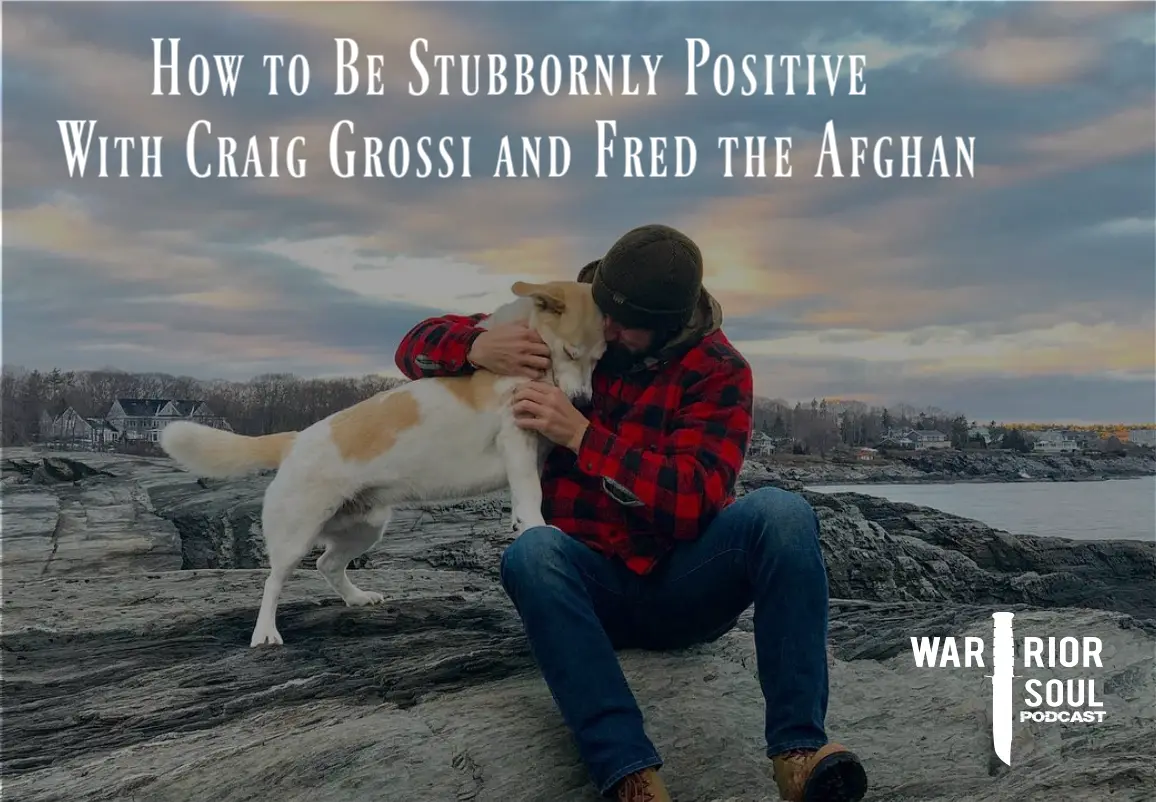
Craig and Fred: How to Be Stubbornly Positive
Hosted by Chris Albert
The Warrior Soul Podcast
As a podcast host, I get to hear a lot of peoples’ stories. Within each story there’s someone who faced adversity, overcame it, and came out the other end a better, stronger, and more capable person.
Craig Grossi’s story is no different. As a US Marine serving in one of the most dangerous districts in Afghanistan, Craig faced both horror and loss.
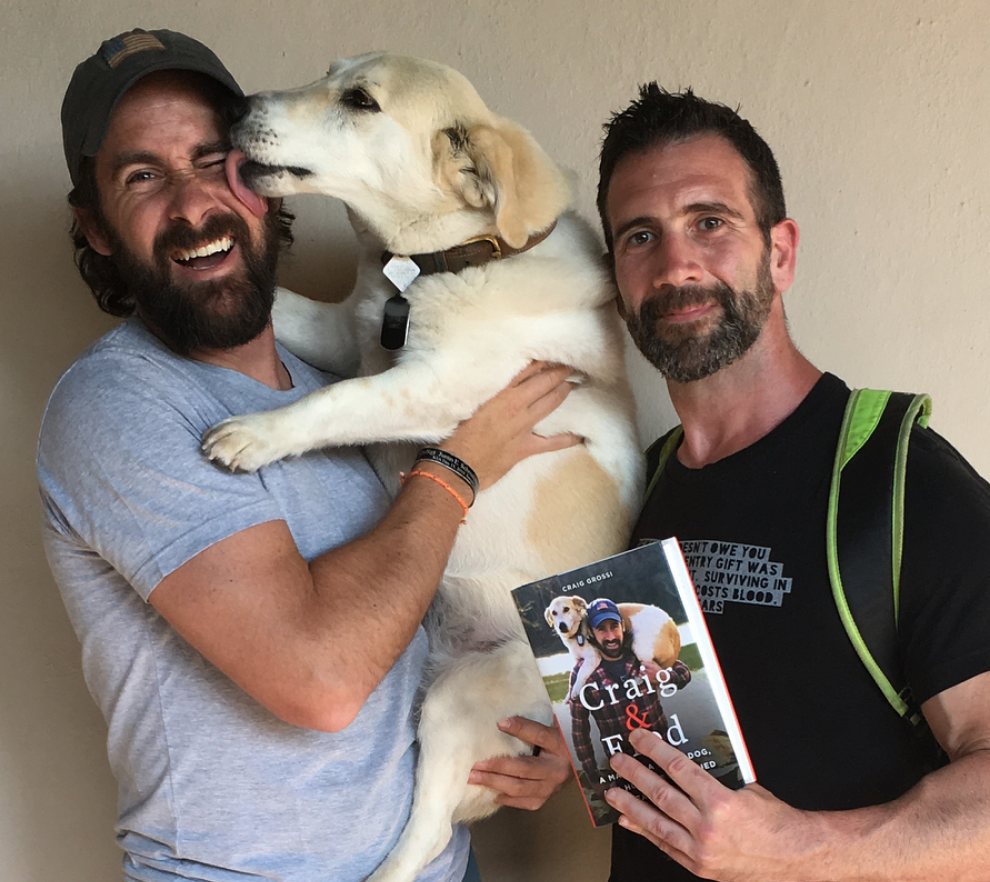
But amidst the danger and the terror, Craig also found joy. Last year, we brought him on to discuss his book Craig and Fred. Fred is a little white dog that Craig found in that combat zone. His book is the story of how Craig saved Fred and brought him back to the US, and how Fred eventually saved Craig from the darkness he experienced after his service.
Since we first spoke to Craig, he and Fred have been all over the place, traveling across the country to spread their message of stubborn positivity. They’ve also been working to help veterans and other dogs by raising money for charities.
This is, in my opinion, one of the great stories of our time, and I wanted to revisit Craig and Fred so that they could spread their message of stubborn positivity to our audience for the holidays.
Transcript
Machine-generated from the episode audio and lightly edited — may contain errors.
Chris Albert (link to this point)
This is Chris Albert, and I'm here to remind you of one thing. Someday, you're going to die. Now that's not some morbid statement or scary idea. It's solid fact. Your time here on this earth is limited.
And we need to be reminded of this as much as possible for one simple reason, to live your best life while you can. This is the Warrior Soul Podcast.
What's going on everybody? I hope everybody out there is enjoying the holiday season, and I just wanted to take this opportunity to release a really special episode. This is an interview with my good friend, Craig Grossi, and his dog, Fred the Afghan. Now Craig is the author of a book called Craig and Fred, and it talks about the story of how Craig met Fred the Afghan. And and Fred is a little white dog.
He's he's little, but he's long. He kinda looks like a short version of a golden retriever, if if that makes sense. You gotta see a picture of him in order to see it. Just really cute. Craig was a US Marine serving in one of the most dangerous areas of Afghanistan.
And amidst this combat zone, one day, he saw this floppy white little dog. And so he went out and he greeted him and he saw that he was all covered with bugs and ticks and all kinds of different things. So what he did was he took the dog back into the compound, which was actually way against the rules for US Marines serving abroad. And him and one of the corpsman removed all the ticks from Fred's body. And then Fred started hanging around, the whole unit start started loving him and protecting him and caring for him.
And during that time period, they they grew really attached. And you've got to read the book. It's one of my favorite books that I've ever read. Craig and Fred, really, really amazing story. At any rate, since the book got released, Craig, Fred, and Nora, who who's Craig's Craig's partner, they they've been traveling around the country and just kinda spreading this this story of positivity.
And I love them. I got a chance to go and meet them all in person in Pasadena this past summer. And the story is really affecting a lot of people in a positive way. And I wanted to take this opportunity to spread some positive holiday cheer for all of you during this holiday season. Before we get started, just want to say that the Warrior Soul podcast could not be possible without our good friends at F Bomb Nutrition.
Really great people who have a really great product. Now products, they make awesome macadamia nut butters, but they also make amazing cheese crisps. Really, really awesome low carb snack that you can take with you. All of their products are absolutely delicious and you can get 20% off of your first order when you go to www.dropanfbomb.com and use the code Warrior Soul at checkout. And that's it as far as everything goes, guys.
Those of you who've been to the podcast before, you know what we do here. We're all about helping The US military veteran community to live their best lives and anybody else who's willing to listen. If you get helped by one of these episodes, please do us a favor and share them out to people who can use them and go over to iTunes and write us a written review. Really helps us spread the word about the show and about this mission. With that, let's get into this conversation with Craig Grossi and Fred the Afghan.
What is going on, Craig? How you doing, man?
Craig Grossi (link to this point)
Hey. Hey, Chris. How are you, man?
Chris Albert (link to this point)
I'm doing awesome. I see you're there in New York City. You got Fred staring out the window out there, man.
Craig Grossi (link to this point)
We've been there all day. This guy, he loves his windows. He loves people watching it. It's pretty it's pretty funny. He loves coming to New York.
A couple days, he's like, alright, like, I I wanna be off the leash. So let me take me somewhere. I wanna chase squirrels and stuff, but he it's it's pretty cool. He definitely gets a an extra kinda little, like, kind of chip in his step or chip on his shoulder when we walk around here because it he just loves looking at everyone and smell there's you can't go too deep without smelling something even if it's pretty gross.
Chris Albert (link to this point)
Yeah. There's probably a lot of gross stuff on the street out there. For those of you who who might not have listened to the first episode we did with Craig and Fred, you should listen to that. This is Craig and Fred are two of the few guests we've had on for a second time, and it's because we absolutely love their story and because it's the holiday season right now, and we really wanna spread some cheer. And if there's one thing that both these guys are good at, it's spreading some cheer.
But for those who are going to go back to listen to that first episode, can you tell us a little bit about your story, like the the helicopter version of it?
Craig Grossi (link to this point)
Oh, yeah. Exactly. Yeah. No. I I found Fred in late summer twenty ten in in Helmand in an area called Sangin.
I was in
Chris Albert (link to this point)
In Afghanistan.
Craig Grossi (link to this point)
Right? In Afghanistan. I was a an Intel guy. I was a head guy attached to First Recon, Charlie company, and we we ripped in and inserted out of out of 50 threes out of the out of the helicopters, and just kinda occupied a a little house. And that first week, we were really, you know, we really kinda just stood our ground and held our position as best we could because the Taliban threw everything they had at us.
In the middle of all that, we spotted this dog, you know, and he was just so different from everything around him. We all instantly kind of fell in love with him. Over the course of about thirty days there, we all, you know, just started to, you know, realize that he was special, and he was different. And then he kind of, you know, embodied a lot of what we felt like we were over there for, you know, just the fact that he could be a dog, and he could be who he was, you know, and that that was unique was was kind of, you know, unfortunately, of a problem, you know, we wanted but we wanted to protect it, we wanted to kind of, you know, make sure that he got the life that he deserved. And I left it up, there's a big risk, you know, so I left it up to him.
And he said, if you follow me to the helicopter, you're not scared off by the noise and the dust and all the craziness that is a combat extract, you know, when you come, you know, come with us, you know, I'll see what I can do, you know, I'll try to get you the rest of way home. Sure enough, we started running towards the bird and he's right at my heel and a kit bag, duffel bag in my pocket and I pulled it out and me and my master sergeant being top Schmidt stuffed him in there and ran him up the back of the bird. And the rest of his journey home, I always say, you know, is a great story. But it's a really important story, because it really shows how people can come together from different parts of the world, different cultures, different backgrounds. And I wanted a common good around a really good, you know, reputation of something.
And in this case, it's a dog, you know, Fred getting home was no accident, you know, it could have gone wrong 100 different ways at any time. And the fact that we were able to pull it off, I think it's just, you know, it's proved to me that we're supposed to be here, we're supposed to share this story, and do it in as many ways and places as we can. So that's, that's what we love to do. We love doing it with our book, and we love doing it, and speaking events and on awesome shows like, here's Chris.
Chris Albert (link to this point)
Yeah, the the book Craig and Fred, you know, I read it last year, it was one of the best books I've read last year. And and I'm not I'm not blowing smoke here. The story literally, there are parts of the story that that brought tears to my eyes. I almost cheered at certain parts of the story, like, yelled out loud. And and my girlfriend, she felt the same way when she read the book.
And so that is definitely a book that I recommend everybody read. But I got the chance to go out to see Craig and Fred over in Pasadena this past summer, and there was crowd there, man. You guys draw an absolute crowd. What's that been like for you?
Craig Grossi (link to this point)
It's been I I have to I can't look around too much, especially in Pasadena. And before that, we were in Colorado outside of Denver. And that the room in Pasadena, we stay outside because Fred Fred likes to walk in to a room full of people. It's it's it's like, I know it's funny. I just noticed the difference when we're sitting there in the room kind of and people start coming in versus when we hang out hang around outside and then walk in.
It's like he because he walks in a room with me just like, oh, everyone's here for me. He gets this whole this whole stage presence. That's really funny. But honestly, man, it's overwhelming. I I, you know, to go all the way across the country, to a community of Pasadena, it was just beautiful, but I've never been there.
I don't know anybody there, you know, see us fill a big room in a public library like that. I, you know, I couldn't think about it too much then. But I've been thinking about it a lot ever since. And, and it's, to me, it's just, you know, more proof that we're on the right track, you know, and it's, you know, we're doing what we're supposed to do with this story. And, and what I love about that is that people are, people are taking away something from our story that they need, that I didn't necessarily anticipate, you know, like, thought people would just like to read a good story about a cool dog, you know, and about Afghanistan, learn a little bit about our veterans in military.
But people are coming up to me telling me this is a book about mental health. This is a book about overcoming adversity. This is about love, you know, like all these things. I'm like, I didn't, like, didn't sit down and write an outline, like, let's write a book about love or mental mental health. Like, that wasn't my, my goal.
So I think, you know, it's, it's another thing for us veterans to see the success that we've had with our story. And, and I hope that the rest of us can see the power of just just sharing your story. And the significance of just sharing your story, you don't have to write a book or anything, but just share it with your family and friends in as much or as little as you want. But it's powerful. It's powerful.
And it'll do a lot for you. And it'll do a lot for the people that that hear it. You never know.
Chris Albert (link to this point)
Yeah, you know, just just knowing a little bit about the story and a little bit about history. I mean, throughout history, warriors have come back, and they've been able to tell their story. They told it around a campfire. They told it, you know, at at different gatherings. They were able to kinda get that stuff out after after their experience.
And Yes. Knowing a little bit about you and, you know, you came back, went to school, went to Georgetown, we're going through through that. I also know you suffered a TBI during your service. And and, you know, I think Fred got home before you did, and you actually suffered a TBI after he'd gotten sent back. Right?
Craig Grossi (link to this point)
Well, yeah, it was actually the I brought him back to the Leatherneck, and then we had to go we had to rip right back to Sangin. So I left him with some guys that work for DHL, went back to Sangin and was there for like a week or so. And then I got hit with the rocket, and they had to had to bring me out. So that actually ended up once I got out of the TBI clinic and my head stopped ringing, I was able to get Fred and and get him the rest of way home. So that ended up being in being a blessing catching that rock.
Chris Albert (link to this point)
Yeah. And and, you know, a lot of veterans who suffer suffer from a TBI, they're they're going through hell. I mean, they're they're they're there's a lot of symptoms from the TBI that lead to depression, that lead to exacerbation of of post traumatic stress. And and kind of seeing you work through that and work through that alongside Fred, I think that's absolutely amazing.
Craig Grossi (link to this point)
Thanks, man. Yeah, it's been a journey, know, with a lot of ups and downs, just like all of them, but and it still is. But the I think the thing that I've realized through it all up to this point is is that, you know, ultimately, it it gets gets thrown around a lot, but it it's okay to not be okay.
Chris Albert (link to this point)
Mhmm.
Craig Grossi (link to this point)
And that's you could say that to someone all day long, but you, like, really need to think about that. And and as as marines and as veterans, as as military folks, like, that's that's it. That's a hard thing for us to really grasp. Because we don't like showing our weaknesses. We don't like feeling vulnerable.
But that's, that's a that's a part of being a person. And we had we had to shed that when we joined, we kind of had to minimize that. But it's, it's totally normal. And when you get out, that's, that should be kind of a part of your mental kind of preparation, you know, is to, to kind of just begin to open yourself up a little bit more, you know, regardless of your experience, or your injuries, or whatever, like, just, just think about, you know, your day to day interactions with people. And, you know, you don't need to be as on guard, you don't need to be as protective of, of your weaknesses, you can open up, you know, and that's one of the biggest ways that, that Fred has kind of shown me that is because walking him around DC when I would, when I first got out, I worked for the government, and I was trying to do government thing.
And hated it. It was killing me. And that's probably when some of my symptoms were at their worst. And I was really frustrated, you know, just with the bureaucracy and the emails and all that crap. And when I come home from work, and Fred and I would hit the streets, we'd go for a long run or a long walk to a dog park or something.
And at first, people would ask, you know, they're always asking me what kind of dog? What kind of dog is that? What kind of dog is that? Because he's so handsome. And at first, I'd like, oh, you know, he's just a mutt.
He's a, you know, I make up a breed. He's a he's a pocket wolf or, you know, an Afghan foxhound or, know, whatever. People kind of like, Oh, I've heard of those, know, little by little, I started to like, you know what, this is a cool story. I'm gonna, I'm gonna tell this random person at the dog park about Fred and where they came from, you know, and I, and the more I started to open up to most total strangers at the dog park, or around bars, or wherever we were, the more I realized that I enjoyed telling the story, and that it also kind of, it justified a lot of the really seemingly almost kind of pointless things about the war, that, you know, you really had a lot of us have a hard time when we come home with the fact that, you know, what was all that for? You know, what was the point of all that?
You know, and that's, that's a, that's a tough thing to deal with, especially when you've lost friends. And I think, if you're standing on US soil, and you have the ability to, to share the story of your experience, then that's, that's all you need. That's what it was for. You went through it. So you can tell if you survived it, so you could tell the tale.
And that's, it doesn't need to be any bigger than that. You know, and that's, that's what Fred has shown me through our story, you know, just that, that little bit of sharing can go a long way. And it makes it made my experiences, my TBI, my, you know, all the all the stuff that we went through when I lost my friend Justin, and when we lost Sean, you know, it made it more real. Think we I was good about kind of putting it in the back seat. The more time goes by, the better I'll feel, you know, and it that just wasn't the case.
Doesn't work that way. It's not, it's not like a, you know, it's not like a bad date, you know, that you just forget about eventually, you know, it's like, it's more it sticks to your head a lot more than that. And the more time you push it down, the more it's going to come back and the more it comes back, the uglier it's going to get. So it's, I think, you know, I'll never claim to be an authority on, dealing with trauma or anything like that. But this is what's worked for me.
And to be able to go to Pasadena, and to be able to go all over the country and fill rooms and hear from people, from veterans from different eras, too, from the Vietnam era. A lot of Vietnam veterans are coming up to me at these events, too. Like, man, thank you. Thank you for your honesty, and thank you for your story. I'm like, are you kidding me?
Like, you're you're in the jungles, you know? Like, this is I don't wanna hear that from you. Like, you're you're a stud. You know? Like, this is insane.
Could have never anticipated that those guys would would would take away anything from our story.
Chris Albert (link to this point)
Yeah. That's that's gotta be so deep to to hear from guys like that. I are you guys are getting a lot of letters. Right? Like, from all over the place?
Craig Grossi (link to this point)
There's and one of the biggest, most recent things was this town in Wisconsin, called Hillsboro. It's a little dairy town in Wisconsin, really beautiful part of the state. And we booked a speaking event there at two two schools and the VA hospital. And we got on the phone with the with the lady, Jackie, who was organizing it. She said, I want you to know, like the whole town has read your book.
Like, this has been our community read for the last year. And I was like, okay, that's nice. You know, maybe her book club read the book and a couple of their families, you know, when I get there and our posters plastered all over the little town, you know, the book cover, you know, and like, it was like, they had like a countdown to when we were coming. And we get there, they had a lot, they had a lot, had this beautiful brewery right downtown, and they make their own food there, and like their own beer. They had a big lunch and they and come to find out, in the days prior to our arrival, they had had all their communities veterans from regardless of the era, coming to their schools, to their elementary schools and their high schools, and they were spending eggs eating lunch with the kids, and hanging out with the kids in the days leading up to our visit, and engaging, you know, and like asking having the kids ask them questions about their service.
And so we get there, and it's like, all this is kind of already taking place. And they have a big after my first school went to lunch at this brewery, and I had a big, you know, lunch for all the all the town's veterans. And I was, like, blown away that our story, this little, this little dog, you know, had become like the catalyst for all of this engagement, because people were coming up to me like, I never told even my wife some of the stuff that I told these kids at the school. You know, and like, and Jackie, the organizer was like, grew up, that's my, that's my mailman. Like, that's my neighbor.
I'd known them my whole life. I didn't even know they were in Vietnam.
Chris Albert (link to this point)
Wow.
Craig Grossi (link to this point)
You know, and, you know, now I walk into school, you know, one of the classrooms, he's talking to the kids about, you know, patrolling through the jungle, know, and all that and what the what that was like, and like, that's, that's insane. That's insane. And, and that, that particular visit was an example of a really exceptional town. And especially an exceptional person, this lady, Jackie's unreal. She did so much work.
And it all started actually with her brother, Tony, who's a two nine guy. A grunt from two nine, who was in Sangin and in Marja, around the same times as me, but he read the book, and pass it off to his sister. And so that's, that's one of the best examples. You know, aside going, going all the way to the West Coast and Pasadena and seeing a room full of people and then going to this little town, you know, that really, you know, it's, it's a community kind of thing. And I think that's what was missing for a long time.
Especially during the Vietnam era, because when those guys came home, like they, you know, they didn't want to tell anybody about what they because they didn't want to get spin on, they didn't know how people would react. You know, and I think the fact that our book can can bring a little bit of peace of mind, a little bit of peace to some of those guys and their experiences like that's, that's very humbling.
Chris Albert (link to this point)
That's absolutely amazing. You know, you mentioned that idea of a small town and exceptional town. You know, one of the things I think because you and I come from similar geographic areas, we're from the East Coast. We were raised around kind of urban urban ish areas. And I think that when when East Coast people get to travel around the rest of the country and see what the way people do things in in other places, it's it it like and not to say anything bad about the East Coast because I I love where I come from, but it's just this this sense of community is so different when you go across the country and you get to travel and you get to speak to people, and you see the things that are so important to them, and that bond them together, you know?
Craig Grossi (link to this point)
Absolutely. I and and it's it's like I love coming to New York because it's like, I feel like a total outsider in the in the best way. I feel like I'm watching a show. Like, you walk around here, it's it's nuts. Like, people people it's it's a really interesting way to live, and I I didn't used to see it that way Because I I lived in DC for a long time, you know, and it's kind of a similar kind of vibe where people have like a little bubble around them, and it's not like no one's really concerned about each other's welfare.
And and that's what I love about just a side note. That's what I love about walking around New York with Fred. Because Fred breaks that bubble down immediately. Like I was just telling you before the show, we walked I walked him across the street, and there's this traffic cop, like yelling at people and like smacking cabs on the roof, you know, trying to get them through this intersection. Fred comes prancing through the through the intersection and just is like looking at her, you know, with his big eyes, and she's just like, melts instantly.
He's like, hey, sweetie, good morning, you know, like talking to him. And he's talking back. And it's so, so funny about how quickly those walls can come down. But when you go to a town like Hillsboro, or when you go to, you know, a different community that's not, you know, just so overpopulated, like so many of our cities on the East Coast, you get this really, you know, good sense of community. And what I like about it, and what I love about where we live in Maine, and just Maine as a state, is accountability.
It's like, you know, the people in Maine, if they say they're going to do it, it's not just Maine, but that's what was really drawn us there. But people in these communities like that, if they say they're going to do something, if they say they're going to, you know, meet you for coffee, or shoot you an email, or, you know, or anything like that, you better believe that's going to happen. You know, and I think, especially in DC, I lived there for a long time. And the thing that, that kind of drove me away the most was the insincereness. Like, just people would tell you whatever they thought you wanted to hear.
And veterans get a lot of lip service there, you know, you, you go to like a job function or, you know, you know, the different, you know, all the contractors have booths, you know, and you go and talk to, you know, different people who say they're hiring and you get a thousand business cards and maybe one follow-up, you know, and I got you double dog. Okay, okay, you're an Intel guy, you know, I'll take care of you. I'll get you to know this and that. And it's just, it doesn't go anywhere. Least that was, that was my experience.
And the first time going up to Maine and, and doing, doing a show in Maine, somebody say, Oh, I'm, you know, I'm gonna shoot you an email, because we have a hockey club that meets every week, you know, and like, within an hour, that's what happened, you know, it was just really, really cool to see.
Chris Albert (link to this point)
Yeah, that's one one other thing I noticed about DC too, when I was there, because I did some internships and some jobs down there for a while. Every time you go out and you start a conversation, it's what do you do? Who do you work for? What what can you do for me? And and that that just again, DC people, I'm not I'm not talking crap about you.
I'm just saying that that sometimes for outsiders going there, it seems like you're overly concerned with what occupation the person you're talking to does.
Craig Grossi (link to this point)
Yeah. It it it's it's frustrating. And I I found the only reason I was able to live there as long as I did is I found the one street, the one neighborhood that kinda wasn't like that. It's become that now it's this area where the I read about it in my book. I the Pug.
My favorite bar is called the Pug. If you walk in there talking about, you know, what's what what senator you work for, what agency you work for, like, they're gonna laugh you out of the place. One. No one cares.
Chris Albert (link to this point)
That's that's around Georgetown. Right?
Craig Grossi (link to this point)
No. That that's for other side of town. Okay. North Northeast Side of town. It's a bad neighborhood for a long time, unfortunately, but it's it's coming around.
And Georgetown has some decent pockets too. And it's I think the thing with DC in a lot of big cities is people kind of move there for a purpose. Right. They move it for work. They don't move there.
You know, like, you don't move to New York, because the the the real estate is still great. You know, like, you're gonna get this sweet, huge apartment. Like, it's you move there because you wanna pay your dues, you wanna work a job. So people even when they're off, even when they're, you know, interacting socially, that's they can't put that switch and and, you know, and turn their turn their work brains off. I think that's really important, you know, and and that's what a lot of a lot of the different towns and, you know, in different parts of the of the country that are more rural, you know, that's what they have going for.
Because you you don't wanna walk in a in a restaurant and meet a friend for for work and just talk about work all day. You know, like, wanna talk about, you know, what you guys are gonna do that weekend or, you know, how their family is, you know, and and it's just a lot more to talk about.
Chris Albert (link to this point)
That's awesome. Now, you are you working on another book right now? Are you thinking about getting one out there?
Craig Grossi (link to this point)
Yeah. Actually, that's more of we came to New York for a gala. Actually, the hotel we're staying in is right next to a big the animal medical center. It's this big hospital. That's been around for like one hundred and twenty years.
It's an amazing organization in New York. And they honored Fred as their top dog for the year at this big gala. It was pretty, pretty amazing. But while we're here, we decided to meet with, my meet agent and this lady named Kelly who I collaborate with, and we kind of flush ideas out with. And she helped me a lot with Craig and Fred.
The next book is kind of the priority right now. Want to get going on that. And I'm excited about it because it's a lot has a lot to do with the meaningful connections that you make when you live in a community. And it's just happened to happen to be me, for me, and I've been going up and spending time in the Maine State Prison, which is Shawshank, which is that's what stood as Shawshank for like, like from eighteen eighty something to 2000. It's one of the oldest operating prisons until 2000. And now it's a modern facility and the warden, is an incredible guy. He's an army veteran, Battle of Fallujah. And he took over, I think, a year or two ago, as the warden, and he realized that there are a lot of veterans in the prison.
And so he created, he's created a lot of really awesome programs. But one of them is this, he created a cell block, a whole pod, they call them pods. But he created a pod that's just for veterans, just for people who served. And if they're not good enough behavior, they can get into this, this pod. And when you walk in there, I worked in prisons my first four years, I worked in the brig my first four years in Downtown Guantanamo Bay and in Charleston, South Carolina.
We walk in this, this pod for veterans. It's like, it's almost like, I don't know, it just feels more like a community center. It kind of has like this whole different vibe that you wouldn't expect in a state penitentiary. There's murals on the wall of all the different branches, and there's plants, and there's dogs. There's dogs around because that's one of the other things that they do is it's about us.
Right now, they have about four dogs from America's VetDogs. And they trade they happen for the first eighteen months of their lives. And they're training them to be service dogs. And then they hand them off, and they get their specialty training for whatever disability they're going to be for. And I've been going up there and just first it was just because they read the book, and they wanted me to come and say hi, break bread.
But there's something there, you know, there's, there's, there's, their stories are, are really interesting and sad in a lot of ways, but I want to I want to share more about what these guys are doing, you know, because they don't have to, they don't have to do that, you know, they don't have to try and get in this veterans pod. They don't have to, they don't get really get anything out of working with these dogs, other than they get to work with the dog, but it's a lot of work. It's not like they just play with a puppy all day, like they have to train them. And it's, you know, it takes a lot of patience and discipline to do that. You know, and I think it's, it's the connection to just serving again, you know, that they that they had when they were in the military, you know, and they, despite, you know, the things that led them into prison, they want to give back in some way, you know, and so that's that's kind of what I'm excited about about working on this exploring those stories.
Chris Albert (link to this point)
Well, I think the thing is, you know, a lot of us think that if we had tons of free time, we'd be okay. Right? That if we if we we we had a lot of different types of free time, we'd we'd be able to do what we wanted and everything like that. The problem is that our brains don't really work like that. We're meant to be part of a community.
We're meant to serve. We're meant to to contribute to a group. And if we're not doing that, the the best analogy I've ever heard is actually a dog analogy, and that's with an Australian Shepherd. Right? Australian Shepherds are amazing dogs.
They're beautiful. They they're extremely smart. But if you don't give them anything to do, if you don't satisfy that natural herding instinct, the dog goes crazy, and it starts ripping up the house, and it starts digging holes. And that's what humans do too. If we don't have our minds occupied with something, if we're not working on something, then then we start digging holes, and we can dig ourselves into a hole.
Right?
Craig Grossi (link to this point)
Yeah. That's a great that's a great analogy. You're right. Yeah. I know.
Yeah. I mean, how many people say it all the time? Like, oh, if I didn't have this job, if I didn't work so much, I I could get everything done if I could just and then when you get time off, you just, like, it's crash, you know, because you don't you don't you can't function without that that kind of structure. Yeah. That's that's really I like that analogy a lot.
Gotta keep that in mind.
Chris Albert (link to this point)
Yeah.
Craig Grossi (link to this point)
And and and for these for these guys, it's it's cool to to walk in there and really quickly, like, sit down with, you know, five or six of them, and you start hearing stories about their deployments, stories about boot camp, you know, all the classic kind of veteran talk, you know, and in a couple of minutes, you kind of forget that you're in a in a prison, you know, it's it to me, it's a it's a good illustration of the strength of of service, you know, the bond that we all share, you know, because we put that uniform on, we sign up that line. You know, like, we always will always have that commonality regardless of, of our circumstances, you know, and another thing that really makes me think about is all the all the times that I could have ended up in down that road, you know, just one, you know, one bad day really could could lead you down that slippery slope, you know, or just makes me if nothing else makes me really grateful that I came home to a community that was pretty intact in terms of like, you know, I came back to Fairfax, Virginia, which is, you know, a very safe, very, you know, easy place to kind of live.
And my dad still had the house. So I could kind of be with him and figure out my next move. A lot of these guys got, you know, they served, and then they came home back to their town. And the town is overrun with drugs, and crime. And there are no jobs.
And, you know, it's, I'm not making excuses for anybody. But when you think about taking up somebody who served and was in for, you know, four years or more, and got used to that environment, and then they come home and can't find a job, and they have all this energy and all this potential, what where are they going to go? Are they going to what kind of hole are they going to dig for themselves? You know, it's, you know, it's really kind of heartbreaking to see that. And then, but in terms of personal accountability, I have to really think about myself and that man like that, that could have very easily been any one of us.
And it definitely could have easily been me in terms of just not dealing with, with things the right way, the mistakes that I made. If I hadn't had a good, you know, community around me a good cushion, you know, it could have gone wrong.
Chris Albert (link to this point)
Yeah, I think a lot of guys, they end up, you know, their friends are saving them a seat at the bar, Right? The the same bar stool they would have been on it had they never joined. And, you know, I found myself in that situation, you know, when I got back. I was I I was basically just drinking my life away and parting my life away. And and for other people, like, it might not be like that.
It might be, you know, they're they're they're getting into other bad stuff. But I think it's important you find something, something to keep you going, something to keep that that fire alive, something to keep that mind going because otherwise it's it's just gonna go to crap and it sucks. Yeah.
Craig Grossi (link to this point)
Yeah. It does. It's it's yeah. So that's, you know, I'm hoping to to shed some light in everything, gain some perspective for for everybody, you know, about the the opportunities that we have, you know, and if you served, I think I I think one of the things that I I struggled with was my confidence. And because I didn't one of the things that I didn't have was I didn't have a lot of veterans around me.
I moved back when I moved back to DC, I I was surrounded by my friends that I know my whole life and they're they're fantastic. They're like some of my my family in a lot of ways. But most of them hadn't served in the military. In fact, none of them had served. And so it was like, kind of easy for me to kind of forget, you know, what I was capable of.
And I think if you forget that, if you forget, just even if you just went through Parris Island or went through boot camp, you did some crazy stuff. Like you were up all night, pushed yourself and you accomplished a lot in a short amount of time. And if we can remind ourselves, you know, of those times or those harder times when we did great things, then we can find that that energy and that confidence in the civilian world. And we could bring that into the civilian world and into our professional and personal lives, know, and it's just it just takes a little bit to kind of remind ourselves of that. And if nothing else is just talking to another another veteran or just or even I'm I'm reading a a book, Nate Fick's book right now, One Bullet Away, which is a fantastic book about you know, he was a a First Recon officer and led the charge into into Iraq in in o three.
But it's like giving me a whole new, like, burst of energy, you know, just reading about, you know, his his experiences through training and and, you know, becoming an officer. And I'm like, okay. Yeah. Like, we I did some of that stuff. Like, I can know, so how hard is it for me to get up a little earlier and go for a run, you know, or how hard like, what's stopping me from, you know, from writing another book or from exploring, you know, other options, you know, or other avenues?
Like, what's my excuse? You know, like, back in the day, I, you know, I would have done six miles before breakfast, you know, like, is, you know, I can get up and answer some emails, you know, like, it's just a reminder, you know, of what we're capable of.
Chris Albert (link to this point)
Absolutely. I think, you know, it's and that's something I got I have to do. I have to constantly try to do that. I have to constantly try to to push myself physically. I have to constantly try to find something that's going to push myself mentally, whether it's a new project, whether it's but I and that just back to that analogy again, if it's not focused, if that energy isn't focused, you end up running all over the place trying to figure it out.
And and I think what's cool about you is that you found something to really focus on here. You know? And and I, yeah, I was asking myself this question before we got on. You know? What would lead somebody to write a book?
Right? What would lead because a book is is it's a torturous process. Right? Like, you you've got to sit down, you've got to sort through your thoughts, you got to type it all out. When it comes out, it's probably first draft might be a mess.
You got to go back, and that could take a long time. What what was really driving you at that point? When when did you say, alright, I am going to do this. This is going to to get out there and print, and I'm gonna I'm not gonna stop until it's out there.
Craig Grossi (link to this point)
Yeah. It's that's a great question. And it it is like a kind of a exhausting process. I I guess it's one of those things that I think about it sometimes like like running. Like, I've been I I love to run.
And I I went for a run yesterday, and I was like, I'll do a quick three, and I'll come back. And I ended up doing six because I went running down this down the river here in in New York. It was like, oh, okay. What's that? I gotta see that.
You know? And and, like, there's a bridge that people I saw people walking over this little pedestrian bridges to an island. I was like, oh, that's cool. I gotta check that out. You know, and it's like, so the more I ran, the more I saw, and the more I realized I wanted to see.
And when you start to write, especially about your own experiences, the more it's a painstaking process, but it's a detailed process. And if you lose a lot of the details in your own head, when you just try to through your own memories, without, you know, without writing them down, but when you write them down, you remember how cold it was that day, you know, what you did the day before something happened, who was there, you know, who wasn't there, you know, you remember all these details. And the therapy of it, I guess, is in that too, because you see the purpose, you see where things went right, and where things went wrong. And that's, you know, a lot of times, especially when something good happens, we're really good about just being like, Oh, congrats, you know, like, that's great, you know, and we move on. But if you want to really, you know, do a good thing, justice and accomplishment got justice, you need to kind of reverse engineer it, you know, and kind of explore, you know, how you got there, you know, because as when something bad happens, we're very good about that.
We're very good about, you know, who's who, you know, didn't do their job, who went wrong, who's to blame, you know, we demand kind of this accountability. But I think we're, we're not, you know, we're not doing everything justice, if we if we don't explore the same with the same kind of commitment, you know, the good things. And I think with writing, that's, you know, that's, that's what it is. That's, it's kind of expanding our experiences, and seeing the significance in them. And it just, you just chip away at it.
It's you know, it, more you, the more I write, the more I see, you know, it's, it's bigger than me. And the success of Craig and Fred of our of my first book, you know, is because of other people, it's because of people who have read it, and have taken away something and have made it, they've made it bigger than than I could have ever imagined, you know. And so I just want to continue to put stuff out there that that people can can do that with, that people can kind of grab on to and, you know, and and use it for themselves. That really motivates me.
Chris Albert (link to this point)
Right. And and and that's the thing. I think, you know, a lot of people think that when they're writing a book, it's about them. Right? Or when they're doing something, it's about them.
I think one of the reasons why you're the perfect steward of this story, I think that that that's maybe the proper term, this this steward of this whole story, is that you're actually a really humble guy and that you see how big this is in the big picture as far as how the story can help other people.
Craig Grossi (link to this point)
Right. Oh, absolutely. Yeah. No. I I the hardest thing you're more humble than me.
Chris Albert (link to this point)
No. No. No, man. We could do that all day, man.
Craig Grossi (link to this point)
Yeah. No. It it's I I love I love friends, and I love the people I served with. And I just, like, I'm so grateful to look around a room and see people that have come into my life. And I want I wanna to share them. I wanna share, you know, their influence on on me. You know what mean?
So, yeah, it it it was it is always hard for me to write about about myself because I don't want anyone to ever think for a second that I'm, I'm like, you know, beating my chest or that I am very, you know, proud of, of myself, you know, I am in some ways, but it's not. I don't know, it's tricky. I you know, I'm not, you know, I don't see myself as this great marine, you know, I served with some really great marines. And if anything, you know, I'm just, I'm just doing, like you said, I'm a steward, you know, and I am just doing my duty by sharing these stories. It's, I think I can't I was like, I gotta look it up.
I gotta look up the speech, but it was by a it was by a Civil War veteran. And I was thrown around at a writing clinic I went to in the early days of my, my writing by the Veterans Writing Project, which is a great nonprofit that does writing clinics for vets. But essentially, the guy was like, just like he was shot to bits. He's like, missing a bunch of digits and stuff. And he was like, you know, the essential message of his speech was, it's our duty, you know, all of us that he was talking to a bunch of other Civil War veterans, and he's like, it's our duty now to tell the tale.
Like, if you're still here, if your heart is still beating in your chest, then, you know, tell the stories of those who aren't, you know, and keep them alive through through your life. And that's, you know, that was a big motivator for me. With Craig and Fred, and with, you know, continuing to write and the only way that I was really able to write about myself, was I actually, in my head, I wrote what I might have looked like, or what I thought I looked like to my friends to Justin, specifically, my friend who was killed. You know, just about like, you know, that I kind of saw myself through his eyes, you know, that was that made it a little easier for me to write about, about what I did and my part and all of it. You know, because it's it's also, think it just has a lot to do with with being a marine and, you know, being told constantly that, you know, your your mom was wrong, you're not special, you know, and that, you know, we're we're not supposed to, to really dwell on any of, you know, those achievements that, you know, that we make.
We're supposed to, you know, look look to the Iwo Jima statue, like, those are the those are the guys you're chasing, you know, or Chesty Puller, there's you always going to be somebody that was that was, you know, bigger, better and harder than us. And I think that's great. I think that's, that's something that, that kind of carries over into the civilian world. But I was thinking about this analogy that about that helps kind of break down how I felt when I got out. It's like when you, if you're a sports person, like if you play, anytime you play, like I'm a hockey player and anytime my team, we're really good team.
Everybody does their, does their job well, we're sharp and ready to rock like an A level team. When you go out and you play a B level team, Sometimes what happens is you end up playing down to that level. You end up playing slower and moving the puck slower and not talking, and you end up kind of getting sucked into this crappier version of what you were supposed to be. And I think that can happen. That can happen to veterans.
I think that can happen to us when we get out. And we're not surrounded all of a sudden, we're not surrounded by people who are left and right who are demanding the best of us every day. We're kind of, you know, we're surrounded by people who you kind of just get by, you know, and they're okay with that. There's nothing wrong with that. But that's not us.
You know, that's not that's not what we should be about. We should be about achieving, you know, the maximum amount of potential. That's, know, that's, that's what you believe in. And I think that that definitely happened to me, I definitely kind of, at one point was just looking, I just want to get a job that, you know, I get a pay bump every year, and I can get by, you know, and like that's, I kind of fell into that for a second. But I was really unhappy.
And I think deep down, I was like, what are you doing? This isn't you, you want more, you want more, like you need to be striving for more, you're here for a reason. You need to find it, you know, and I think there's nothing against anybody that that is just, you know, wants a good steady job. And that's the hope nobody thinks that that's what I'm, you know, saying you shouldn't, you know, settle, you know, for that. But you should always find something that makes you a little uncomfortable, even if it's just in your personal life, like, know, writing or exploring art or exploring a new story or a new book or making a a new connection with somebody like There's just something that's in us that that won't be satisfied unless we're pushing ourselves in some way.
I guess is what I'm trying to say.
Chris Albert (link to this point)
Right, right. I think that's, that's so important. And no matter what you're doing, it and, you know, this is the other thing. It can happen even if you have, like, a full time career. There there could be something that you're doing with your life that's pushing you a little bit more.
Right? There could be something that you're doing with your life that that is going to make you think outside of the box, and that's going to to push your comfort zone a little bit. Because we have we have comfort zones all around us. We have comfort zones in what we're doing in our professional lives. We have comfort zones in our personal lives, how much we're gonna trust somebody.
Are we gonna let somebody in? Are we going to work on our relationship? Right? Because there's a lot of trust involved in in having a relationship. There's a lot of trust involved in in letting somebody into your personal life and and, you know, not not, you know, in treating them well and and all of these different things.
So we get I think we all gotta figure out how we're gonna push our own boundaries as to, you know, becoming better and stronger people.
Craig Grossi (link to this point)
Yeah. Yeah. Absolutely. Yeah. And I relationships, that's a that's a big one.
Chris Albert (link to this point)
Mhmm.
Craig Grossi (link to this point)
And that that goes back to what we were talking about before about and it's like, oh, we're we're kind of contradicting ourselves in some ways because we're like, oh, remember who you were in the marines or the military? Remember, you know, all the things that made you achieve and strive? But also, like, chill a little bit, and relax and let people in. And so I guess it is this, it is a, there is a balance and there is this, what do you keep? And what do you kind of let go of, you know, in terms of, and I think, with relationships, it's a different approach.
You don't need to treat everybody like, you know, like they're plotting against you or that or like they're one of your troops, you know, or that, you know, they're one of your of your co workers, you can let people in, you can share, you know, your feelings, you can share your fears, and you know, your vulnerabilities, that will make you stronger, and that will make your relationship stronger. You know, and I think, yeah, that's, that's the part that needs to come down a little bit. But if anything, the the accountability and the and the energy and the the idea of of challenging yourself and being uncomfortable almost needs to kinda get get dialed up a little bit because it's really easy to to to play down to that B team and just kind of just get by. Yeah.
Chris Albert (link to this point)
Absolutely. Absolutely. You guys you so where where are you guys headed next after New York? Are you going back up to Maine for the holidays? Are you going down?
Craig Grossi (link to this point)
We're well, finally, we haven't had more than two weeks off the road pretty much all year. Like, I'm gonna sit down. I'm gonna calculate the mileage. I know just in just this summer, we did over 30,000 miles. And I only know that because we got a new truck, and and I it's been seeing the odometer.
But so we're we're gonna head home tomorrow, Friday, just yeah, and just chill for the holidays, and maybe do some snowboarding and just kind of be home. And I'm going to start start cranking out the next book and really exploring, you know, those stories and those ideas and and hopefully have something have something in the works in the New Year. Yeah, it's gonna be great.
Chris Albert (link to this point)
And and you guys have some I'm looking at your T shirt right now. There's a big old picture of Fred on there. It looks awesome.
Craig Grossi (link to this point)
Yeah. Yeah. It's cool, man. Yeah. We have a bunch that we're really excited about.
Our new store, our new online store on fredtheafghan.com. We have new shirts in in ladies and and men's sizes and kids sizes. Some of them are Fred, some of them are my hairy face next to Fred. And they have a little Fred is on Instagram, I think one of the things he's best known for is his friend, we call Fred isms, his little Fred deep thoughts. And so we have one of those on the back and just about stubborn positivity.
And I didn't even see it here. Anyway, there's a wagging tail. His wagging tail on the back.
Chris Albert (link to this point)
That's awesome.
Craig Grossi (link to this point)
Yeah, it's cool. We're working on collars and leashes actually too. We're just starting those right now. And it's great because I think a lot of people, they want something that, you know, to kind of remind them of Fred every day. They he's kind of become this figure of of resilience and the power of stubborn positivity, just kind of committing, you know, your your interactions in your your life to that idea.
And so, yeah, we're we're psyched about our new online And we're raising money every month, we're going to do a different nonprofit, a different veterans or different animal rescue charity that, you know, a big portion of the proceeds will go, or the profits will go to that. Yeah, so that's, that's really exciting.
Chris Albert (link to this point)
That's awesome. We with this, and and couple more questions here just because I I wanna get this out. What do you mean when you say stubborn positivity? Because that's that's something I hear constantly. I see it on your Instagram.
I see it see see Fred talking about that all the time.
Craig Grossi (link to this point)
Right. Yeah. To me, it's and I I love talking about this, especially at schools. I I think a lot of people can adapt to it and kind of understand it. It's this idea, it all kind of started when I started when I started sharing the story, and I started to think about the story of Fred and those first moments, those first moments that I walked up to him.
And when I got close to him, I almost I almost turned around on this, you know, because I got I got about five or six feet from him, and I was like, woah, he's covered in bugs. You know, and his and his fur is all matted and dirty, you know, and I was like, oh, you can't just this dog. He clearly never been taken care of before. He's clearly never interacted with a person, you know, positively before. You can't just walk up on this guy.
But I heard just this little kind of thump, thump, thump coming from him, and looked up and he was wagging his tail. And for him to do that, when he clearly had no reason to. You know, it was a message. It was a message to me. In that moment, the message was, hey, I'm cool.
Like, come check me out, like what do you got? Know, and it created invited. It was a vulnerable thing. It was a you know, it was on his part, you know, it was more vulnerable. And it kind of goes back to what we were talking about in terms of just opening yourself up, you know, leading with your heart.
That's, that's a scary thing to do. And especially for a dog that has no reason to, it wasn't what, you know, you would have expected. And so I came a little closer, you know, our bond was was began, you know, and it's made all that that little wag of his tail has made all the difference in his life. Look at him now, he's chilling in New York, you know, we have this awesome life, you know, and he never misses a meal. You know, we're having a lot of fun all the time.
And it's when I came home, I think that message meant even more to me because when I came home, and I was working a frustrating job, and I felt like I my energy wasn't going anywhere. And I was I was drinking, was putting in the wrong places. I was drinking too much. And I had some toxic relationships. Every time I thought like, I was totally justified in being angry and being negative.
I would think about Fred. And I would think about those first moments when he had every reason to be negative and to be injured, show his teeth growl and try to give me leave alone. And so I guess what the message is, is in those moments, is that when you feel like we have every reason to be angry and negative, it's those are the most important moments that we have, you know, opportunities to wag our tail. And that's where the stubborn kind of part comes into it, because it does take it does take that same kind of, you know, idea of being stubborn, which usually isn't a good thing. But if you can apply that same energy that we put into being stubborn about things into being stubbornly positive, It's really committing yourself to be positive, and to finding things to be grateful for.
Even if it's just the fact that you woke up that morning, or that you you know, you have a job or you have, you know, anything around you have a hot cup of coffee, you can, if you start your day with gratitude, and with positivity, then everything kind of falls into place. And that's so that's kind of philosophy that I really love sharing, this idea of stubborn positivity. And I think that's what people really kind of want a reminder of that. And that's what our shirts and all of our Fred gear and our social media, like, that's what we love doing. We love giving people, you know, an example of how far, you know, stubborn positivity can take you.
You know, and that's if nothing else, that's what we love traveling, you know, for like, here's this dog, he started his life in this really harsh place, this really unpredictable and volatile environment. And his life expectancy was in the single digits, in terms of days, probably. And now he's trotting across the country, just seeing all this amazing stuff and going to all these fun places. So if nothing else, he's an example to all of us of, you know, what we're really capable of when we open ourselves up, you know, mentally, and we believe with our hearts, and we choose to wag our tails at the world.
Chris Albert (link to this point)
That's amazing. That's amazing. Can people find all all all the the Fred merch that you've got going on?
Craig Grossi (link to this point)
Yeah. It's on fredtheafghan.com. That's our website. Yeah. It's in there's just there's a little shop link down there.
And then the the book is is on out of paperback now too. So it's a more foldable foldable kind of crushable copy of it, could jam in your bag or wherever wherever you're going. And that's everywhere. The book is everywhere you can get books.
Chris Albert (link to this point)
Awesome. Awesome. And and you gotta check out their Instagram as well. One of the coolest Instagrams out there, I think that's Fred the Afghan as well. You get to see Fred come behind Fred as he's going on stage, as he's going into a into a high school gymnasium filled with kids waiting for him, all kinds of different things.
Craig Grossi (link to this point)
Yeah. It's cool, man. Yeah. We have a lot of fun out there. And I I I think one one point I was I I was chewing on this morning was I love just what General Mattis said recently.
I don't know if you saw the article. I can't remember where he was talking, but he was talking about the civilian military divide. And he kind of almost said something about stubborn positivity in my mind. Like, that's kind of what he was getting at was stop being a jerk. Like, stop. If we if we as veterans stop acting like everyone loses something, or like we're better than the rest of the population, then we can truly kind of bring our experiences and get the most out of them. Know, I'm paraphrasing and taking away my own interpretation of what he was really talking about.
But I love that guy, that guy's just a walking motivation machine. But that particular speech was what I think, what a lot of us really need to hear. You know, I think, in this, thank you for your service kind of culture, we get kind of elevated almost a little too much, you know, we feel like, you know, everybody should clap for us everywhere we go, and we should get, you know, half off, you know, mattresses or whatever, you know. And I think, you know, if we remind ourselves that we didn't, we didn't join for that stuff, we didn't join for that, you know, we joined to serve and not be served. And that we need to find our own way to serve, you know, once we take the uniform off, you know, I think that's, you know, again, kind of paraphrasing and taking my own interpretation of his words, but I really loved.
I really love that he said that, that I think that, you know, that's, that's a true, a true message that we all need to hear.
Chris Albert (link to this point)
Absolutely amazing. Craig, you know, number one, I want to wish you safe travels and and a Merry Christmas and Happy Holidays. You know, I think that this is your story is just so amazing. And I just wanna acknowledge you for for for putting it out there and raising positivity around everywhere you go. And Fred too over there.
He's he's just chilling over there, sleeping a little bit. But but seriously, guys, if you're out there listening to this, definitely check out the book Craig and Fred if you haven't already. Definitely learn more about this story. Spread it around. I think that this would make a perfect holiday gift for somebody that that book, the the Craig the the Craig and Fred gear, all that stuff would be absolutely amazing.
So with that, guys, Craig, thank you so much for coming on. And and everybody out there, thank you for listening. Have a happy holiday, and get out there and live your best lives while you can.
Craig Grossi (link to this point)
Thanks, Chris.
Host of the Warrior Soul Podcast and founder of Warrior Soul. Worldwide trainer and nutrition coach, contributing author at Testosterone Nation and Muscle and Strength.