Podcast episode
Episode 72: Echo in Ramadi with Scott Huesing: The Firsthand Story of US Marines in Iraq’s Deadliest City
Hosted by Chris Albert
The Warrior Soul Podcast
To listen on Itunes click HERE.
Scott A. Huesing is a retired USMC Infantry Major with over 24 years of service, both enlisted and as a commissioned officer. His career spanned 10 deployments and he conducted operations in over 60 countries worldwide. During his numerous deployments to Iraq, Afghanistan, and the Horn of Africa he planned, led, and conducted hundreds of combat missions under some of the most austere and challenging conditions.
As a Marine Infantry Officer in 2006 Scott had the privilege to command Echo Company, 2d Battalion, 4th Marines as part of the 15th Marine Expeditionary Unit (MEU), Special Operations Capable (SOC) while attached to 1-9 Infantry Battalion (“Manchu”), 1st Brigade Combat Team (1 BCT “Ready First”), United States Army (USA) as part of the Surge Strategy in Al Anbar Province, Iraq.
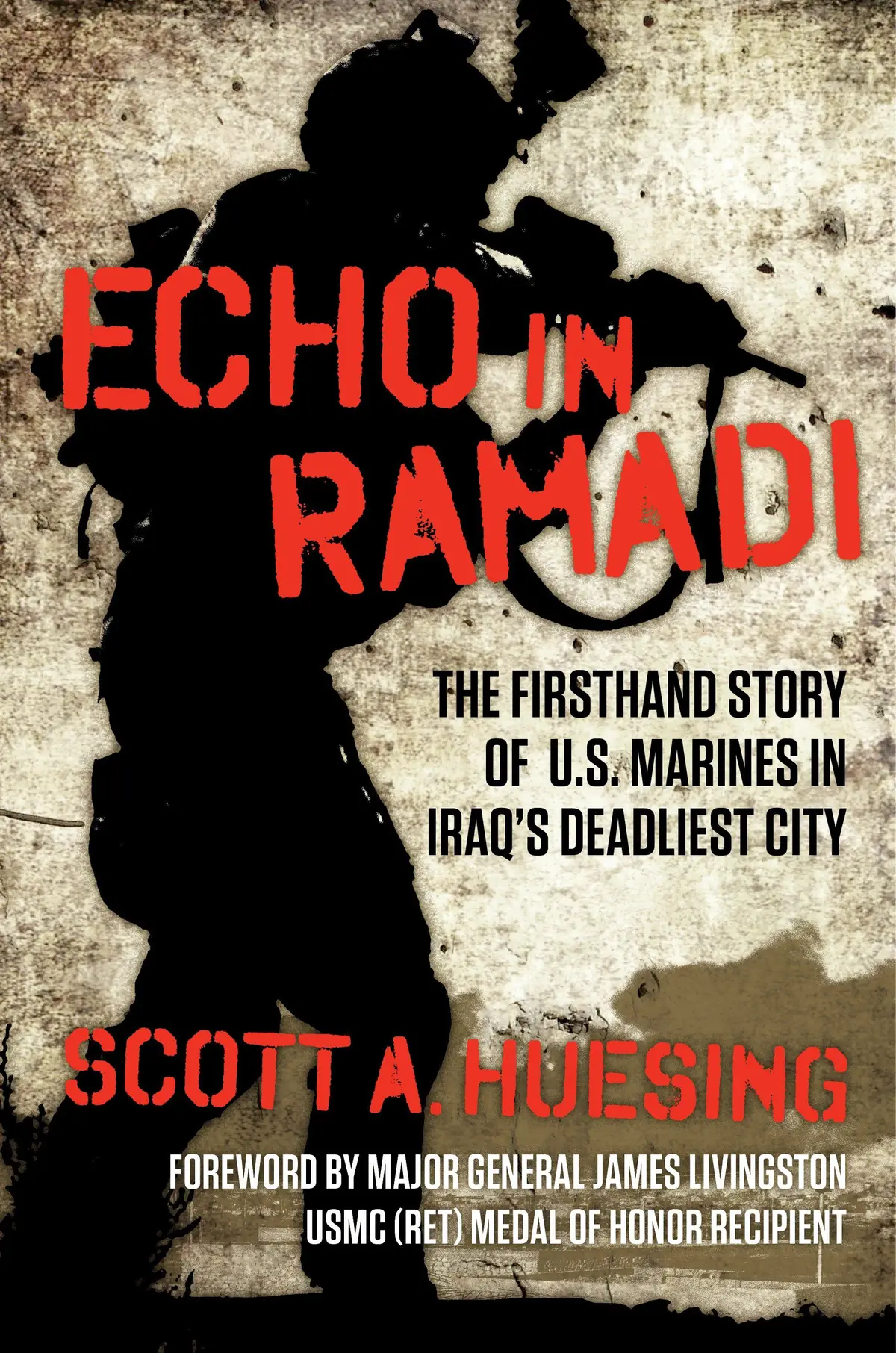
To pre-order Scott’s Book: Echo in Ramadi, click the image below:

Transcript
Machine-generated from the episode audio and lightly edited — may contain errors.
Chris Albert (link to this point)
What's going on, Warrior Soul nation? This is Chris Albert, and welcome to another episode of the Warrior Soul podcast. Today, we have the privilege of talking with Scott Huesing. Scott is a retired marine corps officer with over twenty four years of experience in the United States marine corps both as an enlisted man and as an officer. He went in in 1988, got out 2013, and so much happened in the Marine Corps during that time.
Scott's the author of a book called Echo in Ramadi, and it details his and his marines' experience in the second battle of Ramadi, which was a very, very intense battle. And there's so many lessons to be learned here, not just about leadership in battle, but also leadership in life. Scott, in his civilian life, has made the effort to get out there to help Gold Star families, to help other veterans, and to deliver an amazing message through his book. So if you're listening to this, get out a pen and paper and write down some of the gems he brings to you. Some of the things we're gonna get into are leadership, of course, battlefield leadership, but also how to build a network, how to deliver value, and to get people onto your side, how to carry yourself through the hard times and persist toward what you want to do in this life.
It was an amazing conversation. Scott is an awesome individual, and his book is out in February. So we're gonna put the preorder link up on the show notes, but we're also gonna have Scott on again as soon as this book comes out because we wanna get into the details of the lessons that this amazing book has to offer. Before we get into this conversation, I wanna give you a little note from our sponsors, F Bomb Nutrition, a great company run by great people. This company is awesome because they create amazing, portable, delicious packets of healthy fats, and they've got avocado oil, olive oil, coconut oil, MCT oil.
And if you're doing a ketogenic or a paleo diet, it's really hard to get healthy fats on the go, but they have the solution here. But what I really love are their fuel packets, and they've got these amazing nut butters. They have this awesome chocolate macadamia nut butter with sea salt. That's awesome. One of my favorites is their coconut butter with macadamia nut butter and sea salt, and that's another really delicious thing that I eat every single day.
If you're interested in checking them out, you can check them out at www.dropanfbomb.com, and Warrior Soul listeners get 20% off of their first order when they use the code Warrior Soul at checkout. So definitely go check them out. Also, I wanna let you know we're always delivering amazing content over at www.warriorsoulagoge.com. We have some awesome articles up there, some great videos, coming from the Warrior Soul Agoge YouTube channel, health, fitness, carrying yourself through this life and living your best life. So without further ado, let's get into this episode with Scott Huesing and his experience with Echo in Ramadi.
Chris Albert (link to this point)
This is Chris Albert, and I'm here to remind you of one thing. Someday, you're going to die. Now that's not some morbid statement or scary idea. It's solid fact. Your time here on this earth is limited.
We need to be reminded of this as much as possible for one simple reason, to live your best life while you can. This is the Warrior Soul Podcast.
Chris Albert (link to this point)
What is going on everybody? This is Chris Albert, and welcome to the Warrior Soul Podcast. I wanna wish everybody out there a happy holiday season. And today, I'm with Scott Huesing. Scott served for twenty four years in the United States Marine Corps, both as an enlisted man and as an officer, And he's got a new book coming out about his time with Echo Company second battalion fourth marines in 2006 with the battle of Ramadi.
And he came on here to talk about that book. It's due out in February, and we're gonna provide the links over there on Amazon. And we're gonna be talking to him about his experience in in both in his twenty four years in the Marine Corps, which which is astounding because I'd served six years. I couldn't imagine doing twenty four and but people do. And, you know, gonna be talking about his experience in the battle of Ramadi, his experience over his many deployments, and his experience since then.
What he's doing now in the civilian world, what his charity is doing, and where he wants to make an impact. So, Scott, I wanna welcome you to the podcast.
Scott Huesing (link to this point)
Hey. Thanks, Chris. It's great to be here.
Chris Albert (link to this point)
Scott, I know twenty four years is is a long time. You you got in the Marine Corps in 1989, I believe. Can you tell us a little bit about what made you decide to join the Marine Corps, and what your experience was like as an enlisted man.
Scott Huesing (link to this point)
Yeah. So I got roped into joining the Marine Corps, like, mostly by some friends, and that was back in 1988. 'eighty nine is when I went to boot camp. Some friends of mine roped me in throughout my young adult life. I of steered wayward and, you know, got in my fair share of trouble, did not have a very stellar career in school So when I was introduced to the Marine Recruiters, you know, these guys were bigger than life in their mid dress uniforms, and they seemed like a pretty big group of risk takers.
And I figured, well, this is a natural fit for me. So I enlisted. Shortly thereafter, Desert Storm kicked off. We did that. And then after my first enlistment, I very much realized the value of an education.
So I went to college, very much better in college at Illinois State and graduated three years with a very high GPA. And then decided that I wanted to give back to the Marine Corps because my success in college was really attributed to the discipline I learned in the Marines. And once I went back, got my commission as an officer, I served in the infantry for the remainder of my time with multiple units. And people ask, you know, like, well, why did you write a book about Echo in Ramadi? Was that the pinnacle of your career?
And I'd have to say, yes. Fighting with those men under those circumstances is probably the pinnacle of my career, but my transition from officer to enlisted had nothing to do with the fact other than I wanted to challenge myself at a different level and I wanted to lead. That's where I always felt my place was. And I was very fortunate to be able to be given the privilege to lead some of the best young men and women that our nation has to offer. It's just absolute privilege.
Chris Albert (link to this point)
Wow. I mean, as far as just just the length of that career, you know, serving from 1988, 1989 all the way up through 2013, how did the Marine Corps change in that time? What was what was the difference from the late eighties all the way up through the two thousands?
Scott Huesing (link to this point)
Yeah. It vastly changed. It was it's it's really cool to look back on that from so many different aspects. I mean, we could talk about that just in one show. It's, when you talk about the gear, the training, the mentality, the uniforms changed.
But there's always one constant that is is interesting. You know, there's this there's this sine wave that goes from peacetime to wartime within the Marine Corps, and I saw all of that. The, you know, the lulls in in in war from Iraq to the things occurring in the Horn Of Africa to The Middle East, again in Iraq and Afghanistan. So throughout that, there was a constant that is always within the military service and especially with the Marine Corps. And that is the discipline and the ethos that we share as Marines, which is really amazing.
I mean, it just never stops. Whether I read books about World War II or Vietnam, or I talk to Vietnam veterans, war is timeless. It's not just a cliche. But also the training component is, and what's really great is that the Marine Corps especially, which I'm familiar with mostly, but service wide, we've done such a phenomenal job adapting to the climate on the battlefield. We provide these great venues to train our aviators, to train our infantry, to meet the needs on the battlefield.
They're very adaptive and our key leaders are so attuned to this. And we've got great guys sitting at the top level now that we're fortunate to have like, you know, secretary Mattis and secretary Kelly that really understand. They really have their thumb on the pulse of what our military needs. So that has changed. Although uniforms and gear and the technology has changed, our Marines, despite what you hear sometimes on mainstream media about the larger scale programmatics that are crumbling, the Marines and sailors and soldiers have some of the best high-tech gear on the battlefield.
And it is really amazing from the bulky cumbersome gear that we used to have when I was young, when was the guy in Desert Storm to what these sleek aluminum rail fitted rifles and high speed optics that the young guys and women are carrying has just changed fast. They've really adapted to the private sector mindset in getting that type of gear. So that was kind of that's kind of a big change. Training has always been a concept.
Chris Albert (link to this point)
Yeah. It's always amazed me how how much problem solving is is such a skill that's required to to to be a Marine Corps infantryman. I mean, regardless of the gear you get, regardless of what you have at your disposal, if you're not able to apply the right tool in the right situation, and if you're not able to analyze the situation and have open eyes and keep your head on a swivel, then then, you know, you're not gonna be applying everything correctly. And and I imagine as an officer, got to see the bigger picture of that, you know, rising up from a platoon commander to to company level and and beyond.
Scott Huesing (link to this point)
Yeah. It's you know, some we were talking about this before we started the show, but some people always ask me, it's like, well, does being enlisted, did that make you a better officer? My answer is always no. It didn't make me a better officer. There's absolutely plenty of fine officers that graduate from the Naval Academy of Being enlisted since gave me a different perspective on my use of the boat.
Whether we're preparing to go to war, whether we're in war, training was always pronounced. And I always made them train as if it was the last day. And I impose that at the lowest level. And especially for my young leaders, those young lieutenants and some of the captains and junior non commissioned officers, you know, I always told them there is no such thing as combat leadership, just leadership. I don't care if you're getting shot at or blown up or you've been injured or IED or whatever the case may be.
Leaders lead in any case. And that's the key thing. Because as you experience as well, there's no mission essential training list or training standard for training for long periods of boredom, Chris. I want you to sit around and train to do nothing. And then you're ready to go.
All of its notice, when the needle pegs off in the red zone, it grew to 60. So that was a real challenge for me too. When you have this instrument of war of two fifty independent souls on the battlefield and one of the most dynamic Connecticut, which we fought in Iraq in 2006, is I could take a guy like you or a young Marine or soldier, give them a machine gun and say, I want you to, you've been trained on it, here's a box of ammunition, I want you to go from zero to 60 hate the enemy, kill with lethality. And they can do it. They can do it well.
And I've seen them execute it. But real leadership challenge is when you transition into a different type of environment on the same battlefield is to get that same Marine or soldier. You go from 60 to zero. That's the real challenge because if you have to train your soldiers and Marines to be prepared for those moments that are punctuated by long periods of boredom and then have them razor sharp when the friction starts. That's the real leadership challenge.
Being able to identify that has always been where the science meets art, I suppose.
Chris Albert (link to this point)
Yeah, and I can tell you as an enlisted Marine or former enlisted marine, you know, the the boredom is what's really hard, and and that's where your mind starts getting after you. That's where you start, you know, kinda losing yourself a little bit. It's and and I think that in a lot of ways, there's nothing more dangerous than a bunch of bored marines because it could go either way. You know, you're you're you're either gonna find something to make you less bored and get you get your ass in trouble, or you're you're you're gonna you're gonna put your head down a little bit. So I I could definitely see the the leadership challenge there.
Tell us about coming into that deployment. You know, 2006, heading over to Ramadi with that group of marines. You know, did you know what you were gonna be facing over there? Did you know what what the area was like? What did you know about Ramadi itself?
And and and were there was it a surprise when you finally landed on the ground?
Scott Huesing (link to this point)
There were no surprises other than we were employed a little bit unconventionally or non traditionally, so to speak. We absolutely were training broad rifle. We knew things were boiling over in 2006. When I took command, I graduated school early to fill the rifle companies because they needed commanders. So I drove across country from Virginia to Camp Pendleton, California, straight through, checked it in on a Wednesday, took command on a Friday.
And that next Tuesday, I was in 29 in the High Desert doing real life training scenarios to prepare our guys for war. Out of that group of Marines, I was very fortunate to have about 50 to 60 NCOs and even some of the junior Lance Corporals who had fought just 18 before in the first battle of Ramadi in 2004, where sadly our battalion, second battalion, fourth Marines amassed a casualty count that has been rivaled by very few in modern warfare. So we transitioned, we embarked the naval shipping out of San Diego, we sailed over, and once we got in the country, we were dispersed to support the surge strategy, this massive influx of troops on the battlefield. And our role was to go to these pockets of insurgent resistance. So Echo Company was deployed to one BCT, the Ready First Brigade Combat Team, and I worked directly for one hundred ninety three, call sign Manchu.
And then we kind of hopped around different units, myself and a fellow company commander, John Smith, who commanded Fox Company 2/4. We worked in that area and fought daily under some of the worst conditions. We knew what we were getting into. What we weren't expecting was the frequency and the intensity and the level of fighting that we encounter on a daily basis. And I can only say that because when I wrote my book Echo in Ramadi and I conducted over 75 interviews with my Marines and the families, my 'four Ramadi vets remarked that how vastly different it was.
Even though they lost more guys in 2004, the intensity and the frequency in which we fought in 2006 was just unlike anything they ever imagined because it wasn't a matter if we were going to get shot at, it was when and how often. I mean, we literally set our watches by the number of times we were going to get engaged in sustained fire fights on the battlefield of the body back then. So we were prepared. I can say that as a commander, you know, you train your Marines to fight, and there's nothing more lethal than a Marine with a rifle on the battlefield. But you can never really prepare them for some of the horrific things they're going to see in the wake of destruction that follows in a city like Ramadi that was just devastated by years and years of combat.
And you can never fully prepare yourself or these young Marines for losing their brothers. And one of the interesting things that I found as I wrote the book was that I was a captain with a lot of life experience. I mean, was 36 years old. Was a little older than the average bear because I'd been enlisted, I went to college, I came back in as an officer. But through writing the book, Echo in Ramadi, what I noticed as I wrote, as I described all my Marines and characters, was their ages.
And the average age was around 20, 22 years old. But I didn't see Sergeant Albert. I didn't see the 20, that's all I saw. I didn't see the 22 year old kid. All I saw was Sergeant Albert.
I didn't see Lance Corporal Albert. Those young kids, that's all they were. And I was 36. So it took years of wisdom and probably a little experience to really understand. When I was tasking these young guys to do these superhuman acts on the battlefield, it never really clicked with me until I wrote the book and how amazed I sit today at how successful they were in the battlefield and the things that I challenged them to do.
And they did it day in and day out with lethality, but also with honor because they are trained that way. And that's, again, as a Marine, you understand this, that's in our ethos is, you know, we are trained to kill the enemy, but we also do it the right way. And my guys never failed me in that regard. And I sit you know, eleven years later still equally as proud of all those guys for how they conduct themselves in that type of environment. Just really proud of all of them.
Chris Albert (link to this point)
Yeah. We you know, the the second battle of Ramadi is something we we hear about. It's in a lot of different venues now. I mean, we've seen it in movies as far as American Sniper. We we hear about it a lot on on, you know, Jocko Willink podcast, and and we hear a lot about, you know, the the intensity of the fighting and and a bit about what the place looked like.
But I can imagine that, you know, landing there and and every time you're heading out on a mission, knowing that you're gonna have contact with the enemy and knowing that there's probably gonna be a roadside bomb there and that there's probably gonna be some sort of attack that you're gonna have to deal with, I imagine that that was definitely an intense situation. I one of my questions here is this. You know, you're you're working with the Ready First Brigade and, you know, dealing with the United States Army, how how was it working alongside the army? How how was it working alongside the other the other services there?
Scott Huesing (link to this point)
Love it. Have nothing but the utmost respect and admiration for all the service components that we worked over there. Jocko, I believe, was with team five. We were kind of ships passing in the night. They were working in and around Central Ramadi with us.
So their teams were over there. They did rotation with three and five, but the task force 1-9 Infantry was commanded by Lieutenant Colonel Chuck Ferry. And man, there's never been a group of soldiers that have been more confident in their abilities. They were just true war fighters. And the way they employed us was phenomenal.
We rolled in with so many Marines, almost at one point I had over two fifty Marines in my company. And the average strength for the viewer or listener is normally around 180, 190 for a marine in my company. But I was very unpassioned at taking on guys from civil affairs group, interpreters, military working dogs, human exploitation guys, anybody who could carry a rifle, they're invited to come to the fight. I didn't want them sitting at the firm base. They wanted to get out in the action.
And if they wanted to, I brought them along. And so our company strength grew. And when we checked in with the army, we kind of looked like rock stars by our sheer numbers alone, not by what we did, but the army was only fielding about 80 to 90 soldiers per infantry company. Wow. Because length that they'd been in country, they spent nineteen months there.
Our time there seems like a drop in the bucket. Nineteen months is what these soldiers were doing over the day. But they suffered so many losses from casualties and killed in action that their numbers really dwindled. So when we rolled in as part of the surge, it was like this massive, of the commanders I worked for called us this blunt instrument of war. And we just went through that town like a wrecking ball.
And anything that kicked its head around a corner was going to run smack dab into a fire team of heavily armed Marines and soldiers and just get crushed. And that was my, pretty much my strategy when we went in there. We were always aggressive. We were always engaging the enemy and hunting the enemy. And we never let them, get the upper hand on us.
We always wanted to keep knocking them back on our heels. And we were fortunate to do that with the support of the US Army. They employed tanks. We had the largest Army tank task force in the history of modern warfare, it was in Ramadi in 'six with the Ready First, the first armored division. And when we transitioned to a separate part of town, we worked for task force 1-77 Armor, which was a Steel Tigers.
And when I checked in with the commander, he asked me, All right, we've got tanks, we've got tracks, we've got Bradleys, we've Humvees. How many do you want, Scott? And I said, None. He kind of looked at me and says, what do you mean? How are going to get around?
I said, we're light infantry. We're going to walk. I said, we're going to crawl through this part of the city down every alley, through every house and every building, and we're going to root out every insurgent scumbag that's living here, and we're going to clean this sector for you. He kind of smiled and again was impressed. I think our result proved worthy to him, we were very successful with what we did.
And again, methods were a little unconventional at times, but we had a plan, and some could call it controlled chaos, but it is a and the marines performed phenomenally. But we couldn't have done it without the army. We couldn't have done it with the support from the guys we had back at the headquarters working all the close air support, throwing strikes for us, and rocket strikes that blew all the way 40 miles from Fallujah into our area that we were operating in. It was just just a team effort, and those guys are amazing.
Chris Albert (link to this point)
Awesome. Tell me about the hardest day you had there, because I wanna I wanna get into a little bit more about, you know, the story there, but but I don't wanna go through the whole book, and I I want people to be able to buy this when it comes out. Tell tell me about your hardest day in Ramadi.
Scott Huesing (link to this point)
Well, that's hard to define. Any day that we lost a marine was a hard day, obviously. And it's difficult to imagine the type of loss that you suffer when you see when your fallen marines go down beside you. Nothing romantic about it that's portrayed in Hollywood movies. It's a gripping, life changing event that just consumed you at times.
And no matter how much you train for that, those were absolutely the hardest days, Chris. And as strong as I wanted to remain for my marines, there were times that it was tough for me to do as a commander. But that's one of the things you just can't protect your Marines from. You can give them all the training and ammunition in the world, but to really fortify their soul and their spirit and their mindset when they have to experience that, those are the toughest days. Followed closely by those days when you have to pick up the phone and call the mother of a 19 year old kid that you just lost, who ultimately your responsibility.
So that's a pretty tough day, so.
Chris Albert (link to this point)
Where did you draw your strength from during those times?
Scott Huesing (link to this point)
Oh, that's great. Know, is the thing is, despite the loss and the heartache that comes with making those types of phone calls, when I did that, I was always astounded by the parents on the other end. One of my gold star moms, Jane Libby, I vividly recall speaking to her. People can't be described as ordinary people that lose so much, but they can so much and love us so much despite their loss. It's just amazing.
And I'm listening to this woman whom I've never met on the phone, and I can hear the compassion in her voice. And it is just something that is almost indescribable in words to feel so cared for by a woman that you've never met, to feel so loved by someone you've never met when you're just telling her about the loss of her 20 year old son. And it's just something that you draw strength from. And when you hear that voice, not talking to you as a Marine or as a commander, but as any mother with any son, that's when you feel that power, strength and that spirit. Because she knows how miserable it was for us all over there, and their entire family does.
Every single phone call that I made like that reaffirmed that. And at the end of any phone call, always wanted to tell us to keep fighting it, that they were with us. It was just, I know where people come from like this. They're truly extraordinary people that raise these great warriors that are willing to fight and defend everything that we.
Chris Albert (link to this point)
I wanna know also
Scott Huesing (link to this point)
most remarkable people can answer
Chris Albert (link to this point)
I think we we cut out here for a second. Hold on one second, Scott. Okay. We're good now. Sorry.
Could you repeat what you just said? The the the bandwidth just cut out for a second.
Scott Huesing (link to this point)
Yeah. Which which part were we talking about?
Chris Albert (link to this point)
You were you were talking about being on the phone with a mother who just lost her 19, 20 year old son.
Scott Huesing (link to this point)
So to answer the question about where the strength comes from is, you know, when I had to make those phone calls to one of our Gold Star families and one in particular, Jenny Libbey, it was astounding to me to hear the love and compassion in her voice that she was talking to me, not as a Marine or as a commander, but as any mother would to any son. And that was really something that I wasn't prepared for because again, they continue to love us so much. And at the end of every phone call that I ever had to make like that, each of those family members always told us to keep fighting, to stay strong, and to take care of each other because they knew what a miserable place we were fighting in, and that our mental state and the fact that they were still supporting us despite their loss was what was going to bring more Marines home alive. And that's something that's another area where you can't train to, to regroup and get your guys recalibrated. So they understand the loss, they understand the importance of the sacrifice that the brother just made, but they know that they have to keep fighting and they have to endure.
And that's what Marines do. That's what they're really good at. And they find times on the battlefield to mourn. And then we always make sure that we have a ceremony when we get back to invite the families and memorialize appropriately to complete the healing process. But part of the reason I wrote Echo in Ramadi was to honor the sacrifices and the spirit of my Marines and their families that gave so much while we fought, and that they still continue to give so much to this day.
I'm still so inextricably connected to my Marines and especially my Gold Star families, which, and that network has grown even bigger. It's just amazing how big the network arose once you leave the military. I always thought when I was in the Marine Corps, never got any bigger than that. Never a greater fraternity than being Marine Corps. But as the guy that spent twenty four years in and now I'm out, I'm telling everybody, the organization and that network just continues to grow up.
You allow yourself to become part of it. It's really amazing.
Chris Albert (link to this point)
Wow. Tell me about some of the lessons you've learned while serving in Ramadi that you you and and maybe throughout your Marine Corps career that you still carry with you to this day. What what are some of the most important lessons that you learned that you've been able to apply in the civilian world?
Scott Huesing (link to this point)
Well, I think the discipline that you learn throughout your career as a Marine, whether you spend four years or twenty four years in the Marine Corps, Chris, that discipline is something that it's imbued in your fiber from day one. Some people that slip in, I know Jocko Willink, I love his work, his new book, The Field Manual he just put out on discipline was really spot on and he hits a nail on the head too. Where I subscribe to the notion that there is no such thing as self discipline. It's just discipline. You have to have that drive.
You have to make things happen for yourself and you have to create opportunities for yourself. And that's one of the things that's important when you talk about these young Marines who served in some of the worst conditions created by humanity, that they have to now leave the military and transition and find what makes them happy. I was lucky to do that. I worked in the private sector for a while, and then I was working so much, I realized I wanted to do something else. And that's the beauty of it.
Is in the military you think, well, I'm going to join, I'm going to do four years, I'm going do twenty years. And then you get out and you think, well, I got to do this for twenty years. No, you don't. You can quit. You can do something totally different.
You can bake pies, you can work on cars, you can write books. So there's a lot of great opportunities, but it doesn't happen itself. Cars don't fix themselves. Degrees don't appear on walls without artwork behind. Books don't write themselves.
Whatever it is that you're passionate about, I think that's based on the discipline that you'll learn throughout your military business. And that's a strong lesson that I carried with me throughout my time. I have to apply that on a daily basis, Chris, because despite the amount of experience I had in the Marine Corps and despite the life experiences I had, every day is a challenge. You know this as well, Because I loved your message too, about staying strong spiritually, staying connected, staying physically fit. Mean, all of those components, that triad in and of itself is a secret to success that is demonstrated on a daily basis and taught to young warrior soul service members that you have to continue to apply.
Because every morning I get up and my passion is writing, telling great stories about our nation's veterans and these living heroes, and there's thousands of them that should be writing and that need to be written. But also helping veterans, whether it's through my charity, through Save the Brave, or serving as the president of the 2/4 Association, or volunteering and helping my Gold Star families at events. That's what makes me happy. And if you can find that, you're a lucky person. And if you're suffering in a job and you don't like what you're doing, challenge yourself again to move on.
And that's one of the things the Marine Corps teaches you, to continually challenge yourself. But I tell people this too, through my experience, is that you need to understand that there's going to be slippery points along the road too. There's going to be areas where you lose traction and you fall. And Marines are the worst because they think they're impervious to the effects of gravity. Nothing can bring a Marine down, right?
But I'm telling you, there's going to be points in life that you'll lose traction because life's slippery and you're going to fall. Some land harder than others though. And that's what I always say. But through my experience and through my connections with other people and as I continue to grow, I think that it's allowed me not only through my writing and sharing my story in those points of weakness and those moments where I've lost traction in life. Think it's helped me grow to understand myself, become more humble, to realize your own humility in and of itself.
And then also identify those slippery points that are laying on the road ahead of you. And if you can really identify those, you can formulate a plan for success so you don't fall and learn from mistakes. So that's a long answer to kind of a short question, but mine is based on twenty four years of experience. So I can give a lot of great advice. I always say, advice is great.
Take what you like and then push the rest to the side, because that's the beauty of advice. You don't have to take it all. And even from bad advice, sometimes people learn. So I've been very fortunate, though, to get a lot of great advice. And throughout my transition, Chris, in writing Echo in Ramadi, to demonstrate the power of the Marine Corps in and of itself and this network that I keep talking about.
And it's not like five CD self help set. It's not the Church of Scientology. It's just a network of great people that want to help each other. And Bing West, James Livingston, Medal of Honor recipient, Oliver North, Jack Houghton, Dale Dye, Chris Libbey, the list is endless. All these legends of the Marine Corps that have gotten behind this book and endorsed it and staked the reputations on it.
That's the thing I always say of the Marine Corps is we don't play by the corporate business rules. You know, if the book wasn't written well, they would have probably got, I've probably gotten several phone calls and they said, Scott, hit the brakes on this. It's not right. I've been really fortunate to have the support of my Marine Corps family and everybody around me get behind the project and really allow me to tell another great story about a battle. And it's not just, it's really about the people.
You know, I like telling the stories about people and the emotion and the feeling, not events and things, because that's what you pick up a newspaper for. So I've been really blessed to be able to tell their story. It was really my privilege and honor to do that.
Chris Albert (link to this point)
No. I love it, Scott. And and, you know, very much like you said, life is a battle, and you either gain or you lose momentum. And, you know, I think a lot of the guys who who who get out, you have to understand that also a network isn't just gonna present itself to you. You know, there's marines out there, there's there's veterans out there who are willing to help you, but you have to do exactly what Scott did, which is search them out.
And and not only search them out, but you can't just go up to people and ask them for something. You've gotta provide value as well. And if you're volunteering and and and, you know, putting effort in to to help the network out, then you're gonna get good things in return. And and so it's really important for for everybody out there listening to take this from Scott's experience. He's out there.
He's helping other veterans. He's helping Gold Star families. He's writing about these experiences. He's putting the work in. And in order to to to bear fruit, you've got to plant seeds.
And if you're not doing that, you're you're you're you're gonna come up empty every single time. So if you're trying to figure out a way to move forward, get out there, start start providing some value somewhere, start helping people out, start, you know, volunteering your time, and good things can come back to you.
Scott Huesing (link to this point)
Yeah, that's a great I love planting seeds. You're lighting candles in my church right there. One of my favorite. But yeah, it's really just putting some skin in the game. And when it comes to the charity, through Save the Brave, a lot of people think it's about writing a big check.
Know, hey, we love getting big checks, don't get me wrong. But it's also about spending an hour or two of your weekend and volunteering your time and really putting some skin in the game to help these people out. And sometimes it's just listening to a veteran's story. It's something as simple as that. It's not just a bumper sticker on your car saying, we support the troops.
It takes a little bit more than that for me to know that you support the troops. It does take going that extra step, driving an hour to an event, volunteering, standing in the sun for a hot afternoon in Southern California, whatever the case may be. We've seen example after example of people that are willing to do that. And that's again, where you meet so many amazing people through this connection. And I just experienced this by being invited up to Rob Riggle Invitational, the second annual for the Semper Fi Fund, and We Are The Mighty, which is another great organization that tells veteran stories.
Shortly thereafter, I mean, just two days ago, they invited me to their Christmas party up in LA at the VFW in Hollywood. And again, you just meet so many people. In the Marine Corps, in the military, it's two degrees of separation. I guarantee you the longer me and you talk, we know somebody that knows somebody. That's the power of the network is no one in their right mind enjoys driving into LA traffic, but that's what it took for me to make the event.
And once I was there, it was phenomenal. The veterans that I reunited with, the new people that I met with, the people that are willing to support veterans in this network, just a mindblower. And that you really have to be, to do and just put make the time. And and that's what I call putting some skin in the game. And there's so many people out there that I'm proud to call all of them my friends.
Chris Albert (link to this point)
Awesome. Before we get out, we need to talk about the book a little bit more, and and I wanna know when you decided to to write. You know, when did you decide that I'm because I know writing is I I write blogs, I've I've never written a book. Well, I've written ebooks, but I know that the process can be brutal. When did you decide that that you were gonna undertake this project?
What led to it? How much time did you spend thinking about it, and how'd you get through it?
Scott Huesing (link to this point)
Well, is a long process, and the Marines continually would email me and call and ask me, Hey sir, when's the book coming out? And you have to have a lot of patience because it is a long process, especially from the onset of writing the book and saying, I need to tell this story, which started as early as 2009 when Major General Zomer sparked it in my head in The Philippines and said, You guys made such a difference in Ramadi in 'six, that's a story that needs to be told. So I started writing notes and I was still on active duty, so now, you know, it was just kind of trickled along, but it wasn't until I moved back from LA and got a ranch here in Southern California that I said, I'm going to write this book. I spent hours and hours writing, isolating my family. It was a difficult process.
They didn't understand the creative side of it to a degree. But it's the challenge that I was willing to make because I'm passionate about the story. And the Second Battle of Ramadi and the stories of my Marines is just, they're singular in nature, but that story is really emblematic of what all the soldiers of the Marines probably experienced. And Echo in Ramadi was my way to open another portal for all those people to kind of heal from that. So you spend a year of your life writing.
You lock yourself in a box or my office here and you write a book and you put your fingers on the keyboard and you write. That's how books get written. And then you rewrite and then you rewrite and then you'll come to a point you've written too much and you find an editor and the editor does great things. And sometimes it costs money out of your pocket to make it better. And then if you want to go the traditional publishing route, which I did, was very fortunate, you have to find an agent.
So then you get a lot of rejection and rejection and rejection. But you continue to put the work in, Chris, just like we were talking about. Continue to work and you don't take it personally because if you're sending your book to somebody that doesn't like war novels, the same as sending your record to somebody that punk rock music. They're a country artist agent. So expect rejection, and you just move on.
But ultimately, I found a great agent. A month later, he sold the book to a major publishing house, Regnery Publishing, who has really embraced me as a first time I'm a book author. I've written articles and stuff my entire career, but never do amazing things. They're always on deadline. The book comes out 02/20/2018.
So just about sixty days. So the final tweak to cover design, but it takes a lot of patience and, a lot of new business sense. You know this as well. It's The literary world is a whole new business and you have to be a self learner. You have to be a lifelong learner.
And people, if they expect someone just to think that their book is going to be the next greatest thing, it's not. And I'm no Bing West or Chuck Sasser that's written ten, twelve books to give other veterans a lot of advice. But I do give advice that you need to put the work in and understand too that not everything's a book. You understand this too. Sometimes it's an expose, sometimes it's a blog, sometimes it's an e book or just a short story or an article.
And don't get discouraged with it because I think everybody's story is important. And if you think your story is important, write about what you know and believe in it and tell the story well. Have your friends read it. Send it to guys like you. Have them reread it.
The Marines will never give you any false feedback. They'll tell you exactly how it is. Agents will tell you it's great like that, but Marines will tell you exactly where you're at, in the process. So I've been very fortunate to have that again with all my Marine brothers and sisters that I'm sure they're with.
Chris Albert (link to this point)
Some February 20 coming out on Amazon and in bookstores everywhere, Echo in Ramadi. We're gonna be putting a link up for the preorder on the show notes for this episode. Scott, is there anything else you want to get out there to to everybody listening before before we jump off here? And by the way, I'm definitely going to ask you to come back on once the book is out, probably late February or early March, because I definitely want to check it out, get into the story here and have you back on to talk a little bit more about it.
Scott Huesing (link to this point)
I'd love to eat. I I I I love what you're doing, Chris, and sharing great stories. If people wanna find out more about me, they can go to my website at www.echoinramadi. If they wanna learn more about donating, they go to www.savethebrave.org. And I'm just really excited to tell the story.
They can follow me on Facebook or Twitter, and we will have a tour. I'm going to be going to the East Coast first for the launch, and then I'm making my way back to the West Coast. My plan is to stay connected with the people I love, and that's doing signings at military bases, veterans hospitals, the USS Yorktown, the Hornet up in the Bay Area, and setting up events. So they're very veteran friendly and really staying connected with the people that matter the most to me. But the book is really for everybody.
It's not just another war story. It's about the people and the sacrifice and the emotion. And it's written in a way that it's not just military jargon. It's not just for the military reader. It's non fiction, but it really reads like a novel.
So if people want to find out the real unvarnished truth about what happens on the battlefield and the sacrifices of the Marines and families that support us, everybody should read this book. I think they'd be really enlightened to read the fascinating story. Can't wait to come back on the show because it's gonna be fun.
Chris Albert (link to this point)
Absolutely, Scott. And I wanna thank you for your service. I wanna thank you for choosing to to lead marines out on the battlefield, and I wanna thank you for putting the work in after your military service to help other marines, help other veterans to achieve everything that they can and help the Gold Star families who've suffered from so much loss. So thank you for for that. And to everybody out there, you know, I really want you to think about from this interview the amount of work that Scott has put in.
And and not just the 24 of service, but the fact that he didn't give up once he got out. You know, it it was just another start button. And he decided that he was gonna live a life worth living after he got out. And you don't come to that easily. You know, there's a temptation there to to really say, alright, I did what I could.
I'm done. And and, you know, I'm gonna try and just cruise through life. But if you do that, you'll find that that commitment you made to yourself a long time ago where you told yourself you were gonna make a difference because if you decided to join the military in any branch of service, you you decided you wanted to join because you wanted to be different. So so take those lessons to heart. Get out there.
Keep working. Keep putting the effort in to keep yourself in shape. Keep putting the effort in to find new passions and and new people to help. And above all, just get out there and live your best lives. Till next time, guys.
We will be back at you very soon with another great episode, and we will talk to you then.
Host of the Warrior Soul Podcast and founder of Warrior Soul. Worldwide trainer and nutrition coach, contributing author at Testosterone Nation and Muscle and Strength.