Podcast episode
Episode 17: Becoming a Veteran Entrepreneur with Joe Crane of Veteran on the Move
Hosted by Chris Albert
The Warrior Soul Podcast
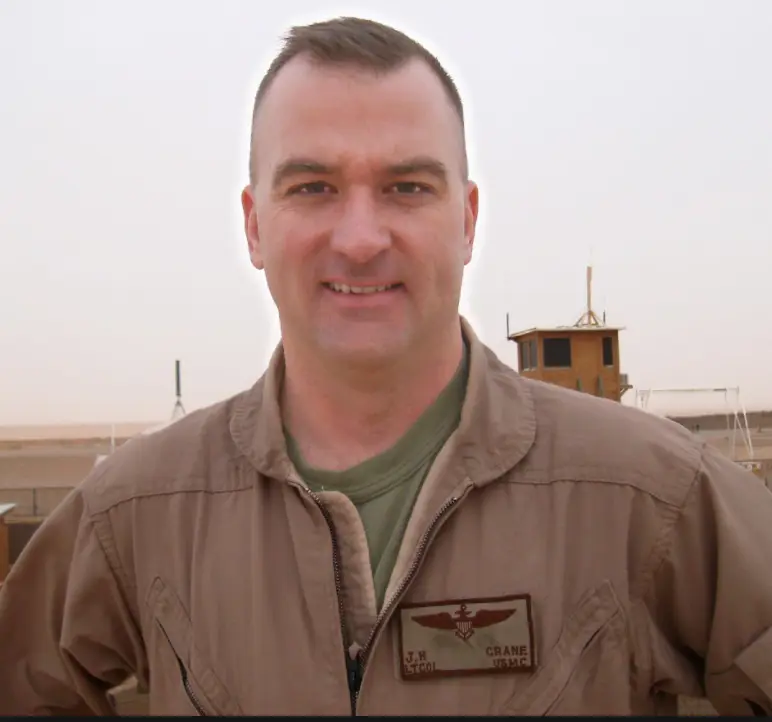
In this episode I had the opportunity to interview Joe Crane from Veteran on the Move. Joe is a retired US Marine Corps officer who uses his podcast as a platform to interview veterans from around the country. He does this to inspire veterans to take their own entrepreneurial journeys.
Transcript
Machine-generated from the episode audio and lightly edited — may contain errors.
Chris Albert (link to this point)
Good afternoon. Welcome to episode 17 of the Warrior Soul podcast. I'm your host and my name is Chris Albert. And today, we're going to be talking about entrepreneurship. There are thousands of veteran business owners in the country today.
And we often hear about how bad times are, how awful times are, how, the country is on a downward turn. But in a lot of ways, the reality is that there's never been a better time in the history of this country or this world to open up your own business. And the reason is because of accessibility. Because you have access to ideas, which are almost more important than money when you're trying to open up a business. And the other part of that is that through technology, you can open up a business with a lot less capital than once was necessary.
So for my guest today, I have Joe Crane from Veteran on the Move. Joe is a retired Marine Corps officer who started a podcast where he interviews, entrepreneurs from the veteran community, and, entrepreneurs who have family members who are in the veteran community. And through his podcast, he is constantly delivering nuggets of information and little bits of gold that we can all take advantage of as we move forward in our own journeys. And so at the in the show notes, I'm gonna give you the link to Joe's podcast. But I also wanna encourage you to listen to his words here.
There's a few different things he goes into that, you know, I think that so many of us can benefit from. You know, like the fact that we might not all have mentors around us. We might not all have, you know, successful people surrounding us. But you can get the ideas of those successful people through podcasts, through books, through audio books, and through so many different resources that are available to you right now. So for those of you out there who are considering going on your own entrepreneurial journeys, no, it's not going to be easy, but it is worth it and it is doable.
So without further ado, I give you my interview with Joe Crane from Veteran on the Move. Joe, tell tell us a little bit about yourself. Tell us where you came from, you know, how what you did in the military and and what happened when you started to get out.
Joe Crane (link to this point)
Alright. You bet, Chris. Thanks for having me on your show. I really appreciate it. It's it's kinda different for me being on the other side of the interview because I'm obviously, he's the one doing the interview.
So yeah. Going back, I'd always kinda been an entrepreneur at heart, even growing up as a young kid. I think back then we called them inventors.
Chris Albert (link to this point)
Mhmm.
Joe Crane (link to this point)
I was always intrigued by inventing the new latest mechanical gadget kind of thing, although I never really did anything with it. You know, I just didn't have the the skill sets or the or the wherewithal to really pull pull anything off. But I always was coming up with different ways of doing things and better ways of doing things. I've always kinda had that natural knack for that entrepreneurial urge. About a year or so into college as a young guy, I got interested in military aviation.
And I looked around a lot of different programs. I ended up going into the marine corps platoon leaders class program, PLC, with an air contract. When I graduated, I college, I got I got my a commission and had an air contract and went off to the basic school, went to flight school, became a co Cobra pilot, spent about eight years on active duty, spent about three years in the reserves, still flying. I became flying Cobra, attack helicopters.
Chris Albert (link to this point)
Mhmm.
Joe Crane (link to this point)
And after September 11, yeah, I got furloughed from my airline job, and I was in the reserves actively flying. So long story short, I went ended up going back on active duty as an active reserve Cobra pilot. Did a couple of combat flying tours to Iraq, flying Cobras. And eventually, after twenty four years of being a marine, retired. And as I got close to retiring, I knew I was probably gonna go back and do the airline thing because I still had my airline job after all this.
And as I was getting close to retirement, I'm like, you know, I I really wanna do this entrepreneurial thing. I I I didn't really know what it would be or what the business would be, but I just had this burning desire to be an entrepreneur and run my own business. And so I a couple years out from retirement and I thought, you know, I don't really have an idea right now. I can flounder and look around and, you know, for the next couple years until I retire. And I was I was actually one of the marines on the staff, you know, as a deputy director or, you know, exo, if you will, up at Fort Leavenworth in Kansas as the at the army's command general staff college.
So I was a a marine on the staff. I start taught the marine capabilities class to all the army, other service, and foreign officers there a few times a year. It just basically dealt with, you know, the thirty, forty marine officers that went through the course each year. So I was in an academic environment. No duty, no weekends, no deployments, very little travel.
We traveled to some of the outstations and taught classes, but I pretty much had a a nine to five job for, the first, you know, first time in my life. So I was like, it's a good time to go to school. And I and the tuition assistance was available. I'd never gotten an advanced degree, you know, graduate degree, anything like that. I was just there was just too much busyness and chaos through most of my marine corps career to ever really think I could pull it off.
This was the time. So I thought, you know, I'm if I'm gonna go back to school, I'm gonna do something that I am really interested in. I'm not gonna go get the MBA just so it looks good on a resume, so I go get the JOB because I knew I already had had a JOB. That was the airline job.
Chris Albert (link to this point)
Mhmm.
Joe Crane (link to this point)
What I wanted to do was I was leaning towards some computer stuff, computer coding, computer programming because, you know, I come, like, old school. I was, like, doing basic Pascal and Fortran back when I was younger, which are long gone. But then I thought, you know what? I started looking around and I realized, wait. I can get a I started seeing these entrepreneurship programs at colleges and universities.
I'm like, you can get a degree in entrepreneurship? I had no idea.
Chris Albert (link to this point)
Mhmm.
Joe Crane (link to this point)
So I jumped in and got a masters in entrepreneurship from Oklahoma State. And one of the final classes I had, I had to develop a business plan for a business that I wanted to do. So I I had come to this idea, know and getting a degree in entrepreneurship is not necessarily the best way to jump in to becoming an entrepreneur.
Chris Albert (link to this point)
Mhmm.
Joe Crane (link to this point)
If you want to jump right in, that's probably not the way to go. If you want to explore the realm of entrepreneurship and you you know, if you don't have something better to study at school, I'd highly recommend it because I it was you get all the raw accounting and finance skills and everything and all this stuff that you don't really wanna have to do, but it's good to know. But you're around entrepreneurial minded people. You know, the the professors are entrepreneurial minded, business minded, and I I thrived in that environment. Was finally surrounded by people that thought like I did, and it was just very invigorating, and ideas were just starting to flow and percolate, sparks were flying around in my brain.
It was just it was a great time because I just had lots of ideas, and I was invigorated and ready to go, Looking forward to my transition so that I could do some entrepreneurial stuff full time.
Chris Albert (link to this point)
And and what was your first entrepreneurial experience?
Joe Crane (link to this point)
Well, what I did was I came up with this idea. There was the the Iraq War was still going hot and heavy at the time and Afghanistan was hot. And I literally was driving down the road one I was driving down the road one day and my dad called me and he goes, man, my dad's in his eighties now and he's always been this great rotary he's been a rotarian his whole whole life. Mhmm. He's he's like on a twenty some year streak of never missing a weekly rotary club meeting.
Chris Albert (link to this point)
That's awesome.
Joe Crane (link to this point)
And every week they have a speaker. He called me one day to tell me about this kid named Josh Bleill from the Indianapolis area where my dad lives, who lost his legs in Iraq. And it and this kid came to his rotary club in Indianapolis and spoke. And my dad was so moved by the kid's story that my dad had to call me the next day and tell me about it. Plus, Josh was a marine also, and I'm a marine.
And, you know, in his whole life, you know, my dad's never called me to tell me about a speaker at the Rotary Club. And, you know, twenty some years, never missed in a meeting. Every week, he's seen a lot of speakers. But this kid moved him so much, and I was thinking, you know, that is a great story, dad. But I'm thinking, but why is, you know, your son's a marine?
This is a I see this stuff all the time. I know about this stuff all the time. I hear about it all the time. Why is this my dad's first experience with it? And I and then the, like, the light, you know, the light bulb came on.
I'm like, wow. There needs to be you know, there's a lot of people out there. You know, we're those of us that serve in the military are, you know, less than one percenters. Right?
Chris Albert (link to this point)
Mhmm.
Joe Crane (link to this point)
We think there's a lot of people in the military, but the reality is there isn't Right. Compared to the rest of the population. So there are a lot of civilian civilian pukes, if you will, that never experienced anybody in the military, especially, you know, especially wounded warrior types. A lot of people don't even know one, as many as there are out there right now. I thought there needs to be something to connect people, to connect these wounded warriors with their communities, and to connect the communities with their wounded warriors, you know, their heroes.
And so I came up with this idea kinda like what Josh Bleill was doing. The Indianapolis Colts kinda took him under their wing, gave him a job, made him community spokesperson. He's got a book deal. I'm like, man, that's awesome. But, you know, for every Josh Bleill, there's a thousand other guys out there just like Josh that don't that don't have the Indianapolis Colts.
Mhmm. And I thought, I need to I wanna create an organization that helps these guys become public speakers, tell their story, turns them into a public speaker, and maybe even gets them to the point where they can make a living at it. The wounded warrior types, you know, making a living speaking. And the name just came to me, Speaking of Heroes. And so I started I started this nonprofit called Speaking of Heroes while I was still on active duty, while I was still getting my degree in entrepreneurship, And I went through the business plan process.
Oklahoma State was having a business plan competition, and so I had to go down to I had to go go down to Oklahoma because I was doing my degree mostly online. I had to go down to Oklahoma to compete in person at this business plan competition. It was just me putting this business plan together. I competed against 90 teams. You know, I was like the old guy, of course.
Mhmm. All these other young college kids. And some of them had, you know, multiple members on their teams. And out of 90 teams, I came in. I placed third
Chris Albert (link to this point)
Oh, wow.
Joe Crane (link to this point)
In the biz in the business playing competition. And I won $5,000, you know, to apply towards the nonprofit. And so it was a great experience and I was just like on fire, you know. I was all fired up and ready to go. You know, the truth of it is, since I've actually retired and I've had to go back to working for the airline and, you know, my wife and I have fourteen years.
I've been so busy, I haven't really gotten very far with Speaking of Heroes, but that was my first experience with the whole entrepreneurial process. And so I've got kinda like this this canned business, this canned product, a nonprofit all sitting there all ready to go, but I haven't really been able to do anything with it. I when I I I felt like I kinda came out on the other side the entrepreneurial process and meant, wow, I did it. You know, I did it. I stood up a nonprofit.
I I won and, you know, placed third in business plan competition. I felt like I'd actually, you know, was valid at that point.
Chris Albert (link to this point)
Mhmm.
Joe Crane (link to this point)
And and I started thinking about it. I'm like, you know, I was looking back on this process I had to go through to do all this stuff, and I'm like, I discovered all these great people, programs, and resources for people that wanna start businesses, for people that wanna become entrepreneurs. And a lot of them are specific. We've got these veteran programs to help veterans transition to entrepreneurship. And I didn't know any I knew this kind of I knew this stuff was out there, but I really didn't know I really didn't know about it.
And as I went through the process of starting this nonprofit, I discovered all this great stuff. And I thought to myself, you know, there's if if I didn't know about it and I'm that into entrepreneurship, I bet you most veterans don't know about it.
Chris Albert (link to this point)
Mhmm.
Joe Crane (link to this point)
And so I thought, you know, at one point, there's another proverbial light bulb moment. I heard an interview based podcast going one day, and I'm like, And I'd always listen to podcasts. I always love podcasts. And for a long time, I thought I'd kinda like to start my own podcast. But the limiting factor was I don't think there's enough content inside of Joe Crane, you know, to talk about one subject, you know, once a week or once a month to start my own podcast.
That's kinda what held me back. And then I heard this interview based podcast, and I'm like, that's it. I can interview people, the the experts, that know about entrepreneurship. And I am I focus mostly on interviewing veterans that have become entrepreneurs. I also have other people that either have resources or run a program, university professors, patent attorneys, that kind of thing.
So I interview all these people that are directly pertinent to helping a veteran transition to entrepreneurship. So I came up with this idea. I'm gonna I'm gonna start a podcast. I'm gonna interview all the people, programs, and resources to help veterans transition to entrepreneurship. And ultimately, we came up with the name veteran on the move, you know, Oscar Mike, because it was one of my favorite military terms.
Chris Albert (link to this point)
Mhmm.
Joe Crane (link to this point)
So so there there you have the podcast and just completed let's see. We did we did an interview with you, Chris, right before this, and and you were episode number one twenty six.
Chris Albert (link to this point)
Oh, wow. That's awesome.
Joe Crane (link to this point)
I've done a 126 interviews on the Veteran on the Move podcast. And, you know, one of the things you had mentioned before we hit the record button was you're fascinated with people that collect people. Mhmm. And and I'd love that's another great quote. I love that.
I'll I'll I'm writing that one down. That's something I never realized would be a byproduct of having an interview based podcast. Because you're exactly right. I've I've got in the first interview, the first episode is just me talking. So I guess it's, you know, a 125 interviews.
But I have a 125 people that I've interviewed that I have in some some of these people I to this day, I have a very close real business relationship with them. And there's even a couple of them that I've gone into business with. Like, there was a a Matt Miller from School Spirit Vending. I love the business concept so much that my wife and I went into business with him. So we we have our own School Spirit Vending business.
Chris Albert (link to this point)
Well, that's awesome. That's awesome.
Joe Crane (link to this point)
And I got another guy interviewed that I kept in touch with, and he started getting into the whole Amazon private labeling. And so we're doing an Amazon private label business also. So there's all these, you know, great you ever heard the saying, beware of unintended consequences? This is like what you know, several good unintended consequences of of running a podcast, interviewing people. So that's probably been the greatest benefit of of running a podcast is the people that I've been able to collect.
I I had no idea that that was going to be a benefit.
Chris Albert (link to this point)
I think, you know, hearing your story, you know, going through as a Marine Corps officer and then coming out and, you know, having that inner desire to want to become an entrepreneur. You know, I think there's a lot of people out there who want to pursue their own entrepreneurial dreams, who want to start a business of some sort. And some of them do it, some of them don't. In your experience, what do you think it is that that keeps people from doing it? What do you think it is that that keeps people from pulling the trigger on their dreams?
Joe Crane (link to this point)
That's a tough one. I think there is a common theme of yeah. There's several different kinds of people out there, of course. I've always called myself an entrepreneur wannabe Mhmm. Because I was so tied up and consumed with with with my marine corps career.
But the whole time, it was just bugging me. I think, you know, in one of my bio on the veteran on the move website, I I I confess in there that instead of reading the, you know, the tactics manual and the NATOPS manual from aircraft, you know, I did spend all my time doing that. I secretly was reading business magazines and entrepreneur magazine and financial stuff. It's just I was always just interested and fascinated in business and how business works. If I ever ran across somebody that ran their own business, I was always asking them the questions and details just, you know, how do you make money?
How how did you get started? That kind of thing. So running this podcast has really become it it's it comes so naturally to me because I have a natural curiosity about how someone runs their business and how they got started.
Chris Albert (link to this point)
Mhmm.
Joe Crane (link to this point)
So the the kind of person that becomes an entrepreneur or the kind of person that wants to become an entrepreneur but never does, I really think it's a matter of if somebody really wants to know, deep down inside, it's something they really wanna do, but they never actually pull the trigger. I really think it's a matter of they never got around the right people. They never hung around the right types of people that could show them the way, that that could explain it to them, that could give them the confidence to give it a try.
Chris Albert (link to this point)
Mhmm.
Joe Crane (link to this point)
And a lot of times, you know, in the in the military, you know, when I was in the marine corps, there are a few people here and there that I could talk business and entrepreneurship with, fellow marines. But for the most part, it's it's frowned upon to talk business, making money on the side because if you're thinking about something else besides the Marine Corps, well, then you're not all in.
Chris Albert (link to this point)
Yep.
Joe Crane (link to this point)
And, you know, and and there's some there's some validity to that. I mean, there's no doubt. There's things in the in the military, in general, in the Marine Corps, they pretty much take everything you've got. And if you're not giving it a 100% or a 110%, then you're not you might not only be putting yourself in danger, but putting other people in danger because it is serious business. So there are times where you have to shelf other parts of your life and and those kinds of dreams and ideas.
But they're also that's the best part about military career where, you know, you're you're in the fleet, you're on the frontline units, deploying units, and then you're in the schoolhouse. And then you're back in the fleet, and then you're back in a B billet, you know. So so there are times where we can have things have some time to reflect and and think about starting our own business. And if you're getting however long you've been in, if you're getting close to getting out and this and you think this is something you wanted to look at or do, you owe it to yourself to to start at least a couple years in advance if you if you have that luxury. Because it does it is gonna take a while to get your faculties in order and start coming up with ideas and doing your research.
And if even if you have an idea and you're ready to go, it may take a couple years before you get to the point of even coming close to being profitable. So I mean, to answer your question, I really think it's a matter of, you know, people not you know, it being honest with themselves and admitting that that's their true dream. And getting around the right people and and and the resources to open their eyes to make them realize it can actually happen. You know?
Chris Albert (link to this point)
Absolutely. You know, I was I was talking to a marine friend of mine a few years ago, and he was having a lot of issues. And not just business wise, but also emotionally. And one of the things he said to me was, you know, I never planned to live past the age of 24. And in a lot of ways, don't think everybody, all of us do this.
Don't think that Marines in general are like this, but I think subconsciously, a lot of us don't plan on what we're going to do after the age of 24. We think, we're going to go into the military, we're going to come out and we're either going to go to school or we're going to get a job. But we don't really plan for what life is actually going to be like on a day to day basis after that. Because I think that's what sneaks on you. It's not the idea of what you're going to do.
It's the idea of what your day is going to be like on a day to day basis once you get out. I wrote an article about this a few weeks ago, where I said, the most freedom I ever had in my life was when I was in the Marine Corps. And when you think about it, it's like this, you might think, Oh, I have to stay on duty tonight. Or Oh, we're going out to the field next week, Oh, this or that, but you don't have to really worry about bills. You don't have to worry about streams of income or anything like that.
You've got Chow in front of you. You don't have to worry about where you're gonna live, what you're gonna wear each day. Your mind is really forced to be present and forced to be on what you're doing. And, you know, I think that for those guys who are in, you know, exactly like you said, one of the biggest things you can do for yourselves is when you're when you have your downtime, when you're when you're trying to figure out what you're gonna do with the rest of the day, when you're not out in the field or you're not doing something else, the biggest thing you can do is invest in yourself and invest in getting smarter and be prepared. Absolutely.
Joe Crane (link to this point)
I mean, Chris, you hit on several things and I I've got a couple of things I wanted to make a comment about. Many, many years ago when I was a a young lieutenant, I think it was our flight surgeon that mentioned this new study that had come out. And I think it was the average retired marine, and I think it was somebody that spent a thirty year career. I don't think it was like retired at 20, but if the average retired marine that spends thirty years in the marine corps only lived ten years after retirement.
Chris Albert (link to this point)
Mhmm.
Joe Crane (link to this point)
We're all scratching our heads like, what? What the and I didn't recognize what the issue was at that at that time. But years later, I heard of another story back when they were doing the Apollo missions, when they're going in outer space and, you know, first, you know, the moon missions, first guy on the moon, Neil Armstrong, and all that. They were discovering that the astronauts that had come back from their Apollo mission, you know, it's kinda like you get you get your turn. There were a couple of guys that got to go maybe more than once, there were this pool of astronauts and you it was just by luck that, you know, Buzz Aldrin and Neil and Neil Armstrong were the ones that happened to get the moon the moon landing.
But all of them are going in outer space. It was a great time in history. You know, they're astronauts. They're American heroes. They'd come back from their Apollo mission, and all these astronauts were experiencing severe depression.
Mhmm. And they couldn't figure out why. And and they've they brought in psychologists and everything, and they're like, oh, yeah. I know what the problem is. Their whole these astronauts, their whole lives, since they're little kids, had this dream of going in outer space.
Chris Albert (link to this point)
Mhmm.
Joe Crane (link to this point)
And then one day they do it, and then they come back to Earth. Now what are they supposed to do? They never thought past what they were supposed to do after they achieved their lifelong dream going in outer space. I'm like I was like, that was that just fascinated me. And to this day and actually, what they ended up doing was they worked into the Apollo astronaut program.
You must come up with plans for what you're going to do after you get back from your outer space mission. And once they forced the astronauts to come up with their after outer space plan, the serious depression problems went away. Because as soon as they got back, they knew what they were supposed to go to next. So they jumped on it.
Chris Albert (link to this point)
Wow. That is that is a gem of knowledge right there. I mean, it it
Joe Crane (link to this point)
And, you know, you talk about the veteran suicide rate and all that.
Chris Albert (link to this point)
Mhmm.
Joe Crane (link to this point)
To a doubt, and I'm no psychologist, but, you know, I'm a marine veteran and I know lots of you know, from my own experiences and and all my comrade in arms, I guarantee you the number one issue in veteran problems these days is veterans have lost their sense of purpose, which means, you know, maybe since you were a kid, you wanna grow up and join the army or become a marine or Navy SEAL, whatever. But when it's over, no one ever thought past that. And that's just like the guy you're talking about. He never thought past age 24 or 25. Well, now what do I do?
And that's a huge problem with veterans these days. I think that's a big problem with when veteran when guys get out or they come back from a combat deployment and and then they get out, they're geographically and emotionally detached from all this great excitement and all their buddies and everything else. And now they're like, okay. Now what am I supposed to do? They never thought past it.
And we all fall victim to it. It's so easy to fall into. But if you're aware that that's the problem, there's things you can do to alleviate it, much like the Apollo astronauts did where they came up with a plan ahead of time.
Chris Albert (link to this point)
Yeah. And I think the you know, one of the things I've really been thinking about over the last few months is, you know, when you're when you're in the military, a lot of times, you know, your adventure is presented to you. It almost comes to you on I don't want to say it like a silver platter, but it comes to you on a silver platter. It comes to you in the form of, where are they going to send me? What are we going to be doing for the next six months?
What are we going to be doing for the next year? And it's kinda mapped out for you. I think a lot of times you know, I I went down to the VA last week and, you know, you look around and and a lot of the guys are sitting there, but they have their kind of routine set. They get, you know, they get to the VA, they pack their lunch, they're sitting there and, and they're waiting. And, I think that in a lot of ways, we we get conditioned to wait.
You know? We get conditioned to to be told. And and it's not I hate when people say that that people in the military are robots. They're not. They they're decision makers.
They're leaders. They're they're they're but it's almost like, for example, if somebody's going to school right now, rather taking the opportunity and getting the books on their own and learning everything on their own, they're waiting for the teachers to give them their syllabuses, their syllabi. I'm sorry for the English sticklers out there. Their syllabi, they're waiting for people to waiting for the teachers to give them their assignments. I think it's an overall phenomenon that I think it's hit especially hard on veterans because in life, you know, your adventures you have to seek your adventures.
You have to you have to go out there and actively find what you're gonna do.
Joe Crane (link to this point)
That's so true. You know, Chris, from my own experience, I was looking forward to going back to my airline job because I knew I could make enough money, you know, with retirement to, you know, to take care of my family. But I would have large chunks of time off to work my entrepreneurial ventures on the side. You know?
Chris Albert (link to this point)
Mhmm.
Joe Crane (link to this point)
And so I was, like, really motivated looking forward to this. And so, you know, the veteran on the move podcast is one of those successes that's happened, you know, two, two and a half years later. It's it's still going. It's been a success.
But what I found was, like, I think most of us can relate to this. You talked about our schedules are determined for us. The deployments are are scheduled for us, and we just kinda fall in around and fill in the details behind the big master plan, the big blue arrow. You know?
Chris Albert (link to this point)
Yeah.
Joe Crane (link to this point)
But when you get out or you retire, whatever it may be, all of a sudden, that big blue arrow, that big training plan is no longer there anymore.
Chris Albert (link to this point)
Mhmm.
Joe Crane (link to this point)
So you you, like, wake up in the morning. Sometimes you're like, okay. Well, what am what am I supposed to do today?
Chris Albert (link to this point)
Mhmm.
Joe Crane (link to this point)
Well, I'm gonna go I'll go for a run. You know? I'm gonna go to the gym. Okay. What are you gonna do after that?
Well, I guess I'll eat lunch. You know? And and if you're not careful, all of a sudden, months, years can go by, and you've accomplished nothing. Right. Because you haven't set down a clearly you can't you if you haven't set out a clearly defined plan, a list of goals, things you're actually going to accomplish, your time could just get away from you.
And before you know it, your years down the road and 30 pounds heavier and you're not working out.
Chris Albert (link to this point)
Mhmm.
Joe Crane (link to this point)
I mean, or whatever whatever your poison may be, you know, idleness is can be the death of you, literally. And all of a sudden, you're spinning into depression or something because you're sitting around with no purpose, nothing to do. Well, you know what? You're out of the military now. You're gonna you need to come up with your own purpose.
You have to come up with your purpose. No no one else can really do it for you.
Chris Albert (link to this point)
Absolutely. Absolutely.
Joe Crane (link to this point)
Gotta get around other people that are purpose minded and not just people that flounder. If you've been in the military, you know what it's like to have a purpose in life. If you come back into the civilian world and now you're around don't get me wrong, man. There's great civilians, but let's face it. Most of our society, they're literally the walking dead.
It's just a bunch of zombies walking through life with no purpose, just following, you know, the latest thing on Facebook or what they saw on TV. But the people that are being becoming successful, the people that are making money, the people that are making things happen, those are people with a plan, and they came up with the plan themselves. And if you're working at a job, the j o b, you're working somebody else's plan. If you wanna become an entrepreneur, you gonna work your own plan, but you have to actually have a plan for it to ever work.
Chris Albert (link to this point)
Absolutely, man. You know, I I have this quote, and I've put it on Instagram a few different times. But, you know, everybody everybody talks about how they're they're scared of failure and how failure is this super scary thing. But when you really think about it, failure actually isn't scary. Failure looks like your couch.
It looks like your snooze button on your alarm clock. It looks like your TV set or your Xbox or your Pokemon Go or whatever that is. Whatever it is that's taking you away from your real mission or what you want to do in this life, that's what failure looks like. And people are not scared of it. They're attracted to it like moths to a light bulb because it's success that's actually uncomfortable.
You actually have to get out uncomfortable, put yourself out there, put your dreams on the line, put the possibility that those dreams are gonna fail, you know, and that's a really uncomfortable thing. And so I really identify with some of the things you were saying there. And, you know, I'd like to add that a lot of times you don't realize that you've fallen into complacency and that you've fallen into the path of The Walking Dead. And it's because everybody around you is doing the same thing. Everybody around you is acting the same way.
And so you fall into those patterns. And so what you said about finding the right people to be around. Finding cream of the crop or you know, your five people that are gonna push you. That's so important. And that's one of the first things you need to do, in my opinion, when you get out is to identify the people that you want to be around because you are the average of the five people that you hang around with.
Joe Crane (link to this point)
Absolutely, Chris. Yeah. Misery loves company. So it it we've we've kind of been programmed this way to a certain extent in the military because it's all about the team. There's no Mhmm.
Person sticks their head up too far above the crowd. It's all about the success of the team, the success of the unit. It's not about promoting yourself and trying to put yourself out there while you're in the military. So it's a little bit of a mindset change, but all the things you learned in the military, if you execute them in the civilian sector, you'll be successful. All nowhere else can you get the leadership type experience that you get while you're in the military.
Absolutely. And we talk about like hard skills versus soft skills. Hard skills are like a a certified public accounting degree and and a cert you're actually certified as a CPA or you're a certified computer programmer or you you have a a piece of paper or a document or, you know, a degree in this or a degree in that. Those are those are hard skills. Soft skills are all the things that you have to deal with people, like leadership, team building, cooperation, all the the Marine Corps leadership traits and principles.
Are soft skills. And that's why veterans make not only make great employees, but they make great entrepreneurs is because veterans have such good soft skills because we've packed a massive amount of living into a short amount of time. I mean, if if you if you've done a a six month deployment on a ship or if you've gone if you've done a a twelve month deployment to Iraq or Afghanistan, all the training you've been through, whatever whatever you did in the military, that's a massive amount of living and a massive amount of soft skill education that you can't get anywhere else. And that's why companies love hiring veterans because they're they make good employees. They show up to work on time.
You know? Nowadays, people don't even show up to work. Mean, showing up to work is like 80% of the battle for employers these days. They they they can't hire somebody that's just gonna show up. I mean, can can you believe that?
I mean, if you just show up, you're like 80% better than the rest of the crowd.
Chris Albert (link to this point)
Absolutely. Absolutely. As far as getting out of that funk or, you know, are there any daily routines that you have, Joe, that that, you know, that you feel have made you successful and that have helped you to kind of stay present and stay focused on your mission?
Joe Crane (link to this point)
Well, I think personal development is very important and it it depend on what, you know, what your religious beliefs, religious convictions are. You know, most most personal development programs today and the things that are said and really really all come from the bible, believe it or not. For some of us, especially when I was younger, the Bible was difficult for me to read or understand and interpret it. But but personal development has always been a big part of my life for the last many many years. And I really got into personal development by listening to podcasts in the beginning.
And then, ultimately, I became a podcast host because I fell in love with podcasting. And so whatever whatever you think you're interested in that you think you might wanna get involved in business wise or entrepreneurship wise, there's probably already a podcast about it. There's probably two or three podcasts about it. And so if you've got a drive to work or commute or time during your day, whether it be in the morning or the evening, If you have time that you can listen to podcasts, and there's podcasts that are solely focused on personal development, and most of them are free.
Chris Albert (link to this point)
Mhmm.
Joe Crane (link to this point)
So I I really owe a lot of my motivation and education in the business and entrepreneurial world to podcasts. All the different podcasts that I've listened to over the years, which kinda directed me into eventually hosting my own podcast. But I get so much out of listening to podcasts. And I listen to personal development podcast. I listen to business podcast.
I listen to online business type podcast all the time. And and so if there's one thing I could point to that that keeps me motivated, keeps me grounded, and keeps me coming back for more, it's listening to all the podcast that I listen to.
Chris Albert (link to this point)
Any specific ones that you'd recommend?
Joe Crane (link to this point)
Yeah. I would you know, there's Entrepreneur on Fire with John Dumas. Yep. There's Smart Passive Income with Pat
Chris Albert (link to this point)
Flynn.
Joe Crane (link to this point)
Mhmm. There's Amy Amy Porterfield has a great podcast on Facebook advertising all about how to how to use Facebook to expand your business. Mhmm. Chris Chris Ducker has a has a podcast. I think it's called the the new business.
I I just know it by Chris Ducker's podcast. You know, the four hour work week, I love that book. I read that book several years ago, the four hour work week. Tim Ferriss has his own podcast now, the author of four hour work week. Mhmm.
I think it's called the Tim Ferriss show.
Chris Albert (link to this point)
Tim Ferriss show. Yeah.
Joe Crane (link to this point)
Yeah. And he talks about a lot of principles in the four hour work week there. You know, Robert Kiyosaki, many many years ago, my brother said, hey, you gotta read this book, Rich Dad Poor
Chris Albert (link to this point)
Dad.
Joe Crane (link to this point)
Yeah. And I'm like, who? What? And I read that book. I'm like, that that that whole book just resonated with me.
And Robert Kiyosaki has his own podcast now also. You can look him up. And, actually, he was a he was a marine helicopter pilot in Vietnam too, so I could definitely relate. Interesting about the Robert Kiyosaki thing, you know, he had the rich dad, poor dad where his poor dad was his dad that spent his whole life becoming educated and getting degrees, had a doctor degree, was head of the public school system in Hawaii, but he never had any money. And so he spent all his time becoming educated and working in the public school system.
Never had any money. That was Robert Kiyosaki's dad. His his rich dad was his best friend's dad Mhmm. Who was nothing but an entrepreneur. Not very well educated, but he ran his own businesses, restaurants, hotels his whole life, and ended up, when he finally passed away, was one of the was one of the richest, wealthiest men in Hawaii.
And everybody always used to give Robert Kiyosaki a hard time saying, there was no rich dad. You made that up. Why don't you tell us who he was? Well, it turns out that his family was very modest, and the family didn't want anything to do with knowing with people knowing who the real rich dad was. And on Robert's podcast a couple months ago, since the guy had actually passed away, the the son, Robert's best buddy when he was growing up, agreed to reveal who it was.
So they did a podcast on, okay, this is who the real Rich Dad was. And they went through the whole story. Was really cool. That's awesome. To see that come out like almost twenty years later.
Chris Albert (link to this point)
That's pretty cool. Yeah. One podcast that I love and I'm actually good friends with the host host is London Real with Brian Rose. And I've actually, I've taught a couple of entrepreneurial courses for Brian, but I got introduced to a lot of them like Tim Ferriss and like Robert Kiyosaki and a couple of the other people. I got introduced to them through that one podcast.
So that's that's what I'd recommend myself.
Joe Crane (link to this point)
It's it's London Real, like, as opposed to fake, like R E a l?
Chris Albert (link to this point)
Yeah. The way he started it was it was supposed to be like an MMA podcast where, you know, he was an investment banker and he went through kind of like a midlife crisis. He's American, but he lives in London. And he was doing jiu-jitsu and he was exploring all these things and he started exploring like psychedelics and Ayahuasca and things like that.
But at a certain point, he said, all right, what am I doing here? And he started really talking to different business owners. So he's had people like Gary Vaynerchuk on. He's had Alex and Mimi Ikonn who are both like really big ecommerce people. And then he's had Tim Ferriss and and a few others.
So def definitely a good one.
Joe Crane (link to this point)
Yeah. I'm gonna have to look that one up. This sounds cool.
Chris Albert (link to this point)
Yeah. Yeah.
Joe Crane (link to this point)
You know, one thing that's kinda funny is I don't really have a commute to work anymore. Like, you know, a morning drive to work every day, Monday through Friday, because my airline schedule is kind of erratic. So I've kind of fallen off on listening to some of my podcasts. And it's kind of funny to talk about this but podcast you know, were for years have become like a main source of my daily motivation.
Chris Albert (link to this point)
Mhmm.
Joe Crane (link to this point)
And I didn't realize it, but I I got away from listening to all my podcasts and I almost got I almost like became lost. I didn't have direction anymore and almost got, like, depressed because I'm, like, what's good? And then I realized, I'm, oh, man. I don't listen to my podcast anymore because the best time to listen to your podcast is when you're driving to work or driving home. Absolutely.
You know, on that commute. So I I actually go out of my way to carve out time away from everything so I can still listen to my to my podcast because I I really I really need that. I mean, it's almost like, you know, it's a requirement for me to get my daily motivation. And, know, when you listen to this stuff, it's not like, what happens is you're you're listening to entrepreneurial, motivated, visionary type people all the time. It's not like I wanna become Robert Kiyosaki or I wanna become Tim Ferriss.
I wanna be like them or do exactly what they did. But what it does is it gives you hope, and it gives you vision, and it it validates your dreams, and it motivates you, it makes you feel good and it and it gets you what you need to actually execute on some of your ideas.
Chris Albert (link to this point)
Well, also extends your peer group and just like what what what we're talking about before, you know, a lot of us, right now I live an hour outside of Twenty Nine Palms. So I live in, not near a lot of people right now.
Joe Crane (link to this point)
Been there many times.
Chris Albert (link to this point)
And I actually ended up with a girl from Twenty Nine Palms, but I'll get into that another day.
Joe Crane (link to this point)
Weekly Marine's dream, right?
Chris Albert (link to this point)
Yeah, exactly. Exactly. And it was by surprise. It was by surprise. She ended up being a client of mine in Long Beach.
And I said to her, where are you from? She's like 29 Palms. And immediately I did the exorcist sign, like get away from me, but
Joe Crane (link to this point)
I've never known anybody that's from 29 Palms.
Chris Albert (link to this point)
She's from 29 Palms. Her parents are both teachers out there. But she ended up, she was cute enough that I let that go. I was like, all right. But anyways, the idea is that you really wanna surround yourself with these types of people.
You wanna surround yourself with people that you couldn't, you can't have access to Warren Buffett. You can't have access to Tim Ferriss, Ferriss, right? As in a personal relationship, most of us can't, but you can have a relationship with them through today's technology. And I think that's so amazing because, it's like we're democratizing ideas.
Joe Crane (link to this point)
We're Absolutely.
Chris Albert (link to this point)
And we talk about, many years we dealt with trying to demonstrate that communism was wrong, and it was wrong. But where it could have been right was in ideas. Ideas should be communal and once ideas have gone communal, we're seeing such a a democratization of business, such an extension of who can be an entrepreneur these days. I think that's so fascinating.
Joe Crane (link to this point)
Well, that's where online communities and mastermind groups come from.
Chris Albert (link to this point)
Mhmm.
Joe Crane (link to this point)
You know, the Think and Grow Rich Napoleon Hill book, he talks about masterminds. Most successful, that was one of the traits of some of the most successful people in the world was they have their own little mastermind group. And nowadays, you can you can formalize these mastermind groups online in such a great way that you can be interconnected with very influential smart people from all around the world. And and you've got your own little mastermind group. Because remember, you said earlier, we are the product of the five people we hang around the most.
Well, if you live out in the middle of the desert in 29 Palms, there may not be really five great people to hang around with on a regular basis. But if you're a member of an online mastermind group, then you can do that. And, you know, to to throw a drop a dime on myself, Chris, part of part of starting a podcast is you what you're really doing is creating a community. You create you're collecting people and creating and generating an audience. And what my intent in the beginning was to create a mastermind group and to create an online community surrounded by a veteran on the move. And the fact is, I haven't done it yet. And and the reason why is for a lot of the reasons we've already talked about.
I've gotten I got real busy. Mhmm. You know, my my wife and I hit on some some tough financial times there ourselves. You know, she got left her corporate job and was trying to flip houses, and it just didn't go that well. You're hurting there for a while.
And so I I haven't, you know, haven't had the time. You know, how often do you hear that? You know, the fact is the time's there, but I haven't been able to organize it and put it together and force myself to do it. And so I know your Facebook group has a has a ton of people on it and, you know, good on you, but I haven't built my online community like I wanted to, and I haven't gotten my mastermind group up and running like I wanted to and like my audience wants me to do. It I just haven't been able to pull it off.
And, you know, frankly, I'm kind of disappointed in the shape that I haven't done it yet. But because there are a lot of military guys out there that want that stuff. They want it, and they need it. And, you know, it's part of the networking and self improvement. And I just haven't been able to get it together and pull it off at this point.
Chris Albert (link to this point)
You know, I think, Joe, I think the thing is though, you know, you're on a journey. And as with any entrepreneur out there, it's a constant journey. Right? You know, it's that you're not gonna end up, you're never going to say to yourself, okay, this is the end. I've made it.
Here I am. Let me kick my feet up and just chill. And that's what all of us want. But as you said before, with the story about the Marines who retired ten years after they retired, they died, the end game is death. The end game is us dying.
Right.
Joe Crane (link to this point)
None us are getting off this earth alive.
Chris Albert (link to this point)
And so that's the biggest thing, but you're going to get there. It sounds like you have something going for you with your audience, and I think that's awesome. I'm going to put some links to your show. Any last words or pieces of advice for maybe that that young PFC or that young, lieutenant who's beginning their military career? What would you say to them?
And what would you say to maybe that that salty that salty corporal or sergeant or that that captain or major who's thinking about getting out?
Joe Crane (link to this point)
Well, you know, if you think you wanna do this entrepreneurial game, I highly recommend it. But like any transition, start early. The earlier you start working on it, doing your research, the the better off you'll be. And the fact is many of you, many of us, you may have to go get a JOB right after you get out because you might have bills and obligations you you'd have to pay for, and that's okay. If you can jump all in, there's no better way than than failing fast and and failing multiple times, failing your way into this entrepreneurial game. And and I would I would expect you you need to be honest with yourself. You probably are gonna fail a few times before you find success. So whoever else is along this journey with you better better be prepared.
You better prepare them also, whether it's your spouse and kids and that kind of thing. But and and I'm one of those that I I have a JOB on the side while I'm working my entrepreneurial thing. So at this point in my life, you know, wife, kids, the mortgage, cars, that kind of stuff. If you can reduce your debt and reduce all those obligations and distract you as much as you possibly can before you get out, you'll be you'll be much leaner, much faster, and you will have those entrepreneurial options available to you. So, you know, if you wanna start, you know, listen to the Veteran on the Move podcast to as a start, as a as a place to connect with with other veterans that have gone before you, that have become successful entrepreneurs, and then branch out from there.
There's so many great podcasts out there, you know, so many great books on entrepreneurship and getting into that game. So that's what I recommend. If if if you really ultimately, if you really think this is something you wanna do, then you gotta follow your dreams. You gotta go for it because you you'll it'll burn inside of you for the rest of your life if you don't if you don't let it out.
Chris Albert (link to this point)
Absolutely. Joe, I wanna thank you so much for coming on to the Warrior Soul podcast today. And I wanna give you a big Semper Fi, and and I wanna thank you for what you're doing to bring this knowledge to veterans across the country and around the world. And and I think it's amazing that you have that purpose behind what you're doing and, you know, it's inspiring. So thank you.
Joe Crane (link to this point)
Absolutely, Chris. Semper Fi, big guru out of you and look forward to talking you talking to you here again in the near future.
Chris Albert (link to this point)
Absolutely, sir. And I'll put the links to Joe's podcast in the show notes and gonna recommend everybody here to listen. So until next week, everybody out there in the Warrior Soul Nation, I will talk to you then. I'm out.
Host of the Warrior Soul Podcast and founder of Warrior Soul. Worldwide trainer and nutrition coach, contributing author at Testosterone Nation and Muscle and Strength.