Podcast episode
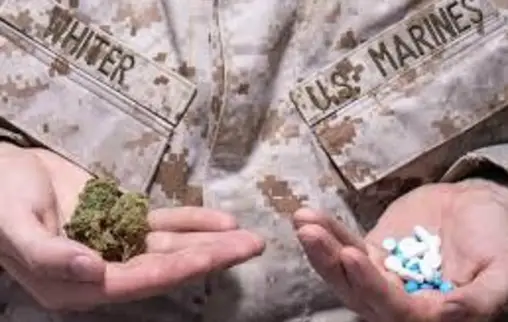
Episode 16: On Medicinal Cannabis for Veterans with Joey Devildoc Martinez
Hosted by Chris Albert
The Warrior Soul Podcast
Transcript
Machine-generated from the episode audio and lightly edited — may contain errors.
Chris Albert (link to this point)
When we think of the word freedom, what are we really thinking about? Are we thinking about a series of rights that's given to us by some sort of government institution or some sort of document? Are we thinking about our ability to do things? Are we thinking about where we're going to go in our lives? A lot of people think about freedom as in things that are given to us.
Rights. The Bill of Rights. The right to bear arms. The right to free speech. But a lot of times, we don't think about freedom in its truest sense.
Freedom in terms of what we're allowing ourselves to do. You know, was in the fitness industry for a very long time. And when I opened my eyes and looked at the fitness industry for what it was, what I saw was a quest for an image. A quest for abs. A quest to lift a certain amount of weight.
Maybe to lose a few pounds so you look better in the mirror or you could fit into a certain article of clothing. But I think all that really misses the point. You know, in my mind, when we think about fitness or any other real true human endeavor, we're actually thinking about freedom. Because true fitness also brings with it freedom. And is basically an insurance policy for your freedom through the rest of your life. You know, when you think about when you hit a certain age and maybe you're having a harder time walking up a hill, or maybe you're having a harder time lifting up your children, or maybe you just don't want to go out anymore because you're just tired. These are self imposed chains because as with any type of freedom, our fitness has to be vigilantly guarded. We have to constantly put ourselves in a position where we are going to preserve those things that we love to do.
Taking care of yourself, taking care of your body, seeing to your own fitness, those in my mind are some of the truest acts of preserving freedom. And yet so many people let them go. Today, we're gonna have Joey Martinez from the Devil Doc talk show on. Joey was a Navy corpsman who served with the Fleet Marine Force. And he's on his own quest for freedom in more ways than one.
After suffering some injuries, he's on a quest to get himself back on a path where he can do the things he loves. And he's also on a quest to give other people more freedom through allowing them to be able to follow their dreams in the recording world. So Joey, I wanna thank you for coming on today. Tell us a little bit about yourself.
Joey Martinez (link to this point)
Well, howdy there. My name is Joey Martinez. Like Chris said, I was at FMF corpsman for seven years, three months before I really sat down and I would say it was six months before I got out that I I really pursued getting help for PTSD and TBIs as well as neuropathic and neurologic injuries that I have throughout my body that caused the falls and 10 out of 10 pain for the majority of my days. So when I stumbled upon your fitness program and we we had a conversation on the show, the hashtag DDTS with Warrior Soul Apparel, We we had a a very great connection where I was able to not just re re identify myself but really reconnect with something that I lost. Something that I lost while I was asking for help that I forgot I had any, you know, something a tool that I had, a a passion, a light, a fire, whatever you wanna call it, a flame that really helped me ever since I was a kid, which was physical exercise and activities, getting out hiking, fishing, you name it.
Whether it be actual weight lifting or not, you know, a lot of guys are coming out like myself with a lot of limitations where we're not able to hit the weights like we used to and sometimes that feeds into our depression. Like for me, that was one of my biggest depressing things was going from benching 425% to leg pressing 1,200 pounds like it was nothing. Dead pressing or dead lifting close to 500 pounds. I was a big monster. Really really love exercise.
And it's something that me and my buddy discovered in Iraq that really helped with stress levels. It really helped me balance myself better. And however, when I asked for help, was kind of a a detriment because when somebody sees a physically fit individual, like you were saying, fitness can be it can be a key to bridging that transition. However, mine, it was more like a gate for people that they thought, oh, well, look how fit or big and tough he looks. You know, there's nothing wrong with this guy.
So I ran into a lot of mental blocks to get into the gym after that. Like, well, you know, I'm in so much pain while I'm in the gym, you know, and it's not gonna benefit me. They're just gonna use it against me, you know. And so it got to the point where I stopped going completely. And I didn't realize it, but it was the most detrimental thing I could have ever done for my body.
Like the the one saying it's called the I actually don't know who said it, maybe Confucius, maybe not, but either way. A rock in motion gathers no moss, right? And that's exactly where I'm at. Even though I'm only about to turn 31 next week, I'm going you know, my body isn't my doctor said it perfectly. Doctor Miller, wonderful woman.
She said, it's not about the year. Okay? It's all about the mileage. And she looked at me and goes, and you're my son. Let me tell you.
And I was like, thanks. And my car stacks is all fucked up too. It's all messed up. And, you know, I I take it with a grain of salt because after meeting you and talking about Warrior Soul and DTS and getting back on the exercise and not necessarily where I used to be. And you know, that's exactly what guys and girls and people with limitations on both sides, the people that are helping and the people that are needing help need to understand they're not gonna be able to pick up where they left off.
And that's where I'm at, adjusting, accepting, growing and really just enjoying and loving the journey of getting back into it. Like when we first started the program, I think it was in January or February where you put me on, let's say a very slow pace and I know it's slow paced but even for me it's really strenuous. It's still getting great results and I'm going holy crap dude. Like if I oh man, if I had this, you know, when I first got out of the military or if I could have recommended this to my higher ups while I was in. Just different ideas and concepts could definitely avoid things for different people at different times right now because everybody has their own path, their own transition.
And right now, I guarantee you there's somebody almost in the exact same circumstance I was when I got out that could benefit from something like Warrior Soul Apparel or Warrior Soul fitness. And everything else you got coming, Chris, it's just really awesome.
Chris Albert (link to this point)
Well, dude, thank you so much for that. And and, you know, I truly, truly appreciate that. And I'm definitely trying to publish some more programs for the guys, put some stuff out there, and and make sure that that people know about some of the stuff we were doing. Tell us a little bit about your injuries and how they happened. What what types of pain were you dealing with?
What types of obstacles were you dealing with? You know, in the military and in your transition.
Joey Martinez (link to this point)
Alright. No problem. When I was in, I didn't have any direct contact injuries like, you know, your IED blasts, your gunshot wounds, your your heavy explosive exposures, like where you're gonna get master's TBIs. I was more like the guy that I really just ran in headfirst in everything that I did. So I was bound to slip ball, get caught up in something eventually.
And I was always the guy that slipped and fell. I was always the guy that got caught up in something Mhmm. In training or in actual deployments. And I'd be the first one to say, you know, I'm not a clumsy man, but I did do some stupid things without really thinking it through, causing myself personal injuries. Like, you know, jumping off the back of a seven ton fully loaded.
Not not what I'd recommend. Okay? Especially at the beginning of a deployment.
Chris Albert (link to this point)
Not good for the back.
Joey Martinez (link to this point)
And my back was already messed up too. So it's like at the beginning, was more I was too gung ho and I just didn't care. You know, I grew up in a wrestling mentality, a wrestling town. You know, I bear down and I I go for grit. Know, no matter what I do, I'm going as hard as I can and as far as I can.
Well, that was my mistake. When I first joined, I, slipped the disc during some kind of simple training in North Carolina. And then throughout the years, it got segregated or degenerative disc disease is what it's called. What that caused was a neuropathic impingement in my lower bundle on my L's, in my L region of my spinals, my spinals cones. And I was talking about it like a car because I do think of the body like a vehicle.
Mhmm. And what ended up happening was the deterioration of both the nerve and discs throughout the years. This was back in 2005 when I started getting seen. So that's a little over ten years now of degradation, degeneration, impact and all the other stuff. I didn't get out until 2011.
So all the humping, all the staying in shape, all the extra stuff that I was trying to do, I was really looking forward to doing a billet where as a corpsman, I'd be doing a lot more with a specialized unit. And that's really what I wanted to do. I was really about human optimization and the military and all the other good stuff. But the injuries that I did not pay attention to, not as much as my back or my knees or my shoulders and neck, you know, which all are bust up but whatever, was the mTBIs that, you know, I bumped my noggin a bunch of times on just about anything I was training with. The little helicopter that spins up smack, you know.
If you're in the back of a seven ton or back of ambulance, I'm getting hit in the head. It's just that my thing is like my my my magnetic head is drawn to something that's gonna hit it. And what ended up happening was just that is the doctors didn't catch it after I was exposed to a blast injury during training. And I was dazed and then as as I, you know, keep going on throughout my military career, we were exposed to a bunch of large blasts, control detonations and stuff like that. Nothing major.
But the falls and bumps and that on top of it, what I learned when I was working at a research facility in San Diego was that there's actual micro injuries to blast wave injuries. And actually they're just talking about this now, is very interesting because this is stuff that me and my doctors were working on back in 2007 was the understanding diagnosis and exploration of microvascular injuries and to the cerebral neuro matter or however I don't know how they worded it. But the fact was the air concussive ways penetrate through both the media tissue and the skull tissue and create a ripple within the brain that can cause a contusion an abrasion, not abrasion, it's the ones where the cells just rupture because of a pressure wave. On the microvasculature, so we're talking about capillaries, okay? Like very teeny tiny little things in your brain that nobody's really thinking of because we have tons of it.
Right? Well, what if you get smacked in your own noggin? Right? Mhmm. And in that little buster was your personality.
We don't know where anything in the brain is really. Okay? We have that general idea where, you know, how things are firing while you're utilizing it. But it's really unique because this is the study that saved my life. And I I I say a lot of things saved my life because I've had a lot of things almost end it.
So when I say it, I really mean it. What I learned with that study was if you lose those clusters, they could be gone forever. If you notice a personality change or a slight persona change where you can tell your service member is not the same person they were. You know that's a very big key to the study that people are now noticing blast injuries can be both treated neuropathically, compassionately, where there could be slight medication use but more therapeutic reconnection where like I was saying I forget stuff and I don't know why I forget stuff. It's the things that I do almost every day, right?
However, the injuries the doctors were now telling me because of the mileage on my old engine, they go, Hey, you're not gonna be able to recall things the way you used to. And to me that was very judgmental. However, as things progressed, I worked on it. I started doing hand to mind remapping where I would play with something on my left side of my brain while thinking or reading on math subjects or social study. Mhmm.
I would go back on stuff that I know and rewrite or rewrite it with my left hand or rewrite it with my right hand or rewrite it both ways. I would do flash cards with just, you know, your regular cards trying to get the eight of spades, trying to get the 10 of spades, you know, trying to figure out what it is, where it is, and do some more mental recall, you know, get that brain moving. There's the actual one app that helped a lot during this transition. I can't remember. They were advertising the heck out of it a few years ago where it's like an exercise for your brain, right?
Chris Albert (link to this point)
Yep. Yep. I've seen those around. Right. Yeah.
Joey Martinez (link to this point)
And it really helped because what I noticed was when I exercised my brain, when I exercised my body, I could manage both my depression. It's not gone, but I can manage it better. I can manage my pain levels better. Again, it's not gone, but my sense of humor is at least better because I'm reading stuff, I'm feeling better, like I'm growing, like doing something productive and it really feeds into that serotonin receptor, that adrenal whole system of depression and anxiety, and it really calms and soothes it in a simplistic way where it really enacts the system to go, Hey, Jim, relax. You know?
And when when a guy has or girl has PTSD and I really love using the the the comparison here. Alright? If a guy or girl has PTSD for trauma, we really can't differentiate. Okay? If it's a rape victim, if it's sexual assault victim, if it's a car accident, if it's an explosion, if it's pure negligence because I'm geriatric patients that ended up having PTSD for going and getting help at the geriatric places, you know?
Because they were abused and neglected. So what ended up happening by 2011 when I was on my way out was I was neglected severely. It fed into all my negative biases. It fed into all my negative ideas and concepts of the military at the time. And it really destroyed my fundamental foundation on who am I and what am I doing on this planet.
Yeah. Without that, dude, oh my god, PTSD ate my soul up. The TBI shit made me so I couldn't remember. And then the doctors pretty much said there's no hope, like at all. That was what they told my wife and my kids.
We went to appointment after appointment. I had 22 different prescriptions, nine different doctors at one point and it was nothing. Nothing was doing anything. And in fact, I was looking straight into the ground going, I'm gonna die and this is for real. Because the doctor sat me down and said, look, in 2013, this is a couple years after I got out, after I got established, you know, about my VA stuff, after going homeless and bankrupt.
And no, this is actually right before we went homeless and bankrupt, right December 2013. The doctor goes, look, you could possibly have stomach cancer, brain tumor and more than likely because of the degeneration of your discs and then neuropathy and the different types of pain you have, you're not gonna be able to avoid a wheelchair. And I was like crushed. I'm trying to live a life, try and learn, try and grow. And every physician I go to tells me there's literally no hope.
I don't know why you're so happy kid. And they tell me this. My doctor actually had to sit me down and say, look, you are freaking concerning me, sir.
Chris Albert (link to this point)
Wow.
Joey Martinez (link to this point)
Because I would laugh it off. I would laugh it off and I still do. Because I know for a fact, I don't care if I end up in a wheelchair or whatever. Because I got to do what I wanted to do. I put my body out there, put my mind out there, my soul out there.
Just like a vehicle, a race vehicle. You know, if you crash your race vehicle, you're not gonna mope about it. I mean, if you survive it, you're not gonna mope about it, hopefully. And eventually, hopefully, you get it back on the track. And that may not be, you know, actual, you know, racing track or maybe I can be out there on the pits, you know, changing a tire.
There's no end. There's no give up. There's no stop. And that's what I really love about your program and the approach of spirituality. The approach of owning and accepting what has occurred to you.
Mhmm. Because until I did that, there was no hope. Right? Doctors said there's no hope. There's no hope.
They're my current authority figure. Right? At that time, being a corpsman you listen to your doctor, right? Yeah, I'm gonna do my own research and shit and I did. And yeah, know, learned a bunch of different things with a bunch of different medicinal compounds and different therapies like transcendental medication, utilizing the show.
Oh my goodness, utilizing the show to capture things that people are afraid of expressing Yeah. Was the most therapeutic thing for me, and I would say for our community as a whole, because nobody's going there for us.
Chris Albert (link to this point)
Absolutely.
Joey Martinez (link to this point)
Nobody on the ABC, CNN, Fox News stuff is gonna allow a guy to vent and to say, what's actually on your mind, bro? Like, what what hurts? Is it really depressing that you can't serve in the military anymore? Millions of people are gonna say, no way. And I'm gonna say for me, me being the type of guy I am, yes, it is actually really depressing to admit I'm broken, can't function, and I need help.
And I would say, dude, with the type of training program that you have, alright, with Warrior Soul Fitness, with the way you implement it, with the history you have, and both your successes, with all the celebrities that you've gotten trained up and shit. Not only that, but with the military dudes and myself, you know, speak I'll speak highly of it day in day out till I die for two reasons. I grew up respecting the body, the mind, and soul. Okay? That's exactly what we need to incorporate to get people back on track on a any kind of level.
But the second thing was you take the time to make sure they're following through with the program. Even me where I'm really hard to keep track of anything. You know, my brain's going one way. I'm trying to do the show with this. I'm raising two kids.
I got a wife. You know, but she's my home care provider, so it really helps with the daily activity stuff. As far as motivation to do a couple pull ups, to do my push ups and sit ups or to do my tai chi and yoga stretches, to do my TM, transcendental meditation, to make sure I'm taking my coconut oil at the right time, getting my fuel in at the right time. You know, that's something that helps me rekindle that flame that I once had in special way where now I understand and accept it with new limitations. Again, it's kinda like a vehicle.
If you keep running down the road with no tires, you're gonna ruin it.
Chris Albert (link to this point)
Yeah, dude.
Joey Martinez (link to this point)
Know, you're gonna
Chris Albert (link to this point)
Why not?
Joey Martinez (link to this point)
And start putting new tires on them.
Chris Albert (link to this point)
One of the things you said there, because I we have another another guest that I've been talking to is his name's Andrew Marr, and he's from the Warrior Angels Foundation. Have you ever heard of doctor Mark Gordon?
Joey Martinez (link to this point)
No.
Chris Albert (link to this point)
So one of the things you said there was, you know, these many, I guess, insults to your brain where, you know, you're getting bopped in the head or you're experiencing concussions from blasts and things like that. Andrew was a Special Forces operator and his job in the Special Forces was as a breacher. Nice. So he was constantly dealing with explosives on a daily basis, multiple times a day over a long period of time. And one of the things they found was that even though he'd never been experienced an IED blast, even though he hadn't been blown up, he was experiencing the symptoms of traumatic brain injury through that ripple effect Now, that you're talking one of the things that happens there is, you know, those tiny contusions that that you're speaking of that introduces brain inflammation.
When you get inflammation in the brain, affects the whole body. It affects your mood. It affects it can introduce symptoms that look like post traumatic stress.
Joey Martinez (link to this point)
Yes. Because you start getting those cortisol pumps going, your brain doesn't know what the hell is going on.
Chris Albert (link to this point)
Exactly.
Joey Martinez (link to this point)
Your body is literally firing everything to figure it out. It's as if you were hit by a ghost. Right. For some reason, your brain registered it, but everything else didn't and you gotta go find it.
Chris Albert (link to this point)
Right.
Joey Martinez (link to this point)
Even for medical for medical to even come out and finally say microvasculature neurologic injuries, okay are not only 100% real, they're avoidable okay and they're treatable. However, it's a very very precious window of opportunity that we have in the treatment spectrum Because again, like in the field, you get this golden hour and now it's the golden thirty minutes or whatever the fuck, right? With head injury, if you're being continuously exposed to blasts, it's it's normal. That's your job. That's what you do.
You're a breacher. And Jesus Christ. And I I I pray for those guys because I know that sometimes you do gotta use a little extra on a door.
Chris Albert (link to this point)
Right. Right. Right. Know, exactly. Thing.
Joey Martinez (link to this point)
Then when you're going in, oh, man. These guys are being totally exposed to that type of Yeah, dude.
Chris Albert (link to this point)
One of the things they found was that so he he went in for a hormone panel. And what they found was that, you know, his testosterone levels were way down, right? And cortisol is way up and, you know, he was experiencing, you know, what they call a pregnenolone steal. And so that was screwing with him. But what they found was that your your nuts are not the only thing that produce testosterone in your body. Right?
Your testicles are not the only thing that produces testosterone in your body. Your brain is responsible for a lot of hormone production. And so one of the things that they've been doing with the Warrior Angels Foundation is taking people who've been dealing with traumatic brain injury they've been doing testosterone therapy, but not just like testosterone cypionate. They have a special mix of testosterone that really absorbs into the brain. And if you talk to Andrew, Andrew was, I mean, he went from being a special forces operator to somebody who could fall, you know, just walking around. He he was losing his coordination. He was losing his his ability to walk.
He was losing a whole bunch of different things. And
Joey Martinez (link to this point)
And it's sad, dude. Is so so sad. And it it like, to me, it was the same same shit. I started falling for no goddamn reason. Right.
Right. I remember I'd I'd I'd go out and walk down a flight of stairs normal. Right? Mhmm. And then all of a sudden, one day, I'll miss a fucking step.
And I'm going down the flight of stairs, dude.
Chris Albert (link to this point)
Dude, and and and it's it's crazy how much these hormones could could affect you. He once he started getting the therapy, everything changed. Today, he's running the Warrior Angels Foundation, which gets this type of care to veterans for free and and doesn't require a history of TBI on the on the SRB. You basically have to show your DD-214, and if there's a possibility you have TBI, they give you the therapy. But they send you for a blood test.
You get the blood test back. He he got on this therapy, and today he's competing as a shot putter. He's competing as a a discus thrower, and he's he's in a Stanford University School of Business for Veterans earning his Nice. His MBA. And, you know, whereas, like, a few years ago, he wouldn't have been able to do this because of concentration.
So he's a dude I really wanna connect you with because I think that you could benefit from what they're doing down there so much because it's really remarkable what they are doing. And and they're they're recording everything, and they're doing empirical studies. And what what they're doing right now is that they're on a path to to start to get congressional reviews of this. So this because he his goal as a charity is to not be not exist anymore. He wants the VA doing this stuff. And I think that that's amazing. So his goal, I mean, within a few years to have congressional hearings and things like that.
Joey Martinez (link to this point)
That is so absolutely wonderful because in fact, when I was in the military, that's exactly what I was looking at, was not a hormone therapy behind it yet because it was more like I was very intrigued to special operations but not on the aspect of cool guy shit. Okay? Mhmm. And I always like to clarify it. On the aspect of human optimization and medical what's the word I want your word here?
Pretty much make them not supermanner of Captain America but damn near it because I started doing a lot of research in Iraq, okay? On hormones and basic metabolic function and all this wonderful shit. Even eating for your right blood type, lousy blase, whatever sports nutrition, yeah, whatever. Okay, you probably know way more than I do. But what I learned was in lab tech school was the specific ways certain carbohydrates, proteins and all this wonderful stuff breaks down.
The importance of luteinizing hormones and that's where you're talking about the brain thing, pituitary, the adrenals and all the different stuff. Gall I think actually releases a lot of things that are important to insulin which is very important to growth hormone, very important to testosterone. I had to learn all these different qualitative and quantitative measurements for human optimization in lab tech school. So when I got out of lab tech school and created a medical laboratory facility in El Centro and I was seeing all these different types of guys. Pilots, Blue Angels, SAS, Bills, grunts from you name it and wherever, you know, everybody.
And that's when I got really turned on to the human optimization and nutrition utilization. Because what I learned was you could do all this stuff in those communities and all the other communities and sports and all that. There's a lot of different hormonal experimenting going on and there always has been. I was never part of it and I make sure that everybody knows though that I don't think because this is always a good question that people ask SEALs a lot and grunts a lot. You know the steroid use in military.
And I go even GNC stuff actually is causing problems in the eyes of physicians in the military. And I'm going, you know, I doubt it. I really, really, really doubt it. When I actually got tested for my hormone levels, they said, dude, you're you're like an 83 year old man. You're you're you're testosterone's at 23.
Mhmm. I was like, what? What do you mean? They go, dude, it's like nonexistent. Like, your balls don't work.
And I'm like, oh, okay.
Chris Albert (link to this point)
Dude, you have to think about that in context for a second. You know, over over your time in the fleet, you know, you you're not getting a lot of sleep. You're under stressful situations. You're producing shit tons of cortisol because you're constantly being put in that situation where you have to produce cortisol to do your job. And you're eating MREs, which are full of sugar, they're full of nutrient stealing types of nutrition.
Now, if you're active in the military, I'm not saying don't do your job and don't eat MREs. What I'm saying is that there needs to be some things out there that help people to prevent and protect for when they get to be 31. They're trying to settle down with their wife and kids. They're trying to settle down to a calmer state. You know, there has to be something there while these kids are young to take care of them.
That's that the beauty of that is that some of the stuff that Doctor. Mark Gordon was talking about. For instance, if you take add this supplement here it's called N acetylcysteine And that, increases the cellular presence of glutathione, which helps cells to turn over. That can help your internal organs. It can also help to reduce brain inflammation.
And Nice. It's not expensive. It's really cheap. And and, you know, that's that stuff that they're doing there at the Warrior Angels Foundation. And and it's something simple people could take in the fleet and in in army infantry and in all the combat arms, you know, to to prevent stuff like this from happening in the first place, you know?
Joey Martinez (link to this point)
Exactly. Preventive measures. And in fact, here's the funny thing that I actually really gotta do. And, you know, I'm not gonna extrapolate on it because it is sensitive material. Not necessarily like Hillary Clinton sensitive.
Okay? In the sense of people don't really talk about how diverse the military research programs get. And it's exactly where your friends are I'm sorry, Andrew's going. And, you know the whole sorry, say it again, Angels Foundation?
Chris Albert (link to this point)
The Warrior Angels Foundation, yeah.
Joey Martinez (link to this point)
Warrior Angels Foundation, alright? Look at what they're doing with hormone balance and then build on it, right? Preventive measures, you know. I find it a jet a very, very, very detrimental because I saw so many older gentlemen in these specialized units. And I don't mean older in a sense of old.
Okay? I mean, 30, 35. Okay? Yeah. 40.
- Holy fuck, bro. What are still doing here? You know?
Chris Albert (link to this point)
Yeah.
Joey Martinez (link to this point)
You know, I had a retired master chief from a SEAL unit out in San Diego. And I was doing his work ups for his retirement, you know, getting ready to get out and double check his medical record, making sure he's good to go, making sure he gets everything checked out. And that's something too that has to go into this stuff. People have to learn how to take care of themselves to the point where they understand what to say and how to communicate with their physicians. And a lot of people aren't trying to do that.
They're scared of it like admitting that you might have some testosterone issues could be a real problem in that community. And because of the egotistical crap that goes with testosterone levels balls and dicks or whatever else you want to say but the fun fact of it is health and benefit. If we can get a preventive measure implemented just like we do inoculations, we do antimalarial drugs that are now being found out to not be good for us. We've done that for years so why don't we start looking and utilizing human optimization. Use kinesiology, physiology.
Utilize all these nutrition tactics that people are discovering research scientists are improving upon each year. Implement that into our MRE utilization. You know, implement that in our daily training. They're moving over from the the mile and two mile courses, three mile courses to actual physical functional tests, you know, where all of this wonderful crap we're talking about, hopefully, and I do really pray because I don't want a young man to make the same mistakes I made or the same mistakes Andrew made or you made and destroy the vehicle that they have literally for the rest of their life by undermining some basic functional crap that we could be giving our service members as tools. And then as things occur, know, really implementing the medical standard that we both know exists and should be implemented for our United States sailors, our marines, our soldiers, our coasties, our air force guardsmen, every single one of them.
I even wanna explain that to our police officers and our FBI agents, our CI agents. All of our agents in the government need to be on a medical program so we can have a sustainment of personnel. Well, look at it this way. Do you know how much the United States government pays each year in disability?
Chris Albert (link to this point)
Not sure.
Joey Martinez (link to this point)
Me either. I guarantee you it's a hundreds of billions of dollars. Okay? No. No.
Absolutely. And they actually have tactics now where they're trying to reduce by bureaucratic measures not by implementing any kind of actual work. I mean look at the VA backlog and all this stuff. The trick is to change their guidelines. So by definition of the technicality of the bureaucratic guidelines, they now fall underlined in this bullshit that they're saying they're doing something good.
Now I'm all for whatever, you know, cooking the books. That's wonderful if you are you know in financing. I don't care. But when you're talking about human health that could literally lead to sentinel event. Alright?
What is a sentinel event? Where you can cause the death of a patient simply by ignoring or not getting the right care at the right time. And it could be hormone balance. It could be TBI treatment. It could be PTSD treatment.
It could be physical health and nutrition. And the best part if it is physical health and nutrition, right, we're talking about preventive measures. You know one of our FMF sayings in the field and both at home the best preventive medicine is sometimes an offense.
Chris Albert (link to this point)
Yep.
Joey Martinez (link to this point)
And it's very very important because as a corpsman, I would always preach to my guys, take care of your feet, hydrate, make sure you come to me no matter what. Okay? And I don't care if you've done the worst things in the world, if you think you're the most heinous person in the world. I don't care. You can come to me.
You can talk to me. I got my office open no matter what. Hey. I'll close the door if we need to. I can't even put on music to calm you down before you talk.
That was one of my primary things when I was in. Make sure my marines make sure anybody that comes to me, whether it be a specialized unit dude or some, you know, Blue Angel guy or whoever, it could be the command master chief, I don't care. It could be the admiral. Okay? Because I had plenty of conversations with the COs of all the committees I've been to.
It's simple. Alright? We get to communicate on another level as corpsman with people. And I'm telling you right now, things like that with the Warrior Angels Foundation, what they're doing, dude, just trying to implement some kind of conventional here congressional hearing on it. Just trying to get people to actually put a stamp and date on their findings.
Dude, that is so huge that you let them know, hey, I'll keep talking for hours if you need to be. I'll push that stuff all throughout San Diego like we were talking earlier about public speaking consultant stuff, working the whole coastline all the way up and down. And I'm way open to making sure that something like that's implemented into a service whether it be army or navy or air force because those are the only branches that have their own medical.
Chris Albert (link to this point)
So Absolutely. You know? Absolutely.
Joey Martinez (link to this point)
It's big, dude.
Chris Albert (link to this point)
I'm definitely gonna be putting you in touch with with Andrew, and I I think you guys could have some good conversations. And I think that that doctor Mark Gordon could definitely help you out. And I think that you know, and and I'll put the website I'll you the website. Basically, like I said, their website's open. Anybody can send an application in.
You just have to have a DD-214. You know, they'll they'll take a look at your blood work. And see what you need and that sort of thing. So, and what they're really looking for now is data points to show the success, you know. You, man, you know, I you know, we talked a little bit about you getting into your exercise program, you getting back into the gym.
You know, we know you have back problems. We know you're going through a lot of pain right now. Tell me about what you're trying to do right now, what you're trying to implement right now in your life in order to achieve more of that optimum state. Because I think a lot of guys out there, they make the mistake of saying, oh, I wanna be normal. I wanna I I just wanna live a normal life.
I wanna feel normal. And and to some extent, yeah, man. That's like when you're in pain, when you when you feel like your body's breaking down, that's a big thing. But but you're trying to go above and beyond that. You're trying to to to really excel here and live your best life.
What what are you doing, bro?
Joey Martinez (link to this point)
So for me, what I do, and you're right in saying that, for a lot of guys, they pop their own tires. And I mean that in the in the best sense. Okay? It's called over ambition. The expectations are outrageous.
It's foolish optimism, okay? And a great book is called The Man's Search for Meaning and Introduction to Logotherapy. Alright? And it really will help any guy that has big ambitions or no ambitions and wants to live just a normal life like you were saying or find some normalcy in there. And dude, we can't call ourselves normal.
To find to establish something that you feel is acceptable to you, that's normal. And for me, it's it's it's being over ambitious and not being foolish with that ambition or being foolishly optimistic. And what I find is transcendental meditation works the best. If I don't sleep, like last night I didn't sleep at all and the night before, but that's not, know, that's just
Chris Albert (link to this point)
Describe transcendental meditation for us. What is it? How do you get into that state? What do you do? And where can you know, how do you learn how to do that?
Joey Martinez (link to this point)
Well, there's actually a bunch of resources online. You can find out on YouTube. They give you a very great I forgot which one. You go on YouTube and you can look just Transcendental Meditation. Okay?
Any one of those links they're usually gonna be somewhat decent and guide you down the right path. What I highly recommend is finding the one that somebody has some kind of natural draw to. So if it's a hot looking girl and you're naturally drawn to watching hot looking girls on YouTube, watch it because you're gonna pay attention more. If it's some pretentious red headed dude acting silly, don't watch it because you really wanna pay attention to what they're saying.
Chris Albert (link to this point)
You got something against redheads, brother?
Joey Martinez (link to this point)
No. No.
Chris Albert (link to this point)
You know? Just kidding. I'm just kidding. No.
Joey Martinez (link to this point)
But my best friend's a redhead. Dude, I always gotta dig them out anyhow I can. Their lives aren't hard enough, right?
Chris Albert (link to this point)
Yeah, exactly. Exactly.
Joey Martinez (link to this point)
So about the TM, right? What I really enjoy and I focus on and I also consult my guys on my brain. Still to this day, believe it or not. We sit down and I tell them, don't think about anything. And usually that's when you see a conniption happen or some form of aneurysm.
Do you mean don't think of anything? What I like to tell them is to think of their favorite color. And it's kind of like a hypnotic state. Really, technically if you want to diagnose it and look at it under brain waves measure or stuff. It's basically a hypnotic transcendental state.
Okay? The reason why you want to be in a area where you can feel relaxed. Okay? This is important. It could be in the middle of the street.
It could be out in a in a park. When I say middle of the street, I don't mean in the middle of the fucking street. I mean, you know, wherever at safety. Okay? You can go to a beach.
You can go inside a closet where it's absolutely quiet or you can sit in your truck and do it. Like, I do that a lot in my truck where, you know, I'm driving from one point to another. I'm not doing it while I'm driving. But when I when I finally have to regather myself before I exit my vehicle, I work my TM. I practice my tone.
You can find a tone that works for you. Mine's the tone of A where you're just like, and then I relax. And I start humming that same tone. And what I do is I literally, I enjoy feeling the vibration through my teeth up to the frontal of my face and brain. So what you do is you just stick your tongue right between your teeth and you sing the name, the same note.
And you likely don't bite on your tongue hard, but what you feel is a slight vibration. And then as soon as they feel that vibration, they go, what the fuck? Right? And for a marine, it could be really awkward because one, you're telling a guy to get really in touch with himself other than masturbation. And he's like, what are you talking about, doc?
And you're going, relax, watch. Just take a bunch of deep breaths. And you have to focus on the breathing because just like in Tai Chi and yoga, that's really what we're trying to draw in is some good oxygen down into this deep bronchial area, into the lung and get it all cleared out. And that's really where we're getting that transference of energy of oxygen into the blood cells. We're getting that toxic waste out by taking good deep breaths.
And as soon as you start focusing on just taking a deep breath in that light tone, right, all that good stuff, before you know it, you're not thinking about anything. You can think about something now. What do you wanna think of? Oh, okay. I wanna I wanna think about how how in the heck am I gonna land this damn job?
Okay. How am I gonna get this gig? How am I gonna get this consultant gig? How am I gonna get this price up on my salary? Like I talked to a bunch of guys, you know, they're really trying to get reintegrated.
How am I gonna get through the nerves, the anxiety? Try TM. If somebody says you're a weirdo, it's okay. But if you could center yourself and knock it out of the park as soon as you get out of your vehicle, or if you could center yourself and not get so angry with your kids or if you can center yourself and not snap. That's exactly what we're looking for because as soon as you can control that, you can now go anywhere with the rest of your life and anything in your in your treatment and in healing path. Mhmm. I find it very important dude because of two reasons.
Like we're talking about earlier. Isolation kills. Okay?
Chris Albert (link to this point)
Right.
Joey Martinez (link to this point)
And secondly, the only one that can help you when you're isolated is yourself. I find it absolutely inspiring to really share transcendental meditation. I tell a lot of people about transcendental meditation. I consult on a lot of different types of transcendental meditation, different types of meditation. Anyway, some people really like aromatherapy and I think it's wonderful.
Some people really like Reiki. I haven't really tried it. It's a little more hands on pressure points massage but not really focused on again air manipulation diaphragmatic breathing. That's another good one just diaphragmatic breathing Great for anxiety. Really gets that pit of the stomach.
Good feeling gone. You know, where you can't. Like, you know that feeling of anxiety where your whole intestines are tightening up. And you're like, oh crap.
Chris Albert (link to this point)
Oh no.
Joey Martinez (link to this point)
Yeah. Diaphragmatic breathing. It saves my butt, okay? Especially on shows and having to interview celebrities or authority figures, governors, all these different people. I do have an anxiety disorder.
That's what PTSD is. What helps though is those TMs, that quick meditation or the deep meditation sometimes. Cannabis really helps.
Chris Albert (link to this point)
And yeah. I wanna get into cannabis in a second. The so the the transcendental meditation, do you need to have a a mantra or anything like that? Cause I've done a lot of different types of meditation. You know I listen to binaural beats a lot.
I practice mindfulness meditation where we are focusing on the diaphragmatic breathing. I try to meditate twice a day. You know recently this week, know the last month or so I've been having a lot of my own anxieties, my own issues, and meditation has really helped me out in you know centering myself but also practicing mindfulness and thinking about what I'm grateful for and thinking about all the things that I have in my life and and and those sorts of things, you know. But but do you need a mantra for this at all?
Joey Martinez (link to this point)
You know, actually, to really, really let you in on a secret, mantras help simply because of the way your your brain, mind, and body work. Okay? If you're in a class, the reason why mantras really help is because it gives a sense of unity with the entire class. Okay? You gotta understand the way the brain work the brain works is habit equals control.
Mhmm. Okay? However, you can't have a habit without education and relaxation.
Chris Albert (link to this point)
Right.
Joey Martinez (link to this point)
So if you need a mantra, right, there's tons of it. Like I was telling you on YouTube where you could feel like you're one with the YouTube person that has a billion views. That's what we're trying to get here, is that reconnection. Or you can go down little Susie Q's, little mantra class in yoga, tai chi, little, what do they call, exposes or open door policy where you're learn a little bit about it. Go out there and learn their thing.
If you don't need one, I also pray when I'm in meditation. And that really helps me. I I really recite preverb proverbs, not preverbs. But preverbs are pretty awesome too. Proverbs, you know, and I say the proverb in my mind as I'm humming that same little tongue.
Or like you were saying that diaphragmatic breathing, simply listening to your own breath sounds can be very therapeutic. One of the best things that I advise people is to before you get into a really heavy meditation, sit down and write a journal about how you're feeling before and after each little method, each session until becomes second nature and you could really get into that state of peaceful balance quicker. Then you go ahead and not, you know, you could still journal and it really helps. It's gonna you're really gonna see the results though. What I'm what I'm really trying to say here is you're gonna see the results a lot faster if you document what it is when you're going in and what you've got from coming out of it.
So if you document your input and your output, your equation's eventually gonna change because now you can figure out how it's working, what's working. And the equation here is your brain. It's either because it's messed up, unbalanced hormonally, or it has an injury or contusions. Could also be that it's just depressed. It has horrible anxiety.
The cortisol levels are huge, you know, huge, huge cortisol levels. All those different stuff. It could be a very easy fix.
Chris Albert (link to this point)
Mhmm.
Joey Martinez (link to this point)
But it doesn't happen, like I said, to the normal guy. I I mean normal guy. I mean guys that really need the help. The girls that really need the help. The ones that are isolating themselves.
Those are the ones that need to find the confidence in a system. Anyone. It could be Tai Chi with some mantras. It could be TM with t I. Okay?
We could be we'll get out, soy. We'll get out, soy. We'll get out, soy. Say next. And and that's your t n.
You know, shaking it, shaking it, what what dude, it's whatever makes you feel good. And and I tell people, dude, I love changing it up because you're gonna once you get down past this whole, I can't relax or think of Jimmy's face. Right? You're gonna get to a point where you find your isolation very encouraging and empowering like I do now. Right?
I find it empowering as shit because I'll sit down and I'll write four or five chapters out of my books and then I'll rewrite four or five chapters out of my books. And then I'll work on another set of my other series of books I'll work on. Then I'll sit over here, do some series work on on the show. I'll rebuild another show. I'll recapture a content from some other project that I'm working on, go back and do another project, and then turn around and start it all over again and go, you know, I don't like it.
And I'll just toss it all away. Mhmm. Why? Because it usually takes me about two and a half hours to do all that shit. Okay?
Why? Okay. Because of the over ambition. The exact same stuff that causes people to nut up and go crazy and they can't handle the anxiety is the same exact power that Kobe Bryant used to become an icon.
Chris Albert (link to this point)
Mhmm.
Joey Martinez (link to this point)
It's the exact same power Michael Jordan used to become an icon. It's not a secret, okay? It's how you utilize that perceived negative energy which is anxiety, cortisol dumps, sweating and being nervous and all this horrible crap. It's turning that crap into something that A, you can make fun of and be comfortable with and accept. Hence the term logotherapy that I really love throwing out there.
It's a great sense of therapy. TM. If you have TM with logotherapy dude, oh my goodness, that's the best combination I found. I make fun of myself because I'm doing TM. I'm like, Oh my goodness, look at me.
I'm a Californian now.
Chris Albert (link to this point)
What is logotherapy again, you say?
Joey Martinez (link to this point)
All right, so logotherapy, let me put it in a nutshell for you, is where you look at your circumstances and you actually equate what they are, not what you perceive them to be, and use a sense of humor in order to segregate the importance of what you're looking at, to disconnect and really, really look at what you're going through. It's pretty much a good way to take a step back and go, alright, what am I looking at? Oh, shit. Okay. That's what we're doing.
And the fun part is you can make fun of yourself. I choose to make fun of myself. And in fact, it's gotten me in some hot water because I do it in public. And because I have the PTSD, the TBI, and that's all crap, I make fun of all the different people that have TBI and PTSD and all the other crap. So it comes off as, you know, I'm being mean towards people with disabilities sometimes.
But that's me. I'm talking about myself. I'm trying to, you know, get out of the house and go golfing for, you know, Wounded Marine Fund tournament. And and usually, I don't because I get so serious about not being able to swing the golf club that I go, I'm an embarrassment. Well, not really, because I know a bunch of legless assholes are gonna be over there, and they're barely gonna hit the ball further than me.
So I'm gonna go out there, and I'm gonna embarrass myself with them. That's the way I think of it. Know, it helps me laugh it off. You know, I'm gonna be with my bastards, we're all gonna hang out, have some tequila, talk about the old days, and hopefully see some cute señoritas and take some pictures onto the golf course. That's really what it's all about.
I mean, you can do that. Right? Right? We can do that. That sounds fun as shit.
Or we can sit down at a wall during our isolation, stare at the wall, okay, and go, hi, mister Wall. I'm fatter than shit. I don't know what to do. I can't even Oh, depressed. And that's how I feel sometimes too.
You know? But it's it's looking at it and going, what could it be? Instead of what is it right now? If we can take what it is right now and go, it's not that bad, you know, like we were talking earlier, we actually live in a utopia, I believe, 100% Because you can easily, just as easily go down and buy yourself a big o ounce of cannabis. You can go buy yourself a a Ace of Spades magnum champagne bottle.
You can buy yourself a freaking yacht. You can even get yourself an abortion. You can kill babies legally where we're at. Okay, bro? And if those people can have a good life, I'm pretty sure we can have a good life.
Alright? Like, at least one where we're not so damn depressed or upset or frustrated about our circumstances because they're never gonna change. We did what we did. It was painful for some of us. Like my whole thing is kids, I'll never get over it.
I'll never be able to bring back the kids I wasn't able to help in combat. I'll never bring able to bring back the kids that I lost in the emergency room when I was in North Carolina. Those are the ones that are always gonna carry me. I mean, literally carry me because it's as if to me that their death is as precious as their life because I get to hopefully live it for them. And if I don't see it that way, I probably won't go out and do much.
And that's exactly what the the options are. Are you gonna do it or not?
Chris Albert (link to this point)
Yeah.
Joey Martinez (link to this point)
And that's the that's that's the basics, dude. And then once you make a decision to do something, go ahead and do it the same way that we used to do it. All is hard, all the way out.
Chris Albert (link to this point)
That's awesome. You're also a big advocate for medical cannabis and medical cannabis use in the veteran community. Can you tell us a little bit about your views on it and, you know, different different things that have led you to the conclusion that medical cannabis is is effective for treatment for certain ailments?
Joey Martinez (link to this point)
Oh, good. So the history behind it was when I was in the military, I had a lot of research scientists. I talked to a lot of them about what we were doing during the clinical trial phase that we were at and on this other project, okay. What we found out was there was a certain homeopathic compound, okay. Not cannabis. This has nothing to do with cannabis right now, okay. There was a certain homeopathic compound that's naturally found in a recurring plant. That was capable of restoring something that's degenerative and usually you'll never get it back.
I'm not gonna go in on it because I don't really like talking about whatever anybody is doing their stuff on that their stuff. It's not my right. Okay. What I am gonna say is that study sparked another study. That sparked another study.
That sparked another study. And before you know it we're looking at the majority of these odd herbals and probiotic systems and different type of preventive things, okay? When I was learning all this different crap in lab tech school I got to learn all about the fun hormone system, all about the different pathways, the way your brain works neurologically, the way that synapses works, the way that your adrenals work, everything works, your body functions, how long different cells live and die. What is the current study? What is the current scientific facts?
You know all that crap. And when I was asking for help as soon as they started me on the pills the Celexa, the bupropion, the Effexors, the trazodone, all that crap. I didn't like it like at all. It didn't work at all. So I really started doing a lot of research on all these different systems and pathways and I started hacking away at it.
Know just like anybody else would if you're trying to figure out what's wrong with your car. Know I can't get my battery to fire you know let me go and look up the Google machine on batteries. So that's what I did. While I was in I started doing some research on homeopathic medicine. I talked to one of my doctors.
She was a homeopathic doctor, before the Navy and still practices now. We got to talk about cannabis on a professional level. And I mean that sincerely because I really dislike the current stigma of cannabis in the medicine industry and its respect by both providers, patients and lawmakers because if it's something we can't put our thumb on right we can't identify why it works why it doesn't then we have to by logical sense simply figure it out, do some scientific research, right? So we're sitting there talking about that. That simple, simple, simple, simple discussion not about cannabis or strain or what it would be good for or not But at the simple fact nobody is looking at it the way it should be.
And me and my doctor were sitting there. We didn't didn't even have argument. It was more like your very great agreement where we both looked at it and go, man, that'd be good to start some type of either clinical trials, some type of empirical processing or data collection. We should get some statistics on this shit. What ended up happening was it sparked an idea.
I started talking to my friends back home. They started talking to their friends. We started talking to our medical buddies. Our medical buddies started talking to their medical buddies. Before I know it, I'm on this mailing list on what is it called?
Cannabis research and the MAPS, what is it called multiple ancillary psychological whatever thing. And they figure out all the different other stuff too with all the psilocybin mushrooms, LSD, MDMA and how it affects all this other systemic problems. They're actually looking to psychedelics and how they do all these wonderful things in microvism. So I started doing that as soon as I got out. Not doing the drugs but looking into this stuff.
I've met a bunch of people when I started the show really looking into cannabis because that's when I started utilizing cannabis as my primary medication for both my psychological ailments and pain management. But I still do require morphine because of how bad my back is. And it really sucks to explain because I go, Yeah, if I don't take morphine, dude, I can't walk. It's really damn near impossible because of how bad the pain is. And it radiates through into my testicles.
So that's really what gets me to drop like no other. So I started using cannabis at increment levels. This is when I started documenting my findings, my journal, right? Really really doing my due process here. What is it on my dose?
What strand specificity is this? What is the terpene level? What type of alkaloids are in here? What type of acidic attributes are going on? How is this going to be the best utilized?
Where and when is it going to be best utilized? What form of the plant is going to be the best form to ingest, smoke or utilize? What I found in my studies of three, three and a half, four years, that's when I concluded my report, my journal and I went to Denver and I didn't give a presentation but I discussed with Doctor. Sue Sisley. She's on Foundry Kupka's week three and Matt Call he's on Viceland's Weed A Kit and Sean Kearman.
A lot of Ian Primus, a lot of names in the cannabis industry. And I simply mentioned my formula in the way that I want to utilize cannabis for medicinal product. And everybody shit the roof bro. They were like nobody's doing that. Are you how did you come up with that idea?
And it was simple. I want to optimize this absorption, right? We all want to optimize the medicinal absorption of whatever it is we're putting into our body. Whether it be the morphine, whether it be the clonazepam, whether it be whatever it is you're taking. It doesn't matter if you're pooping it out, right?
We want you to absorb it. The same thing in nutrition. We don't want you to just eat food. We want you to absorb the food. Hence the reason essential amino acids, essential vitamins, and all these other great things need to occur in your diet, right? So what I found was utilizing whole plant extract in my super duper secret process we were able to isolate the cannabinoids that we want, the right terpene level that we wanted, the right THC A and THC cannabidiol as well as our entire structure is absolutely absorbable to the point where you can take this as a daily food diet and you'd still get a medicinal sensation. However, it won't be as intense as what everybody is utilized or has been is used to on the edible scale of medicinal products and you get more CBD, more THC, more absorption and more of the medicinal value without the grogginess, the tiredness, and all the other stuff that don't want.
Chris Albert (link to this point)
You're saying because one of the things, because I have ulcerative colitis. I have severe ulcerative And you know, one of the things I tried when I was, going through a severe flare up was trying I tried THC. And so I tried an edible. The first time it wasn't it was you know, it really helped me.
The second time I tried, I got one of these cookies. And like literally, I had like maybe an eighth of the cookie. Like I didn't have the whole cookie. And dude, it was like the most paranoid feeling of my life. You know what I mean? So you're saying that through this process you have, you're gonna get less of that kind of like feeling you get where you start.
Because I think on a couple different levels, you know, there's certain people who can handle that kind of thing. But if you have like certain anxieties in yourself, if you have certain things you're telling yourself all the time, if you're in a negative state, that kind of medicinal feeling isn't going to be the best thing for you at the time. You know what I mean?
Joey Martinez (link to this point)
Exactly.
Chris Albert (link to this point)
But at the same time, I really want the health benefits that you can get from it. And so are you able to overcome that? Are you able to get rid of that kind of thing?
Joey Martinez (link to this point)
To an extent, absolutely. The best part is understanding the plant that you're using. There's three different strains. There's the indica, the sativa, and the ruderalis. Okay?
It's like a combination but it's actually not. And then the hybrids are the actual combinations between your percentages of indica and sativa. Alright. So a lot of people get when they get that that sensation of anxiety isn't necessarily the cannabis that you were saying. Right?
It could be self inflicted hyper attention to one's condition which yeah. If you relax or in a a sedated state and the only thing you keep repeating in your mind is that you're gonna go crazy. You're gonna go crazy. You're gonna go crazy. Well, I'm not a spiritual ant teacher, but I'm pretty sure if you repeat things enough, you're eventually gonna either a, believe them or try to believe them enough.
So what I really like to tell people is if you have natural anxiety level, stay away from very high EED.
Chris Albert (link to this point)
Say can you say that again? Your audio is just a little bit cloudy.
Joey Martinez (link to this point)
Oh, I'm sorry. Can you hear me again? Can you hear me now?
Chris Albert (link to this point)
Yep. Now I hear you.
Joey Martinez (link to this point)
Okay. So what you wanna do is stay away from your your CBD levels that are really high because you're gonna get that body sensation and body lock. Mhmm. You wanna stay away from the indicas because you're gonna get the same thing. So if you have natural anxiety, you wanna stay away from really strong THC sativas and also really strong independence because if you're not good, I'm not good when I'm sedated.
I get really, really, really nervous, really bad anxiety. That's the reason why all the sleeping pills that they tried to give me didn't work for me actually caused worse anxiety and lack of sleep and depression, sadly enough. So what I found out is with cannabis there is this poetic slight relationship.
Chris Albert (link to this point)
Mhmm.
Joey Martinez (link to this point)
Accompanying it with TM, it's really an amazing therapeutic property. Now accompanying it with additional stress, it could be a very negative property Mhmm. Because it is a therapeutic drug. The way I see it and the way I discussed it to my my scientists, doctors, friends, all those couple of those guys is if you're gonna give a stimulant, which is a sativa or a a sedative, you have to reflect in that person's personal experience. Know, just like when somebody who takes Vicodin, it's not the same experience, not the same medical benefit all the time.
Yeah. The same reason why I don't disagree with psych meds or antidepressants because sometimes it really helps. For me, it didn't. And for many, many others, it doesn't. So what I say is simply this.
If you try cannabis at a responsible level, if you are set in a foundation that is accepting of your both your limitations and your your your path of seeking a remedy or healing product, whether it be cannabis, whether it be whether it be testosterone because even testosterone is looking at negatively due to the stigma and sports and everything else. Absolutely. But basic basal metabolic function, that's not what the world knows. Okay? Basic small dosing and THC, psilocybin and all these other drugs that people abuse to get a sacubelb at trip.
Now that's that's the discussion we need to be having is what where's the studies on actual medical use besides recreational use? There isn't any. So if we were to say, what's gonna help when you have anxiety? I can't legally say shit because there's no findings scientifically. It'd be literally like me screaming climate change is real.
Prove it with your fucking data. Okay? Yeah. That's the first question any doctor's gonna ask. Okay?
Prove it with data. I don't have data in the way that people look at it because it's non recognized. Okay? What I can say is what I have in my journals, way that I worked out my formula, the way I what I've noticed, okay, with my product, with the type of style of extraction, you're removing all the negative potentialities of both contamination because you can also be getting anxiety from the the type of concentration in the extract that you utilize. So if they use the BHO was a butane hydron oxide extraction or something or if they do a vacuum extraction or a press extraction.
There's always different types of concentrates out in the world that you really need to start paying attention to the THC content and percentages as well as the CBD. But here's the catch, anxiety and all the other fun stuff actually comes from the terpene in relationship and your relationship with that. So if you drink a vodka, okay, some people get really groggy, other people get energized. Same thing with tequila. Some people hit the floor, some people don't stop dancing on the floor.
You know? Yeah. If you get a good sativa at the right percentage, man, you're never gonna stop writing. But you go one percentage up or you take a little too many hits. Now you're spazzing out, right?
It's really you've got a journal how you're utilizing this medication. The dosages are very important just like any other medication. And when you utilize it there has to be an intent, a therapeutic intent. Without it, you're literally just smoking weed. Okay?
Now that's that's cool. Alright? I accept it. Alright? That's what a lot of people want.
Alright? I'm cool for it. That's not my mission. That's not my job here on the earth. Okay?
It's to help people understand medicine and therapy and healing and health because if it were a discussion that way, we would already see the VA covering medical cannabis for veterans. We'd already see the federal government implementing different studies on this on this plant. You would see an implementation in California that's had medical cannabis since 1995 have some form of regulation where Chris, I could give you a straight answer. You know what I'm saying?
Chris Albert (link to this point)
Yeah.
Joey Martinez (link to this point)
I could give you a straight answer saying, oh well what you wanna really do is take a kush, o g kush, smoke about half a joint of that big guy and make sure it's about point five grams of a joint. So half of it would be point two five grams. If you get it ingested by a joint it's 17% usually because that's the ratio of air to THC smoke content. Use a bong or water pipe. You're gonna increase the absorption by maybe 30% if you use an edible depending on how well the edible is dosed and how much or how less you've eaten just like any other therapeutic drug.
It could hit you really hard, can't hit you at all. It's stuff that there's no regulation on simply because nobody wants to have cannabis be established and that's my personal opinion. Once you get it established or have a precedent of this is what you can get as a result, you know, that whole input equation output, if you can actually nail it down with empirical research and back studies and then come out with data, it takes five, ten years. But at least we get started now. And that's what's not even happened, like on any level.
Chris Albert (link to this point)
Yeah. Nobody's even looking at it right now.
Joey Martinez (link to this point)
They want to desperately bad. That's the reason why I talk about Sue Sisley so much. She's become a really great advocate. And I wanna say lobbyist, but not in a bad sense for cannabis research throughout the entire nation specifically for PTSD in veterans. Do you know why?
Because it works. We can't say it works legally because of the lack of scientific proof But just like people can't say climate change is real and enforce some kind of federal crime law above it because what else? We always say it's really not accepted. That's not the way it works. Okay?
Science doesn't work that way. You have to have multiple data points. You have to have clinical research. You have to have peer reviewed journals. You have to have this stuff down.
You've got to. Or guess what? Doctors don't understand it. And if doctors don't understand it, if pharmaceutical companies can't extract it, if farmers can't grow it, what are we doing? Limiting ourselves.
We're limiting our resources to to health and well-being. And we're really telling people, we don't want you to do anything else than what we tell you. And I'm telling you as a corpsman, I don't handle that very well. Okay? Me personally, I'm always looking to help somebody either if I have to overstep a boundary, meaning if I have to yell at that admiral, I'll yell at that admiral.
And that's happened. Okay? If I have to discuss something on a level with another human being whether they have rank or not to the point where they're open with me and go, you're right. That's what we really need to have with cannabis because we're not punks, right? Walking around asking to get high.
Not at all. The majority of people behind this cannabis movement and utilization I would say are very much educated or extremely passionate about cannabis in and of itself simply because it's much like the pit bull and rottweiler and German shepherd and black guy, you know, horrible stigma bullshit that the entire populace really feeds into even though the majority of our population in the world has utilized cannabis at one point in their time regardless if it being medicinal or recreational. So it's really actually one of my favorite papers that I wrote bro. I hope your listeners check it out as well as you. It's called Medicinal versus Recreational.
It was an article that I wrote to really kind of have this conversation in a grandiose way where we're not really talking about how we utilize the plant but why aren't we having the conversation needed to say how we utilize this plan. Right? On a government level, on a societal level, I go into the simple fundamentals of freedom. I even talked about finding the clitoris. Okay?
So I think it's a diverse paper. And I and I got to turn it into an audio program. It runs about twenty five minutes on DDTS and it's really focused on answering all the questions that you asked a little bit clearer than what I gave you right now and in a very very general way on how I believe that cannabis can be utilized both in the medicinal world and again it can be used in the recreational world but we first need medical standards on how to implement this thing. We need it because people are going to abuse something they don't quite understand and then turn around and blame that something and then it's gonna get taken away from us. And I don't like that shit.
I'm not a little kid. Right? We're not little babies. We're not walking around pleading our cases, supplicating to our our lords and authority figures. That's not how America works.
When we say we, the people, want to utilize something or figure out something, That is exactly what the government and every single organization that's out there is obligated to at least help us figure out. Now if they don't want to, that's okay. We can figure it out without them. The problem there in line, how do we do it? Now if we simply sit down and have conversations, that's great.
However, some of us guys were getting together, we're having like town hall meetings and we're getting these summits, the cannabis investor summits. A lot of these cannabis expos get togethers not smoke sessions. I want that to be clear. They're not smoke sessions. They're summits to explain how look entrepreneurially this is gonna be the next big thing.
Alright? Cannabis is gonna be the next huge thing. If you ask me as a consultant in the industry, right? What's its potentiality? Trillions.
Not billion.
Chris Albert (link to this point)
Mhmm.
Joey Martinez (link to this point)
Trillions. Okay? Now of that market, how early do you want the American people to get in on it? That's really where I'm coming from. How early could we, as Californians, have been benefiting from this market that is being denied?
Now I'm not saying let's get rich off of something. Okay? That's not my point. But if we can make money and alleviate an an insurmountable stress on one state by launching a pilot program for federal distribution and medical cannabis research. Right?
If we were to sit down and have this conversation with Jerry Brown instead of talking about limiting our our our weapons rights because of terrorists, We just retarded.
Chris Albert (link to this point)
Yeah. Don't get me started on that. Yeah.
Joey Martinez (link to this point)
Alright. If we would have intelligent bureaucratic processes, we would see prosperity and liberty on a level that people would flourish and thrive to the point where we would forget about all this traumatic bullshit in 2016 where everybody all of a sudden got hypersensitive. And here's the beauty about logotherapy. It literally discusses all that I just laid out in a very beautiful way where if you have the hyper intent or hyper focus on achieving happiness that's what really focus on. You're never gonna obtain it simply because you're so focused on obtaining it.
You're not enjoying your journey. And that's where you really find happiness is on that creation journey and path of learning. Because once you get there, if you get there, it's done.
Chris Albert (link to this point)
Right? Yeah, exactly.
Joey Martinez (link to this point)
And you have to start a new journey.
Chris Albert (link to this point)
You're dead. Well, that or you're dead. That's the end game. You know what I mean?
Joey Martinez (link to this point)
And see, that's the thing. I think death is not the end game by any means. I think death is very much a beginning of a new journey in a way that I can't even fathom. And I do tons of research on theologic, philosophic stuff, you know. Right.
Religion. Name it, dude.
Chris Albert (link to this point)
But but at the same time, for this life, for this this this mortal corpus that we have, you know, we only got one chance in this life to do what we wanna do.
Joey Martinez (link to this point)
Yes, sir.
Chris Albert (link to this point)
And if we're not focused on the journey and we're not focused on everything, if if we're constantly searching for the endgame, you know, the endgame pretty much I mean, you personally, I don't wanna retire. I don't wanna be an old guy who sits on his chair and then, you know, talks about how I used to do shit. I wanna be somebody doing shit till I die.
Joey Martinez (link to this point)
Yeah.
Chris Albert (link to this point)
You know, and then
Joey Martinez (link to this point)
All the way up until the day you die. Oh, and a lot of guys are like that from our community. And in fact, there was a wonderful question that was asked by me when I was doing Operation Game On interview with Tony Perez. A gentleman asked me, why is it that the veteran community today is in such a great need of assistance when our veterans from World War one and World War two came back and ran shit? And and that was just not wording per se, but, you know, I'm trying to rush this thing.
Mhmm. What I told him was simple. Look at the environment. And if people wanna exclaim that climate change is real, it is, but in a psychological way and in a a a very simplistic way. If you were to look at the climate of that war and what the scale of war that was, if you were to look at the population that was affiliated with either a, the war itself being in it or b, supporting it by working in a steel mill pumping out these aircraft or or bombs.
If you were completely detached, you at least had something to do with the war. There was no escaping it. By Vietnam era, what we noticed was a degradation of unity in societal means. Meaning, nobody supported the war after we got involved. Now that's exactly what we noticed with Iraq and Afghanistan.
However, the big detrimental difference is the outlook and the stigmatization of a veteran and the military combat person, either female or male now. If society rejects that individual based on their acts, just their pure existence, much how like homosexuality was rejected a long time ago, much like how being an African American was it's still a little rejected. It's not as bad as being a veteran of combat, and I really mean that. If you were to look at the history of how what we do in our military services and how they're viewed in society, we're practically viewed as subhuman. Okay?
Mhmm. Every standpoint, economically, demographically, right now, institutionally, we're very, very, very much treated as subhuman. And I and I mean that because it's now becoming a human's rights issue. Okay? The lack of medical attention in this eight thousand deaths a year at a minimum is criminal.
Now if you were to ask me, a medical paraprofessional, okay, the lack of effort on the military's behalf to solve the issues of suicide, of depression, of PTSD, That's why there's such grand separation and difference between our World War two veteran and our current societal veteran nowadays because the dude coming out of the military now, one, isn't even viewed as a citizen. They're viewed as a dog according to economics and the teaching of every economics teacher in every single college throughout The United States. Okay? Yeah ask yourself why. Let's look at it.
If you're gonna look at every single authoritative figure, governor, representative, how many of them have served? What's the percentage? How about in society? What's the percentage of family unit having either a, a connection with the military like we we talked about in World War two where it would either be unavoidable because you're working for the government in some capacity or not. Now things are to the point where everybody's absolutely not affiliated with the military.
The current stigma and actually if you were to look at the way journalism is driven now it pays to drive home the psychopathic stigma of military and veterans. Why? Because all these police organizations are getting millions of dollars each year based off of this lone wolf psychopathic protective bullshit that gives him a lot of financing. And I don't know why. But if after every fucking shooting that's recently happened, somebody ties in that the person was a veteran, oh, and this must be because veterans are going nuts and we gotta watch out.
We gotta watch out. We gotta take their guns and shit. What I'm telling you, that's the exact same shit Nazi did. Okay? Nazi hit return me, dude, bro.
That guy. If you target the war fighters, the psychology, if you target the means to betterment, if you target the prosperity, you're gonna be able to get what you want without even having to fight the warrior. And me, I sit back and go, if my government fed me pills, okay, day after day to the point where I almost died in the promise that I would get better. Alright? And what ended up happening was I literally almost died and to the point where, yep, sure enough, almost died. Let's go ahead and say, what are we doing for our veterans? Why are we spending hundreds of billions of dollars each year in this thing called military and veteran health if that's not our actual goal? Right? What are we doing as a society to improve our medical capabilities in the veterans affairs? And who the fuck is holding anybody accountable?
Because if I worked for the veterans affairs, bro, I'm telling you, if I was the head dude, shit wouldn't be this way. But that's, you know, that's anybody and everybody that actually cares about the veteran. So I gotta ask this simple question. Right? What do you feel when you go to the VA?
What do you feel when you go out in society?
Chris Albert (link to this point)
For me?
Joey Martinez (link to this point)
Yeah.
Chris Albert (link to this point)
You know, there's been time it really depends on the VA and it really depends on the day. And, you know, I think that one of the things for me over, you know, there was a time period where I didn't even talk about being a veteran because I didn't want somebody to come up to me and thank me. I didn't want somebody to come up to me and say I didn't want to talk about it. Know I'm trying to focus on things here. I'm trying to deal with things.
I don't want to hear about your uncle who served. I don't want to hear about how you almost served. I don't want to hear about your cousin who's a Navy SEAL because you're trying to top me right now. There was a point where I just stopped talking about it altogether. You all and I was also in academia for a while.
You know, I was in college for a long time. And when you go into the University of California at Santa Barbara, and, you know, you're you're in the political science department, it's not a popular thing to talk about, you know?
Joey Martinez (link to this point)
Exactly.
Chris Albert (link to this point)
So so in a lot of ways I tried to
Joey Martinez (link to this point)
But in the art school, I mean, yeah, it's pretty hard to talk to people Right. That have really no exposure.
Chris Albert (link to this point)
Right. Exactly. And and and the the hard thing is, you know, that isolated me a lot because I didn't really relate to any of those people up there. I didn't really relate to a lot of the students. I didn't relate to, you know, what what I consider to be the the kind of ultra leftist culture on college campuses. So Mhmm. It I really felt alone in a lot of different ways. So I feel like the problem that veterans are facing when they get out right now is a struggle for identity. It's a struggle for being able to be proud of what they did, being able to proudly say who they are. Right?
And that's a big thing right there. Without being forced to become something else. Because if you look at society right now, and you look around at different types of people, we have sheep. We have sheep and there is no way to say that. People latch themselves on to strong personalities.
People latch themselves on to strong political figures. And in many ways we wait for those political figures to fix our problems for us, to do our fighting for us, to do our political fighting for us. And I don't relate to a lot of people who just want to sit back and wait for that kind of thing to happen. And it makes me very wary, very, very wary when we have presidential candidates who are speaking bellicosely, who are trying to espouse what they consider conservative ideals, but don't really match up to what I consider a conservative is. And I might catch a lot of shit for this, but I don't really care.
Know, bothers me because we don't have anybody in the government speaking for us as a veteran class. Have people who are trying to pander to us. We have people who are trying to win our votes. We have people who are trying to claim that they are on our side. And regardless of how much money somebody raises for a charity, that does not particularly matter to me.
What matters to me is what somebody is able to do to try to pressure these things that we need to get into our system in order to get better care for our brothers and our sisters, in order to be able to live the lives that we want to live, not just a life that's imposed on us, and to to preserve our own freedoms that we fought for.
Joey Martinez (link to this point)
Exactly, dude. You said it absolutely perfect, dude. And right now, dude, I would say that's our perfect opportunity both as leaders, you know, talk show host. I got oh my goodness. So many people ask me to run for for office, different things.
Ask doc Jacobs still to run for office. He's actually looking at run. I'm actually thinking of California governor. We're looking at taking advantage of the lack of representation. And even if it doesn't end up, you know, where we all get elected, what if, okay, just for what if real quick.
Right? Let's do a fun experiment. Mhmm. What if throughout the 50 states, we start getting veterans to run every single election for any and every office that's available? And eventually, we're gonna be able to get in office.
We know how to run things. We know how to do stuff. We know how to communicate. We know how to work as a team. That's exactly where everybody in the civilian world learned this stuff was from warriors and the military.
Okay? When we run, we gotta stay focused on the implementation of group and societal unification. Not just specific community. Not this black lives stuff. Not this gay lives stuff.
Not this gun life stuff. None of that shit. It has to be unified. Now here's the worst part. If in a society right now, you get paid to diversify.
How in the world are you ever gonna follow a leader that's saying unify at all cost? Unify. And in fact, here's the fun part. The constitution as is pretty much linearized. That's a good word.
Linearizes exactly what we wanna do. Right, as a people, as as a veteran community. We have the power to simply state this is how it's going to be conducted. Thank you. Here's our petition.
Here's our this. Here's our that. It's submitted. We wait. And if they don't submit or admit or fix or whatever or amend, then we make it a little bit more elevated by incorporating more states, more representatives, more lawyers.
And no matter how hard they come back, you gotta keep fighting. And that's exactly what Martin Luther King talked about in his dream. It wasn't for blacks only. It was for prosperity. It was for liberty.
It was for us all to thrive. And if you were to say, what community right now out of all the communities in the world, what community right now is being ostracized to the point of oppression? The veteran community. What community right now is being killed off by the thousands of thousands a year by either medical lack of medical attention, suicide, overdose, or not even recorded properly deaths. Okay?
How many thousands of people have died in this grand experiment of political and bureaucratic, I wanna say visual manipulation or virtual care because it's exactly like what the the mayor did in Katrina when he lied about providing levee support, maintenance, and infrastructure assistance with all the millions that he acquired or all the millions that he said he was gonna use for the police to improve the entire New Orleans area. That never happened. He put it in his wallet and he walked away. And guess what happened? Millions of people faced that.
The entire nation faced that traumatic. That's horrible tragedy. From what? Corruption, weakness. Leaders right now dude are at their absolute weakest point in, I would say, the world history.
Okay? In the world history. It's sad because me as a disabled man, I look across and I look at everybody I know, all my friends. And I actually said this, was just talking to Ryan Hammer yesterday about meeting a a pretty wildly accepted celebrity director. Right?
And the only thing I could say was he's unimpressive. Just like the majority of representatives I met, governors, ex president, vice president, you name it. They're unimpressive. The majority of the marines that I've met that just go out and, you know, touch other people's butts playing fun, you know, whatever. Those guys, surprisingly enough, are more impressive to me and to the majority of people that I met than anybody else that I can even, like, speak on the behalf of.
So why not have these guys step up, you know, get out of our own complacency, get out of our own comfort zone. And that Just like you were telling you.
Chris Albert (link to this point)
Dude, that's the big thing. I think that one of the things that that has been one of the biggest things I've been thinking about over the last year is we cannot wait. We cannot wait for the civilian leadership to catch up. We cannot wait for politicians to pander to us because all we're going get is pandering. We're not taking action, if we are not working to secure our own freedoms, if we are not working to secure our own bodily health, then we are putting ourselves in a situation of dependence.
And when you put yourself in a situation of dependence, that's when tyranny rules. Is when your freedoms get surrendered and that is when you surrender yourself, your identity, and you lose exactly who you are and you lose your freedom.
Joey Martinez (link to this point)
Well, you lose everything. Yep. Because ideologically, I I find this so intriguing. This is a great conversation. Ideologically, and this is exactly in the paper that I wrote, the one I told you about, medicinal versus recreational.
It's a whole section on freedom. Okay? Ideologically, if you do not feel free, how in the world can anybody define it otherwise? If you do not feel free enough to walk out in the middle of your street, say hello to your next door neighbor or go have a beer or meet miss Susie Q and have kids and raise a stand. If you feel so damn afraid of the police that when you get pulled over, you have to act as if you're some freaking robot.
I'm going like, dude, I don't wanna bash police nor do I wanna bash leadership nor do I wanna bash anybody. But why are we allowing this hysteria to continue with all we gotta do is calm down? Really, really look at it. If the leadership right now were to do one thing to fix the situation, right? And I mean every situation.
I don't mean just the veteran situation. I mean the economic malfeasance, the lack of employment, the continual spit on the entirety of the constitution. When you look at the utilization of rhetoric to the point of absolute nothingness and these people are the ones getting voted in. We as a society have to. We are obligated to stand up and go, no.
And here's the funnier part. More and more and more people are beginning to see exactly like what you're saying, the sheep and wolf bullshit. I don't like that either. Okay? Because it's humanity.
We have to understand power corrupts. Okay? And absolute power is absolutely corrupt. Okay? So if power corrupts, they did a study.
I can't remember which college it was. It might have been MIT or some really prestigious school like Princeton or something where they had guards, okay?
Chris Albert (link to this point)
You're talking about the Stanford Yes. Milgram Yep.
Joey Martinez (link to this point)
Okay?
Chris Albert (link to this point)
Yep.
Joey Martinez (link to this point)
Look at that. Alright? And look at the leadership people want in office right now and ask yourself, is it because people feel inadequate? Probably. Do they feel uneducated?
Probably. But I'll tell you what, when the law and the government is at its most corrupt, its laws and its constrictions and bureaucratic systems are at its largest and unexplainable. And that's his story. Okay? That's not my motherfucking story.
That's his story. That's Plato. That's Socrates. That's Cyclicality. All those guys.
Alright? That's Herpates. All of these old philosophers when they talked about the fall of any society of philosophy, mankind, humanity. What they were talking about would be loss of humanity and what we're talking about in humanity and that simple article of medical medicinal versus recreational and in that little segment freedom the humanity section of feeling free of actually being capable of having the sensation of freedom is on the individual himself or herself. Mhmm.
To simply say, I am free. Now that could be a man in prison and he'll be more free than a man in his house in California. Now tell me why that's accepted by any leader and I'll tell you how we fix it.
Chris Albert (link to this point)
Yeah.
Joey Martinez (link to this point)
But if you can't tell me why that's accepted by any leader, I can't offer a resolution nor can anybody else. Because if it's Jerry Brown, if if it's his world and he wants to put all these restrictions on our firearms, okay, and it happens and the crime rate goes up. Shouldn't that be something in the law where it's automatically repealed if it doesn't work? Because I'm an idiot. Right? Well And I I explained this to my wife this way. If I'm an idiot and I plug a hole but the the fucking pipe is still leaking, am I still an idiot? Yes. Because I plugged the hole, I didn't fix the leak and now I have a big mess to deal with. Right?
You can either do it the right way and fix the leak, Turn off the water at the main, do the whole process, actually spend your time cut new PVC, do what's needed, right? Or you simply put duct tape over it and wait for the next guy to take it all in. And that's what a lot of people do, especially in a presidential candidacy. And I'm going, dude, we can't keep doing that as a nation, you know?
Chris Albert (link to this point)
Yeah. And I I mean, if you look at the media today, so so I have a couple of things in my head about the media. The first thing is this, the media overall is very negative because what they're trying to is they're trying to stimulate the amygdala. The amygdala is where we house our fears. It's part of the brain that we were talking about all along, when we're talking about post traumatic stress, you know, and anxiety and things like that.
But they're trying to stimulate our amygdala because our amygdala is what catches gets the attention. There was a benefit to that back when we were out in the wild because that's what kept you alive. Right? When you saw danger, that's what kept you alive. If you actually look at things, we actually live in amazing times.
Life expectancy is longer than it ever has been. When we think about global violence, right, interstate violence right now, not existent. We're dealing with terrorist attacks. But at the same time, the way the media looks at things, for example, this gun control issue. Right?
The media likes to focus on the firearm. They like to focus on the fact that an individual took a firearm into a crowded space or a school or a mall in Germany. And they like to focus on the fact that that individual was able to get a hold of that firearm. They focus on the fact of whether or not that individual was registered for that firearm or not, but they focus on the weapon. Rarely Okay.
They don't really focus much on the person. They don't focus much on the individual. What they're what they're focusing on is that fear. That fear Exactly. We're trying to stimulate in our own minds.
That fear that is gonna tell people that's that that it's the gun that did it. Right? If human beings didn't have guns, we wouldn't be killing each other. Well, guess what? We would be.
And if guns were illegal Exactly. Like they or or severely restricted like they are in Europe, mass shootings are still gonna happen like the one in Germany that happened yesterday.
Joey Martinez (link to this point)
Not only that, the weapon's gonna change and the severity of the crime is gonna change or escalate. The psychopathicness behind the crime is going to increase. What we notice as a society is reflecting on a as an individual and as a whole. And for PTSD to be the the I would say the discussion or analogy here, if we don't understand the trauma on the relationship of both the individual and how it is reflected upon the society, we can't fix the problem because again, you're saying the exact same thing the journalists, the media, the government is focusing on. The gun.
And I'm going, hold on. The gun didn't put itself in its pants. The gun didn't load itself. The gun didn't pull the trigger. It had to have human intention.
And I'm sorry, friend, but if a ex secretary of state and potential presidential candidate can be defended by both the Department of Justice, attorney general, and the Federal Bureau of Investigation director, and she's a fucking criminal. And all I'm gonna say is, look, if we if that's the case, alright, we as Americans need to not consider the law beyond the constitution simply because of their wording in that hearing. Did you have any illegal intent walking around with a concealed weapon even though you don't have it registered? Nope. I sure didn't, sir.
I'm just here to protect you actually because I see how much horrible this is in the world. Now is that a negative intent or a positive intent? Because that's what they established in that hearing. Right? Mhmm.
However, that doesn't that's not reciprocated to the individual and their rights. Now here's the funnier part. If we were talking about homosexuality instead of a gun, let's talk about a penis. Okay? Why?
Because we both understand that they're both a tool. They're a means to either project a projectile or not. Okay? It's either urine or semen. That's it.
It's a penis. Now here's the fun fact. If you don't wrap your tool, you can probably get an STD or give somebody AIDS, which is technically attempted murder. And especially in the state of California, if you accidentally give somebody AIDS, you could still be tried for attempted murder whether or not your intended was bad or good. Now here's the fun fact.
Okay. Let's go back to when the AIDS outbreak occurred. The same way that these terrorist occurrence is an epidemic and our gun violence even though it's the lowest in national and world history since the development of firearms and violence. And when you look at the statistics, if you remove Chicago and Los Angeles and Fresno and all these concentrated areas where there's not allowed concealed carry or open carry or the fact that it's published that, dude, you can shoot the fucker if they come in your home, guess what? You see an increase of violent crime.
You see an increase of gun use in crime and you see an increase in homicide.
Chris Albert (link to this point)
Exactly.
Joey Martinez (link to this point)
Just just using that specific little thing. Right? Translating it over. Reciprocating it down. Utilizing the same intelligence.
Right? By definition, you would have to ban homosexuality because of its negative effect and affect to the homosexual community and society because of the AIDS epidemic. It's fucking stupid to say that shit, and I know it but that's the only correlation I could say for a left wing asshole to calm down and a right wing asshole to calm down, laugh a little bit and say, you know, he has a point. Because if we were to do exactly what we were doing with guns right now, we would say, okay, we're not gonna ban gay dicks. Okay?
What we're gonna do is say you have to use condoms and we're gonna ban big black scary dicks because they're big and black and scary and that's the only And that's exactly what's happening with firearms. And I just correlated a big black dick to an assault weapon. And if nobody understands how hilarious that is, bro.
Chris Albert (link to this point)
Well, is the first time that term has been used on this podcast. So thank you so much for that. But but, you know, the the big thing and it comes down to this. The right of the individual to bear arms shall not be infringed. Right?
And Exactly. That was the biggest thing. Right? People argue about a well regulated militia and people argue about You have to get into the minds of the founding fathers. The founding fathers had just committed revolution, Right?
They were in a position where they were underneath the tyrant and that tyrant was stealing the rights away. And they knew that the only reason why they were able to fight that tyrant off was because of guns. And the second we have our guns taken away, the second we no longer are allowed to defend ourselves in the way that we choose to, is the second that tyranny takes over. On Now, top of that, if you look at the trend of terrorist attacks these days, they targeted the World Trade Center, they targeted the Pentagon, but since then, what have they been targeting? I live in Redlands, California, near San Bernardino. They what did they target? An office party? A Christmas party? You know, it was Yep. Ridiculous.
You know, what else have they been targeting these days? Think about that. They've been they've been going to saw had the homosexual club
Joey Martinez (link to this point)
Exactly. In Florida.
Chris Albert (link to this point)
Exactly.
Joey Martinez (link to this point)
There's there's the the hidden one where people are hacking people's heads off in the workspace and it's being labeled disgruntled worker. And I'm going, you guys nuts, man.
Chris Albert (link to this point)
Right. Right. Right. Nuts. And
Joey Martinez (link to this point)
The political rhetoric has gone absolutely insane.
Chris Albert (link to this point)
Ridiculous. And then all of a sudden, the the the what's his name? Gavin Long, the Marine Corps veteran who piece of shit who killed three police officers in Baton Rouge is labeled as having PTSD.
Joey Martinez (link to this point)
Yes. And connected to the Marine Corps simply because he's a veteran. Now and again, look at that simple correlation and absolute negligence on both the media and the government and now the military for not defending the individual veteran or the veteran community by saying, we can't generalize all veterans. No. We're the only community that's allowed to be generalized, shat on and discarded as waste. Exactly.
And I literally mean that. Okay? I literally mean discarded as waste because I've had to write stories. I've had to do consult on discussions on how wives have to find their husbands rest up in the remains in a landfill in Virginia after being what's the I wanna say mutilated but they won't go for that legally. A lot of media will be, oh, that's a little too harsh.
But it is. They mutilated his body that I say desecrated it because they burnt him in a veterinarian cremation. Okay? It wasn't even like a human cremation place. So who else knows what was scooped up in that little, you know, pit and then thrown in landfill in Virginia.
And I'm going, yeah. That's the way they treat us and that's exactly the way they think about us as a community. And here's a simple fun fact. If you go out in the national media right now and try and say please don't overgeneralize the veteran community and stigmatize us as some kind of psychopathic rage machine because that's the furthest thing from the truth. And here's the fun fact.
Again, if it was a black community and again, these were both black men. One was in the army, one was in the marine. Okay? If the black community were to be pointed out as much as the veteran community is, oh my goodness, president Obama be talking some men. Alright?
Loretta, if it was a Muslim, okay? Loretta Lynch would be going, oh, we're gonna try. This is a criminal case. Now ask yourself this, if you're a veteran and you're a gay, black, Muslim, amputee, left wing liberal that's about to vote for Hillary Clinton, you aren't important to anybody except that left wing liberal psychopathic Clinton dude. It's it's weird.
It's as if I don't know, man. Like, if we hit a twilight zone where humanity's just it it it looks over whatever they want to look over and the new aged bullies are these left wing people that I guess either weren't loved as much as a kid or loved too much and were spoiled. And I don't mean to say left or right because I'm actually neither. I'm more independent. But at that stroke, I'm going, that's legitimately our only choice right now.
Because between Hillary or Trump, man, we're talking about idiots on both sides. And I don't mean it in a negative way because Hillary Clinton has a long history. Right? Donald Trump has a long history.
Chris Albert (link to this point)
Right.
Joey Martinez (link to this point)
Whatever which way you wanna understand both of them, that's that's your personal opinion. Now if we were to look at it in actuality, do they have the quality of leadership to be able to launch a new? That's all I want anybody to answer. Do you think this individual has the moral fortitude and integrity to be able to understand what that means? Okay?
Not just say, oh, yeah. I can handle that shit. Understand what it means and hold it accountable. Hold yourself accountable. Hold the office accountable.
Hold everyone because that's the job. The presidency isn't just to sit there and shake hands and play golf every other fucking weekend. Do with The United States anymore. It has everything to do with crony capitalism and outside investment. Well, guess what you're gonna have left, homie?
If somebody keeps coming in your garage and taking out your beer and without putting anything back, do you think you're gonna have a six pack when you come downstairs? No.
Chris Albert (link to this point)
No.
Joey Martinez (link to this point)
Exactly. You're gonna be screwed up. You're gonna be screwing the pooch, bro.
Chris Albert (link to this point)
Yep. Yep. No. Exactly, dude. I mean, I I think it's the the biggest thing I I think that I want to convey in this conversation is that I think it's a tragedy that we don't have anybody who actually served running for office.
I admired the attempt to get General Mattis to run. Know that there was attempts to get other military leaders to run. But I think it's a tragedy that this is what we've come to. Now, I know that there's going to be some people out there who are pissed off about this conversation because whenever you talk about politics, you're going to piss off somebody. Whatever you're thinking out there, if you're listening to this podcast and you're a veteran, you know, your thoughts.
Tell us what you think, please. And and and and and it out there in the comments. And and, you know, because I think that regardless of what your political opinions are, if you picked up a weapon and you put on a uniform and you served this country, you need to be speaking your voice. And if you're pissed off, we wanna hear it. We want you to be talking.
We want you to be mobilized. Because at the end of the day, all of us who have served have one big goal in our mind, unless you're an asshole, which is to help each other out and to make sure that all of our brothers and our sisters are getting the care that they need, are finding the places in society that they need to that that that that they should be in and hearing their voice getting their voices heard.
Joey Martinez (link to this point)
Heck yeah, dude. And that's exactly what needs to happen. I mean, here here's the the I think the funnier part of not only president Obama's presidency, okay, but even George W. Bush's both senior and junior and also Bill Clinton. When you look at their history of debate and all the everything, when you look at the history of The United States, we have never grown from complete assimilation.
We grow from argument and treatment, discussion. And it's the part the most important part of the argument is never to denigrate, to grade, or minimize. It's always to educate and grow because if that's not the point, all you're doing is being a mean asshole on either side, you know. And it and it doesn't matter, like, like to say perfectly what the opinion is. If somebody says to Hillary Clinton's the best because x y and z, bro, prove it.
I will more than gladly listen. And I know you are the same way. And I know for the simple fun fact, bro, is if we're talking in that manner and everybody's open, just like we're open about football and soccer and baseball and golf, People get excited and people get mad. In fact, people sometimes kill each other over football games. So if we can't even calm down on that, I think we need to learn how to first calm down, articulate, and conversate because that's all that needs to happen.
Literally, all that ever needs to happen.
Chris Albert (link to this point)
Exactly. Exactly. And and, you know, that's something I think we're missing from American politics now. You know, thirty, forty years ago, congressmen from opposite sides of the aisle were actually meeting with each other. Politicians were working together because it's not party ideology that gets things passed.
It's not party ideology that makes things happen in this country. What makes things happen in this country are votes and policies. And those policies need to be passed. And in order for something to actually happen, in order for us to get something done in this great thing we call democracy, there needs to be some sort of cooperation. Now, that doesn't make me think that Hillary Clinton is any less of an idiot. That doesn't make me think that Donald Trump is any less of an idiot. But what it does make me believe is that our other policymakers, our legislators, they they really need to buckle down in the next four years. And, you know, I'm they they really need to be defending our rights.
The the job of congressman, the job of senator has never been more important than it will be in the first in the next four years in my opinion.
Joey Martinez (link to this point)
Absolutely. And the same thing goes for the states. Okay? Here's something I definitely want out on every show I ever take part on. It never has to become an apocalypse.
It never has to become a degraded, absolute chaotic society. Never. Each state has its entire system as if it's its own nation. And we can fall back on each state governing in order to fix whatever problems we have on a national level. Now here's the beautiful thing.
Alright? Everybody's worried about all these, you know, like crazy preppers, apocalypse crap. Okay? The worst part about manifest destiny is if you have a self fulfilling prophecy, it doesn't matter what the hell you're working for or trying to do. Right?
If you're hyper concentrated on fixing whatever it is or you're fucking like, ah, terrorism, terrorism, terrorism or blah blah blah, whatever it is. Like I said, logotherapy, you're never gonna figure it out. You're always gonna overlook something simple that you should be looking at. And like we said, it's articulating and conversating. If we were to get people into these positional authoritative positions, that's redundant as hell.
K? But that's me. If we get people into as governor, if we get them in as as as congress or assemblyman, anybody that has a substantiated point of view or articulated voice should be and feel obligated to run for office either at a at the mayoral, position locally or even at a township as a council member on Veterans Affairs. You're there's so many ways to get involved that it's disgusting that nobody's putting it out there. And that's what I really love about the new direction on our show, hashtag DDTS.
We're gonna be doing a lot more nonprofit stuff and really helping people understand what's out there and how to get involved, what the subjects are that people wanna be articulating and help people articulate that because we understand that not everybody is well rounded, is well knowledgeable. And you Chris, you're very, very smart young man, very, very great motivated young person. Same with me, great ambitions, right? But that's not everybody. And we have to help everyone.
There's a lot of guys out there in the special forces communities. There's a lot of guys out there with huge experiences and actually huge bankrolls and they're not fundamentally doing the right thing by helping each other. They aren't maximizing their capital. Okay? I'm not gonna lie.
That's always a good thing to focus on. Absolutely. Especially if you're an entrepreneur. However, if you are denigrating and minimizing the severity of our entirety entire community by making or putting out, and I wouldn't say garbage but something that could be manifested by its entire community to empower everybody in the community. Maybe it won't be as high end or as luxurious as somebody wants because they can't use whomever with billions of dollars.
But what about giving that guy that just graduated from film school the shot to his life so he can go, yeah, you know what? I just got in the military and, you know, I'm being an assistant. Not the director. Get him an assistant position or get him something else. Get him an assistant.
Dude, there's so many ways to get people involved in not only the entertainment industry which is very empowering because if you have a voice and if you can read, you can definitely make it in the entertainment industry. If you have the drive and here's the best part about it. Right? We offer that type of stuff. That's what I'm gonna be doing a lot more of.
And all this great thing, all this stuff, all this positional stuff, getting in office things, it's what needs to happen next.
Chris Albert (link to this point)
Absolutely. And I wanna let everybody know here, you have a talk show, it's called the Devil Doc Talk Show. Where can they find that? Where where where do they go?
Joey Martinez (link to this point)
Okay. It's at we're on iTunes Mhmm. At the Devil Doc talk show. And that's The Devil Doc talk Show. And we're also on Podomatic and we got Facebook, The Devil Doc Talk Show.
Chris Albert (link to this point)
Mhmm.
Joey Martinez (link to this point)
And we're really popular on Twitter at at Devil Doc Talk. And, we greatly appreciate all the different likes, listens and shares. We got a very diverse material. It's usually a little bit censored, I'm sorry uncensored geared more towards humor again. But very much so we provide a very in-depth artistic look at what the experience of PTSD transitioning from the military is.
I utilized a lot of my own personal experiences. Sprinkled a little bit of artistic rendering So I wouldn't take it so personal when people rejected it.
Chris Albert (link to this point)
You guys conceptualize the fleshthetic, I think you called it?
Joey Martinez (link to this point)
Yes, sir.
Chris Albert (link to this point)
The describe the fleshthetic so people can understand what that is.
Joey Martinez (link to this point)
Okay. So we developed this whole bit around doc Jacob's leg, you know, when we first started the show. And he pulled it off and it looked kinda like the fleshlight assembly, you know, where it has this little like wiggly part and then it has the fixated carbon part and then the metal part. And we were like, you know, you could probably attach like a fleshthetic, a synthetic vagina. And we would be like, okay, hold on.
Like, so it's a fleshlight, right? Yes. But it's it's a prosthetic leg or arm or whatever. And out of nowhere, Jacobs looks at me and goes, you mean, like a fleshthetic? I was like, yes.
Like a fleshthetic. And so what we're really trying to do is make jokes like that, you know, Where people can say, hey, look at my leg. It's not only my main ride, it is my only ride. Or whatever. You can get weird with it.
It's fun. It's a way to get people to look at their amputations in new light and make fun of either themselves or the situation and get over some loneliness and have a little chuckle with bread. The other thing was EZRIN. It's a daily suppository that's great for all the different irritations and uncomfortability of the bowels. So just behind that, what we did was mock it by a 50 caliber round.
You know, the big 50 cal round. And the outer cartridge and the tip is like a foil wrapped shell. You gotta pull it back and slide that thing in and it'll ease the pain of your daily aggravations. So it's fun stuff. You know, we like to focus on the things that people aren't talking about like VA budget.
Okay? We talk about things that people don't wanna talk about. Like, how is it that if you're a straight Christian male in a society that was founded off by straight Christian males, you're like literally the worst treated human being if you openly discussed anything on any forum. Not necessarily in public because ain't nobody about that real shit. They're all about this digital world and virtual reality.
And as soon as you meet them in real life, there's some little punk that just won't throw a punch. You know, like, so you're there talking crap all day long that little Internet keyboard there, but and they're like, yeah. If that dude, there's so many weird shits going on. But long story short, bro, everything's out there for us, and we simply have to go out there and get it.
Chris Albert (link to this point)
Awesome, man. Awesome. And you're currently working on putting together I think you you talked about it a little bit earlier, putting together a five zero one c three charity for, you know, where you're trying to impart your knowledge of production and recording and entertainment onto people. And on top of that, you're working on your own stand up career. Right?
Comedy?
Joey Martinez (link to this point)
Yes, sir. Yes, sir. Working on it diligently, actually. I I call myself the hardest working, non presented, non known, the most unknown, non known comedian in the world. Because I I write so much, dude.
And it's really hard for me to, like, even put to words how much I write in, like, just a day about this random material, any material. But what I really like to bring is my personal flavor of obscure obscurity and pure absolute bewilderment and grace by looking at the world the way I do. I simply go look at the beautiful ness that's here. Okay? And how can I make it not only funny, but make a good philosophical point and drive home something where we all can snort and go, that's funny?
That's doing my math. He was like, you remember when the earth was like created? It was kinda like the organisms I mean, orgasms of the world, you know, but on a bigger scale where this big thing was like, and life started. Funny. And people are like, dude, I don't know why, But if you talk about theoretical beginning of time, if you correlate that to some kind of intelligent thing and go fart joke, people really like it now.
I don't know why. And it's really fun, dude. I'm starting to work up my chops, starting to go to local clubs, Really having fun with it. I'm really trying to use it as a personal therapy. Jim Gaskin said this on one of his videos.
Stand up comedy used to be the poor man's psych therapy or therapy. And I don't get any therapy from nobody. So I'm looking forward to getting my sessions out, bro.
Chris Albert (link to this point)
That's awesome. That's awesome.
Joey Martinez (link to this point)
Yeah.
Chris Albert (link to this point)
And as far as your your show, do you I actually think you interviewed the Super Troopers. Did you not?
Joey Martinez (link to this point)
Yes, sir. We sure did. Last year, for 04/20, we were out in Denver. Was doing like I was trying to consult discussion for the Marijuana Investor Summit there at the Crown Royal right there in Denver. Really amazing show.
Got to meet a bunch of people Sue Sisley, Matt Cole, a bunch of different research scientists, investors in the whole cannabis industry. Very amazing people. All professional cut clean cloth dudes. Really neat people. And then I gotta go down to the High Times Cannabis Cup.
I had a very very great friend that hooked me up pretty well. I'm also a journalist so I got to do the whole journalist route. The press kit, you know, really works well. If you're into journalism, if you wanna get into journalism, make sure you look at how to get into these shows. You could definitely get your coverage in.
I was graced to be able to set it up a little bit before time, you know, just through my my networking and friends and stuff. And then just walk on in, man. Had to sit around for a little bit. They're doing a great meet and greet for their their fans there. And I gotta meet Steve Lemme, Paul Soter, Kevin Heffernan, and Stolhanske.
What's his Erik Stolhanske. There we go. And have a great conversation about both the veteran community comedy and their great success on the Indiegogo website. Their fundraiser that they got to launch and pretty much was the only reason why. There's gonna be a Super Troopers two.
We got some great laughs actually talking about how sweet she made me the asthma. Hey, sweeter than Tang. Yeah. It was funny. Then gotta hit up them a little bit later for their beginning of the shoot of Super Troopers two.
And so whenever that's been wrapping up, I'm hoping to hook up a nice little premiere episode of going in and either saying howdy again and watching the movie, man. It's really, really fun and exciting. Getting to meet somebody or just people in the industry that are one, influential and two about art and not necessarily just money is very enriching. Okay. It's very enriching to meet artists that aren't simply there to make money.
Alright? And they do a great show. It's called Chewing It podcast actually with Kevin Heffernan and Steve Lemme. They also do stand up and a bunch of other stuff. I think Eric's going around doing motivational speaking now, consult, stuff like that.
And the same type of energy that they have, we were was really reflecting. And I told them about the show. They love the show. Everybody was, oh, yeah, man. Devil Doc show.
Fucking sweet. Fucking fuck yeah. Awesome. And we gotta actually record the the video of it all, and that's on our YouTube channel, the Devil Doc talk show on YouTube. Just look it up there.
And we also got the Tony Perez episode on YouTube as well. The auto g o's Operation Game On. And I'm really working hard. I'm trying to get a little bit more video done. And getting people into contact with these type of opportunities, not just necessarily for myself, but like I was telling you, we're expanding the show.
We're doing a 501(c)(3) nonprofit production studio. We're gonna be doing mentoring, consulting. We're gonna be making up a facility where people can come in and produce either their podcast, YouTube channel with professional brain resources. Make sure that they're learning a good skill asset that could either help them not only professionalize their show, monetize their show or give them the skill asset to take to another field or production aspect of any art whether it be podcasting, video, audio engineering is my personal favorite. Whether it be writing, set writing, set design, we're trying to get makeup artists, that type of program stuff going to anything in the entertainment industry.
We're really trying to set up and had it localized in just about every town near you. Whether we're in the major cities we're really trying to expand first locally here, create a digital online program where you could learn the skill set, come in, get what you need to do hands on like a lab, move forward with whatever production you're trying to get out or if you're just a veteran trying to get a story out. We wanna teach you how to protect yourself legally. There's a lot of veterans out there that don't understand the law on entertainment and how to protect your rights, both intellectual art and representative rights. Meaning, if you are a public figure of something and say CNN, Fox News or somebody invites you on air and you just do it because you're kind.
Well, that's nice. But they're gonna manipulate the shit out of that video as well as the audio. So we wanna make sure people at least understand the fundamentals of contracting, of seeking entertainment opportunities such as consulting people for the news expert panels. We're actually building up our expert panels for the Devil Doc talk show which is beginning of course you, Chris Albert on nutrition and physical fitness and Ryan Hammer on political and business aspects. We got another guy I'm looking at as far as the industry goes to come in and talk about just basic one, two, three of production, beginning, middle, and end.
Okay? But on a on a way where you're not gonna be able to just do podcasts. You can do movies. You can do freaking anything the way this guy explains it, man. You can do a 12 piece band in three hours.
Okay? And it would normally take two days of recording. And this guy will streamline it to the point where you're going, man, we got a lot of budget left. Thank you.
Chris Albert (link to this point)
Yeah, dude.
Joey Martinez (link to this point)
Because that's really, really important in the industry when you get involved in production. You don't ever wanna have a piece of equipment in your garage or in your locker that's not making you money. You don't want you'll ever wanna be making more steps than what's needed. It's always streamlined, always expert professionalism. And that's what we're trying to bring to our veterans and our civilian community in an empowering and entertaining way.
We're starting to do the stand up like we told you. Really busting my ass on writing that junk and just trying to get the, I would say the confidence to actually go up and talk to people. Even though I used to do that, public speaking and actual other subjects, but the material is it's it's a little bit hard to digest for some people. I noticed that. Like, when you talk about mental illnesses or any kind of thing that's going on in society, people usually don't wanna laugh about it.
I'm going, well, you know, the greats used to actually poke at the vast stuff that people say don't make fun of. Yeah. You know, the the great comedians, Robin Williams, Eddie Murphy, you name it, man. The way that they learned and and utilized tragedy in order to create positivity is exactly what I really wanna do and bring to our community as a whole.
Chris Albert (link to this point)
That's awesome. Dude, I want to thank you so much for coming on today. I want to thank you so much for everything you do. And for, you know, being there for this community, for being the person you are, and for researching everything that you're researching right now. I think it's absolutely awesome.
And anybody who's listening to this, you definitely gotta go out, go over and check out Devil Doc Talk Show. They've got some great stuff over there, including an interview with myself. So
Joey Martinez (link to this point)
Yeah. Dude, I thoroughly enjoyed that interview. Was very, very, very awesome just to kinda conversate and really discuss the background, the history, the drive, and really get on your great program, dude. I cannot thank you enough for letting me be a part of it all and taking your time to catch up, keep me motivated and definitely losing the weight, man. I'm actually look looking pretty damn fit and I'm still feeling good, you know, emotionally, I should say.
Physically, always in pain. Sucks dude. Here's the best part about it. When you have a better outlook in life and like you're talking about you know the whole hormone balance thing. When you have a balanced hormones, when you have a better outlook in life, pain is manageable.
Even if it's horrible because you're looking at it as, dude I can get through this because I'm gonna be able to excuse my French here but you know have some good sex with my wife hopefully. Hey I'm gonna be able to finally go out and enjoy beers with my friends instead of being isolated and depressed. Or hey, I'm actually gonna be able to feel motivated in order to move forward on this grand concept and idea. And that's the thing dude that I always find very empowering and very motivational is that you really gave me a tool set back that I kinda left in a garage and you helped me rediscover it, dust off the dang freaking thing. Yeah.
Can't use the power tools yet, but, hey, I gotta get my skill set back, work on my technique and really drive home the physical therapy, transcendental meditation behind it and seeking bliss and happiness through the journey and not at its fundamental location. Meaning, I don't want people to ever point a goal out and go if I don't ever get that it's gonna be the end of my life because it's not. Because not getting something could very much be the best thing of your life. And I mean that dearly. Sometimes we get these wonderful ideas and emotional states that we get this foolish optimism and wanna flee and fight and do all this wonderful stuff, right?
But if we don't take the time to preserve our facility, our mental capability, our cognitive wonders, all that great stuff, if we don't take care of our bodies, our our spirits, our souls, if we don't take care of our family, it won't be there. The same way if we don't take care of our nation, our leaderships don't take care of us. If you don't take care of our leaders, it won't be there. Alright? We have to unify, unite, and carry on and just simply do great things, dude.
I really think, you know, all our conversations, it was really wonderful. And even like on the movie aspect with those guys and what they're doing, you know, I really hope one day that we all get to work together in this wonderful concept and idea that we both got. Seems like we're both working for it. But if not, you know, let let I really hope it doesn't slow either of us down. You know what I mean?
Chris Albert (link to this point)
Absolutely.
Joey Martinez (link to this point)
Because I've I've seen that a lot too in the industry right now, both in the entertainment and veteran community. I see a lot of devices then, and I don't like it. What I do like is having the conversation about it and then unifying regardless.
Chris Albert (link to this point)
Absolutely, man. Absolutely. It's all about unity and it's all about freedom. And Yes, sir. Seeing to our own freedom and making sure that we're living the lives we can be living.
Because if not, and we're not vigilant about that, then we're putting ourselves in chains. So everybody out there, I wanna thank you all for listening to this. If we piss some of you off, please let us know and talk to us. We're we're some assholes who aren't gonna respond or who are gonna just, you know, disagree with you for the hell of it out of it for the hell of it. We wanna hear what you guys have to say. We wanna hear your voices. So with that, to everybody out there, have a great day, a great weekend, a great whenever you're listening to this, and I will talk to you soon.
Host of the Warrior Soul Podcast and founder of Warrior Soul. Worldwide trainer and nutrition coach, contributing author at Testosterone Nation and Muscle and Strength.