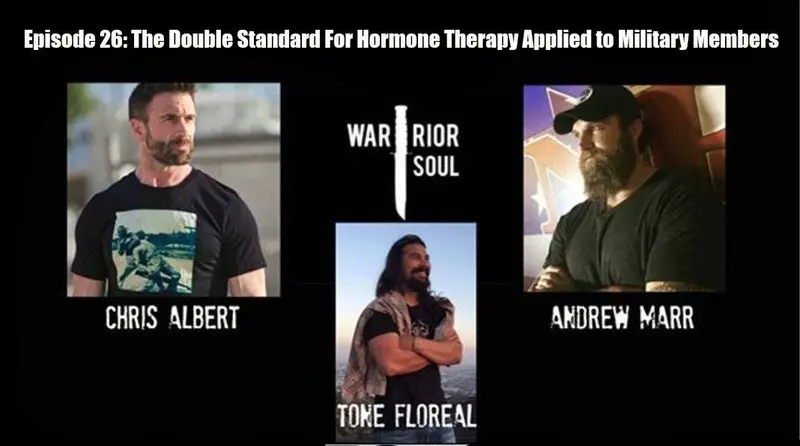
Podcast episode
Episode 27: Boosting Growth Hormone Naturally with Dr. Mark Gordon

Hosted by Chris Albert
The Warrior Soul Podcast
To listen on itunes: https://itunes.apple.com/us/podcast/the-warrior-soul-podcast/id1096901382?mt=2
Despite the often unfair and inaccurate stigma that steroids and performance enhancing drugs often get, growth hormone therapy has largely found its way into the mainstream. News reports abound of Hollywood actors using HGH therapy to maintain their youthful appearance, many people are turning to injectable human growth hormone for different purposes. Beyond bodybuilders and athletes, we have many women and men seeking to increase their libidos, tighten their skin, and burn fat with the substance.
Some reports suggest that recombinant Human Growth Hormone is completely benign and that users could take it without many of the negative feedback loops that one gets from taking other hormones, like testosterone.
Rather than just rely on the musings of locker room bro science and day time TV, we decided to get one of the top experts in the world to weigh in.
Dr. Mark Gordon is a world renowned interventional endocrinologist who works with top Hollywood actors, professional athletes, and has dedicated his free time to work with US military veterans who suffer from hormonal deficiencies due to brain trauma as Medical Director of the Warrior Angels Foundation.

Dr. Gordon was kind enough to sit down with us to discuss growth hormone, and we were able to discuss:
- Why Growth Hormone is important to the body and why a Growth Hormone deficiency could occur.
- The symptoms of a Growth Hormone Deficiency.
- Injectable Human Growth Hormone Therapy and why it is useful but not as harmless as people think.
- Natural ways of increasing growth hormone production in the body.
- Human Growth Hormone Secretagogues, or supplements that could increase natural production of growth hormone as a logical first step before taking injectable human growth hormone.
- Why many HGH Secretagogues do not work and what to look for in an effective Secretagogue.
- The Secretagogue that Doctor Gordon uses in his own practice (Click the image below to explore)

Transcript
Machine-generated from the episode audio and lightly edited — may contain errors.
Chris Albert (link to this point)
Good evening, and welcome to episode 27 of the Warrior Soul podcast. My name is Chris Albert. And today, Andrew and I have a very special guest in doctor Mark Gordon. Doctor Gordon is one of the foremost interventional endocrinologists in the world. His methods have helped people overcome things like traumatic brain injury.
And currently, doctor Gordon is the medical director of the Millennium Health Centers and the Warrior Angels Foundation. Warrior Angels Foundation helps to put veterans in touch with viable therapies to treat and cure traumatic brain injury. Doctor Gordon's methods focus on hormone replenishment, which is a big topic within the wellness industry right now. Today, we talked to doctor Gordon about a specific hormone, growth hormone. Growth hormone is one of the most misunderstood hormones there is.
A lot of people think and associate it with, overgrown bodybuilders, guys with giant growth guts, and, people who are on the Mister Olympia stage. But it's actually something that is extremely important for all of us. And so we talked to Doctor Gordon about what growth hormone is, why it's important, and natural ways of increasing growth hormone in our own bodies without injecting ourselves with it exogenously. We also talk about growth hormone injections when they're necessary and when they're not.
And we talk about supplements that can naturally increase growth hormone secretion in the body. And one in particular we talk about is one called Secretropin, which is a growth hormone secretagogue that doctor Gordon has developed. This is a combination of amino acids that doctor Gordon put together along with something that a lot of other secretagogues and growth hormone supplements don't have, which is liposomal technology. And using this supplement, he's gotten massive increases in his patients' natural growth hormone production in as tested by IGF one and IGF one BP three. So this is gonna be an extremely educational episode.
I hope you guys get a lot out of it. Doctor Gordon is important both to the medical community and to the veteran community for what he's doing for veterans who are fighting traumatic brain injury. And without further delay, I give you episode 27 with Doctor Mark Gordon, world renowned interventional endocrinologist.
This is Chris Albert, I'm here to remind you of one thing. Someday you're going to die. Now that's not some morbid statement or scary idea. It's solid fact. Your time here on this earth is limited.
And we need to be reminded of this as much as possible for one simple reason, to live your best life while you can.
This is the Warrior Soul podcast.
Andrew Marr (link to this point)
Hello, everybody. We got Andrew and Chris here with the Warrior Soul podcast. We're bringing you doctor Mark Gordon today, our good friend from the Millennium Health Centers. Doctor Gordon is renowned for his clinical application in treatment to TBI, and we're gonna get in a little bit of that.
But we'll call we'll keep calling doctor Gordon doctor Gordon till he tells me otherwise. He's he's almost threatened me to if I called him doctor Gordon certain settings settings, but I think it's the appropriate way to to do it on here. What do think, doctor Gordon?
Mark Gordon (link to this point)
Well, always Mark's the best until I put a glove on and then it becomes Doctor Gordon.
Andrew Marr (link to this point)
Is that only one glove or is that two?
Mark Gordon (link to this point)
Well, usually it's the one without the fingertips.
Andrew Marr (link to this point)
Scare me, Mark.
Mark Gordon (link to this point)
You asked, guys.
Andrew Marr (link to this point)
I did, I did Well, Mark is the medical director for CBS Studios. He is a professor at the USC School of Medicine as well as a medical director for Millennium Health Centers, medical director for Warrior Angels Foundation. He's got a CV about 40 pages long, but what are the highlights do you think would be good for our audience to know, Mark?
Mark Gordon (link to this point)
I I think the the most important is that I base everything I do on hard science. That's the key. Okay. Talk about the pharmacy license, the orthopedics for the state of California. I go down a long list that bores me every time I go through it.
So let's just say that I try to provide, the very, very best of the science in a very humanistic approach so that everybody who comes in feels like they're part of an expanding family.
Andrew Marr (link to this point)
Yes. That's exactly how I would say coming in as a patient into Mark's practice, you're you're family, truly. And some other highlights that you can find Mark on. He's been on the Joe Rogan podcast, three separate occasions. Sports Illustrated I know.
Sports Illustrated. ESPN did two two specials, outside the line specials on doctor Gordon's pioneering work with bioidentical hormones using neurosteroids to treat head trauma deficiencies. And I think human growth hormone is in one of those. That's kind of what we're gonna get into. But what were some of the those were the the essentially, the topics on on on some of those big On ESPN. Podcasts. Yeah.
Mark Gordon (link to this point)
ESPN, the first one in June 2006 was about the use of correcting one's hormonal status in order to accelerate healing. So we had one of the top docs from UCLA in orthopedics talking about the benefits of use of growth hormone specifically in accelerating the healing from major orthopedic surgeries in half the time. And then in 2007, January 21, was the one with football players and James Toney, a five time world champion boxer who had significant hormonal deficiency and didn't even know it. And but it accounted for some of the mood changes and some of the physical challenge that he had. Even though he was knocking people out, lights out, Toney knocking people out.
Then football players who after their many seasons of playing developed CTE, depression, tremors, memory, and mood related disorders. And so they were talking about our at that time, it was pioneering work focusing in on neurosteroids and growth hormone and testosterone.
Andrew Marr (link to this point)
And then since then, Mark, Life Extension Magazine has released two publications specifically on your work with the veteran population, correct?
Mark Gordon (link to this point)
Correct. The first one in 2012, thanks to Bill Faloon, who is the CEO of Life Extension Magazine, who was made aware of the work that I was doing, and he sent three different interviewers to get information and then compiled it into a report back in 2012, as I said, which was focusing in on our work with veterans at that time in 2012. And then in 2016, they published another one, which obviously you were involved in, where they went to see the end results. They talked about the science in 2012. Now they wanted to see by talking to the actual patients how they fared on their treatment, which led to then you and I being invited to the RAADfest in San Diego and, you know, lecturing, sharing some of our information in front of about a thousand people from 34 countries.
Yeah.
Andrew Marr (link to this point)
So I think the central theme that is circulating here is doctor Gordon knows his shit. He is I don't look at it every time. Yeah. We don't yeah. No.
You don't.
Mark Gordon (link to this point)
Yeah.
Andrew Marr (link to this point)
And so he prefers not to call himself an expert, but he is knowledgeable. Yeah. So
Mark Gordon (link to this point)
Correct. I'm knowledgeable.
Andrew Marr (link to this point)
He's knowledgeable.
That's why I wanted to get his advice and get some educational information from him today. So talking about growth hormone, you know, Mark, let let's start there. Like, what is growth hormone? Why is it important to us?
Mark Gordon (link to this point)
Well, growth hormone is probably the most cardinal hormone throughout our body. It regulates every cell's functioning and works with every other hormone to maximize it their benefits. We think of growth hormone as causing growth. Well, what I've seen is it really causes the or allows the cell to optimally function for generating proteins, for healing and repairing cells and tissues and organs, as well as influencing metabolism of every other system in the body like the bones. Low growth hormone associated with more of a fractionable bones, better healthy optimal levels of growth hormone helps bones to be hard.
Growth hormone influences the way thyroid hormone from our neck, which regulates metabolism, body fat, low levels of thyroid can cause depression. It helps vitamin d production in our kidneys. It helps with testosterone functioning to give us good muscle protein or muscle development. And it is in the brain helping in Alzheimer's. If you had optimal levels, it helps in Alzheimer's to connect the nerves that are broken in articles that have been coming out for ten, fifteen years.
It helps with our mood. It helps with our cognition, our memory, recall, and the ability to learn new things. So having deficiency of growth hormone affects every other hormone in every other cell in the body.
Andrew Marr (link to this point)
Mark, if you can use growth hormone to effectively treat Alzheimer's or reduce symptoms, is it correct in in saying that if you can keep your levels optimal throughout your life that you can you can lower your risk for for getting Alzheimer's?
Mark Gordon (link to this point)
Well, growth hormone in the repair phase of Alzheimer's is where it would work. And Alzheimer's is a process of inflammation. Abnormal protein is made which causes inflammation. That inflammation leads to destruction of cells. Well, part of that destruction glaucoma can help to reestablish.
But it's really the inflammation and the lack of zinc that creates the predisposing parameters for Alzheimer's disease. So it's a component that can help.
Andrew Marr (link to this point)
And I know a lot that we talk about that you've to coin the phrase the neuro permissive environment. And is that what we're talking about here with inflammation, keeping inflammation, keeping the brain in that state?
Mark Gordon (link to this point)
Well, the premise or the concept of a neuro permissive environment is the environment in the brain that will foster the ability of nerves to either grow or be regenerated and repair through repair. So a neuro permissive environment is one where you can establish a healthy environment where nerves will replenish themselves. Because if you've had head trauma and lost areas of nerves in the brain, that area might deal with a function that you've now lost. Well, if we can regenerate it, you can have regain of some degree of that functionality that was lost, whether or not it was physical mobility or cognitive brain recall.
Chris Albert (link to this point)
Mark, are there things you can do prior to having a deficiency that you could do to protect yourself, whether nutritionally or anything?
Mark Gordon (link to this point)
Well, yeah. We know that people who have good aerobic activity, low fats, bad fats, and low sugar have a higher amount of growth hormone production. High impact aerobics, Stephanie? Yeah. You wanna close my door, please? Thank you. High impact aerobics will increase growth hormone. To what degree is individualized?
Also in nutrition, there are certain natural products that you can take in. Some of them are amino acids. Others are plant products, which are known for forty years to cause an increase in the production of growth hormone by the brain. Now the brain has seven pathways that can be triggered that will all lead to increase in the production of growth hormone. So good amino acids, l lysine, alpha ketoglutarate, glutamine, and so forth have been shown in research to upregulate production by two to 400%.
Dopamine from a plant called Mucuna pruriens can actually increase through another pathway, the production of growth hormone. Arginine, arginine changes the way the body limits the production of growth hormone by reducing the restrictions that our brain has in its regulation of production of growth hormone. So if you think of it as you have a restrictive limiter on your car that only allows you to go 65 miles an hour, by moving that, so you're 75 miles an hour, you've got 10 extra miles. Well, the body, the brain has something similar to that, a limiter. It only allows you to go up to a specific level.
By using arginine, you can actually move it up a little higher.
Andrew Marr (link to this point)
Wow. That's fascinating.
Chris Albert (link to this point)
So basically, the
Mark Gordon (link to this point)
Science, man. Science. Science. I love it. Yeah.
How can you not love it? Especially when the influence is making moving body fat and making muscles better and recovering after accidents. I mean, these are all the cool things that no one talks about.
Andrew Marr (link to this point)
Yeah. Let's talk about let's talk about them. You said high impact training. I'm wondering, was that meant to be high intensity interval training sparks?
Mark Gordon (link to this point)
Well, there are two thoughts. Any form of high impact aerobics, whether or not it's running, whether or not it's interval running, whether or not it's sprinting, whether or not it's swimming, whether or not it's bicycling, elliptical, anything that's high impact, you know, and it's really the force of it is the key. And I believe that to a degree, it's because when you're doing a lot of aerobic activities, you're dropping your blood sugar. When you drop your blood sugar, it stimulates your brain to increase growth hormone. And in fact, we have a test to determine whether or not you're deficient in growth hormone or not, where we actually give you insulin to lower your blood sugar, which causes growth hormone to go up.
So high impact aerobic starvation can cause it to go up.
Chris Albert (link to this point)
So like fasting, you know,
Mark Gordon (link to this point)
off a Sunday, doing the one day a month or one day a week of fasting, you'll get an elevation in your, growth hormone production.
Chris Albert (link to this point)
And and you mentioned bad fats. Which which fats are bad?
Mark Gordon (link to this point)
Trans fatty acids, you know, having a deep fried food, you know, the trans fatty acid generated from different forms of canola oil, cod seed oil, you know, all the different oils that we have, olive oil and so forth, you can still overcook it, and they're bad bad fats. Milk fats, you know, that can be bad.
Chris Albert (link to this point)
And one thing you you you mentioned the the brain, it if you're secreting too much growth hormone, the body has a way of slowing that down.
Mark Gordon (link to this point)
Right. Well, there's a mechanism or a system that's called homeostasis, balance. And the body doesn't want you to have too much or too little of anything. So every microsecond to microsecond, the brain is checking on the concentration of every hormone in our blood that reaches the brain. The area called the hypothalamus, it has like sensors in it and says, okay, Is this guy's testosterone level too high, normal, or too low? If it's too high, it says, wait a second. Let's slow down the stimulation of the testicles in men or the ovaries in women so you get to a more physiological range.
On the other side, if it's too low, it'll stimulate the testicles or the ovaries to produce more hormone. And as it goes up, if it overshoots the amount that the body's looking for, it shuts it down. And so you've got this up and down, this yo yoing kind of effect on your hormones. So with the benefits of growth hormone and the small potential side effects of it, having a higher amount, you get better recovery body fat loss, bones improving, brain improving, hair, skin, eyes, eyesight, healing of wounds, dropping of inflammation. You get these benefits.
If growth hormone goes up too high, you might have weight loss, you might have swelling in the joints. The fallacy so far about growth hormone increasing the risk for cancer, if you have cancer in these already in your body, or if you have the potential of cancer that by using growth hormone, it'll cause it to occur. They haven't been able to prove that because it just doesn't happen. And when you look deeper into the use of growth hormone, you'll find that when growth hormone does its influence on the liver, the liver generates an anticancer product that they call IGF b p three, binding protein three, which in the Melbourne study out of Australia has shown that it has a significant anticancer effect on the body, specifically in the Melbourne study was the gut with the GI cancers. But looking at the actual mechanism, it lowers the induction or the cause for cancers.
But you have to give growth hormone in order to get this binding protein three Right. To increase it. There are ways that you can get the binding protein three with a product called quercetin, which is a natural product, retinoic acid, which is a vitamin a. Women with estradiol have higher usually levels of binding protein three. Let's see what else.
Those are the key factors that will increase outside growth hormone use, your level of binding protein three. So I personally take quercetin every day to improve my risk factors against cancer.
Chris Albert (link to this point)
Let's say somebody's taking exogenous growth hormone and, you know, there's different we hear different stories about it being used amongst pro athletes. We hear different stories about it being used for recreate, I guess call it recreational purposes or people who are just trying to get an aesthetic kind of benefit. And we see it used a lot in different anti aging clinics and in Hollywood. What's your take on the responsible use of synthetic growth hormone and what types of dangers are there for people who aren't doing it with the supervision of a physician?
Mark Gordon (link to this point)
Right. Recombinant human growth hormone is a phenomenal add on to one's preventive health program. But you do have to be responsible from the standpoint of having the laboratory testing to determine whether you really need it or not. Throughout my, you know, twenty five years of dealing with hormones, I've had a lot of people who have come in who really didn't need to be on it because their natural levels were already great. And the problem with using growth hormone unnecessarily is that you can shut down your own system so that when you run out of funds or run out of this growth hormone, exogenous growth hormone, your system is shut down, and it can take time to come back online.
So in doing the appropriate laboratory testing to determine if you really are deficient or not is the first line of approach. If you are found to be deficient, most of us do a what's called a challenge test, which is another higher level of testing of the body where we actually try to force your body to produce growth hormone. And there's glucagon challenge test. There's an ITT and insulin tolerance test. There's a clonidine test for children.
And using these, you could determine whether or not the pituitary, hypothalamic pituitary axis, the two parts of the brain that regulate each of our hormones, and this one's specifically growth hormone, whether or not it's intact, whether or not it's healthy and functioning. Because we find in our population with whom we are using secretagogues, we're finding that there's about eleven percent who do not respond, and that eleven percent, we've ascribed it to the fact that they've had head trauma that's interrupted the ability of their pituitary or the hypothalamic pituitary axis that working together to increase growth hormone production.
Andrew Marr (link to this point)
Mark, I'm interested to know, do you know the numbers on if you've been to take some of those TBI patients back to a neuro permissive environment? At that point, would the secretagogue be of a benefit to them or work better at that point?
Mark Gordon (link to this point)
Well, in the veteran population that we've been seeing for the past years, not all have a fixed functional loss, meaning that for the rest of their life, they're not going to be able to produce growth hormone.
And how we find that is by starting them on a protocol to help reestablish a neuro permissive environment by addressing their inflammation of the brain with the products that we use. And then watching as their growth hormone levels improve without doing anything specifically because we know that testosterone testosterone dehydroepiandrosterone DHEA influences, estradiol influences, and raises the production of growth hormone naturally. So we'd like to first fix the fundamental deficiencies before jumping onto growth hormone. But yes, we've had veterans who have had low levels and the benefit of increasing it through natural means has had significant responsiveness benefits.
Chris Albert (link to this point)
Real quick, can we take one step back and just describe what a secretagogue is exactly?
Mark Gordon (link to this point)
Well, a secretagogue is a product that is exogenous, meaning you take it either through you know, oral route or injection, which will stimulate your body to produce another product. And since we're talking about growth hormone, a growth hormone secretagogue will stimulate the brain to produce more growth hormone. As I said, there are seven pathways that we can stimulate with natural products to increase your own production of growth hormone. Therefore, you don't need to use injectable growth hormone. So that's what a secretagogue is.
Andrew Marr (link to this point)
Awesome.
Chris Albert (link to this point)
And so with a secretagogue, you can stimulate production of natural growth hormone, but doesn't need to be given with the care of a physician or it does or there's different types that do and don't?
Mark Gordon (link to this point)
Say again, sorry, I don't hear you as clearly.
Chris Albert (link to this point)
A secretagogue, that's an over the counter type of thing or it's without the supervision of a physician?
Mark Gordon (link to this point)
Well, are two classes of secretagogues. There are oral products where the majority of them are natural. And then there are those that are injectable that are real medications, we'll say, that need a physician to prescribe it. But the natural secretagogues, when you look into that arena of products, obviously, you wanna have the one that has the greatest amount of science proving that it works as opposed to saying that, well, it should work.
Chris Albert (link to this point)
Right. And and these are kind of the the first step you would take as far as
Mark Gordon (link to this point)
Right. What we've been doing for the past fifteen years is that we've been using secretagogues is if we find someone that is deficient depending upon their level of deficiency, we if it's a borderline deficiency, we might fix the underlying testosterone, DHEA, and estrogen deficiencies before going and putting a secretagogue on, or we'll find someone that has a significant deficiency in their growth hormone level and include a natural secretagogue in the process of the first line of treatment.
Andrew Marr (link to this point)
Awesome. Awesome.
And, you know, I I can speak from experience here that that's the the route that we we took with myself. And everything now, all my levels are absolutely optimal and pristine levels, which reflects, you know, the status that that I'm feeling emotionally, behaviorally, physically, and everything else. And it was it was, you know, identifying the right things and then treating them effectively. And when you do it that way, and we've just seen incredible results, and that's just not specific or exclusive to me. I mean, it's been produced time and time again that it's almost like I I just wanna take it back sometimes to the media because we're helping to change people's lives and getting the wrong message in other places.
Chris Albert (link to this point)
And and Yes. Andrew, what was it you you you experienced the deficiency, and, you know, what was it like prior to getting on a secretagogue, what was it like afterwards? What what
Andrew Marr (link to this point)
Well, it's kinda like Mark said. I had a I had a number of other deficiencies. So all of them, basically, testosterone, DHEA, pregnenolone, prolactone prolactin, you know, growth hormone, my IGF one, and and binding protein three were were all low. And so it was first correcting the testosterone, the DHEA, the pregnenolone were the big ones, and we waited to start a secretagogue until, I think, three or four months into it. And then we saw my numbers essentially double into a a phenomenal range, you know, naturally.
And then we brought it back up to the even higher level, again, to that pristine level using a a secretagogue. And, again, that was all under a physician's, you know, supervision and recommendation. But but doing it that right way, again, it's not like, okay. Well, I felt this way because I was deficient in growth hormone. I I didn't know what I what I was deficient in or not deficient in, but what I was having a problem with was just functioning like a normal human being, trying to remember how to drive home from the same rock you drove home from work the last six, seven years.
You know what I mean? Not being overcome with depression and anxiety where you're crying in public or at home and you don't have a reason to be crying. It just comes on. You can't control it. You know what I mean?
How turning to alcohol, being on 13 medications, having double vision and and migraines every day. That was a quality of life when you're deficient in these things. And then, you know, we can talk about how the medical conventional medical model treats that, but, you know, I wasn't getting any answers. And it wasn't until we took an objective measurement to see, okay. Well, you know what?
The brain is not in a neuro permissive environment, and you're also deficient in all of these life crucial neurosteroids from what's produced in the brain. You know? And so, you know, that was Mark educating me from day one. That's a big part of the practice when you come in, like you said, to your family. But he's gonna educate you almost to the point where, like, you better be ready to go to school.
It's not because it's it's time to go to work. You're gonna know why you're not functioning correctly. And at that point, you're gonna have all the information. So it's truly in your hands if you wanna take this information and apply it to improve your life because it's not a lack of information at that point.
Chris Albert (link to this point)
And, Mark, how do you just when do you decide to use a secretagogue? And and there a particular type of patient that you would decide to use
Mark Gordon (link to this point)
Well, it I have cutoffs. You know, my goal is not to inundate any individual with lots of supplements and products and treatment protocols, but to be really on point of the optimizing products that we need not to have some unnecessary product on board. So understanding that, as I said, that DHEA testosterone, estradiol, and things like quercetin can all help to stimulate your own body to rise or raise the level of growth hormone production. That's where I start on the majority of cases, the ones that are on borderline. And what you see is elevation anywhere between, you know, 20 to we have someone at 650%, but we remove the 650%, probably around 20 to maybe 300% improvement in growth hormone levels in a month to three months.
So if someone is on the border and for me, on the border is about a 150 on the measurement units that we use for IGF one insulin like growth factor. So if it's above a 150, I'll go ahead and use the other products we're using if they're testosterone deficient or DHEA deficient. I'll use those before adding a specific secretagogue. But if they're less than a 150, I'll add to the regimen right at the start, at the outset, a secretagogue to try and get the levels higher. And part of what's driving me on that is a major report in traditional medicine, which is called the AACE, which is American Association of Clinical Endocrinologists.
It's an organization of endocrinologists that work with patients clinically, who found that in individuals who are deficient in growth hormone, they had nine factors of their biochemistry that went up that increased the risk for heart disease. So to try and minimize things of that nature, you wanna put the chemistry back in order. So I'm compelled when it's less than a 150 to give them a secretagogue. So a 150 for us is the breakpoint.
Chris Albert (link to this point)
And when you're looking for a particular secretagogue to use, and I've seen different secretagogues out there on the internet, different products, at different levels. And, I've seen some that got absolutely fabulous reviews and some that got horrible reviews. What makes the difference there? What makes the difference in its effectiveness and its ability to be efficacious?
Mark Gordon (link to this point)
Right. It's a good question. Over the forty years, if not longer, that we have found certain amino acids that can naturally increase growth hormone production. Certain pro hormones can increase growth hormone production, like DHEAS, and certain plant materials can increase the production of growth hormone. So we already know we have a large group of products that we can select and mix and match to help increase growth hormone production.
But the real bottom line is the delivery technology. You can have these active components in a powder form. And when you take the powder form in a capsule or a packet and you ingest it, what happens is the majority of it gets destroyed by the acid in the stomach. So you end up with diarrhea, but your growth hormone level might go up. And this is a common thing that was happening back in the sixties and seventies and eighties with people taking three and a half grams, five grams of arginine, and alpha ketoglutarate and l lysine and glutamine and glutarate and all these things, they get osmotic diarrhea.
So there are delivery technologies that came out, and the one that we work very closely with is called liposomal. And what liposomal is is a natural product from lecithin and phosphatidylcholine and maybe something thrown in to enhance it, which are natural products that form a protective shell around the constituents, the amino acids and the plant by products and so forth. And they protect it from the acid in the stomach so that you can actually deliver a smaller volume, but you get higher absorption. So you get you know, instead of taking thirteen grams of solute of this powdery stuff, you take a hundred and forty seven, a hundred fifty milligrams of the secretagogue that we use mix, and it gets absorbed. And you see in ninety minutes, this the rise in growth hormone production.
Or if you wait a month and you compare them, I just had a guy this morning who had initial level of one twenty six, now he's two thirty five in three months. And you've got these levels that went from being low normal to being normal optimal. Okay? So the delivery technology, the constituents of it, the content of the secretagogue, and how it's delivered are the two most important things.
Andrew Marr (link to this point)
So absorption is king on that one.
Mark Gordon (link to this point)
Yes. That's why nanoliposomal liposome technology is so great. Liposomes can have a size that will allow them to get right into the blood or a size that they can't get into the blood. So in the secretagogue that we use, we've had it measured to make sure that the size of each particle is small enough to get absorbed. It's like micronized.
When you look for supplements out there, whether it's for bodybuilding or for health, you wanna always look for micronized, which means it's the smallest possible size that we can get it, so it gets absorbed rapidly, efficiently.
Andrew Marr (link to this point)
Mark, why do other companies not invest in micronized or the liposomal, you know, technology nanos or technology?
Mark Gordon (link to this point)
Micronizing it, it means you have to have a higher quality product, and the micronizing is a more expensive product. So if you just wanna make a buck, you get the cheap over the counter stuff, which cost you, you know, $510. Or if you want the stuff that really absorbs, you get the higher price $120, $25.
But you get the effect of what you're taking as opposed to diarrhea.
Andrew Marr (link to this point)
So what I really wanna drive home to the audience is what you buy, you know, the the quality of it really matters, and it's because of the absorption rate. And if it is not micronized, if it is not nanoliposomal technology, you're not going it's not going to get absorbed. So that's when you hear about pissing most of it out. Is that correct, Mark?
Mark Gordon (link to this point)
Yeah. Either pissing it or pooping it out, you know, either which way. Yeah. Ear pee, either way.
Andrew Marr (link to this point)
So really, that's a good way to differentiate. Is this product a quality product, or could it be suspect?
Mark Gordon (link to this point)
Right. And another thing is, you know, I've been involved with secretagogue technology, specifically the growth hormone secretagogue technology since 2001. And throughout the years, have seen products that have no science behind it, no clinical research behind it, or some that have had 16 people behind it. The secretagogue that we use, it has tens of thousands of people behind it who are clinical cases. And the product that we use is a non prescriptive product that only physicians have had access to since 2006.
Chris Albert (link to this point)
And and why is that? What why
Mark Gordon (link to this point)
Well, the reason is that the philosophy for the secretagogue that we're using is that to obtain the highest credibility on the functioning, the ability of the product to work is by putting it through the physician marketplace because the physicians are doubting, suspicious, and therefore, we'll do the right testing to see whether or not the product that they're going to be sharing with their patients and therefore getting the the acknowledgment that they made sure that it was the very best thing. We put it to the it went into the physician's physician's hands, hands, and the data that had been generated for the effectiveness of the product, this particular secretagogue, shows some 89 effectiveness and eleven percent failure, in the population with the generation or the increase in the baseline IGF one growth factor, from 20 to six hundred fifty percent. That is great science that is being reproduced again and again because the product is presently, as I said, only in physicians' hands.
Andrew Marr (link to this point)
So, Mark, what, I want you to talk to the, like, the 25 year old who wants to get his hands on this product and thinks it's recommended to take, you know, two pills or two sprays, whatever the whatever the recommended dose is. If I could just double that, therefore, I could even double my, you know, natural growth hormone production that way because that's what we don't want people doing. But Right. I wanted you to describe why that is not a good idea.
Mark Gordon (link to this point)
Right. Well, as I said earlier that there's a regulatory mechanism in our body, limiter. So if we take in too much of the secretagogue stimulator or stimulant, what'll happen is you'll exceed the body's ability to handle it, and it'll shut down the entire system. So what we like doing in in the medical arena where we're using this secretagogue, we'll do a baseline study and then put them on to a starting of two sprays in the mouth and let it sit there and then swallow. And then we measure a month later or three months later their level.
If it's gone up, it's a good sign so we can increase the amount of secreted out from two to three squirts a night. And if we do go and repeat it and see that it's continuing to go up, it means we haven't reached the limiter yet. So we keep on slowly going up to the maximum amount that we can. And you know that you've exceeded the regulatory limits when you have someone that goes up and then all of a sudden shuts down, drops down. That indicates we overshot what I've been calling the threshold. Each and every one of us has a unique level of growth hormone production that the body will be allowed to make.
There are ways of tricking it into making more, and we put that amino acid composition into the secretagogue so that you can actually push the limit from, as I said in that earlier discussion, from 65 to 75 or 80. So you can get added amount of growth hormone.
Chris Albert (link to this point)
So if you're staying on the minimum effective dose and you're not crossing that threshold, then there really is, could come off of this stuff and your system wouldn't be shut down. Your growth hormone would be going.
Mark Gordon (link to this point)
Correct. One of the protocols that we've used as secretagogue is when people have, low normal production of growth hormone, and they feel that by going on to growth hormone, their life will change dramatically. So we go through the legal requirements and do the challenge test and put them on to the growth hormone in the morning. And at night, we put them on to the secretagogue so that it keeps the tone of their own pituitary making growth hormone because what we've seen, patients who were not our patients coming in, they ran out of funding for growth hormone or their supply of growth hormone for whatever reason was interrupted, they start crashing, and they feel horrible. So we start them on a secretagogue, and it can take up to a year for their own production to start kicking in because when you use injectable growth hormone, it shuts off your own brain's ability to make it.
And back in 2007 when we started doing this testing or 2005, this testing to see people who came into us who had been on growth hormone for two years, five years, and then they stopped and they felt horrible. We started measuring their levels of the growth factors, and we saw that they were always suppressed real low. And when you looked at their original labs, if they had it, they were higher. And what happened is they shut off. They burnt out their own system.
So putting the secreted secretagogue on board helped to rekindle, made it more permissive for production of growth hormone. And a year, eighteen months later, you saw them return to a healthier level, not an optimal level, but a healthier level.
Chris Albert (link to this point)
And that's something to mention out there for our listeners and viewers because, when you go to a lot of those higher hormone therapies, I guess you call it, they tend to be very expensive. If you're going to start with something that is going to be more severe and shut you down and you run out of funding or you don't have the money to get your next dose of therapy, it's probably a wiser choice to start with something that's not going to shut you down, that's going to keep you going.
Mark Gordon (link to this point)
Correct. Correct. The secretagogues that we use, actually enhance your natural production, and the growth hormone is normally produced between 08:00 at night and 04:00 in the morning. So that's when it peaks. So use utilizing a secretagogue between that time frame just pushes your natural production higher.
And then because we do have amino acids to raise the threshold, you can get a higher spike. So instead of being at 20, you might get 25 or 30 or 40 in the range, which might be, you know, translate out. You were at a 100 or a 120, and now you're at 250. We've had people go up to, over 300.
Andrew Marr (link to this point)
That's that's interesting. So just following the natural biological rhythm and using that to essentially your advantage or advantage, you can spike it to produce higher levels.
Mark Gordon (link to this point)
Absolutely. You know, it still amazes me that I have people coming in who are utilizing secretagogues in the morning. And if you look at the daytime, there are some small spikes throughout the day, but the major one is 08:00 at night to four in the morning.
Andrew Marr (link to this point)
Wow. So Wow.
Doctor Gordon, what about some of the myths out there, or Mark? What about some of the myths out there, like, you know, taking, too much growth hormone will make your forehead grow or elongate joints or bones, you know, things like that.
Mark Gordon (link to this point)
Your jaw coming out, your fingers longer and Yeah. Just like gigantism. Andre the Giant.
Andrew Marr (link to this point)
Right. You know, that's an urban myth, but I think it's worth talking about.
Mark Gordon (link to this point)
Well, all of the skeletal abnormalities that happen are usually during youthful time when you're young and you have high levels of growth hormone. In order to get the change in the jaw and the forehead, you have to be on pathological dosing, tumor generated levels so high, you know, you could afford it a bottle of both hormone that you normally use in a two weeks time you use every hour. With a pituitary abnormal, which is a benign tumor, the pituitary producing pure growth hormone, that's what gigantism or high growth hormone production is all about. But it doesn't happen. I mean, I know a scare tactics, it's been used to get people, oh, you're gonna have this problem and that problem.
The real problems that I've seen over the past twenty five years that I've been exposed to growth hormone use has been only people who abuse it, use excessive amounts with fluid retention. They get edema, swelling of their legs. They might get joint pain because fluid accumulates in the joints. You can have a change in your thyroid function if you use too much. You know, you can lose body fat, which is a good bad thing if you've got extra amount.
But, really haven't seen any of things that they they say will happen, like, you know, the jaw coming out, which I haven't seen. It doesn't mean it can happen in a rare situation, but I don't see where it's a common commonality as well as, in the past, 9595 until now, having seen, bodybuilders who have been abusive in hormones, I haven't seen anyone with forehead related issues. Most of their problem has been the acne, the lack of testicles and the inability of their body to restart their testosterone.
Chris Albert (link to this point)
About the
Andrew Marr (link to this point)
I'm glad to finally clear that up. Sorry, Chris, go ahead brother.
Chris Albert (link to this point)
Oh, it's okay, man. What about the gut that you see on on some of the top bodybuilding competitors?
Mark Gordon (link to this point)
What happens is growth hormone will cause fluid retention and because the mucosal, the tissue that the gut is prone to having fluid in the lining can cause the colon throughout the body to become a little bit thicker thicker. So it causes some true burns of the or pouching pooching out of the stomach. So, yes, that can happen, but you're using very high levels. And that's been my objection in the bodybuilding world is that they don't use knowledgeable physicians to help them to achieve a safe level of an effective but safe effective in what they're looking for, but safe level of hormones. They think that, you know, just go use 50,000 and that's all you need.
It's not the truth. You can use consistently low levels as long as you have other supportive pro hormones and hormones involved in the entire treatment protocol, you can use low level treatment and get the same benefits of people who are using high treatment without the side effects. And we've proven this for twenty five years.
Chris Albert (link to this point)
Now, one thing I want to ask you real quick, because we've mentioned that Andrew and yourself have been working together and you've had a profound influence on Andrew's health. And as far as bringing him back to his high performing state, What gave you the insight to start to apply some of your knowledge toward veterans? And we can have a whole conversation about this at another time, but I just want to let the audience know what you're doing because I think it's amazing. Kind of figure out what gave you the first insights to start to do this?
Mark Gordon (link to this point)
Well, I started in 'ninety five doing endocrinology, doing hormone replacement. They called it, anti aging medicine, a term that I really didn't like. So I coined the term interventional endocrinology and came out with a book in 2007. But what really led me down this was the fact that in 1997, I had developed depression. I was obese.
I wasn't a happy camper. And I went to a facility that was touted as being the first major hormone assessing facility in Las Vegas. Made him a lot of money, and they found that I was three hormones deficient. And the relationship to anything of head trauma wasn't clear at that time. It wasn't even in mind.
Not to be funny about the head trauma in mind, but, I was, put on to replacement thyroid, testosterone, and growth hormone. And within three months, my entire world changed. I was off the antidepressants. I was in the gym. I was feeling confident.
I was reading a lot more. I was going out and lecturing for other people. And you were you getting late? You just copied what I said in my presentation. Yeah.
They'll have to see that on RAADfest to get to the punch line. You'll no doubt, put it up on your website.
Andrew Marr (link to this point)
We'll make sure the link's in the show notes.
Mark Gordon (link to this point)
Okay. Thank you. So what happened was in 2004, I started doing a new lecture dealing with brain and hormones and came across one article from Turkey, which said that pugilist boxers had significant growth hormone deficiency from boxing and boom. That was my epiphany article, and I started going back to literature and finding other hormones that were dropped or lessened by trauma. And then went back to my population of patients and the majority of them who had hormone deficient so you had a long list of head traumas, car accidents, slip and fall, blunt head trauma, you know, blast trauma, gunshot wounds to the head, and so forth.
And it became very clear that there was an association, but it took a little bit longer to associate it to mood change, personality change. So in 2004 is when I, you know, basically state that I started with my ascent or my focus on traumatic brain injury and hormone deficiency. And then in 2009, had a a doctor, an emergency room in in Fayette, North Carolina, who called me, and she said her husband is getting ready to be less than honorably discharged from the Green Berets for mood changes and everything. They've been on five tours of duty, blown up, shotgun, whatever. And, I said, let's send you a kit.
And we I paid for them to have their labs done, sure enough, there came hormone deficiency. And when I instructed his Barbara how to give the medication or the supplements back to the to the husband, he ended up staying two additional tours of duty. And the only negative thing was he was using testosterone. So when he was about ready to separate from the military, you know, the insurance company that I won't mention their name, otherwise, I'd have to punch myself, stopped using allowing him to have testosterone, and he crashed and burned. Now we hooked him up with one of our compounding pharmacies, university compounding pharmacy, who donated his testosterone to him as University Compounding donates testosterone to all our veterans.
They've just been a phenomenal supporter.
Chris Albert (link to this point)
Yes, Wow. And then how did yourself and Andrew get hooked up?
Mark Gordon (link to this point)
Well, it was a thrown out in the universe that two people who cared about other people needed to connect. I was very fortunate. I was on a radio show and talking about what we were doing with the vets and that we had run out of money. And the patient, one of my wealthy patient calls up and says, I'll donate some money. And I said, it's not the money.
It's a five zero one c that we need, a charitable organization. So I said, fine. I'll pay to have it set up. So he started that process, and it turned out where I just would not have the time to do it. So I went out looking for a, veterans owned and operated charitable organization to try and condemn into, you know, what I was doing or to share with them what I was doing.
And at that time in space in the universe, Andrew was looking for out of the box medicine, and we connected at the right time. He was coming to California for one of the centers in the South of where I'm at. He drove up, and the rest is history as they say.
Andrew Marr (link to this point)
Yeah. And, you know, Mark wasn't really, you know, pushing, you know, for a partnership or anything else. It was like, Here's the information that you're probably not getting. Check it out for yourself. And if you are interested, I'm ready to talk at any time, and we can move forward with this.
And so I just wanna say, he he, you know, he reached out and did that when he didn't have to, which alerted me that this is the kind of person that is not just, you know, looking to make a buck, nothing wrong with that, but he has intentions of really helping, you know, impact somebody's life. And that became more and more apparent as we started with with my treatment and then understanding that I, you know, had a nonprofit, but we were looking for a focus and a way to go. And like Mark said, things just kind of aligned, it was it was a no brainer. And looking at it, you know, effectively, how do you how what is the best, most efficient way, effective way to to treat this, to identify this? And we're looking at all these other different modalities where you got to sit uproot somebody from their geographical location.
They have to get on a plane and go to an actual actual treatment facility and be there for maybe one to six weeks. And then maybe or maybe they they don't get good results. But what we're finding is those results weren't sustainable. And so when I was when we were weighing all these things and I started to have clarity of mind again for the first time, it kinda went trigger my moment was like, my gosh. This is it.
This is a revolutionary way we can do this. This is how we can treat somebody wherever they're at through the system we've created. You know, we don't need a brick and mortar facility to send somebody to to do all these fancy tests that look at the structure of the brain, but they don't look at the neurochemistry that is responsible for running the entire system. And it's kind of been been forgot forgotten about. And, understanding that, okay.
Well, this is a method that we can definitely use. We can scale. We can replicate. When you look at the numbers, over three hundred thousand, diagnosed with post traumatic stress and TBI since, I think, that last report was two thousand fifteen. So those numbers are probably higher now.
But, again, those numbers are only kinda like with what we see with our TBI numbers in civilian population. They're the only that we can report on those are the ones that went to the emergency room. So it's easy to surmise that the number is much higher than what's being reported. And I think on a different show, we can get into the difference between
Chris Albert (link to this point)
Yeah.
Andrew Marr (link to this point)
TBI and post-traumatic stress. So at least I would like to get into that on a different show as well as the change in behaviors that you were talking about, Mark, and and how that, has been misidentified and misdiagnosed because if you look at, America in general, mean, one out of nine adults is on an antidepressant. One out of nine of three hundred million people. Think about that. That's a huge amount of people.
And when you're on an antidepressant and you're still depressed, maybe that's not the issue. If you're on the antianxiety and you still have an anxiety, maybe that's not the issue. So that's what we're really working to change here is the perception, the treatment, and the acceptance of a scientifically proven clinical protocol.
Chris Albert (link to this point)
Well, absolutely. And suffice to say that, if if you're out there right now and you're you're listening to this or you're watching this and, Andrew's getting chased by the police, he's got a duck down. But, if you're if you're out there and you're listening to this or you're watching this and you've been told that you're you're suffering from PTSD or you're you're be given be being given medication for this and it's not helping, get out there and educate yourself as much as possible. You know, go over to the Warrior Angels website, learn as much as you can about the situation and really put yourself in touch with the different types of resources that are out there.
And Doctor Gordon, seriously, I want to thank you and Andrew, but I also want to thank you for what you do. Because the two of you guys together, we see a lot of organizations out there that are raising awareness and those are great. But there's very few that are actually taking action. And you guys are taking action and really making a dent into this plague that's been pushed on veterans. I think that's absolutely amazing.
So thank you.
Mark Gordon (link to this point)
Thank you very much for recognizing that.
Andrew Marr (link to this point)
Yeah. And I just I'm so excited because we have doctor Mark Gordon in such an incredible asset for so many reasons. But just like this, we we've really explained growth hormone and the misconceptions and what people probably don't know and need to know and how to best apply this information to use it to, you know, live their best lives. I think one more question, Mark, is what is the best way for somebody?
Is there a at home test, or how do you recommend an individual who not necessarily is having a lot of issues? They're just curious about this one thing. How would you do that, or how what would you recommend to them to get a test?
Mark Gordon (link to this point)
Yeah. Getting tested for growth hormone, unfortunately, at this moment in time, the only way is go to a physician who understands growth hormone, do a simple blood test that takes maybe three to four days to get the results in, look at the results, and then, understand that they are either low, low normal, or normal. And then do the appropriate, approach. And the, the most logical first step is to use a secretagogue to because of it being inexpensive, you don't have to go through hoops, and you can, you know, use it at night and stimulate your own production instead of shutting down your production with injectable.
Chris Albert (link to this point)
And saving yourself a whole lot of money too.
Mark Gordon (link to this point)
Absolutely. Someone was telling me this past weekend conference that it was $800 a month for injectable. The secretagogue that we use is very inexpensive.
Chris Albert (link to this point)
Yeah. I've heard it as high as $1,200 a month too.
Andrew Marr (link to this point)
1,200? Yeah.
Chris Albert (link to this point)
Yep.
Andrew Marr (link to this point)
Yeah. Well, again, great information that is going to continue on this platform so we can put the information in the hands of the public so they can make a more informed decision to live their best lives. Again, Mark, thanks thanks for everything. It's been absolutely a pleasure. Thank you.
I appreciate the time.
Chris Albert (link to this point)
Thank you, sir. So there you have it. That was episode number 27 of the Warrior Soul Podcast with Doctor Mark Gordon. If you're interested in learning more about the growth hormone secretagogue that doctor Gordon uses in his practice, a secretagogue that's been demonstrated to be extremely effective in raising levels of IGF one and IGF BP three using its liposomal technology.
I'm gonna put the link to that secretagogue in the show notes. I hope that you also get a chance to check out the Warrior Angels Foundation. The Warrior Angels Foundation is extremely important. It's doing such important work within the veteran community. It my opinion, it's actually the one of the only organizations that's actually taking action.
There's a lot of organizations out there that are raising awareness. And awareness is great. Yes, we have to understand veterans problems. Yes, we have to understand the plight that veterans face. But we also need to be taking solid steps toward improving veterans lives, improving their well-being, and increasing their desire to live their best lives.
And Andrew and doctor Gordon are both doing that through the Warrior Angels Foundation. I'm gonna put a link in the show notes below so that you guys, if you want to, can donate to make sure that this awesome organization continues its valuable work. And with that, we're gonna bring this episode to an end. Be sure to stay tuned until next week when we have another amazing guest for all of you. Till then, make sure that you're doing everything you can to live your best life.
Host of the Warrior Soul Podcast and founder of Warrior Soul. Worldwide trainer and nutrition coach, contributing author at Testosterone Nation and Muscle and Strength.