Podcast episode
Episode 36: More Than a Veterans’ Charity with Blayne Smith of Team Red, White, and Blue
Hosted by Chris Albert
The Warrior Soul Podcast
To subscribe and listen on itunes: https://itunes.apple.com/us/podcast/the-warrior-soul-podcast/id1096901382?mt=2

Blayne Smith, Executive Director Bio:
Blayne works closely with Team RWB’s board members, staff, and volunteer leaders
to develop and implement programs that serve veterans across the country. He
provides strategic and operational guidance to the organization while building and
managing key partnerships. Blayne is a West Point graduate and former Special
Forces officer with combat tours in both Iraq and Afghanistan. Upon leaving the
military, he worked at Quest Diagnostics while earning his MBA at the University of
Florida. Blayne currently resides in Tampa with his two boys and leads the Team
RWB Tampa chapter.

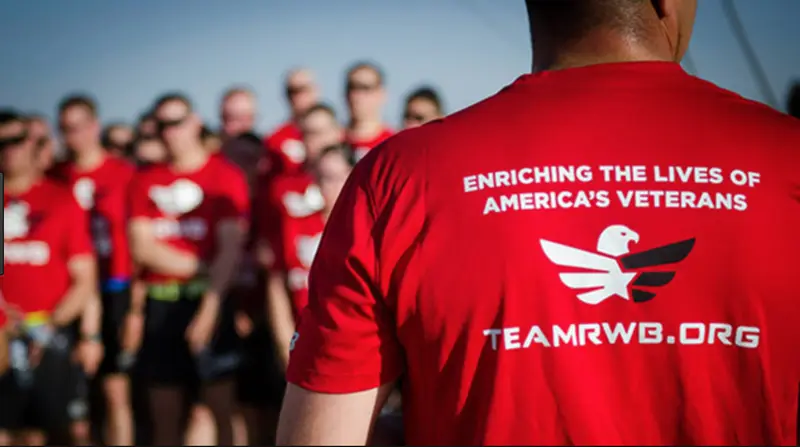
Team RWB Mission: Enrichment is defined as creating quality relationships and experiences that contribute to life satisfaction and overall wellbeing. The concept of enrichment consists of three core components—health, people, and purpose—that define a rich life.
Enrichment Equation: Enrichment = Health + People + Purpose
People: Creating authentic connections (defined as genuine, quality, supportive relationships that generate mutual trust and accountability), reflected in an increased number of close relationships and improvements in teammates’ sense of belonging, purpose, and community engagement.
Health: Creating frequent opportunities for team members to connect through fitness, sports, and recreation to improve physical, mental, and emotional wellbeing.
Purpose: Engaging members in meaningful team and community-based experiences such as leadership and service that, beyond physical and social activities, renew self-identity and purpose in life.
We accomplish our mission via our two core programs: our Chapter and Community Program (CCP) and our Leadership Development Program (LDP).
Twitter: @TeamRWB
https://www.facebook.com/TeamRWB/
https://www.instagram.com/teamrwb/

Transcript
Machine-generated from the episode audio and lightly edited — may contain errors.
Chris Albert (link to this point)
Welcome to episode number 36 of the Warrior Soul podcast. My name is Chris Albert, and today we are bringing you our episode with Blayne Smith, retired special forces officer and executive director of Team Red, White, and Blue. Team Red, White, and Blue is probably one of the most effective veterans charities out there today. And the reason why it's so effective in my opinion is because it connects Veterans with what's probably one of the most important elements of their success, and that's community. Why is community so important?
Well, if you ask anyone who's been successful, they'll tell you. They're successful because of the people they've chosen to surround themselves with. With Team Red, White, and Blue, veterans are able to participate in physical and social activities that enrich their lives and solidify the bonds with those they participate in those activities with. And what makes team RWB so unique is that it's not just veterans who participate. Civilians, patriots can also participate, and it's different than just handing over a check or making a donation.
You know, when you participate in a Team RWB event, you're actually creating a bond with the veterans you're participating with. And when you do things like this, create a community, it's not just a friendship you're making. It's not just a relationship. You're literally surrounding yourselves with positivity. And when you do so, that changes the way your brain works.
And it allows it to go from negative to positive. You're literally the thoughts that you think sometimes, and and I tell people this all the time, you know, if if you continually think negative thoughts, it's been demonstrated that you can completely change the physiology of your brain. Similarly, if you start surrounding yourself with positive people and thinking positive thoughts, you can change the physiology of your brain for the better. And the work that Team RWB does is so important to veterans because it gives them a platform and a medium to do this. Unfortunately, I was not able to make this interview because I was stuck on a plane from New York to California.
My flight got delayed due to a storm in Texas. But Andrew handled this interview very well, and he goes through a lot of Blayne's background as a West Point graduate and as a special forces officer. And then they go really deep into what Team RWB does, what their mission is, and how Team RWB can help you. We'll also be providing links to the Team Red, White, and Blue website along with their Facebook page and everything else you need to learn or to have to participate in a Team RWB event. Additionally, I wanted to talk to you guys about Andrew's upcoming book.
It's called Tales from the Blast Factory, a brain injured special forces Green Beret comes back from the brink. And it goes through Andrew's story as a brain injured Special Forces Green Beret and everything he went through, all the lessons he learned, and how he was able to put together a treatment protocol that worked for him because the treatment that the VA was providing was not working for him or serving him whatsoever. It also talks about his bouts with alcoholism and dealing with his own demons after his deployments to Afghanistan. I'm really passionate about promoting this book because I truly feel that the work that Andrew is doing and the book itself are going to change the way we look at not only traumatic brain injury, but also PTS. A lot of what we think is PTS can also be the result of chemical imbalances caused by brain inflammation.
And I think the more we educate ourselves about this, the more we're going to prevent our brothers and sisters from taking their own lives and from living lives that are not serving them or serving their purpose here on this earth. And so if you guys are interested in getting on a preorder list for this book or in just getting to know Andrew and his story, sign up for the preorder list over at www.talesfromtheblastfactory.com, and I'll put a link for that in the show notes as well. And when you sign up, we're not going to be spamming you with emails. You're going to get free workouts every day, and you get a membership in our private Facebook group where we provide those workouts. And you're going to get content that's going to help you out.
Content on nutrition, content on life advice, and content that's going to help you to live your best life. Alright, I'm going to shut my mouth now and I'm going to let Andrew take over with episode 36 with Blayne Smith, executive director of Team Red, White and Blue. This is Chris Albert, and I'm here to remind you of one thing. Someday, you're going to die. Now that's not some morbid statement or scary idea.
It's solid fact. Your time here on this earth is limited. And we need to be reminded of this as much as possible for one simple reason, to live your best life while you can. This is the Warrior Soul podcast.
Andrew Marr (link to this point)
Hello everybody, it's Andrew Marr with Warrior Soul. Chris got laid up coming from New York to LA, but I am honored to bring you Blayne Smith of Team Red, White and Blue today. Blayne, how you doing brother?
Blayne Smith (link to this point)
I'm good man, thank you for having me on.
Andrew Marr (link to this point)
Yeah, it's our pleasure. I want to treat this Blayne like I'm very familiar with the organization and the mission, but I want to talk from it viewpoint that to the audience member who might not know anything about it. So we'll kind of jump into team red, white and blue and the mission and everything from somebody who's looking at it that doesn't know anything about it. But before we jump into there, man, can you give us a brief background about what you did before the Army and why you decided to go into the Army and where did that, where did those roads lead you?
Blayne Smith (link to this point)
Yeah, absolutely man. So I grew up down in Southwest Florida, in Cape Coral, Florida, which is often confused with Cape Canaveral, Florida or Coral Springs, but it's neither. It's a little place, it's kind of quiet down in the Southwest part of the state. You know, And to be honest with you, I didn't really have any plans as a teenager on joining the military at all. But eventually, I started looking for places to go to college.
And, I mean, the long and the short of it was I had a teacher who was a retired army officer and basically forced me to apply to the service academies. And I was still not particularly interested, just being honest. And when push came to shove, I went up for a visit to West Point and checked the place out one December, my senior year, and it was really impressive. And there was snow on the ground, and the place looked kind of like a bunch of old castles. I met a bunch of cadets that were super impressive.
And, you know, I was just kind of a young naive kid that had no idea what I was getting into. But ultimately, I I couldn't afford to go to Duke. And West Point offered me a chance to get a good education and, get away from home and challenge myself a little bit. And so I signed up to do it back in 1997, really before most of what's going on in the world now was really a thing. So I signed up for the military really looking for a good education and a challenge, which I think is why a lot of people join the military.
And I didn't know that 9/11 was going to happen or that I was going to end up following the path that I ultimately found myself on.
Andrew Marr (link to this point)
So what was that like man from a young man from Southwest Florida up in the Northeast? Was that your first time up in that part of the region, the country?
Blayne Smith (link to this point)
Yeah. In fact, when I went up on my recruiting visit, I literally did not own a jacket. I had to borrow a jacket from a guy while I was up there because there was snow on the ground in December. I just, it was a total slap in the face and change of culture. The other thing that was huge was that I did recently well in high school, and I didn't really challenge myself that much or work that hard at school. And that is not a recipe for success at West Point. And so I got several slices of humble pie during my first couple of semesters there because I didn't really know how to study or appreciate the process.
And I was around all these really smart people and hard academic courses and it was a big, big wake up call for me.
Andrew Marr (link to this point)
Blayne, gotta ask you, like, I know that, and you can probably speak better to this than I can, but the majority of the cadets at West Point, I mean, many of them have, that's a pre test and path for them that's been laid out since maybe before they were conceived, you know what I mean? So what was that like, you know, going into that environment having never really given it much thought as to, you know, being there with other people, other people in your peer group where that was their life's predestined journey?
Blayne Smith (link to this point)
Yeah, it definitely a bit of a change of pace. But in a lot of ways, I found it helpful in that I didn't have really any military knowledge or understanding or appreciation, to be honest. And I had some roommates. Like my first roommate when I was there during cadet basic training was guy named Mike Phillips. And his dad was a recently retired sergeant major that had spent most of his time in the eighty second Airborne Division.
And Mike had gone to the New Mexico Military Institute for years, like prep school before West Point. And so he knew a lot about the military and was steeped in it, grew up in a military family. And it was awesome having him as a roommate because he was able to square me away because I was just some kid from South Florida that stumbled off of the beach and into West Point. And it was a big help to me. My first semester plebe year, my roommate was a guy named Jim Armstrong, whose dad was a colonel and grew up in the military and had always kind of hoped to go to West Point.
So those folks pulled me along at times early in the game when I had no idea what I was doing.
Andrew Marr (link to this point)
Do you think that that early friendship was helped you, you know, those first couple of years? Because that my understanding, I mean, those can be pretty brutal on even people who know what they're getting into. And so I I would have to think that would be the case, you know, with you and really needing a good set of friends and peers to be able to help you kind of pull yourself, you know, in and through a situation like that.
Blayne Smith (link to this point)
Yeah, 100%. I mean, that's the name of the game. There's this saying that could sit over and over again at West Point, cooperate and graduate. It's just like any endeavor in the military setting, don't do well by yourself that you need to have friends and comrades that can help you. And when you're having a little bit of a dark moment can pull you out of it, or if there's something that you're not particularly good at, whether it's some facet of PT or whether it's physics or whether it's shining your shoes, helping each other out is key because at some point you're going realize, hey, there are things I'm good at and I can help you with.
But there are going to be some things that you're gonna have to help me out with. You know, some of the military stuff was that case for me early on. And then I also had a couple roommates within my first year or two that were really smart, great students, and they really pulled me along as well. And so I got a ton of help throughout the whole process, those first two years for sure.
Andrew Marr (link to this point)
Was that your senior year, was that during 9/11, or had you already graduated when that occurred?
Blayne Smith (link to this point)
No, I just graduated. So I graduated 06/02/2001, thinking that my military career was really gonna be one thing. You know, I had it all kind of thought out. And then I took a little bit of leave, showed up at Fort Knox, Kentucky for the armor officer basic course. And I was in the St. John's Motor Pool in the morning of 9/11, two thousand and one, and I was being tested on the proper assembly and disassembly of the 50 caliber machine gun. And, you know, the towers were hit and they fell and, you know, the whole trajectory of my my life, not just my army career, you know, changed really in an instant, it seemed like.
Andrew Marr (link to this point)
Yeah. Absolutely. I definitely can can relate as to so many of our audience members as well. I know you eventually went on to go to SFAS and then had a career in in Special Forces. What was kind of the driving factor behind you wanting to go that route?
Blayne Smith (link to this point)
For me it was two things. I mean, maybe three, depending on how you think about it. So the first I would say is, I got to Fort Hood and I became a tank platoon leader. And in many ways that was a super cool job. I mean, the M1 tank, especially the ones we had in the first Cav, the M1A2 tank, with all the electronics and the ballistics, and it's a 70 ton machine that goes 50 miles an hour.
And, you know, it was an amazing experience in a lot of ways. But the pace was challenging for me. It was an awful lot of time in the motor pool. Anyone who's been out there and has been in a mechanized unit knows what I'm talking about. And it just it didn't really click with me.
I mean, I loved my soldiers, I loved going out and maneuvering and shooting. But there was something about it that just I wanted something a little more or a little different maybe. So there was that. There was also the fact that early in the war, let's say pre the war in Iraq in 2003, I was watching CNN like everybody else, and it seemed to me that the SF guys were really the ones that were making a big difference. Everything from kind of the horse soldiers that linked up with the Northern Alliance in late two thousand and one through some of the raids to capture some of the high level targets.
It just seemed like if you want to make a difference in the war on terror, that would be a good place to try. So there was that. And then maybe the biggest thing is, when I was over in Iraq in 2004 as a scout platoon leader in the first Cav, I had the fortune of working a fair amount with some dudes from fifth Special Forces Group. And, you know, my platoon would get to go out and do some raids with them, and they were slotting us some tips, some target intelligence packets that was helping us to, you know, collect caches and weapons and things. And I was just super impressed with these guys from Fifth Group.
And I thought, this place is pretty crappy and the situation is pretty challenging. And if gonna really try to get this right, I think these are the dudes that are gonna do it. And I was sold after having a chance to work with them in real time. And so I put in my packet, and I went to SFAS the month after I got home from Iraq in late two thousand and four.
Andrew Marr (link to this point)
Blayne, what were some of the attributes of the guys there on Fifth Group that you were working with that really impressed you? Or maybe really stood out as being different from the status quo or what you knew as the Army at that time?
Blayne Smith (link to this point)
So they were mature. Most of the guys that I worked directly with were staff sergeants. They were relatively young guys, but they were extremely mature. They were extremely proficient. You know, just working with them, you could tell they had a level of of confidence and competence in their craft, whether it was medicine or, you know, close quarters battle, or a close target reconnaissance.
They just were they were really proficient in what they were doing. I also appreciated the fact that they seemed like to me that they had incredible autonomy compared to kind of what I was used to in the big army. So you're talking about guys riding around at this time in plain clothes, driving low vis vehicles through through Baghdad, you know, with with two or three of them in the car to make meetings, to meet with, you know, people that might they might be able to collect intelligence from, to liaison with with colonels and majors of conventional units to help coordinate large scale, you know, raids based on the intelligence they were collecting. It just to me, everything about it just seemed like a more efficient, more proficient, more effective way to get at the threat that we were facing than doing what I was doing. And I should be clear here.
I actually had a really good gig. Being the scout platoon leader in the brigade recon team was an awesome job. But for the most part, it seemed like a lot of our tactics were what we would call movement to IED. You know, you're out in sector patrolling every day just kind of waiting for something to go boom. Yeah.
And that was not a whole lot of fun.
Andrew Marr (link to this point)
Yeah, I can definitely concur with that. And so coming back, and we always used to say, know, the best recruiting tool that we had as a force was people working with us. Know, that was kind of the best way for other people in the Army to get a taste of what it really meant to be an SF guy. Know people see the recruiting videos or they you know they hear myths or gossip. But when you get that first line, you actually get to work with those guys and see that level of professionalism and effectiveness, like you said, like it speaks for itself.
That's the selling point when people say, okay, what I'm doing now, think I'd rather be doing the way these guys are doing it. And I always thought that was the most effective recruiting tool we had.
Blayne Smith (link to this point)
Yeah, mean it was your best or your worst recruiting tool depending on the maturity and the effectiveness of your team, Right? I mean, that's one of the things I I took very seriously when I, you know, later got through the q course and was on a team was whether it was, somebody being attached to our team downrange or, you know, when I was interfacing with a conventional unit that maybe owned the battle space. I always felt like it was kind of a sacred obligation to represent not just my team, but my task force and the regiment in a way that made people want to work with us. Because especially as the wars got bigger and more complex, if you didn't have the ability to interface with international forces, interagency, that community, conventional US forces, if you couldn't make that work as kind of a Warrior Diplomat, then you were not going to be very effective as an SF guy, unless you were maybe in one of those like tier one units that has a little bit more authority. But for the most part, if you were a regular old SF guy like me, you weren't getting anything done unless you could convince others of your value.
Andrew Marr (link to this point)
Yeah, agree 100%. And that's kind of the talent pool that we pulled from was needing people to understand or really the type of individual that had to be humble. And you couldn't take a mentality where you couldn't cooperate with everybody else in your area. And so having that personality type as a whole group collectively, you know I think really worked for the benefit of that. And I'd say more times than not that was the norm I saw in SF guys, our ZAC culture was one that hey we have to figure out how to not only work with the indigenous population, but work with the other units that are around us that are not you know in special operations.
Completely agree with what you're saying there. What group did you go into from once you finished the Q course?
Blayne Smith (link to this point)
Third group. I was first battalion third group.
Andrew Marr (link to this point)
And then okay. And then you went right to detachment commander, or was that your first role?
Blayne Smith (link to this point)
I did. That's really all I ever did. I went straight into a team. I actually had to go to Ranger School when I finished the Q course, which is a really nice kick in the nuts. So I graduated the Q course and got my green beret, and then a few weeks later I was off to Ranger School in January.
Andrew Marr (link to this point)
I know there's story behind that, gotta stop you there, Blayne. I know there's a story behind that, so how did that get worked out to when you finished the Q course, take a little bit of time off, jump right into Ranger School?
Blayne Smith (link to this point)
Yeah, was not the path that I would have chosen for myself, But I yeah. Being being an armor officer coming out of OBC, I'd actually kinda hoped to go to Ranger School as a young lieutenant, it just it just didn't work out. So I I went to my first unit and did not go to Ranger School. They got us into the scout platoon, and I had actually hoped to go to Ranger School then. And then we got orders to go to Iraq.
And so as a compromise, my unit let me go to the sapper leader course, which is half as long as Ranger School, which is an amazing course for those of you that have been out there or heard of it. Sapper Leader Course at Fort Leonard Wood is amazing. So I did that, and then I went to Iraq, came back, went to selection. And once I got selected, they sent me off to Fort Benning to go to the infantry captain's career course. And I thought this is perfect.
I'll do the career course, and then as soon as I finish the career course, I'll hit ranger school, and then I'll go on to the Q course. But the SF branch does not does not play that game. They said, hey, you belong to us now. Yeah. You're in the SF training pipeline.
You gotta do all the SF training. And if at the end of all, you know, this, if you graduate and get your beret, then you can go to Ranger School on the way to your unit. And I'm thinking like, doesn't make a lot of sense, but okay, you know, they don't want you to get hurt, they don't want you get held up. So that's what they did. And so I finished language school, and they said, hey.
You got this ranger school slot. Do you wanna do this? And by then, I was like, not really. But so I called my battalion commander, and I said, hey. What what do you want me to do?
Do want me to come straight to the unit, or do want me to go ahead and hit ranger school en route? And he said, no. Go to ranger school. You got orders. Go ahead and go.
And so there I was, Captain Captain Smith, recent graduate of the Q course, going through Ranger School. And I'll tell you what, I'm super glad that I went. It was a great experience. It was a little different for me, probably having having been a little bit more mature, having experienced combat and a lot of other training. It was it was still, you know, very hard, and it was not a lot of fun.
But I I don't think I put quite the quite the emphasis on it that some folks did. Like, it wasn't like life or death to me, so I was able to relax a little bit and and probably get through it with a little less anxiety than some of the other folks that were there.
Andrew Marr (link to this point)
So going from there, you go to the team, and then you spend all your time as a detachment commander and then ETS ed after that?
Blayne Smith (link to this point)
Yeah, basically. So I was on my team for two and a half years, give or take, and then planned to get out of the Army. I spent a little bit of time in the group three shops, kind of on my way out, but nothing of any significance. And I ended up, you know, put the uniform on for the last time. I think it was 12/18/2009.
So got home from deployment, think I it was like 07/01/2009, and then spent some time transitioning off my team and out processed, that was it. Pretty quick turnaround.
Andrew Marr (link to this point)
You know, a third group has been synonymous with their AO nonstop rotations to Iraq, Afghanistan, and all the stands since things kicked off sixteen years ago. Was that the case that you found on your time on the team? Were you guys just nonstop deployed?
Blayne Smith (link to this point)
Yeah, you're going all the time. And I think the story that is not told as often is, you know, even when you're not on a operational kind of combat deployment, you're still gone the majority of the time because you're either, you know, my team, for example, we did a week out in Utah for some shooting and driving training. Do, you know, you do a week over at Blackwater for some shooting and driving. You do three weeks down in Central Florida for some smoliant and tactics training. We did, you know, we did six or seven weeks up in Northern Virginia doing some interagency work at one point.
I mean, you're gone, you know, going to sniper school or urban combat course or something pretty much all the time, even when you're home. We did I think six or seven weeks out in Nevada for pre mission training. It's definitely a full time gig. You're not at the house a whole lot.
Andrew Marr (link to this point)
Yeah, we used to say even though you're home, you're never home. I think that's kind of what you were alluding there to. What what was the driving factor for you to to decide, you know, you wanted to try your luck on the outside and do something different?
Blayne Smith (link to this point)
Yeah. So I'd say it was maybe three things. The the first one being, you know, I I joined the army not expecting to make it a career. It was never really part of my plan, but I love leading soldiers, and I felt compelled to be a part of the mission while it was kinda front and center. And I was very fortunate in that.
I got to be a a tank platoon leader, and then I was a scout platoon leader. And then I went to the Q course, I became a detachment commander. And so as an officer, I really lived the dream. I never had to have any crappy jobs in the s three shop. I never really had to make slides, you know, or any of that.
I never to be an aide. And so I I really felt like I had gotten to do all the things that I joined the army to do. And now those days were kinda coming to a close. And I just wasn't psyched about what the remainder of my career held for me. I mean and that was just me.
Not to say it could have been great or those jobs aren't important. They certainly are. But just me personally, I was not really pumped to be a staff officer or to stick around for some of that. And so it just felt kind of like a natural time to leave. Mhmm.
But, also, I had I had a a three year old son that I'd barely seen, and I had a a newborn son. My my youngest son was born, like, two weeks after I got home from Afghanistan. Mhmm. And I almost didn't make it home from that trip. You know, I almost got blown up on that one, and it I just felt like it was time to be home with the family too.
And the last thing I would say is that I I kinda had an itch to see what else was out there. You know, I was 30 years old, give or take, and I had been in the army my entire adult life in one shape or another. And I think I just was curious and had the itch to see what life was like and what I would be able to do outside the military setting.
Andrew Marr (link to this point)
So did you did you have a plan as far as, you know, you knew what you were gonna do next? Or was like, we're just gonna close this chapter and take some time, regroup, and then go after it?
Blayne Smith (link to this point)
Yeah. You know, I I kinda had a plan to the extent that I was responsible. You know, like, before I got out, I, you know, I made sure that I, like, did my paperwork, and I I went and got a physical. I made sure that I, you know, I filed my claim with the VA Mhmm. Before I left active duty.
And, you know, I I did all the the ACAP process stuff, and I went through some recruiters. I don't know if if a lot of folks listening know this, but there's a pretty robust kind of recruiting mechanism for junior military officers to, like, get interviews and get jobs in the corporate setting. So whether it's like an operations or sales or whatever. So, you know, in in the small sense, in, like, the micro sense, I I I kinda had a plan in that I was gonna go find a job and and take care of my obligations to my family. But in the bigger sense, in the in the more macro sense, I did not have any plan beyond, now I'm gonna get out.
I'm gonna do this responsibly. I'm gonna get a job, and then I'm gonna, you know, kinda go from there. I I wish I'd put a little more thought into, you know, what I really wanna do when I grow up, or I wish I'd taken some more time off. You know, I had probably, like, eighty seven days, I think, of terminal leave Mhmm. Of which I took, like, almost none.
Because I was just, like, really ready to get on to the next thing, and I was nervous that, you know, if I don't have a paycheck for a couple months or I don't know if I'm gonna be good at this job in corporate America, so I I need to double dip for a couple months. Yeah. Like, you know, save some money. I wish I'd been a little less anxious, and I would have gone to, like I wish I would just were taking the family to, you know, Florida or The Bahamas or something for a few weeks and just regrouped and, like, thought about life and had some conversation with my wife at the time to think about, like, alright. What do we really wanna do?
We're smart enough to do really whatever we want if we put our heads to it rather than being a little bit more kind of reflexive or reactive and saying, like, shit. I gotta I gotta get a plan together because, you know, you got a plan. You know? Does that make does that make any sense?
Andrew Marr (link to this point)
Absolutely. I think it makes a lot of sense, and I think it's really gonna resonate with a lot of people that are listening. How did your wife react to the transition?
Blayne Smith (link to this point)
I wanna be careful not to speak too much for her. Long story short, a couple years after I was out, we had kind of grown apart. Some of it fault. There's always sort of mutual blame to go around. But I think I'll just say this, as a as a couple, as a team, we did not do a good job of of appropriately managing expectations and of communicating enough with one another.
I I don't think we appreciated that leaving the military while there was a lot of really good aspects of it. It was also gonna be hard in a lot of ways. I I don't think we understood that or gave that its due attention. I don't think we communicated with each other enough about what we were fearful about, you know, what we were concerned about, the expectations we had for each other. You know, in her case, maybe, you know, hey.
I've I've been putting up with this army thing for the last nine or ten years, and it's been really hard. And now I'd like an opportunity to pursue my career a little bit more aggressively. I just I don't think we did a good job of, really thinking through or just maybe just appreciating how challenging it might be to separate from the military and embark on this kind of next chapter. And I think that led us to, you know, just sort of drift apart or grow apart or have kind of unspoken resentments and challenges that, you know, probably were pretty pretty manageable if we had managed them well. But if you let them sort of fester long enough, then they become bigger problems.
And I think that's where we ended up, unfortunately.
Andrew Marr (link to this point)
Yeah brother thank you for being open with that because I think you know what you just said people will be able to really take into account if they're traveling or navigating similar terrain or about to be you know, confronting these challenges, you know, take at heart what Blayne just said, and maybe you can apply it there and you guys can come and drive some different outcomes listening to that information. But coming to that point, Blayne, the military, then connecting with Team Red, White and Blue, can you speak a little bit about that? Did you find out about them? And then we'll kind of get into the mission and what you guys are doing today.
Blayne Smith (link to this point)
Yeah man, so when I got out in early twenty ten, there was no team RWB. And I frankly didn't identify myself very strongly as a veteran. You know, I was I was actually eager to sort of turn the page, and, you know, I didn't go around telling people I was a veteran. You know, I didn't I didn't I didn't really identify with it anyway. And, I guess that was fine.
I I probably should've should've known that maintaining a little bit of connection to my my my military heritage and my brothers and sisters would have been smart. But, there was a guy that I served with in third group who was our he was our battalion intel officer named Mike Erwin. And he ultimately ended up founding team RWB in the middle of 2010, not not that long after I got out. And that summer, he he was he was at the University of Michigan in grad school at the time. He was still on active duty, but but was sent to grad school.
And that summer, he came down from Michigan and was spending several weeks at SOCOM doing kind of the army thing during the break in school. And he and I spent a lot of time together. We would get up early in the morning. We'd go for runs together. And, you know, we were friends, and we we've been in the same unit.
And so we spent a lot of time talking and running and just kinda staying in shape. And and honestly, it was it was the only thing I was doing at that point in my life that was really for me. That felt like it was good for me and and made me feel like, you know, I was I was investing kind of in my myself and my own sanity a little bit. And he he he would talk to me about this idea he had for starting a nonprofit that would that would help, at the time, wounded veterans, you know, connect with an advocate in their community who could be a friend to them and and could have an authentic relationship with them and could do things like go for a run or go for a coffee or go to an appointment or something. It had the kids' idea of pairing up wounded veterans with people in their community that just cared about them and and wanted to genuinely connect with them and not just sort of applaud them at a sporting event or let them be the guest of honor at a at a dinner.
Right? Right. And he said, hey. We're raise some money to try to kinda seed the organization, and what I wanna do is get a bunch of our buddies, our West Point classmates, our our buddies from SF, and and others to get together and run the Twin Cities Marathon to raise a bunch of money to to see if we could get this organization going. And I was like, I mean, I never run a marathon. I didn't I wasn't really interested in running a marathon, to be honest with you, but something clicked with me when he said, hey. I I wanna get this organization going that's gonna support veterans. And here's something you can sign up for that's gonna challenge you, and you can be of you can be of help.
And I was like, perfect. I'm in. So I registered for the marathon. He and I trained all that summer in the heat in Tampa. And that October, first weekend of October, like 70 of us converged on Minneapolis, and we put on the, at the time, a white team RWB t shirt that had a logo on the chest and ran the marathon, raised a few bucks, and that's how the model initially got started back then.
Andrew Marr (link to this point)
Awesome story and so much to be said about tying into something with a group of like minded individuals to serve, you know, cause that's greater than yourself. You know, I think something that we all can identify with and I think that's what we find is our true calling is, you know, we can live a life of purpose and fulfillment through that life of contribution. But I guess my next question Blayne is where is team RWB today and then what's your role in the organization as it stands now?
Blayne Smith (link to this point)
Yeah, so just kind of pick up the story from there. The model for about a year and a half was going around to, you know, three, four, five cities in the country. And we were trying to run this model where we would have what we call the lead advocate, and they would gather together other advocates for veterans and try to pair them up one on one with a wounded veteran. And what we found was in places, it was magic. You know, if you got the right person, you know, hooked up with the right wounded veteran and and they had a good relationship, it was amazing.
The personal relationship, that local connection was absolutely game changing. But what we also found was it was very, very hard to scale. It was a lot like social work, which we had no real expertise in. It was very labor intensive. You know, you never know, like, if you kinda, like, force a match, if it's gonna work.
But the other big thing that we noticed was hundreds of veterans were signing up to be advocates for their fellow veterans, and then hundreds more were signing up to be athletes to go out and, like, run a race or do a triathlon to raise money for the organization because the mission resonated with them. And we we started I think, you know, Michael started to realize, you know, to his credit that the initial model has some real magic in it, but it wasn't quite right. And that was evidenced by the fact that we had all these barrel chested freedom fighters sending in letters and making phone calls saying, hey. This team RWB thing has really been important for me. You know, running two marathons last year to support my wounded veteran brothers and sisters has made a difference in my life.
It's given me purpose. It's gotten me connected. I'm spending more time with my family. And the light bulb sort of went off, I think, in in the spring of two thousand twelve. Mike and the board asked me if I would consider quitting my job in corporate America and being the first full time employee at team RWB and and seeing if we could really put together an organization, a true sort of nonprofit organization that could scale and could deliver this model of connecting veterans to their community.
And so that summer and really throughout the fall of two thousand twelve, we worked on the model and we decided, hey, this can't just be for wounded veterans anymore because we don't know. We don't know who needs us. We shouldn't presume to know Yep. Which veterans kind of need this and which ones don't. We have no idea, and we don't want to create a barrier.
And so we really changed the mission with the same really the core and the same kind of ethos, but the model being we're just gonna create chapters in cities around the country, and we're gonna offer veterans an opportunity to come out and connect with one another through positive activities like running or CrossFit or yoga or triathlon or volunteering. And we're not gonna tell them who's wounded and who's not. We're not gonna tell them who needed it and who didn't. And it becomes this great model of, you know, who's helping who, and that's when it started to explode. And so now, fast forward a couple years, we're in 208 cities across the country, about a 117,000 members, and we're we're hosting about 44,000 events, local events in cities across the country every single year.
Andrew Marr (link to this point)
Say that again. How many events, Blayne, a year?
Blayne Smith (link to this point)
43,000 Woah. Last year.
Andrew Marr (link to this point)
Brother, that is incredible.
Blayne Smith (link to this point)
Yeah. So there are there are lots and lots of local what we call local consistent and inclusive opportunities for veterans and members of their community to come out whenever they feel like it on their terms and join up for a run or join up for a CrossFit workout or go to yoga on Sunday. Or, like, for example, right now, I'm sitting in my office, and we have a monthly luncheon we do here in the office. One Tuesday a month. I just have some lunch brought in and people can just come in and have lunch.
And it's scheduled for an hour, and I can tell you that we're an hour and fifty five minutes in and there's still a bunch of people over in the kitchen hanging out and talking. So it's not rocket science, but it a it takes a herculean effort of volunteers to make this happen because it because it isn't easy being a grassroots community based organization that's led by volunteers to do the outreach, to do the engagement, to to host the run group every Wednesday. The the volunteers make it happen. You know, last year, we our volunteer leaders in the chapters put in over a quarter of a million of volunteer hours. Over 250,000 of volunteer service was required to run these events.
And that's that's no small thing, and we we certainly don't take it lightly.
Andrew Marr (link to this point)
So what somebody who doesn't have experience with Team RWB before this podcast, Blayne, what do they have to do to participate in an event or to find more information to dive in deeper on the organization?
Blayne Smith (link to this point)
It is easy, and we would love for people to come out and be a part of it. And again, be as much or as little a part of it as works for you. So maybe it's a few times a year, you come out to a local race, and maybe it's a few times a week, you show up to the fitness events. But all you have to do is go to teamrwb.org. And at the top of the page, there's a button that says join the team.
You click there, it'll bring you to a map that shows kind of where all the chapters are arrayed across the country. You can just click on the one that's closest to you, just put in a little bit of information. And within twenty four to forty eight hours, you'll get a welcome letter from the national organization. You'll also get a welcome letter and a calendar of events as well as, like, some social media links and ways to stay connected from your local chapter. And at that point, it really is a matter of of choosing your own adventure.
Mhmm. And, you know, you as the veteran or you as the community supporter are gonna have to take that step of, you know, walking out your front door and showing up at that Wednesday running group or that Saturday CrossFit workout or whatever the case may be. But, you know, I can guarantee you that you're gonna find a receptive community that's happy to have you, that's positive, and will give you an opportunity to be more connected to your community in a positive way.
Andrew Marr (link to this point)
Awesome. I want to be respectful of your time here, Blayne, especially since I fumble around with the technology here at the beginning. But what would you say is your favorite event to do or or to participate in now being at the the on this mission for a few years?
Blayne Smith (link to this point)
Oh, that is not that is not really fair to ask. You know, it's sort of like your favorite kid type thing. But, you know, was just telling someone earlier today. I'll just I'll just use this because it's fresh in my mind. I was telling someone about an hour ago that it's really important to me to still be involved in a local chapter to the extent that I can.
So I spend a lot of time sitting in my laptop or on my phone or on an airplane, you know, whether I'm doing fundraising or or those kinds of things or operational planning. And I I coach we have we have a gym here in our office in Tampa, and we have free workouts for the community every night at 6PM. And every Tuesday, I coach the CrossFit class here right outside my office in the gym. And sometimes one person shows up, and sometimes 10 or 12 or 15 show up. But I like being able to close my laptop every Tuesday evening, you know, put on my workout clothes and get out there and and coach a workout with some veterans from the local community.
You know, even if one veteran shows up, it makes me feel good to know that I was there for them, that I cared enough to stick around, and we'll go through the workout together. And at the end of the day, it doesn't matter if you raise $5,000,000 or if you have a 100,000 members. If you're not willing to spend one evening a week to make a connection with one veteran who you know, left their home, put on their red shirt, and then showed up, then it's none of it matters. So to me, that's the most symbolically significant and probably my my favorite thing to do.
Andrew Marr (link to this point)
Incredible answer, Blayne. Is there anything else you'd like to convey why you have the platform to send out?
Blayne Smith (link to this point)
I would just say for anybody out there that's listening, don't underestimate the value of being connected to those around you and your community. And if you can find that through team RWB, then we're stoked to have you. But if that's through, you know, coaching little league, if that is through your church, if that's through an intramural kickball league, a running club at the local Irish pub, just do not wait to do that. If you're feeling a little isolated, if you're feeling a little lonely, if you feel like you don't quite fit in now that you've taken the military uniform off, you have an obligation to yourself not to wait for someone to extend the hand to you as much as that might be great. You need to be brave and take that first step and show up and shake somebody's hand and say, hey, I'm Blayne, and this is my first time.
What goes on here? If you do that, 99 times out of 100, you're going to find a receptive hand on the other end of that shake, and you're going to be off and running to living a good, productive, connected life. If you don't do that, I think you're running the risk of becoming isolated, of hitting the bottle a little too often, of getting depressed, and there's no reason to do that. The world values you. We need military veterans engaged in their community for millions of reasons.
So do yourself and do all of us a favor and make that happen.
Andrew Marr (link to this point)
Absolutely. Well, this has been Blayne Smith talking about team RWB. And what it gets down to is living a life of purpose and fulfillment, and that's usually found in contribution. And that's my understanding of what you guys are doing. That's why I wanted to have you on the show.
Blayne, thank you for your time. Thank you for spreading this message and for doing and standing for the values that you and the organization stand for. Thank you, sir.
Blayne Smith (link to this point)
Yeah Andrew thanks for having me man I really appreciate it and keep doing the great work that you're doing.
Andrew Marr (link to this point)
All right we'll talk to you soon. We'll talk to you guys later. Bye.
Host of the Warrior Soul Podcast and founder of Warrior Soul. Worldwide trainer and nutrition coach, contributing author at Testosterone Nation and Muscle and Strength.