Podcast episode
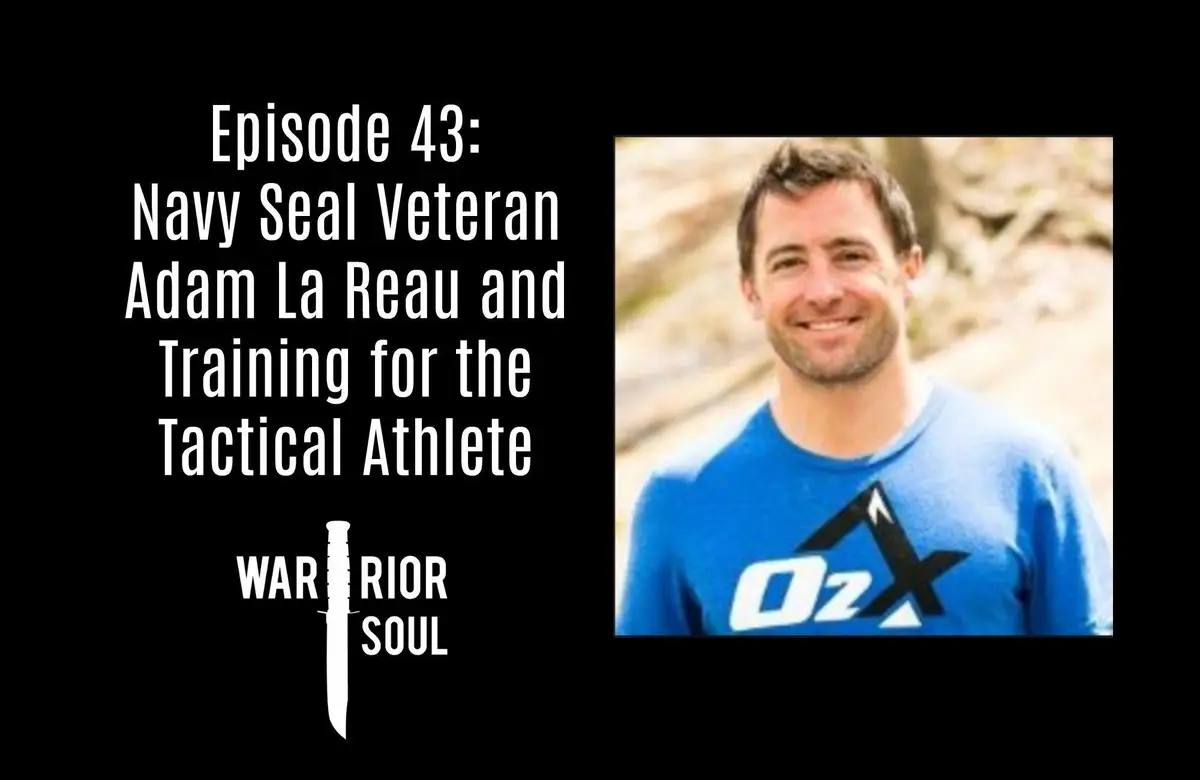
Episode 43: Navy Seal Veteran Adam La Reau of o2x Human Performance and Training for the Tactical Athlete
Hosted by Chris Albert
The Warrior Soul Podcast
To listen in ITUNES: https://itunes.apple.com/us/podcast/the-warrior-soul-podcast/id1096901382?mt=2#episodeGuid=faf5a5362c02bdc14a56631fb5ce094e
Adam La Reau is Co-Founder of O2X Human Performance, a company that trains and educates first responders and tactical organizations on Maximizing Human Performance. As a founder of O2X, Adam runs operations and curriculum development.
Prior to O2X, Adam was a former Lieutenant Commander (SEAL) in the United States Navy. Having left active duty in August 2013, Adam attended the Harvard Kennedy School of Government and received a Master of Public Administration. Following his passions, he created a non-profit called ‘One Summit’ to help build resilience in children with cancer that has spread to three major cities and being utilized in post-traumatic growth studies.
Here’s a little video about o2x:
Announcements and Links:
For the free eight week program Adam mentioned, click the image below. Select “podcast” as your event and you will get the whole program FREE:

ANNOUNCEMENT NOTES AND SPONSORS:
FOR DYNATROPIN HGH

For Kegenix Prime:

Transcript
Machine-generated from the episode audio and lightly edited — may contain errors.
Chris Albert (link to this point)
What's going on everybody? Today, we're gonna be talking to US Navy SEAL veteran and founder of O2X Human Performance, La Reau. But first, I've got a few different announcements that I've got to get through. The first one is this. This podcast is sponsored by Dynatropin.
Dynatropin HGH is a natural human growth hormone secretagogue. It's been developed by one of the preeminent interventional endocrinologists in the world, Doctor. Mark Gordon. And the reason why he created this is because he was examining his patients and he found that one of the biggest factors that was causing a lack of performance, depression, and issues related to traumatic brain injury was lower hormonal levels. And so he wanted to create something that was affordable, but that did not have the damage causing impact that injecting human growth hormone into your body would have.
So he created Dynatropin is a liposomal spray with a proprietary blend of amino acids and other factors that will naturally increase your growth hormone. Now this isn't some bunk HGH supplement or anything like that. The this product has been demonstrated in thousands of clinical cases to raise your IGF one and IGF BP three levels between 50200%. I use this product every single day. I just spray a couple of sprays underneath my tongue right before bed.
I get absolutely amazing sleep and I feel absolutely great. You can find it on our website at www.warriorsoulagoge.com and it's under Fitness Products and Supplements. Dynatropin HGH. It's probably the best supplement I've used in a while for these types of purposes. And like I said, there's a lot of bunk supplements out there on the market.
This is definitely not one of them. It is absolutely amazing. Finally, this podcast episode is brought to you by Kegenix. Kegenix is the most optimal exogenous ketone supplement on the market. It doesn't just include exogenous ketones like beta hydroxybutyrate, but it also includes things like acetyl L carnitine, which is gonna help you to mobilize your own fat stores for fuel.
It also includes some neurotropic factors like Alpha GPC and Green Tea Extract which contains L Theanine. All these things help the ketones to cross the brain blood barrier and give you sustained energy. If you're looking to try ketosis, but you're not ready to start a ketogenic diet, this is a great way to see what kind of benefits ketosis can give you. It's also fantastic for those of you who are just starting into a ketogenic diet. It's something that can give you energy lots of energy energies.
Listen to me. Lots of energy without kicking you out of ketosis. Like I said, this is the best exogenous ketone supplement on the market. There's a lot of other imitators out there, but Kegenix has this formula down pat. So if you're looking to check this out, head over to www.realketones.com/warriorsoul.
And I'll put the link to all of these announcements in the show notes for this episode. You know, in our culture, we often like to glorify athletes. We see them oftentimes as modern day warriors who are kind of living out that male archetype. They're battling against challenges. They're battling against the opposing team.
And we look at those who succeed as sometimes as heroes. You know, the average career span of somebody who plays in the NFL is around three point three years. But today's conversation is about a different type of athlete, the tactical athlete. Those who really are our real heroes. Those who protect us while we sleep.
Those who look over us and look over our safety while we're walking out on the streets. Those who put their lives on the line every single day. And they don't just do it for a span of three point three years. A lot of times, they're doing it for several decades. Today's guest is a gentleman named Adam La Reau.
Adam is a US Navy SEAL veteran, and he's one of the founders of O2X Human Performance. Adam and his partners have created a program for first responders, police and firefighters, to learn tactical fitness. Now this doesn't just include training. They go through absolutely everything from breathing techniques to mobility to strength training, of course, and on into things like mobility and even participating in yoga. They look at nutrition and factors that are going to keep our first responders in the game for the long haul.
Because there's a lot that goes into making sure that a tactical athlete can endure for a thirty year career. This was an absolutely amazing conversation with Adam. He's based out of Boston, but he takes his crew around the country to give classes and workshops to first responders. And, at the end of this, he offers a special eight week program that you can download download offline. And, we're gonna have the link to that here in the show notes.
You'll be able to download it at o2x.com forward slash register. And all show notes for this episode can be found at www.warriorsoulagoge.com blogs podcast episode 43. And with that, let's get into episode 43 of the Warrior Soul podcast with Adam La Reau of o two x human performance.
Chris Albert (link to this point)
This is Chris Albert, and I'm here to remind you of one thing. Someday, you're going to die. Now that's not some morbid statement or scary idea. It's solid fact. Your time here on this earth is limited.
We need to be reminded of this as much as possible for one simple reason, to live your best life while you can. This is the Warrior
Chris Albert (link to this point)
What's going on everyone? This is Chris Albert with the Warrior Soul podcast. Andrew is not with us today. He's actually headed out here. He's moving out to California from Texas.
So he's he'll be with us next week. But I'm here today with Adam La Reau of O2X Performance. And you're out of Boston. Right, Adam?
Adam La Reau (link to this point)
Yeah. That's right.
Chris Albert (link to this point)
Yep. Awesome. I'm from New England myself. I'm from Connecticut.
Adam La Reau (link to this point)
Oh, part of Connecticut?
Chris Albert (link to this point)
Norwalk.
Adam La Reau (link to this point)
Okay. Alright. I'm so I'm originally from New Jersey. So I grew up in, you know, right outside the city.
Chris Albert (link to this point)
Yeah. I'm I'm from, Union City, North Bergen.
Adam La Reau (link to this point)
Okay. Yeah. And I grew up in Nutley, New Jersey.
Chris Albert (link to this point)
Nice, man. Nice. Outstanding. Adam, for for everybody at home, you know, we brought you on today. You're a good friend of one of our other guests here, Kevin Flike. Tell us a little bit about who you are and what you do.
Adam La Reau (link to this point)
Yeah, so I'm the co founder of O2X Human Performance. So we are a tactical athlete, you know, education and training company. We train police, fire, military, EMS, Department of Correction, dabble a little bit into professional sports, working with the Chicago Blackhawks and, some other professional sport teams. But primarily we focus to, on our education program, to get tactical athletes and first responders to to get to a high level performance and sustain that level performance over the duration of their career. You know, training tactical athletes is a little different.
You know, it's a thirty year career. Unlike a, you know, an NFL football player, it's about three and a half years. I mean, we have to train differently. So it's all about sustainability to us.
Chris Albert (link to this point)
Yeah. And I tell you when when you get up, I'm in my late thirties now. I just turned 38 last week. And, you know, it's a lot slower, less explosive than I used to be.
Adam La Reau (link to this point)
Yeah. I'm 37. Period. Not trying to admit it.
Chris Albert (link to this point)
Absolutely. So how'd you get into this? Where'd you start with this? You were in the Navy SEALs for a bit.
Adam La Reau (link to this point)
Yeah, can give a little bit about my background. So I'd said we grew up in New Jersey, know, grew up playing sports, loved it, grew up powerlifting, did a lot of the competitions and things like that. Just love to compete. Always wanted to serve my country just like a lot of veterans out there, you know, just that desire to serve was pretty high. Wanna go to a military academy.
I was lucky enough to get picked up for the Merchant Marine Academy. So I went to a Merchant Marine Academy in Kings Point, New York where I got my commission and, you know, entered the military in 2002. When I went out to went out to BUD/S class two forty three and lucky enough to kind of, you know, make it out to the East Coast and have some great experiences. I did about 11.5. Got out in August 2013 and I went to a Harvard Kennedy School.
And I'd focus that. I'd get a master's of public administration there. I was focused on social entrepreneurship. So I was making the transition. I was definitely looking to, you know, another challenge, know, something to that I was passionate about and took, you know, helping others and, you know, health and fitness and wellness and really just kind of merge those worlds together and created O2X Human Performance with a couple of close friends.
One of which who I served with in the military.
Chris Albert (link to this point)
Very cool. That's always an outstanding thing when you take somebody who you served with somebody you have a background with and somebody you trust and be able to start a business with them.
Adam La Reau (link to this point)
Yeah, his name is Paul. We served like our entire time together. So pretty much all our rotations, all our deployments, things like that. I think we always say it was either a human performance company or a brewery. This one just came up first.
Chris Albert (link to this point)
That's pretty awesome. So how do you define human performance? What do you go for when you talk about human performance?
Adam La Reau (link to this point)
So definitely like a multidisciplinary approach, right? So with mind, body, emotion, you know, for us, it's a fusion of all those worlds. So our pillars of human performance are, sleep, nutrition, conditioning, resilience, and stress management. So kind of merging all those worlds knowing that, hey, listen, they all have to be weighted equally. You can't have one without the other.
And you gotta, you know, train from the inside out. And that's what we look at. We're training tactical athletes. We're training people from the inside out, very preventative in nature, focused on the mind just as much as we focus on the body. Everything from injury prevention to mental performance and readiness, you know, blood sugar stabilization, optimizing energy levels, hydration, talk about the, you know, tougher side, you know, due to the nature of the job and the stress, whether it's at home or at work, you know, kind of sustaining that for that long period of time for twenty, thirty years, it's, it's something that you gotta manage to optimize that performance for a, for a long career.
And at the end, our end game is this, is, is to have you finish your career as strong as you started and, enjoy that retirement that everyone deserves that are in this field.
Chris Albert (link to this point)
That's a huge concept I think in resilience, you know, because we look at just everyday people, not let alone first responders, but everyday people, you know, walking around and trying to, you know, be active into their older years. And this is what I tell everybody. When you think about fitness, it really shouldn't just be about how you look because everybody's concerned about dropping pounds, losing weight, getting set abs and things like that. But when you talk about fitness, it's really about freedom. How long do you want to be able to do what you're doing and how long do you want to be moving around unimpeded without limitations?
Adam La Reau (link to this point)
Yeah. And we talk a lot about our performance versus fitness. You know, like, when we're training for performance, let's just take a, like, firefighter, for example, or any kind of tactical athlete, that you're wearing heavy loaded gear. You're in asymmetrical positions. You're uneven terrain.
You're in extreme environments. You have to have a speed, strength, endurance. You know, there's all these different factors in your needs analysis, that we wanna put together so you can perform at your job because we've all known that like there's people that are deemed like extremely fit that might not be able to perform. Right? If you train for performance, you will get fit.
If you train for fitness, depending on your job, you may not be able to perform at that task, you know?
Chris Albert (link to this point)
Absolutely. What are some of the biggest mistakes you see first responders making or tactical athletes making when, you know, when they're out there on their own? What are some of the biggest things that screw them up?
Adam La Reau (link to this point)
Either not training enough or training too much. It's like really extremes. You got the group that's, you know, overtraining that just hitting it hard, you know, all the time. We see this we see this a lot in the military.
Chris Albert (link to this point)
Right?
Adam La Reau (link to this point)
Yeah. It's like, you know, go harder, go faster. And and not that we we don't encourage, you know, pushing, you know, pushing the, the envelope. But, it it really is, understanding about rest and recovery. Understanding that, hey, listen, especially the young, do a lot of training at the academies and stuff, like fire police academies, things like that.
And, you know, it's it's you gotta you gotta save the young guys for themselves.
Chris Albert (link to this point)
Yeah.
Adam La Reau (link to this point)
You know, you gotta be like, hey, listen, you're everything's feeling fine right now. Your shoulders, your lower back, your knees, but that's because you can recover. But this wear and tear now is gonna have an impact down the road. You just don't know it yet, but, you know, especially for some of the firefighters that are doing a lot of overhead work, you know, when, you just say, hey. Listen.
You you're bound for a rotator cuff or a labrum injury at some point or another. I just need a I need a help get you with a sound foundation, sound principles now of the prehabilitation techniques, you know, the dynamic warm up, the proper recovery, understanding about rest, nutrition, you know, those things that you can kind of get away with a little bit when you're younger, but if you build those good habits upfront, that's better. So you got that extreme. And then we also have the other extreme that, you know, people that, you know, that, that, you know, may have PT ed in the past or worked out in the past and then maybe didn't, didn't know a lot. And, for whatever reason, they just don't wanna work out anymore, you know?
And it could be the fact that they're in a leadership position now and you know, they're very experienced about their job, but maybe not as experienced or, you know, really want to encourage others in their department to, to work out or exercise because they haven't done it in so long. We have people come through our course that, you know, I've heard as of recently that I haven't worked out since 1978.
Chris Albert (link to this point)
Wow. Wow.
Adam La Reau (link to this point)
Yeah. That person is a leader in a, you know, pretty large, you know, fire department and it's and that's alarming. And you know, what we do, we're very encouraging, you know, we're not thrashing or beating anybody here. No, it's hitting all these small little pillars. It's, you know, weight control, it's energy management, it's injury prevention techniques.
So as much as I want them to follow a, you know, a periodization program for a tactical athlete. I just got to get them moving and confident enough to get back in the game.
Chris Albert (link to this point)
It's funny because when I first went into the military in the '90s, prior to that, I'd been lifting weights, but it was like hit the beach you know, kind of lifting weights where I was focusing on the bodybuilding stuff. And that's pretty much what people did in the military too at that point. You know, there wasn't a lot of people doing functional stuff aside from running distance and even the physical fitness tests. Up until recently, now the Marine Corps has the CFT. Back then, just the pull ups, the crunches and the three mile run, and then the rest was just, Hey, let's go do some curls and triceps extensions, maybe some squats if we're feeling good.
But it seems like there's so much more knowledge out there now about getting into this type of functional fitness and keeping yourself from having those types of overuse injuries that I was getting back then because I wasn't seen to things like balancing out my shoulders and making sure that I was getting good external rotation and making sure that my rear delts were kept up with my front deltoids. So many different aches and pains that I could have avoided if I had knew back then what I know now.
Adam La Reau (link to this point)
Yeah. And I think that's why the education component is so critical. If people know why, then they're more likely to do it, right? If they understand, if they're thinking like, you know, if I have someone who's like fatigued, chronically fatigued every day, you know, at like one or 02:00, you want them to ask that question like why and think through that. Is it, hey, did I not get enough rest last night?
Did I over caffeinate? Am I not hydrated? You know, what's my reaction time? Why am I feeling this fatigue? Is there a nutrition component behind it?
Is there a stress component? So it's almost, you know, your, you know, your, the ability to self correct is the first step towards mastering something. And really we're trying to get them, to understand why. And that's what our, that's what we run a four day, four and five day workshops and that's what it's all about. Just kind of go deep on the education.
Chris Albert (link to this point)
What's the average age of somebody who goes through your programming?
Adam La Reau (link to this point)
Oh, it ranges. So we've had 45 and older classes and then we've had academy classes with 25 and under. So we hear, we see the spectrum. We've had police and fighters two months away from retirement that essentially are worried about, listen, I don't wanna have a heart attack and die because that happens a lot when people retire.
Chris Albert (link to this point)
Yeah.
Adam La Reau (link to this point)
Right? And you know, and then you got the younger guys. But I'd say if I have to average it out, I'd say, you know, you know, with the young and old, it's probably like the median's probably somewhere, early late thirties, early forties.
Chris Albert (link to this point)
And somebody comes into your class, you know, typically what is a day going to look like?
Adam La Reau (link to this point)
So it kicked off at, you know, I can walk through the whole the whole schedule actually. The you know, so, you know, coming in that first day, you know, usually these guys are selected by their their departments. We run two different types and we run like a regional. You know, some departments like let's say we work our we work with Boston Fire. Like fifteen fifty firefighters.
But then there's also like a small police department or, you know, a small tactical unit that has like, you know, 30 or 40 people, you know, or and they're gonna put in a couple people at a time. So we have a regional model where, you know, a lot of departments and a lot of tactical athletes from the region come and then we have like ones that we run solely for a specific unit or department. So they're kind of organic to them. So people in our course, usually a wide range of ages. You know, they check-in, they hear about O2X human performance, kind of like our methodology that is an evidence and science based program.
You know, we talk about our methodology. We talk about our we have about 40 human performance specialists, and a little bit of expectation management for the week. Like, hey, we're not here, you know, despite anything that you've heard, you know, we're not here to, we're not here to crush you here. We're trying to give you the tools to succeed and, finish your career strong as you started. We go through, we have this proprietary human performance assessment.
So it's like, I would just call it, it's like the strengths finder of Myers Briggs for human performance. So it's about five to seven minutes. You take it, it generates like a 10 page report on you. And we can kind of code you all those answers and generate an organizational report. So, you know, there's a lot of people can find out, like a lot of leaders can find organizationally how's the health or department and what changes could you make to make a, you know, to kind of fix things and prevent a lot of these injuries, mental, physical stresses and things like that.
So it's usually pretty eye opening tool. Go right into a workout, you know, and I know that's something that, you know, we kind of do a little assessment on everybody, you know, making sure everybody's mobility. Everyone's got a different training age, you know, a training age being like, I'm sure you heard the terminology before, you know, it's someone could be 50 years old and have a training age of two and someone could be, you know, 30 and been a college athlete, have a training age of 15, right? So you have this wide range of experiences there. So, you know, pretty, you know, basic, sweat we call it.
When we get finished with that, we go into a classroom session in which we talk about human performance philosophy, and development. Like what are good programs of human performance? What does a science and evidence based program look like? In the afternoon we do a lot of, movement and technique like lifting techniques, talk talking about picking things up, putting things down, how to properly jump, how to properly land, pressing things overhead. And then we get into, programming so people understand why not that they're going to go out because there's a science and there's an art behind, you know, good tactical athlete programming, but for them to understand how to properly program, like a conditioning program, understanding the needs analysis, the time that they have, the restrictions of equipment and, that's pretty much a day one.
Day two, we talk about, injury causation, why injuries happen and how to prevent them. We talk about, properly preparing before each workout, with the prehabilitation, the anatomical alignment, the pillar prep, the core activation, the glute activation. And then we go through proper, recovery, you know, whether it's foam roller, static stretching. We go through all those movements in a very practical session. We show them like a quick, like a quick team workout because a lot of them work in teams.
We do a little, a quick team workout and just give them some fundamentals behind doing that. In the afternoon of the second day, do mental performance and readiness. So we talk about optimizing mindsets. We talk about really the psychology behind it. We implement emWaves, which is you know, heart rate variability machines, how to self regulate and how to get to that peak level performance all the way through developing better situational awareness and, you know, spare concentration, better situational awareness and even effective debriefing. Day three, we talk about yoga.
We actually go through a whole yoga and iRest Yoga Nidra session. Usually people are really kind of thrown off like how is yoga gonna fit into this. I think some of us have seen the benefits on most people that come through our course have never have never gone through it and almost a 100% have never done the iRest component, which is just learning like the good tips and tricks and techniques to actually, you know, kind of fall asleep, have more restful sleep and relaxation. And so we do a practical session, for about forty five minutes. We kind of talk, on day three after that session, we talk a little bit about the stress factors of high risk jobs.
You got a high risk job, you know, what are the factors at work? What are the factors at home? And then we talk into some of the deeper side of things like, you know, the PTS, the PTS versus PTSD, understanding, you know, signs, symptoms, stress, anxiety, how to manifest in the body. And we kind of talked a little bit about that, about just being a good teammate. The afternoon of that day three, we have a footwear, selection.
People don't really know. They just like get the coolest thing on the shelf, right? Like the best color and you know, they try it on, they see if it goes and they just go with it, you know? So they don't really understand, hey, you know, there's different footwear for different activities. You know, we do gait analysis with everybody in there and we make sure and also they're in boots a lot.
So we kind of talk about insoles, things like that. And then something that's, you know, kind of different that we do, we implement parkour. So we have a parkour. Yeah, we got some parkour movement training in there. You know, obviously talk about the proprioception and be able to kind of manipulate your body and move and what that foundation and energy transfer.
So we do, we have some parkour athletes that come in as a part of our team that kind of teach about that. And then the final day, we, day four, we go through and we talk about sleep performance, sleep hygiene, sleep performance. We talk about the importance of the recovery. We talk about shift work. You know, obviously that's challenging for a lot of the people, you know, dealing with the shift work.
And then the rest of the day we go into like the basics of nutrition, performance nutrition, meal planning, and once in a while we even throw in some healthy cooking there at the end. So it's a pretty packed four day from like 07:30 to four for four days straight, but it's a great course.
Chris Albert (link to this point)
Yeah. There's so much in there that I want to talk about now. It seems like a very, very cool course. The first thing that the movement, I'm seeing a lot more movement programming coming out now And the parkour and doing things like lizard walks or getting your body to move in a different way. How does that translate over to what these guys do?
And the reason why I say that is because to some people it might not be immediately apparent, you know, that if they don't move their body, they're opening themselves up for more of an injury. But how do you guys convey this to them?
Adam La Reau (link to this point)
Yeah. Well, I mean, you gotta think I mean, initially, they come in and, you know, they're like, You know? You know, they see some they see some, you know, they see some guys in, maybe longer hair with some man buns and stuff like that and some some tight sweatpants. Like what's going on guys?
Chris Albert (link to this point)
Lots of hippies over in the park where
Adam La Reau (link to this point)
O2X just got O2X just got weird, you know? But, no, they they actually, they get it right away. You know? These guys are, you know, we run it like very tight, very professional, very organized and, you know, talk about foot foot dexterity, you know, developing fine motor control, perception with landings and foot placements. To be able to look at a spot and be able to effectively put your your foot there.
Now you take a lot of the, the tactic group. A lot of people are getting hurt just getting on and off the truck. Say you're a, you know, say you're like a firefighter. I mean, you you do 22 calls a day. Right?
Maybe say in Boston, for example, you might do 22 calls a day. So you're getting on and off that truck like how many times, right? And then you're doing it with gear and you're doing it, you know, at least eight times a month and you do that how many times, you know, over the over the year and then times that by, you know, a thirty year career. You're talking about, you know, being able to control like ascending, descending, climbing up and down, you know, vaulting over things when appropriate. So we kind of talk a lot about just being able to manipulate your body through the environment that you're in.
And that's what it's all about. People people get that. You know, by the end of that by the end of that group, the people are like, you know what? This is actually, you know, this is something that's attainable and it's and it's directly applicable to what I'm doing.
Chris Albert (link to this point)
That's awesome. And as far as the yoga stuff that you do, do you go over breathing technique and things like that?
Adam La Reau (link to this point)
Yeah, so we did breathing a few times in the course, right? And there's a couple of different, there's a bunch of different breathing techniques, you know? Mean, really, we're just trying to emphasize the value and give them a bunch of tools to put in their toolbox. And some people gravitate to some other tools and they, know, pick and choose what they do, right? Like, you know, they have the ability of, you know, you're a breacher, right?
Chris Albert (link to this point)
No, that was Andrew. The Marine. Andrew was the Special Forces guy.
Adam La Reau (link to this point)
Okay. Yeah. So it's like, you know, it's kind of like, there's many tools to get through a door, you know, get in. You know, we kind of pick what tools like, you know, appropriate for you and pick what tool out of the toolbox, right? So, you know, these guys, you know, they're really the breathing techniques.
We handle it in the self regulation when we have those emWaves. So we do with the heartbeat variability and we actually have them, you know, put the sensor on their ear and then we can show, you know, they're, you know, basically beat to beat. And then we can show through signs. So it really so you get more the reason why we do it, you get more buying, right? If you have the science in front of them and you can show someone who's kind of like irregular that and they can also kind of smooth that out and can kind of control and get themselves in the green, Then it, you know, people are like, okay, I've seen the physiological benefits proven to me in science sitting in this classroom.
You know, there's things that you can do on a tactical when I say tactical level, I mean, you, you, you things like in the moment that you can do to control that and to perform at higher levels. And then there's things that you can do on day to day to deal with more like the chronic stress component. Does that make sense, Chris? Like the it moment versus the, you know, the chronic component. So we talk about breathing during yoga. We talk about breathing during the mental performance. And then we talk about breathing during like more of like the mindfulness drills that we do in the distress management portion our our course.
Chris Albert (link to this point)
One thing I just wanna explain for the people at home, when we're talking about heart rate variability, we're talking about measuring the space between the beat to the heart. And a lot of people think that it it should be like beat it should be a steady beat. But actually you want a lot of variability between those types of beats. And if you have low heart rate variability, it actually, you can measure whether or not you're going be more likely to get injured, whether or not it's going be a good day, a bad day, a whole bunch of different things. Do you have them, do you have your guys measure this stuff throughout the class?
Adam La Reau (link to this point)
Yeah, we do it. Yeah, we do it throughout the class. I'll even implement it during workouts.
Chris Albert (link to this point)
Wow.
Adam La Reau (link to this point)
And so, you know, will they, will I have people hooked up? And then like, could see them like kind of, I don't wanna say red line, but obviously get out of, you know, kind of be a little bit irregular there. Right? And then kind of get back to the green, control their breathing, slow down. So we do that a few times, during the during the class.
So just to kind of prove the value for that.
Chris Albert (link to this point)
It's a really good way of determining whether somebody's overtraining or not too, or whether they need recovery, whether they're missing something.
Adam La Reau (link to this point)
Yeah. Yeah. Absolutely. You know, it really is, you know, good techniques, but that's one way. I mean, when you're talking about breathing, you know, it depends on, you know, we definitely recognize the crowd.
I think there's a little bit of, you know, with our backgrounds in the military and stuff that like we try to be, I'd say, you know, culturally competent, you know, to kind of understand a little bit what those, you know, the fire police officers, what the SWAT teams, the tactical units are doing. Hey, listen, we're not teaching skill based stuff, but we're talking about taking care of yourself, you know, and kind of getting back to what you guys are doing about living the, you know, the biggest, best, you know, boldest life you can, you know, and you got and all these guys, they've chosen they chose a path less traveled, right? They're the heroes that are out there protecting us every day and I have a higher amount of respect for them. Anything that I can, that we can do to kind of help them, perform at their job, come back to their family safely every day and do it again and again for thirty years and just be able to enjoy that retirement is what it's all about.
Chris Albert (link to this point)
Yeah, absolutely. I mean that being in the military was one thing, being out there every single day in some ways, think being a police officer is probably one of the hardest jobs in the world. Not being able to tell in certain situations what you're stepping into. And really breaks my heart sometimes when I see some of the YouTube videos out there about situations that went bad and where police officers didn't have the training they probably needed to get through that situation and be okay. And it's really awesome that there's something out there for these guys to start to trim.
Because if you're not taking care of yourself through these types of situations, at some point something's gonna break down.
Adam La Reau (link to this point)
Great. Absolutely agree. I mean, I don't think it's probably one of the toughest times the environment is getting more challenging and more challenging, you know, for all the tactical athletes, you know, I mean, it's becoming, you know, there's no, no mistakes allowed, right? So let's optimize, you know, everything that we can do to, you know, it's human nature. I mean, mistakes are going to happen, but let's put everybody in the right physical, mental, emotional state to, you know, do their jobs to the best of their ability and mitigate any of that type of stuff, you know.
And also, really interesting too is the, you know, when we were taking care of the, first and foremost, we care about the people, right? But there's also a cost implication on this too, right? That for municipalities and people, I mean, know, there's, you know, we frequently deal with like, you know, mayors and we have conversations and just like the health cost, the increased level of injuries, a heart attack alone is about $250,000 to 400,000 The health crisis in fire service right now, cancer and cardiac disease is like extremely high. In Boston alone, one active firefighter gets diagnosed with cancer every three weeks because, I mean, Chris, you're like, they're working like a chemical plant essentially.
Chris Albert (link to this point)
Right?
Adam La Reau (link to this point)
I mean, all everything now that's like flame retardant and you can't see it, but if something's burning in a house, you know, the, those carcinogens are, you know, are killing firefighters. And so the, you know, the cardiac disease, the, the cancer rate, I mean you're talking about the expense and then the injuries, you know, whether you get a shoulder injury or a knee injury, you're talking about 40 to 50,000 in a piece. I mean you can easily rack up millions of dollars health costs and not to mention, you know, you're also, it's not sustainable as a force, right? You know, depending on the injury rate, I mean, you get some good people going out. It's not a good thing.
Chris Albert (link to this point)
Yeah. And it's not a very good recruitment tool either to get the best that you can if people keep falling out and people keep hearing about us, about high cancer rates and things like that. I want to ask you, mainly because of this high cancer rate and the high injury rate and the heart attacks, what types of things do you guys recommend as far as nutrition? Any specifics there that you could give me?
Adam La Reau (link to this point)
Yes. Three things. Nutrition can get complex quick, right? Mean, that's something that, you know, there's so many different things out there and we try to just like dispel all kind of rumors or fads. And we basically talk about quality, quantity and timing.
Like the quality of the food, it doesn't matter all these different diets and things, but the end that comes back is like eat nutrient dense foods, right? We try to steer people away from like classifying foods as good and bad. There's some that have more nutritional value than others, right? We're also kind of developing something that's sustainable. Knowing that, hey listen, to go in and tell everybody you gotta eat a chicken salad every single day and go through or you know, you know, you're counting grapes and almonds as much as like, hey, I'm all about, you know, eating clean and lean, but you gotta do something that's sustainable too.
Chris Albert (link to this point)
Right?
Adam La Reau (link to this point)
So we talk about the quality of the food, the quantity, the food for the activity that you're doing, and then the timing, the timing that you eat it. So it's all about blood sugar stabilization, getting the right balance and optimizing your energy.
Chris Albert (link to this point)
Yeah, absolutely. I mean, the biggest things that I always tell people is that the paradigm does not make the diet. So if you are doing a vegan diet, a keto diet, a paleo diet, the only two things that really matter are if the food's nutritionally dense and digestible. Because if it's not nutritionally dense, you're not getting the micronutrients that you need to fight off the inflammation, which is going to cause the heart attacks and the injuries. And then if it's not digestible, then it's going to cause more inflammation than needs to be.
That's pretty cool. Do ever talk about things like neuroprotectants? A lot of these guys have a significant danger of brain injury and things like that. Do you ever talk about ways of reducing the possibility of sustaining one of these types of injuries or fighting off the types of inflammation that are going to cause cancer and heart attacks and things like that?
Adam La Reau (link to this point)
Yeah, I mean, lot of it's mainly because, you know, with our Human Performance Program, we really talk about that complete approach. So everything that we hit, I mean, especially when it comes to like the nutrition, the sleep, the stress management, the injury prevention, the conditioning, the aerobic capacity component, like we talk about, hey listen, all these things overlap and talk about the why, you know, these major diseases and inflammation and things happen. A lot of the, like we talk about pain, you know, pain versus injuries, right? Like, you know, we talk about a lot of the pain that people are having, chronic pain versus something that's acute. Yes, we do discuss, you know, a lot of those things and how it ties over.
We have a couple medical doctors that come in throughout the workshop and talk about the demographic and the likelihood of what they see. We have a couple of unique specialists there. One was a former firefighter that now is a MD. So he's seen the culture and then he's also the primary care physician for a lot of these guys. So he's able to kind of like, you know, describe it, characterize it.
He's been in their shoes and, you know, it's pretty powerful when you kinda see the inside and he's, you know, we're discussing all these things. But, you know, between our registered dietitians, our sports psychs, our sleep doctors, you know, our strength and conditioning coaches, our PTs, ATs, they're all they're all there kind of, tackling these tough problems that are plaguing the tactical athlete communities.
Chris Albert (link to this point)
That's something else you mentioned there too, the blood sugar stabilization. I don't think people realize the impact that blood sugar has on their behavior on a daily basis. It can definitely affect the decisions that you make. It can affect how alert you're going to be. It can affect whether or not you're going to use force or not in a lot of different ways.
They've actually studied jury outcomes or not jury outcomes, judicial sentencing. And they found that if a judge had not eaten prior to giving the sentence and his blood sugar was low, he was more likely to give a much harsher sentence. Wow. There's some crazy stuff related to that.
Adam La Reau (link to this point)
I mean, believe, you know, I mean, mean, you've been putting it's putting too many, you know, overeating or putting too many calories. I actually see that kind of a lot and not not in a funny way, hey, like Thanksgiving we're talking about, but, you know, people just don't know what's appropriate for the activity level, that they're doing. I think that's a mistake that personally I made a lot in the military that I just either I overrate or underrate, you know? You know, would see like my early in the week, I was probably restricting not like I was counting calories, but restricting calories. I probably wasn't, I wasn't putting enough in, to perform at my highest levels and optimize my energy.
And then towards the end of the week I was probably, I was overdoing it. So to kind of understand like, hey, too many, too many per meal, your blood sugar spikes, you're gonna store fat. You know, you skip a meal, restrict, which a lot of people do. Like breakfast is one of those things that we beat people up on all the time. Yeah.
Like, you gotta eat breakfast. Then you gotta gotta help me out here. You know, the hydration, when you wake up, you're you could be, you know, 22% one to two percent dehydrated and two to 3% dehydrated, your reaction time is exactly the same if you had three drinks of alcohol. I mean, that's pretty alarming, right? Especially with a job that, you know, requires you to, you know, do some pretty, you know, challenging things and and definitely affects your cognitive function.
Same thing with the, like the eating in the morning. Some people are just like, it's not, I'm not hungry. Like I'm not hungry when I get up, I'm not hungry. I just wanna go work out or not work out or, you know, just go about my day, have a cup of coffee. I mean, you could, you know, you're, you know, we encourage people like, hey, if you gotta start with a quarter piece of like protein bar, then do it.
Like start small, eventually build up that appetite. You know, we gotta get you to kind of optimize that energy and you're going to feel better for it. Know, skipping a meal, restricting calories, you know, you're just going to drop your blood sugar and you're going to end up burning muscle, holding onto fat and having low energies, which none of those things are good.
Chris Albert (link to this point)
Yeah. Similarly, think if you have like a donut or something like that in the morning and it spikes your blood sugar and then insulin sends your blood sugar into a plummet by the afternoon, you're going to be feeling it pretty badly too then. That's something I used to do when I was in the military. I'd have to, when we're out in the field, I'd be eating that MRE pound cake for breakfast.
Adam La Reau (link to this point)
Oh yeah. That thing's great.
Chris Albert (link to this point)
It tasted so good. Oh my God. But I mean, usually by afternoon I was trying to rub Copenhagen into my eyes to try to stay awake or something, you know?
Adam La Reau (link to this point)
Yeah. It's pretty, I mean, for how long people do it, I mean, you're pretty much having people not even close to being in the zone, right? You have people spiking and crashing, spiking and crashing like all day long. So a lot of people like, you know, talk about those energy levels or I'm tired or, you know, we're definitely encouraging naps if you can take it, depending on how long and how often they happen. But a lot of times it's like the tiredness that's happened is due to dehydration or just not stabilizing your blood sugar.
Chris Albert (link to this point)
And additionally, we're talking about resilience, and this is something that one of our other guests, Doctor. Mark Gordon talks about. I don't know if you're familiar with his work with the Warrior Angels Foundation, but they're looking at PTS a lot of the PTS like symptoms from traumatic brain injury. He's actually finding more and more that a lot of it's related to brain inflammation. And the more that we don't stabilize our blood sugar, don't take care of our nutrition.
The big thing we talked about in your program with resiliency. If you're not taking care of yourself, then you are hurting your resiliency and you are making it more likely that say you do get a traumatic brain injury or say you do run into a traumatic event that you're going to suffer mentally down the line.
Adam La Reau (link to this point)
Yeah, absolutely.
Chris Albert (link to this point)
Awesome. And as far as hydration, you mentioned a reduced reaction time with lower hydration rates. Is that a huge problem right now with firefighters and police officers?
Adam La Reau (link to this point)
Yeah. I think in the general population, no one's drinking enough water to, you know, for the activity level. You know, I'd say every part of this job, on where you're working, I mean, if you're in Arizona versus, know, Boston in the wintertime or somewhere in New England or if you're a firefighter and your body cords like over 100 degrees here, you're sweating profusely because you're in a pretty extreme environment. You're chasing somebody, things like that. There's all different levels where people are usually, what I see primarily is that as a population as a whole, tactical as a cop is not drinking enough water.
Know, they're not starting their day off right. They're, you know, who knows when the last time they had water before they went to sleep. And then, you know, they wake up in the morning, they're not having any, they have a cup of coffee. They may have a sip of water, they may go PT. They're not hydrating properly enough.
And which is causes for one, a huge dip. The number one cause of daytime fatigue is dehydration. Right? And then, you know, the reaction time, if people knew what your reaction time was, you know, based on that, those levels, I mean, it's, it is similar to like, there's study out there that's similar to like, you know, if you're two to three percent dehydrated rash time is same as if you had three drinks of alcohol. Yeah.
Chris Albert (link to this point)
That's crazy. That's insane. As far as, we got a lot of younger guys who are either fresher, fresh into the military right now, or they're young police officers, or they're thinking about becoming police officers, or they're thinking about going into the military. What types of advice would you give to somebody who's say you know, 17, 18 years old and thinking about beginning a career as somebody in the military or as a first responder?
Adam La Reau (link to this point)
I'll take it for yourself. You know, the number one priority. I think the, the Special Operations Command had a pretty good slogan, for a while there. It's the humans, not the hardware, right? Yeah.
It's something that you need to, if you don't take care of yourself, you don't take care of your life, whether it's at work or off work, it affects every aspect of it. Know, life in the job that they chose is like is honorable. Will be challenging if it's not in the beginning, they will face challenges due to the nature of their job. And I'd say from a health and wellness perspective is that you need to think about your factors of your performance, you know, whether it's, you know, training properly, conditioning properly for your job, understanding more about nutrition, getting proper sleep and probably things that the young 17 and 18 year old don't, or maybe too embarrassed to talk about is just like being able to take care of your mind. I think we all know that, you know, we're 38 and 37.
I think that we know that our mind is now way more powerful than we ever thought. You know, the resilience that is needed, the challenge that they're gonna face, things that they're gonna overcome, the things that they're gonna do or see, all that stuff is that, you know, don't, you know, there's no shame in taking care of your mind. I mean, professional athletes do it all the time. Olympic training, athletes, special operation soldiers do this. I mean, training the mind is just as important as training the body and don't leave that part out of your training.
Chris Albert (link to this point)
I want to switch gears here a little bit and kind of talk about how you got into entrepreneurship when you got out of the military and what kind of led you to want to be an entrepreneur in the first place?
Adam La Reau (link to this point)
Well, know, the first, you know, I think a lot of it was, you mentioned my close friend of mine, started this company with O2X. And we talked to starting a company for our entire duration in the military. And I think it's a product is that, you know, a lot of the times in the military, I mean, you're kind of kicking stones over and there's, you're out in front of, you're discovering problems that there's no solutions for, right? And that you have to be entrepreneurial. Know the deal, like being in the Marines, you know, you kinda only got what you got, so you gotta figure it out, right?
And so I think it develops and I think that's why you see veterans all the time going into the entrepreneurial space and starting their own companies. I think the risk that would necessarily scare a lot of people or the analysis, I think that they're looking at it and they say, you know what, I'd like to compete in this space or I can own company or I know what right looks like and I think I can develop a better product or service. And I think the nature of like the last, you know, since 2001 has left, you know, has has challenged, the veteran community, challenged the military and the armed forces where, you know, guys are very entrepreneurial, very crafty. There's a there's an ounce of grit. There's a lot of grit and perseverance and, you know, they, they wanna try their hand at it.
That's kind of really what inspired me. I always wanted to start my own company And it's exciting to kind of be in private sector now and you know kind of our company's been around for O2X, human performance has been around for three years now. And it's exciting. Got you know, we have 40 plus specialists and you know, I got 12 full time. We're actually hiring for an external sales guy right now or girl.
Anybody that's potentially interested you know, we're looking for someone to help us and I love the fact that we can bring veterans on it and, you know, build a culture, build a team. It's exciting. There's other challenges that are out there that are different than the military. There's a lot of other challenges and frustrations and things like that, but you know, it's exciting and I would not change it. I highly recommend it to know, the guys transitioning out and making the leap to the scariest place on earth, which is the civilian world.
Chris Albert (link to this point)
It is the scariest place on earth. Trust me on that. For you guys at home. I mean, far as, you know, and I tell people this all the time, being in the military was like the best time of my life. And I say that because I was young, I got to travel around the world.
I didn't have to worry about rent. I didn't have to worry about what I was going to wear every single day. Didn't have to worry about a whole lot of stuff. I was surrounded by friends and aside from deployments and things like that, it wasn't that bad. It was pretty freaking cool.
The civilian world is different in that you really have to take that kind of discipline that you had in the military and you have to have that same kind of discipline, but with nobody looking over your shoulder, especially if you're gonna be an entrepreneur. Because there's nobody who's gonna tell you to optimize your website. There's nobody who's gonna tell you to start a marketing campaign or who's gonna tell you to make sure that you have good customer service. You gotta do all that stuff yourself, man. And sometimes that's the scariest thing of all.
Adam La Reau (link to this point)
Yeah. There's also like finding great people. They're out there, but I mean, in the military, you're completely surrounded by you know, people that had your back all the time, right? You know, the trust, camaraderie, you know, the loyalty that's there. I mean, I think that that's, you know, kind of stepping out.
It's, you know, you have to, you gotta create your own new team, you know, you're to take those values that you cherished and kind of instill them in your organization, the people that you're around.
Chris Albert (link to this point)
Absolutely. What was your biggest challenge in getting O2X off the ground?
Adam La Reau (link to this point)
Yeah, for what, you know, well the technology side, you know, I mean, you know, there's so many skill sets that you just, you know, you don't have like building websites or like the things that you just mentioned, like social media, like we're still like Social media, I mean, it was funny. We had an intern. He was a high school student. He was going into the military. So he was a senior in high school and I'm riding the T and I'm hearing two people having a conversation about Instagram.
And so I walk in. This was this actually wasn't that long ago, embarrassingly enough. And I I walk in, I said, hey. I think there's this thing called Instagram and I think we should it sounded like it was it was a pretty big deal on social media. Was a good marketing tool.
And I can just see him put his head down and he's just shaking his head and he's like, yeah. So there's some certain things that you just maybe just don't get exposed to and that, you know, technology, social media, but you know, you can you can find you can find those people. You know, if you have to go out and, you know, fundraise for your company or, you know, kind of meeting new people, building relationships, it's all fun. They're all different challenges, but, you those types of challenges are starting your own company. Mean, you're starting with a blank canvas.
I mean everything, all the infrastructure, the background, I think, you know, getting, you know, depending on what kind of business you have, You know, I'm sure for you guys, like it was getting your first couple podcasts onto you, right? Taking those lessons learned and building and improving every single time. Like there's a fun component, but there's a challenging component to that too. And you wanna do it like at a rapid pace that you always wanna continue to improve, improve.
Chris Albert (link to this point)
Yeah. Think the big thing is especially at the beginning, you can't be embarrassed to put something out there. And that means that sometimes you're going to put stuff out there that might not be your best work, right? But you got to get it out there just to get it out there. What I mean by that is like, when I started this podcast, the first 10 episodes were just me reading out of a book and talking about what I was reading.
And the reason why I did that was because I wanted to do a podcast. I didn't have the connections to get guests yet or anything like that. And then slowly but surely people started listening to it. They liked what I had to say. And then we started getting guests and I'm here today talking to you.
We just had Gary Taubes on who's a New York Times bestseller. We had Chris Bell, the creator of Prescription Thugs. And so I think the moral of the story is never be afraid to do anything. Even if you're gonna screw up, you'll learn from those screw ups, man. You'll learn from every mistake and you might be a little bit embarrassed about it, but everything comes around if you stay consistent and you keep going with it.
Adam La Reau (link to this point)
Yeah. I think, you're right. Like test a little, learn a lot. Right? You're kind of testing, learning, adapting, you know, getting better.
I think that that's right. And I think having the courage to just get out there and mix it up because there's a million reasons. If you look at entrepreneurship, there's a million reasons. Any business, I don't care what idea it is, what service, what industry, there's a million reasons why you should do it. Right?
Chris Albert (link to this point)
Right.
Adam La Reau (link to this point)
And there's a million people that'll tell you all those million reasons why you shouldn't do it. But if you're passionate about what you do, you're fired up about it, you can get other people fired up about it, you believe in it, give it a go.
Chris Albert (link to this point)
Absolutely. Absolutely. Do you guys, take o two x human performance on the road? Do you do tours, classes in different cities, things like that, or is it mainly based in Boston?
Adam La Reau (link to this point)
No. No. We do it all over the country.
Chris Albert (link to this point)
Awesome. Awesome. And and what are your next, the next few cities you're gonna be visiting?
Adam La Reau (link to this point)
We'll be down in Florida. We'll be in Portland, Maine. We will be might be down in DC, Montana, and then hopefully, pushing out to the, pushing out to the West Coast soon. But, you know, it's really just the any fire department, police, military, just reach out at, you know, adam@o2x.com. And, you know, we'll, you know, we'll send some people out there to have a conversation.
Chris Albert (link to this point)
Awesome. Awesome. And as far as, do you do you well, I know you have a website. Do you do you, hang out on Twitter or anything like that?
Adam La Reau (link to this point)
Yeah, we're o2x. So we did get an Instagram account.
Chris Albert (link to this point)
I noticed that this morning.
Adam La Reau (link to this point)
O2xhumanperformance for Instagram, Twitter, and then Facebook. So we're we're on all those all those channels. We got some YouTube stuff up there as well with some of our videos. And then o2x.com, o as in like oxygen. There's, you know, a bunch of information about workshops, you know, our virtual program.
One thing we didn't mention, we have a mobile app. So we give everybody a body weight, a quick body weight workout every day, the tactical athlete workout. We have a nutrition recipe, a team recipe of the week, and then we also have a mental performance drill every single day. So we have like roughly about seven pieces of content coming at people every day. But that's it's really through our the, you know, the the the departments that we work with.
The tactical ads union is not something that you can download it online, but it it wouldn't there'd be nothing there because we control all the, stuff on the back ends. But, but one, one thing that I'd like to give everybody listening though is that, it, our, one of our eight week tactical athlete training programs. So people go to o2x.com/register. We'll send you our eight week tactical athlete program, that we use for training a lot the heroes around the country.
Chris Albert (link to this point)
That's o2x.com/register.
Adam La Reau (link to this point)
That's right.
Chris Albert (link to this point)
Awesome. I'll make sure that that's on the show notes for everybody out there. Great. Awesome, man. And the reason why I'm laughing is be about the technology stuff is because Adam and I were on trying to figure out the audio on another platform for probably about twenty minutes before we got on.
And we're opining about whether or not either of us were going to win any kind of intellectual awards.
Adam La Reau (link to this point)
Yeah. Not putting anybody on Mars anytime soon. Yeah.
Chris Albert (link to this point)
But you did go to Harvard, so that's pretty cool.
Adam La Reau (link to this point)
I snuck one past them, but I did.
Chris Albert (link to this point)
That's awesome, man. Yeah, I freaking I was in a PhD program, and I ended up not completing it. But I was in a PhD program, so that's cool. Adam, anything else you want our listeners to know? Any pieces of advice or things like that, that you want to send them off with?
Adam La Reau (link to this point)
No, I think, you know, taking care, like I mentioned earlier, taking care of yourself, you know, human, maximizing human performance. You can sustain it over long periods of time. And it is a little bit like a wave. You kind of hit peaks of performance and a little bit of troughs of performance, but small incremental steps, small victories every single day, whether it's, you know, nutrition, conditioning, building resilience, lowering your stress, working on your sleep, all those factors overlap with each other. But small incremental sets, small victories every single day make a big, huge impact over time.
And, if anyone ever needs to to reach out, you know, o two x is, o two x is always here to help. Kinda appreciate what you guys, do, Chris. Yeah. You and Andrew got great stories and I'm kinda honored to be here today.
Chris Albert (link to this point)
Oh, dude. Well, I appreciate you coming on and and one, I wanna thank you for your service. And two, I wanna thank you for helping those who helped protect us. And I think it's amazing work that you're doing out here. And I've definitely, I think, dude, you And I'm gonna say this on air.
You gotta start a podcast and I'll talk to you more about it when we're off here, but I think you need to start a podcast. I think that you'd be really good at it.
Adam La Reau (link to this point)
Thanks. Appreciate it.
Chris Albert (link to this point)
Well, to everybody out there, thank you so much for listening to this. We'll be getting all of Adam's contact information and contact information for O2X human performance on the show notes. And we'll get a link over to that eight week program that Adam mentioned. And to all the first responders out there, thank you for the work that you guys do. I know you guys don't get a lot of good press lately and your jobs are so difficult and so hard.
And and I think a lot of you are getting an unfair break by the media. But, where would we be without you? So thank you all for the jobs that you do. And Adam, thank you so much for being here today.
Adam La Reau (link to this point)
Yeah. Thanks guys. Appreciate it.
Host of the Warrior Soul Podcast and founder of Warrior Soul. Worldwide trainer and nutrition coach, contributing author at Testosterone Nation and Muscle and Strength.