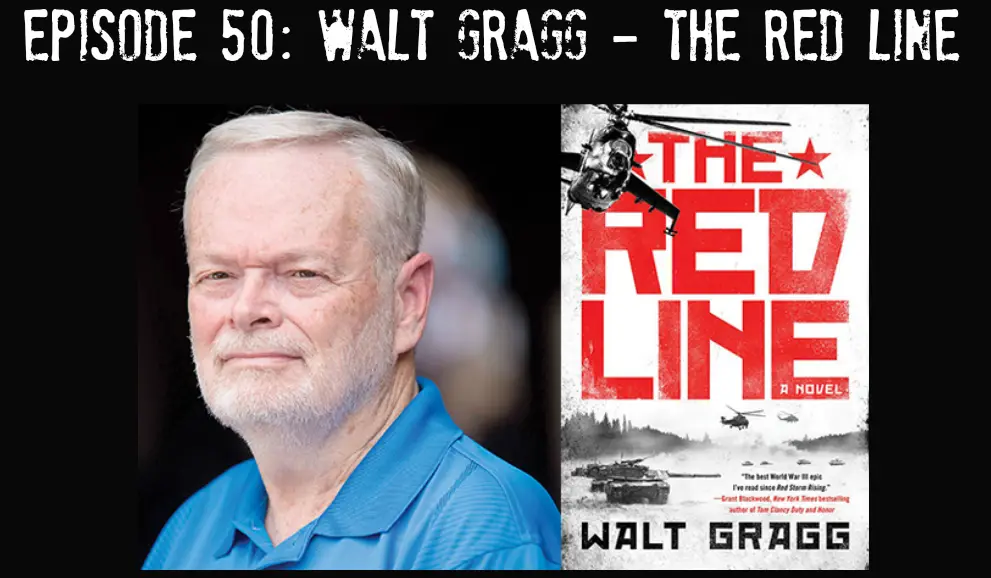
Walt Gragg is a US Army Vietnam veteran, retired attorney, and novelist. His first book, The Red Line, is a military thriller that takes the reader through a World War III scenario between a resurgent Russia and the United States.
We get into Walt’s experience in the military and his process as a writer. We also discuss Walt’s advice for young veterans and veterans who want to become authors.
FOR WALT’S BOOK

To get in touch with Walt
Twitter: @waltgraggauthor
COMING SOON

Transcript
Machine-generated from the episode audio and lightly edited — may contain errors.
Andrew Marr (link to this point)
Warriors, this is Andrew Marr. And today, I wanted to talk to you guys about the book that we have coming out later this fall called Tales From The Blast Factory. And it's about my trial, my family's trial and experiences with the symptoms of traumatic brain injury and then what it takes to pull yourself out of that and live a life of purpose and fulfillment. And why do TBIs matter? Well, they matter because close to four hundred thousand individuals have been diagnosed with a traumatic brain injury in the military since two thousand to twenty fifteen.
Of that, up to fifty percent of those will develop a major mental disorder after diagnosis. And the conventional model has been psychotherapy and medication, which in most cases further exacerbates the problem. And it does that because it doesn't treat the underlying condition. And that's the basis of the book. We wanted to show what that life looks like, the life of an operator, what happens when disaster strikes and you step into the unknown and everything that you once knew is not the way it it is anymore.
And then we wanted to talk about and show the process of that healing process and talk about the Warrior Angels Foundation. And since then, we brought that same level of healing that I've received to hundreds of others while delivering our message of hope and a viable solution to millions. And it was thinking, visualizing, and believing it in our minds first brought it into existence. And we wrote this book, my brother and I, Adam, so others could do the same thing. The name of the book is Tales From The Blast Factory.
You can sign up to get on the prelaunch list. It'll get you all kinds of, cool Warrior Soul Binnies at www.talesfromtheblastfactory.com, and you can also preorder on amazon.com. That's talesfromtheblastfactory. You can preorder on amazon.com and talesfromtheblastfactory.com.
Chris Albert (link to this point)
Welcome to episode number 50 of the Warrior Soul podcast. Number five zero. Really can't believe that we were able to do this and that we're still going strong. We've had some amazing guests on here and I'm really looking forward for the ride of the future. And in this episode, we have another amazing guest for you, Mr.
Walt Gragg. Walt is the author of a book called The Red Line. It's a novel and it's about World War III. And in the book, a resurgent Russia attacks US lines in what has become a resurgent Germany. And I don't wanna give too much away, but it's a fantastic book.
And what I really like about it is that it focuses on the people, the small unit leadership. And there's a few books out there that have done so. Steven Pressfield's Gates of Fire and a few others, they've really looked at the story of the soldier on the front lines. And this book is no different. It really looks at the small unit leadership amongst the enlisted men, the non commissioned officers, which I think is so important for anybody who wants to go into the military to understand whether you're going in as an enlisted man or going in as an officer.
Cause you have to understand what your enlisted men are capable of. But this book is absolutely fantastic. I really liked it and I'm not a big novel reader. I've read The Gates of Fire, of course. I've read a little book that's had a lot of influence on me.
It's Dostoevsky's The Grand Inquisitor, which is part of a larger book called The Brothers Karamazov. But those are the extent of the novels that I read. Oh, I also read The Alchemist by Paulo Coelho, which was also a great book. But this book has something in it for all of you who are looking to join the military, who are currently serving in the military, and those of you who are actually interested in geopolitical affairs and some of the things we're going through right now in our own international politics. So I'm gonna stop yapping my trap over here.
Again, it's been a great 50 episodes and just wanna thank you again. And with that, let's get into episode number five zero of the Warrior Soul podcast with Mr. Walt Gragg.
This is Chris Albert, and I'm here to remind you of one thing. Someday, you're going to die. Now that's not some morbid statement or scary idea. It's solid fact. Your time here on this earth is limited.
We need to be reminded of this as much as possible for one simple reason, to live your best life while you can. This is the Warrior Soul Podcast.
Hello, everybody. Welcome to the Warrior Soul podcast. This is Chris Albert, and I'm over here with my bro, Andrew. And we are on the line right now with the author, Walt Gragg. He's the author of the novel, The Red Line, which is a thriller that involves some fantasy space as far as Russia actually invading Europe.
And I don't wanna give too much of the book away, but there's a lot to talk about here. And I think it's a fascinating novel, but something that also plays into what we're currently experiencing now in the realm of international politics, something that we might need to be a little bit afraid of, something that we might need to be prepared for. Walt, how are doing, buddy?
Walt Gragg (link to this point)
Well, I'm hanging in there. As I was telling you before we went online, I just got back from a major writers conference in New York, which we do once a year, and get to literally rub elbows with the biggest writers in the world. So we're back getting getting organized again. So let's rock and roll here.
Chris Albert (link to this point)
That that's amazing, man. That's amazing. Before we get into the red line, can you tell us a little bit about your background, how you came to become an author? I know you served in the United States military.
Walt Gragg (link to this point)
Yeah. You know, I still don't consider myself a writer. I'm just a guy that had a story and told it. And I never really had a desire to be an author. I was drafted and sent to the Vietnam War.
I spent a little over three years over there. Pretty much roamed around everywhere in Southeast Asia. I've done fun things like flying Air America and things like that. I then came back to The States for a couple of months, or a couple of years, and was at Fort Huachuca, Arizona, kind of resting up. And then the assignment that led to this book came.
I was sent to work at United States European Command headquarters in Stuttgart at Patch Barracks in the middle of the Cold War, and I spent thirty eight months over there. And so I got to see a lot of the plans for the defense of Europe. Obviously, classified went into the book, but I got to see a lot of things and participated in a lot of theater level war games where it was easy to see what we anticipated a Russian attack would look like, what our responses would be, what their counter responses would be. So it wasn't too difficult to come up with the idea. But even then, I really didn't have the time or the inclination to write it.
While I was in Europe, I was also really busy. I actually took advantage of the University of Maryland's on base program, which I understand still exists, and got my bachelor's there. And then, so I was really busy and didn't do much about the book. I came back, spent three years at Fort Gordon, and then about eight working at Fort Bliss at the Air Defense School. And so I got my master's while I was at Gordon through the, I don't think Pepperdine still has their on base program anymore, but it was through the University of Pepperdine University.
And so I carried the book around, oh gosh, twenty years in some little corner of my brain. Finally, after I saw how people were reacting to the concept of war after Desert Storm, I said, I've got to start writing this because I'm very nervous about the fact that we've forgotten the lessons of Vietnam and we're becoming a little too casual about this. So we started writing it, and we almost sold it in 1997, but no luck. And I wrote a second book, still no luck. We finally kind of gave up for about ten years and just let them sit and gather dust.
And finally, in 2014, we decided to try again. And long story, well, it's too late to make a long story short, but I'll try to end this quickly. We actually ended up selling it to the very same editor in 2014 who almost bought it in 1997. It's really great. I'm with Penguin Random House, which is the biggest publisher in the world.
My editor is the editor for all the Tom Clancy books and a number of other huge writers. He is literally the thriller guru in the country and especially military thrillers. So I was very, very fortunate we were able to hook up. And the book's been out a couple of months now. And as I had mentioned to you before we went online, I'm actually waiting today in the next couple of hours to hear whether or not they've decided to buy book number two.
So that's kinda where all this comes from.
Andrew Marr (link to this point)
Very exciting. Walt, 1997, you were turned down. Seventeen years later, the same editor says, let's do it. I guess my question is, how many additional nos did you receive, and what do you think was the deciding factor for him to say, let's try it seventeen years later?
Walt Gragg (link to this point)
Well, I cannot count the number of rejections. Could plaster an entire room, I think. I didn't bother to count them. You just throw them away and forget them. I know there are people that, writers who probably say, I had 68 rejections before this happened.
I mean, it's part of the business. It just literally is. They're so swamped and you can't get an editor without an agent. You can't get an agent at all because they're too busy to talk to you. And so actually in 1997, he had loved the book.
I mean, he told me it was, you know, the book, it was a remarkable book. I was an incredible talent. He wanted to work with me. And then a week later, he called me up to say that his publisher had turned it down. You know, in 1997, the idea of a war with Russia didn't seem all that plausible, I think.
So it actually worked out great. And if you think about it, what year would you rather do a war about you know, a book about a war with Russia, 1997 or 2017. And I think this year's a little more appropriate the way things are going.
Chris Albert (link to this point)
Absolutely. Absolutely. So just knowing that you you wrote the book back then, there's been changes in weapon systems. There's been changes in in, you know, the small arms we carried in the military. Did you have to go through and kind of revamp everything as you went?
Walt Gragg (link to this point)
Yeah. I've certainly rewritten that book probably a 100 times. But when I wrote it in 1997, obviously it was M16s, and now it's M4s. And one of the things I decided to do, I left some chapters in there that really worked well in 1997 that really realistically wouldn't happen in this day, but they were just so good I couldn't get rid of them. And we made the decision, my belief is the only thing that matters in a war are the people.
And, you know, all this techno thriller, I was about to say nonsense, but since my writer handled I mean, my editor handled Tom Clancy, maybe I better not say that. But all this hardcore techno thriller stuff, in love with every switch and every button on every new tank and every new fighter, just doesn't do anything for me. I wanted a book about the people. Obviously, I needed the weapons in there, but I looked at it and said, I want this message to go to everybody in this country, you know? And so I intentionally really, really simplified it, and guys who've been in the military recently, or even in the last ten years or so, will say, Oh, you know, they'll see something, Oh, that's not how we do that, or That's not right.
But that was done intentionally. I did make one mistake unintentionally that I've just discovered, because in my day we called them, the 20 round magazines, we called them clips, and that was a hangover from World War II actually. You know? And so I used the term clips in the book, and it really should have been magazines. So I I I've already heard about that one a couple of times.
I assure you readers will point these things out to you. So if I get a chance
Chris Albert (link to this point)
to core drone instructor would be like, oh, you think you're back on the block right now? What are you doing?
Walt Gragg (link to this point)
Yep. Yep. Exactly. So that one, I have to admit, that was an unintentional mistake. I got sloppy and didn't even think about the fact that a term like that would change.
But, you know, in my day, we used originally M14s and then M16s, and and we had the 20 round magazines. So we still look we still call them clips. And I and some of you know, that's an old hangover from the M1 from World War two.
Andrew Marr (link to this point)
Now, Walt, the characters are so well developed and very in-depth, and along with a very intriguing storyline. I'm interested to know, how did that character development how did that process work? Did it did your characters change massively from how you intended them to be in the beginning to where it was in the end? And did the storyline change at all as you really got in there and started to work more with it? You know, did the end that you perceive it to be, was it way different than the finished product in theory?
Walt Gragg (link to this point)
Absolutely. In fact, the end that you read is not the end that I wrote. The publisher made me change the ending, and I don't want to give it away, but I bet you two could guess what it probably was. It was something not quite as pleasant as what it ended up being at the end of the version that's out now. So that did change. The characters, gosh, you know, I didn't want this to be about the president and the generals and all those kind of people, although obviously there's some of that in the book.
I wanted it to be about ordinary soldiers and airmen, people like that. Know, privates and sergeants and an occasional lieutenant all allow in the book, but those are the people that are really the most interesting are the ordinary soldiers. And of course, we also included their families in the book. And so we thought that was the way to go and said, this is about people, it's about ordinary people. And I have gotten such compliments about the characters.
That's one The two things people always rave about are the compelling characters in the book, and that the action is just, I'm told, unbelievable. Don't ask me that the last person to ask if their book's any good is the writer. You know? So
Chris Albert (link to this point)
Yeah. That that's one thing I really, really appreciated, Walt, was was the fact that you really went into the enlisted man and and the small unit leadership. And I think that, if anybody out there who's who's currently serving in the military, who's looking for a a good book, for examples of leadership, you know, we've got the gates of fire by Pressfield. That's that's definitely on the commandant's reading list and a lot on a lot of military reading list.
You did a really great job, and I think one of the only other places I've seen such examples of of small unit leadership was in Pressfield's book, the the the Gates of Fire.
Walt Gragg (link to this point)
Yeah, you know, I mean, I was an enlisted guy. Said I was drafted, I know that's something probably none of your listeners experienced, or very few of them. And I was just a guy who worked his way up and said got five years of college while I was there. When I left Fort Bliss in 1989, I actually went to law school at the University of Texas for three years. So I ended up with eight years of college, but if it wasn't for the army, I wouldn't have gotten any.
So, you know, that all all worked out wonderfully. And, I can I think I relate pretty well to the the ordinary guy? I consider myself pretty ordinary guy, you know? So
Andrew Marr (link to this point)
Yeah. No doubt about it. I loved in in the beginning, and this doesn't give anything away, but, how a platoon sergeant has to kind of craft and deal with some of the unique opportunities a new lieutenant can bring to the unit. And I just thought, man, Walt nailed that. He must have, he must have experienced this firsthand because you don't talk or, communicate, in the way that you did without that firsthand experience.
And I was like, he nailed the platoon sergeant new lieutenant dilemma, if you will.
Walt Gragg (link to this point)
Yeah, that's an interesting dynamic between And I'll say their names. The lead sergeant is Robert Jensen, and the lieutenant's name is Powers. And he's only been in the unit for six weeks. And when you're suddenly facing the Russians and a massive, and all of that part of the story, a massive armored thrust into Germany as a lieutenant, as a cavalry platoon lieutenant, I don't think you're quite ready yet. But luckily, the the Jensen was, the sergeant was, and they did their best.
Chris Albert (link to this point)
Yeah. That was that was you know, just thinking massive column coming in and, you know, having to be there and make that split decision, and then the lieutenant does what he does, that was that was kind of an interesting thing. And, again, I don't wanna give anything away here, but but I thought that was that was amazing. Another thing that really caught my eye here is that there's such a focus on communications and command and control and and that being such an important part of the strategy. And we have these poor air force guys who, you know, they're they're they're sitting there, and they're they're doing the jobs, and their weapons are all locked up, and they they they don't have any ability respond to the threat that's coming at them.
And one one of the things I was thinking about in this is is this in some way your call to action saying that, you know, we've we've got these very important assets, these command and control assets out there, and, you know, maybe we should be doing a little bit better of a job protecting them, and maybe maybe our our airmen need better weapons training. Yeah.
Walt Gragg (link to this point)
I had served, when I was in Southeast Asia, I actually served for a year. I was in communications, long line communications. So we provided the major communications in South East Asia and Europe when I was there, I was actually responsible for 400 communications facilities all the way from Iceland to, in those days, Iran. We had still had a site in Tehran. So, you know, I saw that part.
I had some dealings with NSA. I had some dealings with the CIA because of the things like that. And obviously, I saw our command and control elements. And when I was in Southeast Asia early on and I saw how the airmen did things, I mean, think I mentioned in the book that in Southeast Asia, when, you know, two little scrawny guys in black pajamas would would break through the wire and try to blow up an airplane and the airmen would come running with their cameras. And that's act I actually saw that happen twice.
So, you know, some of the
Chris Albert (link to this point)
One running with the cameras, you said?
Walt Gragg (link to this point)
Yep. Yep.
Chris Albert (link to this point)
Wow.
Walt Gragg (link to this point)
That's I actually saw that happen twice. I was we were three miles from the world's biggest B-52 base at time. They had 5,000 airmen on the air base. And we were at a little army camp, like I said, about three miles away, and there were probably, I don't know, 500 of us at most. And they got hit by two little guys in black pajamas, and the base commander at the B-52 base actually called the colonel in charge of the army base and asked for reinforcements.
So, you know, it was interesting. I don't want to denigrate the Air Force guys because they are such fantastic technicians. I mean, there are guys in the Air Force that had similar jobs to what I had, in fact, identical jobs, and they were so much better than the Army guys because they were totally focused on the technical aspects. But if it came to a firefight, they weren't so good. But as far as the rest of the technology, what makes me nervous, and I could be off base here, but what makes me nervous is as we struggle to fill our ranks in the new world, and we are, and those articles have just come out recently that the Army's really struggling to fill its ranks, We are depending more and more on the technology to get the job done.
And I don't mean, maybe this would be the first time you'd have a war where you won without boots on the ground, but throughout history, that was the ultimate thing that was the victory. So watching Russia with their hacking into our power grid, attempts at our power grid, attempts at our elections, attempts at whatever, I question how their our ability to completely deflect against hacking into our command and control. We're certainly making major attacks against it. And if you don't have the boots on the ground to support a more conventional fight, that may not end well. So yeah, I'm a little nervous.
Andrew Marr (link to this point)
Yeah, it's walking that fine line with how do we use the technology with or coinciding with the analyst or the operator on the ground. You know, I don't know that we can ever truly get away from that. You know, maybe we can, but from some of the most advanced technology and some of the stuff with volunteer and and other things, it's you have to have both. You have to have a trained analyst or operator who knows how to use that information or make that information useful. And I and I think that will maintain at least in the next ten to twenty years as technology continues to develop.
But it'll be interesting to see if we truly have a free, you know, or no boots on the ground type of engagement.
Walt Gragg (link to this point)
Yeah, that's I'm puzzled about that. And certainly it makes me nervous that should we decide to almost entirely go that way, what happens if it backfires on us? So, you know, if we don't have a significant military. But that, you know, that's not, that was kind of part of the book, but it wasn't the most important part. Like I said, the most important part was talking about privates and sergeants and lieutenants and how talented the American military is, and just the average American that comes into our military and what they're capable of doing when faced with what I like to call, I like to, I describe the book as ordinary people in extraordinary circumstances.
And it worked out pretty nicely, and I think it's it should be very complementary to our guys and girls in uniforms. And but we'll see.
Andrew Marr (link to this point)
No. No. It definitely is. You're talking with two former infantrymen and special forces areas. So it made that transition.
But America, the American military is, I guess, known for having the strongest NCO corps. So I've had the fortunate opportunity to work with many different nations and different nations of militaries, and oftentimes, there is no responsibility and little to no respect given to the NCO corps. And in America, it couldn't that couldn't be further from the truth. And if you can't have people who can make decisions without somebody leading over them and telling them what to do or how to think, you're not gonna have a really successful organization from that's from a small unit team all the way up to the biggest biggest numbers of of an organization and in the military. Is that something you've also noticed?
And and I know it's a strong point of the book, but the ability of the American private or enlisted person, man and woman, to be able to make decisions in lack of clearly defined leadership or somebody who's supposedly in that role?
Walt Gragg (link to this point)
That's exactly one of the points I was trying to make. And that really is the biggest difference between certainly us and the Russians. The Russians traditionally have had a strong professional officer corps, but a conscripted enlisted corps and really no NCO corps whatsoever. There is no, at least there wasn't, there might be now, but there wasn't for the last century that I know of, a professional NCO in the Russian military. So there's this big gap between the guy taking orders and the guy giving them.
And I know, I mentioned in the book, I think at least once, if not more, that basically the Russian private is, and this is true, you're absolutely right, it's true of most militaries, that you give them an order, they follow it, even if the order is, you know, five days old and was wrong to start with, but that's not true with us. And mentioned it in the book. And I mean, our privates have always been guys who, faced with, you know, the general gives you an order and it doesn't work, they just make it, you know, the privates make it up as they go, and most of the time it works. So that's what makes our military such a unique and I think really great group when it comes to facing, you know, other countries.
Chris Albert (link to this point)
The other thing is too, I think a lot of people forget how young our privates and PFCs and and e threes are. You know, we're talking about people who are between the ages of 18 and 21 years old most of the time. And, you know, you know your average civilian 18 year old and and what they're like this day and age. And that's not to denigrate anybody. It's just to say that, you know, we forget how much responsibility they have.
How you know, with the the amount of equipment they're in charge of. Not only the equipment, but the people in general. You know, you're responsible for lives, both both out in the field and in Garrison. You're responsible for the actions of the people underneath you. And I think that that's something that we've definitely instilled here in The US in all of our service branches.
It's something that I think definitely comes across here in your book too.
Walt Gragg (link to this point)
Well, hope so. I meant it too. I really still marvel at the abilities of the ordinary soldier, airman, marine, sailor. They just Yes, eighteen, nineteen, 20. We've grown up in a society with quite a bit of free thinking, and they seem to be able, for the most part, to apply it quite well when they run into a situation that's unique or doesn't fit what the generals think they should do.
Andrew Marr (link to this point)
You know, to me, Walt, it has to do with the process of empowerment or disempowerment. What the book went to show is the correct process of empowerment and the importance of communication. And what I mean by that is when you have a somewhat of a an end goal or an end state and that's communicated clearly and efficiently across the board, and then you have people who are trained and disciplined to take that out or understand how they need to implement something because of that clearly defined end state or communication means, then again, that's a recipe for empowerment. And that's why I thought the book was done so well because it shows what those individuals can do when they're put in the most some of the most extreme, you know, hypothetical situations that we could find ourselves in.
Walt Gragg (link to this point)
Yeah, that was the idea. I said, let's not glorify the weapons, let's not necessarily glorify the generals and the president, people like that. Let's show what the ordinary guy faces and what he's able to do. And I think it came off reasonably well, and we've certainly had a lot of compliments about the book. We've had a lot of reviews.
In fact, I even had a review in Publishers Weekly, which is the industry's number one magazine, where they reviewed the book and gave it the highest rating possible. They actually gave it a rating they only give to one out of 100 books that they look at. And the guy who reviewed it went so far as to say this was the best book ever written in the military thriller subgenre. I'm not sure I agreed with him, but at the time I thought, I don't think I'll argue. So I didn't think that was smart to say, no, no, you're wrong.
So it's done pretty well there. And we now have, and I might as well tell your listeners, I don't know if this will actually happen, but we now have a major producer in Hollywood and a major director who have taken the book and are attempting to turn it into an 11 episode, well, call it miniseries, that's the old term, they don't use that anymore, like major television event or something is what they call it. And so we may find this thing on television in the next couple of years, we hope. And like I said, I was able to attract Tom Clancy's editor to do the book. So, you know, we're pretty happy with things.
Not to say that every, you know, every reader's been happy. Certainly the hardcore techno thriller readers who want me to glorify every button and switch might find themselves disappointed here. And I hope that the guys that are active duty will give me a little bit of leeway here because I was really trying to simplify this so that And I'm actually doing as almost as well with women readers as I am with men, a wide audience right now. And so that's what we wanted. We wanted people to reflect on our military because it's changed so much as far as ordinary society goes.
You know, in the Vietnam days, everybody knew somebody that was over there. It was your neighbor, your cousin, the guy you went to school with, you know, the guy down the street. Everybody knew someone, so it impacted the entire country. But nowadays, gosh, most people don't know anybody that's in the military. And I think that makes them a little more casual about these things.
And so I was trying to point out that that's really not the way to look at it. That was certainly part of the book. And I hope I succeeded there too.
Chris Albert (link to this point)
Yeah. I think it's, you know, there's, like you said, there's such a small percentage of our population that actually serves, and so when we're thinking about getting into a conflict or getting into a war, I think a large part of the national calculus is often missing. And we tend to outsource a lot of those decisions to to our leadership and and to people we we elect to office. But I also think, you know, the fact that we haven't really had an elected president who served in the military for quite a long time now, I think that also plays a role in that calculus. And and, you know, I I have great comfort now that that secretary Mattis is secretary of defense and advising president Trump right now.
But, you know, I I really think that that's something that we're we're missing at the top levels of leadership and and in elected office these days.
Walt Gragg (link to this point)
And, you know, I hadn't thought about that in a while, but gosh, I know Kennedy was in the Navy in World War two, but who since then? Am I did Carter serve? I can't remember.
Chris Albert (link to this point)
No. No. Carter did. No. Carter graduated from the Naval Academy.
He was a naval officer. Reagan served in the acting corps. Oh, that's right.
United States Army. And then Bush was a fighter pilot.
Andrew Marr (link to this point)
Was a Texas Air National Guard.
Chris Albert (link to this point)
No. No. The first president Bush was the youngest fighter pilot ever to serve in World War two.
Andrew Marr (link to this point)
Yeah. So he would have been the most recent act.
Chris Albert (link to this point)
And then president Clinton, no service. No. The second president Bush, National Guard, honorable service. Sure.
Andrew Marr (link to this point)
You know? No on Clinton, no on No. Barack Obama. No No on on Trump.
Walt Gragg (link to this point)
You're right. Yeah. That's dangerous. It truly is. If you don't, yeah, as you said, having Mattis on the staff is probably a huge thing, because if you haven't done it yourself, you shouldn't make the decisions.
You should trust in those who have to guide you through that. So hopefully that will happen. I said, I like to avoid the politics part of all this, but certainly it's come up. I said, I've done a number of radio shows and people do ask, you know. So we did our best with the book to, I said, to focus on what I thought was important.
We did our best to write a story that it's I think, Chris and Andrew, you would agree, this is not some simple summer read. That it's going to cause the average person hopefully to stop and reflect and hopefully discuss. And that's the goal, to get them to think about the frailty of life in these situations and the reality of what the result could be if you make the wrong mistake. And now, you know, nowadays we have the ability to what, wipe out the planet many times over in the next ten minutes or so. So, you know, you've got to be aware of that.
And so I'm hoping people take the book in the right light and understand that they should kind of reflect on what they read. I'm not saying I have any great insight. I'm just one more voice trying to to break through the wilderness here and and be heard.
Chris Albert (link to this point)
Yeah. Well, do you you know, was this kind of a warning warning as a book? Because we you know, we're looking at a Europe right now that, for for all intents and purposes, it's it's a different Europe than once existed. Right? The the population's changed, and and in many places, it seems like the place is under siege.
You know, there's a good possibility for a resurgent Europe right now. And, obviously, we have a resurgent Russia. You know, was this kind of a warning when when you first wrote it, and and has the message changed at all from 1997 to now? Are are you trying to convey a different message?
Walt Gragg (link to this point)
I think the message stayed reasonably consistent. Obviously, the world has changed significantly in the last twenty years. Some for the better, some not so much. But, yeah, it it was intended to not just be some mindless read. You know, don't want to denigrate anybody writing out there right now.
There's some wonderful writers and wonderful people. I'll tell you right now, nothing I like better than my week in New York when I'm elbow to elbow with Lee Child or David Morrell who wrote Rambo or, you know, people like that. And I get to chat with all of them and that's a lot of fun and they're great people. But a lot of writers are just writing these, I don't know, there's no significance to the book. I like to call it fast food writing, you know?
It tastes good while chowing down on it, then a couple hours later, you're hungry again. So I hoped I gave them something that would stick to your ribs a little longer.
Andrew Marr (link to this point)
Yeah. Well, what was the marketing plan? Because you have your first published book here, so not a audience, you know, by and large. So what was y'all what was the strategy to reach a wide audience on a first published book?
Walt Gragg (link to this point)
Well, it's not easy. Honestly, you would think that the publishers would spend all kinds of money getting you out there, but they really make very little effort. It's pretty much on the writer. And then if you succeed, then you'll get the money coming your way with book two or three or seven or whatever. So it's a real battle.
I said I did 23 radio shows, five of them in two hours on the day the book came out, that was fun. And we did 11 book signings around the country, and then everywhere we'd go, like we were in New York last week, I made sure to go to, I believe it was six bookstores in Manhattan and do what they call stock signings, where you go I know you've all gone into Barnes and Noble or somewhere and you see a little sticker that says autographed or signed or whatever. That's how it happens is you actually go to the bookstore and you set it up ahead of time and you say, Hey, I'm here to sign your stock of the red line, and they pull them off the shelves and I sign them and they put a little sticker on it, hopefully that helps. So you just do anything you can. We just had a contest where we gave away 10 copies of the book.
Anything to get people to hear about you and to read it.
Andrew Marr (link to this point)
What would you say that you what what would you learn from this process? What would you do differently if it was the first time, or what advice would you give somebody in similar shoes? And then now knowing this, how does that change your strategy for the next book if that comes?
Walt Gragg (link to this point)
I'm glad you asked that, because actually, I was at the writers conference in New York last week, and then the week before that, was at one in Austin. And both I had the opportunity to work with all the aspiring writers who were trying to get an agent, trying to get an editor, and to try to teach them how to pitch their work and break through. And, you know, I'm honest with them. I tell them sometimes that if you really knew how brutal this all was and how difficult it was, I don't know if anyone would ever write a word. It's really tough.
So what I tell them is you got to have three things. You've got to have talent, you've got to have persistence, and you've to have luck. And I don't know in what combinations you have to have those three to get published, you know. Maybe if you get a little extra luck, then you don't need quite as much talent or something. But the talent can be developed.
If there's some people out there that wanna write, you just I assure you my first draft was pretty awful, but you know, you keep going until the words leap off the page. That's what I tried to do. And I don't know if you guys felt like some of those words leaped off the page, but I hope you did. And so you keep writing till you get the talent down. And I wasn't as persistent as I should have been.
I gave up for a while, but I went back. I was never gonna fully give up. I was just waiting for a better opportunity. And once Russia invaded the Crimea and took that in 2014, I said, uh-oh, it's time, let's go. And sure enough, within a matter of just a couple of months, we had it sold.
And then the luck, can help make that. What I would tell those of you, and I'm sure there's some people in your audience who want to be writers, who are trying to be writers, being published is a marathon, not a sprint. I know there's a lot of people who are gonna start writing today and think their book's gonna be in the window at Barnes and Noble for Christmas. Forget about it. It doesn't happen.
It takes forever to write it and make it good enough, and that's the easy part. There's two parts to the job. You can write it, that's the easy part, and then you got to sell it, that's the awful part. And my book, I sold it in October 2014 and it didn't come out till May 2017, and that's normal. So it's just that it's a tough business.
If you've got a great story to tell and you to go through the, oh, I don't know, all the gyrations and pain involved in doing this, I certainly would be happy to help. Actually, I try to One of the things I promise to do is to help aspiring writers. And so at these conferences, I literally work with hundreds of them. I worked with probably two fifty in Austin and another at least that many, if not more, in New York. So we try to help, and I would certainly help any of your, you know, anybody that's a member of the site who is writing and wants some help, let me know. I'd be happy to
Andrew Marr (link to this point)
Absolutely.
Walt Gragg (link to this point)
Do what I
Andrew Marr (link to this point)
Are those conferences invitation only, or can anybody attend them that's interested, you know, if they can pay the admission fee?
Walt Gragg (link to this point)
Wonderful question.
The answer is pay the admission fee, you can go. The one I was at in Austin is the annual Writers League of Texas conference. It's a good, solid conference. Not too expensive. It goes on for three days.
It's a Friday, Saturday, Sunday conference, very typical. What would happen there is you would come, they have classes. I know I was on two different panels talking to thriller and mystery writers, primarily about learning to do this and perfecting your craft. And then you typically get like a ten minute chance to talk to an agent or an editor. And normally you get to pick as long as you get in early enough and their spaces aren't full, you get to pick who you talk to.
There's information on each one on the websites. And there are tons of these conferences. They're all over the country. Whether you're in California or there's a great one called Killer Nashville. In Nashville, there's ThrillerFest in New York, which is my favorite, and an outstanding conference.
It's a bit pricey because it's in New York, but we literally have 50 agents and 10 editors who come and spend an entire afternoon, and you get to pitch as many as you can get in line and pitch in that time. And typically it's anywhere from six to 12, possibly even a few more. So you get a chance to talk to a lot of people. I mean, you get to go to a class where Lee Child or Steve Berry or someone like that is just teaching you how to develop characters, how to do this aspect, how to do that aspect. And of course you choose what, usually there's like four classes going on at once.
You choose which ones you want to go to. You said you choose who you want to talk to as far as agents and editors at all these conferences. And yeah, anybody, just go online and type in writers conferences and you'll, there should be a bunch of them that come up. So there's West Coast Crime, there's Killer Nashville, there's a million of them. So just about every weekend, probably, you could find one somewhere.
Chris Albert (link to this point)
Wow. We've got a book coming out. Andrew's got a book coming out in a couple of months, actually. It's called tales from the blast factory. And it chronicles his life as a special forces operator and and kind of the aftermath of things that he's been dealing with.
So it's these are definitely insights that that we wanna use as far as getting the message out to people because, you know, we we've got a lot of guys out there suffering from from traumatic brain injury and post traumatic stress. And, you know, we're trying to get information out there to help those guys to to to get to move forward and to live their best lives. And so that's that's one of the big things. And what we're noticing about it is that there's it's such a marketing undertaking that you have to do as far as making sure that you're getting things out there, and you gotta make sure that you're not that you're not relying on the on the publisher to to to really do anything. You've gotta really get the message out there yourself.
Walt Gragg (link to this point)
Yeah, that's a lesson we all learn. Think I have three Facebook pages. I have over 5,000 people on my Twitter page. But also, I don't know, I've got so much stuff, don't even know how to remember all of it at this point.
Chris Albert (link to this point)
Yeah. Yeah. It's almost cognitively overlay. I mean, just from running a business, running Warrior Soul, I mean, we have multiple Facebook pages. We have multiple Twitter accounts, multiple Instagram accounts, two YouTube channels, three or four different blogs.
I mean, all kind running the podcast and things like that. And and this, by and large, is the world we live in. You have to communicate on all fronts. And and so I, you know, I guess it gets back to that whole command and control thing again. You know?
Whether, you know, you're in the military or you're in business, getting the comms up and and getting the message out there, that's that's the primary thing.
Walt Gragg (link to this point)
Yeah, and most writers have day jobs. You know, the average writer, I think, that's actually successful makes something like 10,000 a year. So it's, I mean, obviously, if you get lucky and you make the bestseller list, that gets significantly better. But you know, it's tough. I wrote this, I was a practicing attorney.
In fact, part of the time I was a state prosecutor here in Texas. So needless to say, finding the time to write originally was not easy and learning how to write certainly wasn't easy. So you just have to do it. You know, right now I've got, I'm like 45,000 words into book three, and I've got to get that down in the next six months or so, if not less, and said
Andrew Marr (link to this point)
How many words was the red line?
Walt Gragg (link to this point)
159,000.
Chris Albert (link to this point)
Wow, that's incredible.
Walt Gragg (link to this point)
Yeah, yeah, the war novels, military thrillers tend to run long. So most of the time, I will tell your readers right now, if at all possible, no matter what they're writing, if they decide they want to write mysteries, I don't care if they want to write romances, it really doesn't matter. To keep it under 100,000 words, that makes it a lot easier to sell, But in the case of a war novel like this, as you guys noticed, it's an my book's an entire war in one book, and it has five different stories going on at once. So it took a few words.
Andrew Marr (link to this point)
Does pen Penguin Random House, do they have a formula how they'd like to market their books to try to make the New York Times bestsellers list? Because I noticed when we were shopping around and talking to other publishers, everyone said, oh, yeah. We have a formula. And the thing is so funny, the the list, how to get on it anyways. Like, I still don't completely understand it, to be honest.
But is there any dialogue between you and Penguin about those things?
Walt Gragg (link to this point)
Not really. I do have a publicist there. I also, my agent strongly encouraged me, so we hired an outside publicist. The company I'm with there is in Nashville. They do, you know, both of them do quite a bit, and they didn't really give me a formula, you know.
Weird things that I'm sure as readers people don't know, like the front table of Barnes and Noble where you walk into the store and you see, you know, newly released books or whatever, the publisher has to pay Barnes and Noble to put those on that table. And so for someone like me, they just took the books and stuck them back in the, you know, in the stacks back there. So it's hard to get anybody's attention. And that's why, part of the thing I do at writers conferences is to get people hear about my book. Both the one in Austin two weeks ago and at ThrillerFest this week, I sold out.
And I was one of the, really just one of the few people who did at both conferences. So, you know, it's just tough. You just keep grinding away, you do anything you can to get people's attention. Nowadays, we're so inundated with information, I mean, it just hits us nonstop. So to get anyone's attention's tough, I would guess probably that what, one one hundredth of or less of the people in this country have actually heard of my book, you know?
That's why the TV thing's so important to me, because you know what happens then. They reissue the book and slashed across the You've seen it, we've all seen it. Know, soon be a major motion picture, soon to be a major television event, And by golly, people will pick those up.
Andrew Marr (link to this point)
I really don't wanna read what the next series is gonna be before it's, you know, to TV. So absolutely.
Walt Gragg (link to this point)
I'm really hoping the TV deal goes through, but I don't know how you get a book published. I won't get anything done in Hollywood, so we'll see what happens.
Chris Albert (link to this point)
Yeah. That's that's one of the things I'm noticing these days is that because there's so many gatekeepers involved in things like Hollywood and and and in book writing itself, I I see this expansion of things like YouTube and podcasting and, you know, the the other amazing social media venues that have come out. Walt, have you thought of, you know, maybe creating your own media outlet at all as far as doing your own podcast or or creating your own radio show or your own YouTube channel to discuss, you know, all the things you've learned?
Walt Gragg (link to this point)
Well, you know, I'm kinda old. So so we don't think in those terms. You know, I I'm still trying to get used to the fact that I can turn the television without having to go up to it and and turn the knob. You know?
Chris Albert (link to this point)
So I've I've seen a picture of you, though. You're a handsome gentleman, and you don't look at you know, you don't don't look that old, man. You Yeah. Don't don't sell yourself shit.
Andrew Marr (link to this point)
And we're talking with a native Texan here.
Chris Albert (link to this point)
Correct, Walt?
Walt Gragg (link to this point)
Yeah. Well, no. I actually actually, I was born in Los Angeles. I grew up there until I was 13 and then we moved.
My father lived in a farm in Ohio as a kid. He moved us up to a farm in Washington State. And I was drafted from there. And of course, since then I've lived in every time zone in this country and three years in Europe, three years in Asia. And so we've been in Texas now.
I went to the University of Texas for law school because it's my, at least then it was like number eight ranked in the country. And we went there and that was quite a few years ago, and we just loved Austin and stayed. But I'm not a native Texan, but we've been here quite a while. Know, my home is wherever my family is. And, you know, I think as guys who have been service members, we understand that, you know, very well, that where we're at today, as long as our family is nearby, that's home, and, you know, nothing worse than getting those wonderful assignments where family's home and you're somewhere strange.
So I don't know what to even say about modern stuff. Said we're fighting to break through, You know, don't get me wrong, we've sold some books, but we'd like to sell a whole bunch more, and I know my publisher would like me to sell a whole bunch more, but they really don't do a great deal to help. The publicist at Penguin Random House, what he primarily did, from what I can see, is he set up the big reviews like Publishers Weekly, Library Journal, some of those, and so he did a lot of that, which gets me the big national press. But the smaller stuff, like the 23 radio shows, were actually set up by my publicists in Nashville. So, I mean, we did that part, said we took an 11 book tour, which people just don't come to book signings much anymore, you know, so in fact, I had one where nobody showed up and I was warned ahead of time by the writers that would happen, so, and I had others where quite a few people showed up, so grind you it out and hope that something magical happens.
I don't Do you guys know the story of how Clancy broke through?
Chris Albert (link to this point)
No.
Walt Gragg (link to this point)
Oh, well this is interesting. The Hunt for Red October is his first book, right? And he can't get it published. I mean, he wrote this 800 page, very different than anybody else, you know, all this description. I mean, he does over describe, let's face it.
And it can't get published, but he lived in Annapolis. He was kind of an insurance salesman, although I heard he wasn't a very good one. But he hung around the Naval Academy bars. And so guess who published his book? The Naval Academy.
The Naval Academy press, whatever the name of the press is, you know, all universities have a press, they had one. And the Admiral in charge of the Naval Academy, from what I understand, sent a copy to President Reagan. And during one of his press conferences, somebody, one of the newspaper people asked, Well, Mr. President, what are you reading now? And Reagan went on about this incredible novel he'd just found. Everybody had to read it.
It was called The Hunt for Red October. So then all of a sudden, Tom Clancy is a household name. That's how it happened. So again, that luck element's there. Mean, you gotta-
Chris Albert (link to this point)
Lucky and persistence, because knew enough to do that in the first place. And and people say right place, right time. But there's a lot of work that goes into that. You know? And and and it's the same thing with business too.
You know, I I can tell you that when I first started Warrior Soul and first started Warrior Soul apparel, we were we were you know, our our website was you could literally hear crickets chirping. You know? Nobody was coming on there. And it took took building up the social media. It took marketing yourself.
It took same shameless self promotion.
Andrew Marr (link to this point)
Yeah. Having the balls to put something out there and just Yeah. The sole reason of getting feedback so you can make a better better
Chris Albert (link to this point)
And and so anybody out there who wants to be an author, you know, it it just comes with the territory with anything that's worth doing in this life. You've got to put the work in. And and you, sir, mister Gragg, you were putting the work in, and I think that's awesome.
Walt Gragg (link to this point)
Well, you know, it's one of the interesting things, and I do talk to the aspiring writers about this at the conferences, writing is the most unusual job in the world because writing, you know, being in my little office here in front of my computer screen with all these little voices in my head going off, is the most introverted activity you can possibly do. You know, you often don't speak to anybody for days, you know, but yet once you get it written, then you have to find an agent, find an editor, do all these, you know, market it. If you actually break in, you got all this marketing. So it becomes the most extroverted activity in the world. You take an guy that's used, probably an introvert pretty much, and tell them, okay, now you gotta be an extrovert, a full on.
So this is a really weird profession. I'm telling you. It is the strangest thing.
Chris Albert (link to this point)
You know, the hardest thing I think for people to deal with sometimes is that they're not getting an attaboy. You're not getting a good job every day after you've written a thousand words. You're not you're left with your own torturous thoughts. And you know, that's the same with with a lot of these things where where you have to be self motivated. One one thing I wanted to ask you before we sign off, Walt, is is this.
If you could go back to young Walt Gragg, and I'm stealing this question from from a friend of mine who's also a podcaster, Brian Rose. But if you go back to the young Walt Gragg who's who's just getting out of the military, let's say just getting into the military, what piece of advice would you give him? What would you tell the younger version of yourself?
Walt Gragg (link to this point)
Well, I think I would tell this to anybody who's just getting in the military. And in fact, I wrote an article for military.com, I want to say was the name of the site. And what I said is I kind of did some of that. I mean, got a late start because I don't think I took my first college class till I was 23, 24. I mean, I ended up with eight years of college, that's not too bad, but you've got a ton of advantages while you're in the military.
There are college programs. Now, not every assignment you're in is gonna allow you to go to the University of Maryland on base program, but when those opportunities are there, seize them. There's so much you can learn from the military. Clearly, it'll turn an 18 year old into an adult quite well if they'll let it. And so just, you know, our job in the military, lots of times, isn't a really fun one.
There's some really dark moments, but there's some moments, if you seize them, that will make the rest of your life much fuller, and make the rest of your life make a lot more sense. Know, gosh, there's so, you know how it is, you go back and look at your past, there's a million things you wish you'd done differently, but one of the things about being in the military is there are opportunities, and I saw so many soldiers who just kind of ignored them and just kind of ground through their day and would then go on to the EM club or somewhere that evening and have fun, and that's fine, But if you get an opportunity, grab that sucker and do it for all it's worth.
Chris Albert (link to this point)
Absolutely amazing advice.
And that goes for all of you out there, whether you're in the military or not, be aware of all the amazing opportunities around you. We live in some amazing times today. And by and large, everybody has the opportunity to do something. Walt, I wanna thank you for coming on. Andrew, do you have any last words for for Walt or for the audience?
Andrew Marr (link to this point)
Walt, this has been incredible. I think a lot of gems in a lot of different areas for the audience. I hope the interview has been unique to you after 23 plus radio interviews, but we really just enjoyed the work, and that's why we're so stoked about getting you on and and having this conversation with you.
Walt Gragg (link to this point)
Well, I you you did promise me you would ask questions no one else had had asked, and you succeeded. Certainly, there were some I'd heard before, but many I hadn't. And all I can say is I hope if the ladies and gentlemen out there in your audience decide to pick up the book, that they enjoy it, and that they get If something out of they have, then I've succeeded. You know, this wasn't about money, it wasn't about fame, it was about doing something I thought was significant. And so I hope that if they get the chance to pick up the red line that they, you know, I gotta put a little bit of a plug in here, my agent, my editor will be on me.
So, you know, if they pick it up, I hope they find something in there that they can grab ahold of and use in their life.
Andrew Marr (link to this point)
Well, we highly recommend it, and I can say for at least for me and Chris, that was the case. So I can guarantee you that will be the case for many more as well.
Chris Albert (link to this point)
Definitely. And and I I I absolutely stand by my word. I think that this was one of the best small unit leadership, you know, novels that I've seen in in I put it up there with Pressfield's Gates of Fire. I think I think that was really awesome. And we're gonna link a link to be able to get the book up on the show notes for those of you out there who are interested in getting it, and and you'll be able to find that up on our website at warriorsoulagoge.com.
Walt Gragg (link to this point)
And Let me Andrew, I hate to interrupt, but let me do one more plug. If you don't like to read, there is an audiobook, so there's no excuses here.
Chris Albert (link to this point)
It's up on audible.com?
Walt Gragg (link to this point)
Yeah, it's, yeah, there's an audiobook, there's ebook, and there's the print. So there's no excuses. If they'd rather listen to it in their car on the way to work each day, that'll work too. So it's out there in all three versions.
Chris Albert (link to this point)
Outstanding.
Andrew Marr (link to this point)
Is that just a single person on the audiobook, Walt? Tell us a little bit about that because we love audiobooks too.
Walt Gragg (link to this point)
Well, it's actually kind of a funny story. It is. It was done by Blackstone Audio, which is the biggest audio company in the world, I'm told. And the guy who did it, it was just a single guy, but he's got a really interesting background. Did either one of you ever see Caddyshack?
It might be before your time.
Chris Albert (link to this point)
Oh yeah, oh yeah, absolutely. Great.
Walt Gragg (link to this point)
Well you remember in Caddyshack, it kind of revolved around the young teenage caddies in the caddy room. And one of the kids was kind of the bad kid. He was a bully. I think he wore a hat, had dark hair, had cigarette in his mouth most of the time. He's the guy who did my book.
Chris Albert (link to this point)
That's awesome. That's awesome. Great story. That would have been cool. It would have been cool to have Bill Murray too.
Get Bill Murray.
Walt Gragg (link to this point)
I don't think Bill don't think Bill would really have fit the Green Man book.
Andrew Marr (link to this point)
Yeah. I don't know if he's doing audiobooks for Blackstone Audio either even if they are the biggest. Walt, where can people find you online, social media? Where are you hanging out and how people can get in contact with you?
Walt Gragg (link to this point)
Yeah. It's at well, waltgragg dot com. It's w a l t g r a g g dot com. And there is an email address on there, and I do check that email at least once a day. So I'd love them to If they're aspiring writers and they want some help, they want some advice, I even occasionally send, if I get a writer that I like, I'll send it to my agent and she'll at least look at their stuff and who knows? And I said with the TV stuff going on, I've now got some screenplay writers and producers and people like that. So, you know, I'm happy to help within reason.
So it usually helps if you're nice to the person who's trying to help you, but you know, think you're nice to me. But if they'd like to come, yeah, waltgragg.com. I am on Twitter. I said I'm on Facebook. There's three different sites.
There's Walter Gragg on Facebook. There's Walt Gragg on Facebook, and there's the Red Line on Facebook. So if they wanna join my Facebook group on any of those three sites, they're all three, love to have them. And like I said, it would please me knowing, I cannot tell you, I got back from New York and I had emails from guys, and I think most of them had been in the military who told me, I absolutely loved your book, you know? I mean, nothing better for a writer than to have someone say, I loved your book.
Because every once in while we get someone who tells us they hate our book, you know, that happens to everybody. So, but I'm getting far more of the I loves than the I hates. So it's nice to get home and see an email like that or to have someone put a comment on Facebook that says, you know, great book. Had one the other day from a guy who'd just gotten out of First Cav at Fort Hood.
Chris Albert (link to this point)
Walt?
Walt Gragg (link to this point)
Who said, best book I've read in years. So, you you get that stuff and it kind of makes your day and it makes you want to get back and write another thousand words for the next one.
Chris Albert (link to this point)
Well Walt, again, you so much for coming I it was a great interview, and again, I really, really enjoyed your book. And to each of you out there who are trying to find your way or trying to get through daily life or trying to follow your grand vision of who you wanna be and what you wanna become, This was an amazing interview with Walt Gragg. Take these lessons to heart and get out there and live your best life. I just wanna thank each and every one of you again for listening to this podcast episode. And I wanted to mention that this podcast is sponsored by Dinotropin.
Dinotropin is a natural human growth hormone secretagogue. Now you might be wondering why the heck are you guys promoting a human growth hormone secretagogue and what the heck is that? Well, growth hormone is extremely important for a number of different reasons. And at Warrior Soul, we're about helping you to live your best life and helping you to be at your best state at all times. And the only way to achieve that really is through hormonal balance.
Dinotropin is not a steroid. It's not that illegal human growth hormone that people inject into themselves. And it was created by Doctor. Mark Gordon because he realized that so many people were suffering from traumatic brain injuries of some sort. Now that could be from getting knocked out.
It could be from just having your brain rattled back and forth inside of your head. But a lot of people were experiencing hormonal shutdown. A lot of these people were veterans. And so we wanted to promote a tool that's going to help people, including veterans to balance out their hormones and avoid some of the symptoms out there. Now symptoms of hormonal imbalance include a lot of things like depression and they include symptoms that look a lot like PTS.
And we wanted to do everything we could to help this product get to market. And the best part about this, another reason why Doctor. Gordon created this was because he wanted to get his patients something less expensive than recombinant human growth hormone, which typically runs between four hundred to fifteen hundred dollars a month for treatment. With Dinotropin, it's sixty different doses for $90, literally two months for $90. And it is an amazing product that's been demonstrated to raise growth hormone by 50 200% in over one thousand clinical cases.
There's a lot of human growth hormone products out there, but very few could say that. And so again, if you want to check out Dinotropin, you can find it over on our website under supplements at www.warriorsoulagoge.com and Agoge is spelled A G O G E. I also wanted to let you know that this episode is brought to you by Warrior Soul Keto Camp. Warrior Soul Keto Camp is a really awesome course that's packed with information. And what we're doing right now is we're running a special where we have not only Warrior Soul Keto Camp, but our fitness basics course combined.
Now this is amazing because a lot of trainers out there, they're just gonna give you a weight training program and they're gonna give you a nutrition program and they're going hand it to you. And they're going to say, Hey, thank you for the money. Goodbye. What we're going to do here is we're going to actually teach you how to implement the practices that are going to allow you to be fit for the rest of your life. I'm talking about things like hormonal balance.
I'm talking about things like digestion. I'm talking about things like preparing yourself and setting your goals so that you make them a priority not only for your vanity but for your life. This is so important for your success. So if you wanna check out this course, come over to our show notes at warriorsoulagoge.com. This episode is gonna be under podcast, and it's gonna be under episode 50, Walt Gragg.
And you can find a link to our very awesome course, Warrior Soul Keto Camp right there. And that's about it for this week. I'm looking forward to bringing you another awesome episode next week. We've got a lot of great stuff coming up on the line and be on the lookout for our awesome shit. Talk to you guys soon.
Peace.
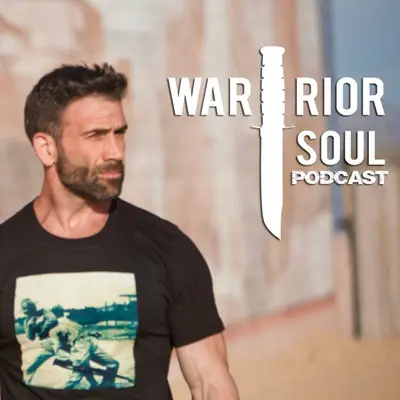
Host of the Warrior Soul Podcast and founder of Warrior Soul. Worldwide trainer and nutrition coach, contributing author at Testosterone Nation and Muscle and Strength.